DUBAI, United Arab Emirates — The United States conducted strikes on Iranian radar and drone facilities after Tehran shot down an American drone, prompting Iran to launch retaliatory attacks that led to Kuwait reporting incoming fire, as a fragile ceasefire between Washington and Tehran faces repeated tests.
U.S. Central Command confirmed the measured strikes occurred over the weekend near the city of Geruk and on Qeshm Island. The operation responded to Iran’s downing of a U.S. MQ-1 drone operating over international waters. “U.S. fighter aircraft swiftly responded by eliminating Iranian air defenses, a ground control station, and two one-way attack drones that posed clear threats to ships transiting regional waters,” Central Command said in a statement.
Iran’s paramilitary Revolutionary Guard responded by claiming it had targeted U.S. forces, without specifying locations. Kuwait reported its air defenses intercepted incoming drones and missiles early Monday. The incidents underscore the volatility of the nominal ceasefire between the U.S. and Iran, even as officials from both sides continue negotiations aimed at ending the conflict.
The fighting has disrupted global energy supplies through Iran’s chokehold on the Strait of Hormuz, a critical waterway for oil and natural gas shipments. The disruptions have driven up fuel prices worldwide and raised concerns about potential food shortages linked to fertilizer supply issues from the Gulf region.
Advertisement
Ceasefire Repeatedly Tested
The latest exchanges represent the most recent escalation in a conflict that began with U.S. and Israeli strikes on Iran on February 28. President Donald Trump has offered shifting goals for the campaign, with preventing Iran from developing a nuclear weapon remaining a central objective. Iran has consistently maintained that its nuclear program is peaceful, though it possesses enough highly enriched uranium to build several nuclear weapons if it chose to do so.
Vice President JD Vance suggested last week that negotiators are working toward general terms on Iran’s nuclear activities, with detailed specifics to be addressed in subsequent talks. Trump expressed optimism about the prospects in a post on his Truth Social platform early Monday. “Iran really wants to make a deal, and it will be a good one for the U.S.A. and those that are with us,” he wrote. “Just sit back and relax, it will all work out well in the end — It always does!”
The conflict has also intensified between Israel and the Lebanese militant group Hezbollah. Despite a nominal ceasefire, Israel has extended its occupation deeper into Lebanon. Hezbollah, which entered the conflict in support of its primary backer Iran, continues launching drones toward Israeli territory.
Advertisement
Kuwait, home to U.S. Army Central headquarters, found itself directly affected by the latest exchanges. Its air defenses engaged incoming threats, highlighting how the broader U.S.-Iran confrontation is spilling over into neighboring Gulf states.
Iranian state television broadcast footage of a ballistic missile launch featuring a sticker depicting a bruised image of President Trump overlaid on a “closed” Strait of Hormuz, with the caption “Until the last American soldier leaves the region.” The imagery underscored Tehran’s continued defiance.
Global Energy and Economic Implications
The Strait of Hormuz, through which approximately one-fifth of globally traded oil and natural gas passes, remains a focal point of tension. Disruptions have ripple effects on energy markets, contributing to higher prices at the pump and increased costs for industries worldwide. The Gulf region also accounts for 30 percent of globally traded chemical fertilizers, raising alarms about potential impacts on global food security.
Markets have reacted with volatility to the ongoing instability. Energy futures showed gains following the latest incidents, while shipping companies have rerouted vessels to avoid the area, adding costs and delays to global supply chains.
Advertisement
Diplomatic Efforts Continue
Despite the military exchanges, diplomatic channels remain active. Officials from both the U.S. and Iran are engaged in indirect talks aimed at de-escalation. However, each new incident carries the risk of derailing progress. The complexity of the negotiations — involving nuclear concerns, regional security guarantees and economic sanctions — makes a swift resolution challenging.
Trump met with advisers on Friday to discuss options for extending the ceasefire and reopening the strait. The administration has emphasized that any deal must address core security concerns while providing Iran with incentives to comply.
International actors, including European nations and Gulf states, have urged restraint and called for renewed diplomatic efforts. The United Nations and other multilateral bodies continue monitoring the situation closely, with concerns that further escalation could destabilize the entire Middle East.
Humanitarian and Strategic Concerns
The conflict has already caused significant disruption to civilian life in affected regions. Shipping delays and energy price increases disproportionately impact developing economies. Humanitarian organizations have warned of potential secondary effects, including higher food costs and supply shortages.
Advertisement
Strategically, the U.S. maintains a significant military presence in the region through bases in Kuwait, Qatar and other Gulf partners. These assets support operations aimed at protecting maritime navigation and deterring further aggression.
Iran’s ability to project power through proxy groups like Hezbollah adds another dimension to the conflict. The interconnected nature of these relationships complicates efforts to contain the fighting to direct U.S.-Iran exchanges.
Looking Ahead
As negotiations continue behind the scenes, the risk of miscalculation remains high. Both sides have demonstrated willingness to respond forcefully to perceived provocations, even while claiming commitment to diplomatic solutions.
For global markets, energy consumers and regional populations, the coming weeks will be critical. Any breakthrough in talks could ease tensions and stabilize energy flows. Conversely, further incidents risk broader escalation with unpredictable consequences.
Advertisement
The situation in the Middle East remains fluid, with military actions and diplomatic maneuvering occurring simultaneously. While President Trump projects confidence in an eventual deal, the reality on the ground shows a conflict that continues testing the limits of the current ceasefire arrangement.
Authorities in Kuwait, Iran and the United States have urged calm while investigations into the latest incidents proceed. International partners are monitoring developments closely, hoping for de-escalation before the situation spirals further.
The coming days may provide clearer indications of whether the latest exchanges represent isolated incidents or signs of deepening confrontation. For now, the focus remains on protecting vital shipping lanes and advancing diplomatic efforts to end the conflict.
Sydney-based promoter Adam Blumenthal has won an 11th-hour reprieve from flying to Perth to be probed about collapsed medicinal cannabis company Medoliol.
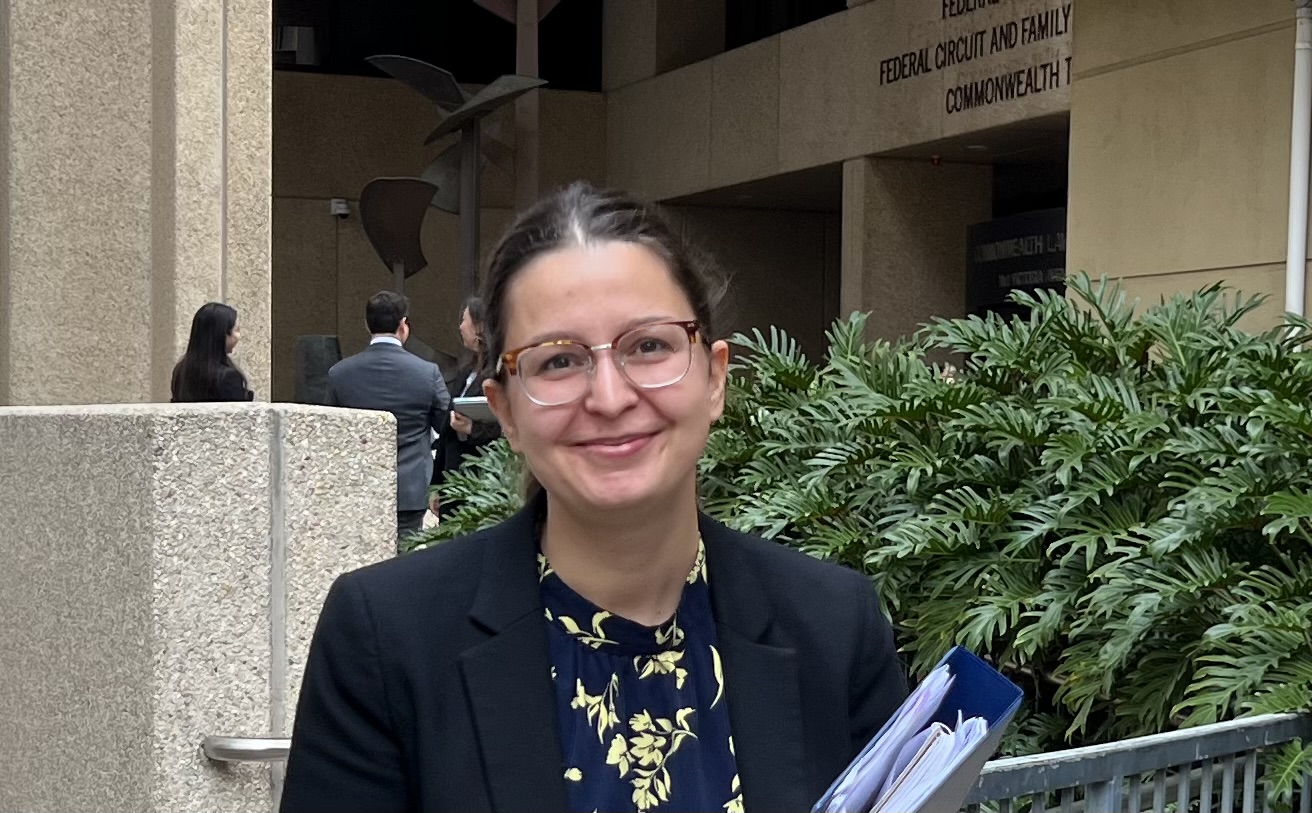
Nyungar-Nyiyaparli-Yamatji woman Emma Garlett is at the start of her business ownership journey, having launched Garlett Group in 2023.
Before that, Ms Garlett’s career spanned industrial, legal, academic, and creative sectors.
Among her interests is capacity building, primarily in relationships between and within businesses.
Respect and reciprocity are core to engagement with Indigenous businesses, according to Ms Garlett.
Advertisement
The best way to achieve that, she said, was to do away with traditional meetings and hierarchies.
“The main difference in best-practice First Nations engagement is engaging often, engaging early, listening and making sure that you use yarning as a methodology,” Ms Garlett said.
“When you are working with First Nations people, you need to have adequate time to listen and to understand.
“Yarning [is] conducted in a circle where everyone is sitting down … at the same level.
Advertisement
“[It] is a culturally safe space, because you can allow for respect, for discussion and exchange between people.”
That conversational style of storytelling builds trust over time and helps stakeholders understand needs and aspirations.
Ms Garlett points out a desire to build trust and non-transactional relationships is not a trait unique to Indigenous people.
Advertisement
Garlett Group started in Carnarvon offering cultural awareness training and business services such as strategic planning.
Today, it is based in Perth and focuses on providing cultural capability advice to government clients and helping Aboriginal people build capacity.
“We do that through five different service areas: education and training; sustainability services; Indigenous engagement and inclusion; strategic communications; and digital solutions,” Ms Garlett said.
“The reason we have various service offerings is because a lot of them are complementary to each other … you need to approach projects holistically.
Advertisement
“The vision of Garlett Group is to have long-term impact.”
Training and strategic planning remain central to that objective.
Ms Garlett said it was important for all businesses to walk in two worlds, which meant understanding Indigenous culture and business processes.
Acknowledging the past was an important part of that business impact picture, Ms Garlett said.
Advertisement
“If I can help one person understand the history of what happened to Aboriginal people in Australia and help to change their perspective and worldview when they see a First Nations person in Perth, and if that has a behavioural change for them, to help them be more inclusive, then I’ve done my job,” she said.
“If you can impact one person, that change will have flow-on effects to their sphere of influence and the work they’re doing.”
ATLANTA — Inspired by Lamine Yamal, Spain strolled to a 4-0 win over Saudi Arabia in Group H, as Mikel Oyarzabal restored his reputation with two goals and Luis de la Fuente’s side found their groove after an underwhelming World Cup opener.
A Dream Debut Start for Yamal
Yamal opened the scoring in the 10th minute on Sunday, and Oyarzabal, who failed to register a touch in the opening half hour in Monday’s scoreless draw with Cape Verde, scored twice in quick succession as Spain had the game wrapped up by halftime. The teenager was brought into the Spain XI by coach Luis de la Fuente and needed just 10 minutes to score the opener at Mercedes-Benz Stadium.
After a great play started by Alex Baena on the left side, he passed the ball to Mikel Oyarzabal, who passed by Saudi Arabia’s defense. Then he found Lamine Yamal, who slipped to score a key goal. The goal made Yamal the eighth-youngest scorer in men’s World Cup history.
Advertisement
Oyarzabal Answers His Critics
Marc Cucurella’s hooked pass found Olmo, who headed into the six-yard box for Oyarzabal to tap it in on the volley, as the striker proved that given the right service, he is Spain’s man to deliver. The brace came just two-and-a-half minutes apart, silencing the criticism the Real Sociedad forward had faced following his quiet showing against Cape Verde.
A Fourth Goal Off a Deflection
Advertisement
Spain replaced Yamal and Oyarzabal for the second half, but picked up where they left off when the Saudi goalkeeper blocked Cucurella’s volley from a corner and the ball ricocheted off defender Hassan Al-Tambakti and into the net. Alex Baena had delivered a precise corner kick that bounced off several players before falling to Cucurella, whose powerful volley deflected in off Al-Tambakti for the own goal.
A Disallowed Goal Capped the Scoring Chances
The European champions continued to create chances, but understandably took their foot off the gas on a day when even Vozinha, Cape Verde’s 40-year-old hero keeper, would have struggled against this version of Spain, who look back to their best. In a brilliant collective move, Pedro Porro found Ferran Torres, who launched a well-struck shot that found the net — only for the goal to be ruled out for offside.
The Standings After Two Rounds
Advertisement
Spain advance to four points in the standings, while Saudi Arabia stay on one after two games each. With the result, Spain have secured their spot in the Round of 32 of the 2026 World Cup. The other teams in the group, Cape Verde and Uruguay, met later on Sunday in Miami.
Yamal’s Emotional Reaction
Speaking with DAZN following the match, Yamal reflected on the significance of scoring in his first World Cup start. “I’ve always dreamt of being at a World Cup, and being able to score in my first match as a starter is a dream,” Yamal said. “I watched the last World Cup from a classroom, so being able to score here with my mum and my family in the stands is a dream come true.”
Yamal also addressed being substituted at halftime, explaining the plan behind his limited minutes following his recovery from a hamstring injury. “That was the plan, to play for a half and get some rest, but above all to help the team,” he said. “The first game wasn’t really us, it was different, but now we’ve arrived and we’re going for more. It turned out the way we wanted — being 3-0 up allowed me to rest, so it was perfect. Drawing a match against Cape Verde that you know you should win stings. It made us think a lot, and it helped us approach this match exactly how we wanted to.”
Advertisement
Coach De la Fuente later addressed concerns about Yamal’s fitness, insisting the teenager could have played longer had it been necessary. “He would have played for longer, but considering the result and the match was under control we considered his contribution was enough,” De la Fuente told reporters. “The next game we could have him for a full match. He’s back and he’s fit.”
Oyarzabal Reflects on Silencing Critics
The Spanish forward caught up with TV España following the match, addressing the criticism he had faced after his quiet performance against Cape Verde. “We’re happy to have turned around the situation. We’re happy with the result, and the feelings, and must keep going now,” Oyarzabal said. “I’m happy to have been able to help the team in this way. The other day I hardly touched the ball, was less active, less present. Although I was trying to help as I could in a different way, today I’m happy it went this way. I’m always looking for the team to do well.”
He pushed back on the notion that Sunday’s performance was about personal vindication. “It’s not about proving myself. I’ve always said I feel loved by my teammates, the coach, the staff day to day. That’s what counts for me,” Oyarzabal said. “People will talk outside. We know how the football world works, but we have to stay relaxed.”
Advertisement
On being substituted himself, Oyarzabal added: “As is logical, the coach gave minutes to other players, we all must be important. When we’re picked, we have to give 100%, when it’s others, they will do the same.”
De la Fuente Defends His Squad
De la Fuente, who led Spain to the Euro 2024 title, used the post-match platform to push back on the criticism his team had received after the Cape Verde draw. “When I said they were fired up I was talking about a natural reaction,” De la Fuente said. “Their pride was hurt. The remarks they hear makes them react and that’s good. When your work is being questioned, if you have the courage, you always react and try to respond to the criticism. It’s human. It doesn’t mean that the criticism bothers us. It just motivates people to give their best version of themselves. I think it’s crazy to question this team. We’ve been unbeaten for 33 games in a row. You can have better days, but doubting this squad of very young players I think it’s unfair.”
Saudi Arabia’s Struggles Continue
Advertisement
Saudi Arabia, who drew 1-1 with Uruguay in their first game, were unable to replicate the defensive resilience that had earned them that result. Despite mounting occasional counterattacks, they were never effective. Faced with pressure from their opponents, they ended up conceding four goals, which forced them onto the defensive. They made many defensive errors, leaving open spaces that Spain exploited to great effect, finishing with just one shot on goal — a disappointing performance that left them far from competing for a result.
With Spain having now secured their place in the Round of 32, attention turns to their final group match against Uruguay on June 26, where a positive result would likely confirm their position atop Group H heading into the knockout stages. For Saudi Arabia, the comprehensive defeat leaves their own path to advancement significantly narrowed, with the team now needing a strong result in their remaining fixture to keep any realistic hope of progression alive after consecutive results that have exposed clear defensive vulnerabilities against higher-quality opposition.
ARLINGTON, Texas — Lionel Messi and Argentina will take the field again at the World Cup 2026 on Monday after the all-time great authored a hat trick in the opener. Argentina, No. 1 in FIFA rankings, will face 21st-ranked Austria in a 2026 World Cup Group J matchup, with both teams having three points.
A Record Within Reach
The Argentines defeated Algeria in their first contest, 3-0, with all goals via Messi, while the Austrians knocked off Jordan by a 3-1 score. With 16 World Cup goals, Messi is one away from having the outright all-time record, breaking a tie with Germany’s Miroslav Klose. Messi is one goal away from becoming the sole all-time World Cup scoring record holder, surpassing Klose’s 16. This is the most-watched individual prop of the entire 2026 World Cup.
Advertisement
A First-Ever Meeting at a Major Tournament
These nations have a 1-1-1 record across three prior meetings, with the last being a draw in 1990. Crucially, this is the first time Argentina and Austria have ever met at a World Cup finals, adding genuine novelty to the matchup. The most recent friendly meeting was a 1-1 draw in May 1990, while the earlier encounter in May 1980 finished 5-1 to Argentina, though the head-to-head record carries limited predictive weight given the vintage of both matches.
Match Details
Kickoff is 1 p.m. ET from AT&T Stadium in Arlington, Texas, with the match broadcast on Fox and Telemundo in the United States.
Advertisement
The Betting Odds
The latest Argentina vs. Austria odds from FanDuel Sportsbook list the Argentines as -185 favorites on the 90-minute money line, with Austria at +550, and a draw at +310. The over/under for total goals is 2.5. Other operators show similar pricing, with bet365 listing Argentina at -167 to win, the draw at +300, and Austria at +475.
Prediction markets reflect a similar lean. Kalshi traders price Argentina at 65%, the draw at 24%, and Austria at 14%.
The Case for Argentina
Advertisement
Argentina arrive in Dallas as reigning world champions and strong favorites, with Lionel Scaloni’s side having opened their World Cup defense with a 3-0 win over Algeria on Matchday 1. The narrative around Argentina is inseparable from Messi, who delivered a hat trick in the Algeria match and remains the driving force of a side capable of winning this tournament outright.
Lautaro Martínez, with 37 international goals in 76 caps, leads Argentina’s attack as the primary center-forward and is the focal point for Scaloni’s forward line whenever Messi operates from a deeper creative position.
Austria’s Own Strong Start
Austria, meanwhile, are back at the World Cup for the first time since 1998, ending a 28-year absence after winning their UEFA qualifying group. The team made a winning start in this tournament as well, beating Jordan 3-1, with Romano Schmid scoring a long-range opener and Marko Arnautović settling it from the penalty spot deep in stoppage time.
Advertisement
Austria’s all-time top scorer, Arnautović, remains a dangerous option in attack despite recently turning 37, and his inclusion in the Jordan match was credited with changing the game for his side.
The Messi Prop Bet Frenzy
Given the magnitude of what’s at stake for Messi individually, betting markets have built an extensive menu of props specifically tied to his record chase. Sportsgambler noted that “Lionel Messi is the market leader to be First Goalscorer at +250.” Betfair built a featured prop around “Messi to score first and have an assist” at 6/1, confirming the first goalscorer market is a key focus for the match. Messi is also priced as an OddsBoost at 28/1 to score another hat trick.
His underlying statistical profile supports the heavy betting interest. Messi has 117 international goals and 61 international assists, both all-time world records, and serves as Argentina’s primary penalty-kick taker and free-kick specialist, meaning every set piece represents a potential shot on target.
Advertisement
Predicted Lineups
Argentina’s predicted lineup in a 4-3-3: E. Martínez; Montiel, Romero, L. Martínez, Tagliafico; De Paul, Mac Allister, E. Fernández; Messi (captain), L. Martínez, J. Álvarez.
Austria’s predicted lineup in a 4-2-3-1: Pentz; Posch, Danso, Alaba (captain), Mwene; Laimer, Seiwald; Wimmer, Sabitzer, Schmid; Arnautović.
Argentina does have one notable absence to monitor, with right-back Gonzalo Montiel ruled out, while left-back Nicolás Tagliafico is considered probable. Austria’s Stefan Posch is listed as questionable at center-back.
Advertisement
The Tactical Battle
The contest between Argentina’s attacking trio and Austria’s defensive structure is the defining theme. Messi, who has scored three goals at this World Cup and 116 in total for Argentina across 198 caps, creates constant positional problems for opposing back fours through his movement off the ball and his link-up with Lautaro Martínez. Austria’s best protection will come from the midfield pressing of Konrad Laimer and Nicolás Seiwald, who must limit the supply into Messi’s feet and force Argentina to play longer, less incisive balls.
The Prediction
Will Austria be able to stifle a confident Argentine side, or can the world champions continue their winning start? Multiple analysts have landed on similar conclusions. Argentina and Austria both impressed in their Group J openers, but the world champions’ quality and tournament pedigree tip the balance firmly in their favor. Expect a controlled contest in which a moment of Messi or Lautaro Martínez quality settles matters.
Advertisement
What’s at Stake
The Argentina vs. Austria fixture is not merely a heavyweight-versus-underdog billing; it is, effectively, the Group J final, with first place and a favorable knockout draw likely settled by full time. A win in Arlington puts the World Cup 2026 defending champions through with a matchday to spare, while the loser faces a final group game against Jordan or Algeria just to advance.
With both nations entering Monday’s match unbeaten and tied on three points apiece, the result will go a long way toward determining not just who tops Group J, but who Argentina and Austria might face in a potentially more favorable knockout draw. For Messi personally, the match offers a chance to etch his name alone atop the all-time World Cup scoring chart — a milestone that, combined with the magnitude of the matchup itself, has made Monday’s contest one of the most heavily anticipated fixtures of the tournament’s group stage so far.
The shares of Voltas jumped as much as 5% to Rs 1,411 on the BSE on Monday after the Tata Group company announced that it crossed the milestone of 1 million air conditioner sales in less than three months of the ongoing FY27, achieving the landmark in record time.
Voltas said that the milestone further strengthens its dominant leadership position in the Indian room air conditioner market. “The achievement reflects strong consumer demand, the trust of millions of customers, and the Company’s continued focus on innovation, execution excellence and market expansion. It also follows a series of strategic initiatives undertaken by Voltas over the past year to strengthen its market proposition and accelerate growth,” the company said in an exchange filing on Sunday.
Voltas has refreshed its product portfolio with a clearly defined segmentation strategy, offering differentiated products across premium, mid and value segments, it said, adding that this helped the company address a wider spectrum of consumer needs while strengthening its presence across key price points and customer segments.
The Tata Group company launched a nationwide campaign titled “India’s First. Keeping India First.” to commemorate the achievement.
What Voltas management said
Crossing the one million sales milestone within the first 3 months of a financial year is a significant achievement for Voltas, said Mukundan Menon, Managing Director at Voltas. “Achieving this landmark in record time reflects the trust consumers have placed in our brand and the strength of the execution delivered by our teams and channel partners across the country,” he added.
Live Events
Menon further said that the milestone further reinforces Voltas’ position as India’s No. 1 AC brand and reflects the strength of its product portfolio, distribution network and consumer centric approach. “We thank our customers, channel partners and employees for their continued support. As the category continues to expand, we remain focused on delivering innovative products, superior consumer experiences and sustainable growth while strengthening our market leadership,” he said. Jayant Balan, Head of room air conditioner business at Voltas, meanwhile called the milestone a “proud moment” for Voltas. “Our refreshed product portfolio, sharper market segmentation and impactful consumer communication initiatives have enabled us to connect more effectively with consumers across segments and geographies. Combined with the dedication of our dealers, distributors, retailers, service partners and employees, these efforts have helped us accelerate growth and further strengthen our dominant leadership position in the market,” he said. Also Read |Voltas sells one million AC units in first quarter of FY27 “Summer is still on, and so is India’s trust in Voltas,” Balan said, adding that demand continued to remain encouraging across markets, and the company looks forward to building on this momentum, reaching more households across the country and achieving many more milestones in the months ahead.
Voltas share price
Voltas shares have gained 2% in one week and 6% in one month to close at Rs 1,343.40 apiece on NSE on Friday. The stock is overall down more than 2.5% in 2026 so far.
In the longer term, the shares of the company gained over 4% in one year, 72% in three years and 32% in five years. The company has a market capitalisation of nearly Rs 44,643 crore.
(Disclaimer: Recommendations, suggestions, views and opinions given by the experts are their own. These do not represent the views of The Economic Times)
A small-town family business in the US has created headlines after sharing a massive part of its sale proceeds with its workers. Fibrebond, a Louisiana-based electrical equipment company, was sold for $1.7 billion, and former owner Graham Walker ensured that 540 employees received a combined $240 million from the deal.
The payout means each full-time worker received around $443,000 on average, despite none of them owning any shares in the company. The unusual move came from a condition Walker added before agreeing to sell the business to power-management company Eaton.
One clause changed the lives of hundreds of workers
Fibrebond’s sale agreement included a simple condition from Walker: 15% of the money from the deal should go directly to employees who helped build the company over decades. The bonuses began reaching workers in June and will continue through a five-year retention period. Employees need to remain with the company to receive the full amount, while workers aged above 65 were allowed to collect their benefits without waiting.
When asked why he selected 15% instead of another figure, Walker gave a short explanation: “It’s more than 10%.”
Advertisement
Live Events
The announcement shocked many employees, with some struggling to believe the news was real. One worker reportedly wondered whether there were hidden cameras involved, while another celebrated by driving away on a golf cart with his fist raised. “It was surreal, it was like telling people they won the lottery,” business-development executive Hector Moreno told The Wall Street Journal.
Company survived fire, downturns before finding new growth
Fibrebond was founded in 1982 by Walker’s father, Claud Walker. The company initially built structures used for telephone and electrical equipment.
The business faced major challenges over the years, including a factory fire in 1998 and a slowdown after the dot-com crash. The company’s workforce fell from about 900 employees to nearly 320 during the difficult period.
According to employees, the Walker family continued paying salaries during tough times, building a relationship based on loyalty and long-term commitment.
Data centres and AI demand pushed company towards billion-dollar deal
The company’s fortunes changed after it invested around $150 million in data-centre infrastructure.
Advertisement
Growing demand for cloud services during the Covid-19 period boosted business in 2020. Later, the rise of artificial intelligence infrastructure and LNG export projects increased demand further.
Over five years, Fibrebond’s sales grew nearly 400%, attracting interest from larger companies and eventually leading to the acquisition by Eaton.
Workers use bonus money for homes, retirement and family celebrations
For many employees, the payout brought major financial changes. Lesia Key, who joined Fibrebond in 1995 earning $5.35 per hour, used the money to clear her mortgage and start a clothing boutique.
Hong Blackwell, 67, retired after 16 years at the company and bought her husband a Toyota Tacoma. Moreno used his share of the money to take 25 family members on a trip to Cancún.
Advertisement
Walker stepped down as CEO on December 31. His family earned more than $1 billion from the company sale, while hundreds of employees received a life-changing reward from the business they helped grow.
Sanctuary Housing Association wants to bulldoze Astra House
Belinda Ryan and Local Democracy Reporter
05:00, 22 Jun 2026
Astra House in Poynton could be bulldozed(Image: Google)
Plans to bulldoze a vacant office block in Poynton and build 28 affordable apartments on the site have been recommended for approval.
Advertisement
Sanctuary Housing Association wants to demolish Astra House on Spinners Lane and replace it with 21 one-bedroom apartments and seven two-bed flats.
A report from Cheshire East’s planning officer to this week’s meeting of the northern planning committee states: “Cheshire East has a substantial shortfall in housing generally and in affordable homes. There is a proven need.
“The site is located within a settlement, it is accessible by public transport and is within a reasonable walking distance of community facilities such as shops, medical services and public open space.”
It adds: “Other benefits include investment in the local economy and the creation of jobs during the construction phase, increased support for local shops and businesses by the future occupants of the development.”
Advertisement
The report acknowledges the proposal is contrary to planning policy because it involves the loss of an employment site.
But it adds: “Given that the site is disused and has been vacant for some time, it is preferable for the site to have an active use as opposed to a continuing non-active use.”
The proposal includes provision for 30 parking spaces but Cheshire East’s parking standards require 35 spaces for 28 apartments.
The planning officer says: “The shortfall is not significant and the site’s good accessibility means that car ownership may be lower than in other, less sustainable locations.”
Advertisement
As part of the proposal, the existing green area to the south between the building and Poynton Railway Station will be retained and enhanced with landscaping, native and ornamental planting and retention of mature trees.
A seating area with central feature and picnic tables and benches will provide amenity space for use by residents.
The northern planning committee meeting takes place at 10.30am on Wednesday, June 24, at Macclesfield Town Hall.
To find all the planning applications, traffic diversions, road layout changes, alcohol licence applications and more in your community, visit the Public Notices Portal.























































You must be logged in to post a comment Login