There’s a version of the AI debate that refuses to go away. One side says human creativity is irreplaceable. The other says AI will eventually render it redundant. In practice, neither framing is particularly useful to a marketing professional trying to do their job well in 2026.
The more interesting question isn’t which is better. It’s how the two work together and how clearly marketers understand the difference between what AI excels at and which tasks still require a human brain.
The Numbers Don’t Lie: AI Is Here to Stay
Let’s be honest about what AI brings to the table. The adoption numbers alone tell a compelling story. 91% of marketers now actively use AI in their work, up from 63% the previous year, proving that AI isn’t a nice-to-have anymore — it’s the baseline. And for good reason. AI accelerates research, generates content at volume, personalises messaging at scale, and handles the kind of repetitive, execution-heavy tasks that used to eat entire afternoons. For marketing teams under pressure to produce more with less, those are meaningful gains. The challenge is what happens next. Because speed and volume, while useful, are only part of the picture, and in isolation can undermine the work.
Why Speed Without Strategy Falls Flat
Salesforce’s Tenth State of Marketing report, compiled from 4,450 marketing decision-makers, contains a finding that should give every marketer pause. Despite 75% of teams having adopted AI, 84% still run generic campaigns. The tools are there, but the output isn’t making a lasting impression.
The report points to data fragmentation as a core culprit. This is what happens when customer data lives in disconnected systems, CRM platforms, email tools, social channels, and ad platforms that don’t talk to each other. Without a unified picture of who the audience actually is, AI has very little meaningful context to work with, and personalisation quickly becomes an educated guess.
Advertisement
But there’s something else at play. When AI is used to generate content without a strong creative brief, a distinctive brand voice, or a genuine understanding of the audience, the result is branding and content indistinguishable from your competitors’. Fast, technically competent, and utterly forgettable. This is where human creativity makes the difference.
Where Human Creativity Still Wins
A comparison of AI-generated and human-created ad campaigns found that AI ads achieved higher click-through rates, while human-generated campaigns generated more leads. Clicks are just a vanity metric if they don’t convert.
What drives someone to actually trust a brand, fill in a form, or pick up the phone is something more nuanced than a well-optimised headline. It’s emotional resonance, storytelling, a sense that the person behind the message understands something real and unique about them.
AI can analyse patterns in existing content and replicate what has worked before. It can’t read a cultural moment, take a creative risk, or craft a narrative that feels human and relatable on its own. That’s where human insight comes in.
Advertisement
The Best Approach in 2026: Blend Both
None of this is an argument for ignoring AI. Quite the opposite. The marketers who will outperform their competitors this year are those using AI to handle the heavy lifting while directing their creative energy toward the decisions that shape campaigns.
Think of it as a division of labour based on capability rather than convenience. AI handles first drafts, keyword research, A/B test variants, audience segmentation, and performance analysis. Human marketers shape the strategy, define the voice, interrogate the brief, and make the creative calls that determine whether a campaign lands or disappears into the void. The teams seeing the strongest results are those investing in governance, creative direction, and strategic oversight alongside the technology.
For SMEs managing their own marketing without a dedicated team, the principle is the same, even if the tools differ. AI can handle the admin and the ideation. But the judgment about what to say, how to say it, and why it matters to your audience is yours to make.
What This Means for Marketing Teams Right Now
The implications for 2026 are clear. Marketing roles are not disappearing, but they are changing. While execution tasks are increasingly automated, they still need oversight.
Advertisement
Roles that blend strategy, creativity and analytical thought are becoming more valuable, not less. Teams that use AI as part of their infrastructure, while keeping human creativity at the centre of their strategy, are the ones who will build a competitive advantage and feel the real benefits.
The debate between human creativity and AI-generated content isn’t going anywhere any time soon. But a better question is: how can we use these tools well?
For businesses looking to get the most out of their tools and strike the right balance, working with a digital marketing agency in London can help ensure your AI investment is matched by the strategic and creative thinking that delivers results.
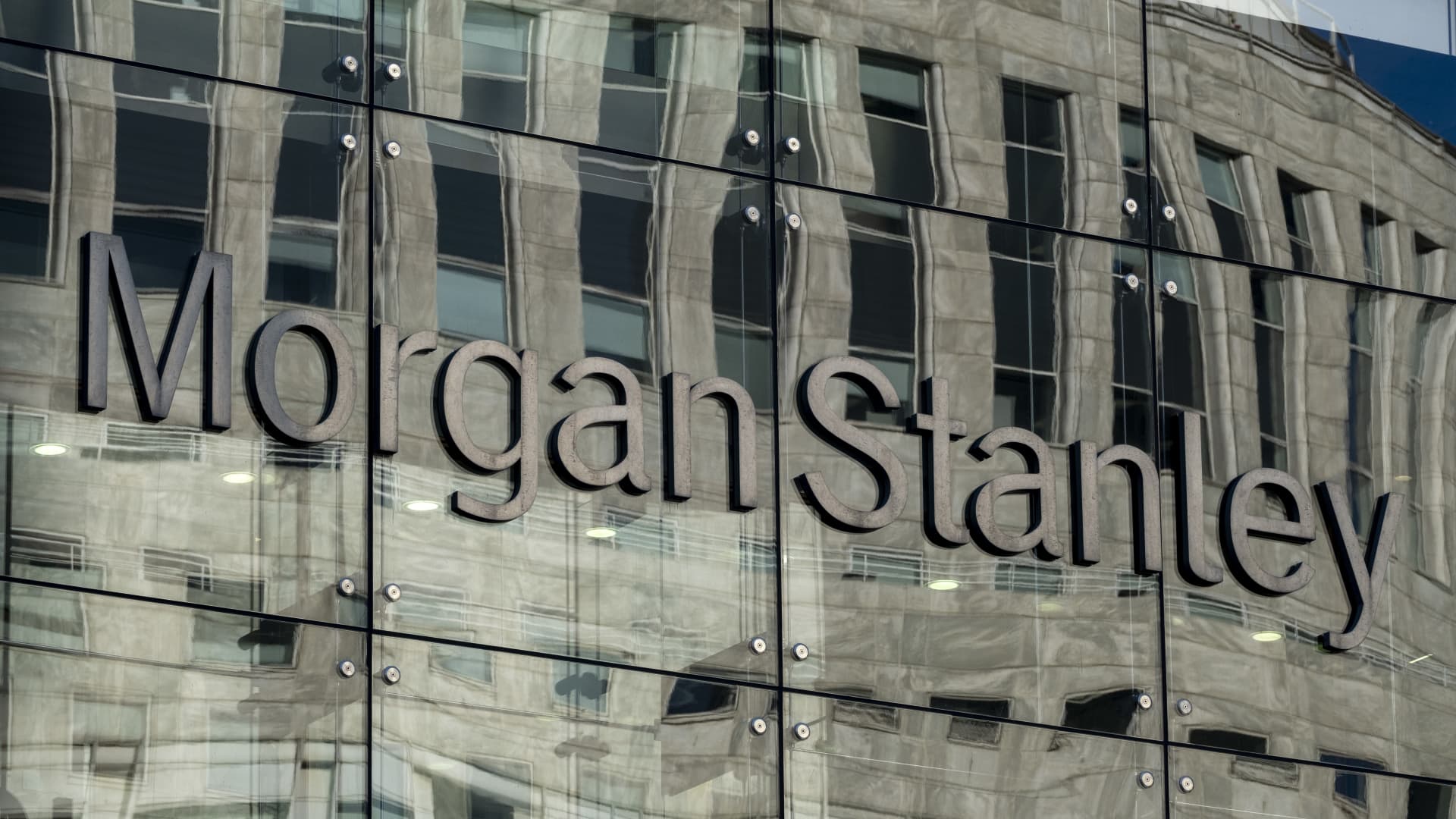
Morgan Stanley’s office in Canary Wharf financial district on Jan. 30, 2025 in London, UK.
Mike Kemp | In Pictures | Getty Images
Morgan Stanley will soon open a key wealth management funnel to artificial intelligence agents from thousands of corporations, CNBC has learned exclusively. It’s one of the earliest instances of a major Wall Street bank opening its platforms to external AI tools.
Advertisement
The move will allow clients’ autonomous agents to pull data and insights directly from the firm’s stock administration platforms, ShareWorks and Equity Edge, bypassing the traditional software interfaces built for human users, according to Mark Mitchell, chief product officer of Morgan Stanley at Work.
In April, Morgan Stanley executives attributed $1.2 trillion in assets gathered to its workplace strategy.
“The way we see it, in a future state, our corporate clients will not be logging into ShareWorks or Equity Edge,” Mitchell said.
Instead, they’ll be “using agentic AI-powered tools on their desktops within the four walls of their companies, interacting with our platforms in a purely agentic way,” he said.
Advertisement
The bank has already granted a handful of clients early agentic access and plans to open it up to the firm’s 3,400 administration clients by next year, Mitchell said.
It’s the latest sign that Wall Street is preparing for a future where AI agents handle tasks now performed by software users.
Rivals including JPMorgan Chase and Goldman Sachs are using AI agents internally for things like writing code, but have yet to publicly announce steps to allow external agents to connect directly to their firms’ systems.
Morgan Stanley wealth management
Morgan Stanley has taken the staid business of managing stock compensation plans for corporations and turned it into a crucial funnel for the firm’s wealth management division, which is the world’s largest at $7.35 trillion in client assets.
Advertisement
The firm acquired Solium Capital in 2019 and E-Trade in 2020, creating a business that it says caters to almost half of the companies in the S&P 500 and eight of the 10 biggest unicorn startups. The key insight it had was that by administering employee stock plans, Morgan Stanley can convert workers into advisory clients as their wealth grows.
The bank’s AI pitch to corporate clients is straightforward: Fast-growing technology and biotech companies want to administer increasingly complex stock plans without adding headcount in support roles like human resources, said Mitchell.
At these companies, AI agents can handle aspects of the job without adding human employees, he said.
Internally, there’s a similar logic: Morgan Stanley sees agentic AI allowing it to scale its own services — customer support, plan administration, the wealth management funnel — without adding “thousands and thousands” of employees, Mitchell said.
Advertisement
For this change, Morgan Stanley is leaning on something called the Model Context Protocol, an open source standard that allows AI models to plug into data sources.
In a pre-AI world, companies would’ve frowned upon allowing clients to bypass the online front door to their services. For decades, companies fought to hook users on proprietary platforms.
Morgan Stanley, which began partnering with OpenAI in 2022, believes that matters less in a world where AI agents become the primary interface. Software is “at an inflection point, clearly,” Mitchell said.
“The companies that are going to survive in the future are the ones who have proprietary data and business logic, which is the foundation of our offering,” Mitchell said.
Advertisement
“The fact that they won’t be logging into” the websites, he said, “doesn’t scare us at all.”
Daniel is an avid and active professional investor.
He runs Crude Value Insights, a value-oriented newsletter aimed at analyzing the cash flows and assessing the value of companies in the oil and gas space. His primary focus is on finding businesses that are trading at a significant discount to their intrinsic value by employing a combination of Benjamin Graham’s investment philosophy and a contrarian approach to the market and the securities therein. Learn more.
Analyst’s Disclosure: I/we have no stock, option or similar derivative position in any of the companies mentioned, and no plans to initiate any such positions within the next 72 hours. I wrote this article myself, and it expresses my own opinions. I am not receiving compensation for it (other than from Seeking Alpha). I have no business relationship with any company whose stock is mentioned in this article.
Seeking Alpha’s Disclosure: Past performance is no guarantee of future results. No recommendation or advice is being given as to whether any investment is suitable for a particular investor. Any views or opinions expressed above may not reflect those of Seeking Alpha as a whole. Seeking Alpha is not a licensed securities dealer, broker or US investment adviser or investment bank. Our analysts are third party authors that include both professional investors and individual investors who may not be licensed or certified by any institute or regulatory body.
New research on their impact has been carried out by Oxford Economics on behalf of Allica Bank
10:32, 03 Jun 2026Updated 10:39, 03 Jun 2026
Conrad Ford chief product and strategy Officer at Allica Bank.
Established SMEs in Wales out punch their weight in terms of their contribution to jobs in the Welsh economy, show new research.
A report , carried out by Oxford Economics on behalf of Allica Bank, shows that established businesses account for over two in five jobs in the private sector despite making up just 22.8% of the Wales’ business population.
Advertisement
Established SMEs are firms with between five and 250 employees – of which in Wales there are 23,965.
Their contribution of 44% of all private sector jobs in Wales, is nine percentage points above the UK average of 35%, and significantly higher than London, where established businesses account for 30% of private sector employment. Of the nations and regions of the UK, the rate is only higher in Northern Ireland at 46%
Across the UK, established businesses are a critical driver of economic activity, accounting for more than a third of private sector employment and 37% of private sector turnover. They also support almost one in every two private sector jobs in rural areas.
Given their importance to growth, the report also highlights the challenge many established businesses face in accessing the finance they need to invest. The report highlights a £65bn lending gap to UK SMEs, accumulated over the past 25 years, which is restricting the finance and working capital available to businesses that want to expand, boost productivity and create jobs.
Advertisement
It also shows the impact that can be unlocked when established businesses can access the finance they need. In 2025, Allica Bank’s lending to established businesses enabled an estimated £520m contribution to GDP in Wales and supported 8,700 jobs locally.
UK-wide, 78% of the GDP contribution and 80% of the employment impact supported by Allica Bank’s lending occurred outside London and the south east, underlining the role productive finance can play in supporting local economies.
Conrad Ford, chief product and strategy officer at Allica Bank, said:“I speak to established businesses all the time and you quickly see how important they are to their local areas. These are the manufacturers, logistics firms, hospitality operators and specialist businesses that employ local people, support supply chains and keep communities thriving.
“The report puts numbers behind that. Although established businesses make up a minority of the wider SME business population, they account for around 60% of private sector employment.
Advertisement
“In 2025, Allica Bank’s lending to established businesses enabled an estimated £8.4 billion contribution to GDP in the UK and supported 118,000 jobs across the country. That shows what can happen when established businesses get the finance they need to invest and grow.”
The £6m project was carried out by Swansea-based Andrew Scott
12:52, 03 Jun 2026Updated 12:59, 03 Jun 2026
The repurposed Ship Street Library building in Brecon.(Image: Phil Boorman Photography Ltd)
Work on a £6m project repurposing a listed building that served as a library in Brecon into a new learning campus has been completed.
Contractors Andrew Scott carried out the work on the Ship Street Library building on behalf of NPTC Group of Colleges.
Advertisement
The refurbishment and retrofit marks the next chapter in both the building’s history and the college’s development. By relocating a significant portion of its Brecon campus to a central town location, NPTC Group of Colleges aims to improve accessibility for students
The project is also expected to strengthen links with the local community and increase footfall in Brecon town centre. The building has been intentionally designed without canteen facilities to encourage students to make use of town centre amenities and support local businesses.
Inside the building.(Image: Phil Boorman Photography Ltd)
Designed by Rio Architects, the building now provides ten general teaching classrooms, student support and welfare spaces, staff areas, social learning zones, and four start-up business units, alongside a new lift to improve access.
Mark Bowen, managing director of Swansea-based Andrew Scott, said: “We are delighted to have completed the renovation and enhancement of the grade II listed Ship Street Library.
Advertisement
“This project has provided an opportunity to preserve a much-loved historic building while creating an inspiring and accessible learning environment for students and the wider community. We hope the revitalised space will strengthen local connections, support nearby businesses and inspire the next generation of learners.”
The library was originally designed by the County Architects Department under the direction of county architect JA McRobbie. It was officially opened by the then Prince of Wales in 1969 and is considered a significant example of post-war architecture of national importance.
NPTC Group of Colleges works in partnership with Coleg Sir Gâr, Coleg Ceredigion, Cardiff and Vale College, and Pembrokeshire College to develop higher technical education and employer-led training and innovation.
The Lonski Group President John Lonski joins ‘Mornings with Maria’ to discuss the strength of the U.S. economy, Wall Street’s record rally and how AI investment is driving growth.
This is a breaking news story about the ADP national employment report for May. Please check back for updates.
Companies in the private sector added 122,000 jobs in May, payroll processing firm ADP said in its latest report on Wednesday.
Advertisement
The figure is above economists’ estimates of a gain of 117,000 jobs. The prior month’s payrolls number was revised lower to a gain of 105,000 from an initially reported gain of 109,000.
Which industries are hiring the most workers, according to the ADP report?
What experts are saying about the ADP report data
The ADP data is released before the Labor Department’s nonfarm payrolls report, which is due on Friday morning and can differ notably. The government data is expected to show an increase of 85,000 positions, below the 115,000 reported in April.
The marine insurance mutual saw premium income grow substantially to $938m (£697.1m)
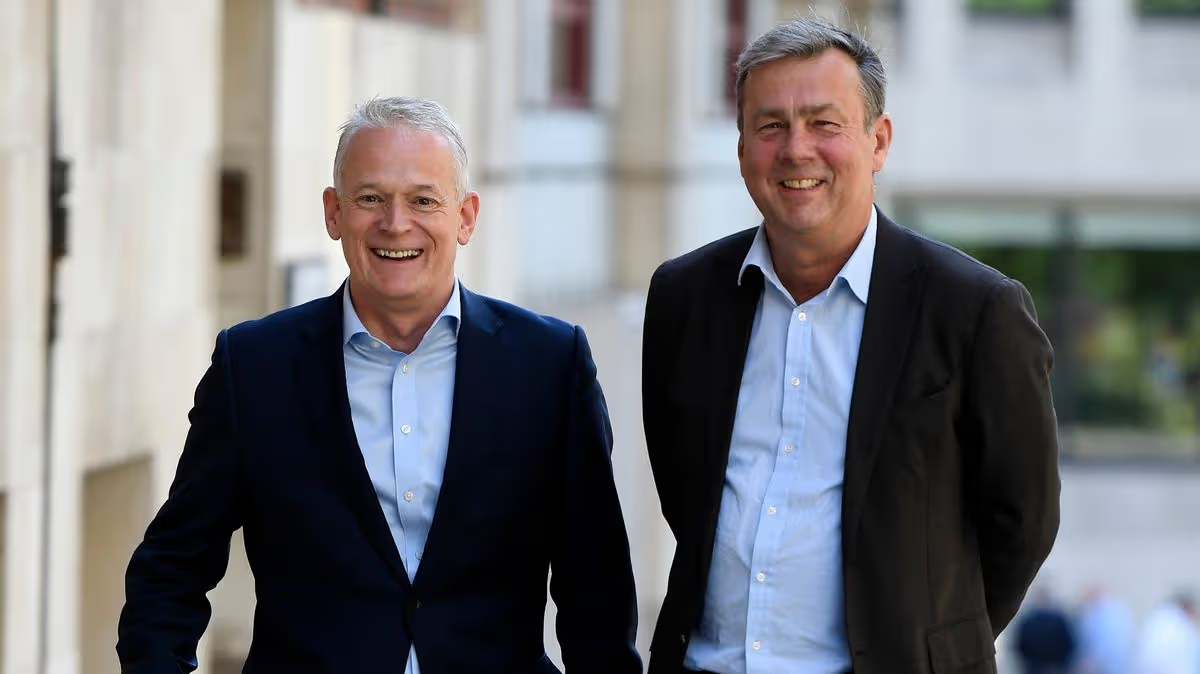
NorthStandard managing directors Paul Jennings (left) and Jeremy Grose(Image: GRAHAM FLACK)
Conflicts in the Middle East, Persian Gulf and Ukraine are creating a more challenging world for shipowners, one of world’s largest insurers in the sector has said. Tyneside-based NorthStandard says changing tariffs and expansion of sanctions have created uncertainty in the global market.
It comes as the Newcastle-based mutual has published what it called strong results showing a 5.8% lift in premium income to US$938m (£697.1m) in its 2025/26 year with an underwriting deficit reduced from $96m (£71.3m) to $39m (£28.9m). The provider of third party liability and related cover to shipowners and operators also reported $123m (£91.4m) growth in free reserves to $923m (£686.2m).
Writing in the membership group’s annual review, NorthStandard chairman Cesare d’Amico said: “Conflict in the Middle East from Gaza to the Persian Gulf, the continuation of the war in Ukraine, the uncertainty caused by changing tariffs, and the steady expansion of sanctions regimes all combined to undermine predictability in trade, compliance and insurance. Shipowners faced higher costs, greater operational disruption and a more complex liability landscape, often driven by events entirely outside their control.”
It is now three years since the merger of Newcastle’s North P&I and London-based The Standard Club to create NorthStandard, which is one of the top global marine insurance providers with offices in Europe, Asia and the Americas. The firm employs about 300 people on Tyneside.
Advertisement
Bosses said the objectives of that merger had now been met, including development of specialty lines, opening of new offices, expanded resources and new partnerships to benefit members. Since the merger, growing geopolitical instability – notably events in the Strait of Hormuz – has rocked the shipping world, with NorthStandard saying it has provided vast amounts of guidance to members, particularly around war risks.
And on sanctions, the club said it has invested to create a stronger service for members including the appointment of a head of sanctions who operates on a global level from the Newcastle offices.
During the year, NorthStandard also consolidated its Coastal & Inland and Sunderland Marine teams under one leadership, offering a ‘one stop shop’ for small and specialist craft. It also set up an Upstream Energy and Marine & Energy Liabilities team to target those markets.
Jeremy Grose, NorthStandard managing director, said: “The shipping industry is navigating profound change, as technological advancement and the fuel transition reshape how vessels are operated, crewed, and maintained. Our services are evolving in step, ensuring Members can adopt new fuels, technologies, and operating models with confidence.
Advertisement
Fellow managing director, Paul Jennings, added: “People are our biggest strength, and our strong performance is a direct reflection of their dedication—many of whom are based right here at our headquarters in the North East. We remain deeply committed to supporting our communities, economy, and environment through strategic, long-term collaboration and investing in our people and innovation”.
Maja Chwalińska, the 24-year-old Polish left-hander ranked outside the top 100 at the start of the 2026 French Open, has captured global attention with a remarkable run to the quarterfinals at Roland Garros, emerging as one of the biggest Cinderella stories of the tournament.
Chwalińska’s journey from qualifier to quarterfinalist, defeating high-profile opponents including Olympic champion Qinwen Zheng and former top-10 player Maria Sakkari, highlights her resilience and talent. Her story combines athletic achievement with personal challenges, making her one of the most compelling figures in women’s tennis this season.
Here are 10 essential things to know about the rising Polish player:
1. Rapid Rise at Roland Garros 2026 Chwalińska entered the 2026 French Open as a qualifier ranked around No. 114. She stormed through the qualifying rounds and main draw with dominant performances, reaching the quarterfinals after victories over Zheng, Elise Mertens, Sakkari and Diane Parry. Her run marked the first time a player ranked outside the top 100 achieved such a deep breakthrough at Roland Garros in recent memory.
2. Career-High Ranking and Momentum The Polish player achieved a career-high singles ranking of No. 113 in May 2026. Her French Open success is projected to propel her significantly higher, potentially into the top 50. This surge reflects strong form on the WTA 125 and ITF circuits, where she captured multiple titles.
Advertisement
3. Left-Handed Game with Technical Precision Standing at 5-foot-5 (1.64 m), Chwalińska plays left-handed with a two-handed backhand. Observers praise her clean technique, variety, and court craft. Analysts describe her style as old-school with modern efficiency, generating consistent pressure on return games while maintaining solid baseline rallies.
4. Early Start and Polish Roots Born on October 11, 2001, in Dąbrowa Górnicza, Poland, Chwalińska began playing tennis at age 7. She turned professional in 2015-2016 and has remained based in her home country, representing Poland in Fed Cup/Billie Jean King Cup competition with a solid 4-3 record.
5. Openness About Mental Health Struggles Chwalińska has been candid about her battle with depression, which sidelined her for periods and affected her early career progression. Her willingness to discuss mental health has resonated with fans and fellow athletes, positioning her as an advocate for greater awareness in professional sports.
6. Strong Challenger and ITF Success Before her Grand Slam breakthrough, Chwalińska built her career through consistent performances on the ITF and WTA 125 circuits. She has won three WTA Challenger singles titles, including events in Montreux (2025) and Florianopolis (2024), along with seven ITF singles titles.
Advertisement
7. Doubles Expertise In addition to singles, Chwalińska has enjoyed success in doubles, with a career-high ranking of No. 91. She has secured three WTA 125 doubles titles, demonstrating versatility and strong net play that complements her baseline game.
8. Coaching Stability She is coached by Jaroslav Machovsky, who has helped guide her technical development and mental approach. Their partnership has been credited with her recent consistency and ability to perform under pressure at major tournaments.
9. Historic Polish Representation Chwalińska’s deep run at Roland Garros 2026 made her the second Polish woman, alongside world No. 3 Iga Świątek, to reach the fourth round in the same year. This milestone underscores the growing strength of Polish women’s tennis on the international stage.
10. Humble Personality and Future Ambitions Known for her humble and grounded demeanor, Chwalińska expressed surprise and gratitude during her French Open press conferences. She stated her seasonal goal was simply to break into the top 100, a target she has now surpassed. Fans and commentators highlight her likeable character and work ethic as key factors in her appeal.
Advertisement
Chwalińska’s prize money has surpassed $860,000 in her career, with a significant boost expected from her Paris performance. Her story echoes previous Grand Slam underdog runs, drawing comparisons to players who used breakthrough tournaments to launch sustained top-level careers.
The left-hander’s success comes after years of grinding on lower circuits while managing personal challenges. Her mental health advocacy adds depth to her profile, showing strength beyond on-court results. As she faces higher-ranked opponents in the quarterfinals and beyond, Chwalińska’s composure and fighting spirit will be tested.
Tennis experts note her well-rounded game suits clay courts particularly well, where her patience and tactical awareness shine. If she maintains this level, a top-50 breakthrough appears likely, with potential for further Grand Slam success in the coming seasons.
Poland’s tennis federation and fans have rallied behind Chwalińska, celebrating her as a fresh talent alongside established stars like Świątek. Her run has boosted national pride and inspired younger players in the country’s growing tennis community.
Advertisement
As the 2026 season progresses, Chwalińska’s focus will shift toward consistency at the tour level. Sustaining momentum after a major deep run often presents challenges, but her proven resilience suggests she is prepared for the next steps in her career.
Chwalińska represents the new generation of Polish tennis talent — technically sound, mentally tough, and authentically connected with supporters. Her breakthrough at Roland Garros serves as a reminder that perseverance and belief can overcome ranking disadvantages on tennis’s grandest stages.
With several years ahead in her prime, the tennis world will watch closely to see how far this late-blooming star can climb. For now, her magical run in Paris has already secured her place among the memorable stories of 2026.
Ampol will have to sell 41 petrol stations to Metro Petroleum as a condition of the ACCC’s approval of its $1.1 billion acquisition of EG Australia and its over 500 sites.



















































You must be logged in to post a comment Login