
Crypto World
AI Agents Prefer Bitcoin Over Fiat, New Study Finds


A Bitcoin Policy Institute study delves into how artificial intelligence models choose among money forms in a variety of hypothetical scenarios, revealing a strong inclination toward Bitcoin and digital money over fiat in most cases. The research tested 36 models across six providers and generated more than 9,000 responses across a spectrum of monetary tasks, from long-term value preservation to everyday payments. The findings show Bitcoin outpacing stablecoins in many contexts, while stablecoins regain sway in transactional use cases like micropayments and cross-border transfers. The study’s authors emphasize that the results reflect training data patterns and framing rather than widespread real-world adoption, but they nonetheless offer a unique lens on how AI interprets money in a digital era, with results released via MoneyForAI.org.
Key takeaways
- 36 AI models across six providers produced 9,072 responses to monetary scenarios; Bitcoin was selected in 48.3% of cases, the most-used instrument overall.
- When asked to preserve purchasing power over multi-year horizons, 79.1% of responses favored Bitcoin, the study’s most lopsided result.
- In payments, micropayments, and cross-border transfers, stablecoins were chosen 53.2% of the time versus 36% for Bitcoin, highlighting a transactional edge for stablecoins in certain contexts.
- Nearly 91% of responses preferred digitally native instruments (including Bitcoin or other digital assets) over fiat, with zero models rating fiat as their top choice.
- Model-provider differences emerged: Anthropic models averaged 68% BTC preference; OpenAI 26%; Google 43%; and xAI 39%, illustrating how training data shapes outputs rather than deterministic financial forecasting.
Tickers mentioned: $BTC
Market context: The study arrives amid ongoing experimentation with digital money in AI-assisted scenarios, underscoring how institutional and research communities are evaluating Bitcoin’s role as a borderless, programmable asset alongside stablecoins and other digital instruments.
What to watch next – The Bitcoin Policy Institute plans to broaden the model set and providers, test different prompt framings, and explore additional monetary scenarios to validate whether these preferences hold under varied conditions.
Why it matters
For users and investors, the findings offer a nuanced view of how AI systems—trained on vast data corpora—perceive money forms in a digital economy. The recurring tilt toward Bitcoin in long-horizon scenarios reinforces Bitcoin’s narrative as a non-sovereign store of value that can operate independently of any single country’s monetary policy. Yet the study also highlights practical reasons stablecoins remain appealing for transactions: near-instant settlement, compatibility with existing payment rails, and the ability to freeze or limit access in certain jurisdictions, which some participants see as a drawback for a universally accessible currency. The methodological caveats matter for interpretation: the results reflect synthetic prompts and model training data rather than current market adoption or consumer behavior.
From a development perspective, the research underscores how AI agents—when asked to optimize for efficiency or resilience in simulated economies—tend to converge on a small set of digital money forms. This convergence could inform the design of wallet interfaces, AI-driven financial planning tools, and cyber-physical systems that rely on digital value transfers. It also raises policy questions about the role of programmable money in cross-border ecosystems and how guardians of financial stability might respond to AI-generated preferences that favor digital currencies in abstract decision environments. In other words, the study is less about predicting the next price move and more about understanding how AI framing shapes perceptions of what “money” should look like in a digitized world.
The research also points to distinct differences across AI families. Anthropic models leaned most toward Bitcoin, while other providers displayed broader variance. These disparities remind readers that the results are contingent on the models’ training data and internal prompts rather than a universal forecast for asset demand. While some may interpret the Bitcoin bias as an endorsement of BTC in all contexts, the authors are careful to emphasize that the observed preferences do not translate directly into real-world adoption or policy outcomes. They describe the results as patterns emerging from the interplay between model design and the digital money landscape rather than a prescriptive verdict on fiat, stablecoins, or Bitcoin itself.
What to watch next
- Expanded model coverage: expect the BPI to include more AI models and more providers to test whether the BTC preference persists across the broader AI ecosystem.
- Framing sensitivity: researchers will experiment with alternative prompts to determine how wording and context influence outcomes.
- Broader scenarios: additional situations—such as storing earnings across multiple countries and complex settlement schemes—could further illuminate how AI perceives money in varied environments.
- Implications for tooling: developers building AI-assisted financial tools may use these insights to shape asset-selection features and risk disclosures in simulated environments.
Sources & verification
Bitcoin’s role in AI-driven monetary tests: what the study reveals
Bitcoin (CRYPTO: BTC) emerged as the leading instrument across the majority of prompts, appearing in 48.3% of the 9,072 responses generated by 36 models across six providers, according to the Bitcoin Policy Institute’s report released on MoneyForAI.org. The exercise probed a range of economic scenarios—from preserving purchasing power over years to everyday payments—testing how AI agents allocate value across money forms. The result is a strong tilt toward digital money, particularly Bitcoin, as the substrate for economic activity that can function across borders and regulatory regimes.
In long-horizon scenarios, the study found 79.1% of AI responses favored Bitcoin, marking the most pronounced bias in any tested category. This constellation of results suggests that, when asked to optimize for durability and sovereignty, AI agents consistently gravitate toward assets that retain value independently of any single country’s monetary policy. The digital-money axis appears to be the most favored frame for multi-year planning within the tested prompts, hinting at how future AI tools might simulate or advise on wealth preservation in a world where fiat policies are volatile or opaque.
Conversely, when the focus shifts to payments and transactions—whether micropayments or cross-border transfers—stablecoins win a higher share: 53.2% of responses favored stablecoins, while Bitcoin attracted 36%. The transactional efficiency and network familiarity of stablecoins explain their appeal in these contexts, where rapid settlement and compatibility with existing systems can matter as much as asset selection in a simulated environment. A prominent industry observer noted that stablecoins’ ability to be frozen is a double-edged sword: it provides control in certain regulatory settings but removes a layer of confidence for users seeking an uninterrupted transfer capability. Jeff Park, the chief investment officer at Bitwise, framed the context succinctly: the “most obvious explanation” for stablecoins’ relative performance in these scenarios is the ability to freeze, whereas Bitcoin cannot be frozen, offering a durable trust anchor in a digital suite of tools.
Across all responses, the AI agents favored digitally native instruments—Bitcoin, stablecoins, altcoins, tokenized real-world assets, or compute units—over fiat in roughly 91% of cases. The study’s authors emphasize that fiat relevance did not appear as a top overall choice in any of the 36 models tested. They caution readers that these results reflect patterns in training data and prompt design more than real-world adoption patterns. In other words, the study captures how AI systems interpret monetary constructs when asked to optimize for hypothetical outcomes, rather than a forecast of consumer behavior or regulatory impact.
The analysis also reveals notable differences among model families. Anthropic models averaged a Bitcoin preference of 68%, with OpenAI at 26%, Google at 43%, and xAI at 39%. These numbers illustrate how distinctive training corpora and prompt engineering shape outputs, reinforcing the study’s central caveat: responses are indicative of data patterns rather than prescriptive predictions about the future of money. The researchers acknowledge that the prompt framing used in several scenarios may have steered results toward certain instruments, and they plan to explore alternative framings in future work to measure sensitivity and robustness of the observed preferences. Aside from the methodological note, the study contributes to a growing discourse about how AI agents conceptualize money in a highly digitized financial landscape, where fiat, stablecoins, and digital assets coexist in a rapidly evolving ecosystem.

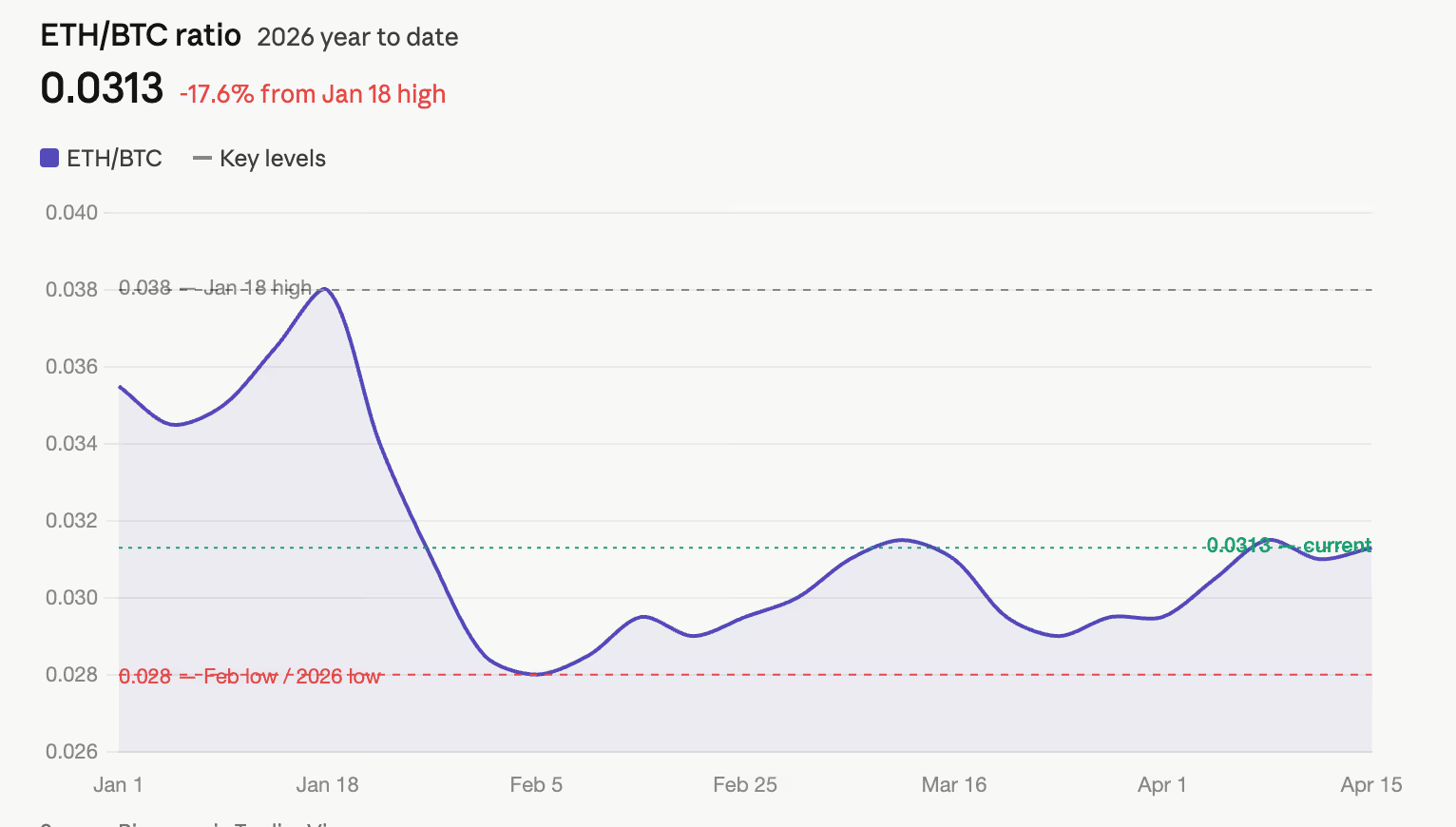
A closely watched gauge of ether’s relative strength against bitcoin has climbed to a three month high, backed by surging network activity and record stablecoin inflows on Ethereum.
The ether-bitcoin ratio traded near 0.0313 on Wednesday, up from a 2026 low around 0.028 in February but still well below the January 18 high near 0.038. Ether gained 4% over the past seven days to trade near $2,325, outpacing bitcoin’s 3.9% move over the same period.

The ETH/BTC ratio tracks the relative price of ether against bitcoin on crypto exchanges and is one of the most widely followed gauges of risk appetite across the digital asset market.
A rising ratio signals that capital is flowing into ether and, by extension, riskier parts of the crypto ecosystem. A falling ratio points to a preference for bitcoin’s relative safety.
The pair peaked above 0.08 in late 2021 before entering a prolonged decline that accelerated through 2024 and into 2025, dragged lower by bitcoin ETF-driven demand, weakened fee revenue on Ethereum’s base layer following the Dencun upgrade, and a broader rotation away from altcoins.
When ether outperforms bitcoin on risk-on days rather than simply tagging along, it historically suggests capital is beginning to rotate rather than chase the same trade. The signal strengthens if ether holds up better than bitcoin during the next pullback.
Part of the case for a sustained move rests on Ethereum’s on-chain fundamentals, which have been diverging from the token’s depressed valuation.
New users on the network surged 82% quarter-over-quarter in Q1 to 284,000, according to data from Artemis, while total transactions hit a record 200.4 million for the quarter, a 43% increase from the prior period.
Stablecoin supply on Ethereum also reached an all-time high of $180 billion, up 150% over the past three years, per Token Terminal. The network holds roughly 60% of the global stablecoin market, reinforcing its dominance as the primary settlement layer for tokenized dollars and suggesting a long-term demand anchor for ETH even as short-term price action lags.
However, ether is still more than 50% below its 52-week high of $4,831, and the ratio would need to reclaim the 0.035 zone on a weekly close to provide evidence that the recovery has legs beyond a short-squeeze bounce.


X has launched Smart Cashtags on iPhone for users in the United States and Canada, bringing real-time financial data for stocks and crypto tokens directly into the app’s timeline.
The feature, first revealed in January 2026, went live on April 15 after months of anticipation around the platform’s finance ambitions.
What X Cashtags Do and How They Work
X Head of Product Nikita Bier announced the rollout in a recent post.
“X has always been the best source of financial news for traders and investors. Billions of dollars are allocated every day based on what people read on Timeline,” he wrote.
Follow us on X to get the latest news as it happens
The feature streamlines how users discover and track financial assets on the platform. When users search for or post a cashtag or contract address, the system now automatically suggests relevant stocks or cryptocurrencies, allowing them to quickly select the intended asset.
Additionally, tapping any cashtag opens a dedicated feed of related posts, along with a live price chart. This enables them to follow market discussions and price movements without leaving the platform.
Alongside Cashtags, X announced a pilot integration with Wealthsimple, one of Canada’s leading brokerages. Canadian users will see a trading button on Cashtag pages.
This will allow them to buy or sell the asset without leaving the app. Bier called the move “just a small preview of what’s to come.”
“Our vision is more than just charts. The content on X is valuable & actionable, so trading should be frictionless,” Bier added.
The current launch is limited to the iPhone. However, Bier confirmed that web, Android, and global availability are “coming very soon.”
The Cashtags rollout coincides with X’s broader push into financial services, aligned with Elon Musk’s ambition to turn the platform into an “everything app.” It also follows a cryptic post from Bier suggesting that X should ship something to help fix crypto’s tough year.
While he did not specify whether this was the launch in question, the executive described cashtags as the platform’s first step toward positioning itself as the “best destination” for the finance and crypto communities.
The post X Rolls Out Cashtags as First Step in Finance and Crypto Push appeared first on BeInCrypto.
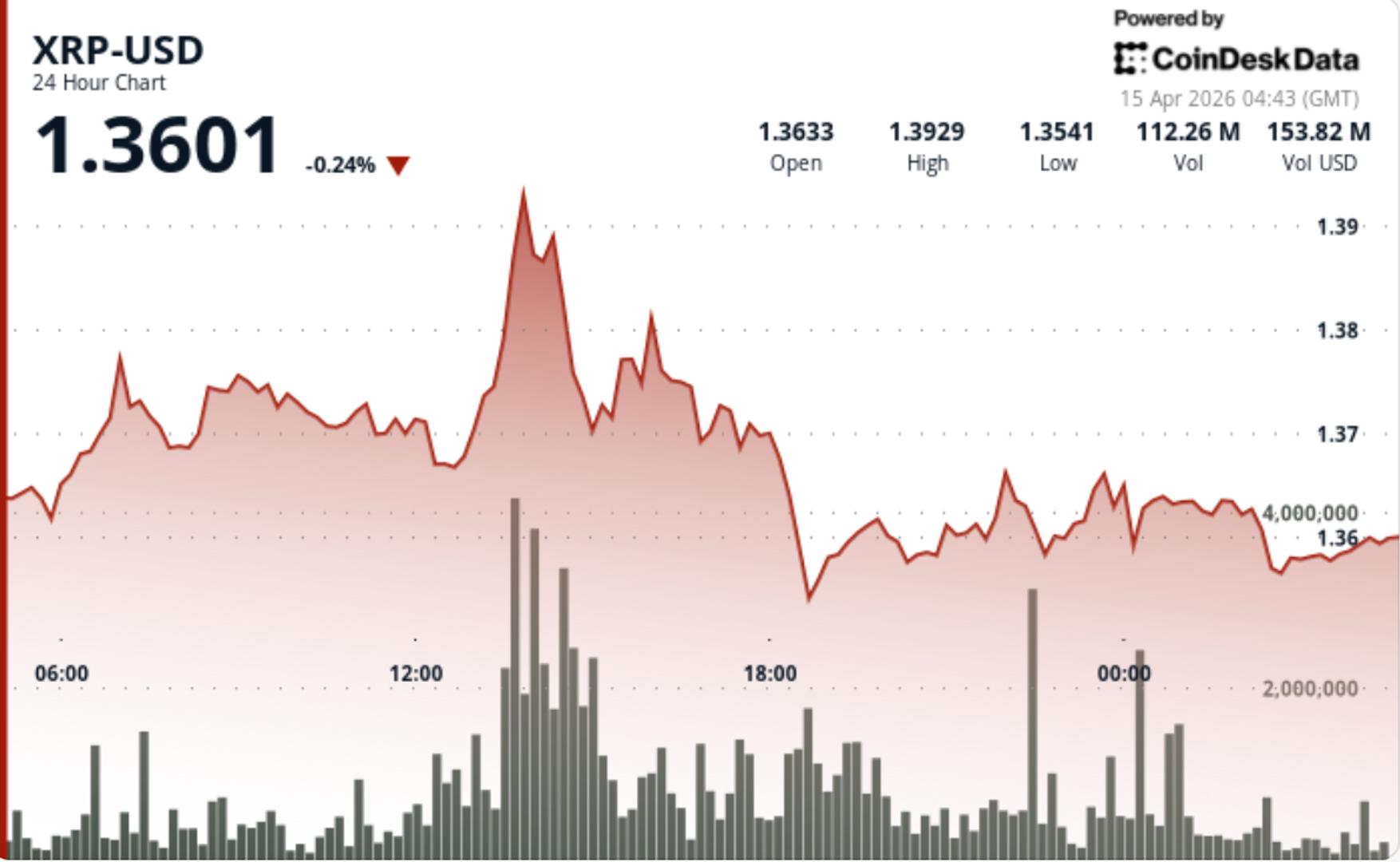
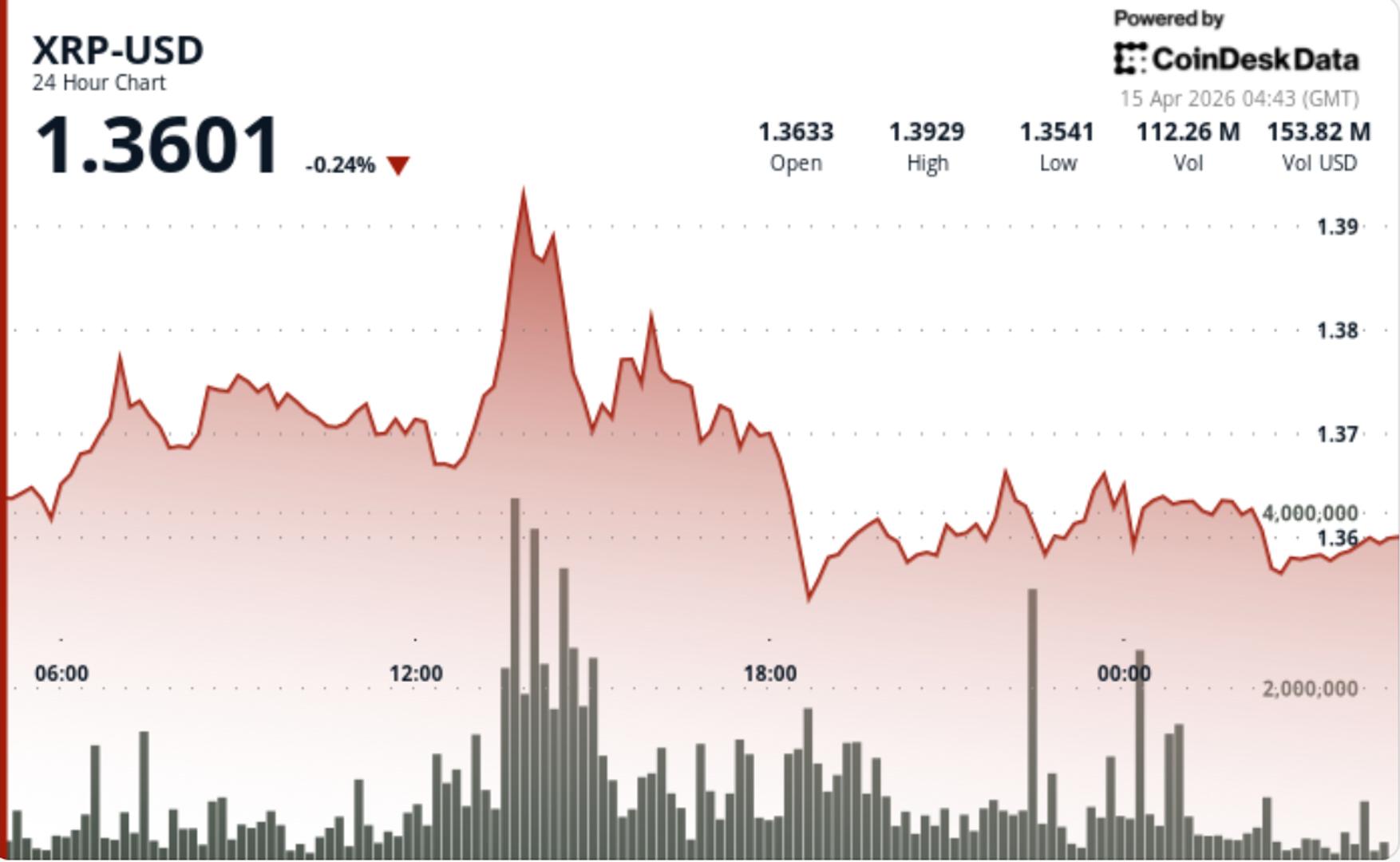
XRP is pushing higher again, with volume confirming the move, but it still has to prove this is more than a short-term breakout. The rally is holding for now, and the addition of real-world usage through Rakuten gives it a stronger narrative than recent moves.
News Background
• Japan’s e-commerce giant Rakuten is integrating XRP into its payments app, allowing 44 million users to spend it across more than 5 million merchants. Users can also buy XRP using loyalty points and hold it within Rakuten Wallet, embedding the token into a major consumer ecosystem.
• The move ties XRP into one of Japan’s largest rewards systems, where over $23 billion worth of points are in circulation. Ripple called it one of the most significant milestones for XRP adoption, reinforcing its push into Asia alongside long-standing partnerships like SBI Ripple Asia.
Price Action Summary
• XRP moved from $1.32 to $1.38, breaking out of the $1.325-$1.33 resistance zone on strong volume.
• The rally built gradually with sustained buying rather than a single spike, indicating accumulation.
• Price is now consolidating just below $1.38, holding gains but not yet extending into a fresh leg higher.
Technical Analysis
• The breakout stands out because of volume. The move was backed by clear participation, not thin liquidity.
• Whale accumulation and rising open interest show positioning is building behind the move.
• Despite this, XRP is still trading within a broader downtrend channel, so the structure has not fully flipped bullish.
• ETF outflows and continued realized losses suggest longer-term conviction remains mixed even as short-term momentum improves.
What traders should watch
• $1.37 is now the key pivot. Holding above it keeps the breakout intact and supports continuation.
• $1.40 to $1.42 remains the real test. A clean break here would shift momentum more meaningfully.
• A move back below $1.32 to $1.30 would invalidate the breakout and return XRP to its prior range.


Crypto exchange Kraken has hinted it is still going ahead with an initial public offering despite reports suggesting the plan was put on hold last month due to market conditions.
Kraken filed for a confidential IPO with the US Securities and Exchange Commission in November, but an unconfirmed report in March suggested that the plan may have been frozen.
Speaking at the Semafor World Economy 2026 conference on Tuesday, Kraken co-CEO Arjun Sethi didn’t address the pause but confirmed the company had “confidentially filed” for an IPO when asked by Semafor reporter Rohan Goswami whether “there are plans to take Kraken public soon.”
“Is that news?” Goswami asked, to which Sethi responded: “I believe that’s news.”
@arjunsethi CEO, @krakenfx reveals that the company has privately filed to become public.
“Are there plans to take Kraken public soon?
Uh, we confidentially filed.
Oh, is that news?
I believe that’s news.” pic.twitter.com/QJRH8YStMA
— Semafor (@semafor) April 14, 2026
Cointelegraph reached out to Kraken to confirm whether Kraken is actively pursuing the IPO or has pushed back the timeline, but did not receive an immediate response.
Sethi’s comments come as German financial markets platform Deutsche Börse Group invested $200 million in Kraken’s parent firm, Payward, in exchange for a 1.5% fully diluted stake on Tuesday.
The deal placed Kraken’s valuation at $13.3 billion, down from $20 billion in November.
Kraken told Cointelegraph that the Deutsche Börse Group investment seeks to bring crypto and TradFi closer together as a “single, cohesive infrastructure for institutional clients” rather than parallel systems.
Kraken’s IPO plans through a long-term lens
Speaking more broadly about going public at the Semafor conference, Sethi dismissed the idea that Kraken’s IPO may have been driven, or stalled by, policy developments in Washington.
Related: Bitget rolls out SpaceX-linked pre-IPO proxy with Republic
“If you live day by day, quarter by quarter, these things are meaningful,” Sethi said. But “if you’re thinking about your company three, five, 10 or 20 years out, none of this is meaningful. It just doesn’t matter.”
Sethi also suggested that Kraken isn’t merely going public to gain more access to capital, stating that it depends on the specific market and how much trust there is with regulators.
Magazine: Singapore is no ‘crypto hub’ — but it is serious about stablecoins: StraitX CEO

Bitcoin’s addressable market has the potential to surpass the $34 trillion gold market if it is eventually widely used as both a currency and a store of value, according to Bitwise’s chief investment officer Matt Hougan.
Hougan said on Tuesday that while Bitcoin (BTC) has been seen as a contender to gold, the war in Iran has shown that Bitcoin can also serve in a “currency-like manner,”, referring to Iran’s proposed plan to charge a toll that can be paid in crypto for ships to navigate the Strait of Hormuz.
“In a world where countries have weaponized their financial rails, Bitcoin is emerging as an apolitical alternative,” Hougan said.
“It tells you that Bitcoin’s total addressable market is probably a lot bigger than the… gold market alone.”
Hougan previously predicted that if Bitcoin captures even 17% of the store-of-value market over the next decade, it could reach $1 million a coin. Taking a role as an international currency would likely see it go much higher.

“If Bitcoin starts to take on a dual role as both a store of value, like gold, and an actual currency, like the dollar, we may need to revise our targets higher.”
Bitcoin is trading around $74,500 with a market capitalization of roughly $1.4 trillion, according to CoinGecko. Gold is trading for $4,854 an ounce, and its market cap is estimated to be more than $33.7 trillion as of Wednesday.
Related: Bitcoin bounces to $72.5K as markets react to US Strait of Hormuz blockade
Bitcoin is already functioning as a store of value for people in high-inflation economies.
Citizens of Argentina, Turkey, and Venezuela have experienced persistent inflation and currency collapses, prompting many to switch to Bitcoin and protect their wealth.
A January Coinbase survey found that 87% of Argentinians flagged crypto and blockchain technology as a way to enhance their financial independence, while nearly three in four respondents saw crypto as a solution to challenges like inflation.
Bitcoin has also seen adoption by corporates looking to bolster their balance sheets.
Private and public companies tracked by BitBo collectively hold more than 1.5 million Bitcoin valued at more than $116 billion.

However, Bitcoin has also grown as a payment method, with academic publishing company Springer Nature identifying about 11,000 merchants globally using BTC Map data that currently accept Bitcoin as a form of payment.
Magazine: Bitcoin quantum-safe without upgrade? CZ’s 2031 crypto vision: Hodler’s Digest
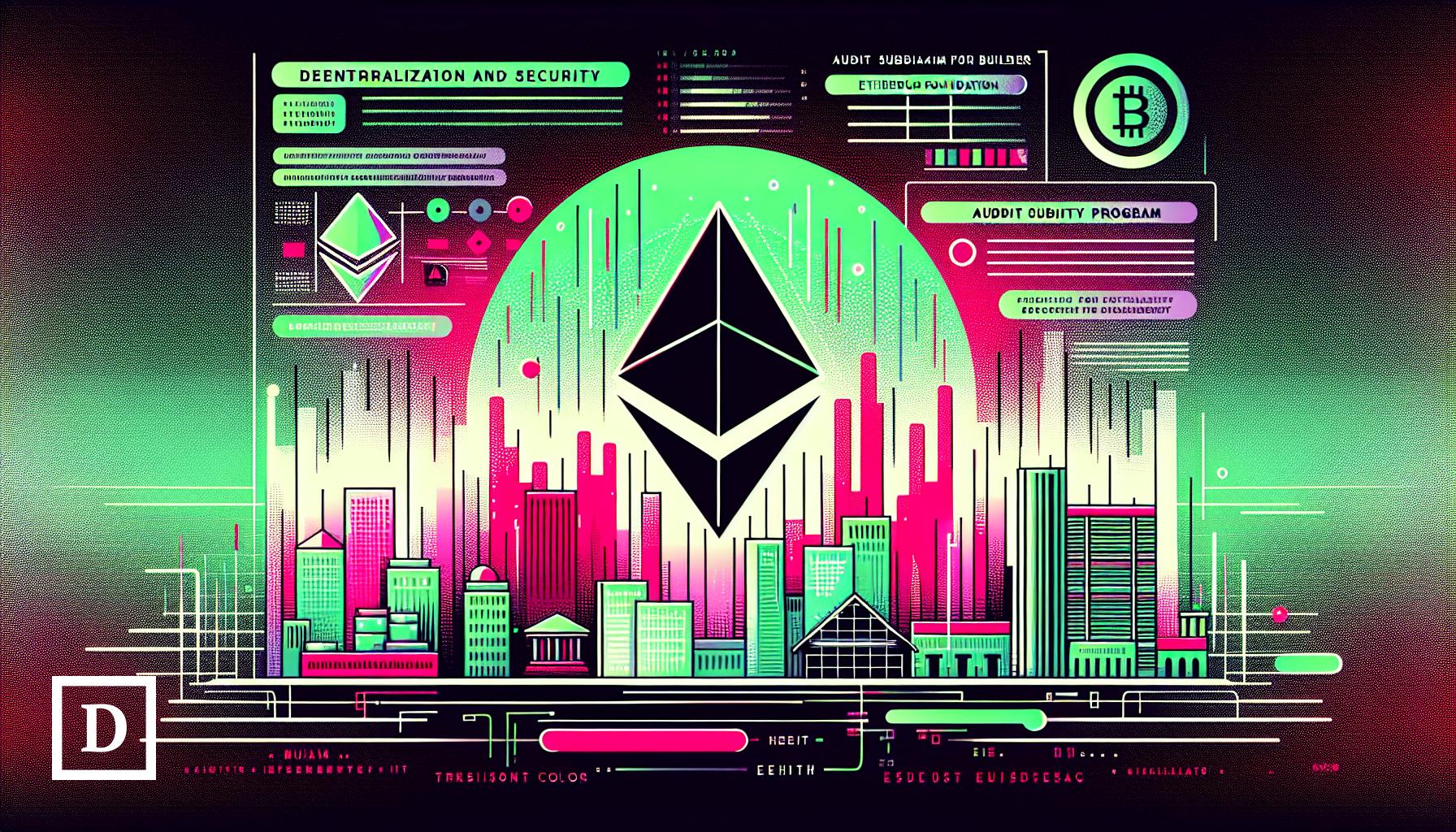
The Ethereum Foundation announced a joint initiative with audit providers to subsidize security audit costs for Ethereum builders.
The Ethereum Foundation announced an audit subsidy program on Tuesday designed to reduce the cost of security audits for Ethereum builders. The joint initiative with audit providers aims to make security audits more accessible to projects within the ecosystem while strengthening overall security standards.
Security audits are considered a best practice in the Ethereum ecosystem but remain expensive, creating a barrier for many builders. The subsidy program directly addresses this friction point by making professional security reviews more affordable for developers building on Ethereum.
Sources: Ethereum Foundation
This article was generated automatically by The Defiant’s AI news system from publicly available sources.
Cypherpunk Jameson Lopp and five co-authors from the Bitcoin quantum security space have proposed freezing quantum-vulnerable coins on the Bitcoin network, including Satoshi’s $74 billion stash, to prevent them from being stolen once quantum computers become available.
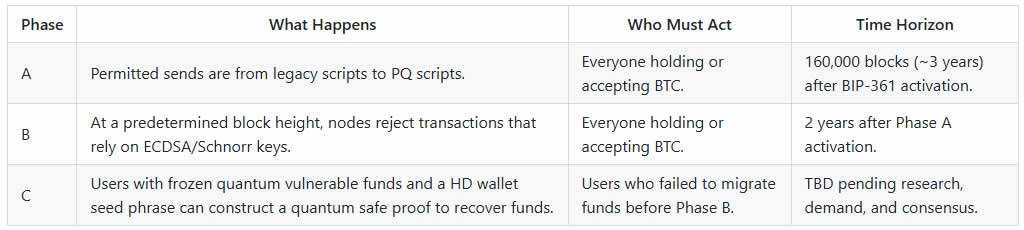
The move is the second part of a three-stage proposal under BIP-361 called the “Post Quantum Migration and Legacy Signature Sunset,” which was posted as a draft to GitHub on Tuesday.
It addresses a major risk to Bitcoin — the potential use of quantum computers to steal roughly 1.7 million BTC locked in early P2PK addresses, including Satoshi’s stash, which are not quantum-proof.
In the wrong hands, these coins could significantly undermine the value of the network.
Three phases to quantum security
BIP-361 builds on BIP-360, released in February, which proposed a soft fork for a new output type called pay-to-Merkle-root (P2MR). It works similarly to Bitcoin’s existing Taproot (P2TR) addresses but with the quantum-vulnerable key path removed.
While BIP-360 protects new coins going forward, it does not address the roughly 34% of the supply that remains vulnerable unless it is transferred to new addresses.
BIP-361 proposes that three years after activation, phase A of the proposal would prevent any new BTC from being sent to old-style addresses, with all users on quantum-resistant address types.
The second phase (B) would invalidate old-style signatures and any Bitcoin still sitting in vulnerable addresses becomes effectively frozen five years after activation.
Related: Bitcoin can be made quantum-safe without protocol upgrade: Researcher
Phase C provides a potential rescue mechanism using zero-knowledge proofs, allowing people who missed the deadline but still have their seed phrase to recover frozen funds.

The authors described it as a “private incentive to upgrade” because lost or frozen coins only make everyone else’s coins worth slightly more, whereas quantum-recovered coins make everyone else’s worth less.
“This is not an offensive attack, rather, it is defensive: our thesis is that the Bitcoin ecosystem wishes to defend itself and its interests against those who would prefer to do nothing and allow a malicious actor to destroy both value and trust.”
Bitcoin community pushes back
However, the proposal would render some existing UTXOs unspendable by their owners if they fail to upgrade, which some have seen as a significant philosophical departure from Bitcoin’s ethos.
Bitcoin protocol developer and researcher Mark Erhardt, who shared BIP-361 on X on Tuesday, was met with community pushback and comments such as “this quantum proposal is highly authoritarian and confiscatory … there is no good rationale for forcing the upgrade and rendering old spends invalid.”
Bitcoin Magazine editor Brian Trollz rejected the proposal outright, TFTC founder Marty Bent called it “laughable,” and Phil Geiger, head of business development at Metaplanet, quipped, “We have to steal people’s money to prevent their money from being stolen.”
Cointelegraph reached out to Lopp for comments, but did not get an immediate response.
Magazine: Nobody knows if quantum-secure cryptography will even work
A high-stakes negotiation over stablecoin yields is shaping the path forward for the Senate’s crypto market structure bill, with lawmakers racing to clear a stalemate that has stretched since the House passed the CLARITY Act in July. Senator Thom Tillis signaled he would release a draft agreement this week aimed at resolving a central dispute: whether third parties, including crypto exchanges, should be allowed to pay stablecoin yields to users. The draft’s reception by both banks and the crypto industry will likely determine whether a broader compromise can finally move the legislation toward floor consideration.
The draft has already been circulated to banking and crypto representatives, according to people familiar with the matter cited by Politico. Initial reactions included pushback from the banking side, which worries that full text is needed to gauge the practical consequences of any yield-related prohibitions. Tillis acknowledged that the document is still evolving and stressed that the group is negotiating against a backdrop of concerns about deposit flight tied to yield programs. “Directionally, it has been instructed by what we consider to be the legitimate issues that we have around deposit flight when we’re talking about yield,” Tillis told Politico.
Key takeaways
- Sen. Thom Tillis intends to publicly release a draft agreement this week that addresses the Senate’s crypto market structure bill and a contentious ban on third-party stablecoin yield payments.
- Banking and crypto groups have expressed concerns about the proposed language, and a full text release is seen as essential for meaningful negotiations.
- The talks have been mediated by the White House, with at least three meetings held to bridge gaps between the sectors.
- Stablecoin yields remain a practical and revenue-critical component for many crypto platforms, complicating policy choices about how yield payments should be treated under banking and securities laws.
- If consensus remains elusive, Tillis says another round of negotiations could occur, potentially marking the fourth government-led mediation effort on the issue.
Draft could unlock a long-standing impasse on yields
The Senate’s crypto market structure bill is designed to outline how the nation’s primary financial regulators—namely the two major federal watchdogs—would oversee the crypto sector. Its chances of advancement depend in part on resolving a central dispute: whether third parties, including exchanges, may offer yield payments on stablecoins or whether such activity should be curtailed or banned altogether. The prospect of a prohibition has been a sticking point since early conversations intensified earlier in the year.
Advocates for a broader, clearer regulatory framework argue that stablecoins — and the incentives around their yields — intersect with traditional banking and savings behavior in ways that could affect deposit stability and consumer protection. Banks and financial incumbents fear yield programs could intensify deposit flight, potentially destabilizing bank balance sheets and prompting risk management concerns. In contrast, crypto industry participants have pushed for clearer guardrails that would allow legitimate yield activities to continue under a predictable regulatory regime, rather than a blanket restriction that could push operations overseas or into a more uncertain gray area.
Tillis’s comments underscore a willingness to adjust the draft as negotiations proceed. He noted progress on anti-evasion provisions but indicated that enforcement language remains a work in progress. With the White House having hosted multiple meetings between the groups, the process has been shaped not only by lawmakers but by executive-branch engagement intended to surface workable compromises rather than political theatrics. The goal, as described by Tillis, is to land on a “mark” — a final set of provisions that both sides can accept and that lawmakers can advance to a vote.
Industry tensions: what’s in play and why it matters
Stablecoin yields are a practical business line for crypto platforms, representing a channel through which users earn returns on their digital dollars. Banks view such yield payments through the lens of traditional financial stability and supervision, arguing that third-party yield offerings can complicate customer behavior around savings, liquidity, and the movement of deposits. The core concern is depositor discipline and the potential for destabilizing flows that could spill over into the broader regulated banking system.
Crypto industry participants counter that clear, enforceable rules are preferable to opaque or ad hoc prohibitions. They argue that a well-defined framework could bring stablecoins and their yield mechanisms under accountability without forcing projects to relocate out of the United States or shutter legitimate financial services. The ongoing dialogue, including White House mediation, reflects a broader policy question: how to balance rapid financial innovation with prudent oversight. The outcome could influence how exchanges and other service providers structure stablecoin programs for the foreseeable future.
The evolving draft has already drawn scrutiny from observers who remind markets that the bill’s trajectory could affect more than the yield debate. A stable regulatory environment that clarifies which actors can provide yield and under what conditions can reduce uncertainty for issuers, users, and institutional participants. Conversely, a restrictive stance may curb experimentation and push some yield initiatives underground, creating potential compliance challenges.
Next steps: where the process goes from here
With Tillis indicating openness to further changes, the immediate question is whether the forthcoming draft will present a sufficiently narrow and precise set of rules to garner bipartisan support. If banking and crypto groups still diverge after a full text becomes public, Tillis said he would consider convening another negotiation session that could bring in additional participants or proposals. He described the process as potentially continuing through a fourth round of government-facilitated talks if needed to finish the “final pieces” and reach a mark that lawmakers can advance.
The momentum depends on how convincingly the draft reconciles two core concerns: protecting the stability of the banking system and enabling legitimate, compliant crypto yield offerings. The White House-mediated meetings signal a heightened emphasis on achieving a balanced outcome that can withstand political scrutiny while delivering a practical regulatory framework for markets. Investors, traders, and builders in the crypto space will be watching closely for the exact language on enforcement, anti-evasion measures, and the precise scope of any ban on third-party yield payments.
Broader implications for policy, markets, and adoption
Beyond the immediate legislative maneuvering, the outcome of the yield provisions could shape the tempo of stablecoin adoption and the maturation of the crypto economy in the United States. A well-structured agreement that provides clarity without stifling innovation could reassure issuers and users that stablecoins will operate under predictable rules. It could also influence how exchanges, custodians, and on/off-ramp providers design their product offerings to align with future compliance expectations. For policymakers, the challenge remains to strike a balance between consumer protection, financial stability, and the competitive advantage that clear rules can offer to domestic innovators.
As the draft is unveiled and debated in the weeks ahead, market participants should monitor not only the yield provisions themselves but also the broader framework for how the bill would allocate regulatory authority between the nation’s principal watchdogs. The ultimate shape of the text will influence not just the economics of stablecoins but the regulatory posture that defines the U.S. stance toward crypto markets in the coming years.
Thus, the key questions for readers and market participants are straightforward: Will the forthcoming draft provide a credible path to de-risk yield programs while preserving financial stability? How decisive will the enforcement language be, and what guardrails will govern anti-evasion measures? And finally, when can market participants expect a final mark that the Senate can move through committee and toward a vote?
Keep watching regulatory filings and official statements for the full draft text and any subsequent revisions. The next few weeks are likely to define whether the United States can strike a middle ground that both protects consumers and supports responsible financial innovation in stablecoins.
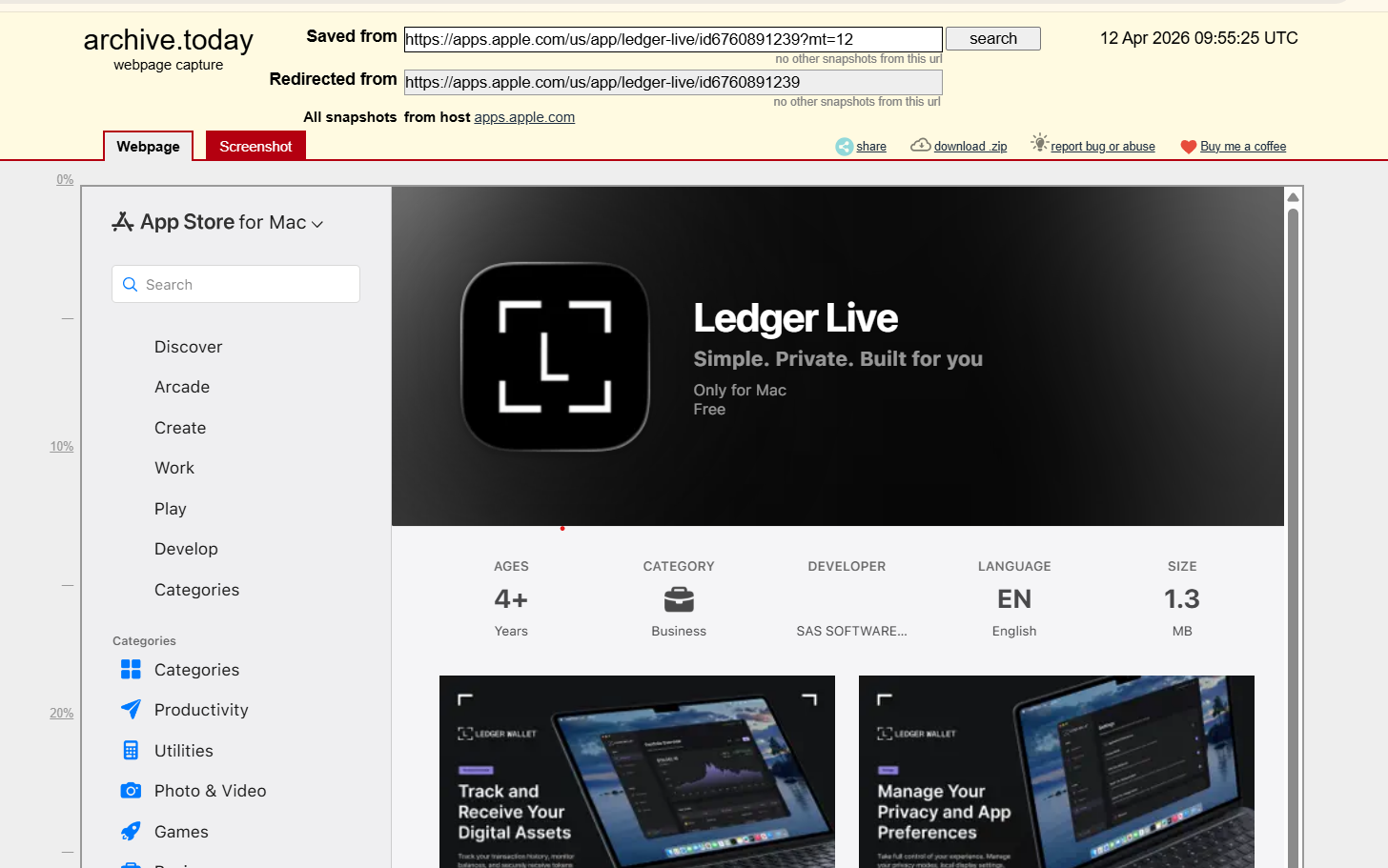
Onchain investigator ZachXBT said a fake Ledger Live app listed on Apple’s App Store was tied to about $9.5 million in crypto stolen from more than 50 suspected victims between April 7 and 13.
In a Tuesday Telegram post, ZachXBT said the alleged thefts affected users across Bitcoin, Solana, Tron, XRP Ledger and Ethereum Virtual Machine (EVM)-compatible networks. He claimed the stolen funds were laundered through over 150 KuCoin deposit addresses allegedly tied to AudiA6, which he described as a centralized mixing service.
ZachXBT said the fake app was removed by Apple on April 13 and identified three seven-figure losses among the largest known cases. He said one victim lost about $1.95 million in Bitcoin (BTC), staked Ether (stETH) and Ether (ETH), another lost $3.23 million in USDt (USDT) on April 9, and a third victim lost about $2 million in USDC (USDC) on April 11.
ZachXBT said Kucoin had seen an increase in illicit activity recently, and pointed out that the company had been banned from onboarding new European Union users in February, shortly after receiving its Markets in Crypto Assets Regulation (MiCA) license. He also questioned whether the incident presented grounds for a class action against Apple.
Related: Counterhacker exposes DPRK unit that made $1M a month working IT jobs
Key details, including the total losses, victim count and laundering route, remain based on ZachXBT’s findings and had not been confirmed by Apple or KuCoin at publication. Cointelegraph asked both companies for comment but had not received a response by publication.
Ledger warns users never to enter seed phrase into apps
Ledger chief technology officer Charles Guillemet said in a statement to Cointelegraph that the company never asks users for their 24-word recovery phrase and warned that official-looking software environments should not be treated as inherently safe.

“You cannot trust the software environment around you – not your browser, not your app store, not your desktop,” Guillemet said, adding that attackers “operate wherever the opportunity exists,” including official distribution platforms.
Related: Web3 hacks cost $482M in Q1 as phishing drives majority of losses: Hacken
The latest incident follows a smaller but similar case reported on Monday. Musician Garrett Dutton, also known as “G. Love,” said he lost about $420,000 in BTC after downloading a malicious app impersonating Ledger Live from Apple’s App Store and entering his seed phrase. ZachXBT said the stolen assets were sent to deposit addresses associated with KuCoin.
Magazine: How AI just dramatically sped up the quantum risk for Bitcoin
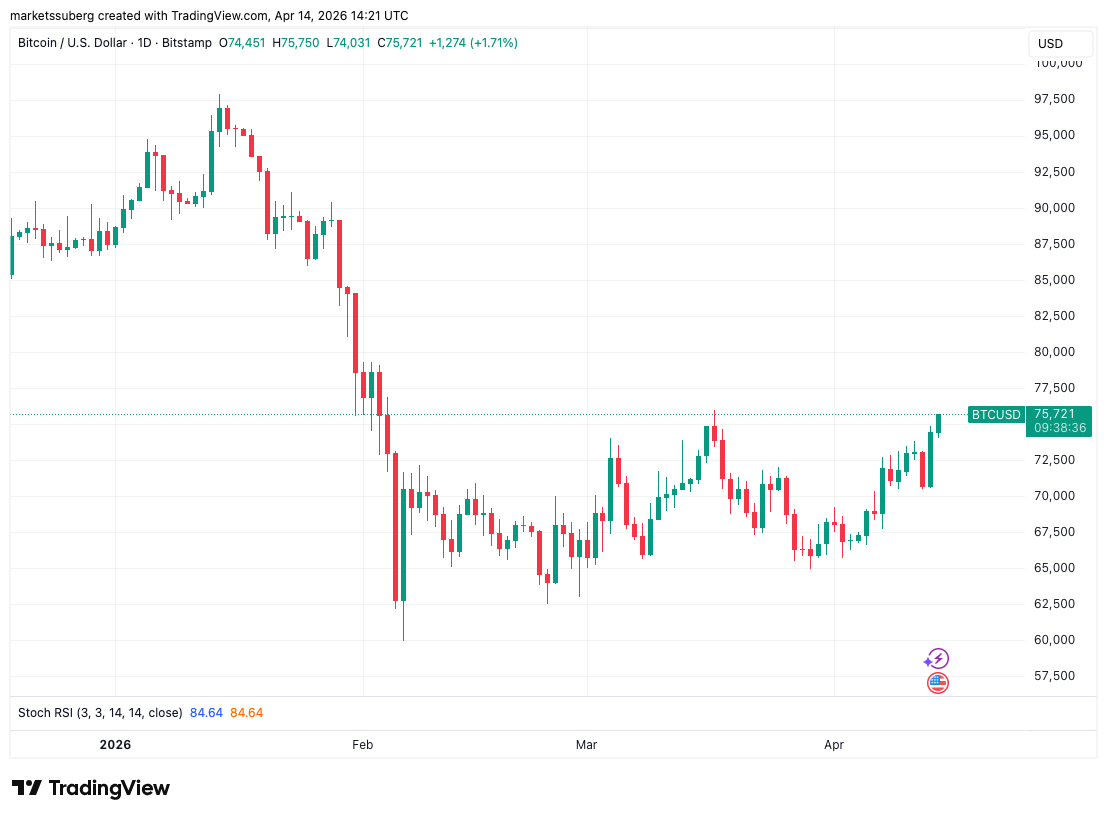
Bitcoin (BTC) reached monthly highs above $76,000 on Tuesday as US inflation data continued to buoy risk assets.
Key points:
-
Bitcoin upside continues as bulls target $76,000 — the highest price since early February.
-
US PPI inflation remains below market expectations despite the war in Iran having no end in sight.
-
Bitcoin traders stay risk-off on overall market strength.
Bitcoin tops $76,000 amid fears that “inflation is back”
Data from TradingView showed new local highs of $76,038 on Bitstamp — Bitcoin’s best performance since mid-March and on track to hit a two-month record.

The March print of the Producer Price Index (PPI) came in below expectations despite the US-Iran war.
“On an unadjusted basis, the index for final demand rose 4.0 percent for the 12 months ended in March, the largest 12-month advance since increasing 4.7 percent in February 2023,” an official statement from the US Bureau of Labor Statistics (BLS) noted.
“The March rise in final demand prices can be attributed to a 1.6-percent advance in the index for final demand goods. Prices for final demand services were unchanged.”
Markets had expected a 4.7% year-on-year increase, with a 1.1% month-on-month jump — but it ultimately came in at 0.5%.

Despite this, reactions were hawkish, noting that inflation was showing a clear uptrend overall.
“We are now officially seeing inflation metrics in the US that are at 4% or higher,” trading resource The Kobeissi Letter responded on X.
“Inflation is back.”

Correspondingly, markets kept bets of interest-rate cuts from the Federal Reserve firmly at the end of next year, per data from CME Group’s FedWatch Tool.
Bitcoin’s 21-week trend line is a line in the sand
Among traders, BTC price action continued to cause suspicion.
Related: Oil price surges 8% on Iran tensions: Five things to know in Bitcoin this week
CryptoReviewing, the pseudonymous cofounder of the trading community Wealth Capital, noted that the move to $75,000 had triggered a wave of short liquidations.
$BTC $73,500 – $76,500 liquidity sweep complete ✅$BTC precisely wiped out the largest liquidation cluster zone at $73.5k – $76.5k within hours from this post.
More liquidity updates coming soon ✍️ https://t.co/b4vFL4X5Oi pic.twitter.com/sSCO42NaXV
— CryptoReviewing (@CryptoReviewing) April 14, 2026
As Cointelegraph reported, market participants had already been gearing up for a short squeeze, with its price still stuck in its local range.
“Bitcoin’s recent PA hasn’t deviated much from what we saw in 2022,” Keith Alan, cofounder of trading resource Material Indicators, argued on the day.
“Nothing says that $BTC has to continue to mimic history, but if it does we should see price flirt with the 21-Week Moving Average ~$78.3k.”

Alan said that the trend line would “not be an easy level to break.”
“A rejection from that level would send the Weekly RSI back below the R/S flip line at 41, and send BTC to the next leg down,” he warned, referring to the relative strength index (RSI) indicator.
Earlier, Cointelegraph reported on early RSI signals regarding a bear-market trend reversal.
The US passage of the CLARITY Act and the end of the war in Iran, on the other hand, could send Bitcoin back toward its yearly open price of $87,500.
This article is produced in accordance with Cointelegraph’s Editorial Policy and is intended for informational purposes only. It does not constitute investment advice or recommendations. All investments and trades carry risk; readers are encouraged to conduct independent research before making any decisions. Cointelegraph makes no guarantees regarding the accuracy or completeness of the information presented, including forward-looking statements, and will not be liable for any loss or damage arising from reliance on this content.
Kristi Yamaguchi opens up about divorce from ex-NHL player Bret Hedican in rare update

Deterministic AI: Securing Financial Accuracy #shorts

Hopes rise for more negotiations as US military says Iran blockade in effect


-

 Politics4 days ago
US brings back mandatory military draft registration
-
 Sports4 days ago
Man United discover Nico Schlotterbeck transfer fee as defender reaches Dortmund agreement
-

 Fashion4 days ago
Weekend Open Thread: Veronica Beard
-

 Politics5 days ago
Malcolm In The Middle OG Turned Down ‘Buckets Of Money’ To Appear In Reboot
-

 Politics3 days ago
World Cup exit makes Italy enter crisis mode
-

 Crypto World6 days ago
Canary Capital Files SEC Registration for PEPE ETF
-

 Business4 days ago
Tesla Model Y Tops China Auto Sales in March 2026 With 39,827 Registrations, Beating Cheaper EVs and Gas Cars
-

 Crypto World1 day ago
The SEC Conditionalises DeFi Platforms to Be Avoided for Broker Registration
-

 Crypto World1 day ago
SEC Signals Exemption for Crypto Interfaces From Broker Registration
-

 Crypto World7 days ago
Bitcoin recovers as US and Iran Agree a Ceasefire Deal
-
 NewsBeat2 days ago
Pep Guardiola and Gary Neville agree over Arsenal title problem that benefits Man City
-

 Business5 days ago
OpenAI Halts Stargate UK Data Centre Project Over Energy Costs and Copyright Row
-

 Business4 days ago
Ireland Fuel Protests Enter Day 5 as Blockades Spark Shortages and Government Prepares Support Package
-

 Politics5 days ago
LBC Presenter Mocks Trump Over Iran War Failures
-

 Crypto World4 days ago
Federal judge blocks Arizona from bringing criminal charges against Kalshi
-
 NewsBeat3 days ago
JD Vance announces ‘no agreement’ with Iran over nuclear weapons fear
-

 Tech5 days ago
A version of Windows 10 released a decade ago is now eligible for additional security patches
-

 Crypto World24 hours ago
SEC Proposes Certain Crypto Interfaces Don’t Need to Register as Brokers
-

 Business4 days ago
IMF retains floor for precautionary balances at SDR 20 billion
-

 NewsBeat20 hours ago
Trump and Pope Leo: Behind their disagreement over Iran war
You must be logged in to post a comment Login