
Crypto World
Bitcoin barely blinks as U.S. hits Iran, sending oil higher and stocks lower



BTC remains August’s best-performing asset after the latest escalation in geopolitical tensions.


NPS asked those who know of hikers or backpackers in the inner canyon along the Bright Angel Creek corridor on Saturday, “as well as anyone who had a campground reservation in the affected corridor,” to provide information.
The flash-flood event occurred in Bright Angel Canyon and the Phantom Ranch area on Saturday afternoon at around 2:30 p.m. Arizona is currently in the throes of the monsoon season, and storms poured over the Grand Canyon from early Saturday morning and returned in the evening.
Nearly all footbridges over Bright Angel Creek were destroyed in the floods, the Park Service said, preventing hikers from crossing. NPS is continuing to assess the extent of the damage. Parts of the canyon—Phantom Ranch, Bright Angel Campground, the Phantom Ranch Canteen and cabins, and the entire North Kaibab Trail from the North Kaibab Trailhead to Phantom Ranch—were closed until further notice.
The Transcanyon Waterline, a 12.5-mi. pipeline in the Grand Canyon that carries water for drinking and fire suppression has also been damaged. With that pipeline out of action, the park has a limited water supply and has resorted to conservation measures.
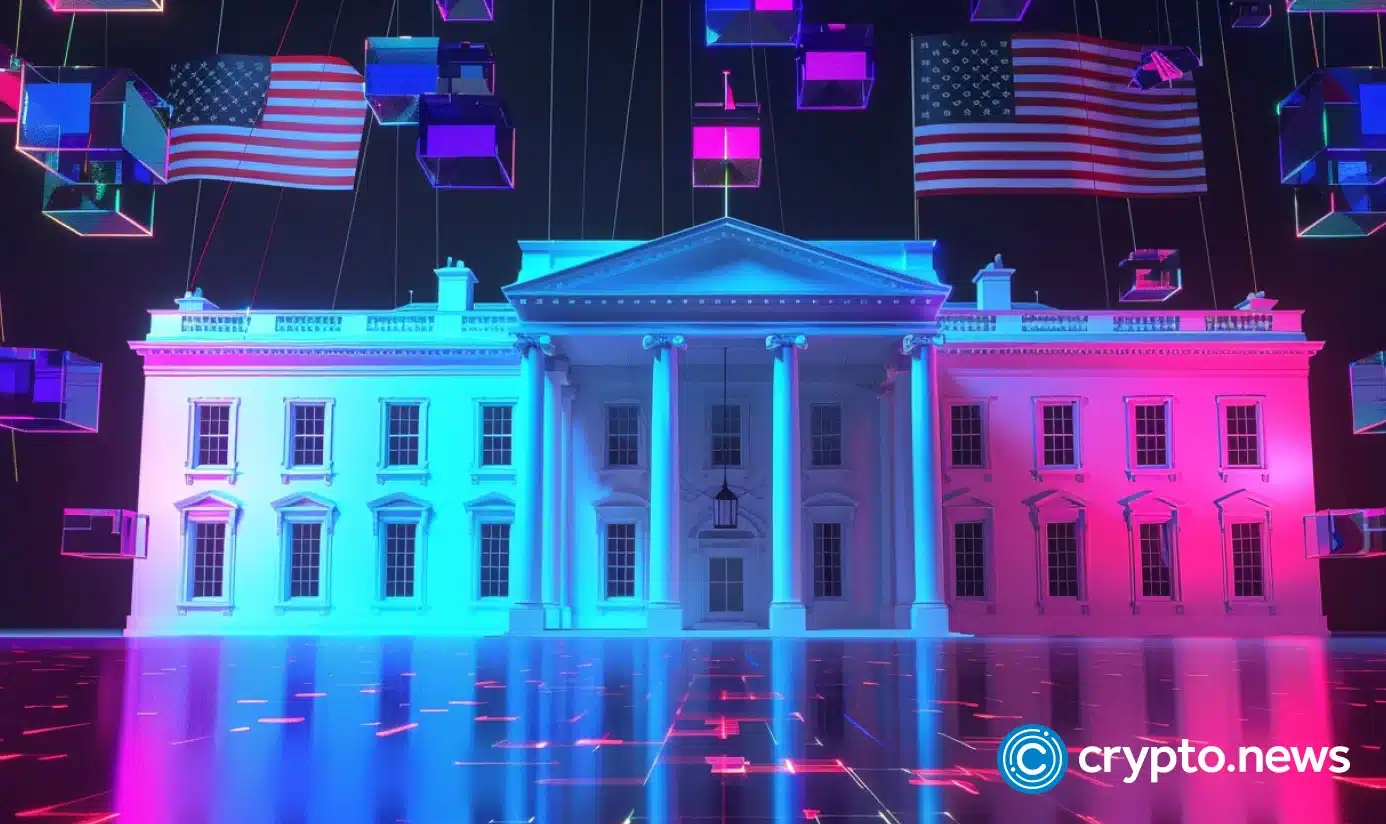
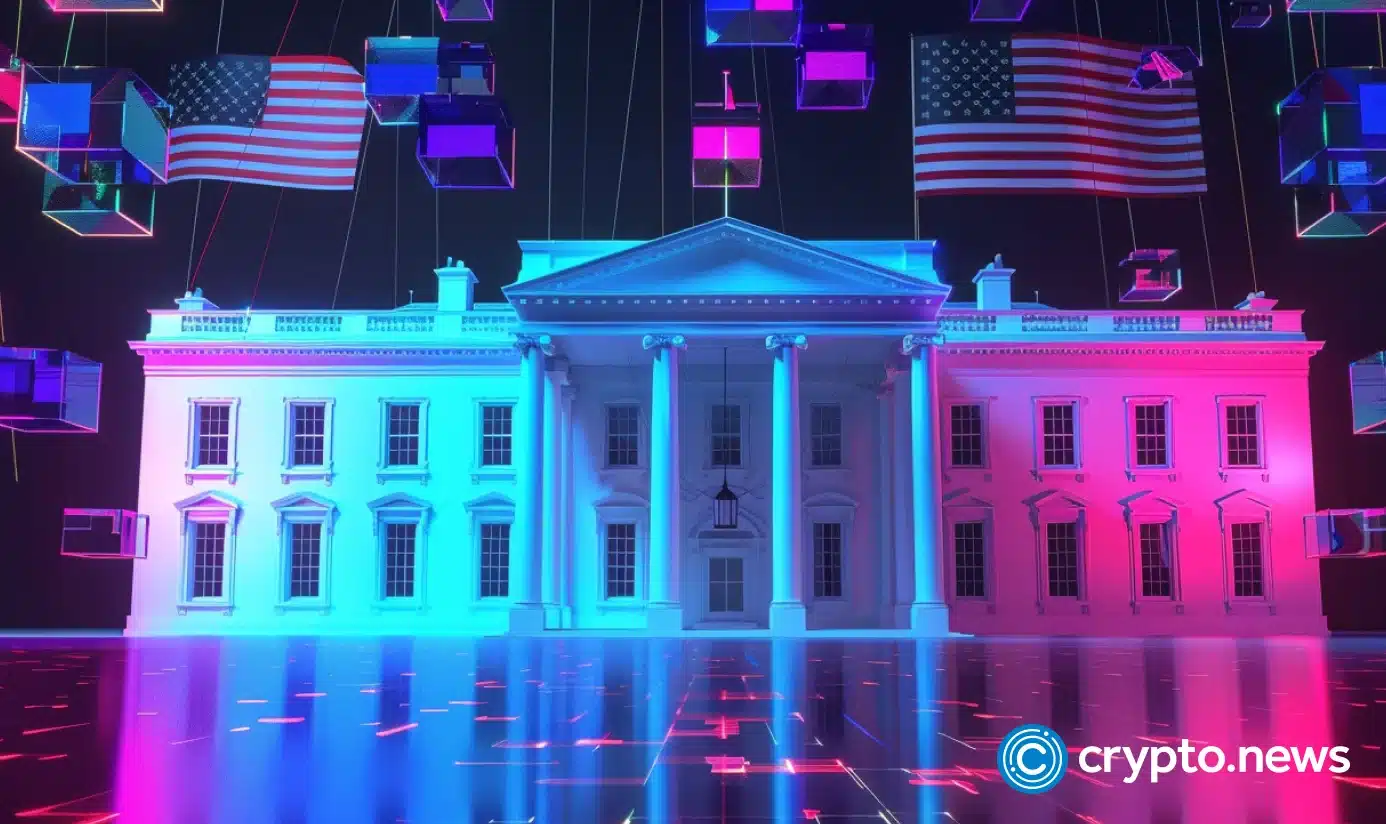
A former White House teleprompter operator has agreed to pay $172,539 after U.S. regulators found he used advance access to President Donald Trump’s speeches to make more than $107,500 trading prediction market contracts.
Summary
- Gabriel Perez made more than $107,500 trading prediction market contracts using advance access to Trump’s speeches, the CFTC said.
- Perez must return $107,539 in profits, pay a $65,000 penalty and serve a three year trading ban.
- The CFTC said Perez received a reduced penalty because of his cooperation and credited Kalshi for assisting the investigation.
- The case follows other insider trading investigations involving prediction markets, including trades linked to Polymarket and Kalshi.
The Commodity Futures Trading Commission said on Aug. 28 that Gabriel Perez misappropriated material, nonpublic information obtained through his federal government job to trade event contracts for his personal benefit. The settlement requires Perez to return $107,539.02 in profits and pay a $65,000 civil monetary penalty.
Perez has agreed to a three-year trading ban and must cease further violations of the Commodity Exchange Act and CFTC regulations. The $65,000 penalty was substantially reduced under the agency’s new cooperation policy because of what the regulator described as his “exemplary cooperation” during the investigation.
White House access gave Perez advance knowledge of Trump speeches
Between December 2025 and February 2026, Perez worked as a White House teleprompter operator while trading presidential “mention market” contracts, according to the CFTC.
Such contracts are event contracts whose outcomes depend on whether particular words or phrases are used during a presidential speech. Perez’s position gave him access to speeches before Trump delivered them publicly, allowing him to know information directly connected to the contracts he was trading.
The regulator found that Perez used the information in breach of his duty of trust and confidence, generating more than $107,500 in trading profits during the period.
The CFTC credited KalshiEX with assisting its investigation. Perez is no longer employed by the federal government after previously being placed on unpaid leave following scrutiny of his trading activity.
The enforcement action comes as regulators and prediction market operators have been dealing with multiple cases involving traders accused of using information unavailable to the public.
Prediction market insider trading cases have drawn CFTC action
Another federal case centers on U.S. Army Master Sergeant Gannon Ken Van Dyke, who has been accused of using classified military information to trade contracts on Polymarket connected to the operation targeting Venezuelan leader Nicolás Maduro.
As crypto.news previously reported, prosecutors allege Van Dyke made about $409,881 through 13 Venezuela-related trades after putting more than $33,000 into the positions. He pleaded not guilty and has disputed whether the contracts involved legally qualify as swaps.
A federal judge in August stayed the CFTC’s civil enforcement action against Van Dyke until the related criminal proceedings are completed. The case has placed the legal treatment of event contracts and the use of confidential government information in prediction market trading before a federal court.
Kalshi has faced a separate insider-trading episode involving an editor affiliated with YouTube creator MrBeast. In February, the platform imposed a $20,397.58 penalty and a two-year suspension after finding that the editor traded contracts connected to MrBeast content using confidential information.
The MrBeast editor case involved violations of Kalshi’s prohibited insider-trading rules and a failure to cooperate with the investigation. Beast Industries subsequently opened its own investigation and said it had zero tolerance for the misuse of proprietary information.
Scrutiny has since extended to accounts whose trading patterns raise concerns before regulators determine whether a violation occurred. Polymarket referred nearly 100 wallets for further review after an analysis identified trading activity carrying characteristics associated with potentially informed positions.
The review covered signals including newly created wallets, concentrated positions and trades entered shortly before major events. A suspicious designation does not establish that insider trading occurred, and a referral does not mean charges will follow.
Kalshi has expanded controls around prediction markets
Kalshi has introduced several controls intended to identify traders who may have access to confidential information.
In June, the exchange began requiring users in certain higher-risk markets to disclose their employers, giving its compliance team more information to compare a trader’s employment with the subject of a contract. The policy followed a series of cases involving people whose professional positions could give them access to information relevant to market outcomes.
The platform later integrated with StarCompliance, a system used by financial firms to monitor employee trading. Kalshi said the arrangement would allow participating companies to supervise employees’ prediction market activity through compliance systems already used for other financial transactions.
Its trade surveillance controls include a whistleblower reporting channel and a risk-scoring process applied to proposed markets before they are listed. Kalshi has used its own detection engine alongside outside surveillance and integrity services to examine potentially problematic trading behavior.
Regulatory attention has extended past insider trading. The CFTC in August reminded regulated entities offering event contracts that pricing information must clearly identify the products as contracts traded on a regulated exchange. Agency staff warned that displaying the products using American-style sportsbook odds could mislead customers about the nature of the transaction.
CFTC authority over event contracts remains under legal scrutiny
The Perez order treated the presidential mention contracts as event contracts, or swaps, under federal commodities law. The classification places his use of nonpublic government information within the CFTC’s enforcement framework under the Commodity Exchange Act.
At the same time, the scope of federal authority over prediction markets remains the subject of court disputes involving Kalshi and several U.S. states.
New York, Nevada and other states have challenged contracts offered through federally regulated prediction markets, particularly products tied to sports. Kalshi and the CFTC have argued in several proceedings that federally regulated event contracts fall within the commission’s jurisdiction, while state authorities have maintained that some products operate as gambling and remain subject to state law.
The CFTC used emergency authority in August to direct KalshiEX to continue normal operations after New York sought restrictions against the exchange. The agency said federal derivatives law gives it exclusive jurisdiction over event contracts traded on registered exchanges, while courts have reached different conclusions over the extent to which federal law preempts state gambling rules.
A separate regulatory dispute has spread across multiple states, with the CFTC filing actions or participating in proceedings involving state attempts to regulate prediction market contracts.
For Perez, the CFTC’s Aug. 28 settlement resolves the federal enforcement action without removing the financial consequences of the trades. He must surrender the full $107,539.02 generated from the activity, pay the discounted $65,000 penalty and remain out of CFTC-regulated trading for three years.
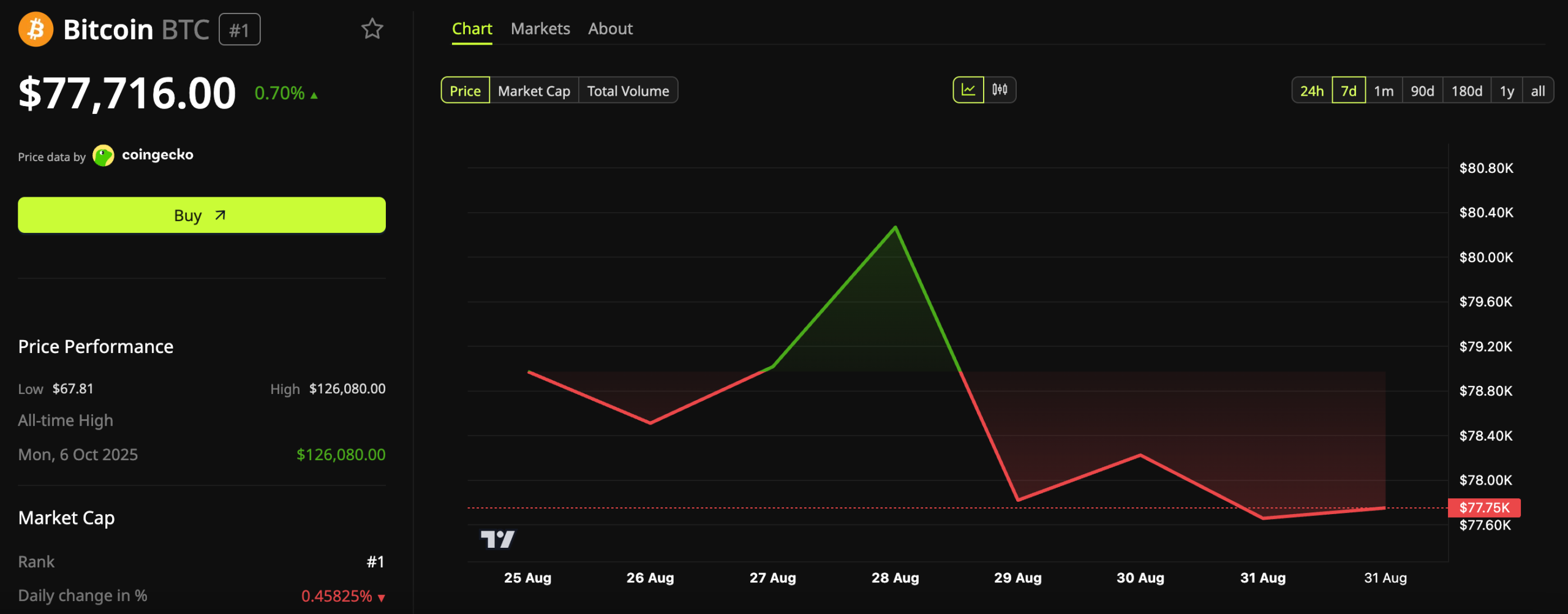
US spot Bitcoin (BTC) exchange-traded funds (ETFs) recorded $924 million in net inflows from Aug. 24 to Aug. 28. BlackRock’s iShares Bitcoin Trust (IBIT) led with $938 million, according to SoSoValue data. Despite the demand, Bitcoin’s price stayed stuck below $80,000.
Spot Ether (ETH) ETFs added $824 million over the same stretch. BlackRock’s ETHA fund led that category too, extending its own inflow streak to 10 straight trading days. Both products drew strong institutional demand, even as Bitcoin struggled to hold its recent gains.
Why Bitcoin’s Price Isn’t Following ETF Money
The stall traces largely to the Federal Reserve. Fed Chair Kevin Warsh delivered a hawkish keynote at the Aug. 28 Jackson Hole Economic Policy Symposium.

He warned that inflation remained a bigger concern than the labor market and declined to rule out a rate hike. Bitcoin slid from around $79,500 to below $77,000 in the hours that followed. Traders priced in higher odds of a hike at the Fed’s September meeting.
Bitcoin also faces a longer-term technical hurdle. On-chain analytics firm CryptoQuant has pointed to a bull market confirmation tied to Bitcoin’s 365-day moving average, near $83,000. BTC has repeatedly failed to close above that level, despite its rally from the mid-$60,000s.
Inflow Streak Comes to an End
The nine-day Bitcoin ETF inflow streak that carried into last week’s total ended on Aug. 28. Funds recorded a $201.81 million net outflow that day. Even so, August remains 2026’s strongest month on record for the products, with more than $3 billion in net inflows.

Whether Bitcoin can convert renewed ETF demand into a decisive break above $80,000 may depend on the Fed’s next moves. A close above its 365-day moving average would help, too, something it has not managed since the rally began.
The post Bitcoin ETFs Pulled In Near $1 Billion Last Week, So Why Is BTC Stuck Below $80,000? appeared first on BeInCrypto.
Crypto World
Cronos Halts Network as Tectonic Faces Mango-Style Attack: $75M in Assets Reportedly Affected

Cronos halted its blockchain on Sunday after an exploit hit Tectonic, which happens to be its largest lending protocol. Experts estimated that roughly $75 million in assets were affected.
So far, no timeline has been provided for when the network will resume. The blockchain has also not said what will happen to the assets linked to the attacker after the chain is restarted.
Third Mango-Style DeFi Attack?
Crypto.com CEO Kris Marszalek confirmed the security breach and said that the Cronos team was investigating the incident. The Cronos app and exchange were not affected and continued operating as usual, and Marszalek asserted that all funds were safe.
On-chain tracking platform LookonChain reported that the attacker was only able to bridge $6.29 million to Ethereum. These funds were swapped for 2,592 ETH when the network was halted. As a result, the remaining $68.7 million is stuck on the Cronos Network.
Meanwhile, researcher Weilin Li said the attack was linked to Tectonic’s TONIC governance token, which has a 20% collateral factor despite having very thin liquidity. According to Li, the attacker carried out a Mango Markets-style pump-and-borrow price manipulation attack, which caused TONIC’s price to surge 100-fold within 20 minutes.
Similar price-manipulation attacks have also affected other DeFi platforms recently. For instance, Moonwell, a lending protocol on the Base network, lost over $8 million last week after an attacker manipulated the collateral price of MAMO, a small-cap token with thin liquidity. In response, Moonwell cut borrow caps for all Core Markets on Base to 1 wei, which effectively stopped new borrowing across the deployment. It also reduced supply caps for MAMO and WELL to 1 wei, while leaving other supply caps unchanged.
Another recent case involved a low-liquidity Pendle market, where price manipulation led to about $36 million in liquidations of leveraged PT-reUSD positions on Morpho.
Aftermath
Tectonic’s locked assets have dropped sharply following the exploit. According to the latest stats by DefiLlama, the lending protocol held around $121 million on August 29.
Two days later, that figure had fallen to roughly $3 million.
The post Cronos Halts Network as Tectonic Faces Mango-Style Attack: $75M in Assets Reportedly Affected appeared first on CryptoPotato.
Crypto World
September Fed rate hike fears look overblown as the probability stands at just 58%, not 90%
Odds of a rate hike in September remain below 60% despite Warsh’s hawkish speech on Friday. Observers downplay fears of tightening.


A Solana wallet labeled as Fireblocks Custody transferred another 30 million USD1 to Binance during a 15-hour period, according to an Aug. 31 report from blockchain tracker Onchain Lens.
Summary
- Fireblocks-labeled custody wallet sent 30 million Solana-based USD1 tokens to Binance across fifteen reported hours.
- Onchain records confirm transfers, but they do not identify the beneficial owner or transaction purpose.
- The same wallet previously transferred 66 million USD1 to Binance during the preceding reported week.
- USD1 is issued by World Liberty Financial and operates across multiple networks, including Solana today.
- Neither Fireblocks, Binance nor World Liberty publicly explained whether the deposits supported trading or liquidity.
The tokens had a nominal value of $30 million because USD1 is designed to track the U.S. dollar. The transfer extended a series of large deposits from the same address, but its commercial purpose remains unknown.
Neither Fireblocks, Binance nor USD1 developer World Liberty Financial had publicly identified the beneficial owner or explained the transfers when the latest movement was reported.
USD1 transfer is visible on Solana
Onchain Lens identified the sending address as 9Rycov3U4efJf5HiqZYGjN7qJJHEtMsj4vbmkG4xfCxk. Its activity can be reviewed through the Solscan account page.
The tracker described the address as Fireblocks Custody and the receiving destination as Binance. Those labels are blockchain-analytics attributions rather than identities recorded directly inside Solana transactions.
Onchain data verifies that tokens moved between addresses. It cannot, by itself, establish who beneficially owned the assets or whether the transfer represented a sale, market-making activity, customer withdrawal, treasury operation or internal exchange movement.
Accordingly, the Onchain Lens report should not be interpreted as proof that Fireblocks, World Liberty or another party sold $30 million of USD1.
Fireblocks-labeled wallet previously moved $66M
The same address previously transferred 28 million USD1 to Binance through three transactions over 21 hours, according to an earlier Onchain Lens update.
A subsequent report said the wallet had deposited 66 million USD1 into Binance over one week after sending another 10 million tokens. The latest 30 million transfer appears to follow that reported sequence.
If the periods do not overlap, the cited movements would represent approximately 96 million USD1 sent to Binance. However, Onchain Lens did not provide a complete transaction inventory in its latest post, so the combined figure should be treated cautiously.
Fireblocks provides wallet and transaction infrastructure for institutions. A wallet using its custody technology can hold assets for a customer without Fireblocks owning those assets economically.
World Liberty’s USD1 already has close Binance ties
USD1 is a dollar-pegged stablecoin associated with World Liberty Financial, the crypto business linked to U.S. President Donald Trump and members of his family.
World Liberty’s official documentation lists USD1 deployments across several blockchains. The Solana token address begins with USD1ttGY1N17, matching the asset identified in the transfer report.
USD1 already has substantial links to Binance. Abu Dhabi-backed investment company MGX used $2 billion of the stablecoin to settle an investment in the exchange during 2025.
As crypto.news previously reported, the MGX transaction gave USD1 an early institutional use shortly after its launch.
Binance-controlled wallets and customer accounts held nearly 87% of USD1’s supply at one stage. Such concentration can reflect exchange customer holdings, institutional settlement balances and Binance’s own operational wallets.
Binance deposits do not establish selling pressure
Sending a volatile cryptocurrency to an exchange can indicate possible selling. That interpretation is less direct for a stablecoin because dollar-pegged assets commonly move to exchanges as trading collateral, settlement funds or quote-currency liquidity.
Binance offers USD1 trading pairs, including a SOL/USD1 market. Deposits could therefore support customer trading, market-making or liquidity management.
World Liberty says USD1 circulation has exceeded $4 billion. As crypto.news reported, company CEO Zach Witkoff attributed its expansion to institutional demand. That remains a company explanation rather than proof of the purpose behind these transfers.
World Liberty also received preliminary conditional approval to establish a national trust bank that could eventually issue and redeem USD1. The institution cannot open until it satisfies the OCC’s conditions.
Further wallet movements, changes in Binance balances or statements from the involved companies could clarify the deposits. No verified price movement in USD1, WLFI or another asset was directly attributable to the reported transfer.


A wallet attributed to HyperLabs, the development organization behind Hyperliquid, requested the unstaking of 433,000 HYPE tokens on Aug. 30, according to blockchain analyst Ember.
Summary
- HyperLabs requested unstaking of 433,000 HYPE tokens, valued near $36.14 million when Ember reported it publicly.
- Hyperliquid’s protocol places staking withdrawals into a seven-day queue before tokens return to spot balances.
- The pending withdrawal should complete September 6, provided the protocol processes it according to schedule.
- Previous HyperLabs withdrawals were routed through Flowdesk, but that history does not confirm another sale.
- No official Hyperliquid statement explained whether the unstaking supports liquidity, operations, or token distribution plans.
The position was valued at approximately $36.14 million when Ember reported the transaction. That valuation implies an average HYPE price near $83.46, but the dollar value will change with the token’s market price.
The withdrawal is expected to clear the protocol’s seven-day unstaking queue on Sept. 6. HyperLabs has not publicly explained its purpose.
HyperLabs placed 433,000 HYPE into the exit queue
The wallet’s staking activity is visible through its HypurrScan profile. The explorer records staking and balance activity associated with the address.
Hyperliquid’s staking documentation says transfers from staking accounts to spot accounts enter a seven-day unstaking queue. Tokens cannot be freely transferred until that period finishes.
An unstaking request does not itself place tokens into market circulation. It changes their status from staked and locked to pending withdrawal.
Once released, HyperLabs could transfer the HYPE, restake it, use it as collateral, provide liquidity or hold it in a spot account. No verified transaction has yet established which option it will choose.
September 6 marks the next onchain deadline
Ember expects the 433,000 HYPE to complete its staking exit on Sept. 6. The final time will depend on when Hyperliquid processes the pending withdrawal.
The tokens would then become transferable from the staking account. Wallet movements after that point should show whether they remain under HyperLabs’ control or move toward another address.
The scheduled amount is small relative to HYPE’s total supply, but its approximate $36 million value makes the transaction relevant to short-term liquidity monitoring.
No official statement from Hyperliquid or HyperLabs connected the transaction to operational expenses, employee distributions, market-making arrangements or sales.
Previous HYPE withdrawals went through Flowdesk
The same HyperLabs wallet previously withdrew a similar batch of approximately 433,000 HYPE. In August, parts of that earlier distribution were routed through market maker Flowdesk and addresses associated with centralized exchanges.
HyperLabs unlocked 433,025 HYPE worth approximately $23.46 million during the earlier cycle.
Onchain analysis found that 165,000 HYPE moved to Flowdesk. Of that amount, 75,000 HYPE was reportedly exchanged for USDC on Hyperliquid, while another 90,000 tokens moved toward OKX and Bybit deposit addresses.
That history supports monitoring Flowdesk after Sept. 6, but it does not prove the latest batch will follow the same route. Market makers can facilitate sales, over-the-counter transactions, liquidity provision or treasury execution.
HYPE unstaking does not confirm immediate selling
Large unstaking requests often attract attention because they make previously locked tokens transferable. However, unstaking should not automatically be described as selling pressure.
A confirmed sale would require additional evidence, such as swaps into stablecoins, transfers to identified exchange deposit addresses or statements from the wallet owner.
The distinction is particularly relevant because Hyperliquid also operates an Assistance Fund that uses protocol revenue to purchase HYPE. As previously reported, Hyperliquid’s buyback structure creates recurring demand that can offset part of the token supply entering circulation.
Team and contributor distributions nevertheless remain an important part of HYPE’s token economics. Crypto.news provides a broader explanation of how vesting schedules and token unlocks can affect liquid supply.
The next confirmed development should arrive when the withdrawal clears on Sept. 6. Traders can then monitor the HyperLabs wallet, Flowdesk-linked addresses and centralized exchange deposits.
Crypto World
Ternus Takes Over as Apple CEO With AAPL Near $320: History Shows Wild First-Year Swings
John Ternus officially becomes Apple’s chief executive on Tuesday, September 1, replacing Tim Cook, who moves into the role of executive chairman.
Apple’s board approved the succession unanimously in April, capping months of internal planning ahead of the changeover.
What History Says About Year One
Four prior planned tech CEO handoffs have a complete first year to judge, with returns ranging from a 38% decline to a 76% gain, a Motley Fool analysis found. The same analysis found no prior handoff triggered a rush to sell shares beforehand.

Bank of America reiterated its Buy rating on Apple ahead of the switch. Analyst Wamsi Mohan expects Apple’s core business to stay steady while Ternus considers a bigger AI budget.
Options activity in AAPL has stayed elevated heading into the handoff, with sentiment described as mixed rather than clearly one-sided.
A Hardware Veteran Takes Charge
Ternus spent 25 years at Apple, most recently leading hardware engineering across the iPhone, Mac, and Apple Watch lines. His product portfolio also included the iPad, AirPods, and Vision Pro headset.
Cook will focus on government relations in his new post, and Arthur Levinson becomes lead independent director.
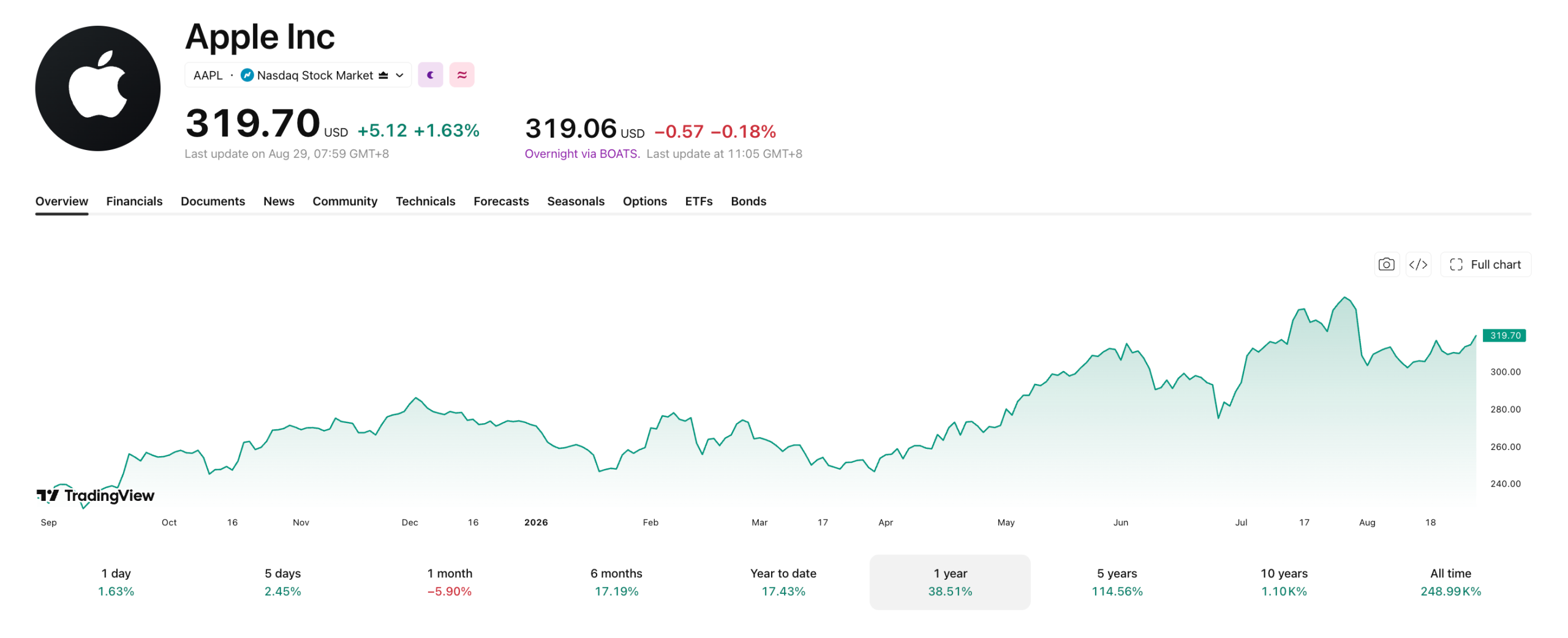
AAPL closed Friday at $319.70, up 1.63% on the day. Shares sit about 6% below the record close after Apple’s brief climb to a $5 trillion market cap in July.
The AI Question Ternus Inherits
The bigger test is not the handoff itself, but whether Ternus, a hardware veteran, can deliver Apple’s AI ambitions. Cook addressed the AI compute question directly on his final earnings call, noting demand could outstrip capacity.
“This probably would be a good problem to have.”
Tim Cook, CNBC
Apple’s next Mac software, macOS Golden Gate, is confirmed to arrive by September 22, alongside iOS 27’s Siri AI rollout. Ternus faces his first public test at Apple’s September 9 event, where a foldable iPhone is widely expected. That test will show whether hardware discipline can translate into an AI turnaround.
The post Ternus Takes Over as Apple CEO With AAPL Near $320: History Shows Wild First-Year Swings appeared first on BeInCrypto.
On 28 August, Fed Chair Kevin Warsh delivered a more hawkish assessment of inflation at the Jackson Hole symposium than he had following the July meeting. He reaffirmed the Federal Reserve’s 2% target for core PCE inflation and described tackling price pressures as the central priority for policymakers.
Following his remarks, expectations for a rate hike at the September meeting increased noticeably, with the market apparently pricing in a higher probability of such a scenario. Against this backdrop, Bitcoin pulled back, giving up part of its August gains.
Technical Analysis of Bitcoin
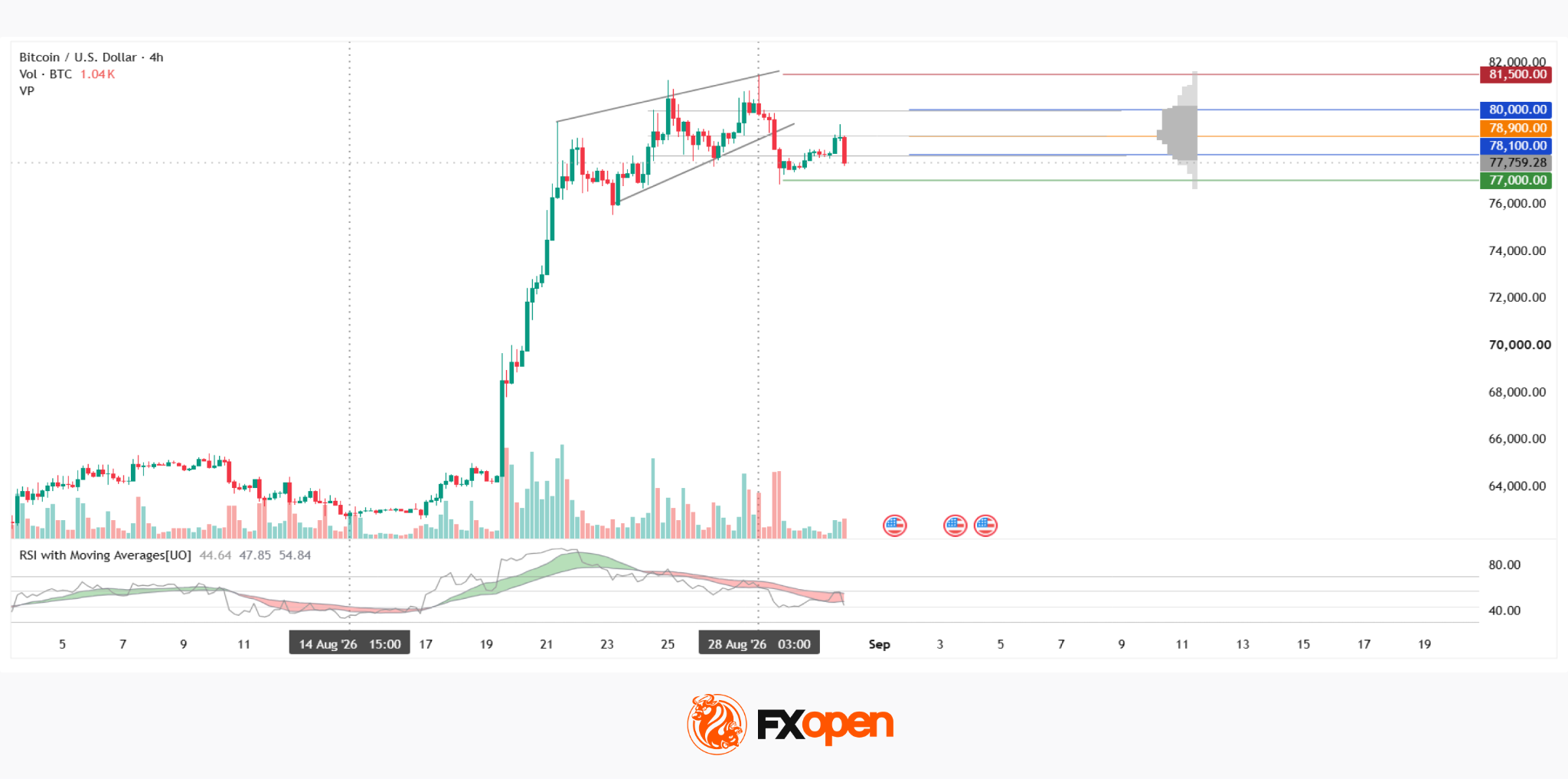
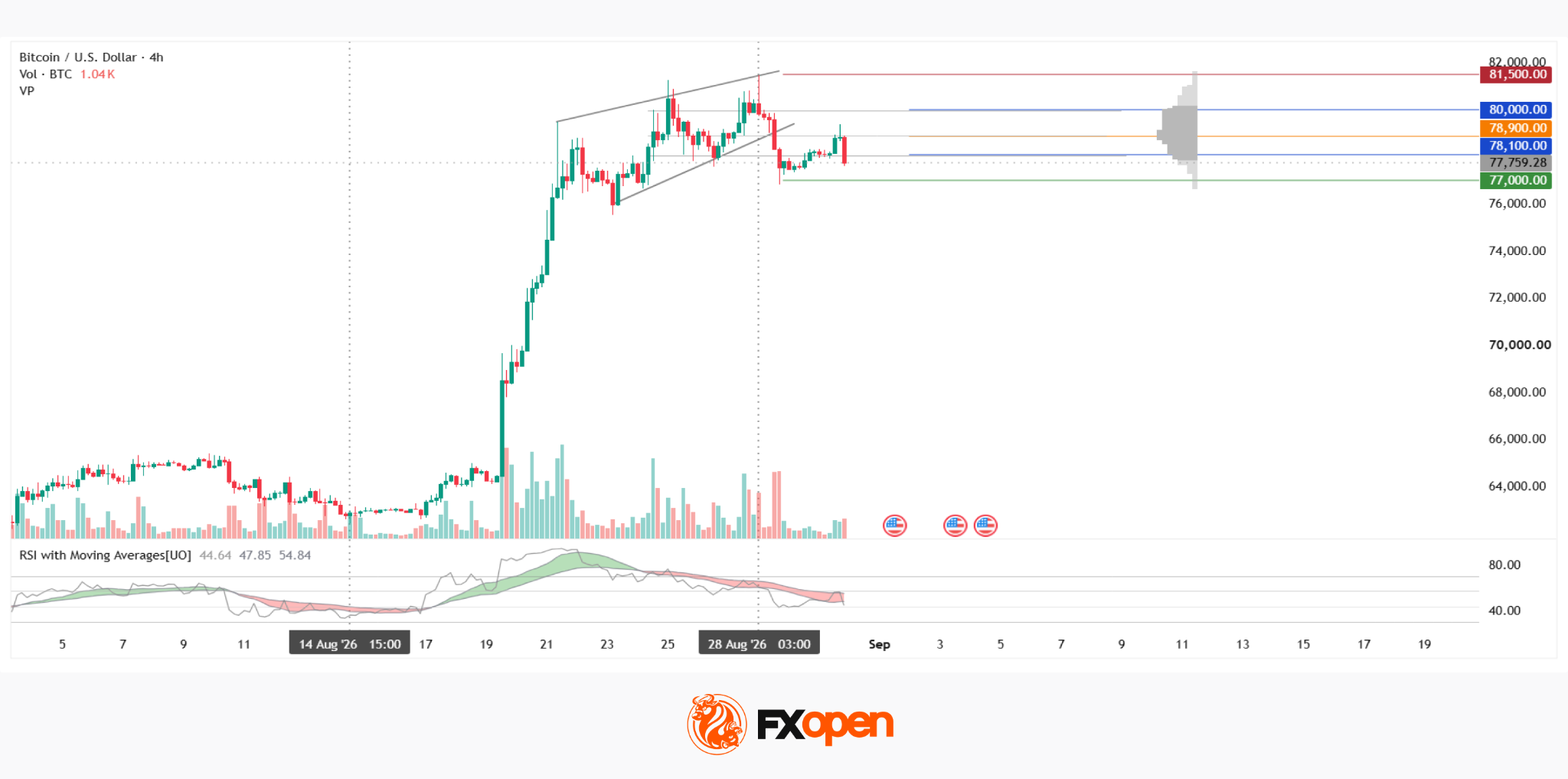
The four-hour BTC/USD chart shows a pronounced uptrend, with the move from 14 to 28 August taking the price from around $63,000 to a peak near the current red resistance at $81,500.
An ascending wedge formed near the top of this advance, and on 28 August the price broke below its lower boundary on elevated volume. However, the decline has yet to develop into a sustained move. Momentum has slowed, and Bitcoin is currently trading within the density of the market profile, between the Point of Control (POC) at $78,900 and the lower profile boundary at $78,100.
If the decline resumes and the price establishes itself below the lower profile boundary, the round-number level at $77,000 could provide the next area of support.
Conversely, if sellers fail to push the price lower and the wedge breakout proves to be false, Bitcoin would first need to overcome the market-profile density on the way up. A break above the upper profile boundary at $80,000 would reopen the path towards the trend high around $81,500.
The RSI + MAs indicator currently shows readings of 50, 48 and 55, with all three measures remaining within the neutral zone.
Key Takeaways
The wedge breakout has yet to generate confirmation of a sustained decline, while the market remains within the current profile range. Neutral RSI + MAs readings offer no clear advantage to either buyers or sellers.
A more decisive move in Bitcoin could emerge as market expectations surrounding the Federal Reserve’s September decision continue to evolve.
FXOpen offers the world’s most popular cryptocurrency CFDs*, including Bitcoin and Ethereum. Floating spreads, 1:2 leverage — at your service (additional fees may apply). Open your trading account now or learn more about crypto CFD trading with FXOpen.
*Important: At FXOpen UK, Cryptocurrency trading via CFDs is only available to our Professional clients. They are not available for trading by Retail clients. To find out more information about how this may affect you, please get in touch with our team.
This article represents the opinion of the Companies operating under the FXOpen brand only. It is not to be construed as an offer, solicitation, or recommendation with respect to products and services provided by the Companies operating under the FXOpen brand, nor is it to be considered financial advice.


Alderoty argues the CLARITY Act could support employment, but his statement remains an industry claim.
Summary
- Alderoty argues the CLARITY Act could support employment, but his statement remains an industry claim.
- An NCA-commissioned study estimates crypto directly employs 34,000 workers and supports 232,000 jobs nationwide today.
- The modeled employment total includes supplier positions and jobs supported indirectly through household worker spending.
- Senate records schedule a September 15 cloture vote determining whether lawmakers begin formally considering CLARITY.
- CLARITY passed the House 294-134, while Senate Banking advanced amended legislation by 15-9 in May.
An NCA-commissioned study estimates crypto directly employs 34,000 workers and supports 232,000 jobs nationwide today.
Senate records schedule a September 15 cloture vote determining whether lawmakers begin formally considering CLARITY.
Ripple Chief Legal Officer Stuart Alderoty urged U.S. senators to support the Digital Asset Market Clarity Act ahead of its next procedural vote, arguing that the legislation could promote employment and economic growth.
“A vote for Clarity is a vote for jobs and economic growth,” Alderoty wrote on Aug. 30. His statement is a policy argument rather than a finding that passing the bill would create a specific number of jobs.
Alderoty is also president of the National Cryptocurrency Association, which commissioned the employment research underpinning his argument
CLARITY Act job figures rely on economic modeling
The NCA’s Crypto at Work report, produced by Pragmatic Policy Group, estimates that crypto companies directly support about 34,000 full-time-equivalent U.S. positions in 2026.
The study places the industry’s broader employment footprint at 232,000 jobs. That total includes approximately 75,000 supplier positions and 123,000 jobs connected to spending by workers whose employment is directly or indirectly linked to crypto.
The 232,000 figure does not mean cryptocurrency businesses employ that many people directly. It is an economic-impact estimate built using multiplier effects across cloud computing, legal services, accounting, housing, transportation and other sectors.
As crypto.news reported, the model uses 2024 Bureau of Economic Analysis input-output tables, Bureau of Labor Statistics data and a $23.22 billion industry revenue estimate sourced from Statista.
NCA estimates $55B economic contribution
The report estimates that crypto-related activity will contribute more than $55 billion to U.S. gross domestic product during 2026. It also projects approximately $31 billion in worker income.
Average wages across the jobs included in the model were estimated at about $133,000. The NCA compared that figure with a national median wage of roughly $64,000.
California represented an estimated 57,649 supported jobs, followed by New York with 53,766 and Texas with 26,536. Washington and North Carolina accounted for about 15,097 and 9,524 jobs, respectively.
These are modeled estimates rather than a live payroll census. The report was commissioned by an industry association led by Alderoty, so its findings should not be presented as independent government employment statistics.
CLARITY Act faces September 15 Senate test
Official Senate records schedule a cloture motion on H.R. 3633 for Sept. 15 at 2:15 p.m. Eastern. The vote will determine whether senators formally begin considering the legislation.
It will not be a final vote on passing the CLARITY Act. The motion to proceed requires 60 votes, meaning Republican senators will need Democratic support to advance the bill.
The House passed the legislation by 294-134 on July 17, 2025, according to the official roll-call record. Seventy-eight Democrats joined Republicans in supporting the measure.
The Senate Banking Committee advanced an amended version by 15-9 in May 2026. Democratic Sens. Ruben Gallego and Angela Alsobrooks joined committee Republicans, according to the committee’s announcement.
Passage would require several additional steps
The CLARITY Act would establish federal definitions and registration rules for digital assets, exchanges, brokers and dealers. It would divide oversight between the Securities and Exchange Commission and Commodity Futures Trading Commission based on the asset and transaction involved.
Clearing cloture would only open Senate consideration. Senators could then debate and amend the legislation before holding a separate passage vote.
Because the Senate committee changed the House-approved measure, both chambers would need to approve identical language before the bill could reach the president.
As previously reported, ethics rules and stablecoin provisions remain disputed. The debate includes proposed restrictions involving public officials’ crypto interests, consumer protections and stablecoin rewards.
Alderoty’s claim that CLARITY would support future employment cannot be tested unless the legislation becomes law. The NCA report estimates the industry’s current economic footprint but does not quantify how many additional jobs the bill itself would create.

One Dead, 15 People Unaccounted For After Flash Flooding at the Grand Canyon

Tour Confidential: Scheffler wins, captain’s picks, Good Good controversy

Your ChatGPT conversations could end up in court, and they’re not protected





-

 Crypto World5 days ago
SpaceX stock could rise 75% to $240, JPMorgan says
-

 Fashion3 days ago
Weekend Open Thread: Maeve – Corporette.com
-

 Crypto World3 days ago
Bitcoin’s 22% rally now needs real demand to outlast Treasury liquidity boost
-

 Crypto World5 days ago
Warsh Jackson Hole keynote puts financial innovation first
-

 Crypto World6 days ago
A $30 Billion AI Fund Implodes, Now the SEC Is Investigating Wall Street’s Role
-

 Business3 days ago
Salesforce Stock Soars 19% as Blowout Earnings and Agentforce AI Growth Silence Software Skeptics
-

 Crypto World5 days ago
Did Trump Just Move SpaceX Stock With One Truth Social Post?
-

 Crypto World4 days ago
Elon Musk Grok Bot Promise: We Will Make You Whole if AI Loses Your Money
-

 Business5 days ago
Walmart takes aim at younger shoppers with new fashion brand
-

 Business3 days ago
Apple Confirms September 9 Keynote and Reveals Its Full Pre-Order Schedule
-
 NewsBeat4 days ago
Lindsay Clancy jury braces for closing arguments as judge tells court: ‘You’ve heard all the evidence’ – Live updates
-

 Business5 days ago
Thailand’s Eastern Economic Corridor Capital City (EECiti): Key Developments and Investment Opportunities
-

 Crypto World2 days ago
Bitcoin price tests $82K resistance as Brandt stays long
-

 Crypto World4 days ago
NVIDIA revenue hits $96.2B as AI demand doubles
-

 Business2 days ago
Onto Innovation Stock: AI’s Next Bottleneck Is Yield (NYSE:ONTO)
-

 Business7 days ago
Moderna CEO warns China is pouring state money into mRNA technology
-

 Business6 days ago
NVIDIA Stock Drops Nearly 2 Percent to $210 on Seventh Losing Day Ahead of Critical AI Earnings
-

 Business3 days ago
iPhone 18 Pro Pre-Orders Could Shift to Saturday as Apple Reportedly Avoids September 11 Anniversary
-

 NewsBeat5 days ago
Trump’s trade truce with China faces test with Iran effort
-
 Crypto World4 days ago
Nvidia Q2 Earnings Reveal $96.2 Billion Beat, So Why Is NVDA Falling?
You must be logged in to post a comment Login