
Crypto World
DeFi Losses Surpass $600M as Kelp DAO Exploit Pushes TVL to One-Year Low


The Kelp DAO exploit on April 18, 2026, in which attackers minted 116,500 unbacked rsETH by poisoning a single LayerZero verifier node, has catalyzed more than $600 million in sector-wide DeFi losses over recent weeks, with cumulative damage across protocols approaching $1 billion.
The downstream effect is now visible on-chain: total value locked across DeFi has collapsed to its lowest point in twelve months, per DefiLlama data, as capital flight accelerates across restaking, lending, and cross-chain bridge protocols.
The core question this raises isn’t whether Kelp DAO failed, it did, architecturally. The question is whether a single misconfigured verifier just exposed a systemic fragility running underneath the entire cross-chain DeFi stack.
- Total DeFi losses: Approximately $1 billion across recent weeks, with $600M+ directly attributable to the Kelp DAO exploit and its contagion effects.
- Kelp DAO exploit scale: 116,500 unbacked rsETH minted – roughly 18% of circulating supply – via compromised LayerZero DVN node; no smart contract breach.
- TVL impact: DeFi total value locked at a one-year low following a $13 billion exodus within 48 hours of the exploit.
- Protocols affected: Aave, SparkLend, and Fluid all froze rsETH markets; Aave TVL fell from $26.4B to approximately $18B – the largest single-protocol casualty.
- Attribution: LayerZero named North Korea’s Lazarus Group – specifically the TraderTraitor subunit – as the likely perpetrator; not yet formally confirmed.
- Key watch item: Kelp DAO’s forthcoming forensic report and Aave’s bad debt resolution on tainted rsETH collateral are the two signals that will determine whether contagion stabilizes or deepens.
Discover: The best crypto to diversify your portfolio with
How a Single Verifier Node Took Down $600M in DeFi
The failure was architectural, not foundational, and that distinction matters for how you assess the rest of DeFi’s cross-chain infrastructure. Kelp DAO’s rsETH bridge relied on a single Decentralized Verifier Network node to authenticate LayerZero messages, a 1-of-1 configuration that security firm Halborn had flagged in prior warnings.
The attackers, identified by LayerZero as Lazarus Group’s TraderTraitor subgroup, compromised two RPC nodes feeding data to that verifier, launched DDoS attacks against backup nodes to force failover, then injected a fraudulent message that minted 116,500 rsETH against zero underlying collateral.
The stolen rsETH moved quickly. On-chain data shows the attacker swapped into ETH and Arbitrum using loans across Aave, SparkLend, and Fluid, with Tornado Cash deployed for gas fee obfuscation. Malware self-deleted from the compromised RPCs post-attack, deliberately erasing forensic logs. For more on how LayerZero’s investigation attributed the attack, the mechanics of the RPC poisoning sequence are documented in detail.
Losses aggregated fast. The 116,500 minted rsETH seeded bad debt across lending markets that had accepted rsETH as collateral without adequate verification of its backing, an “echo chamber” for forged messages, as Halborn described it. Allium, analyzing the verification gap post-incident, noted that “the tools worked as designed. The way they were configured did not.”
That’s not a minor footnote: it means the exploit required no zero-day vulnerability, just a misconfiguration that was documented and warned about in advance.
Single-point-of-failure verifier architectures are now a documented attack surface, and Kelp DAO won’t be the last protocol running one.
TVL at a One-Year Low: What the Capital Flight Data Actually Signals
DeFi’s aggregate TVL had already been compressing through Q1 2026 under macro pressure, but the Kelp DAO exploit accelerated the drawdown into a vertical drop.
DefiLlama data shows a $13 billion TVL exodus within the 48 hours following the April 18 attack, a pace that blindsided protocols like Compound that had no direct rsETH exposure but caught contagion withdrawals anyway.
The single-protocol casualty numbers are starker. Aave’s TVL collapsed from $26.4 billion to approximately $18 billion after the protocol froze rsETH markets, a $8.45 billion drawdown driven by users de-risking ahead of potential bad debt crystallization from tainted collateral positions.
Money is leaving DeFi at an unprecedented scale pic.twitter.com/bZ3m40wfs4
— wale.moca
(@waleswoosh) April 20, 2026
Aave’s risk team is now modeling two bad debt scenarios depending on recovery rates for the unbacked rsETH that was used as loan collateral before markets were frozen.
The TVL compression sets up two distinct forward scenarios. If outflows stabilize and Kelp publishes a credible forensic report with a compensation mechanism, the current level may prove to be localized contagion, ugly but bounded. If Aave’s bad debt modeling surfaces material losses and LayerZero’s multi-DVN upgrade timeline extends past Q2, expect a second leg of TVL decline as yield seekers rotate entirely out of restaking protocols into less interconnected alternatives.
Governance token valuations are already pricing the first scenario as optimistic, AAVE has shed over 20% since the exploit, and the recovery thesis depends entirely on whether Aave can close its rsETH exposure cleanly.
Discover: The best pre-launch token sales
The post DeFi Losses Surpass $600M as Kelp DAO Exploit Pushes TVL to One-Year Low appeared first on Cryptonews.

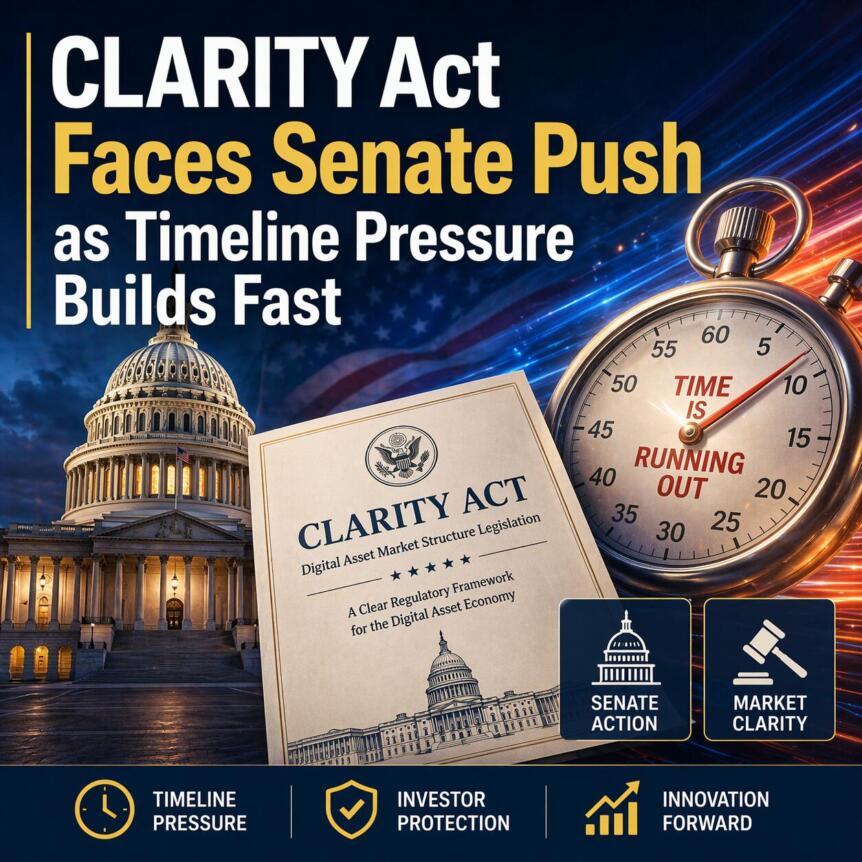
The push to advance the CLARITY Act gained fresh momentum after a key industry group urged swift Senate action. Lawmakers now face tighter timelines as unresolved issues continue to slow progress. The development highlights growing pressure to finalise a clear regulatory framework for digital assets in the United States.
Senate Banking Committee Faces Renewed Pressure
The Digital Chamber increased pressure on the Senate Banking Committee to move the CLARITY Act forward. It sent a formal letter urging lawmakers to begin the markup phase without further delay. The group stressed urgency due to limited legislative time remaining.
The committee leadership, including Chairman Tim Scott and Ranking Member Elizabeth Warren, received the request directly. The letter emphasised that the House already passed the bill with bipartisan backing months ago. As a result, industry leaders expect the Senate to act without prolonged delays.
Lawmakers now operate within a narrowing window before the upcoming congressional recess. If the committee delays further, the bill risks losing momentum. Therefore, stakeholders continue pushing for immediate procedural progress.
Timeline Constraints Increase Legislative Pressure
The legislative calendar continues to tighten as Congress moves deeper into its current session. Lawmakers have already passed significant time without advancing the CLARITY Act in the Senate. This delay creates urgency among both policymakers and industry participants.
The bill missed a recent markup opportunity, which added pressure on the next available schedule. The upcoming week presents another chance to move the process forward. However, failure to act before the May recess could stall progress for an extended period.
Industry advocates argue that continued delays undermine regulatory certainty for millions of users. They point to the rapid growth of digital asset adoption across the country. Consequently, they maintain that clear legislation remains essential for market stability and innovation.
Stablecoin Yield Debate Remains Key Obstacle
The ongoing disagreement over stablecoin yield provisions continues to block legislative progress. Banking groups and crypto firms have not reached a consensus on how to regulate yield-bearing stablecoins. This disagreement remains the central issue delaying the markup phase.
Some lawmakers have proposed extending discussions to allow more time for negotiation. Senator Thom Tillis supported delaying the markup to allow further dialogue between stakeholders. This approach aims to produce a balanced framework acceptable to both sides.
Meanwhile, the absence of a finalised draft complicates negotiations and slows progress further. Banking representatives have also introduced new concerns about the proposed provisions. As a result, lawmakers must address these issues before moving the bill forward.
Industry Signals Strong Support for Immediate Action
The Digital Chamber continues to advocate for immediate legislative movement despite unresolved issues. The organisation believes that the markup process can proceed while discussions continue. This approach would allow lawmakers to refine details during later stages.
Industry representatives highlight the scale of digital asset adoption across the United States. Millions of users rely on clear rules to guide participation in the market. Therefore, they argue that delaying action creates unnecessary uncertainty.
At the same time, policymakers recognise the importance of balancing innovation with financial stability. The Senate Banking Committee has engaged with stakeholders to gather input. However, pressure continues to build for decisive action in the coming weeks.


The big picture: The film Finding Satoshi aims to solve what its creators call one of the biggest financial mysteries ever.
- Director Tucker Tooley said the project blends investigative reporting with storytelling about “a human being” behind Bitcoin.
- The team deliberately avoided conspiracy tropes, instead focusing on Satoshi’s motivations, struggles, and context.
- The mystery itself, why someone created Bitcoin and vanished, drives the narrative.
How they investigated: The team shifted tactics after early resistance from crypto insiders.
- Investigative journalist Bill Cohan said major crypto figures often dismissed the question as irrelevant or a “waste of time.”
- That resistance pushed the team to bring in private investigator Tyler Maroney and dig deeper.
- They narrowed suspects to a small group of cryptographers with specific technical skills and early involvement in Bitcoin’s origins.
Behind the scenes: The reporting relied on years of relationship-building and technical analysis.
- Maroney said the team focused on cryptographers, mathematicians, and early “cypherpunks,” not investors or executives.
- Sources included pioneers like Whitfield Diffie, who helped invent public-key cryptography and industry veterans such as Joseph Lubin and Katie Haun.
Why it matters: The film reframes Bitcoin’s origin story and challenges how people think about it today.
- Maroney said Bitcoin began as a privacy tool, not a store of wealth, rooted in fears of “surveillance capitalism.”
- The creators argue understanding that context is key to understanding Bitcoin’s purpose.
- The mystery also raises stakes: Satoshi is believed to hold about 1.1 million Bitcoin that have never moved.
What’s driving the mystery: Not everyone wants the answer.
- Cohan said some major investors may prefer the myth to remain intact, fearing reputational risk if Satoshi were controversial.
- Others argue it simply doesn’t matter, comparing it to not knowing who invented the internet.
- The filmmakers reject that view, saying the identity and intent behind Bitcoin are central to its story.
What comes next: The film promises a definitive conclusion and a broader takeaway.
- The team says it reached a clear answer, though they won’t reveal it outside the documentary.
- They emphasize the journey: understanding the people and ideas that led to Bitcoin’s creation.
- Tooley said the goal is to make a complex, technical subject accessible and entertaining for a broad audience.
- The documentary comes out April 22, 2026 at findingsatoshi.com

MicroStrategy has recorded a sharp turnaround as Bitcoin surged in April and lifted its treasury back into profit. The company generated significant gains within weeks after months of unrealized losses. Consequently, the rebound highlights the impact of sustained accumulation during volatile market conditions.
MicroStrategy benefited from Bitcoin’s strong price recovery, which reversed earlier drawdowns seen during the year. As a result, its treasury performance improved rapidly and moved out of loss territory. The shift reflects a broader market recovery that supported long-term holders.
Additionally, the company maintained consistent buying activity despite prior market pressure and declining valuations. This approach strengthened its position during the rebound phase. Therefore, the firm now reports notable gains tied directly to Bitcoin’s upward movement.
Bitcoin Gains Drive Treasury Performance Higher
Bitcoin continued its upward trend in April and restored profitability for major holders. As a result, MicroStrategy recorded a 6.2% Bitcoin yield within three weeks. The company added 47,078 BTC in gains, valued at approximately $3.6 billion.
Moreover, Michael Saylor classified this BTC gain as a key performance measure under its Bitcoin-focused strategy. This metric reflects operational success within a Bitcoin standard framework. Consequently, it offers a direct comparison to traditional net income.
Strategy has generated 6.2% BTC Yield and ₿47,079 of BTC Gain in the first three weeks of April, worth approximately $3.6 billion. BTC Gain is the closest analog to Net Income on the Bitcoin Standard. $MSTR pic.twitter.com/dDKr5KfEFl
— Michael Saylor (@saylor) April 21, 2026
The company also reported year-to-date gains of 64,191 BTC, valued at nearly $4.9 billion. These figures show stronger performance compared to earlier periods marked by price declines. Therefore, sustained accumulation continues to support long-term returns as Bitcoin stabilizes.
Holdings Expand as Accumulation Strategy Continues
MicroStrategy continued to increase its Bitcoin holdings despite earlier unrealized losses during market downturns. This approach strengthened its overall position during the recovery period. As a result, the firm now holds 815,065 BTC.
The company’s holdings represent more than 4% of Bitcoin’s total supply, which highlights its scale in the market. Additionally, this accumulation places it ahead of BlackRock in Bitcoin reserves. BlackRock currently holds approximately 802,823 BTC.
Furthermore, the aggressive accumulation strategy reflects confidence in Bitcoin’s long-term growth potential. The company maintained purchases during weak price phases and benefited during the rebound. Therefore, its treasury structure remains closely tied to Bitcoin’s price trajectory.
Bitcoin faced repeated downturns earlier in the year due to macroeconomic pressure and reduced market activity. However, recent gains have restored confidence across the market. Consequently, MicroStrategy’s performance reflects the broader recovery trend and continued reliance on Bitcoin exposure.

DoorDash is moving to wire in stablecoins as a core part of its payments infrastructure, tapping Tempo to enable faster, cross-border-friendly settlements for its workforce of dashers, its merchants, and its vast user base. The collaboration aims to bring a stablecoin-enabled payment rail to more than 40 countries, with Tempo describing the project as a step toward broader, faster digital-dollar style settlements within everyday commerce.
Tempo announced the initiative in a Tuesday notice, framing it as a mutual advance for the delivery platform and the broader crypto-enabled payments ecosystem. In the message, Tempo said it is collaborating with DoorDash to build stablecoin-powered payment infrastructure that can streamline payouts to dashers, merchants, and users while reducing cross-border costs and increasing transaction flexibility. “If we can get merchants and Dashers their money faster, and do that in a way that’s affordable for them, that’s a no-brainer for the entire ecosystem,” DoorDash co-founder Andy Wang said in reference to the plan.
The stablecoin framework represents a notable milestone for a mainstream on-demand platform that previously leaned into other AI-driven enhancements but has not yet integrated digital assets into its core payout flows at scale. Tempo highlighted the payout speed, cost efficiency, and transactional flexibility as the primary benefits behind the integration, underscoring the potential for a smoother, cheaper experience for participants across the delivery chain.
Tempo’s announcement situates the DoorDash integration within a broader push into stablecoins, backed by a coalition that includes Stripe, investment firm Paradigm, Coastal Bank, and fintech ARQ. The aim is to establish a robust, cross-border, scalable payment rails that can support large-volume commerce while offering the stability users expect from fiat-backed digital currencies.
DoorDash’s transactional footprint provides a useful backdrop for context. The company reported delivering 903 million orders in its fourth quarter of 2025, with a total order value of approximately $29.7 billion. The firm is slated to disclose its Q1 2026 results on May 6, providing a fuller picture of growth, profitability, and unit economics as it pushes into new payment modalities.
Key takeaways
- DoorDash will enable stablecoin payments across its platform for dashers, merchants, and users in more than 40 countries, via Tempo’s infrastructure.
- The move prioritizes faster payouts and lower cross-border costs, aiming to improve liquidity and flexibility for gig workers and merchants.
- Tempo frames the collaboration as part of a wider push into stablecoins among major fintech and payments players, with Stripe, Paradigm, Coastal Bank, and ARQ also involved.
- Broader market momentum includes traditional payment giants pursuing stablecoin rails, as shown by related moves from Stripe, Mastercard, and Visa.
- DoorDash’s recent activity comes against a backdrop of strong Q4 2025 performance and an upcoming Q1 2026 earnings release, which will shed light on the quarterly impact of any new payments infrastructure.
Tempo, DoorDash and a broader industry shift toward stablecoin rails
The DoorDash–Tempo collaboration is a clear signal that mainstream consumer platforms are testing the practicality of stablecoins as a payments backbone for everyday commerce. Tempo’s framing centers on three benefits: higher payout velocity, lower fees for cross-border settlements, and the flexibility to settle in digital currency types that can be converted or routed to recipients with relative ease. If deployed at scale, the initiative could meaningfully shorten the time between a sale and a cash-out for dashers and gig workers, reducing friction in the creator economy model that underpins DoorDash’s network.
In addition to Tempo’s partnership with DoorDash, the broader payments ecosystem has been quietly building stablecoin rails. Stripe has already integrated stablecoins into its payments stack, a continuation of its 2024 deal to acquire the stablecoin platform Bridge for about $1.1 billion. The strategic rationale, according to Stripe, has been to expand the reach and reliability of digital-dollar settlements across its merchant base and partner networks.
Meanwhile, traditional payment networks are pursuing stablecoin-enabled settlement capabilities more aggressively. Mastercard disclosed a roughly $1.8 billion deal in early 2024 to acquire stablecoin infrastructure company BVNK, underscoring the strategic value of on-chain settlement capabilities in mainstream card networks. Visa has also advanced its stablecoin offerings, expanding support for additional stablecoins and broadening its on-ramp to crypto-enabled commerce in mid-2024.
These moves reflect a trend: major financial and payments players view stablecoins as a practical bridge between traditional fiat rails and digital asset ecosystems. The DoorDash initiative with Tempo adds a real-world consumer app into the mix, demonstrating how stablecoins could move from pilot programs or pilot-market experiments into full-scale operations that touch millions of daily transactions.
What this means for workers, merchants and the wider market
For dashers and merchants, a stablecoin-enabled payout system could unlock several practical advantages. Greater payout speed means workers could receive earnings sooner, while lower cross-border costs could expand the geographic reach of DoorDash’s network and improve the economics of international or cross-border orders for merchants. For users, the prospect of optional stablecoin payments could simplify international purchases or tipping in a digital asset that remains tightly pegged to a fiat reference, reducing price volatility during the settlement window.
However, the deployment will hinge on several factors beyond the technology itself. Regulatory clarity around stablecoins, consumer protections, KYC/AML compliance, and the integration of wallet infrastructure into consumer apps all play a crucial role in whether such rails achieve durable, scalable adoption. The timing also matters: DoorDash is poised to present its Q1 2026 results in May, which will provide fresh insight into how well the new payment rails are performing against the backdrop of overall platform growth and profitability.
Looking ahead, investors and builders will want to watch three areas closely: first, user and merchant onboarding to stablecoin payouts and how wallets, exchanges, and custodians manage liquidity; second, how regulators define permissible stablecoin use in consumer platforms across diverse jurisdictions; and third, how the interplay between fiat and crypto rails impacts platform economics and consumer trust.
As DoorDash and Tempo begin piloting a stablecoin-enabled workflow, the broader market is watching to see whether this approach can translate into measurable improvements in payout speed and cost, while maintaining strict controls around compliance and risk. The coming quarters will indicate whether stablecoins transition from a novelty in fintech discussions to a dependable, everyday tool for gig economies and large consumer platforms alike.
For readers keeping an eye on the next chapter of crypto-enabled payments, the DoorDash–Tempo collaboration provides a tangible milestone: a mainstream app seeking to embed a digital asset payment rail into its core operations, alongside the broader industry push by Stripe, Mastercard, and Visa toward more robust, scalable stablecoin settlement capabilities.

Ripple Labs has introduced a four-phase plan to upgrade XRP Ledger security. The roadmap targets full post-quantum readiness by 2028. Meanwhile, XRP traded near $1.43, gaining over 4.6% in one week.
The company designed the plan to address risks from future quantum computing breakthroughs. It aims to maintain network stability during the transition. At the same time, it prepares for unexpected cryptographic failures.
Ripple confirmed that current protections cannot withstand advanced quantum machines. Therefore, it plans a gradual upgrade instead of abrupt changes. The approach balances security needs with network performance.
Emergency Response and Risk Evaluation Phases
Ripple has created a contingency plan for a sudden cryptographic failure event. The network could stop accepting traditional signatures during such a scenario. It would require users to migrate to quantum-secure keys.
The company plans to use zero-knowledge proofs for secure migration. This method allows users to prove ownership without exposing private keys. As a result, it reduces risk during emergency transitions.
Ripple has started testing post-quantum algorithms in early 2026. The tests focus on performance under real network conditions. They also measure impacts on storage, bandwidth, and transaction speed.
Development Testing and Full Network Transition
Ripple will introduce hybrid signature systems in the next phase. These systems combine existing elliptic-curve signatures with post-quantum alternatives. Developers will test them on Devnet during the second half of 2026.
The company will also explore advanced cryptographic tools. These include zero-knowledge systems and homomorphic encryption methods. Such tools may improve security without reducing efficiency.
Ripple plans to propose a network amendment for full deployment. Validators must approve the upgrade before activation on the main network. This step will complete the transition to quantum-resistant signatures.
Structural Advantages and Broader Industry Context
Ripple stated that XRPL offers built-in key rotation capabilities. Users can update keys without changing account addresses. This feature supports gradual migration to stronger cryptography.
Other networks require asset transfers to new accounts. This process can disrupt applications and user balances. XRPL’s design simplifies the transition process.
Ripple acknowledged that key rotation alone does not solve quantum risks. The network still needs full cryptographic upgrades. Therefore, the roadmap focuses on both infrastructure and protocol changes.
Timeline Risks and Ongoing Development Work
Ripple confirmed that no changes have reached the main network yet. The roadmap depends on testing, coordination, and validator approval. Each step introduces potential delays.
The development team has already started early prototypes. Engineers are testing new signature schemes on internal networks. These tests will guide future implementation decisions.
Industry estimates suggest quantum threats may emerge between 2029 and 2035. However, attackers may already collect data for future decryption. Ripple’s plan addresses this long-term risk.
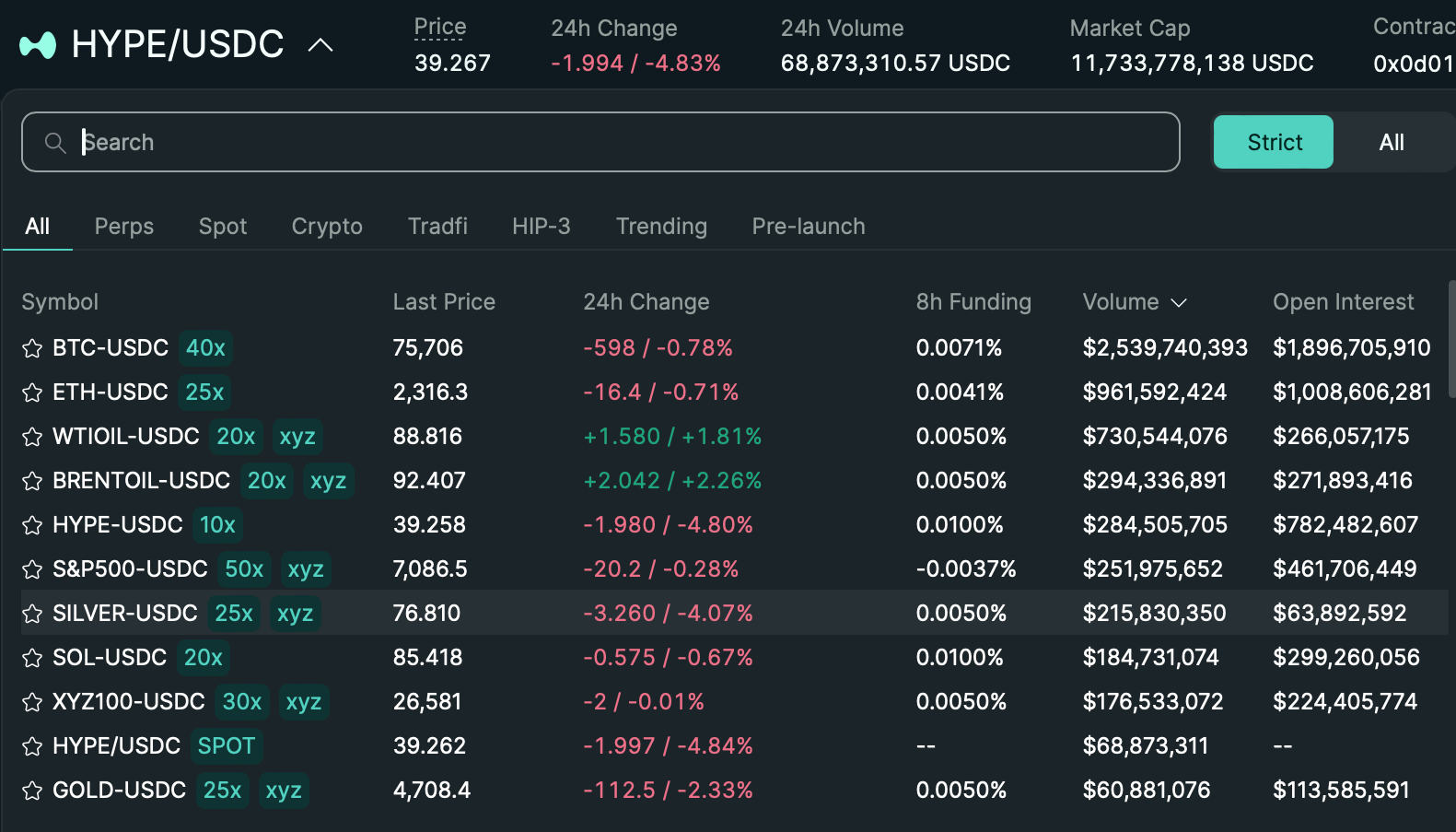
Blockchain.com has rolled out perpetual futures trading in its non-custodial DeFi wallet, allowing users to open leveraged positions directly from self-custodied Bitcoin used as collateral without transferring funds to an exchange.
According to Tuesday’s announcement, the feature is routed through decentralized derivatives exchange Hyperliquid and gives users access to more than 190 crypto markets with up to 40x leverage.
Perpetual futures are derivative contracts that allow traders to take leveraged positions on an asset’s price without an expiration date. Michael Selig, chair of the Commodity Futures Trading Commission (CFTC), said last month that the derivatives regulator plans to allow the contracts in the coming weeks.
Trades are executed while assets remain in the wallet, allowing users to open, manage and close positions without relinquishing control of private keys or relying on a custodial intermediary.
Blockchain.com said the product also allows accounts to be funded directly with Bitcoin (BTC) from the user’s wallet in a single transaction, avoiding conversions or transfers across platforms. The company said it expects to expand the offering with additional asset classes, including foreign exchange, stocks and commodities, in the near future.
Blockchain.com, launched in 2011 and based in Malta, is a crypto services platform offering wallets, trading and infrastructure tools for retail and institutional users.
Related: HYPE hits 2026 high as Hyperliquid volumes soar: Is the rally sustainable?
Perpetual futures expand beyond crypto into multi-asset trading
Perpetual futures trading is expanding beyond cryptocurrencies into equities, commodities and other asset classes, as centralized and decentralized exchanges continue to broaden their offerings beyond digital assets.
In February, crypto exchange Kraken launched tokenized equity perpetual futures for non-US clients, offering 24/7 leveraged exposure to US stocks, indexes and commodities through crypto-based derivatives.
The following month, Coinbase launched stock-based perpetual futures for non-US users, offering leveraged, cash-settled exposure to major US equities as part of its push to expand 24/7 multi-asset trading.
On Tuesday, website The Information reported that prediction market platform Kalshi is exploring entry into crypto derivatives, with plans to offer perpetual futures trading in the United States.
Hyperliquid has also expanded beyond crypto-native markets. Data from the platform shows that commodity- and index-linked perpetual contracts, including oil, the S&P 500 and silver, rank among its most actively traded markets by volume, alongside major cryptocurrencies like Bitcoin and Ether.


TLDR
- Core Scientific plans to raise $3.3 billion through senior secured notes due in 2031.
- The company will back the notes with its assets, giving investors priority claims in a default.
- Core Scientific intends to use the proceeds to fund AI-focused data center expansion across the United States.
- The company will also repay borrowings under its 364-day credit facility to extend debt maturities.
- Core Scientific recently secured a separate $1 billion credit agreement with Morgan Stanley to support its buildout plans.
Core Scientific disclosed plans to raise $3.3 billion through senior secured notes due in 2031 to fund data center growth across the United States. The company said it will use the proceeds to expand infrastructure and refinance short-term debt obligations. The move supports its shift toward high-performance computing and artificial intelligence workloads as mining conditions tighten.
Core Scientific Expands Financing for AI Infrastructure
Core Scientific said it will issue senior secured notes backed by company assets, which gives investors priority claims in a default. The structure allows the company to secure capital without issuing new shares, so it avoids equity dilution. The notes will mature in 2031, which extends the company’s debt timeline and supports long-term projects.
The company stated that it will use part of the proceeds to repay borrowings under its 364-day credit facility. This step will extend existing maturities and improve debt structure as infrastructure scales. Core Scientific identified expansion projects in Georgia, Texas, North Carolina, and Oklahoma to support AI-focused data center services.
Core Scientific announced the offering after securing a separate $1 billion credit agreement with Morgan Stanley in March. The earlier agreement strengthened its access to capital for ongoing development plans. Together, both financings highlight the company’s effort to lock in long-term funding for its data center buildout.
The company has shifted focus beyond traditional bitcoin mining and toward diversified computing services. It continues to build facilities designed for high-performance computing and artificial intelligence tasks. The strategy aims to align infrastructure with evolving demand across the enterprise and technology sectors.
Crypto Miners Increase Leverage for Data Center Growth
Several mining firms have adopted similar financing strategies to expand data center capacity. MARA Holdings, Riot Platforms, and Hut 8 have invested in infrastructure and partnerships to diversify revenue streams. These companies seek to reduce reliance on bitcoin mining and pursue AI-driven workloads.
IREN reported one of the sector’s largest recent expansions, spending about $800 million on data centers and related infrastructure in its latest quarter. The company accelerated capital deployment to strengthen its computing footprint. This approach reflects a broader push to secure capacity for advanced workloads.
Partnerships have also shaped the industry’s growth model as companies expand AI operations. On Tuesday, Soluna Holdings announced an expanded partnership with Blockware to increase hosting capacity. The agreement will add 3.3 megawatts at Soluna’s West Texas colocation facility, which primarily serves third-party mining clients.
Blockware confirmed that the latest deal marks its fourth expansion with Soluna. The companies continue to collaborate on renewable-powered infrastructure to support mining and computing operations. The announcement adds fresh capacity at the West Texas site as expansion efforts continue.


Bitcoin’s distribution dynamics have shown a notable shift in recent days, with mid-size wallets moving fewer coins onto major exchanges and inflows concentrated on a single venue. Data from CryptoQuant indicates Binance mid-size wallet inflows — defined as entities holding roughly 100–1,000 BTC — have cooled to about 3,000–4,000 BTC over a seven-day horizon, a level not seen since 2023. In tandem, Coinbase reported around 8,500 BTC in inflows from similar-sized wallets on April 19, while inflows to other exchanges remained comparatively muted. Analysts view the pattern as a sign of reduced near-term selling pressure, though inflows alone do not prove that coins are being dumped on the market.
Key takeaways
- Binance mid-size wallet inflows have fallen to roughly 3,000–4,000 BTC on a weekly average, marking a multi-year low for this cohort and suggesting less immediate sell-side pressure on the exchange.
- Coinbase saw mid-size wallet inflows of about 8,500 BTC on April 19, nearing levels observed after the FTX episode in November 2022, while other exchanges reported smaller flows.
- Bitcoin’s 30-day net flow to exchanges swung negative in March (around −300,000 BTC) and remained materially negative near −98,000 BTC as of April 21, with exchange reserves continuing to dwindle for weeks.
- The inflow pattern appears fragmented rather than synchronized across venues, indicating mixed sentiment rather than a broad, coordinated distribution.
- Overall supply dynamics point to a withdrawal trend from exchanges, but traders should monitor how these signals translate into price action in the coming weeks.
Mid-size inflows back toward 2023 norms on Binance, while Coinbase remains distinct
CryptoQuant’s wallet-size taxonomy identifies mid-size holders as those controlling roughly 100–1,000 BTC. These entities are often associated with active traders and smaller institutions, and their decisions to move coins onto exchanges typically reflect near-term selling intent. Amr Taha, a crypto analyst, pointed out that the seven-day average inflows from this cohort into Binance have cooled to about 3,000–4,000 BTC, a level well below the 5,500–6,000 BTC range observed during the April–May 2023 period. The decline is notable because it suggests less urgent distribution pressure, though it does not prove that coins are being withdrawn from the market entirely or that selling has ceased.
Beyond Binance, the broader picture in inflows is more nuanced. Coinbase recorded roughly 8,500 BTC flowing from mid-size wallets on April 19, approaching levels last seen in the wake of the FTX collapse. In contrast, inflows to other exchanges appeared more muted, with no broad-based surge across multiple venues. This fragmentation implies a more dispersed sentiment among market participants rather than a synchronized dump across the ecosystem.
Net-flow signals point to a supply shift, not an imminent cascade of selling
Another lens on the pattern comes from tracking Bitcoin’s net flow, a measure that aggregates all inflows and outflows from exchanges. Axel Adler Jr., a Bitcoin researcher, highlighted a pronounced shift in supply dynamics: the 30-day net flow dropped from a positive 94,000 BTC in February to a negative 300,000 BTC in March, situating near −98,000 BTC as of April 21. That trajectory signals a sustained phase of exchange outflows, or at least a weaker tendency for coins to reappear on exchange desks.
Adding to the narrative, Adler Jr. noted that exchange reserves have declined for seven consecutive weeks, with more than 105,000 BTC withdrawn since early March. Even during the April 2 pullback toward roughly $67,000, there was no corresponding surge of coins back onto exchanges. Taken together, the data point to a tightening of readily available BTC on exchange rails rather than a broad, front-loaded selling wave. This pattern aligns with a market environment where holders are less inclined to surrender their positions into selling pressure, even as price volatility remains elevated.
For context, a broader audit of inflows by other researchers and analysts underscores that a single-week surge on one venue does not automatically translate into a market-wide distribution. The Coinbase inflow spike to 8,500 BTC, while meaningful, sits amid a backdrop of more tepid activity elsewhere. As Taha observed, a truly broad distribution signal — such as synchronized inflows across multiple exchanges — has yet to emerge in the current data, suggesting a more nuanced, mixed sentiment landscape among traders and funds.
What these dynamics could mean for traders and investors
From an investing and trading perspective, the divergence between Binance’s cooled mid-size inflows and Coinbase’s relatively larger single-day inflow creates a nuanced backdrop. If mid-size holders across multiple venues were actively distributing, one would expect more uniform pressure across platforms; the absence of such a pattern hints at selective liquidity dynamics rather than an indiscriminate sell-off. This distinction matters for price discovery because it suggests that selling intentions may be concentrated among specific counterparties or strategies rather than a broad market event.
Another layer of complexity comes from the persistence of lower exchange reserves. A seven-week streak of withdrawals implies tightening available supply on centralized platforms, which can have implications for volatility and liquidity, particularly when the market confronts macro headlines or sudden shifts in risk appetite. However, lower inflows to exchanges do not guarantee higher prices; price action will depend on the balance of demand, risk sentiment, and the speed with which holders choose to realize gains or reallocate exposure.
Investors should also watch how this dynamic interacts with broader narratives around Bitcoin adoption, institutional involvement, and regulatory developments. If outflows remain resilient while price remains range-bound or modestly bid, it could indicate that market participants are prioritizing custody and off-exchange holding, at least in the near term. Conversely, any resurgence of inflows across a broader set of venues could reintroduce selling pressure and higher volatility, especially if coupled with macro catalysts or shifts in risk tolerance.
Where the data points us next
Looking ahead, the key to interpreting these signals will be the trajectory of inflows across multiple venues, the pace of exchange-reserve depletion, and how these variables interact with price movement. If Coinbase inflows persist at elevated levels or if mid-size holders begin to re-accelerate deposits on other exchanges, traders should expect heightened attention to potential distribution phases. On the other hand, a continued fragmentation of inflows and persistent reserve drawdowns without broad-based selling could indicate that demand outside exchanges is absorbing supply more effectively than during prior cycles.
Market participants will also be watching for any shifts in the behavior of large holders and institutional players, which can have outsized effects on price dynamics. While the current data point to a cautious, non-coordinated pattern of activity rather than an imminent dump, the situation remains sensitive to evolving sentiment, liquidity dynamics, and external risk factors. In this context, the coming weeks could reveal whether the current quiet period on most exchanges translates into a more resilient price floor or if renewed selling pressure emerges as market conditions evolve.
The unfolding picture underscores a broader theme in crypto markets: inflows and outflows offer valuable clues about sentiment, but they must be interpreted in the context of where participants choose to store and move their assets, as well as what else is happening in the macro and regulatory environment. For now, the data suggest a cautious market, with a mix of targeted selling by some traders and a growing preference among others to guard Bitcoin on non-exchange wallets or custody solutions.
This analysis reflects data and observations through mid-April to late April 2024 and should be considered in the light of ongoing market developments. Readers should stay tuned for fresh exchange-flow metrics, reserve movements, and price action to gauge whether the current pattern holds or evolves into a more traditional distribution phase.

DoorDash plans to offer its users, “dashers” and merchants the option to use stablecoins in their transactions with the food delivery app, according to the Tempo blockchain.
In a Tuesday notice, Tempo said that together with DoorDash, it was “building stablecoin-powered payment infrastructure” in a move for its delivery drivers, also known as “dashers,” merchants, and users to settle transactions using digital currency. The blockchain cited payout speed, lower cross-border cost and transaction flexibility in its reasons for the integration, expected to apply to users in more than 40 countries.
“If we can get merchants and Dashers their money faster, and do that in a way that’s affordable for them, that’s a no-brainer for the entire ecosystem,” said DoorDash co-founder Andy Wang.

Tempo announced the DoorDash integration as part of a larger move into stablecoins along with payments platform Stripe, investment firm Paradigm, Coastal Bank and fintech company ARQ.
While the delivery app previously announced moves into AI, the stablecoin infrastructure would represent a significantly large delivery app onboarding a digital asset payment rail for everyday settlements.
In February, DoorDash reported that it delivered 903 million orders in the fourth quarter of 2025, at a total value of $29.7 billion. The delivery platform is slated to report Q1 2026 results on May 6.
Related: UK plans payments rule changes for stablecoins, tokenized deposits
Payment companies continue to expand stablecoin infrastructure
In addition to its work with Tempo, Stripe agreed to purchase the stablecoin platform Bridge as part of a $1.1 billion deal in 2024.
Traditional credit card companies, including Visa and Mastercard, have reached similar agreements moving closer to stablecoins. Mastercard agreed in March to buy stablecoin infrastructure company BVNK for a reported $1.8 billion, while Visa expanded its stablecoin settlement platform in July to support additional stablecoins.
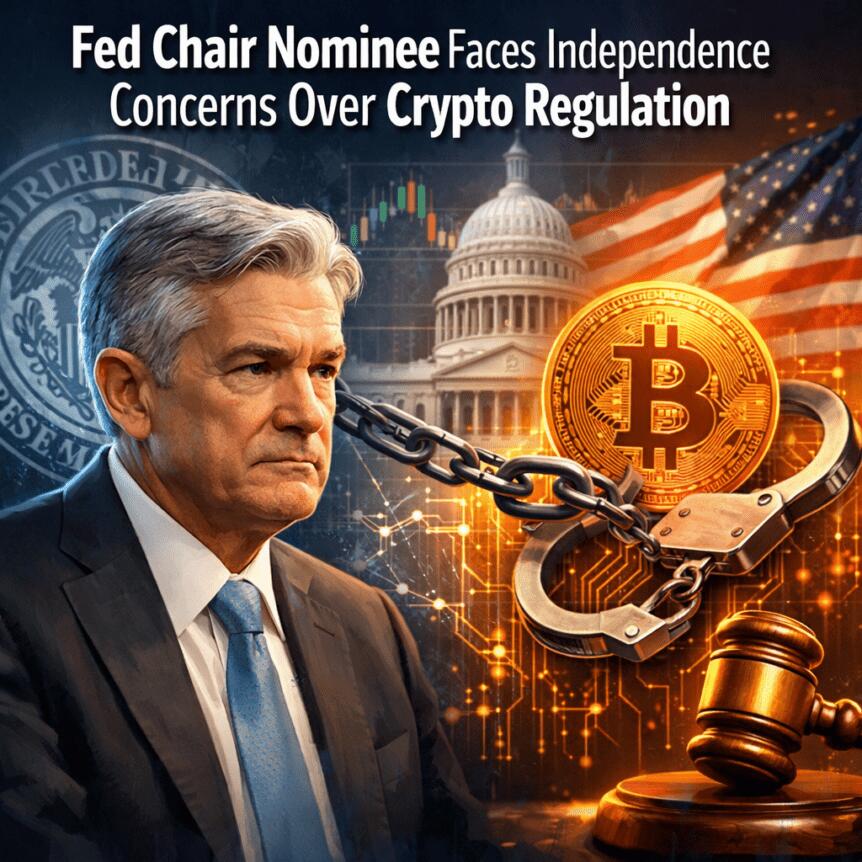
Kevin Warsh’s nomination to lead the U.S. Federal Reserve faced pointed scrutiny at a Senate confirmation hearing on Tuesday, as lawmakers pressed him over financial disclosures and potential conflicts of interest tied to holdings in crypto and other sectors. The exchange illuminated ongoing debates about Fed independence in a political environment shaped by questions about executive influence and the central bank’s future policy trajectory.
With Jerome Powell’s term as Fed chair about to expire, lawmakers are under pressure to consider a successor who can command broad confidence across parties while maintaining insulation from political interference. The hearing underscored the central tension: how to preserve credible monetary policy and regulatory stewardship when the appointment is perceived as falling within presidential prerogative, and how that dynamic could affect the government’s approach to a rapidly evolving digital-asset landscape.
During questioning, Massachusetts Senator Elizabeth Warren, the committee’s ranking member, criticized Warsh for what she described as potential outsized influence from the White House and suggested that confirmation could open the door to policy outcomes favorable to the president’s broader agenda. Warsh, in turn, avoided committing to specific policy positions or rate decisions, stating that no president had ever asked him to promise a particular outcome and that he would not agree to do so if asked. His responses reflected the broader challenge of balancing independence with accountability in a high-stakes policy environment.
Democrats pressed Warsh on concrete concerns about conflicts of interest that could arise if he were confirmed and how they might affect the Fed’s decisions on monetary policy, financial stability, and regulatory oversight. Critics warned that even the appearance of political influence could undermine the Fed’s credibility in times of market stress or when difficult regulatory choices must be made regarding financial institutions and asset markets. The discussion touched on the potential for conflicts to extend into novel areas of policy as digital assets gain prominence within the financial system.
The hearing also included questions on crypto policy, a topic that has moved to the center of congressional debates about broader financial regulation and consumer protection. Wyoming Senator Cynthia Lummis asked Warsh about the role of digital assets within the U.S. financial system. Warsh indicated that digital assets are “part of the fabric of our financial services industry in the United States,” signaling a recognition that the Fed’s stance on digital assets will be increasingly consequential for financial markets and regulatory frameworks. According to Cointelegraph, Warsh has indicated a willingness to engage with the evolving regime governing crypto, while also emphasizing the need for clear governance of the central bank’s authority in a rapidly digitizing market.
Warsh has pledged to divest from his financial holdings, including investments in crypto and AI companies, before taking the oath if confirmed. This commitment, noted in coverage by Cointelegraph, is intended to mitigate potential conflicts of interest and reassure lawmakers that the Fed chair’s decisions would be guided by policy considerations rather than personal financial interests. The discussion occurred against a backdrop of broader concerns about the independence of the Fed’s decision-making at a time when political dynamics have elevated scrutiny of central-bank independence as a global policy issue.
The committee’s chair, Tim Scott, speaking to CNBC, framed the independence objective within the Fed’s dual mandate. He argued that while collaboration among the administration, Congress, and the central bank is essential, the core function of the Fed remains to deliver monetary policy and financial stability in a manner that does not compromise its autonomy. This framing aligns with longstanding institutional expectations that the Fed’s policy actions should be insulated from short-term political incentives, even as lawmakers seek greater transparency and accountability through the appointment process.
Key takeaways
- The nomination process highlighted enduring questions about Federal Reserve independence amid executive-branch influence concerns, particularly in the context of a presidential transition and a looming leadership shift.
- Warsh’s disclosed holdings, including crypto-related investments, drew scrutiny regarding potential conflicts of interest; he committed to divesting prior to taking office to mitigate perceived bias in policy decisions.
- Crypto assets occupied a substantive role in the hearing, with Warsh acknowledging their place in the U.S. financial services ecosystem, a signal that the Fed’s regulatory approach to digital assets could intersect with congressional oversight and market developments.
- The timing of a final Fed chair appointment remains uncertain, with Powell’s term ending mid-May and market instruments projecting potential delays in confirmation, affecting regulatory planning and policy signaling.
- The proceedings sit within a broader regulatory context that includes ongoing debates over crypto legislation, international alignment, and U.S. agency coordination on supervision, licensing, AML/KYC, and market integrity standards.
Fed leadership, independence, and the policy horizon
From a governance perspective, Warsh’s confirmation hearing placed a spotlight on how the Fed maintains independence when its leadership is explicitly connected to an administration’s agenda. Critics argue that swift turnover or a chair perceived as tethered to political interests could introduce discomfort among markets and financial institutions that rely on a predictable, rule-based framework for monetary policy and regulatory oversight. In this context, the confirmation process is not simply about one individual but about institutional design and the resilience of the policy framework that underpins the U.S. financial system.
Supporters of the nominee emphasize the need for steady stewardship and a measured approach to risk management, especially in an era of heightened financial-market complexity and rapid innovation. The discussion reflects a broader historical cycle in which central banks operate at the intersection of macroeconomic management and financial regulation, balancing the goals of price stability, full employment, and systemic resilience. The outcome of Warsh’s confirmation will likely influence how forthcoming communications from the Fed are interpreted by markets and how the central bank coordinates with other agencies on policy matters affecting the digital-asset sector.
Crypto disclosures and the regulatory context
The disclosure issue remains central to governance expectations for high-level public office in the financial domain. The pledge to divest from crypto- and AI-related holdings is a concrete step toward reducing perceived conflicts and ensuring decision-making is driven by policy merit rather than personal investments. This aligns with compliance practices observed in institutions that prioritize robust governance, robust disclosure regimes, and risk management protocols to address potential conflicts of interest.
From a regulatory standpoint, the matter sits at the confluence of monetary policy, financial stability, and digital-asset regulation. As policymakers seek greater clarity on how the Fed will engage with digital assets, observers note that the central bank’s stance could influence liquidity considerations, banking relationships with crypto-exposed institutions, and the pace of regulatory alignment across jurisdictions. In parallel, U.S. lawmakers are advancing broader debates around crypto oversight, including licensing regimes, consumer protection, anti-money-laundering standards, and cross-border cooperation—areas where the Fed’s policy framework will interact with agencies such as the Securities and Exchange Commission, the Commodity Futures Trading Commission, and the Department of Justice.
Cointelegraph’s coverage underscores that the nomination process is intertwined with ongoing policy discussions about how the United States will address digital assets within established regulatory architectures, including potential implications for the CLARITY Act and related legislative efforts. The cross-cutting nature of these issues means that the Fed’s leadership choice could influence, or be influenced by, a broader policy stance on asset classification, financial-market structure, and regulatory reach across the crypto economy.
Timeline, markets, and the political calculus
Powell’s term as chair is set to expire on May 15, creating a narrow window for a confirmation vote. Depending on the Senate’s pace, Warsh could serve in a temporary capacity at the Fed Board while the confirmation process unfolds, continuing to study and decide on policy directions until a final appointment is secured. This transitional dynamic is particularly relevant for financial institutions seeking policy clarity and for market participants evaluating the regulatory path for digital assets and related financial products.
Market observers have started to reflect the uncertainty in the timing of any confirmation. Prediction markets have captured this ambivalence; for example, one active event contract tracked by Polymarket indicates a substantial portion of participants expect confirmation to occur after mid-May, with a smaller fraction betting on a May confirmation. The same market activity shows a consensus leaning toward a June or later timeline. While not predictive of policy outcomes, these instruments illustrate the degree to which stakeholders are calibrating expectations around leadership, policy signaling, and regulatory evolution at a sensitive juncture.
Beyond the confirmation timeline, the intersection of regulatory oversight and digital-asset policy continues to shape the institutional environment. The debate touches on licensing, cross-border enforcement, AML/KYC standards, and the harmonization—or at least the acknowledgement—of international approaches to crypto regulation. As U.S. policymakers weigh internal governance with external policy requirements, the Fed’s approach to digital assets will likely interact with broader regulatory shifts, including potential updates to domestic and international financial infrastructure, central-bank digital currency considerations, and the evolving stance of major financial institutions toward crypto exposure.
Closing perspective
As the confirmation process advances, observers will watch not only for the outcome of Warsh’s candidacy but also for the signal it sends about the Fed’s posture toward independence, regulatory collaboration, and digital-asset policy. The coming weeks will be pivotal for institutions planning compliance, risk management, and engagement with a regulatory landscape that is increasingly focused on crypto markets, anti-money-laundering controls, and cross-border coordination across financial regulators.
Looking ahead, the central question remains: how will a new Fed leadership balance the imperatives of monetary stability with the fast-evolving realities of digital finance, while maintaining clarity and credibility for markets and for the broader ecosystem of crypto firms, banks, and investors? The answer will shape regulatory dialogue, enforcement priorities, and the architecture of U.S. financial regulation for years to come.

CLARITY Act Faces Senate Push as Timeline Pressure Builds Fast

Walton Goggins’ R-Rated Hulu Thriller Is Unfairly Overlooked 1980s Nostalgia
Vikings Cut Defender Everyone Was Excited About

Manchester United reach agreement with Casemiro over contract clause amid transfer speculation

Steven Gerrard disagrees with Gary Neville over ‘shock’ Chelsea and Arsenal claim | Football

US brings back mandatory military draft registration

Financial audit guest discussed there debt #financialplanning #podcast #finance

The Money Making Expert: The 7,11,4 Hack That Turns $1 Into $10K Per Month! Daniel Priestley

Financial Audit guest finds out how bad the spending is #financialplanning #podcast #finance
-

 News Videos7 days ago
Secure crypto trading starts with an FIU-registered
-

 Fashion4 days ago
Weekend Open Thread: Theodora Dress
-

 Sports5 days ago
NWFL Suspends Two Players Over Post-Match Clash in Ado-Ekiti
-

 Politics4 days ago
Palestine barred from entering Canada for FIFA Congress
-
Entertainment2 days ago
NBA Analyst Charles Barkley Chimes in on Ice Spice McDonald’s Fiasco
-

 Business2 days ago
Powerball Result April 18, 2026: No Jackpot Winner in Powerball Draw: $75 Million Rolls Over
-

 Crypto World4 days ago
Russia Pushes Bill to Criminalize Unregistered Crypto Services
-

 Politics1 day ago
Gary Stevenson delivers timely reminder to register to vote as deadline TODAY
-

 Tech3 days ago
Auto Enthusiast Scores Running Tesla Model 3 for Two Grand and Turns It Into Bare-Bones Go-Kart
-
 Business5 days ago
Creo Medical agree sale of its manufacturing operation
-

 Politics3 days ago
Zack Polanski demands ‘council homes not luxury flats for foreign investors’
-

 Tech6 days ago
‘Avatar: Aang, The Last Airbender’ Leaked Online. Some Fans Say Paramount Deserves the Fallout
-

 Crypto World4 days ago
Russia Introduces Bill To Criminalize Unregistered Crypto Services
-

 Tech7 days ago
Microsoft adds Windows protections for malicious Remote Desktop files
-

 Crypto World7 days ago
X Launches New Cashtag Feature for Stocks and Crypto: X
-
 Entertainment7 days ago
Dave Portnoy Slams Dianna Russini: ‘Makes Zero Sense’
-

 Sports6 days ago
British climbers complete new route in Swiss Alps
-
 Crypto World7 days ago
Bitcoin surpasses halfway mark in current halving cycle
-

 Crypto World7 days ago
Tempo Onboards Visa, Stripe and Zodia Custody as Validators
-

 Sports7 days ago
WTA roundup: All seeded players advance in Stuttgart, Rouen
You must be logged in to post a comment Login