

Crypto World
Ethereum Foundation’s high-profile departures spark fresh debate



Network News
ETHEREUM COMMUNITY RESPONDS TO EF DEPARTURES: A wave of departures from the Ethereum Foundation (EF) is reigniting a debate inside the crypto industry: What is going on at the main steward behind Ethereum, and why does the community know so little about what is happening behind the scenes? Days after several high-profile figures said they had left the foundation during an internal shakeup, community members on X began openly questioning the organization’s direction, leadership structure and communication practices. “What’s happening at the EF?” crypto commentator Andy, the co-founder of the Rollup podcast, wrote in a post on X. Others echoed similar frustrations, arguing the EF has failed to clearly explain the rationale behind the changes or how responsibilities inside the organization are evolving. “Why can’t the EF just be transparent about things,” wrote Joon Ian Wong, a prominent figure in the crypto community events space. The criticism reflects a longstanding tension surrounding the Ethereum Foundation, the Switzerland-based nonprofit that plays a central role in funding research, coordinating upgrades and stewarding development of the world’s second-largest blockchain by market capitalization. Unlike traditional corporations, the EF has historically operated with a loose and decentralized structure. Some have argued that the model preserves Ethereum’s neutrality and prevents excessive concentration of power. Others say the approach has increasingly clashed with the expectations of an ecosystem now underpinning hundreds of billions of dollars in assets and decentralized financial activity. The latest departures appear to have reopened that debate. — Margaux Nijkerk Read more.
CITI SAYS BITCOIN PARTICULARLY EXPOSED TO QUANTUM THREATS: Quantum computing is emerging as a growing risk for digital assets, with Wall Street bank Citi (C) warning that recent breakthroughs are accelerating the timeline for potential threats to crypto security and internet infrastructure. In a report, the bank said advances in quantum computing are challenging the cryptographic systems underpinning cryptocurrencies, financial networks and online communications. “While large-scale quantum attacks remain a medium-term concern, the pace of progress has shortened the horizon and warrants closer attention from investors,” wrote analyst Alex Saunders. Quantum computing is a long-term threat to crypto because a sufficiently powerful quantum computer could break the cryptographic systems that protect wallets, exchanges and blockchains, especially public-key cryptography like ECDSA used by Bitcoin and Ethereum. In theory, a quantum attacker could derive private keys from exposed public keys, forge transactions, and steal funds. Still, the risk is not immediate. Experts say the hardware needed to do this at scale is still years away, and blockchains will probably migrate to post-quantum cryptography before then. The analyst highlighted Bitcoin as particularly exposed because of its conservative governance model and slower ability to implement protocol upgrades. Saunders pointed to vulnerabilities tied to public keys exposed onchain, dormant wallets and early pay-to-public-key (P2PK) addresses, including wallets believed to belong to Bitcoin creator Satoshi Nakamoto. Latest estimates put around 6.5 million–6.9 million bitcoin at quantum risk due to already-exposed public keys. This is about one-third of circulating supply, or roughly $450 billion worth, depending on the BTC price. — Will Canny Read more.
JUMP CRYPTO’S FIREDANCER CLIENT: Jump Crypto’s long-awaited Firedancer validator client is now producing blocks on Solana mainnet, marking a turning point in the project’s yearslong push to overhaul the blockchain’s performance infrastructure. “Firedancer is live and running in production,” Firedancer founding engineer Ritchie Patel told CoinDesk in an interview. “We have packed tens of millions of transactions over the last few months.” The rollout, however, is intentionally restrained. Patel said the team preferred to roll out progressively across the network rather than through a broad public launch, as the team remains cautious about rapidly increasing adoption. “We don’t want everybody to run it yet,” Patel said. “If half the network upgrades before we’ve done full security audits, that would be a bit much.” Firedancer, developed by Jump Crypto, is a validator client for Solana, or another version of the software that runs the blockchain. The effort emerged partly in response to concerns around Solana’s earlier outages and its reliance on a single dominant client maintained by Solana infrastructure firm Anza. Rather than framing Firedancer as a competitor to Anza, Patel described the relationship as collaborative. — Margaux Nijkerk Read more.
BUTERIN ON AI FORMAL VERIFICATION AND CRYPTO: Vitalik Buterin says artificial intelligence could make cryptocurrency systems and critical internet infrastructure more secure if developers combine AI-generated code with mathematically verified software. The Ethereum co-founder argued that AI-assisted “formal verification” could become one of the most important tools for cybersecurity as increasingly advanced AI systems make it easier to discover software vulnerabilities, in a lengthy blog post shared. Formal verification refers to the use of machine-checkable mathematical proofs to confirm that software behaves exactly as intended. While the technique has existed for decades, Buterin said recent advances in AI are making it more practical by helping developers write both code and the proofs needed to verify it. Buterin framed the technology as a response to growing fears that AI could overwhelm defenders by accelerating bug discovery and cyberattacks. Smart contract exploits remain a persistent issue across crypto, with attackers frequently draining millions of dollars from vulnerable decentralized finance protocols. Mathematically verified software could help reverse that trend, especially in areas where security failures would be catastrophic, Buterin argued. He specifically pointed to Ethereum infrastructure, zero-knowledge proof systems, consensus mechanisms and post-quantum cryptography as technologies that could benefit from formal verification. — Margaux Nijkerk Read More.
In Other News
- Qivalis, a group of European banks building a regulated euro stablecoin, said Wednesday that 25 more lenders joined the initiative, more than tripling its membership as banks across the region deepen their push into blockchain finance. The expansion brings the consortium to 37 financial institutions spanning 15 European countries. New members include ABN AMRO, Rabobank, Intesa Sanpaolo, Nordea, Erste Group and National Bank of Greece. The expansion comes as tokenization gains traction among large financial institutions and asset managers, with stablecoins — crypto tokens whose value is pegged to a traditional asset such as a fiat currency — playing a key role in settlement and asset trades on blockchain rails. The effort also reflects a broader push by European banks to expand the use of euro-denominated stablecoins and reduce dominance of U.S. dollar-backed tokens, which currently account for about 99% of the global stablecoin market. The total stablecoin market capitalization is about $318 billion, dominated by Tether’s USDT and Circle Internet’s (CRCL) USDC. Together they account for more than 80% of the total. By building a regulated euro-based alternative, Qivalis aims to strengthen the single currency’s role in digital payments and tokenized finance as blockchain settlement gains traction among institutions. “This infrastructure is essential if Europe is to compete in the global digital economy whilst preserving its strategic autonomy,” said Howard Davies, chairman of Qivalis’ supervisory board. — Kristzian Sandor Read more.
- Galaxy Digital said New York regulators granted the company a BitLicense and money transmitter license, allowing the crypto financial services firm to expand institutional digital asset operations in one of the industry’s most tightly regulated markets. The approval from the New York State Department of Financial Services authorizes GalaxyOne Prime NY, the company’s New York entity, to offer regulated crypto trading and custody services across the state. Galaxy said in a press release that the move gives New York-based institutions — including hedge funds, registered investment advisers and family offices — access to its digital asset platform, which the company said manages roughly $9 billion in client assets. “New York is home to the deepest pool of institutional capital in the country, and digital assets are no longer sitting at the edge of those allocations,” said Mike Novogratz, Galaxy’s founder and CEO, in a statement. — Helene Braun Read more.
Regulatory and Policy
- U.S. President Donald Trump ordered the federal government to update its regulatory frameworks to integrate “digital assets and innovative technology into traditional financial services and payment systems” in an executive order. According to the document, the U.S. should foster financial technology services into its existing payment and financial services rails. “It is therefore the policy of the United States to streamline regulatory processes, reduce unnecessary barriers to entry, and encourage collaboration between fintech firms, federally regulated financial institutions, and Federal financial regulators,” the order said. The order directed the heads of financial regulators to review their existing rules over the next three months and identify any rules or documents “that unduly impede fintech firms from entering into partnerships with federally regulated institutions.” Within six months, Trump directed regulators to “take steps to encourage innovation as a result of the review.” These steps include asking the Federal Reserve Board of Governors to review how it allows uninsured depository institutions and non-bank financial firms access to payment accounts and services. — Nikhilesh De Read more.
- U.S. Senator Elizabeth Warren is demanding the agency that regulates national banks explain its chartering of nine crypto-focused institutions, which, she argued, didn’t meet federal regulations and posed a risk to the financial system. The U.S. Office of the Comptroller of the Currency has granted trust charters to a series of banks as the agency embraced President Donald Trump’s agenda to elevate the crypto sector and establish a friendly regulatory environment. Now Warren, the ranking Democrat on the Senate Banking Committee, sent a letter to OCC chief Jonathan Gould, calling for an explanation of approvals for trusts belonging to companies including Coinbase, Paxos, Ripple, BitGo and Fidelity Digital Asset Services. “These companies are effectively crypto banks that want to evade the fundamental safeguards and obligations that come with being a bank,” Warren, who has criticized Gould’s decision previously in hearings, wrote in the letter. “Your decision to facilitate this regulatory arbitrage not only conflicts with federal law, it also poses serious risks to consumers, the safety and soundness of the banking system, and the separation of banking and commerce.” — Jesse Hamilton Read more.
Calendar
- June 2-3, 2026: Proof of Talk, Paris
- June 4, 2026: Stable Summit, New York
- June 8-10, 2026: ETHConf, New York
- Sept. 16-17, 2026: Avalanche Summit, New York
- Sept. 29-Oct.1, 2026: Korea Blockchain Week, Seoul
- Oct. 7-8, 2026: Token2049, Singapore
- Nov. 3-6, 2026: Devcon, Mumbai
- Nov. 15-17, 2026: Solana Breakpoint, London

Crypto World
Polymarket moves to list parlays while SEC seeks public input on prediction market ETFs


Prediction market provider Polymarket filed to list parlays in sports event contracts in the U.S. on Wednesday, according to a self-certification filing with the Commodity Futures Trading Commission.
Polymarket filed to list “combinatorial outcome contracts” on Wednesday, describing these event contracts — the official term for prediction markets — as combining two or more underlying contracts. Moreover, all of the underlying contracts would have to settle to the specific outcome that the user sets.
“Every outcome must be satisfied for the Contract to resolve to $1.00. The Contract resolves to $1.00 if and only if every leg is satisfied. If any single leg is not satisfied, the Contract resolves to $0.00, regardless of the outcomes of any remaining unsettled legs,” the filing said.
Because the contract is self-certified, Polymarket is not so much asking for explicit permission to list these contracts as it is telling the CFTC that it intends to list these products. The document said it would list them “no earlier than May 21, 2026.”
Another exhibit was filed but with Polymarket asking the CFTC to hold this exhibit as confidential due to possible trade secrets or commercial information, according to a second document.
Exchange-traded funds
The Securities and Exchange Commission, which doesn’t directly oversee prediction markets, is looking into what an exchange-traded fund (ETF) around prediction markets might look like, Chairman Paul Atkins said in a statement on Wednesday.
ETFs boost capital formation and investor choice, he said, noting that ETF assets have tripled in the past seven years.
“Novel products raise novel questions, and I appreciate the willingness fund sponsors have shown in delaying the effectiveness of a number of novel ETFs, including event contract ETFs, while we consider the implications,” he said. “To ensure we do this in a transparent and thoughtful manner, I have instructed the staff to seek input from the public on how the Commission should respond to recent market changes.”
Prediction markets have drawn immense scrutiny in Congress and the courts over the past few months, particularly as they’ve expanded into sports leagues. State regulators and gambling firms argue that sports-related prediction markets are infringing on states’ rights to regulate and tax gambling products, since prediction market providers are regulated at the federal level.
The CFTC, for its part, maintains that these products are properly overseen by it under the Commodity Exchange Act. The U.S. Supreme Court is widely expected to take up the issue at some point.
In the meantime, lawmakers are reviewing prediction markets as well, though it’s unclear if a bill will be introduced to address them at this point.
Read more: Prediction markets firms take heat in Senate Commerce hearing scrutinizing surge

Hester M. Peirce, a two-term commissioner at the U.S. Securities and Exchange Commission who crypto insiders widely regard as “Crypto Mom,” is transitioning to academia. Regent University School of Law has announced she will join as an associate professor, effective in November, expanding the law school’s emphasis on federal litigation, securities regulation, and digital assets.
Peirce’s move comes amid a broader staffing dip at the SEC and a shifting regulatory posture on crypto under the current administration. Her formal term at the agency expired in June 2025, but Commission rules allow officials to remain in office for roughly 18 months beyond term expiration if replacements have not yet been named. Regent’s notice highlights Peirce’s anticipated focus areas, signaling a push to anchor crypto policy education at a time when the regulatory landscape is under increased scrutiny from lawmakers and market participants alike.
Key takeaways
- Academic appointment for a prominent crypto regulator: Hester Peirce will join Regent University School of Law as associate professor beginning in November, with Regent noting a focus on federal litigation, securities regulation, and digital assets.
- SEC staffing shifts and vacancies: With Peirce’s departure, the SEC faces a vacancy landscape that may thin the board further, as Caroline Crenshaw left in January and no nominations were publicly announced as of the latest briefing.
- Inter-agency dynamics amid a regulatory reshape: The CFTC, under Chair Michael Selig, remains with a single commissioner and a five-member panel that has yet to be fully staffed, complicating coordination on crypto policy.
- Legislative progress could reallocate authority: A digital asset market structure bill, the CLARITY Act, is moving through Congress and could shift significant oversight powers from the SEC to the CFTC, reinforcing a broader push toward clearer regulatory boundaries.
- Policy shift under the current administration: Since President Trump took office in January 2025, the SEC has signaled a notable shift in crypto enforcement and policy, including winding down several actions and investigations in the sector.
SEC veteran moves to academia as staffing gaps widen
Peirce joined the SEC in January 2018 after being nominated by then-President Donald Trump and confirmed by the Senate in December 2017. She secured a second term in 2020, having first been nominated by President Barack Obama for a Republican seat in 2015, though that initial nomination did not advance in the Senate at the time. Regent University’s announcement indicates that Peirce will begin teaching as an associate professor later this year, with a program that aims to bolster the law school’s offerings in federal litigation, securities regulation, and digital assets.
The timing of her departure is notable both for the SEC’s internal dynamics and for the crypto policy discourse more broadly. Peirce’s exit follows a period when the agency has been recalibrating its stance on digital assets, a shift that has been observed in parallel with discussions surrounding Congress’s evolving approach to crypto markets. Regent’s statement frames the appointment as a strategic move to infuse academic rigor into areas crucial to market participants—regulatory compliance, enforcement posture, and the evolving treatment of digital assets in securities law.
In parallel, the SEC’s leadership trajectory remains unsettled. Caroline Crenshaw, a Democratic commissioner whose term ended years earlier, departed in January, and as of the latest updates no nominations had been publicly made to fill her seat. With Peirce’s exit, the SEC would be left with two Republican commissioners—Mark Uyeda and Chair Paul Atkins—absent a prompt replenishment vote. This gaps-filled picture matters because commissioner diversity and voting blocs influence how aggressively or defensively the agency pursues crypto cases and shapes rulemaking agendas.
Inter-agency balance and the fight to regulate crypto
The regulatory landscape for crypto in the United States has long hinged on the balance of power between the SEC and the Commodity Futures Trading Commission. The two agencies have signaled a willingness to coordinate approaches to “end regulatory turf wars,” even as their seats remain a point of contention. Under Atkins at the SEC and Selig at the CFTC, both agencies have stressed a desire for cooperative governance over crypto markets. Yet a fully staffed leadership roster remains a work in progress, complicating a coherent nationwide framework for digital assets.
Meanwhile, the CFTC continues to operate with a pared-down leadership slate. Selig remains the sole CFTC commissioner and chair in what is intended to be a five-person panel. With Peirce’s departure, the SEC’s representation would shrink to two Republican commissioners, potentially affecting the dynamics of any rapid policy shifts or aggressive enforcement actions in the near term. The sense of urgency around staffing is underscored by the broader political backdrop, in which President Trump has signaled a more permissive or streamlined regulatory posture toward crypto, at least in rhetoric and certain enforcement choices, compared with earlier years.
In this context, the passage of a digital asset market structure bill, commonly referred to as the CLARITY Act, could be a watershed moment. The bill, which has been advancing through Congress, is framed as a path to clearer regulatory boundaries—potentially transferring significant oversight duties from the SEC to the CFTC. Supporters argue that shifting primary enforcement and market-structure responsibilities to a single regulator could reduce fragmentation and provide clearer compliance pathways for market participants. Critics warn of rushed moves that could leave gaps in investor protection or create regulatory opacity during transition periods.
Why this matters for investors and builders
Regulatory staffing and leadership matter as much as the rules themselves, because they shape enforcement priorities, guidance, and the speed at which market participants can adapt to new requirements. A thinner SEC commission could slow or alter the agency’s public-facing crypto enforcement posture, potentially reducing the pace of high-profile actions in the near term. At the same time, if lawmakers press ahead with the CLARITY Act and other structural reforms, the balance of power between the SEC and CFTC could tilt toward the latter, with implications for how token offerings, custody practices, and derivatives markets are overseen.
From an investor perspective, the evolution of policy clarity—who governs what, and how quickly rules are applied—will influence risk assessment and strategic planning. Traders and fund managers may look for signals about whether the regulatory environment will become more centralized under a single agency or more nuanced through coordinated, multi-agency guidance. For crypto builders and issuers, a shift toward a clearer, perhaps more unified framework could reduce compliance ambiguity, provided the transition is well-communicated and functionally aligned across agencies. However, any delays in filling key seats could maintain a degree of regulatory ambiguity in the short term.
Adding to the complexity is the administration’s apparent recalibration of crypto enforcement. Under Trump’s tenure beginning in January 2025, the SEC has taken a notably different stance, winding down several enforcement actions and investigations tied to crypto companies, including some related to political figures. Observers will be watching how this more selective enforcement posture interacts with ongoing rulemaking and the activities of the CFTC as it seeks to clarify market structure and oversight.
For readers following the policy arc, Regent University’s staffing decision to hire Peirce signals a growing interest among academia in integrating crypto policy into legal education. It also foreshadows how the next generation of lawyers may approach digital assets—from securities regulation to litigation strategy and compliance. As the market watches, the next steps will hinge on whether nominations for SEC and CFTC leadership come forward promptly, how Congress advances the CLARITY Act, and how far regulatory bodies can harmonize with a potential shift of oversight authority in this rapidly evolving space.
Source context: Regent University’s official notice confirms Peirce’s appointment as associate professor, effective November. The broader regulatory backdrop is reflected in ongoing discussions about agency vacancies, inter-agency coordination, and the CLARITY Act’s progress through Congress. In related coverage, Cointelegraph has detailed crypto enforcement shifts under the current administration and the evolving posture of the SEC and CFTC as new leadership considerations unfold, including mentions of public statements from agency officials and related regulatory developments.
As the ecosystem awaits the next moves, market participants should monitor developments around presidential nominations to SEC and CFTC, upcoming votes on the CLARITY Act, and how academic institutions like Regent University will shape the next generation of crypto-law education and policy discourse.


A South Korean funeral services company has reported an unrealized loss of about 45 billion won ($33 million) tied to investments in leveraged ether (ETH) exchange-traded funds (ETFs).
The Seoul-based Bumo Sarang, Korean for Parental Love, invested in the T-REX 2X Long BMNR Daily Target ETF (BMNU), a leveraged exchange-traded fund managed by Tuttle Capital Management that seeks to deliver 200% of the daily performance of Bitmine Immersion Technologies (BMNR), the world’s largest publicly traded holder of ether.
Leveraged ETFs are designed for short-term trading and can magnify both gains and losses, making them among the riskiest exchange-traded products available to retail investors.
The company’s losses are unrealized, meaning the holdings have not yet been sold. Still, the disclosure underscores the growing appetite in South Korea for speculative, crypto-linked investment products, particularly leveraged ETFs tied to digital asset firms and related equities.
South Korea has become one of the world’s busiest markets for leveraged and inverse ETF trading, with regulators warning investors about volatility and the risks associated with amplified exposure products.
The losses also reflect recent sharp swings in crypto-related equities as digital asset markets remain highly volatile.
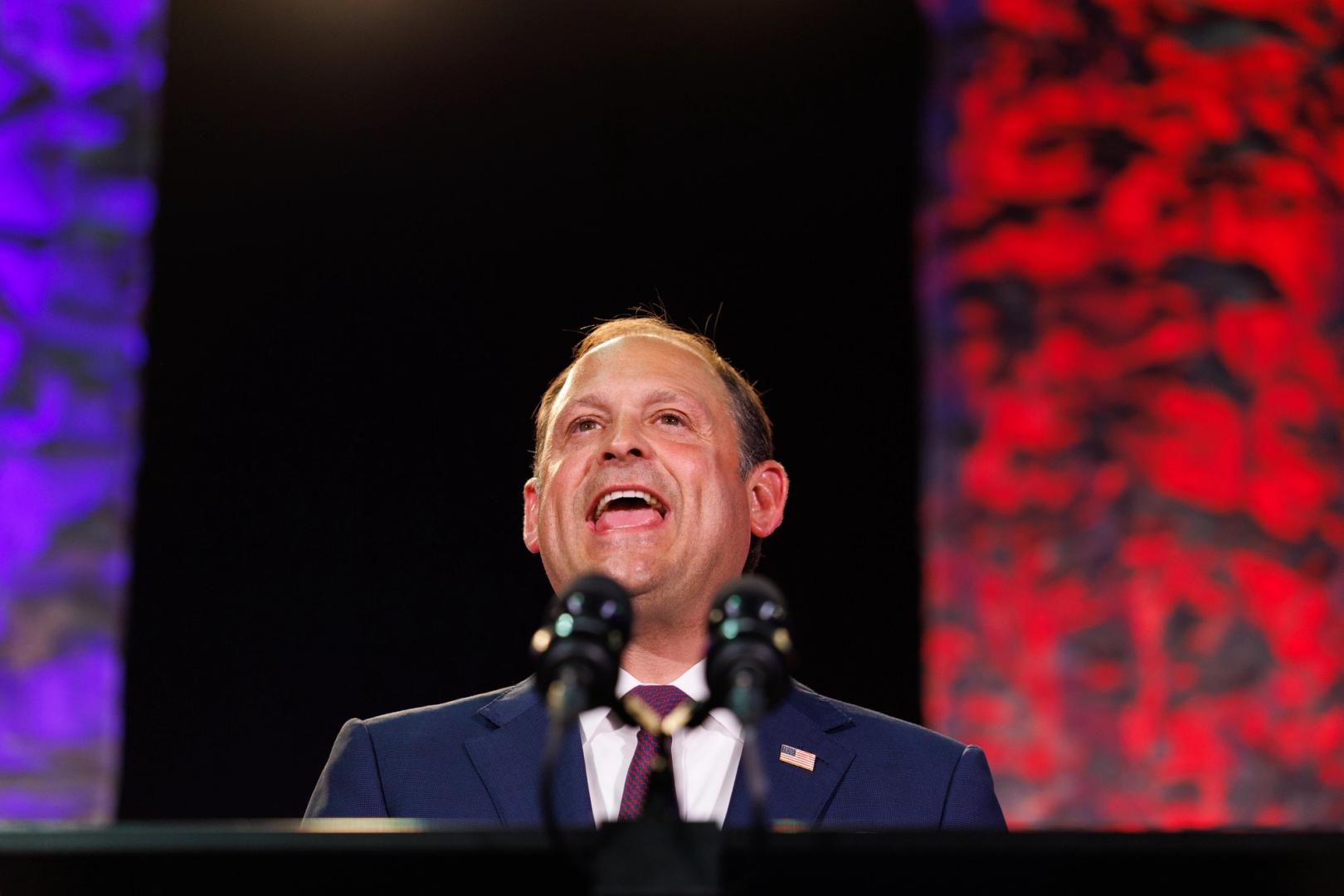
The crypto industry’s campaign-finance juggernaut, the Fairshake political action committee, backed winners in half a dozen Southern primaries on Tuesday, pouring millions of dollars into the races as one of the congressional midterms elections’ leading spenders.
The super PAC deployed more than $20 million in political advertising in three states, mostly to Republican candidates who are considered likely to win their deep-red regions in the November general elections. So far this year, Fairshake — which has in previous election cycles helped get dozens of pro-crypto candidates to Washington — has backed a lengthy list of primary winners, though it did experience some setbacks, most notably in the Illinois race in which it spent more than $10 million trying to defeat Lt. Gov. Juliana Stratton on her way to her Democratic primary victory in March.
Fairshake devoted more than $7 million each in Tuesday’s Senate primaries in Alabama and Kentucky. It backed Republican U.S. Representative Andy Barr in Kentucky to replace the longtime Senate powerhouse Mitch McConnell, and Barr won that primary handily with more than 60% of the vote. In Alabama, the $7.4 million spent by Fairshake didn’t quite get to a resolution, yet, because Representative Barry Moore didn’t get past the 50% mark despite leading his closest competitor by more than 13 percentage points, so the crypto-backed candidate will face a runoff.”Fairshake’s 6-0 sweep tonight was a clear victory for pro-crypto leaders across the country,” said Geoff Vetter, a spokesperson for Fairshake, in a statement. “This powerful bipartisan mandate is being heard across America from Georgia to Alabama to Kentucky.”
In Georgia, the PAC focused on four seats in the U.S. House of Representatives, including a Democratic primary in the district left vacant after the death of longtime Democratic Representative David Scott. In the district, Fairshake supported Jasmine Clark, a Democratic state lawmaker who dominated a crowded field in this week’s primary after getting $4.2 million in crypto ad spending.
Such spending far outstripped the organic campaign fundraising in that race, with the crypto funds totaling more than was raised by all 10 Democratic candidates and far more than Clark’s own $1.2 million brought in by her campaign directly.
Clark’s campaign had included a supporting statement for crypto technology, which has often been the case with candidates Fairshake devoted its millions.
“We need to reassert ourselves as a leader on emerging technologies — whether that be AI, blockchain or cryptocurrencies — by working with experts to craft a smart, clear regulatory framework to help the industry grow and protect consumers from bad actors,” Clark’s campaign website declared.
Across Georgia, Fairshake also poured lesser amounts of cash into Republican primaries, backing candidates Jim Kingston (who won with 52%), Houston Gaines (who won with 67%) and incumbent Representative Clay Fuller (who had previously prevailed in a special election in April to replace Marjorie Taylor Greene and won this week with 81%).
Super PACs buy their ads without consultation with the campaigns they’re supporting, and Fairshake’s strategy has been to run ads designed to support or oppose candidates on whatever political points the committee sees as most effective — almost never mentioning the issue of cryptocurrency.
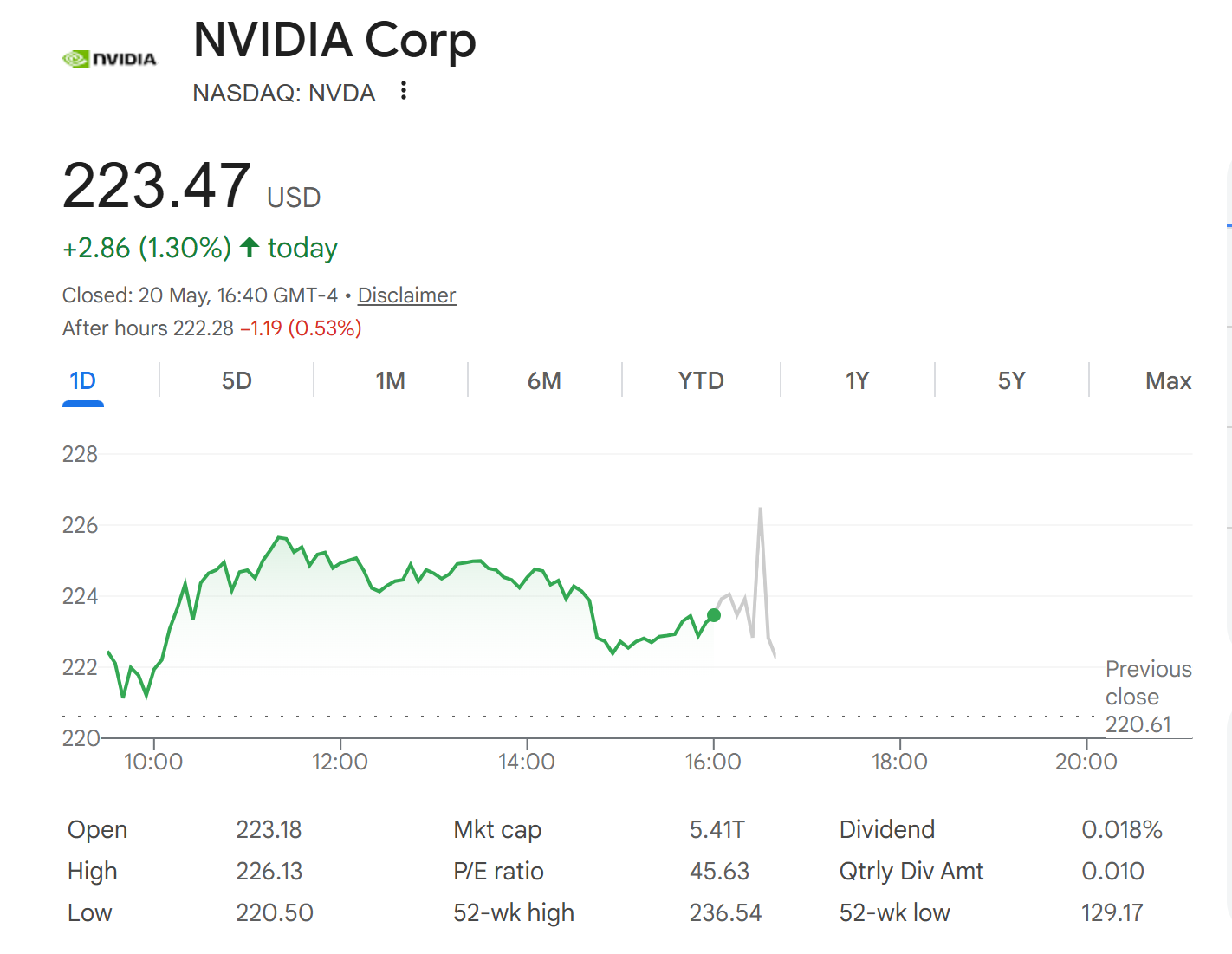
Nvidia delivered another blockbuster quarter, beating Wall Street estimates on revenue, earnings, and data center growth as global demand for AI infrastructure accelerated.
The chipmaker’s results reinforced its position at the center of the AI boom, while strong guidance signaled hyperscalers are still aggressively investing in next-generation computing capacity.

Follow us on X to get the latest news as it happens
Nvidia Tops Expectations on Revenue and AI Demand
NVIDIA reported first-quarter revenue of $81.62 billion, ahead of analyst expectations of $79.19 billion. Adjusted earnings per share came in at $1.87, also above forecasts.
The company’s data center division, the key engine behind the AI rally, generated $75.2 billion in revenue, surpassing estimates of $73.48 billion.

Nvidia also projected second-quarter revenue between $89.18 billion and $92.82 billion, well above Wall Street expectations of $87.36 billion.
The results highlight continued momentum in AI-related spending from major cloud providers and enterprise customers racing to expand computing capacity for generative AI models and inference workloads.
Blackwell AI Systems Fuel Massive Growth
Nvidia said demand for its Blackwell AI architecture continues to accelerate, helping drive record sales across hyperscalers, sovereign AI projects, and enterprise deployments.
The company also announced a new reporting structure focused on two major platforms: Data Center and Edge Computing. Nvidia said the framework better reflects its long-term growth strategy as AI workloads expand beyond centralized cloud infrastructure.
Investors have closely watched the Blackwell rollout after concerns earlier this year about supply constraints and execution risks. Instead, the latest quarter suggested Nvidia is maintaining pricing power and scaling production faster than expected.
Nvidia Earnings Seen as Key AI Market Signal
According to Daniela Hathorn, senior market analyst at Capital.com, Nvidia’s earnings now carry significance far beyond the company itself.
“NVIDIA has become the bellwether for the entire AI trade,” Hathorn told BeInCrypto, noting investors are focused on whether major technology companies continue spending aggressively on AI infrastructure despite macroeconomic uncertainty.
Indeed, AI crypto coins moved higher following the news, with the sector’s market cap rising almost 2% to $24.39 billion.

The market reaction reflects Nvidia’s growing influence across equities, semiconductors, crypto-linked AI tokens, and broader risk sentiment.
Strong guidance from Nvidia is often interpreted as confirmation that AI capital expenditure trends remain intact.
What’s Next for Nvidia and AI Markets?
Markets will now focus on Nvidia’s production ramp for Blackwell systems, future gross margins, and continued AI spending from companies like Microsoft, Amazon, and Google.
With Nvidia forecasting another quarter of record revenue, investors are likely to watch whether AI demand remains resilient through the second half of 2026 as competition, export restrictions, and valuation concerns continue to intensify.
The post Nvidia Shares Gain as Chipmaker Tops Estimates on 85% AI Revenue Surge appeared first on BeInCrypto.
Crypto World
Trump-Linked Truth Social Suddenly Pulls Crypto ETF, Analyst Doubts Reasoning Behind Exit
Truth Social’s planned push into cryptocurrency exchange-traded funds has suffered a setback after sponsor Yorkville America withdrew multiple applications tied to the social media company’s investment products.
Regulatory filings submitted to the US Securities and Exchange Commission (SEC) show the company pulled its registration statements for the Truth Social Bitcoin ETF and the Truth Social Bitcoin & Ethereum ETF, both originally filed in June 2025. The withdrawal also covers the proposed Truth Social Crypto Blue Chip ETF.
Trump Media’s ETF Push Stalls
Yorkville America said it withdrew its crypto ETF filings under the Securities Act of 1933 as part of a strategic decision toward launching investment products under the Investment Company Act of 1940. The advisor said the move followed an internal evaluation that found the ’40 Act framework better supports the differentiated and rules-based investment strategies it plans to develop for its investors.
According to Yorkville America President Steve Neamtz, the structure allows the company to offer investment strategies that are not possible under the ‘33 Act framework. He added,
“The ’40 Act framework – the regulatory structure under which the existing Truth Social Funds suite operates – provides enhanced investor protections, greater operational flexibility, and access to a broader range of institutional distribution channels.”
Yorkville America said the ’40 Act framework offers stronger investor protections through board oversight, audits, and fiduciary standards, while also providing wider access across brokerage and retirement platforms. The firm added that the structure can improve tax efficiency, requires regular SEC disclosures, and operates under a long-established regulatory framework that has governed US investment companies for more than 80 years.
However, prominent ETF analyst James Seyffart believes that the reasoning in the press release “doesn’t make a ton of sense.” Seyffart said that the differences between a ’33 Act exchange-traded product and a ’40 Act ETF, including the lower investor protections under the ’33 Act structure, are already well known within the industry and are not new developments.
He believes the decision is more likely tied to growing competition in the spot Bitcoin ETF market, particularly the launch of MSBT by Morgan Stanley with a fee of 14 basis points.
ETFs Extend Losing Streak
The latest development also follows a slowdown in the crypto ETF market as digital assets remain under significant pressure. Spot Bitcoin ETFs have seen major outflows recently.
These funds lost roughly $1 billion last week, according to data compiled by SoSoValue. Additionally, almost $980 million more has been pulled out during just the first two days of the current week.
The post Trump-Linked Truth Social Suddenly Pulls Crypto ETF, Analyst Doubts Reasoning Behind Exit appeared first on CryptoPotato.
Nvidia (NVDA) posted another blockbuster quarter on Wednesday, as demand for artificial intelligence infrastructure pushed revenue, profit and cash flow to record levels.
The chipmaker reported first-quarter revenue of $81.62 billion, up 85% from $44.06 billion a year earlier and above Wall Street estimates of $78.9 billion, according to FactSet data. Adjusted earnings came in at $1.87 per share, beating analyst expectations of $1.76 per share. The company also gave stronger-than-expected guidance for the current quarter, forecasting revenue of roughly $91 billion.
Meanwhile, the company also moved to return more cash to shareholders. Nvidia’s board authorized an additional $80 billion in stock buybacks and raised the quarterly dividend to 25 cents per share from 1 cent previously.
However, despite the beats, positive outlook and shareholder returns, the stock was down about 1.5% at the time of publication. Investors were likely looking beyond the quarter and into the potential challenges in growth opportunities for Nvidia as competition for AI chips continued to grow.
Bitcoin miners with exposure to AI and high-performance computing infrastructure traded modestly higher following Nvidia’s earnings report. Shares of Core Scientific (CORZ) and Cipher Mining (CIFR) each rose slightly in after-hours trading as investors continued to view some miners as potential beneficiaries of growing demand for data centers, power capacity and AI computing infrastructure. IREN (IREN), which rose initially, is down about a percent.
“The buildout of AI factories — the largest infrastructure expansion in human history — is accelerating at extraordinary speed,” CEO Jensen Huang said in a statement. “Agentic AI has arrived, doing productive work, generating real value and scaling rapidly across companies and industries,” he added.
Data center growth
Specifically for bitcoin miners moving towards the data center business, there was some positive news in the chipmaker’s earnings.
Nvidia’s Data Center business continued to drive growth as cloud providers, enterprises and governments expanded spending on AI infrastructure powered by the company’s chips.
Hyperscalers generated more than half of Nvidia’s $75 billion in Data Center revenue during the quarter, reaching roughly $38 billion and rising 12% from the previous quarter, CFO Colette Kress said on the company’s earnings call.
The remaining $37 billion came from a segment Nvidia now calls ACIE, which includes AI cloud providers, industrial customers and enterprise markets. Kress said AI cloud revenue more than tripled from a year earlier, as Nvidia helped rapidly expand AI computing capacity across more than 80 data centers with capacities of more than 10 megawatts.
Kress added that spending on AI infrastructure continues to accelerate, and demand for Nvidia’s computing systems remains strong. She also said Nvidia expects to generate $20 billion in CPU revenue this year.
Nvidia said its outlook does not assume any Data Center compute revenue from China, where U.S. export restrictions have limited sales of advanced AI chips.
Investors have closely watched Nvidia’s earnings for signs that spending on AI infrastructure remains strong despite growing questions about how quickly companies will turn those investments into profits.
So far, Nvidia’s results suggest demand continues to outpace expectations, which might be positive for data center providers.

As blockchain projects increasingly search for real-world utility beyond speculation, WYDE is attempting to redefine what a crypto ecosystem can accomplish through a model it calls the “Impact Exchange.”
Built around its mission-driven $EAT token, the platform combines decentralized finance, on-chain transparency, and nonprofit funding infrastructure with a long-term goal of helping fund one billion meals globally. Unlike traditional crypto projects focused purely on financial returns, WYDE routes portions of trading activity directly toward verified hunger-relief organizations through automated smart contract infrastructure.
In this interview with Crypto Breaking News, WYDE Co-Founder Martin Simms discusses the origins of the Impact Exchange model, why he believes crypto and social impact can coexist sustainably, how the project’s legal structure could influence future decentralized organizations, and why infrastructure, rather than hype, is the real long-term product.
What inspired the “Impact Exchange” model, and how is it different from a traditional crypto exchange?
Martin Simms explained that the idea behind WYDE emerged from decades spent inside traditional finance and corporate treasury systems, where he observed a recurring pattern among the most successful long-term companies.
“I’ve been fascinated by finance since I was a kid,” Simms said. “The companies that consistently outperformed weren’t the ones with the most aggressive extraction. They were the opposite. The traditional reading of fiduciary duty to the shareholder gets interpreted as a license to pull direct levers: layoffs, divestitures, cost-out. The companies that compound for twenty and thirty-year windows tend to invert that.”
According to Simms, companies such as Apple demonstrate how emotional alignment, community trust, and perceived societal value often generate stronger long-term market participation than purely financial optimization.
“When we built WYDE, the design question we kept asking was what that principle looks like applied to a market structure instead of a single company,” he said.
Simms describes the result as an entirely new type of exchange model:
“If the New York Stock Exchange is the for-profit stock exchange, WYDE is the stock market for nonprofits.”
Rather than treating charitable giving as a separate action outside the platform, the model integrates impact directly into the transaction layer itself.
“The direct trading of our vehicle adds value to every participant in the ecosystem,” Simms explained. “The community gets impact. The aligned organizations get sustainable funding. The holders get a token tied to a mission counter. Every transaction can fund impact. That’s our North Star.”
How does the $EAT token fund hunger relief in practice?
According to Simms, the experience for users remains intentionally simple.
“A user buys $EAT the same way they’d buy any token on Base,” he explained. “They connect a wallet, swap ETH for $EAT through the Uniswap pool, done.”
Behind the scenes, however, the token’s smart contract infrastructure automatically allocates a percentage of each transaction toward hunger-relief initiatives.
“Their trade pays a dynamic fee between 1% and 5%,” Simms said. “The smart contract splits that fee four ways at the moment of execution.”
Part of that fee is routed directly toward:
- Feed the Children
- community-voted local food banks
- ecosystem infrastructure
- treasury functions
“Feed the Children gets half of the cause bucket. Local food banks get the other half,” he added.
Importantly, Simms emphasized that users are not required to make separate donations or manually select charities.
“The user’s job ended at the swap. The mission infrastructure handled the rest.”
How does WYDE ensure transparency and accountability?
Simms outlined a three-layer accountability framework designed to ensure the funding flow remains publicly auditable and verifiable.
The first layer is blockchain transparency itself.
“Every fee distribution writes to Base,” Simms explained. “The cause-impact wallet, the partner wallets, the timestamps, the amounts — public record. You don’t need our word. You can audit the chain.”
The second layer involves verified nonprofit reporting.
“Feed the Children operates as a verified 501(c)(3). They receive disbursements, they convert them into meals through their existing distribution network, and they report meals delivered on a regular cadence.”
Simms noted that WYDE intentionally uses conservative conversion metrics.
“The conservative aggregate we use is $1 equals 5 meals, which is below Feeding America’s published figure. We’d rather under-promise on the conversion and over-deliver on the count.”
The third layer focuses on long-term partnership integrity.
“To qualify for token distributions at the milestone unlocks, a nonprofit partner has to remain active for at least 18 months,” he explained. “That gate exists specifically to prevent pop-up partners from extracting tokens and disappearing.”
“Real commitment, on-chain receipts, public reporting. That’s the stack.”
Is the goal of funding one billion meals realistic?
While ambitious, Simms acknowledged the target is intentionally long term rather than short-term marketing rhetoric.
“One billion is the long-horizon mission, not the year-one target,” he said.
The project’s tokenomics roadmap is tied to progressive milestones:
- 100 million meals
- 250 million meals
- 500 million meals
- 750 million meals
- 1 billion meals
Importantly, treasury and team unlocks are linked to mission progress rather than dates.
“Nobody on our side gets paid until the meals show up,” Simms explained.
Since launch in December 2025, the platform has reportedly already funded more than 45,000 meals.
Simms also highlighted recent ecosystem growth catalysts, including:
- the BitMart listing
- the upcoming $EAT Card launch
- the “Impact Summer World Tour”
- the “Hunger Cup” competition initiative
Still, he remains realistic about execution risk.
“Will we hit 1 billion in the first year? No,” Simms said. “Will we hit the first milestone of 100M? That depends on how the card adoption curve plays out, how the CEX listings perform, and whether we can keep momentum past the summer competition window.”
“We have a credible path. We don’t have a guarantee. Anyone who tells you a number this big has a guarantee is selling something.”
Why does the DUNA structure matter for decentralized organizations?
One of the more unique aspects of WYDE is its use of Wyoming’s DUNA structure, short for Decentralized Unincorporated Nonprofit Association.
According to Simms, the legal framework solves a major challenge facing decentralized mission-driven organizations.
“Before DUNA existed, you had two bad options,” he explained. “Option one: incorporate as a traditional 501(c)(3) and run the entire operation through a board, which kills the decentralization. Option two: stay structureless.”
Simms argues DUNA creates legal personhood without sacrificing decentralized governance.
“We can hold the treasury. We can sign the Feed the Children partnership agreement. We can be accountable in court.”
At the same time, governance decisions planned for 2026 can still maintain legal standing through community voting.
“DUNA gives them a real counterparty without forcing us to centralize the decision-making behind it,” he said.
Simms believes the structure may become increasingly important for future decentralized impact organizations operating at scale.
Can crypto and social impact actually coexist sustainably?
Simms acknowledged that skepticism toward “crypto philanthropy” is understandable.
“Most ‘crypto philanthropy’ is a founder writing a check after a token rally and posting the screenshot,” he said. “That’s PR with extra steps.”
However, he argues WYDE’s model differs because impact is embedded directly into transaction mechanics rather than relying on optional goodwill.
“The fee distribution doesn’t care whether a trader believes in the mission,” Simms explained.
“Whether someone is trading $EAT because they care about hunger or because they’re trying to flip it for a profit, the cause-impact wallet gets paid.”
He believes sustainability ultimately comes from usage volume and infrastructure integration.
“We’re building the volume through the card, the exchange listings, the Hunger Cup, the campus rollout,” he said. “Goodwill comes and goes. Card swipes happen every day.”
How will WYDE attract users beyond crypto-native audiences?
Simms believes the upcoming $EAT Card may become the ecosystem’s most important onboarding mechanism.
Launching June 1, 2026 through a banking partner, the card is designed to abstract away blockchain complexity entirely.
“From the user’s perspective, it’s a debit card,” Simms said.
“When they swipe it at a coffee shop, the interchange routes through our infrastructure, and a portion of that interchange buys $EAT from the pool, which triggers the same cause-impact split as any other trade.”
Users may never even realize blockchain infrastructure is operating underneath the experience.
“They never have to know what a wallet is. They never have to buy a token themselves.”
WYDE plans to initially target:
- college campuses
- ambassador programs
- Greek life competitions
- younger digitally native communities
“The blockchain runs underneath,” Simms added. “The user sees a website and a card.”
What comes next as governance launches in 2026?
According to Simms, the ecosystem’s next major evolution involves transitioning toward community governance.
“Year one was deliberately not democratic,” he said.
The decision was made intentionally to provide stability for nonprofit partnerships during the project’s early stages.
“No reputable 501(c)(3) is going to sign on if their funding can be voted away in week six.”
Following the initial 18-month stabilization period, $EAT token holders are expected to gain voting authority over:
- partner selection
- treasury deployment
- cause prioritization
- reward distribution
“The treasury holds 50 billion tokens, half the total supply, and every release is gated on meals-funded milestones rather than dates,” Simms explained.
Longer term, Simms believes the infrastructure itself may ultimately become WYDE’s most important product.
“The same fee-split contract works for healthcare, education, environment, any cause vertical with verified 501(c)(3) infrastructure to receive the funding.”
“Hunger is our proof of concept,” he concluded. “The infrastructure is the product.”


The U.S. Federal Reserve took another step toward special limited payment accounts that would give a lighter version of the master-account services the central bank offers to its fully-fledged banks, opening a comment period on the latest description of the new accounts.
Firms with diverse business models can use such accounts to clear and settle payments to increase speed and reduce their costs, but without master-account status, the Fed explained in a Wednesday statement. The central bank, which supervises and regulates its member banks, had issued a request for information in December to start crafting the concept with an initial 45-day comment period, and this approach is “substantially similar to the prototype outlined” in that effort.
Obtaining this enhanced access to the Fed’s payment rails has been a significant goal within the crypto sector, and the Fed’s earlier proposal was commonly referred to as “skinny” accounts.
“Payment account holders would not have access to intraday credit or the discount window, would not earn interest on balances held at a Reserve Bank, and would only have access to payment services with automated controls to prevent overdrafts,” the Fed said in the statement on its new proposal, which will be opened for a 60-day comment period.
But in response to comments to the Fed since December, it did overhaul parts of the idea, noting that “closing balance limits would be based on an institution’s expected payment activity and the maximum closing balance was increased.”
In March, Kraken became the first crypto bank to get a limited master account, though that access was granted by the Federal Reserve Bank of Kansas City and not under a federal rule from the Fed board in Washington. The Fed said it’s now asked the regional banks to pause their consideration of certain applications while it finishes the rule.
Just a day earlier, President Donald Trump issued a related executive order that asked the Fed to review how it grants uninsured depository institutions and non-bank financial firms access to payment accounts and services. This order also requested examination on the 12 regional Fed banks acting independently of the board to set up payment accounts.
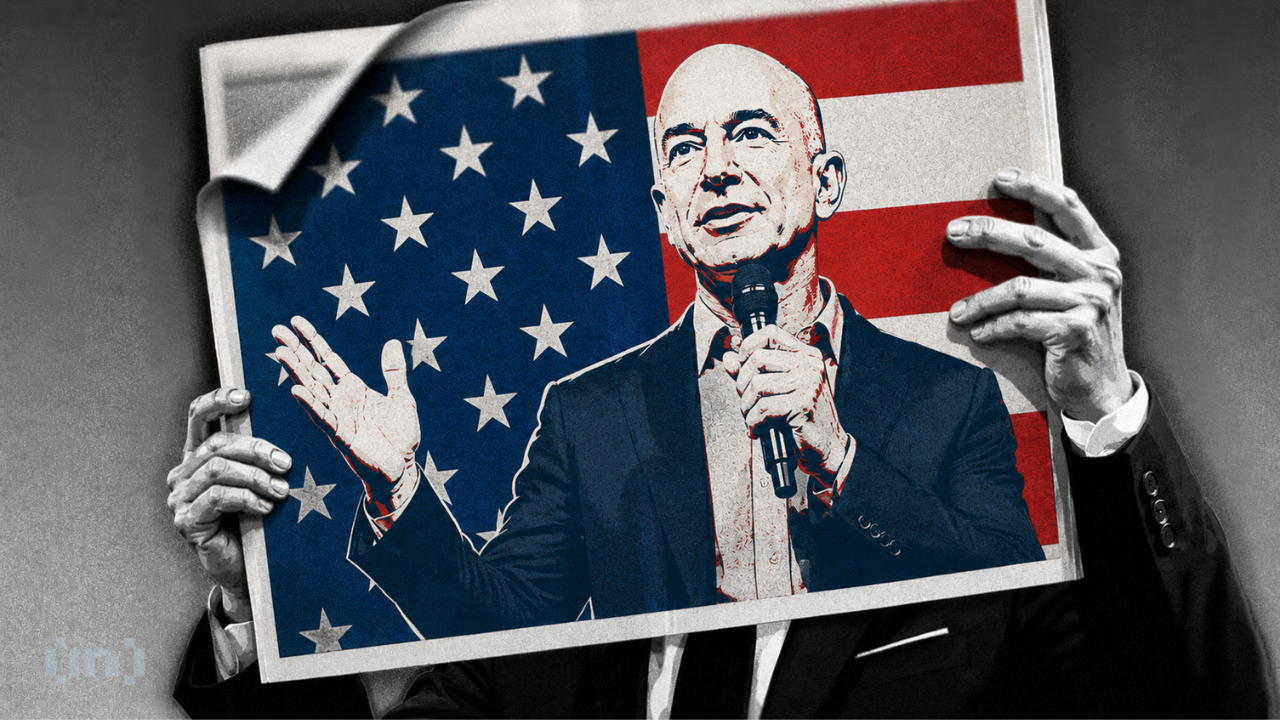

Jeff Bezos wants the United States to eliminate federal income taxes on the bottom 50% of earners. He argues that most revenue already comes from a small slice of high earners at the top.
The Amazon founder pitched the idea during a CNBC interview on May 20, 2026. He then amplified the message across social media, where the clip drew millions of views within hours.
Bezos Targets a “Nurse in Queens” to Make the Case
Bezos pointed to a New York City nurse earning $75,000 a year and paying more than $12,000 annually in taxes. He argued that the figure represents over $1,000 per month, enough to cover rent or groceries.
The clip filmed inside Blue Origin went viral within hours of airing. On X (Twitter), Bezos doubled down on the message, calling the burden absurd.
A nurse in Queens shouldn’t be sending money to Washington. Washington should be sending her an apology,” he said.
IRS data support his framing. The Tax Foundation reports the top 1% of US filers paid 40.4% of all federal income taxes in 2022. The bottom 50% paid only 3.3% the following year.
“The important part is zeroing out taxes on the bottom half. Best way to put money in someone’s pocket is to not take it out in the first place. Bottom half is only 3% of total tax revenue. But it’s very meaningful to that person. Zero it out,” Bezos explained.
Follow us on X to get the latest news as it happens
A Spending Problem, Not a Revenue Problem
The Amazon founder repeated a familiar critique that Washington overspends rather than under-taxes. He claimed New York City public schools spend $44,000 per student.
That tops outlays in Chicago, Boston, Los Angeles, Miami, and Houston, while producing weaker results, according to Bezos.
Federal Reserve Bank of New York data places recent NYC per-student spending closer to $39,304. The city still ranks among the highest spenders nationally, lending partial support to his broader point.
Bezos also rejected the standard counterargument that taxing billionaires harder would close the gap. He told CNBC that doubling his own tax bill would not move the needle on federal deficits.
What the Proposal Means in Practice
Eliminating the bottom 50% share would cost the Treasury a fraction of total receipts. Federal individual income tax revenue runs near $2.4 trillion annually, so the 3.3% slice translates to roughly $80 billion.
The figure is small in fiscal terms but meaningful per household. Bezos previously clashed with the Biden administration over inflation policy.
Subscribe to our YouTube channel to watch leaders and journalists provide expert insights
His latest comments fit a pattern of pushing for spending reform over wealth tax proposals.
The Treasury projects a $2 trillion federal deficit for fiscal 2026. Whether his pitch gains traction in Congress is another matter.
The framing places working-class tax relief, not a wealth tax, at the center of the conversation.
The post Amazon’s Jeff Bezos Stands Up for the Working Class, Calls for Zero Tax appeared first on BeInCrypto.

MPs jeer when told normal people don’t get cheap booze at work

Aston Villa end decades long wait for major trophy with Europa League victory

Research shows educational institutes must not put too much faith in AI text detectors


-

 Crypto World5 days ago
BloFin War of Whales 2026 Grand Prix opens registration for $5M trading championship
-

 Fashion5 days ago
Weekend Open Thread: Theory – Corporette.com
-

 Crypto World5 days ago
E-Estate Announces 1 Year Live: Washington DC Summit as Real Estate Tokenization Enters Its Next Phase
-

 Tech6 days ago
Tech Moves: Microsoft AI leader jumps to OpenAI; former AI2 exec joins Meta; and more
-

 Tech5 days ago
Google reimburses Register sources who were victims of API fraud
-

 Crypto World6 days ago
Google’s Gemini AI Predicts Incredible Solana Price by the End of 2026
-

 Business5 days ago
H&R Real Estate Investment Trust (HR.UN:CA) Q1 2026 Earnings Call Transcript
-
 Entertainment6 days ago
Zara Larsson Has Blunt Response To Chris Brown Diss
-

 Sports5 days ago
Napoleonic enters 2026 Doomben 10,000 field via Abounding withdrawal
-

 Crypto World5 days ago
BeInCrypto 100 Institutional Awards Nomination: KAST for Best Digital Assets Neobank and Best Digital Assets Fintech
-

 Fashion4 days ago
On the Scene at Gucci’s Cruise Show in New York City: Mariah Carey, Kim Kardashian, Lindsay Lohan, Iman, and More!
-
 Crypto World5 days ago
Bitcoin Battles US Bond Nerves With BTC Price Dip Toward New May Lows
-
 Crypto World5 days ago
Wall Street’s Boldest Gold Prediction Has Russians Rushing to Buy
-

 Crypto World5 days ago
ICE and CME urge US regulators to curb Hyperliquid energy trading
-

 Fashion4 days ago
Trending Western Style Vests Perfect for Summer
-

 Politics6 days ago
DWP PIP Timms review continues to be an absolute farce
-

 Entertainment5 days ago
David Letterman Returns to Late Show, Blasts Cancellation
-
 Crypto World6 days ago
Lido Finance Selects Chainlink CCIP as the Official Cross-Chain Infrastructure for wstETH Security
-

 Crypto World5 days ago
IREN closes $3 billion convertible notes deal amid AI infrastructure expansion
-

 Fashion4 days ago
Amazon Sundays: Memorial Day Hosting
You must be logged in to post a comment Login