
Crypto World
Kalshi Says CFTC Hasn’t Contacted It Over $5B Ether Trades

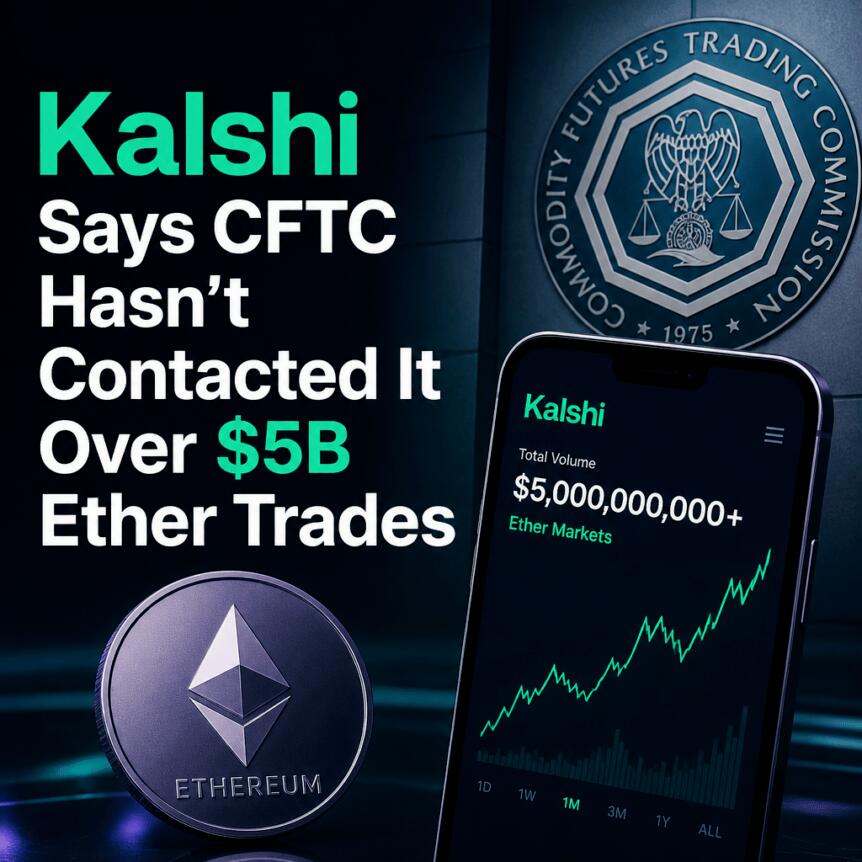
Kalshi, a prediction markets operator that launched Ether perpetual futures in May, says it has not been contacted by the U.S. Commodity Futures Trading Commission (CFTC) and does not believe the regulator is formally examining its market activity. The statement follows a Wall Street Journal report claiming the CFTC is reviewing a pattern of rapid, highly clustered trades in Kalshi’s Ether perpetual futures.
According to the Journal, the trades appeared in repeated blocks clustered around roughly $5,500 and have led to allegations of wash trading. Kalshi disputes that framing, arguing the pattern is consistent with liquidity incentives and market-making behavior common across financial markets.
Key takeaways
- Kalshi says the CFTC has not contacted it and that it does not think there is a formal examination of its Ether perpetual futures activity.
- The Wall Street Journal reported regulator interest tied to rapid trade clusters around approximately $5,500 and alleged wash trading.
- Kalshi points to liquidity incentive programs paying market makers for maintaining quoted orders, not for the volume of trades filled.
- Kalshi’s response argues repeated fixed-size trades can occur when resting orders meet demand from many takers.
- The company recently reported rapid growth, with perpetual futures volume surpassing $1 billion about a week after the May launch.
CFTC review claims come amid Kalshi growth
The controversy centers on Kalshi’s Ether perpetual futures markets—trading venues where participants speculate on Ether’s price without necessarily taking spot ownership. The Wall Street Journal reported that the CFTC is examining a sequence of fast trades clustered around $5,500, citing a person familiar with the matter.
The Journal’s reporting also noted the trade clustering raised wash-trading concerns—an accusation generally tied to the idea that trading volume inflates without genuine economic risk-taking by either side.
Kalshi’s push into perpetual futures has been rapid. About a week after launching its perpetual futures markets in May, the company told CNBC that trading volume had surpassed $1 billion. That growth backdrop is part of why the Journal’s regulator story has drawn attention to how Kalshi’s markets are being supported by liquidity providers.
Kalshi denies wash trading and says it wasn’t contacted
Elisabeth Diana, head of communications at Kalshi, told Cointelegraph that the company has not been contacted by the CFTC and does not believe there is any formal examination.
“We have not been contacted by the CFTC and don’t believe there is any formal examination,” Diana said. She described the discussion as “rumors seeded by competitors,” adding that liquidity incentives can produce data patterns that are common in traditional financial markets. Diana also urged readers not to rely on social media chatter.
In its own explanation, Kalshi argues that the observed fixed-size trades align with a single market maker supplying resting orders at a set size and price band, which then get executed by many other participants.
What the trade pattern appears to show
According to the Wall Street Journal, trades of roughly $5,500 each summed to more than $5 billion in Ether perpetual futures volume over the prior month. The Journal also reported that Kalshi had offered some traders opportunities to buy equity in the company if they reached specific trading-volume targets. It further said Kalshi waived trading fees and provided monthly cash payments to encourage large traders to supply liquidity.
Kalshi did not address the equity-purchase possibility directly in its subsequent explanation, but in a blog post published on Wednesday the company attributed the repeated trade sizes to liquidity programs that reward market makers for keeping buy and sell orders available at predetermined sizes and within a specified price range.
In that post, Kalshi said the payments are intended to reward the presence of orders—liquidity readiness—rather than to compensate traders based on the volume of executions. It framed the recurring trade sizes as a mechanical outcome of how market makers can quote in chunks, and how those quotes can get hit by takers.
Kalshi also said that the executions involved hundreds of distinct traders, with takers repeatedly accepting the market maker’s orders. In Kalshi’s view, takers were “pretty consistently right” while the maker was “pretty consistently wrong,” which would not fit a wash-trading setup where both sides would be expected to behave differently if the goal were not genuine trading risk.
Why liquidity incentives can matter—and what to watch next
Market makers play a central role in derivative markets by continuously posting bids and offers, creating counterparties for traders who want immediate execution. The key distinction—at least in Kalshi’s argument—is whether a market’s activity is driven by incentives that support quotes (market structure and execution availability) versus incentives that could encourage artificial volume.
Kalshi’s position is that fixed-size fills can be economically legitimate: if a resting order sits on an order book, it may be executed repeatedly by multiple takers, creating clusters of similar trade sizes. That explanation matters for investors and traders because it affects how market quality is interpreted—specifically, whether patterns in reported volume indicate healthier liquidity or potential manipulation.
For now, the public record is defined by two competing narratives: the Journal’s report that the CFTC is looking into the trade clustering, and Kalshi’s insistence that the activity is consistent with liquidity incentive programs and normal market-making mechanics. Readers should watch for any formal CFTC action, additional regulatory statements, or further disclosures from Kalshi clarifying how its incentive structures interact with execution data—especially around the reported volume targets.


Paramount Skydance CEO David Ellison has at long last gotten his prize. After fighting off Netflix in a bidding war and state attorneys general in an antitrust lawsuit, the path is finally clear for Paramount to close its acquisition of Warner Bros. Discovery. On Monday, Paramount settled an antitrust lawsuit led by California Attorney General Rob Bonta that also included…
Copyright ©2026 Investor’s Business Daily, LLC. All rights reserved. 87990cbe856818d5eddac44c7b1cdeb8

U.S. President Donald Trump disclosed purchases of Strategy shares worth between $50,001 and $100,000 in July, according to a filing published by the U.S. Office of Government Ethics on Tuesday. The disclosure adds to a pattern of reported holdings in several crypto-adjacent companies, as Trump’s administration continues to push for parts of a broader pro-crypto agenda.
The latest report indicates that Trump bought Strategy shares on July 27 for $50,001 to $100,000, after a smaller purchase three days earlier. The filing also lists other crypto-related transactions during July, including activity involving Coinbase and sales of shares in Bitcoin mining companies MARA Holdings and CleanSpark.
Key takeaways
- According to the Office of Government Ethics filing, Trump bought Strategy shares worth $50,001 to $100,000 on July 27.
- A prior Strategy purchase reported in the same filing covered $1,001 to $15,000 made three days earlier.
- The July 27 Strategy purchase is the largest crypto-linked transaction described in the filing, and Trump previously disclosed a similar $50,001 to $100,000 Strategy buy on Feb. 12.
- The filing reports transaction values in ranges, so it does not reveal how many Strategy shares remain in Trump’s portfolio.
- The disclosures come as regulators have advanced limited crypto-related initiatives even though comprehensive market-structure legislation has stalled in Congress.
What the ethics filing shows about Strategy holdings
The Office of Government Ethics filing reports that Trump’s Strategy transactions in July included two buys: $1,001 to $15,000 on July 24 and $50,001 to $100,000 on July 27. Strategy is widely described as the largest publicly traded corporate holder of Bitcoin; BitcoinTreasuries.net data cited in the filing context places Strategy’s holdings at 846,000 BTC.
The filing’s approach matters for how investors interpret it. Because disclosures are made as dollar value ranges rather than as running share totals, readers cannot determine the number of Strategy shares Trump currently holds after these transactions.
Strategy purchases also appear consistent with earlier disclosures. BitcoinTreasuries.net data referenced in the article notes that Trump previously disclosed a Strategy purchase in the same $50,001 to $100,000 range on Feb. 12. The filing context further indicates that Trump’s accounts have also reported smaller Strategy buys and sells during the year.
Broader portfolio moves and third-party management
While Strategy is the most prominent crypto-linked holding disclosed for July, the filing indicates Trump’s overall portfolio activity was not limited to crypto-adjacent equities. It includes sales of $5 million to $25 million each of Microsoft and Amazon stock on July 20, along with additional purchases and sales in other ranges between $1 million and $5 million.
Separately, the White House told CNBC that Trump’s stock and bond portfolio is independently managed by third-party financial institutions, with no input from Trump or his family. That statement is relevant because the ethics disclosures detail transactions without describing investment decision-making or timing beyond the reported dates.
Strategy stock gains and what traders should watch
Following the July disclosures, Strategy shares have moved higher in the near term. According to Yahoo Finance data referenced in the reporting, Strategy’s stock has gained nearly 30% over the past five trading days and roughly 37% over the past month.
For market participants, the key question is how much these price moves relate to broader corporate and Bitcoin market dynamics rather than to the individual disclosure itself. The filing describes transactions rather than portfolio effects, and the disclosure does not indicate how the trades were executed beyond the reported date and value range. Traders are therefore likely to focus more on Strategy’s underlying Bitcoin exposure and market sentiment than on the specific disclosure as a standalone catalyst.
Disclosure amid stalled legislation and regulatory workarounds
Trump’s Strategy disclosure arrives during an ongoing policy push that targets parts of the U.S. crypto market, even as comprehensive market-structure legislation remains stalled in Congress. The article notes that the Senate did not advance the CLARITY Act on Sept. 15, but that regulators have used existing authorities to move forward on narrower issues.
In the period after the failed advance, the Securities and Exchange Commission cleared a limited form of onchain trading for tokenized U.S. stocks under a temporary exemption, according to earlier coverage cited in the article from Cointelegraph. The Commodity Futures Trading Commission also eased registration requirements for certain software providers that offer access to regulated derivatives markets, again according to Cointelegraph reporting cited in the article.
The CFTC also submitted a broader crypto market rulemaking initiative for White House review on Sept. 17, with the article noting that it remains preliminary rather than a formal proposal. The initiative is described as “Regulation Crypto Asset Transactions and Regulation Crypto Asset Markets.”
Beyond regulatory actions, the administration’s agenda has extended to Bitcoin directly. The article states that the House Financial Services Committee voted 28-21 to advance legislation to codify Trump’s proposed Strategic Bitcoin Reserve and to require any Bitcoin placed into that reserve be held for at least 20 years. The report also references Arkham Intelligence data suggesting the U.S. government holds an estimated 324,527 BTC.
Read together, the disclosures and policy developments point to a consistent theme: even where broad legislative frameworks face delays, regulators and lawmakers have pursued incremental steps that shape how tokenized assets, trading access, and crypto market oversight may evolve.
Closing perspective
Investors and builders should watch whether additional ethics filings continue to show increased exposure to Bitcoin-linked corporate vehicles like Strategy, and whether regulators’ limited pathways for tokenized assets and trading access expand into more comprehensive market-structure rules. The next signal to track is whether stalled legislation such as the CLARITY Act regains traction—or whether further regulatory action fills the gap.
Crypto World
Caris Life Sciences Coasts Past A Buy Point; Why This Texas Biotech Researcher Deserves A Look

Texas might not be the initial state that pops into mind when thinking about leading-edge companies in the field of biotechnology. But Irving, Texas-based Caris Life Sciences (CAI) is carving a name for itself within the stock market. Caris, Tuesday’s IBD 50 Stocks To Watch pick is rebounding fast after bottoming at 14.19 in May. Those investors looking for an entry…
Copyright ©2026 Investor’s Business Daily, LLC. All rights reserved. 87990cbe856818d5eddac44c7b1cdeb8

The Trump administration is reportedly considering an initiative to promote the use of dollar-backed stablecoins overseas as part of an effort to reinforce the US dollar’s position as the world’s reserve currency.
Citing people familiar with the plans, Bloomberg reported on Wednesday that the US government could support stablecoin projects by creating joint ventures with private-sector firms. The effort could involve several federal agencies, including the Treasury Department, State Department and the US International Development Finance Corporation (DFC).
The initiative would seek to expand the international use of dollar-denominated stablecoins while potentially boosting demand for US Treasurys, a common reserve asset for dollar-backed stablecoins.
The potential overseas push also comes as other nations are developing their own digital payment infrastructure. China’s digital yuan is among the central bank digital currencies used in Project mBridge, a platform for cross-border CBDC transactions, while the European Central Bank is preparing a 12-month digital euro pilot expected to begin in the second half of 2027.
Cointelegraph reached out to the US Treasury, the DFC and several US-based stablecoin companies for comment, but did not receive a response before publication.
US ties stablecoin growth to dollar dominance
Senior US officials repeatedly linked the growth of dollar-backed stablecoins to maintaining the dollar’s global role and increasing demand for US government debt.
In February 2025, venture capitalist David Sacks, who served as the White House crypto and AI czar at the time, said stablecoins could “extend the dollar’s dominance internationally” and potentially generate trillions of dollars in additional demand for US government debt.
Related: CFTC chair pushes tokenization as SEC opens door to onchain stocks
In July 2025, US Treasury Secretary Scott Bessent said the GENIUS Act, which established a federal regulatory framework for payment stablecoins, could strengthen the dollar’s status as the global reserve currency, expand access to the dollar economy and increase demand for US Treasurys.
The Treasury also continued implementing the GENIUS Act. On Aug. 17, it issued a notice of proposed rulemaking seeking public comment on provisions governing the issuance, offering and sale of payment stablecoins. Bessent said the rules would help “cement” the US dollar’s status as the world’s reserve currency.
Magazine: Winners and losers of the SEC’s new tokenized stocks rules
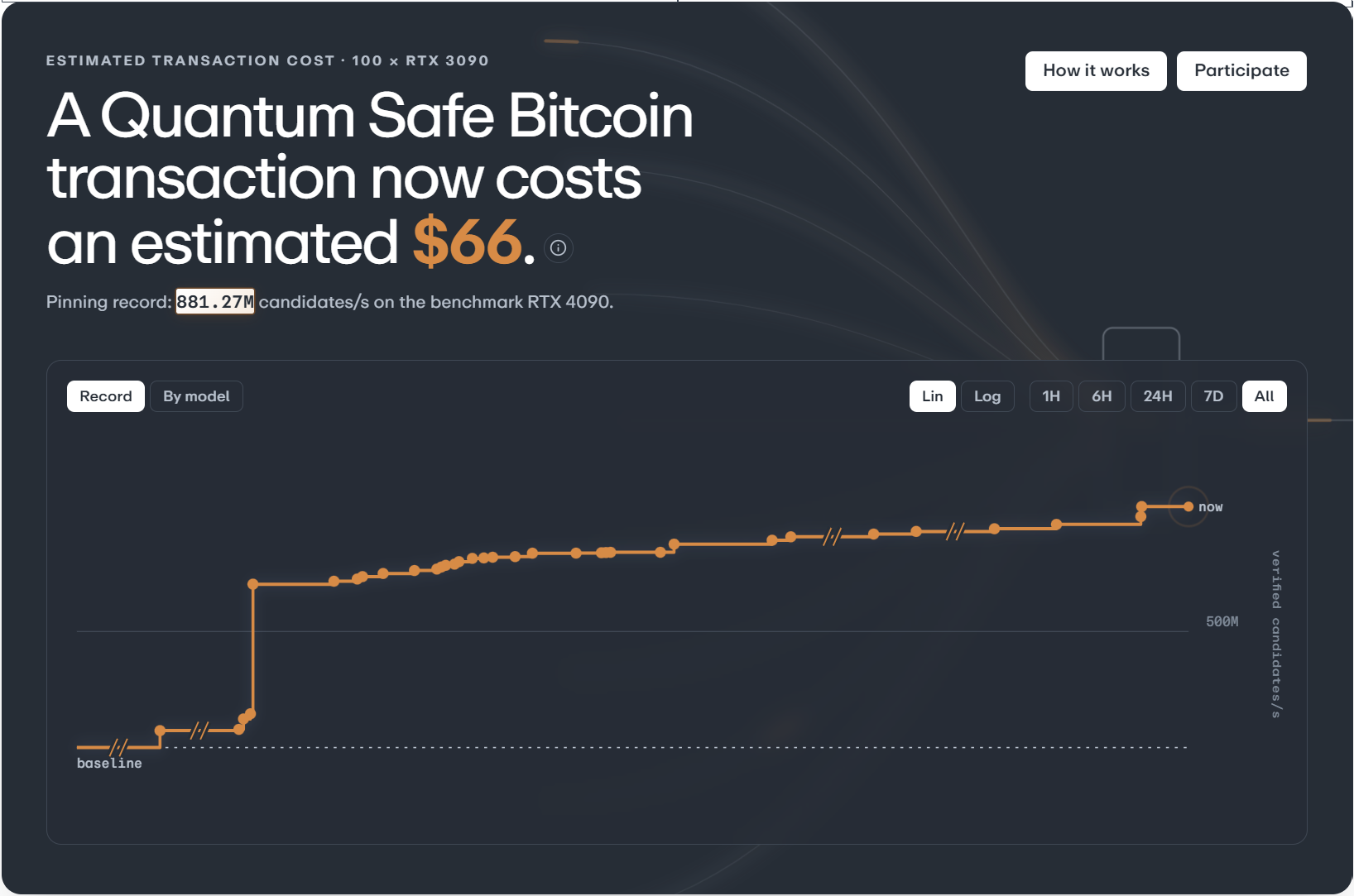
The estimated computational cost to prepare a quantum-resistant Bitcoin transaction has fallen below $67 after a week of optimization, down from the roughly $320 spent on the first such mainnet transaction in August, according to StarkWare.
The results came after participants in the Quantum-Safe Bitcoin Optimization Challenge found ways to push down the GPU computation needed to build a quantum-safe Bitcoin transaction.
The reduction could make the experimental defense (which doesn’t require changes to the network’s consensus rules) against future quantum attacks more practical for Bitcoin holders. However, the latest optimizations have only been demonstrated in benchmark tests.
“A construction that costs a few hundred dollars per transaction is a demo. One that costs $67 is closer to something a holder with a large unexposed balance might reach for in an emergency,” StarkWare wrote in its Sept. 23 update. The dashboard now shows the estimated cost has dropped to $66.
Quantum-Safe Bitcoin an “emergency” solution
StarkWare researcher Avihu Levy published the Quantum-Safe Bitcoin (QSB) design in April, outlining a way to add hash-based protection against quantum attacks without changing Bitcoin’s consensus rules. At the time, he described it as a “last resort measure” due to costs, complexity and limited applicability, while continuing to advocate for protocol-level changes.
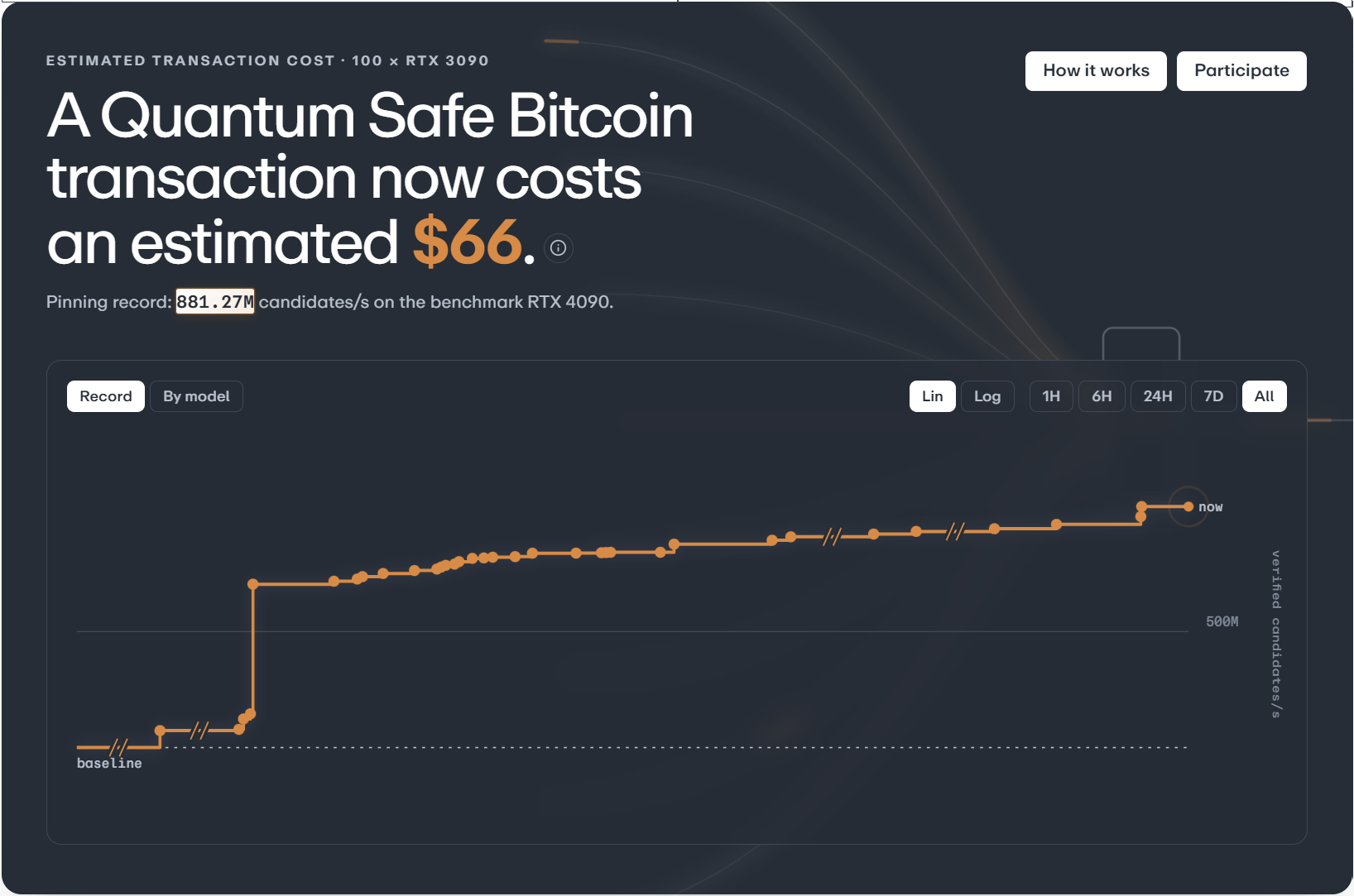
The estimated cost fell by another dollar since publication. Source: Yukon
According to StarkWare, the first QSB transaction was mined and confirmed on Aug. 26, with engineering work from Tomer Giladi and direct submission through MARA’s Slipstream service. Preparing it required approximately 3,100 GPU-hours across roughly 100 GPUs, at a compute cost of about $320, excluding Bitcoin network fees.
Related: Crypto’s first quantum attack will look like unexplained breach: Quantus founder
To find ways to bring that cost down, StarkWare, Yukon Research and Eigen Labs launched the QSB challenge on Sept. 16, inviting developers, researchers and AI agents to make the transaction-building software faster and more efficient.
In its latest update, StarkWare said the challenge produced 62 accepted improvements across two computational tasks needed to prepare a QSB transaction. According to StarkWare, this ended up cutting the estimated computing cost by about 79%, based on benchmark tests.
The development comes amid increasing concern that a sufficiently powerful quantum computer could break the elliptic-curve digital signatures used by Bitcoin, potentially allowing attackers to steal coins whose public keys are exposed.
Researchers are developing quantum-resistant protections, including QSB. However, StarkWare said it still favors a soft fork — a change to Bitcoin’s consensus rules — as a better “long-term answer” for broad quantum protection on Bitcoin.
Magazine: A quantum roadmap would push Bitcoin much higher: Charles Edwards


GE Vernova (GEV) is giving investors another reason to focus on its long-term growth opportunity as surging electricity demand drives a sharp expansion in its order book. The company ended the second quarter of 2026 with a record $176 billion backlog, up $13 billion from the previous quarter, and CEO Scott Strazik recently said GE Vernova remains on track to reach $200 billion in 2027.
The milestone is arriving sooner than the company’s earlier expectations, reflecting strong demand for gas power, electrification, and grid infrastructure as utilities and data center operators invest to meet rising power needs.
More News from Barchart
With backlog visibility improving and demand expected to remain strong, the $200 billion milestone could provide an important catalyst for GEV stock as investors assess the company’s growth prospects through the end of the decade.
About GE Vernova Stock
GE Vernova is a Cambridge, Massachusetts-based energy technology company focused on power generation, electrification, and wind solutions. The company operates through three primary segments: Power, Electrification, and Wind and provides technologies and services spanning gas power, nuclear, grid infrastructure, energy storage, and renewable energy. GE Vernova became an independent public company following its spin-off from General Electric in April 2024 and currently boasts a market cap of $254 billion.
GE Vernova has delivered a strong gain in 2026 despite a recent pullback in the shares. As of the Sept. 18 close, GEV stock was up 46% year-to-date (YTD) and 48% over the past 52 weeks. However, the stock has faced some near-term pressure, declining 1% over the past month and 17% over the past three months.
The recent weakness comes after a substantial rally that pushed the shares to a 52-week high of $1,195.94 in early July, with investors reassessing the valuation and sustainability of the AI-driven power infrastructure boom.
Still, the broader performance reflects strong investor interest in GE Vernova’s exposure to rising electricity demand, gas power and grid infrastructure. The company’s announcement that its backlog is on track to reach $200 billion early in 2027 provides another potential catalyst for investors focused on its longer-term growth trajectory.



Circle has expanded its Cross-Chain Transfer Protocol beyond USDC on Arc, bringing native EURC and cirBTC transfers into the network while preparing Gateway and Bridge Kit for additional multi-asset workflows.
Summary
- Circle expanded CCTP beyond USDC, enabling native transfers for EURC and cirBTC across Arc routes.
- EURC currently moves through CCTP across Arc, Avalanche, Base, Ethereum, and World Chain routes today.
- cirBTC CCTP support currently connects Arc and Ethereum, while Gateway integration remains planned for later.
- Gateway currently unifies USDC balances on Arc and Ethereum, with additional asset support coming later.
- Arc launched September 16 with USDC gas, institutional validators, and interoperability across twenty-plus blockchain networks.
Arc’s Sept. 23 update said Interop on Arc is now live with CCTP, Gateway and Forwarding Service integrated into the Layer 1, giving developers separate tools for native Circle-issued assets, third-party tokens, new multichain assets and unified balances.
The latest deployment does not mean every Circle product already supports all three assets in the same way. CCTP is live for USDC, EURC and cirBTC on specific routes, while Gateway remains limited to USDC at launch. Circle says EURC and cirBTC support for Gateway is planned over time.
Circle expands CCTP beyond USDC on Arc
CCTP now handles native crosschain transfers for USDC, EURC and cirBTC, extending a system that was originally built around USDC burn-and-mint transfers.
Circle’s current CCTP product page describes the protocol as infrastructure that lets supported assets move 1:1 between chains. For Circle-issued assets, CCTP burns tokens on the source network and mints native tokens on the destination, avoiding liquidity pools used by some traditional bridge designs.
EURC entered the system earlier this month. Circle said on Sept. 2 that CCTP had expanded from USDC to native EURC transfers, initially between Ethereum and Base. The Arc launch has since extended EURC coverage to Arc, Avalanche, Base, Ethereum and World Chain.
cirBTC now follows a similar route. Interop on Arc lists CCTP support between Arc and Ethereum for Circle Wrapped Bitcoin, creating a native crosschain path for the BTC-backed token across the two networks.
Circle separately brought cirBTC to Arc on Sept. 21. The company says each token is backed 1:1 by native BTC held for cirBTC holders, with reserve information available for onchain verification. The wrapped asset is issued by Circle International Bermuda Limited, which holds a Class F Digital Asset Business license from the Bermuda Monetary Authority.
Circle launched Bitcoin-backed USDC borrowing through cirBTC on Arc and Ethereum, allowing eligible Circle Mint institutions to post cirBTC to third-party lending markets and receive USDC. Morpho was the first supported lending protocol when the service went live.
EURC and cirBTC get different routes at launch
The three assets do not share identical network coverage. USDC remains CCTP’s most established asset and can use all compatible routes offered through the current Arc interoperability stack. EURC supports Arc, Avalanche, Base, Ethereum and World Chain, while cirBTC currently supports Arc and Ethereum.
Circle says CCTP Fast Transfer can complete transfers in “sub-10-second” times on supported Arc routes. The company cautions in its terms that transfer times and fee estimates are not guaranteed because results depend on the selected chain, route and network conditions.
Forwarding Service handles another part of the flow. It can relay the destination-chain transaction after CCTP completes the asset movement, removing the need for users to separately hold the destination network’s gas token for supported transactions.
Circle updated CCTP earlier in September with prepaid Fast Transfer fees. CCTP now lets developers quote and collect certain crosschain fees on the source network, allowing an application to show the recipient amount before the transfer executes.
Arc routes receive preferential CCTP pricing, according to the Sept. 23 announcement, although rates depend on the asset and route. Circle has not published one universal Arc transfer fee for USDC, EURC and cirBTC.
Gateway still supports USDC before multi-asset expansion
The product creates a unified balance from supported funds held across different networks, allowing applications to treat eligible crosschain liquidity as one available balance. On Arc, Gateway currently supports USDC balances on Arc and Ethereum.
EURC and cirBTC Gateway support is listed as “coming soon.” Circle has not disclosed a launch date for either asset, so CCTP support should not be confused with live Gateway balance support.
Circle’s current legal disclosures likewise describe Gateway as USDC-only. The company says Gateway is non-custodial software infrastructure and does not itself hold, control or transfer customers’ assets. It has not been reviewed or approved by the New York State Department of Financial Services or another regulator, according to the product disclosures.
The company has been building toward multi-asset interoperability for several months. In an April product roadmap, Circle said CCTP had already processed more than $140 billion in cumulative USDC transfers across more than 20 chains and that future versions would extend the same model to assets including EURC and cirBTC.
The Sept. 23 release turns part of that roadmap into production infrastructure, while Gateway’s asset expansion remains unfinished.
Arc lets third-party assets use separate crosschain models
Circle’s interop stack is not limited to tokens issued by Circle. Interop on Arc supports third-party assets through wrapping and a Crosschain Token Standard, or CTS. Developers and issuers can use CTS when they require controls such as allowlists, transfer rate limits, pausing, upgrades and governance rules.
The company says it does not retain override authority over CTS or custom third-party token contracts. Issuers remain responsible for their token structures, operating rules and regulatory obligations.
For new assets, CTS provides a standardized contract structure that can be deployed across chains. Circle describes the system as an alternative to maintaining different token contracts and bridge integrations for each network.
CCTP’s updated architecture supports both burn-and-mint and lock-and-mint models. Native supported assets can move through burn-and-mint, while third-party assets can use wrapping infrastructure where appropriate.
Bridge Kit packages these flows into an SDK for application developers. Arc Studio provides a separate development environment where teams can build applications using the same interop stack without manually connecting every service.
Circle launched Arc Studio as an AI-assisted tool for building applications on Arc, with examples ranging from cross-border payments to software billing and machine-to-machine transactions.
Arc interoperability builds on September mainnet launch
Arc went live publicly on Sept. 16 with USDC used for transaction fees, deterministic sub-second finality and a permissioned founding validator set.
Circle said more than 100 institutional and ecosystem builders and more than 100 applications were participating at launch. Founding validators include BlackRock, DTCC, Galaxy, ICE, Mastercard, MoneyGram, SBI Group, Standard Chartered, Sumitomo Corporation, Visa and Worldpay.
Arc mainnet launched with USDC gas and institutional validators including BlackRock and Visa. Circle said the network began with interoperability across more than 20 blockchain ecosystems through CCTP and Gateway.
Arc’s asset layer has expanded quickly since launch. cirBTC became available on Sept. 21, followed by StableFX on Sept. 22 and the integrated Interop product on Sept. 23. StableFX uses Arc for 24/7 stablecoin-based foreign-exchange settlement with request-for-quote pricing and atomic payment-versus-payment settlement.
Circle says cirBTC can already serve as collateral in Arc lending markets, including supported Aave and Morpho applications. Eligible Circle Mint customers can deposit native BTC, mint cirBTC, provide it to approved third-party lending markets and receive borrowed USDC through Circle’s Digital Asset-Backed Borrowing workflow.
The mainnet roadmap extends beyond interoperability. Circle minted a 10 billion ARC genesis supply before the network launch and is exploring a transition from its current Proof-of-Authority structure toward Proof of Stake in 2027. The company says the genesis mint does not constitute a commitment to publicly launch the ARC token.
Gateway support for EURC and cirBTC remains among the next published interoperability steps. Circle has not provided a launch date, while its Sept. 23 Arc documentation continues to list both assets as “coming soon” for unified balances.
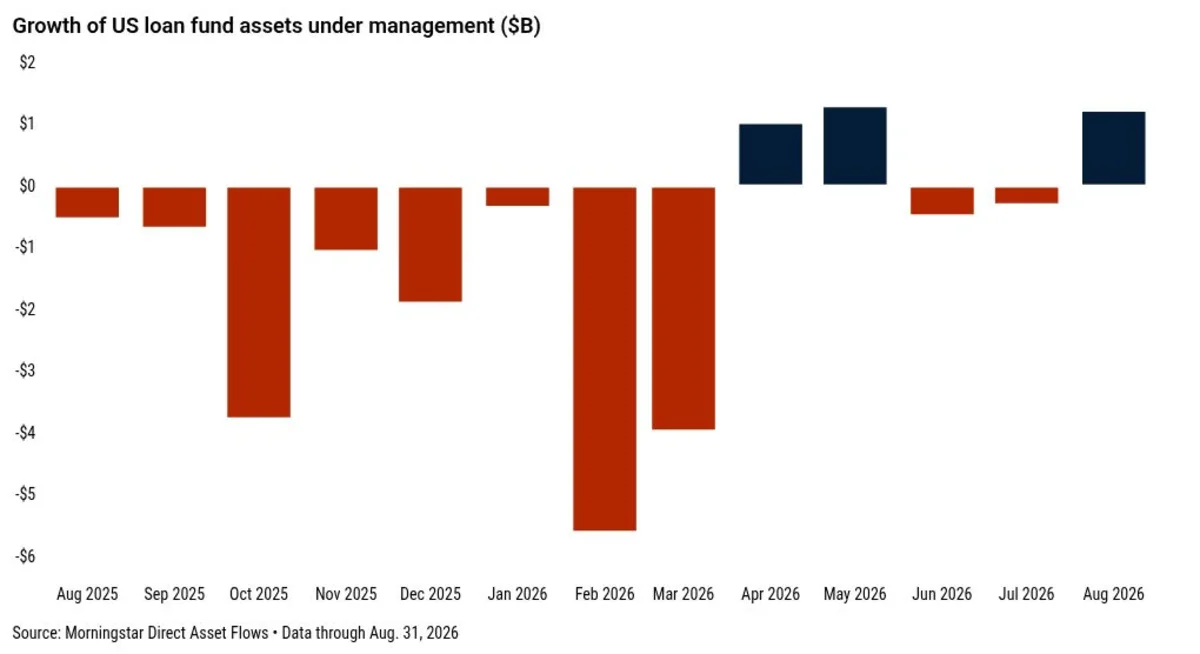
In the run-up to the Fed’s decision to raise the overnight funding rate, assets flowed back into leveraged loan ETFs and mutual funds. Loan fund AUM grew by $1.2 billion in August, according to Morningstar data, and inflows have continued in September. The 0.25-point rate hike on Sept. 16, to 3.75-4.00%, raises the baseline interest return on floating-rate loans.

The first rate hike in more than three years followed a surge in Treasury yields and oil prices. Ten-year Treasury yields have risen from about 4% to 5% since the war in Iran began, and inflation readings have persisted well above the Fed’s 2% target. Investors expect more hikes to come. CME’s FedWatch Tool shows a better-than-50% chance of another 25 bps hike at the October meeting and a target rate of 4.50-4.75% by the end of 2027. As inflows into loan funds have resumed, outflows have increased at fixed-rate high-yield funds, including a hefty $2.5 billion withdrawal in the week through Sept. 16, according to Morningstar.

Rate-hiking cycles have frequently coincided with growth in AUM at leveraged loan funds, while AUM has generally contracted in rate-cutting cycles. The Sept. 16 rate hike ends an eight-month period of rates at a relative minimum (the last cut was in December 2025).

Loans rebound, including software
Prices for leveraged loans have been rising. The weighted average bid price added 41 bps in August, to 95.58, and inched up further to 95.68 by Sept. 21. Software sector loans, which sold off earlier this year, have led the rally.


Funds grow, index grows faster
Since the end of March, AUM at loan funds has grown by $2.7 billion, to $96 billion. Still, loan funds’ share of the Morningstar LSTA US Leveraged Loan Index has slipped to 6.37%, the lowest since September 2009. This continues a longer-term trend of loan fund AUM declining as a share of the growing universe of syndicated leveraged loans, while CLOs have grown as the dominant investors in the asset class.


Sign up for The Credit Pitch
Weekly coverage of US and European loans, bonds, private credit, and more.
Hermen van Laar/Getty Images
This article originally appeared on PitchBook News

FedNow has moved closer to supporting cross-border payments as Federal Reserve Financial Services prepares early institutions to test enhanced messages for the U.S. leg of international transactions.
Summary
- FedNow will support cross-border use cases while settling only the U.S. domestic payment leg directly.
- Early adopters will test enhanced ISO 20022 messages before wider participant access becomes available nationwide.
- Regulation J changes remain proposed, with cross-border functionality still contingent on Federal Reserve approval processes.
- Payall is among early adopters testing FedNow cross-border support for financial institutions serving global customers.
- FedNow settled nearly $275 billion across about five million payments during the second quarter alone.
Federal Reserve Financial Services announced the next phase on Sept. 23, saying participating financial institutions will be able to combine FedNow domestic settlement with established correspondent-banking arrangements that move the international portion of a payment.
The planned capability does not turn FedNow into an end-to-end global settlement network. FedNow would settle the U.S. portion between participating domestic institutions, while banks or other approved intermediaries would continue handling the overseas leg through the cross-border arrangements selected by each participant.
FedNow cross-border payments will keep a domestic settlement leg
The Federal Reserve has been preparing the legal structure for this model since April, when the Board proposed amendments to Regulation J allowing FedNow participants to use intermediaries other than Federal Reserve Banks in a funds transfer. Current rules have effectively limited FedNow to domestic transactions because only two U.S. banks, apart from a Reserve Bank, can participate in a transfer chain.
Under the proposal, a financial institution could use a correspondent bank or another permitted intermediary for the international portion and FedNow for the U.S. portion. The Federal Reserve said in its rulemaking that the model could support private-sector cross-border payment services without having the central bank operate the foreign leg itself.
FedNow currently operates 24 hours a day, seven days a week, including Federal Reserve holidays. Federal Reserve Financial Services states that each service business day runs continuously except for its technical cycle-date rollover process.
The Federal Reserve’s August review of U.S. cross-border payment work said FedNow had remained domestic since its July 2023 launch, while demand from banks for international use had increased as instant payments expanded. The same review noted that Fedwire migrated to ISO 20022 in July 2025, creating more common messaging across international payment chains.
Early adopters will test enhanced ISO 20022 messages
Federal Reserve Financial Services said a group of early adopters will test new FedNow message formats designed to carry information needed when the underlying payment involves a sender or recipient outside the U.S.
Payall Payment Systems is one of the named participants. President and CEO Gary Palmer said the company’s integration is intended to provide financial institutions with faster and more transparent processing for the U.S. portion of international payments while digitizing compliance and transaction-risk checks.
Payall described its role as helping banks “un-nest” payment chains, screen parties and automate risk controls. Those are company claims about its infrastructure and do not establish that every international payment using the future FedNow capability will process faster or at lower cost.
The company’s involvement follows earlier work with FedNow. Payall has previously completed FedNow testing and certification to support participating financial institutions, while its services cover cross-border payment orchestration and compliance systems.
Technical preparation began months before the latest announcement. Federal Reserve Financial Services said in April that enhanced ISO 20022 specifications were available through its MyStandards portal, allowing institutions active in international commerce to begin preparing system changes during 2026.
Once testing progresses, the Federal Reserve says other FedNow participants will be given the opportunity to adopt the enhanced messages. No general launch date has been published.
Regulation J approval remains required before full rollout
The most important unresolved step is regulatory approval. The Federal Reserve Board’s current rulemaking portal still lists docket R-1891 as a “Rulemaking Proposal.” The public comment period closed June 9, but the Board has not posted a final rule replacing the proposal as of Sept. 24.
The Sept. 23 FedNow announcement carries the same limitation. The functionality remains contingent on required amendments to Regulation J and corresponding changes to Operating Circular 8 receiving approval from the relevant Federal Reserve governing bodies.
Operating Circular 8, or OC 8, contains the operating terms for transfers through FedNow. Federal Reserve Financial Services currently lists the April 1, 2026 version as the effective circular, alongside operating procedures that took effect April 28.
Industry feedback on the Regulation J proposal raised compliance questions that the final framework may need to address. The American Bankers Association, for example, recommended clarifying how sanctions, anti-money laundering and fraud checks should work when a FedNow payment forms part of a cross-border chain. The group asked that banks be able to delay or reject payments where required to complete legally mandated screening.
Stripe’s comment on the proposal separately argued that the existing FedNow operating framework contained a residency restriction for certain ultimate customers and said operating-rule changes would be needed alongside the Regulation J amendment for the proposal to achieve its full cross-border purpose.
International payments will still rely on correspondent banks
The Federal Reserve’s design keeps existing correspondent banking infrastructure at the center of the foreign portion of each transaction.
A payment could begin abroad, move through correspondent arrangements and use FedNow once it reaches the U.S. banking system. An outbound transaction could reverse that sequence, with FedNow processing the domestic transfer before an intermediary handles the payment beyond the U.S.
The model resembles structures already used with Fedwire, according to Federal Reserve Financial Services. It does not create direct FedNow access for foreign banks that lack the required U.S. participation structure, nor does it establish a Federal Reserve foreign-exchange service.
Potential uses identified by the Federal Reserve include international payroll, corporate payments, property transactions, insurance disbursements and global treasury activity. The exact speed of the complete international transaction will still depend on the foreign leg, correspondent relationships, compliance reviews and local payment infrastructure.
The distinction is relevant as banks, stablecoin companies and blockchain networks compete to shorten international payment chains. Column connected stablecoin conversion with FedNow, SWIFT and other payment rails, allowing businesses to route different portions of payments through separate settlement systems.
SWIFT began testing a blockchain ledger with 17 global banks for round-the-clock cross-border payments using tokenized commercial-bank deposits. FedNow’s planned model remains based on conventional bank money settled through Federal Reserve accounts for its domestic portion.
FedNow volume has risen sharply before international expansion
FedNow enters the testing phase after rapid growth in domestic payment activity.
Federal Reserve Financial Services reported 4.997 million settled customer payments during the second quarter of 2026, up 83.2% from the first quarter. Their combined value reached $274.66 billion, compared with $271.25 billion during the previous three months.
Average daily volume rose from 30,317 payments in the first quarter to 54,921 in the second. Average payment size fell from $99,414 to $54,957 as transaction counts expanded more quickly than total dollar value.
For all of 2025, FedNow processed 8.41 million payments worth $853.4 billion. That represented 458.9% annual volume growth and more than 2,100% growth in settled value compared with 2024.
The network now spans more than 1,500 participating financial institutions. Federal Reserve Financial Services keeps separate current lists of live institutions, settlement agents and certified service providers, with its participant and provider files most recently updated Sept. 21.
In a separate domestic adoption move, Federal Reserve Financial Services announced a new discount program beginning Jan. 1, 2027, intended to encourage more institutions to activate and increase FedNow sending capabilities.
Cross-border testing is expected to proceed while the Regulation J process remains unfinished. Federal Reserve Financial Services has not published an exact date for general availability and says future progress updates will be provided to participants as testing, rule approval and Operating Circular changes advance.

As the Dow Jones Industrial Average and other stock indexes traded mixed during Tuesday’s session, Amazon (AMZN), Incyte (INCY), Scorpio Tankers (STNG) and XP (XP) were among the names to watch. With the S&P 500 and Nasdaq composite rallying sharply in recent sessions, traders who use The IBD Methodology from Investor’s Business Daily should be putting more capital to work…
Copyright ©2026 Investor’s Business Daily, LLC. All rights reserved. 87990cbe856818d5eddac44c7b1cdeb8

Paramount Settlement Triggers WBD Breakout. How It Compares To Past Media Mergers.

Say Goodbye to the ‘Chicago Fire’ You Thought You Knew

Jazeek X Luciano – MONEY (Official Visualizer)




-

 Fashion5 days ago
Weekend Open Thread: Talbots – Corporette.com
-

 Tech3 days ago
Researchers escape OpenAI Codex sandbox to run commands on host
-

 Crypto World5 days ago
Circle launches Arc Studio AI agent for building onchain apps
-

 Crypto World3 days ago
Who Needs CLARITY Anyway? ARB Could See 70X Increase: Hodler’s Digest
-
 NewsBeat5 days ago
Trump says US has reached an agreement to take permanent control of Greenland’s security
-

 Crypto World1 day ago
Goldman Sachs and Deutsche Bank Agree: The S&P 500 Rally Isn't Over
-

 Crypto World5 days ago
Trading Bitcoin on Robinhood? Why 2% Spread Has Traders Worried
-

 Crypto World6 days ago
Mortgage and refinance interest rates today, Thursday, September 17, 2026
-

 Crypto World5 days ago
Bitcoin price breaks channel as RSI climbs to 63
-

 Tech3 days ago
Google’s $899 Googlebook is a bet that you’ll buy a new laptop for Gemini
-

 Business3 days ago
Analog Devices (ADI) Bets $1.35 Billion on Chips that Let Machines Think for Themselves
-

 Crypto World3 days ago
Coinbase, Robinhood, Circle Seen as Tokenized-Stock Winners
-

 Crypto World5 days ago
World Money launches in 150+ countries with Stripe
-
 Business1 day ago
Oil Price Today (September 23): Crude oil below $100 on hopes of US-Iran talks. What did Trump say?
-

 Tech6 days ago
GPT-6 Astra Reached the Nether in Minecraft, Lost Its Stash to a Creeper, and Farmed Potatoes for Hours
-

 Tech4 days ago
Trump suggests rebranding AI with a new name, says he’s also creating an AI Force
-

 Crypto World6 days ago
Silver prices recover quickly, hitting weekly high today
-
 NewsBeat5 days ago
US was ‘on brink of war’ with China over false AI report of nukes moving in Middle East
-

 Crypto World3 days ago
Bitcoin price holds above $81K as key catalysts line up
-

 Crypto World5 days ago
CFTC sends crypto market structure rulemaking to White House
You must be logged in to post a comment Login