

Crypto World
Michael Saylor Floated Bitcoin Sales Idea to Avoid ‘Impairing The Asset’


Strategy executive chairman Michael Saylor said he raised the possibility of selling Bitcoin during Strategy’s recent earnings call to protect the asset’s long-term interests.
“We own about $65 billion worth of Bitcoin. If the market thought we would never sell it, the credit rating agencies would say, Well then, I guess it’s not an asset,” Saylor told Scott Melker on The Wolf Of All Streets podcast published to YouTube on May 10.
“There is $20 to $100 billion of liquidity in the Bitcoin market that is not correlated to our equity or to our credit. If we were to say we’re never going to take advantage of that liquidity and we’re never going to use that asset, then we’re impairing the asset, which 98% of the company is built on,” Saylor explained, adding:
“It’s pretty important to us to send the signal that if we need to, we can.”
It comes after growing speculation within the Bitcoin community after Saylor said during Strategy’s first-quarter earnings call that his company could sell Bitcoin to “inoculate” the market against sudden panic or to reinforce confidence in the company, in contrast to its long-standing “never sell” Bitcoin strategy.

Michael Saylor spoke to Scott Melker on The Wolf Of All Streets podcast. Source: The Wolf Of All Streets
Bitcoiners began to speculate on social media. Prominent Bitcoiner and BnkToTheFuture CEO Simon Dixon said on May 7 that Strategy “might need to sell some Bitcoin when the financial industrial complex manipulates our Bitcoin collateralized debt obligations and perpetual dividends wrappers.”
Strategy has been consistently buying Bitcoin since August 2020, when it began holding Bitcoin as a primary treasury asset. The company now holds 818,869 BTC at an average purchase price of $75,540 per coin, according to its website.
Related: Sharplink CEO points out 3 catalysts for Ethereum’s price to surge higher
On Monday, Cointelegraph reported that Strategy acquired 535 Bitcoin for $43 million between May 4 and May 10 at an average price of $80,340 per BTC.
While Saylor is known for regularly posting “Never sell your Bitcoin” on X, on May 6, he wrote, “Buy more bitcoin than you sell.”
Magazine: eToro founder timed Bitcoin top perfectly due to belief in 4 year cycles

Crypto World
Intesa Sanpaolo’s Crypto Portfolio Hits $235M as Italy’s Biggest Bank Goes Deeper Into Digital Assets
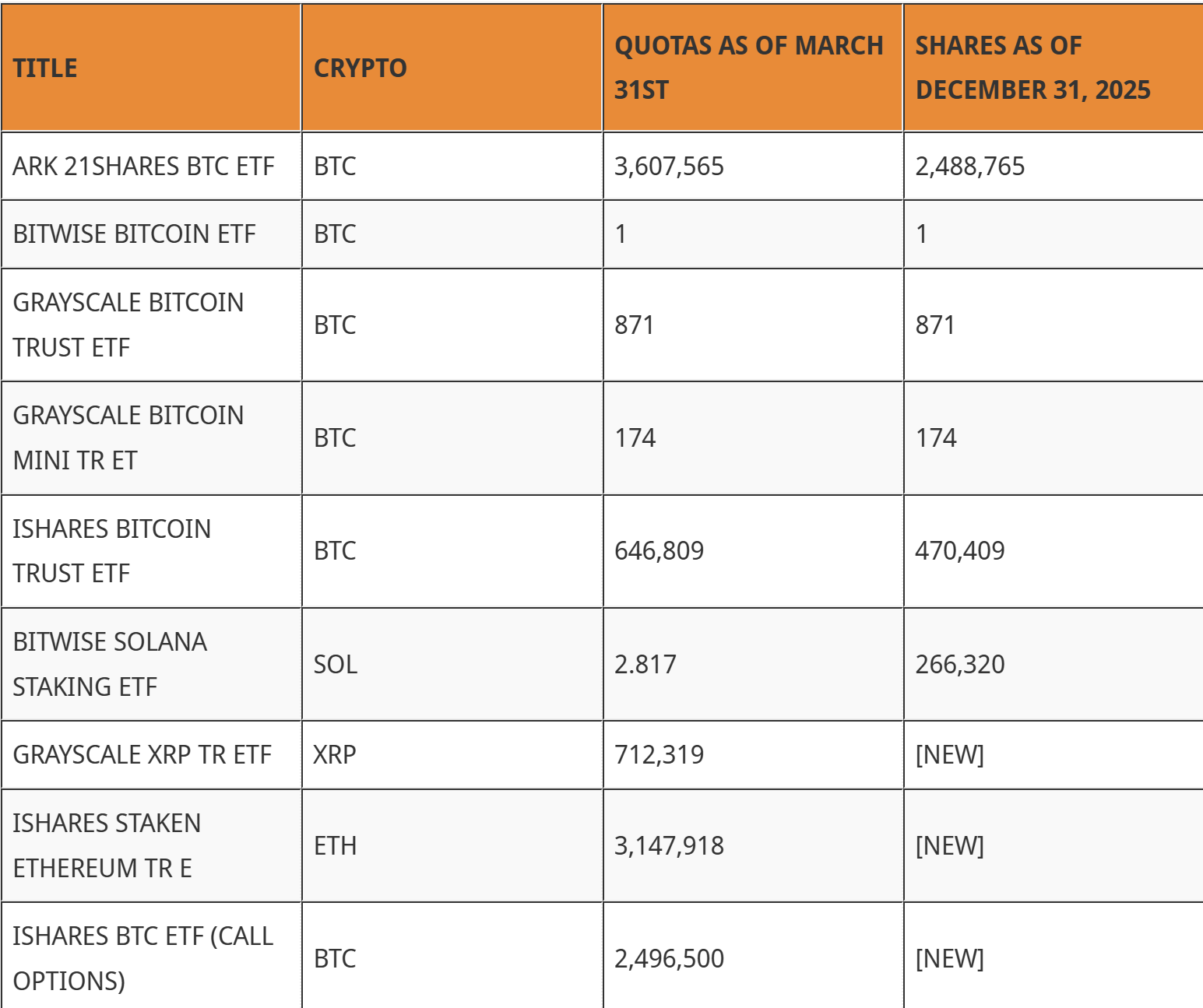
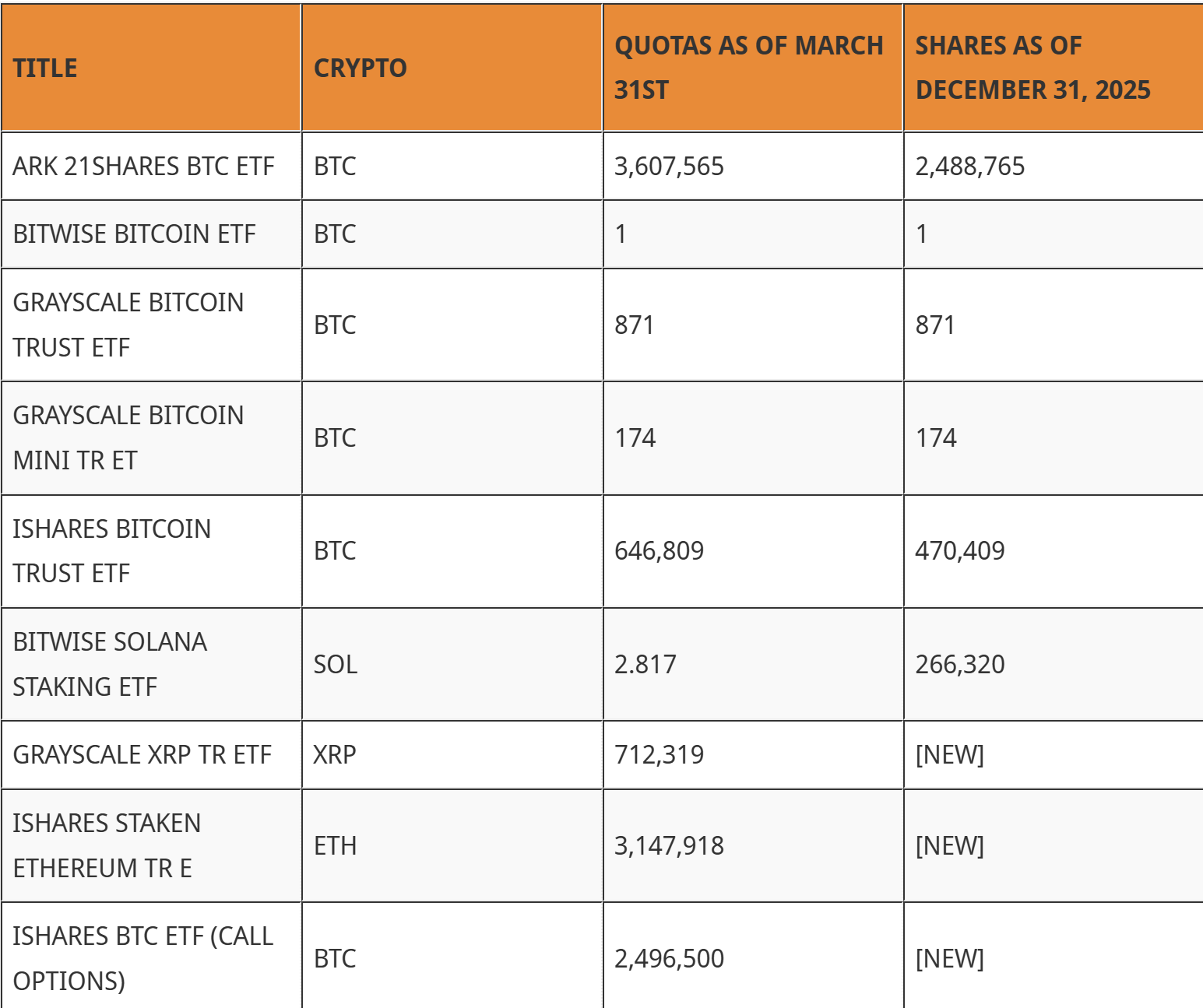
Intesa Sanpaolo, Italy’s largest bank, more than doubled its crypto exposure in the first quarter of 2026, with holdings climbing from approximately $100 million at the end of 2025 to around $235 million as of March 31.
The growth was driven by expanded Bitcoin positions, with the bank adding to positions in both the ARK 21Shares BTC ETF and BlackRock’s iShares Bitcoin Trust ETF. It also entered Ethereum for the first time through BlackRock’s iShares Staked Ethereum Trust, and picked up a fresh stake in Ripple’s XRP via the Grayscale XRP Trust ETF, worth approximately $26 million, according to a report by local crypto outlet Criptovaluta.it.
Intesa also opened a new position in iShares Bitcoin Trust call options, its first derivatives play in the space. The bank previously confirmed to Criptovaluta.it that its crypto positions are held for proprietary trading purposes, though it has not disclosed whether any of the assets are also used to hedge products offered to professional clients, the report said.
Source: Criptovaluta.it
On the other hand, the bank reduced its Solana holdings, which had featured prominently in the prior quarter. Its position in the Bitwise Solana Staking ETF slashed from 266,320 shares to just 2,817, a near-total exit.
Related: Banking Circle Joins Europe’s Stablecoin Settlement Race
Intesa adds BitGo, dumps Bitmine
On the equities side, the bank made several adjustments to its crypto stock holdings. It added 165,600 shares of BitGo for the first time, while dumping the Bitmine position. The bank also closed out its put options on Strategy and trimmed its stake in Cantor Equity Partners II, the vehicle through which tokenization firm Securitize is set to list. Coinbase shares also increased from 1,500 to 10,357.
The moves come as Intesa deepens its ties to the digital asset sector. Last month, Ripple announced it would offer its custody services to the Italian banking group.
Intesa shares closed at 5.74 euros on Friday, down 1.56% on the day and off 3.14% year-to-date, according to Yahoo! Finance.
Related: Europe Bitcoin Treasury Model Won’t Mirror Strategy: PBW 2026
European banks expand crypto offerings
More European banks are moving into crypto, with Spain’s BBVA, France’s BPCE and Belgium’s KBC among those already live with retail trading services. BBVA became the first major Spanish bank to offer 24/7 Bitcoin and Ether trading through its mobile app, while BPCE launched in-app crypto trading via regulated subsidiary Hexarq, targeting 12 million customers by 2026.
At the infrastructure level, a consortium of 12 major European banks, including BNP Paribas, ING, UniCredit and Deutsche Bank, formed Qivalis to issue a MiCA-compliant euro-backed stablecoin, targeting a launch in the second half of 2026.
Magazine: Guide to the top and emerging global crypto hubs — Mid-2026
Crypto World
SUI Price Holds at $1.06 as Chart Base and Whale Accumulation Signal a Potential Reversal
TLDR:
- SUI is trading at $1.0651, sitting 17.6% below its 200-day moving average resistance level of $1.2873.
- RSI has recovered from extreme oversold levels to a neutral 51, leaving room for price to move in either direction.
- MACD has not crossed bullish yet, but the narrowing gap between lines signals building momentum below the surface.
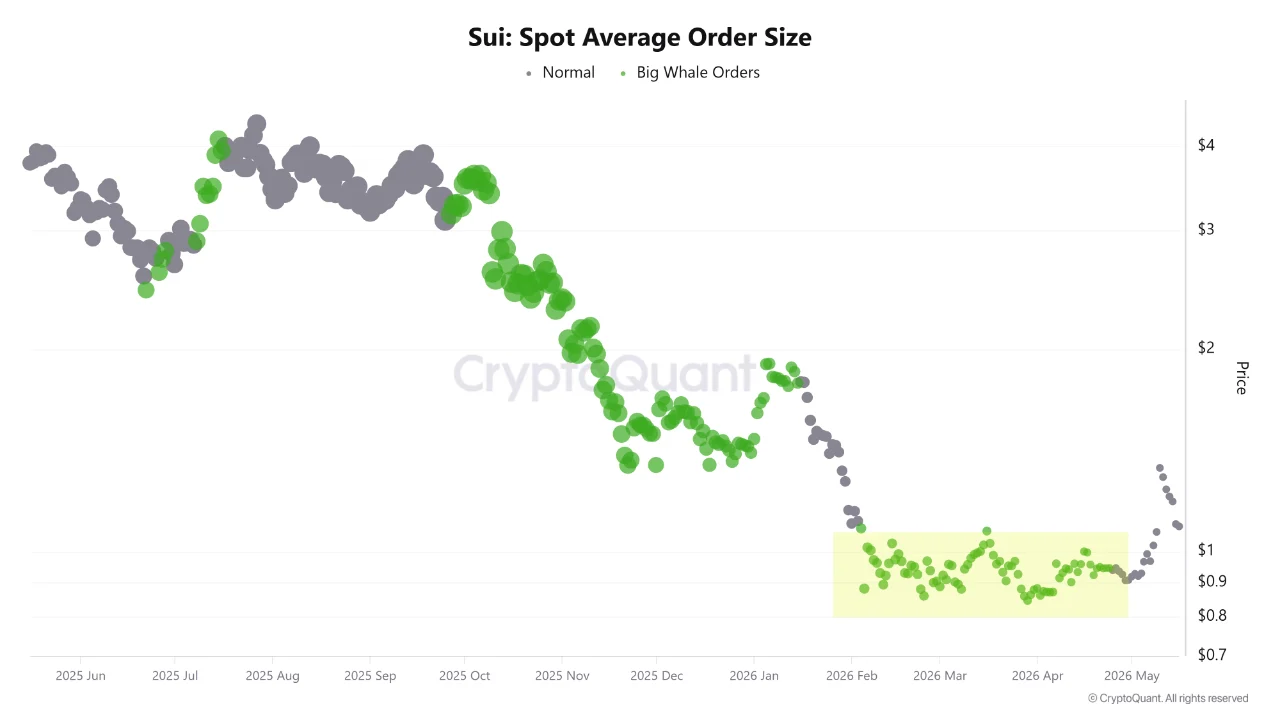
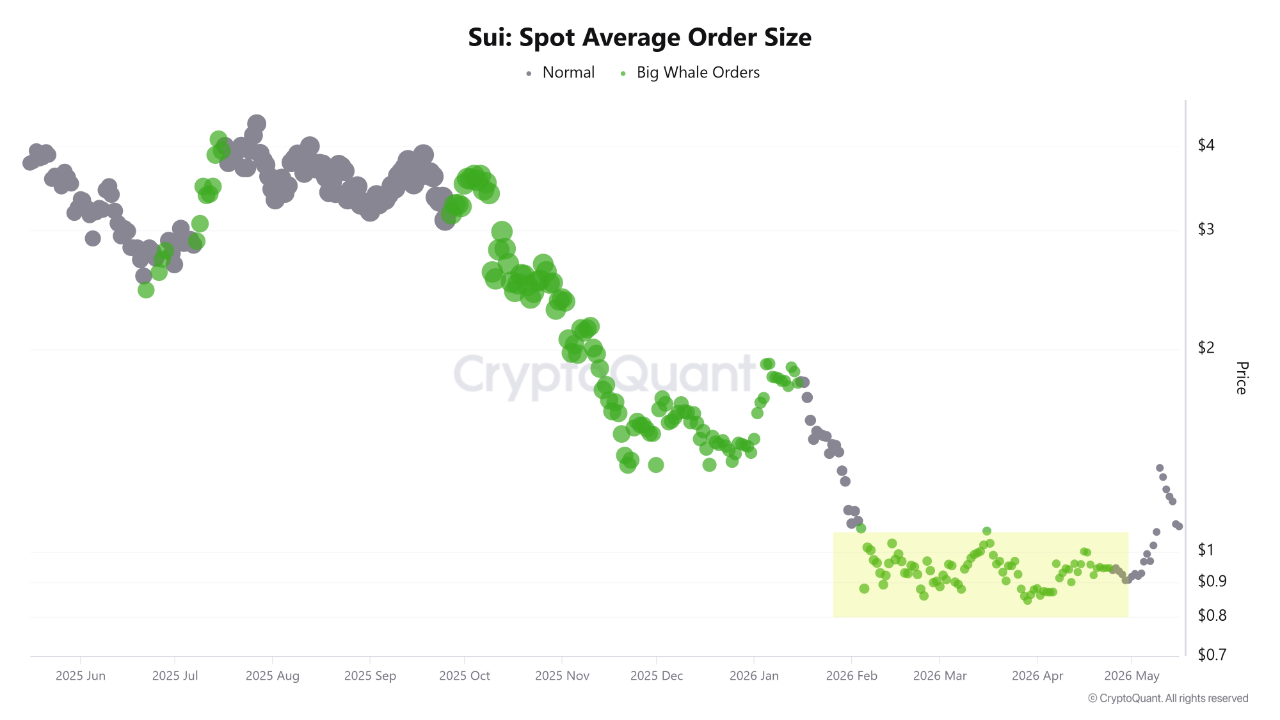
- CryptoQuant data shows large orders clustering at $0.90–$1.00, pointing to whale accumulation ahead of a potential rebound.
SUI is trading at $1.0651, sitting 17.6% below its 200-day moving average of $1.2873. The token dropped from $4.00 to $0.50 over four months before stabilizing.
Technical analysts are now watching closely as momentum indicators show early signs of recovery. Meanwhile, on-chain data from CryptoQuant points to large-order accumulation near key support zones. The chart structure tells a more layered story than the price decline alone suggests.
Technical Indicators Point to a Market in Transition
SUI printed a capitulation bottom near $0.50 in late 2025. Volume spiked sharply at those lows, which typically marks seller exhaustion rather than continued distribution. That kind of price action usually separates a dying asset from one completing a base.
Since that bottom, the Relative Strength Index has climbed from extreme oversold territory back to 51. That reading is neutral — not extended to the upside, and not under further selling pressure. It gives the chart room to move in either direction.
Analyst account @2xnmore noted that the MACD has not crossed bullish yet, but the gap between the MACD line and the signal line is narrowing.
The momentum engine is building without having triggered a confirmed buy signal. That is an important distinction.
The 200-day moving average at $1.2873 remains the key structural line. A high-volume daily close above that level would shift the chart from bearish to neutral.
A MACD crossover on top of that would then move the structure from neutral to bullish. Neither has happened yet.
Whale Order Data Suggests Accumulation at the $0.90–$1.00 Zone
On-chain researcher Rei Researcher referenced CryptoQuant’s Spot Average Order Size data to track large-player behavior.
The data shows large-volume orders clustering around the $0.80–$1.00 range during market lulls, without pushing price lower. That pattern has preceded rebounds before.
Source: Cryptoquant
The $0.90–$1.00 zone appears to function as a solid support band. When large orders repeatedly fill at that level without breaking it, it suggests institutional positioning rather than exit. That behavior contrasts with panic-driven retail selling at cycle lows.
If SUI corrects back toward that range and large-order activity increases, analysts consider it a bullish signal for the next move higher. The re-fill pattern at that level is what traders are now watching for on future dips.
The broader picture is that SUI remains in a technical rebuild phase. Price is below the 200-day MA, but the base structure and whale footprint both suggest the selling pressure has already been absorbed at lower levels.



While macro pain and Iran war uncertainty drag Bitcoin below $79K, fixed-income market outflows could trigger a medium-term Bitcoin rebound.

TLDR:
- Justin Sun controls roughly 60 billion TRX tokens, representing 63% of the total supply in circulation.
- HTX acquisition allows Sun to channel user deposits into JustLend, using TRX as near-unlimited collateral.
- The Tron Inc. Nasdaq reverse merger lets Sun swap on-chain tokens for U.S. dollars without crashing markets.
- Sun’s WLFI investment created an off-exchange token swap that converts TRX exposure into tradable assets.
Justin Sun’s financial maneuvers have drawn scrutiny after a detailed analysis revealed how the Tron founder may be converting illiquid TRX holdings into hard assets.
Crypto analyst Punk2898 outlined several methods Sun allegedly uses to manage his vast token reserves. Sun reportedly controls around 60 billion TRX tokens, valued at over $20 billion, but faces major liquidity challenges due to the sheer size of his position in the market.
The Mechanisms Behind Sun’s Liquidity Strategy
Sun’s approach to managing TRX appears to draw lessons from the FTX collapse. According to Punk2898, FTX once held a large TRX position and could not aggressively sell it.
Instead, FTX continuously bought back TRX on secondary markets to support the price. It then used third-party platforms to collateralize the tokens and borrow stablecoins, creating a steady flow of liquid capital.
Sun’s acquisition of Huobi, now rebranded as HTX, appears to serve a similar function. Users deposit USDT into HTX expecting high-interest returns.
Those funds are reportedly channeled into Aave or JustLend to capture yield spreads. HTX then pockets the interest differential, while JustLend collateral remains largely in TRX — a token Sun controls in virtually unlimited supply.
The USDD stablecoin adds another layer to this structure. USDD is backed by 10.9 billion TRX and approximately 19.6 million USDT, supporting around 745 million USDD in circulation.
Sun uses TRX as collateral to mint USDD, which then attracts real dollar deposits through high annualized yields. This effectively turns his own tokens into a mechanism for pulling in external liquidity.
Sun’s investment in World Liberty Financial and the TRUMP memecoin also fits into this pattern. He reportedly invested over $40 million in WLFI, which then bought TRX in return.
Sun can liquidate his WLFI holdings freely, while WLFI holds TRX. The analyst described it as an off-exchange swap that heavily favors Sun’s position.
The Nasdaq Reverse Merger and Long-Term Conversion Plans
The most direct conversion method came in July 2025 through a Nasdaq reverse merger involving Tron Inc. The deal essentially exchanged on-chain TRX tokens for a U.S. stock ticker.
U.S. stocks were issued to raise dollars, which were then used to buy TRX from Sun directly through over-the-counter trades.
Those TRX tokens then entered the Nasdaq company’s treasury, while the dollars went to Sun. The analyst compared this to Michael Saylor’s Bitcoin treasury strategy but with a key difference—Saylor buys existing Bitcoin, while Sun effectively creates TRX. The structure allows Sun to convert crypto holdings into Wall Street assets without crashing the open market.
Punk2898 noted that Sun’s core task, for years to come, remains converting his 60 billion illiquid TRX into Bitcoin and Ethereum.
Every strategy described feeds into that single objective. Each move builds infrastructure that slowly shifts value from TRX into harder, more widely accepted assets.
Crypto World
Pi Network’s PI Token Suffers Another Setback as Bitcoin (BTC) Calms at $78K: Weekend Watch
After losing over $4,000 since the Thursday evening peak at $82,000, bitcoin has finally calmed at around $78,000 following yesterday’s multi-week low.
Most larger-cap alts are quite sluggish on a daily scale, aside from the two largest privacy coins, which have posted impressive rebounds.
BTC Settles at $78K
It was less than 11 days ago when the primary cryptocurrency spiked to its highest price level in three months at almost $83,000. This meant that it had recovered nearly 40% since its early February low. However, it was quickly stopped there and pushed to $79,000 by that Friday. After a quiet weekend, it rose past $82,400 lat Monday, where it faced another rejection and dipped to $80,000 in the following days.
The bears took it a step further on Wednesday, driving the asset south to $78,500. Then came the positive news on the CLARITY Act in the US Senate, and BTC rocketed by several grand to $82,000 once again.
That resistance turned out to be too strong, and BTC dipped to $80,500 in hours. The situation worsened on Friday evening and Saturday when the cryptocurrency dumped to a two-week low of $77,600. It has recovered some ground since then and now stands inches above $78,000.
Nevertheless, its market cap is down to $1.560 trillion, but its dominance over the alts stands tall above 58% on CG.

PI Out of Top 50
As mentioned above, there’s not much action on a daily scale from the larger-cap alts. ETH, XRP, SOL, and BNB are slightly in the red, while TRX, ADA, and DOGE have marked insignificant gains.
HYPE is up by over 2% daily to $43, while XMR has gained 3% to $390, and ZEC has surged past $515 following a 4.5% increase.
Pi Network’s PI token plunged suddenly yesterday and over 8% down on a weekly scale. It has lost a crucial support at $0.165, which some analysts believe opens the door for another drop to new all-time lows. The asset is also out of the top 50 alts by market cap.
The total crypto market cap remains below $2.680 trillion on CG after losing more than $100 billion since the Thursday high.

The post Pi Network’s PI Token Suffers Another Setback as Bitcoin (BTC) Calms at $78K: Weekend Watch appeared first on CryptoPotato.
TLDR:
- CZ believes US crypto competitors lobbied against his pardon to block Binance from re-entering the American market.
- CZ wrote his book, “The Freedom of Money,” during his 76-day prison sentence under difficult and restrictive conditions.
- CZ views cryptocurrency as the most undervalued asset class and essential infrastructure for an AI-driven global economy.
- CZ regrets not separating Binance US from Binance Global earlier, saying it would have prevented major regulatory problems.
Changpeng Zhao, widely known as CZ, has spoken openly about his prison experience, his pardon process, and his outlook on the future of cryptocurrency.
In a recent interview, the Binance founder discussed writing his book, “The Freedom of Money,” during a 76-day sentence. He also addressed competitor interference during his pardon process.
CZ shared his continued belief in blockchain technology and its role in the coming AI-driven economy.
CZ Claims Competitors Interfered With His Pardon Process
CZ stated that US crypto competitors actively lobbied against his pardon. He believes they did not want Binance returning to the American market. As shared by Crypto Banter on X, this was “business competition taken to the level of personal interference.”
Crypto Banter noted on X that CZ “doesn’t have hard evidence, but he’s confident it happened.” He acknowledged he could not prove the lobbying directly. However, he remained firm in his belief that it took place.
CZ also reflected on a key business regret from his time running Binance. He said he should have separated Binance US from Binance Global from the start. That decision, he believes, would have helped avoid many regulatory complications.
Beyond legal matters, CZ described the difficult conditions inside prison. He had limited computer access and faced mental anxiety throughout his sentence. His greatest struggle, though, was the absence of his family and loved ones.
CZ Sees Crypto as the Foundation for an AI-Driven Economy
CZ continues to hold a strong belief in blockchain and cryptocurrency. He views them as foundational technologies for global finance going forward.
In his view, crypto is currently “the most undervalued asset class,” poised to become the rails for a much larger global economy.
He argues that crypto will serve as the transactional layer as AI agents become more active in finance. Without crypto infrastructure, AI-driven transactions would lack a reliable settlement layer. He described crypto as “indispensable for future transactions, especially in an AI-driven economy.”
Currently, CZ is working with Google Academy, Easy Labs, BNB Chain, and advising governments. His investment focus targets mission-driven founders with strong technical backgrounds. He is particularly interested in AI and biotech for their potential positive impact.
On personal matters, CZ emphasized the value of meaningful family time over material wealth. He spoke about raising children with drive and a sense of purpose.
His approach to wealth centers on “enabling positive impact through investments” rather than accumulating personal luxury.
Crypto World
Trump’s Portfolio Activity Raises Eyebrows: Massive Nvidia (NVDA) and Big Tech Trading Volume Stirs Controversy

TLDR
- First quarter financial filings reveal President Trump’s accounts executed more than 3,700 transactions valued between $220M-$750M, including major positions in Nvidia, Palantir, Microsoft, Boeing, and Oracle
- Ethics watchdogs highlight potential timing issues, noting certain transactions occurred around the same time as relevant administrative decisions, including approvals for Nvidia chip exports to specific Chinese companies
- Representatives for Trump maintain all holdings are controlled by independent financial institutions using automated trading systems, without any Trump family involvement in decisions
- Financial industry experts characterized the transaction frequency—exceeding 40 trades daily—as extraordinary, with seasoned professionals expressing bewilderment
- Trump represents the first commander-in-chief whose stock activity falls under STOCK Act reporting mandates; predecessors Obama and Biden avoided equity trading during their presidencies
The most recent financial disclosure forms from President Donald Trump indicate his investment accounts executed over 3,700 transactions during the opening quarter of 2026, with total values ranging from $220 million to $750 million. These trades spanned major corporations across technology, aerospace, and consumer sectors.
The extensive list of companies includes Nvidia, Microsoft, Oracle, Apple, Amazon, Meta, Alphabet, Boeing, Palantir, Costco, and numerous others. These revelations came through documentation submitted to the US Office of Government Ethics, comprising more than 100 pages of detailed transactions.
The transaction frequency translates to approximately 40 daily trades throughout the three-month reporting period. This level of activity caught the attention of numerous financial professionals.
“The trading volume here is absolutely extraordinary,” observed Matthew Tuttle, CEO of Tuttle Capital Management. He noted the pattern resembles algorithmic hedge fund operations rather than typical personal investment management.
Eric Diton, president of The Wealth Alliance, shared similar sentiments. “Throughout my four decades on Wall Street, I’ve rarely encountered trading activity of this magnitude,” he commented.
Timing Concerns Emerge
Certain transactions attracted particular scrutiny based on their proximity to related governmental actions.
The President acquired Nvidia equity positions just prior to administrative clearance of semiconductor sales to designated Chinese entities. Additionally, Palantir stock purchases preceded his Truth Social posts commending the firm’s “war fighting capabilities.”
Senator Elizabeth Warren criticized Trump for allegedly advocating with Chinese President Xi Jinping regarding Nvidia chip acquisitions during diplomatic meetings in Beijing. “This presidential corruption threatens our national security,” she stated.
Eric Trump responded by emphasizing the family’s assets reside in a blind trust overseen by independent financial organizations. “Any claim that individual equities are being purchased or liquidated at the direction of Trump family members is categorically false,” he posted on X.
White House officials similarly rejected misconduct allegations. Spokesman David Ingle stated Trump “exclusively pursues actions serving the American public’s best interests” and emphasized “no conflicts of interest exist.”
Historical Presidential Precedent
Former presidents implemented various strategies to maintain distance between personal finances and governmental responsibilities. George H.W. Bush and Bill Clinton both utilized blind trust arrangements. Barack Obama maintained investments exclusively in Treasury securities and broad-based mutual funds. Joe Biden refrained from stock trading entirely throughout his presidency.
Trump stands as the initial sitting president whose trading activity necessitates disclosure under the STOCK Act, legislation enacted in 2012.
His largest single-session liquidations occurred February 10, when he divested positions in Microsoft, Meta, and Amazon, each valued between $5 million and $25 million.
Trump submitted both quarterly disclosures beyond the statutory 45-day deadline. The associated penalty amounts to $200 per delayed filing, which his documentation confirms was remitted.
The ethics office extended Trump’s comprehensive annual financial disclosure deadline by 45 days. This broader filing, encompassing income and assets from his extensive business holdings, now carries a June 29, 2026 due date.


Institutional crypto ETF filings for the first quarter showed a split between buyers and sellers.
Summary
- Harvard fully exited BlackRock’s Ether ETF while cutting its IBIT position another 43% in Q1.
- Mubadala added two million IBIT shares, keeping Abu Dhabi’s Bitcoin ETF exposure above $500 million.
- Dartmouth kept Bitcoin exposure flat but added Solana staking ETF shares, widening endowment crypto allocations.
Abu Dhabi’s Mubadala Investment Company raised its BlackRock iShares Bitcoin Trust position, while Harvard Management Company reduced its Bitcoin ETF stake and removed its BlackRock Ether ETF holding.
The filings came after a volatile quarter for digital assets and ETF flows. They also showed how large investors used regulated funds in different ways. Some funds added exposure through Bitcoin ETFs. Others cut risk, shifted products, or widened allocations beyond Bitcoin and Ethereum.
Mubadala keeps building its IBIT position
Mubadala’s latest 13F filing listed 14,721,917 IBIT shares worth $565.6 million as of March 31. Crypto.news reported that the position rose 16% from 12.7 million shares at the end of the fourth quarter.
The same report said Mubadala has kept adding to IBIT since late 2024. The position has remained above $500 million for three straight quarters. Abu Dhabi-linked exposure also stayed visible through ADIC, which The Block reported kept 8,218,712 IBIT shares unchanged.
Harvard lowers Bitcoin and exits Ether
Harvard Management Company moved in the other direction. Its March 31 filing listed 3,044,612 IBIT shares worth $116.97 million. That was below the 5.35 million IBIT shares it held at the end of 2025.
The filing listed 17 holdings and no iShares Ethereum Trust position. Harvard had opened a 3,870,900-share ETHA position in the fourth quarter, valued at about $86.8 million at the time. The absence of ETHA in the new filing indicates the endowment exited that position during the quarter.
Dartmouth adds Solana to the mix
Dartmouth took a different route. Crypto.news reported that the school disclosed about $14 million in crypto ETF exposure. The filing showed about $7.7 million in IBIT, about $3.5 million in the Grayscale Ethereum Staking ETF, and about $3.3 million in the Bitwise Solana Staking ETF.
The Solana position stood out because it moved the endowment beyond the two largest crypto assets. Dartmouth’s reported endowment remains much larger than the disclosed ETF positions, so the allocation is small. Still, the filing shows regulated crypto products are reaching more public portfolios.
Other institutions also changed their positions. The Block reported that Brown University kept 212,500 IBIT shares, while Emory University exited a small IBIT position and increased its Grayscale Bitcoin Mini Trust holding.

Key Highlights
- ZETA shares climbed more than 4% to reach $17.60 on Friday, marking the highest trading level since May 7 following the Snowflake Open Semantic Exchange (OSI) partnership announcement
- First quarter 2026 revenue reached $396 million, representing a 50% increase year-over-year and extending the company’s streak to 19 consecutive quarters of beating and raising guidance
- The super-scaled customer base expanded 19% YoY to reach 189 clients, while average revenue per user (ARPU) climbed to $1.7 million
- Adjusted EBITDA increased 42% YoY to $66 million; operational cash flow jumped 43% to reach $50 million
- Analyst consensus price target stands at $28.33, suggesting approximately 64% potential upside from current trading levels
Shares of Zeta Global (ZETA) advanced over 4% during Friday’s trading session, climbing to $17.60 — the stock’s strongest performance since May 7 — following the company’s announcement of its participation in Snowflake’s Open Semantic Exchange (OSI). Trading volume exceeded 6.9 million shares, slightly below the three-month average daily volume of approximately 8 million.
Zeta Global Holdings Corp., ZETA
The Open Semantic Exchange represents a universal framework aimed at standardizing disparate data definitions through an open, vendor-agnostic semantic architecture. For Zeta Global, this integration represents a strategic alignment of its AI-powered marketing platform with a unified data infrastructure — a critical component given the company’s emphasis on data-driven intelligence solutions for clients.
Additional momentum came from anticipation of the JPMorgan Global Technology, Media, and Communications Conference scheduled for Monday, where Zeta Global is slated to present alongside companies including DigitalOcean, Lattice Semiconductor, IMAX, and Outfront Media.
Robust First Quarter Results Support Bull Case
The OSI partnership announcement and conference participation follow Zeta Global’s impressive Q1 2026 financial results released on April 30, which represented the company’s 19th consecutive quarter of exceeding expectations and raising forward guidance. Revenue totaled $396 million, reflecting a substantial 50% year-over-year increase. This growth trajectory demonstrates accelerating demand for the company’s AI marketing cloud platform.
Operational cash flow increased 43% to $50 million, while adjusted EBITDA expanded 42% to reach $66 million. Nine out of ten industry verticals served by Zeta demonstrated growth during the quarter.
The Marigold acquisition has exceeded initial expectations, according to Needham analysts. Additionally, the company’s Athena AI solution secured its largest contract to date, a development highlighted by RBC Capital when they elevated their price target from $27 to $29 on May 1.
Management increased full-year revenue projections by $30 million, setting the midpoint at $1.785 billion. RBC Capital believes this guidance may be conservative considering the early momentum generated by Athena.
Client Base Expansion Continues
The super-scaled customer segment — representing Zeta Global’s highest-tier clients — grew 19% year-over-year to total 189, marking the sixth consecutive quarter of sequential expansion. Average revenue per user advanced to $1.7 million, up 21% from the prior year period.
Looking ahead, the company has established a long-term revenue target of $2.3 billion by 2028, compared to the projected $1.785 billion anticipated for the current year. The company forecasts adjusted EBITDA will reach $573 million by 2028, with free cash flow expected to hit $371 million.
On the analyst front, multiple firms including B. Riley, Royal Bank of Canada, KeyCorp, and Goldman Sachs have issued upgrades or reaffirmed positive ratings. Needham maintained its Buy rating on May 1 with a $25 price objective.
The Street consensus price target currently stands at $28.33 — representing approximately 64% upside from ZETA’s current trading price.
From a technical perspective, the stock is trading between support at $14.60 and resistance at $19.40, attempting to break above its 50-day exponential moving average and the 50% Fibonacci retracement level. A decisive move above $19.40 could establish a path toward $25, based on technical chart patterns.

Strategy executive chairman Michael Saylor has floated a potential shift in Strategy’s bitcoin treasury approach, saying the firm could sell part of its holdings to safeguard the asset’s long‑term value. The remarks come as Strategy maintains a massive stake in Bitcoin and continues to buy more while facing renewed questions about its commitment to “never sell.”
“It’s pretty important to us to send the signal that if we need to, we can.”
The comments add fuel to a longer-running debate about Strategy’s treasury policy. In May, the firm’s chief executive had already signaled a potential shift. During Strategy’s first-quarter earnings call, executive leadership suggested the company could sell Bitcoin to inoculate the market against panic or to reinforce confidence in the business, contrasting with the firm’s long-held stance of never selling.
Bitcoiners and observers quickly took to social media to weigh in. Notable voices in the space, including Simon Dixon, CEO of BnkToTheFuture and a frequent commentator on Bitcoin collateral and market dynamics, speculated that Strategy “might need to sell some Bitcoin when the financial industrial complex manipulates our Bitcoin collateralized debt obligations and perpetual dividends wrappers.”
Strategy has been a persistent buyer of Bitcoin since it began treating BTC as a primary treasury asset in August 2020. The company’s holdings now stand at 818,869 BTC, acquired at an average price of roughly $75,540 per coin, according to the firm’s purchases portal. This ongoing accumulation underscores a core tension at Strategy: the asset that anchors its balance sheet also sits at the center of a potential policy shift that could reshape its risk profile and how the market perceives its capital strategy. Fresh evidence of active buying emerged in early May. Cointelegraph reported that Strategy acquired 535 BTC for about $43 million between May 4 and May 10, at an average price of $80,340 per BTC. The purchases continued a pattern of steady accumulation amid broader price volatility in the Bitcoin market. The timing—weeks after Saylor’s public hints of a possible sale—illustrates the company’s willingness to adjust its treasury approach in response to market conditions and strategic considerations.
Beyond the numbers, the public conversation has reflected a broader reassessment among large holders regarding the role of Bitcoin in corporate treasuries. Saylor’s own social posts have boundaries of their own. While he remains famous for tweeting “Never sell your Bitcoin,” he has also cautioned that a stubborn, unreconsidered stance could undermine the asset’s utility for a corporate balance sheet. In early May, he wrote, “Buy more bitcoin than you sell,” signaling a measured openness to tactical moves should the right conditions arise.
From a governance and credibility perspective, Strategy’s stance matters because the firm’s Bitcoin cache is a cornerstone of its financial story. The current framework—anchored to a long-standing pledge not to divest—has helped Bitcoin gain a rare, stability-focused buyer profile at scale. Yet the possibility of a sale raises questions about how much liquidity a company is willing to deploy, how creditors assess the asset’s role in stability and leverage, and what this means for Bitcoin’s perception as a real asset in corporate treasuries. For investors and builders, the episode highlights a core tension in treasuries: balancing a strong, long-term hold with the occasional need to access liquidity in a way that preserves asset value and market confidence.
The heart of the matter is not merely about one company’s treasury policy but about how Bitcoin is perceived as a strategic asset for large institutions. Strategy’s position—holding a multi-decade stake while keeping doors open to real-time liquidity—could influence how rating agencies and lenders view Bitcoin-backed balance-sheet resilience. If a sale were to occur, it would potentially demonstrate that even a diversified, cash-rich enterprise can adapt its treasury toolkit to evolving market dynamics, which in turn could embolden other institutions to revisit their assumptions about Bitcoin as collateral or a strategic reserve.
From an investor perspective, the development introduces a nuanced risk-reward calculus. On the one hand, selling BTC could unlock liquidity to fortify balance-sheet stability or to address near-term financial objectives without sacrificing long-run exposure. On the other hand, it might be interpreted as a shift away from a core strategic thesis that has helped Bitcoin gain legitimacy as a corporate treasury instrument. For users and developers, this dynamic reinforces the importance of transparency and discipline in treasury management, especially as infrastructure, custody, and regulatory clarity continue to mature around the asset class. Observers should monitor Strategy’s ongoing earnings communications, as well as any further comments from Saylor on whether the firm will pursue a formal rebalancing of its BTC reserves. Market participants will also be watching Bitcoin’s liquidity pools and any shifts in the activity of large holders, particularly those with publicly stated commitments to “never sell” versus flexible treasury policies. The coming months could reveal whether Strategy’s rhetoric translates into a practical policy adjustment or remains a guarded stance that preserves the existing long-term narrative while preserving optionality for future actions.
For readers following the practical implications, the key questions are: How will any potential sale affect Bitcoin’s price dynamics and liquidity in the market? What will rating agencies say about a treasury strategy that ties a major corporate asset to volatile cryptocurrency markets? And how will other long-term holders respond as the market environment evolves?
As Strategy continues to navigate these questions, investors and builders should stay attuned to any formal disclosures or earnings commentary that clarify the firm’s intended approach to BTC holdings and liquidity management in the months ahead.
Key takeaways
Strategic timing and implications for miners, investors, and users
What to watch next

Oleksandr Usyk picks the top 5 best fighters in the world with two major names missing

The First Atomic Bomb Test in 1945 Created an Entirely New Material

The pen used to upskirt girls by teacher Mathew Gilkes

Manchester United reach agreement with Casemiro over contract clause amid transfer speculation

US brings back mandatory military draft registration

Steven Gerrard disagrees with Gary Neville over ‘shock’ Chelsea and Arsenal claim | Football


-

 Crypto World1 day ago
BloFin War of Whales 2026 Grand Prix opens registration for $5M trading championship
-

 Fashion2 days ago
Weekend Open Thread: Theory – Corporette.com
-

 Crypto World2 days ago
E-Estate Announces 1 Year Live: Washington DC Summit as Real Estate Tokenization Enters Its Next Phase
-

 Fashion6 days ago
Coffee Break: Travel Steam Iron
-

 Fashion6 days ago
What to Know Before Buying a Curling Wand or Curling Iron
-

 Politics5 days ago
What to expect when you’re expecting a budget
-

 Tech2 days ago
Tech Moves: Microsoft AI leader jumps to OpenAI; former AI2 exec joins Meta; and more
-

 Tech6 days ago
GM Agrees To Pay $12.75 Million To Settle California Lawsuit Over Misuse Of Customers’ Driving Data
-
Crypto World4 days ago
Bitcoin Suisse expands with Digital Asset License and Investment Business Act Registration Approval in Bermuda
-

 Tech5 days ago
GM agrees to $12.75M California settlement over sale of drivers’ data
-

 Politics4 days ago
Pakistan to enter Chinese capital market as war inflation bites
-

 Crypto World4 days ago
Bitcoin Suisse expands with Digital Asset License and Investment Business Act Registration Approval in Bermuda
-

 Crypto World3 days ago
Google’s Gemini AI Predicts Incredible Solana Price by the End of 2026
-

 Tech1 day ago
Google reimburses Register sources who were victims of API fraud
-

 Business2 days ago
H&R Real Estate Investment Trust (HR.UN:CA) Q1 2026 Earnings Call Transcript
-
 Entertainment6 days ago
Prime Video’s Forgotten but Brilliant 2-Part Horror Anthology Is a Perfect Binge
-
 Entertainment6 days ago
‘Rivals’ Season 2 Is Bigger, Better, and Raunchier Than Ever
-
 Tech6 days ago
University of Michigan’s $20M early OpenAI investment now worth $2B as Musk trial documents reveal endowment bet
-

 Tech6 days ago
Over-Engineered Cardboard PC Case Houses a Full Computer Without Compromising Style or Performance
-

 Fashion4 days ago
The Best-Kept Makeup Secret for a More Defined Face
You must be logged in to post a comment Login