
Crypto World
TRM Labs On-chain Evidence Key to Convicting 3 Terrorism Financiers


Indonesia’s courts are increasingly accepting on-chain evidence as a legitimate basis for terrorism-financing prosecutions, marking a notable shift in how blockchain data is treated in legal proceedings. In cases resolved in 2024 and 2025, authorities relied on wallet addresses, transaction histories, and on-chain flows to build the narrative of illicit funding, a development highlighted by TRM Labs as a sign that crypto traces are becoming a cornerstone of prosecutorial work.
“Indonesian courts have demonstrated that cryptocurrency evidence — wallet addresses, transaction histories, on-chain flows — is not only admissible but can anchor a terrorism financing prosecution,” said TRM Labs in a statement. The firm adds that these cases reflect a broader trend in which regulators and law-enforcement agencies are nearing parity with traditional financial channels when pursuing illicit financing.
TRM noted that terrorism-financing networks have increasingly used cryptocurrency as a movement mechanism, partially because authorities have historically scrutinized fiat channels more intensively. However, the framework is evolving, with courts and investigators reportedly closing the gap between digital traces and real-world consequences.
In Indonesia, one defendant allegedly sent more than $49,000 in USDt across 15 transactions from a domestic exchange to a foreign platform, with funds later routed to an ISIS-linked fundraising campaign in Syria, according to blockchain analytics cited by TRM Labs. The tracing work was conducted by Indonesia’s financial intelligence unit and the counterterrorism police unit, Densus 88, who presented the findings to the courts. The blockchain data was deemed a pivotal piece of evidence in each of the three cases.
TRM Labs emphasized that the Indonesian case underscores a broader Southeast Asian push to harness blockchain intelligence in criminal investigations, as authorities increasingly view crypto-forensics as a critical enforcement tool.
“Similar patterns are emerging across Southeast Asia, where governments are investing in blockchain intelligence capabilities and enhancing collaboration between public and private sectors to address illicit finance risks.”
Beyond Indonesia, regional authorities are building capacity to trace cryptocurrency flows. TRM noted that Singapore and Malaysia’s financial-intelligence units and law-enforcement agencies are expanding technical capabilities to follow crypto activity across borders, reflecting a growing regional emphasis on digital-forensics as part of anti-financial-crime strategies.
These developments sit against a broader backdrop of regional enforcement and cases that illustrate the expanding role of crypto-tracing tools in Southeast Asia. In April, Cambodian and Chinese authorities extradited Li Xiong, a leader of the Huione Group, to China to face fraud and money-laundering charges connected to the organization’s scam operations. The move followed the earlier arrest of Chen Zhi, the head of Prince Group, which operates the Huione network. Separately, TRM’s data from 2025 showed a surge in illicit stablecoin activity, with about $141 billion worth of stablecoins flowing to illicit entities, marking a five-year high in this space.
Key takeaways
- Indonesian courts are increasingly accepting on-chain data — including wallet addresses and transaction histories — as admissible and pivotal evidence in terrorism-financing prosecutions.
- A concrete case linked more than $49,000 in USDt moved across 15 transactions from a local exchange to a foreign platform, with funds ultimately directed to ISIS-linked fundraising in Syria.
- Regional significance is growing: Southeast Asian authorities are expanding blockchain-forensics capabilities and fostering cross-sector collaboration to tackle illicit crypto activity.
- TRM data points to a broader scale of illicit crypto use in 2025, including a substantial surge in illicit stablecoin activity, underscoring why forensics capacity matters for regulators and law enforcement.
Courts and crypto traces: what changed in Indonesia
Central to the Indonesian cases was the application of blockchain analytics by the country’s financial intelligence unit in tandem with Densus 88, the national counterterrorism police unit. By correlating on-chain activity with exchange flows and cross-border transfers, investigators constructed a continuous chain of custody from a domestic source to an international donor and ultimately to a fundraising operation tied to ISIS. The courts’ acceptance of these traces signals a shift in evidentiary standards, aligning digital footprints with traditional investigative records.
TRM’s analysis frames this development as part of a wider trend in which prosecutors are learning to treat crypto evidence not as an adjunct but as a core element of financial-crime cases. The implications for investors and operators are nuanced: while the cases demonstrate that crypto-era enforcement is moving toward greater scrutiny, they also underscore the increasing value of transparent, auditable on-chain activity as a legal tool.
Regional momentum and what it means for the market
The Indonesian trajectory is occurring amid a regional mobilization to fortify crypto-forensics. Southeast Asia is seeing a push to scale capabilities that can trace crypto flows across borders, with Singapore and Malaysia cited as examples of jurisdictions expanding their analytical arsenals and public-private collaboration. For market participants, the trend translates into a more predictable regulatory environment around digital-asset tracing, even as enforcement remains vigilant against abuse.
From an investor perspective, the trend raises several practical considerations. First, the integrity of on-chain evidence can influence case outcomes, potentially elevating the risk-reward calculus for illicit actors and increasing the likelihood of sanctions or asset seizures in connected networks. Second, as authorities invest in blockchain intelligence tools, exchanges and custodians may be called upon to provide faster or more granular data, which could affect due-diligence timelines and compliance costs. Third, the regional emphasis on cross-border cooperation could help standardize some investigative approaches, reducing ambiguity for global firms operating in multiple markets.
Broader enforcement context and ongoing developments
The Southeast Asian enforcement narrative extends beyond Indonesia. In a related development, Li Xiong, a leader of the Huione Group, was captured in Cambodia and China and extradited to China to face fraud and money-laundering charges tied to scam operations. This came three months after the arrest of Chen Zhi, head of the Prince Group, which operates Huione. In parallel, TRM reported that illicit stablecoins activity reached about $141 billion in 2025, signaling a five-year high and reinforcing the importance of robust tracing capabilities for regulators and financial institutions alike.
Taken together, these pieces illustrate a broader pattern: as crypto tracing tools mature and cross-border cooperation intensifies, authorities appear increasingly confident in leveraging on-chain data to pursue financial crime, including terrorism financing. For market participants, that means continuing attention to compliance, transparent corporate disclosures, and readiness to respond to regulatory expectations around crypto-asset flows.
Readers should monitor ongoing capacity-building efforts among Southeast Asian FIUs and law-enforcement agencies, as well as any new court rulings that further define the role of on-chain evidence in criminal cases. The evolving landscape will shape both risk and opportunity for exchanges, wallets, and institutional actors operating in the region.


Key Highlights
- Technology sector valuations have dipped beneath the broader market’s levels for the first time in multiple decades, according to Goldman Sachs analysts
- The sector has experienced underperformance relative to the overall market at levels unseen since the beginning of the 1970s
- The price-to-earnings-growth (PEG) ratio for tech has declined below sectors including Consumer Discretionary, Consumer Staples, and Industrials
- Despite the selloff, tech sector earnings continue showing strength, with projections of 44% EPS expansion in Q1 2026
- Major tech firms currently command approximately 20x forward P/E multiples, representing less than 40% of dot-com era valuations
Analysts at Goldman Sachs have identified the technology sector as attractively priced following one of its most significant periods of underperformance spanning five decades. The investment bank characterizes the recent decline as presenting a compelling entry point for market participants.
The technology sector reached peak valuations in October of last year, propelled by accelerating revenue expansion and robust profitability metrics. Subsequently, shares have experienced substantial declines amid investor concerns regarding the enormous capital commitments being directed toward artificial intelligence infrastructure.
Major cloud computing providers have pledged upwards of $700 billion toward constructing data center facilities. Market participants are scrutinizing whether anticipated returns can substantiate such extraordinary capital deployment.
The technology sector’s recent underperformance versus the broader equity market has reached magnitudes not witnessed since the early part of the 1970s. Analysts at Goldman, headed by Peter Oppenheimer, argue this performance divergence has generated a compelling valuation entry point.
The price-to-earnings-growth metric for the global information technology sector has descended below that of the wider market. Additionally, the sector’s forward price-to-earnings multiple now registers beneath Consumer Discretionary, Consumer Staples, and Industrial sectors.
Goldman’s analysis draws parallels between the present valuation compression and the bottom observed following the collapse of the dot-com bubble during the 2003-2005 timeframe. However, the firm emphasizes this comparison does not signal an impending repeat of that market crash.
Why Goldman Rejects Bubble Comparisons
Today’s dominant technology companies — encompassing Nvidia, Apple, Alphabet, Microsoft, and Amazon — currently command a collective two-year forward price-to-earnings multiple of approximately 20x. During the zenith of the dot-com bubble in 2000, leading technology stocks commanded valuations near 52x forward earnings.
This valuation disparity forms the foundation of Goldman’s investment thesis. The firm contends present-day multiples do not exhibit the speculative characteristics that fueled the bubble exceeding twenty years ago.
Fundamental earnings performance has demonstrated resilience throughout the market correction. Analysts project the information technology sector will deliver earnings per share growth of 44% during the first quarter of 2026.
This growth figure represents 87% of aggregate S&P 500 earnings expansion during the same timeframe. Goldman’s research suggests AI infrastructure investment independently will account for approximately 40% of S&P 500 earnings growth throughout this year.
Understanding the Shift Away From Technology
Capital has migrated toward what Goldman characterizes as “old economy” equities. A Goldman-constructed basket of capital-intensive securities, encompassing utilities and industrial manufacturing firms, has appreciated 11% on a year-to-date basis.
These traditional sectors have experienced multiple expansion as market participants anticipate increased infrastructure expenditure to facilitate energy production and data center construction. This sector rotation has redirected capital flows away from technology holdings.
Goldman further observes that technology sector cash flow generation exhibits lower sensitivity to macroeconomic growth dynamics. The bank contends this characteristic positions the sector more defensively should ongoing Middle Eastern geopolitical tensions continue pressuring international markets.
The S&P 500 has also demonstrated relative weakness compared to other primary global equity indices since early 2025, reversing a persistent trend established following the financial crisis.
Oppenheimer from Goldman noted that return on equity metrics within the technology sector have maintained elevated levels, while earnings revision trends have sustained positive momentum throughout the downturn.

Crypto World
Senate Has 3 Weeks to Pass the CLARITY Act: Most Important Month in Ripple XRP History?

Ripple XRP is trading at $1.34 on April 7 – up 2.2% on ceasefire-driven risk-on flows, but the price level that matters most in April won’t be set by macro sentiment: it will be set by the Senate Banking Committee.
The CLARITY Act, which would codify XRP’s classification as a digital commodity under CFTC jurisdiction and strip the SEC of primary oversight authority, is targeting a committee markup in the second half of April.
Senator Bernie Moreno has stated publicly that if the bill doesn’t reach the full Senate floor by May, midterm election dynamics push it off the calendar for the rest of 2026. That makes the next three weeks the most consequential legislative window XRP has faced this year.
- Price level: XRP is trading at $1.34 as of April 6, down 63% from its July 2025 peak of $3.65, with Q1 2026 marking its worst quarter in eight years.
- Legislative clock: Senate Banking Committee markup is targeted for late April; Senator Moreno has warned that failure to advance by May effectively kills the bill for 2026.
- Bull case trigger: Banking Committee approval unlocks a projected $4–$8 billion in XRP ETF inflows per Standard Chartered’s Geoffrey Kendrick, with a price target above $1.60.
- Bear case floor: A stall past May combined with Bitcoin breaking below $60,000 puts XRP at risk of sliding toward $0.82, per 24/7 Wall St. analysis.
- Passage odds: Kalshi had 2026 passage odds at ~69% as of March 20; Polymarket currently sits at 63–66%, reflecting residual uncertainty around DeFi provisions and scheduling.
Discover: The best crypto to diversify your portfolio with
What the CLARITY Act Actually Does – and Why April Is the Only Window
The CLARITY Act (H.R. 3633) passed the House with a bipartisan 294–134 vote on July 17, 2025, assigning primary digital commodity oversight to the CFTC while limiting SEC jurisdiction over assets that qualify under the new framework.
The Senate Agriculture Committee advanced its version on January 29, 2026, but the Banking Committee – chaired by Tim Scott – has yet to markup, with unresolved disputes around DeFi regulatory provisions and tokenization treatment holding up the calendar.
The Senate returns from Easter recess on April 13, and Scott’s committee has a targeted markup window in the final two weeks of April.
The stablecoin yield dispute that stalled earlier negotiations appears to be resolving: Senators Tillis and Alsobrooks reached a compromise in principle on March 20 that bans passive yield on stablecoin balances but permits activity-based rewards tied to payments and platform use.
Senator Cynthia Lummis confirmed at the Chamber of Digital Commerce Blockchain Summit that DeFi provisions are finalized, projecting committee markup in late April followed by a mid-2026 floor vote.
The honest read on the scheduling math: Galaxy Research’s Alex Thorn has flagged that with only 18 working weeks remaining before the midterm recess on October 5, each week of delay compresses floor consideration time to the point where 2026 passage becomes structurally implausible without Banking Committee clearance by April’s end.
The SEC and CFTC jointly classified XRP as a digital commodity on March 17 – but that classification is an interpretive release, not statute.
A future administration could reverse it. Banks and large asset managers won’t commit capital at scale on the basis of an administrative determination alone. The CLARITY Act would make the commodity classification permanent federal law, and that distinction is the entire mechanism behind the bull case.
Discover: The best pre-launch token sales
Ripple XRP Might Hit $1.60-Plus If Clarity Clears
This whole Ripple XRP setup is basically riding on one thing, the CLARITY Act, because if it gets through the Banking Committee in late April, that is the switch that brings real institutional money off the sidelines, not just talk but actual flows, and that is where projections like $4–$8 billion in ETF inflows start to matter, especially when we have already seen strong demand even without full legal clarity, which is how you get price pushing through $1.60 and aiming higher.

The key detail most people miss is that this is not just hype around regulation, it is about certainty, because right now institutions can look at Ripple XRP but cannot fully commit, and that is why even something like the SEC CFTC classification did not move things structurally, it helps sentiment but does not unlock capital, while a law like CLARITY changes the rules completely and makes deployment easier.
If that approval gets delayed past May, the whole story weakens fast, because without it XRP just falls back into tracking Bitcoin, and with BTC already moving sideways, that means no strong independent move, and if macro pressure hits again, downside opens quickly.
The timeline shift from Ripple itself is also telling, with expectations already getting pushed back, which is usually a sign things are not as smooth behind the scenes as they look publicly.
So right now everything narrows down to that late April window, because if the committee moves, momentum hits fast, but if it stalls, this turns from a catalyst driven breakout setup into just another range with fading hype.
Research Best Wallet and join the presale before the next price tier.
The post Senate Has 3 Weeks to Pass the CLARITY Act: Most Important Month in Ripple XRP History? appeared first on Cryptonews.
When you search for:
“best AI crypto trading bot for beginners 2026”
“is automated crypto trading safe”
you’re already at a critical decision point:
Should you keep learning crypto trading on your own, or let an AI-powered system handle it for you?
In 2026, this question has become more relevant than ever. As the crypto market grows more complex and more beginners enter the space, a rising number of investors are turning to AI crypto trading bots to simplify the process and explore automated crypto trading as a more efficient way to participate.
Among the many platforms available, AriseAlpha has been gaining increasing attention—especially in searches related to:
-
AI crypto trading bot for beginners
-
hands-free crypto trading platform
-
passive income crypto strategies
But the real question is:
Is AriseAlpha truly beginner-friendly?
Or is it just another platform that looks simple on the surface?
In this review, we’ll break it down from a real user perspective, analyzing its workflow, system design, and usability to help you decide whether it’s worth trying.
What Makes AriseAlpha Different from Other AI Crypto Trading Bots?
Most platforms labeled as “AI trading bots” still require users to:
-
Configure strategies
-
Adjust parameters
-
Understand trading logic
AriseAlpha takes a different approach.
Instead of giving you tools, it gives you a ready-to-run system.
Key concept:
You don’t manage trades — you select a system that trades for you.
This is why it’s increasingly associated with searches like:
How AriseAlpha Works (Beginner Workflow Explained)
1. Quick Account Setup
The onboarding process is streamlined and doesn’t overwhelm new users with technical steps.
This removes the biggest barrier: getting started.
Click Register to claim your free $12 real reward right away!
2. Strategy Selection Instead of Strategy Building
Instead of charts and indicators, users see:
-
Pre-built AI trading strategies
-
Risk levels (conservative / balanced / aggressive)
-
Expected behavior explanations
This aligns perfectly with beginner intent:
choose, not analyze
3. Fully Automated Execution
Once activated, the system handles:
-
Market analysis
-
Trade execution
-
Strategy adjustments
No manual intervention required.
This is what defines a true hands-free crypto trading experience.
Performance Logic: How Does It Generate Returns?
AriseAlpha’s AI operates on three core layers:
-
Data-driven signal detection
-
Automated trade execution
-
Built-in risk management controls
Compared to manual trading:
|
Factor |
Manual Trading |
AI Trading |
|
Emotional bias |
High |
None |
|
Trading hours |
Limited |
24/7 |
|
Execution speed |
Slower |
Faster |
This explains the growing demand for:
“passive income crypto strategies” and “AI crypto bot automation”
Who Should Use AriseAlpha?
✔ Best Fit
-
First-time crypto investors
-
Users looking for passive income
-
People with limited time or trading knowledge
✖ Not Ideal For
Realistic Expectations
Let’s address the most searched concern:
“Do AI crypto trading bots actually work?”
The honest answer:
✔ They improve execution efficiency
✔ They remove emotional decision-making
✔ They automate trading processes
⚠ But they do NOT:
The value lies in process optimization, not certainty of returns
Why AriseAlpha Is Gaining Popularity in 2026
Three key trends are driving adoption:
-
Beginner demand for simplified investing
-
Rising interest in passive crypto income
-
Shift from manual trading to automation
Trending search keywords include:
-
AI crypto trading bot 2026
-
automated crypto investing platform
-
crypto passive income for beginners
AriseAlpha sits right at the intersection of these trends.
Conversion Insight: Why Many Beginners Actually Try It
From a behavioral perspective, most users are not looking for perfection—they are looking for:
-
A low-risk starting point
-
A simple onboarding experience
-
A way to test crypto trading without complexity
This is where AriseAlpha stands out.
The availability of a $12 free reward lowers the entry barrier significantly, allowing users to explore the platform before committing real funds.
FAQ
Q1: Is AriseAlpha legit for beginners in 2026?
✅ Yes, it is designed specifically for beginners with a fully automated trading system.
Q2: Can I earn passive income with AriseAlpha?
✅ Potentially yes, but results depend on market conditions and strategy performance.
Q3: Do I need trading experience?
✅ No, the platform is built for users with zero experience.
Q4: Is it really hands-free?
✅ Yes, once activated, the AI handles all trading operations automatically.
Final Verdict: Is AriseAlpha Worth Trying?
AriseAlpha may not be the most complex or customizable trading platform in the market—but that’s exactly its strength.
For users searching:
-
best AI crypto trading bot for beginners 2026
-
hands-free crypto trading platform
-
how to start crypto investing without experience
it offers something more practical:
A simple, low-barrier way to start
Rather than positioning itself as a “professional trading tool,” AriseAlpha functions as an entry point into automated crypto investing—especially for those who prefer simplicity over complexity.
If your goal is to explore crypto investing without spending weeks learning trading strategies, starting with a hands-free AI system like AriseAlpha could be a more efficient first step.
Disclaimer: This is a Press Release provided by a third party who is responsible for the content. Please conduct your own research before taking any action based on the content.
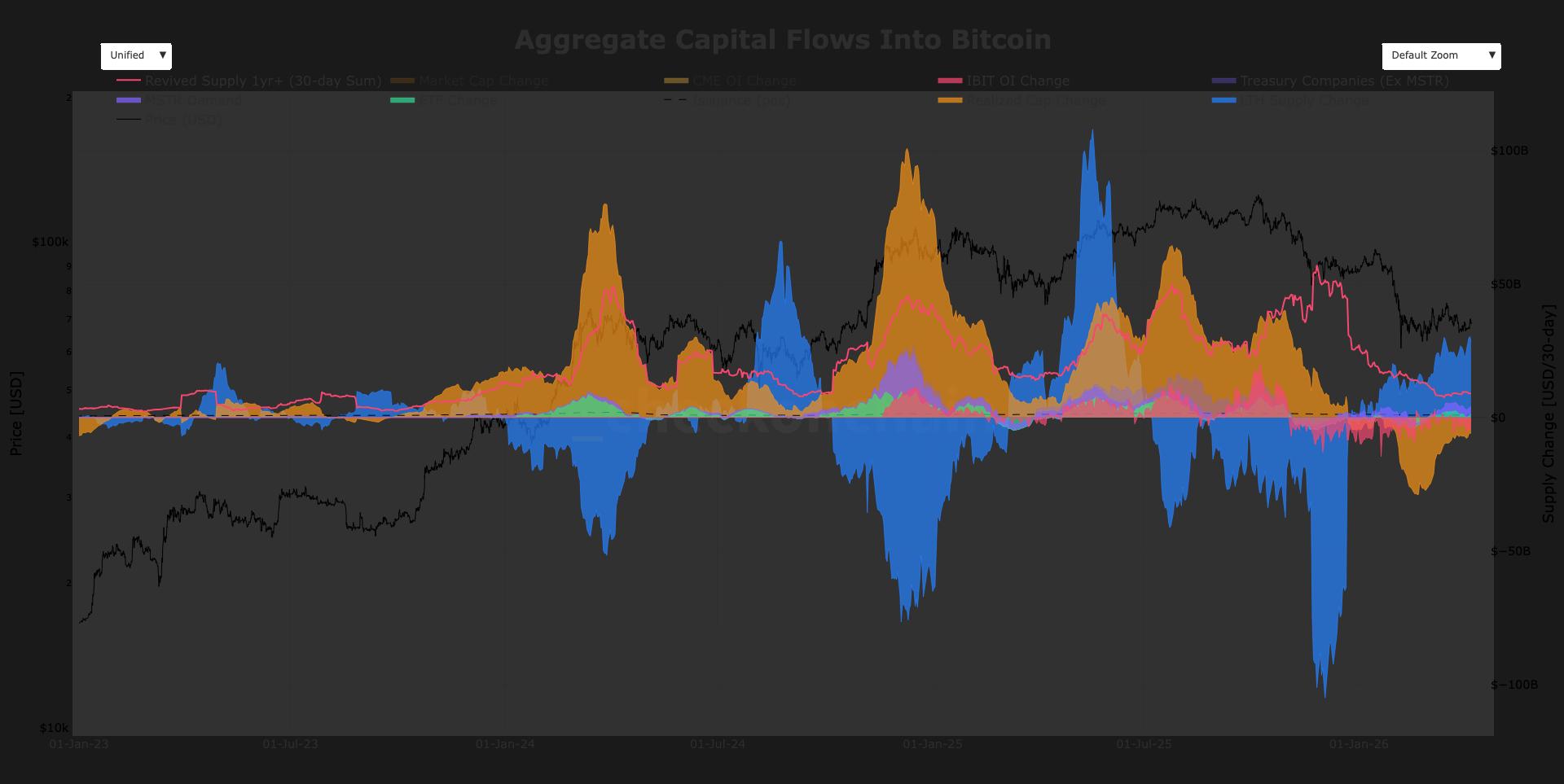
Strategy (MSTR), the world’s largest publicly traded holder of bitcoin, announced on Monday that it purchased 4,871 BTC for $330 million, marking one of its largest acquisitions of 2026.
Yet a recurring question remains, why do these sizable purchases fail to move the market? In fact, bitcoin’s price often declines around the time these announcements are made.
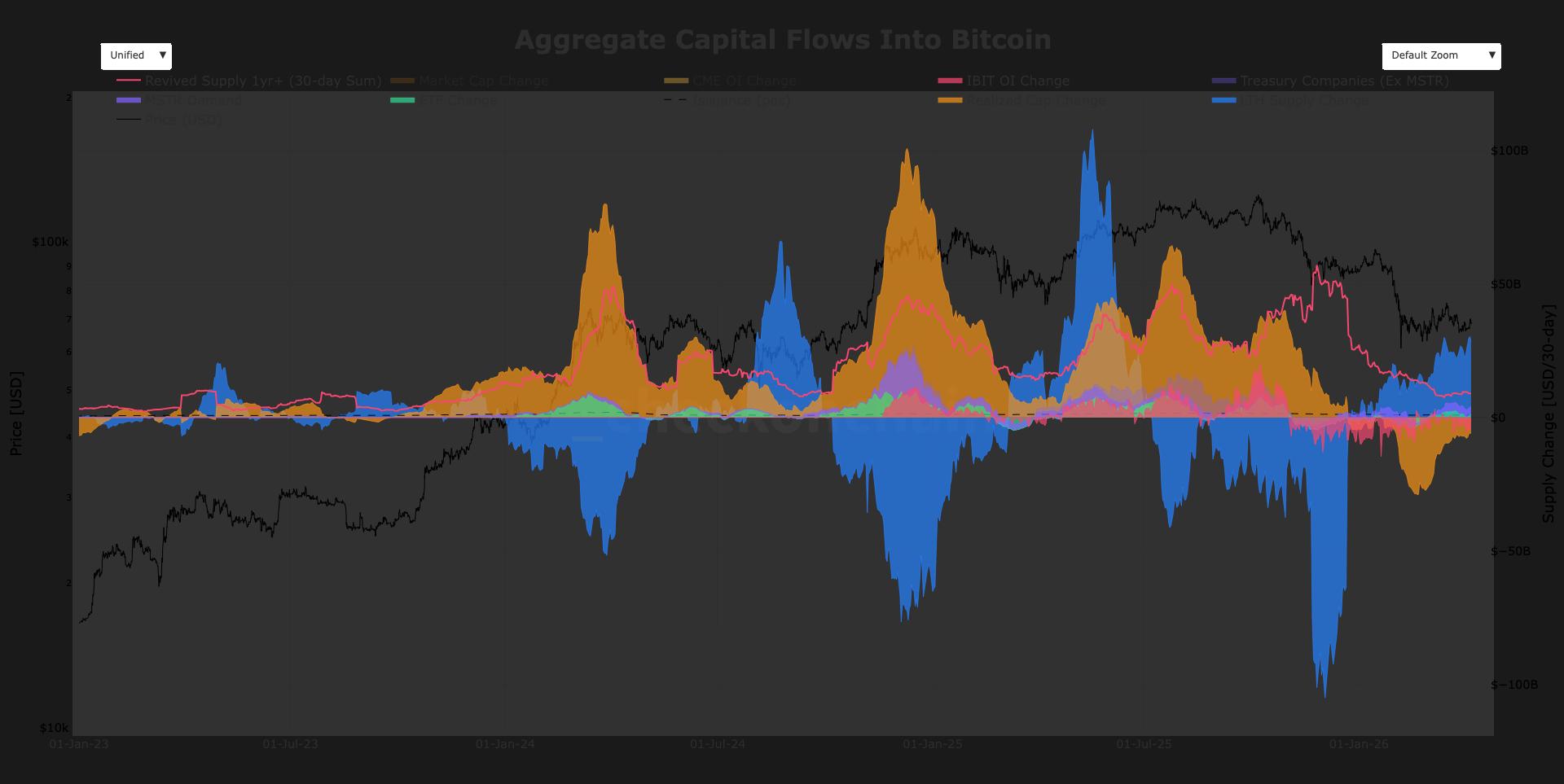
The answer lies in understanding market flows. MSTR demand currently accounts for roughly 7% of total gross inflows, rising to about 9% of net flows, according to checkonchain data. Gross flows reflect only positive demand entering the market, while net flows account for both buying and selling, giving a clearer picture of overall pressure. While Strategy remains a consistent buyer, its impact is relatively small compared to broader market forces.
Historically, its influence was larger. MSTR demand peaked above $15 billion in November 2024, coinciding with its all-time high stock price high and bitcoin over $100,000. Since then, activity has normalized to a range of $1 billion to $4 billion, with current demand around $2.8 billion over the past 30 days.
The dominant force is long-term holders (LTHs), coins held for more than 155 days, which are driving roughly $28.5 billion in supply change. A key subsection is revived 1+ year supply — older coins moving on chain over the past 30 days — which represents roughly $9 billion in change.
Elsewhere, U.S. spot exchange-traded funds (ETFs) have added roughly $1 billion of inflows over the past 30 days, while miner issuance, at 450 BTC per day, contributes around $880 million of monthly supply pressure.
More importantly, capital continues to leave. Bitcoin’s realized cap saw a $29 billion drawdown since February over a 30-day window, while BlackRock’s IBIT open interest is down over $4 billion. Together, these outflows dwarf MSTR’s demand.
Strategy may be buying aggressively, but it is being overwhelmed by larger forces distributing supply and capital being pulled out of the system.


Polygon crypto activated its Giugliano hardfork on mainnet at block 85,268,500 on April 8, delivering a 2-second reduction in transaction finality through a mechanism that lets block producers announce blocks earlier in the confirmation pipeline. The Polygon crypto Foundation confirmed the upgrade went live at approximately 2:00 p.m. UTC – on schedule and without reported disruption.
That 2-second cut isn’t cosmetic. For payment applications and real-world asset platforms running on Polygon PoS, faster finality directly compresses settlement risk and reduces the confirmation latency that separates blockchain UX from traditional financial infrastructure.
- What It Is: The Giugliano hardfork (PIP-83) is a Polygon PoS mainnet upgrade activating at block 85,268,500, targeting faster transaction finality and updated fee infrastructure.
- The Technical Change: Block producers can now announce blocks earlier in the cycle, cutting finality by 2 seconds – validated on the Amoy testnet before mainnet deployment.
- Fee Infrastructure: Fee parameters are now embedded directly in block headers, with new RPC endpoints for fee data – a structural change for wallets and developer tooling.
- Node Requirement: All node operators must run Bor v2.7.0 or Erigon v3.5.0 or higher; nodes on earlier versions will fall out of consensus at the activation block.
- What to Watch: Real-world finality metrics post-activation will determine whether the 2-second testnet gain holds at mainnet scale – and whether Polygon closes the UX gap with faster L2 competitors.
Discover: The Best Crypto to Get Right Now
What Giugliano Actually Changes for Polygon Crypto – and Why the Finality Mechanism Matters
The core change in Giugliano is architectural: block producers on Polygon PoS can now signal block availability earlier in the slot cycle, reducing the time validators must wait before treating a block as confirmed. On the Amoy testnet, that translated to a 2-second finality improvement – a measurable delta, not a rounding error, when the baseline confirmation window is already measured in seconds.
The upgrade also embeds fee parameters directly into block headers and introduces new RPC support for fee data.
That distinction matters for developers: wallets and dApps can now query fee conditions from block data directly rather than reconstructing them through separate API calls, which simplifies gas estimation logic and reduces the surface area for fee-related errors at the application layer.
Giugliano isn’t a throughput upgrade – it’s a latency and infrastructure upgrade. The Gigagas roadmap targeting 100,000 TPS remains a separate and longer-horizon effort. What Giugliano delivers is a tighter confirmation loop and cleaner fee data pipelines – foundational plumbing that the Gigagas scaling work will depend on.
The upgrade also carries specific backstory. Giugliano formally reintroduces PIP-66, a set of changes that were bundled into the earlier Bhilai hardfork (PIP-63) but rolled back after triggering unspecified network behavioral issues in deployment.
The Amoy testnet run on March 23 at block 35,573,500 served as the final validation gate before mainnet, and the clean activation on Wednesday suggests those earlier issues have been resolved.
Benchmarked against the broader L2 landscape, the gap Giugliano closes is real but context-dependent. Optimistic rollups like Arbitrum and Optimism carry 7-day challenge windows that dwarf any PoS finality metric. ZK-based rollups achieve near-instant cryptographic finality but at higher proving costs.
Polygon PoS sits in a different architectural category – a sidechain with its own validator set – and Giugliano tightens its native finality without altering those fundamental tradeoffs.
Explore: The Best Pre-Launch Token Sales With Asymmetric Upside Potential
The post Polygon Crypto Activates Giugliano Hardfork to Improve Transaction Finality appeared first on Cryptonews.


Disclosure: This article does not represent investment advice. The content and materials featured on this page are for educational purposes only.
Stablecoins are reshaping remittances as costs drop and settlement speeds accelerate globally.
Summary
- Stablecoins cut remittance costs to under $1, replacing slow and expensive traditional cross-border transfers
- Stablecoin market surpasses $310 billion as on-chain settlement drives faster, cheaper global payments
- Transak is powering stablecoin remittances with compliant fiat on/off-ramps across 60+ countries
Sending money across borders shouldn’t cost 6% and take five days. But for billions of people relying on traditional remittance corridors, it still does.
Stablecoins are changing that. By replacing correspondent banking with on-chain settlement, stablecoin remittances compress costs to under a dollar and settlement times to minutes. The global stablecoin market now exceeds $310 billion in market cap, and transaction volume hit $1.78 trillion in February 2026 alone.
The infrastructure is maturing fast. Here are the best companies and providers powering stablecoin remittance today.
1. Transak
Best for: Platforms and fintechs building stablecoin-powered remittance products that need compliant fiat on/off-ramp infrastructure across multiple markets.
Transak is a payments infrastructure provider that handles the fiat-to-stablecoin and stablecoin-to-fiat conversion layer for platforms building remittance products.
Transak is available in 64+ countries with support for local payment methods, including cards, bank transfers, Apple Pay, and Google Pay. It supports major stablecoins like USDC, USDT, RLUSD, PYUSD, and EURC across multiple blockchains.
What makes Transak particularly relevant for remittance is its stablecoin sandwich architecture: fiat in, stablecoin transfer on-chain, fiat out. Both sender and receiver stay in their local currency. The stablecoin layer is invisible to the end user.
Transak handles the entire compliance stack, including KYC, AML screening, and transaction monitoring, with registrations and licenses in the US, UK, EU, Canada, Australia, India, and other jurisdictions.
For platforms that want to offer remittance without building regulatory infrastructure from scratch, Transak’s white-label on-ramp and off-ramp APIs are the fastest integration path.
2. Circle (USDC)
Best for: Enterprises and institutions that prioritize regulatory transparency and need a fully audited stablecoin for settlement.
Circle is the issuer of USDC, one of the most widely used regulated stablecoins. USDC is backed 1:1 by US dollar reserves held in treasuries and cash, with monthly attestation reports.
Circle provides enterprise APIs for USDC payments and settlement, and USDC is available on over 20 blockchains, including Ethereum, Solana, and Stellar. For remittance companies that want to build on a transparent, compliance-first stablecoin, USDC is the default choice.
3. Stellar (via MoneyGram, Nium, and others)
Best for: Remittance corridors where last-mile cash pickup is essential and the recipient may not have a bank account.
The Stellar network was designed from the ground up for cross-border payments. It offers low transaction fees (fractions of a cent), fast settlement (3-5 seconds), and native support for stablecoins, including USDC.
Stellar’s real strength is its network of anchors, i.e., local financial institutions that handle the fiat on-ramp and off-ramp in each country. MoneyGram integrated Stellar for stablecoin-powered cash pickups, and Nium partnered with the Stellar Development Foundation to enable stablecoin payouts to 190 countries.
4. Ripple Payments (XRP)
Best for: Banks and licensed financial institutions looking for institutional-grade settlement infrastructure with existing banking network integrations.
Ripple’s enterprise payment network connects banks and payment providers for real-time cross-border settlement. While XRP is not a stablecoin, Ripple uses it as a bridge asset for liquidity in corridors where pre-funded accounts are expensive to maintain.
Ripple has partnerships with over 100 financial institutions and focuses heavily on B2B remittance and institutional corridors, particularly in Asia and the Middle East.
5. BVNK
Best for: High-volume B2B payment companies and remittance operators that need multi-currency, multi-chain settlement.
BVNK provides enterprise infrastructure for businesses to move money between fiat and stablecoins at scale. With 25+ licenses covering 130+ markets, BVNK processed $30 billion in annualized stablecoin payment volume in 2025.
The platform supports multi-token and multi-chain settlement, making it suitable for high-volume corridors where speed and compliance matter equally.
6. Stripe
Best for: Existing Stripe merchants looking to add stablecoin settlement without changing their payment stack.
Stripe integrated stablecoin payments in 2025, allowing merchants to accept and settle in USDC across Ethereum, Solana, Polygon, and Base. Stripe automatically converts stablecoin payments to fiat, making it accessible for businesses already on the platform.
While not a remittance-specific provider, Stripe’s infrastructure is increasingly relevant for platforms that process international payouts or cross-border merchant payments.
7. Fireblocks
Best for: Enterprises building custom stablecoin payment infrastructure that need institutional-grade custody and orchestration.
Fireblocks provides the orchestration layer for enterprise stablecoin operations, including custody, transfer, and settlement across 100+ blockchains. It’s the backend infrastructure that many of the companies on this list (including Transak) use for secure asset movement.
Fireblocks is not consumer-facing; it powers the institutional plumbing behind stablecoin remittance platforms.
What’s Next for Stablecoin Remittance
Regulatory clarity is accelerating adoption. The US GENIUS Act establishes federal requirements for stablecoin issuers. The EU’s MiCA framework is already live. As these frameworks solidify, the gap between stablecoin remittance and traditional rails will only widen.
The infrastructure for compliant stablecoin payments already exists. The providers listed here are the ones making it production-ready.
Disclosure: This content is provided by a third party. Neither crypto.news nor the author of this article endorses any product mentioned on this page. Users should conduct their own research before taking any action related to the company.
Crypto World
Bitcoin (BTC) price touches $70,000 as ETF inflows signal institutional interest: Crypto Daybook Americas
By Francisco Rodrigues (All times ET unless indicated otherwise)
Bitcoin and the wider crypto market showed mixed signals on Tuesday, with the largest cryptocurrency briefly touching $70,000 on reports a ceasefire in Iran was proposed.
The hesitation comes a day after bitcoin exchange-traded funds (ETFs) recorded their largest inflows since late February, even as the market pays close attention to the harsh macro backdrop. Bitcoin ETF investors’ demand suggests they see the current price action as an accumulation opportunity.
Binance Research found earlier this month that bitcoin’s correlation with its Global Easing Breadth Index, which tracks 41 central banks, turned strongly negative after the launch of spot bitcoin ETFs. ETF-driven institutional flows tend to be more forward-looking, positioning themselves for expected policy moves. That is, institutional capital may be accumulating ahead of expected easing of monetary policy.
Bitfinex Alpha described the market as range-bound but fragile, with weak organic demand, slower corporate treasury buying and options positioning that turns more unstable below $68,000 as downside protection grows.
Macro pressure remains relevant too. Brent crude remains above $110 a barrel as the looming deadline U.S. President Donald Trump imposed on Iran for a deal to open the Strait of Hormuz keeps investors on edge.
The market currently sees little room for the Federal Reserve to lower rates in the near future given the expected inflation rise caused by higher energy costs. U.S. inflation data coming in later this week will be critical. Stay alert!
Read more: For analysis of today’s activity in altcoins and derivatives, see Crypto Markets Today
What to Watch
For a more comprehensive list of events this week, see CoinDesk’s “Crypto Week Ahead“.
- Crypto
- Macro
- April 7, 07:15 a.m.: U.S. ADP Employment Change Weekly (est. 10K)
- April 7, 7:30 a.m.: U.S. Durable Goods Orders MoM for February est 04% (Prev. 0%)
- April 7, 11:35 a.m.: Chicago Fed President and CEO Austan Goolsbee to participate in a conversation on economic and monetary policy.
- Earnings (Estimates based on FactSet data)
Token Events
For a more comprehensive list of events this week, see CoinDesk’s “Crypto Week Ahead“.
- Governance votes & calls
- April 7: Kamino and xStocks to host an X Spaces session on tokenization.
- Balancer DAO is voting across two linked proposals to restructure operations with a reduced team and budget, and to revamp tokenomics by halting BAL emissions, discontinuing veBAL, routing all fees to the treasury, and offering a token buyback. Voting ends April 7.
- CoW DAO is voting to fix its solver rewards budget at 50% of protocol revenue, splitting it between performance and new consistency rewards. The proposal has overwhelming support and ends April 7.
- Unlocks
- Token Launches
Conferences
For a more comprehensive list of events this week, see CoinDesk’s “Crypto Week Ahead“.
Market Movements
- BTC is down 0.98% from 4 p.m. ET Monday at $69,149.83 (24hrs: -1.05%)
- ETH is down 0.98% at $2,128.41(24hrs: -1.31%)
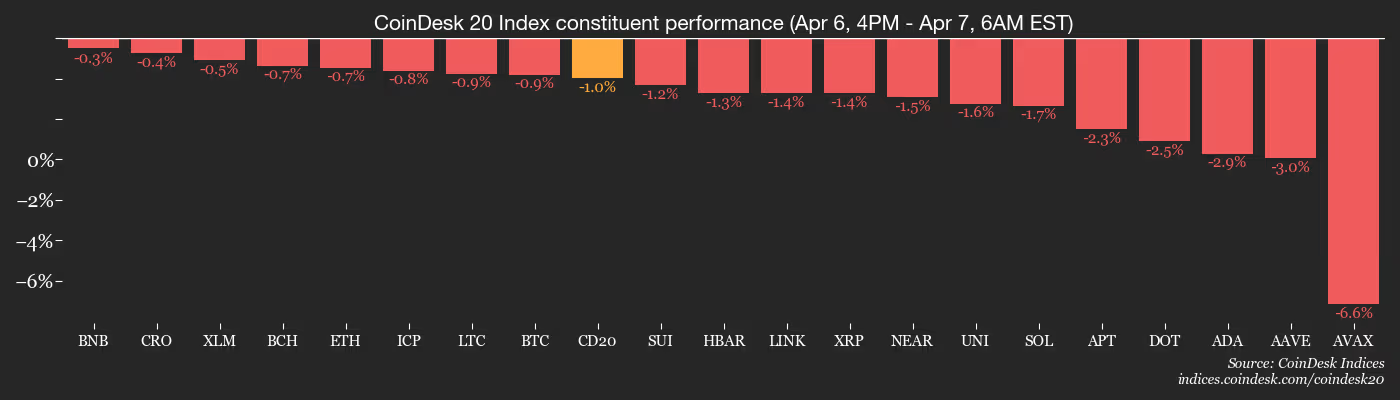
- CoinDesk 20 is down 1.13% at 1,946.75 (24hrs: -1.59%)
- Ether CESR Composite Staking Rate is up 4 bps at 2.74%
- BTC funding rate is at 0.0049% (5.3327% annualized) on Binance

- DXY is down 0.15% at 99.83
- Gold futures are unchanged at $4,688.40
- Silver futures are down 0.3% at $72.63
- Nikkei 225 closed unchanged at 53,429.56
- Hang Seng closed down 0.70% at 25,116.53
- FTSE is up 0.33% at 10,470.51
- Euro Stoxx 50 is up 0.98% at 5,748.35
- DJIA closed on Monday up 0.36% at 46,669.88
- S&P 500 closed up 0.44% at 6,611.83
- Nasdaq Composite closed up 0.54% at 21,996.34
- S&P/TSX Composite closed up 0.22% at 33,181.97
- S&P 40 Latin America closed up 0.12% at 3,656.10
- U.S. 10-Year Treasury rate is down 1 bps at 4.325%
- E-mini S&P 500 futures are unchanged at 6,657.25
- E-mini Nasdaq-100 futures are unchanged at 24,373.50
- E-mini Dow Jones Industrial Average Index futures are up 0.16% at 46,976.00
Bitcoin Stats
- BTC Dominance: 59.04% (-0.08%)
- Ether-bitcoin ratio: 0.03077 (0.54%)
- Hashrate (seven-day moving average): 951 EH/s
- Hashprice (spot): $31.40
- Total fees: 2.18 BTC / $151,084
- CME Futures Open Interest: 117,120 BTC
- BTC priced in gold: 14.8 oz.
- BTC vs gold market cap: 4.6%
Technical Analysis

- The chart shows bitcoin’s dollar price in weekly candle for the past several years.
- The measure is still trading around the 200-week exponential moving average of $68,317 while the RSI continues to grind up after bottoming out at 27 a few weeks ago.
- With no clear bearish RSI divergences, the next core level to monitor is $73,000 for any confirmed upward momentum
Crypto Equities
- Coinbase Global (COIN): closed on Monday at $174.79 (+1.94%), -0.56% at $173.82 in pre-market
- Circle Internet (CRCL): closed at $92.15 (+2.09%), +0.18% at $92.32
- Galaxy Digital (GLXY): closed at $18.28 (+3.63%), +0.11% at $18.30
- Bullish (BLSH): closed at $37.35 (+2.69%), unchanged in pre-market
- MARA Holdings (MARA): closed at $8.85 (+1.61%), -0.55% at $8.80
- Riot Platforms (RIOT): closed at $13.52 (+5.13%), -0.52% at $13.45
- Core Scientific (CORZ): closed at $16.29 (+0.37%), -0.18% at $16.26
- CleanSpark (CLSK): closed at $9.10 (+3.53%), -0.33% at $9.07
- CoinShares Valkyrie Bitcoin Miners ETF (WGMI): closed at $36.70 (+2.63%)
- Exodus Movement (EXOD): closed at $6.33 (+3.77%), +0.63% at $6.37
Crypto Treasury Companies
- Strategy (MSTR): closed at $127.69 (+6.56%), -0.71% at $126.79
- Strive (ASST): closed at $10.12 (+3.79%), +0.30% at $10.15
- SharpLink Gaming (SBET): closed at $6.38 (+3.07%), +0.12% at $6.39
- Upexi (UPXI): closed at $1.01 (+3.59%), -0.99% at $1.00
- Lite Strategy (LITS): closed at $1.14 (+1.79%)
ETF Flows
Spot BTC ETFs
- Daily net flows: $471.4 million
- Cumulative net flows: $56.41 billion
- Total BTC holdings ~1.29 million
Spot ETH ETFs
- Daily net flows: $120.2 million
- Cumulative net flows: $11.63 billion
- Total ETH holdings ~5.68 million
Source: Farside Investors
While You Were Sleeping
US-listed spot Bitcoin ETFs renewed their inflow pace on Monday, drawing in $471 million in a single day, according to SoSoValue. The size of the inflow marks the strongest daily momentum in weeks as Bitcoin briefly climbed toward $70,000 before retreating to just under $69,000, per CoinGecko.
Market mood remained fragile amid ongoing geopolitical pressure and renewed concerns over Bitcoin’s quantum-resistance debate, while the Crypto Fear & Greed Index stayed in Extreme Fear at 13, highlighting the cautious stance of many investors.
Key takeaways
- Monday’s spot-Bitcoin ETF inflows reached $471 million, the largest single-day intake since February 25.
- Leading inflows by issuer: BlackRock’s IBIT with about $182 million, Fidelity Wise Origin Bitcoin Fund (FBTC) with $147 million, and ARK 21Shares Bitcoin ETF (ARKB) with roughly $119 million, per data from Farside.
- ARKB’s surge represented its strongest daily inflow in months, signaling renewed appetite among some long-duration players.
- Arkham data indicates ETF outflows slowed last week, with major issuers selling around $16.6 million in BTC; ARK Invest’s ARKB ETF bought about $34 million in BTC in that period, per Arkham.
- In April’s early sessions, US spot BTC ETFs posted about $307 million in net inflows, lifting total assets under management above $90 billion.
Top inflows and the issuer lineup
BlackRock’s iShares Bitcoin Trust ETF (IBIT) led the charge on Monday with roughly $182 million in new money, followed by Fidelity’s Wise Origin Bitcoin Fund (FBTC) at about $147 million, according to data tracked by Farside. The ARK 21Shares Bitcoin ETF (ARKB) rounded out the top three with roughly $119 million in fresh inflows, marking its strongest daily showing since mid-2025.
The activity underscores that, even amid volatility and macro concern, institutional-grade vehicles remain capable of moving sizable sums into the regulated crypto access space in the United States.
Arkham signals and weekly positioning
Arkham’s monitoring shows a refreshing pause in ETF outflows last week, with major issuers selling only about $16.6 million in Bitcoin. In that same period, ARK Invest’s ARKB ETF was the standout buyer, adding about $34 million worth of BTC. The signals point to a nuanced reweighting among funds—some lightening exposure while a subset targets fresh BTC purchases.
Looking at the broader April picture, Arkham data summarized that the first three trading sessions of the month produced roughly $307 million in net inflows for US spot BTC ETFs, helping push total assets under management over the $90 billion mark. This suggests a potential shift in risk appetite among US-listed ETF vehicles as market conditions quietly stabilize from earlier volatility.
Ether ETFs rebound, but the broader alt-coin set remains cautious
Ether-based ETF products joined the recovery, recording about $120 million in inflows on Monday and offsetting about $78 million of outflows from the prior two sessions, according to SoSoValue. Still, Ether ETFs have faced three consecutive months of losses, with total outflows reaching about $770 million for the period.
Activity across other altcoin ETFs remained comparatively muted. XRP ETFs posted zero inflows on Monday, while Solana (SOL) ETFs brought in roughly $247,000. The pattern suggests a cautious approach among investors toward non‑BTC chains, even as appetite for regulated BTC access remains firm.
What the data implies for traders and investors
The April uptick in US spot BTC ETF inflows could be interpreted as a return of institutional interest, carried partly by marquee vehicles such as IBIT and ARKB. For traders, the inflows may reflect a combination of price proximity to $70,000, ongoing macro uncertainty, and the appeal of regulated exposure with transparent custody and compliance frameworks.
Yet the backdrop remains mixed. While inflows are evolving, Bitcoin’s quantum-resistance debate and geopolitical tensions continue to cast a shadow over sentiment. The ongoing resilience in ETF demand may hinge on how regulatory clarity evolves and whether more traditional asset allocators view crypto exposure as a core, capital-efficient segment of their portfolios.
In March, Bitcoin ETFs posted about $1.3 billion in inflows—the first monthly gain after January outflows of $1.61 billion and February outflows of $207 million—indicating that financial-market participants are cautiously re-engaging with regulated crypto access after a period of outsized outflows.
As the month progresses, investors will be watching whether this renewed ETF interest translates into sustained net flows or remains episodic. Key questions include how issuer strategies adjust to shifting BTC price action, whether Ether and other altcoin ETF inflows pick up in tandem, and how regulatory developments in the U.S. shape the appetite for institutional-grade crypto exposure.
Watch next for any changes in the ETF lineup, additional weekly flow data, and how market volatility around macro headlines interacts with the ongoing push for regulated crypto access in the United States.
Key Takeaways
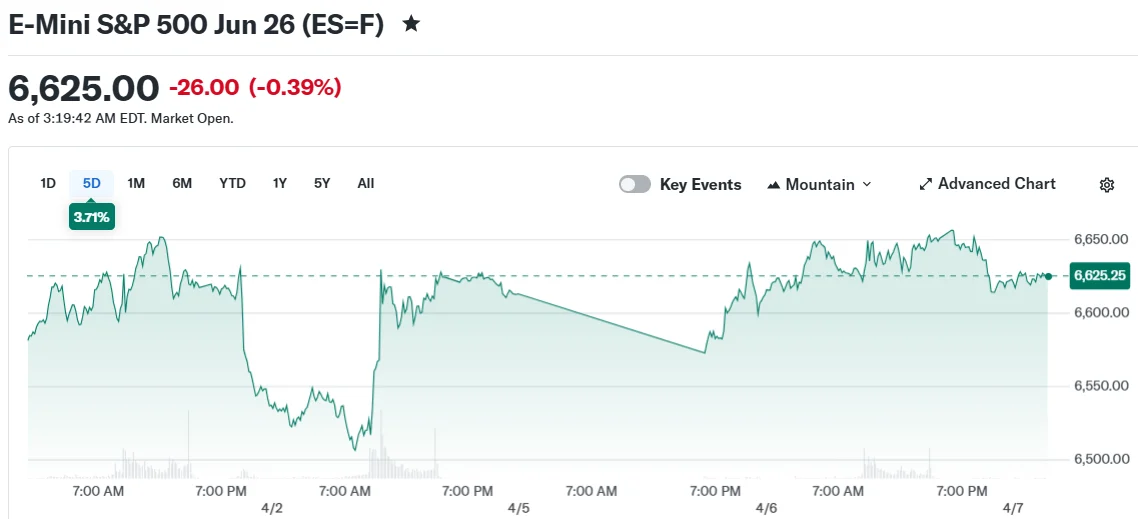
- UBS has revised its S&P 500 year-end 2026 projection downward from 7,700 to 7,500
- Elevated crude prices stemming from Middle Eastern geopolitical tensions drive the revision
- The benchmark index has declined 3.9% following the outbreak of Iran conflict on February 28
- Federal Reserve rate reduction expectations shifted to September and December from June and September
- Despite revisions, UBS maintains approximately 13% potential upside with $310 earnings per share forecast
UBS Global Wealth Management has adjusted its outlook for the S&P 500, trimming its price projection for 2026. The revision comes as energy costs climb and economic headwinds intensify due to escalating tensions in the Middle East.
According to an April 6 research note, UBS reduced its year-end forecast to 7,500 from a previous estimate of 7,700. The firm also lowered its mid-year projection to 7,000 from 7,300.
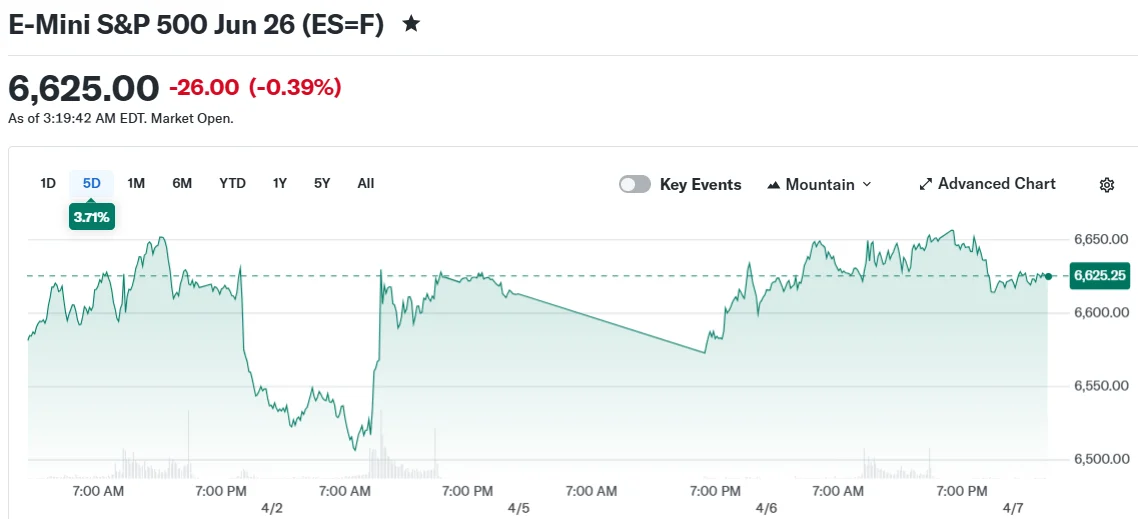
Since conflict erupted with Iran on February 28, the S&P 500 has retreated approximately 3.9%. Spiking energy costs combined with geopolitical instability have prompted investors to reduce equity exposure.
UBS’s central scenario anticipates the conflict subsiding in the weeks ahead, which would enable energy supply chains to gradually normalize.
Yet the Swiss banking giant cautioned that returning oil production to pre-conflict capacity will require significant time. Widespread infrastructure damage throughout the region means full production restoration remains months away.
This delay could sustain elevated crude prices beyond current market expectations.
Energy Price Surge Creates Economic Headwinds
Rising energy costs typically decelerate economic expansion while accelerating inflation. UBS indicated this pattern will likely sustain sticky inflation and create modest drag on the American economy.
Consequently, the institution now anticipates the Federal Reserve will postpone additional monetary easing. UBS had originally projected reductions in June and September but now forecasts two 25-basis-point decreases in September and December.
This adjustment illustrates how international geopolitical developments can influence domestic central bank decisions.
Notwithstanding the reduced targets, UBS calculates roughly 13.43% upside potential from the S&P 500’s most recent closing level of 6,611.83.
Long-Term Bullish Stance Remains Intact at UBS
UBS maintained its 2026 earnings projection for the S&P 500 at $310 per share. The institution characterized American equities as “attractive” notwithstanding near-term challenges.
The firm highlighted that corporate profit expansion remains robust. It also emphasized ongoing artificial intelligence adoption and commercialization as supportive factors for equities once conflict-related pressures diminish.
UBS noted that even with delayed policy accommodation, the Federal Reserve continues to provide broad market support.
The bank refrained from altering its constructive view on U.S. stocks. It simply recalibrated the timeline and magnitude of its price forecasts to reflect the ongoing war’s impact.
UBS currently projects two Federal Reserve rate reductions before 2026 concludes, both scheduled for the year’s second half.
Crypto World
Analysts eye potential breakdown as BTC price repeats familiar pattern: Crypto Markets Today
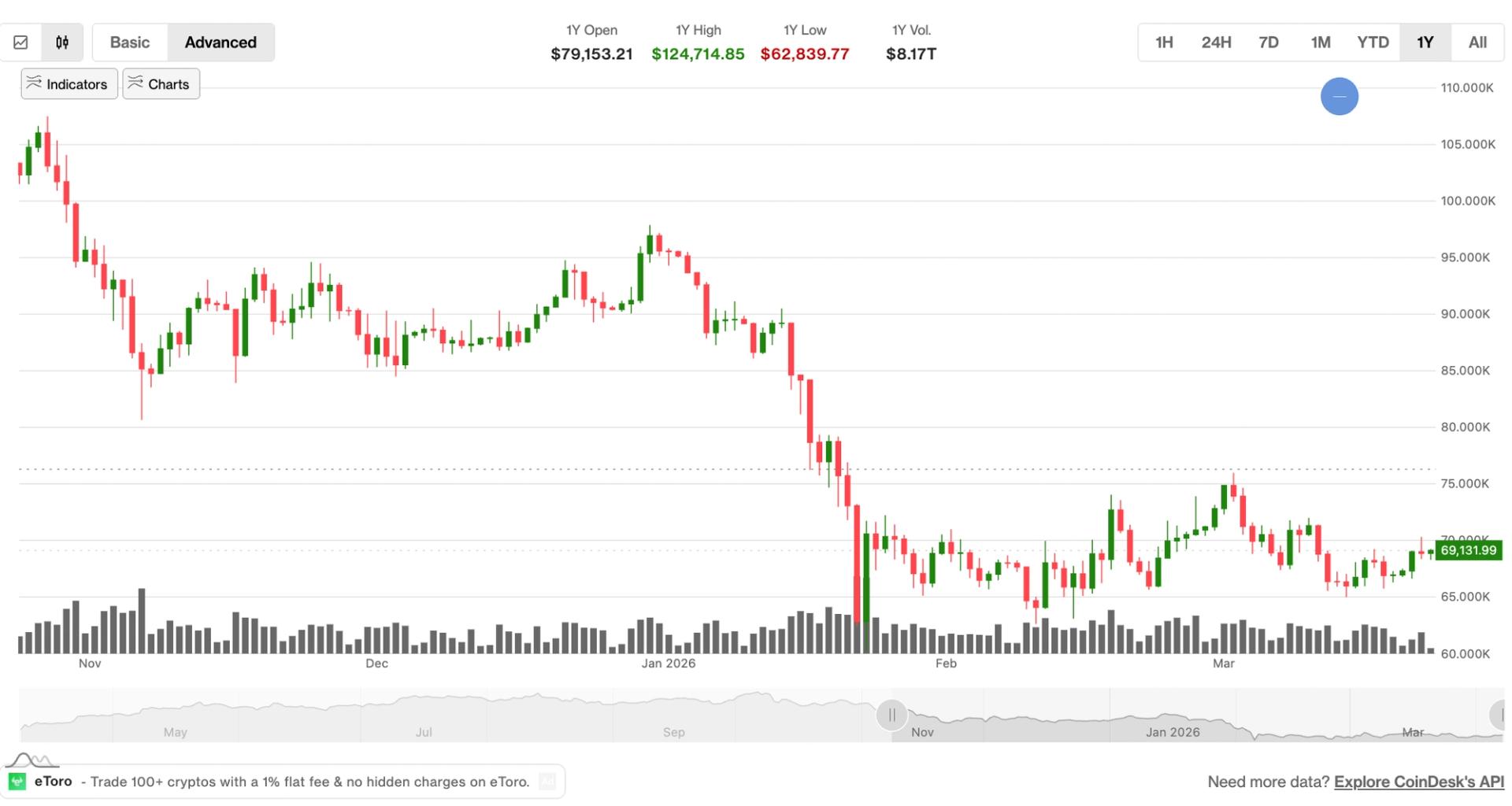
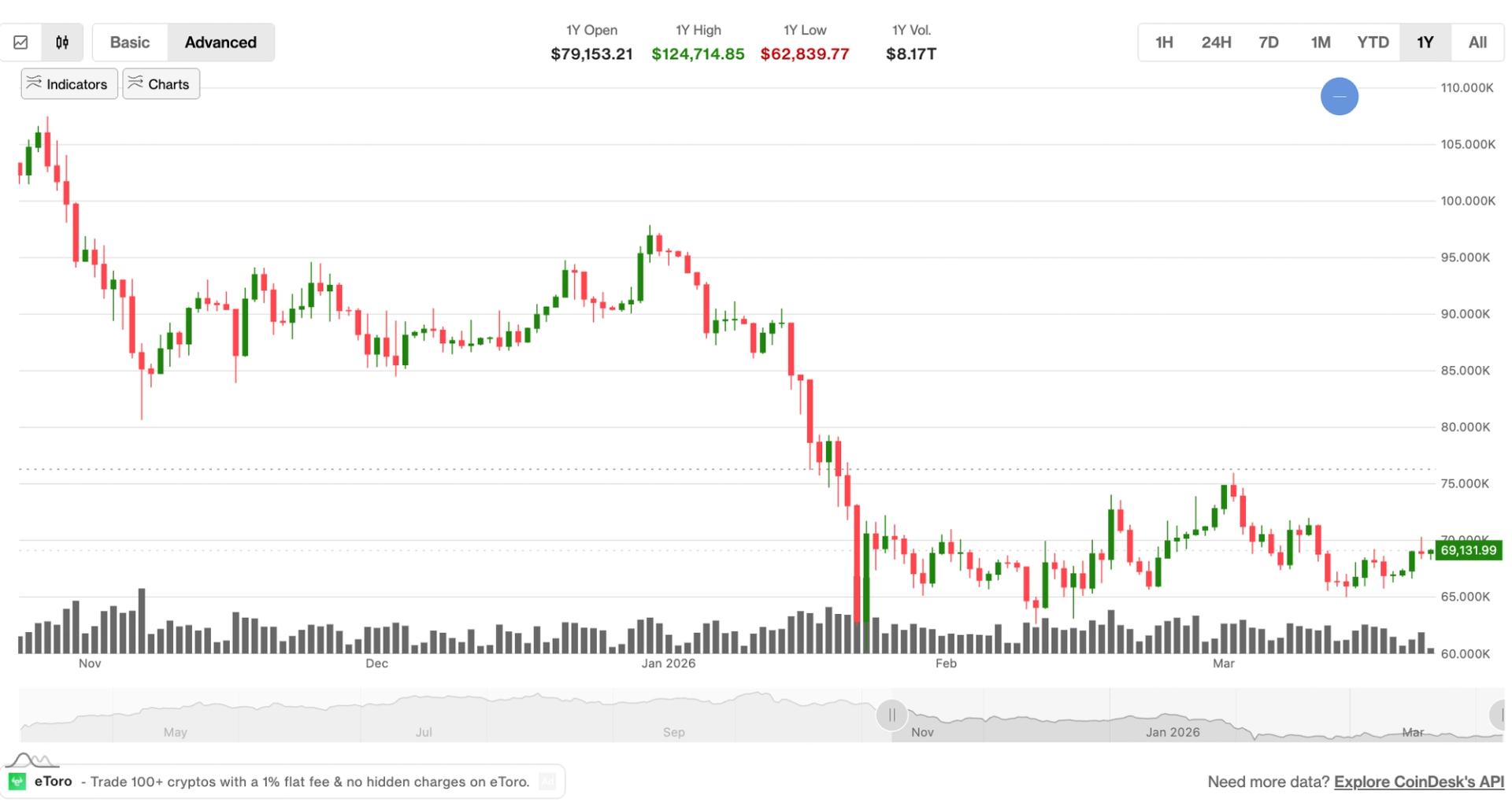
The crypto market is trading sluggishly within the range it has held for two months, with bitcoin changing hands at $69,000 and ether (ETH) at $2,130.
The range-bound pricing dates back to Feb. 6, with several peaks between $72,000 and $75,000 and troughs between $62,000 and $65,000.
A similar two-month pattern occurred between November and January before a price breakdown, leading analysts to suggest a similar scenario may play out this time around.
Much still depends on the conflict in Iran, with U.S. President Donald Trump’s threats of “obliteration” falling on deaf ears thus far. Brent crude oil remains at $107 per barrel, which will have a knock-on effect on inflation over the course of the year unless it declines.
Derivatives positioning
- The market continues to consolidate as bitcoin open interest (OI) stabilizes at $16.7 billion, little changed from last week and indicating that speculative activity remains flat.
- Funding rates have moved into a neutral 0%-6% range, following a period of negative funding that likely fueled the initial relief rally through short covering.
- With the three-month annualized basis also little changed over the week, institutional conviction remains cautious, suggesting that while the immediate downside pressure has eased, the big players are not yet positioning for a major breakout.
- Options sentiment is stabilizing as call dominance reaches 47% and one-week skew drops to 16% from 19% last week. However, the implied volatility term structure’s front-end backwardation confirms that traders are still prioritizing immediate downside protection over long-term growth expectations.
- CoinGlass data shows $163 million in 24-hour liquidations, with a 60-40 split between longs and shorts. BTC (64 million), ETH ($35 million) and others ($16 million) were the leaders in terms of notional liquidations.
- The Binance liquidation heatmap indicates $69,500 as a core level to monitor in case of a price rise.
Token talk
- The altcoin market has been surprisingly buoyant recently, despite broader market apathy. Since midnight UTC privacy tokens zcash (ZEC) and dash (DASH) rose by 6.7% and 3.1%, respectively, and there were also notable gains for FET, PUMP and RENDER.
- The bitcoin-dominant CoinDesk 20 (CD20) index gained 0.3% on Tuesday, while being outpaced by the CoinDesk Memecoin Index (CDMEME) and CoinDesk Computing Select Index (CPUS), a sign of the relative strength of altcoins compared with crypto majors.
- The recent bounce in altcoins has not been uniform, however. AI tokens, privacy tokens and the likes of HYPE and ALGO have performed well, while other market segments have tumbled. Over the past 90 days ethena (ENA) has lost 66% of its value, while TIA, LDO, SUI and ARB have all fallen by more than 50%.
- That’s a divergence from previous cycles, when altcoins moved in unison. It now appears the market is maturing to a point where assets may be moving based on real-world impact, as opposed to hype and overzealous roadmaps.

Intel's new AI compression tech can significantly shrink game texture sizes and reduce VRAM use

Ray Parlour urges Mikel Arteta to drop Arsenal star in Champions League | Football

Plan 2 student loan interest rates capped at 6% in England


-

 NewsBeat5 days ago
Steven Gerrard disagrees with Gary Neville over ‘shock’ Chelsea and Arsenal claim | Football
-

 Business4 days ago
No Jackpot Winner and $194 Million Prize Rolls Over
-

 Fashion4 days ago
Weekend Open Thread: Spanx – Corporette.com
-

 Crypto World6 days ago
Gold Price Prediction: Worst Month in 17 Years fo Save Haven Rock
-

 Business2 days ago
Three Gulf funds agree to back Paramount’s $81 billion takeover of Warner, WSJ reports
-
Crypto World7 days ago
Dems press CFTC, ethics board on prediction-market insider trades
-

 Sports3 days ago
India men’s 4x400m and mixed 4x100m relay teams register big progress | Other Sports News
-

 Business3 days ago
Expert Picks for Every Need
-

 Business5 days ago
Login and Checkout Issues Spark Merchant Frustration
-

 Sports7 days ago
Tallest college basketball player ever, standing at 7-foot-9, entering transfer portal
-

 Crypto World7 days ago
Bitcoin enters the public bond market as Moody’s gives a first-of-its-kind crypto deal a rating
-
Crypto World6 days ago
Bitcoin stalls below key resistance as technical signals skew bearish
-

 Tech5 days ago
Commonwealth Fusion Systems leans on magnets for near-term revenue
-

 Politics6 days ago
Starmer’s centre has collapsed, and the left was right all along
-
Business2 days ago
No Jackpot Winner, Prize to Climb to $231 Million
-

 Fashion7 days ago
Tuesday’s Workwear Report: Tavira Sculpt Stretch Crepe Trousers
-
Crypto World7 days ago
AI Memory Rout Wipes 9% Off Nvidia Stock: Chart Says More Pain Ahead
-

 Crypto World6 days ago
Why It’s Partnering, Not Issuing
-

 Crypto World6 days ago
Ripple rolls out enterprise crypto treasury platform for corporates
-
Tech7 days ago
AirPods Max 2 review: Familiar features & design, but needs more
You must be logged in to post a comment Login