

Connect with us

NewsBeat

Gambling Is Bigger Than You Think: Its Revenue Tops The GDP Of 100 Countries

Published

on

Gambling Is Bigger Than You Think: Its Revenue Tops The GDP Of 100 Countries

The global gambling industry generated around $644 billion (roughly £474.88 billion) in revenue in 2025, according to Statista Market Insights.

This figure exceeds the GDP of countries such as Finland, Hungary, or South Africa, and surpasses the economies of over 100 countries.

In the breakdown of these revenues, the casino sector firmly holds second place, trailing only lotteries and outpacing sports betting. And its share continues to grow.

Today, gambling can be a fairly effortless experience for the user. It increasingly resembles scrolling an Instagram or TikTok feed: industry data shows people are opening betting apps on the Tube, spinning a slot on a lunch break, or placing a bet from the sofa in the evening.

Advertisement

Researchers who study mobile gambling behaviour have noted that this kind of constant, low-friction access is one of the patterns associated with a higher risk of harm. However, for someone playing during short mobile sessions, comparing complex Return to Player (RTP), volatility, or wagering rules manually is nearly impossible.

That is why UK players increasingly turn to platforms that publish operator data independently of the casinos themselves. Slotozilla’s dedicated guide to gambling in the UK, for example, lists licensed casinos alongside RTP figures reported by game providers and bonus terms as stated by operators.

A casino that fits in your pocket

Over the past five years, the online gambling segment has been growing faster than offline in almost all major countries. In the United Kingdom, according to the UK Gambling Commission, the digital segment accounts for around 46% of the industry’s total revenue. The main driver of this shift is smartphones.

Advertisement

The pattern repeats across regions, though the balance differs. The United States is now the single largest market at over $209 billion (£154.21 billion), driven by sports betting; Europe leans more heavily on casino and slots, while Asia is dominated by lotteries and land-based gambling hubs such as Macau. Different starting points, but the same direction of travel: revenue is steadily shifting from the casino floor to the screen.

Gambling now occupies the same niche as streaming, social media, and mobile games, and industry estimates suggest that the majority of global online gambling activity happens on mobile devices, though exact figures vary by market and methodology.

And since gambling has moved to smartphones, the formats that are easy to open for a few minutes are the ones that win. Slots fit this best it is slots, rather than poker tables or sports betting, that have become the online engine of the entire industry.

So, where does all this industry money actually come from?

Advertisement

Who feeds the industry

Laid out by what each layer actually does, the picture looks like this:

  • Lotteries and bingo – the most established vertical, run largely by state and licensed operators.
  • Casino games – the broad category that contains slots, table games and live dealer.
  • Slots – the engine inside that casino vertical, accounting for over 80% of online casino revenue in the UK.
  • Sports betting – wagering on real-world events, expanded sharply by the post-2018 US legalisation wave.
  • High-volatility maths – not a revenue line of its own, but a design lever that shapes how long and how intensely people play.
  • Retention loops – the habit layer that turns a one-off spin into a recurring session.

The first four are where the money sits; the last three are why it keeps flowing.

When you break billions down, the picture becomes surprising. The clearest way to see it is through the UK market: in the financial year (April 2024 to March 2025), online gambling generated £7.8 billion. Of this, £5 billion came from online casinos, and the largest share – £4.2 billion – was produced specifically by slots. That is over 80% of the segment’s revenue and the single biggest online gambling product by yield.

The mechanism behind these numbers is simple but rarely spelled out. Every slot has a Return to Player (RTP) – say, 96% – which means that, over millions of spins, the game pays back 96p of every pound and keeps 4p. That 4p is the house edge, and it is the foundation of all casino revenue. A single spin is unpredictable; a billion spins are not. This is why volume, not big individual wins, is what feeds the industry.

Advertisement

However, the word “slots” now covers very different kinds of games. Not long ago, audiences were kept engaged by classic titles with calm mechanics and steady pacing – such as Book of Ra, Starburst, or Mega Moolah. Today, however, users are more interested in crash games like Aviator, where you must cash out before the crash; high-volatility slots with long quiet phases and sudden spikes; and titles with extremely high maximum payouts.

The main secret behind the billions in revenue is volume. In a single quarter, Britons placed 26.1 billion bets and spins, of which 24.4 billion were on slots, with an average session lasting just 16 minutes. In other words, the vast majority of industry revenue is generated by ordinary people spinning reels for a few minutes, but doing so repeatedly.

Psychological hooks: the mechanics of retention

But this short, fast session model also has an unpleasant side. The faster and more volatile the game, the easier it is to lose money if you do not understand the rules in advance.

Advertisement

Volatility is the second lever. High-volatility slots pay less frequently but offer larger potential wins – and it is precisely this rhythm of near-misses and sudden payoffs that keeps players spinning. The design borrows directly from behavioural psychology: variable, unpredictable rewards are among the most habit-forming reinforcement patterns known, the same mechanism that makes slot machines and social-media feeds difficult to disengage from.

Combined with the house edge, this means longer engagement converts into higher revenue for operators and, correspondingly, a greater risk of harm for players who lose track of time or spend.

And here the player faces a new problem: there are thousands of similar-looking slots, and choosing among them is difficult. Yet if you look closer, this abundance has a very specific reason.

The paradox of online gambling abundance

Advertisement

You might think that such a flood of releases is a spontaneous market growth. In reality, it is a strategy. The industry holds attention using the same mechanism as TikTok: the more fresh content there is, the longer a person stays engaged with the product. As a result, providers release dozens of games every month, and each new title competes for a player’s spare 15 minutes.

This pace is most visible on independent platforms that try to keep up with it. For example, the “new in 2026” selection on Slotozilla is constantly updated. And from what appears there, a clear pattern emerges: new games are increasingly built around retention mechanics.

Formats such as Megaways, with thousands of possible winning lines, are not just gimmicks they are retention tools, engineered to shorten the gap to the next moment of excitement. A longer session, multiplied by the house edge, means more revenue for operators.

But it also means more opportunities for a player to lose more than intended, which is why mechanics like these have drawn scrutiny in several markets the UK, for instance, introduced stake limits on online slots in 2025.

Advertisement

For players themselves, this conveyor belt turns into a choice overload trap, familiar from Netflix or YouTube: there are so many options that choosing takes more time than playing. Only in gambling, the cost of a mistake is higher than the cost of watching a video or film that simply disappoints you. Behind a flashy banner, there may be a slot with reduced RTP or unfavourable bonus conditions, and spotting this in advance is almost impossible.

The more games there are, the more expensive the skill of choosing becomes

The industry has a simple way of earning more – keeping real numbers out of sight behind a polished visual layer. A bright banner, a promise of a generous bonus, and a win animation on the casino homepage are designed to trigger emotions, while the actual game parameters remain in the background. This is where players are most often misled.

If the entire business model depends on the player knowing less than the operator, then the single most valuable thing a player can have is the data the operator prefers to keep hidden.

Advertisement

Aggregator platforms like Slotozilla, which positions itself as independent, aim to bring this layer to the surface. Its demo catalogue contains more than 4,500 slots from nearly 200 providers, each listed with the RTP, volatility, developer, and bonus wagering conditions as published by the provider figures that aren’t always surfaced as clearly on casino landing pages.

The platform also reviews casinos in a dedicated catalogue, using its published How We Rate methodology, which assesses licence, public reputation, support quality, payment methods, transparency of bonus terms, and payout conditions before an operator is added. Slotozilla may earn a commission when players sign up through its listings operators that don’t meet its licensing and fairness standards aren’t added to the catalogue regardless of commercial terms. As a result, instead of outdated reviews, the player gets up-to-date information on gambling in the UK, slots, and operators.

In essence, platforms like this aim to narrow the information gap between operator and player, making more of that picture available before the first bet a choice grounded in published data rather than a banner promise alone.

The scarcity is not of games, but of clarity

Advertisement

So, why does an industry built on a few minutes of phone time out-earn more than a hundred national economies? The answer is the stack this article has walked through: a few large verticals – lotteries, casino, sports betting – sitting on top of a casino engine that runs on slots, where a small built-in margin on each spin compounds across billions of micro-sessions, while volatility, and retention loops keep those sessions coming.

No single bet is large. The scale comes from how many of them there are, and how well the system is built to repeat them.

The gambling industry has grown to the size of a mid-sized country’s economy not on high stakes, but on habit. Millions of short mobile sessions have proven more effective than any high roller, and that is why the entire product is optimised to make people return again and again.

In such a system, players have fewer and fewer ways to maintain a clear perspective. There is too much content, while the real conditions are hidden behind bright packaging. Platforms like Slotozilla aim to be valuable not by adding yet another catalogue to the existing ones, but by working to restore what the industry is systematically stripping away from the player: clarity before the first pound is ever wagered.

Advertisement

For users aged 18+ only, T&Cs apply. Gambling can be addictive, always play responsibly and only bet what you can afford to lose. Gambling sites have a number of tools to assist you to stay in control, including deposit limits and time outs. If you think you have a problem, advice and support is available for you now from BeGambleAware or Gamcare.

Source link

Advertisement
Continue Reading
Click to comment

You must be logged in to post a comment Login

Leave a Reply

NewsBeat

Why Ainsley Harriott was at two Morrisons in Lancashire on Friday

Published

on

Why Ainsley Harriott was at two Morrisons in Lancashire on Friday

Ainsley has come to Leyland and Preston as part of his tour around Morrisons stores across Yorkshire, Greater Manchester and Lancashire.

It’s not just for the love of butter pies, but instead because he’ll be meeting shoppers, sharing recipe inspiration and surprising customers with prizes.

Ainsley Foods Company is also to donate £3,000 worth of food in each of the three regions.

We spoke to him at the Morrisons at Preston Docks.

Advertisement

(Image: NQ)

Ainsley said: “The people have been amazing.

“You know, I turned up here, there’s a queue of people.

“Some of them are wearing T-shirts and a few of them over there saying, ‘give your meat a good old rub,’ what does it mean?”

“I said, as long as you’re serving it with a side of couscous, there’s nothing to worry about.

Advertisement

(Image: NQ)

“It’s been an absolute joy, you know, people have come up and said they’ve been watching me since Ready, Steady, Cook days and still watching now.”

Ainsley is one of Britain’s best-known culinary personalities, having entertained audiences for more than three decades with his energetic style.

Born in London in 1957, he trained as a chef before working in some of the capital’s leading kitchens and later becoming head chef at Lord’s Cricket Ground.

He added, on his trip around Lancashire: “Everybody knows it’s about getting out there and promoting what you’ve got in the supermarkets, my soups and my couscous.

Advertisement

“But ultimately, I think it’s about meeting people.

(Image: NQ)

“All my life, even before I was on television, it’s all about connecting with people. I think because my dad was in show business, it made a big, big difference because he used to connect with people and I used to see that energy.

“And I think as youngsters, we look at our parents, don’t we? And we kind of pick up different things from them.

“I think I definitely picked up that from my dad, and so it’s great.”

Advertisement

Harriott rose to national fame through popular BBC programmes including Ready Steady Cook and Can’t Cook, Won’t Cook.

He has also fronted numerous travel and cookery series and has written bestselling cookbooks, selling more than two million copies worldwide.

(Image: NQ)

In 2020, he was awarded an MBE for services to broadcasting and the culinary arts, recognising his contribution to food television and British culture.

He’s even been all over the North West, on occasions coming to Bolton Food and Drink Festival.

Advertisement

Speaking about Bolton’s festival, he said: “I used to love it.

“I should have done it this year, actually, but the dates didn’t work out.

“When they invited me back to go and do the Bolton Food and Drink Festival, it was wonderful.

“Last time we were down there, it was like that magnificent by the town hall.”

Advertisement

Today, he remains a popular figure on television and at food festivals across the country, where his live demonstrations continue to draw large crowds.

To sum it up, Ainsley said: “Is Preston and Lancashire the favourite place? It certainly is today.”

Source link

Advertisement
Continue Reading

NewsBeat

Massive energy plant could be built on edge of Cambridgeshire village

Published

on

Cambridgeshire Live

New access to the site could also be created via a major A-road

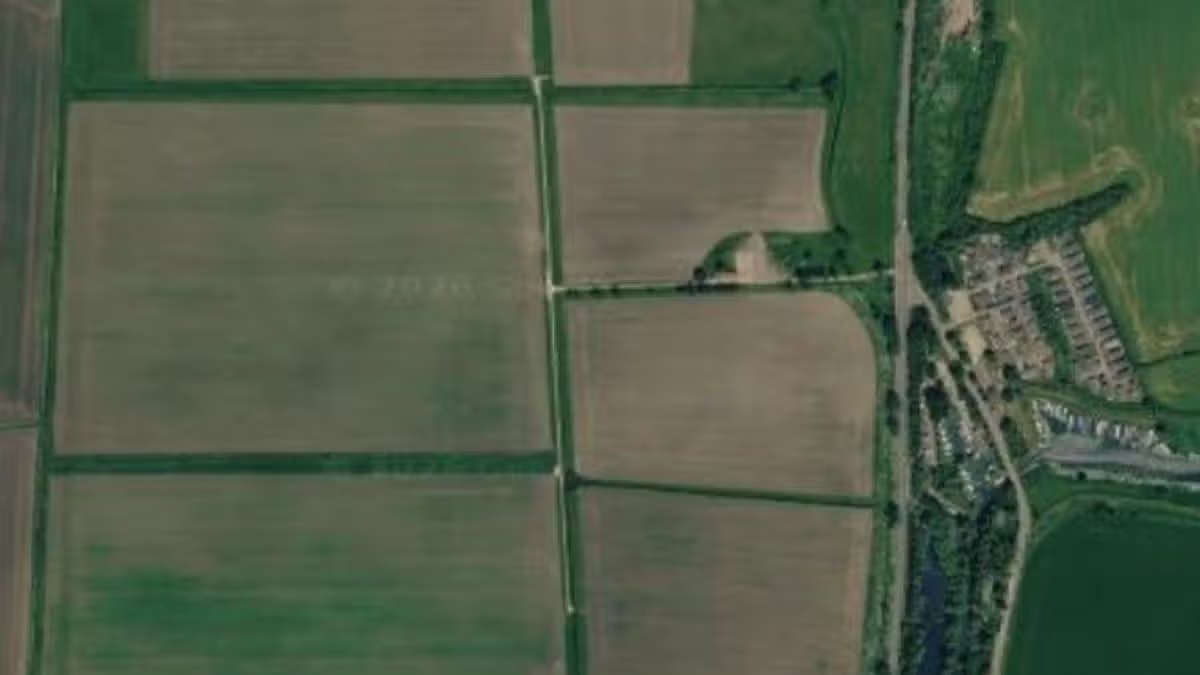
A large renewable energy plant could be built on the edge of a Cambridgeshire village. Pretoria Energy is proposing to build an agricultural by-product anaerobic digestion (AD) plant on land west of Snoots Bridge, Cambridge Road in Stretham.

Advertisement

The plant is proposed to take up around 22.7 hectares of land which is currently used as arable land. If approved, the site will be used to “produce biogas from the anaerobic digesters” and “produce renewable energy”.

The planning documents said: The proposed energy plant would provide a source of energy for use by the applicant, businesses within the vicinity, and National Grid network.

“The applicant envisages the feedstock for this particular AD plant could be from a mixture of chicken/poultry litter, straw and liquid food blend. The liquid food blend is envisaged to be a mixture of commercial food waste, rejected agricultural food (not fit for animal/human consumption) and waste from processing agricultural food (e.g liquid/solid waste from washing of carrots/peas).”

The main intake and output building for the plan is proposed to stretch over 6,000sqm. This is proposed to be connected to two separator buildings. On site, there will also be 12 digestor tanks, six post-digester tanks, two offices, a vehicle maintenance workshop and more.

Advertisement

The applicants acknowledge that the development will “constitute a degree of change in relation to the character of the site and its immediate setting”. However, it says any “adverse affects” that could arise from the plans will be localised and confined to the site.

New access to the site could also be created along the busy A10 road. The existing road to the site is accessed through an informal farm track with a small junction to Old Cambridge Road from the A10.

The plans propose a new access point further north of the existing entrance via the A10 to “be more suited for plant traffic”. The working day on the site is proposed to be 8am until 6pm daily.

The site is expected to generate 170 HGV vehicle movements over the course of a working day. An additional 40 vehicle movements are proposed to be generated by staff per day.

Advertisement

The applicant said this would result in an increase of 19 vehicle movements in the morning and evening during peak hours. The documents said: “The proposal is not expected to engender a perceptible negative impact upon the local highway network and therefore the proposals should not be refused on transport or highway grounds.”

Pretoria runs other plants in Cambridgeshire, including one in Chittering. This new plant would support the current site in Chittering to “support the UK’s drive to achieve net zero greenhouse emissions”.
Source link

Advertisement
Continue Reading

NewsBeat

Two fishermen rescued from Pacific after clinging onto cool box with no food or water for five days

Published

on

Two fishermen adrift in the Pacific without food and water for five days have been rescued following an extensive search operation

Advertisement

Two fishermen have been rescued after being adrift in the Pacific clinging to a cool box for five days without food or water.  

Daniel Guerrero Martinez, 53, and Jose Luis Portela Villegas, 32, were recovered by Mexican Navy personnel on August 19 in waters off the municipality of Tonala, Chiapas, after disappearing on a fishing trip days earlier. 

The men, who embarked on the fishing trip from a small town close to Guatemala, ran into trouble after their boat – the Camaronera – sank and they became stranded in the Pacific waters.

The pair, whose last radio contact was recorded on August 14, were able to survive after climbing into a cool box that was onboard their boat, where they took refuge. 

Advertisement

After the men failed to return from their trip, a fishing cooperative sent out a distress call saying it had lost contact with them and alerted Mexico‘s Navy. 

A search operation was subsequently launched involving naval surface units and aircraft operating under a coordinated system using a ship, an interceptor boat and an aircraft, enabling rescuers to extend their search mission across the Pacific. 

Boats were also dispatched to replicate the journey the men took in the hopes they could be traced. 

Following days of searching, they were located approximately 130 nautical miles, or 240.76kilometres, from the coast of Chiapas. 

Advertisement

Two fishermen adrift in the Pacific without food and water for five days have been rescued following an extensive search operation

Daniel Guerrero Martinez and Jose Luis Portela Villegas were recovered by Mexican Navy personnel after disappearing on a fishing trip

Daniel Guerrero Martinez and Jose Luis Portela Villegas were recovered by Mexican Navy personnel after disappearing on a fishing trip

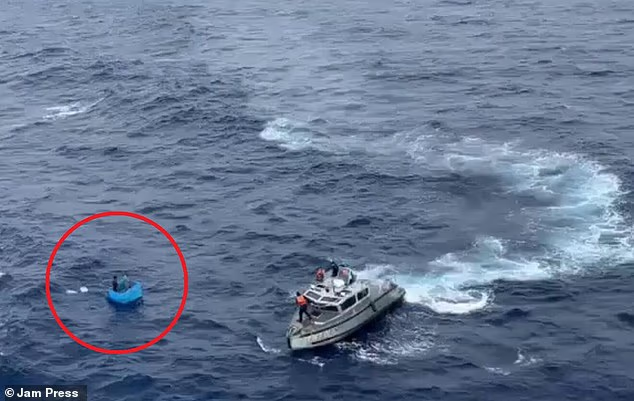
The men were able to survive after climbing into a cool box that was onboard their boat, where they took refuge

The men were able to survive after climbing into a cool box that was onboard their boat, where they took refuge

Advertisement
Naval medical personnel assessed both men before they were transported by helicopter to hospital, where they were treated for severe dehydration

Naval medical personnel assessed both men before they were transported by helicopter to hospital, where they were treated for severe dehydration

Both men were later reunited with their families in Paredon, a coastal village in Chiapas, Mexico

Both men were later reunited with their families in Paredon, a coastal village in Chiapas, Mexico

A Mexican Navy ocean patrol vessel travelled to the area and carried out the rescue, bringing both fishermen aboard. 

Footage of the rescue shows the fishermen in open water, leaning against the sides of the blue cool box as they remain afloat. 

Advertisement

Naval medical personnel assessed both men before they were transported by helicopter to hospital, where they were treated for severe dehydration. 

The pair were later reunited with their families in Paredon, a coastal village in Chiapas, Mexico.

Judith Torres Vera, Chiapas Fisheries and Aquaculture Secretary, confirmed the news of the men’s safe return to land to waiting relatives.

‘We have just been informed that Daniel and José Luis have appeared,’ she said, adding: ‘We are very happy that our colleagues have appeared.’

Advertisement

An investigation into the incident has since been launched, with authorities claiming bad weather and windy conditions caused the boat to drift out to sea.

A statement released by Mexico’s Navy said: ‘Two fishermen who remained adrift on a cooler for five days were located and rescued by naval personnel more than 240 kilometres from the coast of Chiapas.’

It added the coordinated deployment ‘made it possible to expand the search, locate them, bring them to safety and reunite them with their families.’

Advertisement

Advertisement

Source link

Continue Reading

NewsBeat

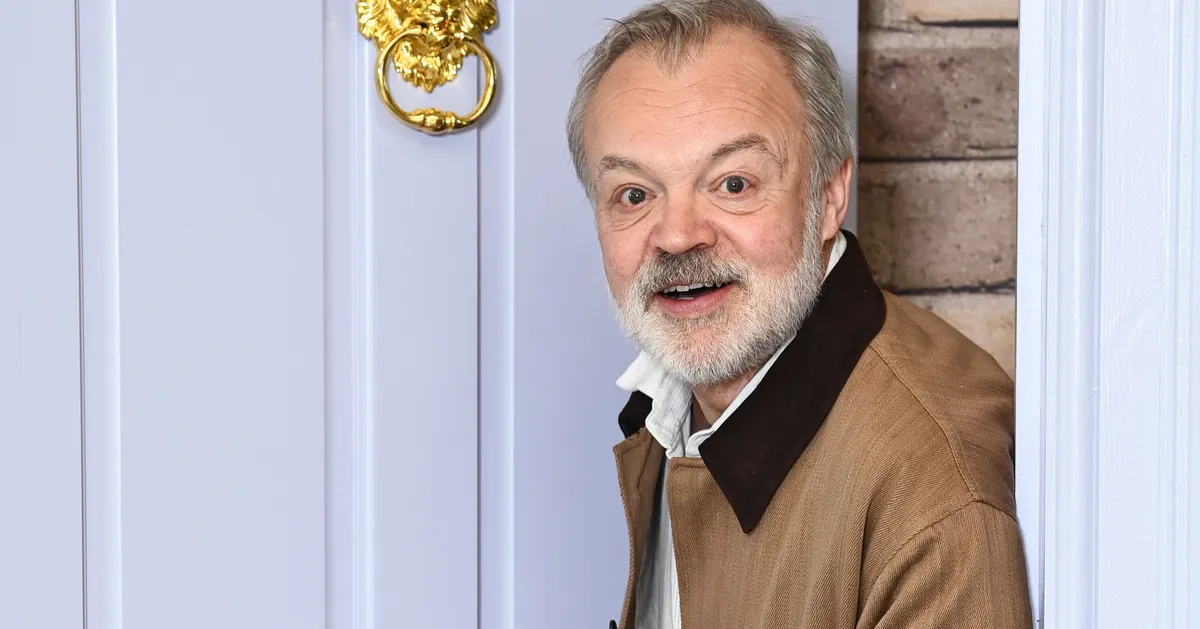
ITV Axes Graham Norton’s The Neighbourhood After One Shaky Season

Published

on

ITV Axes Graham Norton's The Neighbourhood After One Shaky Season

ITV has confirmed that the reality show The Neighbourhood will not be returning for a second season.

When it was first announced last year, the ambitious Graham Norton-fronted series had plenty of hype behind it, pitting different households in a purpose-build cul-de-sac against one another in a variety of different challenges to try and win their share of a hefty cash prize.

The head of entertainment and reality commissioning at ITV, Katie Rawcliffe, has now told Broadcast: “Everything we do at ITV is a risk. Nothing flies under the radar. [The Neighbourhood] was a really exciting, paper format and we obviously were really enthused by it… ultimately it didn’t land in a big enough way.”

Graham Norton pictured on the set of The Neighbourhood

David Fisher/Shutterstock

Advertisement

Upon its release, The Guardian and The Telegraph each gave The Neighbourhood two stars, with the former claiming that Graham was the “tired” show’s only “saving grace”.

Meanwhile, The Times called The Neighbourhood “mediocre”, “derivative”, “bland” and “boring”, maintaining that it “doesn’t come within a country mile of” The Traitors, despite its best efforts.

Despite comparisons with The Traitors, Graham previously insisted that The Neighbourhood stood on its own two feet.

“It properly is a new format,” he told ITV. “It’s not ‘something meets something else’, it’s not, ‘it’s like this, but that’. I really thought, ‘I hadn’t seen this show before’.”

Advertisement

He continued: “It leans into our curiosity about what’s behind closed doors and there’s something really compelling and addictive about seeing the way the existing households interact with each other. I thought, ‘I’d watch that’ – and I’d never want to work on something I wouldn’t watch. I thought, ‘this show would hook me!’.”

Source link

Advertisement
Continue Reading

NewsBeat

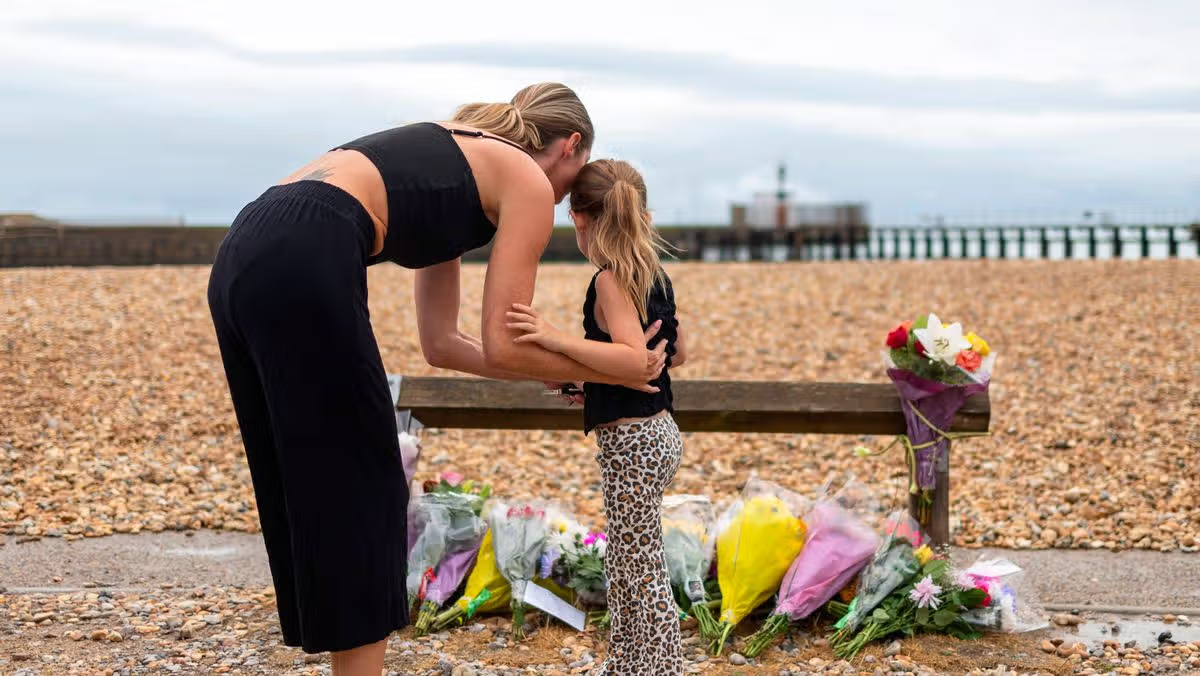
Girl, 6, dies after being pulled from sea alongside three family members

Published

on

Daily Record

Saja El-Khawas, the six-year-old daughter of a Palestinian refugee, has died in hospital, following the deaths of her parents and older sister

A young girl pulled from the sea in West Sussex in an incident that claimed the lives of three of her family members, has now also died.

Saja El-Khawas, six, died on Friday after the deaths of Sara El-Khawas, 14, and her parents Hassan El-Khawas, 55, and Zeina Alayn, 37, in Shoreham-by-Sea on Tuesday afternoon.

Advertisement

Saja had been in hospital in a critical condition since the incident.

Her identity and death were confirmed in a legal notice from solicitors acting on behalf of Guy’s and St Thomas’ NHS Foundation Trust, as well as the Palestinian Forum in Britain.

The Palestinian embassy said Mr El-Khawas was a Palestinian refugee from the Rashidieh Camp in Lebanon.

Rashidieh Camp is on the Mediterranean coast in southern Lebanon and is one of the most populous Palestinian refugee camps in the country.

Advertisement

The older part of the camp was built by the French government in 1936 to accommodate Armenian refugees who fled to Lebanon, while the newer part was built by the United Nations Relief and Works Agency for Palestine Refugees in the Near East in 1963 for Palestine refugees, according to the agency.

It is believed the family travelled from their home in London to visit Shoreham and entered the water from the beach near Shoreham Fort at around 2pm before they got into difficulty.

On Wednesday, Sussex Police said their investigation remains open, but after a review of CCTV footage and initial witness accounts, it is currently thought the deaths were a tragic accident, with no third-party involvement.

Advertisement

Chief Superintendent James Collis said: “The events of Tuesday afternoon are a heartbreaking tragedy which has devastated a family and their friends and had a profound impact on the Shoreham community.”

Ellen Wilkinson School for Girls posted a tribute to Year 8 student Sara following the “tragic incident” during the summer holidays on its website on Thursday.

The school, in the London borough of Ealing, said: “Sara was a sweet girl, well-liked by staff and students and she will be greatly missed.

“Our thoughts and heartfelt condolences are with her family, friends, and all those affected.

“This news will be deeply upsetting for many students, families and staff.”

In a statement on Facebook, the Palestinian embassy said it was “closely monitoring the incident”.

Adnan Hmidan, chairman of the Palestinian Forum in Britain, paid tribute to the family, although his spelling of their name differed from that used by Sussex Police.

He said: “The Palestinian, Arab and wider community in Britain, along with the many friends and supporters of our community, have been deeply shocked and saddened by the tragic incident involving the Khawwas family during a day trip off the coast of Sussex.”

Prime Minister Andy Burnham warned of the dangers of open water swimming after the incident, which he described as “a terrible family tragedy”.

Advertisement

READ MORE: Lyons gang order brutal attacks on senior Daniel hoods as war re-ignites

READ MORE: Celtic pay touching tribute to Thai Tims founder Paul Lennon after tragic death

The family are believed to have entered the water from the south of the 19th century Shoreham Fort, on the west side of the harbour arm.

Video footage showed a number of emergency services searching an area of water near to an arm of the harbour where the River Adur meets the sea.

Advertisement

Ensure our latest stories always appear at the top of your Google Search by making us a Preferred Source. Click here to activate or add us as your Preferred Source in your Google search settings.

Source link

Continue Reading

NewsBeat

Croft Circuit set for packed Battle of Britain race weekend

Published

on

Croft Circuit set for packed Battle of Britain race weekend

The popular fixture, organised by Darlington and District Motor Club, is expected to attract competitors from a range of championships ensuring plenty of variety for fans heading to the North Yorkshire circuit.

Among the classes in action will be the Northern Saloon and Sports Car Championship, which is set to bring a large and competitive grid to Croft.

(Image: Stuart Boulton)

Drivers will contest two races across the weekend as they continue their campaigns in one of the region’s best-supported racing series.

Another championship returning to the track is the Focus Cup, with drivers piloting Ford-Focus models in a pair of closely fought races.

Advertisement

The one-make series is known for producing tight racing and plenty of overtaking opportunities, making it a favourite among spectators.

Visitors will also see competitors travel south from Scotland for a number of races over the two days.

(Image: ANDY FUTERS)

Legends cars, classic sports cars and historic saloons are all set to feature on the timetable, offering a mix of modern and historic machinery.

One of the biggest attractions of the weekend will be the return of sidecar racing.

Advertisement

Crews from British championship competition will tackle the full Croft circuit, providing fans with some of the most dramatic and spectacular racing of the meeting as drivers and passengers work together around the challenging layout.

The weekend will conclude with the battle of Britain trophy race on Sunday afternoon, bringing together competitors from different categories for a special end-of-event contest.

(Image: ANDY FUTERS)

Track activity begins on Saturday morning with practice and qualifying sessions before racing gets underway later in the day.

Sunday’s programme is devoted entirely to racing.

Advertisement

With free parking, free entry for accompanied children aged 15 and under and a  packed schedule on both days, the event is set to offer a family-friendly weekend of motorsport in North Yorkshire.

Source link

Advertisement
Continue Reading

NewsBeat

M6 traffic LIVE as lanes remain closed and long delays continue after lorry blaze

Published

on

Manchester Evening News

There is currently no ETA of when the closure will reopen, according to a National Highways update.

Posting on X, it said: “Currently, all traffic is being diverted off at J18 with this closure remaining in place. There is no eta for reopening with the plan of resurfacing tonight. This is all to be confirmed.

“At the moment, there aren’t any new updates to share regarding this closure. Please keep an eye on our social media channels, as we’ll continue to share any updates there as soon as they become available.”

Advertisement

Source link

Continue Reading

NewsBeat

Bridget Phillipson branded ‘stupid’ by senior Tory after claiming racism and sexism were ‘normal’ in Britain

Published

on

Bridget Phillipson was branded ¿stupid¿ by a top Conservative yesterday amid a furious racism row

Advertisement

Bridget Phillipson was branded ‘stupid’ by a top Conservative yesterday amid a furious racism row.

The former education secretary claimed racism and sexism have become ‘normal’ in Britain thanks to social media.

The minister for women and equalities pointed to Reform UK’s Robert Jenrick and Tory Nick Timothy as proof of this, accusing them of making ‘racist’ remarks in recent years.

Last October Mr Jenrick complained he ‘didn’t see another white face’ during a visit to an area of Birmingham, while Mr Timothy said that a mass Muslim prayer session in Trafalgar Square was an ‘act of domination and division’.

Advertisement

Ms Phillipson told The Guardian: ‘Apparently I’m calling him names when I say that’s racist.

‘I think it is fundamentally racist because I don’t think he would say that about any other group.’

She added: ‘I find it shocking that we hear that from Opposition spokespeople, in a way that I think even five, ten years ago they would have had a second thought about that. It’s become normal.’

But Mr Timothy, Kemi Badenoch’s justice spokesman, branded the Cabinet minister ‘stupid’.

Advertisement

Bridget Phillipson was branded ‘stupid’ by a top Conservative yesterday amid a furious racism row

He said: ‘If Phillipson can identify the racial groups to whom I was racist, she can call me racist. If she can’t, she’ll go on sounding stupid. And I’ll go on saying mass Muslim prayer in public spaces is an act of domination.’

He later told the Daily Mail that Ms Phillipson’s comments serve as a further warning about Labour’s proposals to introduce a new official definition of ‘Islamophobia‘.

Advertisement

It will not be set in law, but free speech campaigners have warned it will lead to a clampdown on freedom of expression.

Mr Timothy said Ms Phillipson had ‘unwittingly demonstrated exactly what we have warned about since Labour first promised an “Islamophobia” definition’.

He added: ‘There is a world of difference between racial identity and religious beliefs.

‘You can’t help being the race you are, but you choose the beliefs you hold. And religious beliefs – like any other ideas – should be scrutinised and challenged and satirised freely.

Advertisement

‘If she can identify the racial groups to whom I have been racist, she is entitled to call me a racist.

‘If she can’t, and just shouts ‘racist’ at political opponents instead of debating them, she is not only proving the limitations of her own mind [but] is proving beyond doubt that this “Islamophobia” definition is wrong, dangerous and must be scrapped.’

Kemi Badenoch's justice spokesman Nick Timothy (pictured in January this year) said Ms Phillipson had 'unwittingly demonstrated exactly what we have warned about since Labour first promised an "Islamophobia" definition'

Kemi Badenoch’s justice spokesman Nick Timothy (pictured in January this year) said Ms Phillipson had ‘unwittingly demonstrated exactly what we have warned about since Labour first promised an “Islamophobia” definition’

Mr Timothy added: ‘I will go on saying exactly what I think – and so should everyone else.’

Advertisement

Ms Phillipson, who was demoted from her previous role as education secretary in new Prime Minister Andy Burnham’s reshuffle, added that she is worried ‘about our sons and what they’re being exposed to, especially online and the extent to which we have this whole industry that’s been built up on exploiting grievance’.

She added: ‘Things that not very long ago felt totally unacceptable are becoming normal.

‘And I think we’re seeing that in terms of attitudes towards women, and I think we see that in terms of attitudes around racism.’

Advertisement

Advertisement

Source link

Continue Reading

NewsBeat

Edgware Road incident – live: Station closed as police close off huge London area

Published

on

Daily Mirror

A huge police cordon is in place in Edgware Road, north-west London, with the Tube station on the street closed as emergency services deal with a serious incident.

Videos shared on social media show multiple police vehicles and other emergency crews outside the underground station, while part of the street has been closed off.

Transport for London (TfL) says on its website: “This station is closed while police respond to an incident. Tickets are being accepted on London Buses.”

Advertisement

Closures are in place on multiple roads, including Marylebone Flyover, Marylebone Road and Edgware Road.

Source link

Continue Reading

NewsBeat

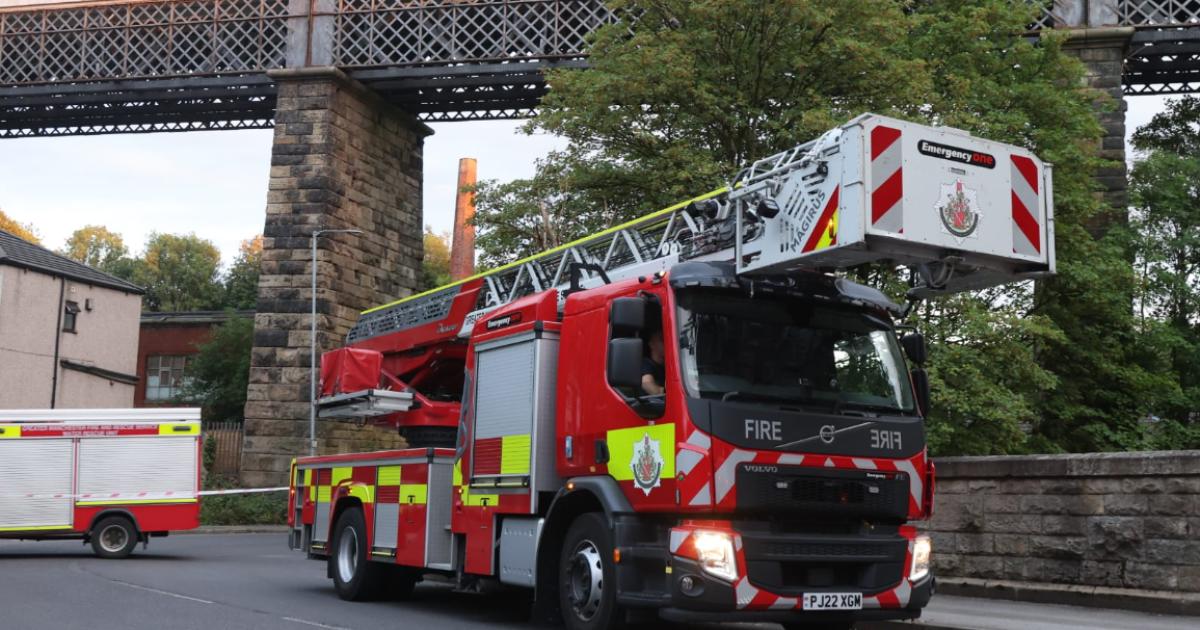
Man taken to hospital after incident in Darcy Lever bridge

Published

on

Man taken to hospital after incident in Darcy Lever bridge

The incident began around 7pm, on Radcliffe Road, just under Darcy Lever Viaduct, with police, fire services, and ambulances in attendance.

The incident had been cleared by around 8:15pm, with one man being taken to hospital via ambulance.

(Image: Phil Taylor)

A spokesperson for Greater Manchester Fire and Rescue Service said: “Just after 7pm this evening  (Friday 21st August), three fire engines from Eccles and Farnworth fire station were called to reports of a person on a former railway bridge near Radcliffe Road, Bolton.

 “Crews arrived quickly at the scene. Firefighters worked with colleagues from Greater Manchester Police and North West Ambulance service to guide the person to safety.

Advertisement

(Image: Phil Taylor)

 “Firefighters were in attendance for around forty minutes.”

A section of Radcliffe Road was cordoned off for the duration of the incident, preventing drivers from getting through.

Drivers could go no further than Woodside Place, essentially blocking access to Raikes Road for eastbound travellers.

(Image: Phil Taylor)

Drivers travelling west down Radcliffe Road were prevented from travelling further than the railway viaduct.

Advertisement

Greater Manchester Police have also been contacted for comment.

When life is difficult, Samaritans are here to listen – day or night, 365 days a year. You can call them for free on 116 123 or visit samaritans.org.

Source link

Advertisement
Continue Reading

Trending

Copyright © 2025