





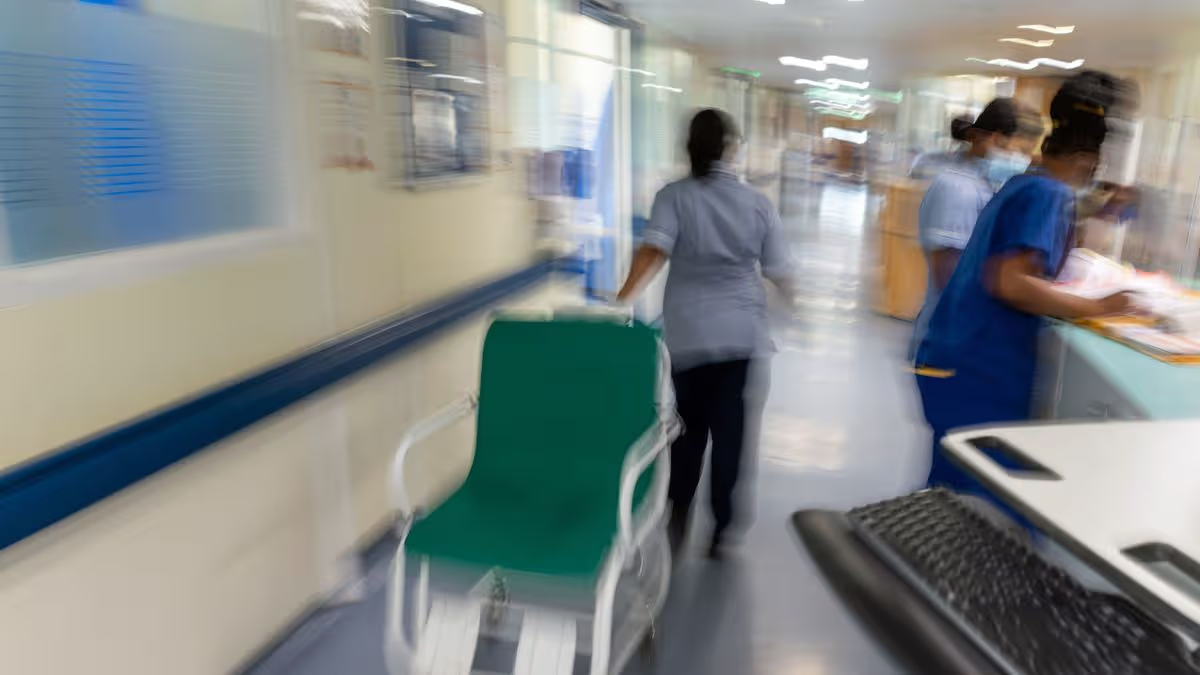
The Royal College of Radiologists (RCR) has demanded action to address “extremely dangerous” delays as research revealed eight in 10 radiology leaders and half of cancer leaders believe staff shortages are causing patients’ conditions to get worse
A staffing crisis is sparking “extremely dangerous” delays to diagnosis and cancer care in the UK, doctors say.
The Royal College of Radiologists (RCR) said the NHS needs more workers if patients are to avoid harm while on lengthy waiting lists. The RCR surveyed clinical directors at all 159 radiology departments in the UK, together with every head of service at all 60 cancer centres in the UK.
It found eight in 10 radiology leaders and half of cancer leaders believe staff shortages are causing patients’ conditions to worsen, and people are facing delays in being diagnosed. Nine in 10 cancer leaders said they had seen delays to patients starting radiotherapy or drug-based treatment such as chemotherapy as a result of staff shortages.
The RCR found that workforce shortages are worse in deprived and rural areas of the country while recruitment freezes affecting radiology departments and cancer centres everywhere have doubled in a year. One cancer centre lead said: “[Staff shortages are causing] delays in patients starting both chemotherapy and radiotherapy treatment.”
Another said: “Workforce shortages in diagnostics especially radiology and pathology are critical and lengthening pathways which is leading to patient harm.” One more said: “Significant delays in [scan] acquisition and reporting of a wide range of patients have negatively impacted prognosis, potential treatment options and resulted in harm.”
According to the RCR, the UK has 32 per cent – more than 2,300 – fewer radiologists and 17 per cent – more than 230 – fewer clinical oncologists than it needs to meet current demand. These workforce shortfalls have risen since 2024, from 29 per cent to 32 per cent for radiologists and 15 per cent to 17 per cent for clinical oncologists, with the problem set to get worse, it said.
The RCR’s report warned that demand for scans is growing at more than twice the rate of radiologists to interpret them while staff are also retiring. Despite this, the RCR said recruitment freezes that stop hospitals from hiring the radiologists and oncologists they need have doubled in a year.
A ban on hiring permanent staff also means hospitals fill the gaps with expensive agency staff and paying overtime. The RCR said that when it comes to radiology, the UK spent a record £362 million in 2025 on outsourcing, paid overtime, and locums to plug gaps.
Leaders also raised concerns about the quality of work when it is outsourced, with scans needing further checks. A radiology clinical director said: “Workforce shortages delay report turnaround time, impacting on patient care. Increasingly, the shortfall is met with outsourcing which reduces quality of patient reports and increases pressure on local radiologists for second review.”
Dr Stephen Harden, president of the RCR, said: “Delays to diagnosis and cancer treatment are extremely dangerous, particularly in deprived and rural communities where shortages are worst. Despite our members’ extraordinary efforts, we simply don’t have enough clinical radiologists and clinical oncologists to meet rising demand.
“Recruitment freezes and growing reliance on outsourcing are making the situation worse not better. Alarm bells should be ringing for governments across the UK. Without urgent action to train, recruit and retain more doctors, more patients will suffer.”
Genevieve Edwards, chief executive of Bowel Cancer UK, said: “Behind every delayed test result is a real person lying awake at 3am waiting for news that could change everything. Too many people affected by bowel cancer are already waiting far too long for tests, scans and answers, and workforce shortages are making it worse. That weight of uncertainty is something no one should have to carry longer than necessary.”
Melanie Sturtevant, associate director of policy, evidence and influencing at Breast Cancer Now, said: “With a significant proportion of the specialist breast cancer workforce approaching retirement within five years, urgent action must be taken to stop the situation deteriorating further. NHS staff are working tirelessly under intense pressure but they cannot continue to deliver the care patients need without workforce capacity that matches rising demand.”
Last week, NHS figures for England showed 75.9 pr cent of patients in England urgently referred for suspected cancer were diagnosed or had cancer ruled out within 28 days in April. This is down from 79.4 per cent in March but is above the current target of 75 per cent.
The proportion of patients who began their first definitive treatment for cancer in April within 62 days of an urgent referral or consultant upgrade was 70.0 per cent, down from 72.8 per cent in March. The Government and NHS England had set a target of March 2026 for this figure to reach 75 per cent.
Juliet Bouverie, chief executive of the Stroke Association, said: “The shortage of radiologists is affecting people with a variety of health conditions, not just those with cancer. Stroke patients who could benefit from thrombectomy, a procedure which can dramatically reduce lasting disabilities for the 240 people who survive stroke every day in the UK, are also missing out.”
















































You must be logged in to post a comment Login