


Connect with us
DAPA Banner
DAPA Coin
DAPA
COIN PAYMENT ASSET
PRIVACY · BLOCKDAG · HOMOMORPHIC ENCRYPTION · RUST
ElGamal Encrypted MINE DAPA
🚫 GENESIS SOLD OUT
DAPAPAY COMING

NewsBeat

York Castle Museum launches summer games programme

Published

on

York Castle Museum launches summer games programme

Visitors can enjoy mini tennis tournaments in the Mill Yard, using the popular ‘swingball’ game, which was invented in the 1960s.

The museum is encouraging families to take part in competitions and relive the 2026 Wimbledon season.

Visitors can enjoy mini tennis tournaments in the Mill Yard, using the popular ‘swingball’ game (Image: Gareth Buddo, Furmoto Photography)

Other outdoor activities include space hoppers, hobby horses, and skipping ropes.

These games aim to provide summer entertainment for all ages, with York Castle Museum’s social media showcasing tennis and the 1966 World Cup win.

Advertisement

Indoors, there are traditional games like dominoes and Cat’s Cradle in the ‘Swinging Sixties’ section, along with vintage automata machines.

Visitors can also engage with animatronic fairy tale scenes, visit a fortune teller, and see a tiger pouncing on Queen Victoria.

These activities offer a mix of nostalgia for older visitors and discovery for the younger ones, ensuring everyone finds something to enjoy.

The games aim to provide summer entertainment for all ages (Image: Hewitt and Walker)

The museum is encouraging visitors to book tickets on its website to secure a summer filled with fun and friendly competition.

Advertisement

The programme of activities is designed to cater to all weather conditions, promising a variety of entertainment options for everyone.

Tickets can be booked via York Castle Museum’s website.

Source link

Advertisement
Continue Reading
Click to comment

You must be logged in to post a comment Login

Leave a Reply

NewsBeat

Belgian Grand Prix result: Kimi Antonelli wins to extend title lead after George Russell crashes out on first lap

Published

on

Mercedes' Kimi Antonelli with Ferrari's Charles Leclerc right behind during the Belgian Grand Prix

Antonelli initially looked set to deliver on the pre-race expectations and dominate comfortably at the front following his impressive pole position on Saturday.

Clever driving on the first lap solved his concerns about being passed on the run up the hill to Les Combes, when he let Verstappen past him into Eau Rouge and then slipstreamed back into the lead up the following Kemmel straight.

Behind him, Russell went into Les Combes side by side with Hamilton, trying to pass the Ferrari around the outside.

Russell was ahead going into the corner, but a wobble from Hamilton caused by the airflow to his front wing being disrupted by the fighting Antonelli, Verstappen and Leclerc in front of him, meant he tagged the Mercedes, which spun into the gravel trap and into retirement.

Advertisement

An emotional Russell said: “I came out of Turn One, for whatever reason I was 30-40% down on my battery. I just totally got swamped up by three cars.

“Incident with Lewis, I have not really seen it. But I thought probably a racing incident. I am not going to blame Lewis. If things were normal, I would have been battling with Lewis, battling with Kimi and Max.

“It is one thing after another, after another, after another. Not good enough on all regards so try and reset again. I’ve done it enough times this season and I’ll see what we can do.”

Antonelli measured his pace carefully in the opening stint, looking after his tyres, until being told to speed up as his pit stop loomed.

Advertisement

Over the course of lap 17, he demonstrated how much pace he had in hand when he extended his lead over Verstappen from 2.3 seconds to 3.5, before pitting on the following lap.

Two laps later, though, a virtual safety car period for some debris on track gave Leclerc a cheap pit stop – it costs nearly half as much race time to stop under a safety car than under green-flag conditions – and Leclerc was able to stop for fresh tyres and rejoin still in front of Antonelli.

Norris by this point was in the lead, but Leclerc soon passed the McLaren on lap 26, and it was now a question as to how long it would take Antonelli to close the three-second gap to the Ferrari.

Antonelli was on his tail eight laps later and passed the Ferrari on the Kemmel straight on lap 34 of 44.

Advertisement

Leclerc was able to stay with Antonelli, whose lead never went over two seconds, and there was extra pressure from the fact the Mercedes driver was on the cusp of a five-second penalty for exceeding track limits too many times.

But Antonelli calmly kept things under control to cross the line just under two seconds ahead and retake control of the championship.

It was his first win since Monaco in early June, after a retirement in Spain, a third in Austria and a finish out of the points at the British Grand Prix.

Source link

Advertisement
Continue Reading

NewsBeat

Incredible phenomenon that sees dementia patients suddenly regain their memory and personality shortly before they die

Published

on

German biologist Dr. Michael Nahm helped introduce the scientific term 'terminal lucidity' in 2009 after uncovering decades of historical medical reports describing similar end-of-life experiences

For nearly five years, an elderly woman with advanced Alzheimer’s disease hadn’t spoken.

Then, one afternoon, while lying in bed surrounded by her two daughters and granddaughter, she suddenly became lucid.

For almost two hours, she carried on what witnesses described as a perfectly ordinary conversation. She spoke openly about her fear of dying, discussed disagreements she had with the church and asked after relatives she hadn’t recognized in years.

Later that evening, she died.

Advertisement

Her story was extraordinary. But it was far from unique.

For generations, caregivers, doctors and hospice workers have described similarly bewildering moments: people who appeared lost to dementia suddenly recognizing loved ones, recalling long–forgotten memories and speaking with remarkable clarity in the final hours or days of life.

The episodes were deeply meaningful to the families who witnessed them, yet they occupied an unusual place in medicine. Physicians occasionally documented them. Hospice nurses recognized them. Caregivers quietly shared stories with one another.

Despite appearing in medical literature for more than a century, however, the phenomenon had no agreed–upon name, no standardized definition and almost no scientific research devoted to understanding why it happened.

Advertisement

That changed in 2009, when German biologist Dr Michael Nahm and psychiatrist Dr. Bruce Greyson introduced the scientific term terminal lucidity, giving researchers a common language to investigate one of the most mysterious experiences reported at the end of life.

More than 15 years later, researchers are still trying to understand how people who appear lost to advanced dementia can suddenly recognize loved ones, recall long–forgotten memories and hold coherent conversations shortly before death. 

German biologist Dr. Michael Nahm helped introduce the scientific term ‘terminal lucidity’ in 2009 after uncovering decades of historical medical reports describing similar end–of–life experiences

Advertisement
People with advanced Alzheimer's disease have occasionally been reported to suddenly recognize loved ones, recall long-forgotten memories and hold coherent conversations shortly before death in a phenomenon known as terminal lucidity

People with advanced Alzheimer’s disease have occasionally been reported to suddenly recognize loved ones, recall long–forgotten memories and hold coherent conversations shortly before death in a phenomenon known as terminal lucidity

Searching for rare exceptions 

For Nahm, the journey into terminal lucidity didn’t begin in medicine.

Trained as a biologist, his work has long centered on life’s biggest unanswered questions: how consciousness arises, how life began and what happens at the boundaries of human experience.

‘It’s not the conventional stuff that teaches you the most important issues,’ Nahm said. ‘It’s those rare exceptions from the rule where you may find some windows opening into previously under–researched areas.’

Advertisement

That fascination with life’s outliers eventually led him to nineteenth–century medical journals, where he kept encountering the same puzzling accounts.

Again and again, physicians described dying patients who unexpectedly regained mental clarity shortly before death. Some recognized loved ones they had long forgotten. Others carried on coherent conversations after months or even years of silence.

The reports stretched across decades and countries, yet no one had attempted to study them systematically.

‘People report about this amazing phenomenon,’ Nahm said. ‘But there’s no name and no research on it.’

Advertisement

That realization prompted Nahm and Greyson to coin the term terminal lucidity, giving researchers a shared language to investigate a phenomenon that had long existed only in scattered case reports.

Researchers hope studying terminal lucidity could reveal new clues about memory, consciousness and future dementia treatments

Researchers hope studying terminal lucidity could reveal new clues about memory, consciousness and future dementia treatments

A distinction that matters 

As interest in the phenomenon has grown, one misconception has continued to frustrate Nahm.

Researchers often use the terms terminal lucidity and paradoxical lucidity interchangeably.

Advertisement

He argues they are not the same.

Terminal lucidity refers to when an episode occurs: an unexpected return of mental clarity shortly before death.

Paradoxical lucidity refers to who experiences it: someone whose brain has been so severely damaged that coherent thought should, according to current medical understanding, be impossible.

‘Terminal lucidity is terminal because it’s always related to dying,’ Nahm explained. ‘Paradoxical lucidity is called paradoxical because it always occurs in people with a severely damaged brain.’

Advertisement

The distinction may sound technical, but Nahm said he believes it is essential if researchers hope to understand what is actually happening.

The two sometimes overlap. Someone with advanced Alzheimer’s disease who suddenly becomes lucid in the final hours of life may experience both terminal and paradoxical lucidity.

But they are not synonymous.

A patient with severe dementia who becomes lucid months before death would be experiencing paradoxical lucidity, not terminal lucidity.

Advertisement

Conversely, someone dying of cancer without structural brain damage who suddenly becomes mentally clear shortly before death would experience terminal lucidity, but not paradoxical lucidity.

Nahm later formalized that distinction in a 2022 paper, arguing that researchers should reserve the terms for separate concepts to avoid confusion as the field grows.

‘It’s really important to distinguish,’ he said.

The phenomenon remained largely unexplained for more than a century before researchers began formally studying it in 2009

The phenomenon remained largely unexplained for more than a century before researchers began formally studying it in 2009

Advertisement

More than just a ‘good day’ 

One question families often ask is whether terminal lucidity is simply a particularly good day.

Nahm says the difference is usually unmistakable.

Unlike the natural fluctuations often seen in Alzheimer’s disease, terminal lucidity is sudden, dramatic and unexpected.

‘It’s really pronounced,’ he said. ‘People are really going, ‘What’s happening now? This is unusual.”

Advertisement

Some families are so astonished that they instinctively begin recording the moment on their phones.

Even so, defining exactly what separates an ordinary cognitive fluctuation from a genuine episode of terminal lucidity remains one of the field’s biggest challenges.

There is still no universally accepted medical definition or diagnostic criteria.

Instead, Nahm said he believes researchers need something similar to the standardized scales used to study near–death experiences: a scoring system that could objectively evaluate the characteristics of each episode and help distinguish true terminal lucidity from routine cognitive fluctuations.

Advertisement

‘Scientists always like to have these boxes,’ he said. ‘But that’s often not how real life works.’

Could terminal lucidity unlock new treatments? 

For Nahm, the scientific importance of terminal lucidity extends far beyond satisfying curiosity.

If researchers can determine what briefly restores cognition at the end of life, they may uncover entirely new ways of treating dementia.

One possibility, he said, is that the memories aren’t actually gone.

Advertisement

‘They may still be there,’ Nahm said, ‘even though they’re usually not accessible.’

If scientists can identify what temporarily restores access to those memories, whether through changes in brain activity, electrical signaling or another neurological process, they may one day be able to replicate it.

‘If we could find this new kind of therapy,’ he said, ‘this would be very, very important.’

Not all neurologists, however, are convinced terminal lucidity points toward an entirely new understanding of dementia.

Advertisement

Such a breakthrough could transform dementia care.

But before scientists can develop new treatments, they first have to answer a more fundamental question: what is happening inside the brain during these extraordinary moments? 

Researchers say the phenomenon is prompting doctors and caregivers to rethink how they treat people with advanced dementia

Researchers say the phenomenon is prompting doctors and caregivers to rethink how they treat people with advanced dementia

A possible explanation inside the brain 

Dr. Ronald Petersen, a Mayo Clinic neurologist who served as director of the Mayo Clinic Alzheimer’s Disease Research Center from 2009 to 2025 and now leads the Mayo Clinic Study of Aging, said he believes the answer may lie not in reversing Alzheimer’s disease but in the brain’s arousal systems – the networks responsible for alertness, attention and consciousness. 

Advertisement

‘Do I have an explanation? No. Do I have the answer? No,’ Petersen said.

Rather than viewing the episodes as entirely separate from known brain function, Petersen said he believes they may be linked to the same brain mechanisms behind the cognitive fluctuations seen in some forms of dementia.

Petersen explained that people with dementia with Lewy bodies – a type of dementia that causes dramatic swings in alertness, attention and thinking – can appear profoundly confused one day and much more mentally present the next.

‘Somebody [with Lewy bodies] will be quite confused one day… and then the next day look pretty normal. I think, from a physiologic anatomic perspective, it pertains to those arousal mechanisms in the brain that are up and down. When they get fired up, then the person’s brain can function relatively normally.’

Advertisement

That theory may also explain why some patients appear able to recall long–forgotten memories.

Petersen said memories are not stored in a single location but across vast networks throughout the brain.

‘They’re not like a book in a library on a shelf,’ he said.

Instead, memories formed decades before Alzheimer’s damaged the brain may still exist but become difficult to retrieve.

Advertisement

‘Something 20 or 30 years ago, when your brain was working well, those may very well be accessible,’ Petersen said. ‘If those arousal mechanisms are reactivated, they may be able to access some of these memory networks that are still in place.’

Petersen cautioned that the most dramatic reports remain rare and said families’ interpretations may not always match a physician’s assessment.

‘With all due respect, there’s some subjective interpretation of these events by the observers too,’ he said.

Dr Ronald Petersen said he believes terminal lucidity may be linked to temporary changes in the brain's arousal systems rather than a reversal of Alzheimer's disease

Dr Ronald Petersen said he believes terminal lucidity may be linked to temporary changes in the brain’s arousal systems rather than a reversal of Alzheimer’s disease

Advertisement

The Case He Never Forgot 

Among the hundreds of cases Nahm has studied, one has remained particularly vivid.

It involved the grandmother of a physician friend who had advanced Alzheimer’s disease and had not spoken for nearly five years.

Then, one afternoon, while lying in bed surrounded by her two daughters and granddaughter, she suddenly became lucid.

For nearly two hours, she carried on what Nahm described as a perfectly ordinary conversation. She spoke about her fear of dying, discussed disagreements she had with the church and asked after relatives she had not recognized in years.

Advertisement

The sudden transformation was so startling that one of her granddaughters ran from the room in fear.

Later that evening, the woman quietly died.

Nahm says stories like hers illustrate why families should know terminal lucidity exists.

Without that knowledge, many interpret the sudden improvement as recovery.

Advertisement

‘They have the false hope,’ he said. ‘Now everything is getting better.’

New research suggests lucid episodes don't always signal death and can sometimes occur months before a patient dies (Pictured: Mayo Clinic)

New research suggests lucid episodes don’t always signal death and can sometimes occur months before a patient dies (Pictured: Mayo Clinic)

Not always a sign of imminent death 

Whether these episodes are actually signs that death is imminent, however, has become one of the biggest questions facing researchers.

Dr Joan Griffin, a social and behavioral scientist at the Mayo Clinic, has spent years interviewing caregivers who witnessed lucid episodes in loved ones with Alzheimer’s disease.

Advertisement

While Nahm helped define terminal lucidity, Griffin has focused on understanding how often these episodes occur, what they look like and what they mean for the families who experience them.

Her findings have challenged one of the field’s longest–held assumptions.

‘I don’t think that they are necessarily harbingers for death,’ Griffin said. ‘Our data is pretty robust now to show that they’re happening months, sometimes six months, sometimes two years before they actually die.’

Rather than one single phenomenon, Griffin found that lucid episodes appear in many different forms.

Advertisement

Some occur shortly before death.

Others happen long beforehand.

Some last only a few minutes.

Others continue for hours, and in rare cases even days.

Advertisement

‘What surprised me is that creating these different types of episodes—it’s not just one,’ she said. ‘It’s not sort of a universal one type of experience. It’s pretty heterogeneous.’

Her team also found that many episodes coincided with family visits, holidays or familiar music.

Griffin is careful not to call those moments triggers.

Relatives may simply have been paying closer attention.

Advertisement

Researchers still cannot predict when a lucid episode will occur, why one patient experiences one while another never does, or what biological process causes it.

Mayo Clinic researcher Dr Joan Griffin studies lucid episodes in Alzheimer's patients and their lasting impact on caregivers and families

Mayo Clinic researcher Dr Joan Griffin studies lucid episodes in Alzheimer’s patients and their lasting impact on caregivers and families

When the researcher became the witness 

For Griffin, the work eventually became deeply personal.

Her father–in–law had lived with Alzheimer’s disease for roughly a decade.

Advertisement

Although he could still speak, he had not recognized family members by name for years and relied on a wheelchair to move around.

Then, during a summer visit from Griffin’s brother–in–law, something remarkable happened.

The 97–year–old stood up, grabbed his walker and walked inside the house.

‘He looked at my brother–in–law and said, ‘Oh, hey Bob, what are you doing here?” Griffin recalled.

Advertisement

The family managed to capture the moment on video.

‘I couldn’t believe it,’ she said. ‘I was in the middle of my research, and I remember thinking, ‘I can’t believe I’m witnessing what I study.” 

For many caregivers, Griffin said, those moments become some of their most treasured memories.

‘They’re like, ‘I got them back. They told me they loved me. They expressed joy,” she said. ‘For the most part, they are extremely beautiful stories and very indelible.’

Advertisement

But they can also raise painful questions.

If someone who appeared unable to communicate suddenly recognizes family and expresses coherent thoughts, relatives often wonder whether the person they loved had somehow remained present throughout the disease.

Some feel guilty that they did not spend more time talking to them.

Others wonder whether they should have played more music or recreated whatever circumstances surrounded the episode.

Advertisement

The moments rarely last.

‘They typically return to their baseline state that they were before the episode started,’ Griffin said, ‘and sometimes a little worse because it’s exhausting.’

Her team is now studying whether those experiences make grief easier or more complicated after a loved one dies.

The answer, she suspects, depends on the family.

Advertisement
For many families, these brief moments of clarity provide one last opportunity to reconnect, express love and say goodbye before a loved one dies

For many families, these brief moments of clarity provide one last opportunity to reconnect, express love and say goodbye before a loved one dies

Changing how patients are treated 

Even without understanding why lucid episodes occur, Griffin said she believes the research has already changed the way caregivers and healthcare professionals should think about people living with advanced dementia.

‘If these episodes can happen, how would you actually treat people differently?’ she said. ‘We have to be able to maintain the dignity and humanity of people throughout their entire illness.’

That means resisting the temptation to talk over patients, ignore them or assume they cannot understand what is happening around them.

Advertisement

‘Don’t forget they’re in the room,’ Griffin said. ‘Because you just don’t know what’s going on.’

Nahm hopes the expanding field will eventually answer the scientific questions that first drew him to the phenomenon.

Although terminal lucidity first came to prominence through Alzheimer’s disease, researchers have since documented similar episodes in people with strokes, brain tumors, psychiatric illnesses and other neurological conditions.

More recent reports have also described cases in children, suggesting the phenomenon may be far broader than originally believed.

Advertisement

‘What I appreciate a lot,’ Nahm said, ‘is the dimension of how broad the phenomenon is.’

When Nahm helped introduce the term terminal lucidity in 2009, he never imagined the subject would become an international area of research.

Today, neurologists, dementia specialists, hospice researchers and caregivers are all contributing to a field that barely existed two decades ago.

The reaction he hears most often remains remarkably simple.

Advertisement

‘They say, ‘I didn’t know there’s a name for it,” Nahm said. ”I didn’t know there’s research on this.”


Source link

Continue Reading

NewsBeat

One of Cambridgeshire’s least-visited nature spots filled with rare wildlife

Published

on

Cambridgeshire Live

The nature reserve is a quieter place to enjoy a country stroll

Cambridgeshire is full of natural beauty spots. They make for the perfect places to walk around and soak up wildlife.

Advertisement

There are many in Cambridgeshire, some more visited than others. One that is visited the least is Chippenham Fen near Newmarket.

Chippenham Fen is made of wetland habitats that stretch across 112 hectares. Compared to other parts of the Cambridgeshire fens that are on flat land, Chippenham Fen is 12 metres above sea level and surrounded by higher farmland. The nature reserve is more unique as it is full of a range of “rare” wildlife.

The reserve is home to Saw Sedge beds, which are tall triangular-stemmed plants with serrated leaves. Chippenham Fen has several of these plants, which are considered to be rare in Europe.

Then there are the wet meadows which are filled with purple moor grass and lots of flowers. This type of meadow is also considered to be rare in Europe.

Advertisement

Among the rare forms of wildlife, are several hundred different breeds of moths, including the rare Silver-barred moth. The fen is considered a more peaceful place to walk and offers some beautiful views across the hundreds of acres.

To visit the reserve, you do need a permit. However, there is a public path that runs through the reserve. People must stick to the path whilst walking through the reserve. The site has no dedicated parking however, there is on-street parking within walking distance of the reserve in Fordham and Chippenham.

Source link

Advertisement
Continue Reading

NewsBeat

Woman dies in hospital days after being found unresponsive in Bangor

Published

on

Belfast Live

A 54-year-old man has been arrested and bailed as part of the investigation into her death

A woman has died in hospital days after being found unresponsive at a property in Co Down.

Police say an investigation has been launched into the death of the 43-year-old woman who died on Friday, July 18. She had been found unresponsive at a property in the Skipperstone Street area of Bangor at 2am on Tuesday, July 14.

A 54-year-old man has been arrested as part of the investigation and has been released on bail pending further enquiries.

Advertisement

In a statement to Belfast Live, a PSNI spokesperson said: “Detectives from the Police Service of Northern Ireland’s Major Investigation Team are investigating the sudden death of a woman.

“On Tuesday 14th July, Police were called to a property in the Skipperstone Street area of Bangor at approximately 2am, where a woman aged 43 was found unresponsive.

“Despite hospital treatment, the woman sadly passed away on the evening of Friday 18th July. A 54-year-old man who was arrested in connection to the investigation on Tuesday 14 July, has since been released on bail pending further enquiries.

“Enquiries are ongoing and a post-mortem examination will take place in due course.”

Advertisement

For all the latest news, visit the Belfast Live homepage here and sign up to our daily newsletter.

Source link

Continue Reading

NewsBeat

‘Who is D nexT one?’: Chilling Iran billboard fuels conspiracy theories over death of Lindsey Graham

Published

on

Iranian billboards have fueled conspiracy theories about Senator Lindsey Graham's death and a possible Donald Trump assassination plan

Iran has taunted the US with chilling billboards that have fueled conspiracy theories about Senator Lindsey Graham‘s death and hinted at a possible assassination plot against President Donald Trump

A red billboard popped up in Valiasr Square in Tehran this week with an eerie message reading: ‘Who is D nexT one? #lindseygraham.’ 

It appeared to hint that Trump, 80, is Tehran’s next target as it capitalized his initials in the billboard’s question. 

Another billboard featuring the US president lying in a coffin was also seen. It reportedly reads in Persian: ‘We will kill Trump.’  

Advertisement

These aren’t the first billboards to be seen in the country, as earlier this week a different display showed Trump and his family behind US flag-draped coffins in Palestine Square in Iran, which appeared after American missiles struck Iranian bridges, railways, and water facilities.  

The newest billboards have also fueled conspiracy theories that the Middle Eastern country may have been involved in Graham’s mysterious death at the age of 71 last weekend, as the politician was in Ukraine just days before, leading people to speculate Tehran may have orchestrated it. 

There has been no confirmation or evidence suggesting Iran killed Graham.  

Prior to his death, the South Carolina senator had visited Kyiv and spoke with Trump the night before. 

Advertisement

Iranian billboards have fueled conspiracy theories about Senator Lindsey Graham’s death and a possible Donald Trump assassination plan 

A red billboard in Valiasr Square in Tehran read: 'Who is D nexT one? #lindseygraham.' It highlights Trump's initials

A red billboard in Valiasr Square in Tehran read: ‘Who is D nexT one? #lindseygraham.’ It highlights Trump’s initials

A different billboard showed Trump in a coffin. It Persian, the billboard reportedly reads: 'We will kill Trump'

A different billboard showed Trump in a coffin. It Persian, the billboard reportedly reads: ‘We will kill Trump’ 

Advertisement

An unidentified person who spoke with Graham in the moments after told Axios he complained that he was feeling unwell.

When the individual urged Graham to seek medical attention immediately, the senator said he would do so on Sunday morning after his scheduled appearance on NBC’s Meet the Press.

He then joked: ‘I can’t die now. I still need to do the Russian sanctions, get Iran sorted out, and do Israeli-Saudi normalization,’ according to the outlet.

But just a few hours after making the quip on July 11, the senator was seen lying on a gurney as first responders attempted life-saving measures in pictures obtained by TMZ.

Advertisement

He appeared to be intubated as EMTs pushed the gurney into a nearby ambulance that was headed for George Washington University Hospital.

Authorities first received a 911 call about a ‘cardiac arrest’ at Graham’s home at around 8.30pm that night, according to multiple reports. Hordes of first responders were then seen descending on the street outside Graham’s house.

Just about 25 minutes after the call, first responders had started CPR as the senator suffered from cardiac arrest, according to police scanner audio obtained by The Washington Post.

Then, early on July 12, Graham’s office announced he had ‘passed away from a brief and sudden illness.’

Advertisement
The new billboards has fueled conspiracy theories that Iran was involved with Graham's death as he was calling for sanctions against the country and was in Ukraine days before passing

The new billboards has fueled conspiracy theories that Iran was involved with Graham’s death as he was calling for sanctions against the country and was in Ukraine days before passing 

On Sunday, Trump called for Iran to added to the Russian Sanctions Bill in Graham's honor

On Sunday, Trump called for Iran to added to the Russian Sanctions Bill in Graham’s honor 

His cause of death has since been revealed to be ‘aortic dissection due to arteriosclerotic cardiovascular disease.’

The Mayo Clinic defines an aortic dissection as a tear in the inner layer of the aorta, the body’s main artery. It can be fatal if blood rushes through the tear. In Graham’s case, plaque buildup on his heart weakened the aortic walls, causing a tear. 

Advertisement

After the shocking new advertisements and Graham’s death, Trump took to Truth Social early Sunday morning to call for additional measures to be taken against Iran in the senator’s name. 

‘Republicans should add Iran to the Russian Sanctions Bill. That’s what Lindsey wanted to do, and it was going to happen. IMPORTANT!!!’ he wrote. 

It is unclear who is behind the Iranian billboards. The Daily Mail has reached out to the White House for comment. 

Iranian officials are also now urging people to stay away from US military bases in the Middle East. 

Advertisement

‘In response to US acts of aggression and threats from terrorist groups, Iran has launched missile strikes targeting Sulaymaniyah (Iraq) and Bahrain,’ the Islamic Republic of Iran Broadcasting said on X. 

‘People should stay away from US bases.’ 

Advertisement
Iran's new leader, Ayatollah Mojtaba Khamenei, said he would seek vengeance against the US and said America would face 'unforgettable lessons'

Iran’s new leader, Ayatollah Mojtaba Khamenei, said he would seek vengeance against the US and said America would face ‘unforgettable lessons’ 

Iran’s new leader, Ayatollah Mojtaba Khamenei, also took to X to call out Trump, writing: ‘Now that the American enemy seeks to ignite war and endure heavier costs, it should know that the Iranian nation and the Resistance Front have unforgettable lessons in store for it.’ 

Khamenei also called Trump the ‘Great Satan.’ 

‘Today, the Great Satan has once again revealed its true, unmasked face, so that this dark episode of criminality and broken promises serves as yet another indisputable testament to the US’s dishonesty, irrationality, unreliability, and malicious nature,’ the leader wrote on X. 

Advertisement

‘Coercion, totalitarianism, and brutality are inseparable components of the US creed and doctrine.

‘The repeated breaches of the agreement by the Great Satan [the US] regarding the MOU signed by the Presidents of Iran and the US have once again laid bare a fundamental truth: the signature of the US President is utterly worthless and devoid of credibility.’ 

Speaking to Iranians, Khamenei said the government would seek to avenge citizens and that ‘vengeance is what our nation is demanding, and this must definitely be done.’  

Source link

Advertisement
Continue Reading

NewsBeat

Why walking football offers older people a different story about ageing

Published

on

Why walking football offers older people a different story about ageing

On football pitches across the UK, thousands of people in their 50s, 60s and 70s are proving that the beautiful game does not have to end with age. Walking football is a variation of running football (or soccer) mostly targeted at older people.

But what’s it like to play football later in life? According to the walking footballers I interviewed for my latest research, the sport has become a way for them to push back against common ideas of ageing as a period defined by illness, decline and dependence.

Created in 2011, walking football provides an opportunity for people to be physically and socially active as they get older. It is estimated that around 100,000 people in England alone played walking football last year.

While there is some research on the physiological and psychological benefits of walking football, data has been limited in scale and substance.

Advertisement

For my study, I interviewed 53 men and 12 women who played walking football. I wanted to find out what participation in walking football meant to them. I asked them about why they initially became involved in walking football, what its major benefits and drawbacks are and how it feels to play the game.

Body positivity

Players spoke positively about their bodies in three main ways. First, they highlighted the physical benefits of playing. For some, walking football was a way to stay fit. For others, it helped them lose weight or maintain their health.

As Theodore, 68, told me, the game gives him a chance to “get out and participate, mix, and get your body in a state whereby you’re a lot physically and psychologically healthier”. Good health and physical fitness were often a source of pride. But players were also keen to challenge the idea that walking football is easy. Many described it as physically demanding and highly competitive. Larry, 67, called it “hard” and “skilful”. Patrick, 51, said it was “a lot more intense than I actually thought it was going to be”.

Second, players spoke about the simple pleasure of playing football again. For many, especially those who had played the traditional game when they were younger, there was joy in rediscovering skills they thought they had lost.

Advertisement

Finn, 65, described the experience this way: “You think you’re never going to kick a ball again or do anything. And all of a sudden, all that twisting and turning, it’s still there. I hit some goals in last night. It was like going back to when I was twenty”.

Stories like this suggest that walking football is about more than exercise. It can reconnect people with an important part of their identity and remind them of what their bodies are still capable of doing.

Third, players acknowledged that aches, pains and injuries are part of the game. But many did not see this as a reason to stop playing. Some even wore their discomfort as a “badge of honour”, as Jasper, 70, put it.

This runs against common assumptions that older people will avoid activities that carry a risk of pain or injury. Many participants described experiencing everything from sore muscles to broken bones, yet still felt the benefits outweighed the costs. As Vincent, 65, told me: “The pain is worth the pleasure”.

Advertisement

At the same time, players stressed the importance of looking after one another. They described matches being stopped when someone was injured and adaptations being made so that people with dementia or limited mobility could take part.

Walking football was created in 2011.

These examples reveal something important. Walking football is not simply about competition or fitness. It is also about care, inclusion and recognising the vulnerabilities that can come with growing older.

Taken together, these experiences suggest that sport provides a way for older people to talk positively about their bodies. Older people are recognised and celebrated because of their strength, skill and vitality.

Advertisement


À lire aussi :
The Untold Stories of Women Football Fans: celebrating memories, calling out prejudice


Of course, not everyone experiences ageing in the same way. Some people face physical barriers that make exercise difficult or impossible. Others may not see ageing as a positive experience.

As the sociologist Kass Gibson has argued, celebrating exercise without recognising wider social factors can be misleading. Health is shaped by much more than individual activity levels. Poverty, inequality and access to support all matter. As Gibson puts it, “you cannot jog your way out of poverty, nor press-up depression away”.

Those caveats are important. But for the people in my study, walking football was about far more than keeping fit. It offered a way to tell a different story about ageing – one centred on enjoyment, connection and possibility. Their experiences deserve to be taken seriously.

Advertisement

Source link

Continue Reading

NewsBeat

Delivery driver’s face cut with a knife during Co Down attack

Published

on

Belfast Live

The man needed hospital treatment for his injuries

A delivery driver in Newtownards was attacked by a group of males who cut his face with a knife before robbing him.

Advertisement

Police are investigating the incident which took place at around 1am on Sunday, July 19, in the Landsdowne Road area of the town. It is alleged that a delivery driver stopped his car on the road before three males attacked him.

He later required hospital treatment for the cut to his face.

A PSNI spokesperson said: “Police in Newtownards are investigating the report of a robbery in the Landsdowne Road area of the town in the early hours of Sunday 19 th July.

“It was reported that at around 1am a male delivery driver stopped his car in Landsdowne Road and was attacked by three males who cut the man’s face with a knife and stole a sum of money from his car before making off on foot. The man required hospital treatment for the cut to his face.

Advertisement

“Officers would ask anyone who witnessed this incident, or who may have captured dash-cam or CCTV footage from the area which could help with their investigation, to call them at Newtownards on the non-emergency number 101, quoting reference number 119 18/07/26. A report can be submitted online using the non-emergency reporting form via http://www.psni.police.uk/makeareport/ or you can also contact Crimestoppers anonymously on 0800 555 111 or online at http://crimestoppers-uk.org/.”

For all the latest news, visit the Belfast Live homepage here and sign up to our daily newsletter.

Source link

Advertisement
Continue Reading

NewsBeat

When is World Cup 2026 closing ceremony? Start time and who is performing tournament finale

Published

on

When is World Cup 2026 closing ceremony? Start time and who is performing tournament finale

The curtain will fall on the 2026 World Cup this evening, but the occasion will not without fanfare.

Before Spain and Argentina face off for the right to be called World Cup 2026 champions, a show to celebrate the historic 48-team tournament will take place.

Source link

Continue Reading

NewsBeat

Plans to replace conservatory at property in Bolton

Published

on

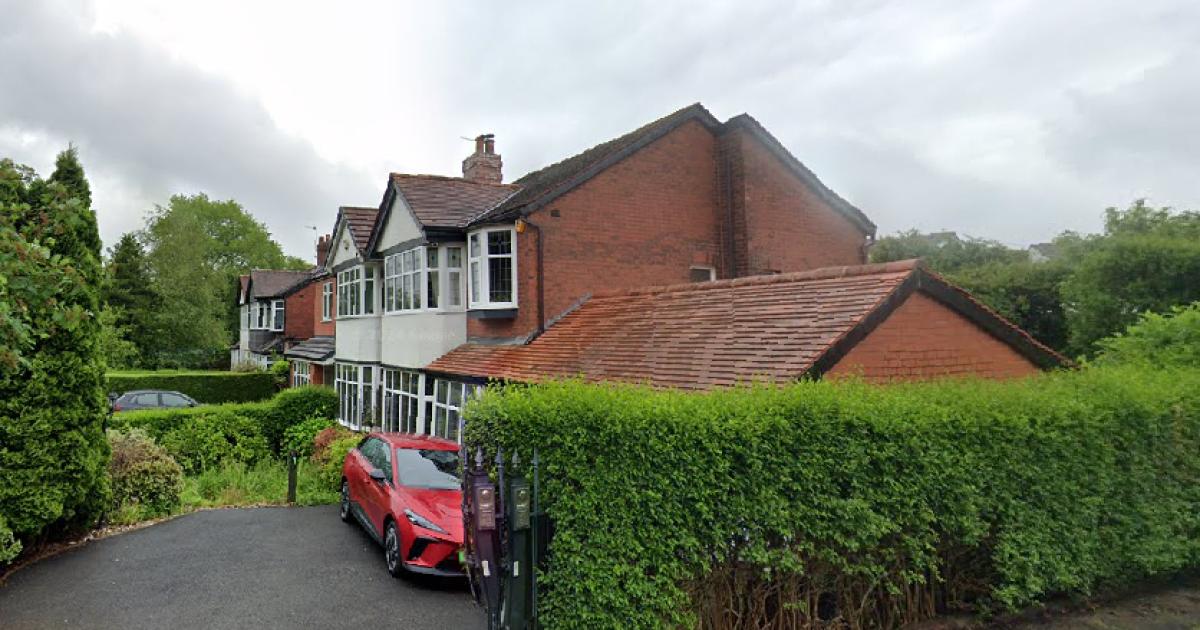
Plans to replace conservatory at property in Bolton

The plans, submitted to Bolton Council, propose replacing the conservatory on Chorley New Road in Lostock with a part single-storey and part two-storey side extension.

The works include extending the existing garage, making roof alterations, and creating first-floor storage space above the garage.

Two new roof lights are also proposed as part of the development.

Advertisement

According to the planning application, all external materials would be chosen to match the existing house, including brickwork, roof tiles and white uPVC window and door frames.

The proposals would not impact parking arrangements, nor would they require access changes from the public highway.

No trees or hedges would need to be removed or pruned to carry out the proposed works.

The extension would not be subject to the 10 per cent biodiversity net gain requirement under current planning rules, as it qualifies as a householder application.

Advertisement

Bolton Council has consulted neighbours at nearby properties on Chorley New Road and Lostock Park Drive, with public comments invited until early August.

No objections or public comments have been recorded on the application so far.

A decision from the council is expected in the coming weeks.

Advertisement

Source link

Continue Reading

NewsBeat

a fitting end to the Harlem trilogy that is sure to make it a classic of New York fiction

Published

on

a fitting end to the Harlem trilogy that is sure to make it a classic of New York fiction

This article contains spoilers for the first two books in the Harlem Trilogy

Cool Machine is the last book in Colson Whitehead’s Harlem Trilogy. Across three decades, the series has followed the furniture dealer and family man Ray Carney as he navigates the changing cultural and political landscapes of New York City.

We meet Carney in Harlem Shuffle, which is set in the late 50s and early 60s. At this point, Carney is trying to stay straight in a world that turned many of his family members into criminals. However, try as he might, he can’t avoid getting dragged into the criminal underworld. In Crook Manifesto, set in the 70s, Carney is embroiled in crime as a secret fence (someone who sells on stolen goods) and living a double life.

Cool Machine picks up the story in the 1980s, when Carney is winding down his side criminal side hustle. Like Carney, New York is a city in transition. Fuelled by President Ronald Reagan’s neoliberal economy, the city is “spectacularly alive” to the sound of “jackhammering and rasp of steel beams across concrete” as new skyscrapers transform the cityscape.

Advertisement

In counterpoint to the promise of prosperity heralded by Reagan’s tax cuts – manifest in the advent of yuppies and gentrification – the “primitive language” of graffiti on the subway walls points to an alternative grammar of crime and poverty, mirroring Carney’s dual roles as an award-winning furniture dealer and experienced criminal. “He’d always blamed other people for dragging him into their messes,” Whitehead explains, “but all bullshit aside he chose the chaos himself. Deep down he loved the chaos as much as the next crooked soul.”

As with Harlem Shuffle and Crook Manifesto, Cool Machine unfolds across three interlocking stories spanning different years. The first instalment takes place in 1981, shortly after Carney has been awarded Sterling Furniture’s Dealer of the Month, the first African American to do so.

When his wife, Elizabeth, is refused a loan to expand her travel business company, Carney embarks on a final heist with the legendary gangster Uncle Rich, staging a daring raid at the Waldorf Astoria. The caper involves stealing a gold medal that belonged to the famed African American Olympian Jesse Owens. “You can be the fastest man in the world,” Uncle Rich points out, “but you can’t outrun the white man.”

Part two, the most engaging section of the novel, shifts to 1983. It follows Carney’s friend, Pepper, an ageing thief with an agitated gut, who is working as a bodyguard for a nervous art dealer in possession of an invaluable African mask. Pepper is 64 but does not look his age: the “gray hair and wrinkles had made only tentative inroads, as if further trespass might piss him off”.

Advertisement
Cool Machine is the third in Pulitzer prize-winning author Colson Whiteheads’ Harlem Trilogy.
Quique Garcia/EPA

When the mask goes missing, Pepper attempts to track it down, crossing paths with “The Melancholy Hitman”, hired by a wealthy Dutch collector to retrieve the artefact. Here and elsewhere, Whitehead draws attention to the plundering of African works of art that circulate in western auction houses. “Those white people had pulled the biggest heist of all time,” he writes, “and there was always going to be another mask or statue or what-have-you to save.”

The novel concludes with a story set in 1986, focusing on Carney’s attempts to save his deceased cousin’s son, Robert, who is being framed for the murder of a corrupt lawyer. Teaming up with Pepper (now on a strict macrobiotic diet), Carney draws on his criminal underworld connections, including hordes of homeless people living in tunnels beneath the city, to save Robert.

While the theme of a con seeking to relinquish criminal life is well established, Whitehead’s hard-boiled language, satire and humour drive the novel forward. In one scene, an African American character observes how Alfred Hitchcock’s The Birds (1963) was released during the civil rights movement. He notes: “You’d have to be a dunce not to take [the birds’] anxious squawking as desegregation fears, for upset over black nationalism.”

In novels such as the Pulitzer prize-winning The Underground Railroad (2016), Whitehead established himself as a master of historical fiction. In Cool Machine, which is indebted to Chester Himes’s Harlem Detective series – including A Rage in Harlem (1957) – Whitehead extends the genre in a language that is marked by economy, witty dialogue and sharp observations of Black/white relations in 1980s New York City. “Up in the lobby, they had both kinds of white people,” Whitehead describes the guests at the Waldorf Astoria, “the ones who flinch when they see you and the ones who look right through you.”

Advertisement

While the plot and pace are uneven across the three parts of Cool Machine, Whitehead’s evident enjoyment of the form carries this fitting conclusion to his trilogy, which is a superlative contemporary New York novel.

This article features references to books that have been included for editorial reasons, and may contain links to bookshop.org. If you click on one of the links and go on to buy something, The Conversation UK may earn a commission.

Source link

Advertisement
Continue Reading

Trending

Copyright © 2025