
Politics
1 In 4 Primary School Children Have Shared Names Or Addresses Online


Almost one-quarter (24%) of primary school-aged children have shared their real name or address online, according to new research, with eight and nine-year-olds most at risk of doing so.
Just over one in five (22%) have shared personal information such as health details with AI tools and over one-third (35%) of parents believe their child would share personal information in exchange for game tokens or rewards.
Yet the same survey of 1,000 parents, from the UK’s data protection regulator, the Information Commissioner’s Office (ICO), found a fifth of them have never spoken to their kids about online privacy and three in four fear their child can’t make safe online privacy choices.
To bridge this gap and kickstart conversations about protecting personal information online, the ICO has launched a Switched On To Privacy campaign for parents of children aged four to 11 years old.
Parents don’t know if they’re doing enough
The research found 46% of parents don’t feel confident protecting their children’s privacy online and 44% say they try to do so, but aren’t sure they’re doing enough.
ICO research shows online privacy is one of the least discussed online safety topics: 21% of parents have never spoken to their children about it, and 38% discuss it less than once a month.
By contrast, 90% of parents have discussed screen time in the past month.
Experts warn that if children’s sensitive information is shared online, it can put them at risk from grooming and radicalisation.
Emily Keaney, ICO deputy commissioner, said: “We wouldn’t expect our children to share their birthdays or address with a stranger in a shop, because we’d explain stranger danger to them from a very young age, but kids these days are growing up online.
“We know that where children’s details – like their name, interests and pictures – aren’t protected, the potential risks are serious: unwanted contact from strangers, grooming and radicalisation.”
While tech companies need to be held accountable for children’s safety, Keaney said parents also have a role to play, “but the problem is that many families have never been shown how to talk to their children about online privacy”.
“We want parents to feel empowered and children to feel digitally confident, because only then will they be able to start to trust in how their data is used and be part of the whole society solution that is needed for online safety,” she added.
Teaching children about online privacy
Most parents (88%) think children should start learning about online privacy between ages four and 11 years.
ICO has shared a guide for parents of children to navigate this learning. Pointers include:
- Chat regularly with your child about online privacy. Ask them about what they like doing online and talk about what they are sharing and who with. Look at the privacy settings section together. What information is it tracking? What can you control from the settings?
- Help your child start thinking carefully about what they choose to share online. Review who can see posts, tag them or direct message them, and look at which apps or games are accessing location data. Be clear with your child what your family’s rules are about sharing personal information.
- Check the settings whenever your child uses a new device or app.
Rachel Huggins, CEO of Internet Matters, said: “Online privacy is a vital part of keeping children safe in a digital world, and so is empowering parents and carers with the tools, knowledge and resources they need to support their families.
“Open conversations build trust and give children the confidence and tools needed to navigate digital spaces safely. Alongside regular check-ins we also encourage parents to review their child’s privacy settings and make use of parental controls across the devices, apps and platforms their children use.”

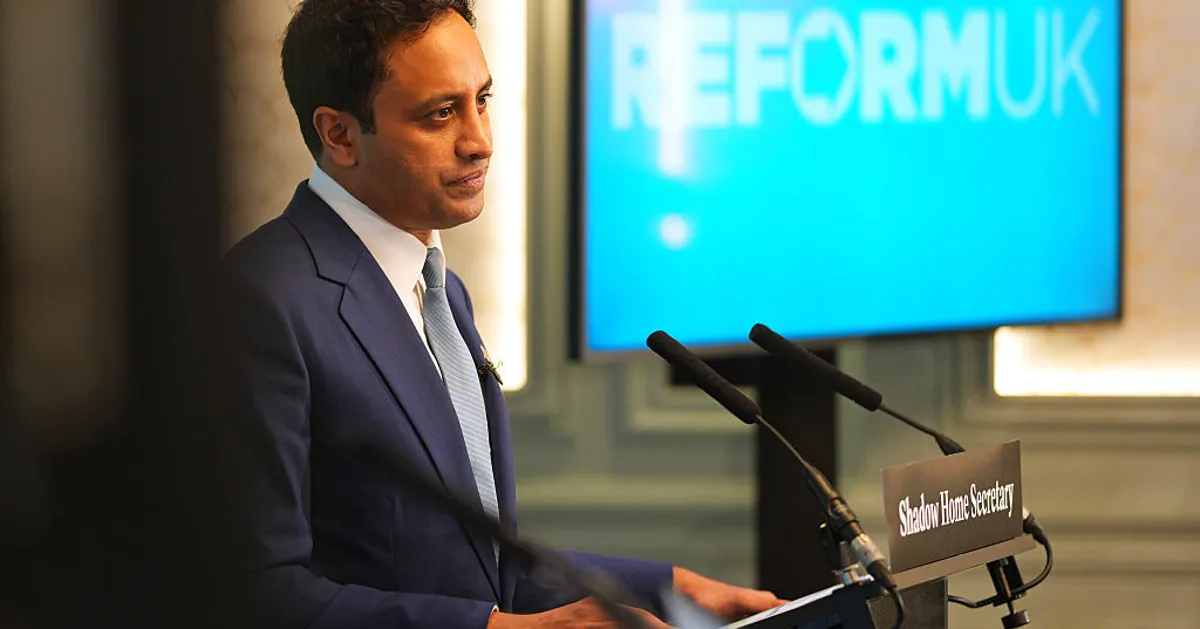
Zia Yusuf has accused Kanye West’s critics of jumping on a “bandwagon” amid mounting anger at the decision to book him to headline the Wireless festival this summer.
Keir Starmer, Wes Streeting and Sadiq Khan are among those who have condemned the move, while home secretary Shabana Mahmood is considering calls for him to be banned from entering the UK.
The Grammy-winning rapper has sparked anger in the past over his anti-semitic remarks, including releasing a song called ‘Heil Hitler’.
Wireless organisers have defended the booking, while West – who now calls himself Ye – has apologised for his previous comments and said he wants to “present a show of change, bringing unity, peace, and love through my music”.
In a statement on Tuesday morning, he said: “I would be grateful for the opportunity to meet with members of the Jewish community in the UK in person, to listen. I know words aren’t enough – I’ll have to show change through my actions. If you’re open, I’m here.”
Asked about the row on Sky News, Yusuf, who is Reform UK’s home affairs spokesman, said: “I think it’s fascinating that you’ve got Tory shadow ministers and the home secretary and the prime minister all weighing in on this particular individual.
“Obviously, he’s got songs that are openly anti-semitic, praising Hitler. It is deeply troubling that those songs would be played at a big auditorium in Britain.
“But what about this Bob Vylan character, who shouts extremely anti-semitic things at concert after concert and broadcast live on the BBC in many cases. Where is the condemnation of that?”
Presenter Kamali Melbourne pointed out to Yusuf that there was widespread condemnation of Bob Vylan following their appearance at Glastonbury last year, and then asked him again if West should be banned rom entering the UK.
He replied: “My view as home secretary would be that would been to have carefully considered in consultation with stakeholders, including the Jewish community.
“But I stand by the argument that it is absolutely a bandwagon that’s being jumped on.”
Subscribe to Commons People, the podcast that makes politics easy. Every week, Kevin Schofield and Kate Nicholson unpack the week’s biggest stories to keep you informed. Join us for straightforward analysis of what’s going on at Westminster.
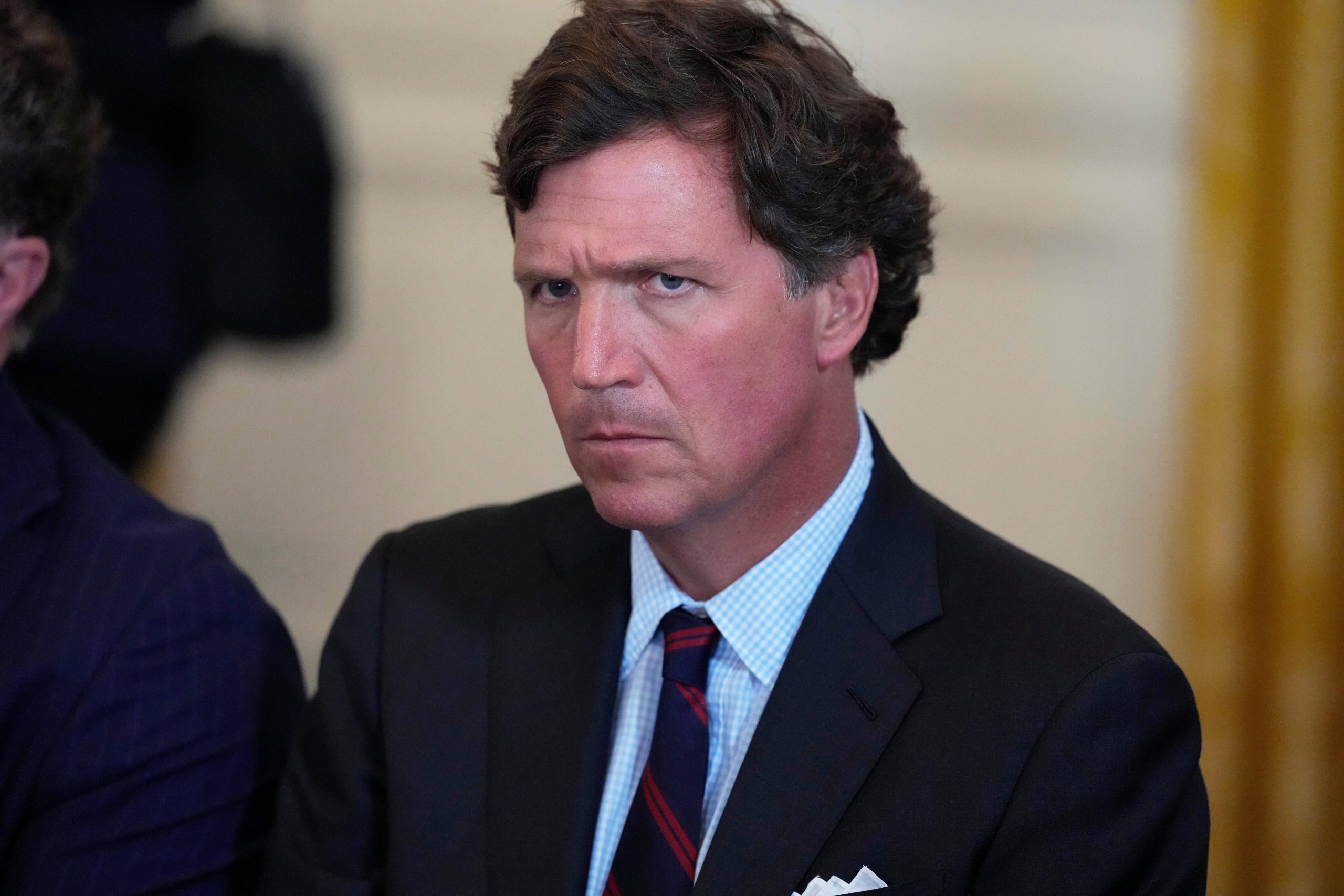

Conservative pundit Tucker Carlson tore into Donald Trump on Monday night, calling an Easter Sunday social media post from the U.S. president “vile on every level” and accusing him of threatening to commit a war crime.
“How dare you speak that way on Easter morning to the country?” Carlson said in a monologue on his podcast. “Who do you think you are? You’re tweeting out the f-word on Easter morning.”
On Sunday, a major Christian holiday, Trump posted a profane message on Truth Social, threatening Iran’s civilian infrastructure.
“Tuesday will be Power Plant Day, and Bridge Day, all wrapped up in one, in Iran. There will be nothing like it!!! Open the Fuckin’ Strait, you crazy bastards, or you’ll be living in Hell – JUST WATCH! Praise be to Allah,” the president wrote on his social media platform.
Carlson’s scathing monologue underscores a widening split inside Trump’s MAGA coalition, pitting foreign policy hawks against isolationists over the Middle East.
Trump returned to power on a promise to put “America first” and pledged an end to endless foreign wars, but his attack on Iran — now into its sixth week — has unsettled some of his previous supporters.
Trump’s post “begins with a promise to use the U.S. military — our military — to destroy civilian infrastructure in another country, which is to say, to commit a war crime, a moral crime, against the people of the country whose welfare, by the way, was one of the reasons we supposedly went into this war in the first place,” Carlson said.
The conservative pundit, a former Fox News host and occasional visitor to the White House who has ramped up his criticism of Trump in recent weeks, also slammed the president for his mention of “Allah.”
“So obviously you’re mocking the religion of Iran,” he said. “OK, if you seek a religious war, that’s a good idea. But by the way, no decent person mocks other people’s religions. You may have a problem with the theology — presumably you do if it’s not your religion — and you can explain what that is. But to mock other people’s faith is to mock the idea of faith itself.”
Carlson wasn’t alone among arch-conservatives in rebuking Trump over the Easter missive.
“Everyone in his administration that claims to be a Christian needs to fall on their knees and beg forgiveness from God and stop worshipping the President and intervene in Trump’s madness,” ex-congresswoman Marjorie Taylor Greene, a former Trump acolyte, said Sunday.
“This is not making America great again, this is evil,” she added.
Milena Wälde contributed to this report.


A new British Safety Council initiative is helping unemployed veterans move into civilian careers in occupational health and safety, turning military experience into a force for safer workplaces across the UK.
It’s easy to understand why moving from military service into civilian employment can feel like a difficult and uncertain step. Many veterans leave the armed forces with valuable professional experience, but translating those skills into a completely different working environment isn’t always straightforward.
Recognising these challenges and the opportunity to make better use of this talent, British Safety Council has launched From Service to Safety, a new charitable initiative designed to support unemployed veterans across the UK. From Service to Safety provides a clear and structured route into the occupational health and safety sector, which matches free training and pastoral support with eligible candidates to bolster the occupational safety and health (OSH) sector, an area experiencing a shortage of skilled workers and one that remains vital to the wellbeing of UK PLC as a whole.
It is entirely fitting and proper to support those who have given so much to their nation and dedicated a large part of their lives to the service of others. This initiative seeks to do good today and have a compounding effect for generations to come, leading to safer and healthier workplaces where workers can thrive.
At the heart of the initiative is a commitment from British Safety Council to support and develop the next generation of health and safety professionals. Throughout 2026, 100 veterans will have the opportunity to complete the NEBOSH National General Certificate in Occupational Health and Safety, free of charge. This qualification gives learners a strong, practical understanding of how to keep people safe at work, including how to identify risks and prevent accidents.
With no cost to eligible applicants, the programme removes financial barriers and opens the door to those who might not otherwise be able to access this training. Delivered through live online sessions by British Safety Council’s industry-leading trainers, the course is accessible to veterans nationwide and will be paired alongside pastoral support from veterans already working for and with British Safety Council.
The initiative is delivered in partnership with NEBOSH, which is supporting the programme by funding examination fees and resits, and eligible candidates are being referred by the Career Transition Partnership (CTP). The CTP is the official provider of resettlement for the Armed Forces and has supported 340,000 service leavers over more than 27 years.
Beyond the direct benefits to those taking part, From Service to Safety seeks to foster the next generation of health and safety leaders, who will work to create the safer workplaces of the future. It also seeks to increase the number of experienced professionals entering the sector, which has long suffered from declining numbers and poor retention. To keep the workers of the future safer, we need bold and experienced professionals who understand risk awareness and risk aversion, and who can communicate this to those they work with.
From Service to Safety builds on the history of British Safety Council, which was founded in 1957 by James Tye. Tye was inspired to dedicate his life to safety following national service during the Second World War and became one of the UK’s leading safety voices. This golden thread between Tye’s own service and the service of others is something that British Safety Council is proud to honour as we approach our 70th anniversary in 2027.
As From Service to Safety moves forward, it represents more than a pathway into employment; it is a commitment to an ideal that safe workplaces and thriving workers are not only possible but deliverable. By investing in those who have already demonstrated commitment, discipline and resilience, we are not only supporting veterans in their next chapter but strengthening the future of workplace safety across the UK. In doing so, British Safety Council continues a long-standing tradition: turning service into lasting impact and ensuring that the experience of the past helps to protect the people of tomorrow.
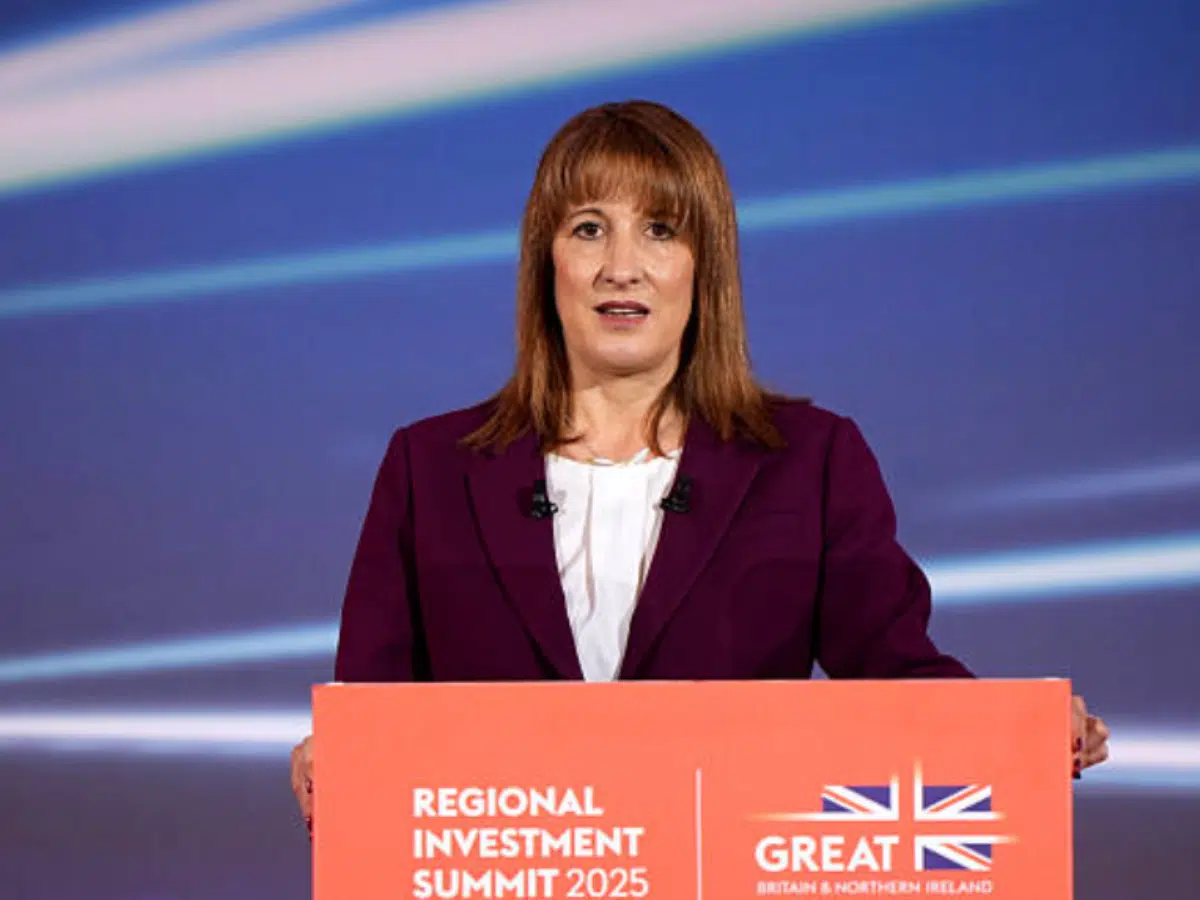
Chancellor Rachel Reeves has taken to social media to celebrate Labour’s so-called achievements.
Rachel Reeves, are these meant to be wins?
Reeves said:
Minimum wage rising.
State pension increasing.
Two child limit abolished.
Child poverty falling.
Rights at work strengthened.
Labour promised change. We are delivering change.
These policies are a shambles and miss the reality of an extremely economically unequal society.
Wages should be progressive
Minimum wage is rising by around 50p compared to last year. Accounting for inflation, it’s a £2 increase on its level a decade ago.
But this is nothing for large corporations, while adding significant costs to small businesses. The issue with across the board minimum wages is they ignore the capabilities of companies. For example, Vodafone makes £154,236 annual profit per employee. They can afford to pay their workers a significant amount more.
Meanwhile, small businesses with 1-9 employees have an average yearly profit of £22,000. Last year, Labour’s increase to the minimum wage added a yearly cost of around £8,000 to a small business with five employees. That’s quite the hit, but also affordable, assuming the person running the business is taking their own salary.
The minimum wage should certainly apply, but it should be progressively implemented. Small businesses pay the minimum while profit-linked wage increases apply for companies like Vodafone.
That said, the reason Vodafone is so profitable is because everyone needs to communicate. In other words, telecommunications is an essential that should be in public ownership, because it’s a risk free venture for the government. Failing that, some form of profit-sharing with workers, mandated cheaper prices and higher taxes could go some way to improve the situation.
State pension increasing? Just a Tory policy
The state pension has increased over the years and will do with Labour continuing the Conservatives’ policy of linking increases to inflation, average earning rises or 2.5% (whatever’s highest).
Nonetheless, it’s not enough for less well off pensioners who do not have the supplementary income of a private pension. 16% of pensioners are in relative poverty.
The universalism of the state pension does contribute to giving everyone a stake in the economy. But it also doesn’t make sense for multi-millionaires to receive it. Re-imagining the system through a mixed economy of common, non-profit, community and private ownership could deliver less economic inequality, while maintaining the universalism of a state pension.
Labour flailing
Labour’s workers’ rights package brings paternity and sick leave rights to day one of employment. Although, minimum sick pay is only £123.25 per week. Again, this should be progressively implemented. Companies that can afford to pay should maintain a workers’ salary. Meanwhile, companies that can’t should be topped up by the state.
Reeves and Labour shouldn’t be celebrating their achievement of very little after almost two years in power. They should actually take the initiative and improve the country.
Featured image via the Canary

For people with pet allergies, hypoallergenic pets are marketed as the supposed solution — but that couldn’t be further from the truth.
Here’s a hard reality check: your favorite labradoodle, Yorkshire terrier, Siberian cat or other popular “hypoallergenic breeds” can still make you cough and sneeze if you’re allergic to pets, because there is no scientific way to guarantee you’ll have an allergen-free cat or dog.
“I have this conversation almost every day in my clinic,” said Kathleen May, division chief of allergy, immunology and pediatric rheumatology at the Medical College of Georgia at Augusta University. “The biggest issue is the data does not support the existence of hypoallergenic pets.”
Myth #1: The Right Fur Will Prevent Allergies

Connor McManus / 500px via Getty Images
Too many people believe that if your pet has a certain coat texture that sheds less, it means your pet is more likely to be hypoallergenic. But regardless of fur, pet allergens can be found in the dander and skin of your beloved pooch or cat. “When they lick, it’s in their saliva, because they lick their skin,” May explained.
And not even a hypoallergenic dog can prevent your allergy sensitivities.
A 2011 study in the American Journal of Rhinology & Allergy found that households with dog breeds cited as hypoallergenic, including poodle mixes and terriers, had no difference in the levels of the primary dog allergen Can f 1 found in dust samples from those homes.
In fact, a separate 2012 study showed that certain hypoallergenic dog breeds had higher Can f 1 levels in their hair and coat than non-hypoallergenic
breeds did. Labrador retrievers had the lowest allergen concentrations in their hair, while poodles had the highest concentrations of allergens, and labradoodles had the second-highest.
Even hairless cats’ skin can produce allergens. “There is no scientific evidence for a hypoallergenic cat breed, even hairless Sphynx cats produce Fel d 1 [allergen]” one 2024 study found.
Myth #2: The Right Pet Food Can Make My Pet Hypoallergenic
There are popular pet foods and supplements that claim to lower common allergens in your pets. The problem is that pet-allergic people may be sensitive to multiple allergens.
“When you’re allergic to a pet, sometimes you’re not just allergic to one protein fragment,” May said. So even if your allergen-reducing food improves your response to one cat allergen, you may still be allergic to others found on your cat, for example, May said.
“There might be 10 or 20 different allergens that that animal sheds that you can be sensitive to,” May said.
Myth #3: Proper Cleaning Helps Prevent Pet Allergies
If you start sneezing up a storm in a house with a cat, know that you’re not alone. “The reason why the cat allergen is in particular problematic is it’s very small, and it can be inhaled pretty deeply, and it stays in the air for a very long time,” May said.
Some well-meaning cat owners will vacuum right before their cat-allergic family member comes over, but this is actually a common mistake.
If you vacuum right before your cat-allergic friend’s arrival, “it basically aerosolises the [cat] allergen for about three hours,” May said. “So if you could vacuum at least the day before, it would be better than stirring it up that day.”
And don’t believe that simply adding more air purifiers will help lessen one’s pet-allergic symptoms. An additional HEPA filter in a room can remove more airborne particles, but “it’s just not going to be enough to really overcome it,” May said. “It would take an entire wall of HEPA filters to scrub the allergen from the air completely.”
However, if you are allergic to cats, try wearing an N95 mask or a KN95 mask during your visit, because that will help filter out most of the cat allergens you’ll breathe in, May suggested.
Here’s What Actually Does Help People With Pet Allergies

Viktoriya Skorikova via Getty Images
Obviously, limiting your exposure to pets is the easiest solution if you’re allergic to them.
“If you know you’re sensitive in advance, getting a dog is not going to improve your symptoms. That’s the harshest reality,” May said.
But for many of us, pets are family, and we’re unwilling to part ways with an animal we learn we are allergic to. So know that there are certain proven ways you actually can lower your pet’s allergens and your response to them –– and they have nothing to do with getting a hypoallergenic pet.
For one, you should know that the sex of your pet and whether they are neutered can make a difference. “A male, unfixed cat is going to have a higher level of the Fel d 1 allergen than a female fixed cat,” May said. She also noted that if you have a dog, washing them weekly can also diminish the allergens they produce.
The pet’s skin health also impacts what proteins they shed. “If a dog has dermatitis or eczema, the dog is more likely to shed allergens that will bother you,” May said as an example.
One unexpected way to reduce your chances of being allergic to your cat or dog? Be born into a household that has one. A 2002 study in the Journal of the American Medical Association followed hundreds of children from birth to nearly age 7 and found that children who grew up with dogs and cats in the home had a significantly lower risk of developing common allergies later on.
Many of these allergy tips focus on short-term symptoms, but there is one proven way to address the underlying problem: allergy shots. New York City Mayor Zohran Mamdani is famously going this route and is taking weekly allergy shots for seven months in preparation for owning a cat.
Typically, you will get weekly injections for about six months to build up your response to pet allergens, and then after that, you get shots about every two to four weeks for the maintenance phase over the next three to five years, May explained.
“It’s literally a desensitisation,” May said. “You get small but increasing amounts, until you get to a level … that’s likely to be clinically helping you.” Typically, children will respond more quickly to this treatment than adults, May said, but in general, she sees an 85% chance of pet allergy improvement after a year.
Whatever choice you make, know that there are treatments to help you breathe more easily around your pet — as long as you know the difference between facts supported by science and myths.

A racist far-right rally promoted for months by its organisers yielded a feeble attendance, with likely only around 200 attending the event in Coleraine, on the north coast of Ireland. It was originally planned for March 28, but was moved to April 4.
The protest was organised by anti-immigrant Islamophobes Our Northern Ireland Voice (ONIV), led by Daniel Douglas who goes under the alias ‘Dan Grundlé’. He has previously been jailed for rioting during loyalist disorder in 2021. He proudly reminisced about his claim that his uncle Jimmy Grundle “introduced the National Front to Northern Ireland”. The group characterise immigrants as “invaders” and say immigration is:
…downgrading the intelligence, aspirations, values and morality of the people.
ONIV had predicted 2500 attendees in their application to the Parades Commission but clearly didn’t achieve anywhere near that number. Some videos of the march that followed the rally appear to show just a few dozen supporters present. The Parades Commission is the body set up to regulate marches and protests in the North of Ireland. Such events have previously been flashpoints due to sectarian or paramilitary connections, hence the need for a specific commission determining what can go ahead.
Far-right allowed to proceed despite opposition from anti-racists
End Deportations Belfast opposed the Parades Commission decision. The group campaign against:
…border regimes, detention and deportation in N. Ireland / North of Ireland.
They said:
It is extremely unlikely that whether in speech or in physical presence, groups that refer to demographic replacement and “foreign infidels” have no other agenda but to terrify ethnic minorities out of the North including through violent means. The parade should have been banned outright, not given conditions the sort of which the PSNI have consistently failed to intervene, investigate and enforce on multiple occasions.
The Commission claimed that it needed to balance competing rights under the Human Rights Act 1998 – the right of free speech and assembly vs the right for the protestors’ targets to:
…live, work, shop, trade and carry on business in the affected locality.
It therefore allowed the event, but imposed conditions on the attendees, such as forbidding:
…any behaviour or display [of] items which could…be perceived as being provocative, threatening, insulting or abusive to any person or group.
The event ultimately passed off without major incident, despite the attendance of noted hate figures like the National Front’s Tony Martin, plus local anti-immigrant influencers Mark Sinclair aka Freedom Dad and Steven Baker.
There was a strong counter-demonstration present, with unions and anti-racist groups dwarfing the racist contingent. Progressive Politics NI said:
The far-right tried to whip up hatred towards immigrants again. But they were outnumbered by trade unions, activists & the good people of the town!
United Against Racism Derry and North West also highlighted the pitiful numbers mustered by their opponents, saying on Facebook:
So many fascists trying to leave comments and mock people on this page.
They seem to be very annoyed that only a handful turned up to their hate parade yesterday…
I have blocked more people on this page today than actually showed up in Coleraine for the cause they hold so dear.
If these folk ever left their dank bedrooms they’d be dangerous.
Racists fighting among themselves
This is the way to counter the far-right – turn up in greater numbers, showing greater humanity and wielding superior arguments. Show that most people are right-minded and that facts have a left-wing bias, rather than asking the police and the state to fight our battles for us. These are not institutions that have historically favoured the left.
In any case, the far-right in the North of Ireland are currently doing a pretty good job of self-sabotage. Those railing against immigrants have often characterised themselves as protecting women and children, but a group of men who attacked Sinclair outside a pub recently accused him of being a “dirty paedophile”.
In other ‘protecting women and kids’ news, fellow hatemonger Lisa White accused ex-bank robber Sinclair of “control, manipulation and physical abuse” of three women in Scotland. She also said this self-styled protector of the vulnerable had been:
…causing women in our group a lot of hassle for around a year now.
White’s group is Concerned Parents Newtownabbey, which whips up hatred towards immigrants and Muslims.
It would be nice to think that the right will be kept at bay by low turnouts and internal feuding, though we’re still in ‘fairweather fascist’ season – the time of year when the weather isn’t quite good enough to bring them out of hibernation. As long as reactionaries still have issues like inadequate housing to rally around, summer could still require strong mobilisation from a united left against this ongoing threat.
Featured image via TikTok
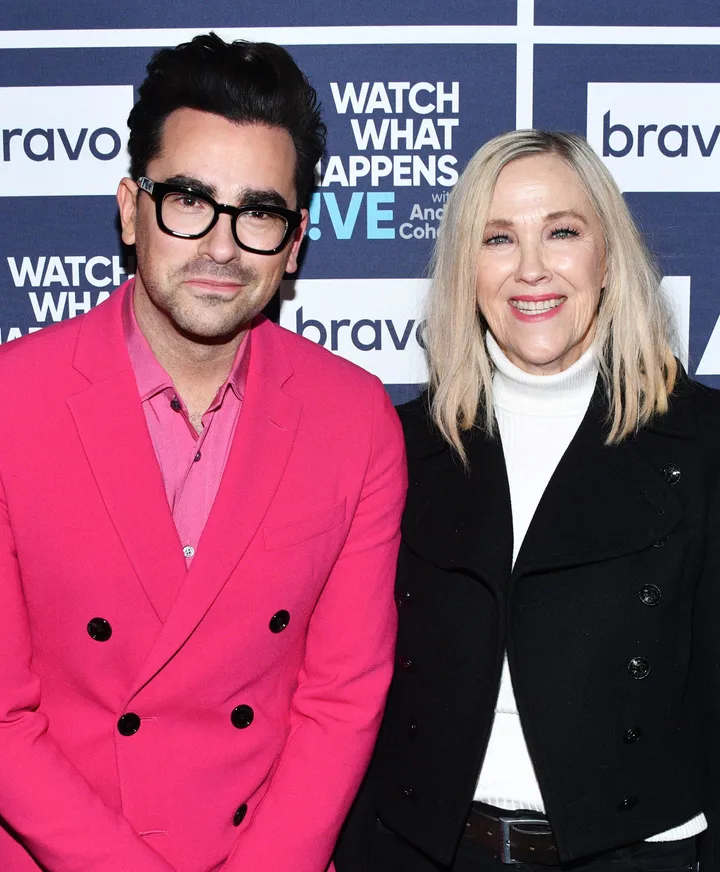
Dan Levy had an emotional moment while discussing his memories of working with his late Schitt’s Creek co-star Catherine O’Hara.
As part of his interview on CBS’s Sunday Morning, Dan returned to the Canadian town of Goodwood, Ontario – where most of Schitt’s Creek was filmed – for the first time since the smash series wrapped more than six years ago.
He began tearing up when asked about the prospect of a “Schitt’s Creek” revival or reboot.
“No, not now. You can’t,” he said, before acknowledging that he’d been thinking about reviving the show prior to Catherine’s death earlier this year at the age of 71.
“I didn’t think that I’d have quite an emotional reaction,” he admitted, as he choked back tears.
But when CBS’s Anthony Mason pointed out that Catherine’s legacy included “an incredible clip reel”, the actor appeared to compose himself once again.
“For someone who was not on the internet, she knew how to meme,” he quipped.
Dan – who starred in and co-created Schitt’s Creek with his father, fellow actor Eugene Levy – previously acknowledged Catherine’s death with a heartfelt tribute.
“What a gift to have gotten to dance in the warm glow of Catherine O’Hara’s brilliance for all those years,” he wrote on Instagram in January.
“Having spent over 50 years collaborating with my dad, Catherine was extended family before she ever played my family. It’s hard to imagine a world without her in it. I will cherish every funny memory I was fortunate enough to make with her.”

Dan returns to the small screen later this week in Netflix’s Big Mistakes, in which he portrays a gay New Jersey pastor, Nicky, who accidentally gets drawn into the world of organised crime alongside his sister, Morgan.
Four-time Emmy winner Laurie Metcalf plays the hapless siblings’ mother, Linda.
The Schitt’s Creek star, who co-created Big Mistakes” with Rachel Sennott, has described his new series as a “different book” from the “same shelf” as the hit Canadian sitcom which aired from 2015 to 2020.
In his Sunday Morning chat, Dan said he wasn’t concerned about critics and viewers who will inevitably compare his two shows.
“You really have to lock the door on that and almost accept the fact that if [Schitt’s Creek] is the big crown jewel, fabulous. How wonderful,” he explained. “Everything else has to be something that makes me feel good.”

Empathy can be one of our best qualities ― a force that deepens relationships, builds trust and helps us show up for others. But in some dynamics, that positive instinct can be turned against you.
“Weaponised empathy is a pattern of using empathy, compassion or guilt to influence another person’s behaviour, often at the expense of personal boundaries and preferences,” Caitlyn Oscarson, a licensed marriage and family therapist, told HuffPost.
You might have made important plans one night, but then your partner says something like, “I had a bad day and really need you tonight, I don’t know what I’ll do without you.” So you cancel out of fear of letting your partner down.
“Your empathy influences you to stay home and set aside other commitments, believing that your partner will be in distress without you,” Oscarson said. “It can feel like you don’t have a choice and that setting boundaries or prioritising your own needs will cause harm to your partner.”
Weaponised empathy is a common tactic among people with narcissistic personality disorder, particularly “covert narcissists” who show extreme sensitivity to criticism. If you try to talk about something they did that hurt your feelings, they quickly get distressed, say they’re “too overwhelmed” and shift the conversation such that you end up comforting them.
“The perpetrator chooses a victim who has demonstrated high empathy, as they plan to use that empathy as a way to get away with harming that person repeatedly,” said licensed marriage and family therapist Natalie Moore. “The narcissist over time establishes themselves as a victim of a painful past to garner sympathy. They then use that victim framing as a way to justify hurtful behaviour. They expect the person being targeted to ignore, understand, explain away, justify and make excuses for why they might be behaving that way.”
Although weaponised empathy can occur in romantic relationships, that’s not the only context.
“It is common in parent-child relationships (‘I get so lonely when you go out with your friends’), the workplace (‘We are all overwhelmed, I need you to step up and work late until this is done’) and friendships (‘You are the only person who really listens and understands ― I have no one else to talk to’),” Oscarson said.
She added that it also appears online with messages like “If you cared about this issue, you would speak out/donate immediately.”
It’s a potent manipulation strategy, but not always super obvious in the moment. Below, Moore and Oscarson break down common signs of weaponised empathy to watch for.
1. They test your boundaries early and often.
“An individual utilising weaponised empathy needs to know how far they can push you, and so they set up small tests to see what level of boundary-violation you’ll tolerate,” Moore said.
Probing for your limits can start with something that seems small or reasonable, but over time, it escalates.
“They’ll see if they can get you to do something you previously said ‘no’ to or if they can extract more time or attention from you than you have to give,” Moore explained. “This gives them data as to how much they can manipulate you.”
2. You feel guilty for setting totally reasonable limits.
A nagging sense of guilt over things that don’t warrant it can be a red flag for weaponised empathy.
“You feel like you are doing something wrong even when your boundaries feel reasonable,” Oscarson said.
She recommended being clear and concise when you set boundaries ― for example, “I’m sorry, I’m not able to stay home tonight.” Avoid over-explaining or giving reasons, and try not to take responses too personally.

FG Trade Latin via Getty Images
“Get comfortable tolerating some guilt,” Oscarson said. “It’s natural to feel compassion and wish you could do more. Guilt is not always a sign you are doing something wrong.”
3. There’s constant pressure to respond immediately.
“You notice a pattern of urgency around requests and increases in intensity when you push back,” Oscarson said.
This pressure to drop everything in the moment and respond immediately to non-urgent matters is a bad sign. That’s why it’s best to take a beat in these situations.
“Pause before agreeing to anything ― especially if you are used to having your boundaries pushed,” Oscarson advised.
4. The relationship feels one-sided.
If support only flows in one direction, that’s worth paying attention to.
“There’s a lack of reciprocity in the relationship,” Oscarson said. “You are always the one providing support.”
Over time, you may realise you’re always the one giving ― emotionally, logistically, etc. Meanwhile, your needs, stress or struggles rarely receive the same care or attention.
5. You feel responsible for their emotions.
“Another sign is feeling responsible for another person’s emotional state or stress level,” Oscarson said. “You don’t set the boundaries you normally would because you are concerned about the other person’s reaction.”
She emphasised the importance of differentiating empathy from responsibility.
“You can be compassionate without being responsible for fixing the problem,” Oscarson said.
6. You’re constantly second-guessing yourself.
Weaponised empathy can make you doubt your own instincts.
Oscarson recommended paying attention if you find yourself “constantly second-guessing yourself and worrying that you are being selfish.”
That internal uncertainty is often a byproduct of subtle manipulation, not a reflection of your character.
7. They compliment your empathy — and use it against you.
“If someone is engaging in weaponised empathy, they will explicitly point out and praise your empathy and compassion,” Moore said. “They may say that you’re the only person who understands them or is ‘in their corner.’”
Be mindful of this kind of flattery, which can create pressure to live up to the role in unreasonable circumstances.
“You may enjoy the feeling as you would with a genuine compliment, but this will be used to their favour so that you look the other way when they hurt you,” Moore said.
8. They share intense personal information very early on.
Moore noted that some people who engage in this unhealthy behaviour may share deeply personal information early on in their relationship. It’s not necessarily a case of genuine vulnerability.
“When someone is using weaponised empathy as a manipulation tactic, it often begins with sharing a deeply personal story about past trauma that creates a narrative that they are a victim,” Moore said. “Their ‘I’m the victim’ framing sets them up to not have to take accountability for any future harm they cause you.”
Thus, they can establish themselves as someone who deserves extra leniency and understanding. Be mindful of people who dive in deep super quickly and “sweep you off your feet.”
“It’s much easier to lose yourself and your sense of clarity if you are overtaken by intense emotions, affection, gifts and time with that individual,” Moore said. “Allowing a relationship and trust to form slowly over time through shared experiences is a much healthier way to establish a relationship, while also maintaining your connection with yourself.”
9. They consistently position themselves as the victim.
“The person using weaponised empathy will continue to reinforce their role as the victim in their relationships, life and circumstances,” Moore said. “They will frame everything as ‘I’m so unlucky,’ ‘my boss doesn’t appreciate me’ or ‘no one understands how hard this is for me’ to try to extract more empathy from you.”
While everyone faces challenges, the pattern here is persistent and one-sided. This ongoing victim framing can be a way to manipulate your behavior while avoiding accountability.

RAF Lakenheath has seen its operations shut down this morning (Tuesday, 7 April) by a group of grassroots activists:
Entrances to the military base have been blocked by two groups since 6am this morning: one creating a hard picket across the road leading to a six-lane entrance to the site, and the other taking part in a lock-on, shutting down operations at the base:
The activists seek to raise awareness of the UK’s complicity in the illegal warfare, and demand that the UK Government immediately prohibit the use of UK bases by the US. This action follows a week of peaceful protest at the site with round-the-clock vigils, culminating in the “Give Peace a Chance Big Blockade” on Saturday 4 April, where hundreds of protestors gathered to stand against this use of British territory by the US.
RAF Lakenheath shows the UK is just a US proxy
An official announcement in March granted the US permission to use the UK’s airbases for “specific and limited defensive action against missile facilities in Iran”.
Enormous questions remain unanswered about the extent of these operations, such as the number of UK bases in use by US forces, and the criteria, laws, or methods of assessment that might be involved in approving such a request, or monitoring the legality of the activities carried out by the US.
For the US, the use of UK bases is not new; a research briefing published last month for MPs in the House of Commons cites 12 sites, in addition to RAF Lakenheath, which is known to house US Military units, and the permanent presence of 11,000 US Military personnel in the UK. Since the announcement last month, the forces of the US are gathering apace in UK bases to support President Trump’s Operation
A total of 21 US stealth bombers – the largest bomber deployment in recent history – are stationed in RAF Fairford in Suffolk. RAF Lakenheath has been the permanent base of the 48th US Fighter Wing – the “Liberty Wing” – since January 1960. The base has long been the subject of sustained, peaceful public opposition, who object to the central role RAF Lakenheath has consistently played in US operations, particularly in the SWANA region.
Today, F-15 fighter jets and F-35 (designed for stealth strikes), with F-22 Raptors being observed passing through en route to SWANA and back, with deployment of over 100 fighter jets being observed in recent weeks by locals and aviation enthusiasts, flying to support illegal US-Israeli attacks on Iran.
A-10s (aircraft for attacking armoured vehicles and ground forces) have been arriving on site on 30 March, RAF Lakenheath was also used in January to refuel en route to SWANA, well in advance of the government’s announcement that the UK was to be involved. Concerningly, US Nuclear bombs are reported to be held on site since last July.
Public backlash
Today’s blockade is not the first blockade at RAF Lakenheath, this week alone over 100 demonstrators have already taken part in blockading the site on Saturday 4 April. More broadly, demonstrations of all kinds outside arms factories and US bases in the UK are now commonplace, albeit underreported and largely ignored by government.
61% of people surveyed oppose the storage of nuclear weapons in the UK. Many activists regularly place their freedom and safety on the line to oppose this system. Previously at RAF Brize-Norton, five activists had allegedly damaged Voyager aircraft that attacked Yemen in support of Israel’s genocide of Palestinians (voyager aircraft are designed for refueling while in the air). These activists have been denied bail since July 2025, being held in prison without any conviction, with their trial scheduled for January 2027.
Enough
The UK has given a clear signal that it aligns itself with the US-Israeli military and with Trump’s Operation Epic Fury, whose clear targets are civilian infrastructure and control over natural resources globally. Today’s action outside RAF Lakenheath seeks to align itself with numerous actions around the country, to push back against the presence of US military in the UK, and to the UK’s complicity in war crimes in more broadly. This resistance from a group of ordinary people is a peaceful, but challenging action intended to disrupt the quotidian rhythm and operation of a site of war.
The protestors call for:
- The prohibition of the use of air bases to provide any support to the Israel on their attacks on Palestine, including surveillance operations.
- The prohibition of the use of air bases to provide any support to the US or Israel on their attacks on Iran and Lebanon.
- Ultimately to remove US forces – personnel, infrastructure, equipment and munitions – from all UK military bases.
Featured image via the Canary
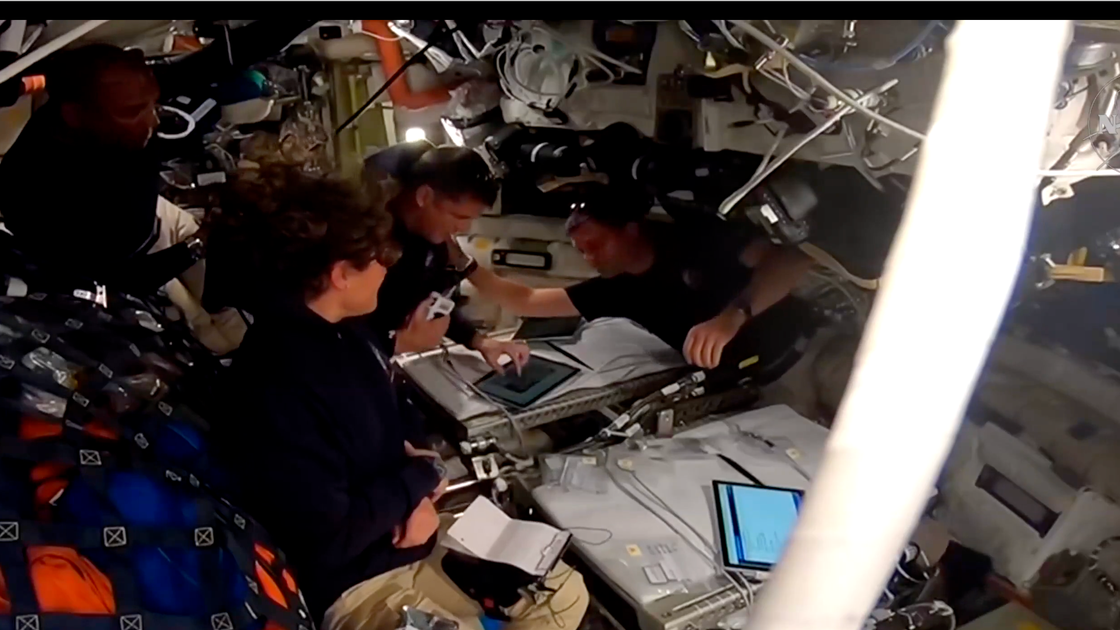
The Artemis II crew honoured NASA commander Reid Wiseman’s late wife, Carroll Wiseman, in an emotional tribute on Monday.
Wiseman, one of four astronauts on the Artemis II mission, lost Carroll, a 46-year-old paediatric nurse practitioner, to cancer in 2020.
Carroll was survived by Reid and their two daughters, Ellie and Katherine, according to an obituary in The Virginian-Pilot.
In remarks to mission control, the crew announced that they would like to name an unnamed crater on the moon for Carroll.
“There’s a feature in a really neat place on the moon, and it is on the near side, far side, boundary. In fact, it’s just on the near side of that boundary, and so at certain times of the moon’s transit around Earth, we will be able to see this from Earth,” CSA astronaut Jeremy Hansen said, his voice breaking at times.
“We lost a loved one, her name was Carroll, the spouse of Reid, the mother of Katie and Ellie. And if you want to find this one, you look at Glushko, and it’s just to the northwest of that at the same latitude as Ohm. And it’s a bright spot on the moon. And we would like to call it ‘Carroll.’”
Reid Wiseman could be seen on video wiping away tears as he put his hand on Hansen’s shoulder. The four crew members, which also includes astronauts Victor Glover and Christina Koch, then embraced in a hug.
The crew also proposed naming another crater after their Orion spacecraft, Integrity.
Wiseman has said that Carroll insisted he continue pursuing his dreams as an astronaut even after she got sick, per the British outlet The Times.
He has also discussed what it’s like to be an only parent and how he prepared his daughters for the potential risks associated with a mission into space.
“I went on a walk with my kids, and I told them, ’Here’s where the will is, here’s where the trust documents are, and if anything happens to me, here’s what’s going to happen to you,” Wiseman said at a January NASA news conference, according to The Baltimore Banner. “That’s just a part of this life.”
In an Instagram post he shared shortly before liftoff last week, Wiseman boasted about his children.
“I love these two ladies, and I’m boarding that rocket a very proud father,” Wiseman wrote in a caption alongside a selfie with his daughters.

Fire Stick users issued warning after Amazon blocks free app

Planet Labs (PL) Stock Slides 2.6% Following CFO’s $7M Share Sale Despite Analyst Upgrades

“We can’t let him go elsewhere”


-

 NewsBeat5 days ago
Steven Gerrard disagrees with Gary Neville over ‘shock’ Chelsea and Arsenal claim | Football
-

 Business4 days ago
No Jackpot Winner and $194 Million Prize Rolls Over
-

 Fashion4 days ago
Weekend Open Thread: Spanx – Corporette.com
-

 Crypto World6 days ago
Gold Price Prediction: Worst Month in 17 Years fo Save Haven Rock
-

 Business1 day ago
Three Gulf funds agree to back Paramount’s $81 billion takeover of Warner, WSJ reports
-
Crypto World7 days ago
Dems press CFTC, ethics board on prediction-market insider trades
-

 Sports3 days ago
India men’s 4x400m and mixed 4x100m relay teams register big progress | Other Sports News
-

 Business3 days ago
Expert Picks for Every Need
-

 Business5 days ago
Login and Checkout Issues Spark Merchant Frustration
-

 Sports7 days ago
Tallest college basketball player ever, standing at 7-foot-9, entering transfer portal
-

 Tech7 days ago
How to back up your iPhone & iPad to your Mac before something goes wrong
-

 Crypto World6 days ago
Bitcoin enters the public bond market as Moody’s gives a first-of-its-kind crypto deal a rating
-
Crypto World6 days ago
Bitcoin stalls below key resistance as technical signals skew bearish
-

 Tech5 days ago
Commonwealth Fusion Systems leans on magnets for near-term revenue
-

 Politics6 days ago
Starmer’s centre has collapsed, and the left was right all along
-
Business2 days ago
No Jackpot Winner, Prize to Climb to $231 Million
-

 Fashion7 days ago
Zara Turns Up the Heat With New Swimwear
-

 Fashion7 days ago
Tuesday’s Workwear Report: Tavira Sculpt Stretch Crepe Trousers
-
Crypto World7 days ago
AI Memory Rout Wipes 9% Off Nvidia Stock: Chart Says More Pain Ahead
-

 Crypto World6 days ago
Why It’s Partnering, Not Issuing
You must be logged in to post a comment Login