

Politics
Mourinho headed to coach volatile Real Madrid



Real Madrid have agreed a two‑year deal to bring Jose Mourinho back as head coach. An announcement is expected after the club’s final game and his contract reportedly includes an option for a further year.
Mourinho returns to a volatile dressing room
Madrid have moved to reappoint Mourinho, 13 years after his first spell at the Bernabéu, in a bid to restore stability after a trophyless season and a string of off‑field incidents. The deal is for two years with an option for a third, and the club plans a formal unveiling once the season finishes.
Florentino Pérez and the board appear to have prioritised experience and authority over a long‑term rebuild. Mourinho’s previous Real Madrid tenure (2010–13) included a La Liga title in 2012, and his relationship with the club’s president is well documented.
Mourinho is currently Benfica manager; his contract there reportedly contains a buy‑out clause of around £2.6m, which allows him to leave after an unbeaten league campaign that finished with Benfica third in Portugal. Sky Sports understands Mourinho will bring four coaches from Benfica to Madrid, signalling he intends to transplant much of his existing backroom structure.
Immediate challenges waiting at the Bernabéu
Squad cohesion is the headline problem. Real Madrid’s season was undermined by internal tensions and a high‑profile altercation that required medical attention for a first‑team player. Mourinho’s mandate will be to reimpose discipline and clear lines of authority.
Tactically, Mourinho inherits a squad that has underperformed in LaLiga and exited the Champions League earlier than expected. He will need to balance short‑term fixes with the club’s long‑term transfer and development plans.
What to expect next
• Official announcement: expected after Real Madrid’s final league fixture.
• Backroom changes: four Benfica coaches likely to join, suggesting a rapid overhaul of training and match‑day routines.
• Contract length: two years, with a possibility for a third; Mourinho’s Benfica clause makes the move financially straightforward.
This is a pragmatic, short‑term appointment aimed at restoring order and delivering immediate results rather than signalling a full strategic reset. Mourinho brings experience and a proven ability to impose structure, but he also brings a style and intensity that will test a squad already under strain.
Featured image via Getty Images/Angel Martinez


I used to work as a midwife, now I’m a medical negligence solicitor specialising in maternity care – so, it’s fair to say I was heavily invested in the outcome of this week’s report from the National Maternity and Neonatal Investigation.
The 174-page report on the state of England’s maternity care reiterated what many have known for years: too many women and their babies are being failed by a system that is, as Baroness Valerie Amos described it, “not fit for the now” and “not fit for the future”.
I am of course disappointed, but not surprised, by the findings.
My experience closely reflects many of the concerns identified in the Amos report. I agree that the maternity service is in desperate need of an overhaul and that it is time to send in the cavalry. But is there a cavalry to send in?
The report highlighted numerous themes that have impacted women and their families time and time again – themes which I come across repeatedly in my work as a solicitor.
1. Women are not being listened to
One extremely prevalent issue is that women are not being listened to, heard or believed when they flag issues.
This is one of the most common issues that maternity clients complain to me about. Many a time maternity care practitioners exhibit the “we know best” attitude, that they know more about the woman’s body than she does.
I have spoken to women whose genuine concerns were dismissed outright by midwives and/or doctors. When I have asked the women and their partners if they genuinely voiced their concerns to those caring for them, the answers common to all are, to quote, “we tried but we ended up feeling stupid as we were made to feel that we were making an unnecessary fuss”.
Invariably, such attitudes have resulted in poor maternity care experiences and equally poor outcomes, as well as serious harm to both mothers and babies.
2. Racism and discrimination
This is another key issue within the NHS – one that I’ve witnessed with my own eyes when I was a midwife, but also from personal experience as a patient.
The problem generally starts with the woman or family’s first experience of accessing the maternity service. There is often an assumption that people of a certain colour or racial/religious group lack understanding of pregnancy, childbirth and healthcare related issues.
The result is that the information provided to them is sometimes watered down or given in a way that one might give information to a young child – what I call “Mickey Mouse information”.
With such limited information, the women and families are then disabled from asking the right questions or to advocate for themselves right from the outset.
The question is who discriminates and why? In my view, the answer lies in training. This should be a core subject in the training of midwives, nurses and doctors and in continual development courses.

3. Services aren’t set up to support women’s choices
The maternity service has also been designed in a way that does not ensure promised outcomes.
Women now enjoy much more choice in terms of the mode of delivery, including being able to opt to have a caesarean section without the need to show a medical indication for it.
However, my experience is that the system has not been designed to cater for that choice in practice.
I have been approached by women who had chosen an elective caesarean section and had a date scheduled for the procedure, but who attended hospital after their waters had broken and were shelved away on a ward.
They subsequently went into labour and were left to progress until they were told that their labour was too advanced to attempt a caesarean section. Some of these women ended up with birth injuries as a result. Just this week The Guardian reported that the risk of serious birth injuries for women in England is rising – and is actually at its highest level since records began.
The system still does not seem to accept that women can have a caesarean section just because they want it. The lesson to be learned here is that if you injure a mother psychologically or physically, you indirectly injure the baby.
In the majority of the cases that I have seen, mothers have struggled to bond with their babies following traumatic deliveries, both in the short and long term.
A change in attitude is needed. Once again, the answer lies in training.
4. Not being able to give informed consent to procedures
This is another very common aspect of care which women and their families approach me about, particularly during labour when a woman is at her most vulnerable and should be able to rely on midwives to advocate for them.
Most women inform me that they are coerced into certain modes of delivery with their consent having been “purportedly obtained” (where consent appears to have been given, but wasn’t) and feel disempowered.
Naturally, all women want a safe delivery and a healthy baby. Indeed, as the Amos report says, there’s evidence of poor communication, including the failure to provide sufficient information to enable women to make informed choices.
Such a choice could be right or wrong, but women tell me that it is their right to exercise their choice – good or bad. The psychological impact of such failures on women is profound and long-lasting. Women usually tell me that the outcome of their pregnancy was good for the midwives and doctors, but not for them.
What needs to happen now
I don’t want to overlook the great work carried out by dedicated and caring midwives, doctors and affiliated care providers within the maternity service.
The Amos findings suggest that many of these dedicated practitioners have been let down by an archaic system and sometimes non-supportive working environment, with low morale affecting the quality of care they can give.
There is clearly a lot of work to be done to improve the system, yet one of the immediate solutions to so many of these commonly recurring problems is that healthcare professionals need to start really listening to the women they care for, and not being dismissive, even in the most urgent of situations.
Women and their babies’ lives depend on it.
Gwyneth Munjoma is a medical negligence solicitor at Tees Law, who specialises in maternity care.
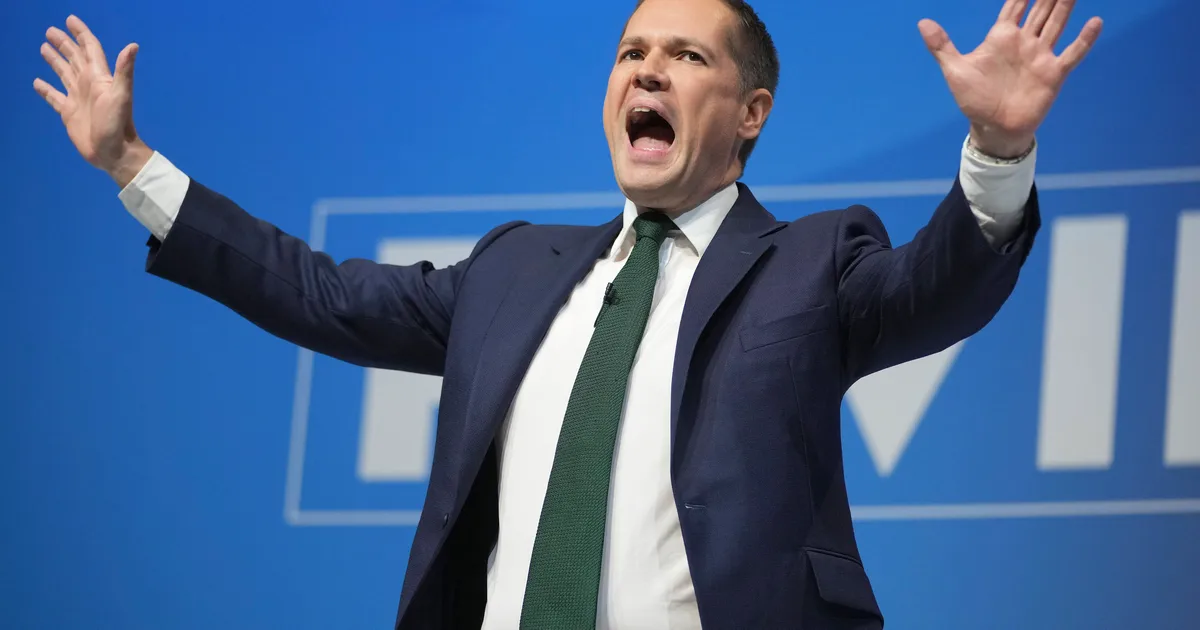
Robert Jenrick is on course to lose his Newark seat to the Conservatives in a great twist of irony, according to a new poll.
Jenrick defected to Reform UK in January, claiming the Tories were “over” and that Nigel Farage’s party was “uniting the right”.
The former Conservative minister and shadow justice secretary was soon appointed to be the Treasury spokesperson for Nigel Farage’s party.
But, in a significant blow to Jenrick, UK Polling Report predicted the ex-Tory frontbencher could be on track to lose his Nottinghamshire constituency to his old party.
It predicted that the Tories would win the seat in the next general election with 36% of the vote while Jenrick and Reform would come in second place, on 27%.
Jenrick was sacked from Kemi Badenoch’s shadow cabinet earlier this year when she discovered his plans to defect.
It came just over a year after he lost the Tory leadership contest to Badenoch.
Hours after Jenrick’s dramatic sacking, Farage announced that he would be joining his party ranks.
He has been regularly mocked by his former colleagues since switching to their right-wing rivals.
Shadow cabinet minister Claire Coutinho last week slammed Jenrick’s time as immigration minister by claiming he “freelanced on policy and claimed credit for ideas that weren’t always his own”.
MPs also openly laughed at Jenrick in the Commons for his defection in May when he tried to call out the “shambles” in the current government.
But many in the Conservatives are still disappointed about his decision to change sides.
Jenrick had a very tense on air reunion with Conservative shadow environment secretary Victoria Atkins in May when they sat next to each other on a BBC panel.
She said: “Rob has not spoken to me since he left the Conservative Party in the way that he did. And I considered us to be very good friends.
“It’s been a great personal loss to me, as well as a professional one. The reason I raise this is because Rob is the economic spokesperson for Reform.
“And I think how one conducts themselves is important. I think that this is a message that will continue until the general election. If people are asking voters for trust, then it has to be genuine.”
Asked for his response to Atkins’ comment about trust, he just said: “I don’t personalise things!”
Listen to Commons People, the podcast that makes politics easy. Every week, Kevin Schofield and Kate Nicholson unpack the week’s biggest stories to keep you informed. Join us for straightforward analysis of what’s going on at Westminster.
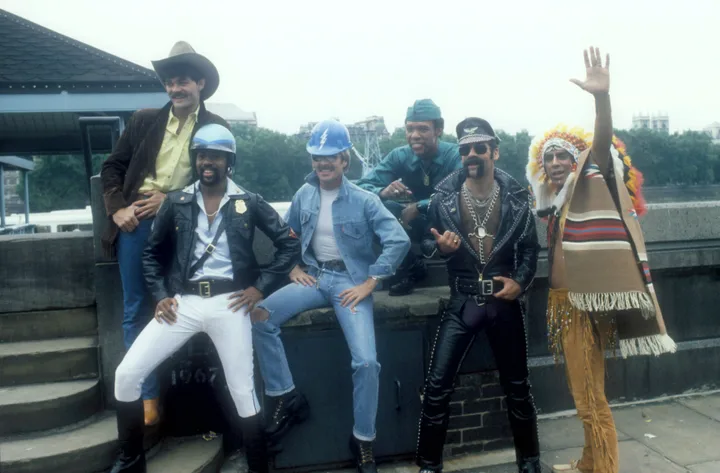
Village People performer Victor Willis has died at the age of 74.
On Wednesday morning, a post on the band’s official Facebook page announced that Victor had died on Monday, a day before what would have been his 75th birthday, following what was described as a “short but aggressive illness”.
“We are profoundly sad to announce the death of, Victor Willis lead singer of Village People,” the band’s statement said.
“Victor passed on Monday 30 June 2026 of a short but aggressive illness. Privacy is requested.”
The Village People formed in the 1970s, with Victor among its seven founding members.
He performed on some of the band’s signature hits, including disco staples In The Navy, Go West, Macho Man and the chart-topping YMCA. He was also listed as a co-writer on all of these songs.
During their time in the spotlight, the band were also known for their use of costumes, with Victor most notably performing as a police officer and naval officer.

Andre Csillag/Shutterstock
Following an extended break from the band, Victor returned to Village People in the mid-2010s, contributing to the festive album A Village People Christmas.
Outside of his work in Village People, Victor recorded one solo album, Solo Man, in 1979, which was finally released in 2015.
He also enjoyed success as a stage performer, and was part of the original Broadway production of the Wizard Of Oz re-imagining The Wiz.
In recent history, Village People’s biggest hit YMCA has become synonymous with Donald Trump, after the US leader repeatedly played the song at his rallies and other political events.
While Victor and his bandmates initially opposed Trump’s use of YMCA, the singer later backtracked on this, and in 2025, the group performed at the the divisive conservative group Turning Point USA’s celebration ball in honour of the president’s second inauguration.

WILL OLIVER/EPA-EFE/Shutterstock

The iconic Legally Blonde character Elle Woods is officially back on our screens in a new TV show depicting her life long before law school.
Launching on Wednesday on Amazon Prime, Elle follows a 16-year-old version of our beloved pink-wearing lawyer-in-training, the character made famous by Reese Witherspoon in the early 2000s.
While Reese is still involved in this new project as an executive producer, the Oscar winner, understandably, couldn’t play a teenager, which is why newcomer Lexi Minetree, whose spot-on audition went viral, was cast as the young heroine Elle.
Set years before the events of Legally Blonde, Elle follows the title character as she moves from her shiny, pastel world in Los Angeles to a grungy Seattle.
Unfortunately, critics are not exactly enamoured with Elle, with many disagreeing with the direction the character was taken in this new TV spin-off.
While some have praised Lexi’s leading performance – and the show’s nostalgic 1990s setting – others felt that the show paled in comparison to the 2001 classic, and felt more like a cynical cash-in than a deserving prequel.
Here is what critics are saying about Elle so far…
“Legally Blonde 3 has been stuck in development hell since 2018, cycling through different scripts, and aborted release dates. Elle is a quick fix. And presumably a cheaper one, at that.
“It pleases shareholders, fills an ‘if you liked this, why not watch…’ tile on the Prime Video landing page, and helps line the pockets of everyone involved – even if its curiously unfunny writing and nonsensical premise will likely leave many watching unsatisfied.”
“[If you] think of Elle Woods as an endlessly rebootable franchise IP à la James Bond or Superman, and this latest adventure as a loose re-adaptation of Laura Brown’s source novel rather than an expansion of it, Elle makes perfect sense from a business standpoint – though still only somewhat from a creative one.
“Amiable enough but nowhere near as charming as its cinematic predecessor, the new series does as much to highlight the limits of the Legally Blonde concept as its adaptability.”

“It should be a lot of peppy fun and in the odd moment it is, but the scripts seem to be deliberately half-baked, as if the show isn’t expecting your full attention: the supporting characters are generic and whenever a scene throws up an opportunity to deliver a killer gag, it habitually chooses something only gently amusing instead.”
“Having established its brand of comedy as largely aesthetic, Elle moves on to plots focused on tired teen drama, a pathetic love triangle, and a lazy mystery (that, technically, includes a death, so if you wanted to call Elle a murder-mystery – as ridiculous as that sounds – you wouldn’t be off base).
“None of it hits, including the forced film tie-ins, and Minetree’s admirable performance – adding sharpness and texture to futile dialogue and lifeless dilemmas – gets lost in perspective-less content destined to be, at most, second-screen entertainment.”
“Each episode seems needlessly tedious, running between 45-60 minutes long when they should be a quick and fun 30. Beats that are telegraphed from episode one drag out endlessly and even fun bits, like the back-and-forth banter between Elle and her mum [are] marred by an almost comical amount of product placement.”
“Here’s the logic problem. Legally Blonde rested on the culture shock of Elle going to Harvard. Wouldn’t she have mentioned, and been altered by, a similarly drastic life-change a few years earlier?”
“Unlike the original film, it’s not really a comedy, whether that’s by design or because writer Laura Kittrell can’t come up with the jokes.”

“It is surely too saccharine for today’s teenagers, and too teenage for adults who lived through the 1990s and have The Craft poster to prove it. This prequel, legally bland, is stifled by its own niceness and nostalgia.”
“The main characters are arguably even more developed in the show than they were in the original movie 25 years ago, which perhaps isn’t a shock given we have eight episodes to delve into, rather than just two hours.
But while I wanted to love Elle, it didn’t hit the sweet spot I hoped it would. Her character arc was too similar to the film, and it was lacking in uniqueness to justify being a prequel.”
“Elle succeeds where other unnecessary prequels and spinoffs fail because it understands what made Legally Blonde work: Elle is at her best when she’s an underdog and a fish out of water, forcing her to prove herself to everyone around her.”
“Ultimately, those who can get past the pilot and the canon problems will be rewarded with a lighthearted, bingeable series. When I got to the season finale, I whispered an Elle Woods-esque ‘yes!’ that Elle has already been renewed for season two.”
“The series avoids taking any real chances that might rock the boat. At the end of the day, Elle is funny, Minetree’s costumes are delightfully pink (though the show itself lacks any visual vibrancy), and it’s a relatively light series to binge over a weekend. Perhaps with a second season coming, the show might course-correct. However, as a prequel, don’t expect something new: Elle trades almost exclusively in nostalgia, and that’s just a shame.”

Tracy Bennett/Mgm/Kobal/Shutterstock
“Despite the clumsy stereotyping, there is plenty to love about Elle. People looking for more Legally Blonde can rest easy: the series boasts much the same premise as the original film (the fish out of water trope is present here throughout) but it’s been gently massaged for a modern day audience.”
“I’ll be honest, the series (which tilts towards a second one at the end) is all a bit young for a fogey like me, but it is a nice, slick nostalgia fix – a throwback to simpler, happier times – and as a prequel, it definitely works.”
“The mere fact that Elle’s rewritten history suggests that this inspiration came much earlier in her life doesn’t completely sit with what we know of her adult life. It’s clearly supposed to be a seedling for what’s to come, but perhaps is a little overplayed. Even so, I had such a good time watching Elle that I don’t even care.
“The ebbs and flows of high school drama are deliciously played, the script is genuinely hilarious, and the overarching narrative plot is addictively compelling.”
“It’s so difficult to capture the magic of something as beloved as Legally Blonde. But believe me when I say, this is a gorgeous honouring of the original story, wrapped in so much nostalgia and warmth.
“It’s been a long time since something has pulled at my heart strings quite so much – not least with familiar faces like the late James Van Der Beek adding to that wave of recognition for older views.”
Elle is currently streaming on Amazon Prime.
Politics
The House | A “vivid” account of the events that divided Cyprus: Bambos Charalambous reviews ‘Cyprus 1974’


21 July 1974, Nicosia: Royal Navy helicopter evacuates local Cypriots following bombing of the area by Turkish planes I Image by: Associated Press / Alamy

3 min read
Andrew Southam’s skilfully researched and very readable book is well worth your time
It will be 52 years in July since the events of 1974 which left Cyprus divided.
They led to the United Nations peacekeeping force patrolling the green line running east to west across the island, separating the Greek and Turkish Cypriot communities and splitting the capital, Nicosia, in half.
Conspiracy theories still abound about the events leading up to the division of the island – these include the CIA acting out of serious concern about the socialist leanings of Archbishop Makarios, or Nato wishing to appease two of its members, Greece and Turkey, or the Greek military junta seeking to take over Cyprus – all have been woven into the mythology of how Cyprus came to be divided.
It is therefore timely that Andrew Southam’s Cyprus 1974 sets out to debunk these conspiracy theories and instead show that it was the tragic confluence of events and lack of preparedness internationally that led to the failure to stop the island’s division.
Southam starts off by giving an overview and then proceeds to explore the thinking behind the actions (and, in some cases, inaction) of the main protagonists due to political and international pressures at the time.
It is timely that Andrew Southam’s Cyprus 1974 sets out to debunk these conspiracy theories
For example, in Washington DC, Southam rightly explains that with the Watergate scandal consuming so much of president Richard Nixon and his staff’s time and energy – and with the Paris Peace Accords for Vietnam, the fallout of the Yom Kippur war and the Middle East oil crisis all needing urgent attention – US secretary of state, Henry Kissinger, had plenty on his plate.
Flitting seamlessly from one nation to another, and through the use of archive material, Southam paints a vivid picture as to what was going on at the time.
 The way this book is structured makes it easy to envisage it being a made into a TV documentary or a film. There is some repetition, which Southam acknowledges from the outset but only in so far as it is relevant to recap and progress the chapter further.
The book is well-researched and very readable even if you have no prior knowledge of the events in Cyprus in 1974.
It makes a strong case against the conspiracy theories but, 52 years on and with many of the key actors long since departed, misinformation will continue to persist. This should take nothing away from Southam’s book and the articulate way in which he deconstructs each theory. The book is well worth a read and I would highly recommend it.
Bambos Charalambous is Labour MP for Southgate & Wood Green
Cyprus 1974 – Conflict in The Mediterranean: No Control, No Conspiracy
By: Andrew Southam
Publisher: Pen & Sword

Last week, fans said goodbye to Carmy, Syd and the rest of The Bear’s central family, as Disney+ dropped the final season of the culinary drama in one go.
Speaking to The Hollywood Reporter about The Bear’s ending, its lead, Jeremy Allen White, admitted it was “hard to say goodbye” to the show that propelled him to international stardom, despite knowing it was coming to an end for two years beforehand.
“We’re really lucky in that we had a build-up [to the conclusion],” the Emmy winner said. “I knew for about two years when it was going to end and how it was going to end, so there was a lot of time to prepare.”
He continued: “I’m going to miss these people so much, I’m going to miss the set. The Bear set is so specific – it’s incredibly detail-oriented and exacting, but also flexible and freeing. It’s a hard thing to say goodbye to anything you love.”
On the red carpet of the series finale, he told People how difficult it was to make the last episodes of the Emmy-winning show.
“It was hard,” he recalled. “I mean, it was hard to read. It was hard to shoot. It all makes sense.
“To me, this season, the end of the show is like – for Carmy at least – is about this sort of, like, ultimate surrender and acceptance of, kind of, like, an honesty with himself. So that all makes sense to me.”

Meanwhile, Jeremy has admitted that the very first season of The Bear will forever hold a “special” place in his heart.
“There were no expectations for the show, which was wonderful. We felt like we were really in our own world,” he said in his Hollywood Reporter interview. “We could feel it was special, but it felt like it was still ours. Then, going to the Emmys and being with everybody a year and a half later for season one, that night when the show won, I won and Ayo [Edebiri] won. It was unreal.”
Ayo Edebiri, who plays chef Syd in the series, said in the same piece that her favourite memory came when the series felt “bigger than any of us” and was renewed for a second series.
She explained that she was in New York with Jeremy on the set of a photoshoot when she heard the news of the renewal.
“I remember we were both intermittently checking our phones and being like, ‘Something is happening. What’s going on?’ It felt like people were being like, ‘Wait, no, this is really cool’,” she said.
The final season of The Bear picks up the morning that Carmy’s friends and family discover he has quit the food industry and left the restaurant to them.
Overall, the new run of episodes were met with critical acclaim, with The Telegraph praising it as a “classic recipe done very, very well”.
All five seasons of The Bear are now streaming on Disney+.


Credit: Adobe Stock

3 min read
After her committee recently published a report on solving the SEND crisis, Helen Hayes, Chair of the Education Committee, examines the proposals put forward by the government in the King’s Speech on the Education for All Bill
This article was commissioned by the Total Politics Impact team.
“A truly inclusive education system that works for every family.”
That is the ambitious claim made of the government’s recently announced Education for All Bill, which aims to deliver the reforms to special educational needs and development (SEND) support set out in the Schools White Paper.
The Education Committee, which I chair, undertook a major inquiry last year to understand the scale of the challenges facing children with SEND and their parents, carers and teachers, and to find evidence-based solutions.
Our report made a series of important recommendations for change, including early identification and support for children with SEND, ensuring the same level of support is available everywhere in mainstream schools and putting more support on a statutory footing, and increasing the number of state special school places so that children can be educated close to home.
I was very pleased to see many of our recommendations, based on evidence we heard from teachers, parents and carers, experts and children themselves, taken forward by government. For example, the government made early support one of its main principles for reform and strengthened the SEND offer available through Best Start Family Hubs.
But we know this will not be an easy or quick fix. My committee held an evidence session shortly after the White Paper’s publication, giving witnesses right across the education system an opportunity to respond to the proposals in detail.
Overall, our witnesses were cautiously optimistic. Many were pleased that the government had finally taken the issue head on and proposed some serious ideas for change. But it was clear that there are still several missing pieces of the puzzle.
Our witnesses raised the further steps needed to deliver a curriculum that is genuinely inclusive and flexible enough to deliver for every child. The recent curriculum and assessment review appears to be insufficient to deliver that, with more radical steps required.
There are also concerns about the scale of the resources required to transform the system. While the government has provided additional funding, more detail is needed on the plan for implementation and the funding required to deliver this.
I was very pleased to see many of our recommendations, based on evidence we heard from teachers, parents and carers, experts and children themselves, taken forward by government
The committee was clear in our report, published last year, that what the education system needed was not tinkering at the edges but a root and branch transformation to make inclusivity the norm in every school.
Inclusion should be properly defined, given the resources needed to make it work, and leave no aspect of the life of a school untouched. We have seen first-hand how some inspiring schools are already putting this into practice. With the right support, many more could join them.
If the government’s reforms take account of the concerns raised to my committee and in response to the consultation, I’m optimistic that the Education for All Bill will make a genuine difference to the lives of children with SEND, their parents and carers and the professionals who work with them.


Illustration by Tracy Worrall
4 min read
Lessons in political science. This week: Rivals
I didn’t enjoy Rivals as much as some. The problem was Rupert Campbell-Black. He is supposed to be Mrs Thatcher’s minister for sport – and I am old enough to remember Mrs Thatcher’s actual ministers for sport.
They were, in order of their appointment: Hector Monro, Neil Macfarlane, Richard Tracey, Colin Moynihan and Robert Atkins. None of these individuals were – and this is not meant as criticism – the sort of people on whom Jilly Cooper would have based a rakish anti-hero. Indeed, of the various people Campbell-Black is said to resemble, none were MPs; you can read into that whatever you want.
Rivals is set in 1986-7, slap bang in Tracey’s period of office, but it also contains the claim that Mrs Thatcher created the role specially for Campbell-Black, a former Olympic show-jumper, thus erasing Monro and Macfarlane, as well as their predecessors Denis Howell and Eldon Griffiths. The show also makes Campbell-Black a privy counsellor, even though the post was then held by an under-secretary of state. There were many other issues with the show’s depiction of political life, but there is a danger that this column becomes similar to the time I was watching a James Graham play with my wife, helpfully informing her of things I thought they had got wrong – until she indicated, with some forceful clarity, that she was no longer desirous of such a commentary.
Still, it’s nice to see junior ministers get some limelight. Kevin Theakston began his 1987 book on the subject quoting a newspaper claim that “few people in British politics exist in such deep obscurity as junior ministers”. That book aside, there have been precious few academic studies doing very much to bring them out of the shadows. One of the exceptions, as it happens, focuses on the role of sports minister. Published in 2011, it argued the role was primarily about raising the profile of sport, rather than policymaking. It also noted that the post was a poor career move. None of the sports ministers up to that point had made it to Cabinet, something which remains true – although a number are currently in the shadow cabinet and their race is not yet run.
One issue with studying ministers is working out what they do, and especially on which parts of their portfolio they focus. You can talk to them – the Institute for Government ran a great project doing just this – or look at what they do in Parliament. But a fascinating new piece of research published in West European Politics has instead used Transparency International’s open access record of ministerial meetings. Transparency International’s work is most often associated with studies of corruption, but it is also very useful at showing who ministers engage with. The data is available online and freely downloadable.
One issue with studying ministers is working out what they do, and especially on which parts of their portfolio they focus
This new research looked at more than 78,000 ministerial meetings held between 2012 and 2021. The key findings of the paper – that white male ministers engaged least with equalities organisations, and that women’s organisations enjoy much greater access to ministers than organisations focused on race – is interesting in itself, but the approach offers wider possibilities.
The data now runs up to 2026 covering over 160,000 meetings. To what extent does a change in government change the groups who enjoy direct access to ministers? With one exception, the top 10 groups to hold meetings with ministers before and after 2024 are completely different. Prior to 2024, the list included the CBI, the NFU, and the Federation of Small Businesses. Since 2024, the top 10 includes the GMB (straight in at number two, as they used to say on the radio), and Unison (which gets coded up separately as Unison and UNISON, and would in fact be ahead of the GMB if only civil servants could agree on the capitalisation). The appeal of the Local Government Association is clearly universal, as it is top in both lists.
There is, lurking in this dataset, the potential for great mischief. But there is also the potential for some great research.
Further reading: A McMaster and A Bairner, Junior Ministers in the UK: The Role of the Minister for Sport, Parliamentary Affairs, 2012; A Christoffersen et al, Intersectionality, NGOs and executives: who has which minister’s ear? West European Politics, 2025
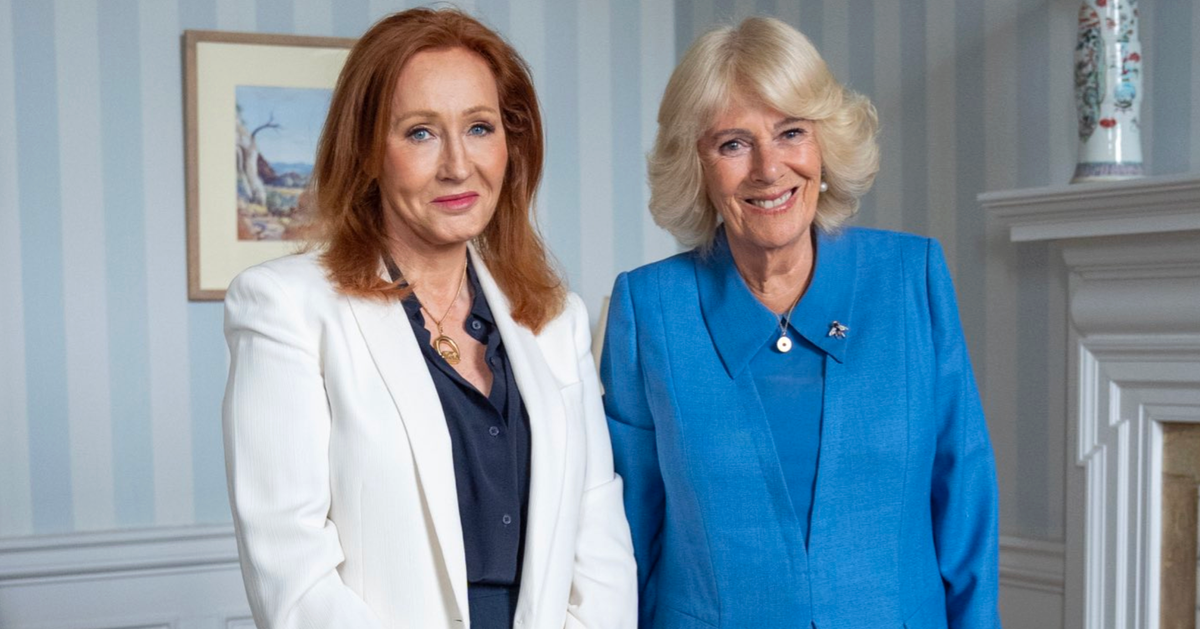
Queen Camilla has found herself at the centre of debate after sharing that she recently spent time with JK Rowling.
On Tuesday afternoon, the monarch posted a picture of herself and Rowling on the Royal Family’s official social media channels, sharing that she and the Harry Potter author had met to discuss the importance of young people having access to books.
“With a shared passion for books and a deep commitment to children reading for pleasure, The Queen and author JK Rowling have met at the Palace of Holyroodhouse in Edinburgh,” the post read.
“Her Majesty and Ms Rowling discussed the importance of ensuring that young people have access to books and the vital part reading plays in opening doors for future generations.”
As the post became more widespread, it sparked a wave of backlash on social media, due to Rowling having become such a controversial figure in recent history due to her staunch views and commentary on issues relating to transgender people.
Over the last few years, Rowling has faced criticism for deliberately and repeatedly misgendering transgender public figures.
The Wizarding World creator also donated tens of thousands of pounds to the campaign group which raised the initial legal challenge that led to the UK Supreme Court’s ruling last year that the legal definition of a woman should include only those who were assigned female at birth.
When the decision was made, she shared a celebratory social media post alongside the message: “I love it when a plan comes together.”
Given her views, many were unhappy at seeing the Royal Family welcoming Rowling into one of their properties on X (the site formerly known as Twitter):
Meanwhile, over on Instagram, comments on the same picture have been restricted, after users made their feelings clear, responding with a sea of transgender pride flags and messages of support for the LGBTQ+ community.
“All young people? Or only some young people?” one critic also replied, while another suggested: “During pride month, [this] is a statement.”
“As an admirer of the Queen and her Reading Room I’m deeply disappointed in her giving a platform to JKR, any month but especially during Pride Month,” another wrote.
“There are many other admirable individuals to spotlight who champion reading for children and young people.”


An anti-establishment avalanche blanketed Colorado on Tuesday night.
Across the Centennial State, the candidates who cast themselves as fighters against the old-line Democratic establishment soared to victory — the clearest proof yet that the base’s fury at their leaders extends far beyond the five boroughs, following insurgents’ major victories in New York City last week.
Colorado democratic socialist Melat Kiros scored a stunning victory over 15-term Rep. Diana DeGette (D-Colo.), who was first elected before the 29-year-old Kiros was born, while Colorado Attorney General Phil Weiser defeated longtime Sen. Michael Bennet, losses for two of the most dominant Democratic figures in the state. Both winners were viewed as longshots just weeks ago, but Kiros and Weiser successfully positioned themselves as the true scrappers while painting their opponents as Washington insiders who were too beholden to the party machine, with little to show for their years in office.
“For decades Democrats have failed to meaningfully deliver for working families,” Kiros said in an interview after the race was called. “We have to root out the corruption and get money out of our politics … It’s not about popular support, it’s about political will — and that means we have to vote out any of the incumbents that are standing in our way by taking that kind of corporate PAC money.” That includes, she added, not supporting House Minority Leader Hakeem Jeffries for speaker.
Manny Rutinel, a progressive state representative backed by an infusion of cash from prominent Latino groups, also cruised to the Democratic nomination to face Rep. Gabe Evans (R-Colo.) for one of the most competitive House seats in the country.
Rutinel focused much of his campaign on attacking his more-moderate foe for failing to stand up to President Donald Trump’s ICE operations.
“Folks right now are upset with the establishment, and they’re looking for fighters who are going to stand up to Donald Trump and Gabe Evans, because they are destroying our economy,” Rutinel said. “We need fighters who understand the struggles, and we’ll fight for them every single day. That’s what I’ve done throughout my entire career. That’s what I’m going to do when I’m in Congress.”
That same anti-establishment energy ran up and down the ballot Tuesday night.
Moderate-leaning Sen. John Hickenlooper (D-Colo.) won his primary. But his democratic socialist-aligned opponent, state Sen. Julie Gonzales, ended the night closing in on a single-digit loss — despite Hickenlooper’s nearly 9-to-1 fundraising advantage over Gonzales in a race few observers thought would be close. She led him in Denver, the city where he was once mayor. Hickenlooper’s margin of victory was narrower than Weiser’s with 90 percent of the vote counted.
A number of more-moderate state legislators trailed their further-left opponents as well.
“Voters are angry,” said Doug Friednash, a longtime Colorado Democratic strategist and former gubernatorial chief of staff to Hickenlooper. “They are all anti-establishment and don’t feel like our leaders have fought hard enough and don’t have a coherent voice. Kiros is the clincher.”
Kiros lost her job as an attorney after writing an op-ed slamming the backlash against critics of Israel’s government, and she launched her campaign nearly a year ago with an ad portraying herself as a fighter who would deliver change. She painted DeGette, a reliable progressive vote but low-profile member, as someone who wasn’t “fighting back like they should.” In the two-minute ad, Kiros referred to the need for a fighter six times — which she carried over into her victory speech Tuesday night.
Weiser’s campaign didn’t mirror Kiros’ DSA-backed candidacy, but he did cast himself as someone who would take on both the Democratic establishment and the Trump administration. While he’s a two-term statewide official — and at age 58, is only three years younger than Bennet — Weiser built his campaign around the dozens of lawsuits he’s brought as attorney general against the president. He’s sued over everything from the president’s executive order on birthright citizenship to federal funding freezes.
“Coloradans need a governor who is a fighter,” Weiser said in an ad earlier this year. “I’ll always stand up to bullies, especially Donald Trump. Congress isn’t doing it. But I am. We are stopping him in court, winning 34 times and counting.”
Kiros’ campaign was buoyed by a wave of support from national progressive leaders and groups. She picked up major endorsements from Rep. Ro Khanna (D-Calif.) and Sen. Bernie Sanders (I-Vt.).
Justice Democrats, which has been on a hot streak this primary season and was the first national group to back Kiros’ campaign, framed the win as validation. “Our candidates are winning because they are running on an affirmative vision to make life more affordable for working class voters — from Medicare for All to ending taxpayer-funded genocide — and they are not afraid to call out a Democratic establishment that stopped fighting for us the minute they started being bankrolled by the corporations raising our prices,” said Usamah Andrabi, a spokesperson for the group.
The Democratic Socialists of America also poured major resources into the race, running phone banks for Kiros nearly daily in the campaign’s final stretch, knocking on over 100,000 doors and making over 500,000 calls on the ground in Denver.
Popular socialist Twitch streamer Hasan Piker, who emerged as one of the most visible outside organizers in New York’s insurgent sweep, dedicated multiple streams to boosting Kiros’ candidacy in the weeks leading up to the primary. At one point, he hosted her for an extended interview and also ran multiple marathon phone-banking sessions for her campaign live on stream, urging his viewers to call voters alongside him before ultimately traveling to Denver to campaign with Kiros in person on primary day.
“A thirty-year incumbent was defeated tonight. It’s clear that there is a real hunger for change. Democrats all over the country are demanding it,” Piker said. “That change is a working class centered movement. It’s socialism. We are not done yet.”

Aldi selling strawberries for only 99p for Wimbledon

Shell plc (SHEL) Discusses Global LNG Trends, Market Developments, and Outlook – Slideshow
Bitcoin Whales Are Dumping: But This Rare Signal Says the Bottom May Be Close





-

 Fashion5 days ago
Weekend Open Thread: Staud – Corporette.com
-

 Politics5 days ago
The House | Manchesterism won’t survive the painful trade-offs unless it gets citizens on board
-

 Crypto World1 day ago
Strategy authorizes up to $1.25B in Bitcoin sales under new capital plan
-

 Politics5 days ago
Potential 2028er World Cup attendee leaderboard
-

 Business5 days ago
Asia stock markets slide as tech shares slump
-

 News Videos3 days ago
MAJOR BITCOIN & MARKET UPDATE!!!! (MUST WATCH ASAP!!!)
-

 Tech6 days ago
A Look At A Gaggle Of Transputer Boards
-
 Crypto World6 days ago
Dell (DELL) Shares Tumble Over 5% Following Analyst Downgrade to Hold
-

 Crypto World4 days ago
Coinbase, Circle Deepen Crypto Stock Losses Despite Resilient S&P 500
-

 Business1 day ago
Australia treasurer says alleged access of prime minister’s bank data ’incredibly concerning’
-

 Crypto World4 days ago
Kraken's xStocks Opens Bending Spoons IPO Registration to EEA Retail
-

 Sports5 days ago
FIH Pro League: India defeat Pakistan 7-1, register biggest win of campaign | Other Sports News
-

 Crypto World5 days ago
Bitcoin Sparks $600M Hourly Liquidations With $65,000 Set To Become Resistance
-

 Tech3 days ago
Bluekit phishing kit adopts browser-in-the-middle for login theft
-

 Tech4 days ago
Russian hackers now target Signal backup recovery keys
-
 Crypto World5 days ago
Hyperliquid Named on Singapore MAS Investor Alert Register
-

 Crypto World6 days ago
Ripple and SBI launch RLUSD in Japan after JFSA approval
-

 Crypto World5 days ago
RTX holders must register wallets before token distribution begins
-

 Tech1 day ago
Anonymous researcher drops 0-day ‘exploitarium’ repo
-
 Business2 days ago
The AI boom won’t burst all at once. It will pop in ‘rolling bubbles’: Macquarie
You must be logged in to post a comment Login