
Projections powered by
Sportsline
Sportsline


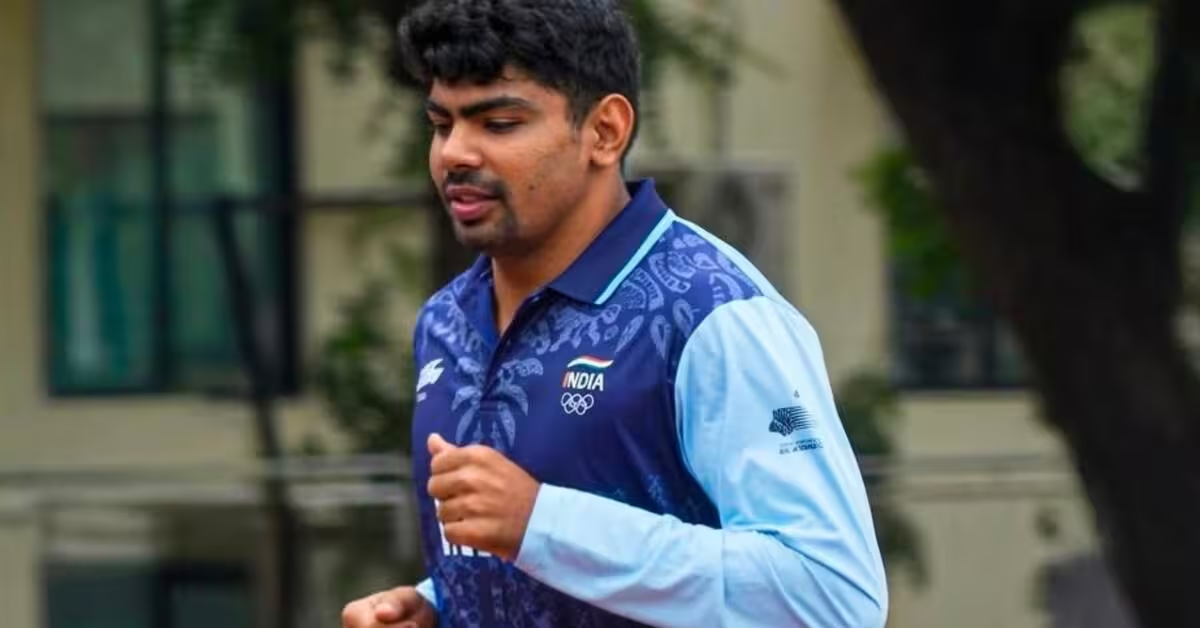
India’s men’s kabaddi team is targeting gold at the Asian Games 2026, with raider Pawan Sehrawat expressing confidence in the 12-member squad’s preparations and the trust built during its training camp in Gandhinagar.
The Sunil Kumar-led side has been preparing at the Sports Authority of India (SAI) sports training centre in Gandhinagar, with the camp scheduled from September 5 to 15. Sehrawat said the time spent together had helped the players develop trust ahead of the Aichi-Nagoya Games in Japan.
Training together builds confidence
Sehrawat believes the selected players complement one another, with their shared ambition to win gold strengthening the combination. He pointed to the squad’s extensive practice together as the basis for its confidence going into the competition.
“The team is very confident. We have practiced a lot together. All the 12 players who have been selected make a great combination. We trust each other. The most important thing is that we are here for one thing, and that is gold. Gold makes us all one, and this is what a team should be,” said Sehrawat.
Gold expectations become motivation
India’s men’s and women’s kabaddi teams have together won 11 gold medals, one silver and one bronze at the Asian Games. That record has made another gold medal the expectation surrounding the squad’s preparations.
For Sehrawat, such expectations reflect the confidence people have in the team’s ability. He said being viewed as a side capable of winning gold was a source of pride, and that the players could use that backing to motivate themselves.
“We are seen as a team that will bring gold medal and it is a matter of pride. That expectation gets converted into motivation and makes it easier to play,” he said.
India jersey brings responsibility
The Arjuna Award recipient said being among the 12 players selected to represent a country with such a large population was an honour. Wearing the national jersey also brought an awareness that the team was carrying the hopes of people across India.
“When I wear the jersey of India, I feel that I have a responsibility, as we are carrying the weight of the whole country out there and it should go in the right direction as we get the extreme best for India,” Sehrawat said.
Sehrawat holds the Pro Kabaddi League record for the most raid points in a match, with 39. Ahead of the Asian Games, however, his emphasis was on what the players could achieve together and the responsibility of producing their best for India.
When will India’s men’s kabaddi campaign begin?
India will begin its campaign against hosts Japan on September 21. The match is listed in the morning session, which starts at 6 am IST.
India will then face South Korea on September 22, Bangladesh on September 23 and Chinese Taipei on September 24. The semifinals are scheduled for September 25, followed by the final on September 26.
India’s women will also open on September 21, against Bangladesh, in the session starting at 12.30 pm IST.
India’s men’s kabaddi squad for Asian Games 2026
Sunil Kumar (captain), Pawan Sehrawat, Ankit Jaglan, Aslam Inamdar, Ashu Malik, Ayan Lohchab, Devank Dalal, Arjun Deshwal, Jaideep Dahiya, Rahul Sethpal, Gaurav Khatri, Sumit Sangwan
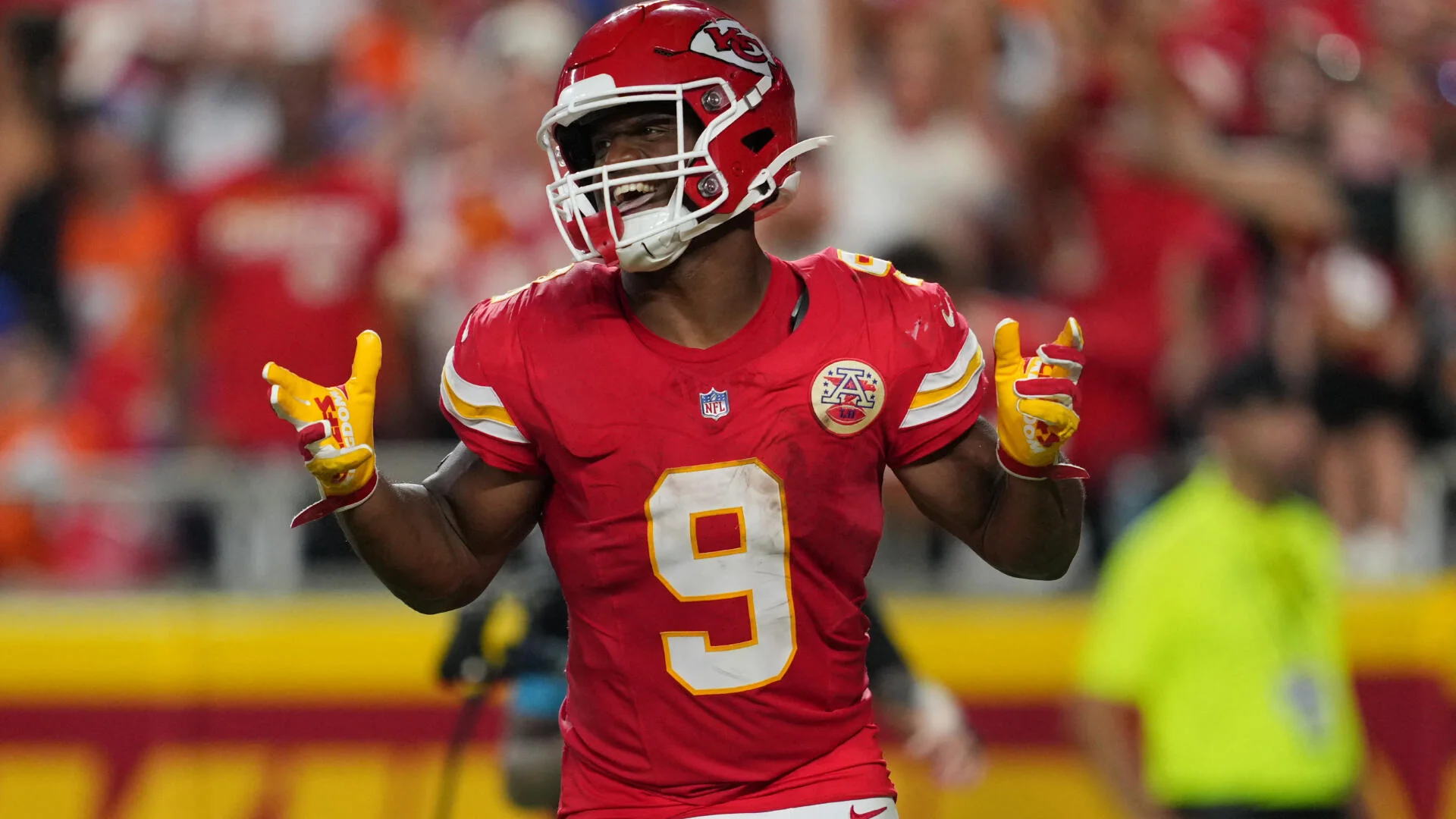
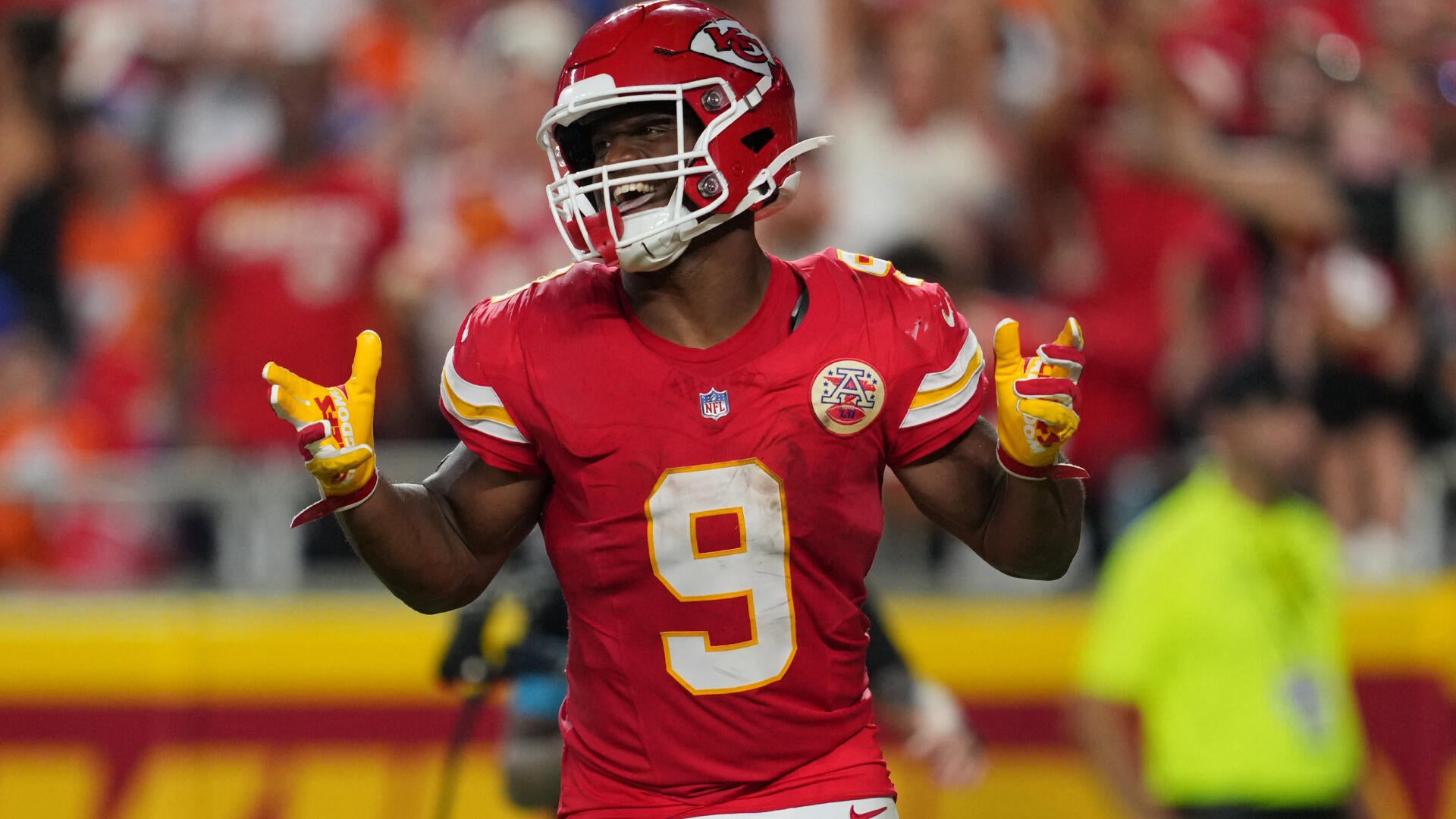
Missed tackles are always a little bit tough to diagnose. Did the defender mess up? Did the offensive player create the missed tackle? A lot of times it’s a little bit of both. Whatever the cause, on Monday night in Kansas City, missed tackles were the primary reason the Chiefs blew the doors off the Denver Broncos. The guys creating those missed tackles were predominantly the Chiefs’ two new running backs, Kenneth Walker and Emmett Johnson.
Walker was a revelation early and often in this game. His 60.9% tackle avoid rate was second in Week 1, trailing only Bucky Irving. His 7.78 yards after contact per rush attempt also ranked second, behind Kyle Monangai. And Johnson wasn’t just efficient, he was a bell cow. He had 26 touches in this game despite barely playing in the 4th quarter. He looked like a true RB1 with a chance to challenge the RB1 if this usage keeps up.
Johnson wasn’t as efficient as a rusher, didn’t force as many missed tackles as a rusher, but he picked up 44 yards on his two receptions and made multiple Broncos defenders look foolish in the process. His lower rushing average could at least partially be attributed to the fact that most of his rushes came after the game was in hand and the Broncos knew the Chiefs would be running every play. What became crystal clear is that Johnson is the replacement for Walker, and he looks well-suited to do the job. Brashard Smith spent his night on the sideline and did not receive a touch. For teams that don’t need Week 2 help, Johnson may just be the top waiver wire add this week.
The success of these backs only highlights what an incredible week it was for the position. Six running backs scored at least 30 PPR Fantasy points. Six more scored at least 20. Nine more scored at least 13. As awesome as that is, it could feel pretty lonesome if your starting backs were bad in Week 1. I am hopeful De’Von Achane, Omarion Hampton, James Cook, and Saquon Barkley will bounce back, though I am not sure any of them will be as good as Walker. As for the other backs who struggled in Week 1, I am going to be very concerned if they aren’t better in Week 2.
Now let’s get to the rest of the Week 1 RB Preview:
RB Preview
Waiver Wire Targets
RB Preview
Heath’s Projections
My full set of Week 2 Fantasy football projections for every position is now available here. Find out which of my favorite plays are projected to score higher than consensus rankings and which don’t live up to their draft hype, at least in Week 2. Projected stats for all starting running backs will be updated throughout the week, so check back regularly.
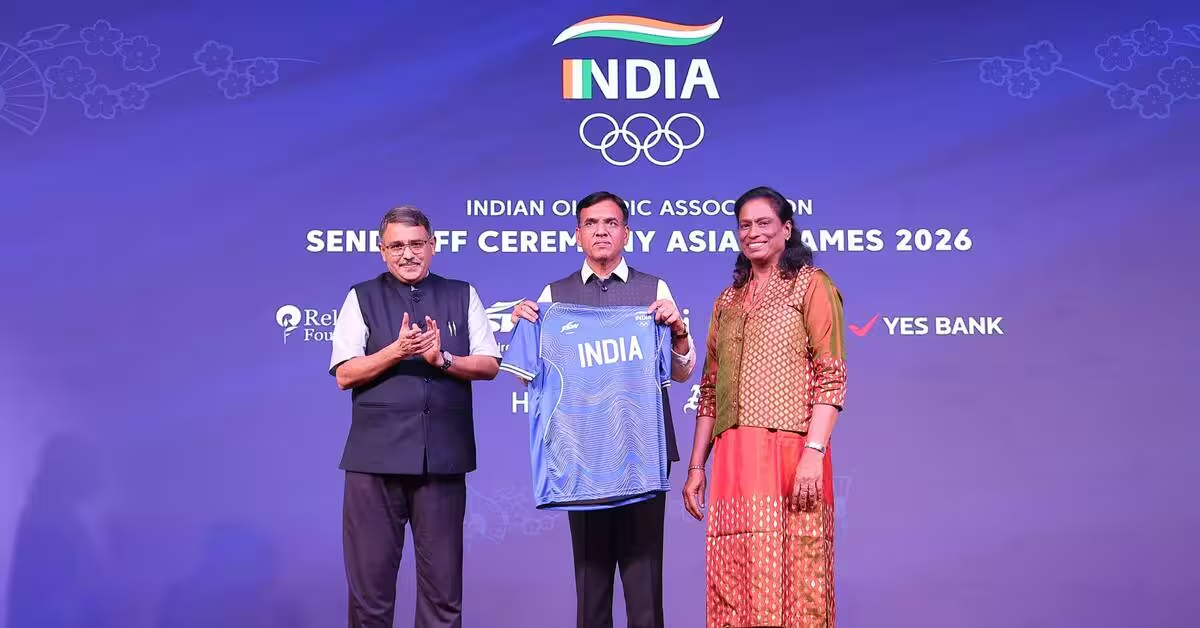
The central government has spent Rs 800.70 crore on preparing Indian athletes for the Asian Games 2026, based on the combined expenditure figures released by the Sports Ministry on Tuesday. The support has covered training, equipment, coaches and experts ahead of the Games beginning on September 19 in Aichi-Nagoya, Japan.
The amount brings together spending under the Annual Competition and Training Calendar (ACTC) and additional funding through the Target Olympic Podium Scheme (TOPS). The ministry outlined preparations over the past three years, with participation in international competitions accounting for the largest expenditure category identified.
India will send 501 athletes across 36 disciplines, including 310 Asian Games debutants. TOPS Chief Executive Officer N S Johal said performances across sports had given the contingent momentum to match or improve on the previous edition’s medal haul.
How much has the government spent on Asian Games preparations?
The ministry reported expenditure of Rs 702.86 crore under the ACTC. A further Rs 97.84 crore was spent from the TOPS fund, taking the combined amount to Rs 800.70 crore.
| Funding channel | Expenditure (Rs crore) |
| Annual Competition and Training Calendar | 702.86 |
| Target Olympic Podium Scheme | 97.84 |
| Combined expenditure | 800.7 |
The ACTC accounted for about 88 per cent of the combined amount, while TOPS contributed around 12 per cent. These figures concern India’s athlete preparations, rather than the cost of staging the Games in Japan.
Where has the preparation money gone?
International competition exposure received Rs 251.4 crore, the largest amount among the spending categories cited by the ministry. Domestic training followed at Rs 118.3 crore.
Together, the two categories accounted for Rs 369.7 crore. Spending on international competitions was more than twice the amount devoted to domestic training, indicating the importance given to competitive exposure overseas in the preparation programme.
Equipment support and the hiring of coaches and experts were also covered by the ministry’s account of preparations. Separate amounts for these components were not specified in the figures cited, nor was a sport-wise or year-wise spending breakdown provided.
How large is India’s Asian Games contingent?
The 501-member athlete contingent comprises 267 men and 234 women. They will be accompanied by 265 support staff, taking the combined strength to 766.
The athlete count is two fewer than the 503 originally sanctioned. Two names were dropped because of doping violations.
Debutants make up about 62 per cent of the athlete contingent. Johal said the presence of so many newcomers was encouraging because developing athletes takes time, and reaching the top level early was a positive sign for their future.
Which young athletes are in focus?
Among the young athletes attracting attention is 15-year-old cricketer Vaibhav Sooryavanshi. However, he is not funded by the Sports Ministry, an important distinction when considering the government’s preparation expenditure alongside the full contingent.
Other names highlighted include table tennis player Syndrela Das, badminton player Ayush Shetty and 18-year-old squash player Anahat Singh, who recently won the junior world title. Judoka Asmita Dey, the first Indian to win a Commonwealth Games gold in the sport, is also among those in focus.
The contingent includes 65 athletes who have come through Khelo India, which Johal described as the country’s baseline sports system. They account for about 13 per cent of the 501 athletes, showing the programme’s representation in the team heading to Japan.
What support will athletes have at the Games?
TOPS has also worked on the composition of the support teams, including the presence of physiotherapists, mental health experts and doctors. According to Johal, sports science personnel account for one-third of the authorised support staff.
Women are represented in the support staff of every team, he said. Finalising the contingent list took time because some federations had initially failed to name enough women in support roles.
Of the 265 support staff members, 56 are women.
How were preparations coordinated amid federation issues?
The Target Asian Games Group held nine coordination meetings from January this year, Johal said. The effort was to give athletes the best possible preparation environment despite administrative difficulties involving various federations.
Asked to explain those difficulties, he declined to discuss specific issues. The concerns arose against a background of administrative disputes and selection controversies involving several national federations.
Johal maintained that the focus on athletes had continued despite these problems. His account placed coordination with federations and the composition of support teams alongside funding as parts of the preparation effort.
What does India hope to achieve in Japan?
Johal said the contingent had the momentum to match or better India’s best medal performance at the previous Hangzhou Games. The ministry’s account put that benchmark at 106 medals, comprising 28 gold, 38 silver and 40 bronze.
“In the end the performance has to come from athletes. We have tried our best. As I said, the momentum is good and the younger lot is carrying this momentum,” Johal said.
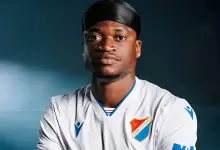
Nigerian striker Taiwo Awoniyi has added an academic achievement to his football career after graduating from the PFA Business School with a Postgraduate Diploma in Global Football Sport Directorship with Merit.
The 28-year-old Coventry City forward announced the achievement on Instagram, describing it as “another proud moment” away from the football pitch.
Nigerian striker Taiwo Awoniyi has added an academic achievement to his football career after graduating from the PFA Business School with a Postgraduate Diploma in Global Football Sport Directorship with Merit.

The 28-year-old Coventry City forward shared the news on Instagram, describing the qualification as “another proud moment” away from the football pitch.
“Another proud moment for me off the pitch.
“Graduating from the PFA Business School with a Postgraduate Diploma in Global Football Sport Directorship with Merit,” Awoniyi wrote.
The former Nottingham Forest striker said he believes footballers should continue learning and developing themselves beyond their playing careers.
“I have always believed that being a footballer shouldn’t stop you from being a student of the game and education has become an important part of that journey for me,” he added.
Awoniyi thanked the PFA Business School, its lecturers and fellow students for their support throughout the programme.
“Thank you to everyone at the PFA Business School, the lecturers and my colleagues I had the opportunity to learn alongside.
“And a special thank you to my family and friends for their encouragement and support throughout,” he said.
The Nigerian forward ended his message by reaffirming his commitment to both football and continued education.
“Still playing. Still learning. The journey continues.”
The PFA Business School offers education and development programmes for football professionals, including courses in leadership, management and the business side of the sport.
Awoniyi’s latest qualification adds another dimension to his career as he continues to combine professional football with academic development in football sport directorship.
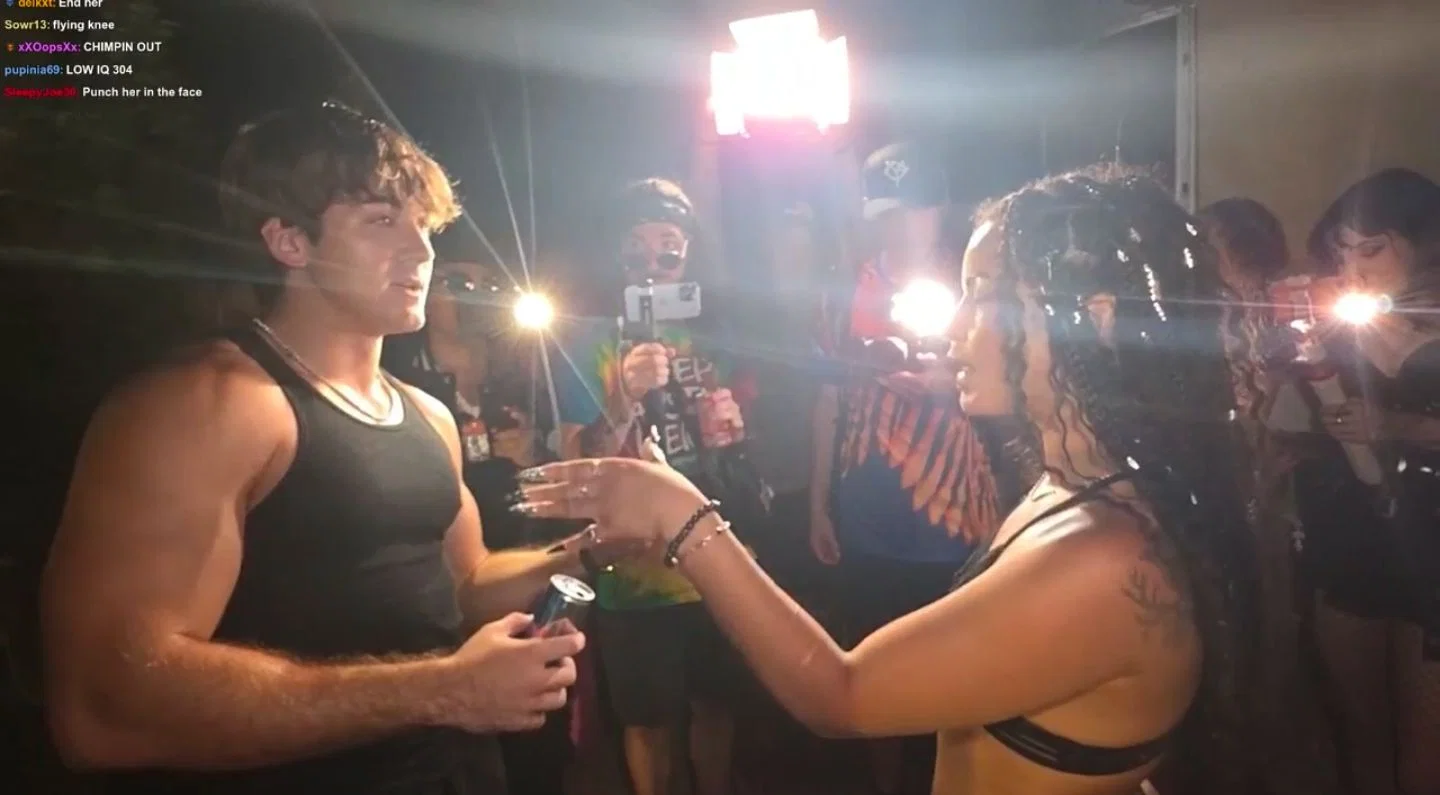
Controversial streamer XenaTheWitch has sparked another controversy after an altercation with looksmaxing streamer Drago at the Ice Poseidon x Nick Lee event. A clip from the event has been circulating on X, appearing to show Xena slapping Drago during a heated exchange between the two streamers.
The incident also follows another controversy at an earlier Ice Poseidon event, where she was banned from Kick after a paintball incident. With the latest altercation once again taking place at an Ice Poseidon event, it has drawn further attention to her history with the event.
According to the footage, Xena appeared agitated while complaining about people filming her. The situation escalated after Drago remarked “chim*ing out,” prompting Xena to slap him. She also appeared to continue arguing with him after the incident, further escalating the confrontation.
Another clip from the event has also been circulating on X, in which Drago addressed the altercation and explained why he chose not to retaliate after being slapped. He said that he held back because of how he was raised and because he did not feel that Xena posed a physical threat to him. He said:
“That’s just reactionary, you know? It’s like the shock factor leaves really quickly. Oh my God, you slapped me on the first date. What are you gonna do on the second date? Punch me? What are you gonna do on the third date? Put me in a f*****g chok*hold? It’s like, is that content? Remember, these hands are *******. Mine are not.”
Drago further explained that he did not feel threatened during the confrontation and believed that retaliating could have seriously hurt Xena. He said that he was holding her back when she became pushy and chose not to hit her because he did not want to cause her to fall or get seriously injured.
“Because that’s the thing, like, she actually takes— I mean, it’s like I could. When she was being pushy with me, and I was holding her back, I could tell how light she is and how easy it would be. And it’s like, when you know that, you can easily beat the s**t out of a person at any moment. It doesn’t feel like a threat.”
In other news, XenaTheWitch made headlines when she was arrested earlier this year.
Edited by Pranav Sharma
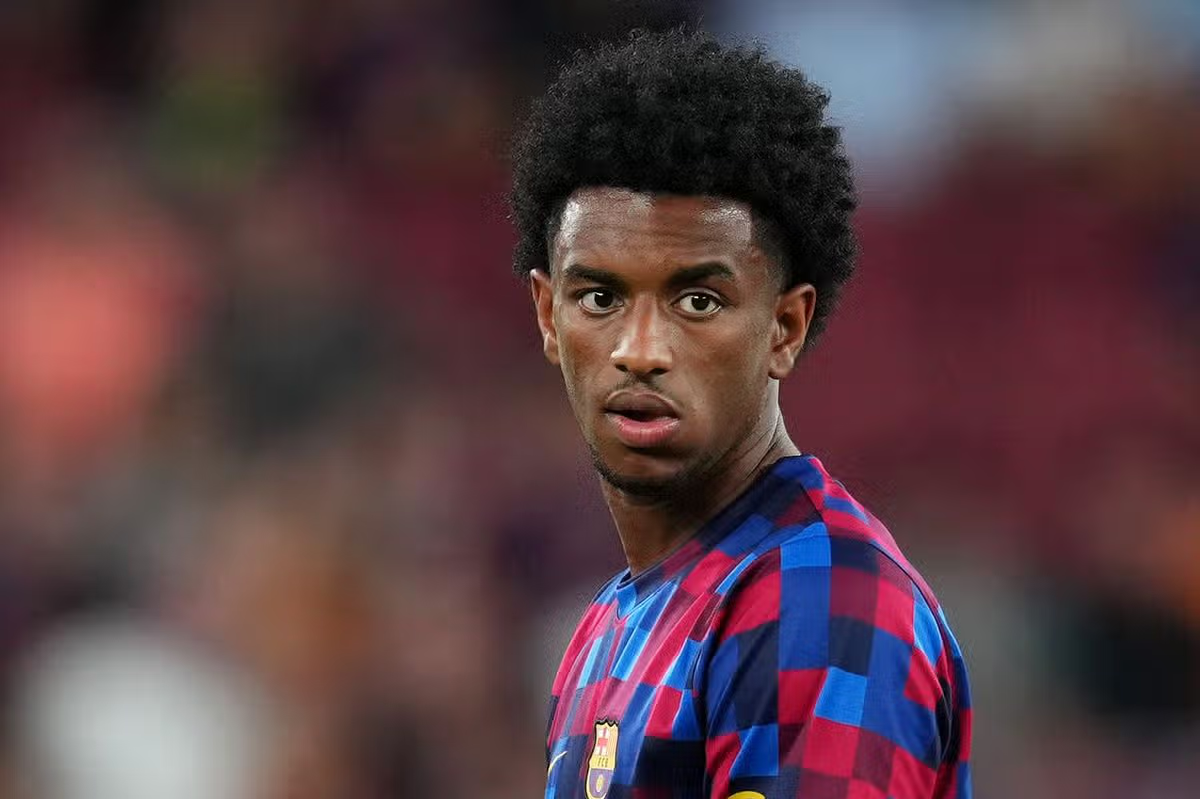
Manchester United will reportedly face competition from Liverpool for the signing of Barcelona star Alejandro Balde. United were heavily linked with signing the Spain international during the summer transfer window as they looked to sign a new left-back.
United brought in four new signings in the summer, but chose to prioritise the midfield when it comes to new additions to their squad.
Andrey Santos, Youri Tielemans, Carlos Baleba and Karl Darlow all moved to Old Trafford, with United not going into the market for a left-back despite the intense speculation around potential targets.
There has now been a fresh update on Balde’s future at Barcelona, which could give the Reds some concern if their interest still exists.
Spanish publication Sport have reported that Liverpool are weighing up a move for Balde as a potential “market opportunity”, with Andoni Iraola believed to be eager to bring the defender to Anfield.
The report suggests that Balde’s long-term future at Barcelona remains unclear, with a January departure cited as a possibility given the Spain international has struggled for regular game time so far this season.
United are also mentioned as retaining an interest in signing Balde, who is reportedly valued at around €40million (£34.3million) by the reigning La Liga champions.
Inter Milan are also said to be keeping tabs on Balde, who remains under contract at the Camp Nou until 2028. It has also been reported that, despite the aforementioned valuation, Balde has a release clause in his contract at Barcelona worth €1billion (£856million).
FOLLOW OUR MAN UNITED FB PAGE! Latest news and analysis via the MEN’s Manchester United Facebook page
Whether the report holds any truth remains to be seen, with United currently having Luke Shaw and Patrick Dorgu as the club’s left-back options at the moment.
Tyrell Malacia left United in the summer as a free agent, which sparked rumours that the Reds would go into the market for reinforcements in the recent transfer window.
United were linked with a move for Manchester City defender Rayan Ait-Nouri on transfer deadline day earlier this month, but no move materialised.
The Reds enquired about potentially signing Ait-Nouri, but the approach was rejected, which led to the left-back remaining at the Etihad Stadium.
I predicted a double digit win for the Vikings in their opener against the Packers. I know from experience that games rarely go as planned but I certainly didn’t envision the wild swings of momentum that resulted in the turnaround from a 22-10 seemingly hopeless third quarter deficit to a 39-22 Purple victory in which the Vikings scored the final 29 points and outscored the Packers 22-0 in the fourth quarter.
Here are my reactions: to a crazy, highly entertaining opening victory that was extra important since it was against a division rival at loud U.S. Bank Stadium.
1. Losing Kyler Murray on his 11th play to a concussion on a cheap shot hit in the head area from safety Javon Bullard was an early shock to the Vikings. I thought Bullard should’ve been ejected for targeting which didn’t happen but he’ll be fined by the NFL.
Carson Wentz took over. As expected with his limited reps with the starters in camp and before the opener, Wentz missed a few throws early to Jordan Addison. But Wentz justified Kevin O’Connell’s decision to make him the backup ahead of J.J. McCarthy with a solid performance that included a few plays McCarthy may not have made. These include drawing Lukas Van Ness offside with a hard count for the free play that resulted in the 39-yard deep TD pass to Justin Jefferson (a great throw and catch for the first TD), telling T.J. Hockenson to make a route adjustment that led to the 16-yard TD pass in the third quarter that brought the Vikings within 22-17, and changing the play to a run on Jordan Mason’s 28-yarder on the game-winning drive.
We’ll see if Murray clears concussion protocol in time to play in Chicago on Sunday but there is more confidence than ever before in Wentz after his Sunday performance (12 of 19 for 133 yards, 3 TDs, no turnovers and an impressive 123.5 passer rating).

2. The Vikings had contributions from all three phases. Myles Price’s 68-yard kickoff return jump-started the Vikings comeback when they were down 22-10 in the third quarter. There was a crushing block by newcomer DeeJay Dallas to help Price and the Vikings had to love that the block was against Evan Williams who threw a head shot at Jefferson on a pass play.
The defense overcame too many big pass plays allowed (seven pass plays over 20 yards and five over 30 yards including Christian Watson’s 81-yard first quarter TD that was misplayed by Theo Jackson and Josh Metellus, among others).
Brian Flores blitzed Jordan Love on 78% of his drop backs and the Packers offensive line became tired and confused late to the point they couldn’t block Blake Cashman, Andrew Van Ginkel, and Dallas Turner. The D was phenomenal on the last four Packer drives in which they stopped the Packers on downs; produced a lost fumble by Love on the combined strip sack by Cashman and Van Ginkel; then Love threw an interception on Cashman’s pressure and deflection that bounced off Harrison Smith and was picked off by James Pierre, and finally the Packers were again stopped on downs.
The fatigue factor also affected the Packers defense as the offensive line, tight ends, and fullback Max Bredeson led the way for Mason’s 28-yard run on the game-winning drive and TD runs by Aaron Jones (his first against his former team) and Mason. Time of possession was deceptive in the first half with the Vikings having the ball for 20 ½ minutes to 9 ½ minutes for the Packers and ultimately holding a 33-27 edge for the game. That also played a role against the Packers banged-up and reshuffled O-line in Week 1 when starters have not yet played a full game.
3. In their last four drives not including a kneel-down at the end, the Vikings scored four TDs and a two-point conversion (on a perfect throw from Wentz to Justin Jefferson) to go from a 12 point deficit to a 17 point win. In this amazing turnaround, the Vikings scored three TDs in 2:39 of game time. It’s the first win in franchise history in which the Vikings won by more than 15 points despite being outgained by over 150 yards (419-239).

4. Matt LaFleur’s bad decision—it just didn’t make sense to take points off the board in a divisional road opener when the field goal would’ve given the Packers an eight-point lead with 13 minutes left. And to run the QB sneak in a loud road venue without a pusher behind Love was a mistake.
It was a huge momentum boost for the Vikings when Love was stuffed by rookie third rounder DT Domonique Orange who played 22 defensive snaps while his draft classmate and first round pick Caleb Banks was on the field for 16 defensive snaps (both played seven special teams snaps). Big Citrus (Orange) was credited with two tackles while Banks had none and second rounder Jake Golday only played special teams as Kyle Van Noy had 25 plays at linebacker with one tackle.
5. Terrible officiating—it was one of the worst officiated games I’ve seen in a long time with two blatant facemask calls missed on the Packers against Wentz (that would’ve extended a drive) and Jefferson (the Vikings still scored a TD on that drive). A block in the back could’ve been called on Watson’s long TD catch and run. The body weight roughing call that kept the Vikings winning drive alive was a very questionable call. And there were several hits to the head not called along with holding by both teams that went unflagged.

6. Penalties, third/fourth downs, and red zone—it was a positive discipline-wise for the Vikings to have only three penalties for 15 yards as opposed to the Packers’ 12 for 98 yards including five penalties that gave the Vikings first downs (three on the wild game-winning drive). The Vikings converted 8 of 15 on third down while holding the Packers to 3 of 12 of third down and 0 for 2 on fourth down. In the red zone, the Vikings were 4 for 4 and the Pack 1 for 4.
7. Things to clean up—the Vikings have a lot to clean up before heading to Chicago including: coverage mistakes–it was better when Harrison Smith was in there more in the second half as the key communicator but concerns remain about the problems Theo Jackson and Josh Metellus have in coverage and it was probably Byron Murphy’s worst overall game as a Viking when Christian Watson burned him several times; better coverage also is needed on the tight ends after Tucker Kraft and Jonnu Smith combined for five catches and 115 yards (with Smith left wide open on a 43-yard catch) and the Bears have two good tight ends—Cole Kmet and Colston Loveland; run it more consistently (they had the two rushing TDs but only a 3.1 yard average with 107 yards on 34 carries for Jones and Mason), and Reichard should kick off deep into end zone as he often did last season so there are no returns (Bo Melton averaged 31 yards per kickoff return including a 59 yarder as the Vikings coverage units have a lot of young players still learning the ropes).
8. Bottom line—1-0 is a great place to be headed to Chicago to battle a Bears team that put 59 points and 552 total yards on Carolina. There’s a lot to fine tune especially in the secondary but as Kevin O’Connell said postgame, it’s a lot better to fix things after a home divisional win over an arch-rival.
Other Week 1 games involving NFC North teams
As just mentioned, the Bears offense rolled on Sunday with QB Caleb Williams throwing for 269 yards and two TDs and running for 65 yards and two more TDs. D’Andre Swift (124 yards, 3 TDs) and Kyle Monangai (100 yards, 1 TD) were part of a 291 yard rushing day. The Vikings run D was solid against Green Bay with only 66 yards allowed on 21 carries (3.1 yard average). The Bears defense gave up 478 yards and 37 points but did force three turnovers (after leading the league last year in the category).
The Vikings and Bears split their two games last season with each team winning on the road (and the Vikings could’ve swept if they had covered Devin Duvernay’s kickoff return in their Week 11 loss that may have cost them a playoff spot and possibly the division title).

The Lions staggered a bit out of the gate, blowing a 21-0 lead at home against New Orleans before winning 31-30 in overtime when the Saints couldn’t convert a two-point attempt. Jahmyr Gibbs had 156 rushing yards and two TDs and added 30 yards receiving. The Lions pass defense was lousy as Tyler Shough passed for 410 yards and three TDs (but he did throw two picks).
Detroit has a tough Week 2 game at Buffalo with the Bills coming off an exciting 36-31 win in Houston. Josh Allen had 357 total yards in the game with four TDs (two rushing and two receiving). It will be a short travel week for the Lions as it’s a Thursday night game and there will be a lot of fanfare as the Bills open their new stadium.
I’ll be back on Friday to preview Vikings-Bears this Sunday at Soldier Field.
In 1766, a decade before the Declaration of Independence was signed, a former military cadet named Thomas Bullitt became a founding father of a different kind. He built a lodge.
Then, as now, location was a key consideration, and Bullitt chose a prime one, in the Allegheny Mountains of Virginia, where mineral springs bubbled from the earth, drawing travelers who believed in their healing powers. Bullitt’s lodge, which he called the Homestead, gave them a place to stay.
Its guest list grew illustrious. In the summer of 1818, Thomas Jefferson spent 18 nights there, seeking relief for rheumatism. Nearly a century later, William Howard Taft arrived to treat something else: a golf addiction. By then, the Homestead had added a course, opened in 1892, establishing itself as America’s first golf resort. But hardly the last.
Today there are some 800 golf resorts in the United States and hundreds more around the world. Their diversity matches their geographic range, from intimate retreats built around a single celebrated course to sprawling destinations with enough holes, hotel rooms and amenities to resemble small towns. Some are designed for buddies’ trips. Others cater to families or couples, complementing golf with world-class cuisine, outdoor adventure, elaborate kids’ programs, indulgent spas and more.
That breadth is reflected in GOLF’s all-new list of Top 100 Resorts in the World. (You’ll need to be an InsideGOLF member to view.) Spanning every continent where the game is played, the roster captures an unprecedented moment for golf travel. Participation is at record highs. Competition for traveling golfers is fiercer than ever. Travelers aren’t simply searching for great places to play. They’re seeking memorable stays, and resorts have responded in kind — with new courses, ambitious restorations, expanded clubhouses, reimagined restaurants, upgraded amenities and accommodations and increasingly refined service.
Join InsideGOLF to view our Top 100 Resorts in the World. Memberships start at $39.99/year, and you’ll get over $375 in value across 20-plus benefits. Learn more here.
The results can be seen across the globe. Luxury standards continue to rise throughout Asia. European golf resorts, once associated with creaky floorboards and cramped accommodations, increasingly rival their counterparts anywhere in the world for comfort and hospitality. Caribbean destinations have broadened their appeal well beyond sunshine and seaside fairways. Wherever golfers travel, expectations continue to climb, and the best resorts continue to rise with them.
;)
courtesy Casa de Campo
More than a quarter century after Bandon Dunes rewrote the old rule book about proximity to major population centers, developers continue to act on the same lesson: Build an exceptional destination in a sublime spot and golfers will make the journey, no matter how remote. Increasingly, though, that destination encompasses much more than the golf itself.
This year’s Top 100 — which, unlike our strictly panelist-driven Top 100 U.S. and Top 100 World course lists, was drawn up by the staff of GOLF — includes more than dozen new entries while also highlighting another defining trend: the emergence of global resort brands with expanding reach. Cabot has grown from a single destination in Nova Scotia into an international collection stretching from Scotland to the Caribbean, France, Norway and, soon, western Canada, expanding not only through new developments but also by revitalizing existing properties. Omni has assembled one of the country’s broadest collections of golf resorts. The Trump portfolio spans multiple continents; three of its resorts are new to the Top 100 list. Different brands. Different philosophies. But all rooted in the same calculus: Golfers aren’t simply reserving tee times. They’re chasing singular experiences.
The oldest great resorts point to another immutable truth. History can’t be purchased, but it requires investment. While the most enduring destinations leverage their heritage, they don’t stay relevant by remaining trapped in amber.
;)
Courtesy Adare Manor
Few places illustrate that better than the Homestead. What began as a six-hole course in 1892 has given rise to two venerated 18-hole layouts, while the resort itself has evolved with the times. Under Omni’s ownership, nearly every corner of the property has been refreshed, from the Great Hall and guest rooms to the golf courses and amenities.
And yet the property still carries echoes of the past. Or, should we say, currents? The same waters Jefferson looked to as a balm for his rheumatism provide wonderfully soothing respite after a round.
Browse GOLF’s all-new list of Top 100 Golf Resorts here.
Browse GOLF’s course rankings: Top 100 in the World | Top 100 in the U.S. | Top 100 You Can Play | Top 100 Value in the U.S. | America’s Best Municipal Courses | America’s Best Courses for $100 or Less | Top 100 in the U.K. and Ireland | Top 100 in Asia-Pacific | Top 100 Short Courses in the World
To browse and search our lists in map form, check out our Course Finder tool.
Picture waking in a GOLF Top 100 Resort in the World, playing superbly conditioned courses, dining at the finest tables — golfers and nongolfers alike, all traveling in style.
8AM Travel makes this dream a reality. Our network is global; our knowledge is local. We’ve spent years building relationships in Spain, the Algarve, Lisbon and beyond, learning the subtle differences that separate a good experience from an exceptional one. Our travel specialists prepare your bespoke itinerary — the elegance of Puente Romano, the test of Valderrama, a spa day for those who’d rather not play. Together, we craft a journey that’s entirely yours. Once your itinerary is set, the planning ends and the service begins. We arrange accommodations, secure tee times, organize luxury transportation, curate dining and provide concierge support throughout. You simply enjoy.
Email discovery@8amtravel.com to connect with a travel specialist today.

NEWYou can now listen to Fox News articles!
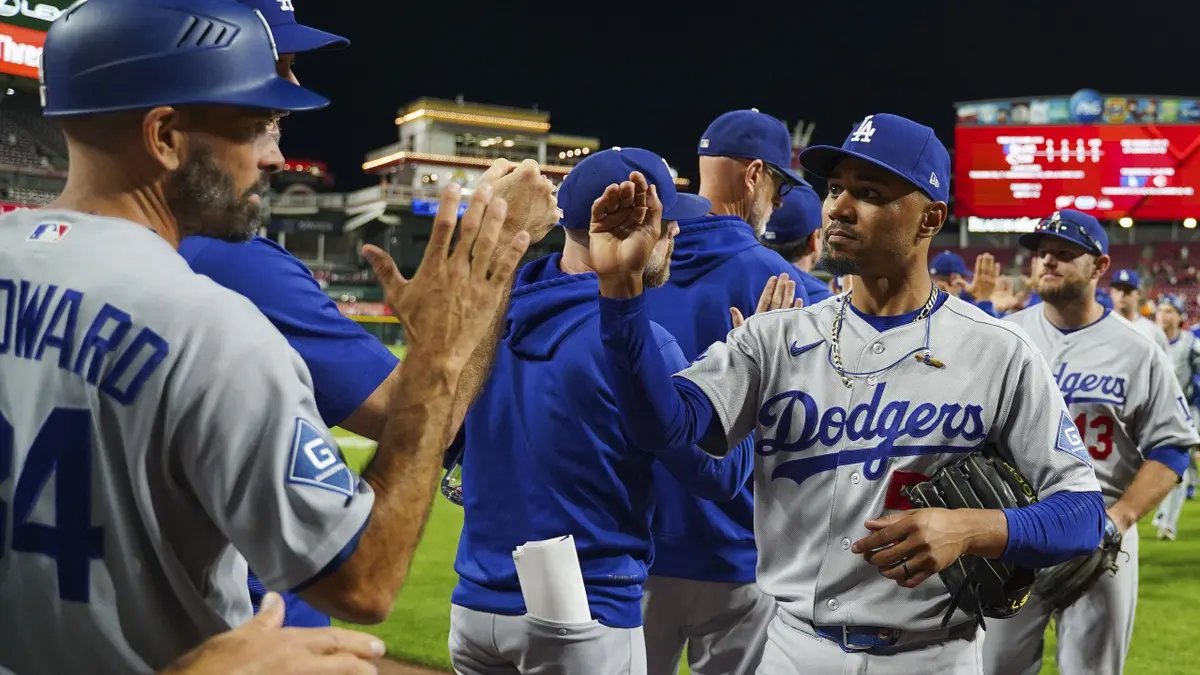
The Los Angeles Dodgers marked their record-tying 14th consecutive trip to MLB’s postseason with a toast of bubbly after Monday night’s 4-1 victory over the Cincinnati Reds.
The bigger celebrations will come later.
“It’s hard to say it ever feels routine, but it is the expectation here,” third baseman Max Muncy said. “I always laugh whenever we clinch a postseason spot, we just do a nice little toast. The guys that haven’t been here, they kind of see that and they expect a little bit more. That happens when you clinch the division.”
The two-time defending World Series champions, who joined Milwaukee and Tampa Bay as teams who have secured playoff spots, cut their magic number to three for a fifth straight NL West title and 13th in 14 seasons.
Los Angeles tied the Atlanta Braves‘ postseason run from 1991 through 2005. The Braves made five World Series trips during that span, but won only in 1995.
“Thankfully we’re doing a little bit better than that,” Muncy said of the Dodgers three titles and five trips to the Fall Classic during their run.
Tarik Skubal — who pitched seven shutout innings and allowed only three hits — said the way the Dodgers handled clinching a postseason spot was definitely different compared to clinching situations he encountered the past two seasons with Detroit.
“I think it just speaks to the people in this room and what they expect out of this team. That was cool. A little toast and move on. Forget it happened. We’ve got more to accomplish this season,” he said.
Dave Roberts, who is in his 11th season as manager, said his message during the toast was that the Dodgers have accomplished a lot to this point but haven’t come close to playing their best baseball yet.
“We go through a lot of players every year, and guys find a way to step up, and so that’s the thing I’m probably most proud of, is the consistency of winning over the long term,” he said. “Any team, any organization can win in a given year where things line up, but to do it every single year when you’re expected to do this says something about the entire organization.”
The Dodgers (91-59) currently are the second seed in the NL. They are 2 1/2 games ahead of Atlanta and trail Milwaukee by 2 games for the top seed.
A first-round bye is important any time but especially this year for the Dodgers, who are not at full strength. First baseman Freddie Freeman has been plagued by right knee soreness and two-time NL MVP Shohei Ohtani is on the 15-day injured list due to right biceps inflammation.
“Given where our guys are health wise, to get that week would be huge. We’ve still got to play well to finish out the season to get to that point,” Roberts said before Monday’s game.
The Vikings minimized Jake Golday in Week 1. Why?
For starters, there’s the presence of veteran edge rusher Kyle Van Noy, who got added to the practice squad following the season-ending injury to Tyler Batty. Opting for the versatile elder statesman lessens the opportunities for the rookie, who didn’t get a single snap for a ferocious Brian Flores defense. How significant, if at all, is Golday’s humble beginning to his NFL career?
When it comes to Jake Golday’s playing time — or, perhaps, lack thereof — there are a pair of positions to consider: linebacker and edge rusher.
So, note that fourth-year linebacker Ivan Pace Jr. earned playing time. His final tally shows 10 snaps on defense alongside 26 snaps on specials. Going into Week 1, Pace’s role for the defense was the subject of some uncertainty due to seeing his responsibilities lessened in consecutive years. As things stand, Pace is higher than Golday on the depth chart. He offered 3 tackles and 1 tackle for loss.
Meanwhile, Van Noy came in at 25 snaps for the defense — 37% of the total — while getting zero work on specials (as expected). The veteran had a single tackle. Per PFF, Van Noy did generate a pressure on Jordan Love.

Does the workload for Pace and Van Noy alongside the modest playing time for Jake Golday mean that it’s time for concern for the rookie defender? Far from it.
Mr. Golday sees his NFL debut come down to 0 snaps on defense alongside 19 snaps on special teams. In time, Golday is going to see the snaps get divvied up in a more promising manner. There are several reasons for that reality.
To begin, there’s the simple reality that the kid is precisely that: a kid. The player he is in Week 1 isn’t who he’ll be in Week 6, Week 13, and so on. Minnesota is expecting Golday to continue soaking up the coaching so that he can demand a portion of the playing time pie while the season continues.
Next up is a different reality that may not hold: Eric Wilson had a tough day at the office versus the Packers. PFF listed him as the worst defender on the team with a dismal 29.6 grade. Watching the game means seeing somebody who was active but who missed several tackles.
The veteran isn’t going to play so poorly each game but he had a tough beginning to his 2026 season. For a little while, I’ve insisted that the contract for Wilson could be a mistake due to paying him for a breakout that occurred very late in his career. Does Golday start siphoning snaps off of Wilson?
Another factor to consider is that Jake Golday is looking to leverage his special teams snaps into an opportunity on defense. His great task is to be so excellent for Matt Daniels that Brian Flores has no choice but to find snaps for him.

In Week 2 the Vikings are going to Chicago for a game against the Bears inside of Soldier Field. Does that upcoming contest offer an opportunity for Golday to get onto the field?
Minnesota’s task rests in corralling Caleb Williams, who is a magician in shoulder pads. The Bears then have some matchup weapons in Rome Odunze, Colston Loveland, Cole Kmet, and others. A long-and-strong off-ball linebacker such as Jake Golday could be part of the mix for slowing down Chicago’s array of weapons.
Golday is 23.
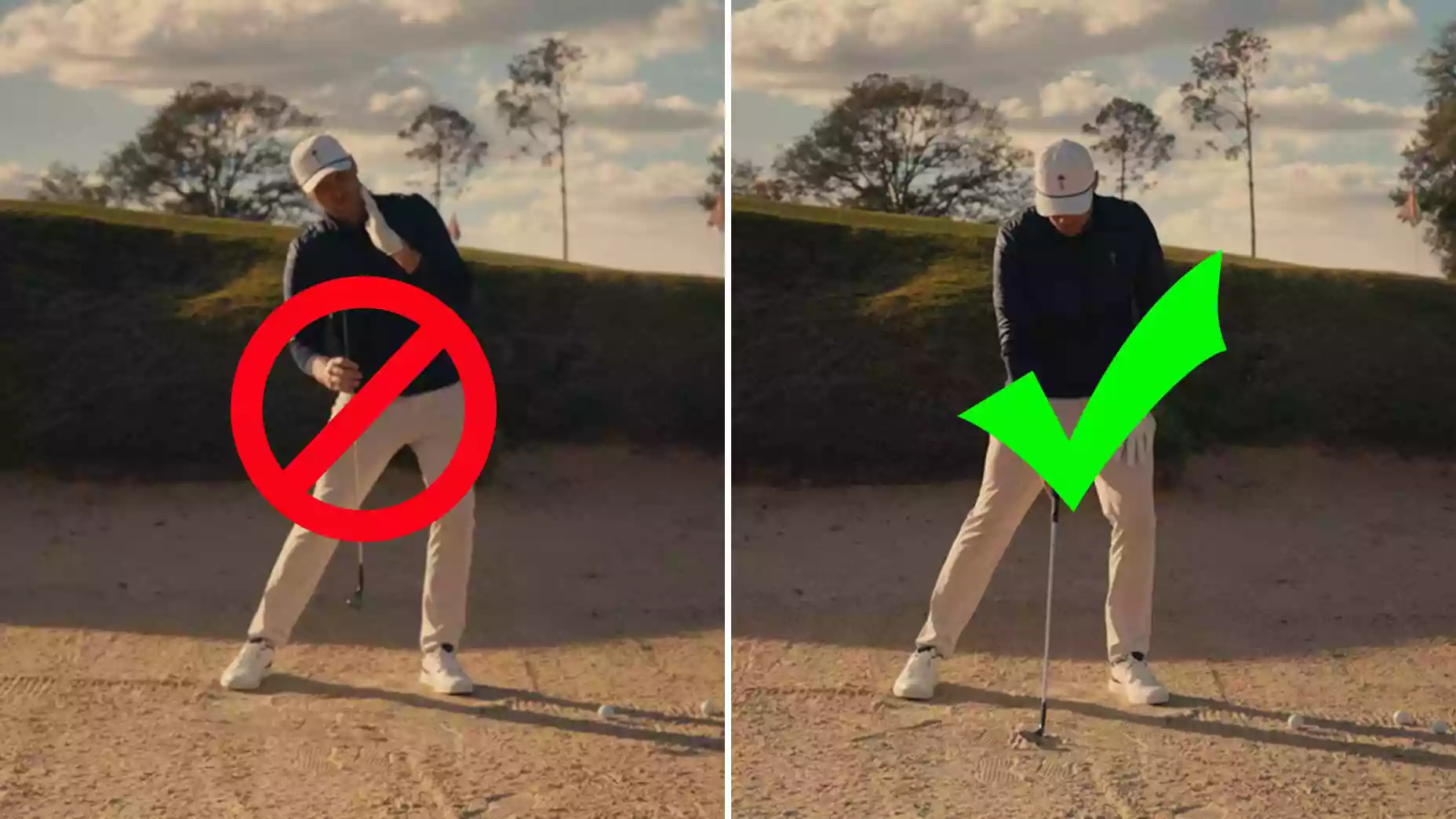

The bunker is a scary place for many recreational golfers. When players with a bunker-phobia find the sand, they typically have one thought in mind: “Don’t screw this up.” The problem with that mindset is that it introduces doubt and leads to hesitant swings, which is never a good strategy in the trap.
The reason for their doubt and hesitation is a history of poor play from the sand. When you’ve spent your career either blading it long or chunking it in front of your feet, there’s little reason for optimism.
The good news is that with the proper technique, bunker play can become much easier. And it starts with avoiding a critical mistake in the setup, which David Armitage explained in the first episode of Top 100 Teacher Sessions.
“>
Armitage says that one of the biggest mistakes he sees recreational golfers make in their bunker play starts with the setup. While it is important to get the weight forward in your stance, it’s important you don’t tilt your upper body backward while doing so. This moves the low point back and causes inconsistent contact.
“This is a big no-no,” he says.
Instead, the sternum should be forward, with a little more flex in the lead knee. Armitage says this was something he always noticed in Seve Ballesteros’ setup.
For a standard greenside bunker shot, Armitage places the ball just in front of the middle of his stance. The strike point is in the middle, and the sternum is directly above or slightly in front of the ball. That position of the sternum controls the low point of the swing and helps the clubhead enter the sand in the correct place.
“I’m looking at really square stance,” he says. “I’ve opened the face. I’m then taking my grip, and then I have a wide stance, low handle, moving my chin, my sternum, and my belt buckle onto the ball or just in front of the ball.”
Once you nail these setup basics, it becomes much easier to hit consistent bunker shots.




Weekend Open Thread – Corporette.com


Micron Stock Climbs Above $1,031 as AI Memory Crunch and a $50 Billion Outlook Fuel the Rally


The Latest Weird Thing to Play Doom Is the Mapped-Out Brain of a Fruit Fly


AMD Stock Climbs After Management Lifts 2027 Data Center Outlook Toward $70 Billion in AI Sales

Bitcoin price risks $76K drop as $78K support weakens


XAG/USD: Silver’s Short-Term Rally Meets Its Moment of Truth


2 Chip Stocks Broke Out This Week. Neither Was Nvidia


10 Most-Streamed Songs On Spotify In 2026 So Far, Led By Ella Langley’s Dominant Run On The Charts This Year


Ethereum price stalls below $2,500 as ADX drops to 11


Battery life is the only iPhone 18 Pro and iPhone Duo upgrade I care about. Apple didn’t disappoint


Pi Network ships Protocol 27 on a network with 14 million users and zero DeFi


OKX launches 10x OpenAI, Anthropic X-Perps in Europe


CLARITY Act runs out of calendar as crypto regulation stalls


Diesel Tops $6 a Gallon for the First Time as 28 States Set Records

Apple Watch Ultra 4 vs Watch Ultra 3: Should you really spend another $799?


Facing Financial Fears


Bitcoin price risks $70K if $78K neckline breaks

Modders have already found two ways to make DLSS 5 playable, and neither one is Nvidia’s
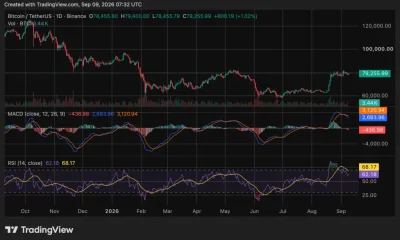

Bitcoin price holds near $79K as cycle drawdowns narrow


What went right this week: an ‘historic’ fall in violent crime, plus more




You must be logged in to post a comment Login