

Connect with us

Tech & AI

Microsoft and Nvidia Unveil Surface Laptop Ultra For $2,599

Published

on

twitter icon large

At a press event today, Microsoft unveiled the new Surface Laptop Ultra featuring an NVIDIA RTX Spark platform with a Blackwell-based GPU capable of up to one petaflop of AI compute. The laptop supports up to 128GB of unified memory for running models as large as 120 billion parameters locally, while also adding a 15-inch mini-LED display, expanded ports, upgraded cooling, and support for hundreds of AAA games. It’s available for pre-order today starting at $2,599. Neowin reports: To keep the device’s temperature under control, Microsoft has also developed a new cooling system that offers up to 2.5 times the thermal capacity of the 15-inch Surface Laptop 7th Edition. The Surface Laptop Ultra comes with a 15-inch PixelSense Ultra mini-LED touchscreen with a 3:2 aspect ratio, a pixel density of 262 PPI, and peak HDR brightness of up to 2,000 nits.

Despite its beefy specs, the Surface Laptop Ultra measures less than 18mm thick and weighs under 4.5 pounds (around 2kg). The laptop will be available in Platinum and Nightfall finishes. Microsoft has also increased the size of the precision haptic touchpad by more than 30% compared to the Surface Laptop 7th Edition for improved haptic input. The Surface Laptop Ultra includes a broader selection of ports, featuring USB-C, USB-A, HDMI, a 3.5mm headphone jack, and a full-size SD card reader. It also features the world’s first built-in USB-C magnetic charging.

Read more of this story at Slashdot.

Advertisement

Source link

Continue Reading
Click to comment

You must be logged in to post a comment Login

Leave a Reply

Tech & AI

Windows 11 is finally getting a useful battery widget for all your peripherals

Published

on

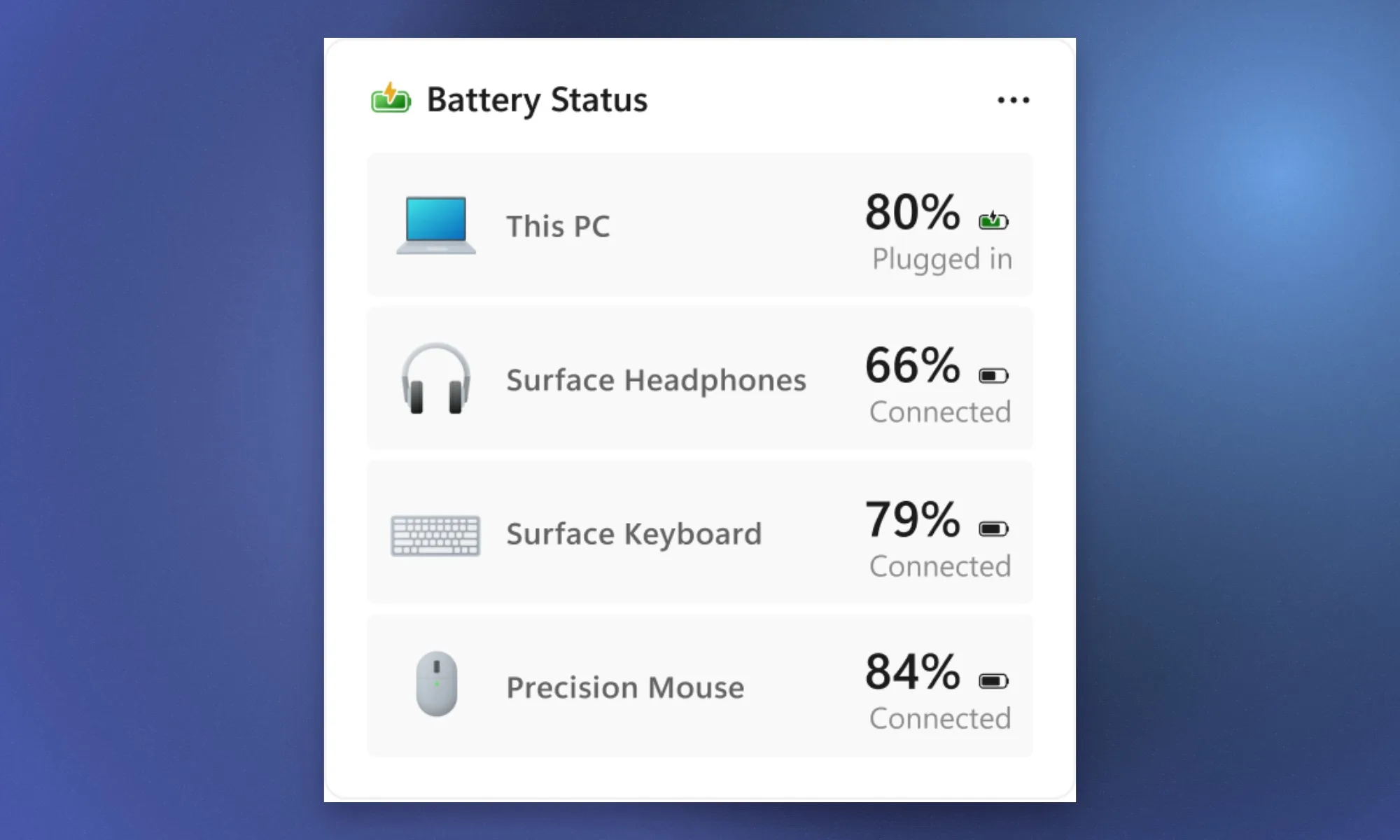
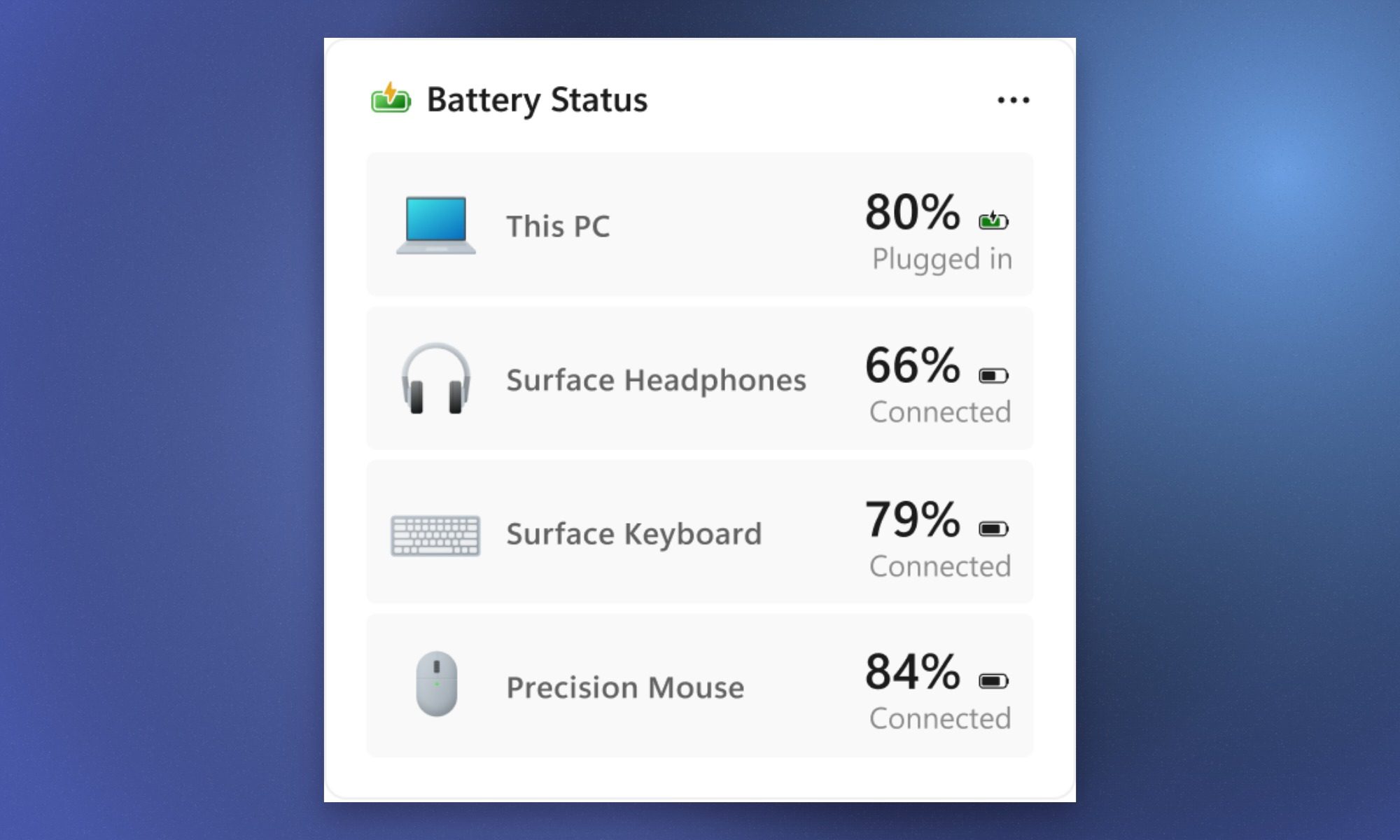
Windows 11 Battery Status widget

Microsoft had plenty to talk about today, including the announcement of the Surface Laptop Ultra and a major new Windows push around Hybrid Intelligence, expanded Copilot controls, and a redesigned Search experience. The quieter announcement may end up being more immediately useful for anyone juggling a laptop and several wireless accessories.

Windows 11 is getting a Battery Status widget that puts your PC and connected peripherals’ battery levels in one place. Instead of checking your laptop in the taskbar and then digging through settings or separate apps for a mouse, keyboard, or headphones, you can see everything from the Widgets Board.

One place to see what needs charging

The Battery Status widget can show your PC alongside connected devices such as Surface Headphones, a Surface Keyboard, and a Precision Mouse. Each device gets its own battery percentage and connection status. Insiders can add it through Widgets board > Add widgets > Battery Status.

References to the feature appeared in Windows 11 preview builds last month, but Microsoft is now testing a working version. Earlier findings also pointed to a possible lock-screen version, although Microsoft has only announced the Widgets Board implementation for the current test. The obvious appeal is convenience. One glance could tell you that your laptop has plenty of charge left but your headphones or mouse need attention before you leave home.

Will it work with everything?

The bigger question is how broad the support will be. Microsoft only says the widget can show battery levels for connected peripheral devices, but its current example sticks to Microsoft hardware. It has not explained whether accessories from companies like Logitech, Sony, Razer, or other third-party brands will show up in the same view. If Windows can pull battery information from a wide range of connected accessories, this widget will definitely become a mainstay on my laptop.

Advertisement

Source link

Continue Reading

Tech & AI

Meta’s Muse launches on iPad just a month after its mobile debut

Published

on

meta muse app GettyImages 2293792137

If there’s any doubt about how seriously Meta is taking AI, here’s a new signal: The company on Wednesday announced that its Muse assistant is now available in a dedicated iPad app. That’s a milestone it took Instagram some 15 years to reach, despite constant user demand.

Muse, meanwhile, hit the iPad just a month after launching on iPhone.

(To be fair, it may not be as difficult to bring something like Muse to iPad, given its text-heavy interface, where image and video resolution and formatting matter less.)

Since launching on iOS and Android on September 8, Muse has topped 6.6 million installs, according to estimates from market intelligence firm Sensor Tower. The app, which is now one of dozens of consumer-facing AI agents, lets users connect their accounts to stay on top of email, meetings, bills, and more, and to complete tasks like booking reservations, ordering groceries, setting goals, and making purchases.

Advertisement

To make that work, Meta has been adding partners in the effort, which appear in Muse as “connectors.” Users can add and sign in to them selectively, depending on which parts of their online life they’re comfortable letting an AI agent handle.

With the iPad release, Meta has updated this list with several of its newer additions, including connectors aimed at small businesses, like Asana, Canva, Dropbox, Figma, QuickBooks, GitHub, Klaviyo, and Zoom, as well as connectors for Meta ad accounts. It also added Notion and Granola.

In addition, Meta recently announced more retail partners, like Best Buy, Gap, Sephora, Walmart, and Wayfair. These allow the agent to shop those retailers’ sites and complete transactions on users’ behalf. Because this technology is still new, these experiences can still run into issues as websites mistake agents for bots and block their access.

On Tuesday, Meta announced that it’s working with industry partners on a technological solution to this problem in the form of an open standard that would allow personal AI agents to identify themselves to businesses. That would help businesses sort the good bots from the bad.

Advertisement

When you purchase through links in our articles, we may earn a small commission. This doesn’t affect our editorial independence.

Source link

Continue Reading

Tech & AI

Why would anyone pay over the odds for a kettle? Ninja’s alternative is far cheaper

Published

on

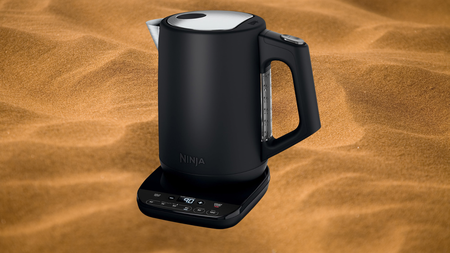
Ninja Perfect Temperature Kettle on a sandy background

Prime members can now save £40 on the Ninja Perfect Temperature Kettle today, taking it from £99.99 to £59.99.

Ninja’s Perfect Temperature Kettle brings its full feature set to this 40% Prime Exclusive saving, including six preset temperatures, a live digital temperature readout, a 30-minute hold mode and a rapid boil function built around a 1.7-litre jug.

Ninja Perfect Temperature Kettle on a sandy backgroundNinja Perfect Temperature Kettle on a sandy background

Why would anyone pay £100 for a kettle? Ninja’s answer is now £59.99

£40 off the Ninja Perfect Temperature Kettle makes this the right moment to give every hot drink in the house the temperature it deserves.

Advertisement

View Deal

Paying £59.99 instead of £99.99 changes who this kettle makes sense for, since temperature control stops being a luxury for tea enthusiasts and becomes an easy upgrade for anyone who drinks more than one kind of hot drink.

Advertisement

Those different drinks are exactly what the six presets cover, letting you jump between 60°C and 100°C at the touch of a button, so delicate green tea, cafetière coffee and hot chocolate each get water at the heat they need.

A digital display on the base shows the temperature climbing in real time, so you always know how close your water is to ready. You can also fine-tune the heat with the manual controls when a particular tea or coffee calls for something between presets.

Advertisement

Once it reaches your chosen temperature, the Ninja Perfect Temperature Kettle can hold it there for up to 30 minutes, which means a second cup poured after a phone call or a slow breakfast tastes just as good as the first, with no re-boiling required.

Advertisement

When you need water fast instead, 3000W of power boils a single cup in under 50 seconds, while the 1.7-litre jug holds enough for up to seven cups of tea or coffee when the whole household wants one.

The Whatsapp LogoThe Whatsapp Logo

Get Updates Straight to Your WhatsApp

Join Now

Advertisement

Day-to-day upkeep stays simple too, with an illuminated blue water window for checking levels at a glance, a removable scale filter for easy cleaning and a 360-degree swivel base that lets you set the Ninja Perfect Temperature Kettle back down from any angle.

Anyone who has ever poured boiling water over green tea will taste the difference straight away, and £40 off the Ninja Perfect Temperature Kettle makes this the right moment to give every hot drink in the house the temperature it deserves.

Advertisement

Advertisement

SQUIRREL_PLAYLIST_10148964

Source link

Continue Reading

Tech & AI

How global ‘bright spots’ can inform environmental efforts

Published

on

The Conversation logo e1516721926681

Dr Bing Lin and Prof Joshua Cinner of the University of Sydney explore the environmental areas and ecosystems that are faring better than expected, and what we can learn from them.

Click here to visit The Conversation.

A version of this article was originally published by The Conversation (CC BY-ND 4.0)

Every few years, the elders of Muluk, a tiny coastal community in Papua New Guinea, close a stretch of their reef to fishing. They do this to give these underwater gardens room to breathe, grow and replenish.

We first stumbled on this community-led approach back in 2001. These reefs appeared to be faring remarkably well compared to those further down the coast. This piqued our interest and led us to conduct a global search for other reef ecosystems that were seemingly defying the odds.

Advertisement

While collecting data from nearly 1,700 reefs worldwide, we found over a dozen more sites that had way more fish than expected. These reefs are examples of ‘bright spots’ – places where nature is exceeding expectations given their environmental and social pressures, such as overfishing, habitat destruction and climate change.

So what are bright spots and why do they matter for conservation? Our new study offers some answers.

Studying success

Bright spots may seem like lucky exceptions to the otherwise bleak rule of ecological decline. We are, after all, living through a sixth global mass extinction of our own making. Today, the risk of plants and animals going extinct is hundreds of times higher than before humans roamed the Earth.

Against this depressing backdrop, conservationists have mostly focused on failure: identifying urgent environmental threats with the hope of blunting their worst effects.

Advertisement

But there’s a second, lesser-known approach commonly used across medicine and public health that asks the opposite question: what systems are working against the odds and what lessons could they offer? This is what we call the positive deviance or ‘bright spots’ approach.

What makes a ‘bright spot’?

Since we first brought the bright spots concept to coral reefs in 2016, other scientists have applied this approach to a myriad of other systems and species worldwide.

In West Africa, scientists have identified several critically endangered chimpanzee communities that are thriving, despite steep declines in the wider regional population. These include those living in pristine, inaccessible habitats. However, some are in places where nearby villagers uphold traditions that discourage hunting and make room for people and chimpanzees to co-exist, such as Boé in Guinea-Bissau.

In Canada’s Great Bear Rainforest, several First Nations communities have helped the threatened grizzly bear population thrive by placing indigenous stewardship at the centre of conservation efforts. This includes introducing a trophy hunting ban under both indigenous and provincial law.

Advertisement

Off the coast of Tasmania in southern Australia, an unlikely alliance of scientists, wildlife managers and policymakers has protected the vulnerable shy albatross, a species plagued by the threats of disease and global warming. This involved several innovative interventions, including treating albatross chicks for external parasites and building artificial nests for shelter.

Until now these case studies, while heartening, have not offered any clear or concrete wisdom for conservationists to apply elsewhere. That’s where our new study comes in.

We analysed more than 70 studies across the fields of ecology, conservation, sustainability and development to find out how bright spots are identified and what factors give rise to them. We found there are various ways to identify bright spots, with some scientists using statistical models to quantify ecosystems or species that are faring better than expected. Other research relies on experts who shared anecdotes of unexpected success.

Finding patterns

The reasons why a bright spot might exist were even more numerous and varied. As we examined all these bright spots – ranging from hydro-power development to carnivore conservation, food security and more – three patterns kept resurfacing.

Advertisement
Action

We found bright spots often benefited from a specific intervention that was both good for nature and fit for purpose. In the case of coastal communities in Papua New Guinea, this was the unique reef closure system that village elders implemented as needed.

Ability

Bright spots were most common where communities had the capacity to adapt to changing circumstances. In Papua New Guinea, strong social ties between youth and elders ensured the village’s reef closure system was passed from generation to generation.

Architecture

When it comes to bright spots, the social and environmental context of a place matters. In Papua New Guinea, the rights of coastal communities to use and manage marine resources are recognised in the country’s constitution. This gives local villagers the power to stop other fishers from depleting their reefs.

Bright spots aren’t the product of magic or chance. They arise in places where the interactions between people, place and practical action enable species and ecosystems to thrive. The existence of bright spots doesn’t make the extinction crisis any less real or urgent. But once we know where and how to find them, they remind us decline is not the only story.

Advertisement

The Conversation
By Bing Lin and Joshua Cinner

Dr Bing Lin is a conservation scientist, photographer, and journalist specialising in coral reef ecology, human behaviour, and marine conservation. At Sydney University, his research integrates ecology and social science to address complex ocean challenges and to better understand how people interact with the natural world.

Prof Joshua Cinner leads the Thriving Oceans Research Hub at the University of Sydney, where he is also a professor of geography. Cinner’s research explores how social, economic, and institutional conditions influence the ways in which people use, perceive, and govern natural resources.

Don’t miss out on the knowledge you need to succeed. Sign up for the Daily Brief, Silicon Republic’s digest of need-to-know sci-tech news.
Advertisement

Source link

Continue Reading

Tech & AI

Healthleap raises $38M for its AI that flags hospital patients who may need a closer look

Published

on

healthleap

Healthleap, a startup building an AI platform that reads patient records to identify patients at risk of undiagnosed illnesses, has raised $38 million in seed and Series A funding, TechCrunch has exclusively learned.

The financing includes an $8 million seed round co-led by Sequoia Capital and First Round Capital, and a $30 million Series A led by Hummingbird Ventures. The company is not disclosing its valuation.

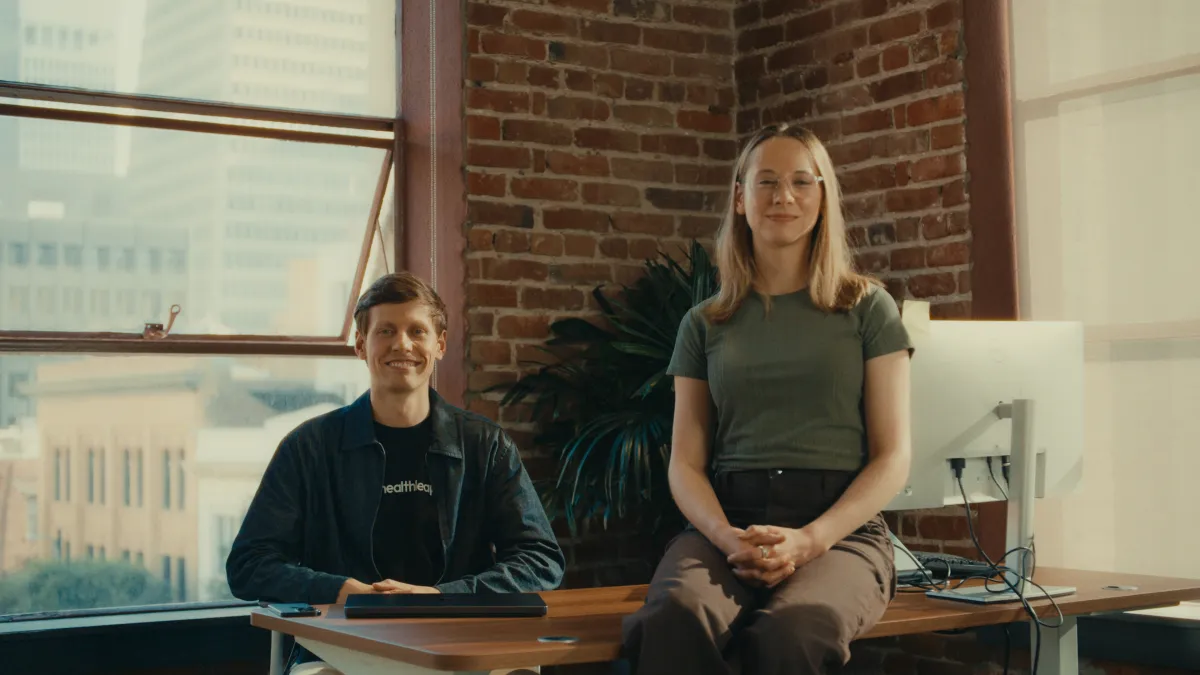
Founded in South Africa in 2022 by siblings Jemima and Josiah Meyer (pictured above), the startup initially offered a clinical nutrition tool Jemima had built for dietitians. But the company later pivoted and built a more general-purpose platform that aims to identify patients admitted to hospitals who may be suffering from conditions like malnutrition or delirium that aren’t often identified early enough, CEO and co-founder Josiah Meyer told TechCrunch.

“A patient’s chart holds two kinds of data. Labs, weights, and vital signs sit in structured fields, but the most telling signs sit in clinicians’ written notes: poor appetite, recent weight loss, muscle loss, trouble swallowing. Our developing approach is extracting affirmative or negated mentions of these clinical concepts in an easily extensible and scalable way,” Josiah said.

Advertisement

The company’s platform is currently deployed in more than 50 hospitals, where it screens patients for conditions such as malnutrition and delirium, he said. The startup has also built programs to identify aspiration pneumonia, pressure ulcers, and risk of readmission for congestive heart failure, which Josiah said are undergoing further clinical validation.

To find patients that may be at risk of an illness or were undiagnosed, Healthleap plugs into a hospital’s electronic health record system and uses language models to pull information from written notes, such as references to recent weight loss or difficulty swallowing. That analysis is then fed into its risk models, alongside structured information such as lab reports and vitals to surface patients who may need a closer look. The company notes that its software doesn’t diagnose patients, only highlights items for additional review.

“Each night, we analyze every adult inpatient’s record: lab results, vital signs, weights, medications, diet orders, diagnoses, clinicians’ notes, and more,” Josiah explained. “Each morning, we write a risk score into the care team’s existing workflow with a dashboard accessible that holds additional information about the patients’ trends.”

Malnutrition likely served as a useful starting point for Healthleap, as it’s a condition that often goes undiagnosed and can adversely impact patient recovery in a variety of ways. Research suggests 20% to 50% of hospital inpatients are malnourished, and some studies have linked malnutrition with longer stays, impaired wound healing, infections and other complications, as well as higher morbidity and mortality.

Advertisement

Josiah said Healthleap has grown from three hospital partners to more than 50 over the past year, and its customers now include Penn Medicine, Cedars-Sinai, Intermountain, Houston Methodist and Emory Healthcare. Revenue has grown more than 10x over the same period, he said, though he didn’t disclose specifics.

The startup sells three-year contracts priced according to a hospital’s licensed bed count, and also uses an outcome-based pricing model. “We use the hard ROI that the hospital finance team validates and attributes to us as the measurable ROI. Based on that, we contractually ensure that we deliver multiples of the contract price. To date, every customer has seen a 5x hard ROI or more, in some cases over 20x annual total ROI,” Josiah said.

At the Hospital of the University of Pennsylvania, Healthleap says its malnutrition program resulted in $23.8 million in annualized financial impact, of which $6.3 million came from additional reimbursement and $17.5 million from shorter hospital stays.

Healthleap plans to spend the fresh cash on engineering, product, sales, and customer success as it adds support for identifying more conditions. Meyer said the company ultimately wants to cover more than 40 major health conditions and expand into outpatient and home care.

Advertisement

When you purchase through links in our articles, we may earn a small commission. This doesn’t affect our editorial independence.

Source link

Continue Reading

Tech & AI

Child-safety policy puts Apple & Brussels on unusually similar ground

Published

on

69084 145645 IMG 5188

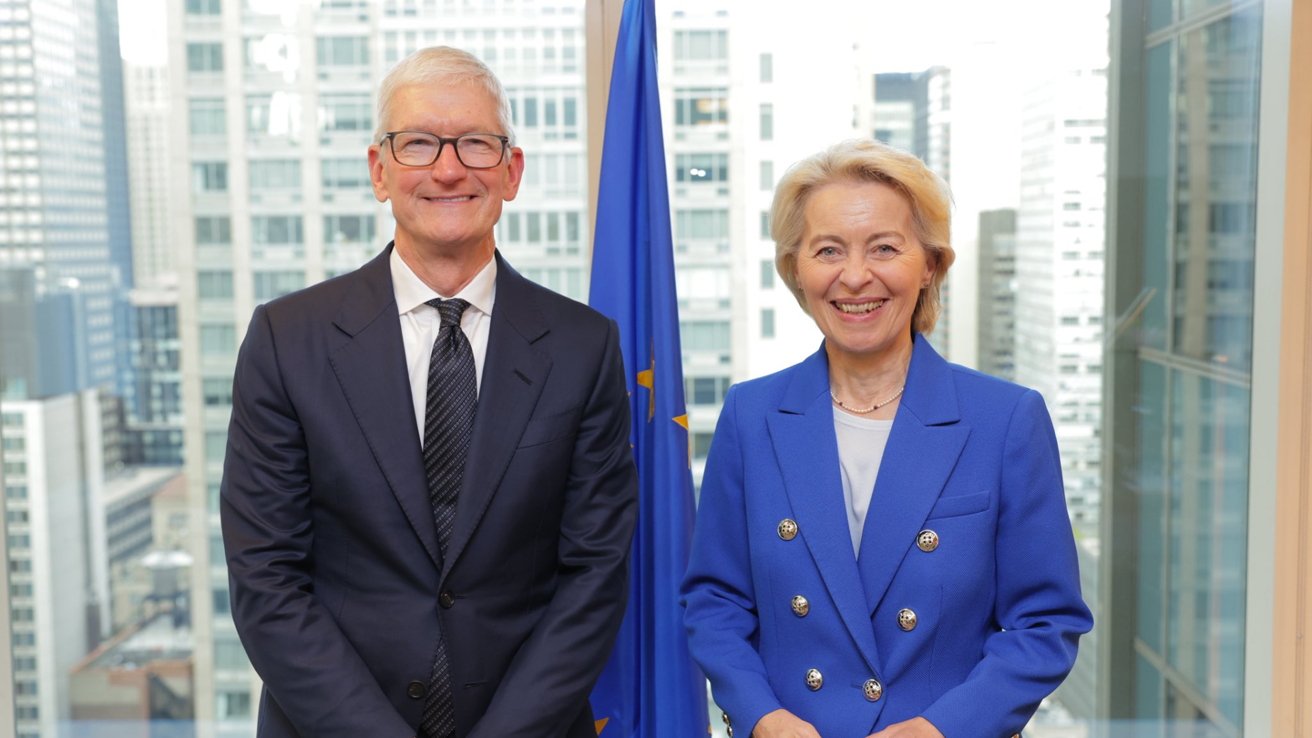
Apple Executive Chairman Tim Cook has praised the European Union’s push for a common child-safety framework, giving Apple a rare point of agreement with regulators it has repeatedly fought over other technology rules.

Tim Cook and Ursula von der Leyen stand side by side in front of tall city windows and an EU flag, wearing formal suits, one dark and one bright blueTim Cook and Ursula von der Leyen. Image source: Ursula von der Leyen on X

Cook made the comments during a visit to Strasbourg, where he met European Parliament President Roberta Metsola and lawmakers working on children’s online safety.
He welcomed the European Parliament’s effort to create a “harmonized, Europe-wide framework to keep kids safe.” Cook said Apple was encouraged by the discussion surrounding the proposed EU KIDS Act.
The comments don’t amount to an endorsement of every provision in the proposed law. They do show that Apple supports the EU’s broader effort to establish a common approach to protecting children online across its member states.
Continue Reading on AppleInsider | Discuss on our Forums

Source link

Continue Reading

Tech & AI

BT signs rescue deal to save TalkTalk — but the UK Government still wants to have its say on ‘genuinely unprecedented situation’

Published

on

diM9tpwF2Lz85R8q85CT78

  • BT agrees rescue deal to buy broadband operator TalkTalk
  • However DCMS has already stepped in over competition concerns
  • TalkTalk has 1.5 million retail customers and one million wholesale customers across the UK

BT has signed a rescue deal to save TalkTalk in a move which could have major ramifications across the UK market.

TalkTalk, which is the UK’s fourth-largest broadband company with 1.5 million retail customers and a million wholesale customers across the country, had been on the edge of potential administration due to rising debts.

Source link

Advertisement
Continue Reading

Tech & AI

Danish legal research startup Pandektes raises €13.5M Series A

Published

on

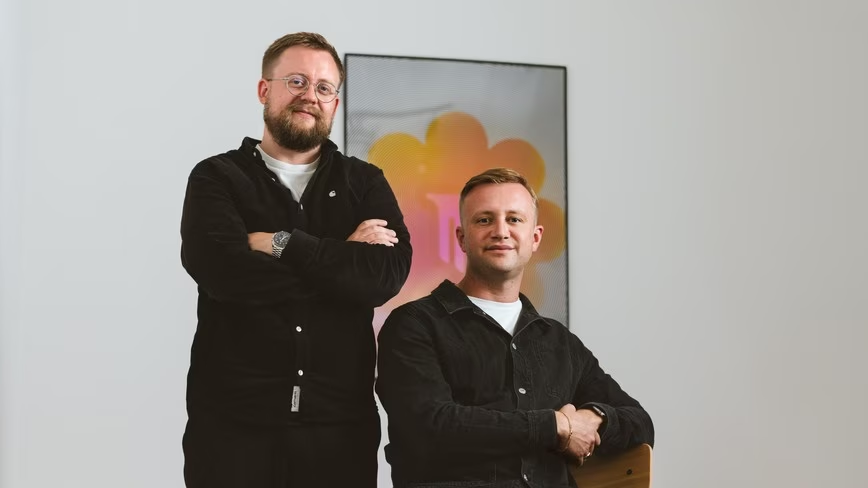
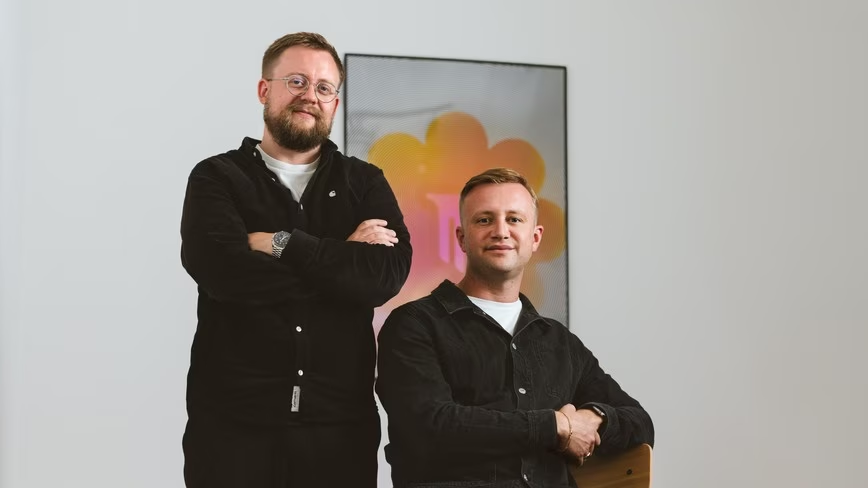
pandektes co founders studio portrait.avif

pandektes co founders studio portrait

Building a company like this requires relentlessness, belief and dedication. Every start-up will have low points, but we’ve always as founders had this die hard conviction that we could build a better and new way to do legal research, said Casper Laursen, CEO and co-founder of Pandektes.

The law is spread across millions of documents in many different places, and finding the right one takes lawyers a lot of time.

For decades, a handful of publishers have done that work for them, and in most European countries lawyers have had little choice but to pay for it.

In early 2023, Casper Laursen and Søren Brokær set out to change that with Pandektes, a tool that gathers these documents, organizes them, and helps lawyers quickly find what they need.

Even though many of the lawyers they pitched to warned them off, and neither founder had ever practiced law, they still pursued the idea.

Advertisement

There was general scepticism about the technology’s capabilities and possibilities in early 2023, they told us.

Three and a half years later, Pandektes has more than 500 customers and has just raised €13.5M. Munich-based Alstin Capital led the Series A, joined by PROfounders, Scale Capital and existing investors.

The raised capital will help the Copenhagen-based company expand from Denmark, Germany and Switzerland into more of Europe and North America.

“It’s a special sort of challenge to build a company into a highly monopolized market, and also one we heard many lawyers early on ‘warning’ us about,” Casper Laursen and Søren Brokær told us in an exclusive interview.

There were good reasons for the lawyers to be cautious, as in most European countries, it has long been the case that a single provider is the standard means of accessing the law, whether it is LexisNexis, Westlaw, Beck or Karnov.

Advertisement

Pandektes contends that this has made it costly to switch away from them, even as prices have continued to rise.

Coming from outside the profession made the early months harder still. Trust came more slowly than it would have for insiders, they said.

The technology was a hard sell too, because in early 2023 many lawyers were still unsure what large language models could really do.

From the outside, however, the founders could see something the industry had grown used to.

Advertisement

Most law is public, but gathering it from thousands of sources and keeping it reliable enough for court had always needed large editorial teams.

Laursen and Brøkær believed AI could take on much of that work and give lawyers a far stronger base to search from. Working out how to make it fit each area of law took countless conversations with practitioners.

For most companies, the first customer is the most special one. And their first customer arrived with a familiar problem.

Pandektes helped from day one, and the customer returned the favour with a steady stream of feedback. More than three years on, it still uses the platform.

Advertisement

“They’re still a customer with us to this day, more than 3 years later. We’re really proud of that. This organisation spent a lot of time researching procedural matters and had a heavy burden of knowledge sharing between seniors and juniors.”

“Pandektes added value there from day one, they provided a lot of feedback, and they’ve been happy users ever since,”Casper Laursen said to us.

Those first years, spent earning trust and building a body of data good enough to rely on, were the hardest.

Even so, Pandektes quickly brought an AI search product to market, and according to Laursen, the incumbents needed one to two years to respond.

“From that initial headstart we knew that we could keep outpacing them on product development and that we could eventually begin replacing them, which is what’s happening now,” Casper Laursen told us.

But after Pandektes raised €2.9M in seed funding in February 2025, just over 100 organisations were using the platform, according to Legal IT Insider.

Advertisement

The company reported that its revenue grew six times over the past year. About two out of three organisations that try the platform end up buying it, and many cancel their previous subscriptions.

Andreas Schenk, managing partner at Alstin Capital, put his firm’s interest down to that pent-up demand.

“We have rarely seen a market like legal research, where so many end-users would like to switch their core system but historically simply couldn’t,” Casper Laursen said.

When we asked about the hardest piece of law Pandektes had ever had to chase down, they could not name one, and that was exactly the problem.

“There isn’t one dramatic story, and that’s actually part of the point. Hard-to-find law isn’t the exception; it’s a structural problem,”Casper Laursen said.

So rather than hunting down documents one at a time, Pandektes continuously collects hard-to-reach sources, since they are often the ones that decide cases in court.

Advertisement

Some of the new money will open that collection to other developers through an API. Pandektes does not count legal AI workspaces, the tools firms use to draft and review documents, among its competitors.

When the conversation turned to people without any legal training, Laursen began with something already happening.

More and more people use general-purpose AI tools to understand their rights and stand up for themselves, and he welcomes it.

Yet smaller courts and administrative bodies that receive the results have told him they fall short.

Advertisement

“You get more legal-looking documents, but the arguments can miss important legal sources or the methodology needed to apply them correctly.”

Better chatbots alone will not close that gap, in his view. What people need is the same law, and the same reliable sources, that professionals already work with.

“If we get that right, someone without legal training should be able to understand their rights far more effectively than they can today, without pretending that legal expertise won’t matter,” Casper Laursen said. 

Source link

Continue Reading

Tech & AI

Jazz Samba Encore! Review: Stan Getz & Luiz Bonfá Glide Again on Verve Acoustic Sounds’ 180-Gram Vinyl Reissue

Published

on

stan getz jazz samba encore gatefold

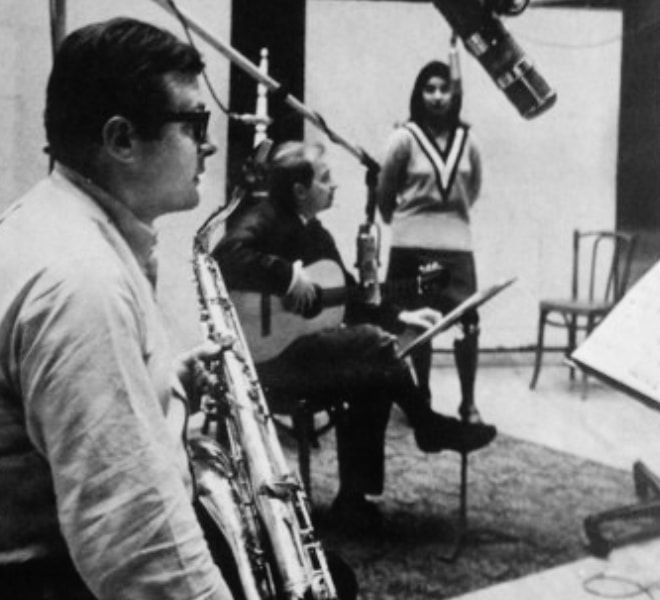
In the early 1960s, legendary saxophonist Stan Getz released a series of revolutionary hybrid recordings that blended the improvisational sensibilities of modern jazz with the rhythms and melodic character of Brazilian bossa nova. Unless you were following his every move at the time, however, it is easy to confuse the chronology of Getz’s breakthroughs.

For example, popular mythology can make it seem as though his 1964 triple-Grammy-winning smash hit with João and Astrud Gilberto, Stan Getz/Gilberto, was the starting point. In fact, it began two years earlier with his Grammy-winning 1962 collaboration with American guitarist Charlie Byrd, Jazz Samba.

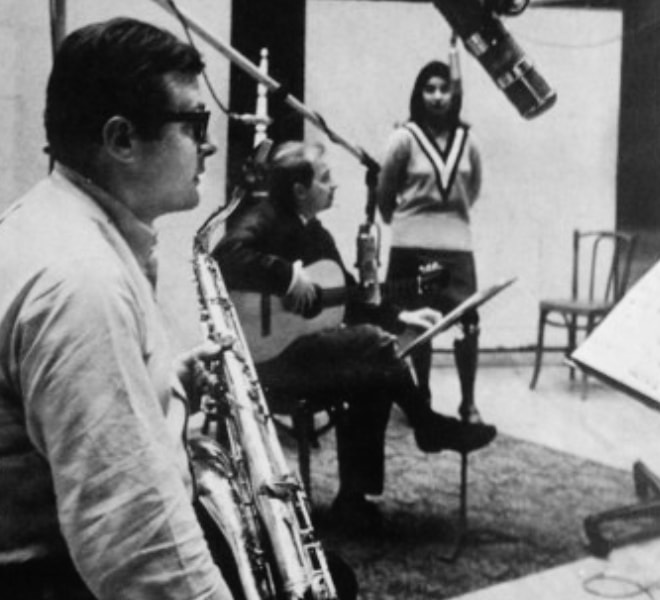
The 1963 sequel was simply titled Jazz Samba Encore!, but this time Stan Getz was joined by Brazilian musicians, including guitarist-composer Luiz Bonfá and the now-legendary Antônio Carlos Jobim.

This is an album that should not be overlooked. Fortunately, it has just received a fine new remastering from the original analog tapes, courtesy of Universal Music’s Verve Records imprint in conjunction with esteemed vinyl reissue producer Chad Kassem of Acoustic Sounds.

Advertisement
stan-getz-jazz-samba-encore-gatefold

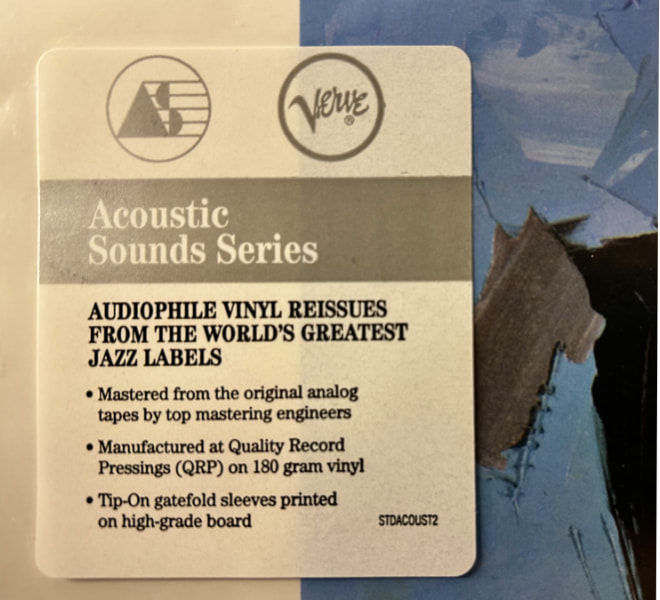
As with other releases in the Verve Acoustic Sounds series, this reissue is a top-drawer affair, featuring fresh lacquers cut from the original tapes by Matthew Lutthans at The Mastering Lab, part of Quality Record Pressings, where the 180-gram vinyl is manufactured.

The high-quality gatefold, tip-on-style jacket is also very similar to the original laminated cover on my vintage copy.

acoustic-sound-series-verve-label

Speaking of originals, I was surprised to discover just how collectible this album has become. I see copies fairly often out in the “wilds” of record collecting, but they are frequently in less-than-ideal condition. Admittedly, it took me some time to find a clean original copy, which I’ve enjoyed for years.

Using online marketplace Discogs as a handy barometer of general availability, tracking down a near-mint original pressing could easily cost $100 or more, assuming you can even find one. That makes this new reissue a strong value, offering a mint-condition recreation that comes very close to the original in look, feel, and sound for less than $40.

I really like this new Acoustic Sounds edition of Jazz Samba Encore! and am even tempted to part with my original, especially because this new pressing is so quiet. For music this hushed, you really want surface noise kept to an absolute minimum. As nice as my 1963 copy is, it is still an older record with some inevitable low-level surface noise. This new one is dead quiet.

If you enjoy Stan Getz’s bossa nova recordings and have been looking for other albums to explore beyond the 1964 classic Getz/Gilberto, Jazz Samba Encore! is a highly enjoyable listen.

Advertisement

You can get it on Amazon for just $39.40.

Advertisement. Scroll to continue reading.

Our Ratings

★★★★★★★★★★ Music

★★★★★★★★★★ Sound

★★★★★★★★★★ Packaging

Advertisement

Where to Buy:


Mark Smotroff is a deep music enthusiast / collector who has also worked in entertainment oriented marketing communications for decades supporting the likes of DTS, Sega and many others. He reviews vinyl for Analog Planet and has written for Audiophile Review, Sound+Vision, Mix, EQ, etc. You can learn more about him at LinkedIn.

Source link

Continue Reading

Tech & AI

JBL PartyBox Ultimate 2 Has 1,500 Watts, Weighs 105 Pounds and Still Needs an Outlet

Published

on

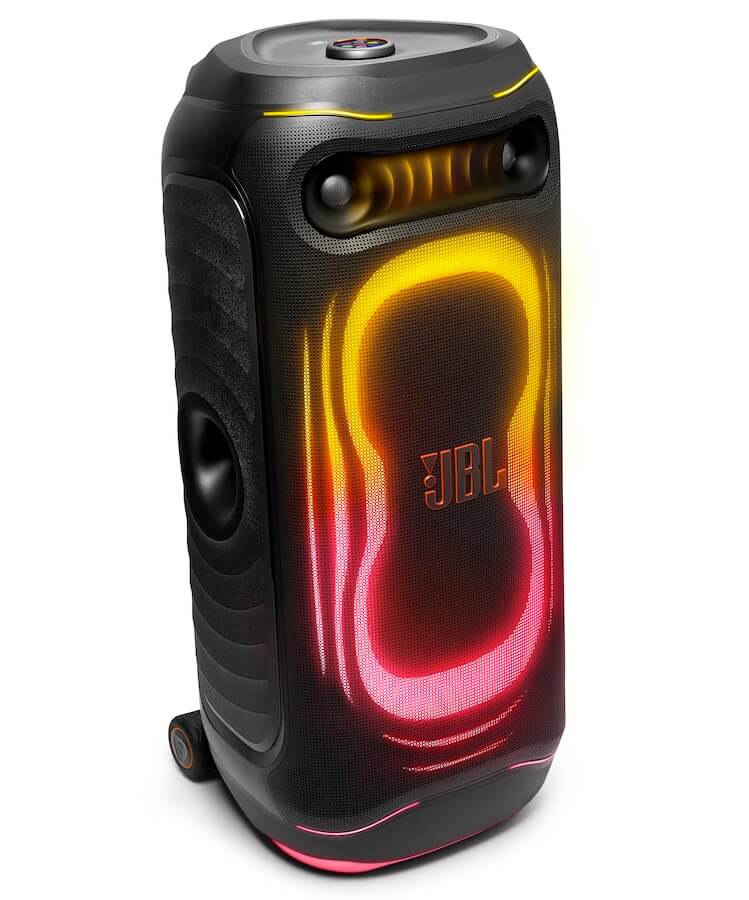
jbl partybox ultimate 2 party speaker touchscreen

There are Bluetooth speakers for the kitchen, Bluetooth speakers for the beach, and Bluetooth speakers small enough to disappear into a backpack.

The JBL PartyBox Ultimate 2 is none of those things.

Priced at $1,799.95, JBL’s new flagship PartyBox delivers a claimed 1,500 watts RMS, weighs just over 105 pounds, stands more than 41 inches tall, and uses dual 10-inch woofers, dual 5-inch midrange drivers, and a pair of horn-loaded PEN tweeters derived from JBL’s professional-audio experience. JBL says it can provide sound across an area equivalent to four basketball courts. Your neighbors have been warned.

The Ultimate 2 replaces the original PartyBox Ultimate, increasing output from 1,100 to 1,500 watts while also substantially revising the acoustic architecture. The previous model used dual 9-inch woofers, 4.5-inch midrange drivers, and larger conventional tweeters; the Ultimate 2 moves to bigger woofers and mids while adding professional-style horn-loaded high-frequency drivers.

Advertisement

So this is more than JBL finding another number to print in a larger font.

What Makes the PartyBox Ultimate 2 Different?

Raw power is only part of the story.

AI Sound Boost monitors the incoming audio in real time and adjusts the speaker’s output to maintain clarity and reduce distortion as volume increases. JBL has also added Smart EQ Mode, while the frequency response now reaches a claimed 28Hz to 20kHz (-6dB).

jbl-partybox-ultimate-2-party-speaker-touchscreen

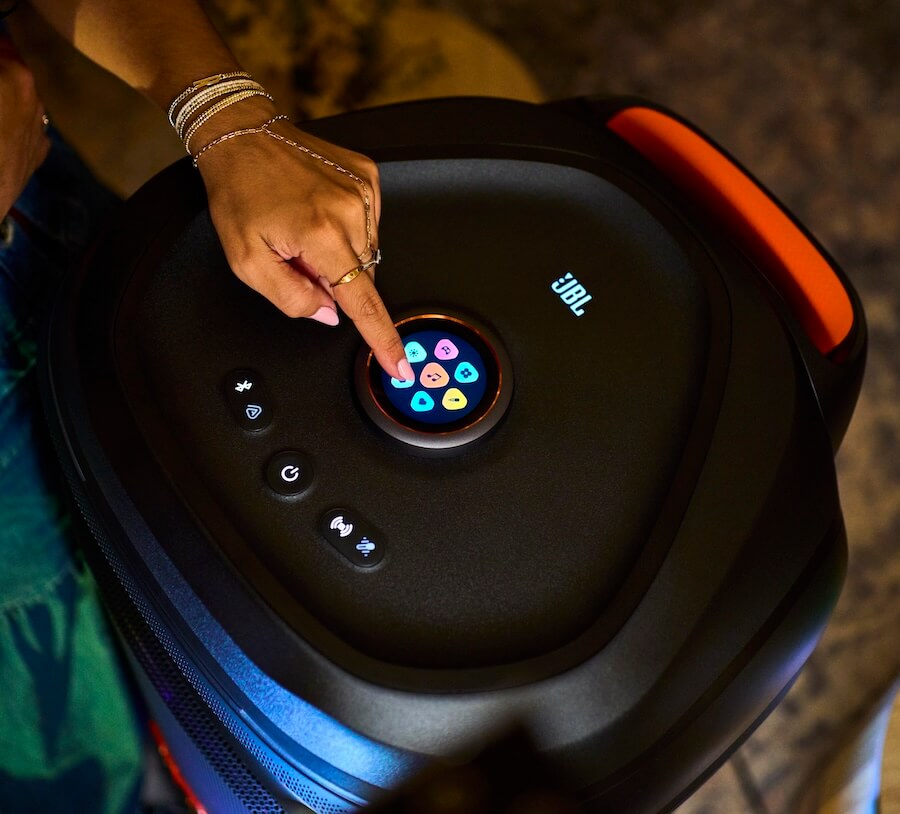
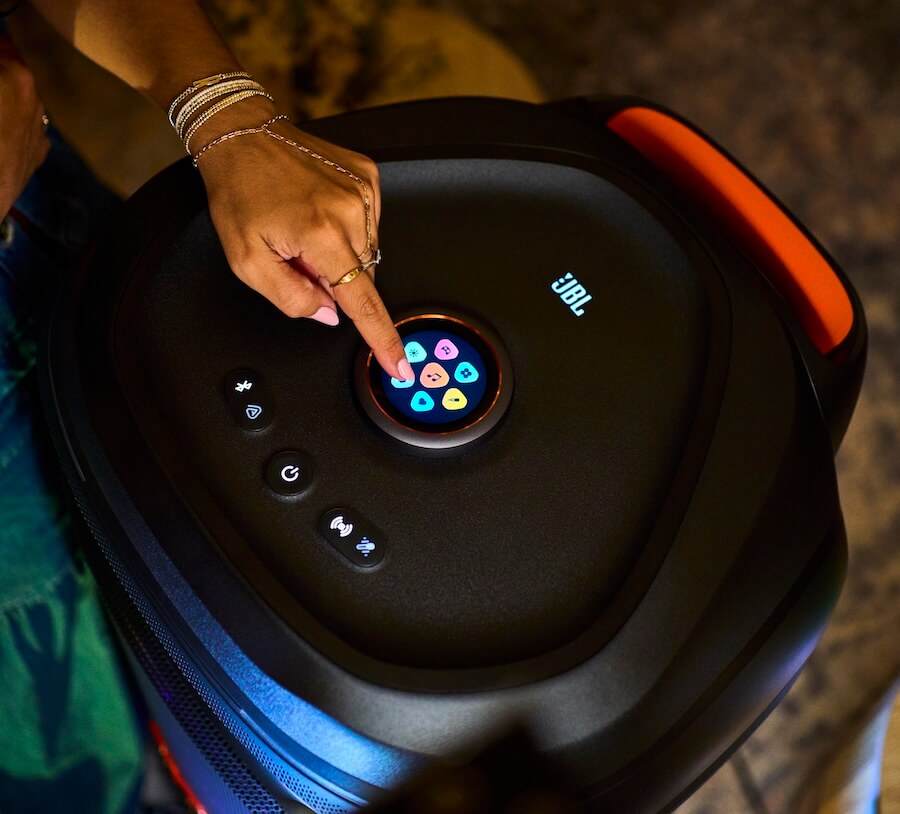
The Ultimate 2 is also the first PartyBox with an integrated touchscreen. The top-mounted volume control doubles as a display and controller for music, lighting, and other settings rather than forcing users to reach for a phone every time someone decides the room needs more flashing lights.

Advertisement

And there are plenty of those.

JBL’s revised light show adds full-panel ripple effects, multilayer illumination, and floor projection, because apparently illuminating the speaker itself was no longer sufficient.

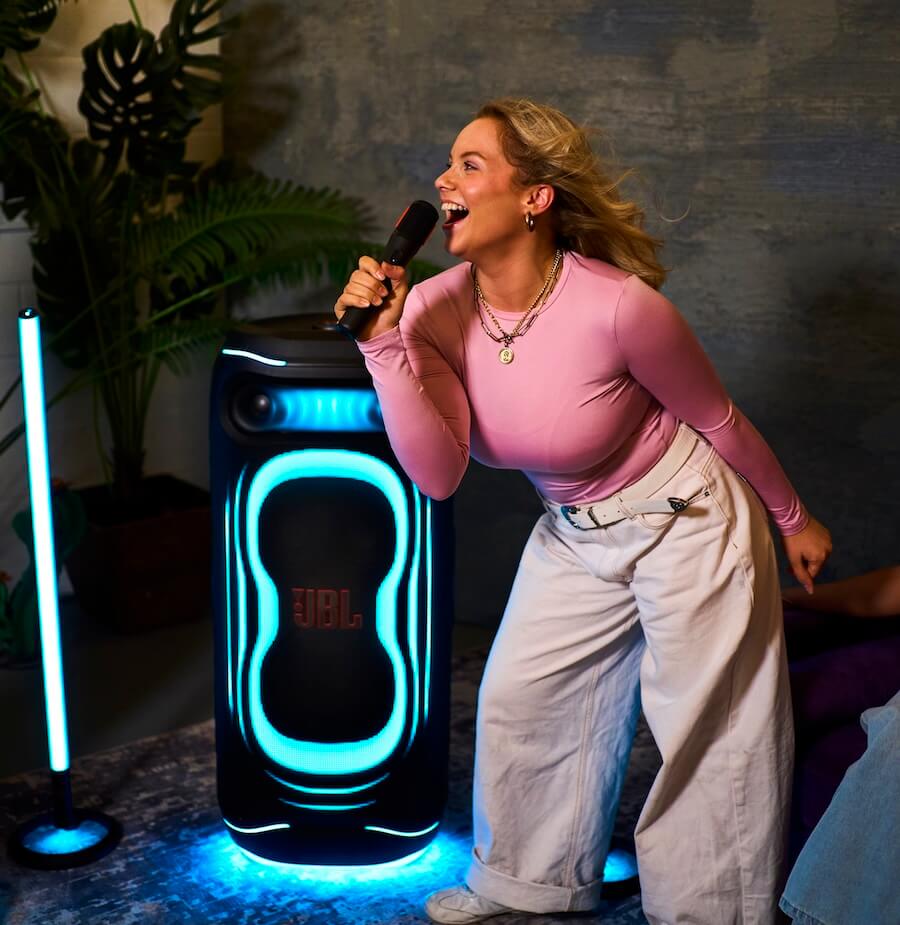
Karaoke users get EasySing AI Vocal Removal, which can reduce vocals from existing tracks, along with microphone and guitar inputs. There is also an optical input for TV-based karaoke and an XLR line input for connecting DJ equipment.

Advertisement. Scroll to continue reading.
Advertisement

That combination moves the Ultimate 2 closer to a self-contained event system than a conventional wireless speaker.

Streaming Gets Surprisingly Serious

The connectivity may be the most unexpected part.

The PartyBox Ultimate 2 supports Wi-Fi 6, Bluetooth 6.0, Bluetooth LE Audio, Auracast, AirPlay, Google Cast, Spotify Connect, and JBL’s ONE app. JBL also lists support for services including TIDAL Connect, Qobuz Connect, and Roon Ready through its Wi-Fi platform.

USB Type-C supports lossless audio playback, while Auracast allows compatible JBL speakers to be linked for larger installations.

Advertisement

In other words, this $1,800 rolling light show has better network-audio credentials than some components sold to people who use the phrase “reference system” without irony.

jbl-partybox-ultimate-2-party-speaker-angle

There Is One Small Portability Problem

JBL calls the Ultimate 2 transportable, and technically that is true.

It has larger wheels and a substantial handle. It also weighs 105.12 pounds and measures 18.37 x 41.44 x 19.42 inches (W x H x D). More importantly, there is no internal battery. The Ultimate 2 requires AC power.

So you can move it around. You just cannot move it very far from an electrical outlet.

The enclosure carries an IPX4 splash-resistance rating, which should handle drinks, light rain, and the usual hazards of a party, but it is not designed for serious exposure to water.

Advertisement

What Does $1,800 Buy Versus the Competition?

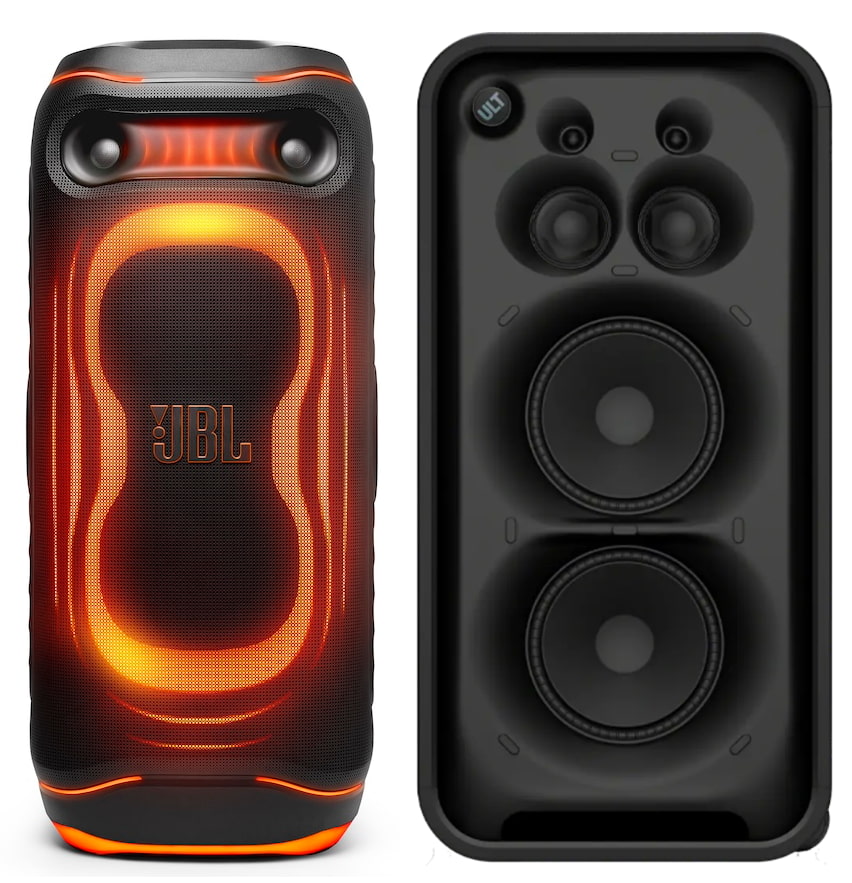
The main competitor to JBL PartyBox Ultimate 2 is Sony’s new ULT Tower MAX, which was just released last month for $300 less. ULT Tower Max is a half-inch taller and tacks on another 19 lbs and has more total speaker drivers. Both support Auracast for connecting multiple units together, and both support karaoke, but neither comes with a microphone.

Smaller options include the Marshall Bromley 750 ($1,299), which also uses dual 10-inch woofers and weighs a much more manageable 52.7 pounds. It delivers a claimed 127dB maximum SPL, 360-degree sound, stage lighting, Auracast, microphone/instrument inputs, IP54 protection, and — critically — more than 40 hours of battery life.

Marshall does not offer JBL’s Wi-Fi streaming ecosystem, touchscreen, AI vocal removal, or elaborate floor-projection light show. It is also considerably easier to take somewhere without requiring both a friend and an extension cord.

Advertisement. Scroll to continue reading.
Advertisement

The SOUNDBOKS 4 ($1,199), strips away much of the visual theater and focuses on ruggedness and output. It reaches a claimed 126dB, weighs about 35.5 pounds, uses a swappable battery, and is designed for outdoor abuse rather than turning your basement into a nightclub.

JBL charges substantially more than all three. What it offers in return is the broadest combination of raw amplifier power, Wi-Fi streaming, party lighting, DJ connectivity, karaoke processing, touchscreen control, and multi-speaker networking.

jbl-partybox-ultimate-2-vs-sony-ult-tower-max
JBL PartyBox Ultimate 2 (left) vs. Sony ULT Tower MAX (right, grille removed)

Specifications Compared

JBL PartyBox Ultimate 2 Sony ULT TOWER MAX (SRS-ULT3000)
Released Oct 2026 Sept 2026
MSRP $1,799 $1,499
Drivers 2 x 10″ woofers
2 x 5″ midrange
2 x 1″ tweeters
3 x 11″ woofers
2 x 4.8″ midrange
2 x 1″ tweeters
2 x 1.6″ tweeters
Power / Output 1500 W 310 W
Battery No, AC power only No, AC power only
Bluetooth 6.0 5.3
Wi‑Fi 802.11 b/g/n/ax –
Frequency response 28 Hz – 20 kHz (-6 dB) Not listed
Inputs USB-C, aux-in, mic-in, guitar-in, line-in (XLR) USB-A, USB-C, MIC 6.3 mm, LINE 1 (RCA), LINE 2 (XLR)
Outputs – LINE OUT (XLR), DC OUT USB-A, DC OUT USB-C
Auracast Yes Yes
Party Lights Yes Yes
App support JBL One Sony Sound Connect
Splash rating IPX4 Top surface only
Carrying features Wheels, handle Wheels, handle
Vocal removal EasySing AI Vocal Removal –
EQ / sound mode Smart EQ Mode,
AI Sound Boost
10-band EQ,
ULT button
Dimensions (W x H x D) 18.37 x 41.44 x 19.42 in
(466.7 x 1052.5 x 493.3 mm)
21.1 x 41.9 x 18.6 in
(534 x 1,062 x 472 mm)
Weight 105 lbs (47.68 kg) 124 lbs (56.3 kg)
jbl-partybox-ultimate-2-party-speaker-karaoke

The Bottom Line

The JBL PartyBox Ultimate 2 makes sense for people hosting very large parties, event spaces, DJs, karaoke enthusiasts, clubs, gyms, and anyone who needs a speaker capable of moving a lot of air without assembling a traditional PA system.

It makes considerably less sense for someone looking for an actual portable Bluetooth speaker. At 105 pounds with no battery, the wheels are not an accessory. They are a survival mechanism.

The $1,799.95 price also pushes the Ultimate 2 well beyond competitors we have covered from Marshall, Sony, and SOUNDBOKS. Those alternatives are lighter and, in some cases, genuinely portable.

Advertisement

But none combines this much power with JBL’s Wi-Fi platform, Roon support, professional inputs, AI karaoke, touchscreen controls, and enough synchronized lighting to make your homeowners association draft an emergency amendment.

The PartyBox Ultimate 2 is excessive and that appears to be the point.

Where to buy:

Tip: JBL’s previous PartyBox Ultimate is currently on sale at Amazon while supplies last.

Advertisement

Source link

Continue Reading

Trending

Copyright © 2025