The home mechanic is a creative problem solver. Lacking the depth of a workshop-enabled professional, home mechanics have to rely on their own ingenuity to work around the gear limitations that sometimes creep into the picture. These intrepid DIYers, of course, need a collection of essential tools and accessory elements, including some specialty tools that can make all the difference. Even novice practitioners can actually handle a wide variety of repair tasks that require attention under the hood and in other areas of a vehicle’s maintenance schedule. Managing your car or fixing other people’s vehicles is ultimately a puzzle that requires a basic framework of knowledge and practical application to solve.
Over time, mechanics become adept at handling an increasingly large volume of projects, and new avenues of repair open themselves up to them. But early-stage home mechanics often seek to stick to the simpler stuff as they learn the ropes and gain the experience necessary to tackle tougher jobs. These five repair tasks fall fully within that umbrella, offering impactful fixes that can keep your car on the road for longer while avoiding the potential pitfalls that might work their way into the picture when it comes to more complicated and demanding jobs. Each one of these tasks can actually be performed by a careful car owner without really any experience under the hood, making them the perfect starting place for a beginner hoping to grow into this hobby or profession.
Advertisement
Replacing your filters
Hleb Usovich/Getty Images
Some of the easiest repairs you’ll make to any car involve its filters. There are numerous filtration systems that populate the space under the hood and throughout a vehicle’s mechanical makeup. Air filters help support healthy engine function and a comfortable interior cabin, while your oil filter keeps that lubricating liquid from gathering up debris as it passes through the system. Filters are simple components, but they perform a set of critically important tasks that underpin the performance of your car in a variety of ways.
Fortunately, changing filters is quick and easy, and this job doesn’t require any real specialized knowledge. There are rarely any specialty tools or non-standard mechanics’ gadgets (which are useful to have, just not a requirement for this job) necessary to access filter compartments, and a replacement is as simple as setting a new part in the housing and closing everything back up again. Unfortunately, telling you that your vehicle desperately needs a new filter is among some of the shady things mechanics might try to pull. They make this swap sound urgent and expensive, but changing your own oil and air filters is simple and can keep your car running well for the long haul. Even beginner mechanics will have a sense of where these filters belong and how to access the spaces, but those with no experience whatsoever can simply look up tutorial videos on YouTube to find the right spot and the potential sequence of part extractions necessary to gain access. From there it’s often just a simple swap and a basic reinstallation process to put the finishing touches on the job.
Advertisement
Changing spark plugs
Trigub/Shutterstock
Over time, your engine’s spark plugs grow damaged by the constant heat and other elements they’re exposed to during operation. Spark plugs are the key component in igniting the mixture of fuel and air within the engine and powering the car’s movement. If you’re operating with degraded spark plugs, your car isn’t performing at its best, plain and simple. Every car will have its own recommendation for when to change these out, usually somewhere between 30,000 and 100,000 miles, depending on the type of spark plugs you’re using (copper builds are the quickest to degrade, for instance).
Changing the spark plugs is part of a basic engine tune up, and it’s something that most car owners and beginner mechanics will be able to do with little trouble. You will need a few important tools to change the plugs, though, including spark plug sockets that are purpose built to handle their removal and reinsertion. If you’re working on an older car, you may also need to address the distributor and perhaps even install new wiring to connect the two components, but even this task is fairly straightforward. Spark plugs come out of their sockets with a simple turn, and installing new ones is as simple as sticking the new component in the hole and tightening it into place. You’ll then repeat the process with each spark plug you’re replacing, usually either four or six of them if you’re doing a full refit. Reconnecting wiring components and then adding a bit of grease into the mix finishes off the task.
Advertisement
Rotating the tires
Miljan Živković/Getty Images
It’s entirely possible to replace your tires at home, but a few specialty tools required to get the seal and balancing right can’t be overlooked if you’re swapping out rubber. This is usually better left to the professionals as a typical car owner, and early career hobby mechanics may also want to pass on the task if they don’t already have the right equipment. However, a job that involves the wheels that’s far easier to accomplish and is recommended on a far more frequent schedule is fully within the wheelhouse of any beginner mechanic or industrious car owner.
Every driver should know how to change a tire in a pinch. Even so, there are some basic mistakes that drivers are often guilty of making when engaging in this emergency replacement task. Experts recommend rotating your tires (likely) two or more times per year. The average driver logs roughly 13,500 miles behind the wheel every 12 months, and recommendations vary from as few as 3,000 miles to 7,500 miles between tire rotations. This is obviously a bit more demanding than swapping out a single wheel in the event of a flat, and some additional lifting equipment is necessary when removing multiple wheels. However, making the swaps to keep a better overall balance in the health of your tires can extend their life, making the need to replace these consumable rubber components slightly less frequent and keeping a bit more cash in your pocket.
Advertisement
Changing your oil
Anastasiia Akh/Getty Images
Changing the oil in a car feels like a task that only experienced mechanics are capable of handling. But early stage mechanics and even novice car owners looking to take a bit more direct ownership over their vehicle’s maintenance can and sometimes should change the oil without additional help. All it takes to change the oil is an oil pan, some sockets and a ratchet, and a few quarts of oil (with the specific car’s recommendation for the type and amount taken into consideration).
It’s important to note that if you’re new to the task, you’ll want to take it slow and make sure you have all your support pieces in place before removing any parts. The first step in swapping out spent oil is draining the existing reservoir of old, spent motor oil, and this can be a messy task that can take you by surprise if you aren’t ready for the drip. Placing your oil pan into position and ensuring it’s large enough to catch the entire flow is essential. From here, it’s just a matter of closing up the egress point at the bottom of the oil tank and then refilling it with the new oil. You’ll probably also want to change the oil filter while you’re tinkering away in this part of the car, giving it a total refresh in its lubrication system.
Advertisement
Fixing small scale bodywork issues
ronstik/Shutterstock
There are countless hacks and processes going around regarding dent pulling approaches. One common option that’s been touted in the past involves dry ice. Besides the danger that handling dry ice represents (always use gloves when touching dry ice!), using it can damage your paint job, and it’s not suitable for large dents that go beyond very shallow imperfections. Hailstone dings, for instance, may be pullable with dry ice, but damage from impact with another car almost certainly isn’t. Dent puller kits come in many forms and sizes, though, and utilizing the ramming capabilities of these kinds of tools can save you plenty of time and money that would otherwise get poured into work at a body shop beyond your own mechanic space.
It’s also possible to repair sections of rust that can form on older, project cars. You may not even need to be proficient in welding to get this done. Repairing damaged sections can be done with a bit of calculated surface preparation to remove the rust, and then a healthy dose of an auto body repair putty like Bondo to fill in the missing space and sanding to perfect its surface. For more demanding jobs, taking the car to a specialist in bodywork may be required, but for basic dent and ding repair, most home mechanics and others can handle the job themselves with a bit of patience and the right tools. The paint job that comes next may be outside your purview, but after saving on the bulk of the repair work it might be totally fine to shop out to someone else for a pristine finish.
Given that some of the more famous demos were by Honda and Tesla, you might be forgiven for thinking you need pockets as deep as a car company to get into humanoid robotics — and maybe that was true once, but now Asimov v1 is here. It doesn’t have a positronic brain, and you’ll have to code in the Three Laws for yourself, but at least you have the freedom to, because Asimov is open source.
It’s not exactly cheap: the kit version comes with a target price of $15,000 USD, but they do provide the Bill of Materials on the GitHub repository so you can try and hunt down some deals. Still, compared to the millions poured into these sorts of robots in the early days, we have to consider it accessible. With 25 total degrees of freedom, you’ll have to source a lot of actuators, but at least the onboard compute will be easy to get. Rather than begging CERN for spare positrons, you’ only need a Raspberry 5 and a Radaxa CM5.
No word on if this robot can write a symphony — though we’ve seen software that can — and its 5 kg personal best for squats and 18 kg single-arm lat raises aren’t going to impress the bros at the gym. But hey, at least now you have someone to shake your chair for sim gaming. If you’re wondering what the deal with these androids is, well, so were we.
Users may not be able to combine Microsoft software with competitors’ products effectively, the CMA has been told.
The UK’s competition watchdog has launched an investigation into Microsoft’s enterprise software ecosystem over interoperability concerns.
The Competition and Markets Authority (CMA) probe will consider whether Microsoft should be given a ‘strategic market status’ (SMS) designation reserved for companies that dominate the UK market in a particular digital activity.
The investigation will also assess whether Microsoft’s product bundling, limits in interoperability for users, and default settings prevent customers from switching to competing services. This will include probing how Microsoft’s AI competitors are able to integrate with its business software.
Hundreds of thousands of UK organisations across public and private sectors use Microsoft’s enterprise software daily, spanning the Windows operating system, Microsoft 365 suite and Copilot AI.
The CMA finds that Microsoft has more than 15m commercial UK-based users across its ecosystem, making it a key provider of productivity tools in the country.
The competition watchdog said it has received information that users may not be able to combine Microsoft software with competitors’ products effectively.
Advertisement
In its probe, it will examine Microsoft’s wide range of products, including productivity software, personal computer and server operating systems, database management systems and security software.
The investigation will take up to nine months to complete. The authority has invited organisations based in the UK and around the world, including rival tech companies and business software customers, to share their experiences.
This is the fourth SMS investigation opened by the CMA since the UK’s digital markets competition regime came into force in January 2025. The law gives the CMA additional powers to propose remedies and improve market competition in the country. Early last year, it opened a probe into Apple and Google over their mobile ecosystems,
The designation would also allow the CMA to potentially intervene on concerns from a separate investigation into Microsoft’s software licensing in the cloud market.
Advertisement
“Business software is a cornerstone of how the UK economy functions, from small businesses to major public services and infrastructure. Hundreds of thousands of customers in the UK rely on Microsoft’s systems, which is why it’s so important to ensure these services are delivering good outcomes,” said Sarah Cardell, the CMA’s CEO.
“Our aim is to understand how these markets are developing, Microsoft’s position within them and to consider what, if any, targeted action may be needed to ensure UK organisations can benefit from choice, innovation and competitive prices.”
Don’t miss out on the knowledge you need to succeed. Sign up for the Daily Brief, Silicon Republic’s digest of need-to-know sci-tech news.
For AI systems to keep improving in knowledge work, they need either a reliable mechanism for autonomous self-improvement or human evaluators capable of catching errors and generating high-quality feedback. The industry has invested enormously in the first. It’s giving almost no thought to what’s happening to the second.
I’d argue that we need to treat the human evaluation problem with just as much rigor and investment as we put into building the model capabilities themselves. New grad hiring at major tech companies has dropped by half since 2019. Document review, first-pass research, data cleaning, code review: Models handle these now. The economists tracking this call it displacement. The companies doing it call it efficiency. Neither are focusing on the future problem.
Why self-improvement has limits in knowledge work
The obvious pushback is reinforcement learning (RL). AlphaZero learned Go, chess, and Shogi at superhuman levels without human data and generated novel strategies in the process. Move 37 in the 2016 match against Lee Sedol, a move professionals said they would never have played, didn’t come from human annotation. It emerged from AI self-play.
What enables this is the stability of the environment. Move 37 is a novel move within the fixed state space of Go. The rules are complete, unambiguous, and permanent. More importantly, the reward signal is perfect: Win or lose, and immediate, with no room for interpretation. The system always knows whether a move was good because the game eventually ends with a clear result.
Advertisement
Knowledge work doesn’t have either of those properties. The rules in any professional domain are dynamic and continuously rewritten by the humans operating in them. New laws get passed. New financial instruments are invented. A legal strategy that worked in 2022 may fail in a jurisdiction that has since changed its interpretation. Whether a medical diagnosis was right may not be known for years. Without a stable environment and an unambiguous reward signal, you cannot close the loop. You need humans in the evaluation chain to continue teaching the model.
The formation problem
The AI systems being built today were trained on the expertise of people who went through exactly that formation. The difference now is that entry-level jobs that develop such expertise were automated first. Which means the next generation of potential experts is not accumulating the kind of judgment that makes a human evaluator worth having in the loop.
History has examples of knowledge dying. Roman concrete. Gothic construction techniques. Mathematical traditions that took centuries to recover. But in every historical case, the cause was external: Plague, conquest, the collapse of the institutions that hosted the knowledge. What’s different here is that no external force is required. Fields could atrophy not from catastrophe but from a thousand individually rational economic decisions, each one sensible in isolation. That’s a new mechanism, and we don’t have much practice recognizing it while it’s happening.
When entire fields go quiet
At its logical limit, this isn’t just a pipeline problem. It’s a demand collapse for the expertise itself.
Advertisement
Consider advanced mathematics. It doesn’t atrophy because we stop training mathematicians. It atrophies because organizations stop needing mathematicians for their day-to-day work, the economic incentive to become one disappears, the population of people who can do frontier mathematical reasoning shrinks, and the field’s capacity to generate novel insight quietly collapses. The same logic applies to coding. Our question is not “will AI write code” but “if AI writes all production code, who develops the deep architectural intuition that produces genuinely novel systems design?”
There is a critical difference between a field being automated and a field being understood. We can automate a huge amount of structural engineering today, but the abstract knowledge of why certain approaches work lives in the heads of people who spent years doing it wrong first. If you eliminate the practice, you don’t just lose the practitioners. You lose the capacity to know what you’ve lost.
Advanced mathematics, theoretical computer science, deep legal reasoning, complex systems architecture: When the last person who deeply understands a subfield of algebra retires and no one replaces them because the funding dried up and the career path disappeared, that knowledge isn’t likely to be rediscovered any time soon.
It’s gone. And nobody notices because the models trained on their work still perform well on benchmarks for another decade. I think of this as a hollowing out: The surface capability remains (models can still produce outputs that look expert) while the underlying human capacity to validate, extend, or correct that expertise quietly disappears.
Advertisement
Why rubrics don’t fully substitute
The current approach is rubric-based evaluation. Constitutional AI, reinforcement learning from AI feedback (RLAIF), and structured criteria that let models score models are serious techniques that meaningfully reduce dependence on human evaluators. I’m not dismissing them.
Their limitation is this: A rubric can only capture what the person who wrote it knew to measure. Optimize hard against it and you get a model that’s very good at satisfying the rubric. That’s not the same thing as a model that’s actually right.
Rubrics scale the explicit, articulable part of judgment. The deeper part, the instinct, the felt sense that something is off, doesn’t fit in a rubric. You can’t write it down because you need to experience it first before you know what to write.
What this means in practice
This isn’t an argument for slowing development. The capability gains are real. And it’s possible that researchers will find ways to close the evaluation loop without human judgment. Maybe synthetic data pipelines get good enough. Maybe models develop reliable self-correction mechanisms we can’t yet imagine.
Advertisement
But we don’t have those today. And in the meantime, we’re dismantling the human infrastructure that currently fills the gap, not as a deliberate decision but as a byproduct of a thousand rational ones. The responsible version of this transition isn’t to assume the problem will solve itself. It’s to treat the evaluation gap as an open research problem with the same urgency we bring to capability gains.
The thing AI most needs from humans is the thing we’re least focused on preserving. Whether that’s permanently true or temporarily true, the cost of ignoring it is the same.
Ahmad Al-Dahle is CTO of Airbnb.
Welcome to the VentureBeat community!
Advertisement
Our guest posting program is where technical experts share insights and provide neutral, non-vested deep dives on AI, data infrastructure, cybersecurity and other cutting-edge technologies shaping the future of enterprise.
Read more from our guest post program — and check out our guidelines if you’re interested in contributing an article of your own!
Need something new for your reading list? This week, we recommend Cecile Pin’s Celestial Lights and the new Image Comics series, If Destruction Be Our Lot.
Celestial Lights
Henry Holt and Co.
Another melancholic narrative about love, loss and the consequences of human ambition, with space as the backdrop? Oops, I might have a type. Cecile Pin’s Celestial Lights is a short and contemplative novel about Oliver Ines, or Ollie, a man who has always been drawn to the stars and is one day chosen to lead a 10-year mission to one of Jupiter’s moons, Europa. It hops through time, following Ollie’s memories across his life and weaving in logs from the mission.
While space exploration is part of it, this isn’t a book to grab if you’re looking for excitement and adventure. Celestial Lights is, as the blurb explains, “A portrait of a complicated man and a breathtaking tale of memory, personal choices, and the relationships that define us.”
Advertisement
If Destruction Be Our Lot
Image Comics
The first issue of this series came out at the beginning of the month, and oh does it feel like the start of something really, really great. The main character is, absurdly, an Abraham Lincoln robot whose purpose appears to be regurgitating quotes said by the 16th president of the US. He’s one of countless robots still running decades after humans have gone extinct. And, unlike most of the droids around him, he’s pretty caught up on what the meaning of his life is now that his original, human-assigned purpose is moot.
When things go awry during a bus ride one day — the vehicle being Abe’s autonomously driving friend, Bus — his world suddenly seems to expand, for better or worse. I loved the art style and tone, which is kind of darkly funny but also a bit serious. Super promising premiere issue. If Destruction Be Our Lot is by writers Mark Elijah and Matthew Rosenberg and artist Andy MacDonald.
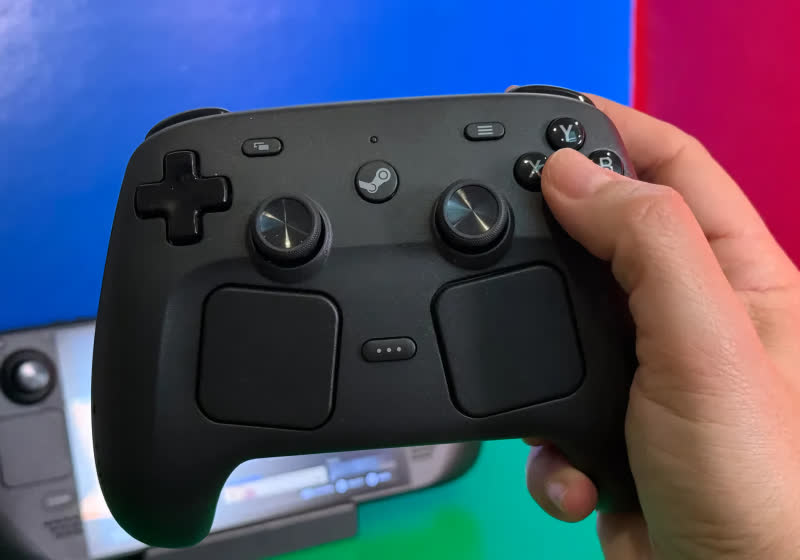
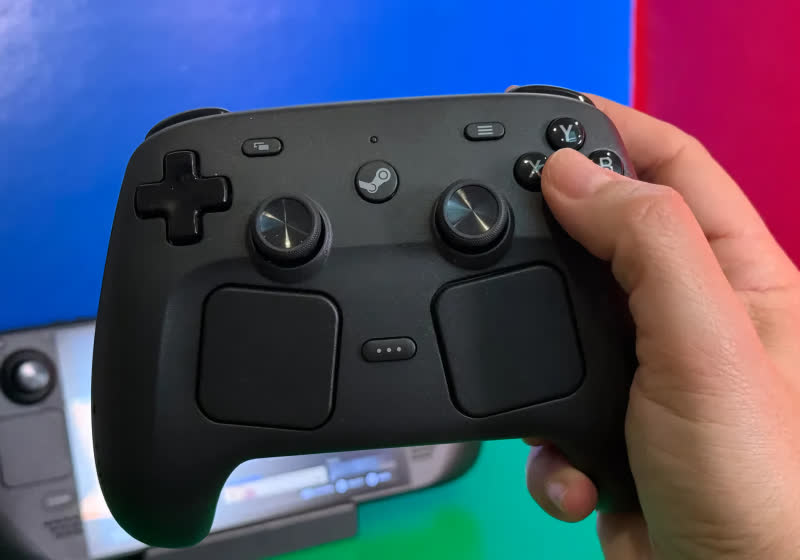
The second-gen Steam Controller launched to much fanfare on May 4 priced at $99. The high-end gamepad sold out within half an hour thanks in large part to scalpers scooping them up in bundles and reselling them for massive profits. A newly implemented reservation system looks to address the issue… Read Entire Article Source link
An image from an Epic Games video mocking Apple’s 1984 ad – Image Credit: Epic Games
Ahead of the return to District Court for the continued appeals process in the Apple-Epic legal fight, the two companies have made a schedule to discuss a change in App Store fees for outbound links.
The May 6 decision by the Supreme Court to decline Apple’s request for a stay on a mandate to meet Epic Games to negotiate a new commission rate means more legal action in the coming months. In preparation, the two sides have agreed on a few ground rules for that meeting.
In a joint filing to the U.S. District Court for the Northern District of California on May 15, there is a multi-point schedule of actions and activities for the two companies.
Advertisement
The list starts with Apple being given 45 days to file with the court a “proffer,” namely a good-faith offer of evidence, testimony, documents, or some form of evidence to the court. This proffer will propose commissions for any “linked-out purchases,” along with supportive evidence, in a document that’s up to 30 pages long.
Up to ten days after the proffer, Apple will hand Epic all non-privileged documents about the decision-making process to create the proffer’s proposal. This includes fee proposals and a privilege log.
Within five days of that action, Apple will meet with Epic to discuss the privilege log and whether Epic needs any extra material to evaluate the Apple proposal. Epic can then designate up to 10% of the documents on that privilege log for further review by a third party.
Within 60 days from the latter of Apple’s proffer filing or Apple’s completion of document production, Epic will then file its own response to Apple’s proffer to the court. This too can be up to 30 pages in length, and if Epic makes an objection, it must include evidence supporting that move.
Advertisement
Once that has been filed, Apple has another 30 days to file its reply, though with a 15-page limit. After all that, the court can then hold a status conference or decide any further proceedings.
Based on all parties taking the last possible moments to complete each stage in the schedule, it could be 150 days or five months before the court schedules another meeting.
How Apple got here
Apple and Epic have endured a six-year legal battle that started with “Fortnite” allowing players to make in-app purchases using a third-party payment processor. Epic also made demands, including allowing alternate app storefronts in iOS and a change in the commission structure.
For the most part, Apple succeeded against Epic, but the court found against Apple’s anti-steering measures, which prevented developers from directing users to other ways to pay. Apple was ordered to make changes, and it claimed it did.
Advertisement
Epic responded, arguing Apple didn’t follow the spirit of the law, convincing a court in April 2025 to its viewpoint. The court viewed Apple’s moves as a “gross miscalculation” of acceptability.
Across the country, thousands of students are waving goodbye to high school and preparing to head off to college. If you know one such student, and want to gift them a gadget to send them off in style, you’ve come to the right place. I’ve rounded up what I think are the best high school graduation gifts you can buy, at a range of different budgets.
All of these gifts will come in handy in college, whether for work, play or general student life. I’ve included noise-cancelling headphones to block out distractions while studying, robust Bluetooth speakers for when it’s time to bring the party, and budget-friendly coffee makers for an instant boost in time for morning seminars.
I’ve also included some top, student-friendly laptops and tablets, but we have a separate guide to the best student laptops if you can’t find exactly what you’re looking for here. I’ve separated my suggestions into budget bands, for easier browsing.
Advertisement
Under $50
For under $50 you can pick up some really great compact Bluetooth speakers — the Tribit Stormbox Micro 2 is the standout here, scoring a perfect five stars in our review. In this price bracket, I’d also be looking at quirky desk accessories that boost productivity and deliver a smile, and colorful water bottles and insulated coffee cups, to keep your new student refreshed on the go.
Advertisement
$50-$100
In the $50-$100 bracket, I love Kodak’s instant-printing digital cameras, tapping into the retro tech trend and giving your student an easy way to decorate their dorm room. There are also a few strong, budget-friendly gadgets worth considering: the Sony Pro HQ51 are our favorite cheap, noise-cancelling headphones, and the dinky Instant Vortex Mini air fryer is ideal for kitting out a cramped kitchen.
$100-$200
Looking to spend over $100? Great news: there’s plenty of excellent tech to choose from in this price bracket. An e-reader makes a stellar gift for literature students or anyone who loves to read in their spare time — both the Kindle and Kobo are worth considering.
Advertisement
On the kitchen front, Ninja has a couple of appliances we rate really highly. For caffeine addicts, the DualBrew Pro is a capable coffee maker that can make a range of brews in different styles and sizes, while the Crispi is an innovative air fryer that uses the same glass containers for cooking and storage — perfect for batch cooking in small kitchens.
Sign up for breaking news, reviews, opinion, top tech deals, and more.
$200-$300
Want to spend a bit more? In the $200-$300 bracket, we have gadgets that are more of a long-term investment. The Sony WH-1000XM5 are some of the best noise-cancelling headphones on the market, and will have no trouble blocking out noisy roommates or crowded cafeterias so your student can focus. In the tablet market, we rate the Lenovo Idea Tab Pro as an excellent iPad alternative for an ultra-competitive price.
Advertisement
Over $300
Looking to spend over $300? I’ve picked a selection of laptops and tablets that would make an excellent study companion for a new student, including the new MacBook Neo that everyone’s talking about at the moment. For more options, head to my college tablet and laptop guide.
We spend hours testing every product or service we review, so you can be sure you’re buying the best. Find out more about how we test.
GameSir G8+ MFi: One-minute review
The GameSir G8+ MFi is the controller that the G8 Galileo probably should have been from the start. It takes the same full-size grips, Hall effect thumbsticks and triggers, and programmable back buttons that made the original one of the best mobile grips going, then layers on MFi certification for iPhone and iPad Mini, swappable ABXY button caps, dual vibration motors, and crucially, improved case compatibility.
Best of all? It’s still the same $79.99 / £79.99 / AU$129.99 asking price.
Advertisement
Having tested both of these mobile controllers side by side on the same phones and games, the G8+ MFi addresses just about every gripe I had with the G8 Galileo. The case compatibility improvements alone are worth shouting about, with magnetically swappable silicone pads and a camera bump panel that let you adjust clearance depending on whether your phone is cased or caseless.
Latest Videos From
The screenshot button has been nudged further from the D-pad, and the ability to physically swap button caps to match your layout is a nice bonus for anyone who switches between Xbox and Nintendo-style mapping. The core controller feel, including the high stick sensitivity and trigger response, is identical to the G8 Galileo, but the GameSir app now works on both iOS and Android.
There are vibration motors in each grip now, which should be a nice add-on, but sadly, they go completely unused by every game I tested on both Android and iOS. Admittedly, that’s more the fault of developers than GameSir, however. With that oversight, there’s probably not quite enough here to justify replacing an original G8 if you’re an Android user. But for everyone else, this is the version to buy.
(Image credit: Future)
Advertisement
GameSir G8+ MFi: Price and availability
List price: $79.99 / £79.99 / AU$129.99
Available via Amazon, GameSir, and major retailers
Same price as the G8 Galileo it effectively replaces, but both are available
GameSir launched the G8+ MFi in late 2025, two years after the G8 it’s built on, but despite the upgrades, it retains the same $79.99 / £79.99 / AU$129.99 price tag. That sees it continue to undercut rivals like the Backbone One 2nd Gen ($99.99 / £99.99), though it can now stack up head-to-head with them on compatibility thanks to the added MFi certification.
GameSir’s naming across the G8 range remains confusing, and a shared price point doesn’t help matters. The G8+ comes in both Type-C (wired, that I’m reviewing here) and Bluetooth variants.
Sign up for breaking news, reviews, opinion, top tech deals, and more.
There’s also the original G8 Galileo, which is Android-only. Sometimes it’s called the G8+, sometimes it’s the G8 Plus. Sometimes Galileo gets a shoutout in there, sometimes he doesn’t. If you’re shopping, double-check you’re getting the right version for your device and not selling yourself short on feature set.
Advertisement
GameSir G8+ MFi: Specs
Swipe to scroll horizontally
Row 0 – Cell 0
GameSir G8+ MFi
Price
$79.99 / £79.99 / AU$129.99
Advertisement
Dimensions
9.02 x 4.20 x 2.13in / 229 x 106.8 x 54.2mm
Weight
10.72oz / 304g
Advertisement
Connection
Wired USB-C (pivoting connector)
Compatibility
iPhone (USB-C), iPad mini 6+, Android 8.0+
Advertisement
Software
GameSir App (iOS and Android)
GameSir G8+ MFi: Design and features
Familiar G8 ergonomics with a wider platform and stretch for iPad mini compatibility
Swappable ABXY button caps and improved case compatibility
Works natively with both Android and iOS devices
If you’ve used the GameSir G8 Galileo, the G8+ MFi will feel immediately familiar. In fact, if you’ve used an Xbox 360 or Series controller, the G8+ will feel familiar too. The full-size, contoured grips are the same chunky shape as Xbox’s offering, and the same laser-engraved texturing carries over from the G8.
It’s noticeably comfortable to hold and feels like a proper device rather than a homebrew solution to gaming on your phone. The same overall build quality remains, too: it’s robust, doesn’t flex or creak, and materials feel premium.
Advertisement
Placed side by side with its sibling, the G8+ MFi’s phone deck is noticeably wider, but in isolation, I’m not sure you’d actually clock the difference. It’s heavier too, at 304g versus the G8’s 252g, though again the extra weight didn’t really register during testing. The light grey-and-white colorway is an improvement from the G8 Galileo’s uniform, darker grey for my eye. It looks a little more refined in this brighter skin, but that’s personal taste, and you don’t get a choice anyway.
The MFi certification is the headline upgrade and a welcome addition for Apple fans. Where the G8 Galileo only officially supported Android, the G8+ MFi is certified for iPhones with USB-C and the iPad mini 6 and newer. It auto-detects which platform it’s connected to and switches mode accordingly, which worked without issue across both my POCO X5 Pro 5G and iPhone 17 Pro during testing. The GameSir app recognized the controller on both phones, too, which wasn’t the case with the G8.
The wider stretch range, a full 30mm increase over the original, means the G8+ MFi can now accommodate an iPad mini, though without one to hand, I’ll have to take GameSir’s word for it. What I did appreciate was the removable magnetic back panel on the left side of the phone deck. This easily pops off to create more clearance for phones with larger camera bumps. It’s a nice quality of life addition that did its job perfectly with my cased iPhone, though
I’m not sure what GameSir thinks I’m going to do with that easily losable piece. A slot to tuck it into or even a magnetic spot on the back to stow it would have been much appreciated. I imagine we’ll see a lot of G8 Plus’ with a black stripe on the left side over time.
Advertisement
(Image credit: Future)
Case compatibility is where the G8+ MFi makes its biggest practical design improvement over the G8. GameSir now includes magnetic silicone pads of different thicknesses to change the buffer size around the port.
I played with my iPhone case on, and the controller accommodated it comfortably, which was something I couldn’t manage on the G8 Galileo without worrying about the USB-C connector angle. It’s probably still not going to handle a chunky Otterbox, but standard slim cases are no longer a problem. For all the clever tweaks and design changes, the USB-C connector is still my favorite choice GameSir made, and I’m glad it’s unchanged on the G8+. It pivots freely up and down, which makes seating and removing your device a doddle.
The magnetic faceplate system on the grips carries over from the G8, too, but the G8+ MFi adds swappable ABXY button caps on top of the interchangeable thumbstick options. You can physically rearrange the face button layout to match Xbox or Nintendo mapping, which is a nice complement to the software remapping available in the app. Three replacement thumbstick caps are included (short, tall, dome), but you still only get one of each.
(Image credit: Future)
Advertisement
GameSir G8+ MFi: Performance
Hall effect sticks and triggers, including hair-trigger mode
Two customizable M buttons on the back
Vibration motors in each grip, though they’re rarely used
When it comes to gaming with the GameSir G8+ MFi, the bits that were great before are still just as great here; en-something-ification clearly isn’t in the GameSir dictionary. The Hall effect thumbsticks and triggers are, as far as I can tell, identical to those on the GameSir G8 Galileo.
The sticks are smooth and precise with a high level of sensitivity. If you’re coming from a cheaper controller, you may need some time to adjust, but increased control is certainly worth the effort.
The triggers have full analog travel along with a hair-trigger mode that’s snappy and reliable, perfect for shooters. If you’re upgrading from the G8, there’s no change in input quality here, which is no bad thing, but don’t jump across expecting an even better experience. Deadzone and hair-trigger settings are configurable through the GameSir app, and the app now working on iOS means iPhone users get the same tuning options Android users have always had.
The G8+ MFi’s d-pad has a slightly mushy wobble, though a snappy, clicky feel when you fire it off. Travel distance is short with a clear click for each direction, including diagonally. The screenshot button has been repositioned slightly further from the D-pad down compared to the G8, and the improvement was both noticeable and very welcome. I didn’t accidentally trigger it during testing, which was a recurring frustration for me previously
Around the back of the G8+ are two programmable buttons, labeled M1 and M2 (compared to L4 and R4 on the last model). They’re something of a rarity for mobile controller grips at this price, with the likes of the Backbone One skipping them entirely. I found them well-sized and positioned just about perfectly.
Advertisement
They’re close to where your fingers naturally rest without getting in the way, taking just the right amount of force to avoid accidental presses. They ship unbound by default, so you’ll need the GameSir app to assign functions, and you can only mirror existing buttons on them, no macros.
(Image credit: Future)
The dual asymmetric vibration motors are the one new feature that falls flat. They work fine in the GameSir app’s test mode, delivering both strong and subtle vibrations that feel perfectly capable, if a little slow to spin up. The problem is that no game I tested, on either Android or iOS, actually utilized them.
Fortnite, Call of Duty Mobile, Forza Horizon 5,and Shadow of the Tomb Raidervia Xbox cloud gaming, nothing. I believe this is actually a mobile gaming ecosystem issue rather than a GameSir problem; developers just aren’t bothering or don’t have the means to communicate this information to devices. That may well change in the future, but right now, don’t go grabbing the G8+ expecting haptic feedback as you’d get on console.
The GameSir G8+ MFi features passthrough USB-C charging and a 3.5mm headphone jack, which carry over from the G8 Galileo, and both worked without issue again throughout testing. Passthrough charging reported fast charge speeds on both the POCO X5 Pro and iPhone 17 Pro with no overheating.
Advertisement
The headphone jack remains a welcome inclusion for latency-free wired audio The dedicated GameSir button on the controller has inconsistent behavior on Android, sometimes acting as a home button and occasionally opening the GameSir app instead. On iOS, it seemed to do nothing at all, but it will light up a different color to confirm you’re in the right compatibility mode for your device.
(Image credit: Future)
Shoudl you buy the GameSir G8+ MFi?
Buy it if…
Advertisement
Don’t buy it if…
Also consider…
Can’t decide if the GameSir G8+ MFi is the one to get? Here’s how it compares to other, similar controller grips.
Swipe to scroll horizontally
Row 0 – Cell 0
GameSir G8+ MFi Galileo MFi
Razer Kishi Ultra
Advertisement
Backbone One 2nd Gen
Price
$79.99 / £79.99 / AU$129.99
$149.99 / £149.99 / AU$269.95
Advertisement
$99.99 / £99.99 / AU$179.99
Dimensions
9.02 x 4.20 x 2.13in / 229 x 106.8 x 54.2mm
9.64 x 4.36 x 2.53in / 244.8 x 110.8 x 64.3mm
Advertisement
6.93 x 3.70 x 1.34in / 176 x 93.98 x 34.03mm
Weight
10.72oz / 304g
9.38oz / 266g
Advertisement
4.86oz / 138g
Connection
Wired (USB-C)
Wired (USB-C)
Advertisement
Wired (USB-C / Lightning)
Compatibility
Android, iOS
Android, iOS
Advertisement
Android, iOS
Software
GameSir App
Razer Nexus
Advertisement
Backbone App
GameSir G8+ MFi: One-minute review
I spent a few days testing on both an iPhone 17 Pro and POCO X5 Pro
I played Fortnite, Call of Duty Mobile, Need for Speed No Limits, plus Forza Horizon 5 and Shadow of the Tomb Raider via Xbox Cloud Gaming
I played with the various customization options and tried to get the rumble working, unsuccessfully
I approached testing the GameSir G8+ MFi with the question of not only how it fared in general, but specifically how it compared to the G8 Galileo upon which it was built. I used the same two phones and the same set of games to put them directly head-to-head. This allowed me to isolate exactly what’s changed between the two controllers and whether those changes are meaningful in practice.
I tested case compatibility with a slim iPhone case, tried all swappable thumbstick and button cap configurations, checked vibration motor response across multiple games on both platforms, and verified that the GameSir app provided full functionality on both iOS and Android. I also investigated the GameSir button behavior on both operating systems and tested passthrough charging on both devices.
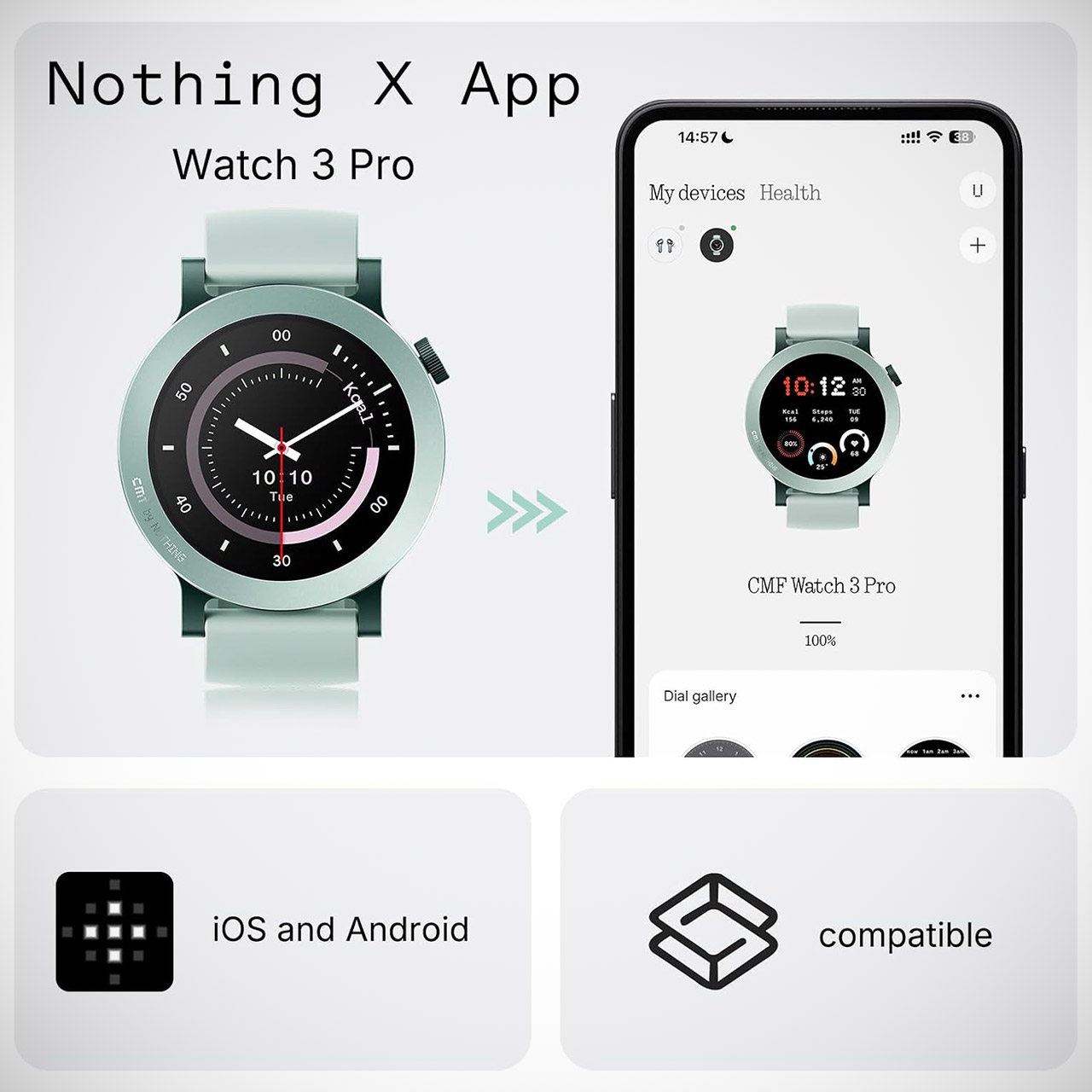
Short battery life frustrates many smartwatch owners more than anything else. Prices for decent models climb higher every year. CMF by Nothing Watch 3 Pro, priced at $69 (was $99), changes that equation completely. A 47-millimeter case sits comfortably on most wrists at just 51 grams. Liquid silicone straps attach easily with standard 22-millimeter pins so swapping colors takes seconds. Brushed details around the rotating crown add a subtle finish that feels more expensive than the asking price suggests.
The screen size increases to a pocket-sized 1.43 inches, with a square 466 by 466 pixel AMOLED panel that produces sharp text and silky smooth swipes because the refresh rate remains at a steady 60 Hz. Even in harsh sunshine, the maximum brightness of 670 nits allows you to keep track of the time. And if you want to save battery life, the always-on display remains visible – just don’t expect deep blacks; that’s the price you pay for this function.
Ultra-Accurate Health & Fitness Tracker: The CMF Watch 3 Pro smart watches enhance your fitness journey with advanced heart rate tracking (4-channel…
Your AI Life Companion: The CMF Smartwatch enables crystal-clear Bluetooth calls with AI noise reduction, a built-in mic, and speaker, supporting…
Style for Every Occasion: Elegant Brushed Metal to Rugged Outdoor Designs feature a vibrant 1.43” AMOLED Display with sharp resolution, bigger…
The battery itself has 350mAh capacity and could last up to 13 days on a single charge. If you’re a heavy user, however, and spend a lot of time tracking your heart rate or GPS route, you’ll get at least 10 days out of it, even if you’re constantly checking your watch. And if you elect to leave the always-on display on, you should be able to go about 4-5 days between top-ups, which is plenty of time between charges in my opinion. You can put the watch on the charger for a short 100 minutes, just enough time to have a coffee, and then you’re ready to go.
Advertisement
When it comes to health tracking, Nothing has worked harder to get the basics right: continuous heart rate monitoring with updates every few minutes, as well as the ability to check blood oxygen levels and stress levels. It’ll even tell you what stage of sleep you’re in, dividing it into neat little charts of time and quality each morning. For the females, there’s a built-in period tracker that will tell you when ovulation is due. There are also other sports modes available, over 130 in all, so whether you’re a serious athlete or just want to go for a brief jog, you should be able to find something that suits you. The dual-band GPS works great, and it even identifies when you start or end an exercise, so you don’t have to fiddle with manual start/stop times. All of that data is then synced to the Nothing X app, where you can see how you’re doing over time. I mean, if you’re a real runner, you’ll want a little more precision, but for the typical user, it’s plenty to keep you on track.
The Bluetooth 5.3 onboard allows you to take and make calls directly from the watch, as long as you have a built-in microphone and speaker. You may also receive notifications from your phone apps on the watch, which you can reject or respond to without having to reach for your phone. Additionally, you can manage your music directly from the watch, which should be a big advantage for all you runners out there.
The watch is water resistant to the tune of IP68, so a good splash in the rain or a fast hand wash should be fine, but, as with other similar watches, you should avoid deep water sports, since swimming laps are out of the question. As an extra plus, the lack of an NFC chip allows you to utilize your phone to make contactless payments.
Announced almost a year ago, the golden Trump phone will finally begin shipping this week to people who preordered it, according to Trump Mobile.
“Those who pre-ordered the T1 Phone will be receiving an update email. Phones start shipping this week!!!,” Trump Mobile said in an X (Twitter) post on Wednesday. A Community Note added to the post suggests that the long-delayed phone is a modified version of the T-Mobile REVVL 7 Pro 5G, which was first released in early 2024.
The Trump phone, officially known as the Trump Mobile T1, was supposed to ship last August, but ran into production issues, the company said.
Advertisement
“The technology business is more difficult than some may realize, as parts must be tested for quality assurances,” Trump Mobile CEO Pat O’Brien said in a statement to CNET. “We have experienced delays during a variety of steps in getting the T1 to completion, but those delays were worth it in our minds as we are delivering an amazing product.”
CNET Director of Content Patrick Holland had put down a $100 deposit to preorder the T1 phone in June 2025 so CNET could review it, but he has yet to hear from the company about a shipping date. However, on Wednesday morning, when he logged in to his Trump Mobile account, he was notified that his payment method was outdated and needed to be updated.
Holland says his preorder was “confirmed but not processed,” and he sees a red bubble that reads, “Awaiting Sim Assignment.”
Advertisement
Screenshot by CNET
Trump Mobile launched in June 2025 with a $47.45-a-month mobile phone plan, and announced that a Trump phone would be made in the US and launch in August 2025. But when it became obvious that domestic large-scale smartphone manufacturing would not be possible, Trump Mobile dropped the “made in the US” claim.
Now, the site simply says it is “designed with American values in mind,” an “American-proud design” and “shaped by American innovation.”
The website claims it will have a 6.78-inch AMOLED screen; a 50-megapixel, front-facing camera; a camera bump featuring a 50-megapixel main lens, an 8-megapixel wide lens and a 50-megapixel (2X Tele) lens; a 5,000-mAh battery; a fingerprint sensor and AI face unlock; a Snapdragon mobile platform; and an Android operating system.
While Trump Mobile has not said where the T1 phone is manufactured, executives told The Verge that it’s being made in a “favored nation” with “final assembly” in Florida. It’s unclear what qualifies another nation as “favored” to handle most of the assembly of the T1 phone. Meanwhile, President Trump has returned from China after a two-day summit with President Xi Jinping to discuss a potential trade deal.



































































You must be logged in to post a comment Login