







Connect with us
DAPA Banner
DAPA Coin
DAPA
COIN PAYMENT ASSET
PRIVACY · BLOCKDAG · HOMOMORPHIC ENCRYPTION · RUST
ElGamal Encrypted MINE DAPA
🚫 GENESIS SOLD OUT
DAPAPAY COMING

Tech

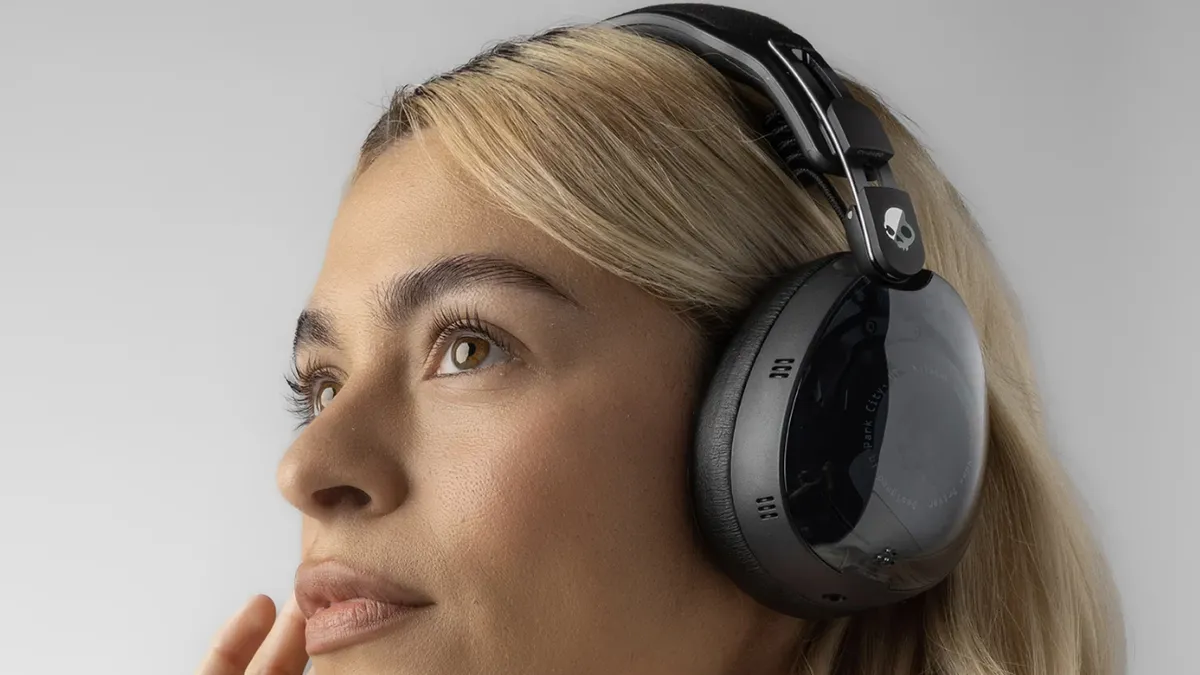
Best Over-Ear Headphones of 2026

Published

on

Focal Bathys: French audio company Focal is known for its high-end speakers and headphones. You might call it the Bowers & Wilkins of France. Back in 2022, it finally did done what a lot of high-end audio companies have had to do in this age of on-the-go wireless music listening: They made active noise-canceling Bluetooth headphones. Easily one of the best-sounding wireless headphones, the pricey Bathys (now down to $600 from their list price of $850) feature not only wireless connectivity but also a built-in digital-to-analog converter for USB wired listening with any computer, smartphone or tablet with USB-C. Read the full review.

Noble Fokus Apollo: Noble is an audiophile brand known more for its in-ear monitor headphones, but it released a wireless noise-canceling headphone called the Fokus Apollo a couple of years ago that sounds terrific and features a special dual-driver design that combines a 40mm dynamic driver with a 14.5mm planar-magnetic driver (the upgraded $699 Fokus Apollo Pro arrived in May of 2026). The result is rich, open sound, with tight bass and excellent treble detail and clarity, especially for a wireless headphone (it sounds a tad better in wired mode but it’s not a huge difference). It’s more dynamic than many monitor headphones that have a flatter, more neutral sound profile, but it still leans toward being an accurate, well-balanced headphone.

Anker Soundcore Space One: While the newer Soundcore Space 2 offer a more streamlined design and beter performance across the board, the Soundcore Space One by Anker are still a decent at less $100, offering a strong feature set along with good sound quality and performance. They can’t compete sound-wise with many of the premium noise-canceling models, but you don’t feel like you’re giving up that much on the sound front to save a good deal of money. They lack a bit of that natural, refined quality you look for in a great set of cans, but the Space One sound respectable, with decent clarity and bass definition and measure up well to the more expensive Soundcore Space 45.

CMF Headphone Pro: Nothing started out with a few different wireless earbuds but has now branched into the over-ear headphones market with its eye-catching Nothing Headphone (1) and the budget-oriented CMF Headphone Pro, which also have a pretty unique look and feature interchangeable ear pads in a few different color options. I was expecting all that much from these headphones, but after using them for a week, they check a lot of boxes for a top value headphone, including a comfortable fit (they pretty lightweight at 283 grams), decent build quality and good sound quality that’s highlighted by powerful bass that can be dialed up or down with a slider control on the left ear cup (you can also tweak the sound in the companion app). The Skullcandy Crusher 2 headphones have a similar slider, but the CMF’s bass doesn’t get to head-rattling levels (the Crusher 2’s bass literally makes the headphones vibrate).

Advertisement

Earfun Wave Pro: Earfun has made some very solid budget earbuds, and now it’s entered the full-size ANC headphone space with a few different over-ear models, including the Wave Pro (add the code EWPROCNET at checkout on Amazon to receive an additional 10% off). While they may not sound as good as premium noise-canceling headphones from Bose or Sony, they’re comfortable to wear, feature decent sound with punchy bass (they’re a bit lacking in clarity and bass definition compared to more expensive models), and they offer respectable noise canceling (you can toggle between two levels of ANC) and voice-calling performance. The headphones do come with a cable for wired listening — you can plug into an inflight entertainment system — but the noise canceling cuts off when you’re in wired mode, which is unfortunate.

Edifier W830NB: The Edifier W830NB remain a good value noise-canceling headphone pick. They look slightly more premium than their predecessor, W820NB Plus, and and are fairly lightweight (265 grams) and comfortable, with cushy memory foam ear pads. They also sound very good for their price, offering decent clarity and fairly well-defined bass with an amply wide sound stage (they lack the refinement and depth of higher-end headphones, but you can’t expect the world from sub-$80 headphones). You can tweak the sound profile in Edifier’s companion app for iOS and Android.

QCY H3 Pro: QCY is another Chinese brand like Tribit, Earfun and plenty of others that make budget-priced headphones that sound better than you’d think they would for their relatively low price (the company says the Q stands for quality, C stands for creative and Y stands for youth). Its new-for-2024 H3 Pro headphones are similar to models in this price range from 1More, Tribit and Edifier, but they arguably sound a touch better and I found them relatively comfortable to wear, as they feature a lightweight design and memory foam ear pads.

Bose QuietComfort Headphones: When Bose released its new flagship QuietComfort Ultra Headphones in late 2023, it also replaced the QuietComfort 45s with a slightly updated model simply called the QuietComfort Headphones. Like the QC 45s, this model carries on the comfortable tried-and-true legacy QuietComfort design that’s been around for a few generations that a lot of people continue to love. The QC Ultra Headphones add Bose’s new Immersive Audio feature and have a more refined design with some metal parts (they also have Bluetooth 5.3 instead of Bluetooth 5.1). But the QuietComfort Headphones still have good sound (the Ultras offer a small step up in sound quality), excellent noise canceling and strong voice-calling performance.

Advertisement

Sony WH-1000XM5: Sony has released its new-for-2025 WH-1000XM6 headphones, but its former flagship model, the XM5 is still an excellent headphone that’s often on sale for closer to $300. Their noise-canceling, voice-calling and sound isn’t quite as good as what the XM6 offers (the XM6 sounds a little more detailed with improved bass performance) and the XM6 has a dual-hinge design that allows them to fold up, not just fold flat. As a result, the XM6’s case is a little smaller. Additionally, the XM6 is powered by a new QN3 chip that Sony says delivers 7 times the performance of the QN1 chip found in the XM5s. All that said, while the jump in performance from the XM5 to the XM6 is certainly noticeable, it isn’t huge; the XM5 still offers good sound, noise-canceling and voice-calling performance that should satisfy most people. Read my Sony WH-1000XM5 review.

Sennheiser Accentum Plus: If you can’t afford Sennheiser’s flagship Momentum 4 Wireless headphones or other premium models from Bose, Sony and Apple, the Sennheiser Accentum Plus is a good midrange alternative that doesn’t quite offer the same performance as those higher-end models. However, it does offers better build quality and sound than most budget noise canceling headphones. In essence, these are a slightly stripped down version of the Momentum 4 Wireless and share a similar aesthetic and the same touch controls but feature different drivers (the Momentum Wireless 4 have larger 42mm drivers and offer richer, more detailed sound with slightly better bass performance). Still, these sound good for the money, offer respectable noise canceling and support USB-C audio wired listening and the AptX Adaptive audio codec that’s compatible with some Android devices.

Master & Dynamic MH40 (2nd gen): All of Master & Dynamic’s headphones are well-built and have a unique retro-modern look. The higher-end MW75 has active noise canceling and sounds a little better than the updated MH40 ($400), which features new drivers and a new chipset that delivers improved sound and performance. The MH40 sounds more refined than its predecessor, with better clarity and definition, and now offers support for the AAC and AptX audio codecs, plus improved voice-calling performance. Additionally, you can plug its USB-C cable into a computer or Android smartphone for a wired digital connection for high-resolution audio. Battery life is rated at a healthy 30 hours.

Shure Aonic 50 Gen 2: Many of us liked Shure’s original Aonic 50 headphones, but they had relatively mediocre noise cancellation. Well, the 2nd-gen version addresses that issue — the noise canceling is much improved — and Shure has more than doubled the battery life to around 45 hours (they now have a quick-charge feature) and also shrunk the headphone’s carry case a bit, although it’s still not that compact. Those upgrades make the Aonic 50 Gen 2 a top noise-canceling headphone. The Aonic 50 Gen 2s are pretty heavy at 334 grams, they’re built sturdily and are also comfortable to wear, with nicely padded ear cups. They feature excellent sound quality with very good clarity and well-defined bass. Shure calls them a “studio headphone,” so the sound profile is fairly neutral, but you can add more bass in the EQ settings in Shure’s companion app for iOS and Android (engaging the Spatializer setting in the app expands the soundstage slightly but doesn’t make a big difference).

Advertisement

Bang & Olufsen’s Beoplay HX: Bang & Olufsen’s Beoplay HX headphones are the successor to the company’s H9 series headphones (the X is the Roman numeral for 10) and, like those earlier H9 models, the HX headphones carry a list price of $599 (some colors are discounted at Amazon). That price makes it a direct competitor of Apple’s AirPods Max, which is heavier at 385 grams versus the HX’s 285 grams. I don’t know if the HX headphones are more comfortable than the AirPods Max, but I found the two models pretty equal in the comfort department over longer listening sessions, and these do feature the usual swanky B&O lambskin-covered memory foam earpads. Their sound measures up well to the AirPods Max’s sound — overall, it’s well-balanced, with deep, well-defined bass, natural-sounding mids (where vocals live) and inviting detail in the treble.

V-Moda M-200: V-Moda’s M-200 is one of the few wired headphones on this list. Released in late 2019, these clean- and detailed-sounding over-ear headphones have excellent bass response, and the cushy earcups mean they’re also comfortable to wear. Featuring 50mm drivers with neodymium magnets, CCAW voice coils and fine-tuning by Roland engineers — yes, V-Moda is now owned by Roland — the M‑200 is Hi‑Res Audio-certified by the Japan Audio Society. Other V-Moda headphones tend to push the bass a little, but this set has the more neutral profile that you’d expect from studio monitor headphones. They come with two cords, one of which has a built-in microphone for making calls. It would be nice if V-Moda offered Lightning or USB-C cables for phones without headphone jacks. Note that last year V-Moda released the M-200 ANC ($350), a wireless version of these headphones that includes active noise canceling. They also sound great, but their noise cancellation, call quality and overall feature set don’t match those of the AirPods Max.

Mark Levinson No. 5909: These are premium audio brand Mark Levinson’s first headphones and, yes, they’re really expensive at $999. They’re also really good. They have a sturdy design without managing to feel hefty on your head (read: they’re substantial but not too heavy) and they’re comfortable to wear over long periods, thanks to their nicely padded and replaceable leather-covered earcups and headband. Read our Mark Levinson No. 5909 hands-on.

OneOdio A10: The OneOdio A10s deliver more than you’d expect for their relatively modest price, which is why they’re featured on several of our best lists. They’re built better than you think they would be for around $90 and are pretty comfortable to wear. They have a dual-hinge design and feel sturdy, weighing in at 395 grams, making them perfect headphones for a workout. They sound surprisingly decent and have reasonably good noise canceling with a transparency mode (which has a slight audible hiss). The headphones also have very good battery life. No, they’re not as comfortable as Bose’s and Sony’s models (they do feel a tad heavy) and their sound lacks that extra bit of clarity, bass definition and depth that more premium headphones tend to deliver. They did exceed my expectations and come with a decent carrying case, even if the OneOdio logo splayed across it is a bit garish. 

Advertisement

Technics EAH-A800: There’s a bit of an old-school vibe to the Technics EAH-A800 — and it’s not just the Technics brand, which Panasonic resurrected in the last few years. Their design is something of a throwback, but these headphones are comfortable and both fold up and fold flat. They feature a big, energetic sound with powerful bass and good detail, although they take a day or two to break in. 

Source link

Advertisement
Continue Reading
Click to comment

You must be logged in to post a comment Login

Leave a Reply

Tech

These Hip-Hop Artists Were Already Teaching

Published

on

For decades, hip-hop artists have been invited into schools as guest speakers, workshop leaders and visiting performers. They’ve mentored young people after school; started nonprofits; taught music production, poetry, history and entrepreneurship; and helped generations of students find their voices.

Yet many of these artists lack the one credential schools still value most: a bachelor’s degree.

But what if these artists have been teaching all along?

A new partnership between College Unbound and the Hip-Hop Education Center aims to answer that question, not by teaching artists how to become educators but by recognizing the expertise they’ve developed through decades of community leadership, cultural work and mentorship.

Advertisement

The program — a Bachelor of Arts in organizational leadership and change designed specifically for hip-hop educators and cultural leaders — isn’t a separate degree or a simplified version of one. Students complete the same degree requirements as every other College Unbound student. “It’s the same degree,” says College Unbound President Adam Bush. “It’s simply lived differently.”

The program is about more than hip-hop. It asks a question that reaches far beyond music: Who gets to decide what expertise looks like?

A Degree Years in the Making

Although the bachelor’s degree officially launched this year, its roots stretch back decades.

Hip-hop emerged outside traditional institutions, often in response to systems that excluded Black and Brown communities. As hip-hop education gained legitimacy, educators wrestled with a difficult question: How can we preserve the authenticity of the hip-hop culture while creating pathways that allow practitioners to teach at schools and colleges?

Advertisement

Long before there was a curriculum at College Unbound, there were conversations between Bush, educator and author Sam Seidel, and Martha Diaz, founder of the Hip-Hop Education Center, who has spent nearly three decades helping to build the field of hip-hop education. These conversations focused on this central question.

For Seidel, who has spent much of his career documenting and advancing hip-hop education, the answer required finding the right institution.

“What was always important,” he says, “was making sure the people who created the culture and have been carrying it forward had a central seat at the table teaching the next generation.”

College Unbound proved to be an unusual fit. Rather than asking students to leave their experience at the classroom door, the college builds on it. Students develop projects rooted in the work they’re already doing, making professional experience, leadership and community knowledge part of the curriculum.

Advertisement

“This program opens opportunities for seasoned practitioners,” adds Diaz. “These are people who’ve spent decades mentoring young people, creating art and leading communities but haven’t always had access to the credentials that allow them to teach full-time.”

From the Stage to the Classroom

For Sebastien Elkouby, a hip-hop artist and educator, the degree feels less like a beginning than the fulfillment of a long-awaited opportunity.

Born in France, Elkouby spent years working in music before becoming a U.S. citizen, raising a family and earning a career and technical education credential. Today, he teaches Global Awareness Through Hip Hop Culture and Beatmaking classes at a public charter school in Los Angeles.

“When I found out about the College Unbound program, I thought, ‘Finally,’” he says. “I couldn’t have designed a better opportunity than going to college under the guise of hip-hop culture.”

Advertisement

His years as an emcee prepared him for the classroom in ways a traditional teacher preparation program might not have. Standing in front of students, he continues, isn’t much different from standing in front of an audience. “You have to capture their attention. You have to tell a story. Teaching is a performance.”

He sees similar parallels in curriculum design. The care he once devoted to writing lyrics with a beginning, middle and end now shapes the lessons he designs. His classes trace the historical roots of hip-hop, connecting music to social movements, politics and culture.

Asante Burks reached a similar conclusion while on a different path. Known professionally as Asante Amin, the rapper and member of Soul Science Lab believes that performing and teaching are two sides of the same coin. “On stage, I want to entertain, educate and inspire. In the classroom, I want to do exactly the same thing,” he says.

His teaching centers on the cypher, the circle where rappers, emcees and beatboxers share ideas, stories and experiences while learning from one another. In that setting, everyone becomes both teacher and learner. “It isn’t just me delivering knowledge. The collective mind is where real learning happens,” he adds.

Advertisement

That philosophy reflects one of hip-hop pedagogy’s central ideas: learning is participatory, communal and deeply connected to identity. It also challenges a persistent misconception. “People think hip-hop education is just playing rap music in class,” says Diaz. “It’s a culture, mentorship, history and community. It’s understanding students as whole people.”

Recognizing the Experts Already Among Us

A member of College Unbound’s first graduating class, Anjel Newmann now serves on the college’s faculty, leads the arts organization AS220 and serves on the school board in Providence, Rhode Island. She sees the bachelor’s degree as more than an academic credential.

“It’s helping people who have been teaching in the community move from guest speaker to lead teacher,” she says. “They know how to connect with young people who may have already tuned school out. They understand identity and community.”

College Unbound’s project-based model mirrors the way artists naturally work. “As artists, everything we do is project centered,” says Newmann. “You’re constantly researching, creating, revising and sharing your work. College Unbound allows every subject to connect to that bigger vision.”

Advertisement

For Newmann, the lesson extends beyond hip-hop. “There are experts in our communities who were blocked from credentials because of systemic barriers,” she says. “College Unbound didn’t ask them to become experts. It recognized that they already were.”

Rethinking Expertise

As colleges across the country search for new ways to serve adult learners and employers increasingly question what degrees actually measure, College Unbound offers one possible answer: Instead of asking students to prove they deserve admission, the institution begins by asking what they’ve already built.

Organizing communities, mentoring young people, leading nonprofits, creating art and solving real-world problems are acknowledged as evidence of learning. “We’re recognizing lived experience as the value that it is,” says Diaz.

Seidel hopes the program’s success ultimately will be measured by what graduates build together long after they leave. He imagines meeting them at a future gathering of hip-hop educators — that people who’ve built sustainable careers are supporting their families through education and the arts and remain connected years later. “I want to hear them telling stories about the work they’re doing together,” he adds.

Advertisement

The success of programs like this won’t be measured only by the diplomas students earn. It will be measured by whether colleges begin to recognize that expertise isn’t created the day someone receives a credential.

Burks believes that shift is inevitable.

“I think this educational process is the way of the future,” he says. “In order for education to remain meaningful and relevant, it’s going to have to implement experimental accreditation processes. It should be like music.”

Source link

Advertisement
Continue Reading

Tech

Apple probably won’t add Jony Ive to OpenAI IP theft suit

Published

on

Four years ago, Jony Ive left Apple, and joined OpenAI, yet he isn’t named in the intellectual property theft suit. The reasons for that are myriad, ranging from the personal to practical.

On July 10, Apple launched what looks to become a major lawsuit against OpenAI, accusing ex-Apple employees of stealing intellectual property. However, despite former Apple design chief’s links to OpenAI, he isn’t in the crosshairs of Apple’s lawyers.

In Sunday’s “Power On” newsletter for Bloomberg, Mark Gurman writes about the lawsuit and the oddity. He believes there are two big reasons for Apple not to implicate Ive in the lawsuit at all.

The first is relatively simple: He had little to do with it.

Advertisement

Though Ive is chiefly the face of OpenAI’s new hardware work, he is seemingly focusing on that product. While Tang Tan, one of the named targets of the lawsuit, does have more control over the hardware side of OpenAI as its chief hardware officer, Ive just does not.

Ive isn’t dealing with recruiting or operations at OpenAI. Since he doesn’t have much to do with that stuff, he wouldn’t have taken part in the activities in the lawsuit.

The lawsuit largely discusses the alleged actions of Tan, including problematic emails and encouraging potential hires from Apple to bring in prototypes and designs. Tan would’ve been in a position to carry out these actions, leaving Ive’s hands clean.

Relationships and axe-grinding

The other reason for not going after Ive is all about image. Gurman believes that Ive’s closeness to Laurene Powell Jobs, entrepreneur and widow of Steve Jobs, is insulating Apple’s ex-designer.

Advertisement

Powell Jobs is a supporter of Tim Cook and John Ternus, and she still has a close relationship to the company. The impact of Steve Jobs returning and saving the company means her approval is important to Apple as a whole.

Dragging Ive into the suit would make maintaining the relationship with Powell Jobs difficult.

On top of that, the optics of attacking Ive after his major role in the company’s history and his own close relationship to Steve Jobs would hurt the company.

If he had been named, Gurman proposes that Ive would’ve received sympathy while Apple would be criticized. That criticism would also be seen as Apple having an axe to grind following Ive’s decision to leave the company.

Advertisement

Ive left in 2019, but he was a consultant until 2022 under his design company, Love From. That period saw a number of Apple designers leave the company to rejoin their leader, Ive, at his new firm.

To Apple, Ive’s leaving and the subsequent departures may have been seen by Apple as Ive dismantling the design team while still under its payroll.

Whatever the reason for Apple avoiding Ive, it has led to him being almost completely absent in the lawsuit.

In the entire 40-page document, it refers to a group of “former Apple leaders,” which you’d expect includes Ive.

Advertisement

Apple can still do a lot of damage to OpenAI’s image and hardware work with its current lawsuit, going after Tang Tan. But by avoiding the temptation of tacking on Ive, Apple does so without causing itself that much reputational harm.

Source link

Advertisement
Continue Reading

Tech

First Look at Phantom Twist, the Drone That Spins Itself Into Near Invisibility

Published

on

Phantom Twist Spinning Drone Invisible
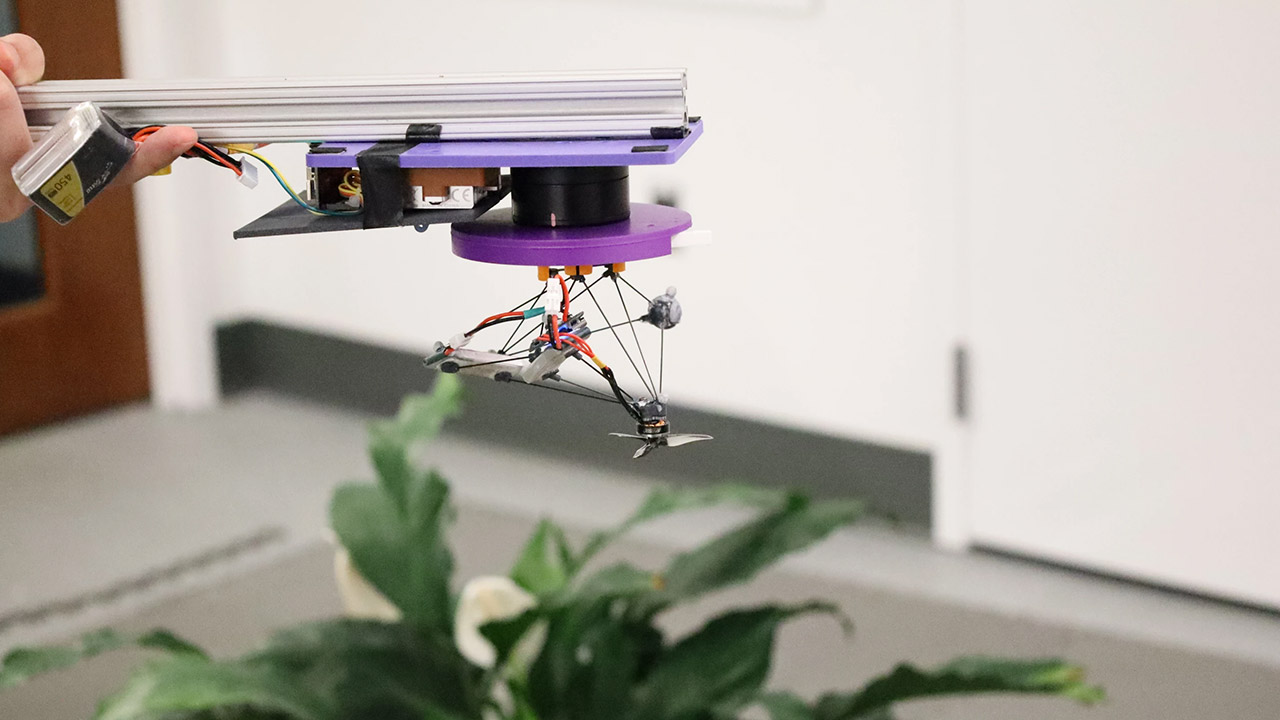
Engineers at Northwestern University have built a small flying machine that fades from view by rotating faster than eyes can follow. Phantom Twist earns its name through a constant twist that turns solid parts into a soft smear against the sky or ground below.


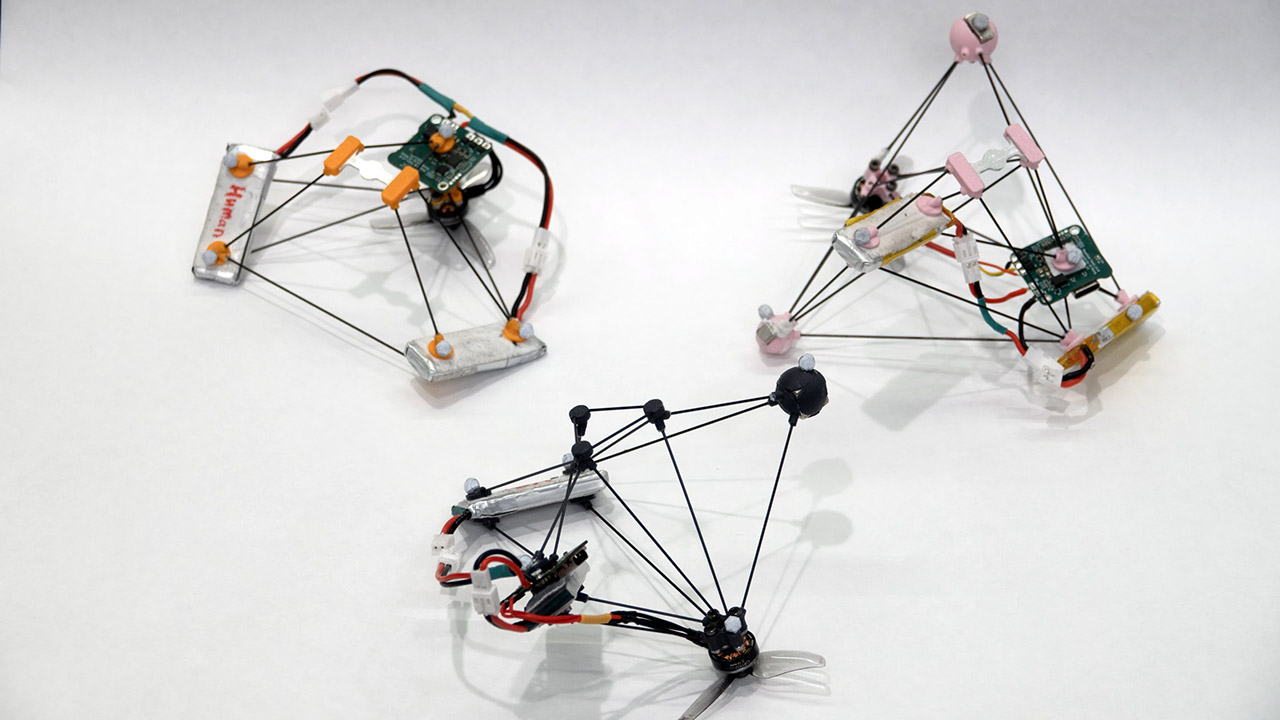
Standard drones attract attention since they essentially sit there with all of their weight focused in the center. Its four whirling blades lift it off the ground, but a giant still frame in the middle stands out like a sore thumb. People and animals can immediately recognize the motionless shape. A new version of this removes the “still” reference by relocating the entire assembly. In this unique design, a single motor drives only one propeller in one direction, but the rest of the system, including the batteries and control boards, spins in the opposite way and travels simultaneously. That way, you have a nice, smooth balance, and the entire piece does not hang in one spot. The only thing holding everything together are some support cables and a counterweight to keep it spinning smoothly.

Sale


DJI Neo, Mini Drone with 4K UHD Camera for Adults, 135g Self Flying Drone that Follows You, Palm Takeoff…
  • Due to platform compatibility issue, the DJI Fly app has been removed from Google Play. DJI Neo must be activated in the DJI Fly App, to ensure a…
  • Lightweight and Regulation Friendly – At just 135g, this drone with camera for adults 4K may be even lighter than your phone and does not require FAA…
  • Palm Takeoff & Landing, Go Controller-Free [1] – Neo takes off from your hand with just a push of a button. The safe and easy operation of this drone…

When this drone is flying at top speeds of up to 25 revolutions per second, the human eye can only capture a fraction of a second. It only opens for a flash, just like a camera sensor. When you move so quickly, the image blurs and loses its clear edges. What’s left on the drone is a faint, hazy muddle that you scarcely see unless you look for it specifically. Using a human vision model, researchers evaluated the craft against a variety of backdrops, and it scored around 10 times lower on visibility than a normal quadcopter of similar size. Not because of any fancy colors or coatings, but simply because it moves so quickly that your eye doesn’t have time to lock onto it.

Advertisement

Phantom Twist Spinning Drone Invisible
Before settling on the final design, a team led by Professor Michael Rubenstein used computers to experiment with almost 20,000 potential designs. Each one had its flight capabilities and stealth verified in simulation before the software eliminated the weaker designs and allowed the stronger ones to proceed to the production stage. He explained that the fundamental difference with this project was that instead of attempting to hide the drone to blend in with its surroundings, they were looking at how to construct the machine in such a manner that it tested the limits of human motion perception. Emma Alexander noted that human vision forms an image over time, and moving quickly enough prevents that picture from ever solidifying clearly. Essentially, the eye receives an averaged out image of the drone blended with its surroundings, which fuses into a beautiful soft haze.

Phantom Twist Spinning Drone Invisible
Wildlife researchers will be the first to take advantage of this. You can use an invisible drone to film nesting birds or monitor animals in wetlands without disturbing or influencing their activity. You can have a guy standing on the ground evaluating bridges, towers, or pipelines while the drone hovers overhead, and he has no idea. However, there are certain limitations to this technology, such as the noise produced by spinning propellers and the tiny rods that nonetheless capture the eye in the correct light. For the time being, these factors preclude complete concealment. Future generations, however, attempt to close the gap by improving the plastics and motors. Each step should get us closer to a veil that is nearly undetectable.
[Source]

Source link

Continue Reading

Tech

A Robot Lost Its Head in the Ring During the URKL MMA Fight, It Kept Swinging Anyway

Published

on

URKL MMA Robot Fight
Shenzhen hosted the opening night of something that had never happened before. The Ultimate Robot Knock-out Legend, or URKL, brought together 32 teams from more than ten countries for full-sized humanoid robots to trade strikes inside a cage. Every team started with the same base machine from Chinese robotics company EngineAI. The T800 stands roughly five feet eight inches tall, weighs between 165 and 187 pounds, and carries 29 joints built for human-like motion. Teams then added their own armor plating and tuned the software that decides how each robot moves, balances, and reacts.

Fights followed fairly simple rules, with the emphasis on landing effective hits, staying on your feet, and avoiding being clobbered. The robots would hurl punches, try to launch kicks, and recover quickly after being knocked flat on their backsides. The judges monitored clean hits and overall machine expertise. People expected the robots to be tough from the outset, but there was still some doubt about how they would fare once the real suffering began. White Eagle and Matador’s early bout changed everything. The White Eagle robot found an opening and delivered a powerful high kick that smashed right into Matador’s cranium. The head jerked jarringly back and forth many times before just falling loose. As Matador descended, the head swung loose and then totally detached.


Unitree R1 Humanoid Robot (White, R1)
  • Three models, one lightweight platform R1 Air (20 DOF, monocular camera), R1 (26 DOF, binocular camera, head+waist joints), and R1 Edu (26 DOF…

  • Easy setup – no coding required for basic use Unbox, power on, and start. Manual teaching feature: physically pose the robot, and it replays the…
  • More DOF = more expressive movement 26‑DOF models (R1 / R1 Edu) add head and waist articulation for smoother dance and running. For safety reasons…

The majority of the audience anticipated Matador to freeze up right there and then. The head holds all of the cameras and crucial sensors that let a machine to detect what is going on and react in a split second; without them, many robots would be walking dead, unable to track their opponents or stand upright. Nevertheless, Matador persisted.


Even with the head dangling from its cables, the black robot remained upright long enough to hurl a few more punches and kick out with its legs. There was no way the body would merely collapse into a heap. The torso and lower frame housed all of the control systems that kept the creature running, while the wide-angle radar and other body-mounted sensors provided the main computer with all of the information it need to keep going. A combination of super-strong posture control and shock-absorbing joints enables the machine to endure impacts while keeping its arms and legs in sync even after the head is removed. White Eagle saw an opportunity and seized it, winning when Matador eventually gave up and was unable to climb back up. The delighted robot then raised its arms in celebration, executing a brief victory dance that the audience enjoyed. Staff arrived to take the second robot from the ring.

Advertisement

Source link

Advertisement
Continue Reading

Tech

Razer Hammerhead V3 HyperSpeed review: underwhelming for the price

Published

on

Why you can trust TechRadar


We spend hours testing every product or service we review, so you can be sure you’re buying the best. Find out more about how we test.

Razer Hammerhead V3 HyperSpeed: two-minute review

The first thing I thought when I pulled the Razer Hammerhead V3 HyperSpeed gaming earbuds out of their box was “Wow, these are ugly.”

Not exactly the strongest first impression, but it’s unavoidable when each bud has a weird, bulbous design that gives them an appearance like a pair of obese AirPods. The shiny black plastic material looks cheap, as does the printed Razer logo on the outside, which (despite all the Razer Chroma branding on the box) is just a decal that doesn’t illuminate.

Advertisement

Source link

Continue Reading

Tech

Hackers abuse ViPNet software to target Russian govt agencies

Published

on

Hackers abuse ViPNet software to target Russian govt agencies

An advanced threat actor is abusing the update mechanism for the ViPNet private networking product suite to target Russian organizations, including government agencies.

Dubbed HelloNet, the campaign has been active since at least May, deploying a malicious payload that acts as a proxy and loader for additional malware.

According to Kaspersky researchers, HelloNet has impacted organizations in the government, energy, transport, education, and logistics sectors.

image

ViPNet update abuse

ViPNet is a family of Russian information-security products developed by InfoTeCS, providing VPN, endpoint, and network access protection, firewall, certificate management, centralized administration, and secure messaging and file transfer.

The tool is commonly used in Russia, where it is certified by the authorities for use in government and other regulated environments.

Advertisement

Due to its market reach in Russia, especially among high-value organizations, it has been targeted often by hackers. In April, 2025, Kaspersky reported that threat actors impersonated a ViPNet update in attacks.

In the latest campaign, attackers placed a malicious file (wtsapi32.dll, dubbed HelloInjector) inside the local ViPNet Update System directory to be sideloaded at system startup via the legitimate itcsrvup64.exe.

This DLL is the first-stage loader that injects into the svchost.exe process, granting next-stage payloads elevated privileges on Windows and persistence across reboots.

Kaspersky does not describe exactly how the attackers gained initial access to perform this file change, nor do they claim that ViPNet’s update infrastructure itself was compromised.

Advertisement

Malware toolset

HelloInjector runs its embedded payload, which Kaspersky named HelloProxy, in memory and contacts the command-and-control (C2) server to receive additional modules.

One of these modules is HelloExecutor, a backdoor that can execute commands and conduct network reconnaissance on the host.

A second one is HelloCleaner, a tool that removes ViPNet log data to hide the malicious activity.

Another implant called HelloBackdoor is Rust-based and supports uploading and downloading files, as well as command execution.

Advertisement

Kaspersky has tentatively attributed the campaign to an unidentified Chinese-speaking advanced persistent threat (APT) group.

However, the researchers stressed that the evidence is weak, relying primarily on an unused string referencing the Chinese website sina.com and a malware download mirror hosted by the University of Science and Technology of China.

As a result, they assign the attribution low confidence and do not rule out the possibility of a false flag operation.

The cybersecurity firm recommends thorough monitoring of systems running ViPNet software, particularly traffic passing through ports 5003, 5060 (HelloProxy), and 443 (HelloBackdoor).

Advertisement

article image

Security teams log 54% of successful attacks and alert on just 14%. The rest move through your environment unseen.

The Picus whitepaper shows how breach and attack simulation tests your SIEM and EDR rules so threats stop slipping by detection.

Get the whitepaper

Source link

Continue Reading

Tech

Using AI makes people less likely to admit they don’t know something

Published

on

AI and ML

Researchers found confidence increased even as accuracy fell

In 2026, AI still “hallucinates” and gives you wrong answers a good chunk of the time. Nevertheless, academics from French and Italian universities have found that access to AI advice suppresses critical thinking, making people more likely to confidently parrot incorrect information that the bot provided.

“For humans, the capacity to say, ‘I don’t know,’ is very important because it represents the recognition of the limits of our own knowledge,” said Valerio Capraro, associate professor at the University of Milano-Bicocca, in a phone interview. 

Advertisement

“But now with AI, we can get an easy answer to virtually every question, so we wondered whether this would interfere with human capacity to say, ‘I don’t know,’ to suspend judgment.”

Capraro and co-authors Chiara Marcoccia (École Normale Supérieure) and Walter Quattrociocchi (Sapienza University of Rome) set out to see how access to AI advice affects people’s willingness to admit ignorance.

The title of their paper reveals their findings: “AI advice suppresses people’s willingness to say ‘I don’t know’, even when the advice is wrong and accuracy is incentivized.”

Capraro said that he and his colleagues designed a set of questions where large language models typically fail. In this instance, they asked study participants to answer questions about visual details in films, such as the color of the team’s uniform in Bend It Like Beckham or the vehicle Monica drives in Like a Cat on a Highway.

Advertisement

The researchers expected these sorts of details would be absent from most model training data, which was the case for the model used in the experiment (Step 3.5 Flash). They also tested recent frontier models (GPT-5.5, Claude Sonnet 4.6, Gemini 3.5 Flash), which missed the vehicle question but often got other details correct.

They used Step 3.5 Flash because it was usually wrong, as explained in the paper, so any reduction in judgment could not be explained away as sensible delegation to a reliable tool.

“We divided human participants into two groups,” explained Capraro. “One group had to answer these questions without AI advice, and another group could ask the AI for advice. What we found is that in the baseline, 44 percent of people responded that they didn’t know the answer, so they suspended judgment. With AI advice, only three percent did so. So the judgment suspension collapsed.”

Capraro said that even more interestingly, accuracy collapsed when AI help was available. In other words, they trusted AI’s answer more than their own.

Advertisement

“In the baseline, 27 percent of people gave the correct answer,” he said. “With AI advice, only nine percent of people gave the correct answer. So some would-be correct people asked for AI advice and became wrong.”  

Also, access to AI advice made people more confident that they were correct. The baseline level was 30 percent, he said, but with AI help, confidence rose to 76 percent. They believed the bots, despite the possibility of hallucinations.

“So basically people became much worse – the accuracy was only one third – but they were twice as confident,” he said.

The researchers also conducted the experiment with monetary incentives, which helped a bit. Willingness to suspend judgment and admit ignorance rose from 3 percent to 8 percent and accuracy rose from 9 percent to 16 percent but was still below the baseline of 44 percent and 27 percent respectively.

Advertisement

While the researchers chose questions about film trivia, they contend their findings can be generalized across other domains.

Capraro said that he believes this is an issue that needs to be dealt with at a societal level through AI literacy and education policy initiatives. “Of course model providers should try to help, but I would imagine that the incentives are not very much aligned,” he said. “A much more promising approach would be at the educational level.”

“I’m very much concerned for children, because adults have learned critical thinking. But for children who basically are born with these systems, the risk is that they don’t even learn the basic critical skills.” ®

Source link

Advertisement
Continue Reading

Tech

Remembering The Zilog Z80 As It Turns Fifty Years Old

Published

on

Perhaps the saddest thing about the Zilog Z80 is that this humble 8-bit microprocessor wasn’t allowed to live until its 50th birthday. This, fortunately, doesn’t prevent people like [David Oberhollenzer] from reminiscing on this influential processor and what it means to them personally.

First released in July of 1976, this humble 8-bit miracle would go on to power not just a range of home computers, but also be found in everything from industrial controllers to arcade systems. Despite this success, the new owner of Zilog — Littelfuse — decided to put an end to this winning streak in 2024 for the stand-alone processor and its peripherals.

Although the original Z80 ecosystem ceased production, this didn’t prevent hobbyists from creating new operating systems for it, let alone entire new development toolchains, or demonstrate multitasking on the Z80.

Advertisement

Meanwhile, the Z80 architecture is still very much alive and kicking, such as in the form of the eZ80 SoC in the TI 84+ CE calculator that [grubbycoder] ported Sonic 2 from the Z80-based Sega Master System.

Among all of this modern-day Z80 goodness, we also have a few gems from the past to admire, such as the OS that Zilog made for this architecture in the form of Z80-RIO, which was sadly not as successful as the hardware.

Advertisement

Source link

Continue Reading

Tech

Nvidia may have RTX 5000 Super GPUs ready, but costly 3GB GDDR7 is holding them back

Published

on

Rumor mill: The RTX 5000 series is real – according to reports, an Nvidia board partner already has one of the cards in its possession. However, a familiar problem is preventing them from being released, one that will come as no surprise to anyone.

The latest RTX 5000 Super story, which comes from VideoCardz, claims that Nvidia has told the board partner holding onto the card that it can’t be released yet because of the price of 3GB GDDR7 memory components.

The publication’s sources say that a 3GB GDDR7 chip currently costs between $60 and $70, while a standard 2GB GDDR7 chip is just $20. Paying over three times more for a 50% memory boost is going to skyrocket the cards’ BOM cost.

At a time when components already cost a fortune as AI hyperscalers snap up all the DRAM and NAND manufacturing capacity, releasing RTX 5000 Super cards with comically high price tags isn’t going to prove popular.

Advertisement

Another issue is that since 2025, Nvidia has left it to board partners to source their own memory chips. If these companies are told by Nvidia that they have to sell the Super series at or close to MSRP, they’re likely not to make any cards at all, rather than take a huge loss on each one sold.

Using 3GB GDDR7 memory chips allows Nvidia to push up the cards’ memory capacity without changing the number of memory modules or altering the memory bus. But their high price is proving to be an issue.

Three RTX 5000 Super models are reportedly in the works: the GeForce RTX 5080 Super, RTX 5070 Ti Super and RTX 5070 Super. This aligns with previous rumors, which included some of those cards’ alleged specs.

  RTX 5080 RTX 5080 Super RTX 5070 Ti RTX 5070 Ti Super RTX 5070 RTX 5070 Super
GPU Die GB203 GB205
CUDA Cores 10,752 8,960 6,144 6,400
Memory Capacity 16 GB 24 GB 16 GB 24 GB 12 GB 18 GB
Memory Speed 30 Gbps 32 Gbps 28 Gbps
Bus Type 256-bit 192-bit
Total Board Power 360W 415W 300W 350W 250W 275W

Nvidia is also said to have an RTX 5050 9GB ready that uses the 3GB GDDR7 models. Like the Super series, its release date still hasn’t been decided because of the chips’ prohibitive price.

Advertisement

If Nvidia really is waiting for memory prices to drop before releasing the cards, it could be a while before we see them. SK Hynix predicts that 2027 will be the worst year ever for the industry from a supply perspective, and that demand will continue to outpace supply even beyond 2030.

This is the latest piece of RTX 5000 Super news we’ve heard recently. The RTX 5080 Super just appeared in Seasonic’s PSU calculator, joining the RTX 5070 Super and RTX 5070 Ti Super, which were added in September.

Renowned leaker MEGAsizeGPU, who has a good track record when it comes to Nvidia rumors, said last month that the RTX 5000 Super series could be released this year, but that’s looking increasingly less likely.

Advertisement

Source link

Continue Reading

Tech

Claude Chrome extension flaw lets malicious extensions trigger AI actions

Published

on

Claude

A flaw in Anthropic’s Claude for Chrome browser extension could allow a malicious extension to trigger predefined AI actions by simulating user clicks, potentially allowing it to abuse Claude’s access to connected services such as Gmail, Google Docs, Google Calendar, and Salesforce.

The issue was discovered by Ax Sharma of Manifold Security, who says it stems from how the Claude extension determines whether a user intentionally requested one of its built-in tasks.

Chrome extensions with permission to run on a website can inject JavaScript into the page, allowing them to read and modify its contents. This includes changing page elements, reading information displayed on a site, and generating click and keyboard events programmatically.

image

According to Manifold’s report, the Claude extension listens for click events on a specific page element that launches one of its built-in AI workflows. These workflows are predefined tasks that allow Claude to perform actions in connected services such as Gmail, Google Docs, Google Calendar, and Salesforce.

The supported workflows include:

Advertisement
  • usecase-gmail: read recent Gmail, identify promotional emails, and click unsubscribe
  • usecase-gdocs: open the user’s latest Google Doc, read all comments and feedback
  • usecase-calendar: read Google Calendar, find free slots, create meetings
  • usecase-salesforce: modify Salesforce leads, convert them to opportunities

The researchers found the extension accepted JavaScript-generated click events without verifying whether they originated from a real user.

When a browser generates an event from a real user action, such as a mouse click or key press, it marks it as trusted by setting the Event.isTrusted property to true. However, if JavaScript is used to generate the event, the browser automatically sets Event.isTrusted to false, allowing webpages and extensions to distinguish between real user interactions and events generated by JavaScript.

According to Manifold Security, the Claude browser extension did not verify that a click event originated from a real user by checking the browser’s Event.isTrusted property before executing one of its predefined workflows.

Instead, a malicious extension with permission to modify content on the ‘claude.ai’ domain could inject a page element containing one of nine supported task identifiers and generate a synthetic click event.

Although the browser correctly marked the event as untrusted, Sharma says the Claude extension treated it as a legitimate user click and executed the requested AI action.

Advertisement

The researcher notes that the flaw does not allow arbitrary prompt injection, but instead, the attack is limited to the nine predefined tasks built into the extension.

The attack also does not allow a website to compromise the Claude extension directly, but requires an attacker to trick a user into installing a malicious extension that can execute code on claude.ai.

That extension could then manipulate the webpage and trigger the Claude extension’s workflows.

While a malicious browser extension already has broad access to webpages it can run on, the researchers say this flaw allows it to abuse Claude’s authenticated access to various connected services.

Advertisement

The impact depends on the Claude extension’s configuration and whether users choose to approve sensitive actions or have Claude’s optional “Act without asking” setting enabled, which allows predefined workflows to execute automatically.

In a second finding, the researchers found an internal ‘skipPermissions=true‘ parameter that bypassed certain permission checks when launching the extension.

However, they acknowledged that the mechanism was not directly exploitable on its own and would require another vulnerability to create a specially crafted URL. 

The researchers reported both findings to Anthropic through the company’s bug bounty program. Anthropic acknowledged the reports and closed the synthetic-click report, stating they were already tracking it as a broader issue. The second flaw, involving the internal skipPermissions=true parameter, was classified as informational.

Advertisement

Manifold says the flaws are still exploitable in the latest version, 1.0.80, of the browser extension, released on July 7.

“Manifold verified July 7 that both findings remain reproducible in 1.0.80. The content script and side-panel handlers we cited are byte-identical to the v1.0.72 source,” reads the report.


article image

Security teams log 54% of successful attacks and alert on just 14%. The rest move through your environment unseen.

The Picus whitepaper shows how breach and attack simulation tests your SIEM and EDR rules so threats stop slipping by detection.

Get the whitepaper

Source link

Advertisement
Continue Reading

Trending

Copyright © 2025