Memory prices are finally slowing down, and the reason is not that supply improved. It is that buyers ran out of money.
TrendForce expects conventional DRAM contract prices to rise 13% to 18% quarter on quarter in Q3. Dan Robinson reported the forecast for The Register. He paired it with separate European shipment numbers that show what the squeeze has done to the market.
The Taiwanese analyst calls that growth rate a moderation, and by recent standards it is. Rising contract prices drove a 59.5% quarter-on-quarter jump in DRAM industry revenue in Q2, to $154.73bn.
Why it is slowing
TrendForce gives two reasons, and the second is the interesting one.
Demand is shifting away from high-capacity RDIMMs towards lower-capacity parts. And then there is what the analyst calls “the limited ability of PC and smartphone customers to absorb further price increases”.
That is a market hitting a ceiling rather than finding a balance. Supplier inventories are still at historic lows and bit shipments are expected to grow only modestly. Nothing about the supply side has eased. Prices are rising more slowly because the people at the end of the chain cannot pay any more.
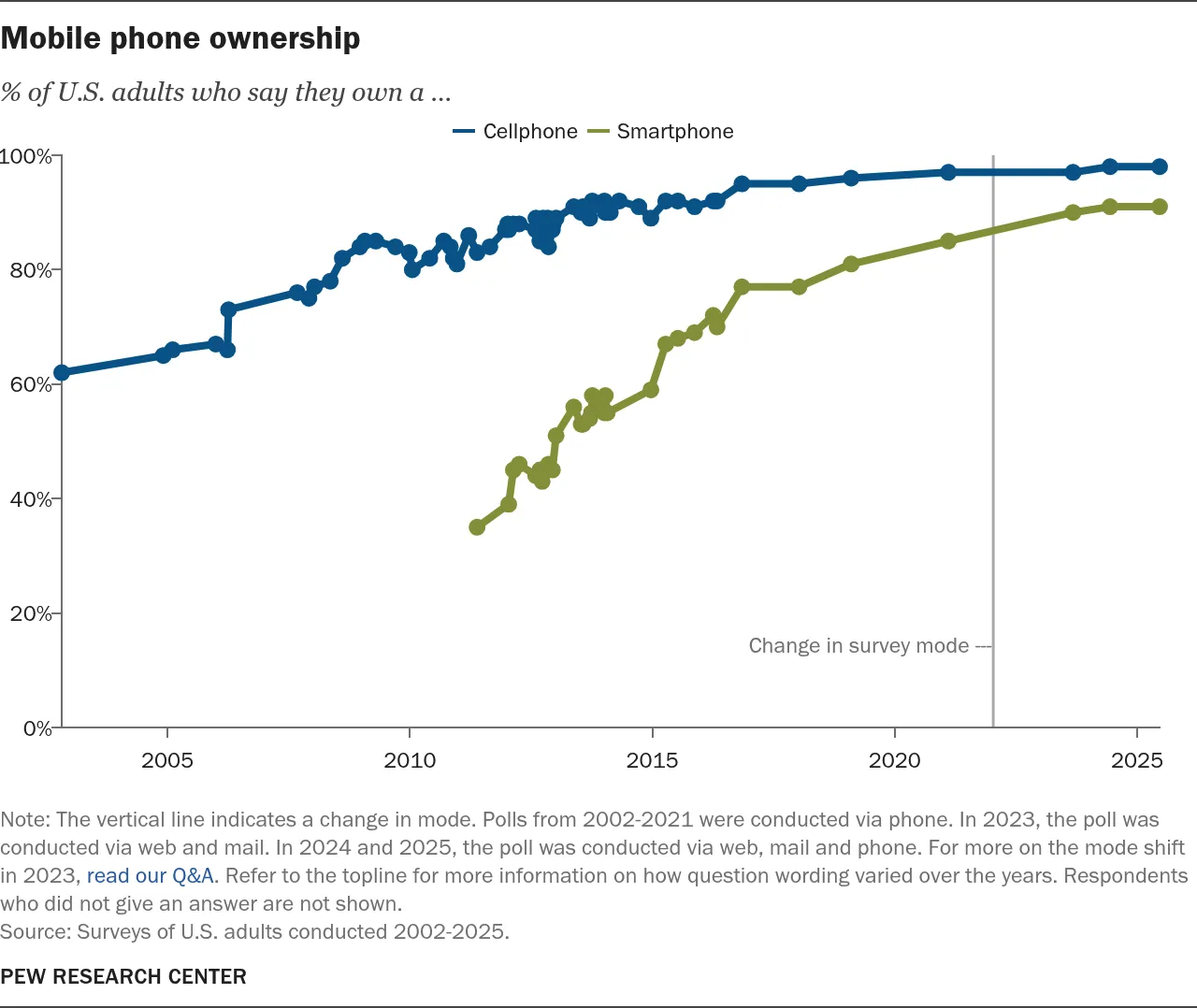
Note who TrendForce names as the constraint: PC and smartphone customers. Phones use the same memory and face the same maths, and the handset market has spent a decade training buyers to expect more storage each year for roughly the same money. That expectation is now colliding with the price of the parts.
And 13% to 18% in a single quarter is not relief. It is a smaller increase on top of a year of increases.
Europe is where the bill lands
The market intelligence firm Context expects European PC shipments to fall hard as component costs push system prices up.
Laptop shipments are forecast to drop 6.4% year on year in Q3, then 20% in Q4. Desktops look worse: down around 20% in Q3 and almost 30% in Q4.
Those are severe numbers for a mature market, and they describe a straightforward mechanism. Memory got more expensive, so machines got more expensive, so European buyers stopped replacing them.
Corporate buyers are stretching refresh cycles and buying only when they have no choice, according to Context. “The PC refresh cycle has not disappeared, but the economics around it have changed,” said senior analyst Marie-Christine Pygott.
Stretching a refresh cycle is not free, though it looks free on a budget line. Older machines run slower, fail more often, and eventually fall off support, which is a security problem rather than a productivity one. European IT departments are taking that risk because the alternative costs more today.
Falling volumes, rising profits
PC makers are not suffering, which is the part that explains why nothing corrects.
Higher prices have more than covered the lost volume so far. The Register reported in May that Lenovo had dodged the worst of the memory crisis by pushing customers towards premium devices. The strategy worked.
That is a rational response to scarcity and it also removes the pressure to fix it. If selling fewer, dearer machines makes more money than selling more cheap ones, a manufacturer has no reason to fight for volume.
The same logic has been visible up and down the market for months. AMD raised Radeon prices in August, days after Nvidia did the same. Nvidia is putting up AI server prices by more than 15% from next year, citing memory costs. Everyone passes it on.
The AI PC did not save anyone
Manufacturers spent two years promising that AI-capable PCs would trigger a mass upgrade. Context says that is not what happened.
The end of Windows 10 support drove recent buying, not artificial intelligence. AI PCs are taking a growing share of machines entering the European supply chain. That is mostly because the capability is becoming standard, though, rather than because anyone is choosing it.
So the upgrade wave came from a support deadline, and it has now largely passed. What is left is a market with higher prices, no compelling reason to buy, and a stack of machines that will stay in service longer.
Who the memory is going to instead
None of this is happening to the AI industry. It is happening because of it.
The three big memory makers are concentrating on high-end products for AI buyers. Samsung has benefited from moving early into HBM4 mass production. SK hynix had the highest proportion of HBM in its bit shipments of the three. Micron is prioritising higher-priced server DRAM.
That leaves the mature-process business to second-tier manufacturers such as Nanya, Winbond and PSMC, who are supplying DDR4 and DDR3. The squeeze has already reached parts nobody expected, including DDR2, a standard from 2003, and the capacitors that carmakers need.
Europe watches most of this from the outside. SK hynix chose Indiana for its $4bn memory packaging hub after a Polish plant fell through, which means the continent absorbs the price rises without hosting much of the capacity.
What would actually change it
Two things, and neither is close.
The first is supply. Inventories are at historic lows and bit shipments are growing modestly, so relief needs new capacity, which takes years to build and is currently being pointed at HBM rather than at the parts in a laptop.
The second is AI demand cooling, which nobody in the industry expects and which would bring its own problems.
Until one of those happens, the pattern holds. AI buyers pay a premium for the memory they want. Everyone else pays a premium for the memory that is left. And the moderation TrendForce is forecasting is a description of European buyers reaching their limit, not of the shortage ending.



















































You must be logged in to post a comment Login