The first day of the BMPS Grand Finals here at the Jaipur Convention Center has just curtailed, and it was another exhilarating, action-packed scene we’ve all come to expect of BGMI action. Despite securing two chicken dinners, iQOO Reckoning Esports couldn’t hold on to the top spot, with Divine Gaming and Nebula Esports finishing first and second, respectively. Not every fan favorite had a day to remember. Teams like iQOO SouL and TAG barely managed to get going and now find themselves near the bottom of the standings. Here’s what the full standings looked like after day one of the BMPS Grand Finals.
BMPS 2026 Grand Finals Standings Day 1
Rank
Team
WWCD
Finish Points
Position Points
Total Points
1
DIVINE
2
54
31
85
2
NBE
1
36
17
53
3
GENS
0
35
17
52
4
iQOOORGE
2
20
27
47
5
iQOO8BIT
0
29
11
40
6
iQOORNTX
0
29
10
39
7
VASISTA
0
26
12
38
8
iQOOxTT
0
24
13
37
9
7GODS
1
21
15
36
10
GDR
0
22
7
29
11
iQOOxOG
0
15
11
26
12
iQOOSOUL
0
20
5
25
13
MYTH
0
18
6
24
14
TAG
0
21
2
23
15
VS
0
15
7
22
16
GODL
0
19
1
20
Day 2 gets underway tomorrow, and if BMPS history is anything to go by, it’s often the day when teams begin mounting comebacks. We hope to see similar top-tier action and maybe a comeback from fan favorites like Soul. If you missed today’s games, check out our highlights of day 1.
Save $76: Amazon’s Prime Day kicks off on June 23, but the deals are already in bloom. The retailer just slashed the price of Nothing’s wireless earbuds by $76, dropping them to an all-time low. This is a limited-time deal available only to Prime members, so we suggest acting fast.
Finding a premium pair of earbuds with long battery life, active noise cancellation and fast charging can normally be quite steep. However, brands like Nothing offer an incredible, budget-friendly alternative without sacrificing great sound.
Nothing earbuds include eartips in three sizes for a perfect fit and the most out of their features. They offer up to 45 decibels of noise cancellation and have a battery that lasts up to 40 hours. The 11mm drivers provide clear bass and treble for an immersive listening experience, no matter the music genre or audiobook. If you’re an avid ChatGPT user, you’ll enjoy Nothing’s integration with the popular AI service. Simply set up integration using the Nothing app, and you can use voice controls to experiment with it.
Nothing also improved the earbuds’ connectivity, making it easier to switch between devices whenever you need to pick up on a quick phone call, join a video meeting and more. Thanks to HiRes Wireless Audio, your voice will be heard loud and clear during phone calls, so you won’t have to worry about any distractions interrupting family or work discussions.
Deals are selected by the CNET Group commerce team, and may be unrelated to this article.
Advertisement
Alternatives you might like
Nothing earbuds include noise cancellation, crisp sound and AI features at a new record-low price. However, if these aren’t your style, we’re huge fans of Apple’s AirPods 4, which made our list of best wireless earbuds of 2026. You can snag the ANC model for $149, down from $179. Or grab the pair without ANC for less than $100 and save 23%.
Baby Boomers — or Boomers for short — were born between 1946 and 1964, putting them in their sixties, seventies, and eighties today. Stepping back in time to that era reveals a world of classic and nostalgic tech with a certain charm that most modern-day devices simply don’t have. Wooden finishes on console TV sets, spinning controls to dial a rotary phone — these are things most kids today wouldn’t know about, but instantly take Boomers back to their childhood.
TV sets and rotary phones aside, Baby Boomers were also very familiar with technology that has made a resounding resurgence today: vinyl record players. Boomers will remember hitting The Twist in front of one of these with their parents, or setting the needle down on the latest rock ‘n’ roll hit – a genre that exploded in the 1950s and ’60s.
And if Boomers weren’t listening to music from their record players, they were probably using a transistor radio (which first hit the scene as the Regency TR-1 in 1954) for tunes, sports, and news. Or they may have been writing their own stories and capturing moments with a Polaroid camera. It’s interesting to take a trip down memory lane through the lens of tech, and these classic electronics are a perfectly nostalgic guide.
Advertisement
Console TV sets
Max_Irsan/Shutterstock
If wood-finished Zenith, RCA, or GE console TV sets are nostalgic to you, there’s a good chance you’re a Boomer. Characterized by their furniture-style wooden cabinets, knobs or dials, and captivating center screen, these television sets took the United States by storm in the 1950s, ’60s, and ’70s. It was the centerpiece of the living room and something for the whole family to gather around and enjoy.
Many Baby Boomers will remember the transition from black-and-white to color television — which had actually been around since the 1920s, but wasn’t refined and popularized until the 1940s and into the ’70s — and the ubiquitous impact it had on information and entertainment distribution. 90% of US households had a television set by 1960, whether black-and-white or color. And it wasn’t just to watch “The Flintstones.”
Advertisement
1960 saw the first televised debate between presidential candidates (John F. Kennedy and Richard M. Nixon), and in 1961, Kennedy gave the first live press conference on television. There was no internet or social media to get insights on politics and the goings-on of the world — for Boomers and their parents, these console television sets were crucial to staying informed about the world around them.
Advertisement
Vinyl record players
Nerza/Shutterstock
Vinyl record players were most popular from the 1950s to the ’70s, meaning many Baby Boomers grew up listening to The Beatles and The Beach Boys on a spinning vinyl disc throughout their childhoods. For many teenagers, the vinyl record player was a way to express artistic freedom and build a music collection unique to their tastes. Instead of waiting and hoping for a song to play over the radio, they could easily share certain songs with their friends and have others introduce them to new tunes.
Like console TV sets, vinyl record players of the time were often a bit different than the ones we see in today’s vinyl resurgence. When Boomers were growing up, record players were often housed in wooden consoles and doubled as pieces of furniture. There was also a hands-on aspect that made using vinyl records enjoyable. Choosing a record from your collection, putting it on the turntable, and lowering the needle onto the track was all part of the experience. While records were eventually largely replaced by CDs, that experience is an important part of why vinyl records came back into style.
Advertisement
Transistor radios
nbsusanto/Shutterstock
While vinyl records brought music into Boomers’ homes, transistor radios let them take it anywhere they wanted. Coming onto the scene in the mid-1950s with the Regency TR-1, these pocket-sized radios quickly changed the way people of the time interacted with music, news, and sports. While the tabletop radios that came before them were big and bulky, transistor radios were small and light enough to carry easily. Because they were battery-powered, they didn’t have to be tied down to an outlet.
For many Baby Boomers, the transistor radio was their first piece of personal tech. Like record players, transistor radios allowed teenagers to listen to the songs and stations they wanted without having to change the channel for anyone else. And the timing couldn’t have been better with rock ‘n’ roll artists like Elvis Presley and bands like Creedence Clearwater Revival becoming popular at the time.
Nowadays, we can simply look up and stream whatever songs we want. But Baby Boomers will remember the feeling of tuning into a station on their transistor radio and hoping for their favorite song to come on — and the joy they were filled with when it finally did.
Advertisement
Rotary telephones
yoshi0511/Shutterstock
Rotary telephones are one of the most instantly recognizable pieces of tech on this list. Characterized by their circular dial mechanisms and curly cords, you would find rotary phones in many American households between the 1930s all the way into the ’90s. Rather than the physical buttons and touchscreens of today, rotary phones had numbered holes that you would place your finger into and rotate until the circular dial reached the stopper. Their distinct clicking sound and tactile feel became a shared memory across multiple generations.
While our smartphones can be used anywhere, rotary phones were tethered to one specific location. If the phone rang, someone had to get up to answer it. There were no text messages, notifications, or caller ID screens to check first. It was also common for the phone to sit in a busy area of the home, so conversations were rarely private if your family was around.
And for many Boomers growing up, the rotary phone was a method of connecting with their friends. You’d write their phone number down, or do your best to remember it by the time you got home, and then you’d call up your friend after school or on the weekends to hang out. It was a time when phone calls were sometimes planned ahead of time, and communication moved at a slower pace.
Advertisement
Polaroid cameras
AS project/Shutterstock
Polaroid cameras, which came out in 1948, were one of the most exciting inventions for Baby Boomers because being able to snap a photo without needing a studio and time to develop the picture was revolutionary at the time.
Polaroid pictures became popular at family reunions, parties, and holidays. Instead of using an entire roll of film and waiting days or weeks to see how a picture turned out, you could click the shutter button and hold a physical copy a few moments later (after waving it in the air to help it develop faster). The process became part of the fun — friends and family would gather around to watch an image slowly develop from what initially looked like a blank piece of paper. By 1977, despite Kodak’s best efforts at competition, Polaroid had cornered the majority of the instant camera market.
Long before social media turned every photo into something instant and shareable, Polaroid made it possible to capture a moment and immediately pass it around the room. The distinct white border and vintage look of the photos made taking and collecting pictures a fun, spontaneous activity.
The AI Act, which entered into force in August 2024, attempts to tackle some of the risks emerging from the technology while letting the bloc benefit from its economic potential.
A bill to enforce the EU’s AI Act in Ireland has been approved. Once enacted, the Regulation of Artificial Intelligence Bill 2026 will establish ‘Oifig IS na hÉireann’ – or the AI Office of Ireland – as an independent statutory body which will act as Ireland’s central coordinating authority to implement the landmark EU legislation on AI.
The AI Act, which entered into force in August 2024, attempts to tackle some of the risks emerging from this technology while letting the bloc benefit from its economic potential.
The law applies in a risk-based and phased manner across all EU member states, imposing obligations on providers, deployers and importers of AI systems and models. Last month, the EU published draft guidelines for what it considers ‘high-risk’ AI systems.
Advertisement
Meanwhile, the new bill approved by the Government is only a technical regulation needed for the supervision and enforcement of the EU AI Act and does not add to Ireland’s existing obligations. It comes as Ireland readies to assume presidency over the Council of the European Union from 1 July to 31 December this year.
The Irish bill provides market surveillance authorities (MSAs) in the country with an enforcement toolkit for the AI Act, enabling them to issue compliance notes and fines, or even prosecute entities. As one of the MSAs, the Irish Competition and Consumer Protection Commission is also introducing a new general administrative sanctions procedure.
“AI is a transformative technology which offers extraordinary potential for our economy and citizens, but requires appropriate oversight and accountability to ensure people are protected,” said Minister for Enterprise, Tourism and Employment Peter Burke, TD.
“This bill delivers this approach. It fulfils Ireland’s EU obligations, giving effect to pioneering AI regulation in domestic law, while ensuring we have the national infrastructure to enforce it effectively.
Advertisement
“The bill establishes the AI Office of Ireland as a strong, independent institution at the centre of our AI regulatory system and empowers our competent authorities with the investigative and sanctions tools they need.”
Minister of State for Trade Promotion, Artificial Intelligence and Digital Transformation Niamh Smyth, TD said: “This bill is about more than regulation. It is about building the institutional foundations for a future in which AI works for people, ethically, transparently and accountably.
“The establishment of the AI Office of Ireland will give us a world-class focal point for AI regulation, innovation and expertise. Ireland is a key player in the global AI ecosystem, home to many of the world’s leading foundational AI model providers.”
While broadly considered to be a first of its kind, the EU AI Act faces a number of emerging challenges in its implementation, one of them being the launch (and subsequent blockade) of Anthropic’s Mythos and Fable models in Europe, which prompted experts to question how the Act might control risks emerging from foreign-created and deployed AI technology.
— Former Microsoft, Amazon and Google exec Brian Hall is now chief marketing officer for Mistral — and he’s bullish on the move. “I think this could be the most interesting marketing job in the world,” Hall said on LinkedIn.
Mistral is a Paris-based enterprise AI platform that in 2024 signed a multi-year partnership giving it access to Microsoft’s data centers; Microsoft in turn agreed to offer Mistral’s models through Azure.
Hall said the company differs from major players such as OpenAI, Anthropic, Google, Meta, Microsoft and Amazon by providing AI that customers can own more of, control more tightly and run on their own terms. He’s excited about the approach, which he said will also let him “learn and discover with the research, science, and developer communities.”
Hall spent roughly 20 years at Microsoft, then worked at Doppler Labs and Amazon before joining Google in 2020 as vice president of its cloud operations. He left Google in September.
Aaron Rubenson. (LinkedIn Photo)
— After 23 years with the company, Amazon‘s VP of Alexa Domains Aaron Rubenson is retiring to spend more time with family. During his tenure, Rubenson also led Amazon’s Appstore, which sold Fire tablets, phones and other products; the company’s cell phones and wireless services category; and third-party electronics.
“I’m so proud of the products we launched for customers. I feel honored to have had the opportunity to innovate in so many important and interesting areas,” Rubenson said on LinkedIn.
Advertisement
Kimberly Schultz. (Seismic Photo)
— Kimberly Schultz has left Amazon to join Seismic as chief human resources officer. Schultz was with Amazon for more than 11 years, most recently as director and head of corporate development integration.
Seismic CEO Rob Tarkoff praised Schultz’s “deep experience in people strategy, organizational design and scaling global teams.”
The San Diego company builds AI agents that support corporate revenue teams.
Patrick Duffy. (LinkedIn Photo)
— Seattle-based cybersecurity startup Dropzone AI has named Patrick Duffy as head of product. Duffy joins from Material Security and was previously at Expel. He praised Dropzone AI’s ability to keep up with the volume and pace of cyber attacks and its support for analysts.
“The company’s innovation is rooted in a clear understanding of where cybersecurity is headed, with AI agents working across tools, data, and workflows to transform how security operations get done,” Duffy said.
Dropzone AI is No. 19 on the GeekWire 200, a ranked index of the Pacific Northwest’s top startups.
Advertisement
Wasif Jamal. (LinkedIn Photo)
— Wasif Jamalhas departed Providence to become SVP and chief information officer for WellSpan Health, a Pennsylvania-based hospital and healthcare system. Before joining Providence, he was a group engineering leader at Microsoft.
Jamal had a six-year tenure at Providence, a healthcare network based in Washington and spanning seven states. On LinkedIn, he expressed gratitude for the opportunity to improve the organization’s technology and cybersecurity capabilities, expanding its use of data and AI, and “most importantly,” better serving patients, caregivers and communities.
— Alaska Airlines has promoted Shane Tackett to president and chief financial officer, effective June 29. Tackett was previously CFO and executive VP of finance. He has been with the company for 25 years.
“Bringing commercial and finance leadership together under Shane will strengthen alignment and accelerate our priorities as we continue advancing our strategy and creating long-term value for our stakeholders,” said Alaska Air Group CEO Ben Minicucci.
Nidhin George. (LinkedIn Photo)
— Former Amazon leader Nidhin George was named chief product officer for A Place for Mom, a New York-based platform that helps families transition loved ones to assisted living. George, who will remain in the Seattle area, joins from Grubhub, where he served as SVP of product. Before that, he was with Amazon for more than 16 years, departing in 2022 as head of product for global logistics.
“Over the past two decades, I have had the privilege of building and scaling complex marketplaces that connect people, businesses, and service providers at critical moments in their lives,” George said on LinkedIn. “What drew me to APFM is the opportunity to apply those lessons to a mission that matters deeply.”
Advertisement
Emory Clark. (LinkedIn Photo)
— Emory Clark is now founder designer at SageOx, a Seattle startup building tools for teams where humans and AI coding agents work side by side. The company launched in January and last month announced $15 million in funding.
Clark joins SageOx from Learning Design Alliance. She earlier co-founded Celipa, a startup that built an app to enable bill splitting among friends.
— Mike Gaalhas taken on a new role at Microsoft, leading the Software & Digital Platforms team for Microsoft Americas and serving as general manager of Digital Natives. Gaal, who is based in San Francisco, has been with Microsoft for 14 years across 10 roles.
— Dr. Veena Shankaranwas named the inaugural recipient of the Lert Family Endowed Chair at Fred Hutchinson Cancer Center. Shankaran is a gastrointestinal cancer specialist and co-director of the Hutchinson Institute for Cancer Outcomes Research.
— Space Northwest, an organization working to strengthen the connections among industry, government and academia to grow the region’s space economy, has named new members to its board of directors. They are:
Advertisement
Jeff Thornburg, CEO of Portal Space Systems, who was named vice chair of the board
Sierra Clouse, managing partner of the Seattle investment firm Barclo Ventures
Brenda Kuhns, vice president of marketing and communications for Kymeta
Chris Stessing, general manager of Karman Space & Defense
Dan Lewis, co-founder and former CEO of the online freight marketplace Convoy, has left Microsoft to start a new company focused on one of the most expensive problems in artificial intelligence: the cost of running AI models. Read more.
Sri Chandrasekaris now managing director for Seattle’s AI House, which until today was known as AI Incubator. Read more.
Imagine your engineering team just deployed an AI agent to search through internal company documents and answer employee questions. It works perfectly in development, but in production, it consistently hallucinates or misses key constraints. Fixing this is rarely a simple patch. It requires a tedious, trial-and-error process of tweaking chunking strategies, retrieval methods, and system prompts simultaneously. Because these adjustments are entangled, it becomes nearly impossible to attribute which specific tweak actually solved the problem.
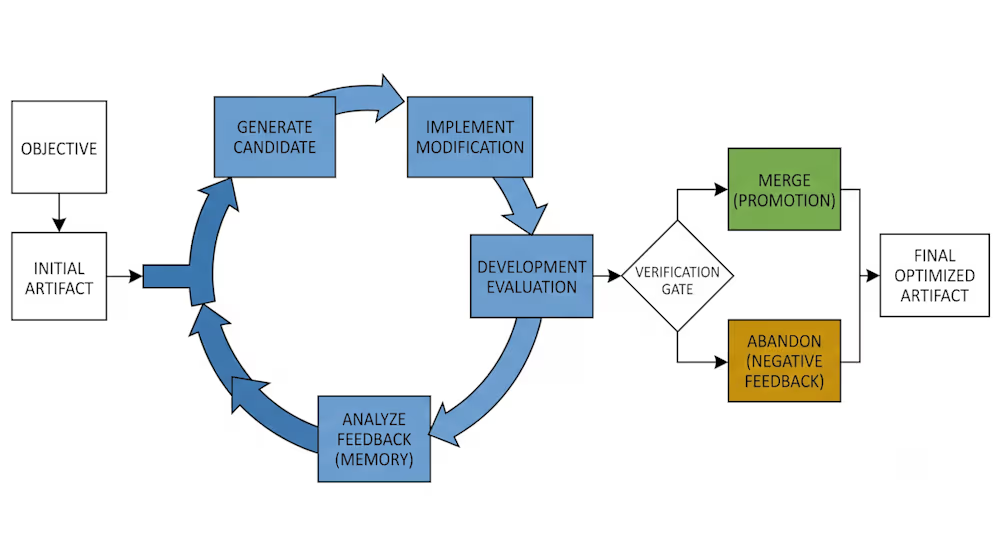
To address this challenge, researchers at Renmin University of China and Microsoft Research introduced Arbor, a framework that upgrades AI-driven research and optimization from a sequence of trial-and-error guesses into a cumulative learning process. Arbor organizes hypotheses, experiments, and insights into a tree that helps the system learn from prior failures to make smarter, verified improvements over time.
In practical tests, Arbor delivered more than 2.5 times the verifiable performance gains of standard AI coding agents across real-world engineering tasks while operating under the same resource budget.
For enterprise AI, this technique directly translates to automating the continuous improvement of complex, real-world engineering systems.
Advertisement
Understanding the bottleneck in autonomous optimization
As large language models and AI systems become more capable, they are expected to carry out more complex operations such as autonomous optimization (AO) of software systems such as agent harnesses or model training algorithms.
AO captures the fundamental loop of autonomous research. An AI agent starts with an initial mutable artifact, such as a machine learning codebase or data pipeline, and a specific objective. The agent’s goal is to iteratively improve this artifact through experimental feedback without step-by-step human supervision.
The main challenge of AO is often misunderstood. Many engineering teams find that simply giving a coding agent more time or compute to optimize a codebase doesn’t lead to better results. “Automation can keep an AI working for a very long time — but a loop is not the same as progress,” Jiajie Jin, co-author of the paper, told VentureBeat. “If the goal is vague, or the metric is easy to hack, long-running automation often just produces ‘improvements’ faster that nobody actually wants.”
Jin explains that complex tasks take many attempts to get right, and standard agent architectures are missing the critical data structure to maintain state. “How do you make sure the insight and experience from each attempt actually accumulate, instead of getting lost in a scrollback buffer?” he said. Without this structure, agents simply repeat the same mistakes.
Advertisement
Current agent systems can run experiments for many hours against well-specified goals: editing code, invoking tools, running tests autonomously. But they treat each attempt in isolation, missing the structural mechanisms that would let them accumulate and act on what they’ve learned.
They lack the capacity to simultaneously maintain and compare multiple competing research directions. Without this, they cannot interpret both successes and failures to reshape their future exploration, which is the core mechanism that makes human research cumulative.
General coding agents typically rely on conversation transcripts for their memory. Because AO tasks span hundreds of turns and easily exceed context window limits, these agents struggle to preserve and reuse factual evidence over long histories. As a result, they lose the overarching structure of the research process and are prone to stalling on early failures or chasing noisy evaluation swings. The system needs a structured, durable memory that records what directions have been tried, what factual evidence was produced, and how each result changes the space of future hypotheses.
Existing frameworks are also prone to reward hacking and overfitting to development metrics. This makes them create the illusion of progress without producing improvements that transfer to real-world performance.
Finally, general-purpose coding agents typically chain their tool calls on a single shared working tree. This architectural limitation prevents them from testing parallel hypotheses in isolated environments without corrupting the main codebase or obscuring which hypothesis caused a specific outcome.
Advertisement
The Arbor framework
Arbor solves the challenges of AO with a framework that automates the long-horizon loop of exploration, experimentation, and abstraction that characterizes human research. Arbor separates the strategic direction of research from the ground-level coding tasks with two key components:
The coordinator: A long-lived AI agent that acts like a principal investigator. It never directly edits the target codebase. Instead, it owns the general state of the optimization research, observes accumulated evidence, comes up with new hypotheses and directions to explore, and decides what to do with the results of experiments.
Executors: Short-lived, highly focused AI agents. When the coordinator wants to test an idea, it spins up an executor and places it in an isolated environment, essentially a fresh git worktree. Each executor is handed one hypothesis. It implements the assigned idea, runs evaluations, debugs errors, and reports back to the coordinator with the results and created artifacts.
Arbor framework withe hypothesis tree refinement (HTR) (source: arXiv)
Advertisement
These two components collaborate through a mechanism that the researchers call “Hypothesis Tree Refinement” (HTR). HTR represents the entire research process as a persistent, branching tree where every node binds together four things: a hypothesis, the executable artifact, the factual evidence produced, and a distilled insight. This means the coordinator can explore multiple competing directions at the same time without losing its place.
The coordinator builds the tree by placing broad ideas near the root, while concrete refinements branch out as leaves. This allows Arbor to safely explore multiple competing hypotheses simultaneously. If an executor’s experiment fails, the tree records why it failed as a negative constraint, ensuring the system doesn’t endlessly repeat the same mistake.
To understand why Arbor’s isolation matters, consider a common enterprise scenario: optimizing a Retrieval-Augmented Generation (RAG) pipeline for an internal AI assistant. “When you ask a single agent like Claude Code or Codex to ‘improve accuracy,’ it will typically change a bunch of things in one pass — chunking, the prompt, the retrieval method,” Jin said. This entangles the changes, making it impossible to attribute which one actually helped. It also directly mutates the repository without isolation.
Arbor solves this by treating each lever as a separate hypothesis. Chunking becomes one branch, retrieval another, and the prompt another — each implemented and evaluated in its own isolated git worktree. “So you get clean attribution: ‘constraint decomposition on the retrieval side gave +X; breadth-first search actually hurt,’” Jin said.
Advertisement
When an executor returns a report, the coordinator writes the evidence to the tree and backpropagates the insight upward to parent nodes. This means a local observation becomes a generalized constraint that shapes the coordinator’s future idea generation.
To prevent reward hacking or overfitting to the development data, HTR enforces a strict “merge gate.” Even if an executor reports a fantastic development score, the coordinator will spin up an isolated worktree to test the candidate against a held-out test evaluator. The artifact is only merged into the current best trunk if it demonstrably improves the test score, verifying that the progress is real.
Arbor generally falls under the concept of “loop engineering,” popularized by industry figures like OpenClaw creator Peter Steinberger and Claude Code lead Boris Cherny. The idea is to move beyond single prompts to design iterative cycles (observe, reason, act, verify) that drive autonomous agents. However, as Jin points out, “A loop can fill up with messy, untraceable attempts, and you end up with nothing to show and no way to reconstruct what changed.”
Arbor in action
The researchers evaluated Arbor on an autonomous optimization task suite built from real-world research settings and the MLE-Bench Lite machine learning engineering benchmark. The AO suite featured tasks from different areas of AI development, including model training, harness engineering, and data synthesis.
Advertisement
The researchers used different backbone models for the coordinator and executor agents, including Claude Opus 4.6, GPT-5.5, and Gemini-3-Flash. They tested Arbor against the strongest coding agents, Codex and Claude Code. Arbor and the baselines were given the same resources. For the MLE-Bench Lite tasks, Arbor was also compared against top-tier agentic research systems like AI-Scientist, ML-Master, and AIDE.
Arbor consistently outperformed the baselines. It achieved the best held-out test result on all tasks, attaining more than 2.5 times the average relative gain of Codex and Claude Code. On the BrowseComp task, which involves optimizing a search agent, Arbor improved the system’s held-out accuracy from a baseline of 45.33% to 67.67%. Meanwhile, Codex and Claude Code stalled at 50% and 53.33%, respectively. On MLE-Bench Lite, when equipped with GPT-5.5, Arbor achieved the strongest result among all benchmarked systems.
Arbor generalizes across backbone models and harnesses (source: arXiv)
Arbor proved to be resilient against overfitting. For example, during the Terminal-Bench 2.0 task experiments, Claude Code achieved a high development score of 75 but its score dropped to 71 on the held-out data. Arbor had a lower development score of 72.22 but achieved the highest held-out score of 77.36, ensuring its results transfer to real-world applications.
Advertisement
Arbor also showed generalization in a cross-task transfer experiment. After Arbor finished optimizing the search harness for the BrowseComp task, researchers took the optimized codebase and tested it on two unrelated search-agent tasks, HLE and DeepSearchQA. Arbor’s optimized codebase significantly improved performance on those unseen tasks as well.
Deploying Arbor: Sweet spots and hidden costs
For engineering leads looking to drop Arbor into their existing tech stack, the framework is designed to sit on top of existing Git workflows rather than replacing them. “Its output is an ordinary git branch that your existing code review, CI, and human review can inspect directly,” Jin said. Only verified gains are merged into a per-run trunk, leaving the main repository untouched until a developer manually chooses to promote the code.
However, deploying Arbor comes with specific tradeoffs. Jin points out that the biggest catch is token cost, as maintaining a long-lived coordinator that continuously manages the tree and dispatches executors is the dominant expense. Running multiple isolated worktrees concurrently also requires genuine compute and disk resources to process real experiments.
So where is Arbor’s sweet spot? According to Jin, it excels at tasks with a clear, trustworthy metric, tolerance for a long time horizon, and a real search space with several plausible directions, such as pipeline optimization, data-synthesis quality, and model-training recipe tuning.
Advertisement
Conversely, teams should explicitly avoid using Arbor for real-time latency tasks, obvious one-line fixes, or when the underlying evaluation metric is flawed. The quality ceiling of the entire run is strictly bounded by the quality of the evaluator. “If the metric isn’t trustworthy, Arbor will just optimize toward an untrustworthy result faster,” Jin said.
Jin sees the next evolution going beyond single scalar metrics. “A natural evolution is to have each node’s artifact carry a vector — accuracy, latency, cost — instead of a single score,” Jin said. “Going from a single scalar to a multi-objective Pareto search is a very natural extension of the framework.”
John Jumper, who shared a recent Nobel Prize in chemistry, announced Friday that he’s making the leap to Anthropic after “nearly 9 years” at Google DeepMind.
In a post on X, Jumper wrote that DeepMind CEO Demis Hassabis “took a real chance letting me lead the AlphaFold team just six months after finishing my PhD, and the entire GDM team taught me so much about how to do great science.”
Jumper (pictured above right, with Hassabis) added, “GDM is a special place, and I’ll still be excited to hear about what amazing things they discover next.”
Following the May 2026 launch of its flagship Velsonic phono preamp, AVID HiFi is expanding its analog lineup with the Pulsus II and Pellar II phono stages. Both models replace long-serving originals: the Pulsus, introduced in 2010, and the Pellar, which followed in 2012. That is a respectable run in any product category, but especially one built around a format that some people were still declaring dead when those first models arrived.
The vinyl train keeps rolling, and there is no sign that anyone has found the brakes. In 2026, buyers have more turntables, phono cartridges, phono preamps, record-cleaning machines, tonearms, cables, mats, clamps, and other playback accessories to choose from than at any point in the past two decades. AVID’s updated Pulsus II and Pellar II arrive in a market that is no longer treating vinyl as a nostalgic side hobby, but as a serious and increasingly sophisticated part of the high-performance audio ecosystem.
On the inside, both models retain much of what made the originals successful, with targeted performance refinements wrapped in a cleaner, more streamlined exterior. AVID is not a company that releases new models every year simply because it has something new to promote. The original Pulsus and Pellar earned considerable recognition for their musicality, engineering integrity, and long-term reliability—qualities that kept both phono stages relevant for well over a decade.
That kind of longevity suggests that AVID got the fundamentals right from the beginning. The Pulsus II and Pellar II are therefore not reinventions for the sake of it, but the result of genuine advances in design, materials, and the company’s deeper understanding of how these circuits can be improved.
Advertisement
AVID Pulsus II and Pellar II: Refined, Not Reinvented
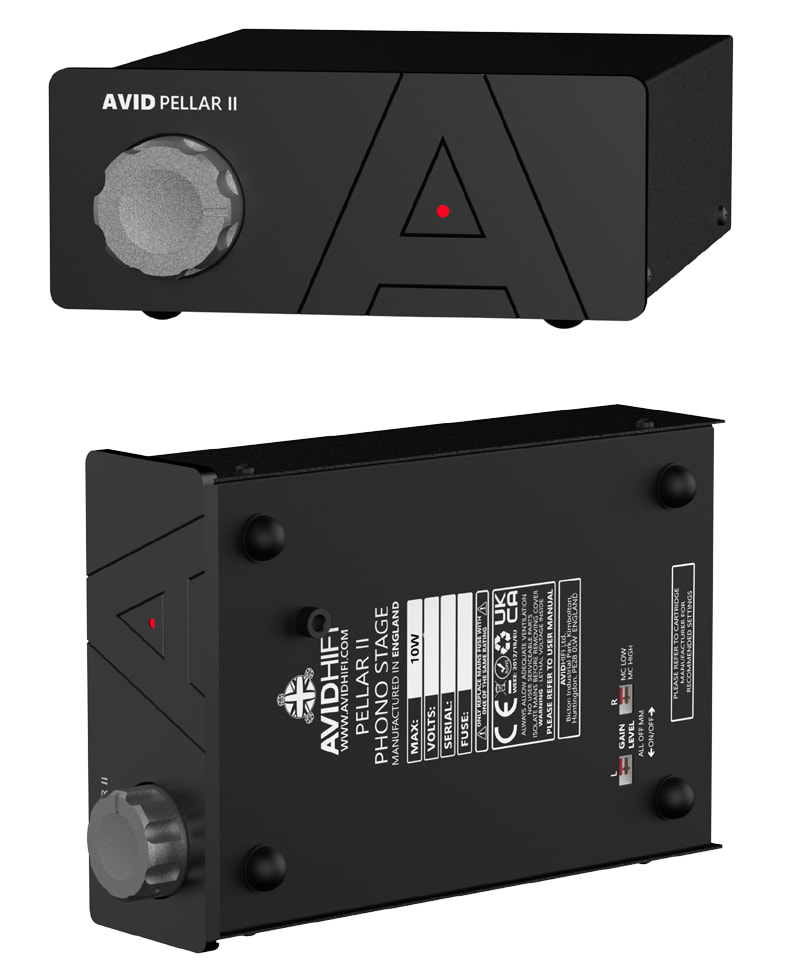
The Pulsus II and Pellar II build on the foundations of their predecessors with refinements in several critical areas. AVID points to more careful component selection and improved noise-reduction strategies, intended to deliver greater transparency, lower noise floors, stronger dynamic expression, and a more natural presentation of music. Both models also offer flexible adjustment options for Moving Magnet (MM) and Moving Coil (MC) cartridges.
As noted earlier, the Pulsus II and Pellar II arrive shortly after the launch of AVID’s flagship Velsonic phono preamp. Together, the three models give serious vinyl listeners a broader range of options based on their cartridge requirements, preferred feature set, and budget.
AVID’s expanded three-model phono preamp lineup reflects the company’s continued focus on meaningful engineering rather than annual cosmetic updates. The Velsonic, Pulsus II, and Pellar II mark a new phase for AVID Hi-Fi in the phono-stage category, with choices that extend from more attainable high-performance designs to a no-compromise flagship.
Plusus II and Pellar II Differences: Highlights
Plusus II
Pellar II
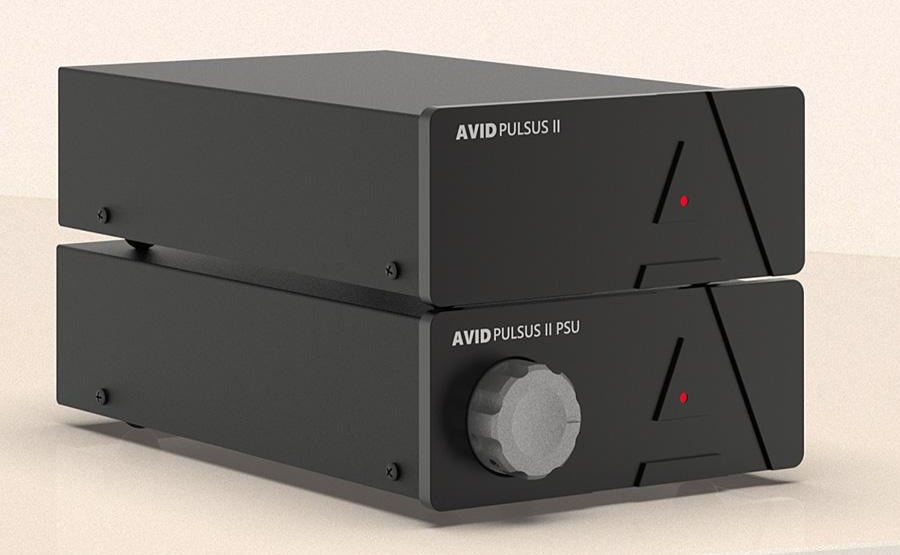
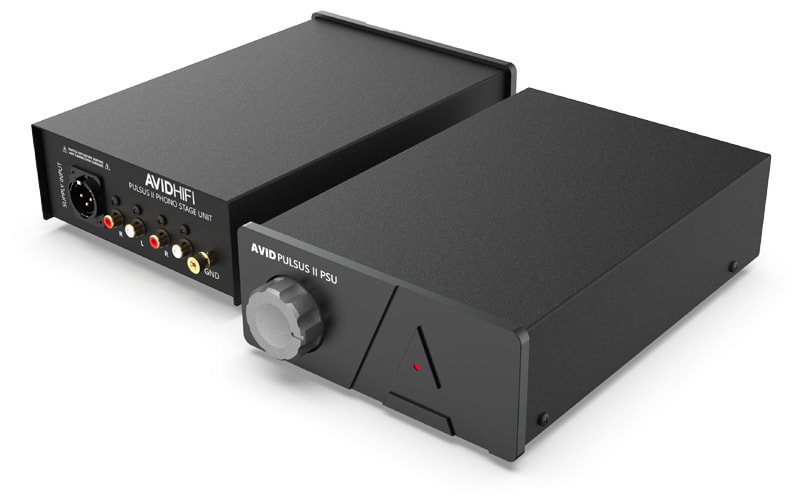
Two-piece form factor with separate Phono Preamp and Power Supply Units
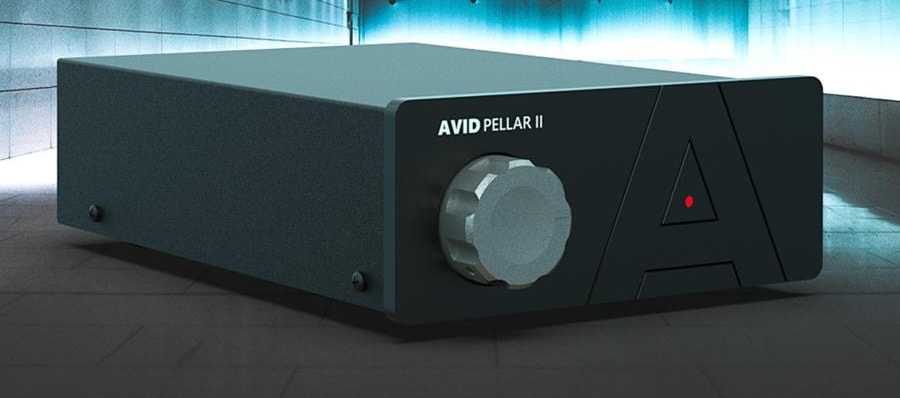
Single-piece Phono Preamp with built-in Power Supply
Dual-mono circuit design with dedicated power regulation
Single board configuration with Low-Noise Op-Amps
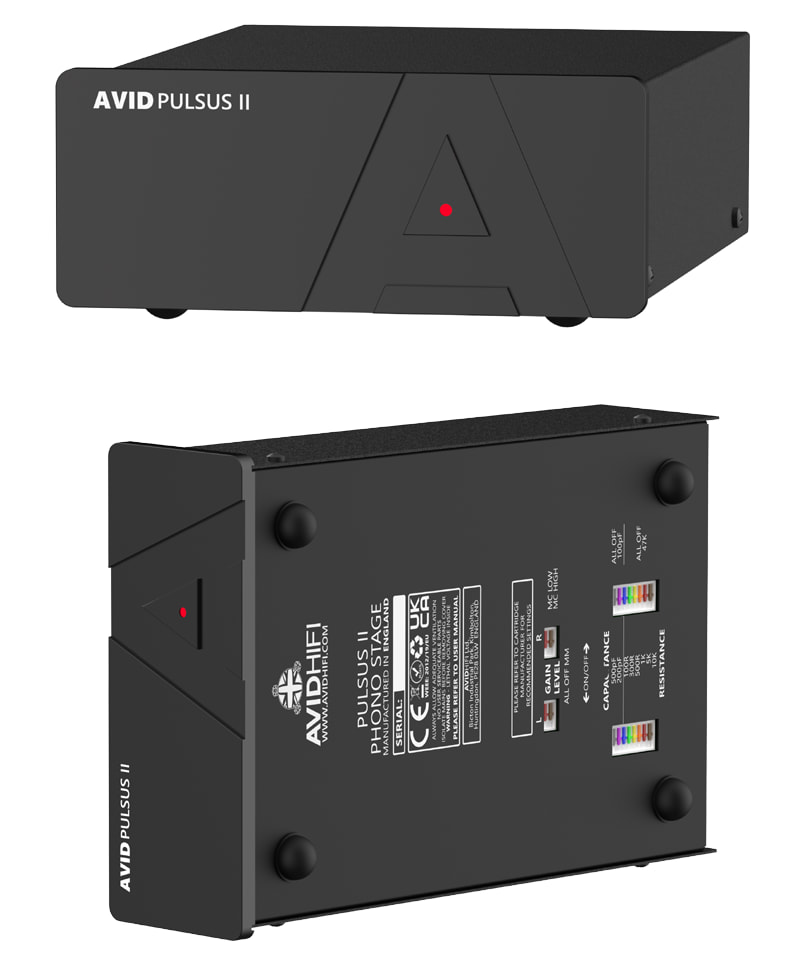
Default cartridge loading for MM cartridges at 47K, along with adjustable Cartridge Loading for MM or MC cartridges as needed via DIP switches at the bottom of the unit.
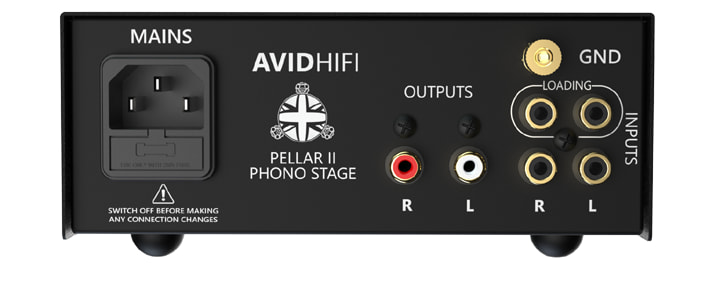
Preset 47k for MM cartridges with adjustable resistance for MC cartridges via custom plugs or rear-panel loading
Detailed Comparison
AVID HiFi Model
Pulsus II (2026)
Pulsus (2010)
Pellar II (2026)
Pellar (2012)
Velsonic (2026)
Product Type
Phono Preamp
Phono Preamp
Phono Preamp
Phono Preamp
Phono Preamp
Price
£2,995 / €3,995 / $4,695
Discontinued
£1,450 / €1,995 / $2,295
Discontinued
$19,995 / £11,995 / €15,995
Circuit Design
Dual-mono topology with dedicated power regulation
Dual-mono topology with dedicated power regulation
Single-board configuration with low-noise op-amp topology
Single-board configuration with low-noise op-amp topology
Full dual-mono and balanced operation from input to output, which minimizes crosstalk and maximizes channel separation.
Phono Cartridge Compatibility
Moving Magnet (MM)
Moving Coil (MC)
Moving Magnet (MM)
Advertisement
Moving Coil (MC)
Moving Magnet (MM)
Moving Coil (MC)
Moving Magnet (MM)
Advertisement
Moving Coil (MC)
Moving Magnet (MM)
Moving Coil (MC)
Cartridge Loading
High flexibility; multiple resistance (100R–47k) & capacitance (100pf–500pf) settings via bottom DIP switches
High flexibility; multiple resistance (100R–47k) & capacitance (100pf–500pf) settings via bottom DIP switches
Preset 47k for MM; adjustable resistance via custom plugs or rear-panel loading
Preset 47k for MM; adjustable resistance via custom plugs or rear-panel loading
Underside controls for: Gain Level (MM – MC Low and MC High)
Resistance
Capacitance
Underside controls for: Gain Level (MM – MC Low and MC High)
Advertisement
Resistance
Capacitanc
Underside controls for: Gain Level (MM – MC Low and MC High)
Underside controls for: Gain Level (MM – MC Low and MC High)
Front-panel rotary controls allow you to switch gain, resistance, and capacitance without needing to open the chassis or use DIP switches.
Power Supply
External Power SupplyRegulated with a 35VA transformer
External Power SupplyRegulated with a 35VA transformer
Single-chassis integrated power supply Internally Regulated 25va Transformer
Single-chassis integrated power supply Internally Regulated 25va Transformer
External Power Supply Double Regulated with 300va Toroidial Transformer
Vottage Input
100-240vac 50/60Hz 10 Watts Max
100-240vac 50/60Hz 10 Watts Max
100-240vac 50/60Hz 10 Watts Max
100-240vac 50/60Hz 10 Watts Max
100-240vac 50/60Hz 10 Watts Max
Dimensions (WDH)
160 x 239 x 70mm (6.3 x 9.41 x 2.8 in)
PSU: 160 x 247 x 70mm (6.3 x 9.72 x 2.8 in)
Advertisement
120 x 220 x 70mm
160 x 253 x 70mm (6.3 x 9.96 x 2.8 in)
120 x 220 x 70mm
463 x 338 x 100mm (18.23 x 13.31 x 4 in) Preamp and PSU Combined
Net Weight
1.3 kg (2.9 lbs)
PSU: 1.9 kg (4.2 lbs)
1.0 kg (2.2 lbs)
PSU: 1.7 kg (4 lbs)
Advertisement
1.9 kg (4.2 lbs)
1.6 kg (3.5 lbs)
12.2 kg (27 lbs)
PSU: 14.9 kg (33 lbs)
The Bottom Line
The AVID Pellar II and Pulsus II are not budget phono preamps with a nicer faceplate. Both are serious, UK-built MM/MC phono stages aimed at vinyl listeners who have moved beyond the built-in phono input on an integrated amplifier and want lower noise, better cartridge matching, and a more substantial long-term analog upgrade.
What makes AVID’s new pair interesting is the company’s refusal to treat either model as a disposable annual refresh. These are successors to designs that remained in service for more than a decade, now updated with revised component selection, lower-noise engineering, and a cleaner industrial design. The Pellar II is the more accessible entry point for listeners with one well-chosen turntable and cartridge, while the Pulsus II is the step-up option for systems where the phono stage is expected to extract more from a serious moving coil cartridge and a higher-resolution analog front end.
Competition is not exactly thin. The $2,495 MoFi UltraPhono Pro offers front-panel gain and loading adjustments, balanced and single-ended outputs, and a very different feature set. The $2,899 Cyrus 40 PPA adds four configurable inputs, balanced outputs, remote control, and upgrade potential for listeners running multiple turntables or tonearms. The tube-based Muarah MU-2 remains another compelling option around the Pellar II’s price, particularly for listeners who want easy cartridge loading changes and a warmer, more relaxed presentation.
The obvious question is whether the $4,695 Pulsus II delivers enough of a performance advantage over the $2,295 Pellar II to justify its substantial premium. That answer will depend heavily on cartridge quality, system resolution, and how deeply invested the buyer is in moving coil playback. For most vinyl listeners, the Pellar II is likely to be the more rational AVID entry point. The Pulsus II is for owners of more ambitious analog systems who are willing to pay considerably more to chase lower noise, greater refinement, and a higher ceiling.
Advertisement. Scroll to continue reading.
Advertisement
And yes, there are far less expensive ways into external phono preamps. The iFi ZEN Air Phono 2 remains a sensible low-cost MM/MC option, but it belongs in a different conversation.
Price & Availability
The AVID HiFi Pulsus II and Pellar II phono preamps are designed and manufactured in the UK. Both will be available through authorized AVID dealers worldwide beginning July 2026.
The Pulsus II is priced at £2,995 / €3,995 / $4,695.
The Pellar II is priced at £1,450 / €1,995 / $2,295.
It’s been a little over a week since Apple’s WWDC keynote, and the iOS 27 beta is already out in the wild. While Apple spent plenty of time talking about its Gemini-powered Siri, the thing I was most excited about was getting the update onto my iPhone 16e and seeing what it was actually like to live with.
I’ve been using the beta every day since then, and one thing has become pretty clear: not every new feature lived up to the hype for me. Some felt more interesting during the announcement than they do in everyday use, while others simply haven’t found a place in my routine. But a few features have been the complete opposite. They’re the ones I’ve found myself returning to again and again without even thinking about it. After spending more than a week with iOS 27, these are the three features that have stood out the most — and the biggest reason I’m still excited about this update.
The fitness app finally feels like a fitness app
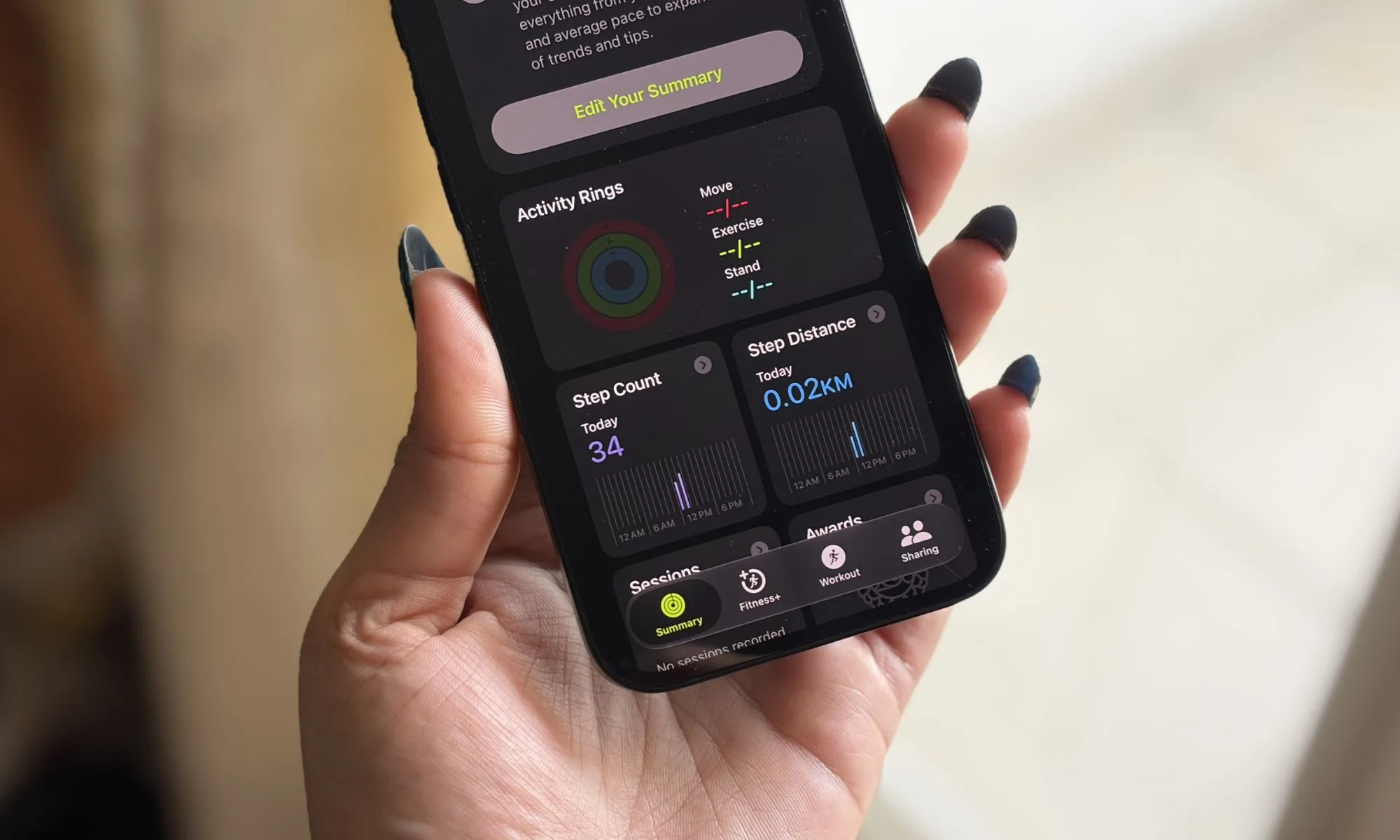
I’m a bit of a fitness nerd. Whether it’s squeezing in a workout after a long day or making sure I close my Activity rings, I’m always keeping an eye on my progress. That’s why the Fitness app is one of the apps I use the most on my iPhone, and honestly, I’ve felt for a while that it deserved a refresh. The old design wasn’t bad by any means. It was clean, familiar, and easy to navigate. But it also felt a little static, especially compared to modern fitness apps that do a much better job of making your workout data feel engaging and meaningful. There was plenty of information there, but not always in the most exciting way.
Shimul Sood / Digital Trends
The redesigned workout experience in iOS 27 changes that. Everything feels better organized, and the information I care about is much easier to spot at a glance. More importantly, the app finally feels built around the workout itself rather than just a place to store data. For example, I went on a 10km run this morning, and one of the first things I noticed afterward was how prominently my route map was displayed. Instead of digging through menus to find it, the map was right there, front and center. It reminded me of a presentation you’d expect from dedicated fitness apps like Strava. This isn’t the biggest change in iOS 27, but it makes reviewing a workout feel far more rewarding. That’s really what I like about the redesign. The Fitness app finally feels more alive. Rather than simply showing me numbers and charts, it does a better job of highlighting the moments and milestones that make working out feel satisfying.
The cleanup tool finally cleaned up its act
I never thought I’d be talking about photo editing tools as one of my favorite parts of iOS 27, but here we are. The updated Cleanup tool and the new Reframe feature have genuinely made me spend more time editing photos directly on my iPhone 16e. And honestly, that’s saying something. Before this update, Apple’s Cleanup tool was one of those features I wanted to like but rarely used. Compared to the object-removal tools on Pixel and Samsung phones, it often struggled with anything more complex than a simple background distraction. The results were hit-or-miss, and most of the time I’d rather leave the photo alone than risk making it look worse. Thankfully, that has changed.
Advertisement
Shimul Sood / Digital Trends
Over the past week, I’ve used Cleanup on everything from random objects in the background to people accidentally walking into a shot, and the results have been surprisingly good. One example that genuinely impressed me was when I tried removing a book that was partially covering my face in a photo. I expected the tool to either leave behind a blurry mess or distort my face. Instead, it removed the book cleanly and reconstructed the missing area so well that it looked like the book had never been there in the first place.
Shimul Sood / Digital Trends
For the first time, Apple’s Cleanup tool feels reliable enough that I actually want to use it. The new Reframe feature is interesting for a different reason. Using generative AI, it can virtually adjust the framing of a photo after it’s been taken, giving you a little more flexibility if you didn’t quite nail the shot. I don’t see myself reaching for it every day, but that’s okay. It feels more like a feature you’ll appreciate when you need it, rather than one you’ll use constantly. And that’s what I like about both additions. One solves a problem I run into regularly, while the other serves as a safety net for moments when a photo isn’t quite framed the way I want.
Every “what is that?” now has an answer
Of all the new AI-powered additions in iOS 27, on-screen awareness is probably the one I’ve used the most. And yes, the moment you hear about it, you’ll probably think, “Wait, isn’t this just Circle to Search?” Honestly, that’s not a bad comparison. Circle to Search is easily one of my favorite features on my Google Pixel 10a. I use it all the time. If I’m scrolling through Pinterest and spot a chair I’d love to buy, I can instantly search for it. If I’m watching a YouTube video and notice a pair of sneakers someone is wearing, I can quickly find out what they are. Sometimes I’ll come across a landmark in a travel reel, a gadget in a review video, or even an unfamiliar dish in a food post, and Circle to Search gives me answers in seconds without forcing me to switch apps or start a new search from scratch.
Shimul Sood / Digital Trends
That’s the same reason I’ve grown to like on-screen awareness on the iPhone. Instead of manually copying text, taking screenshots, or opening Safari to search for something, I can simply ask Siri about what’s currently on my screen. For example, while reading an article, I used it to learn more about a company mentioned in the article. When browsing online stores, I used it to identify products and compare them with similar options. I even found myself using it while planning a trip after spotting a location in a social media post and wanting to learn more about it. What makes the feature feel useful is that it understands both the visual and textual information on your screen. Siri can analyze what you’re looking at and use that context to answer questions or help you take action. Apple is also opening this up to developers through dedicated APIs, allowing apps to expose relevant information that Siri can understand and interact with. This feature removes a lot of tiny bits of friction throughout the day. And those are often the features that turn out to be the most valuable.
A week later, these are still my favorites
I’m still spending time with iOS 27 on my iPhone 16e, and if there’s one thing I’ve learned over the past week, it’s that the best features aren’t always the ones that are advertised. Sometimes they’re the smaller additions that become part of your daily routine. For me, that’s exactly what happened with these three features. Whether it’s the refreshed Fitness app making my workout data more enjoyable to revisit, the improved Cleanup tool saving photos I would’ve otherwise ignored, or on-screen awareness helping me find information without jumping between apps, they’ve all earned a place in my everyday use.
There’s still plenty of iOS 27 left for me to explore, and I’m sure I’ll discover more favorites as I continue using the beta. But if you’re wondering which features have stood out after a week of real-world use, these are the ones I’d point to first.
This week on the GeekWire Podcast: Anthropic takes its most powerful models offline after a U.S. order, with Amazon CEO Andy Jassy reportedly contributing to the concerns that helped trigger it. We talk about what it was like to use one of those models, Claude Fable, while it was available, and dig into the Amazon-Anthropic dynamic.
Then we explain how agentic AI is upending Amazon’s “working backwards” tradition, as represented by one division inside the company that is using agents to create prototypes in some cases before going through the company’s traditional PRFAQ process.
Then, an AI-powered school is arriving soon in the Seattle area. Alpha School uses AI-driven software rather than chatbots to teach core academics, frees the rest of the day for hands-on projects, and is drawing both interest from Microsoft executives and skepticism from critics.
Last Friday, citing unspecified national security concerns, the White House ordered Anthropic to restrict the export of its powerful AI models Fable and Mythos to anyone outside of the United States, as well as foreign nationals inside the country. Shortly after, the AI giant hastily pulled the plug on both models, which have now been unavailable to anyone for a week.
The episode is the first real test of whether the U.S. government can use export controls to contain frontier AI the way it has tried, with very uneven results, to contain encryption and spyware before it. And dramatic as it may sound, how this standoff gets resolved could shape not just Anthropic’s access to foreign markets but the rulebook that other AI labs will have to build around.
So what triggered the ban? Two subsequent events, reportedly. The first: Anthropic gave a South Korean telecom access to Mythos through its limited partner program, and U.S. officials grew alarmed after identifying the company as one they suspected had ties to China. (The company, widely reported to be SK Telecom, has denied any China connection.) Amazon CEO Andy Jassy also reportedly alerted the administration after Amazon’s own researchers, he said, found a way around Fable 5’s safeguards. Anthropic disputes the “jailbreak” label, calling it a narrow, already-patched issue rather than a wholesale defeat of the model’s safety measures.
Advertisement
The result was the same: the Commerce Department issued an export control directive, and Anthropic had to scramble to immediately limit access to its products — within roughly 90 minutes of being notified, by some accounts.
None of this is new, though. Governments have tried to use export controls to limit the proliferation of what they see as dangerous cyber technology for decades, but their track record has been middling at best.
The U.S. government was behind what is perhaps history’s most spectacular failure of this approach in the early to mid-1990s. At the time, computer scientists were developing encryption technologies to secure data as it traveled over the internet. One of those encryption products was called Pretty Good Privacy, or PGP, a popular software that could encrypt data and make it virtually impossible to unscramble even if intercepted as it traveled to its intended recipient over the internet.
The U.S. government initially saw PGP as a dangerous weapon, fearing it would prevent its intelligence agencies from snooping on emails as they crossed their wires. To stop the distribution of PGP, the U.S. Customs Service opened a criminal investigation against PGP’s creator Phil Zimmermann for allegedly violating arms export controls. He fought back by publishing PGP’s source code as a printed book, igniting what is known today as the “Crypto Wars.”
Advertisement
Zimmermann later won a key battle when the investigation was closed, paving the way for crucial end-to-end encryption algorithms such as the one used by billions of Signal and WhatsApp users.
Later during the early 2010s, researchers began discovering Western-made spyware used against dissidents in the Middle East. In response, several governments agreed to expand the Wassenaar Arrangement, an international treaty that limits the export of dual-use software and technologies that are used in both civilian and military applications.
The idea was to classify surveillance and hacking software as dual-use, thus forcing spyware makers to get export licenses to sell their products abroad.
Contact Us
Do you have more information about the Mythos ban? From a non-work device and network, you can contact Lorenzo Franceschi-Bicchierai securely on Signal at +1 917 257 1382, or via Telegram and Keybase @lorenzofb, or email.
But Wassenaar has always had two inherent weaknesses. There are several countries that don’t adhere to the agreement, including Israel, which houses some of the world’s most active spyware makers.
Advertisement
The agreement also depends on countries applying it to companies within their borders at their own discretion. For a time, the Italian government allowed one of the country’s then-top spyware makers, Hacking Team, a license to export its tools around the world, despite the company’s track record of selling spyware to oppressivegovernments that used it to hack journalists and human rights activists.
Since then, othercountries in Europe have been lax with spyware makers like Italy. Despite numerous scandals, Europe, home to many spyware and hacking tools makers, has continually failed to curb the export of spyware to authoritarian regimes. Critics say that a recently renewed effort across the bloc of 27 member states to tackle its growing problem of spyware exports to authoritarian states “does not go far enough.”
Several spyware makers, such as Intellexa, a sanctioned consortium of spyware companies, have simply moved their operations to countries with lax export controls. Other spyware makers sought to move their operations to Saudi Arabia for similar reasons.
There have been some wins. Germany-based spyware maker FinFisher shut down in 2022 after a multi-year investigation by German prosecutors into the company for allegedly selling spyware to Turkey without an export license. Investigators previously found the FinFisher spyware had been deployed on the phones of critics of Turkey’s government.
Advertisement
As of the time of writing, the impasse between Anthropic and the Trump administration remains. There is a reasonable chance the administration will buckle and lift the restriction in the interest of keeping American AI companies competitive worldwide — a move that would amount to tacit acknowledgment that AI labs elsewhere, including in China, will likely reach similar capabilities regardless of what the U.S. restricts. Or, American AI companies could end up needing government approval before serving foreign customers at all, a compliance burden that would invariably dent their bottom line.
Given the past experiences that world governments have had with trying to control the reach of software, government-mandated export controls are unlikely to be the right approach to stop malicious actors from abusing powerful dual-use cyber technologies.
When you purchase through links in our articles, we may earn a small commission. This doesn’t affect our editorial independence.













































You must be logged in to post a comment Login