





Connect with us
DAPA Banner

Tech

Buick’s Rarest ’70s Muscle Car Was Only Produced For Three Years

Published

on


At the height of the muscle car era, Buick made a very rare vehicle. This Buick came with an amazingly powerful engine that set it apart from most others of its type. This Buick muscle car was called the Buick GSX. The GSX was a higher-performance evolution of the GS, or Gran Sport, moniker that Buick had used since it first shoehorned a 401-cubic-inch “nailhead” engine from the larger Wildcat into the intermediate-sized Skylark in 1965. The Buick GSX definitely qualified as having one of the classic muscle car engines that made tons of torque.

Without a doubt, the 455-cubic-inch engine in the GSX did make a huge amount of torque. Even though the base 455 in the GSX was rated at 350 horsepower, which has generally been acknowledged as severely underrated to keep the car insurance underwriters calm, it was also rated at 510 lb-ft of torque, the highest-listed torque rating during the muscle-car heyday.

Advertisement

The Buick GSX was made during a three-year period, during which the fortunes of the muscle cars would both rise and fall. The GSX’s run started in 1970, which could be considered the peak year for American muscle cars, particularly those from General Motors, and ended in 1972. A total of 678 GSX examples were produced in 1970, with just 124 in 1971 and an even lower 44 in 1972. And then the GSX was done, with only 846 units having ever been produced.

Advertisement

What was so special about the GSX?

In reality, the 1970 Buick GSX was essentially a package of appearance items that was applied to the 1970 GS model, which came with either the standard 350-horsepower 455 or the 360-horsepower Stage 1 engine. The buyer had a choice of two exterior colors: the unique Saturn Yellow and the non-exclusive Apollo White.

The GSX also received a front chin spoiler in black, a Buick-branded hood tach originally popularized on Pontiac’s GTO and Grand Prix, a rear spoiler that sat atop the trunk lid, body-colored racing-type mirrors and headlight bezels, a padded steering wheel, and, of course, the two distinctive broad hood stripes, complemented by the narrower stripe running along the body sides from front to rear and crossing at the rear spoiler. A firmed-up suspension called the “Rallye ride package” used gas shocks, sway bars, stiffer springs and bushings, and power front discs to improve the Buick GSX’s handling. 

The 455-cubic-inch Buick GSX motor could be upgraded with the Stage 1 package, which added larger valves, a higher-compression cylinder head, a more aggressive camshaft, an upgraded four-barrel Rochester Quadrajet carburetor, and a retimed distributor. This made it one of the most powerful Buick engines, ranked by horsepower. Transmission options were either a three-speed Turbo Hydramatic or a four-speed manual. Performance numbers for the 1970 Buick GSX Stage 1, as performed by Motor Trend, were a quarter-mile time of 13.38 seconds at 105.5 mph. Pretty fast.

Advertisement

What happened to the Buick GSX in 1971 and 1972?

The 1971 Buick GSX saw some changes, as both emission regulations and the heavy hand of the insurance industry began to rein in performance. General Motors required all of its vehicles to run on regular gasoline, which lowered the standard 455’s compression ratio from 10:1 to 8.5:1, while the Stage 1 lost a full two points of compression. Horsepower dropped accordingly, from 350 to 315 in the standard 455 and from 360 to 345 in the Stage 1. One more change that Buick made to the GSX for 1971 and 1972 was the availability of a smaller, lower-powered engine — a 350-cubic-inch mill with a four-barrel carburetor producing 260 horsepower in 1971. Instead of the original two colors of Saturn Yellow and Apollo White, an additional nine colors became available.

1972 marked the final year for this fading muscle car, now available in 12 colors, even though total production amounted to just 44 cars. Power was also down, thanks to the use of “net” horsepower numbers, which lowered the output of the Stage 1 455 engine to 270 horsepower, the standard 455 engine to 250 horsepower, and the 350 engine to just 195 horsepower.

Advertisement

The Buick GSX is a distinctive muscle car that lived during both the best and the worst times of the muscle car era. Its rarity makes it one of the classic American muscle cars worth every penny.


Advertisement

Source link

Continue Reading
Click to comment

You must be logged in to post a comment Login

Leave a Reply

Tech

Iranian hackers are targeting American critical infrastructure, US agencies warn

Published

on

The U.S. government is warning that Iran-backed hackers are escalating their tactics by targeting American critical infrastructure systems with the aim of causing disruption.

In a joint advisory published Tuesday, the FBI, the National Security Agency, the U.S. Cybersecurity and Infrastructure Security Agency (CISA), and the U.S. Department of Energy collectively warned that Iranian government hackers have been exploiting internet-facing systems used across a range of sectors. These include water and wastewater utilities, as well as energy and local government facilities. The agencies did not specifically name any of the targets but said that the hacks were aimed at causing “disruptive effects within the United States” and had already resulted in “operational disruption and financial loss.”

The hackers targeted programmable logic controllers and supervisory control and data acquisition (SCADA) products, which are used to control and manage industrial equipment and systems in critical infrastructure operations, the agencies said. The agencies said that the hackers were able to manipulate information displayed on these devices and maliciously interact with project files that store important device configurations.

The agencies said that the hacks targeting critical infrastructure are a marked escalation in tactics by Iranian hackers, likely in response to the U.S.-Israel war with Iran, which began on February 28 with air strikes that killed the country’s leader. 

Advertisement

The advisory also comes shortly after U.S. president Donald Trump threatened Iran in a social media post earlier on Tuesday, writing, “A whole civilization will die tonight” if Iran does not capitulate to a deal with the United States to open the Strait of Hormuz, a key chokepoint for global shipping traffic, by end of day.

Since the start of the war, an Iranian government-backed hacking group called Handala has been linked to several high-profile cyberattacks, including a disruptive breach at U.S. medical tech giant Stryker, which saw the hackers remotely wipe thousands of employee devices using the company’s own security tools. 

The FBI recently blamed the Handala hackers for leaking the partial contents of FBI director Kash Patel’s private email account. 

Techcrunch event

Advertisement

San Francisco, CA
|
October 13-15, 2026

Iran has also hit several U.S.-owned and operated data centers across the region with missiles and air strikes, causing instability and disruption to cloud services across the region.

Advertisement

Source link

Continue Reading

Tech

Golf star Bryson DeChambeau leads acquisition of Seattle-area startup Sportsbox AI

Published

on

Bryson DeChambeau swings while the Sportsbox AI app captures his motion on a smartphone. (Sportsbox AI Photo)

First Bryson DeChambeau used Sportsbox AI to win a major. Then he invested in the Bellevue, Wash.-based startup. Now he’s taking a swing at the entire company.

DeChambeau, the two-time U.S. Open champion and one of golf’s most tech-obsessed players, is leading a group of investors that has acquired Sportsbox AI, the startup that uses AI and 3D motion capture to analyze golf swings from smartphone video.

With the announcement Tuesday morning, the company also announced SAMI, an upcoming agentic AI coaching assistant powered by Google Cloud that’s designed to translate the app’s swing data into personalized, conversational coaching advice.

As part of the partnership, DeChambeau will also carry the Google Cloud logo on his golf bag at the Masters and future tournaments — reportedly the first time the Google Cloud brand has appeared on a professional golfer’s bag.

“This is about making golf more accessible, especially premium coaching,” DeChambeau said in the acquisition announcement, saying they’re “building something that brings real coaching to anyone with a smartphone, not just elite players. That’s what gets me fired up.”

Advertisement

Financial details: DeChambeau, who is preparing to compete in the Masters later this week, told Bloomberg the transaction is worth eight figures, without being more specific. 

Sportsbox had raised more than $9 million, GeekWire previously reported. It was last valued at $41 million in a March 2023 seed round, according to PitchBook.

The press release announcing the acquisition describes the buyers as a group of investors led by DeChambeau but does not name the other members. 

Co-founders Jeehae Lee and Samuel Menaker will continue to run Sportsbox, a spokesperson confirmed. The company’s roughly 30 employees will stay on, and Sportsbox will remain headquartered in Bellevue, though many employees work remotely.

Advertisement

PitchBook lists 19 sellers who fully exited in the deal, including Elysian Park Ventures, the PGA of America, pro golfer Michelle Wie West, golf instructor David Leadbetter, Randi Zuckerberg, and Twitch co-founder Kevin Lin.

Backstory: Sportsbox launched in 2020 as a spinoff of AI Thinktank, a Bellevue-based incubator founded by Mike and Rich Kennewick, the brothers behind Voicebox Technologies, an early speech recognition company.

Lee, the CEO, is a former LPGA Tour player who previously led strategy and business development at Topgolf. Menaker, the CTO, was VP of engineering at Voicebox.

The app uses a smartphone camera to create a 3D model of a golfer’s swing and measure hundreds of data points that would otherwise require an expensive motion-capture studio. 

Advertisement

Sportsbox generates revenue through coaching subscriptions and a consumer tier for golfers at $15.99 per month or $110 per year.

DeChambeau’s connection: In the week leading up to the 2024 U.S. Open at Pinehurst, DeChambeau used Sportsbox to identify and fix a slight miss to the right in his shots. He gave the company a shout-out at his winner’s press conference and soon after joined as an investor.

SAMI — short for Sportsbox AI Motion Intelligence — is the next step.

Built on Google’s Gemini models, it’s designed to act as a conversational AI coach, interpreting the app’s 3D biomechanical data and delivering personalized advice. The press release describes it as moving Sportsbox from a passive measurement tool to a proactive AI agent.

Advertisement

SAMI is currently in beta, and the company said it will begin rolling out agentic AI features throughout the second quarter, starting this week with AI-generated highlights available to subscribers of its 3D Player and 3D Player Plus tiers on iOS.

DeChambeau told Bloomberg he’s been using the technology ahead of the Masters and plans to keep using it during and after the tournament. But he said it isn’t meant to replace coaches. 

“The camera and the phone are only going to tell you so much,” he told Bloomberg. “They can’t make you feel what you’re doing.”

Source link

Advertisement
Continue Reading

Tech

Trump’s FY27 budget would cut $700M from CISA and kill election security

Published

on

In short: The Trump administration’s FY2027 budget proposes cutting $707 million from CISA, eliminating the agency’s election security programme entirely and shedding 860 positions, a dramatic escalation that would reduce the country’s primary civilian cybersecurity agency to a $2 billion operation after a year already defined by DOGE-driven layoffs and mass departures.

The United States’ central civilian cybersecurity agency has lost roughly a third of its workforce over the past 14 months. Its red team has been dissolved. Scores of staff working on election security, incident response, and continuous monitoring were fired by the Department of Government Efficiency in early 2025, then partially reinstated under court order, then placed on paid leave in legal limbo. Against that backdrop, the Trump administration released its FY2027 budget request on 7 April 2026, proposing to cut a further $707 million from the Cybersecurity and Infrastructure Security Agency, a reduction the White House frames as a long-overdue refocusing on the agency’s core mission and critics describe as an act of deliberate dismantlement.

The proposed cuts amount to approximately $700 million in programme eliminations, producing a net reduction of around $360 million once internal transfers and targeted new hires are factored in. If enacted, CISA’s operating budget would fall to roughly $2 billion, down from the approximately $3 billion it received when the current administration took office. The budget also projects eliminating around 867 positions, partially offset by transfers into the agency, for a net workforce reduction of approximately 860 roles.

What would disappear

The most politically conspicuous cut is the outright elimination of CISA’s election security programme. The proposal would end CISA’s funding for the Elections Infrastructure Information Sharing and Analysis Center, known as EI-ISAC, which serves as the primary hub for sharing cyber threat intelligence, ransomware alerts, and incident response resources with state and local election offices. It would also remove dedicated election security advisors stationed across the country and terminate the information-sharing support CISA has provided to state and local election officials since the agency’s founding in 2018. Those advisors have been the first point of contact for county clerks and election administrators facing phishing attacks, foreign probing of registration databases, and disinformation campaigns targeting election infrastructure.

Advertisement

The 💜 of EU tech

The latest rumblings from the EU tech scene, a story from our wise ol’ founder Boris, and some questionable AI art. It’s free, every week, in your inbox. Sign up now!

Beyond elections, the proposal would substantially scale back CISA’s stakeholder engagement function, eliminating offices responsible for coordinating with private-sector infrastructure operators and managing the agency’s international affairs partnerships. Workforce development programmes and what the budget characterises as “duplicative” state and local cyber funding streams would also be cut. The proposal shifts more responsibility for certain infrastructure security and emergency communications programmes directly to state and local governments, though it does not specify additional funding to those governments to absorb the transfer.

The White House’s argument

The administration’s budget justification is pointed in its language. The document states that “CISA was more focused on censorship than on protecting the nation’s critical systems, and put them at risk due to poor management and inefficiency, as well as a focus on self-promotion.” The proposed reductions, it argues, “refocus CISA on its core mission” of securing the federal civilian network and helping critical infrastructure operators defend against cyberattacks and physical threats.

Advertisement

The censorship framing refers primarily to CISA’s now-disbanded counter-disinformation work, including a unit that coordinated with social media companies on election-related content moderation during the 2020 and 2022 election cycles. That work was shut down after Republican criticism and subsequent litigation. Sean Plankey, Trump’s nominee to lead CISA, addressed the issue directly during his confirmation hearings. “It is not CISA’s job, and nor is it in its authorities, to censor or determine the truths,” Plankey said, adding that the agency would not pursue such work under his leadership. Plankey also pledged to “rebuild and refocus” CISA, emphasising that his goal would be to “empower the operators to operate“, referring to the private sector entities responsible for critical infrastructure. Plankey has not yet been confirmed by the Senate.

A year already defined by cuts

The FY27 proposal lands on an agency that has spent the past year contracting sharply. When Trump returned to office in January 2025, CISA had approximately 3,300 employees. By December 2025, that figure had fallen to roughly 2,400, a loss of nearly 900 people. The departures came through a combination of voluntary exits during the deferred resignation programme, probationary staff terminations, and direct DOGE action. In late February and early March 2025, DOGE terminated contracts and fired staff in waves that eliminated CISA’s entire red team, more than 80 employees working on continuous monitoring, and between 30 and 50 incident response staff. A federal judge subsequently ordered the reinstatement of probationary employees, but reinstated staff were placed on paid administrative leave rather than returned to active duties.

The red team cuts drew particular alarm from security professionals, since red-team exercises, in which agency staff simulate real-world attacks against government networks to identify vulnerabilities before adversaries do, are among the most operationally consequential work any cybersecurity organisation undertakes. Removing that capability does not just reduce CISA’s headcount; it eliminates a specific function that cannot simply be assumed by the remaining staff. The governance of AI-assisted cybersecurity tools across critical infrastructure has become a defining challenge for 2026, and the debate about CISA’s role sits at its centre: the agency was positioned to set standards and share threat intelligence precisely as those questions become most consequential.

Congressional pushback, and its limits

The proposed $707 million cut represents a sharp escalation from the administration’s FY26 request, which sought approximately $490 million in reductions. Congressional resistance at that stage, including from Republican committee members who considered the cuts excessive, ultimately narrowed the actual reductions to somewhere between $130 million and $300 million. Whether that resistance holds in the current budget environment is uncertain.

Advertisement

The sharpest opposition came from the Democratic side of the aisle. Representative Bennie Thompson, Democrat of Mississippi and the ranking member on the House Homeland Security Committee, rejected both the scale of the proposed cuts and the administration’s framing. “Like the President’s cyber strategy, the President’s CISA budget reflects his utter lack of understanding of the urgency of the cyber threats we face and how to mobilize the government to help confront them,” Thompson said in a statement. Citing the threat environment that has intensified in recent months, Thompson added: “There is nothing that justifies a reckless $700 million cut to CISA, particularly at a time of heightened tensions with Iran and an increasingly aggressive China.”

Thompson said he was “committed to working with colleagues to push back against these cuts” and to ensuring the government can protect federal and critical infrastructure networks. Separately, bipartisan legislation introduced earlier in 2026 would require CISA to maintain “sufficient” staffing levels, though the bill has not advanced to a vote.

What $2 billion buys, and what it doesn’t

The cuts do not eliminate CISA. Under the proposed budget, the agency would retain its core federal network security functions, its role supporting critical infrastructure operators, and some capacity for coordination with the private sector. The Einstein intrusion detection system and the Continuous Diagnostics and Mitigation programme for federal civilian networks are expected to survive. What the budget removes is the outward-facing, partnership-intensive layer of CISA’s operations: the work with state and local governments, the election security apparatus, the international engagement, and the stakeholder advisory infrastructure that has grown since the agency’s founding.

The commercial cybersecurity sector is watching closely. CISA has historically been a significant source of free threat intelligence, vulnerability advisories, and incident response support for smaller organisations and local governments that cannot afford enterprise-grade security tools. As the AI-driven expansion of the threat landscape accelerated through 2025, the agency’s advisories on vulnerabilities in industrial control systems and critical infrastructure became more, not less, relied upon by the operators responsible for power grids, water systems, and financial networks. The proposed cuts do not formally end that advisory function, but an agency operating at $2 billion with 860 fewer staff will inevitably produce fewer advisories, respond to fewer incidents, and reach fewer of the operators it was designed to support.

Advertisement

The budget is a proposal, not a law. Congress must still appropriate the funds, and the FY26 experience suggests that the final number will likely be lower than requested. What has already happened at CISA, however, does not require a vote to reverse: a third of the workforce is gone, the red team no longer exists, and election security advisors have been standing down since early 2025. The budget fight now is largely about whether what remains gets smaller still.

Source link

Advertisement
Continue Reading

Tech

Is your data integrity framework just a fancy spreadsheet?

Published

on

Nahla Davies examines what constitutes an appropriate data integrity framework, and how inadequate frameworks damage data quality.

If you asked most companies whether they have a data integrity framework, they’d say yes without hesitation. They’d point you to a shared drive, maybe a Confluence page, possibly a colour-coded spreadsheet with tabs labelled ‘Validation Rules’ and ‘Ownership Matrix’. It looks official. It’s got a logo on it. Someone even added conditional formatting.

But here’s the thing: looking like a framework and actually functioning as one are two wildly different realities. Across industries, organisations are confusing documentation with governance, and the gap between those two things is where data quality quietly falls apart. The problem isn’t that teams don’t care. It’s that they’ve convinced themselves the spreadsheet is enough.

The spreadsheet trap is more common than anyone admits

There’s a pattern that plays out in nearly every mid-size org that’s undergone some kind of digital transformation push in the last five years. Someone in data engineering or analytics gets tasked with ‘building a data integrity framework’. They do their research, pull together some best practices, and create a document. Maybe it lives in Google Sheets, maybe it’s a Notion database, maybe it’s an actual PDF that got emailed around once and then forgotten about. Whatever form it takes, it checks a box. Leadership sees it and feels reassured.

Advertisement

The trouble starts when that document has to survive contact with reality. Data pipelines change. New sources get added. Team members rotate. And that spreadsheet? It doesn’t update itself. It doesn’t send alerts when a schema shifts or when a critical field starts returning nulls at twice the usual rate. It just sits there, frozen in the moment it was created, slowly becoming a historical artifact rather than an operational tool.

What’s worse is that people keep referencing it as though it’s still accurate. Decisions get made based on validation rules that haven’t been reviewed in months. Ownership columns list people who’ve left the company. It’s the organisational equivalent of navigating with a map from 2019 and wondering why you keep hitting dead ends.

And it’s not a niche problem. A 2023 Gartner survey found that poor data quality costs organisations an average of $12.9m per year. That number doesn’t come from dramatic, headline-grabbing breaches. It comes from the slow, invisible accumulation of bad records, missed anomalies, and unchecked assumptions that a static document simply can’t catch.

What a real framework actually looks like

So what separates a functioning data integrity framework from a well-formatted spreadsheet? It comes down to whether the thing can operate without someone manually babysitting it. A real framework is embedded in your infrastructure. It’s automated, observable and responsive.

Advertisement

That means validation checks run as part of your data pipelines, not as a quarterly audit someone remembers to do in the last week of the quarter. It means the data is correctly annotated and that there’s monitoring in place that flags anomalies in real time, whether that’s a sudden spike in null values or a mismatch between source and destination row counts. Tools like Great Expectations, Monte Carlo and dbt tests exist specifically to bring this kind of rigor into the workflow.

It also means ownership is enforced through tooling, not just documented in a tab. When a data asset has a registered owner in a data catalogue, and that catalogue integrates with your alerting system, accountability becomes structural. It stops being something you have to chase people about in Slack.

There’s a cultural component here, too. Organisations with mature data integrity practices treat data quality as a product concern and are better prepared to establish proper AI governance. Product managers care about it. Analysts flag issues proactively instead of working around them. Engineers write tests for data the same way they write tests for code. That kind of culture doesn’t emerge from a spreadsheet. It emerges from leadership, making it clear that data integrity is a priority, not a side project someone handles when things are slow.

The companies getting this right tend to share a few traits. They’ve invested in observability across their data stack. They treat schema changes as events that require review, not things that just happen silently. And they’ve moved past the idea that documentation alone equals governance.

Advertisement

Why it matters more now than it did five years ago

The stakes around data integrity have shifted significantly. Five years ago, a bad record in a reporting dashboard was annoying but manageable. Today, that same bad record might be feeding a machine learning model that’s making automated decisions about credit, hiring or patient care. The blast radius of poor data quality has expanded because the systems consuming that data have become more autonomous and more consequential.

Regulatory pressure is also mounting. Frameworks like the EU’s AI Act and evolving data privacy regulations are putting more scrutiny on how organisations manage the data that powers their products. It’s getting harder to shrug off data quality issues as ‘technical debt we’ll get to eventually’. Regulators want to see evidence of governance, and a spreadsheet with last year’s date on it won’t cut it.

There’s also the competitive angle. Companies that can trust their data move faster. They make decisions with more confidence. They spend less time reconciling conflicting reports and more time actually acting on insights. Data integrity isn’t glamorous, but it’s one of those foundational things that quietly determines whether an organisation can execute on its strategy or just talk about it.

Final thoughts

The uncomfortable truth is that most data integrity frameworks weren’t built to be frameworks at all. They were built to satisfy a request, to check a compliance box, or to give someone something to present in a meeting.

Advertisement

And that’s fine as a starting point. Every mature system started somewhere. But if your ‘framework’ is still a spreadsheet that no one’s touched in six months, it’s time to be honest about what you actually have.

Real integrity requires automation, observability and cultural buy-in. The spreadsheet was never the destination. Treat it as the rough draft it always was, and start building something that can actually keep up with your data.


By Nahla Davies

Advertisement

Nahla Davies is a software developer and tech writer. Before devoting her work full time to technical writing, she managed – among other intriguing things – to serve as a lead programmer at an Inc. 5,000 experiential branding organisation, where clients include Samsung, Time Warner, Netflix and Sony.

Don’t miss out on the knowledge you need to succeed. Sign up for the Daily Brief, Silicon Republic’s digest of need-to-know sci-tech news.

Source link

Advertisement
Continue Reading

Tech

Elon Musk wants any damages from his OpenAI lawsuit given to the AI company’s nonprofit arm

Published

on

Elon Musk is still taking OpenAI to court over its transition to a for-profit company, but today he amended the complaint so that he won’t personally get any of the $150 billion in damages he’s pushing for. The Wall Street Journal reported that if Musk wins in his upcoming trial, he wants any damages should be awarded to the OpenAI nonprofit branch. He’s also seeking OpenAI CEO Sam Altman’s removal from the nonprofit’s board of directors if his suit succeeds.

Musk launched a lawsuit against OpenAI in 2024, claiming that the business had become a “closed-source de facto subsidiary” of Microsoft when it dropped its nonprofit designation. He claims that, as a co-chair of the OpenAI founding group, the change to a for-profit operation defrauded him as a donor. As a result, he’s now claiming that he, or apparently the remaining nonprofit side of OpenAI, deserve a portion of the company’s current valuation.

Considering the reputation Musk, Altman and their various business endeavors have for creating spicy PR situations, it seems likely that the exchanges between the two camps will get more heated as the trial date approaches.

Source link

Advertisement
Continue Reading

Tech

Stolen session cookies give hackers full account access for under a thousand dollars per month without raising alerts

Published

on


  • Storm enables session hijacking that bypasses passwords and multi-factor authentication
  • Attackers can restore stolen sessions remotely without triggering standard security alerts
  • Malware operates server-side to process encrypted browser credentials for stealthy exploitation

A new strain of infostealer malware dubbed Storm is changing how account compromise works, experts have warned.

New findings from Varonis Threat Labs have outlined how this strain moves away from passwords and focuses on session cookies that keep users logged in.

Source link

Advertisement
Continue Reading

Tech

Open Reel Ensemble’s Cyklepedia Spins Wikipedia Knowledge Into Magnetic Tape Music

Published

on

Open Reel Ensemble Cyklepedia Wikipedia Magnetic Tape Music
Japanese musicians commemorated Wikipedia’s 25th anniversary with a unique composition made up entirely of Wikipedia entries. Open Reel Ensemble produced the song as part of a virtual birthday celebration, and it’s a true journey because it’s totally made up of ancient reel-to-reel equipment that also function as instruments. Every sound is produced by physically moving the tape over the heads, with no artificial samples added after the fact.


The video shows the trio jamming at a table surrounded by recorders. Snippets of Wikipedia material appear on screen, and the lads are completely freestyling their way through them; grab an entry on how a term is defined, and the machines come to life. One of them is rewinding quickly to fit the description, producing a wonderful smooth swooshing sound across the speakers. Another one goes into fast-forward mode whenever the text flashes by, raising the pitch and adding a little of edge to the beat.

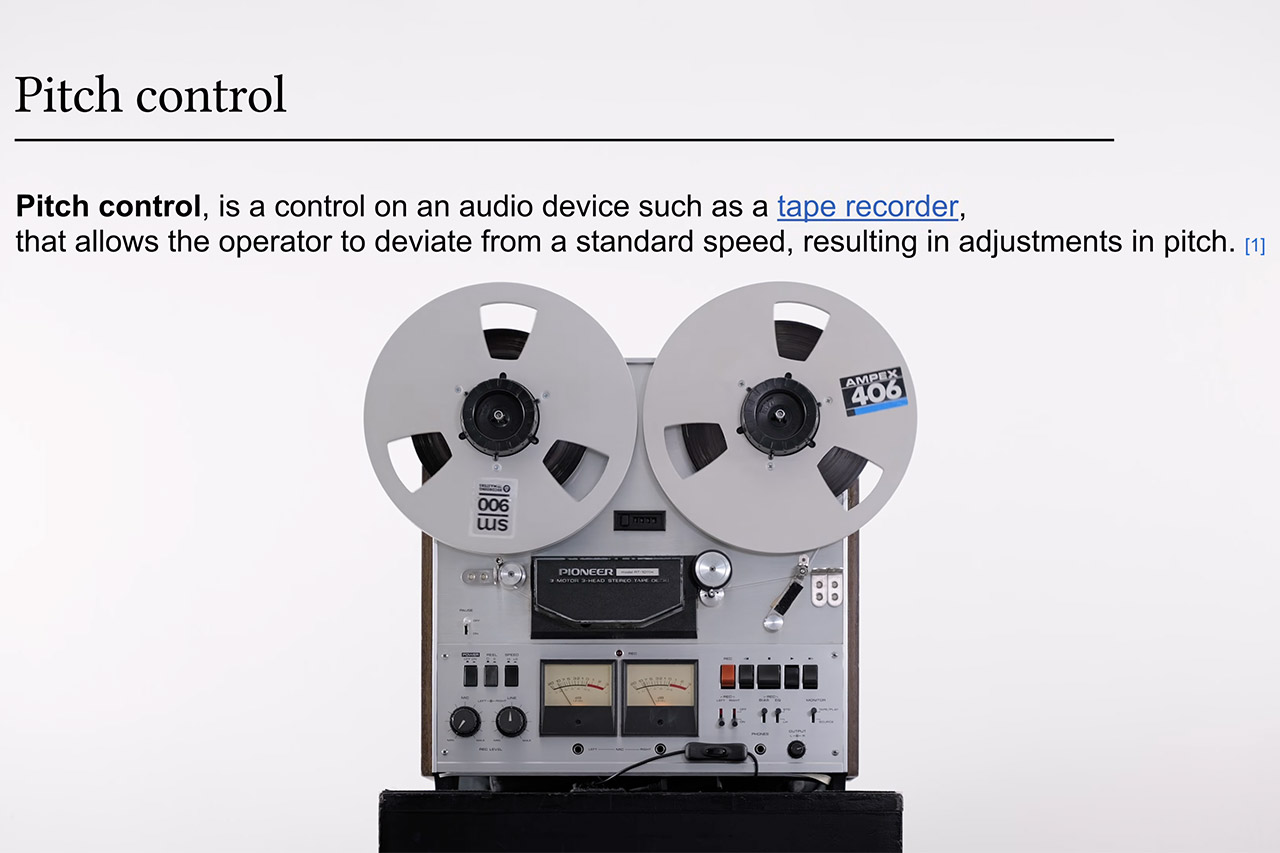
Each one flows seamlessly into the next, and the overall effect just seems natural Pitch control slows down for deeper tones and speeds up for brighter ones. Loops take small pieces and repeat them to create these steady rhythms below, while vibrato puts in some wavey portions by slowly changing the pace. Tremolo reduces the loudness in these rapid little pulses, and when they scratch the tape edges, they make these sharp little snappy noises. Then there are the wow effects, which are simply natural wobbles that go up and down in the same rhythm as your breathing.

Open Reel Ensemble Cyklepedia Wikipedia Magnetic Tape Music
The layers just develop as the devices interact with one another; definition after definition for reel-to-reel recording, tension, cut-up technique, and even magnetic punk all appear on screen, activating their corresponding action. The music remains techno and dance-friendly throughout, but it is all anchored in the mechanical slapping and hissing of the tape. The moniker “Cyklepedia” refers to the entire cycle of information that repeats itself through these physical rotations. Masaru Yoshida composed the song, Haruka Yoshida was in charge of the camera and editing, and the entire group collaborated to bring the performance to life, with even Wikipedia getting in on the action, with the anniversary event playing a role.
[Source]

Source link

Advertisement
Continue Reading

Tech

I’ve Seen Sony’s Upcoming True RGB TV: Here’s Why It Could Be a Game-Changer

Published

on

At an event at Sony’s TV headquarters in Tokyo last month, we were treated to some one-on-one time with Sony’s upcoming RGB LED-backlit LCD TV, and I can say this TV is clearly something special. We got to see the new set, which Sony is calling “True RGB,” in its final form and with its LCD panel and screen removed, exposing the RGB backlight unit. Next to it was Sony’s current Mini LED flagship TV, the BRAVIA 9, also in complete form and also with its LCD panel and screen removed, exposing the Mini LED back light unit for comparison.

Sony Mini LED vs New True RGB Backlight 900 px
Sony BRAVIA 9 Mini LED backlight (left) vs. True RGB backlight.

Compared to the BRAVIA 9, the True RGB TV exceeded the performance of that set in just about every measurable (and subjective) way, with wider color gamut, impressive peak brightness and freedom from artifacts like aliasing and color banding. It also had black levels and contrast that will give an OLED TV a run for its money. The new set offered excellent off-axis viewing with minimal dimming and color shift when viewing it from the sides. The upcoming set, which will be publicly unveiled later this spring, does all this while actually using less power than its predecessor, thanks to highly efficient power management and precise control over its RGB backlighting system.

Mini LED/LCD TVs like the BRAVIA 9 have a relatively easy job when it comes to color reproduction. The blue LED elements combine with a quantum dot layer to generate a white backlight. Each pixel on the LCD panel itself creates colors by adjusting the opaqueness of each LCD pixel’s red, green and blue subpixel. Because the backlight is uniform in color, the color filter process is entirely predictable and uniform from pixel to pixel.

conventional-miniled-vs-rgb-miniled

With an RGB backlit TV, the image processor has to decide how to adjust both the intensity of each individual red, green and blue LED diode in each zone of the backlight unit and do further adjustment at the pixel level adjusting each of the red, green and blue LCD subpixels in order to create each pixel’s final color. This two-step process can lead to more accurate and more vivid color reproduction, wider color gamut and higher overall brightness, but at the expense of requiring more processing power. It is just this complexity that has led to Sony taking its time in releasing its first RGB-lit TV of the new era.

Panel Structure RGB backlit LCD TV

At Sony’s headquarters, we got to see the new True RGB set up against several RGB-backlit models from competitors. In this comparison, the Sony True RGB set was better able to remain in its true RGB backlighting mode, taking full advantage of its wide color gamut reproduction with independent control over its red, green and blue diodes, while at least one competitive model switched to a full white backlight whenever multiple contrasting colors were displayed on the screen concurrently. This caused the competing set to lose its RGB color advantage by reverting to a uniform white backlight. And this was evident in visible loss of color saturation.

We’ve seen some RGB backlit TVs struggle with reproduction of multiple colors onscreen at the same time, due to a condition called “color crosstalk.” This occurs when you have multiple colors on screen at a time, or white objects next to or surrounded by colored backgrounds. Some of that background color can bleed into the white due to less than perfect backlight and color filter management. The Sony True RGB set we saw in Japan exhibited none of these color crosstalk issues or color bleed.

Advertisement
micro-rgb-crosstalk-900px
Poor backlight control or color filter management on an RGB backlit TV can lead to color crosstalk. This artifact is shown here on a competitor’s RGB backlit TV where white dots in the image take on a magenta or aqua tinge based on the colored areas surrounding them.

Off-axis viewing and glare reduction were both exceptionally good on the True RGB TV, with the new TV able to maintain its colors and rich black levels, even when viewed from the sides in a fairly bright room. While there was occasionally some mild blooming on brightly colored images set against a black background, the use of RGB lighting elements made these faint artifacts nearly imperceptible. On traditional LED/LCD TVs, the bloom or halo around a bright object is typically white, while on a True RGB TV, the light bloom matches the color of the on-screen object, making it much less noticeable.

True RGB off axis 2 900px
Sony’s True RGB TV (right) maintains good color accuracy, black levels and saturation even when viewed from the sides.

We viewed several challenging 4K/HDR clips highlighting HDR tone mapping and found that the new True RGB set outperformed the BRAVIA 9 MiniLED TV in both specular highlights and shadow detail. And the BRAVIA 9 is already a strong performer for tone mapping, so this was a pretty impressive feat.

Coming-Soon- True RGB 900px

The True RGB TV we spent time with in Japan was a 65-inch version, but, because these TVs use standard LCD “mother glass,” we can expect Sony’s True RGB tech to be available in much larger screen sizes. Certainly larger than OLED TVs which currently max out at 97 inches diagonally. More details will follow later this spring.

April-7-Sony Qualia005 RGB Backlit LCD TV from 2004
Sony’s Qualia 005 TV, released in 2004, was the first LCD TV to feature an RGB backlight unit.

The Bottom Line

While Sony was the first TV maker to use RGB LED backlights in an LCD TV, with the Qualia 005 from 2004, they were not first to market with this new wave of RGB-backlit LCD TVs. Models from Samsung, TCL and Hisense were introduced last year, and second generation models are coming soon from these same manufacturers. LG also unveiled their own RGB-backlit LCD TVs this year, though they are still standing behind OLED technology for their flagship TVs.

Sony has been working on perfecting RGB backlighting in LCD TVs for several years. About a year ago, we saw Sony’s then current prototype RGB backlit TV, which was impressive, but this latest version is even more so. From what we can gather, the company wanted to make sure their version of RGB backlighting was truly ready for prime time before its release. And, from what we’ve seen so far, the wait will be worth it.

Advertisement. Scroll to continue reading.

Stay tuned to eCoustics for more details on Sony True RGB TVs, including industrial design, model numbers, screen sizes, prices and more, coming later this spring.

We’ve Seen the Future of Sony TVs in All its Red, Green and Blue Glory: Here’s What’s Coming

Advertisement

It’s Here! Check Out the 116-inch Hisense 116UX RGB Backlit TV

Sony, TCL Finalize Joint Venture for TVs and Audio; Say Hello to BRAVIA, Inc.

Source link

Advertisement
Continue Reading

Tech

I can’t help rooting for tiny open source AI model maker Arcee

Published

on

Arcee, a tiny 26-person U.S. startup that built a massive, 400B-parameter open source LLM on a $20 million shoestring budget, has released its new reasoning model. Arcee calls the model Trinity Large Thinking — and it’s the most capable open-weight model “ever released by a non-Chinese company,” claims CEO Mark McQuade to TechCrunch.

As that comment implies, Arcee has a goal that I can’t help but root for: It wants to give U.S. and Western companies a model that gives them no reason to use a Chinese-based one.

While Chinese models are extremely capable, they are perceived as risky, putting power, and perhaps data, into the hands of a government that doesn’t share all of the Western world’s ideals.

With Arcee, companies can download the model, train it to their own needs, and use it on premises. Companies can also use Arcee’s cloud-hosted version, accessible via API.

Advertisement

While Arcee’s models are not outperforming the closed source models from the big labs like Anthropic or OpenAI, they’re not being held hostage by the whims of those giants, either.

For instance, Claude, with its exceptional abilities to code, has been a popular choice for users of open source AI agent tool OpenClaw. But Anthropic pulled the rug out from them last week when it told users that their Anthropic subscriptions will no longer cover OpenClaw usage — they will have to pay additionally for that. (In February, OpenClaw creator Peter Steinberger said he was joining Anthropic’s biggest rival, OpenAI.)

In contrast, McQuade proudly points to data from OpenRouter that says it has become one of the top models used with OpenClaw.

Techcrunch event

Advertisement

San Francisco, CA
|
October 13-15, 2026

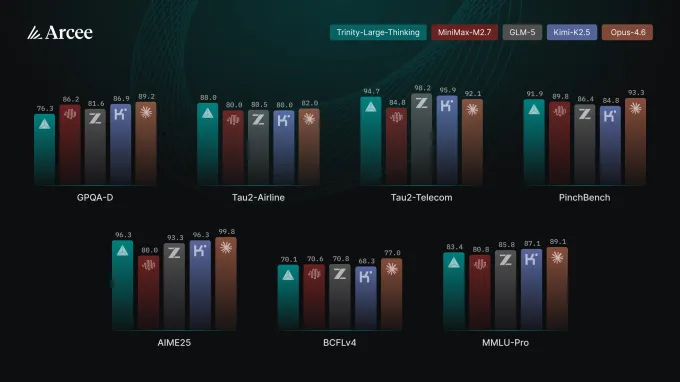
So, how good is Trinity Large Thinking? It is comparable to some of the other top open source models, according to the benchmark results it shared with TechCrunch.

Advertisement
Arcee Trinity large thinking Benchmarks
Arcee Trinity large thinking BenchmarksImage Credits:Arcee / Arcee

As we previously reported, it is not a head-to-head threat to the big cheese among U.S.-built open models: Meta’s Llama 4. But it also doesn’t have the odd, not-really open source license issues of Meta’s model. All of Arcee’s Trinity models are released under the gold standard for OS licenses, Apache 2.0.

Just to be clear, there are also countless other U.S. startups offering open source models and, as a fan of the ingenuity of startups, I’m rooting for them, too.

Source link

Continue Reading

Tech

How Long Can You Drive With Expired Registration? What Florida Law Says

Published

on


The internet has given us many things, including the infamous “Florida Man” trope. That last one isn’t the nickname of an unknown cryptid stalking the swamps of the Sunshine State; instead, it refers to a seemingly never-ending series of headlines featuring random Floridians doing wild and crazy things, usually involving one of the state’s many creatures (think possums, alligators, snakes, and iguanas). Oh, and they’re all true. 

Florida is also home to some truly weird traffic laws, but “Florida Man Drives With Expired Registration” doesn’t have quite the same ring as “Florida Man Ties Elephant to Parking Meter Without Paying Fee.” Still, the rule around expired tags in the state is a bit odd. Fundamentally, though, it’s not too dissimilar to other states: vehicles in Florida must have a valid registration, and letting it lapse can lead to a range of unpleasant consequences. 

However, section 320.07 (subsection 3A) of the state statutes lays out that anyone with an expired registration of less than six months is only committing “a noncriminal traffic infraction, punishable as a nonmoving violation.” There’s also a caveat to this otherwise very straightforward law: Police can’t write up a citation for it “until midnight on the last day of the owner’s birth month of the year the registration expires.” If it’s been expired for more than six months, though, the proverbial can of worms gets opened. First-time offenders may be subjected to a monetary penalty, while second-time offenders could face a second-degree misdemeanor with a $500 fine plus up to 60 days in prison.

Advertisement

Vehicle registrations in Florida

Florida wouldn’t make it difficult for itself, would it? Barring some truly obscure traffic laws that most drivers don’t know about, no, because most registrations expire at midnight on the owner’s birthday. They can be renewed for one or two years, beginning three months before expiration, at least for individual car owners. However, while registration technically expires on the owner’s birthday, penalties can’t be assessed — and the vehicle can still be driven — until the last day of the owner’s birthday month. If and when you do get a ticket, you can either pay the fee (which varies by county, not to exceed $500) or show up for your day in court.

Initially, registering a vehicle in Florida will set you back $225 plus proof of insurance with minimum coverage levels ($10,000 in Personal Injury Protection and $10,000 in Property Damage Liability). Annual license taxes on privately owned vehicles are based on weight. One weighing less than 2,500 pounds costs a mere $14.50, while one weighing between 2,500 and 3,499 pounds incurs a fee of $22.50, and those over 3,500 pounds cost $32.50.

Advertisement

Furthermore, anyone cited for expired tags has 10 working days to obtain a valid certificate of registration. But there’s yet another caveat to this law, and it pertains to active service members. If their vehicle registration expires while they’re deployed, they will not be dinged — as long as the soldier can provide official military orders or a written statement from their commanding officer attesting to their deployment.


Advertisement

Source link

Continue Reading

Trending

Copyright © 2025