Connect with us
DAPA Banner
DAPA Coin
DAPA
COIN PAYMENT ASSET
PRIVACY · BLOCKDAG · HOMOMORPHIC ENCRYPTION · RUST
ElGamal Encrypted MINE DAPA
🚫 GENESIS SOLD OUT
DAPAPAY COMING

Tech

Building A Pip Boy Themed Smartwatch

Published

on

One of the problems with good science fiction is that it introduces us to all kinds of cool devices that we can’t actually have in real life. [Huy Vector] has tried to fix that a little with this fantastic smartwatch build inspired by everybody’s favorite wrist computer from the Fallout series.

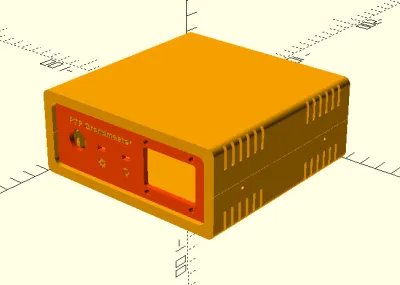
The build is based around a Xiao ESP32-S3 board, which hosts the capable microcontroller and has all that useful wireless connectivity built in. It’s hooked up to a MAX30102 heart rate sensor to collect the wearer’s vital signs, as well as a 1.54″ LCD screen for displaying the fantastic Pip Boy themed interface. Power is courtesy of a small lithium-ion cell tucked in behind the display. A little copper tubing and brass hardware helps tie everything together, with the latter serving as capacitive touch points for controlling the device. A simple leather watch strap completes the build.

It’s a bit of a diversion from the classic Pip Boy design, in that it’s a small smartwatch instead of a chunky device that takes up most of the wearer’s forearm. However, this isn’t so bad in reality—it’s far more practical while still rocking those classic green-on-black graphics that we all love so much.

Advertisement

If you’re craving a more authentic Pip Boy recreation, we’ve featured a few of those, too.

Advertisement

Source link

Continue Reading
Click to comment

You must be logged in to post a comment Login

Leave a Reply

Tech

NYT Strands hints and answers for Wednesday, May 20 (game #808)

Published

on

Looking for a different day?

A new NYT Strands puzzle appears at midnight each day for your time zone – which means that some people are always playing ‘today’s game’ while others are playing ‘yesterday’s’. If you’re looking for Tuesday’s puzzle instead then click here: NYT Strands hints and answers for Tuesday, May 19 (game #807).

Strands is the NYT’s latest word game after the likes of Wordle, Spelling Bee and Connections – and it’s great fun. It can be difficult, though, so read on for my Strands hints.

Advertisement

Source link

Continue Reading

Tech

The 8-bit Web Server | Hackaday

Published

on

Even [maurycyz] doesn’t think it is a good idea, but it is possible to use an AVR 8-bit CPU to serve web pages. Of course, it is a vastly simplified web server, but it does serve pages — OK, technically just one page — to the public Internet.

Working backward, it is fairly easy to get the microcontroller to note an HTTP request and then simply spit out a prerecorded HTTP response to provide the page. The hard part is connecting the little processor to the network. The server is dead simple, just a CPU and a scant number of components like filter caps and LEDs. The trick is to use SLIP, an ancient protocol used to connect dial-up modem terminals to the network.

Linux supports SLIP, so the MCU connects to a Linux computer via SLIP. Then the Linux computer uses WireGuard to network with the remote web server that serves [maurycyz’s] site. The SLIP implementation assumes that IP packets aren’t fragmented, which is normally true these days. TCP was a bit more complicated since you have to track the connection state and possibly re-transmit lost packets. Still, nothing the AVR with 8 K of RAM and 64 K of flash can’t handle.

Advertisement

Practical? No. Cool? Sort of. Funny that a disposable vape has more CPU power. Of course, something like an ESP32 is an obvious choice.

Source link

Advertisement
Continue Reading

Tech

Expedia at 30, the inside story: Online travel giant navigates its third tech disruption

Published

on

From left: Expedia Group chairman Barry Diller, CEO Ariane Gorin, former CEO and current Uber CEO Dara Khosrowshahi, and founder Rich Barton at Expedia’s Explore partner conference in Las Vegas this week. (Expedia Group Photo)

From her office overlooking the atrium at Expedia Group’s sunlit headquarters campus on the Seattle waterfront, CEO Ariane Gorin puts the online travel giant’s 30-year history into three chapters, each tied to a major inflection point in the evolution of technology.

Chapter 1 was the internet itself: the 1996 launch of Expedia inside Microsoft, when a small team bet that consumers could benefit from technology previously exclusive to travel agents.

Chapter 2 was mobile: as travelers migrated from desktop to smartphone, Expedia rebuilt itself for the small screen and assembled a collection of brands through a wave of acquisitions. 

Chapter 3, Gorin says, is artificial intelligence, and it’s only starting to unfold. Expedia is now positioning itself for a new reality in which different types of agents — machines, not humans — will play a role in booking travel, in some cases making the decisions entirely on their own.

“It’s exciting to get to write the future of AI and travel,” Gorin said.

Advertisement

Expedia is marking its 30th year in business this week with the launch of the Expedia Trails Fund, a philanthropic initiative to restore outdoor trails across the U.S., backed by an initial $4.3 million in grants. 

The company is also bringing top executives from throughout its history — founder Rich Barton, chairman Barry Diller, and former CEO Dara Khosrowshahi — together with Gorin for its partner conference in Las Vegas. Collectively, they grew Expedia from internal division to corporate spinout to online travel giant. 

What happens next, under Gorin, will depend on Expedia’s ability to reinvent itself for a fundamentally new relationship between travelers and technology — attempting to continue a pattern that has repeated itself throughout the company’s history.

Chapter 1: ‘Power to the people’

Expedia started with a question: why shouldn’t everyone see what travel agents do? 

Advertisement

In 1994, Rich Barton was a 27-year-old Microsoft employee, working on a CD-ROM travel guidebook — an Encarta for travel — when he learned about the airline reservation systems that travel agents used to book flights. The systems were accessible electronically, but only to industry insiders. He started to imagine regular people using them directly.

Rich Barton speaks at Seattle University’s Albers Executive Speaker Series in 2016. (GeekWire Photo / Kevin Lisota)

“The idea was simple and almost obvious once you said it out loud: give consumers the same information the professionals have, and get out of their way,” recalled Barton, now a well-known entrepreneur and investor, who shared new details of the Expedia story for this piece. 

His term for this approach would ultimately define his career: “Power to the People.”

Barton pitched the idea directly to Microsoft CEO Bill Gates and President Steve Ballmer, who gave him the green light.

Secretly building for the web

The team initially started building the product for Microsoft’s proprietary online service, MSN 1.0, a would-be competitor to AOL, which had a proprietary multimedia development environment called Blackbird. Then the web gained steam, with its open protocols and universal reach. 

Advertisement

That’s when Greg Slyngstad, the original general manager of what was then called Microsoft Travel, made a pivotal call: develop the product for the open web instead of Microsoft’s walled garden. 

Slyngstad “knew the web would win,” Barton said. “Because of this, we secretly built for the web, which was brilliant. Expedia would not be what it is today if not for that decision.” 

An early version of Expedia from the Internet Archive.

Before it was called Expedia, the project had a very different interface. In the early days of Microsoft Travel, the hot trend in software was the social user interface, personified most memorably by the widely mocked Microsoft Bob. Barton’s team had its own version: a parrot that served as a travel planning guide.

“I can’t remember the name of the parrot now,” he said, “but I faked a travel planning scenario talking to a robot parrot in front of the whole Consumer Division — which was a hit!”

‘We had massive ambition’

A plaque still on the Microsoft campus in Redmond marks what came next: “Microsoft Expedia, Version 1.0, Shipped October 22, 1996.”

Advertisement
A marker commemorating the Expedia launch in a courtyard at Microsoft. (GeekWire Photo / Todd Bishop)

Microsoft’s annual report for 1997 described Expedia as “a free travel service on the World Wide Web and MSN which enables users to find low fares, book flights, make hotel reservations, and rent cars.”

Barton and team had a much bigger vision. “We had massive ambition,” he said. Their BHAG — or “big, hairy, audacious goal,” the term popularized by author Jim Collins around the same time — was to become “the largest seller of travel in the world.”

Expedia’s revenue went from zero to $38.7 million by 1999. At the time, it was still about half the size of Travelocity, which had gotten to market first. 

‘Go do this on your own!’

But Barton was already seeing a future for Expedia outside the software giant. 

“One of my core arguments was that Expedia, in success, would become a travel company first and a tech company second,” he explained. “Therefore, we simply wouldn’t fit inside a giant tech company, and that by setting us free, it would dramatically improve our chances of fulfilling our giant global dreams.”

Advertisement

So Barton made the case to Ballmer, his boss at the time, to let him and his team of “internet adventurers” spin out through an initial public offering, with Microsoft retaining a stake.

He pasted a printout of Ballmer’s headshot onto an IATA card, the credential issued by the International Air Transport Association to licensed travel agents. “Steve, do you want to be a travel agent?” Barton remembers asking. “Do you want to run the largest travel agency in the world?”

Ballmer recoiled at the idea and yelled, “No, you guys should go do this on your own!” Then he asked if he could keep the card.

And with that, the spinout was set in motion.

Advertisement

The IPO prospectus in September 1999 described Expedia’s value proposition: “one-stop travel shopping and reservation services, providing reliable, real-time access to schedule, pricing and availability information.” Travel, it said, was uniquely suited to the internet: a global market with millions of buyers, and purchases “involving large amounts of information from multiple sources.”

‘Whoops and hollers’

Expedia went public on Nov. 10, 1999. The company had 138 employees. The stock, initially priced at $14 a share, soared more than 260% on its first day of trading. 

“We’re feelin’ pretty good,” said Suzi Levine, who led Expedia’s IPO communications, in a Seattle Post-Intelligencer story about the Nasdaq debut, admitting “there may have been one or two whoops and hollers” around the office. Levine went on to become the U.S. Ambassador to Switzerland under President Obama, among other high-profile government positions. 

Another newspaper clipping from that week shows Barton and his wife Sarah holding their newborn son William, born the same day as the IPO. The headline: “Initial public offspring.”

Advertisement
Rich and Sarah Barton with newborn son William in November 1999, the week of Expedia’s IPO. (AP / Daytona Beach News-Journal)

Within two years, Expedia had surpassed Travelocity to become the largest online travel company. Barton left in 2003, eventually going on to co-found ventures including Zillow and Glassdoor, applying the same “power to the people” philosophy — giving consumers access to data that industries had previously kept behind walls — to real estate and the job market.

Before Barton left, controlling interest in Expedia had passed to a new owner. But the deal that made it happen nearly didn’t survive the worst moment in the history of modern travel.

Chapter 2: ‘If there’s life, there’s travel’

Barry Diller was a Hollywood legend who had built Fox Broadcasting and launched the Home Shopping Network when he turned his attention to the internet in the late 1990s. 

Through his company, USA Networks, he was assembling a portfolio of online brands, and he saw travel as the biggest opportunity. Travel, he wrote in his 2025 memoir, Who Knew, looked like “the perfect business to be colonized by the internet.” He had already acquired Hotels.com when he approached Microsoft about buying its controlling stake in Expedia. 

Expedia Group’s then-Vice Chairman Peter Kern, Chairman Barry Diller, and future Expedia Group CEO Ariane Gorin, then president of Expedia Business Services, on stage at a company Town Hall meeting in December 2019. (Expedia Photo)

Expedia was still losing money, and Ballmer had concluded that Microsoft shouldn’t be in internet verticals anyway, as Diller recalled in the book. With relatively little negotiation, Microsoft agreed to a deal worth about $1 billion in USA Networks stock.

They were set to close the deal in October 2001. Then, on September 11, the travel industry shut down in an instant. The deal included a material adverse change clause — a legal escape hatch that would have let Diller walk away. For weeks, his team debated whether to use it. 

Advertisement

How could they pay $1 billion for a travel company when no one was traveling?

“Some people said, you shouldn’t do it, it’s too dicey, there’s no travel, the world is ending,” Diller told GeekWire in 2016, on the company’s 20th anniversary.

But then, someone in the room said, “If there’s life, there’s travel.”

“Yeah, that’s what we’ll do,” Diller recalled saying. “We’ll bet on life.”

Advertisement
The next transition

The deal closed in February 2002. Diller folded Expedia into a division of his company called IAC Travel. When the head of that division resigned, a young executive named Dara Khosrowshahi raised his hand. Khosrowshahi had first crossed paths with Diller as a junior analyst at the investment bank Allen & Company, and had been in the room during the 9/11 deliberations. 

“Barry was desperate. He had no one else,” Khosrowshahi recalled on the Diary of a CEO podcast

In 2005, Diller spun IAC Travel back out as a standalone public company — Expedia, Inc. — with Khosrowshahi as CEO. He moved to what he later called “the Netherlands of Seattle.” He would hold the role for 12 years, longer than any leader in the company’s history.

It was under Khosrowshahi that Expedia navigated the shift from desktop to mobile. As travelers migrated to smartphones, the company rebuilt its products for the small screen.

Advertisement

Khosrowshahi also led an acquisition spree that transformed Expedia from a single brand into a travel conglomerate, adding Orbitz, Travelocity, Trivago, and others along the way. 

Competition from all corners

Even as Expedia consolidated its position in online travel, a different kind of threat was emerging. Google was pushing into travel directly through Google Flights and Google Hotels, and its search algorithm had become the dominant gateway to travel shoppers — making the search giant Expedia’s biggest advertising channel and one of its largest competitors.

Google’s position is “a reality of e-commerce,” Khosrowshahi said in a 2016 interview with GeekWire, on the company’s 20th anniversary, in the conference room at its Bellevue, Wash., headquarters. “It’s reality of the Internet, and it’s certainly a reality of this category in general. That’s not going to stop.

Dara Khosrowshahi
Then-Expedia Group CEO Dara Khosrowshahi at the company’s Bellevue HQ in 2016. (GeekWire File Photo / Kevin Lisota)

The bigger direct threat, though, was emerging from across the Atlantic. The Priceline Group — later renamed Booking Holdings — had acquired Booking.com out of Amsterdam in 2005, building a business that would eventually surpass Expedia in gross bookings.

“Priceline is our toughest competitor,” Khosrowshahi said at the time, calling it a great company that had quickly expanded its international reach. “They’re more global than we are.”

Advertisement

And then there was a competitive threat that nobody at Expedia had anticipated: the rise of vacation rentals as a category, led by Airbnb. Expedia’s response was its biggest deal yet: the 2015 acquisition of HomeAway, which would later be rebranded as Vrbo — a $3.9 billion bet on the category.

“I think the growth of Airbnb has been pretty extraordinary, and I think anyone who would say today, ‘Oh, we expected it,’ would be lying,” Khosrowshahi said in the interview. 

The one exception, he acknowledged, was Airbnb founder Brian Chesky, who was known for transforming the world of lodging just as Uber’s Travis Kalanick had upended transportation.

‘You’re f’ng crazy’ 

The next year, Uber came calling for Dara. 

Advertisement

At the time, the ride-hailing company was in turmoil — embroiled in scandals, burning billions, and in need of a leader who could steady the ship. When Khosrowshahi told Diller he’d been offered the job as Uber’s CEO, the chairman’s first reaction was to hang up on him.

“He’s like, you’re f’ng crazy,” Khosrowshahi said on the Acquired podcast

But Diller called back the next day. “Speaking as the chairman of Expedia, it will be a real mistake,” Khosrowshahi recalled him saying. “But speaking as a friend, I understand why you’re interested. How can I help?” Diller then helped him prepare his presentation for the Uber board.

In a farewell email to Expedia staff, obtained by GeekWire at the time, Khosrowshahi called Diller “the toughest, smartest, most demanding, and most human boss I’ve ever had.” 

Advertisement
Ketchup and mustard

One of the company’s rising executives at the time was Ariane Gorin. A Berkeley, Calif., native who grew up in a French-American family, she had moved to France in 2001 and lived in Europe for more than two decades, eventually becoming a dual French-American citizen. 

The future Expedia CEO had joined the company in 2013, and her first encounter with Expedia’s leadership set the tone: she met Khosrowshahi and CFO Mark Okerstrom on Halloween, when they were dressed as ketchup and mustard. “This is the best company,” she recalls thinking.

Expedia chairman Barry Diller, center, speaks with then Expedia CEO Dara Khosrowshahi, right, and CFO Mark Okerstrom at an event marking the company’s 20th anniversary in Bellevue in 2016. (GeekWire File Photo / Todd Bishop)

Okerstrom succeeded Khosrowshahi as CEO in August 2017. By comparison, his tenure was brief, most notable for Expedia’s move from downtown Bellevue to a picturesque former biotech campus on the Seattle waterfront, and an ambitious effort to unify its technology across its growing collection of brands.

After a strategy disagreement with the board over the pace and direction of the tech revamp, Okerstrom and CFO Alan Pickerill both resigned on the same day: Dec. 4, 2019. Diller, as chairman, asserted direct operational control alongside vice chairman Peter Kern, a longtime Expedia board member. 

‘I’m on the edge of revolt’

Eight days later, on December 12, 2019, Diller put his frustration with Google in writing. In an email to Google’s chief business officer, Philipp Schindler — which later surfaced in the U.S. government’s antitrust case against Google — the chairman wrote that “much of Expedia’s trouble is due to an increasingly aggressive Google.” 

Advertisement

Diller cited Vrbo’s payments to Google, which had risen from $21 million in 2015 to nearly $300 million in 2019, even as the traffic Google sent to VRBO stayed roughly flat.

“Google has systematically moved every lever in its hegemony over search to disembowel our businesses,” Diller wrote, describing himself as “on the edge of revolt.”

It wouldn’t be the last time Expedia found itself subject to forces beyond its control.

‘Buy the thing’

In the meantime, Diller had been shaping the company’s new home. In the mid-2010s, he had pushed Expedia to acquire a 40-acre site on Elliott Bay, formerly occupied by Immunex, maker of the arthritis drug Enbrel. The site was vacated after Amgen bought the Seattle biotech.

Advertisement

“Once I saw it, I just said, ‘buy the thing,’” Diller said at a 2023 company event. He wanted a campus that felt horizontal, not vertical, with what he called “a lot of ability to breathe.” 

Expedia Group’s Seattle waterfront campus. Barry Diller personally shaped details of the design. (GeekWire Photo / Todd Bishop)

Over five years of planning, Diller personally shaped details down to the geometric paving stones that radiate outward from the main building like airport runways. The campus included 1,000 trees, an on-site soccer pitch, and a meeting pavilion called “the Prow,” designed to rise out of the landscape like the bow of a ship. 

Beyond the property line, Expedia funded improvements to a portion of the Elliott Bay Trail running alongside the campus. That gave the company a sense for how it could invest in outdoor public spaces — an early version of the work it’s now expanding nationwide. 

The first of Expedia’s began moving into the campus in October 2019. By February 2020, the move was complete, at a final cost of more than $1.1 billion. 

‘Travel finds a way’

In April 2020, when Kern was formally named CEO, COVID-19 had brought the industry to a halt. He used the moment to complete the overhaul of Expedia’s technology platform, unifying the patchwork of systems that had accumulated through years of acquisitions. 

Advertisement

“Travel finds a way,” Kern said in a virtual appearance at the 2020 GeekWire Summit, predicting that cities would come “roaring back,” and the industry would ultimately rebound. 

Peter Kern, then Expedia Group’s CEO, speaking at the company’s 2023 partner conference. (GeekWire File Photo / Todd Bishop)

In the meantime, Gorin had been building what would become one of Expedia Group’s most important business lines. In 2014, Khosrowshahi had asked if she was interested in running the company’s affiliate network, which licensed the company’s travel technology and inventory to outside partners, letting them offer Expedia-powered bookings under their own brands. 

It was less than 10% of the company’s business, and nobody else wanted the job.

“B2B was not seen as a sexy part of the company,” she recalled recently.

Gorin jumped in with passport in hand. She spent her initial months in the job talking to partners around the world, developing a strategy of going where Expedia’s own consumer brands couldn’t or didn’t go, including offline retail, corporate travel, emerging markets, and anywhere else there were untapped pools of travel demand. 

Advertisement

Over the next decade, she grew the B2B division from a small afterthought into one of the company’s most important businesses. Today it accounts for roughly a third of Expedia’s overall business, powering travel programs for companies like Marriott, Hilton, United, Delta, and Capital One. 

It was, in retrospect, perfect preparation for what would come next. 

Chapter 3: ‘The agent that roams with you’ 

Long before ChatGPT became a household name, the head of OpenAI was already sitting on Expedia’s board. Sam Altman joined Expedia Group’s board of directors in 2019, recruited at a time when his AI research lab was still better known in Silicon Valley than in living rooms. 

In November 2022, weeks before ChatGPT was unveiled to the world, Altman appeared on stage with Diller at a private executive event for IAC, the parent media company in Diller’s portfolio. Altman demonstrated what was coming by typing a prompt asking ChatGPT about Diller’s relationship with his wife, the fashion designer Diane von Furstenberg.

Advertisement

What the AI produced was “extremely creative” and “somewhat salacious,” Diller recalled at Expedia’s 2023 partner conference. “Because we do have a history.” 

More than that, it was a glimpse of the future. Diller said the preview gave Expedia an early jump on generative AI. The company was one of the first travel firms to integrate ChatGPT — both as a plugin on OpenAI’s platform and as a travel-planning assistant in its own app. 

It actually wasn’t a surprise to Diller. Speaking with GeekWire back in 2016, Mr. Diller (as we were advised to call him) had described AI as “another form of magic.” Asked whether it would influence travel, he said at the time: “Of course it will. It will influence everything.” 

Altman left the board in June 2023, as OpenAI consumed his full attention.

Advertisement
From B2B to B2A 

When Kern stepped down in May 2024, Ariane Gorin — the executive who had been steadily expanding the company’s business-to-business reach — became Expedia Group’s CEO.

She soon had a phrase for what the AI era would require: B2A, for business to agent. But there’s a risk in this new world: a human traveler might choose Expedia out of loyalty, or brand recognition, but an AI agent making the same decision might not care about any of that.

Expedia Group CEO Ariane Gorin at the company’s Explore partner conference last year. (Expedia Group Photo)

In a recent interview at Expedia headquarters, Gorin said the company now has teams looking at what it means to market to machines: how to make sure an AI agent understands that an Expedia Gold member gets a VIP perk at a particular hotel, or that a traveler has One Key points to apply toward a trip.

Expedia has been building AI into its own products for years now. But more recently, it has been looking outward: embedding its service inside ChatGPT, Claude, and Amazon’s Alexa+, buying ads inside AI chatbots, and signing a deal to power Uber’s hotel bookings. (Khosrowshahi, who remains on the Expedia Group board, recused himself from the negotiations over that partnership.)

“I think that’s the future,” Gorin said. “It’s the agent that really roams with you.”

Advertisement
A competitive moat

It’s still early. AI-native platforms like ChatGPT account for less than 1.5% of Expedia’s overall traffic, Gorin said. But the company said on its recent earnings call that getting its brands to show up in AI responses has become its fastest-growing marketing channel.

As demonstrated by Diller’s past frustrations with Google, these external dependencies can be a double-edged sword. But there are early signs that Expedia won’t be cut out of the picture. In March, OpenAI scaled back plans to let users book travel directly inside ChatGPT. 

Gorin said she wasn’t surprised, given the complexities of travel. “Trust me, it’s pretty complicated to be able to go from shopping to booking to servicing,” she said. Expedia handles 250 million customer service interactions a year, across more than 30 languages. 

“I see them as partners,” more than competitive threats, she said of the major AI platforms. “I see them as an opportunity for us to attract new travelers into our ecosystem.” 

Advertisement

Illustrating the ongoing importance of industry partnerships, Expedia struck a deal this spring to power hotel bookings inside the Uber app, with Vrbo vacation rentals coming later this year. Khosrowshahi, who still sits on Expedia’s board, recused himself from the deal.

Growth and challenges

The company that began in 1996 as a small team inside Microsoft is now on a different scale entirely. When Expedia went public in November 1999, it had fewer than 150 employees, about $700 million in gross bookings, and a presence in four countries. 

Fast forward nearly 30 years, to the end of 2025, and Expedia had roughly 16,000 employees across nearly 50 countries, $119.6 billion in gross bookings, and a marketplace of 3.6 million lodging properties, including 2.4 million vacation rentals.

The company’s evolution has also brought challenges, including executive turnover and job cuts — with the latest round impacting 162 tech positions at the company’s headquarters earlier this year.

Advertisement
‘More travel equals more memories’

Gorin, meanwhile, has been putting her own stamp on the company. 

To mark its 30th year, Expedia is launching the Expedia Trails Fund, a philanthropic initiative to restore outdoor trails and protect natural landscapes across the United States. 

The initial $4.3 million will go to 11 projects, spanning destinations from Yellowstone’s Paradise Valley to Hawaii’s Kealakekua Bay, covering areas that draw more than 1 million visits annually. Expedia is partnering with The Conservation Fund, The Nature Conservancy, and Trust for Public Land, and with AllTrails to match support for the hiking app’s stewards fund. 

The effort reflects growing demand among travelers for outdoor experiences, particularly among younger generations. Gorin said the company’s earlier trail work alongside its Seattle campus helped to show what could be possible at a larger scale.

Advertisement

“If our trails fund really works the way we want it to, the impact we’re going to have on trails across the U.S. and elsewhere is going to be huge,” she said.

For Gorin, the initiative connects to something deeper. A few years after she joined Expedia, her sister was diagnosed with stage four lung cancer. Before she died, she offered Gorin a piece of advice: travel more, because more travel equals more memories.

“And then she said, ‘Oh, wait a minute. You work in travel. One day, you should use that story on stage,’” Gorin recalled. She told it at her first town hall as CEO.

“We are in the business of helping people make memories,” Gorin said. The common thread among all of Expedia’s CEOs over the years, she said, is a belief in the benefits of travel for people and the world, and in the potential of technology to achieve it.

Advertisement
‘Original vision … fully realized’

But if Expedia’s founding vision was to remove the barriers to travel, isn’t there a risk of people losing control when AI puts a new intermediary into the process? Barton, the person who started it all, doesn’t buy that. He draws a direct line from the original idea to the present moment.

“Round one was radical transparency,” he said. “We blew the doors open and gave everyone access to information that used to live only in a computer on the desk of a professional.”

AI agents, Barton asserts, are “the next unlock.” Rather than replacing the human in the loop, he said, they give every traveler “the equivalent of a brilliant, tireless expert in their corner.” That makes AI an accelerant for the concept of “Power to the People,” not a replacement.

“I don’t see it as a threat. I see it as the original vision, finally fully realized,” he said. “We started by turning the screen around. Now we’re handing people the whole toolkit.”

Advertisement

Source link

Continue Reading

Tech

Schiit Finally Goes Portable With $99 Vestri Dongle DAC

Published

on

Schiit Audio has spent the better part of a decade owning the $99 conversation in hi-fi, but until now, it refused to follow the herd into the dongle DAC trenches. That changes with the surprise debut of the Schiit Vestri at CanJam Singapore 2026, a compact USB DAC and headphone amp that finally gives long suffering fans what they’ve been asking for since the first smartphone killed the headphone jack. Took them long enough. Thor waited less time for Ragnarök.

Priced at $99, Vestri is not just another “me too” stick. It is Schiit doing what it does best, dropping into a crowded category late, undercutting expectations, and daring everyone else to explain their pricing. No screen, no nonsense, just a stealth LED interface beneath the surface, simple controls, and both 3.5mm and 4.4mm outputs for those who have already gone balanced and are not going back.

schiit-vestri-dongle-dac-top-bottom

Schiit Vestri: $99 Dongle DAC, Balanced Output, No Screen, Maximum Attitude

Schiit Audio has officially entered the dongle DAC and portable headphone amp category with Vestri, a $99 USB powered DAC and headphone amplifier that debuted at CanJam Singapore. Pre-orders are open now, with shipments scheduled to begin May 28.

Vestri includes both 4.4mm balanced and 3.5mm single ended headphone outputs, capacitive touch controls, Schiit’s Unison USB receiver, and the company’s Mesh D/A conversion platform, which combines a time and frequency domain optimized digital filter with an ES9018 delta sigma DAC.

I joke when I say ‘Vestri is the only dongle that matters,” explained Jason Stoddard, Schiit’s Co-Founder. “Which is beyond cheeky, but in a field of 10,000 lookalike products all using the same off the shelf technology, it has a grain of truth.”

Advertisement
schiit-vestri-dongle-dac-input

The balanced output delivers up to 400mW RMS into 32 ohms, 320mW into 50 ohms, and 120mW into 300 ohms. The single ended output provides up to 200mW RMS into 32 ohms, 150mW into 50 ohms, and 40mW into 300 ohms. That should make Vestri suitable for a very wide range of headphones and IEMs, although the absolute hardest to drive models will still want something larger and less pocket friendly — so it’s clearly not the only dongle that matters.

The design is classic Schiit mischief with actual engineering behind it. Vestri uses a seamless milled aluminum chassis with a glass front panel, but skips the OLED screen found on many portable DACs.

No screens,” Stoddard said. “Screens burn in and are a wear item. We want to design for the next generation, not the next sale.”

Instead, Vestri uses individual LEDs embedded beneath the glass for its interface. Schiit says they are run conservatively for long life.

Advertisement
schiit-vestri-dongle-dac-pcb

It’s the eternal screen,” Stoddard joked. “If you don’t drop it in the sand or in your coffee, Vestri should last far past its warranty.” Duly noted. Not IPX7 rated apparently.

Controls include volume, Loudness, invert, and NOS modes, all accessible through capacitive touch buttons under the glass. Loudness contour is a useful feature at lower listening levels, while NOS mode gives users another playback option without turning the product into a settings circus.

Advertisement. Scroll to continue reading.

Vestri is also made in the USA on Schiit Audio’s own SMD assembly line in Corpus Christi, Texas.

Advertisement

We’ve been making products in the USA since we started in a garage 16 years ago,” Stoddard said. “No need to change anything for Vestri.”

Schiit Vestri Key Specs:

  • USB receiver: Schiit Unison USB
  • D/A conversion: Schiit Mesh with ES9018 delta sigma DAC
  • Supported formats: 16-bit/44.1 kHz to 32-bit/192 kHz
  • Outputs: 4.4mm balanced and 3.5mm single ended
  • Power output: up to 400mW RMS balanced, 200mW RMS single ended into 32 ohms
  • Frequency response: 20Hz to 20kHz, ±0.05dB
  • THD: less than 0.0002%, 20Hz to 20kHz
  • SNR: greater than 118dB, A weighted
  • Output impedance: less than 0.5 ohms
  • Controls: volume, NOS, invert, Loudness
  • Display: no OLED screen, embedded LEDs under glass
  • Chassis: milled aluminum with glass front
  • Power: USB powered, 0.9W typical
  • Size: 2.4 x 1.4 x 0.44 inches
  • Weight: 4 oz
  • Made in: USA, Corpus Christi, Texas
  • Warranty: 2 years
schiit-vestri-dongle-dac-top

The Bottom Line

At $99, Vestri lands in one of the most crowded categories in portable audio, but the combination of balanced output, Unison USB, Mesh conversion, touch controls, no screen, two year warranty, and USA manufacturing gives Schiit a very real point of difference. Sneaky Schiit, indeed.

What makes Vestri stand out is not just the price, it is the refusal to follow the usual template. No off the shelf reference design, no fragile OLED screen, and no anonymous tuning. Instead, Schiit leans on its own USB implementation, its own digital filter approach, and a balanced output stage that actually delivers meaningful power for a dongle at this price. The Loudness control is also a smart inclusion that most competitors ignore, especially for real world listening on the move.

What is missing is just as important. There is no app, no Bluetooth, no wireless anything, and no high resolution streaming integration. Codec chasing is not part of the story here. If you want LDAC, aptX Lossless, or a feature heavy interface, you will have to look elsewhere. Some users will also question the lack of a screen, even if Schiit makes a valid long term durability argument.

Do you know what could make the Vestri even more interesting? Running the 3.5mm output with a 3.5mm to RCA cable into the new Schiit Buf Tube Buffer, and then into a pair of active loudspeakers. Use your smartphone as your network player and insert some “warmth” into the speakers if they need it.

Advertisement

The competition is fierce and not exactly forgiving. Dongles from brands like FiiO, iFi Audio, Questyle, Shanling, and Hidizs dominate this space with feature rich designs, app support, and a wide range of DAC implementations. Many offer more bells and whistles, but few will match Vestri’s combination of balanced power, in house engineering, and made in USA production at this price.

This is for listeners who want a simple, durable, plug and play DAC and headphone amp that focuses on sound and power over features. If Schiit delivers on performance, Vestri is going to be a problem for a lot of very comfortable competitors.

Where to buy: $99 at Schiit.com (available May 28, 2026)

Advertisement

Source link

Continue Reading

Tech

Google brings voice prompting to Docs, Keep, and Gmail at I/O 2026

Published

on

TL;DR

Google announced voice-based prompting for Docs, Keep, and Gmail at I/O 2026, letting users create documents, organise notes, and search their inboxes by speaking instead of typing. The features are powered by Gemini AI and roll out this summer for premium subscribers and Workspace business users.


Advertisement

Google is betting that the future of productivity software starts with your voice, not your keyboard. At its I/O 2026 developer conference on Monday, the company unveiled voice-based prompting features for Docs, Keep, and Gmail, all powered by its Gemini AI models.

The headline feature is Docs Live, which lets users create and edit documents entirely by speaking. In a demo, Google showed a user verbally instructing the tool to pull résumé details from Drive, layer in event logistics from an email thread, and sprinkle in a few humorous anecdotes, all in a single, unscripted stream of speech. The idea is that voice enables longer, more complex prompts than most people would bother typing out, and that current models are now good enough to follow along even when a speaker changes direction mid-sentence.

The 💜 of EU tech

The latest rumblings from the EU tech scene, a story from our wise ol’ founder Boris, and some questionable AI art. It’s free, every week, in your inbox. Sign up now!

Advertisement

CEO Sundar Pichai framed the shift as inevitable, saying that users will soon create and edit documents using voice as a matter of course. It is a bold claim, but the technical groundwork is arguably already in place. Google recently launched a standalone dictation product called Rambler, built into its Gboard keyboard, which strips filler words and handles multilingual code-switching on the fly. Rambler shipped earlier this month for Samsung Galaxy and Google Pixel devices.

Keep is getting a similar voice overhaul. Users will be able to dump a stream of unstructured thoughts, jumping from gift ideas to grocery lists to home renovation plans, and the AI will sort the transcription into separate, neatly organised notes. The concept is not new. Apps such as Voicenotes and AudioPen have offered voice-to-structured-text workflows for years, and desktop dictation tools like Wispr Flow, Monologue, and Aqua Voice have built loyal followings. What Google brings to the table is scale: Keep is already baked into the broader Workspace ecosystem, meaning voice notes can flow straight into Docs, Sheets, and the rest of the suite.

Gmail, meanwhile, is gaining what Google calls Gmail Live, a conversational voice interface for your inbox. Instead of typing search queries, you can ask Gmail to surface specific details, flight confirmation codes, Airbnb check-in instructions, or your child’s school schedule, and get spoken answers drawn from your messages. It is essentially an AI agent for your email, one that understands context well enough to handle multi-step requests.

The broader trend here is clear. Users are asking increasingly complex, multi-part questions of AI tools, and voice is simply a more natural interface for that kind of interaction than a text box. Google is not the only company to notice. Its own Cloud Next conference last month showcased a wave of agentic AI features across Workspace, and rivals from OpenAI to Apple are racing to embed voice-first AI into their own productivity stacks.

Advertisement

The new voice features will roll out this summer for Google AI Premium subscribers and Google Workspace business users. Whether talking to your documents catches on as a mainstream habit remains to be seen, but Google is clearly convinced that the keyboard’s monopoly on productivity is overdue for a challenge.

Source link

Advertisement
Continue Reading

Tech

INIU 20,000mAh Power Bank is Company’s Smallest, Can Fully Charge a Smartphone Up to 4-Times

Published

on

INIU 20,000mAh Power Bank Smallest
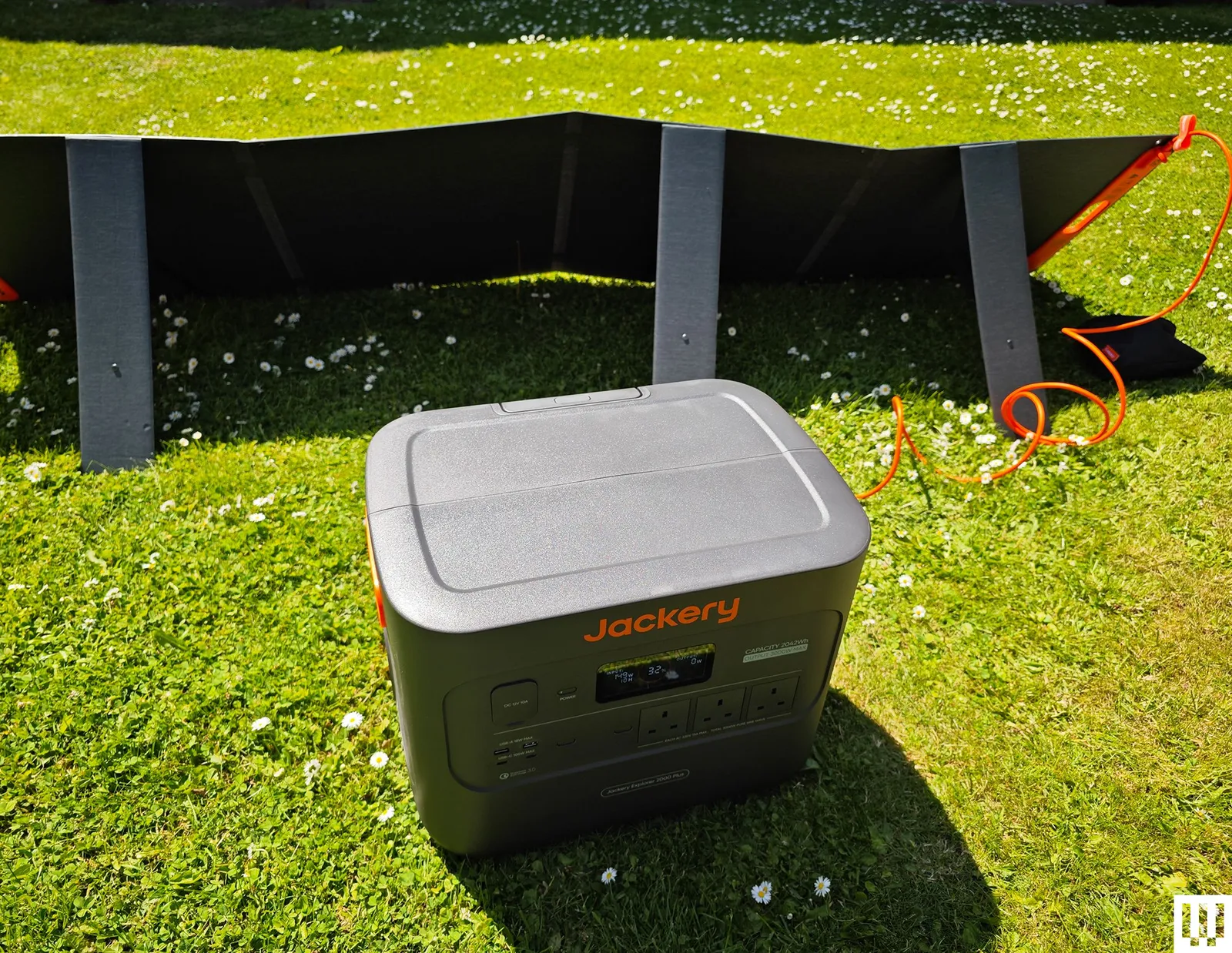
Long journeys highlight how quickly your phone can drain, with all those maps, images, and texts eating away at the battery like there’s no tomorrow. The INIU power bank, priced at $19.79 after coupon is automatically applied at checkout (was $33), comes to the rescue, packing 20,000mAh into a body measuring 2.8 x 4.1 x 1.2 inches and weighing only 11.1 ounces. Tuck it into a jacket pocket or side compartment, and it will sit quietly until you need it.


Its high-density cells are capable of packing a lot of power into such a small footprint without losing output quality. In general, a full charge will last your iPhone 16 up to four complete recharges or your Galaxy S23 up to three, but in practice, it all depends on screen brightness, apps, and so on, so don’t be surprised if it lasts you a full day of mixed stuff before needing a top-up.


LEGO – Speed Champions Ferrari 812 Competizione 76914
  • Iconic LEGO Collection – The LEGO Speed Champions collection is full of iconic toy car models, including the Pagani Utopia (76915) and Porsche…
  • LEGO Ferrari Collectible – Features a LEGO Speed Champions collectible model car replica of the Ferrari 812 Competizione plus a driver minifigure with…
  • Race Driver Minifigure – The set includes a LEGO race driver minifigure to be placed behind the wheel of the race car toy for superfast action on the…


Recharging is a continuous 22.5 watts using PD & QC protocols so your phone charges up faster than with typical banks, which is good. One end is lined with three ports, two USB-C and one USB-A. Two or three devices can share the load, consuming up to 15 watts total. The bank also includes a short braided USB-C cable with a wrist band, eliminating the need to rummage through your luggage for extra cords or get held up at security.

INIU 20,000mAh Power Bank Smallest
Rather than an ambiguous battery indicator, the front boasts a handy LED display that shows you exactly what percentage is remaining. That way, you can quickly assess whether it will withstand another gadget or if it requires some TLC on its own. Recharging the bank takes about six hours with a regular wall adapter, which is quite fair. The 74-watt-hour rating is airline certified, so there’s no need for any further paperwork.

INIU 20,000mAh Power Bank Smallest
Hikers and festival-goers appreciate the built-in torch for late-night trips to the restroom or getting to your car in a parking lot. The outside case is durable enough for daily use, and the entire thing stays cool even when left on for extended periods of time.

Advertisement

Source link

Continue Reading

Tech

Pennsylvania residents turned against Governor Shapiro after explosive backlash over the massive data center expansion across struggling local communities

Published

on


  • Pennsylvania residents revolt against expanding hyperscale data center infrastructure projects statewide
  • Utility protections failed to calm growing public anger over development impacts
  • Former supporters of Governor Shapiro openly threatened political retaliation during heated public meetings

A furious backlash against data center expansion in the state has placed Pennsylvania Governor Josh Shapiro directly in the crosshairs of his own constituents.

During a tense recent two-hour town hall, roughly 20 speakers systematically dismantled the administration’s approach to infrastructure development.

Source link

Continue Reading

Tech

NextEra and Dominion’s $67 Billion Mega-Merger Is All About the Data Centers

Published

on

An anonymous reader quotes a report from Inside Climate News: A proposed merger of the largest utility in the country by market value, NextEra Energy, with the sixth-largest, Dominion, would create a megacompany at a time when data centers and rapid increases in electricity demand are reshaping the industry. The proposal, announced Monday morning and contingent on state and federal regulatory approval, would result in a company that leads in nearly every aspect of the US power and utility industry, including overall electricity generation, natural gas generation, and renewables. The $67 billion deal combines NextEra’s size and reach with Dominion’s positioning as the local utility for the world’s largest concentration of data centers in northern Virginia. But the results are likely bad for consumers and the environment, creating a company with enormous financial and political strength that will be difficult to effectively regulate, according to consumer advocates and analysts.

For perspective, only Exxon Mobil and Chevron would be larger based on market value among US-based energy companies. “Mergers are not about consumers; they’re about shareholders,” said Ari Peskoe, director of the Electricity Law Initiative at Harvard Law School. “For the Dominion shareholders, they are selling their shares at a premium. The executives are getting massive payouts for facilitating this, assuming it all goes through, and obviously NextEra believes the transaction is going to add value to the company. Ratepayers are all an afterthought.” The deal makes financial sense for both companies, said Andrew Bischof, an equity analyst for Morningstar. “We view the transaction as allowing NextEra to accelerate its data center ambitions, which had trailed those of its regulated peers, by using Dominion’s expertise and relationships to expedite NextEra’s data center hub plans,” he said in a note to clients.

NextEra, based in Juno Beach, Florida, includes Florida Power & Light, the largest regulated electricity utility in the state, and NextEra Energy Resources, a wholesale electricity supplier that owns power plants across the nation. Dominion, based in Richmond, Virginia, includes regulated utilities serving much of Virginia, parts of North Carolina and South Carolina, and other assets across the country. The company would be called NextEra Energy, and NextEra CEO John W. Ketchum would serve in the same role after the deal closes. Robert M. Blue, Dominion’s CEO, would be the CEO for regulated utilities for the merged company. The parties said they expect regulatory approvals to take 12 to 18 months. NextEra shareholders would own 74.5 percent and Dominion shareholders would own 25.5 percent, respectively, of the combined company in the all-stock transaction. “We are bringing NextEra Energy and Dominion Energy together because scale matters more than ever — not for the sake of size, but because scale translates into capital and operating efficiencies,” Ketchum said in a statement.

Although the companies claim the deal would produce savings, including $2.25 billion in Dominion customer bill credits, former regulator Marissa Paslick Gillett said she was “flabbergasted by the tone deafness,” arguing that major utility mergers rarely deliver the promised “synergies” and often create “a behemoth” that is harder to regulate.

Advertisement

Others warned that a larger NextEra could use its political power “to the disadvantage of ratepayers,” while climate advocates said expanding methane gas plants to serve data centers would worsen pollution and leave vulnerable communities “at the short end of the stick.”

Source link

Continue Reading

Tech

Alito Helped Normalize Unreasoned Shadow Docket Orders. Now He’s Mad About One.

Published

on

from the oh-so-now-you’re-concerned? dept

A couple weeks back, Supreme Court watcher Steve Vladeck pointed out a fascinating “tell” by Justice Samuel Alito in dealing with stays that he will issue on shadow docket requests. If he is prone to agree with the underlying claim, he’ll issue an unbounded stay on a lower court’s ruling. If he is inclined to disagree with the underlying ruling, he issues a temporary stay with a short deadline before the stay is lifted. He noticed this in particular with the stay that Alito issued in response to the Fifth Circuit’s ruling blocking prescriptions of the abortion drug mifepristone without an in-person visit (an attempt to block the pills from being sent to the various Southern states covered by the Fifth Circuit). In that case, Alito had a short deadline before the stay would be lifted, in contrast to how he tends to treat such stays when he agrees with the result:

First, Justice Alito waited almost 48 hours to act—a period during which there was quite a lot of chaos across the country among doctors, pharmacists, and patients over whether and to what extent they were bound by Friday’s Fifth Circuit decision. 48 hours may not seem like a long time, but for comparison, in November, Alito issued an administrative stay in the Texas redistricting case just 68 minutes after Texas’s application for emergency relief was docketed by the Supreme Court (both of which happened after hours on a Friday night).

Second, and speaking of the Texas case, Alito’s administrative stays in the mifepristone case had something that his administrative stay in the Texas case didn’t—a deadline (next Monday at 5 p.m. ET). This follows a much broader pattern—in which Alito issues indefinite administrative stays in cases in which he appears to be sympathetic to the applicants, but imposes deadlines on the stays in cases in which he doesn’t. Before Monday, the last nine administrative stays in which Alito imposed deadlines were all cases in which at least one of the applicants had been the Biden administration. In contrast, Alito imposed no deadline in the Texas redistricting case; a potentially significant non-delegation case from 2024; and several other cases with … less … of an ideological valence.

To be sure, Alito isn’t the only justice to ever put a deadline on an administrative stay; Justices Gorsuch and Jackson have also each done it exactly once. And although the deadlines tend to create unnecessary tension and stress for both the parties and the Supreme Court’s press corps (who worry about what will happen if the deadline comes and goes with no action—which appeared to happen in the Texas SB4 immigration case in March 2024), they’re not especially significant beyond that. But it certainly seems like a petty way to treat parties differently based upon what you think of their claims.

Then, despite that short deadline (which, to be fair, was extended three days), the Supreme Court waited until 26 minutes past the deadline to issue its unexplained shadow docket ruling keeping the stay in place until after the rest of the proceedings play out (like a cert petition to the Supreme Court, and then a more complete ruling on the merits).

Advertisement

As a site that regularly calls out and complains about shadow docket rulings, and in particular unexplained shadow docket rulings, it’s unfortunate that the majority didn’t explain their reasoning — and equally unfortunate that Alito forced a rushed decision in the first place.

I know that the justices hate the term “shadow docket,” preferring either the “emergency” docket or the “interim” docket, but if they’re going to call it that they should really only use it for issues that are emergencies or for interim relief — the very limited number of scenarios where real unmitigated damage could be done in the interim until a thorough review has been conducted. But that’s just not the case most of the time. Relatedly, those rulings should have extremely narrow and limited precedential power. In theory that was the case until last year when some of the Justices (most notably, Justice Gorsuch) started whining about judges following actual full merits rulings as precedent, rather than magically applying unreasoned shadow docket decisions.

And while there is plenty of analysis elsewhere of the impact of last week’s late night ruling, I wanted to highlight the sheer hypocrisy* of Alito whining about the Justices not giving a reason for their stay. In his own dissent (which is likely why the ruling came out late, coming after Alito’s own needlessly imposed deadline), he starts off by complaining about the lack of any reasoning:

The Court’s unreasoned order granting stays in this case is remarkable.

Given how often Alito has signed onto other “unreasoned” shadow docket rulings when he agreed with them, it’s worth calling out the brazenness of complaining about the very practice he’s helped normalize.

Advertisement

* I use the word “hypocrisy” here deliberately for two reasons. First, because it is incredibly hypocritical. Second, because Alito’s ruling had an embarrassing typo, in which he referred to the litigation involving the Alliance for Hippocratic Medicine as the Alliance for Hypocritic Medicine. This typo was one of many that the Supreme Court had to issue corrections on the filing not once, but twice, before finally fixing this particular typo.

And while the Wall Street Journal can pretend that shadow docket critics don’t care about unexplained shadow docket rulings when they go in their favor, that’s bullshit. Unexplained SCOTUS rulings are bad no matter what. In an ideal world, Alito wouldn’t have imposed an artificially short deadline on the administrative stay, and the court would have given some explanation for its decision — rather than leaving us to read tea leaves from Alito and Thomas’s odd dissents.

For what it’s worth, Vladeck also does an excellent job pointing out the fundamental inanity and contradictions of both Alito and Thomas’s dissents in this case.

First, Justice Thomas went full Comstock Act, arguing that all dispensation of mifepristone through the mail is illegal—never mind that the Department of Justice took a different position as recently as 2022. Putting aside the (well-documented) weaknesses of the Comstock Act arguments, Justice Thomas is simply wrong to argue that parties “cannot, in any legally relevant sense, be irreparably harmed by a court order that makes it more difficult for them to commit crimes.” As the Trump cases have regularly illustrated, a party can be irreparably harmed (at least in view of a majority of the current Court—including Justice Thomas) by a court order that makes it more difficult for them to break the law. Justice Thomas also apparently saw no problem with the Fifth Circuit issuing nationwide relief under the APA—even though he joined a 2023 concurrence by Justice Gorsuch arguing that such universal vacaturs were likely not authorized by the APA. Needless to say, that inconsistency was … not addressed.

And then there’s Justice Alito’s dissent. Alito opened by claiming that “[w]hat is at stake is the perpetration of a scheme to undermine our decision in Dobbs.” Of course, Dobbs insisted that it was returning the question of abortion to the states, whereas the Fifth Circuit ruling would’ve required in-person doctor visits on a nationwide basis. In any event, though, the FDA first got rid of the in-person doctor-visit requirement in 2021—before Dobbs was decided. So the “scheme to undermine Dobbs” began … before Dobbs.

Advertisement

There’s more at the link.

But at a time when the Supreme Court keeps telling us we shouldn’t believe that they make decisions on partisan grounds, it sure would help if they actually stopped doing things differently depending on the partisan valence of each case — something Alito seems to do quite regularly.

It really seems like we need serious reform of the Supreme Court. I’ve already argued that we should increase the number of Justices to 100 or more (to the point where no single Justice matters so much anymore), but any serious reform needs to contend with the abuses of the shadow docket, and making sure that it really is only used for emergency situations where an interim ruling is necessary for maintaining the status quo until a full briefing on the merits can occur.

Justice Alito appears to want to have two different sets of rules, depending on his feelings towards the parties. That’s the opposite of supposedly blind justice. If the court fears that its rulings are seen as illegitimate, then it should start by making sure Alito stops treating parties very differently depending on how aligned they are with his personal ideological beliefs.

Advertisement

Filed Under: 5th circuit, abortion, clarence thomas, louisiana, mifepristone, samuel alito, shadow docket, supreme court

Source link

Advertisement
Continue Reading

Tech

Secret CISA credentials found in public GitHub repo

Published

on

Security researcher Brian Krebs brings us the news that America’s Cybersecurity & Infrastructure Agency (CISA) has had a large store of plaintext passwords, SSH private keys, tokens, and “other sensitive CISA assets” exposed in a public GitHub repo since at least November 2025.

The now-offline public repo—named, somewhat aspirationally, “Private-CISA”—was brought to Krebs’ attention by GitGuardian’s Guillaume Valadon, who was alerted to the repo’s presence by GitGuardian’s public code scans. Krebs says that Valadon approached him after receiving no responses from the Private-CISA repo’s owner.

In an email to Krebs, Valadon claimed that the repo’s commit logs show that GitHub’s default protections against committing secrets—protections designed to protect unwitting or unskilled developers against exactly this kind of stupidness—had been disabled by the repo’s administrator.

Testing by Seralys founder Philippe Caturegli showed that this was not a joke or hoax and that he was able to use the credentials in the Private-CISA repo to gain access to multiple Amazon Web Services GovCloud accounts “at a high privilege level.”

Advertisement

Krebs notes that the repo appeared to be managed by Virginia-based Nightwing, a CISA contractor. Nightwing has so far not commented publicly, instead referring questions back to CISA.

This isn’t the first time CISA has screwed up—in fact, it’s not even the first time this year. In January, polygraph-failing acting CISA Director Madhu Gottumukkala uploaded sensitive government documents to ChatGPT after demanding and receiving an exemption to the agency policy that prohibited ChatGPT’s use by CISA personnel. Gottumukkala was removed from his role in February.

Source link

Advertisement
Continue Reading

Trending

Copyright © 2025