Connect with us
DAPA Banner
DAPA Coin
DAPA
COIN PAYMENT ASSET
PRIVACY · BLOCKDAG · HOMOMORPHIC ENCRYPTION · RUST
ElGamal Encrypted MINE DAPA
🚫 GENESIS SOLD OUT
DAPAPAY COMING

Tech

How to Remove Nonconsensual Intimate Images Under the Take It Down Act

Published

on

If someone has posted intimate pictures or videos of you online, you now have stronger legal tools to compel platforms to remove them, regardless of whether the media is authentic or an AI-generated deepfake. 

Tuesday marks the start of full enforcement of the Take It Down Act, which legally requires online platforms — social media, messaging, and image-sharing or video-sharing apps — to implement processes for removing such material in response to valid takedown requests.

Signed into law in 2025, the Take It Down Act was written in response to the increased proliferation of AI-generated and digitally manipulated sexual images. The law, enforced by the Federal Trade Commission, also applies to authentic nonconsensual intimate imagery shared online.

Advertisement
AI Atlas tag

Zooey Liao/CNET

The FTC isn’t directly responsible for the content removal. Affected individuals must first report the images to the platform administrator via the platform’s on-site tools. The agency will collect reports about platforms that do not comply with the law’s removal requirements, and may use those reports to support enforcement.

The FTC allows individuals to report nonconsensual intimate imagery involving themselves or their children. Reports may also be submitted on a victim’s behalf with their consent.

The agency also recommends reporting such incidents to local law enforcement and the FBI’s online tipline when appropriate.

FTC representatives pointed CNET to its press release and didn’t comment further.

Advertisement

How to file a Take It Down request

If someone has shared nonconsensual intimate images of you online, the first step is to report the content directly to the platform using its built-in moderation tools. 

On platforms like Instagram and X, you can usually tap the three-dot menu on a post to access reporting options and select a category related to nonconsensual or sexually explicit imagery.

image from FTC website that has a button where you can submit a report to flag content

The FTC’s Take It Down Act has a website where you can submit a report if platforms haven’t removed nonconsensual sexual imagery. 

Advertisement

Federal Trade Commission

Every platform should have similar reporting tools. The new legislation mandates that the platform must remove the images within 48 hours of a valid report.

If a platform fails to act on a report of nonconsensual intimate imagery, or if reporting tools are unavailable or malfunctioning, victims can file a complaint with the FTC online. The agency may use complaints to identify patterns of noncompliance and pursue enforcement actions against platforms that fail to meet their legal obligations. If an image reappears on a platform, you can submit a new takedown request to the platform.

how the Take It Down Act works, with step 1 notifying the platform and step 2 reporting it to the FTC and step 3 to find out more

FTC outlines the steps to submit a report. 

Advertisement

Federal Trade Commission

Sexually explicit material involving minors is treated as child sexual abuse material and is subject to stricter legal requirements. It should also be reported to the National Center for Missing and Exploited Children’s Cyber Tipline. The FTC also encourages people who know about existing pornographic images of minors — whether they be pictures of themselves, their children or another vulnerable minor — to submit a request with the NCMEC’s own Take It Down service.

If a platform doesn’t remove nonconsensual intimate imagery, additional tools are available. One option is StopNCII.org, a system run in partnership with the Revenge Porn Helpline that creates a digital fingerprint of an image on the user’s device so participating platforms can detect and block it from being uploaded again.

Source link

Advertisement
Continue Reading
Click to comment

You must be logged in to post a comment Login

Leave a Reply

Tech

Hey Platforms: Add TAKE IT DOWN To Your Transparency Reports

Published

on

from the some-transparency-for-take-it-down dept

Today marks the deadline for online platforms to implement a process for notice-and-takedown of nonconsensual intimate imagery (NCII) under the TAKE IT DOWN Act (TIDA), which became law one year ago. Starting today, platforms must conspicuously offer a notice-and-removal process for NCII, remove reported material within 48 hours of a “valid removal request” from the person depicted (or their authorized agent), and “make reasonable efforts to identify and remove” duplicates. (I have some qualms about the constitutionality of that last requirement, but that’s a post for another time.) 

Many members of civil society warned Congress while the bill was being negotiated that these takedown requirements are ripe for abuse, but they were ignored. Now that the provisions are in effect, we deserve to find out whether those warnings come true. Platforms should add TAKE IT DOWN takedown statistics to their periodic transparency reports.

A short refresher on the law: TIDA criminalizes the knowing and intentional disclosure of NCII, whether it’s real or AI, whether it’s of adults or minors. The criminal provisions apply to users; the takedown provisions apply to platforms. The definition of a “covered platform” encompasses public-facing user-generated content (UGC)-driven platforms, as well as sites devoted to NCII (what used to be called “revenge porn” sites). The definition exempts ISPs, email service providers, and services that mostly serve “preselected” content and to which UGC is incidental – for example, this site, which posts articles like this one but allows the Techdirt community to comment on them. 

TIDA’s takedown provisions are, in some ways, the codification of existing practices platforms already employ for removing abusive content. Some platforms have ostensibly been removing reported NCII pursuant to a voluntary initiative that dates back to 2021. There’s a similar initiative for terrorist content. Also, existing federal law criminalizes child sex abuse material (CSAM) and requires prompt reporting of apparent CSAM once a platform becomes aware of it. That law explicitly doesn’t require platforms to affirmatively go looking for CSAM (for the same constitutional reasons that give me pause about TIDA’s duplicate-removal provision). Nevertheless, numerous platforms voluntarily have tools and processes in place to proactively detect CSAM, then remove and report it. Plus, just about every online platform has notice-and-takedown processes for copyright-infringing UGC. That’s because everyone wants to qualify for the Digital Millennium Copyright Act (DMCA) safe harbor against (potentially ruinous) infringement liability.

Advertisement

Given these existing endeavors in the domains of NCII, CSAM, terrorism, and copyright, hopefully a lot of platforms were able to spend the past year adapting and extending their pre-existing notice-and-removal flows rather than having to reinvent the wheel. Whatever efforts they’ve put into compliance to date are about to be put to the test. Platforms should tell us – their users, Congress, the American public, NCII victims, etc. – how they’re working out.

Much has already been said here at Techdirt about the problems with TIDA’s takedown requirements, so I need not repeat those critiques at length. In brief: 48 hours is incredibly fast, the law doesn’t require a process for the user whose content was removed to appeal a takedown or have it restored, it imposes no penalties for bad-faith takedown requests, and it does a poor job of respecting First Amendment protections for speech. It immunizes platforms from liability for removing content that isn’t actually illegal NCII, while simultaneously giving the Federal Trade Commission (FTC) the power to police compliance, as the agency’s chairman reminded a dozen or so major companies in a letter last week. 

This is a recipe for rampant abuse. It incentivizes a “remove first, ask questions never” approach. And it’s particularly dangerous in our current political moment. Not only did President Trump vow to use TIDA against unflattering online speech about him, the Trump FTC is led by two hard-right Republican commissioners who’ve been using their position to pursue an anti-LGBTQ, anti-porn agenda. TIDA’s extremely abusable takedown mandate thus poses a huge risk to online free speech in general, and to content posted by queer and trans people and sex workers in particular. 

With all that said, the takedown requirements have the potential to do a lot of good. I’ve spent the past several years studying AI-generated CSAM, particularly the use of “nudify” apps – and, more recently, Grok –- to create nonconsensual deepfake pornography. I know from my research that one of the harms experienced by victims of NCII (whether deepfake or real) is the fear that anytime someone looks them up online, their NCII will come up in the results. Not only is that humiliating, it could impact their educational and career opportunities, romantic prospects, and other relationships. If platforms have to take down their NCII at their request and keep it down, that may help assuage those fears. (That said, generative AI’s capacity to rapidly make a variety of distinct images could make it hard for victims to keep up, since the onus to submit removal requests is on them or their authorized agents. That’s undeniably burdensome, even if it’s the only way for platforms to know for sure that a particular image is NCII and not constitutionally-protected consensual adult pornography.)

Advertisement

In short, the notice-and-takedown process mandated by TIDA might turn out to be really helpful to NCII victims, or it might be wildly abused, or both. The platforms receiving and processing those notices are the only ones who will know. That’s why they should tell us in their transparency reports. 

To be clear, TIDA doesn’t mandate transparency reporting (though Congress occasionally proposes it). Rather, transparency reports have become a standard practice by platforms over the past 15+ years; they’re typically issued once or twice per year (or even quarterly). You can review the transparency reports from companies like Google (which pioneered the practice in 2010), TikTok, LinkedIn, OpenAI, etc. Transparency reports commonly list statistics for content removals, account actions, and/or regulatory reporting for such categories as copyright, CSAM, spam, scams, and government requests to remove data or to produce data about users. There may be further breakdowns such as percent of requests fully or partially complied with, and the report may explain the platform’s policies for evaluating requests. 

Now that TAKE IT DOWN is fully in effect, platforms should add a category to their transparency reports for TIDA takedown requests, encompassing statistics as well as policy explainers. Here are a few; I’m sure veteran platform employees could add more:

  • How many TIDA notices did the platform receive during the time period in question? 
  • What percentage of notices did the platform comply with, and what percentage did it reject as invalid? 
  • What percentage of notices involved adults, what percentage involved minors, and what percentage are age-unknown?
  • What was the average time to takedown? (Of course, the platform probably won’t publish this stat unless it’s under 48 hours.)
  • How many takedowns were later reversed and put back, if any?
  • What is the total number of unique individuals for whom takedown notices were submitted?
  • For companies acting as authorized agents, what are their names and how many requests did they submit? (Sure to be a growth industry under TIDA.)
  • How does the platform count notices that fall under multiple legal authorities? For example, a minor’s nude selfie could potentially fall under 3-4 different transparency reporting categories: TIDA, CSAM, DMCA, or terms of service (TOS) violation.
  • What is the platform’s policy for evaluating the validity of notices? 
  • Does the platform have a process for appeals and putbacks of removed content, even though TIDA does not mandate one?
  • What happens to accounts that receive multiple TIDA notices? Is there a “strike system” like many platforms have for repeated copyright infringement or TOS violations?
  • What is the platform’s policy about nonconsensually-posted sexually suggestive content? Will it remove it under TIDA, or as a TOS violation? (Things like bikini or lingerie pictures technically don’t meet the definition TIDA uses for intimate imagery, but TIDA requests will surely get used for, say, the nonconsensual deepfake bikini pics Grok was churning out at the start of the year.)

This information will give insights to Congress, users, and the public about how well or poorly the TAKE IT DOWN Act is achieving its intended goal of helping victims get their nonconsensually-shared images offline, while also revealing the prevalence of the sorts of improper and abusive takedown notices the law’s shoddy drafting invites. It might also reveal tensions in how TIDA interacts with other statutes, such as Section 230, the DMCA, and CSAM laws. Those insights, in turn, could be used to make reforms to TIDA – whether to fix the deficiencies everyone already warned Congress about, address any revealed incompatibilities with other laws, or improve the law’s viability as a remedy for NCII victims (without further eroding free speech protections). 

The first half of 2026 ends six weeks from now. That might be too soon to add TIDA statistics to platforms’ H1 2026 transparency reports – especially since many platforms will have just gotten their TIDA processes up and running and will now be busy working out the kinks. But by the end of 2026, I don’t think this is too much to ask. Congress has proposed a seemingly endless number of online safety bills in recent years (RIP Mike’s blood pressure), but the TAKE IT DOWN Act is one of the few to have actually become law, warts and all. We deserve to know how it’s working.

Advertisement

Filed Under: csam, ftc, ncii, removals, take it down act, transparency

Source link

Advertisement
Continue Reading

Tech

Android XR Is Finally Starting To Feel Real

Published

on

Last year at Google I/O, we got a promising, if frustratingly limited, look at Android XR. At this year’s event, the company confirmed that the first glasses from Warby Parker and Gentle Monster are finally coming later this year.

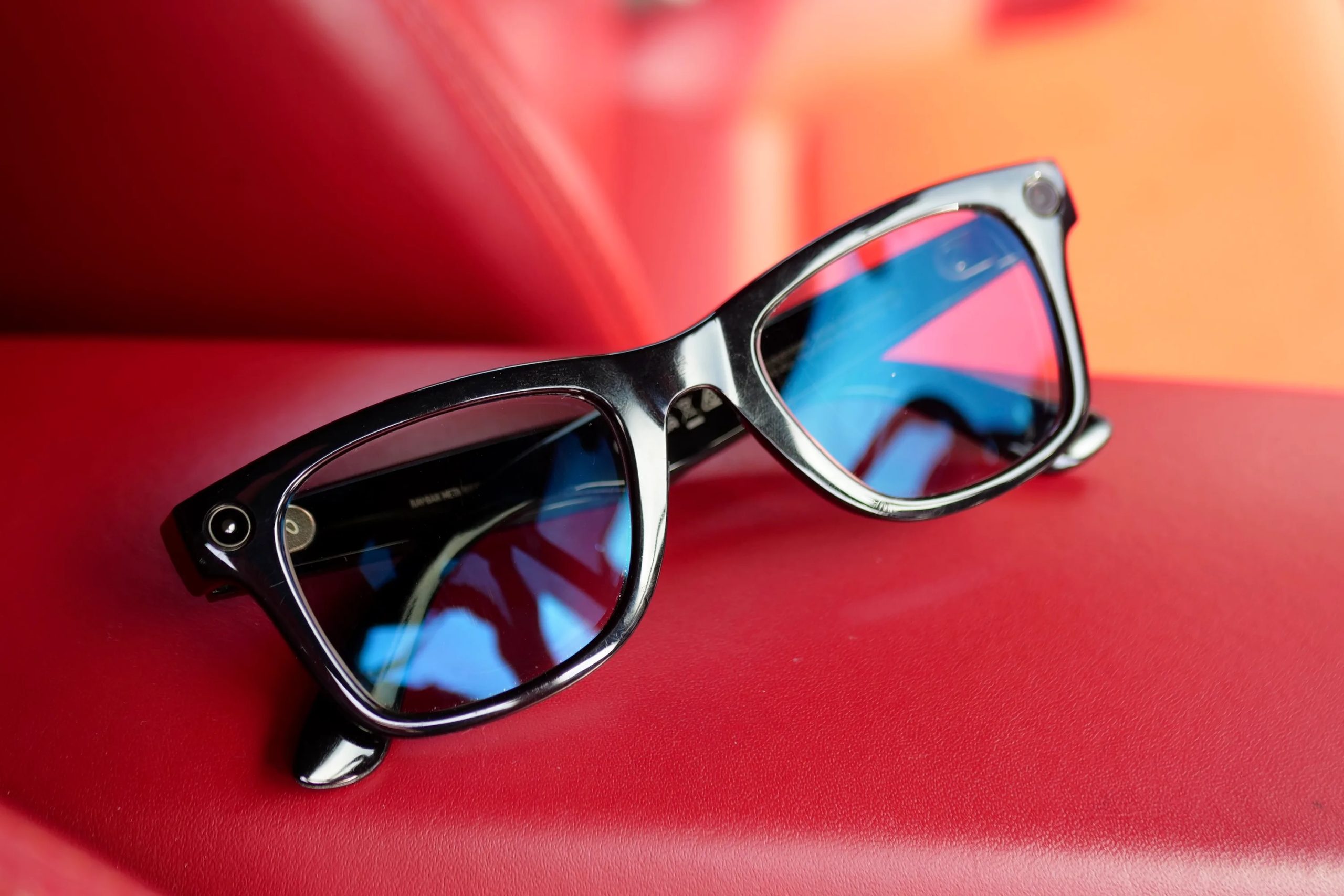
Those frames are still under wraps, though we got a bit of a preview during the I/O keynote. But Google’s developer conference did, at least, give us a much clearer picture of how its smart glasses will work. Given that Meta has a years-long headstart, Google will have a lot to prove. But despite being almost embarrassingly late to the smart glasses game, Google has a few significant advantages. And, after trying out the latest Android XR glasses, I suspect at least some people will prefer these over Meta’s Ray-Ban shades.

The glasses I demoed were not the branded frames briefly shown off during the keynote. They were “reference hardware” that Google uses for its own internal development. These glasses also had a built-in display, unlike the Warby Parker and Gentle Monster specs, which will be audio-only. But they didn’t really look or feel like a prototype either. While not quite as polished as my Ray-Ban Meta frames, they weren’t overly thick or nerdy looking. And they felt much lighter than the extra chunky Meta Ray-Ban Display frames.

The display setup is similar to the prototype I saw last year, with a single window over the right lens. On the reference hardware, it had a 20-degree field of view, though Google was quick to point out that specific specs could change.

While the display was impressive — it was every bit as crisp and bright as the Meta equivalent — it was obvious that even the audio-only Android XR glasses could have a big advantage over Meta and other would-be rivals. Namely, that Google has been able to integrate its own apps and, yes, Gemini into the frames in a way that seems incredibly useful.

Advertisement

For example, using Google Translate was much more seamless than my experience with Meta’s glasses. I was able to move between a Google rep speaking Spanish and my colleague Igor Bonifacic speaking Serbian and the glasses kept the translation going without interruption. It also adeptly ignored the people around me speaking English, and only showed a real-time translation of what was being said in a foreign language. There probably aren’t that many real-life situations when you would need to move between multiple languages inside of the same conversation, but the fact that it was possible underscores Google’s advantage.

While I’ve generally been impressed with Meta’s AI glasses’ translation abilities, you can only do one language at a time. You also need to download the language to your phone ahead of time, which can make spur of the moment translations tricky.

The non-display glasses will also still benefit from multimodal capabilities, which rely on the onboard cameras and Gemini to surface information based on your surroundings. I was able to look at a recipe and ask Gemini to add the ingredients to my shopping list on Google Keep. Gemini actually briefly struggled with the command, but I didn’t have to stop and start over. I kept speaking and it was able to adjust on the fly.

I’ve often complained that one of the biggest drawbacks of Meta’s glasses is that they work with relatively few third-party apps. While Meta’s working on fixing that, for now they’re great if you want to read WhatsApp messages or Instagram DMs, but there aren’t as many options outside of the company’s ecosystem. Android XR may also be heavily reliant on Google’s own ecosystem, at least for now, but being able to access Maps, Gmail and Keep feels much more practical to my everyday life.

Maps in particular could be especially useful. In my latest demo, I was once again able to get walking directions in the display, alongside a little map view when looking down towards the ground. The audio-only XR glasses won’t have the benefit of a visual guide, but Google will still be able to provide walking directions via audio cues. You can also look at restaurants and businesses around you and ask Gemini for reviews and information. I’ve long thought that travel is one of the best use cases for smartglasses. The addition of Google Maps data is a real advantage, especially when you think about combining that with other features like real-time translations and navigation.

Advertisement

I still have some unanswered questions about how all this will work when it’s in a pair of glasses people can actually buy. And Google still hasn’t revealed specs or pricing for the consumer version of these glasses. But there’s already a lot to look forward to.

Source link

Advertisement
Continue Reading

Tech

Google Changes Its Search Box for the First Time in 25 Years

Published

on

Google is giving its iconic search box its first major redesign since 2001. The new design incorporates, you guessed it, artificial intelligence, “getting bigger and more interactive so that people can ask even longer questions and upload photographs and videos into queries,” reports the New York Times. “In addition, people can ask follow-up questions with a chatbot on Google’s main search page.” From the report: The company will also offer digital assistants, known as agents, to automate searches so that someone who may be apartment hunting can be notified of a new listing without opening a real estate site like Zillow. The search features will be powered by a new artificial intelligence model, Gemini 3.5 Flash. Google said the model had improved on creating software code and performing autonomous tasks, worked faster and was less expensive to run than comparable models.

[…] Google is also bringing one of A.I.’s biggest breakthroughs — software coding — to search. When people research complex topics like astrophysics, Gemini can build interactive graphics and simulations behind the scenes to provide a deeper answer than its previous listing of websites. Google said it was introducing an alternative to the agents powered by Anthropic’s Claude Code and OpenAI’s Codex. Called Gemini Spark, the service is embedded in Gmail, Docs and other Google products, where it can turn meeting notes spread across emails and chats into a single document. It can also read and draft emails. “The open web is on its way out,” says Richard Kramer, a financial analyst with Arete Research. “With A.I., Google is reducing everyone to raw data providers.”

Source link

Continue Reading

Tech

AI sackings reach New Zealand, which will use it to eject 14 percent of government staff

Published

on

Public Sector

Minister demands AI becomes ‘basic expectation for all public entities’

The wave of layoffs attributable to the adoption of AI has washed up on the shores of New Zealand, which has announced an overhaul of its public service that will see the technology become a “basic expectation” for government agencies and help to make it possible to sack 9,000 staff – about 14 percent of current headcount.

Finance Minister Nicola Willis announced the job cuts yesterday, in a speech that saw her bemoan the fact that New Zealand’s government comprises 39 departments and ministries, and compared that to the 16 in Australia and 24 in the UK.

Advertisement

She characterized the nation’s public service as “scared of AI, slow to move to the cloud” and said it operates a “complex and fragmented set of overlapping IT solutions.”

“Our government is as frustrated as you are by the fragmentation and silos, the complexity, the status-quo thinking and the dangerously slow take up of digital and AI technologies,” she added.

Aotearoa’s answer is to task its Chief Digital Officer “to embed AI deployment as a basic expectation for all public entities.”

Minister Willis mentioned a “recent trial of an AI scribe tool in hospital emergency rooms which has reduced the amount of time clinicians have to spend on file notes and increased the time they spend with patients” as an example of the sort of thing she hopes to replicate.

Advertisement

She said the planned overhaul will therefore “reduce the number of government departments, increase the use of AI and other digital tools, and deliver significant savings.”

The government plans to cap departmental budgets and says that combined with redundancies it will save NZ$2.4 billion ($1.4 billion) over four years – less than one percent of all core government spending.

Plenty of tech companies have made substantial redundancies that they justify as necessary to create an appropriate workforce for the age of AI, an explanation we’ve seen deployed to explain deep cuts at Cisco, Cloudflare, Atlassian, Meta, and Arctic Wolf.

Few governments have done likewise, but one early high-profile effort – the Elon-Musk-led “Department of Government Efficiency” – hoped to use AI to improve government operations but left behind little evidence it had succeeded.

Advertisement

New Zealand is blessed with many resources and extraordinary natural beauty, but has a modest tax base – yet residents expect a high level of government services. Minister Willis’s plan is therefore a very big bet on AI. ®

Source link

Continue Reading

Tech

Building A Device To Map Magnetic Fields

Published

on

Magnetic fields are all around us. We can’t really feel or see them ourselves, per se, but we can map them with the right hardware, like this device built by [edosari50].

The build uses an ESP32 microcontroller, which is built on to a board with an integrated 4.3″ touchscreen LCD. It’s paired with an Arduino Nano, which does the work of actually talking to a pair of EMS100 Fluxgate magnetic sensors. The slower, less capable Arduino handles the low-level chatter and then passes the readouts to the ESP32 over a UART connection. Power is courtesy of a pair of 18650 lithium-ion cells, and a XL4005 DC-DC converter. A lithium-ion charging module is on hand to keep the batteries topped off safely.  Scan results are visualized on the device itself using a heatmap representation, and can also be exported to SD card for later analysis if so desired.

Unless you’re in the geological field or otherwise hunting for stuff underground, this probably isn’t a tool you’ll have a lot of use for. However, if you like finding magnetic anomalies and investigating them, it might be very much in your wheelhouse. We’ve featured other tools for magnetic visualization before, too. Video after the break.

Advertisement

Source link

Advertisement
Continue Reading

Tech

Recreating A Broken Laminated Wooden Furniture Part

Published

on

Everyone loves those rather bouncy wooden lounge chairs that got popularized by a certain Swedish seller of furniture, but as tough as they are, the laminated wood can still break at some point. The chair that [John’s Furniture Repair] got in for repair had cracked right around where a bolt hole had been drilled, apparently creating a weak spot that over the years turned into a crack.

The way to fix this issue is to recreate the one piece of curved, laminated wood as demonstrated in the video. This starts with tracing the contours of the original part on a piece of MDF, which then gets doubled up by a second plate of MDF. After cutting out the contours this then creates the two halves of a mold for the laminated part.

Next is preparing the layers of wood that will become the new part, making sure to keep the same final thickness as the original. With everything glued up the layers are put into the mold, clamped down and the glue left to dry.

Advertisement

Finally, the part is freed from the mold, cut to its final size, and sanded down to prepare it for final treatment and installation on the lounge chair. Perhaps the only negative one can say about this kind of fix is that after you’re done, you really get that itch to sand down and re-lacquer all of the other parts as well so that they also look new and shiny.

Advertisement

Source link

Continue Reading

Tech

S. ‘Soma’ Somasegar, 1966-2026: Microsoft and Madrona leader was a champion of developers and startups

Published

on

S. “Soma” Somasegar at Microsoft in 2014, giving a tour of the revamped Developer Division offices. (GeekWire File Photo / Todd Bishop)

S. “Soma” Somasegar, a fixture in the Seattle tech community who led Microsoft’s Developer Division as part of his 27-year tenure at the company before supporting a generation of cloud and AI startups as an investor, board member and advisor, has passed away.

The news was confirmed Tuesday afternoon by Microsoft and Madrona, the Seattle-based venture capital firm where Somasegar had been a key figure for the past 11 years.

Microsoft CEO Satya Nadella, who first met Somasegar at Microsoft in the early 1990s, remembered him in a statement as “a remarkable leader who helped grow and shape Microsoft’s developer ecosystem, and a dear friend and colleague that I valued greatly.” 

“He brought depth, humility, and a real commitment to empowering developers everywhere and his impact on Microsoft and the broader technology community will live on!” Nadella said.

Somasegar was 59. No cause of death was given. He is survived by his wife, Akila, and two daughters.

Advertisement

“Soma was beloved by so many people in all aspects of his life, and he had such a generous spirit for helping others,” said Matt McIlwain, Madrona managing director. “We are deeply saddened by this loss, most importantly for his wife and his two beloved daughters.”

McIlwain added, “We are focusing on supporting his family, the Madrona team and all those who knew and loved Soma, including the broader Microsoft community.”

Tuesday evening on its website, Madrona posted an initial tribute to Somasegar, saying, in part: “We all loved Soma, as everyone who knew him did.”

On a personal level, Nadella and his wife, Anu, formed a close friendship with Soma and Akila over the decades. Nadella and Somasegar were among a group of tech leaders who co-own the Seattle Orcas, a professional cricket team based in the region. 

Advertisement

“For Anu and me, this loss is very personal,” Nadella said. “Soma was there for us during some of the toughest moments in our lives, always with quiet strength, kindness, and a sense of steadiness we depended on. We will miss him very much.”

From Puducherry to Seattle

Born Aug. 13, 1966, in the southern Indian coastal town of Puducherry, Sivaramakrishnan Somasegar — known throughout his life by the nickname “Soma” — grew up in a household where education came before everything else, according to a 2008 profile in Mint, the Indian business newspaper. His father worked as a technician at a hospital, his mother stayed home, and neither had attended college. 

“Food was a secondary priority in our house because education was a first priority,” Somasegar recalled in a 2024 oral history conducted for the Microsoft Alumni Network. “Whatever little I’ve done so far, it’s a direct result of that.” 

Advertisement

He arrived in the U.S. in 1987 to pursue a master’s in computer engineering at Louisiana State University, having mistaken the “LA” in his admission letter for Los Angeles. He realized his mistake only as the plane was landing in New Orleans, he recounted in the oral history. 

After 18 months at LSU, Somasegar enrolled in a PhD program at the State University of New York at Buffalo. He left after a single harsh winter semester to join Microsoft, arriving in Redmond on Jan. 23, 1989 — a date he remembered precisely decades later.

He joined the OS/2 team as a software design engineer in test, working on memory management and file systems. Within six months, Microsoft’s relationship with IBM on the joint OS/2 project was fraying, and Somasegar was drafted in March 1990 onto what would become one of the most consequential projects in the company’s history: Windows NT.

Somasegar spent his first decade at Microsoft on the NT team, ultimately contributing to eight releases of the Windows operating system, as recounted in a 2015 GeekWire “Geek of the Week” profile. He rose from software design engineer to test lead to test manager.

Advertisement

During the NT years, Somasegar designed the team’s overnight stress test program and ran the daily reliability check himself, arriving around 5:30 a.m. to walk the halls, leave yellow sticky notes on crashed machines, and report findings at the 9 a.m. bug meeting. 

He also founded Microsoft’s India Development Center in Hyderabad in 1998, which has grown into one of the company’s largest engineering operations outside the United States. Especially given his roots, he often called the India effort one of his proudest contributions to Microsoft.

By the time Windows Server 2003 shipped, Somasegar had risen to vice president. In December 2003, Microsoft’s then-server and tools chief Eric Rudder asked him to take over the Developer Division — the group responsible for Visual Studio, .NET, and the tools used by millions of software developers.

Somasegar held the role for the next 12 years, eventually as senior vice president. Under his leadership, the division extended its reach from Windows into mobile and the cloud. 

Advertisement

In 2014, Somasegar was an internal advocate and leader for Microsoft’s decision to open-source the .NET core server runtime and framework, a surprise move that marked a significant shift in the company’s approach toward the broader developer world.

Shifting to startups at Madrona

Somasegar announced his departure from Microsoft in October 2015, and within weeks had joined Seattle-based Madrona Venture Group as a venture partner. He was promoted to managing director in January 2017.

At Madrona, Somasegar focused on early-stage investments in cloud infrastructure, developer tools, AI, and what the firm calls intelligent applications. 

Advertisement

He led or played a key role in Madrona’s investments in Snowflake, UiPath, Pulumi, Statsig, Common Room, Rhythms, and RelationalAI, among others. Several became multibillion-dollar companies. Statsig was acquired by OpenAI for $1.1 billion in 2025.

Somasegar also served on the boards of UiPath and other portfolio companies. 

He remained an active writer and commentator on the industry, including a February 2024 GeekWire guest post reflecting on Satya Nadella’s decade as Microsoft CEO and their friendship that began at Microsoft in 1992. He conducted interviews and served as the primary on-stage host of Madrona’s IA Summit in downtown Seattle last fall. 

Just this week, Somasegar was named to Business Insider’s Seed 100 list of the best early-stage investors of 2026. 

Advertisement

Beyond venture capital, startups and technology, Somasegar was deeply involved in Seattle’s sports and cultural community. In addition to co-owning the Seattle Orcas, he was part of the ownership group of the Seattle Sounders FC.

Ed Lazowska, the longtime University of Washington computer science professor and a fixture in Seattle’s tech community, said Somasegar’s spirit fit a tradition going back to Madrona’s earliest days.

“Soma was a wonderful human being, in the tradition of the four Madrona co-founders,” Lazowska said, referencing Tom Alberg, Jerry Grinstein, Bill Ruckelshaus, and Paul Goodrich.

In one of his last extended conversations with GeekWire, recorded earlier this year at Madrona’s 30th anniversary celebration, Somasegar reflected on the venture firm’s role in the region and its philosophy of being a “trusted partner” to founders from day one. 

Advertisement

He spoke about being part of an early Madrona-led effort during the pandemic that helped raise more than $25 million for the All In Seattle campaign to support those impacted by homelessness and other community needs.

“We have a day job. We want to be the best venture capital guys,” he said. “But we are also all about the community. We are about embracing the community.”

Nadella said he will remember Somasegar’s “warmth, his thoughtful advice, and the integrity he brought to everything he did.”

“Our thoughts are with Akila and his daughters, and with everyone who had the privilege of knowing him,” he said. “He will be deeply missed and remembered for all he did and contributed to our industry and our community.”

Advertisement

Source link

Continue Reading

Tech

Plex Triples Lifetime Subscription Cost To $750

Published

on

BrianFagioli shares a report from NERDS.xyz: Plex is raising the price of a new Lifetime Plex Pass from $249.99 to $749.99 on July 1. That’s a $500 increase for media server software. Plex says it needs the money for “long-term development” and future features, but a lot of self-hosting folks are already wondering if this is basically a soft way of killing the Lifetime option without officially removing it. At nearly $750, are people just going to move to Jellyfin instead? As for those future improvements, Plex said the roadmap includes better downloads support, restored music and photo library support in mobile apps, NFO metadata support, IPv6 support, playlist editing on mobile, audio enhancements, and transcoding improvements.

Source link

Continue Reading

Tech

Meta reportedly reassigns 7,000 jobs ahead of mass layoffs

Published

on

SiliconRepublic.com has asked Meta about the extent of layoffs in Ireland.

Meta is reportedly reassigning 7,000 workers to new, more AI-aligned roles, just ahead of the sweeping layoffs expected at the company tomorrow (20 May).

According to a memo, first reported by Reuters, Meta’s human resources head Janelle Gale said that the new corporate structure will be “flatter”, with “smaller teams”.

“As org leaders worked on the changes, many of them incorporated AI-native design principles ⁠into their new org structures,” she wrote.

Advertisement

“We’re now at the stage where many orgs can operate with a flatter structure with smaller teams of ​pods/cohorts that can move faster and with more ownership.”

New departments where employees are being transferred include Applied AI Engineering, Agent Transformation Accelerator XFN, Central Analytics and Enterprise Solutions.

This comes as workers at the company are reportedly dissatisfied with leaders over recent moves, leading to angry internal communications and a petition against Meta’s mouse-tracking software used to train the company’s AI models.

Meta’s work structure overhaul comes after the company decided to cut 8,000 jobs – or 10pc of its workforce – last month, in an effort to mitigate its AI-related expenses. 6,000 planned recruitments at the company have also been halted as a result.

Advertisement

Current headcount at Meta stands at 77,986 as of 31 March, with around 1,800 in Ireland. SiliconRepublic.com has asked Meta about the extent of layoffs in Ireland.

The social media giant’s move reflects the growing importance AI is taking at the workplace – no longer merely an optional tool used to improve productivity.

Earlier this year, Meta CEO Mark Zuckerberg said that 2026 might be the year “AI starts to dramatically change the way that we work”.

“We’re starting to see projects that used to require big teams now be accomplished by a single very talented person,” he said. Zuckerberg is also reportedly developing an AI-powered version of himself to interact with employees.

Advertisement

Similar views around workforce thinning were shared by Amazon after the company cut 16,000 jobs in January, as well as Block, which cut 4,000 jobs in February.

Block head and chair Jack Dorsey said that a “majority of companies” would reach similar conclusions to his around smaller teams and make similar structural changes “within the next year”.

Meanwhile, reports suggest that AI’s uptake in many Irish and UK-based organisations is not adequately supported by targeted investment in skills and technology adoption.

As one of the biggest AI spenders, Meta recently upgraded its capital expenditure budget to $145bn. The company said the expanded budget would help fund its Superintelligence Labs efforts, higher component pricing and additional data centre costs.

Advertisement

Don’t miss out on the knowledge you need to succeed. Sign up for the Daily Brief, Silicon Republic’s digest of need-to-know sci-tech news.

Source link

Advertisement
Continue Reading

Tech

Focal Bathys MG Review – Trusted Reviews

Published

on

Verdict

Focal’s second wireless ANC headphones continue the luxury feel, with a more comfortable design, long battery life, more refined sound and very good call quality. ANC isn’t quite to the same level however, and those in need of a more emphatic bass performance should probably look elsewhere.

  • Refined, insightful sound over Bathys

  • Strong wireless performance

  • Long battery life

  • Very good call quality

  • Comfortable to wear

  • Bathys offer better ANC

  • Not quite as big an upgrade as price would suggest

  • Vegans won’t dig the use of real leather

  • A little lacklustre at default volumes

Key Features

  • Trusted Reviews IconTrusted Reviews Icon

    Advertisement

    Review Price:
    £999

  • M-Shaped dome driver

    Advertisement

    Magnesium drivers for a “natural, highly accurate sound reproduction”

  • Battery life

    Advertisement

    30 hours over a wireless connection

  • Bluetooth

    Advertisement

    aptX Adaptive support with Android devices

Introduction

Focal’s Bathys are a stellar pair of wireless headphones. Unique looks, effective noise-cancellation, great sound. Where do you go next? For Focal, the direction of travel is up, not down.

The Bathys MG carry a bigger price tag, luxury materials, as well as improvements to the sound with the introduction of Focal’s M-shaped domes – its Magnesium speaker drivers – to push forward in its pursuit of higher fidelity sound.

Advertisement

The £999 / $1299 price clearly indicates that this is in the realm of the luxury headphone market, even more so than the AirPods Max 2. Does the Focal Bathys not only warrant a high price tag, but deliver on expectations? Let’s delve in.

Advertisement


Design

  • One finish available
  • Real leather
  • Physical controls

The Focal Bathys MG looks similar enough to the Bathys that you might assume it to be a redo of the less expensive model. The shape and size are basically the same, the weight (350g) carries over, and the button design features are the same. The obvious change is the colour, the Bathys MG trading the black, silver and ‘dune’ finishes for a warm chestnut look.

The bathysphere circular indentations make for a unique look (inspired by Focal’s Clear MG headphones), and the flame logo can light up which has, on occasion, brought some glances (and curious smiles) as I wore the headphones in public. The Bathys MG is a pair of headphones intent on being seen.

Focal Bathys MG side viewFocal Bathys MG side view
Image Credit (Trusted Reviews)

Like with the original Bathys, the headphones can’t be collapsed or folded; so if you want to keep them safe and free from blemishes, there’s a hard carry case for added security, and accessories include a USB-C and 3.5mm cables for wired listening, the former supports audio up to 24-bit/192kHz.

Advertisement

Advertisement

Comfort-wise, the Bathys MG are more comfortable to wear, though vegans can probably check out of this review now as the headphones use genuine leather for the headband. The earpads offer a nice plush feel when they meet the head while the Bathys’ earcups feel more stiffer. The clamping force initially feels tighter but keeps the headphones feeling secure on the head. That they weigh 350g and don’t feel onerous on the head is a good sign.

Focal Bathys MG standFocal Bathys MG stand
Image Credit (Trusted Reviews)

The earpads are replaceable – simply snap them out and press them back in again. The buttons are the same, which is a little disappointing. For a premium pair of headphones, the controls don’t feel too premium, and often I’m having to search for the playback button in between the volume buttons to pause and play.

Another slight annoyance is the USB-C cable, which, when plugging into my Lenovo laptop, requires a hard shove to snap into place, something I’ve not had to do with other USB-C cables.

Focal Bathys MG carry caseFocal Bathys MG carry case
Image Credit (Trusted Reviews)

Features

  • aptX Bluetooth
  • MFi certification
  • Focal & Naim app support

Advertisement

There’s Bluetooth 5.2 connectivity, and honestly, I can’t recall any issues with connection drops in big cities. It’s performed as expected.

Bluetooth can stream SBC, AAC, aptX, and aptX Adaptive, or, with the built-in DAC, you can play audio via a USB-C connection. There’s Google Fast Pair for quickly connecting to an Android device, and there’s Bluetooth multipoint for connecting to two devices at once.

Advertisement

There’s no room this time for Amazon Alexa and Google Assistant (or Gemini), but the headphones can count on ‘Made for iPhone’ certification, so there’s the likelihood of Siri support.

Focal Bathys MG appFocal Bathys MG app
Image Credit (Trusted Reviews)

The Focal / Naim app is a simple affair without many features. You can customise the sound with the choice of three presets (Home, Dynamic, Loudness) or the five-band EQ. With Mimi’s Hearing ID you can tailor a sound that’s fit for your hearing range once you’ve gone through its test.

There are three noise-cancelling modes to choose from in Silent, Soft and Transparent. You can change the intensity of the backlight from Off, Dim or Bright, and you can monitor battery life and which audio stream the headphones are playing in. Hidden away in the settings is Sidetone so you can hear more of your voice for calls.

Advertisement

Focal Bathys MG app settingsFocal Bathys MG app settings
Image Credit (Trusted Reviews)

Battery Life

  • 30 hours of battery life
  • Fast charging support

Focal quotes 30 hours for the Bathys MG, and like the Bathys, they are headphones that have more battery life than the Energiser bunny.

Focal Bathys MG linkageFocal Bathys MG linkage
Image Credit (Trusted Reviews)

Five hours into a battery drain and they were still at 100%, at which point I decided I didn’t need to continue on and on. They’ll last for a while before they need a top-up, at least with that aptX Adaptive connection present.

And if the battery life does fall precipitously – well, there’s fast charging to the rescue, with 15 minutes offering another five hours (no different than before).

Advertisement

Advertisement

Noise Cancelling

  • Adaptive ANC
  • Three modes to choose from

You might think that more expensive headphones should offer a better noise-cancelling experience. After all, shouldn’t there be better tech than you would get even than, say, the Sony WH-1000XM6? Not quite.

If anything, the more expensive a headphone is, the more focus is paid to the tuning of the sound, and the presence of noise cancellation can affect the fidelity. More expensive headphones don’t always have better ANC.

Focal Bathys MG earcupFocal Bathys MG earcup
Image Credit (Trusted Reviews)

And the same is true of the Focal Bathys MG, which puts in a respective effort, but not one that’s going to leave you in a bubble of silence. It puts a shift in and gets rid of sounds on planes, public transport and walking around cities. I can play music without having to resort to raising the volume level to hear it.

It’s not as good as the original Bathys, perhaps because the noise-isolating earpads do a better job, but the level of suppression is slightly weaker. The Soft mode is less suppressive and acts as a go-between Silent and Transparent, but it’s still a mode where I’m not sure what function it’s meant to fulfil.

Advertisement

Advertisement
Focal Bathys MG sideFocal Bathys MG side
Image Credit (Trusted Reviews)

The Transparency mode has a tendency to amplify sounds. What’s around me is often raised to volumes louder than they are than what I’m hearing with the headphones off. If you want to catch an announcement or hear what someone is saying, then it’ll work, no problem.

Call quality is very good, better than the Bowers & Wilkins Px8 S2. The microphones are doing something to my voice but it still comes through clearly to the other end of the line. No noise was heard throughout the call, so it seems to be latching onto my voice and rejecting noise well.

Sound Quality

  • Clear, detailed, and insightful
  • Focal’s M-dome driver
  • Built-in DAC

I went into the Bathys MG thinking that it’d be clear leaps and bounds over the Bathys. That isn’t quite the case, with the Bathys MG offering a more refined sound and a greater sense of control, but there are some differences in the makeup of the sound.

I’ll get to those differences a little later, but what the Focal Bathys MG does offer is a big, wide soundstage that’s both spacious and gentle sounding – it has an airiness to its presentation that’s engaging – but the volume needs to be pushed up a few levels because at default volume the soundstage can sound reined in and a little distant compared to the Bathys.

Advertisement

It’s not the biggest bass performance with GoGo Penguin’s Ascent, but balance and control seem to be the watchwords for the Bathys MG in the same way as they were with the Bathys.

Advertisement
Focal Bathys MG paddingFocal Bathys MG padding
Image Credit (Trusted Reviews)

If thump and obvious low-end prowess are what you’re after from a pair of headphones, the Bathys MG aren’t necessarily complicit in offering that type of sound. There’s weight to the lows, but not quite as much punch, power and extension to the bass that some may crave, in a similar way as the Sennheiser HDB 630 (at half the price).

It’s not the most energetic of sounds, but like many premium wireless headphones, there’s refined elegance and comfort to the sound that means you can keep listening for some time. The highs are bright and detailed, varied in tone, and the Bathys MG relays them with precision and clarity. There’s a slight warmth that makes the audio performance of these headphones go down like some hot cocoa (not my preference).

The headphones don’t raise background noise to obvious levels like the Px8 S2 can; the midrange is smooth, clear, and natural in tone. The Bathys MG is very good with vocals – whether it’s Natalia Imbruglia’s in Torn, Sufjan Stevens’ Chicago, Phoebe Bridgers’ Garden Song or Chris Cornell’s voice in Black Hole Sun. It strikes a pleasing and insightful tone with their inflexions that sounds ‘true’.

Focal Bathys MG controlsFocal Bathys MG controls
Image Credit (Trusted Reviews)

Advertisement

These headphones aren’t an energy monster compared to the Bowers & Wilkins Px8 S2. Dynamic swings sound smaller rather than larger; the headphones aren’t as aggressive at revealing every bit of detail in a track – they are more laid-back and lush in performance. Music is filtered through Focal’s tastes, rather than the headphones adapting to the music you’re playing.

Compared to the Bathys, the original pair are more energetic, especially at default volumes, which makes the Bathys MG sound quieter and more subdued. With Illit’s Magnetic, there’s more energy and thrust to the presentation on the older pair, but there are areas where the Bathys MG tightens and refines its performance.

Advertisement

Bass performance feels the same in terms of weight and extension but there’s an argument that a little clarity and separation from the mids is extracted from the Bathys MG. There’s a clarity across the frequency range, a couple of levels more insight and detail retrieved from tracks that makes the older model sound a little coarse in the midrange.

Focal Bathys MG earpadFocal Bathys MG earpad
Image Credit (Trusted Reviews)

The biggest change is in the highs, which are brighter, clearer, more detailed, and more natural-sounding, thanks to the introduction of Focal’s M-shaped dome drivers. There’s more sparkle to the highs that makes the Bathys a little more dulled.

But where the Bathys MG put in their best performance is over a wired USB-C connection. Switch to its DAC mode, and what I felt was slightly lacking in the wireless performance is more than made up for over USB-C.

Advertisement

The warmth I heard over wireless connection is replaced by a more neutral tone that’s clearer, more detailed and packs a much stronger bass performance than listening over Bluetooth seems to muster.

Advertisement
Focal Bathys MG accessoriesFocal Bathys MG accessories
Image Credit (Trusted Reviews)

The sub-bass that was lacking in Warren G’s Regulate is found here, with a better sense of bass depth and extension while maintaining the clarity and naturalism of the vocals. There’s more dynamism and inflexion with Phoebe Bridgers’ vocals in Garden Song; the sound is more upfront, bringing the detail in tracks closer to my ears.

There’s a brighter sense of brightness and clarity at the top end of the frequency range with GoGo Penguin’s Ascent, but no sense of any loss of control. Bass is weighty, and there’s more dynamism – this is the sound I was hoping for from the wireless performance from the off.

Compared to the 3.5mm option, the USB-C mode offers more energy and spice – the 3.5mm input is analogue and doesn’t use the built-in DAC. The USB mode presents music with more energy, a better sense of scale and is ‘louder’. This mode is the best way to hear what the Bathys MG has to offer.

Advertisement

Should you buy it?

Advertisement

Luxury looks and high fidelity sound

The promise of the original Bathys is extended with the Bathys MG, with a design that’s more comfortable and a little more opulent, married with a more revealing, insightful sound (once the volume is given a nudge).

Advertisement

There are better options for ANC for much less

The Focal Bathys offer better noise-cancellation, but if ANC is the main reason for your purchase, then the likes of the Sony WH-1000XM6 and Bose QuietComfort Ultra Headphones Gen 2 are better options.

Advertisement

Final Thoughts

At £999 / $1299, you’re perhaps assuming a performance that meets the price expectations. The Bathys MG doesn’t quite deliver on those expectations, but that’s not to say they’re not a very fine pair of wireless headphones.
 
Compared to original, the Bathys MG sound better and are more comfortable to wear. The battery life is similar, and the call quality is very good. The spec sheet matches the Bathys, and perhaps I assumed the Bathys MG would further push the boundaries of wireless headphones. The noise cancellation is no better than the Bathys’, if not slightly worse.
 
An upgrade in some ways, the Focal Bathys MG are an improvement, though I can’t help wanting more. Nevertheless, these are high-fidelity, high-quality wireless headphones. If you want to listen in luxury, be sure to make an appointment with the Focal Bathys MG.

How We Test

The Focal Bathys MG were tested over the course of two months with real world testing, and compared to other noise-cancelling headphones.

A battery drain was carried to test battery life, calls made in outdoor spaces, and the headphones were tested in wireless and wired configurations.

Advertisement
  • Tested for two months
  • Tested with real world use
  • Battery drain carried out

FAQs

How many colours does the Bathys MG come in?

There’s only one colour currently available for the Bathys MG, which Focal calls a Chestnut finish.

Full Specs

  Focal Bathys MG Review
UK RRP £999
USA RRP $1299
Manufacturer Focal
IP rating No
Battery Hours 30
Fast Charging Yes
Weight 350 G
Release Date 2025
Audio Resolution SBC, AAC, aptX, aptX HD, aptX Adaptive
Driver (s) 40mm Magnesium speaker drivers with ‘M’-shaped domes,
Noise Cancellation? Yes
Connectivity Bluetooth 5.2, Google Fast Pair
Colours Chestnut
Frequency Range 10 22000 – Hz
Headphone Type Over-ear

Source link

Advertisement
Continue Reading

Trending

Copyright © 2025