Connect with us
DAPA Banner
DAPA Coin
DAPA
COIN PAYMENT ASSET
PRIVACY · BLOCKDAG · HOMOMORPHIC ENCRYPTION · RUST
ElGamal Encrypted MINE DAPA
🚫 GENESIS SOLD OUT
DAPAPAY COMING

Tech

Laptop Screens Find New Purpose as Portable Monitors

Published

on

Broken Laptop Screen to Portable Monitor Project
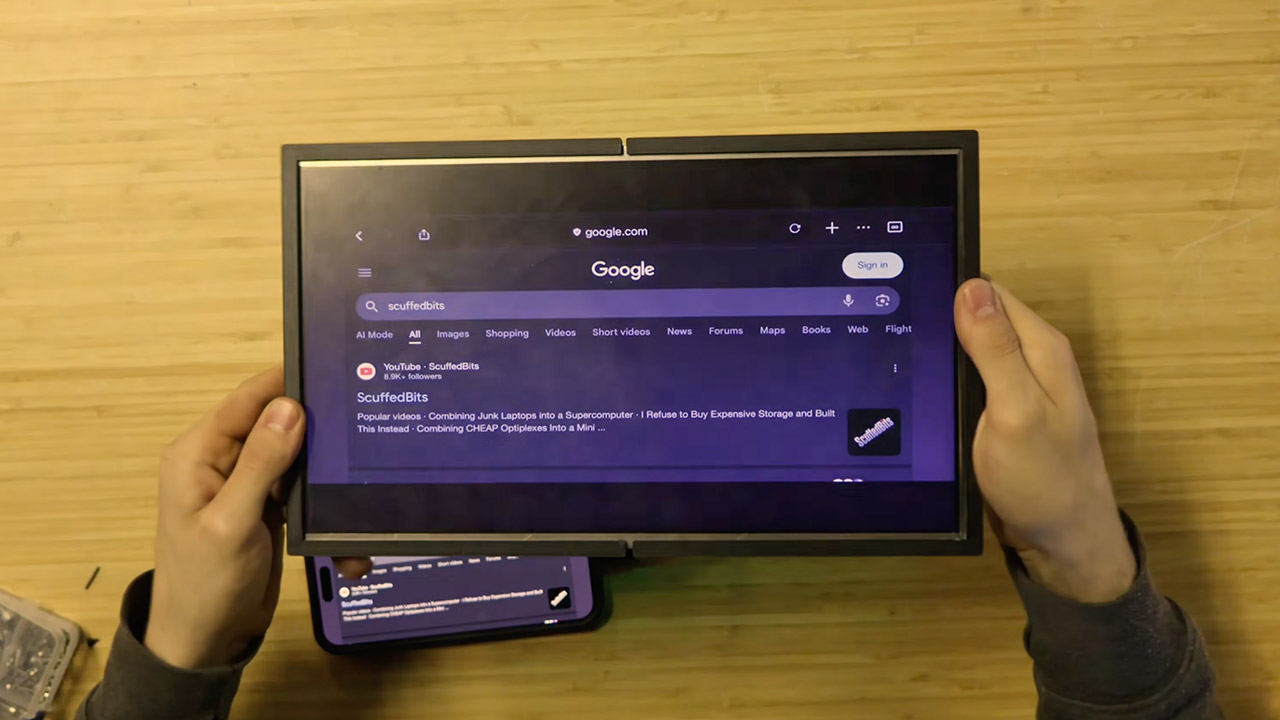
Discarded laptops gather dust in homes everywhere yet many still carry excellent displays worth saving. One maker pulled panels from three different machines to test a straightforward conversion into standalone monitors anyone can tackle at home. Results prove the idea works best with newer screens and delivers a custom display for a fraction of store prices.


When you open the laptop lid, the model number on the rear allows you to quickly go to panelook.com and find out everything you need to know about the backlight type, resolution, and connection standard. LED lights combined with LVDS or eDP will be your go-tos because they require only one cable and produce a nice image. Older panels with cold cathode tubes, on the other hand, will be dark and lose viewing angles quickly, since they require a separate inverter, which is inconvenient, so you can simply leave those on the shelf.


MNN Portable Monitor 15.6inch FHD 1080P USB C HDMI Gaming Ultra-Slim IPS Display w/Smart Cover…
  • Full HD Portable Monitor – MNN 15.6inch portable laptop monitor with 1920*1080 resolution, advanced IPS matte screen support 178° full viewing angle…
  • Double Type-C Port -For Plug & Play, the MNN monitor provides 2 Full Feature Type-C ports. Only One USB Type-C Cable is required to connect to the…
  • Lightweight Ultra Slim for Travel – As a portable external monitor,MNN portable laptop monitor easily accommodate to every suitcase and backpack and…

Broken Laptop Screen to Portable Monitor Project
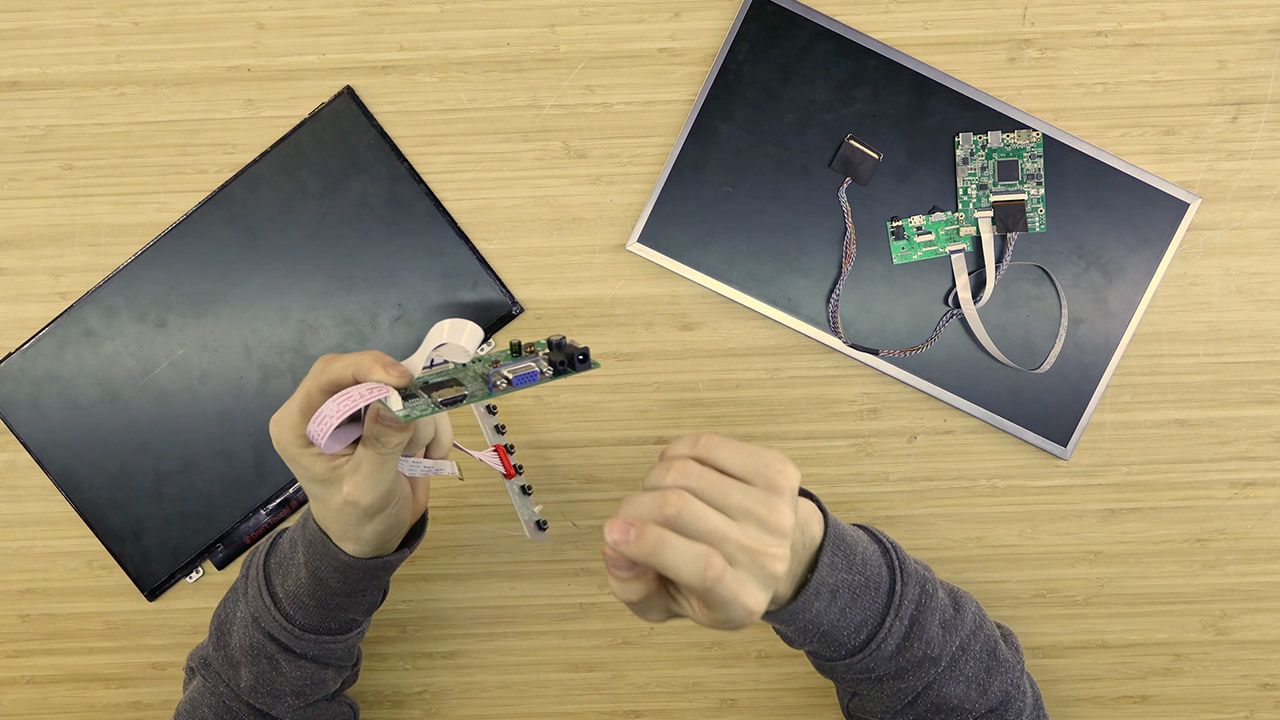
Driver boards that are matched to the specific model of your panel can be purchased online for around $20. The ones with an HDMI input and a barrel connector are suitable for desktop use, whilst the USB-C variants can handle power and video simultaneously and are ideal for travel. Inserting the board into the screen edge connector takes no time at all. Then power on, then connect your video source, and presto, your display will come to life right immediately, with sharp colors and consistent performance if you have a nice panel.

Broken Laptop Screen to Portable Monitor Project
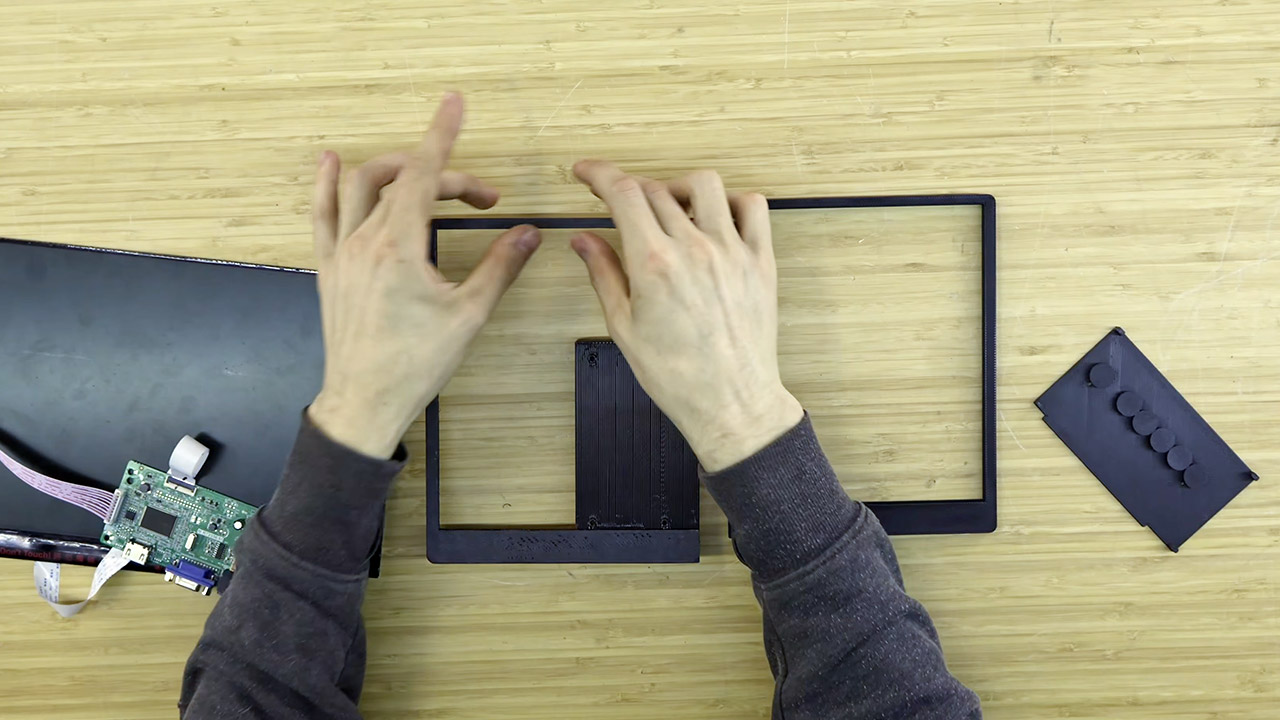
The most difficult part is housing the item because the bare displays are delicate and thin. Using a 3D printed casing is the answer since it generates slotted channels that allow the panel to simply fit in. One design includes a back enclosure for the driver board, as well as cutouts for input selection buttons. A few short screws keep the board in place, while the outer shell covers the edges without adding too much weight. Minor glue repairs were required on the older prints since the support material kept coming away, but the current copies print perfectly and close up neatly around the screens.

Broken Laptop Screen to Portable Monitor Project
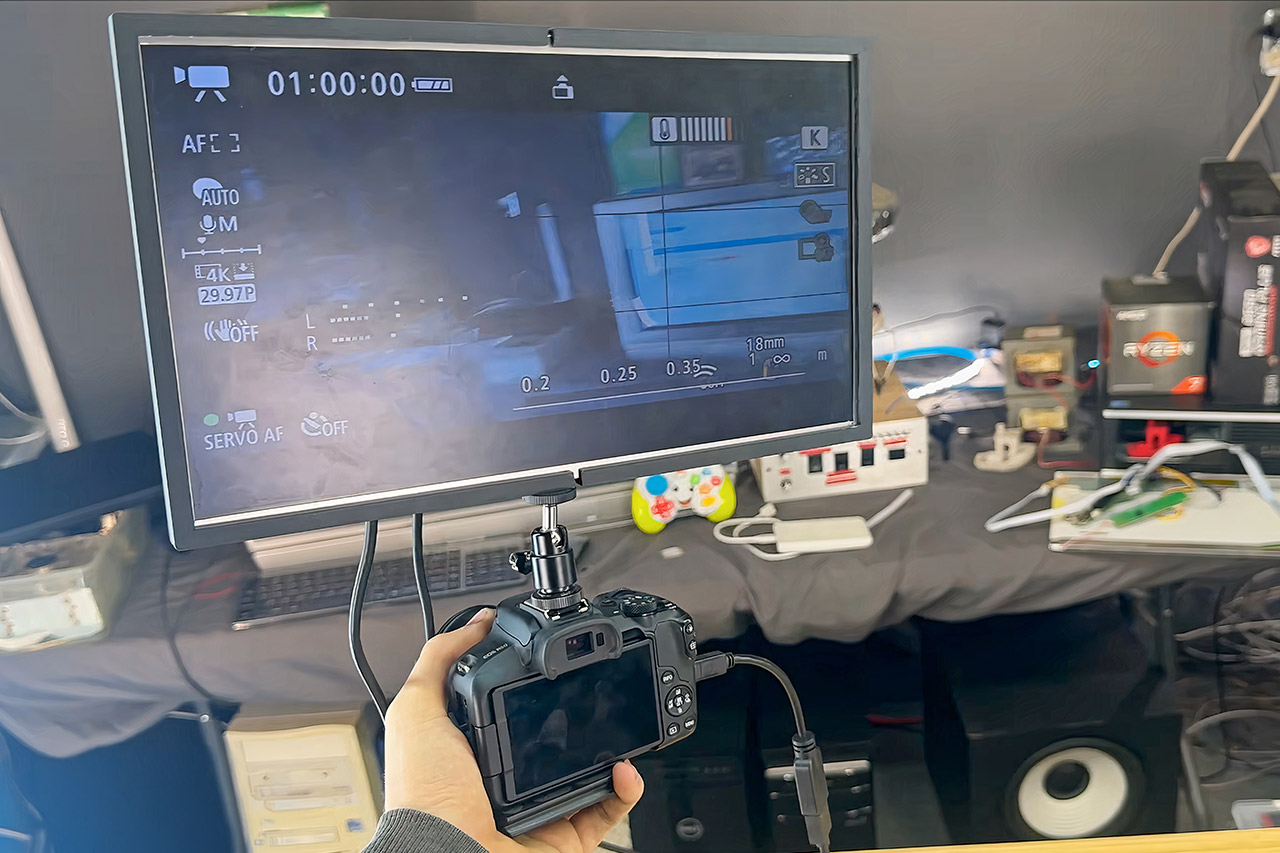
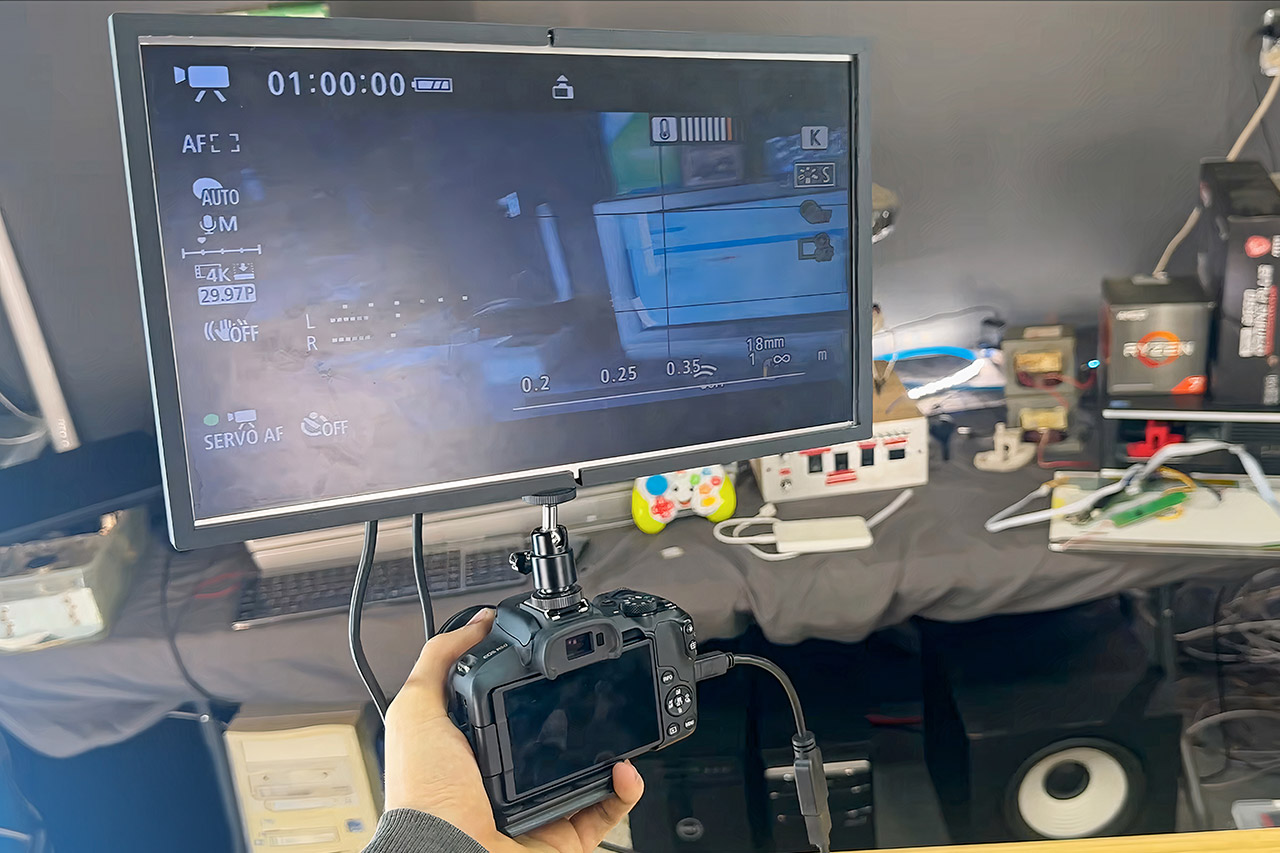
When testing is completed, the results are almost immediate. Simply plug in an HDMI connection from your laptop or camera, and your monitor will display all of the content without lag. It also remains bright even in brighter settings, and the small form allows you to place it beneath a larger screen or in a bag for work on the road. One person placed one of these units next to his camera for live feed monitoring, while another utilized the USB-C variant as a quick second screen for chat and music apps.
[Source]

Source link

Advertisement
Continue Reading
Click to comment

You must be logged in to post a comment Login

Leave a Reply

Tech

Exadel buys London consultancy Tangent to bolt experience design onto its AI engineering line

Published

on

The Tampa-based, Sun Capital-owned software services firm is folding the SAP- and IWG-trusted UK digital agency into its Digital Experiences practice. Deal terms were not disclosed.


Exadel, the Tampa-based software-development and consulting firm, has acquired Tangent, the London-based digital experience consultancy, the company said on Monday. Terms were not disclosed.

Tangent will continue to operate under its existing brand inside Exadel’s Digital Experiences practice, with chief executive Leigh Gammons moving into a managing director and senior vice president role to lead the business.

On Exadel’s own framing, the deal is about pairing two halves of an enterprise transformation engagement that have traditionally lived in different vendor categories.

Advertisement

The 💜 of EU tech

The latest rumblings from the EU tech scene, a story from our wise ol’ founder Boris, and some questionable AI art. It’s free, every week, in your inbox. Sign up now!

Exadel sells what it calls AI-native engineering: data infrastructure, applications, and the back-end work of running an enterprise’s technology stack, on a 2,000-plus headcount across the US, Europe and LATAM.

Tangent sells the front-end discipline, including UX, product, web experience and MarTech engineering, on a smaller boutique footprint built up around what its website describes as enterprise digital-product work. The acquisition pulls strategy, design and engineering inside one contract.

Advertisement

‘Brands increasingly win or lose based on the AI-driven digital experiences they provide to customers,’ said James Dalziel, Exadel’s chief operating officer, in the statement.

‘By bringing Tangent into the organisation, we are fortifying our ability to help global clients not only design exceptional experiences, but also continuously optimise and scale them through AI.’

Gammons described the value of the combination from the other direction: ‘Companies are demanding more than great digital experiences. They need to provide experiences that can constantly evolve and drive measurable outcomes.’

Tangent has been operating since 2001 and counts SAP, IWG, and UK Power Networks among its enterprise clients, according to its own published materials, with the Exadel release also naming New Balance and Vodafone.

Advertisement

Its team is London-headquartered with a Newcastle office and a delivery footprint across Spain, South Africa, Poland, Egypt, and Pakistan. Gammons joined the agency as chief executive after leaving a senior role at WPP.

Exadel’s M&A appetite has a recognisable shape. The company is owned by an affiliate of Sun Capital Partners after a take-private transaction, and has spent the past few years adding capability through bolt-ons.

Its prior acquisitions include Motion Software, CPQi and Coppei. Tangent is the latest in that arc, and the first explicitly aimed at the design-and-strategy front of the enterprise stack rather than the engineering or sector-specific back.

The two companies have also announced a joint AI accelerator programme for enterprise clients, framed as a way to take engagements from ‘AI ambition to real-world delivery’.

Advertisement

The structural detail, pricing, and pilot customers have not been published. The framing positions Exadel as an AI-native alternative to the Big Four and the global systems integrators on engagements where Tangent’s experience-design front-end has historically been outsourced to a different vendor.

The acquisition lands inside a broader recalibration of the enterprise-services category that has been visible for several quarters. AI-agent products from the foundation labs have started to reach directly into the workflows that consultancies have traditionally billed for.

Anthropic shipped ten financial-services agent templates earlier this month, pulled Moody’s data inside the workspace, and built distribution through Microsoft 365 and Snowflake.

SAP unveiled an Autonomous Enterprise framework with more than 200 AI agents at Sapphire on a co-development with Anthropic. The competitive question for a services firm with Exadel’s profile is no longer whether the AI side of the stack will be the most valuable; it is whether the integrator that can plug the model layer into the customer experience layer end-to-end retains pricing power against the model layer itself.

Advertisement

Whether the Exadel-Tangent combination has the scale to be that integrator is the question the next 18 months of customer wins will settle.

The ‘Exadel Colleague’ AI delivery product, which Exadel launched last month, is the company’s bet that its engineering side will not be commoditised by the models.

Tangent’s customer roster is what determines whether the design side, attached to that engineering side, gives the combined business a contract-by-contract structural advantage in front-end-heavy enterprise work.

Advertisement

Source link

Continue Reading

Tech

Google I/O is almost here, and Wear OS 7 needs these 5 upgrades to stay competitive against Garmin and Apple Watches

Published

on

Google‘s annual Google I/O developer conference is almost upon us, and as well as getting new features for Android phones and a better look at those new Googlebooks, as a wearables enthusiast I’m curious to see what happens with Wear OS 7.

Because Google I/O is primarily for developers, we should get a better look at the latest slate of operating systems and AI powers that devs can use to design new apps and features for the likes of the Google Pixel Watch 4, Samsung Galaxy Watch8, and more upcoming, unannounced devices.

Source link

Continue Reading

Tech

If you’re giving a commencement speech in 2026, maybe don’t mention AI

Published

on

Commencement season has come around again — and this year, a couple speakers have discovered that it’s tough to get graduating students excited about a future shaped by artificial intelligence.

Last week, Gloria Caulfield, an executive at real estate firm Tavistock Development Company, gave a speech at the University of Central Florida acknowledging that we’re living in a time of “profound change,” which can be both “exciting” and “daunting.”

“The rise of artificial intelligence is the next industrial revolution,” Caulfield declared — prompting the students in the audience to begin booing, getting louder and louder until Caulfield chuckled, turned to the other speakers, and asked, “What happened?”

“Okay, I struck a chord,” she said. Caulfield then tried to resume her speech, saying, “Only a few years ago, AI was not a factor in our lives” — only to be interrupted again by the audience, this time by their loud cheers and applause.

Advertisement

Former Google CEO Eric Schmidt faced a similar response when he brought up AI at a University of Arizona speech on Friday.

In Schmidt’s case, the criticism actually began before the speech itself, with some student groups calling for him to be removed as commencement speaker due to a lawsuit in which a former girlfriend and business partner accused Schmidt of sexual assault. (He has denied the allegations.) According to a local news report, the booing began even before Schmidt took the stage.

But Schmidt also got loud boos when he told students, “You will help shape artificial intelligence.” The booing was persistent enough that Schmidt tried to speak over it, insisting, “You can now assemble a team of AI agents to help you with the parts that you could never accomplish on your own. When someone offers you a seat on the rocket ship, you do not ask which seat, you just get on.”

Advertisement

To be fair, AI isn’t becoming a third rail at every graduation ceremony. Nvidia CEO Jensen Huang recently spoke at Carnegie Mellon’s commencement, and he didn’t seem to get any audible pushback when he said that AI has “reinvented computing.”

Still, it’s not exactly surprising to find some students in a booing mood. In a recent Gallup poll, only 43% of Americans aged 15 to 34 said it’s a good time to find a job locally, a steep drop from 75% in 2022. 

That pessimism isn’t solely a response to the rise of AI (a shift that even some software engineers are worried about), but journalist and tech industry critic Brian Merchant suggested that for many students, AI has become “the cruel new face of hyper-scaling capitalism.”

“I too would loudly boo at the prospect of this next industrial revolution if I was in my early twenties, unemployed, and had aspirations for my future greater than entering prompts into an LLM,” Merchant wrote.

Advertisement

Even when graduation speeches didn’t mention AI explicitly, “resilience” was a recurring theme this year. Schmidt himself acknowledged that there is “a fear in your generation that the future has already been written, that the machines are coming, that the jobs are evaporating, that the climate is breaking, that politics are fractured, and that you are inheriting a mess that you did not create.”

Caulfield, meanwhile, might also have misread her audience of arts and humanities graduates. One student said that before mentioning AI, Caulfield already started to lose them with her “generic” praise of corporate executives like Jeff Bezos.

Another graduate, Alexander Rose Tyson, told The New York Times, “It wasn’t one person that really started the booing. It was just sort of like a collective, ‘This sucks.’”

When you purchase through links in our articles, we may earn a small commission. This doesn’t affect our editorial independence.

Advertisement

Source link

Continue Reading

Tech

Best Buy Discount Codes: Up to 60% Off

Published

on

Best Buy found a way to stay alive and even thrive as contemporaries like Circuit City fumbled in the age of Amazon. Now it’s one of the biggest electronics retailers on the web, leveraging a quality online shopping experience with brick-and-mortar outfits so you can choose to wait for delivery or head to your nearest store and get your new phone, TV, laptop, or audio gear in a hurry. With a Best Buy discount code or Best Buy promo code, you can save on the company’s already competitive pricing. Here are some hot deals currently available.

Get 10% Back in Rewards With the My Best Buy Credit Card

This Best Buy Credit Card deal is a solid offer for anyone shopping big on electronics like OLED TVs, headphones, soundbars, and other gear. For everything you buy on your first day of purchases, you’ll get 10% back, including 2.5 bonus points and an additional 5% back in rewards. There are, of course, stipulations and terms. You’ll need to make your purchases within 14 days of opening a new account, you can’t combine these deals with other offers, and points aren’t awarded on promotional credit purchases. The deal is available in select stores, and online offers “may vary.”

You can also choose financing options like 12-month financing on storewide purchases totalling $299 and up, 18-month financing on appliances and grills totaling $599 and up, or 24-month financing on unlocked phone purchases totaling $649 and up.

Save up to 60% With Top Deals at Best Buy

Best Buy offers some sweet daily deals, including Top Deals that could save you up to 60% off retail pricing, and 24-hour discounts on a rotating deal of the day to help you save on gear like laptops, TVs, appliances, and other products. These deals switch swiftly, so be sure to check back often so you can jump on the next big discount.

Advertisement

Join My Best Buy for Free Shipping, Member Prices, and More

If you’re in it for the long haul, it’s worth signing up for My Best Buy. It’s free and you get all sorts of Best Buy discounts and promos, along with multiple other benefits, starting with Free Standard Shipping across all levels.

Move up to the My Best Buy Plus ($50/year) or My Best Buy Total ($180/year) will get you benefits like two-day shipping, exclusive member prices and deals on thousands of items, access to exclusive sales events and products, and a 60-day return window on the majority of products.

The My Best Buy Total plan offers a few other extras, including protection plans like AppleCare+, free in-store and online support services for computers and tablets, 24/7 tech support, 20% off repairs, and more.

Score Bonus Perks as a My Best Buy Plus or Total Member

Those aren’t the only perks of jumping on one of Best Buy’s paid membership plans. Join up with the My Best Buy Plus or My Best Buy Total plans and get a slew of other Membership Deals, including a daily chance to win $1,000 in My Best Buy certificates (through May 2).

Advertisement

The paid membership deals also unlock all sorts of subscription deals, including , 30 days of free Fubo Pro, a 2-month trial of Tastemade+ recipes, 6 months of free SiriusXM All Access satellite radio, 3 months of free YouTube Premium, and 60 days of free LifeLock ID theft protection (along with 75% off on your first year’s subscription). You can also get a 90-day free trial for McAfee Privacy and Identity Guardian Online protection (or 80% off a 1-year subscription), and a month of Discord Nitro for free, to enhance your Discord experience with personalized profiles, animated emojis, and more.

Use the Best Buy Price Match Guarantee to Always Pay the Lowest Price

Finally, there’s no better way to stretch your dollars than to leverage hot deals on items like TVs, monitors, computers, and other electronics from major competitors to save with the Best Buy Price Match Guarantee. The deal works like this: identify an identical product from a Qualified Competitor (which, sadly, excludes Amazon), then connect with Best Buy over Best Buy Chat online or by calling 1-888-BEST BUY to save.

Source link

Advertisement
Continue Reading

Tech

The seven new job titles that AI created, from Claude Evangelist to Chief AI Officer

Published

on

TL;DR

AI is spawning new job titles from Claude Evangelist ($240K) to vibe coder ($108K) even as it eliminates the roles they’re replacing.

AI companies are not just changing the way people work. They are changing the kinds of roles that exist. Org charts are morphing as an entirely new class of jobs emerges, some with titles that did not exist two years ago, others that represent old professions reborn inside the technology industry. The hiring sprees stand in stark contrast to the layoffs that many of the same companies are citing AI as the justification for.

The range is striking. Companies are looking for everything from one of the oldest intellectual pursuits, philosophy, to an entirely new category of work spawned by generative AI coding tools, the professional vibe coder. Between those poles sit forward deployed engineers, AI accelerators, evangelists, gig workers training models, and a growing class of C-suite officers whose entire job is to make sure the rest of the company uses AI.

The forward deployed engineer is the hottest role in the category. Popularised by Palantir in the 2010s, the job embeds a specialised engineer directly with a customer to deliver tailored AI solutions rather than off-the-shelf software. Indeed data shows that job postings for forward deployed engineers in January 2026 were roughly 19 times the volume of the year before. Palantir CEO Alex Karp has compared the role to a seasoned waiter in a French restaurant, combining deep product knowledge with exquisite service. OpenAI, Anthropic, Google, Amazon Web Services, and Palantir are all hiring, with starting salaries ranging from $115,000 to more than $200,000. Salesforce’s projected $300 million in Anthropic token spending this year illustrates the scale of enterprise AI adoption these engineers are being hired to support.

Advertisement

The AI evangelist is a different kind of hire. Anthropic is looking for a “Claude Evangelist,” someone who will serve as the company’s face in the startup ecosystem, combining at least seven years of founder-builder experience with developer-facing credibility. The role pays $240,000, significantly more than the $106,000 average for a US director of communications, according to Indeed. OpenAI has tripled the size of its communications team. Adobe is hunting for a “Business Architect & AI Evangelist.” The underlying logic is that AI products are too complex and too consequential to sell through conventional marketing. They require people who can explain, demonstrate, and build trust in person.

Advertisement

The AI philosopher may be the most unexpected entry. Anthropic has a resident philosopher. So does Google DeepMind. Both positions focus on ensuring AI models are aligned with human values. Anthropic publishes a Constitution for Claude, a detailed description of the values it wants its AI to have, and the philosophical work behind it is not decorative. Google DeepMind recently sought an emerging impacts manager in AI ethics and safety with a base salary of $212,000 to $231,000. Philosophy departments that have spent years defending their enrolment numbers now have a direct pipeline into technology companies paying more than twice the median salary for the discipline.

The internal AI accelerator is the role that most directly confronts the tension between AI hiring and AI layoffs. Stripe is hiring a “Forward Deployed AI Accelerator” to embed within its marketing team and make “AI the default mode for all work.” Box is hiring an “AI Business Automation Engineer” to integrate AI agents across its cloud management platform. These roles exist to push employees who already have jobs to use AI more aggressively, which raises the question of what happens to the employees who do not adapt. GM’s decision this week to lay off 500 IT workers while simultaneously hiring for 250 AI positions is the clearest illustration of the dynamic: the same company is both creating and eliminating jobs in the same quarter.

The vibe coder is the newest category. The term, popularised by AI coding tools that allow non-engineers to build functional software through natural language prompts, has moved from internet slang to job listings. Lovable, a vibe-coding platform, is hiring professional vibe coders. TikTok is looking for a product designer who can create prototypes using “code and AI tools.” YouTube wants an “AI Solution Architect” who can “bypass traditional, slow-moving development cycles by utilizing AI-assisted development (vibe-coding) and low code solutions.Engineering leaders are still figuring out how to measure the productivity gains from AI coding tools, but the job market is already pricing the skill as a standalone qualification. TikTok’s role starts at $108,000. YouTube’s starts at $149,000.

At the bottom of the AI jobs pyramid sit the gig workers who train the models. Companies like Scale AI and Mercor employ workers to evaluate creative writing output, train translation capabilities, and refine AI reasoning. Traditional gig platforms including Uber, DoorDash, and Instawork are also offering jobs that pay users for uploading photos and videos of chores and tasks that will be used to train AI systems. Depending on experience and task complexity, workers earn anywhere from $15 to roughly $200 per hour. The barrier to entry is lower than for any other AI role, but so is the security.

Advertisement

At the top sits the Chief AI Officer. PwC appointed one in July 2024. Accenture created a chief responsible AI officer the same year. Raymond James established a “Principal AI Architect” in 2025. Local governments are following: Arkansas is hiring a Chief AI Officer at a starting salary of just over $117,000. Glassdoor estimates private-sector pay for the role between $265,000 and $494,000.

The graduates entering this market are doing so at a moment when AI is simultaneously the most in-demand skill and the technology most frequently cited as the reason for layoffs. Detroit’s Big Three automakers have cut 20,000 white-collar jobs while posting 400 AI positions. Salesforce cut 4,000 support staff and is spending $300 million on Anthropic tokens. The pattern is consistent: the jobs AI creates pay more, require more specialised skills, and are fewer in number than the jobs it eliminates. The net effect on employment is a question economists will debate for years. What is not in debate is that the job titles on the name tags at the next networking event will look nothing like the ones from two years ago.

Source link

Advertisement
Continue Reading

Tech

iPadOS 26 review – iPad finally feels like the computer it should be

Published

on

iPadOS 26 is the first iPad update in years that makes the device feel meaningfully closer to a real primary computer, even if it still isn’t consistent enough to fully replace a Mac.

Apple has continually enhanced the iPad’s hardware, yet the software remains tethered to an iPhone-like design. The design has always imposed strict sandboxing, limits background activity, and restricted multitasking capabilities.

Those choices prioritize security and efficiency but prevent apps from behaving like they do on a Mac, which has long limited the iPad in more complex work. With iPadOS 26, Apple addresses some of those limits, as well as giving it a facelift with its new Liquid Glass design.

As part of that new design, the update introduces a new windowing system and a refreshed interface that push the iPad closer to desktop-style workflows without turning it into macOS.

Advertisement

I used my iPad Pro as my primary computer before iPadOS 26, even with a MacBook Air nearby. The iPad fits how I prefer to work, but iPadOS has often forced compromises that macOS does not, and this update reduces some of those gaps without fully eliminating them.

iPadOS 26 review – Liquid Glass offers a new look

Liquid Glass certainly gives iPadOS 26 a distinctive look, and I like it overall, but it matters less than the workflow changes and occasionally it even gets in the way. Liquid Glass is predominantly a visual style and emphasizes translucency, depth, and motion.

So controls adjust their color and contrast based on what’s behind them, meaning that the same buttons can appear lighter over dark content and darker over bright areas. There are also changes to how menus and options appear, some of which is definitely a positive:

  • Common actions move closer to where you interact
  • Icons, widgets, and panels adapt to your wallpaper

That last is best exemplified by the Weather app, which is a particularly attractive design. However, even in that case, there is a tradeoff in simple readability with Liquid Glass.

For instance, with iPadOS 26 you are much more likely to have overlapping windows, because you can, and because it is definitely a boon to be able to see multiple apps. But the readability issues were enough that Apple added more controls in the iPadOS 26.1 update, that let you choose between Clear and Tinted appearances.

Advertisement

There’s also Reduce Transparency, an option that is tucked away under Settings, Accessibility, and Display & Text Size. That removes most translucency across the interface, improving contrast when Liquid Glass becomes distracting.

Liquid Glass definitely does enhances the iPad’s appearance by adding depth and motion to the interface. Yet some elements can even distract when scrolling through content because the glassy distortion effect moves across the material underneath.

Consequently, those improved controls in iPadOS 26.1 are needed to tone down when Liquid Glass gets in the way.

But then Liquid Glass, for all the attention paid to its visual style, is also a productivity aid. It’s the overall Liquid Glass look and feel that makes the iPad just that much more like a Mac.

Advertisement

iPadOS 26 review – The iPad works more like a Mac

Most significantly, iPadOS 26’s Liquid Glass redesign introduces resizable, movable windows that finally let you arrange apps around the task instead of forcing the task into the system’s layout. You can now open multiple windows at once and keep everything in view.

Safari can sit next to Pages, Notes, Messages, and Files without forcing everything into a fixed Split View layout or a Stage Manager group.

So apps and their windows can be arranged around the task instead of the other way around. Plus iPadOS 26 remembers where each window was placed, so your layout stays intact across tasks.

iPad screen showing overlapping multitasking windows: a news article in Safari, a Reminders Today list with task Clean litter box, and multitasking settings in the background, above the dock iconsWindows can be arranged around the task instead of the other way around

Returning to a project brings back the same workspace instead of forcing you to rebuild it. The best part for me is drag and drop, because moving text, images, or files from one app to another feels much more natural when both apps can stay visible.

Apple also adds more direct ways to organize windows. Apps can snap into halves and quarters instead of being locked into the previous Split View or Slide Over options. Then, too, an Expose-style view now shows every open window at once instead of your having to group them together in Stage Manager.

Advertisement

As good as all of this is, I use the 11-inch iPad Pro, and the smaller screen makes the new windowing feel cramped faster than you’d expect. Smaller iPads don’t benefit from freeform windowing as much as larger models, so tiling often works better than trying to manage several floating windows.

But then windows can also minimize when you want to clear screen to concentrate on something. That alone makes the iPad feel closer to a traditional desktop.

You’ll need time to learn how to place, resize, and manage multiple windows, though, and early on it’s easy to misplace apps, trigger the wrong layout, or fight resizing behavior that isn’t always consistent.

Arranging apps is still less smooth than on macOS, especially when you’re trying to maintain a clean layout across tasks. Resizing isn’t consistent, and it’s one of the first things you notice when you start working this way.

Advertisement

Plus all these months after iPadOS 26 came out, you will still run into apps that jump between sizes, break layouts, or don’t fully support the new system.

Nonetheless, daily work is more flexible with this windowing because opening a document from Files or Mail simply creates a new window on screen instead of entirely replacing the previous app. You can keep your existing layout intact and return to it after checking a document, rather than rebuilding your workspace each time.

As a result, the iPad finally supports more complex work without constantly reminding you that the operating system is in the way.

Windowing gets most of the attention, but ultimately it’s only as good as it is, though, because the rest of the system finally starts catching up with the Mac.

Advertisement

iPadOS 26 review – desktop-style workflows finally mature

The new menu bar adds a Mac-style layer on top of existing app controls rather than replacing them. I like it because it surfaces controls you may have forgotten about or never even knew existed, and the Help menu is especially useful when you want to search for an action instead of hunting through the interface.

Older iPad apps often hid commands in toolbars, popovers, and gestures, which made them harder to find. Command search fixes that by letting you type what you want to do instead of hunting through the interface.

Then, too, the Dock now plays a larger role in iPadOS 26 by acting more like a workspace than a simple app launcher. You can pin folders from the Files app, including locations like On My iPad, iCloud Drive, or external storage, then open them and drag files directly into apps like Mail, Messages, or Notes.

You can also drag apps from the Dock to tile them on screen or place them into Slide Over. This makes multitasking feel more direct and useful than before. It means you can keep documents, conversations, and reference material within reach during active work and not have to constantly think about switching apps.

Advertisement
iPad Files app showing iCloud Drive folders in list view, with sidebar locations on the left and a sort options popover open on the right side of the screenFiles in iPadOS 26 expands its list view to show more metadata

In another way that the iPad now benefits from Mac-like features, there’s the updated Files app. In iPadOS 26, Files becomes much more useful by expanding its old list view to show more metadata at a glance, including file size, kind, date modified, and tags.

You can also sort by each column directly from the header, which makes Files feel less frustrating when you are working through a large folder.

Plus collapsible folders expand inline, so you can click a disclosure triangle next to one folder and see its contents without having to open it first. Consequently, it’s now possible to look through nested directories without ever leaving your current location.

It makes large project structures easier to navigate, because you are no longer constantly going into and out of folders. Then, too, resizable columns let you prioritize names, dates, or sizes, meaning you can see more, and you can drill down into just what you need.

That’s a boon by itself, but then there’s how the new Files app remembers my layout and sort order for each location. Returning to the same folders no longer requires resetting how files are displayed.

Advertisement

iPadOS 26 also makes background work more visible and dependable, especially for file transfers, exports, and downloads. The update introduces persistent progress indicators in the Files app and system UI, such as real-time transfer bars and status badges.

Previously, large exports, copies, or downloads would feel tied to the app that started them. If you’ve ever exported a video from Final Cut Pro for iPad, you know that you simply have to walk away until it’s done, because there was nothing else you could do.

Now operations like that can continue in the background — if the app supports this feature — while you move between apps, open documents, or rearrange windows.

So now, at last, I can start a file transfer, jump into Messages, and come back without losing progress. It removes an annoyance more than it radically changes my workflow, but, still, if you’re a Mac user, this is something that seems so basic.

Advertisement

Also, to facilitate this new flexibility, completed tasks surface clear confirmations or notifications. So now you immediately know when large operations finish and you’re not left having to check manually.

In another Mac-like move, the iPad’s cursor now behaves more like a standard pointer, with more precise control and familiar interactions across buttons, menus, and text fields. iPadOS 26 moves away from the circular, morphing cursor used in earlier versions and adopts a more traditional pointer model.

Tablet screen showing ChatGPT image creation interface, with a glowing purple planet on black background and circular suggestion icons like Desert, Space, Love, Spring, Stadium, Volcano, Forest along bottom.Background tasks in iPadOS 26 show persistent progress indicators in the Files app and system UI

Moving that pointer quickly back and forth enlarges the pointer so it’s easier to find on larger displays, just as it does on the Mac.

It’s not that the iPad should become a Mac, though. There are still iPad-specific features and a particularly welcome new one concerns the menus that apps can now display. A system-wide menu bar appears at the top of the screen when using a keyboard and trackpad, giving you consistent access to app commands.

It all makes longer workflows more practical.

Advertisement

iPadOS 26 review – external displays show progress and remaining gaps

If you are going to be using your iPad for extended work, though, you’ve long been able to use an external monitor and that has seen an improvement too. iPadOS 26 extends the new windowing system across displays and lets each screen host its own set of apps with independent window placement.

Now windows can be moved between displays, and each screen keeps its layout instead of resetting when you switch focus.

So you can easily keep a document on one display and reference material on the other, which cuts down on how often you have to bounce between apps.

Earlier versions of iPadOS could do something of this with Stage Manager, but it was limited and it forced you into building groups of apps. Those setups often fell back to mirroring or constrained resolutions depending on the display.

Advertisement

iPadOS 26 removes those constraints and makes multi-display use more flexible.

iPad settings screen showing Multitasking and Gestures options, with Stage Manager selected, various toggles enabled, and a sidebar listing categories like Accessibility, Display, and Home ScreenEarlier versions of iPadOS relied on Stage Manager for extended display support

However, external display support still has limitations that affect how the system works across screens.

System controls like Control Center, notifications, and certain system menus, for instance, remain on the iPad’s built-in display. So there’s no equivalent of the way with a MacBook Pro that you can shut the laptop’s lid while you work.

You still have to keep the iPad screen to hand in order to accessing system menus or managing certain actions.

Plus external display behavior still depends on app support. So some apps will still open at fixed sizes, ignore certain layouts, or jump between sizes when you move them between displays.

Advertisement

Placement and resizing still feel inconsistent in practice. So there are improvements and they are good, but it’s inconsistent. Which is also something you can say about how Apple Intelligence now works in iPadOS 26.

iPadOS 26 review – Apple Intelligence adds capability, but not consistency

Apple Intelligence adds useful features across iPadOS 26, but it’s variable enough that you still can’t rely on it the way you might expect.

Just as on the Mac and the iPhone, there isn’t an Apple Intelligence app. Instead, it powers specific tasks inside all other apps, and that means it can be more limited than full-blown third-party software.

But then that means that Apple Intelligence’s Live Translation can provide real-time text translation right inside in Messages. It can provide spoken translation within a FaceTime call.

Advertisement

Similarly, Apple Intelligence can summarize text, and do so within other apps. In Mail, for instance, I can scan a long thread and get a quick overview before deciding whether to dig into the full conversation, which saves time when messages stack up.

iPad screen showing a Safari article on AppleInsider titled What the analysts said about Apples record-breaking second quarter with a gray summary box and toolbar icons along the topIn Safari, summaries are more deliberate

In Safari, summaries are more deliberate, since you have to choose to turn them on when you open a site. But they still help when I only need the gist of an article before moving on.

Summaries handle straightforward content well, though they can miss nuance or gloss over specifics in longer or more complex threads. I don’t rely on summaries for detail, but they’re good enough to decide whether something is worth reading in full.

The system processes many requests on the device, so tasks like rewriting text, summarizing messages, and responding to on-screen content happen quickly and without sending that data off your iPad. Local models keep everyday interactions fast and avoid pushing drafts, emails, or documents to external servers by default.

More demanding requests move to Private Cloud Compute, which runs on Apple-managed servers when the iPad can’t handle the task locally. The handoff happens automatically, so simple tasks stay fast on-device while more complex ones depend on that shift and can take longer to complete.

Advertisement

This means that Apple Intelligence can handle those more complex tasks, but it does not mean that Apple Intelligence suddenly becomes less secure. Instead, through Apple’s Private Cloud Compute, your prompts are sent with only the minimum necessary data in encrypted form to Apple-run servers built on Apple Silicon.

That then processes prompts and responses in memory without retaining it. It’s all designed so that even Apple cannot access user data.

Apple also publishes verifiable system images, which means that security researchers can inspect how the servers operate. You don’t see this process directly, but it gives those outside experts a way to absolutely confirm that your data isn’t being improperly stored or misused.

Note, though, that access to Apple Intelligence depends heavily on hardware and configuration. Most features, for instance, require iPads with Apple Silicon such as M1 and newer chips, along with devices like the iPad mini with A17 Pro.

Advertisement

Many Apple Intelligence features run directly on the device, including Writing Tools, summarization, Siri‘s on-screen awareness, and parts of Live Translation. Those features rely on the memory and neural performance those chips provide.

Capabilities vary based on language support and regional availability. For example, features like on-device Siri requests and Apple Intelligence summaries can be limited or delayed in certain regions, and Apple Intelligence features in China face additional regulatory hurdles that affect how and when they launch.

Differences in language support also affect accuracy and feature availability, especially for tools like Live Translation and Writing Tools.

Even within US English, though, there are differences depending on what iPad you have. On-device models take up storage space and may require additional downloads, so availability and performance can vary.

Advertisement

In practice, this means some features arrive later, don’t appear at all, or behave differently depending on where and how you’re using the iPad. Writing Tools is a good example of how that plays out in daily use.

Writing Tools

Writing Tools, one of Apple Intelligence’s most prominent features, doesn’t generate content like other large language models. Instead, it helps you refine and enhance you existing writing, rather than creating new text from scratch.

iPad screen showing a notes app with a long article draft, while a floating Writing Tools panel offers proofreading, rewriting, tone options, summaries, lists, tables, and compose controlsWriting Tools, one of Apple Intelligence’s most prominent features

Short edits like proof-reading a sentence or a paragraph, are processed instantly, while longer rewrites take a few seconds to process. Despite that noticeable delay, the editing experience still feels local, and the speed ensures that you don’t lose your place while working.

Proof-reading is the part I trust most. The rewrite and tone tools might be useful as optional helpers, but I don’t rely on them for anything that needs a strong point of view.

Writing Tools arguably works best as refinement, an option that tightens sentences, smooths awkward phrasing, and cuts repetition. The “Concise” option is the most useful in practice, while tone presets like “Professional” and “Friendly” tend to overcorrect and flatten the voice.

Advertisement

That’s where the limits show, since rewrites often lose nuance in longer or more opinionated passages and I don’t trust it with original writing or complex arguments. I still check every change, which limits how useful it actually is for real writing.

Writing Tools isn’t better than dedicated AI tools because it focuses on short edits and refinements rather than generating or restructuring longer pieces of content. It’s useful because it’s built into the system and always within reach, even if it doesn’t replace more capable tools for complex writing.

Live Translation

Whereas Live Translation is startling. It extends Apple Intelligence into real-time communication across Messages, FaceTime, and calls.

The feature works directly inside these apps, so conversations translate in place without switching tools. So you can talk or message across languages without breaking the flow or copying text between apps.

Advertisement

It’s in Messages that Live Translation offers the most immediate benefit in daily use because incoming and outgoing text appears translated inline. The interface keeps the original message visible below the translation, which makes it easier to follow longer conversations and verify meaning when phrasing is ambiguous.

FaceTime call on tablet with black screen, small caller video bottom left, and call options panel on right showing audio, live captions, screen sharing, SharePlay, and end-call controlsLive Translation extends Apple Intelligence into real-time communication

FaceTime and calls bring the same idea to spoken language. The system generates live captions on screen as people talk, translating speech in real time so each side can follow along in their preferred language.

Some scenarios also support spoken output for translated audio, though availability depends on language support. Live Translation handles language detection automatically in most cases.

The system identifies the language each person uses during a conversation. It adjusts translation direction automatically and removes the need to switch languages manually.

I don’t need use Live Translation in my daily workflow, but the value is obvious for people who regularly message or call across languages. In my experience, accuracy holds up well for simple exchanges, but it does breaks down once conversations get more complex.

Advertisement

Strong accents, background noise, and technical language make mistakes more likely, too. So the feature works best for casual communication rather than precise or specialized discussions.

Genmoji and Image Playground

That’s also true for Genmoji and Image Playground, which aren’t entirely new to iPadOS 26, but are expanded. They are still for lighter, more casual use like messages, reactions, and quick visuals, but now Apple has expanded both with more customization options and deeper integration into system apps.

I rarely use Genmoji or Image Playground, and they feel more like occasional novelties than tools that change how I use the iPad. Still, the changes make them easier to access, although they remain incremental rather than defining additions to the update.

You’ll soon find limitations, too. Imaging limitations in particular become clear when I try more specific requests that require detail, tone, or realism. Image Playground relies on a narrow set of styles and produces flattened results with minimal variation.

Advertisement
Tablet screen showing a glowing, colorful digital painting of a black cat lying on a tiled floor indoors, surrounded by dark interface background and circular art style suggestions belowImage Playground relies on a narrow set of styles

Genmoji follows the same pattern in everyday use. I can generate personalized emoji on demand, though the results rarely capture subtle expressions or context with accuracy.

Apple prioritizes safety, speed, and system-level integration across these features, but that approach limits flexibility and output quality.

Genmoji and Image Playground offer visible examples of Apple’s AI strategy, though they play a smaller role in sustained work. Apple focuses on integrating AI into familiar system features instead of introducing a single dominant interface.

Although you might think that Siri would be the perfect example of a single, dominant interface for everything.

Siri

Siri has not had its promised radical improvements yet, but it does now understand and respond to what’s on your screen. So you can ask it to summarize an email thread, pull details from a message, or answer questions about a document without switching apps. Apple calls this on-screen awareness.

Advertisement

It works best in apps like Mail, Notes, and Safari where content is clearly structured, and it’s less reliable in more complex or dynamic interfaces.

Siri no longer takes over the full screen and instead uses a soft, multicolor gradient glow around the edges of the display, with shifting tones like blue, purple, and pink. I like it better than the old interface because it keeps the app in view and makes interactions feel quicker and less disruptive.

The interface also shows a compact response panel that keeps the current app visible. Results show inline, which keeps the original content visible and makes it easier to reference what you are asking about in real time.

iPad screen showing App Library with neatly organized app folders for categories like Suggestions, Recently Added, Social, Utilities, Entertainment, Creativity, Shopping, Health, Games, and TestFlight on a blue gradient backgroundSiri no longer takes over the full screen and instead uses a soft, multicolor gradient glow around the edges

Typing plays a larger role alongside voice input, with a persistent text field that lets users enter requests at any time. The interface supports typing and speaking in the same place.

That means Siri becomes easier to use in shared spaces or situations where speaking out loud is not practical. And then whichever way you use it, Siri can hand off more complex or open-ended requests to ChatGPT when it isn’t able to provide answers directly.

Advertisement

Just as with all of Apple Intelligence remaining secure even when it uses ChatGPT, Siri prompts you for permission before it sends anything externally.

Simple requests run on-device, and more demanding tasks route to Private Cloud Compute. The transition happens automatically with faster responses for basic actions and no visible indication when a request moves to cloud processing.

All of this means that Siri is less annoying in iPadOS 26, but it still needs a lot of work. Most of the improvement comes from better context awareness and presentation rather than a fundamental shift in how much Siri can actually do, and hopefully iPadOS 27 will push that further.

iPadOS 26 review – apps and additions fill overdue gaps

Siri, and especially windowing are noticeably improved in iPadOS 26, but this update also focuses on closing long-standing gaps that have limited the iPad in everyday workflows. New apps and system features bring native support for tasks like PDF editing, phone calls, journaling, gaming management, and structured content consumption.

Advertisement

Many of these tasks previously required workarounds or third-party apps, so these additions reduce friction across common tasks. More work happens without relying on external tools, and that makes the iPad feel more complete as a primary computing device.

Preview

The iPad now gets a dedicated Preview app, bringing Apple’s macOS PDF viewer and editor to iPadOS 26. It can open documents directly from Files and replaces Quick Look as the default viewer for supported file types.

Performance can be slower than Quick Look, Apple’s instant file preview feature, when opening files for viewing, especially when speed matters more than editing. You can change the default behavior by right-clicking a PDF in Files and selecting a different viewer for faster access.

iPad screen displaying Preview app with large title, options for New Document and Scan Documents, a sidebar of file locations, blurred thumbnails, and a magnifying glass icon on the leftThe iPad’s Preview app now integrates a native PDF viewer and editor

You can open PDFs directly, add annotations with Apple Pencil or touch, highlight text, insert signatures, and fill out forms within the same workflow.

Preview includes an autofill system for PDF forms that cuts down on repetitive data entry across documents. It recognizes common fields like name, address, email, and phone number and fills them in using your saved contact information.

Advertisement

However, Preview can sometimes misread form fields and suggest autofill where it doesn’t belong. You may need to clear or override those suggestions and enter information manually when the layout isn’t recognized correctly.

You can review and adjust each field before confirming, though, which keeps the process accurate without slowing it down. Autofill works best with standard form layouts and becomes less reliable with complex or poorly structured PDFs.

The interface resembles the Mac version in a simplified form, with a sidebar for page thumbnails and a markup toolbar for drawing, shapes, text boxes, and signatures. You can open a PDF from the Files app, make edits like annotating, filling forms, or signing documents, and save changes in place without switching apps.

Preview is good enough for most people because it covers the PDF jobs that come up most often. It replaces several common third-party workflows by handling tasks like signing forms, marking up documents, and making quick edits, even if it doesn’t attempt to match the advanced tools and depth found in full desktop apps.

Advertisement

Phone

The Phone app comes to iPad through Continuity and mirrors calls from a nearby iPhone using the same Apple ID and Wi-Fi network. Calls, voicemail, contacts, and recent activity appear in a unified interface alongside Messages and FaceTime, though reliability still depends on your connection and proximity to the iPhone.

Incoming calls ring on the iPad, and you can answer, decline, or start new calls directly from the app or from contact cards across the system. The interface mirrors the iPhone with tabs for Favorites, Recents, Contacts, and Voicemail.

Then, too, Visual Voicemail shows messages with playback controls and transcriptions. Contact integration pulls names, photos, and linked information directly from the system address book.

Tablet screen showing a large phone dial pad overlay with numeric buttons and green call button, plus call history, missed call timestamp, and add name options on a blurred backgroundIncoming calls ring on the iPad, and users can answer, decline, or start new calls

Call Screening is a great feature that can answer unknown callers, prompt them to identify themselves, and show a live transcript before you choose whether to pick up or not. Hold Assist can stay on a call, detect when a live agent returns, and send a notification so you can rejoin without listening to hold music.

Live Translation offers real-time translation of conversations during supported calls, providing practical value for multilingual communication. While I don’t personally use this feature, I appreciate its availability.

Advertisement

The app still depends on an iPhone nearby because the iPad doesn’t place cellular calls on its own, so all activity routes through the paired device. Consequently, for me, it is nice to have rather than essential, but it does make the tablet feel more like a general-purpose computer.

Journal

Journal, one of my favorite Apple apps, arrives on iPad with iPadOS 26 after launching on iPhone and takes advantage of the larger display and Apple Pencil support. The layout gives entries more room to expand, which makes it easier to combine typed text, handwriting, photos, videos, locations, and mood logs in a single view.

Entries build as a continuous timeline with media embedded inline instead of attached separately. Photos and videos sit alongside text, location data appears as maps within the entry, and handwriting can be added directly between paragraphs.

Journal surfaces prompts and suggested moments based on recent photos, places, and activity captured on the device. Suggestions appear directly in the interface and can turn into new entries with minimal effort, making it easier to start writing without needing to come up with an idea.

Advertisement
Tablet screen showing colorful journaling app dashboard with statistics cards: current 45week streak, entry counts, calendar, word totals, visited places, and journal categories listed along the left sidebarJournal creates a dedicated space for personal writing that encourages regular use

Journal on iPad makes me use the app more often because long-form writing is easier with a hardware keyboard than it is on the iPhone. Organization also plays a larger role than it does in Apple Notes, which is where I previously stored journal entries.

Multiple journals, timeline navigation, map views, and insights like streaks and totals make it easier to sort entries and revisit them later.

Apple Pencil support gives handwriting and sketching a natural place inside entries instead of forcing everything through a keyboard. You can write, draw, or annotate media within the same entry.

Journal creates a dedicated space for personal writing that encourages regular use through prompts, structure, and tracking. The app supports longer, more intentional entries and turns journaling into a more consistent habit instead of an occasional task.

Games

Another new app introduced in iPadOS 26 is Games, giving the iPad a central gaming hub that Apple never really had before. It shows a full library, including past downloads, and lets you launch titles directly while sorting by category, size, or install status.

Advertisement

Since I’m not a heavy gamer, I don’t use Games often. However, having a central place for the library makes much more sense than burying Game Center in Settings.

A Continue Playing section brings recent games back to the surface, while achievements and leaderboards track progress across titles. Notifications can highlight when a friend beats your score or completes a challenge, which gives Game Center activity more visibility than before.

iPad Apple Arcade home screen showing achievement progress for Owl-Rounder at 66 percent, message encouraging completion, and a row of colorful game icons under Continue PlayingAnother new app introduced in iPadOS 26 is Games

Games mostly organizes what was already there, but that still helps. It suggests titles based on your and your friends’ gaming habits, highlights new releases, shows top charts and upcoming games, and includes demos so you can try some games before purchasing.

The social layer runs through Game Center. You can track friend activity, take part in challenges, and compete through leaderboards, even in games that are not built around multiplayer.

Invites and challenge prompts make gaming more active without requiring a full multiplayer session. Apple Arcade has its own dedicated space with easier access to its catalog and updates.

Advertisement

Controller support improves the experience in games that support it, with iPadOS recognizing external controllers and allowing navigation without touch. However, support is inconsistent across titles, and some games still ship with incomplete mappings or control quirks.

Apple News

Apple News also sees refinement in iPadOS 26, especially in News+ Food, which Apple introduced earlier as part of its expansion into recipes and cooking content. The core experience remains the same, but it feels more polished and better suited to the iPad’s larger screen and multitasking workflow.

Tablet screen showing a recipe app with a centered Customize Units settings panel, including toggles for units, temperature in Fahrenheit, abbreviations, and advanced options over blurred ingredient and instruction listsEach recipe includes ingredients, directions, nutrition facts, and ratings

Recipes function as interactive tools rather than static pages, with features like Cook mode, recipe scaling, unit conversion, timers, and saved notes working together in a more fluid way. Those features aren’t new, but they feel more usable here, especially when moving between steps or keeping a recipe open alongside other apps.

The result is a feature that finally works like a practical cooking tool instead of just a reading experience.

Apple Music

Apple Music in iPadOS 26 focuses on refinement rather than major structural changes. The app introduces AutoMix, which builds on crossfade to blend songs together with more dynamic transitions that adjust to each track.

Advertisement

I like AutoMix, and it works best with electronic music and other steady beats. It can fall apart or fail to trigger with more traditional songs built around vocals, guitars, drums, or more varied rhythms.

Apple Music’s new features also include lyrics translation and pronunciation, allowing you to follow along with songs in various languages directly from the Now Playing view. Library management has seen practical improvements.

You can now pin albums, playlists, artists, or songs to the top of the Library tab for quicker access. Playlists can also be organized into folders directly on the iPad without needing a Mac.

The interface shifts to full-screen artwork that mirrors album and playlist art. It replaces the flat white backgrounds with something that feels more connected to the music you are playing.

Advertisement

Apple Music’s design fits into Apple’s visual direction across iPadOS 26 and keeps the focus on content. The company also expands discovery and utility features around the edges.

Three tablet screens show Apple Music playing different Weezer albums: red album on a red background, teal album on teal, and green album on bright green, with tracklists and controls visibleBoring white backgrounds are replaced by full-screen artwork on album and playlist pages that mirror the cover art

Next, you can now find nearby concerts for artists in your library directly within the app, with tour dates, venue details, and ticket links tied to your listening history. Apple Music highlights shows based on your location, but coverage can be uneven, and listings don’t always reflect what’s actually closest or most relevant in your area.

The feature links listening activity to live events, letting you view details, get directions, or open ticket links without leaving the app.

Music Haptics adds optional tactile feedback that maps elements of a track like rhythm, bass, and intensity to vibration patterns on the device. The system syncs those vibrations in real time with playback and gives users who are deaf or hard of hearing a way to experience music through touch.

Settings let users adjust or disable the haptics, and it works automatically with supported tracks in Apple Music.

Advertisement

iPadOS 26 review – more capable, still inconsistent

There’s a lot to say about iPadOS 26 because it does deliver meaningful improvements across multitasking, system design, and core apps, and it handles more everyday tasks without workarounds. However, some of the same issues that have limited the iPad as a primary computer still show up in daily use.

  • Connectivity is uneven for a device positioned as a primary computer, with Photos pausing sync over cellular and claiming a poor connection even on strong 5G
  • iCloud Backup can require manual intervention after long gaps, even when all cellular settings are enabled
  • Third-party apps still lag, with missing or inconsistent keyboard shortcuts
  • Window resizing and layouts vary between apps, and some still don’t adapt well to landscape or multi-window use

Nonetheless, iPadOS 26 finally makes the iPad feel like the computer it has been trying to be, even if it still breaks down in some familiar places. It’s the most usable version of iPadOS yet, and I would use it as my only computer, but it still relies on Apple and third-party developers to close gaps that shouldn’t exist anymore.

iPadOS 26 review – Pros

  • New windowing system makes multitasking more flexible
  • Liquid Glass modernizes the interface
  • Preview adds a native PDF editor
  • Phone and Continuity expand communication
  • Journal provides a dedicated space for writing
  • iPad handles more daily tasks as a primary computer

iPadOS 26 review – Cons

  • Apple Intelligence features remain inconsistent across apps and tasks
  • Liquid Glass can reduce readability in complex or high-contrast layouts
  • Third-party apps lack consistent support for keyboard shortcuts and layouts

Rating – 4 out of 5

Source link

Continue Reading

Tech

Forza Horizon 6 GPU Benchmark: 8GB vs. 16GB VRAM

Published

on

Forza Horizon 6 looks stunning, but our testing shows modern visuals come at a steep VRAM cost. Here’s how 8GB and 16GB GPUs compare across a range of settings and resolutions.

Read Entire Article
Source link

Continue Reading

Tech

Roblox ‘like a poster child for unsafe’ says Nex Playground president as company’s kid-friendly console arrives in UK

Published

on

The Nex Playground is a kid-friendly console that’s pitched as a safer alternative to giving children access to tablets or traditional gaming devices. It launched in the US in December 2023, and ahead of its UK release I spoke with Nex’s bosses about the product’s privacy features, technical specs, and the company’s success so far.

They also had plenty to say about the current offerings for younger gamers, with Tom Kang, the company’s president and head of international, describing popular platform Roblox as “like a poster child for unsafe”.

The Nex Playground is a locked-down ecosystem that offers more than 60 games designed specifically with ages three to 12 in mind. Outfitted with a wide-field-of-view camera, it relies on intuitive motion controls detected via video and processed entirely on the device.

Advertisement

Source link

Continue Reading

Tech

How Taylor’s University’s Camp of Leaders is developing the future

Published

on

[This is a sponsored article with Taylor’s University.]

We love the idea of the natural-born leader. The prodigy. The one who just seems to have it all.

But leadership isn’t something you’re born with. It’s something you learn. Something you’re pushed into, tested on, and built through experience. Sometimes under pressure, sometimes over a stove.

This philosophy comes to life through the Camp of Leaders (COL) programme, a structured mentorship platform by Taylor’s University that connects students with industry professionals to bridge the gap between the classroom and the real world.

Advertisement

The COL programme is more than just a boot camp. It offers direct exposure to industry realities where mentors guide students through genuine challenges and share insights shaped by actual practice, not just lessons and textbooks. And this year, that experience took a turn into the kitchen.

For its fourth edition, the programme focused on culinary arts, throwing 17 handpicked students from Taylor’s Culinary Institute (TCI), specifically from the Advanced Diploma in Patisserie and Gastronomic Cuisine, into the pan under the theme “The Art of Modern Asian Culinary Expression”.

Their task was to reimagine classic Asian flavours with a contemporary twist. This challenge demanded not just technical skills but composure, collaboration, and the ability to lead from within a team.

Students handled mise-en-place and plated the evening’s main course—Crispy-scale Kinmedai fish. / Image Credit: Vulcan Post Malaysia

The challenge unfolded as a one-day crash course where students had to prepare a five-course, four-hands dinner (a culinary term for a collaborative style where two chefs craft a one-off tasting menu) under the guidance of two Taylor’s alumni who have made their mark in the industry.

One was Chef Yuda Bustara, an internationally recognised Indonesian chef, entrepreneur, and TV personality. He has brought Indonesian cuisine to global audiences through shows like Urban Cook, Home Cooked Indonesia, and Iron Chef Indonesia, as well as represented Indonesia on Netflix’s The Maverick Academy.

Advertisement

Alongside him was Chef Hans Christian, one of Indonesia’s most respected names in modern fine dining. He is the co-founder of August, a restaurant known for its contemporary take on Indonesian cuisine, which has earned regional recognition, including the American Express One To Watch Award at Asia’s 50 Best Restaurants 2023 and a spot on the 2024 list.

Chef Yuda Bustara (right) and Chef Hans Christian (left), graduates of Taylor’s Culinary Institute, have since carved out notable careers in the culinary world. / Image Credit: Vulcan Post Malaysia

A Window Into The Real World

While the professional chefs set the tone, the true measure of the programme lies in the hands-on skills of the students on the other side of the pass. Wynn Wyman, a second-semester international student in TCI’s Advanced Diploma in Patisserie and Gastronomic Cuisine, was one of them.

For the Jakarta native, whose interest in cooking began in childhood, the COL programme was more than a day of high-pressure cooking; it served as a window into two very different culinary career paths and a chance to figure out where his own ambitions might eventually land.

His day at the boot camp began in the morning with back-to-back masterclasses from the two chefs, who gave him and the other students personal insights into their career journeys.

For Wynn, the contrast between the two industry leaders was immediately valuable, not because they were naturally gifted, but because they had each carved their own path through relentless effort.

“They told us a lot about their experiences—how they grew up in the industry, how they started. I really learned a lot, both in technique and in life. How to become a better chef, how to be more of a team player, how to improve as a person.” — Wynn

The afternoon was dedicated to preparing for the dinner service. Students handled mise en place (the French culinary term for preparing and organising ingredients), assisted with desserts, and contributed to main courses and appetisers.

Advertisement

Learning From Industry Leaders

While Wynn picked up plenty of technical skills during the experience, the bigger impact came from a shift in how he thought, which helped change both his approach and perspective in the kitchen.

“I grew to realise that Asian cuisine can be elevated, made modern and gastronomic,” Wynn expressed. “Not a lot of restaurants try to do modern gastronomic Asian cuisine. They still focus on European, French, Italian. So it’s great knowing that these chefs want to make Indonesian and Malaysian cuisine more interesting.”

As someone who plans to expand the fine-dining discipline into Indonesian cuisine, this realisation fits neatly into Wynn’s broader aspirations.

“I really hope that I can be someone who can elevate Indonesian dishes, make them more well-known to people outside of Asia. I want to make Indonesian cuisine as prestigious as French cuisine,” Wynn shared ahead of his internship in France.

Wynn’s experience captures exactly the soft-skills development that the programme focuses on by learning to stay steady and work confidently alongside experienced professionals, qualities that no amount of natural talent can replace.

Advertisement

“A lot of techniques are not very common for us to use right now,” Wynn noted. “But as they’re fine dining chefs, they explain to us and slowly guide us.”

Wynn said he walked away from the experience knowing he’ll now pay close attention to every detail, work to master more techniques, and never work half‑heartedly.

Emptying The Cup

For Chef Hans Christian, the chance to return to Taylor’s and mentor this session of the COL programme came from a deep understanding of how critical the university-to-industry transition can be.

“Moving to Taylor’s is the first major life decision for you as a high schooler, and that kind of determines your life path after that.” — Hans

Hans described himself as a driven and curious student who actively sought opportunities beyond the standard curriculum. “You have to be like a sponge,” Hans emphasised, noting the importance of looking for opportunities outside the classroom.

Advertisement

This mentality is the core message he tries to impart to students during the programme, and he stressed that academic prowess alone does not automatically translate to professional success.

“No matter how good you are when you are in school, when it comes to the real kitchen, it takes a certain mentality, character, and attitude to empty your cup and really absorb as much as you can. Whatever you believe here is only a small part of what makes you a great chef,” he explained.

He also addressed the importance of mindset over raw talent, especially when facing the inevitable pressures and criticisms of a professional kitchen. For Hans, true leadership reveals itself in how someone responds to difficulty, not in whether they have innate talents or confidence.

“No matter how good you are, if your chef scolds you like crazy and gives you a hard time, how do you process that?” He continued, “Can you wake up the next day and come back and say, ‘I’m going to do better this time’? That’s what matters.”

Hans said that cooking goes beyond the plate, and that every chef needs to constantly reflect on themselves, and how they work with and manage others. / Image Credit: Vulcan Post Malaysia

At its core, the COL programme gives students something no textbook can provide by offering them the chance to experience real pressure before they step into the workforce.

With three sessions slated for April, September, and November 2026, each themed differently and guided by renowned industry leaders from around the world, the COL programme stands as a platform where students can step up and become leaders in their own right.

Advertisement
  • Learn more about Taylor’s Camp of Leaders programme here.
  • Find out more about Taylor’s Culinary Institute here.

Source link

Continue Reading

Tech

Linus Torvalds: AI-Detected Bug Reports Make Kernel Security List ‘Almost Entirely Unmanageable’

Published

on

Today Linus Torvalds announced another Linux release candidate on the kernel mailing list. But he also highlighted “documentation updates” to address a new problem.

“The continued flood of AI reports has basically made the security list almost entirely unmanageable, with enormous duplication due to different people finding the same things with the same tools.” (The new documentation says the security team has found “bugs discovered this way systematically surface simultaneously across multiple researchers, often on the same day.”)


TORVALDS: People spend all their time just forwarding things to the right people or saying “that was already fixed a week/month ago” and pointing to the public discussion.

Which is all entirely pointless churn, and we’re making it clear that AI-detected bugs are pretty much by definition not secret, and treating them on some private list is a waste of time for everybody involved — and only makes that duplication worse because the reporters can’t even see each other’s reports.

Advertisement

AI tools are great, but only if they actually help, rather than cause
unnecessary pain and pointless make-believe work. Feel free to use
them, but use them in a way that is productive and makes for a better
experience.

The documentation may be a bit less blunt than I am, but that’s the
core gist of it.
The new documentation offers this overview. “It turns out that the majority of the bugs reported via the security team are just regular bugs that have been improperly qualified as security bugs due to a lack of awareness of the Linux kernel’s threat model.”

“So just to make it really clear,” Torvalds said at the end of his post. “If you found a bug using AI tools, the chances are somebody else found it too.

“If you actually want to add value, read the documentation, create a patch
too, and add some real value on *top* of what the AI did. Don’t be the
drive-by ‘send a random report with no real understanding’ kind of
person. Ok?”

Advertisement

Source link

Continue Reading

Trending

Copyright © 2025