Nothing debuted its first headphones last year, offering users impressive audio performance in a striking design. Priced at $299, the Nothing Headphone 1 delivered a premium build, balanced sound, strong ANC, and long battery life with fast charging, making it one of the best options in the sub-$300 segment. Now, Nothing appears to be gearing up to bring a more affordable model to the market, with a new leak hinting at its potential launch date and key details.
We first caught wind of Nothing’s upcoming affordable headphones in December last year, when a leaker claimed that the company was preparing a cheaper version of the Headphone 1 with a plastic body. Tipster Billbil-kun has now shared additional details about the rumored Nothing Headphone (a), saying that it’s scheduled to launch on March 12, with pre-orders starting a week earlier on March 5.
🚨 NEW RELEASE 🚨
Nothing’s next headphones should land with a surprisingly low launch price
🎧 Nothing Headphone (a)
Advertisement
Get a preview on the latest details, including: 💶 Pricing in EUR & GBP 📅 Release Date ⏲️ Pre-order & Announcement timelinehttps://t.co/UNyYxQoTGG
According to the new leak, the Nothing Headphone (a) will be available in four color options: pink, white, black, and yellow. It will be priced at €159 in Europe and £149 in the UK. While specifications remain unclear, the lower price suggests it may miss out on some of the features found on the Headphone 1, in addition to its less premium build quality.
Based on the leaked pre-order date, Nothing is expected to announce the affordable headphones on March 5. The company could also unveil two new budget-friendly phones, the Nothing Phone 4a and Phone 4a Pro, alongside the headphones, which it has already confirmed are on the way. The devices were recently spotted in regulatory databases, pointing to an imminent launch.
For the fifth and final time, The Boys are coming back. Season 5 of Amazon’s hit series, which was created by Eric Kripke and inspired by the comic book run by Garth Ennis and Darick Robertson, returns for its victory lap. That’s not to say that this is really the end — The Boys’ cinematic universe has grown with spinoffs Gen V, the short-lived Diabolical animated series and the other in-development spin-off currently in the works.
But by all accounts, this is the last run of Homelander and Billy Butcher’s respective crews. Their five-season-long story arc, and the enduring battle between Butcher’s resistance fighters and Vought’s 7, will reach its final crescendo. Needless to say, the internet is about to be lit up with Supe reviews, rumors and gossip.
All the familiar faces are back, including Antony Starr, Karl Urban, Jack Quaid, Erin Moriarty, Chace Crawford, Jessie T. Usher, Laz Alonso and Tomer Capone. Jensen Ackles makes his return as Soldier Boy; his Supernatural co-stars Jared Padalecki and Misha Collins are also on board for the new season.
Advertisement
Scroll on to learn when and where to watch The Boys season 5 and more streaming details.
The Boys will have a two-episode premiere for its fifth season, kicking off on Wednesday, April 8, at 12 a.m. PT (3 a.m. ET) on Prime Video. Each Wednesday after, a new episode will drop until the finale, which is scheduled to hit streaming on May 20.
Advertisement
Here’s the complete episode schedule:
Episode 1: Fifteen Inches of Sheer Dynamite — April 8
Episode 2: Teenage Kix —April 8
Episode 3: Every One of You Sons of Bitches — April 15
Episode 4:Though the Heavens Fall — April 22
Episode 5:One-Shots — April 29
Episode 6:King of Hell — May 6
Episode 7:The Frenchman, the Female and the Man Called Mother’s Milk — May 13
Episode 8:Blood and Bone — May 20
Prime Video is one of the membership perks of Amazon Prime, which costs $15 a month or $139 a year. If you’d like a membership but don’t want to get Amazon Prime, you can do so for $9 a month.
James Martin/CNET
Prime Video’s standard service comes with ad breaks for viewers in the US. If you want to go ad-free, there’s an additional $3 monthly fee. This option is available to both Amazon Prime subscribers and those who pay for a standalone Prime Video membership. For more information about the streamer, check out our review.
Advertisement
How to watch The Boys season 5 with a VPN
If you’re traveling abroad and want to watch The Boys while away from home, a VPN can help enhance your privacy and security when streaming.
It encrypts your traffic and prevents your internet service provider from throttling your speeds. Additionally, it can be helpful when connecting to public Wi-Fi networks while traveling, providing an extra layer of protection for your devices and logins. VPNs are legal in many countries, including the US and Canada, and can be used for legitimate purposes such as improving online privacy and security.
However, some streaming services may have policies restricting VPN use to access region-specific content. If you’re considering a VPN for streaming, check the platform’s terms of service to ensure compliance.
If you choose to use a VPN, follow the provider’s installation instructions to ensure you’re connected securely and in compliance with applicable laws and service agreements. Some streaming platforms may block access when a VPN is detected, so verifying if your streaming subscription allows VPN use is crucial.
Advertisement
James Martin/CNET
ExpressVPN is our current best VPN pick for people who want a reliable and safe VPN, and it works on a variety of devices. Prices start at $3.49 a month on a two-year plan for the service’s Basic tier.
Note that ExpressVPN offers a 30-day money-back guarantee.
Advertisement
If you choose to use a VPN, follow the provider’s installation instructions, ensuring you’re connected securely and in compliance with applicable laws and service agreements. Some streaming platforms may block access when a VPN is detected, so verifying if your streaming subscription allows VPN usage is crucial.
While browsing our website a few weeks ago, I stumbled upon “How and When the Memory Chip Shortage Will End” by Senior Editor Samuel K. Moore. His analysis focuses on the current DRAM shortage caused by AI hyperscalers’ ravenous appetite for memory, a major constraint on the speed at which large language models run. Moore provides a clear explanation of the shortage, particularly for high bandwidth memory (HBM).
As we and the rest of the tech media have documented, AI is a resource hog. AI electricity consumption could account for up to 12 percent of all U.S. power by 2028. Generative AI queries consumed 15 terawatt-hours in 2025 and are projected to consume 347 TWh by 2030. Water consumption for cooling AI data centers is predicted to double or even quadruple by 2028 compared to 2023.
But Moore’s reporting shines a light on an obscure corner of the AI boom. HBM is a particular type of memory product tailor-made to serve AI processors. Makers of those processors, notably Nvidia and AMD, are demanding more and more memory for each of their chips, driven by the needs and wants of firms like Google, Microsoft, OpenAI, and Anthropic, which are underwriting an unprecedented buildout of data centers. And some of these facilities are colossal: You can read about the engineering challenges of building Meta’s mind-boggling 5-gigawatt Hyperion site in Louisiana, in “What Will It Take to Build the World’s Largest Data Center?”
We realized that Moore’s HBM story was both important and unique, and so we decided to include it in this issue, with some updates since the original published on 10 February. We paired it with a recent story by Contributing Editor Matthew S. Smith exploring how the memory-chip shortage is driving up the price of low-cost computers like the Raspberry Pi. The result is “AI Is a Memory Hog.”
Advertisement
The big question now is, When will the shortage end? Price pressure caused by AI hyperscaler demand on all kinds of consumer electronics is being masked by stubborn inflation combined with a perpetually shifting tariff regime, at least here in the United States. So I asked Moore what indicators he’s looking for that would signal an easing of the memory shortage.
“On the supply side, I’d say that if any of the big three HBM companies—Micron, Samsung, and SK Hynix—say that they are adjusting the schedule of the arrival of new production, that’d be an important signal,” Moore told me. “On the demand side, it will be interesting to see how tech companies adapt up and down the supply chain. Data centers might steer toward hardware that sacrifices some performance for less memory. Startups developing all sorts of products might pivot toward creative redesigns that use less memory. Constraints like shortages can lead to interesting technology solutions, so I’m looking forward to covering those.”
The news is full of reports from the moon-bound Integrity, otherwise known as Artemis II. Mostly, the news is good, but there has been one “Houston, we have a problem…” moment. The space toilet, otherwise known as the Universal Waste Management System or UWMS is making a burning smell while in use. While we would love to be astronauts, we really don’t want to go ten days without using the can, and it made us wonder how, exactly, the astronauts answered the call of nature.
The Old Days
Back in the Apollo-era, going to the bathroom was a messy business. The capsule wasn’t that big, and there were no women on board. So you simply strapped an adhesive-rimmed bag or tube to yourself and answered nature’s call with your two closest coworkers right there.
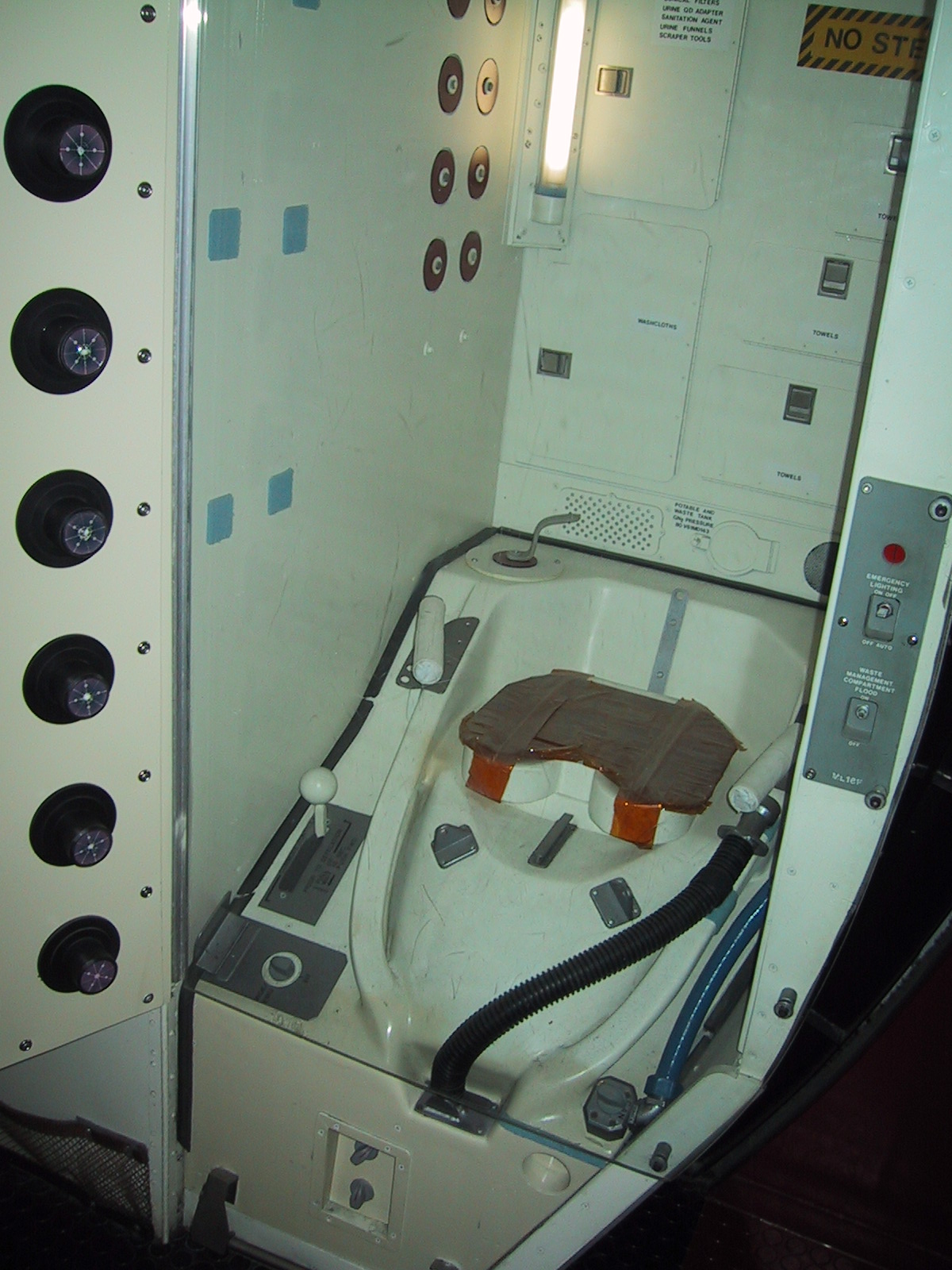
Space Shuttle facilities (by [Svobodat] CC BY-SA 3.0)
To add insult to injury, the “#2 bags” needed some packet mixed in to keep it from going bad in the bag before it could return to Earth for — no kidding — scientific study.
The system was far from perfect. Apollo 8 and Apollo 10 both had to do some housekeeping due to leaky bags.
Astronaut Ken Mattingly reportedly said, “Man, one of the feats of my existence the other day was, in 42 minutes, I strapped on a bag, went out of both ends, and ate lunch…. I used to want to be the first man to Mars. This has convinced me that, if we got to go on Apollo, I ain’t interested.”
Advertisement
Still, it was better than the first Mercury launch, where Alan Shepard famously relieved himself in his spacesuit while sitting on the pad for over eight hours. Later missions used hoses.
Things got slightly better with Skylab, where there was more room. The Shuttle also had a toilet. You got a curtain for privacy, but you couldn’t go #1 and #2 at the same time. Also, apparently, the contraptions were not easily workable for females.
Modern Times
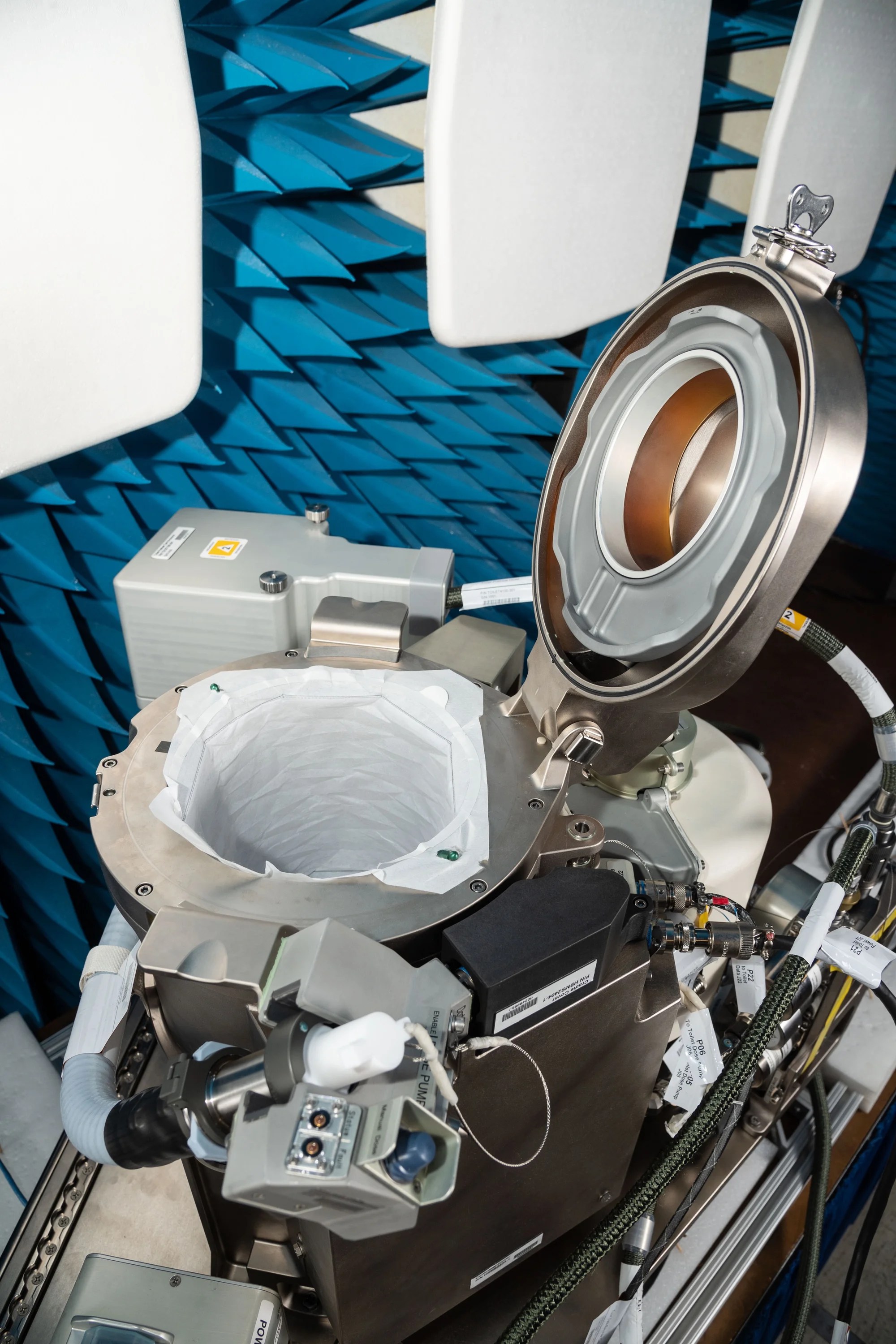
This UMWS went to the ISS (NASA)
The early International Space Station used a similar system to the shuttle. However, in 2020, the UWMS debuted. It is easier to use for the female anatomy, and it has a door. This is essentially the same bathroom crammed into Integrity. Given the size of the capsule, we doubt the door is more than a symbol, but still.
Rather than explain the UWMS operation, you can watch the video below. Note that everyone has their own funnel. There are some things you just don’t want to share.
What’s That Smell?
We don’t know what the burning smell is on Integrity, but we are sure we are going to find out. One other thing we never quite see addressed is how you clean up afterward. We aren’t sure we want to know.
Advertisement
Perhaps it is ironic that the first Artemis mission with a crew is having bathroom problems. After all, the Artemis slogan is “Let’s Go!” You’ll have to finish that joke on your own.
Microsoft says that Storm-1175, a China-based financially motivated cybercriminal group known for deploying Medusa ransomware payloads, has been deploying n-day and zero-day exploits in high-velocity attacks.
This cybercrime gang quickly shifts to targeting new security vulnerabilities to gain access to its victims’ networks, weaponizing some of them within a day and, in some cases, exploiting them a week before patches are released.
“Storm-1175 rapidly moves from initial access to data exfiltration and deployment of Medusa ransomware, often within a few days and, in some cases, within 24 hours,” Microsoft said.
“The threat actor’s high operational tempo and proficiency in identifying exposed perimeter assets have proven successful, with recent intrusions heavily impacting healthcare organizations, as well as those in the education, professional services, and finance sectors in Australia, United Kingdom, and United States.”
Advertisement
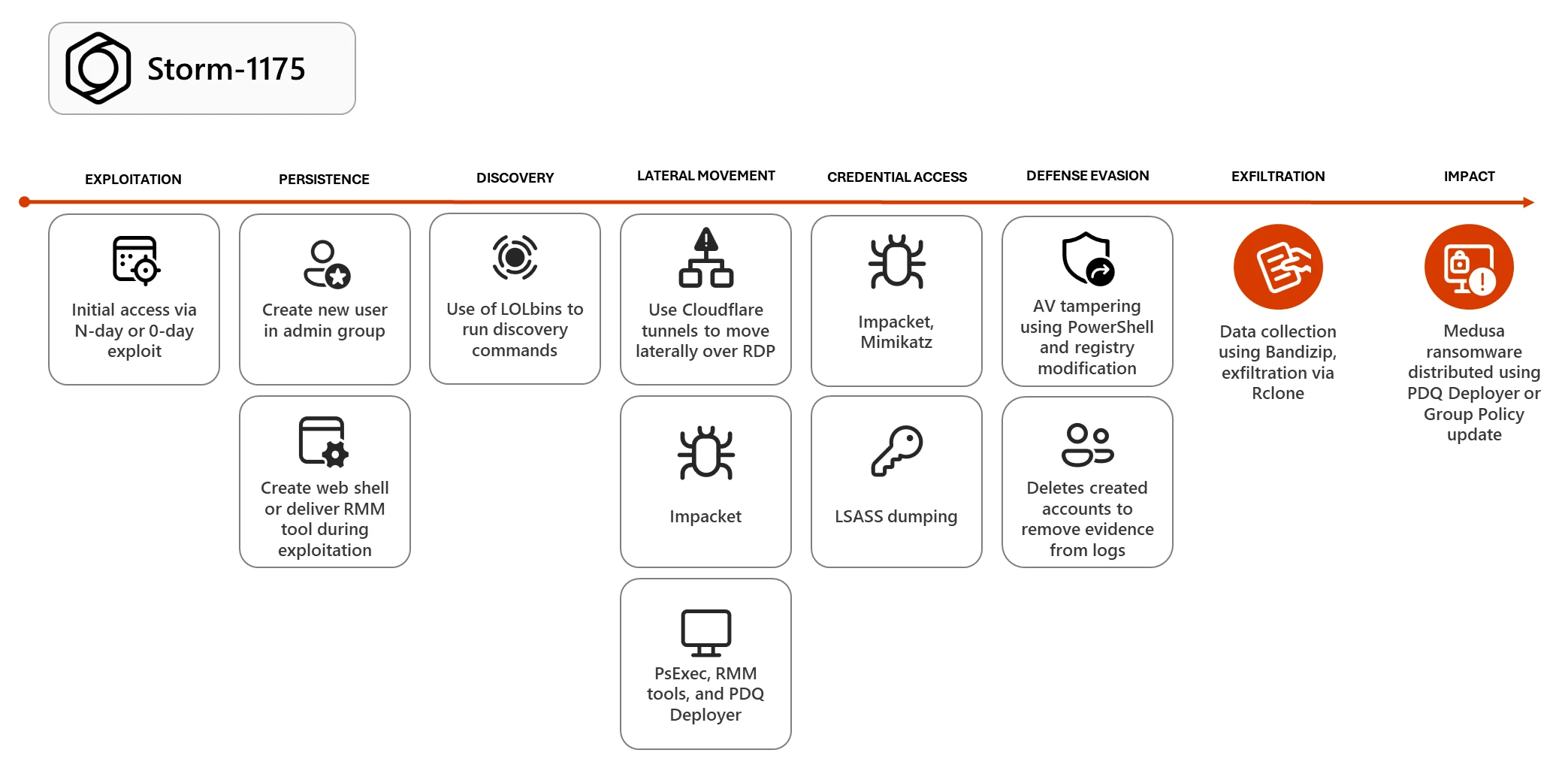
Microsoft has also observed Storm-1175 operators chaining multiple exploits to gain persistence on compromised systems by creating new user accounts, deploying remote monitoring and management software, stealing credentials, and disabling security software before dropping ransomware payloads.
Storm-1175 attack chain (Microsoft)
In October, Microsoft reported that Storm-1175 had been exploiting a maximum-severity GoAnywhere MFT vulnerability (CVE-2025-10035) in Medusa ransomware attacks for over one week before it was patched.
“While these more recent attacks demonstrate an evolved development capability or new access to resources like exploit brokers for Storm-1175, it is worth noting that GoAnywhere MFT has previously been targeted by ransomware attackers, and that the SmarterMail vulnerability was reportedly similar to a previously disclosed flaw,” Microsoft added.
“These factors may have helped to facilitate subsequent zero-day exploitation activity by Storm-1175, who still primarily leverages N-day vulnerabilities.”
CISA issued a joint advisory with the FBI and the Multi-State Information Sharing and Analysis Center (MS-ISAC) in March 2025, warning that the Medusa ransomware gang’s attacks had impacted over 300 critical infrastructure organizations across the United States.
In July 2024, Microsoft also linked the Storm-1175 threat group, along with three other cybercrime gangs, to Black Basta and Akira ransomware attacks that exploited a VMware ESXi authentication-bypass flaw.
Advertisement
Automated pentesting proves the path exists. BAS proves whether your controls stop it. Most teams run one without the other.
This whitepaper maps six validation surfaces, shows where coverage ends, and provides practitioners with three diagnostic questions for any tool evaluation.
Samsung isn’t chasing the soundbar market; it has effectively been running it for 12 straight years alongside two decades of dominance in global TV sales. The company’s 2026 Q-Series soundbars, the HW-Q990H, HW-Q900H, HW-Q800H, and HW-QS90H, build on that position, with the flagship Q990H and QS90H first previewed at CES 2026 and now joined by the full lineup. Following its latest OLED, Neo QLED, MiniLED, and Frame TV announcements, Samsung is tightening its grip on the TV and home audio ecosystem in one move.
Our Editor at Large Chris Boylan got to spend some quality time with the QS90H and Q990H at Samsung’s US headquarters last month and was impressed by what he saw (and heard).
Samsung Q-Series Soundbars
Samsung’s 2026 Q Series soundbars are aimed at anyone who wants a cinematic experience without dealing with an AVR or a room full of wired speakers. The focus here is scale and flexibility, delivering immersive sound that adapts to different room sizes and listening habits without requiring a dedicated home theater setup.
Q Series Soundbar Features
Here are some key features shared across Samsung’s 2026 Q Series soundbars:
AI Dynamic Bass Control: Designed to deliver deeper, more controlled low frequencies with reduced distortion, while supporting high resolution audio up to 24-bit/96kHz.
Advertisement
Active Voice Amplifier Pro: This feature analyzes background noise in real time and adjusts dialogue levels accordingly, helping voices cut through without constantly reaching for the remote.
Wireless Dolby Atmos: Although Q-Series soundbars provide a Dolby Atmos-compatible HDMI-eARC connection, there is a wireless connection option. The soundbars are compatible with Dolby Atmos delivered over Wi-Fi from select streaming sources.
Eclipsa Audio: Samsung’s Q-Series SoundBars incorporate Eclipsa Audio, an open immersive surround sound format developed by Samsung in partnership with Google and other companies. Similar to Dolby Atmos, Eclipsa Audio expands on traditional surround sound with the addition of height information. With Eclipsa Audio-encoded content, sound can come from all around and above the listener. This enables a more enveloping and immersive listening experience with sound emanating from all three dimensions, just like in real life. Eclipsa Audio is currently the only immersive surround sound format supported on YouTube.
Advertisement
Sound Elevation: Designed to align audio with what you’re seeing on screen, this feature directs sound upward so dialogue appears to come from the characters, not the soundbar sitting below the TV.
Auto Volume: Helps keep levels consistent across channels, apps, and sources, reducing those sudden jumps that usually send you scrambling for the remote.
Advertisement. Scroll to continue reading.
Q-Symphony: This feature allows Q Series soundbars to work with compatible Samsung TVs and Wi Fi speakers as a single, integrated system. It can pair with up to five Samsung audio devices, creating a more flexible home theater setup while adjusting performance based on speaker placement in the room.
Advertisement
SpaceFit Sound Pro: Samsung’s built-in room calibration system uses the soundbar’s onboard microphones to analyze your space and adjust playback accordingly. It can update settings automatically over time, or recalibrate when the soundbar is moved, helping maintain consistent performance without manual tweaking.
Voice Assistants and Control: Q Series soundbars support voice control via Alexa, Google Assistant, and Bixby. For those who prefer buttons, onboard controls and the upcoming Samsung Sound app handle the basics, and there’s even a dedicated Spotify Connect button. Notably, a traditional remote is not included.
HW-Q990H
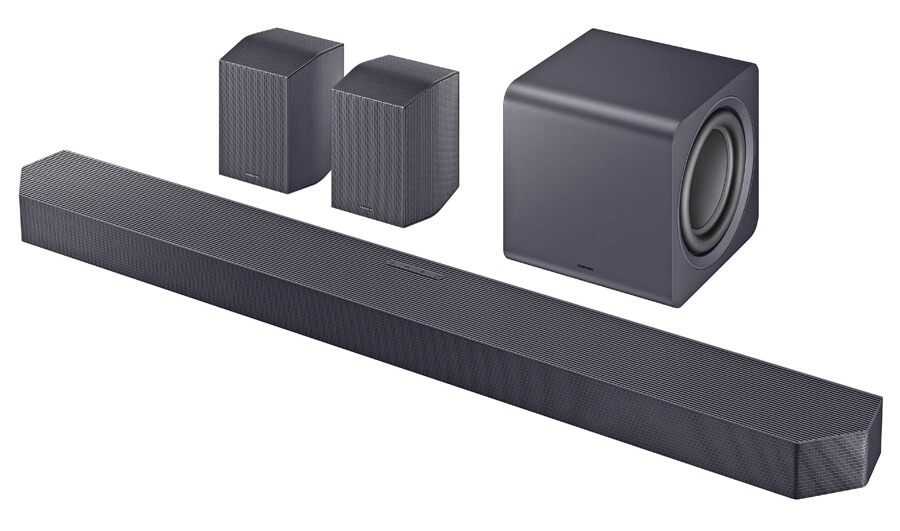
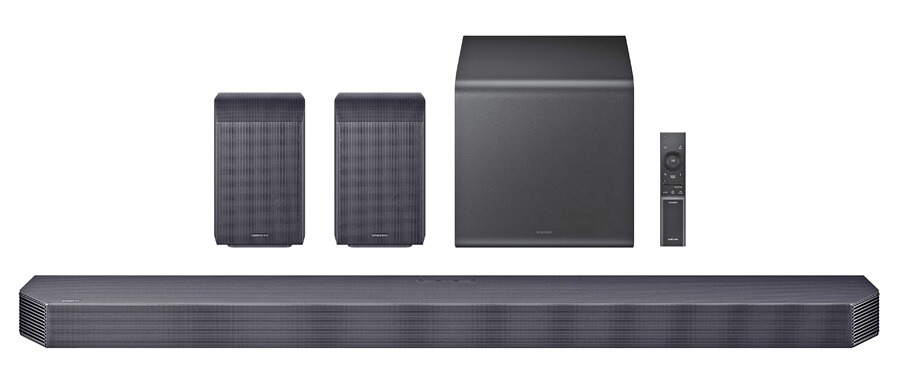
The HW-Q990H is Samsung’s Q Series flagship and its most ambitious soundbar to date. It uses an 11.1.4 channel layout with three front channels, two side firing, two wide firing, and four rear channels, along with four upfiring channels split between the front and rear. The included compact subwoofer features a dual 8-inch driver design aimed at delivering serious low end without overwhelming the room.
Height effects are handled by the upfiring channels in both the bar itself and the included rear speakers, while next generation AI tuning adjusts output in real time based on both the room and the content. The goal is to deliver a level of immersion that approaches a full home theater system, without the rack of gear or the wiring that usually comes with it. Just as important, Samsung is focusing on features that address everyday soundbar frustrations rather than piling on gimmicks.
The Q990H supports Dolby Atmos and DTS-X as well as Eclipsa Audio immersive surround sound.
Advertisement
The main soundbar measures 48.5 inches wide, 2.8 inches high, and 5.5 inches deep, making it a solid match for 50-inch and larger TVs. It can be placed on a shelf or wall mounted.
Per editor at Large, Chris Boylan, the HW-Q990H offered a cinematic sound on DTS-X and Dolby Atmos soundtracks like “Blade Runner” and “F1” with nice immersion and surprisingly solid bass reproduction, considering the compact size of the included subwoofer.
HW-Q900H
The HW-Q900H is a step down from the Q990H but still brings a substantial feature set. It uses a 9.1.4 channel layout with three front channels, two side firing, two wide firing, and two rear channels, along with four upfiring height channels split between the front and rear. The system also includes a compact active subwoofer with a dual 8 inch driver design intended to deliver strong low end without overwhelming the room.
Unlike the flagship, the Q900H supports Dolby and Eclipsa Audio formats but does not include DTS compatibility.
The main soundbar measures 43.71 inches wide, 2.8 inches high, and 4.73 inches deep, making it a good fit for a wide range of TVs. It can be placed on a shelf or wall mounted.
Advertisement
HW-Q800H
The HW-Q800H is a more streamlined option in the lineup, built around a 5.1.2 channel configuration with three front channels, two side firing, and two upfiring height channels, paired with a wireless subwoofer.
Advertisement. Scroll to continue reading.
Like the Q900H, it supports Dolby and Eclipsa Audio formats but does not include DTS compatibility.
The soundbar measures 43.71 inches wide, 2.8 inches high, and 4.72 inches deep, making it an easy fit for most TV setups. It can be placed on a shelf or wall mounted.
HW-QS90H
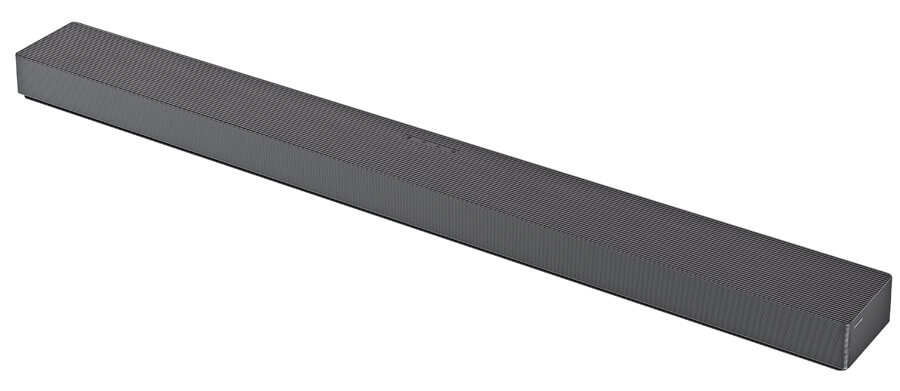
The Samsung HW-QS90H takes a different approach, trading modular expansion for simplicity. It features a self contained 7.1.2 channel design with 13 drivers, including nine wide range speakers, eliminating the need for separate surrounds or a dedicated subwoofer.
The unit features a “Convertible Fit” design which uses an internal gyroscope to detect whether it is installed horizontally (like on a credenza) or vertically (like mounted on a wall) and automatically adjusts its driver array to accommodate these different placements. The result is a soundbar that adapts to the room rather than forcing the room to adapt to it, which makes a lot more sense as living spaces get tighter.
Advertisement
The QS90H uses a built-in Quad Bass Woofer system, designed to deliver meaningful low frequency impact from a single enclosure, keeping floor space clear and setup straightforward.
The QS90H supports both Dolby and DTS formats as well as Eclipsa Audio.
It measures 49.02 inches wide, 2.71 inches high, and 4.92 inches deep, and can be placed on a shelf or wall mounted.
Our Editor at Large Chris Boylan tested the QS90H with several 4K Blu-rays and clips from a Kaleidescape Strato E 4K media player including “Blade Runner, “Baby Driver,” “F1” and “Spider-Man: Into the Spiderverse.” He found that the bar did a convincing job drawing the viewer into the action, when mounted on a wall below the company’s S90H OLED TV. Surround sound virtualization was effective at giving the illusion of sound coming from behind the viewing position and bass was solid for a one-piece unit though he did miss the bass extension you get with a separate dedicated subwoofer. Boylan confirmed that the bar could decode both Dolby Atmos and Eclipsa Audio (DTS-X is also supported).
Advertisement
Comparison
Samsung Model
HW-Q990H
HW-Q900H
HW-Q800H
HW-QS90H
Product Type
Soundbar System
Soundbar System
Soundbar System
Soundbar
Price
$1,999.99
$1,499.99 (Coming Soon)
$1,099.99
$999.99 (Coming Soon)
Number of Channels
11.1.4
9.1.4
5.1.2
7.1.2
Primary Channels
3 Front (Left, center, right)
2 Side-Firing
2 Wide-Firing
4 Rear Channels
3 Front (Left, center, right) · 2 Side-Firing
Advertisement
2 Wide-Firing
2 Rear Channels
3 Front (Left, center, right)
2 Side-Firing
3 Front (Left, center, right) ·
Advertisement
2 Side-Firing · 2 Wide-Firing
Subwoofer Channel
1
1
1
N/A
Up- firing Channels
2 Front 2 Rear
2 Front 2 Rear
2 Up- firing
2 Up- firing
HDMI ARC
Yes (eARC)
Yes (eARC)
Yes (eARC)
Yes (eARC)
Dolby Atmos™
Yes
Yes
Yes
Yes
DTS:X
Yes
No
No
Yes
Remote Controller
Yes
Yes
Yes
Yes
Q-Symphony compatible
Yes
Yes
Yes
Yes
Surround Sound Expansion
Yes
Yes
Yes
Yes
Game Mode Pro
Yes
Yes
Yes
Yes
AVA Pro
Yes
Yes
Yes
Yes
Connecitivity
Wi-Fi
Bluetooth Version: 5.3
Voice Assistants Built-in: Alexa, Bixby
Advertisement
Works with: Google cast, Airplay
HDMI IN: 2
HDMI OUT: 1
HDMI CEC
Optical In: 1
Advertisement
USB: N/A
Spotify Connect
Roon Ready
Wi-Fi
Advertisement
Bluetooth Version: 5.3
Voice Assistants Built-in: Alexa, Bixby
Works with: Google cast, Airplay
HDMI IN: 1
Advertisement
HDMI OUT: 1
HDMI CEC
Optical In: 1
USB: N/A
Advertisement
Spotify Connect
Roon Ready
Wi-Fi
Bluetooth Version: 5.3
Advertisement
Voice Assistants Built-in: Alexa, Bixby
Works with: Google cast, Airplay
HDMI IN: 1
HDMI OUT: 1
HDMI CEC
Advertisement
Optical In: 1
USB: N/A
Spotify Connect
Roon Ready
Advertisement
Wi-Fi
Bluetooth Version: 5.3
Voice Assistants Built-in: Alexa, Bixby
Works with: Google cast, Airplay
Advertisement
HDMI IN: 1
HDMI OUT: 1
HDMI CEC
Optical In: 1
Advertisement
USB: N/A
Spotify Connect
Roon Ready
Audio Formats/AV Decoding
Dolby Atmos™
Dolby TrueHD
Dolby Digital Plus
Advertisement
Dolby 5.1ch
DTS:X
DTS 5.1ch
DTS-HD HRA
DTS-HD MA
DTS Express
MP3
Advertisement
AAC
OGG
FLAC
WAV
Advertisement
ALAC
AIFF
Dolby Atmos™
Dolby TrueHD
Dolby Digital Plus
Dolby 5.1ch
DTS:X: No
Advertisement
DTS 5.1ch: No
DTS-HD HRA: No
DTS-HD MA: No
DTS Express: No
Advertisement
MP3
AAC
OGG
FLAC
Advertisement
WAV
ALAC
AIFF
Dolby Atmos™
Dolby TrueHD
Dolby Digital Plus
Advertisement
Dolby 5.1ch
DTS:X: No
DTS 5.1ch: No
DTS-HD HRA: No
Advertisement
DTS-HD MA: No
DTS Express: No
MP3
AAC
OGG
Advertisement
FLAC
WAV
ALAC
AIFF
Advertisement
Dolby Atmos™
Dolby TrueHD
Dolby Digital Plus
Dolby 5.1ch
Advertisement
DTS:X
DTS 5.1ch
DTS-HD HRA
DTS-HD MA
Advertisement
DTS Express
MP3
AAC
OGG
Advertisement
FLAC
WAV
ALAC: Yes
AIFF: Yes
Advertisement
Sound Modes
Surround Sound Expansion
Game Mode Pro
Adaptive Sound
DTS:X
Advertisement
Bass Boost: No
Night Mode
Voice-enhance mode
Surround Sound Expansion
Game Mode Pro
Advertisement
Adaptive Sound
DTS:X: No
Bass Boost: No
Night Mode
Voice-enhance mode
Advertisement
Game Mode Pro
Adaptive Sound: Yes
DTS:X: No
Bass Boost: No
Night Mode
Advertisement
Voice-enhance mode
Game Mode Pro
Adaptive Sound: Yes
DTS:X
Advertisement
Bass Boost: No
Night Mode
Voice-enhance mode
Video Compatibilty
4K Video Pass: 120Hz
Advertisement
HDR: HDR 10+
4K Video Pass: 120Hz
HDR: HDR 10+
4K Video Pass: 60Hz
HDR: HDR 10+
4K Video Pass: 60Hz
Advertisement
HDR: HDR 10+
Dimensions (WHD)
Soundbar 48.50 x 2.8 x 5.43
Subwoofer: 9.80 x 9.91 x 9.80
Rear Speaker: 5.10 x 7.93 x 5.53
Advertisement
Soundbar 43.71 x 2.38 x 4.72
Subwoofer: 9.80 x 9.91 x 9.80
Rear Speaker: 5.10 x 7.93 x 5.53
Soundbar43.71 x 2.38 x 4.72
Subwoofer: 9.80 x 9.91 x 9.80
Rear Speaker: N/A
Advertisement
Soundbar: 49.02 x 2.71 x 4.92
Weight (lbs)
Soundbar: 16.08
Subwoofer: 18.28
Rear Speaker: 7.49
Soundbar: 11.68
Advertisement
Subwoofer: 15.87
Rear Speaker: 6.83
Soundbar: 11.24
Subwoofer: 15.87
Advertisement
Rear Speaker: N/A
Soundbar: 14.75
Package Contents
Soundbar
Subwoofer
Rear Speaker Kit
HDMI Cable (HDMI 2.1)
Advertisement
Wall Mount Kit
Rubber Foot
Remote Controller
Battery for Remote Controller
Advertisement
Soundbar
Subwoofer
Rear Speaker Kit
HDMI Cable (HDMI 2.1)
Advertisement
Wall Mount Kit
Rubber Foot
Remote Controller
Battery for Remote Controller
Soundbar
Advertisement
Subwoofer
Rear Speaker Kit: No
HDMI Cable(HDMI 2.1)
Wall Mount Kit
Advertisement
Ruber Foot
Remote Controller
Battery for Remote Controller
Soundbar
Advertisement
Subwoofer: No
Rear Speaker Kit: No
HDMI Cabl (HDMI 2.1)
Wall Mount Kit
Advertisement
Rubber Foot
Remote Controller
Battery for Remote Controller
The Bottom Line
Samsung didn’t reinvent the soundbar in 2026, but it didn’t need to. What it’s doing here is doubling down on the formula that put it on top in the first place: tight integration with its TVs, flexible system scaling, and fewer wires without completely sacrificing immersion.
What’s new or at least more refined is the range itself. You now have a clearer ladder from the full surround Q990H, to the more compact Q900H and Q800H, all the way down to the one-piece QS90H, which ditches the usual box of extras and goes all in on a single enclosure. The QS90H in particular stands out because it tries to solve the biggest real world problem: people want better sound, but they don’t want more stuff in the room.
Advertisement
What still makes Samsung unique is ecosystem control. Q-Symphony, SpaceFit, and Wireless Dolby Atmos aren’t just features, they are leverage. Pair these with a recent Samsung TV and you get the full experience. Use another brand and you leave performance and functionality on the table. That’s not a bug, it’s the strategy.
What’s missing is just as important. DTS support is inconsistent across the lineup, which is hard to ignore for anyone with a physical media library. But they do offer Eclipsa Audio decoding, which may matter in time as more content creators create immersive audio content in that format on YouTube. There’s also still a reliance on Samsung’s ecosystem to unlock everything, which won’t sit well with buyers who mix and match brands.
Advertisement. Scroll to continue reading.
So who is this for? Anyone building a TV-first home theater who wants strong, immersive sound without the complexity of separates. If you already own a Samsung TV, the case is easy. If you don’t, these are still competitive soundbars, but the real value only shows up when you stay inside the walled garden.
Samsung has spent the better part of the last decade dominating the TV market and building a soundbar empire, but dedicated two-channel speakers and a whole home music ecosystem have never really been part of the conversation, until now. With the $499 Music Studio 7 (LS70H) and $299 Music Studio 5 (LS50H), Samsung is making a direct move into wireless whole home audio for 2026, and it’s not doing it quietly.
Following its latest OLED, Neo QLED, MiniLED, and Frame TV launches, these new Wi-Fi speakers, first previewed at CES 2026 and now fully detailed—pair a more refined, room-friendly sound with a distinctive “dot” design from Erwan Bouroullec that actually gives them an identity in a sea of forgettable boxes. Samsung isn’t chasing louder or flashier. It’s aiming for flexible multi-room and true two-channel performance wrapped in something people might actually want to look at for more than five minutes.
What sets Samsung’s Music Studio speakers apart from most competitors is that they can be used both for whole home audio (up to 10 speakers in the home) and also used as part of a multi-speaker home theater audio system (up to 5 speakers).
Music Studio 7 and 5 Shared Features
Here are some key features that the Music Studio 7 and 5 have in common:
Advertisement
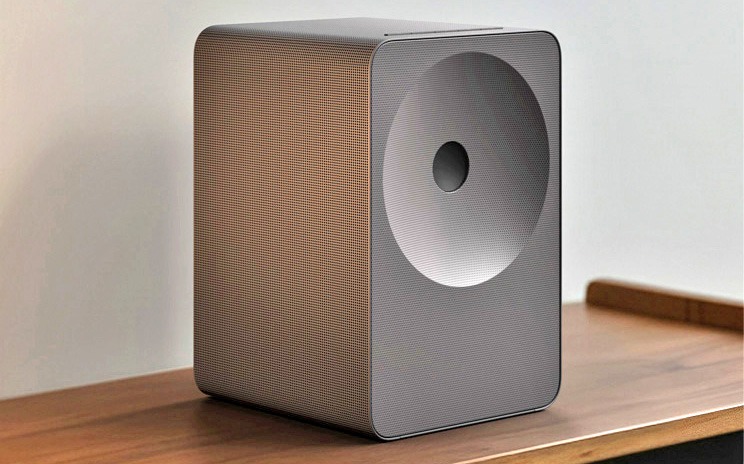
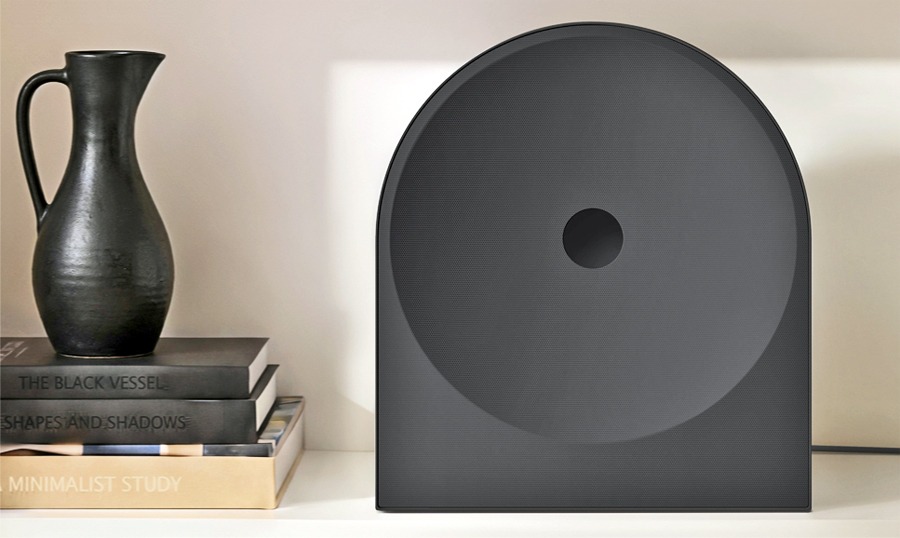
Style: The Music Studio 7 and 5 feature a distinctive “dot” design concept created by renowned designer Erwan Bouroullec. The idea draws from a universal symbol found throughout music and visual art, while remaining rooted in Samsung’s current industrial design language. The result is a speaker that blends into a room naturally—doing its job without screaming for attention, which is how most people actually want their speakers to behave.
Wireless Streaming: Music Studio speakers support both Bluetooth and Wi-Fi streaming, with compatibility for Google Cast, AirPlay, and Roon Ready systems. That gives users real flexibility across platforms without being locked into a single ecosystem.
Voice Assistants and Control: Users can control the Music Studio 7 and 5 via voice commands using Alexa, Google Assistant, and Bixby. Non-voice control is available through onboard controls and the Samsung Sound App (coming soon). There is also a dedicated Spotify Connect button for direct playback. A traditional remote control is not included.
Audio Lab Pattern Control: This technology manages how sound is distributed across channels, reducing overlap and congestion so effects, music, and dialogue remain clearly defined.
Advertisement
AI Dynamic Bass Control: Designed to deliver deeper, more controlled low frequencies with minimal distortion, this system dynamically adjusts bass output in real time while supporting high-resolution audio up to 24-bit/96kHz.
Active Voice Amplifier Pro: Samsung’s AVA analyzes ambient noise in real time so voice audio remains clear and intelligible. Enabling this feature boosts dialogue from the Music Studio 7 and 5, making it easier to hear over background noise without cranking the overall volume. This is particularly handy for listening to podcasts, audiobooks, weather and news reports in a busy home.
Wireless Dolby Atmos: The Music Studio 7 includes a Dolby Atmos-compatible HDMI eARC connection with up-firing driver for height effects, while the Music Studio 5 offers neither of these things. Both speakers can reproduce Dolby Atmos music over a wireless connection from compatible streaming services, however, the Music Studio 5 virtualizes the height effects while the Music Studio 7 offers a discrete up-firing driver for the height channel. Both speakers can be a part of a Wireless Dolby Atmos system over Wi-Fi when used with compatible Samsung TVs and select streaming sources.
Advertisement. Scroll to continue reading.
Advertisement
Pro Tip: Samsung’s Wireless Dolby Atmos implementation is not the same thing as Dolby Atmos FlexConnect. Although the two systems share some features and functionality, they are entirely different implementations.
Eclipsa Audio: Samsung’s Music Studio wireless speakers incorporate Eclipsa Audio, an open immersive surround sound format developed by Samsung in partnership with Google and other companies. Similar to Dolby Atmos, Eclipsa Audio expands on traditional surround sound with the addition of height information. With Eclipsa Audio-encoded content, sound can come from all around and above the listener. This enables a more enveloping and immersive listening experience with sound emanating from all three dimensions, just like in real life. Eclipsa Audio is currently the only immersive surround sound format supported on YouTube.
Q-Symphony: This feature allows the Music Studio speakers to work in tandem with compatible Samsung TVs, soundbars, and Wi-Fi speakers to create a more immersive home theater system. Q-Symphony supports pairing up to five Samsung audio devices and can automatically optimize sound based on speaker placement within the room.
SpaceFit Sound Pro: Samsung’s room calibration technology is built into both Music Studio models via onboard microphones. SpaceFit analyzes your listening environment and adjusts output accordingly. It can recalibrate automatically on a daily basis or whenever the speaker is moved.
Advertisement
Waveguide: This design technology helps direct and disperse sound more evenly throughout the room, improving coverage so audio remains consistent regardless of where you’re sitting.
Music Studio 7 (LS70H)
The Music Studio 7 (LS70H) is the flagship of Samsung’s 2026 Wi-Fi speaker lineup, designed to deliver a more immersive listening experience from a single enclosure.
On the outside, it features a curved rectangular form that aligns with the series’ distinctive design language. Inside, Samsung has implemented a 3.1.1 channel configuration, including a built in subwoofer, with left, center, right, and top firing drivers working together to create a convincing sense of height and spatial depth without the need for a full surround system.
The LS70H measures 7.28 x 10.59 x 7.50 inches and weighs 12.35 pounds.
Music Studio 5 (LS50H)
The Music Studio 5 (LS50H) sits below the Music Studio 7 in Samsung’s 2026 Wi Fi speaker lineup and takes a different design approach, with a rounded top half and rectangular base that feels more decor friendly than most wireless speakers. It can reproduce stereo sound on its own or be paired with a second unit for a wider more enveloping soundstage. Though it has no built-in height speaker, it can reproduce virtualized Dolby Atmos immersive sound.
While it looks different from the Music Studio 7, the LS50H is still engineered to deliver controlled bass with minimal distortion and supports modern connectivity options, including Wi Fi casting, streaming services, voice control, and Bluetooth for seamless everyday use.
Advertisement
Inside, the Music Studio 5 uses a 2-channel configuration with a 4-inch woofer and dual tweeters, balancing clarity, low end presence, and a form factor that fits more easily into real living spaces.
The LS50H measures 9.88 x 11.18 x 5.39 inches and weighs 5.29 pounds.
The Music Studio 7 and Music Studio 5 mark Samsung’s most credible push yet into wireless whole home audio and two-channel audio. What makes them stand out isn’t just the feature list, it’s the combination of design, flexibility, and ecosystem integration. The Bouroullec “dot” design gives them a visual identity most wireless speakers lack, while support for Wi-Fi streaming, Roon, AirPlay, Google Cast, and Q Symphony makes them far more adaptable than the average plug and play box.
Samsung appears to be intentionally blurring categories here. The Music Studio speakers aren’t just lifestyle speakers. They can run in stereo mode, pair with each other for wider stereo separation, handle Dolby Atmos music, slot into a multi room system, or integrate into a home theater setup with Samsung TVs. That kind of versatility is where Samsung is clearly aiming to separate itself.
But there are tradeoffs. No analog input, no USB playback, and no phono stage means traditional sources are completely off the table without workarounds. If your system still revolves around physical media or external components, these aren’t built for you.
Advertisement
Competition is stiff. Sonos, Bluesound, Denon HEOS, Apple HomePod, and even higher end lifestyle brands like Naim all play in this space, and many offer deeper ecosystems or better support for wired sources. Samsung is betting that its design, TV integration, and Harman backed tuning will be enough to pull people in.
Who are these for? Not the purist with racks of gear and a Thorens spinning in the corner. These are for people building a modern system around streaming, multi room audio, and a Samsung TV who want something that looks good, sounds better than a soundbar on its own, and doesn’t require a weekend to set up.
Samsung isn’t just filling a gap here. It’s trying to create a new lane between soundbars and traditional stereo. Whether that lane gets crowded depends on how good they actually sound – and our initial listening sessions have us optimistic – but for the first time, it feels like Samsung is at least asking the right questions.
The mantra of the modern tech industry was arguably coined by Facebook (before it became Meta): “move fast and break things.”
But as enterprise infrastructure has shifted into a dizzying maze of hybrid clouds, microservices, and ephemeral compute clusters, the “breaking” part has become a structural tax that many organizations can no longer afford to pay. Today, two-year-old startup NeuBird AI is launching a full-scale offensive against this “chaos tax,” announcing a $19.3 million funding round alongside the release of its Falcon autonomous production operations agent.
The launch isn’t just a product update; it is a philosophical pivot. For years, the industry has focused on “Incident Response”—making the fire trucks faster and the hoses bigger. NeuBird AI is arguing that the only sustainable path forward is “Incident Avoidance”.
As Venkat Ramakrishnan, President and COO of NeuBird AI, put it in a recent interview: “Incident management is so old school. Incident resolution is so old school. Incident avoidance is what is going to be enabled by AI”.
Advertisement
By grounding AI in real-time enterprise context rather than just large language model reasoning, the company aims to move site reliability engineering and devops teams from a reactive posture to a predictive one.
The AI divide: a reality check on automation
Accompanying the launch is NeuBird AI’s 2026 State of Production Reliability and AI Adoption Report, a survey of over 1,000 professionals that reveals a massive disconnect between the boardroom and the server room.
While 74% of C-suite executives believe their organizations are actively using AI to manage incidents, only 39% of the practitioners—the engineers actually on-call at 2:00 AM—agree.
Advertisement
This 35-point “AI Divide” suggests that while leadership is writing checks for AI platforms, the technology is often failing to reach the frontline.
For engineers, the reality remains manual and grueling: the study found that engineering teams spend an average of 40% of their time on incident management rather than building new products.
Gou Rao, co-founder CEO of NeuBird AI, told VentureBeat that this is a persistent operational reality: “Over the past 18 months that we have been in production, this is not a marketing slide. We have concretely been able to demonstrate a massive reduction in time to incident response and resolution”.
The consequences of this “toil” are more than just lost productivity. Alert fatigue has transitioned from a morale issue to a direct reliability risk.
Advertisement
According to the report, 83% of organizations have teams that ignore or dismiss alerts occasionally, and 44% of companies experienced an outage in the past year tied directly to a suppressed or ignored alert. In many cases, the systems are so noisy that customers discover failures before the monitoring tools do.
Introducing NeuBird AI Falcon
NeuBird AI’s answer to this systemic failure is the Falcon engine. While the company’s previous iteration, Hawkeye, focused on autonomous resolution, Falcon extends that capability into predictive intelligence. “When we launched NeuBird AI in 2023, our first version of the agent was called Hawkeye,” Rao explains. “What we’re announcing next week at HumanX is our next-generation version of the agent, codenamed Falcon. Falcon is easily three times faster than Hawkeye and is averaging around 92% in confidence scores”.
This level of accuracy allows engineers to trust the agent’s output at face value. Falcon represents a significant leap over previous generative AI applications in the space, particularly in its ability to forecast failure. “Falcon is really good at preventive prediction, so it can tell you what can go wrong,” Rao says. “It’s pretty accurate on a 72-hour window, even better at 48 hours, and by 24 hours it gets really, really accurate”.
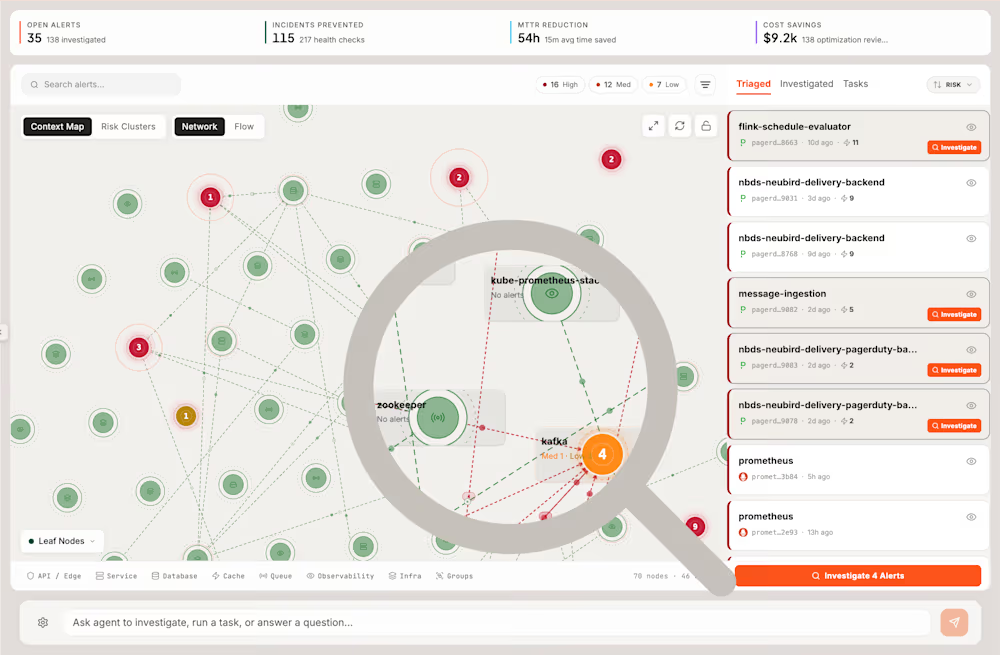
One of the standout features of the new release is the Advanced Context Map. Unlike static dashboards, this is a real-time view of infrastructure dependencies and service health. It allows teams to visualize the “blast radius” of an issue as it propagates across an environment, helping engineers understand not just what is broken, but why it is failing in the context of its neighbors.
Advertisement
NeuBird AI Advanced Context Map- with Zoom In. Credit: NeuBird AI
‘Minority Report’ for incident management
While many AI tools favor flashy web interfaces, NeuBird AI is leaning into the developer’s native habitat with NeuBird AI Desktop. This allows engineers to invoke the production ops agent directly from a command-line interface to explore root causes and system dependencies.
“Falcon has a desktop mode which allows it to interact with a developer’s local tools,” Rao noted. “We’re getting a lot more traction from a hands-on developer audience, especially as people go to Claude Desktop and Cursor. They’re completing the loop by using production agents talking to their coding agents”.
NeuBird Desktop CLI view. Credit: NeuBird AI
Advertisement
This integration enables a “multi-agent” workflow where an engineer can use NeuBird AI’s agent to diagnose a root cause in production and then hand off that diagnosis to a coding agent like Claude Code to implement the fix.
During a live demo, Rao showcased how the agent could be set to “Sentinel Mode,” constantly sweeping a cluster for risks. If it detects an anomaly—such as a projected 5% spike in AWS costs or a misconfigured Kubernetes pod—it can flag the specific engineer on-call who has the domain expertise to fix it.
“This is like ‘Minority Report for Incident Management’,” one financial services executive reportedly told the team after a demo.
Context engineering: a gateway for security
A primary concern for enterprises deploying AI is security—ensuring large language models don’t go “crazy” or exfiltrate sensitive data. NeuBird AI addresses this through a proprietary approach to “context engineering”.
Advertisement
“The way we implemented our agent is that the large language models themselves are never actually touching the data directly,” Rao explains. “We become the gateway for how the context can be accessed”. This means the model is the reasoning engine, but NeuBird AI is the middleman that wraps the data.
Furthermore, the company has implemented strict guardrails on what the agent can actually execute. “We’ve created a language that confines and restricts the agent from what it can do,” says Rao. “If it comes up with something anomalous, or something we don’t know, it won’t run. We won’t do it”.
This architectural choice allows NeuBird AI to remain model-agnostic. If a newer model from Anthropic or Google outperforms the current reasoning engine, NeuBird AI can simply switch it out without requiring the customer to change their platform. “Customers don’t want to be tied to a specific way of reasoning,” Rao asserts. “They want to be tied to a platform from which they can get the value of an agentic system”.
Displacing the “army”: displacing expensive observability
One of the most radical claims NeuBird AI makes is that agentic systems can actually reduce the amount of data enterprises need to store in the first place. Currently, teams rely on massive storage platforms with complex query languages.
Advertisement
“People use very complex observability tools like Datadog, Dynatrace, and Sysdig,” Rao says. “This is the norm today, which is why it takes an army of people to solve a problem. What we’ve been able to demonstrate with agentic systems is that you don’t need to store all that data in the first place”. Because the agent can reason across raw data sources, it can identify which signals are junk and which are critical. This shift, Rao argues, “reduces human toil and effort while simultaneously reducing your reliance on these insanely expensive observability tools”.
The practical impact of this “incident avoidance” was recently demonstrated at Deep Health. Rao recounts how their agent detected a systemic issue that was invisible to traditional tools: “Our agent was able to go in and prevent an issue from happening which would have caused this company, Deep Health, a major production outage. The customer is completely beside themselves and happy about what it could do”.
FalconClaw: operationalizing ‘tribal knowledge’
One of the most persistent problems in IT operations is the loss of “tribal knowledge”—the hard-won expertise of senior engineers that exists only in their heads. NeuBird AI is attempting to solve this with FalconClaw, a curated, enterprise-grade skills hub compatible with the OpenClaw ecosystem.
FalconClaw allows teams to capture best practices and resolution steps as “validated and compliant skills”. The tech preview launched today with 15 initial skills that work natively with NeuBird AI’s toolchain.
Advertisement
NeuBird FalconClaw Skills view. Credit: NeuBird AI
According to Francois Martel, Field CTO at NeuBird AI, this turns hard-won expertise into a reusable asset that the AI can use automatically.
It’s an attempt to standardize how agents interact with infrastructure, moving away from proprietary “black box” systems toward a multi-agent world where different AI tools can share a common set of operational abilities.
Scaling the moat: funding and leadership
The $19.3 million round was led by Xora Innovation, a Temasek-backed firm, with participation from Mayfield, M12, StepStone Group, and Prosperity7 Ventures. This brings NeuBird AI’s total funding to approximately $64 million.
Advertisement
The investor interest is fueled largely by the pedigree of the founding team. Gou Rao and Vinod Jayaraman previously co-founded Portworx, which was acquired by Pure Storage, and Ocarina Networks, acquired by Dell. They have recently bolstered their leadership with Venkat Ramakrishnan, another Pure Storage veteran, as President and COO.
For investors like Phil Inagaki of Xora, the value lies in NeuBird AI’s “best-in-class results across accuracy, speed and token consumption”. As cloud costs continue to spiral, the ability of an AI agent to not only fix bugs but also optimize infrastructure capacity is becoming a “must-have” rather than a “nice-to-have”. NeuBird AI claims its agent can save enterprise teams more than 200 engineering hours per month.
The path to ‘self-healing’ infrastructure
As the State of Production Reliability report notes, current incident management practices are “no longer sustainable”. With 61% of organizations estimating that a single hour of downtime costs $50,000 or more, the financial stakes of staying in a reactive loop are enormous.
NeuBird AI’s launch of Falcon and FalconClaw marks a definitive attempt to break that loop. By focusing on prevention and the “context engineering” required to make AI trustworthy for enterprise production, the company is positioning itself as the critical intelligence layer for the modern stack.
Advertisement
While the “AI Divide” between executives and practitioners remains a significant hurdle for the industry, NeuBird AI is betting that as engineers see the value of a cli-driven, 92%-accurate agent that can “see around corners,” the skepticism will fade. For the site reliability engineers currently drowning in a flood of non-actionable alerts, the arrival of a reliable ai teammate couldn’t come soon enough.
NeuBird AI Falcon is available starting today, with organizations able to sign up for a free trial at neubird.ai.
Halter, a New Zealand agtech startup now valued at $2 billion, has raised $220 million to expand its AI-powered cattle management system. “Halter is now valued at $2 billion following the Series E, which was led by Peter Thiel’s Founders Fund with participation from Blackbird, DCVC, Bond, Bessemer, and several others,” reports Inc. From the report: alter plans to use the funding to expand its existing footprint in the U.S., Australia, and New Zealand, as well as to grow into new markets such as Ireland, the U.K., and parts of North and South America. The round is one of the biggest to-date in the industry, and comes amid growing adoption of the technology among U.S. ranchers. According to Halter, U.S. ranchers have erected some 60,000 miles of virtual fencing since the company’s launch in 2024.
Halter’s technology works through a system of solar-powered collars and in-pasture towers that collect data — some 6,000 data points per collar per minute — from grazing cattle and feed it into a cloud-based platform and app for farmers. The collars are ergonomically designed to be comfortable for the cattle wearing them, and leverage AI to play audio cues or vibrate when it is time to move to a different grazing location or if they step outside of a predetermined zone. The collars can also deliver an electric pulse if an animal does not respond.
Halter’s app also creates a digital twin of a ranch, which essentially means a digital replica that leverages real-time data to accurately reflect conditions. Farmers can consult the app to check on their herd, or fence, and move cattle with just a few clicks. Halter also has a proprietary algorithm that it calls a “Cowgorithm” trained on seven billion hours of animal behavior. Altogether, this technology is meant to make ranchers’ lives easier when herding cattle, help them save money on building physical fencing, and provide insights about pasture management to improve soil health and pasture productivity. Halter says some 2,000 farmers and ranchers currently use its tech worldwide.
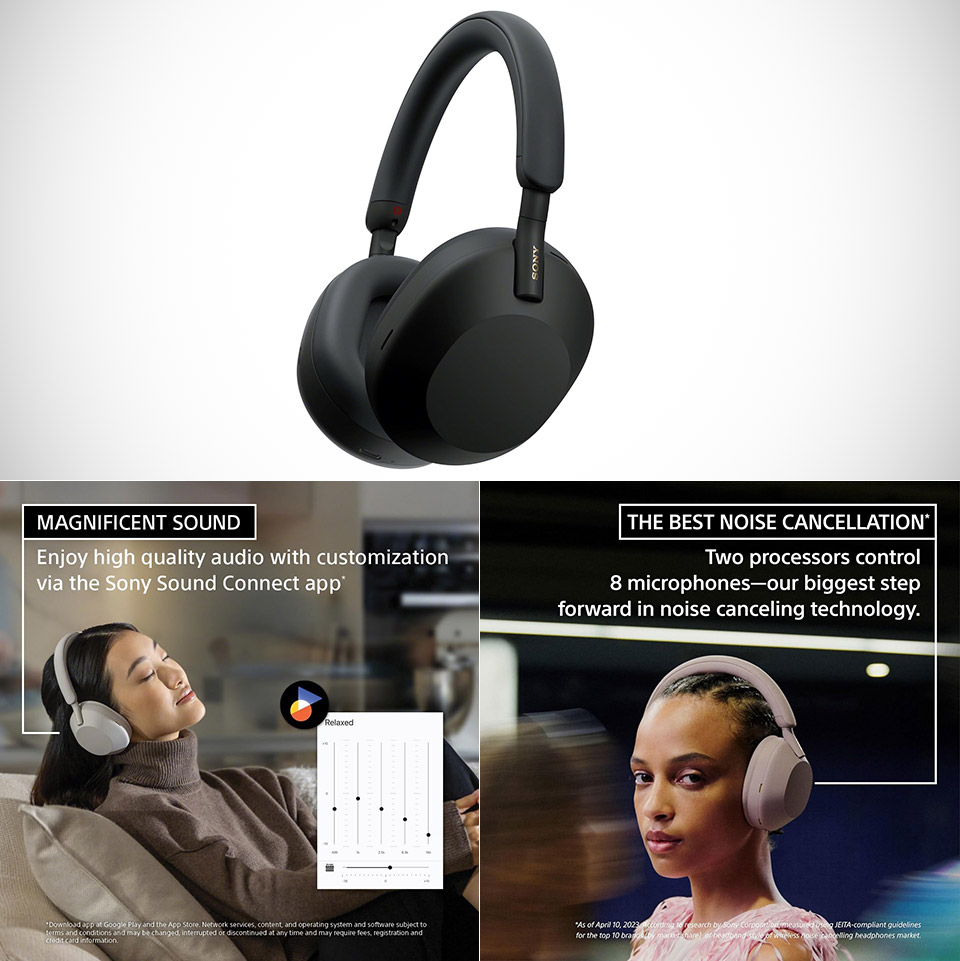
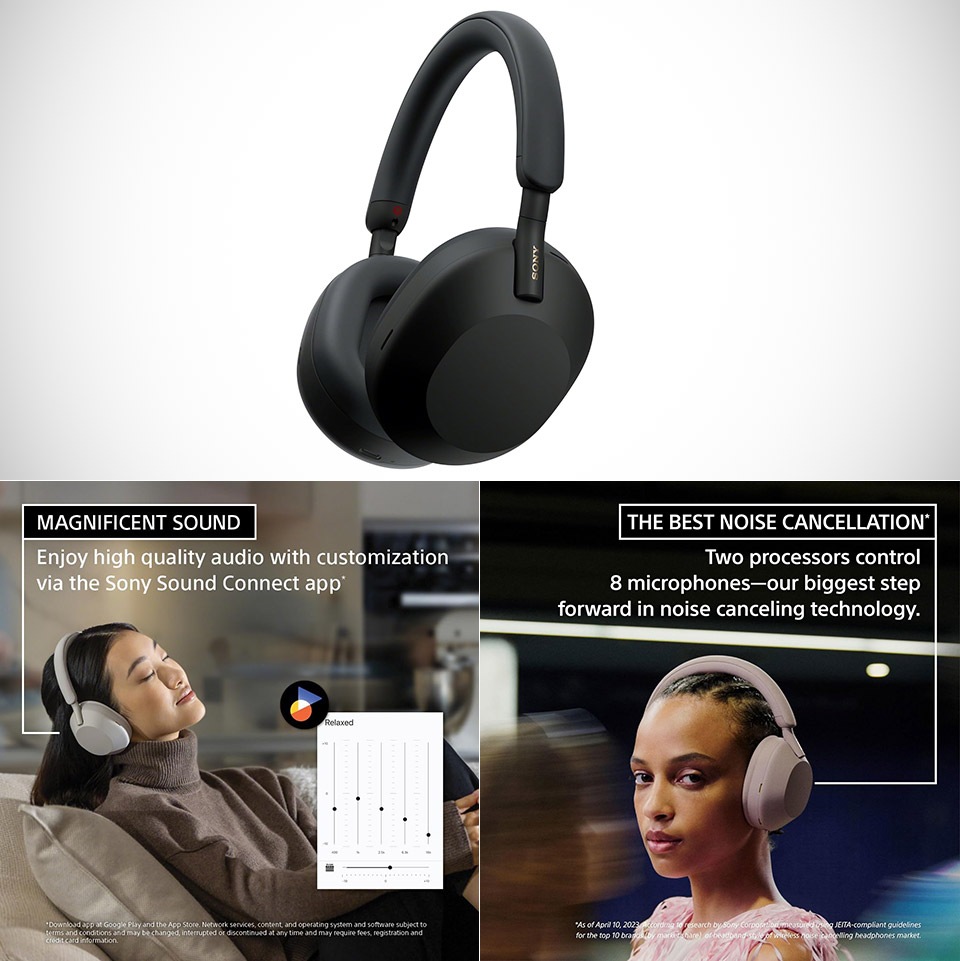
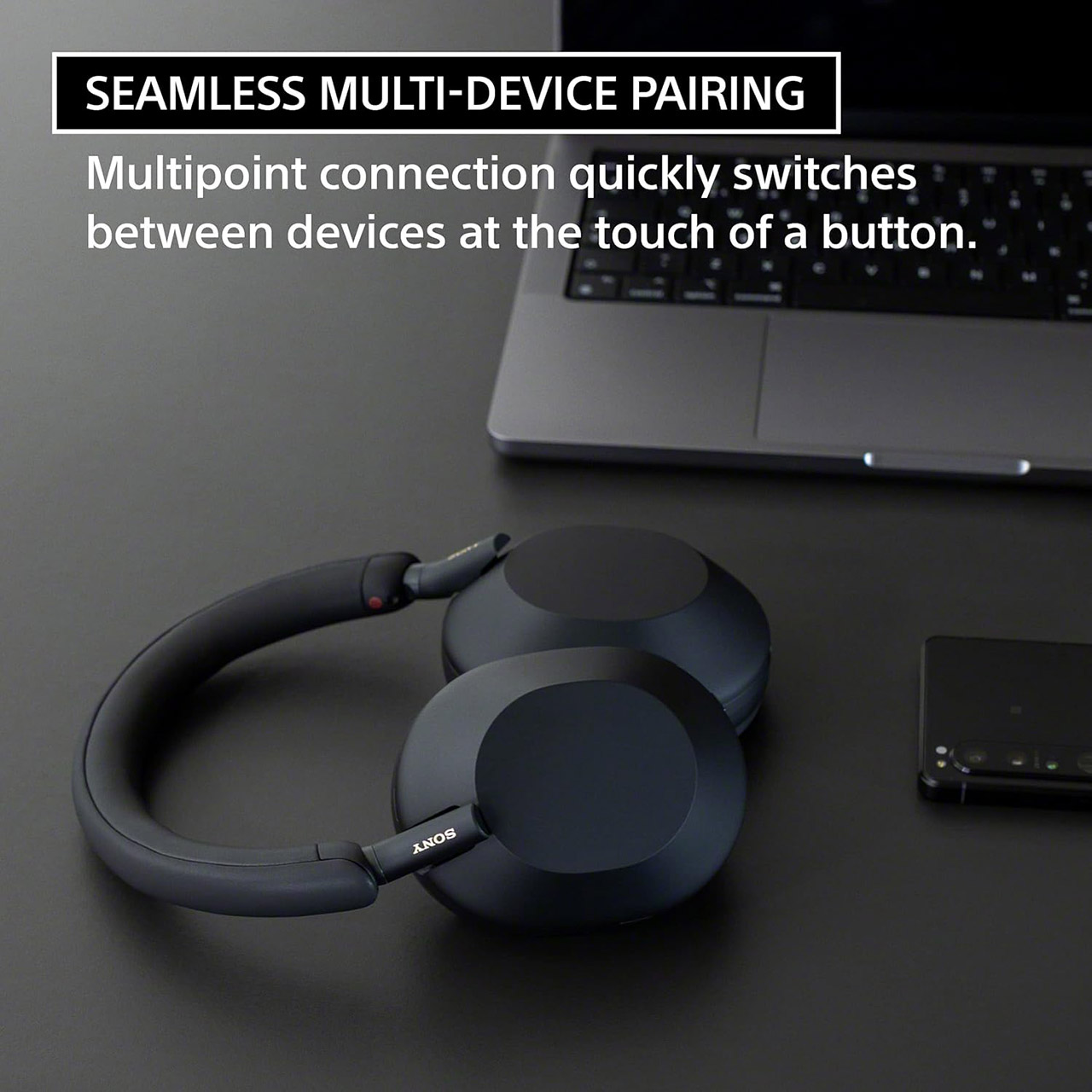
Sony’s WH-1000XM5 noise-canceling wireless headphones, priced at $250 (was $400), feature 8 microphones and two processors to read the environment and instantaneously adjust to whatever noise is there. When you lift off, say from an airplane, distracting background noise disappears, while office banter or city traffic fades into a distant hum that no longer draws your attention.
Regular travelers notice a significant difference on flights, trains, and even the daily commute. Those persistent background noises simply vanish, allowing you to focus on the music or podcast in your headphones without distraction. The optimiser conducts all of the work for you, so there is no need for fiddling or following instructions. Simply plan your day, and the noise is taken care of behind the scenes.
NOISE CANCELLATION: Immerse yourself in the world of music with these noise cancelling headphones, the Sony WH-1000XM5. They come equipped with an…
HANDS-FREE CALLING: Step into the future of communication with the Sony WH-1000XM5, a pair of over-ear headphones that make crystal clear hands-free…
LONG BATTERY LIFE: Say goodbye to battery anxiety with the Sony WH-1000XM5, a wireless headset that offers up to 30 hours of playback time on a single…
It’s also clear that they spent a lot of effort into making these extremely comfortable. The lightweight frame and super-soft cushions sit comfortably on your ears, ensuring that no pressure points bother you even after hours of wear. Yes, some people wear them for an entire working day without ever taking them off. The battery life is also outstanding, lasting up to 30 hours with noise canceling turned on. If you get to the end of that and still need some power, plugging in for 3 minutes will give you another 3 hours of sound time, which comes in handy on unexpected detours.
The sound quality is great and balanced, regardless of what you’re listening to. The bass is tight but not muddy, and the vocals and instruments are crystal clear. If you want to change things up a little, the program allows you to change parameters to make jazz tunes sound smoother and richer or electronic beats seem more energetic. Phone calls sound as clear as day because the beamforming mics pick up your speech while filtering out any background noise, allowing the person on the other end to hear how you sound in real life. It’s especially useful for meetings in noisy environments since it prevents you from feeling like you’re shouting into the wind.
The touch controls are simple to use; simply tap or swipe the earcup to instruct the headphones what to do, such as alter the volume. A single finger covering the right cup pauses the music; another lift resumes it, and a fast double touch allows you to communicate with your voice assistant. After some practice, all of the gestures work consistently, and you’ll find yourself doing them without even thinking about it. Another thing to note is that they have considered travel and storage options. The included durable case protects your headphones, while the charging and audio cords are all neatly stored within.
Samsung is apparently not keeping all of the best new Galaxy AI tricks locked to the Galaxy S26 series. The company has confirmed that it is working on a software update that will bring over newer AI features that were first introduced on the latest flagship lineup.
How Samsung’s community backlash worked
After the Galaxy S26 announcement, reports hinted that new software features may not trickle down to the Galaxy S25 series, which led to backlash from the community. But a Samsung Community moderator shared a post that thanked users for their feedback and confirmed that certain features are arriving on older flagships.
Breaking 🔥
Galaxy S25 Series users 👋
A moderator confirms a new update is coming, bringing Galaxy S26 AI features:
The biggest confirmed addition so far is AI-powered call screening. Samsung specifically mentioned this feature in the moderator message. To recall, this feature debuted with One UI 8.5 on the Galaxy S26 series, and is now planned for the Galaxy S25, Galaxy S25+, and Galaxy S25 Ultra via a future update. So, the brand may have changed its decision following backlash from Galaxy S26 owners who were unhappy about the possibility of missing out on some of Samsung’s latest AI tools.
Advertisement
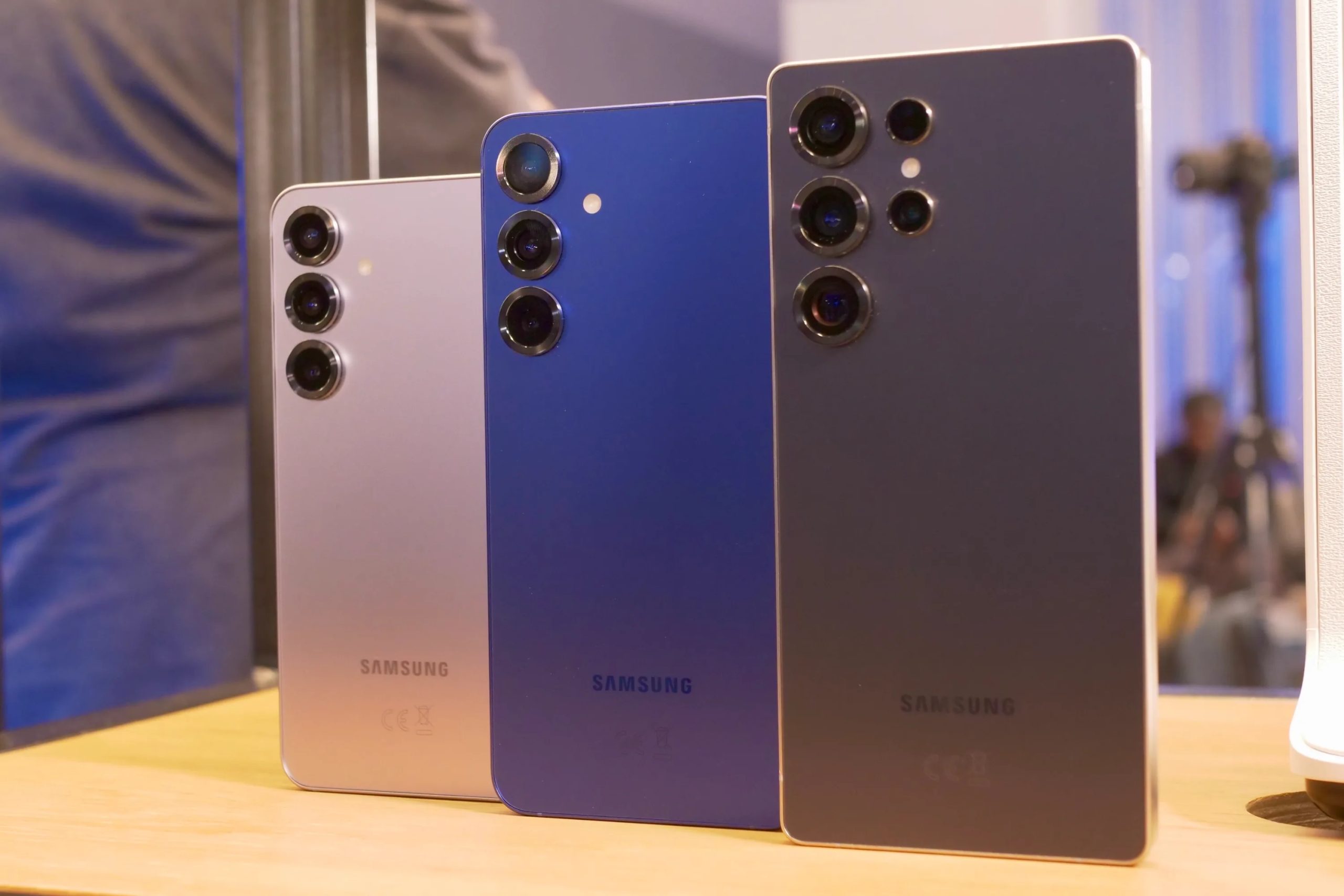
Samsung Galaxy S25 (left), Galaxy S25 Plus, and Galaxy S25 UltraAndy Boxall / Digital Trends
Finer details of the big update are still at large, and Samsung hasn’t published a final list of every Galaxy S26 AI feature that is coming to the S25 series yet. The company has promised “additional features and usability improvements” for the Galaxy S25 series, suggesting call screening may not be the only upgrade in the pipeline.
The One UI 8.5 update is expected to arrive as the next major stable update, though Samsung hasn’t announced a rollout date. But at least part of the Galaxy S26’s AI packaging is heading to the Galaxy S25 models.
























































You must be logged in to post a comment Login