Connect with us
DAPA Banner
DAPA Coin
DAPA
COIN PAYMENT ASSET
PRIVACY · BLOCKDAG · HOMOMORPHIC ENCRYPTION · RUST
ElGamal Encrypted MINE DAPA
🚫 GENESIS SOLD OUT
DAPAPAY COMING

Tech

NYC and LA Are Teaming Up to Fight for EVs

Published

on

It is indeed a weird time to be an automaker, as US federal incentives disappear and support dwindles for newer electric-powered cars. “Manufacturers would really like to know what the future will be and what are the rules,” says Mike Finnern, the senior vice president and zero-emission fleet lead at WSP, a consulting firm. Guarantees of large, future orders from fleet managers like city governments, but also private businesses, “will help them be stable for a while.”

EVs are a nice fit for government fleets, Finnern says. Surveys suggest that regular car buyers are still plenty apprehensive about shifting to a plug-in from gas cars they’re used to, and they want cars with even longer ranges, even if they seldom use the whole battery. But governments know exactly how their vehicles are used, can more precisely control charging, and are able to see that today’s ranges of 250 to 400 miles per charge fit their needs fine. Plus, EVs might help governments save money on fueling and maintenance. Private operators like Amazon aren’t stopping their forays into EVs, and “they wouldn’t do it if it didn’t pencil out,” he says.

“I regret every electric and hybrid vehicle we haven’t bought yet,” says Kerman. “It would’ve shielded us from the doubling of fuel costs that we’re now enduring.” By partnering with the US Department of Transportation, his agency has found that switching to battery electrics improves New York City’s vehicle energy economy by 6 percent.

Still, both governments say they have plenty to learn about how and where EVs fit best and that the partnership will help them share and create best practices so that other cities might eventually follow.

Advertisement

One big takeaway from the government’s experience so far is that officials need to be proactive and mindful about getting city workers on board. There are technical challenges—maintenance workers need to be retrained to maintain EVs instead of gas-powered vehicles, and everyone needs to remember to plug them in—and trickier morale ones, too.

Workers don’t always appreciate sudden changes. And while New York’s data suggests that the intelligent speed assistance built into many of its new EVs reduces speeding and possibly crash severity in city vehicles, employees have lingering worries about workplace surveillance. (In March, the city workers’ union reached an agreement outlining how data collected from city vehicles might be used in disciplinary actions.)

A workforce that’s enthusiastic about EVs can make all the difference. “We’ve seen some deployments be really successful and some, not so much. They have the exact same problems, but some were able to overcome them because their people were excited about it and trained,” Finnern says.

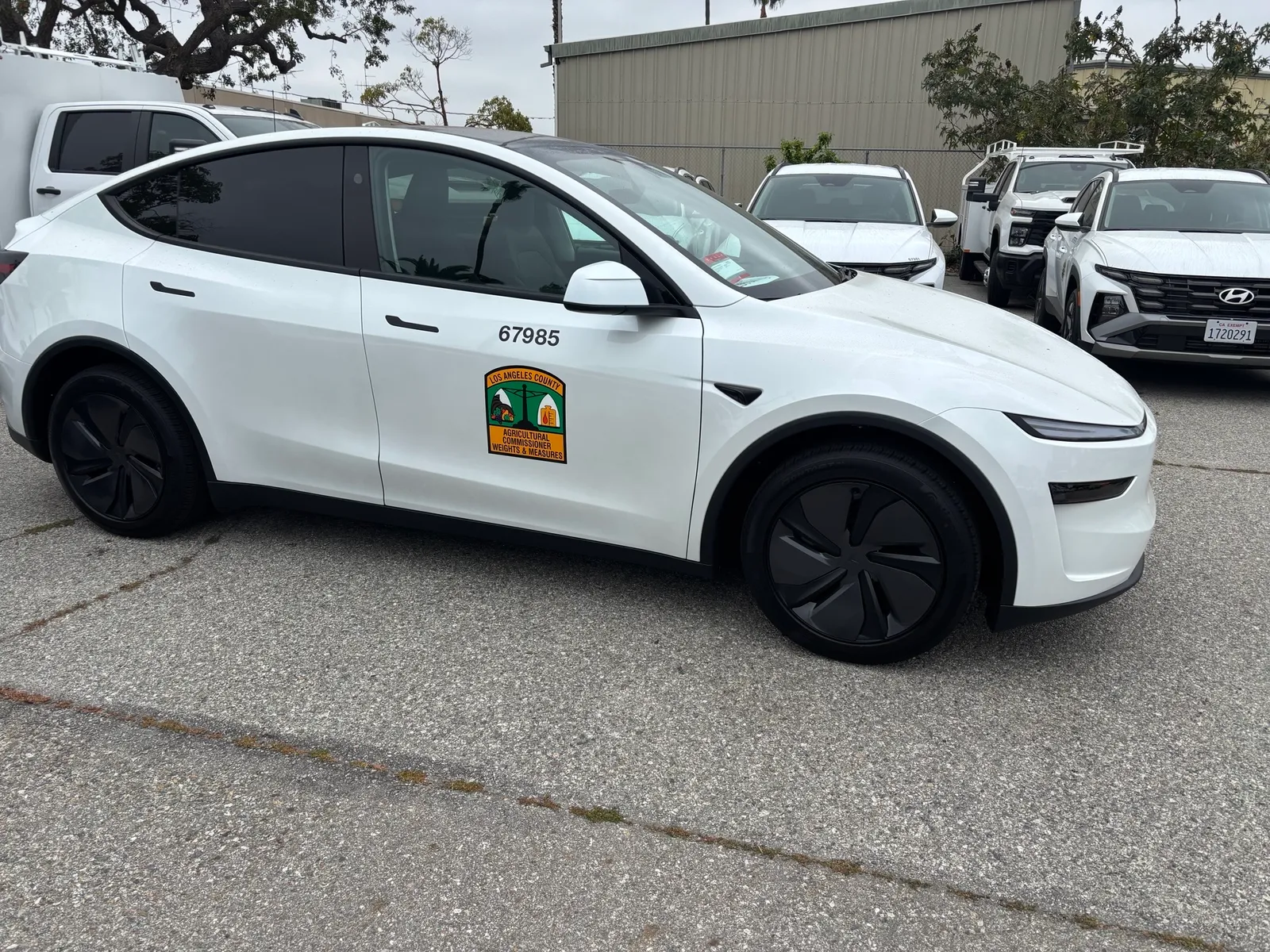
Image may contain Car Transportation Vehicle Chair Furniture and Tire

Courtesy of California Internal Services Department

Haynes, who used to work with Kerman in New York before moving to Los Angeles, recalls that he was once an EV skeptic but changed his mind once Kerman coaxed him into trying out a Tesla. It was, above all, fun.

Advertisement

“I will tell you, no one goes into these electric cars, walks out and says, ‘I hate this car,’” Kerman says. “They all say, ‘I love the car.”

Source link

Continue Reading
Click to comment

You must be logged in to post a comment Login

Leave a Reply

Tech

Wayland Comes To Minecraft | Hackaday

Published

on

The overall adoption and implementation of Wayland — intended as a replacement for the decades-old X11 windowing system — in the Linux world has been full of fits and starts. But perhaps the most surprising adopter we’ve seen yet is this Minecraft patch which brings a full Wayland compositor into the game.

This software project, called Waylandcraft, is the brainchild of a developer known as [EVVIE] who spent a considerable amount of time and effort getting this to work. According to a post on GamingOnLinux it was also done the old fashioned way, with no AI involved.

Users wanting to run this compositor need a Linux system to run Minecraft, as well as the Fabric mod loader and a few other tools. For those wishing to show off to their friends, though, they’ll need to do so in-person as streaming the Wayland windows to other users in the server is not possible.

Advertisement

With everything running, you’ll be able to launch arbitrary programs and have the windows placed within the Minecraft world as if they were in-game. Users can place the windows in any orientation and can interact with them like any other desktop environment. [EVVIE] has released all of the code under the GPL for anyone wanting to try it out or build on the project itself.

If you haven’t spun up a Minecraft server at all yet, all you really need is something like an ESP32 to get started.

Advertisement

Source link

Continue Reading

Tech

AI is doing their job and they worry it’s after their desk too

Published

on

DevOps 

Most software engineers now use AI for most of their code and fear the existential threat

A “state of Web Dev AI” survey shows that nearly
half of web developers worry AI will displace their jobs, with one stating “it will be devastating to our sector.”

The survey
of 7,258 developers is the second on this topic to be conducted by Devographics,
home of other surveys including State of JavaScript and State of CSS. 

Advertisement

There are
big changes since the first in early 2025, when the majority
of respondents used AI to create less than 25 percent of their code, whereas
today 63 percent of devs use AI to generate more than half their code.
Over a quarter of respondents (27 percent) use AI for 90 percent or more of
their code.

Code generation is the top AI use case, followed by code review, research, and debugging.

The researchers gathered respondents from those who had
completed previous surveys plus others contacted via social media, and state
that the topic may have “biased the respondent set towards developers who
do have an interest in AI.”

Regarding job security, a common view is that although
developer skills remain relevant in an AI world, their bosses may be convinced
otherwise and let them go. 

Advertisement

“AI companies can convince employers that AI
can take my job, even if it can’t,” said one. Another commented that they
“already had to search for a new one, because my job as designer and
frontend dev got cancelled for AI.”

There is concern over loss of skills as junior hires decrease.
“Companies will rather spend the money on AI than train employees,”
one commented.

The most used model provider is ChatGPT (88.4 percent), just
ahead of Anthropic’s Claude (82.1 percent). When it comes to paid subscriptions
though, Claude is the winner (69 percent), followed by ChatGPT (49 percent) and
Google Gemini (32 percent).

Despite increased usage, the respondents are by no means AI
enthusiasts. Use of AI for image generation has fallen since last year, from 38
percent to 37 percent, and some respondents have ethical objections. 

Advertisement

“I do
not use image generators on principle,” said one, and another claimed “AI
image generators are built entirely on stolen images.”

AI risks: web developers worry most about job displacement but other concerns are close behind

AI risks: web developers worry most about job displacement but other concerns are close behind

A general section on AI risks revealed a multitude of
concerns: while job displacement topped the list, military use of AI,
environmental impact, and AI slop takeover were not far behind. Security issues
and rising costs were also areas of unease. The survey limited respondents to
three top choices; many comments showed that they would have liked to pick
more. 

From a technical perspective, the biggest issues cited were
hallucination and inaccuracies (64 percent); poor code quality (53 percent) and
lack of context (38 percent).

It is a strangely mixed picture, with respondents expressing
strong reservations about the overall impact of AI, while at the same time becoming
dependent on it. 74 percent agreed AI tools are integral to their
workflow, and 64 percent felt they were more productive thanks to AI. 88
percent feel the quality of AI tools has improved significantly year on
year.®

Advertisement

Source link

Continue Reading

Tech

Flipper One wants to be the Linux multi-tool in your pocket

Published

on

Personal Tech

Not a Zero successor, ARM box aims for openness, but shipping remains the hard part

Flipper Devices has announced the Flipper One, an ARM-based Linux computer built around openness, though its price tag may give you pause.

The computer is not a successor to the Flipper Zero, according to the manufacturer, despite the visual similarity. Whereas the Flipper Zero was more about hacking anything from NFC cards to infrared controls and RFID devices, the One is a full-fledged Linux computer.

Advertisement
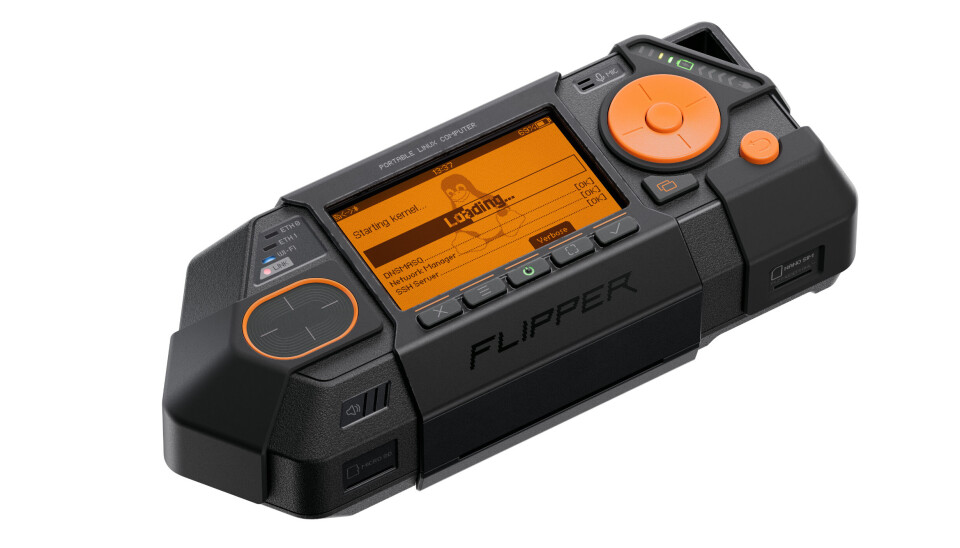
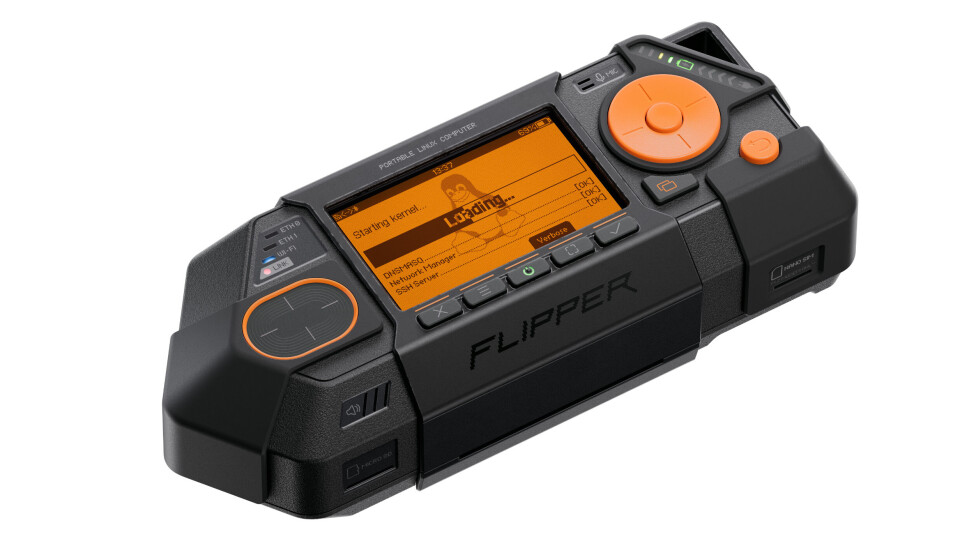
Black handheld device with an orange screen, circular orange controls, and the Flipper logo on the side.

The Flipper One

The device uses a Rockchip RK3576 as its main CPU, and a Raspberry Pi RP2350B microcontroller to take care of the on-device controls and the 256 x 144 grayscale screen. There is also a pair of USB-C ports (one to charge the device), a USB-A port, and a full-size HDMI connector. Rounding out the package are two Gigabit Ethernet ports, a MicroSD card slot, and a 3.5 mm audio jack.

The device has 8 GB of LPDDR5 memory and 64 GB of internal storage. There’s also Wi-Fi and Bluetooth. For users keen to expand the device, there is an M.2 port and GPIO connectors.

The device’s cost is tricky – the aim is $350 for the base configuration without the cellular module. However, considering the volatility of chip prices at the moment (and the relentless rise in memory costs), the final figure might be different. The first prototype arrived earlier this year, and the inevitable Kickstarter campaign is due at the end of the summer.

The question is whether it is a worthwhile investment. The price elevates the device firmly out of the impulse purchase category, but its flexibility does have appeal. The HDMI port makes it a useful media box for connecting to televisions. It could also serve as a Linux workstation, and all the networking interfaces make the device a “multi-tool,” as the company put it.

Advertisement

Flipper Devices suggests use cases including VPN gateway, Ethernet sniffer, and USB Wi-Fi/Ethernet adapter.

As if to emphasize the clear blue water between the Zero and the One, there is no NFC reader or RFID onboard – hopefully an M.2 peripheral will handle that, or users can fall back on a Zero. Flipper Devices plans to keep development running – the Zero and One are very different categories of device.

Things get more interesting on the software front. Flipper Devices is aiming for full mainline Linux kernel support and has partnered with Collabora to bring the RK3576 SoC into the mainline kernel and give Flipper One full upstream support.

“The current state of ARM Linux is depressing,” it wrote. “Every vendor bolts on their own custom mess: closed boot blobs, vendor-specific patches, ‘board support packages’ that nobody outside the chip maker can really understand.

Advertisement

“You can no longer just read the specs and understand how computers work – you can only learn the workarounds for one specific chip with one specific BSP. We’re sick of this ourselves, and we don’t want to be part of the problem by shipping yet another product that just adds to the mess.”

But first you have to ship it.

Calling the Flipper One a “community-driven project,” Flipper Devices added: “We’ve made the entire development process open – so you can see how things are built and even take part in shaping Flipper One’s future.”

While the project has now been officially announced, prospective purchasers should keep in mind that there are no guarantees about what (if anything) will actually ship. And, of course, one should always exercise caution when backing Kickstarter projects.

Advertisement

In the announcement, Flipper Devices boss Pavel Zhovner wrote: “There’s a lot of uncertainty in this project, along with technical challenges and financial risks (like the current RAM chip crisis).

“I don’t know if we’ll be able to do everything we’ve planned, but we’ll give it everything we’ve got. Thank you all, and welcome to a new adventure.” ®

Source link

Advertisement
Continue Reading

Tech

Magnets Are Bad For Hardware Again

Published

on

If you were around tech in the bad old days, magnets could be really bad news. They were fine on the fridge, no problem at all. Put one near a floppy disk, or a hard drive, or even a computer monitor, though, and you were in for some pain. You’d lose data, possibly permanently destroy a disk or drive, or you’d get ugly smeary rainbow effects all over your screen.

The solid state revolution has eliminated a lot of these problems. We all use SSDs, flash drives, and LCD monitors now, all of which care a lot less about flirting with magnets. However, the same can’t be said about all our modern hardware, for a magnet could cause your smartphone some major grief indeed.

Magnetic Fields

Something as simple as a folio case with a magnetic closure could cause problems for a modern smartphone’s camera, depending on how the magnets are located. Credit: Acabashi, CC BY-SA 4.0

As you might expect, the magnetic susceptibility of certain modern smartphones once again comes down to non-solid state parts. Now, there aren’t exactly a lot of phones out there that are packing hard drives or floppy drives or any sort of magnetic storage. Instead, it all comes down to cameras.

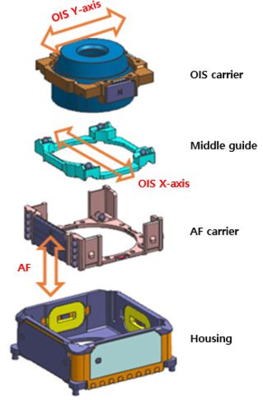
Take the modern iPhone line, for example. Apple is quite careful to warn against carelessly using magnetic accessories with the smartphone, because it can interfere with the cameras. Specifically, it’s because of the optical image stabilization (OIS) and closed-loop autofocus systems that are built into the cameras themselves. These devices use magnetic position sensors to determine lens position to compensate for focus, vibration, and movement, and use magnetic voice coil actuators to move optical elements, in order to take the best possible photos and videos at all times. If there’s a strong magnetic field in the vicinity of the lenses, it can interfere with this operation.

It’s common for modern smartphones to have tiny actuators built into the camera assemblies to handle autofocus and optical image stabilization. Credit: Samsung

Few of us are sticking fridge magnets on our iPhones, to be sure. However, there are a lot of magnetic cases and mounts and other accessories that give people a great reason to stick magnets on their phone. In the cases of some third-party accessories that are poorly designed, it’s possible for these to cause problems with the camera if the magnets are too strong or too close to the key hardware. It’s worth noting that in typical use, something like a magnetic case or other small magnet won’t cause a lot of permanent harm. It will generally just degrade the operation of the camera until the magnet is removed.

This isn’t solely an iPhone problem, either. It can affect any phone that has any sort of magnetic sensing or actuation involved in the camera mechanism. Indeed, Samsung has even filed a patent on ways to mitigate this problem through carefully orientating the magnets used in folding phone mechanisms, and the appropriate use of shielding. Ultimately, similar camera technology is used in a great many phones, all of which are susceptible to this problem.

Advertisement

It’s true that in day to day use, you’re probably not going to run into a lot of problems waving around a magnet near your smartphone. Nor did floppy disks fail en masse in the 90’s, unless one of your colleagues was feeling vindictive and wiped them all with a fridge magnet on their lunch break. Still, like the oddball helium problem that because apparent with smartphones a few years ago, it’s funny to think that magnets could be causing trouble with computer hardware today. The fact is that a modern smartphone contains multitudes, and thus can surprise you with its edge case frailties.


Source link

Advertisement
Continue Reading

Tech

Nicolas Cage Swings Through Shadows and Sand in Spider-Noir’s Final Trailer

Published

on

Nicolas Cage Spider-Noir Final Trailer Release
Viewers get their clearest look yet at the live-action Spider-Noir series that places the web-slinger in a rain-soaked 1930s New York. The new footage opens with Cage as Ben Reilly, a private investigator who has tried to leave his vigilante days behind. A nightclub singer named Cat Hardy approaches him with a case that pulls everything back into focus. She needs answers about a disappearance, and the trail leads straight into trouble.


First, the trailer introduces two more key villains in great detail. Jack Huston appears as the Sandman, a man who vanished and then reappeared as this creature who can shift and collapse like living sand. Brendan Gleeson plays Silvermane, a crime boss who has taken over the city and assembled a gang of seriously improved goons. Another small peek provides us a different perspective on Electro, hinting at what we might be in for if Silvermane gets his way.

This show’s production is done in a very stylish manner, with each episode being released in not one but two versions. One is in crisp black and white, evoking the classic noir style of shadows, moonlit streets, and all that jazz. The second version uses full-on color, which the developers refer to as “real hue,” which keeps the same lighting while adding a whole new layer of depth to the clothes and locations.


Reilly isn’t the only one on this show; Lamorne Morris appears as Robbie Robertson, Karen Rodriguez as Janet, and Abraham Popoola pulls a WWI veteran into the mix. Then there’s Li Jun Li as Cat Hardy, the femme fatale who set everything in motion in the first place. Guest appearances by Lukas Haas and a few others round out the group of shady street-level operatives and news reporters who populate this other city.

This first season consists of eight episodes, which will premiere on MGM+ on May 25th, followed by all installments on Prime Video two days later. Oren Uziel and Steve Lightfoot, the brains behind it all, took the reigns and collaborated with some of the biggest names in film, including Phil Lord, Chris Miller, and Amy Pascal. Harry Bradbeer helmed the first two episodes to get things started well, and based on the teaser, he appears to have set the tone for the entire season.

Advertisement


The series is based on the 2009 Marvel comics, but it takes its own path by focusing on Ben Reilly rather than Peter Parker. Reilly bears the wounds of previous choices as well as a personal loss that the video alludes to without revealing. Each additional footage reinforces the impression that this is less a movie about boundless power and more about a man determining whether one more struggle is worth it.

Source link

Advertisement
Continue Reading

Tech

Grok’s federal stall is undercutting SpaceX’s IPO growth story

Published

on

Downloads have fallen from 20m in January to 8.3m in April, paid conversion is a fifth of ChatGPT’s, the $0.42-per-agency GSA deal is now stalled, and SpaceX has rented out the Memphis Colossus 1 cluster to Anthropic for $1.25bn a month.

SpaceX’s S-1 filed on Tuesday rests on an AI-revenue line Grok is no longer obviously delivering.


Grok is not selling in Washington, and on Thursday it became Wall Street’s problem. Reuters reported that Elon Musk’s xAI chatbot has failed to convert its September 2025 GSA OneGov agreement into the kind of federal-agency adoption that competitors OpenAI and Anthropic are now operationalising.

Only three days after SpaceX filed an S-1 prospectus in which the company’s AI-revenue line is positioned as the growth engine underwriting what would be the largest IPO in history.

Advertisement

The consumer-side numbers are sharper still. Grok downloads falling to about 8.3 million in April from a January high above 20 million.

Advertisement

Paid conversion, on the Reuters reporting, sits at roughly 0.174% of surveyed US consumers and workers in Q2 2026, against more than 6% who pay for ChatGPT.

The growth curve that powered Grok’s 2025 IPO-narrative contribution has reversed across the past four months.

The GSA OneGov agreement Musk signed in September is the part Washington-watchers have been tracking most closely. The $0.42-per-organisation 18-month deal, announced by the GSA in late September 2025, was designed to deliver Grok 4 and Grok 4 Fast to every federal agency at a token price.

Public Citizen has petitioned the OMB twice to suspend federal use of Grok over accuracy and bias concerns, citing prior outputs the group describes as racist, antisemitic and factually incorrect.

Advertisement

Senator Elizabeth Warren has separately pressed Defense Secretary Pete Hegseth over the Department of Defense granting Grok classified-system access despite NSA and GSA concerns.

The compute-side trade is the bit that gives the story its commercial sharpness. SpaceX has rented out the Memphis Colossus 1 data centre, the 220,000-Nvidia-GPU, 300-megawatt facility that was Grok’s primary training environment, to Anthropic for $1.25bn per month through May 2029.

The implication is mechanically straightforward: with Grok’s consumer demand falling, xAI has more compute than it needs, and selling that capacity to Anthropic, the lab whose Mythos model has been displacing Grok on the federal-agency procurement list, is the cleanest way to monetise the shortfall before the SpaceX IPO prices.

The financial picture inside the SpaceX S-1 makes the trade necessary. xAI losing $6.4bn from operations on $3.2bn of revenue in 2025, with revenue growth of about 22% well below the published rates at OpenAI, Anthropic and Google DeepMind.

Advertisement

The structural complication is that the Anthropic deal is xAI selling its own competitor the compute Grok was originally trained on.

Musk’s AI portfolio is ‘falling apart’ in part because the compute-monetisation trade signals to public-market buyers that the underlying product cannot generate enough demand to absorb the capacity Musk built for it.

SpaceX’s roadshow, which begins inside the next two weeks, will be the first formal test of whether institutional buyers are willing to underwrite the AI-revenue-line projection against the federal-stall and consumer-decline data Reuters has now laid out.

Musk’s broader portfolio fortnight has compounded the timing. xAI’s $420 tax-return commitment to employees has slipped past the promised payment window, and the Delaware court’s procedural rulings against him in the OpenAI litigation have continued to compound.

Advertisement

SpaceX itself has not, on the available reporting, addressed the Reuters article publicly. The prospectus does not break out Grok-specific revenue from the broader xAI line, leaving institutional buyers to interpret the federal-adoption stall against the headline AI-line growth figure.

The next visible proof point will be the S-1 amendment expected ahead of the roadshow launch, where any updated Grok-adoption disclosure would be the first formal signal of whether xAI is willing to put numbers behind the consumer and federal demand picture Reuters has now made the public story.

Source link

Advertisement
Continue Reading

Tech

Mercedes-AMG’s GT 4-Door Coupe Finally Goes Electric, Packs Over 1,110HP

Published

on

Mercedes-AMG GT 4-Door Coupe
Mercedes-AMG just revealed its most powerful vehicle ever, and this time the GT 4-Door Coupe runs purely on electricity. Available in two versions, the GT 55 and the flagship GT 63, the new model swaps out any combustion engine for three axial flux motors that sit low and deliver instant force without any lag. The top version hits 1,153 horsepower when conditions line up, enough to push it from zero to 60 miles per hour in about two seconds. Even the milder GT 55 produces 805 horsepower and covers the same sprint in roughly 2.4 seconds. Both models share the same long, low body that stretches just over 200 inches from nose to tail, yet they weigh around 5,423 pounds thanks to a mix of aluminum, steel, and carbon-fiber pieces that keep everything stiff.


Power flows through an all-wheel-drive system that can instantly shift torque between the front and back axles. Up front, you get a single motor, which helps with launches and provides more grip when needed, while the back wheels are handled by two larger ones. These axial flux motors are extremely thin, allowing engineers to essentially position them right in the center of the vehicle for better balance. Plus, they produce far more constant power than earlier motors, so even sustained high-speed runs seem effortless. When the optional performance package is added, both versions of the car will reach 186 mph, but the most exciting aspect is how the car handles on a twisty road.

Sale


LEGO Speed Champions Mercedes-AMG G 63 & SL 63 Building Toys – Kids Pretend Play Toy Cars for Boys…
  • 2 Mercedes toy cars for kids – LEGO Speed Champions Mercedes-AMG G 63 & Mercedes-AMG SL 63 vehicle playset for boys and girls ages 10 and up and…
  • 2 driver minifigures – Each buildable vehicle toy comes with a driver minifigure wearing a Mercedes outfit so kids can role-play fast-paced races
  • Authentic Mercedes design – Each collectible car model features design details from the real life versions, including front grilles, hoods, wheels…


There’s a 106-kwh battery pack sitting down on the floor, with 2,660 individual cells cooled by oil that runs directly around them. This ensures that temperatures remain extremely steady even after repeatedly driving the car. The 800-volt system allows you to take up to 600 kilowatts from a fast charger. This implies you can fill up to 80% in around 11 minutes. Official estimates range from 370 to 435 miles on the milder European test cycle, but since the American market will be slightly different, we’ll have to wait and see what it turns out to be.

Advertisement


Mercedes-AMG concentrated on getting the driving experience just perfect, so you won’t miss the old V8. They included a special mode called AMGFORCE Sport+, which, believe it or not, plays over 1,600 recorded sound effects from speakers both inside and outside the car to mimic the AMG GT R’s snarl and burble. They even incorporate seat vibrations to correspond with each simulated gear shift and throttle lift. You also get paddle shifters on the steering wheel, which allow you to manage a simulated nine-speed transmission that provides the appropriate amount of hesitation and power loss, much like a real automatic. The whole thing is so convincing that many people will swear up and down that there is an engine under the hood, but if you don’t care about the sound effects, you can just turn it off in Race mode and enjoy the pure electric rush.

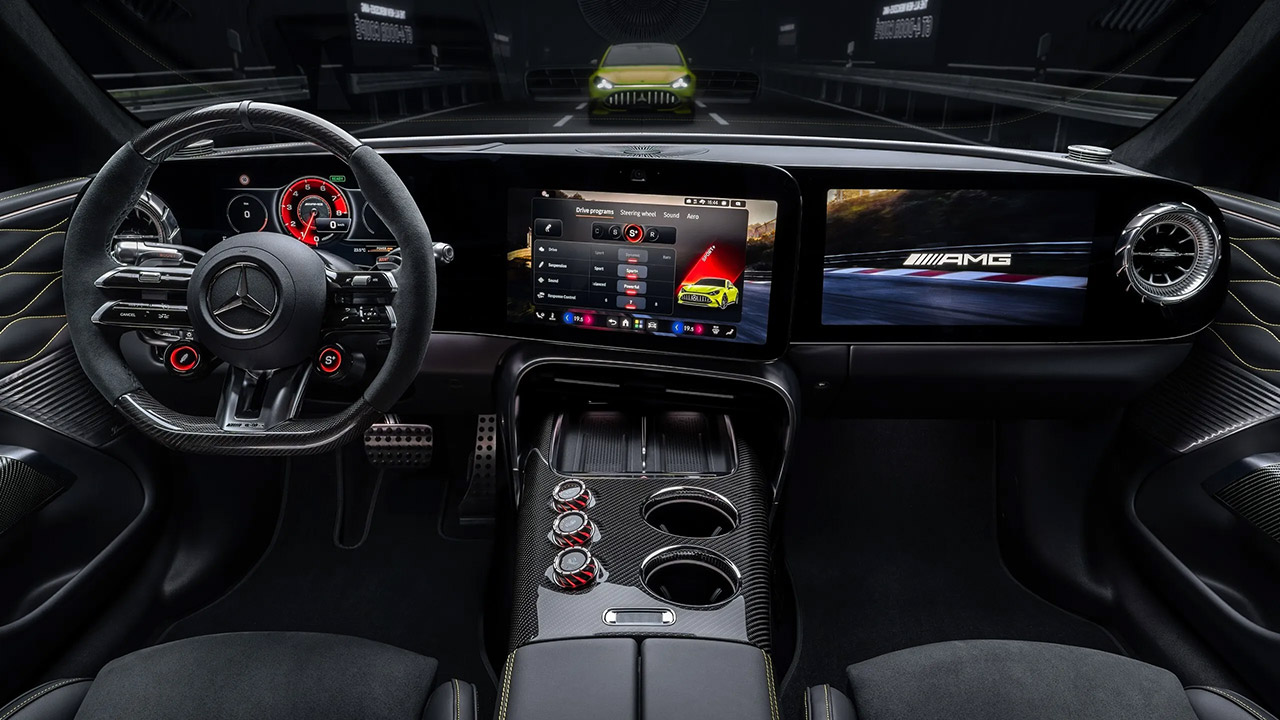
Mercedes-AMG GT 4-Door Coupe Interior
On the center console, you’ll find three large rotary dials that allow you to choose how the automobile behaves. One allows you to adjust throttle sharpness, another controls how violently torque vectoring yanks or pushes the car through corners, and the third allows you to set traction slip on a scale of one to nine. The air suspension automatically adjusts the ride height based on speed, while active roll control maintains the body flat without the use of traditional sway bars. Then there are all those sophisticated aerodynamic gadgets under the car and on the rear spoiler that may add downforce or reduce drag as needed. Finally, all-carbon-ceramic brakes up front and super-sized steel discs in the rear prevent overheating after repeated stops.

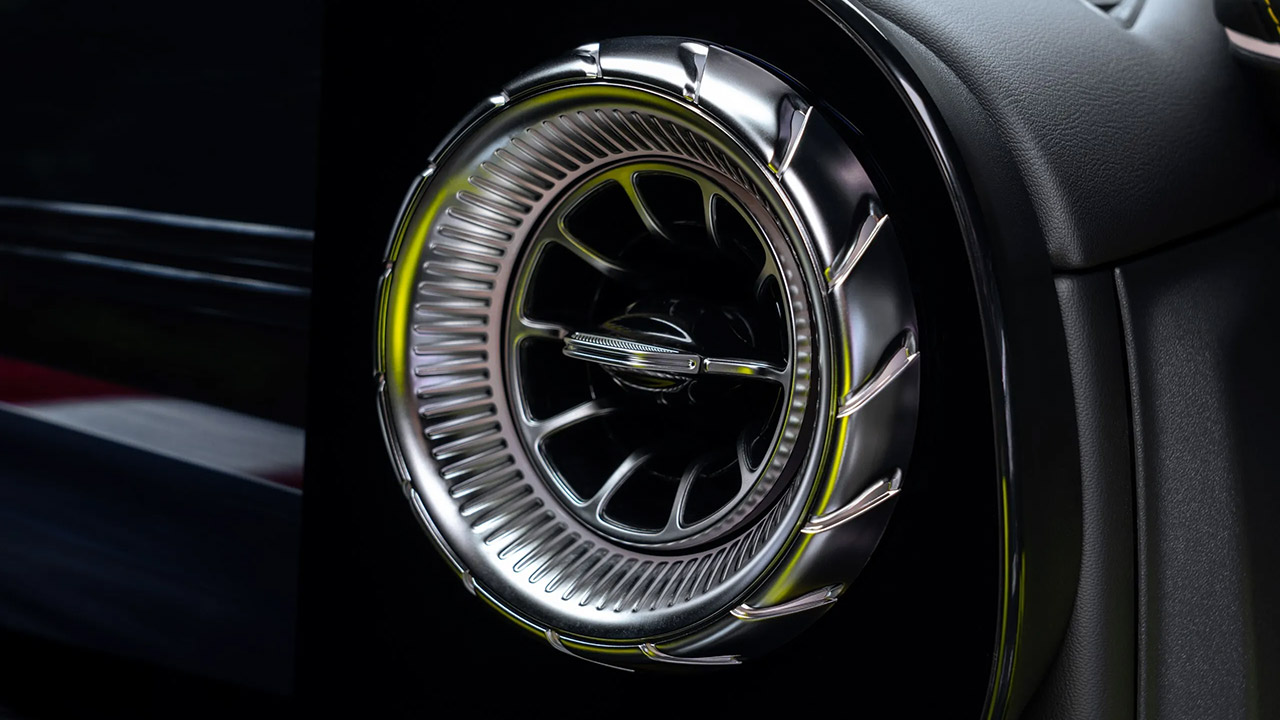
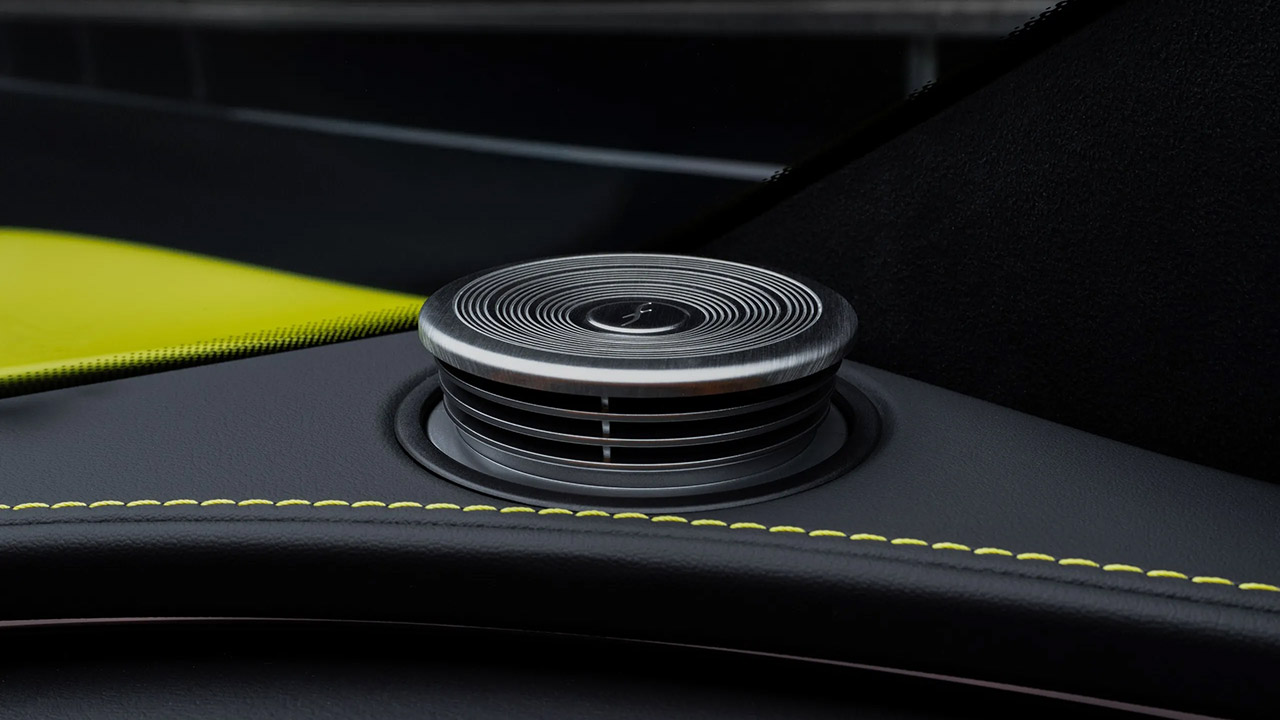
Mercedes-AMG GT 4-Door Coupe Interior
Inside the cabin, you’ll find a spacious interior with four strongly cushioned seats and ample storage for golf bags or skis owing to the full width pass-through in the back. A large front trunk provides extra storage, which is always welcome. The center of the dash is dominated by a bank of screens, which includes a digital gauge cluster up front for the driver to monitor, a central display screen, and a separate screen for the passenger to keep them out of the loop. You’ll also discover some proper knobs for the AMG race mode controls that are conveniently situated just where you need them, allowing you to keep your eyes on the road – no fiddling while driving here.

Mercedes-AMG GT 4-Door Coupe
Production of the GT 55 is slated to begin soon at the Sindelfingen facility in Germany, with the GT 55 arriving at US dealers later this year and the GT 63 following early in 2027. Prices will have to be confirmed by Mercedes-AMG, but we anticipate a range of $140k to $210k depending on the features you choose.

Source link

Advertisement
Continue Reading

Tech

Chinese researchers claim solid-state EV battery can charge in just minutes

Published

on

Chinese researchers claim a new solid-state battery can survive ultra-fast charging while delivering dramatically higher energy density, potentially reshaping the future of electric vehicles. Researchers at the Chinese Academy of Sciences claim they have developed a new solid-state lithium-metal battery capable of delivering extremely high energy density while surviving ultra-fast charging conditions – a combination the global EV industry has been chasing for years.

According to the research paper published in the Journal of the American Chemical Society, the prototype battery achieved an energy density of 451.5 Wh/kg while maintaining stable cycling performance for 700 charge cycles under a 20C charging rate. In practical terms, that theoretically translates to charging and discharging in roughly three minutes.

If commercialized successfully, the technology could represent a major leap over today’s EV batteries. Most current mass-market electric vehicles from US and European automakers still operate within relatively conservative fast-charging limits. Brands like Tesla, Ford Motor Company, Volkswagen, and Mercedes-Benz Group generally peak between 150kW and 350kW charging speeds under ideal conditions, with many vehicles still requiring 20 to 40 minutes for meaningful charging sessions.

Meanwhile, Chinese automakers and battery firms are rapidly accelerating the development of ultra-fast charging technologies. Companies like BYD, CATL, Ganfeng Lithium, and multiple startups are aggressively pursuing solid-state battery architectures capable of much higher charging speeds and energy density.

Advertisement

China’s battery push is reshaping the industry

The latest breakthrough also arrives as Western automakers increasingly deepen partnerships with Chinese companies to remain competitive in EV technology. Earlier this month, Stellantis expanded its collaboration with Chinese automaker Dongfeng Motor Corporation through a €1.17 billion agreement covering vehicle production, exports, and engineering cooperation. The company has also strengthened ties with Leapmotor to jointly develop electric vehicles for European markets.

Other global manufacturers are making similar moves. Volkswagen has partnered with Chinese EV startups, including Xpeng, while several Japanese and European brands are exploring shared manufacturing and battery development projects with Chinese suppliers.

As Chinese firms continue achieving breakthroughs in battery chemistry and manufacturing scale, these partnerships may allow Western companies to indirectly benefit from China’s rapid technological progress.

High energy density still comes with risks

Despite the excitement, ultra-dense battery chemistries also raise safety concerns. Higher energy density often means greater thermal risk if a battery enters thermal runaway. The industry has already witnessed several high-profile EV fire incidents involving lithium battery systems, including scrutiny surrounding some earlier-generation BYD battery discussions and broader concerns over EV heat management globally.

The Chinese researchers claim their pouch cell passed nail-penetration safety testing, which is often used to evaluate internal short-circuit resistance. However, laboratory results do not automatically guarantee real-world automotive reliability.

Advertisement

That remains one of the biggest caveats surrounding solid-state batteries. While breakthroughs are announced frequently, commercialization can take years due to manufacturing complexity, durability validation, safety certification, and government regulatory testing.

Many battery companies are currently targeting commercialization windows between 2026 and 2028. Until then, traditional lithium iron phosphate (LFP) batteries are likely to remain dominant due to their lower cost, established supply chains, and proven reliability.

Still, the pace of development suggests the EV battery race is entering a far more aggressive phase – and China currently appears to be leading it.

Source link

Advertisement
Continue Reading

Tech

Trinity College Dublin student wins 2026 Mary Mulvihill Award

Published

on

The competition was judged by UCD’s Margaret Kelleher, UCD’s Karlin Lillington and Anne Mulvihill, the sister of Mary Mulvihill.

Cian Morgan, a medical student studying at Trinity College Dublin (TCD) is the 2026 winner of the Mary Mulvihill Award, the science media competition for third-level students that commemorates the late science journalist and author Mary Mulvihill. This year’s theme was on the subject of time and how it is an aspect of our existence that, while difficult to define, deeply pervades our lives and experiences. 

Morgan received the award and a cash prize of €2,000 at a ceremony held at the Dublin Institute for Advanced Studies, while TCD physics student Aoibheann Kearins and Ciaran Lynch, who is studying for a BA in Music and Film at University College Dublin, were highly commended and each received a cash prize of €500.

Morgan’s entry, ‘The Cows of Carlow: A Conversation with My Grandad’, is an essay inspired by his own and his grandfather’s personal and historical reflections on the topic. 

Advertisement

He wrote about Dublin Mean Time, which is Ireland’s national standard time, established in 1880 and was 25 minutes and 21 seconds behind Greenwich Mean Time (GMT). He also wrote of the Time Ball on the roof of the Ballast Office at Aston Quay, Dublin, which was dropped down a pole every day at precisely 1.00pm, to allow sailors on the Liffey to calibrate their marine chronometers. 

Morgan said, “Meanwhile in Tullow, my great-great-grandfather’s hometown in Co Carlow, there was no such sophisticated community timepiece. And so possession of a personal timepiece conferred considerable social status. Yet most people ordered their day around a much looser conception of time, far removed from our current anxious preoccupation with minutes and seconds and even the cows seemed to know what was the ‘right time’.”

Commenting on the essay, judge and UCD professor of Anglo-Irish literature and drama, Margaret Kelleher said, “I really liked it and found it really informative. Cian’s entry has many of the fine qualities of Mary’s work: it conveys substantial information in a way that is very accessible and engaging and is very well researched.”

Kearins is the second person in her family to feature among the prize winners, as her sister Aoife, a TCD graduate also received the highly commended award in 2020 and is now pursuing a PhD on the history of mathematics at the University of Oxford. 

Advertisement

Aoibheann’s piece called ‘Time for you, Time for me’, explores her personal experiences of time over the course of her life, as well as the scientific and philosophical conceptions of time, covering Aristotle’s idea of potentiality and Einstein’s Special Theory of Relativity, which “shows that time is not universal”. 

Lynch’s entry, ‘Timeless’, is an original musical composition, divided into three parts, with iterations and motifs to represent the past, the present and the future. The main melody is played on a grand piano, but Lynch also employs a wide range of percussion instruments to mark time and to introduce dramatic new possibilities to the piece. 

“The theme for this year’s award was ‘Time’, an appropriate topic given that the award is marking ten years and the Award’s committee is wondering where time goes,” said Anne Mulvihill, Mary’s sister and a member of the judging panel.

She added, “It was also appropriate given that in many ways Mary was ahead of her time, pioneering science communication. Once again the judges were impressed and delighted with the wide range of entries on the subject and the winning entries strongly indicate that her legacy has lasted over time.”

Advertisement

Don’t miss out on the knowledge you need to succeed. Sign up for the Daily Brief, Silicon Republic’s digest of need-to-know sci-tech news.

Source link

Advertisement
Continue Reading

Tech

Scammers are abusing an internal Microsoft account to send spam links

Published

on

For months, scammers have been taking advantage of a loophole that allows them to send spammy emails from an internal Microsoft email address typically used for sending legitimate account alerts.

It’s not clear how the scammers are abusing the system, but they have been able to set up new Microsoft accounts as if they are new customers, and use that access to send out emails purportedly from the tech giant itself, potentially tricking people into thinking that these emails may be genuine.

Microsoft doesn’t yet appear to have gotten a handle on the issue.

Last week, I received several, similarly structured emails containing subject lines and web links to scammy sites from Microsoft across different email accounts. These crudely made emails were sent from msonlineservicesteam@microsoftonline.com, an email account that Microsoft uses to send important notifications to users, such as two-factor authentication codes and other critical alerts about their online account.

Advertisement

Some of these emails’ subject lines resembled official emails that would alert users to fraudulent transactions, while other emails claimed to have a private messaging waiting for the recipient at a web address mentioned in the email body.

a copy of the spammy email, which comes from "msonlineservicesteam@microsoftonline.com" but contains clearly spammy content.
Image Credits:TechCrunch (screenshot) /

In a social post on Tuesday, anti-spam non-profit, The Spamhaus Project, said it had also seen Microsoft’s account notification email address being abused to send spam, and that the activity dated back “several months.”

“Automated notification systems should not allow this level of customization,” wrote Spamhaus. The non-profit added that it has notified Microsoft of the issue.

When contacted by TechCrunch earlier this week, a Microsoft spokesperson acknowledged our inquiry, but has not yet commented or said if the company has stopped the abuse of its account notification email.

This is the latest in a rash of incidents in which hackers or scammers have abused company systems to trick unsuspecting customers in recent months. Earlier this year, hackers broke into a platform used by fintech firm Betterment to send out fraudulent notifications that purported to triple the value of any crypto users send in — a widely known scam used to steal people’s cryptocurrency.

Advertisement

Back in 2023, hackers similarly abused access to an email account run by Namecheap to send out phishing emails aimed at stealing people’s credentials.

Other users commenting on social media say that other companies’ email addresses are also being used to send out spam, suggesting the issue is not limited to Microsoft.

When you purchase through links in our articles, we may earn a small commission. This doesn’t affect our editorial independence.

Source link

Advertisement
Continue Reading

Trending

Copyright © 2025