

Tech
OpenAI Claims Fake Social Media Accounts Make Americans Hate Data Centers



OpenAI has revealed details of fake social media campaigns designed to spread disinformation about data center projects, among others. The company says that as a result of the findings, some China-linked ChatGPT accounts have been banned.
Investigators identified two “clusters” of ChatGPT accounts that they believed originated in China and accessed the platform through a firewall to circumvent ChatGPT restrictions in the country. One of these clusters is referred to by OpenAI as Data Center Bandwagon. This group used ChatGPT to create social media posts claiming that domestic electricity prices in the US were rising due to demand from AI data centers. As well as this disinformation campaign, this group also used social media posts to target overseas Chinese dissidents. This content targeted dissidents like Li Ying (often called Teacher Li), which added to the evidence that the cluster was Chinese-based.
The second cluster of accounts changed the narrative from data centers to “technology and tariffs”. This cluster posted on suspected fake X accounts and concentrated on the US/China technological competition. The accounts used English language posts and cartoons to spread misinformation about tariffs, AI, and rare earths. The “bad actors” also created posts claiming that America is seeking global technological dominance. This group also posted Chinese-language posts that attacked the US, Israel, and Chinese dissidents.
As noted by OpenAI in its June 2026 threat report, there is a certain irony in this: American AI models are creating content that attacks American AI infrastructure.
How the data center disinformation campaign worked

Data centers in the US already have a bad rap, a point underscored by a recent Gallup poll finding that more Americans would oppose building a data center near them than a nuclear power plant.
It’s perhaps just as well, then, that the OpenAI investigation concluded the fake Chinese campaigns gained little traction. According to the company, the campaign ranked as a Category One on the Breakout Scale. The Breakout Scale is a method of measuring the effectiveness of disinformation campaigns. Category One is the least effective and refers to campaigns that remained isolated on a single platform. Indeed, OpenAI reported that most of the posts on X received little or no engagement.
As an example of the type of content the fake accounts produced, the company cites a set of cartoons generated by the ChatGPT platform. These were based on genuine reporting from a regional newspaper and covered a power grid operator’s auction prices and how rising demand from data centers was driving electricity prices up for domestic customers. These cartoons were posted on suspected fake X accounts and used genuine links to actual news stories to add substance to the claims.
Other tactics included using ChatGPT to doctor existing marketing images to support the narrative that the American public is effectively paying for AI data centers. As a side note on the topic, one American company is launching a scheme that can pay your electricity bill if you put a mini data center in your yard.
Why it matters
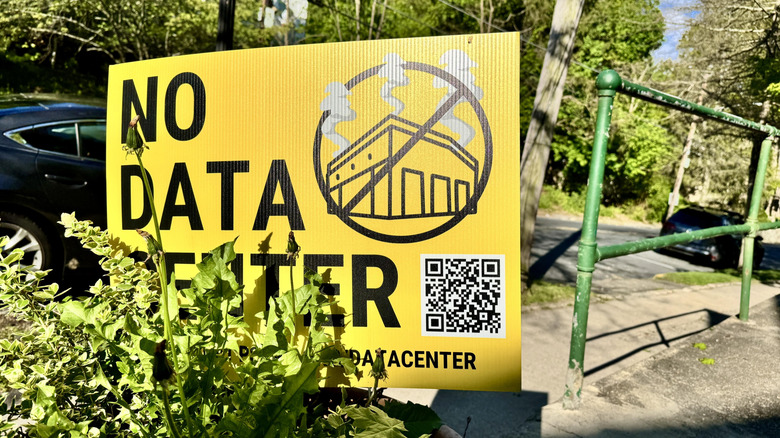
Despite its “Category One” ranking, the company still flags the campaign as strategically important. OpenAI argues that the bigger picture is what the campaign illustrates about ongoing foreign interference and the narratives they’re attempting to push.
In its report, the company states that, “Both clusters attempted to connect US technology policies and industries to everyday economic anxieties and geopolitical instability.” In other words, these posts are designed to sow mistrust among the broader American public — mistrust that targets US institutions, technology companies, and the government.
OpenAI claims this is the first time it has seen such action against AI data centers by Chinese-linked accounts. It also stated that the accounts used in the “Data Center Bandwagon” cartoons were linked to a Chinese Government contractor.
However, although it’s the first time OpenAI has detected such disinformation claims, it isn’t the first instance of Chinese misuse of the platform. In another reported case earlier in 2026, the company suspended the account of a user linked to Chinese law enforcement agencies. The account was being used to attempt a covert influence operation against the Japanese Prime Minister, but the safeguards built into the ChatGPT model prevented it from proceeding.
The data center campaign may have had little direct effect, but it does demonstrate the double-edged sword nature of the technology and how it can be used to heighten tensions in a time when many states are trying hard to delay building AI data centers, and one farmer turned down $15 million to keep an AI data center out of his backyard.

Tech
Craving Ice Cream at a Moment’s Notice? The InstantChill Delivers Fresh Scoops Without Any Overnight Prep


Cravings rarely check the calendar. Most ice cream makers force a long pause because their bowls need a full night in the freezer before anything can happen. That single requirement turns an impulse into a project and leaves the machine collecting dust more often than it gets used. The Instant Pot InstantChill removes that barrier with a built-in compressor and cold plate that start working the moment the machine turns on.
Mix together a simple base of cream, milk, sugar, and flavorings, then pour it into the machine, which will immediately freeze and churn. In most cases, you can get soft serve consistency in around twenty minutes. The benefit is that you don’t need to plan ahead of time, you don’t have to take up a lot of freezer room with a hefty bowl, and you don’t have to wait until the next day. Six one-touch apps cover the usual suspects, with a few extras to try. Ice cream, gelato, and sorbet each have their own setting that produces the desired texture and overflow every time. A non-dairy program automatically handles plant-based milks including coconut cream. The rolled ice cream mode allows you to simply pour the mix directly onto the cool plate, spread it thinly with the provided paddles, and produce those gorgeous swirly ribbons that end up as neat tiny cylinders, making dessert more of a show.

Instant Pot InstantChill Ice Cream Maker with Built‑In Compressor, No Pre‑Freezing, Real Ice Cream in…
- NO PRE‑FREEZING, ICE CREAM IN MINUTES*: Built-in compressor and cold plate system rapidly freezes and churns ultra-smooth fresh ice cream, gelato…
- BUILT‑IN COLD PLATE FOR FASTER RESULTS: Churn in the bowl or pour directly onto the cold plate for even faster freezing. Roll, or scoop—your…
- 6 ONE-TOUCH PROGRAM MODES: (6) precision pre-set programs deliver the ideal balance of speed and timing for perfect results every time. Make Ice…
A smart alarm will sound when it is time to add the mix-ins. Chocolate chips, berries, cookie bits, and almonds are all added at the appropriate moment, resulting in an equally distributed mixture rather than sinking or becoming mushy. That small detail can make a huge difference in texture and saves you a lot of trial and error with other machines.
The finished batch yields roughly two pints, which is ideal for feeding two to four people or experimenting with new flavor combinations without wasting anything. Because the machine does not need to be re-frozen between batches, you may run numerous batches in succession, which is ideal for a long afternoon of creating different flavours without the normal downtime. Some early testers have even reported producing three distinct flavors in a single session without the customary breaks.

The machine is quiet enough to use in an apartment or in the evening while watching a movie in the next room. The control panel is straightforward to operate, with clear icons on the display, and you can see what’s going on via the transparent lid without opening it. It’s also a relatively tiny machine, being approximately eighteen inches long, twelve and a half inches broad, and nine inches tall, and weighing nearly twenty pounds, so it won’t get banged around on your counter.

Cleaning up is also simple because the churning paddle can be washed in the dishwasher, the bowl rinses quickly, and the cold plate only requires a damp towel. You don’t have to disassemble it or get into any weird positions; just a quick clean and it’s done. Some early response has emphasized the creamy results (whether you’re making dairy or non-dairy), the consistent time, and the fact that people want to use it on weeknights rather than just special events.

Up until a few weeks ago, I had never heard of the Tartan Army (despite being one-quarter Scottish and having an actual family tartan of my own!). But now that the World Cup has begun and the Scotland fans known as the Tartan Army have descended on my home state of Massachusetts, they’re inescapable. And that’s not a bad thing.
Full disclosure: I live in a suburb outside Boston, so I haven’t had any firsthand experiences with any of these kilted soldiers, but I have been following their exploits in the news and on social media, and I’m so glad they’re here. (If I were in a neighboring house to visiting tourists who were playing bagpipes throughout the day, it’s possible I’d feel differently.)
The Tartan Army has been going viral over the past week or so, partly due to their sheer numbers — it’s estimated up to 40,000 Scottish fans have traveled to Massachusetts for the group stage of the tournament — and partly because of the festive atmosphere they’ve brought to places like Fenway Park. Upwards of 10,000 fans attended a Red Sox game last weekend, and on the streets, they’ve marched while wearing their signature kilts and playing the bagpipes. And they’ve done their research as tourists, too.
They know that the real tourist attractions in Boston are Dunkin’ and the Cop Slide, a slide at the playground on Boston’s City Hall Plaza known for causing injuries because some people accelerate so fast. The slide went viral when a police officer attempted to use the slide and… it didn’t go well. (We can laugh now because he’s OK.) But this is why we now have a video of a man playing the bagpipes while descending the Cop Slide.
I don’t know if anyone thought that would be one of the byproducts of hosting the World Cup, but this World Cup has provided us with so many unexpected and delightful moments. The Cape Verdean goalkeeper, Vozinha, who went from virtual unknown to worldwide legend during his team’s 90-minute match against Spain, is another story that’s sparking joy, along with yet another viral police officer video, this time of Boston cops joyfully dancing with fans after the Cape Verde-Spain match. All these little dopamine hits really add up.
Bostonians and most New Englanders have a reputation for not being warm. It’s a remnant of the Puritanical and stoic values imported by our earliest settlers and that have lingered for centuries — this can make us seem standoffish and aloof at times, when really it’s more an innate reservedness that some of us can’t shake, no matter how hard we try. But the Scots are cracking our tough outer shell, at least temporarily.
A scroll through TikTok will turn up dozens of videos of gratitude, both from the Scots, thanking Boston for the warmth they’ve been shown, and from locals who have been charmed by the exuberant and joyful visitors. Fans and pundits alike keep talking about how the World Cup really has become the great unifier we need right now, and the influx of Scottish tourists in our state feels like it has lifted the local mood.
But alas, we won’t get to call the Tartan Army ours for long. The team and their fans will stick around for one more match on June 19 against Morocco before traveling down to Miami for their final group-stage match against Brazil on June 24. Sure, Miami has beautiful beaches, and we’ll probably get a viral video of a bagpiper on a jet ski out of this, but we’ll miss the Tartan Army when they’re gone. At least we’ll always have Cop Slide.

from the building-state-TV dept
CNN brass have been waiting to get federal approval of their problematic $111 billion merger with Paramount. As we’ve detailed exhaustively, the high debt load from the CBS/Paramount and Warner Brothers merges is going to result in mass layoffs, higher consumer prices, and sagging quality control at the resulting company. It’s what always happens. It’s not really a debate.
Curiously, while CNN has been waiting for regulatory approval, their resident fact checker, Daniel Dale, appears to have curiously disappeared from the company’s cable TV schedule:
“In late February, Daniel Dale appeared on CNN to dismantle the more than 20 false or misleading claims that he identified during Donald Trump’s State of the Union address…But that appearance, more than three months ago, marked the last time Dale was seen on CNN’s air for his trademark rapid-fire fact checks.”
Shortly after the Status story popped up, Dale just as curiously appeared on air again. Along with a statement of denial from CNN that they’d ever try to court regulatory favoritism by dampening their journalism:
“There is no truth to this. Daniel is a multiplatform reporter whose regular fact checks of the President are an important part of CNN’s political coverage. Like all CNN reporters, his on-air appearances are determined by the news of the day — any suggestion otherwise is false.”
Maybe that’s true. Maybe it’s not. Nothing we’ve seen from major corporate media outlets during Trump’s tenure should indicate they’re deserving of any benefit of the doubt. Last Friday the Trump DOJ approved the deal, falsely claiming it will be great for competition and labor. CNN brass almost certainly already knew approval was coming before they put Dale back on the air.
One thing of note. There’s been a lot of hushed reverential commentary about what’s potentially happening to CBS and CNN. As if these corporate journalism outlets hadn’t been steadily degraded for years by corporate ownership. As if CNN and CBS didn’t go well out of their way to hire more lying on-air authoritarians as a direct act of appeasement to Trumpism even before the mergers.
That said terrible U.S. media can always get worse; and recall the reporting from last fall that Larry Ellison personally met with Trump to carve out which CNN analysts they’d have fired post-acquisition.
Like the CBS Ellison acquisition (where we saw Skydance execs making management decisions before the ink was dry), not yet having a signed deal won’t prevent companies like this — in a country with no working regulators — from getting a running head start on their ambitious censorship plans.
Filed Under: censorship, consolidation, daniel dale, donald trump, fact checking, first amendment, larry ellison, media, mergers, propaganda, state television
Companies: cbs, cnn, paramount


In 2012, a new form of bootkit was demonstrated. Instead of targeting machines through the BIOS or master boot record, one such bootkit attacked Mac OS X systems by infecting the EFI, a package of firmware that started the boot process. A second very primitive bootkit targeted Windows 8 machines by infecting the UEFI bootkit, the predecessor to the UEFI. Around 2013, a researcher demonstrated a more advanced UEFI bootkit for Windows named Dreamboat.
The first known case of a real-world attack targeting the UEFI came in 2018 with the discovery of malware dubbed LoJax. A repurposed version of legitimate anti-theft software known as LoJack, it was created by the Kremlin-backed hacking group tracked under names including Sednit, Fancy Bear, and APT 28. The malware was installed remotely using malware tools that can read and overwrite parts of the UEFI firmware’s flash memory.
In 2020, researchers unearthed the second known instance of real-world malware attacking the UEFI. Each time an infected device rebooted, its UEFI checked whether a malicious file was present in the Windows startup folder and, if not, installed it. Researchers from Kaspersky, the security provider that discovered the malware, named it “MosaicRegressor.” Researchers have yet to determine how the compromised UEFIs became infected. Since then, a handful of new UEFI bootkits have come to light. They are tracked under names including ESpecter, FinSpy, and MoonBounce.
Necessity is the mother of invention
In response to the more menacing threat of UEFI bootkits, Microsoft worked with device makers to develop Secure Boot, an industry-wide standard that uses cryptographic signatures to ensure that each piece of firmware loaded during startup is trusted by a computer’s manufacturer. Secure Boot is designed to create a chain of trust that prevents attackers from replacing the intended bootup firmware with malicious firmware. If a single link in the startup chain isn’t recognized, Secure Boot will prevent the device from starting.
Tech
SanDisk Packs 8 Terabytes Into a PlayStation 5 Drive Built for Owners Who Hate Deleting Games, Costs Nearly $3K


SanDisk designed its latest storage expansion with a very specific group in mind. PlayStation 5 and PS5 Pro owners who have watched their internal space fill up quickly now have an official way to add serious room without constant file management. The Optimus GX Pro 850P arrives as an 8TB M.2 NVMe drive that carries full Sony licensing and a custom heatsink shaped to drop straight into the console’s expansion slot.

Installation is simple because the drive has already been modified to match Sony’s basic criteria for the PS5 family. It’s just the standard M.2 2280 size, connects via the blisteringly fast PCIe 4.0, and has a top-tier cooling to keep the temperature under control, all within the sealed bay. You also don’t have to deal around with any extra parts or changes. Owners simply pop the side panel, slip it in, and the console will automatically configure itself for immediate use on either a conventional PS5 or a PS5 Pro.

PlayStation®5 console – 1TB
- PlayStation 5 Console – 1TB, includes wireless controller, 1TBSSD, Disc Drive, 2 Horizontal Stand Feet, HDMI cable, AC power cord, USB cable, printed…
- 1TB of Storage, keep your favorite games ready and waiting for you to jump in and play
- Ultra-High Speed SSD, maximize you play sessions with near instant load times for installed PS5 games
Performance is also exceptional, with sequential reads reaching a stunning 7,200 megabytes per second and writes coming up close at 6,600 megabytes per second on the 8TB version. Random read/write operations exceed an eye-watering 1.2 million IOPS (input/output operations per second) in both directions, resulting in flawless game streaming and lightning-fast loading, even with enormous open-world titles or numerous installs running.
Capacity is perhaps the main draw here, as the 8TB disk can store approximately 200 games with an average file size of 36 gigabytes each. So, whether you have a large back catalogue or are a completionist who buys every big release, you don’t have to worry about which previous games to retire to make way for something new. Furthermore, the drive works just as well in a Windows desktop with an open M.2 slot if you wish to switch systems later.
SanDisk backs up its claims with a 4,800 TBW (terabytes written) durability rating and a robust 5-year warranty. The homemade heatsink even bears the PlayStation logo and fits inside the console’s height constraints, which is quite useful. So, both power draw and thermal performance can withstand extended gaming sessions inside the PS5 chassis.
Now, the price is currently around $2,960. That includes Sony’s official licensing costs and the price of the high-capacity memory itself, as well as all of the additional labor and testing required for console approval. Similar high-end computer drives are expected to be much cheaper, although they will most likely lack the fancy heatsink and Sony certification.


For decades, data professionals have struggled with the challenge of managing both operational and analytical databases in a unified approach that doesn’t introduce latency and performance degradation.
Agents made the problem structural. A system that reasons continuously and acts on live data cannot tolerate a pipeline between itself and the information it needs to act on.
At the Data + AI Summit on Tuesday, Databricks announced two products aimed at collapsing that infrastructure. Lakehouse//RT delivers millisecond query latency directly on governed Delta and Iceberg tables, eliminating the dedicated real-time serving tier that enterprises have maintained alongside their lakehouses. LTAP, short for Lake Transactional/Analytical Processing, stores Postgres-native transactional data in Delta and Iceberg format from the point of write, removing the ETL pipelines that have connected operational and analytical systems for decades.
Reynold Xin, co-founder of Databricks, described a simpler data stack as “the holy grail for agents” in a briefing with VentureBeat, arguing that as users vibe code more applications, the agents reasoning analytically on top of those apps need the underlying infrastructure out of the way to move fast.
“The agents really prefer a much simpler stack, because they can move way faster,” he said.
LTAP bets on storage-layer unification where HTAP tried engine convergence
Many vendors have tried various approaches over the decades to unify analytical and transactional data.
Back in 2014, analyst firm Gartner coined the term HTAP, an acronym that stands for Hybrid Transactional/Analytical Processing as a way to describe vendors that attempted to unify the two types of databases. Vendors including MemSQL (now known as SingleStore) SAP HANA and Oracle’s MySQL Heatwave are among many HTAP vendors in the market.
LTAP is Databricks’ answer to HTAP, using the Lakebase architecture to unify data at the storage layer rather than the engine level. Lakebase is Databricks’ serverless cloud-based PostgreSQL database service that became generally available in February.
“HTAP to us is kind of more of a failure of the industry rather than a success,” Xin said.
The LTAP approach goes to the storage layer instead of the query layer. Lakebase previously stored Postgres data in Postgres format on object storage, requiring conversion before the Lakehouse’s analytical engines could use it efficiently. With LTAP, transactional data lands directly in Delta or Iceberg format, sharing the same copy that analytical workloads read. Postgres remains the transactional engine. Spark and the Lakehouse remain the analytical engine.
“The whole point is, hey, you use the best tool for the job at the query engine level, we just make sure underlying storage is a single copy of the data,” Xin said.
The central engineering challenge is latency. Object storage carries response times in the seconds range, far too slow for OLTP workloads that require sub-millisecond performance. Lakebase handles this through a caching layer between Postgres compute instances and object storage. The key design decision is where the column conversion happens: idle CPU capacity in that caching layer performs the row-to-column conversion before data lands in object storage.
“When you convert data from row to column, it compresses more than 10 times, typically, so now you substantially reduce the network cost of that basic caching layer between that caching layer and the object stores,” Xin said.
Lakehouse//RT delivers millisecond query latency on live lakehouse data without a separate serving tier
Lakehouse//RT is Databricks’ answer to the dedicated real-time serving tier — the separate system enterprises have maintained alongside their lakehouses to handle low-latency queries, at the cost of data copies, split governance and pipeline complexity agents cannot work around. Key capabilities of Lakehouse//RT include:
Reyden compute engine: Built specifically for high-concurrency, low-latency serving, Reyden queries Delta and Iceberg tables directly without moving data out of the lakehouse.
Latency and throughput: Lakehouse//RT delivers sub-100ms latency at 12,000 queries per second, with response times as low as 10ms on smaller datasets and up to 16x better performance than existing dedicated serving stacks.
Governance and data access: Every query runs within Unity Catalog’s governance framework with no separate permissions layer, no data copies and no ingestion pipelines.
VB Transform · July 14–15 · Menlo Park · Agentic context layers
Your agents are only as good as the data they can reach.
Sessions at Transform cover the RAG architectures powering agentic systems at scale — including how enterprises are connecting agents to live genomics, clinical, and enterprise data.
Analysts see the agentic framing and open format approach as the real differentiators
The problem both products address is well-documented among enterprise data teams, but analysts draw a distinction between the pain point and the specific claim Databricks is making.
“Enterprises have had HTAP, streaming, cloud warehouses, and operational stores for years,” Stephanie Walter, Practice Leader for AI Stack at HyperFRAME Research, told VentureBeat. “What is different is the agentic AI framing.”
Walter noted that agents need live operational data, historical context, governance, retrieval, and write-back in the same workflow.
“That is a strong architecture argument, but Lakebase still has to prove it can meet the latency, reliability, and operational maturity CIOs expect,” she said.
Mike Leone, analyst at Moor Insights and Strategy, said the path to genuine differentiation is more specific than the unification concept itself. He also noted that open analytics on a data lake is table stakes now, with many vendors providing some sort of service.
“The less common move is letting the transactional writes land in open formats too, so the operational database isn’t sitting in a proprietary box while only the analytics half is open, “Leone told VentureBeat.
He added that the open format approach, paired with Lakehouse//RT querying live data directly off the lake, is what gives the architecture a credible case for retiring a whole row of specialized systems.
The technical claim that will face the most scrutiny is also the most central one. “The piece I’d still want their engineers to walk through is how both engines truly share one copy without a quiet conversion step doing the syncing in the middle,” Leone said.
What this means for enterprises
For data engineers evaluating their stack for agentic workloads, the question is no longer which best-of-breed tool to run for each job — it’s whether running separate tools at all is still defensible.
Enterprises that built separate operational databases, real-time serving tiers and analytical lakehouses could previously treat the gaps between them as a maintenance burden. Agents surface those gaps as an operational risk: a system reasoning across governance boundaries will find the inconsistencies faster than any human team.
The market is moving away from specialized serving layers faster than most vendor roadmaps anticipated. According to VB Pulse Q1 2026, a three-wave longitudinal survey of 100-plus employee organizations, hybrid retrieval intent tripled from 10.3% to 33.3% across the quarter while standalone vector database adoption declined across every tracked vendor. The same consolidation logic is now hitting the real-time serving tier.
The traditional approach — best-of-breed tools for each workload type, pipelines between them — was built for human-speed analytical consumption. Agent workloads don’t tolerate that architecture.
“The pain they’re pointing at, all the copying and syncing between operational and analytical systems, is real and expensive, and anyone running this at scale feels it,” Leone said.
Tech
Collecting robot training data is dirty, unglamorous work. Some AI labs are already paying XDOF to do it
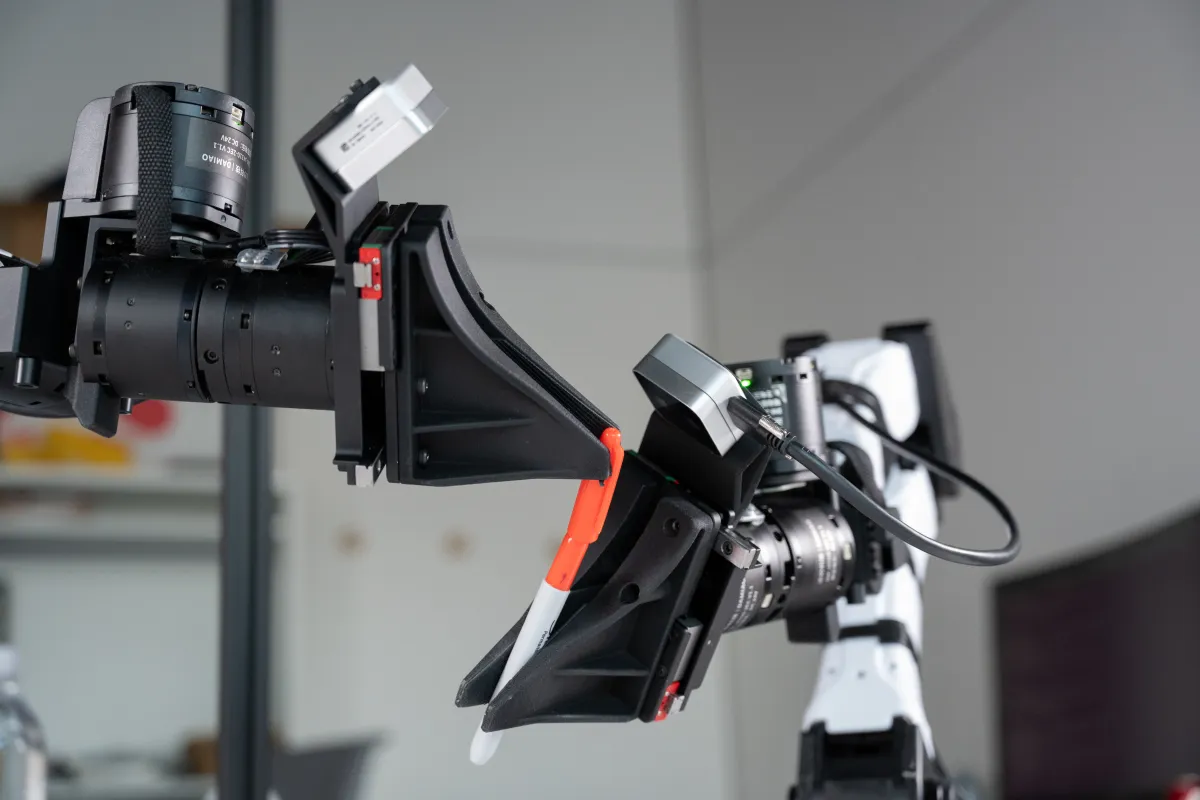
Two weeks ago, OpenAI said it would relaunch the robotics program it shuttered in 2021 — the latest signal that the biggest AI labs are racing to teach machines to operate in the physical world. But building capable robots requires something the AI industry doesn’t yet have, which is the training data to match that used for language models.
That gap is creating a new kind of infrastructure business. Unlike LLMs that were trained on a vast sea of publicly available text, robots need data that captures physical interaction, and that kind of data barely exists. YouTube videos and footage captured by gig workers are low-fidelity and hard to reconcile with the physical world.
XDOF (pronounced “ecks-doff”), emerging from stealth today, is betting that the next great bottleneck in AI isn’t models or chips, but the data feedback loop needed to teach robots how to interact with the physical world.
The startup aims to build the data pipelines, collection tools, and annotation systems that frontier labs and robotics companies can’t easily build themselves — and has raised $70 million from Thrive Capital, Spark Capital, a16z, Lux, and WndrCo to do it. Co-founder and CEO Philippe Wu says XDOF, which has about 60 employees, is already working with 20 customers including several frontier AI labs, but cannot name them.
“All of the top labs are trying to pursue robotics,” Wu said. “We’ve already seen some of the downfalls of falling a little bit behind in the language model race … you don’t want to be in this type of situation where you pursue this technology too late, and everyone is in this boat where physical AI is the next frontier.”
Wu ran into this problem himself as a PhD student at UC Berkeley. His focus was on enabling robots to learn skills from large-scale data sets. There was just one problem.
“We didn’t have large-scale data to work with,” he told TechCrunch. “There was this chicken-and-egg problem — we first needed to actually collect data before we could even ask how to train a foundation model for robotics.”
Wu and his future XDOF co-founder and CTO, Fred Shentu, worked on a project called GELLO, a low-cost teleoperation system that lets a human operator control a robotic arm to generate training data. “It ended up becoming a very influential paper in robotics, because a lot of people had similar needs and bottlenecks, and many started leveraging this type of device for data collection,” Wu said.
Spotting the opportunity, Wu, Shentu, and third co-founder and Chief Operating Officer Nemo Jin launched XDOF in October 2024 to provide a data ecosystem for companies pursuing robotics models. Mindful that data provision alone can be a dead-end business, the company is also focused on data cleaning, tooling, and annotation — creating a self-reinforcing feedback loop for robot trainers.
As a starting point, the company is partnering with UC Berkeley’s AI Research lab to release what it believes is the largest collection of high-quality robot training data ever assembled, dubbed ABC. It includes 130,000 trajectories of robot manipulation data, 300 hours of simulation, and 100 hours of evaluations. That kind of scaled-up pre-training data has never been available to academia before.
“We’ve seen in language, image generation, and other fields, that when models and data are released, the community achieves things that you wouldn’t necessarily have expected,” David McAllister, a Berkeley PhD student who helped organize the release, told TechCrunch.
The team has already used the data to train robots on benchmark tasks like folding T-shirts and flattening boxes, or loading AirPods into their cases.
Unlimited degrees of freedom
The company plans to work across three tiers of a data pyramid. The most valuable tier is teleoperation data collected on the actual robot being deployed; next comes teleoperated robots gathering more general data, as with GELLO; and finally “egocentric” data gathered by humans performing everyday tasks, for which XDOF plans to build its own wearable sensors.
“Your camera choice is going to affect the quality of your data — which is going to affect how your hand-tracking algorithm performs,” Wu said. “If you don’t design the hardware well from the start, the data you collect might have very specific problems that you didn’t anticipate.”
The company plans to hire and train armies of teleoperators and egocentric data operators around the world — a labor-intensive model that raises an obvious question: Why aren’t the major labs doing this data production work themselves?
“You need a warehouse of hundreds of thousands of square feet with hundreds of robots,” Wu said. “You need to maintain these robots, calibrate their physical parameters, and properly train operators.”
It’s a build-out that requires focus, capital, and operational scale that most AI labs would rather outsource — which is precisely the market XDOF is betting on.
The name XDOF is a play on the robotics term “degrees of freedom,” which describes the number of independent motions a robot can perform. Your arm, from shoulder to wrist, has seven degrees of freedom. Humanoid robotics company Figure.AI’s latest robot has 30. The X in the company’s name captures its ambition: “Arbitrary degrees of freedom, unlimited degrees of freedom,” Wu says.
When you purchase through links in our articles, we may earn a small commission. This doesn’t affect our editorial independence.


The beauty of Android Auto has always been that it seamlessly integrates your smartphone’s capabilities into your car’s dash display. Features like GPS, music, call, and text controls are at the top of the list for most people, but there are a lot of great Android Auto apps available that you probably aren’t using. These can expand the technology’s capabilities, putting ever more utility at your fingertips. What’s more, new apps and features come to Android Auto all the time. Some of these are released with a lot of noise and fanfare, but others get quietly added without so much as a peep from the company.
One new addition that has quietly joined the list of Android Auto-compatible apps is Adobe Acrobat Reader, which was added to the platform as part of the v26.5.0.45958 update. Your car’s touchscreen display might not offer as much fine control as a desktop when it comes to file modification, but there’s still a lot that this PDF maker, reader, and editor can do, even during your morning commute. Unfortunately, it looks like the full capabilities of this application will only be available to those who are subscribed to one of the Adobe Acrobat Tiers. That said, those already subscribed will find a surprisingly useful new tool at their disposal. Those who aren’t can still take advantage of several free-to-use features available, and even play around with some of the paid features via the platform’s 7-day free trial if they would like to try it out.
What’s free on the Android Auto Adobe Acrobat Reader?
In terms of free-to-use features, there isn’t much of the standard mobile toolkit that translates directly to your car’s dashboard. The free mobile version of Adobe Acrobat Reader allows you to access scanned PDFs and view them in the app’s Liquid Mode, which Adobe advertises as “the best PDF reading experience” available. This allows you to search and navigate documents as well as adjust font sizes and spacing. You can also annotate PDFs by adding sticky notes and comments, as well as being able to highlight text–a handy group of tools for revising and reviewing documents before sending them to others or simply leaving notes for yourself to make adjustments later. Then there’s the PDF signer. This allows you to fill out, sign, and send PDF documents. This could be handy for everything from schoolwork to legal documents. This PDF viewer and reader can also connect to Google Drive.
But here’s the caveat: You can’t perform any of these visual functions on your car’s screen. Android Auto disables those tools completely since it isn’t safe to read and drive. However, the free version is far from useless once plugged into your car. Instead, the update unlocks a built-in, traditional “Read Aloud” text-to-speech engine. For free users, the app functions like a basic media player, converting standard text PDFs into audio using system voices so you can safely listen to reports or documents cover-to-cover during your drive.
How’s the paid Adobe Acrobat Reader on Android Auto?
While the free “Read Aloud” feature is nice for basic listening, paid subscribers get something much better. The update lists the feature as “Paid” but states that users can “Choose free voices or upgrade for high-quality options.” This suggests that users will have access to the more natural, human-sounding voices that the company has developed for a superior listening experience. This is great for working professionals and students alike, as you can use your morning commute to review research papers or reports without needing to take your eyes off the road. Heck, you could even listen to a whole book if you had the inclination.
That isn’t all, either. The version available to Adobe Acrobat subscribers will include several other useful hands-free features. The app will give you access to Adobe Acrobat’s AI assistant, which lets you control multiple files with voice or text prompts. You can ask it questions and gather information, generate summaries, and connect with email, text, notes, and blogs. There’s also the full mobile editing suite, optical text recognition (OCR), a PDF merging tool, and compression tools. Unfortunately, it looks like the Android Auto version of the app is primarily just a basic media player. Currently, you can’t access these features through your dashboard, even though they’re hands-free; however, some have speculated they may become available in a future update.
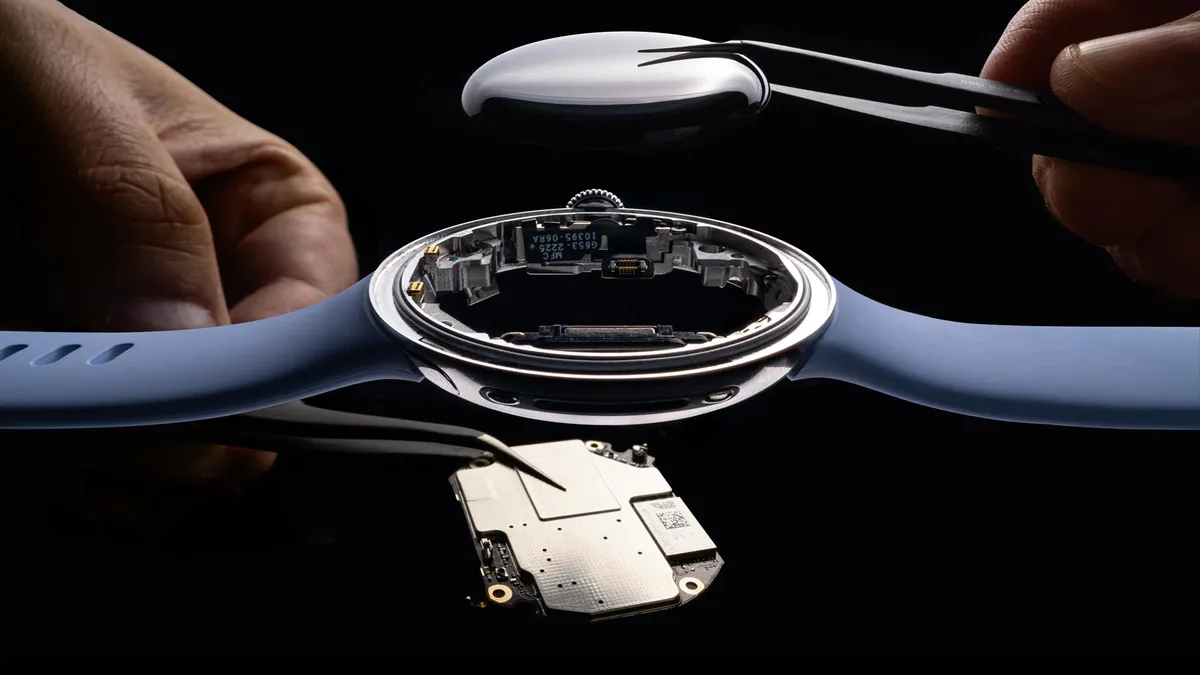
Do you know what a spudger is? I didn’t until I was already fingertips deep into performing open-heart surgery on the Google Pixel Watch 4 and realized that the implement — a plastic stick with one pointy end and one flat end — was already in my hand.
I was following iFixit’s instructions to try to do a full screen replacement on the watch from the comfort of my own home, and spudging, it turned out, was a key part of the process. The spudger is used for pressing, prying, pulling and coaxing the watch’s components in and out of place without damaging the metal elements.
But no sooner had I got to grips with it, when I suddenly had to swap it for a pair of tweezers with pincers sharper than scorpion tails. I wielded them clumsily while trying to peel off a sticker holding the screen connector together. The instructions warned me that in extracting this well-secured scrap of tape, I must be careful not to damage it.
I began to sweat as I tussled with both the sticker and my frustration. If you’ve ever tried to remove chewing gum from your hair, you’ll understand what I mean (though you can’t just fill a smartwatch with peanut butter and hope it still works).
It’s not exactly like I have experience in the field. Call me an ambitious amateur.
Once, for example, around the age of 10, I helped my dad repair our boxy television set with a soldering iron. On a couple of occasions in recent years, under close supervision from the iFixit team at tech shows, I’ve tinkered with laptops and phones. I never electrocuted myself in physics class while playing with circuits. I’m also pretty good at jigsaw puzzles. That’s basically it.
But I wanted to make a go of it because I fundamentally believe product repairability is important. Extending the lifecycle of products means less waste, less need to constantly mine the Earth for rare minerals and less impact on vulnerable communities around the world, including the use of child labor in dangerous conditions. It also means we can get our money’s worth out of our ever-more-expensive devices.
Increasingly, we have the right to repair our own electronics thanks to regulations that compel companies to design their products for easy repair and to make parts and instructions accessible. But it’s one thing to repair a laptop or even a phone. Wearables — from the laudably compact to the fiendishly tiny — are a whole other degree of difficulty, for both manufacturers and consumers.
By early 2025, every US state had introduced some form of right-to-repair legislation, with 10 laws currently in effect (you can check your own state here). Meanwhile, in Europe, the EU Right to Repair Directive is set to come into force at the end of July. Theoretically, we should be starting to see repairability and parts availability trickle down into the tech we buy. In reality, progress is painstakingly slow.
“We are kind of at the point where right to repair has passed legally,” says Kyle Wiens, CEO of iFixit, an advocacy group that offers repair guides for high-tech consumer gear and sells tools and replacement parts.
But compliance? It’s “uneven,” Wiens says.
Tiny tech, big problems
As I set out on my repair adventure, I felt pretty intimidated. Not because the stakes are particularly high, but because I’d like to be able to prove that even for me, an idiot with a screwdriver, this is possible. Because if I can do it, so can you.
The Pixel Watch 4, which came out last year, was an obvious candidate for me to tear down (and then rebuild), because Google has been proactive in making this wearable repairable in a way that no other smartwatch maker has yet attempted.
“They kind of swung for the fences early, and they’re out ahead,” says Wiens.
The company reengineered its watch from the ground up, without adhesives, so someone like me could disassemble and reassemble it without breaking it. Possible, that is, but not always straightforward.
Throughout history, watchmakers have been considered artisans as much as they are technicians. Working on watches of all stripes requires dexterity, patience, precision and a steady hand — none of which are qualities I innately possess, nor have I done much to cultivate.
I could’ve made this process easier for myself by choosing something larger and less fiddly to repair, but at this point in time, there’s a well-established repair ecosystem for phones, laptops and bigger electronics, whether that be local repair shops or cafes, company-led efforts such as Apple’s Genius Bar or support for self-service repair.
Examine the spectrum of iFixit scores, and it’s clear that many phones still pose a challenge — especially the newer foldable variety — but as a category, repairability has improved significantly over the past decade.
The same repair ecosystem and focus on repair from tech companies are not currently in place for wearables.
That’s an issue, because the number of wearables has been skyrocketing as we adorn ourselves with tech to track our sleep and our workouts, to provide the soundtrack to our lives and to observe and record the world around us. I’m talking not only about earbuds and smartwatches, but also newer gadgets, including smart rings, smart glasses and a whole slew of niche (for now, at least) AI peripherals. These items don’t come cheap and ideally will last at least us as long as, if not longer than, our phones. If we can’t repair them, they’ll quickly end up in the trash, adding to the growing mounds of e-waste piling up around the world.
A study published in Nature last December by researchers from Cornell University and the University of Chicago found that demand for health-focused wearables could approach 2 billion units by 2050. Cumulatively, they have the potential to generate 100 million tons of e-waste, increasing pollution risks to communities worldwide.
By far, the biggest contributor to these devices’ carbon footprint is the production of their printed circuit boards. The researchers concluded that if devices are designed to be modular and repairable, their circuit boards can be reused time and again, extending their lifecycles and reducing the need to constantly mine for new materials.
Here we have both a problem and a solution — so why aren’t tech companies doing more to implement it? For a long time, there’s been a perception that wearable tech is simply impossible to repair, which has led many companies to avoid trying. Instead, they tend to rely solely on recycling and trade-in programs to offset the environmental damage.
When it comes to repairability, wearables pose, without a doubt, “the most challenging frontier of consumer tech,” says Matt White, head of sustainable design at deep tech powerhouse Cambridge Consultants. But it’s a challenge that he has first-hand experience overcoming.
I first met White at CES 2026 in a dimly lit Las Vegas hotel suite with his colleagues. The show is famous for its endless stream of shiny consumer tech launches, but the team brought something very different — a proof-of-concept repairable smartwatch called Ouroboros.
The idea behind the project was to identify the roadblocks to repairability, whether engineering, cultural or legislative. What the team discovered, says White, is that building a truly repairable product requires not only a determination from its inception, but also a commitment to it as a north-star priority throughout the design process.
“It’s a business transformation, it’s not just a product design transformation,” he says. “That takes a lot of guts, it takes a bit of a leap of faith and a bit of a bet on innovation for companies to do that. I think that the reward is there, but it requires the right kind of mindset.”
How Google reinvented the Pixel Watch
Google is already seeing that reward, even though it released the Pixel Watch 4 only last summer.
“The reception after launch has been better than we could have hoped for,” says Francis Hoe, group product manager for Google Pixel Watch.
First up, there was the acknowledgment from iFixit, which awarded the device a 9/10 repairability score, that Google had created the most repairable smartwatch on the market (most watches, like the popular Apple Watch, score 3 or 4 out of 10 at most).
This was validating, Hoe says, but he also appreciates the way the community of Pixel Watch owners has responded. He says he loves to go on Reddit and see people promoting its serviceability, as well as discussing how easy they found the watch to repair.
“It’s a little surprising,” he says. “But it’s good to see that feedback.”
One such Reddit user who completed a successful repair said the iFixit guide was easy to follow, and it took them less than an hour (much better than my 90 minutes).
“I’m familiar with doing maker projects, soldering, etc, but I think anyone could do this pretty easily,” they said. “I do have small hands, so not sure if that helped.”
There were some nerves around how people would actually find the process of repairing the device, according to Hoe. And having taken it apart and put it back together again, I can understand why. On the iFixit website, it ranks replacing the screen on the Pixel Watch 4 as “moderate” on the difficulty scale, and says it should take between 30 minutes and one hour.
By the time I tightened the final screws in the Watch, I was about to hit the 90-minute mark. But ultimately, despite the fiddliness of the operation, I completed it.
The remarkable thing about the Pixel Watch 4 is that from the outside, it looks almost identical to the Pixel Watch 3, but the two products share almost no DNA. Even the screws that hold the watch together, one hidden under each watch band, are a new addition. Previously, there was just glue.
The assumption was that once the device was sealed, that would be it, says Hoe. Now that things have to go in and out, both the components and the order in which they’re assembled have been completely rearchitected. Many parts have been shrunk, the haptic engine was swapped for an alternative, and the connectors needed to be extra robust to survive being attached and detached. The battery was a particular challenge.
“If the battery gets smaller, battery life gets worse, and that’s obviously a huge selling point of wearable devices,” says Hoe. “It meant fundamentally changing our battery strategy.”
The last thing Google wanted to do was make any part of the Pixel Watch experience worse for the sake of repairability, whether that be reducing battery life, increasing the device’s size or making it less waterproof.
Tech companies often use the difficulty of waterproofing as an excuse for not prioritizing modularity and repairability, says Ben Hatton, connected devices analyst at CCS Insight. But the direction of travel is beginning to change.
“Seeing things like the Google Watch and smartphones becoming more repairable, but not sacrificing IP68 and 69 ratings for it, proves that actually that’s not really a compromise that has to be made,” he says. “That major argument against preventing water ingress is starting to be maybe debunked a little bit.”
Those IP ratings indicate resistance to dust and water infiltration. The 6 in the first position indicates the highest level of dust protection, while the 8 or 9 in the second position are high marks for water resistance.
With the Pixel Watch 4 being a sports and fitness device, making it waterproof was a nonnegotiable, says Hoe. Again, this was previously accomplished with adhesives, which aren’t compatible with self-repair, so they had to experiment with alternatives.
The Pixel Watch 4 does come with an IP68 rating, and I got to see first-hand how Google has used O-rings — donut-shaped rubber bands — to create a tight, leak-free seal on both the external screws and around the screen. Getting the tiny O-rings back on the 2mm screws was another tricky part of the reassembly process for me, like playing an ant-size game of Hoopla, but it will be essential if I’m ever to wear the watch in the shower.
Given the potentially dicey trade-offs, many companies would’ve thrown in the towel on repairability. White, who has worked on many different products over the years, says he’s seen multiple times when companies set out to make something repairable but abandon that design principle when it might hold up a project.
“Keeping it sacred is very, very hard when you know engineering teams are getting pressure that you know this has to be released next month in order to hit this milestone and that milestone,” he says. “Then, it’s the first thing in the firing line.”
For Google, repairability eventually won out in internal debates.
“Every time that there’s an inflection point of trade-offs that have to be made, I think we always try to come back to the user and what are we hoping to deliver with this product,” Hoe says. “The trend is usually people are using the devices longer and longer, so it wasn’t something that we wanted to walk away from.”
Fairbuds mount a challenge to the industry
When it comes to challenging the status quo, no one in consumer tech is doing it quite like Fairphone. The Dutch social enterprise is best known for its sustainable, repairable smartphones — the mere existence of which throws down the gauntlet to the entire industry, including giants such as Apple and Samsung.
Around 2021, the company decided to branch out into audio products and has since released a series of products, most notably the Fairbuds, which are earbuds, and the Fairbuds XL, which are over-ear headphones.
Perhaps because they’re so small, often relatively inexpensive and viewed as a peripheral rather than a device in their own right, people tend to treat headphones as disposable. You’ve probably had at least one pair of headphones break, but did you think to try to repair them?
If your answer is no, don’t feel ashamed. There’s been a long-held belief that headphones are impossible to repair. That’s just started changing.
It’s only in the past few years that iFixit has been handing out repairability scorecards to wireless earbuds, and only in May that it started marking headphones. In both categories, only one company has managed a perfect 10/10 score.
This Fairbuds XL, in particular, is the company’s “most fun” to repair, says Chandler Hatton, Fairphone’s CTO. “It’s a little bit chunkier, and you can feel a little bit more comfortable taking it apart.”
Earbuds, meanwhile, posed a trickier challenge. Our ears aren’t typically load-bearing body parts, so there’s a trade-off between weight and battery size. The small batteries inevitably burn out sooner than we’d like, so we end up chucking them and buying new ones.
“The way that we combat it is to make it super simple to upgrade it to the point that it would be quite silly to throw it away, because you realize: Hey, this thing that I have is valuable, and I can very easily purchase something for very little money and spend 5 minutes putting it into this device,” says Hatton.
Giving a device a second or even third life can prevent a piece of tech from ending up gathering dust in a drawer, he adds, noting the sense of confusion many people feel when they don’t want to admit they might never use something again.
Ultimately, to build repairable tech, you do need to start with repairability as a design principle, says Hatton. If every component needs to be soldered to a printed circuit board, you’re asking people to do too much to repair it. Instead, you need to take a modular approach and ensure the most commonly replaced components are actually accessible.
Another major benefit of making a device modular and repairable is that it can be backward compatible. When Fairphone launched the latest version of the Fairbuds XL, it made the new driver available so people with the earlier model could upgrade their headphones without buying a whole new pair.
It’s important to the company to make tech that’s also appealing and affordable, says Hatton. She doesn’t want to ask people to compromise on their design and comfort standards. Repairability can’t come at the cost of an avant-garde product that might alienate people and make them less willing to take a chance on a smaller brand.
“We want to build on the things that are already there and be part of the conversation, part of the ecosystem and part of the trends that are going on,” says Hatton.
When repairability becomes an obligation
For now, companies, including Fairphone and Google, are leading by example, but at some point that example might form the basis of a legal precedent.
Europe’s battery regulation, which will come into force in 2027, requires most portable consumer electronics to have easily user-replaceable batteries. Just as the EU regulation mandating USB-C charging made it the global charging standard, it’s expected that the new rules will affect the design and repairability of products worldwide.
There are exemptions for devices where battery access would compromise water resistance, or for ultra-compact designs where physical constraints make safe battery access impossible. But these exceptions exist for only as long as there’s nothing in the state of the art — or in the market — that proves it’s possible to make a battery accessible or waterproof after all, says White, the consultant.
Now that Google has shown it’s possible to make a smartwatch with an IP68 rating and a user-replaceable battery, that could shift what’s considered state-of-the-art.
“Whether it be for a ring or whether it be for smart glasses or whether it be for headphones, it’s a real opportunity for companies to go… this is now the state of the art, and everyone else has to follow,” says White. “You can use it as a tool to enact change across the entire sector, and also gain all of the benefit of being the first one to do it.”
With both regulation looming and product precedents being set, there is enormous potential for tech companies to force competitors to raise their own game by developing replaceable battery solutions first. If you hold a licensable patent for such a solution, it could even prove profitable.
European regulators might be slow, but their power shouldn’t be underestimated. Even Apple switched its proprietary Lightning port to USB-C on all the iPhones it sells globally.
Apple has made significant strides in repairability, says iFixit’s Wiens, who has publicly and successfully exerted pressure on the company over the years.
“They really, genuinely, I think, do believe in repair and making it last longer,” he says. “Broadly, the iPhone does last a long time, and it’s great resale value.”
He’s less impressed when it comes to the Apple Watch and AirPods. (Versions of the latter consistently receive a 0/10 iFixit score, and Wiens describes the lack of repairability as “egregious.”)
The Apple Watch, meanwhile, poses a “fixable design problem,” says Wiens. One of the main issues — prevalent across the industry, especially with games consoles — is the availability of parts and manuals, which Wiens sees as lacking when it comes to the watch.
He directs me to a letter sent by Apple to the Minnesota attorney general in February and posted on Reddit, in which the company points to its online Self Service Repair store as proof of its compliance with the state’s right-to-repair law regarding the Apple Watch. This resource contains documentation and opportunities to buy parts for many Apple products, but not the Apple Watch.
A spokesperson for Apple said the company meets the requirements of Minnesota’s right-to-repair law, and that it’s the first smartphone maker to support a push for federal right-to-repair regulation.
The miniature design of the Apple Watch presents challenges, but the company is rolling out same-unit battery repair service for a growing number of models over an expanding range of regions. Display repairs for certain models are also under development, as are further enhancements to overall Apple Watch repairability.
“We’ve seen big improvements from Apple and almost market-leading improvements in some respects,” says Ben Wood, chief analyst at market research firm CCS Insight, who cites an easily delaminated glue the company invented to simplify iPhone disassembly. It’s the kind of thing that could be rolled down to the Apple Watch and other small products to increase ease of repair.
Wood adds that he wouldn’t be surprised, especially given Apple’s progress in cutting emissions associated with the manufacture of recent Apple Watch models, to see a more easily repairable Apple Watch in the near future.
Emerging wearables: No repairability in sight
While the established players in established wearable product categories are taking active strides toward sustainability, the same can’t be said for the up-and-comers.
Quinten Klein, a 30-year-old business development and operations contractor, dangles a pair of first-generation Meta Ray-Ban smart glasses in front of his camera from his home in Los Angeles.
“If you can see in here, I’ve taken off one of the arms,” he says, as the inside edge of one of the glasses stems flaps open.
This is the fourth pair of Meta Ray-Bans Klein has tinkered with, he tells me. The speakers on his first pair of Ray-Bans broke out of warranty, prompting him to take matters into his own hands. Reddit is filled with complaints from people just like him, who have been left with a non-functioning pair of smart glasses relatively soon after buying them.
“They’re definitely fragile,” Klein says. “They’re not easy to repair — not because the job isn’t easy, [but] because things just don’t work once you repair it. Things don’t go back together right, and it’s packed tightly. It’s one of those things where they’ve obviously designed it never to be opened up again.”
On the Gen 1s he shows me over the video call, he’d replaced the battery with one from the Ray-Bans Gen 2. This time, he’s been extra careful not to cause any serious damage so that he can keep on using them rather than have them be another sacrifice to repairability science.
“You’re still going to end up damaging some little parts, like the bottoms here — the plastic is just so soft,” he says. “The glue, once you’ve broken it off, it’s really hard to get off of the little plastic edges. It’s definitely not something that I would recommend to any casual user.”
Once he was in, the battery on the Gen 1 glasses was actually pretty easy, says Klein. The front half of the glasses’ arm nearest to the lenses is very simply organized and connected (the back half, where the speakers reside, is more of a mystery).
“It’s the putting it back together part and the reliability once it’s together part that is not really there,” he says.
This is something I relate to from my tinkering with my Pixel Watch 4. The reassembly was by far the most fraught part of the process. “I’m not sure what kind of glue they used, but I’ve been trying to work with different industrial glues to copy it,” says Klein.
Smart glasses (especially those without screens) are currently experiencing explosive popularity, with research published by IDC this week showing 167% year-on-year growth in the first three months of 2026. Let’s hope those 2.25 million units stand the test of time.
“It could turn into an e-waste nightmare if there’s not due consideration designed into these things,” says White.
Perhaps unsurprisingly, Meta is the market leader in smart glasses, with over 69% market share, according to IDC. No other company currently boasts more than 3.5%, but several promising challengers are poised to enter the fray with competitive products.
Glasses from Google, Samsung, Gentle Monster, Warby Parker and Xreal are all on the verge of hitting the shelves. Meanwhile, the Alibaba Qwen smart glasses I tried at MWC in Barcelona in March had swappable batteries on the ends of the arms — the first hint of any repairability we’ve seen in this emerging product category.
Thanks to his intrepid approach to DIY repair, Klein has shown that if you can get inside the Meta Ray-Bans and close them up again, battery repair is not only possible but straightforward. But access to the device’s innards is so prohibitive that in an iFixit teardown, the team deemed the glasses “unrepairable.”
The generous way to think about this is to acknowledge that it is new technology and that Meta is still figuring it out.
“You’re packing a considerable amount of tech into a crazy, already predetermined form factor that you can’t deviate much from,” says Carsten Frauenheim, iFixit’s global head of design for repairability. “Their engineering challenge is high, and I think their priority is just tackling that right now.”
Wiens has a more take-no-prisoners attitude. “Glasses are hard — we’re at the bleeding edge of this,” he says. “But come on, you’ve got to find a way to make the battery swappable on these smart glasses, otherwise it’s a disposable product. … I’m going to continue to hold their feet to the fire until they get the battery repairable.”
A spokesperson for Meta said the company was always looking for ways to improve the overall lifecycle of its products, focusing on durability and longevity as key considerations during hardware development. The company follows circular economy principles, including “reusing hardware components, increasing the use of recycled materials and responsible supply chain practices,” they said.
“We have several programs in place to keep devices in use and out of landfill,” they added. “We also offer refurbished products where available, extending the lifecycle of existing hardware.” Lenses are fully replaceable and customers, having trouble with warrantees should reach out to Ray-Ban or Oakley customer support directly.
Compared with upcoming interlopers into the glasses game, such as Google, Samsung and potentially Apple, Meta has relatively little hardware manufacturing experience, which could put it at a disadvantage. It’s likely that they’ll include some of the learnings from making other products in their portfolios repairable, Hatton says. “Maybe that could steer Meta into a more sustainable outlook.”
Other makers of wearables, including smart rings and AI peripherals such as pendants and clips, don’t appear to be doing much better — though there are signs of hope.
Earlier this year, smart ring maker Oura filed for a patent in the US with a replaceable battery design. The company hasn’t commented further on this, and there was no such component in the Oura Ring 5, which debuted in May, but it still feels promising at a time when very few companies designing emerging wearable products seem to have repair on their agendas at all.
For those, such as Wiens, who are campaigning for the right to repair, the lack of care and attention being given to repairability by companies experimenting with new product categories is ultimately dispiriting.
“I get we’re excited with the shiny new, but you can’t go and mine a hole in the Earth every day of raw materials, get stuff made by children … then drag the supply chain all around the world to make something that we’re going to sell to you for $400, and then it stops working in 18 months,” he says. “This is not OK. It should not be ethically tolerated.”
In the face of unrepairable products, companies only have trade-in and recycling schemes to fall back on. Both Meta and Oura offer these, but in the long run, they won’t meet the requirements of right-to-repair legislation, and it’s hard to measure how thorough any recycling truly is.
Our role in repair
All of this brings me back to my own attempts to repair the Pixel Watch.
It’s all well and good for companies to invest in making their products easily repairable and recyclable, but the onus is also on us, as consumers of those products, to follow through by repairing or recycling. If we leave them in a drawer for years gathering dust — something I’ve been guilty of doing — or dispose of them irresponsibly, we’re not playing our part in keeping the circular economy a true circle.
In a survey last year by the University of Bradford in northern England, researchers found that 73% of people were willing to repair their electronics. The majority were motivated by cost savings and the fun of a DIY project.
Those who were reluctant to repair their tech cited lack of skills, tools, knowledge and time as major barriers. Lack of time is a personal issue and often a matter of priorities and perception. As for the other three, iFixit and other self-service repair stores, including Apple’s, have people covered.
Still, for many of us, a psychological shift might be required to add a repair chapter to the story of our ownership of any given item. If we can make this shift, we might be able to find the time after all. We’re out of practice right now — most of us don’t spend our evenings sitting in front of the TV darning our own socks.
Tech companies could also do more to hold our hands through this process, says White. “There’s an opportunity there in not just the raw engineering design, but in the messaging, in the [user experience] of the product, in little touch points within the product that kind of nudge or guide the consumer to understand either how to repair their products or what to do with it at the end of life.”
Our consumer culture is one of abundance, so the skills and inclination to fix and mend have been replaced by the ease of disposing of and replacing. But if we can get out of that habit, there may be untapped and unacknowledged benefits in repairing our broken things.
Consider the Ikea Effect, a term coined in 2011 by three academics from Harvard, Yale and Duke who published the results of three studies in the Journal of Consumer Psychology. Together, their findings showed that people tend to cherish items they’ve built themselves, placing much higher value on them than on items they’ve simply purchased.
Most of us are familiar with the feeling of satisfaction of completing a Lego set, for example, as well as the way we tend to value the finished product — often not wanting to tear it down, but instead displaying it somewhere we can admire it. Our effort creates attachment, and the same might well be true of items we successfully repair.
Tech companies can help make repairs more fun for us, too. At every step of the journey, the Pixel Watch team had to think about what people would experience if they went fishing around under the hood. That meant not just making it easy to take apart, but making it aesthetically pleasing.
“We’re not thinking about just the outside, but how do we drive the inner beauty of the device, so that when you’re taking it apart, it feels like something we considered,” says Hoe. He points to the printed Google branding on the battery’s metal, the way the components line up to create a smooth surface, and the lack of sharp edges. “It wasn’t an afterthought, essentially,” he says.
We could well start to see our technology not simply as utilitarian items destined sooner rather than later for the rubbish heap, but instead as something partially crafted by our own hand, into which we have poured time, labor and care. We might subsequently make more effort to keep our tech safe and give it a responsible send-off when it finally does take its last gasp.
Likewise, handholding us through our confusion over what to do with our broken products is a way for tech companies to establish goodwill among customers.
“It’s a really great opportunity for the brand to build loyalty and stickiness,” says White. “In my mind, it feels like a win-win.”
The legacy of the Pixel Watch, says Hoe, is that it’s already proven people do actually care about repairability.
I found my experience of replacing the Pixel Watch’s screen both deeply fun and satisfying. It also massively boosted confidence in my own capabilities. Having completed one repair, I now feel less intimidated at the thought of getting out my screwdriver, my tweezers and, yes, my spudger to crack open more of my damaged tech.
There’s one particularly pricey pair of headphones sitting in a drawer that is calling to me. I’ve been putting off dealing with them, but they’re already broken. It’s at this point that I have to ask myself, what’s the worst that could happen?
Art Director | Jeffrey Hazelwood
Creative Director | Viva Tung
Video Host | Katie Collins
Video Producer | Andrew Lanxon
Video Editor | JD Christison
Project Manager | Danielle Ramirez
Editor | Corinne Reichert
Director of Content | Jonathan Skillings

With the 1.6 release, the Matter smart home standard is becoming more capable with streamlined setup, improved multi-ecosystem support, and expanded user preferences.
Starting the week of June 15th, the Connectivity Standard Alliance has been hosting its first ever Unify conference in Austin, Texas. It’s there the CSA made the announcement around Matter 1.6.
As a precursor, Matter is a fairly new smart home standard that is intended to unify the various platform ecosystems. Matter devices can largely work seamlessly between Amazon Alexa, Google Home, Samsung SmartThings, Apple Home, and more.
Matter 1.6
With this update, NFC-based commissioning is improving compared to the initial 1.4.1 implementation. Previously, after tapping a NFC tag, the commissioning was then carried out over Bluetooth.
Now, Matter 1.6 can complete the entire commissioning process via bi-directional NFC communication. That removes the need for BLE at all and it even works before the accessory is fully powered on.
In use, we expect to see devices like light bulbs or in-wall switches that can set up before ever being plugged into a socket or wired into a wall.
For multi-ecosystem homes, the CSA is releasing Joint Fabric. Instead of each ecosystem having its own network of devices, 1.6 creates a standardized Matter network that different ecosystems can tap into.
Devices can be added to a Joint Fabric once, and automatically appear in each of the ecosystems. This removes the need for fresh setup in each ecosystem.
The final major update with this release is for thermostats. Instead of sending a contextually blind command directly to a thermostat, Thermostat Suggestions standardizes the communication of commands by adding context.
For example, if a user manually adjusted the thermostat but moments later, a new command arrives from a previously-set schedule. The thermostat is able to ignore that command, recognizing it’s likely not what the user intended to happen just after making a manual adjustment.
If a Thermostat Suggestion is ignored, the thermostat can send back a response with a reason for the action.
Other changes include event history for security sensors, unmounted states for smoke and CO alarms, and standardized capability communication.
Product Security 1.1 update
Also developed by the CSA, we got version 1.1 of the Product Security certification program.
Version 1.1 has a more wholistic view of the smart home, offering security certifications for the whole ecosystem, from the app to the accessories.
“With this announcement, the Product Security Certification Program advances our goal to make compliance with external product security standards and regulations practical for the global IoT industry,” said Steve Hanna of Infineon, the Chair of the Product Security Working Group Steering Committee. “Version 1.1 expands the scope of the program and introduces higher-confidence pathways for certification, reflecting emerging trends in global regulations.”
The new version of Matter is available to developers and accessory makers now. We now have to wait for Apple Home and other ecosystems to adopt it.

Start Buying Bitcoin this Week (Don’t Wait Too Long)

Developer criticised over ‘unacceptable’ delays to Oldham apartments scheme

IFRA: A Primer On This Mid-Cap Heavy US Infrastructure ETF (BATS:IFRA)


-

 Business3 days ago
No Jackpot Winner as $257 Million Prize Rolls Over to $269 Million Monday Draw
-

 Crypto World6 days ago
Oppenheimer backs SpaceX as $70 billion retail frenzy builds
-

 Fashion5 days ago
Weekend Open Thread: Tuckernuck – Corporette.com
-

 Crypto World6 days ago
Markets Rally as SpaceX IPO Looms Amid Iran Tensions and Inflation Surge
-
 Crypto World3 days ago
Zimbabwe Requires Crypto Businesses to Register Annually Under New FIU Regulations
-

 Tech5 days ago
NanoClaw integrates JFrog registries to secure AI agent downloads
-

 Crypto World4 days ago
Bitget enters Argentina’s regulated crypto market through PSAV registration
-

 Tech5 days ago
This Week In Security: Microsoft On Microsoft, Register Your Domains, Linux On ARM, And FreeBSD Joins The File Cache Club
-
 Tech6 days ago
Dutton Ranch star claims they ‘didn’t see any disruption’ on set following Chad Feehan’s exit from Yellowstone spinoff fueled by Taylor Sheridan clash rumors
-

 NewsBeat6 days ago
El Nino has formed in the Pacific and could set records, forecasters say
-

 Politics6 days ago
Politics Home | Healey Resignation Is “Colossal Failure Of Government”, Says Former Labour Defence Secretary
-
 Entertainment6 days ago
Donnie Wahlberg & More Heat Up Las Vegas at Circa’s Barry’s Downtown Prime
-
 Tech6 days ago
Opendoor Ends India Operations, Fueling a Bigger Conversation About AI and Outsourcing
-

 Politics6 days ago
Belfast burns, while Met chief points finger at Iran and Russia
-

 Sports6 days ago
First Time Since 1971: Australia Register Historic Low In ODI Cricket
-

 NewsBeat5 days ago
FBI searches office of Ohio voter registration group
-

 Business6 days ago
AT&T: Verizon's 27% Outperformance Sets Up A Solid Entry Point
-
 Tech6 days ago
Anthropic is spending $150M to embed 1,000 AI fellows inside nonprofits. No degree required.
-

 Politics6 days ago
Modi thanks Trump for wishes as US attacks Indian seafarers
-
 Entertainment6 days ago
‘The Pitt’s Fan-Favorite Doctor Confirms Noah Wyle Gave His Blessing to Return [Exclusive]
You must be logged in to post a comment Login