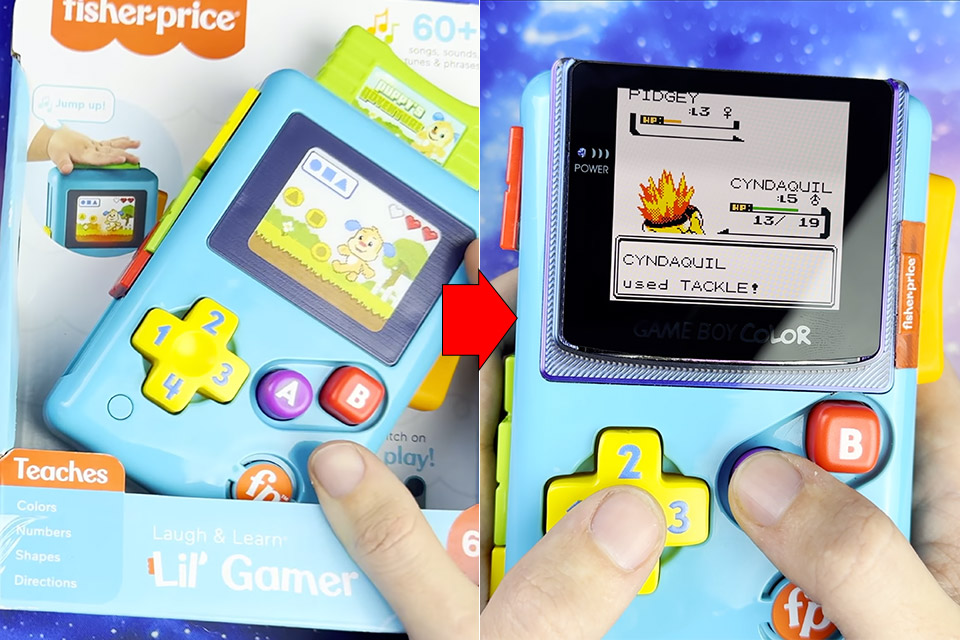
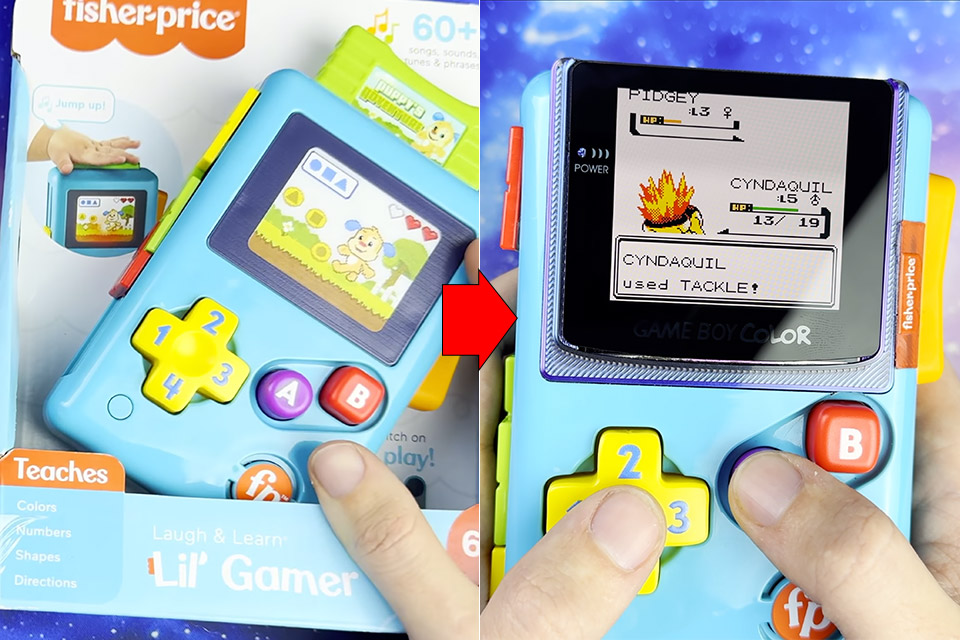
A Fisher-Price Laugh & Learn Lil’ Gamer sits on store shelves looking every bit like a colorful, oversized Game Boy meant for tiny hands. Its screen is a printed sticker, its cartridge springs in and out for show, and its buttons trigger songs and light patterns that teach shapes and colors. Press the right sequence and it even plays Super Mario Bros. sound effects. Most parents hand it over and move on. One modder named KOUZEX looked at the same plastic shell and decided it should play actual Game Boy Color games instead.
The goal was to maintain as much of the original toy’s appearance and feel intact as feasible. For us, this meant maintaining all of the huge chunky buttons, the sliding Tetris-style blocks on the side, the brilliant blue plastic, and even the orange rocker switch. This was not going to be a simple shell replacement, because the toy’s personality needed to survive the procedure.
Flip Into Play – Flip down, ready to play. Take a call or reply to a message mid-game—just flip it open without unplugging. The hinge is rated for…
Vertical Mobile Gaming – Designed around portrait play, FlipPad brings a classic handheld feel to your phone. Perfect for retro games and…
USB-C Plug and Play – Built-in USB-C connection makes setup simple and direct. Plug in and start playing instantly. The USB-C port is rated for over…
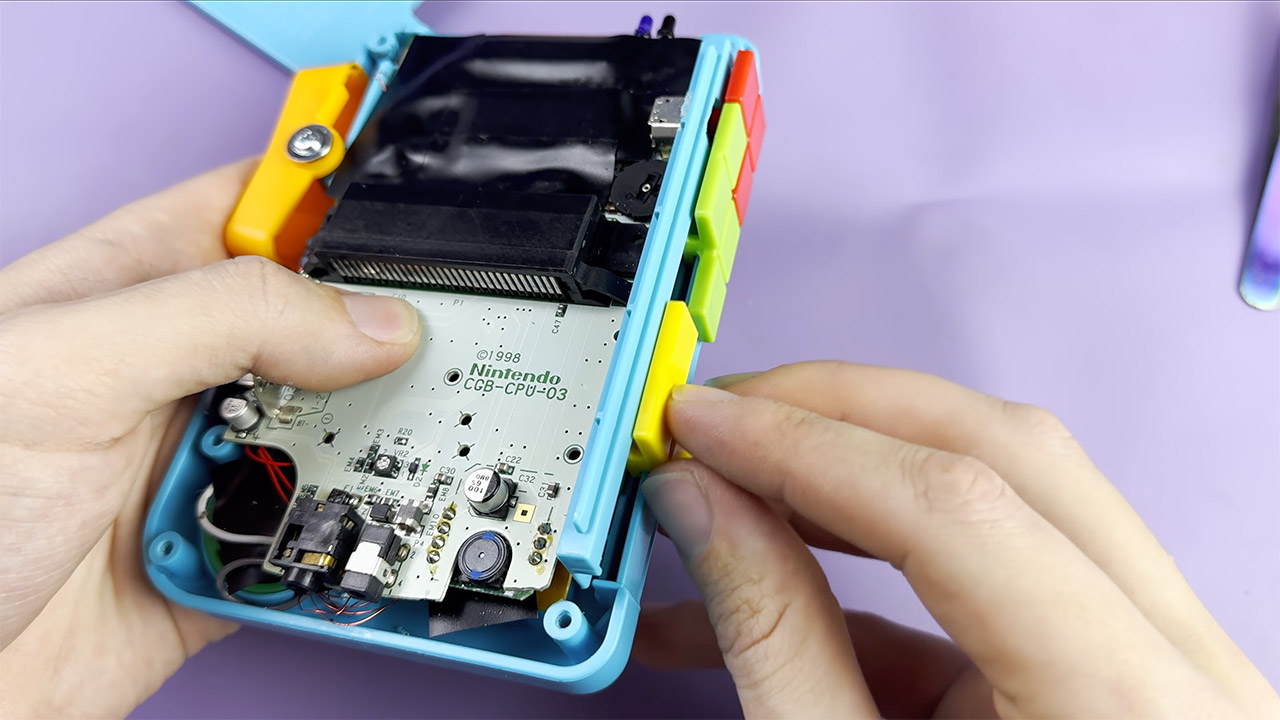
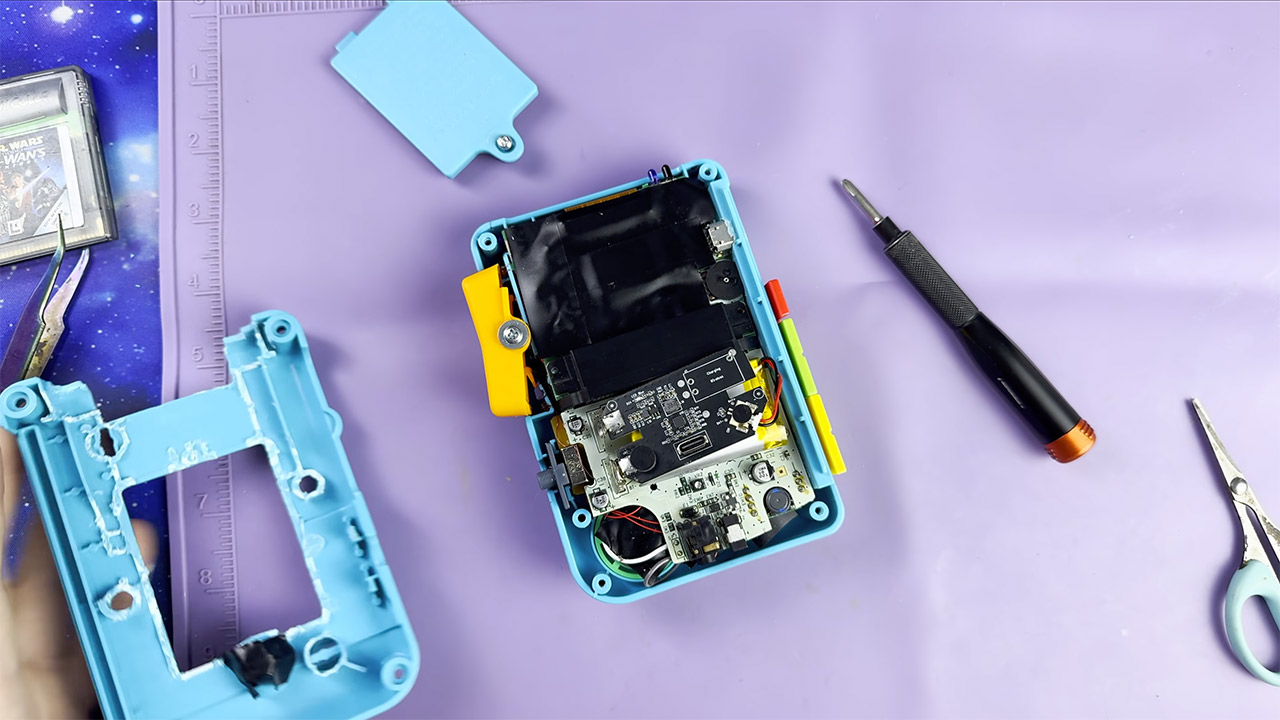
He began by splitting the toy open to get inside, but four large screws and a piece of hot glue glued the halves together tightly, so it required some elbow grease to separate them. Once inside, he discovered a simple board, a non-removable springy cartridge, and the familiar button membranes, all of which were exactly where he needed them. As a great touch, the button caps stayed put, so the finished product felt like the original toy in your hands, even under your fingers. For the time being, the sliding blocks and side switch have been left alone to preserve the vibe.
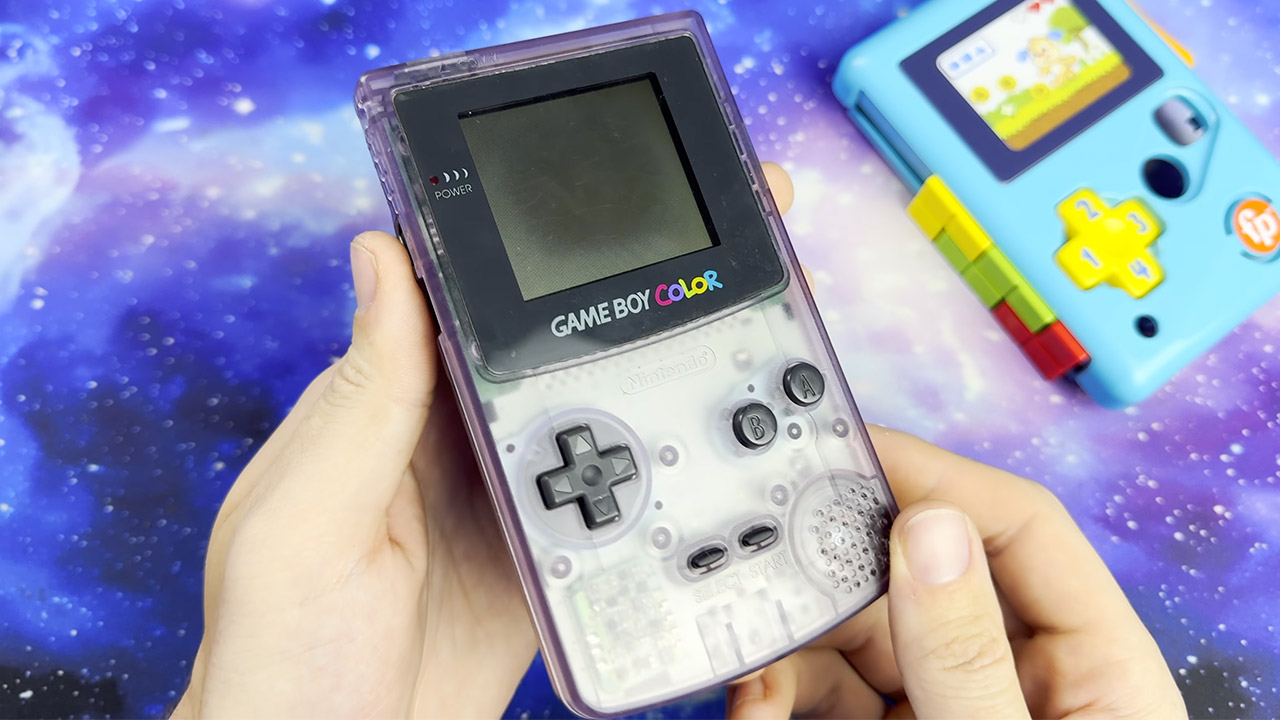
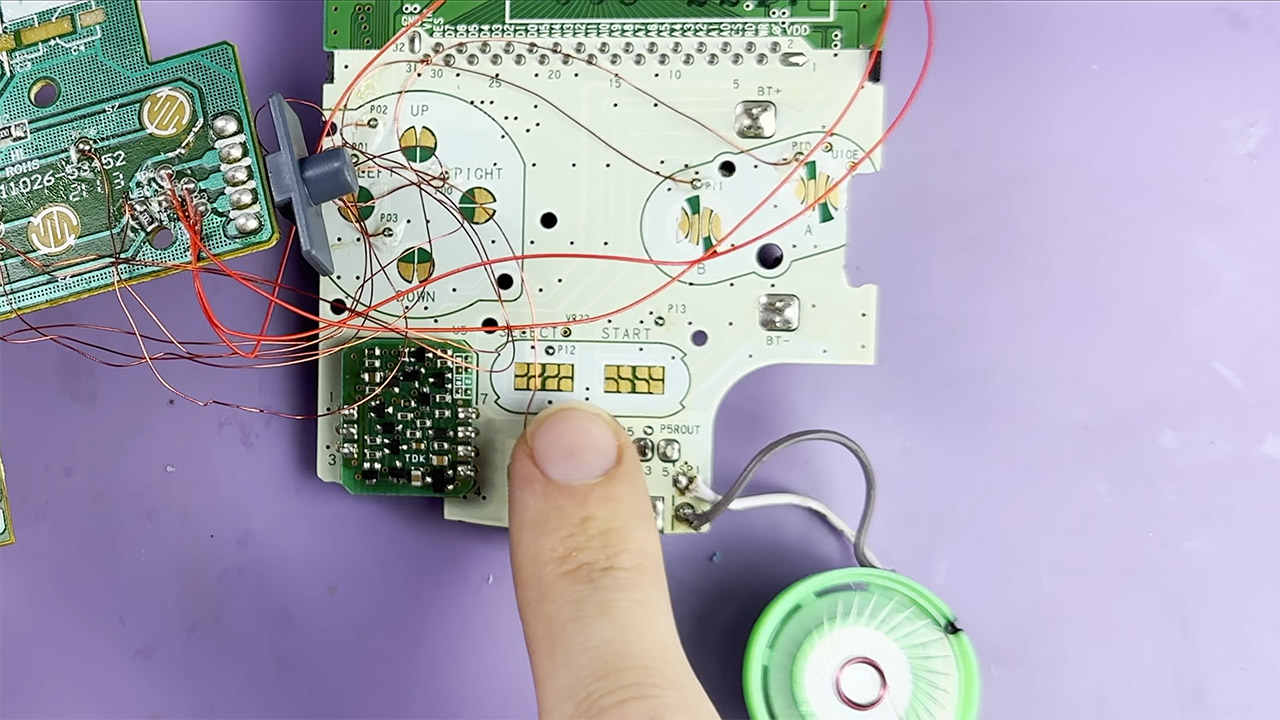
One broken Game Boy Color provided him with the necessary circuitry. He snuck its mainboard inside the toy’s cavity and was surprised to see how easily it slid in. Only minor cutting was required to ensure a snug fit, and we then connected the Nintendo board to the toy’s original button contacts and speaker. Early tests revealed that the D-pad and face buttons registered properly provided the signals were accurately mapped out. However, during one of those tests, a fuse on the Game Boy Color board blew, most likely because he was providing power in the wrong direction. Fortunately, once he removed some non-essential elements from the toy’s board, the electronics were fine, with no more damage done.
The Start and Select buttons were gone, which required some creative thinking. The orange rocker switch on the side of the toy saved the day. He put tiny switches within it, kept in place with epoxy, such that one direction would trigger Start and the other would trigger Select. The signals for the A and B buttons only needed to be altered, owing to the toy’s slightly skewed configuration in comparison to the original Game Boy. Once he sorted out the wiring, the controls behaved as he expected.
Screen work was a real test of patience, as the original Game Boy Color display had long since died, forcing him to replace it with a current OLED panel. The new screen is slightly larger than the original, and it fits well against the toy’s strong plastic. Fitting it in required some attention with a Dremel, as well as some careful 3D-printed frames and machine work to ensure a clean opening and protect the panel edges. He also connected power wires to the OLED and the power switch. The old AA arrangement was replaced by a rechargeable battery and a beautiful USB-C charging board. A little hole carved in the back of the shell allows the port to pass thru, making it easy to charge.
He was able to fit everything into the space inside the shell; however, he needed some room for the motherboard, battery, charge board, and cartridge slot to nestle together without turning the casing into Swiss cheese, so we had to whittle away at the excess material in gradual passes until everything fit together nice and snug. A 3D printed chunk covered the cartridge slot, and he also had a printed piece to cover some of the rougher bits left over from the fitting procedure that were beginning to look a little out of place.
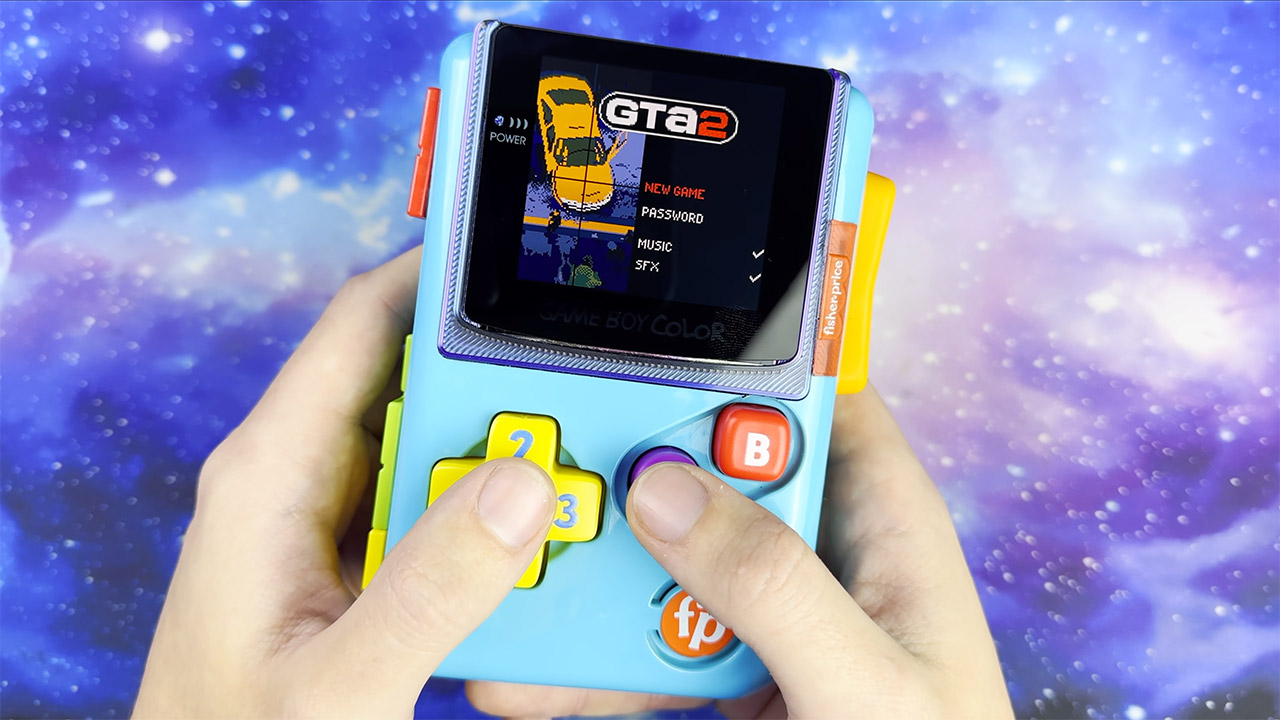
When the shell snapped shut for the final time, the device turned on and finally ran a real Game Boy Color cartridge, with no concerns about Pokémon Yellow or other programs. The OLED panel produced some great deep blacks and vivid colors, which the old screen couldn’t match. The buttons are functional, just not as sharp as the default Game Boy. The slider blocks still operate, the speaker still works, and the overall appearance remains that of a Fisher-Price toy that a toddler could pick up and throw across the room. [Source]
An anonymous reader quotes a report from the Associated Press: The contiguous United States sizzled to its hottest month ever last month, according to the National Oceanic and Atmospheric Administration. July averaged 76.89 degrees Fahrenheit (24.94 degrees Celsius) across the Lower 48 states, eclipsing the Dust Bowl’s July 1936 by an eighth of a degree. Records go back to 1895. […] Although it was unusually cool in Alaska, hotter-than-normal conditions blanketed the Lower 48, with the most excessive heat in the Mountain West, Southwest, Northern Plains and Southeast. The heat was so widespread that every one of the Lower 48 states was at least 1 degree Fahrenheit (nearly 0.6 degrees Celsius) warmer than the 20th century average, said Russ Vose, chief of monitoring at NOAA’s National Center for Environmental Information.
[…] The biggest driver of the record heat was nighttime lows that smashed the old mark for hottest minimums by 0.7 degrees, NOAA said. Hotter nights are a classic sign of human-caused climate change, according to scientists and several studies in peer-reviewed literature. NOAA’s calculation is based on averaging 24 hours of temperature, not just highs or lows. “If you’re talking heat waves, that nighttime low is incredibly important for determining total heat stress,” [said meteorologist Jeff Masters of Yale Climate Connections]. “So if it doesn’t cool off at night, your body doesn’t have time to readjust to all the heat.” As nighttime temperatures increase, more people die and lose sleep, studies show.
The years 2021 and 1936 tie for America’s hottest summer, which is June through August. Through July, 2026 is a shade cooler than 2021, which was powered by record heat in June. Because of climate change, Masters said, “this may be one of the coolest years we’re gonna experience for the rest of our lives.” What’s needed, Masters said, is “to stop burning so many fossil fuels. We also need to be spending money to adapt to the new climate that we’ve put in place.”
Perseids is one of the biggest meteor showers of the year and one of the most popular since it takes place in summer, and it’s been reliably active for centuries. Many people make it out to a viewing site and spend hours enjoying a live view of the meteors. But if you can’t, NASA is hosting a livestream of the Perseids meteor shower this year.
The livestream starts at 9 p.m. PT on Wednesday on YouTube. NASA is showing real-time sky imagery from its Automated Lunar and Meteor Observatory at the Marshall Space Flight Center in Huntsville, Alabama. The livestream will be hosted by meteoroid experts from Marshall, as well as several guest speakers who will talk about the meteor shower, its history and other fun facts.
Perseids began its 2026 show on July 17, and it continues until Aug. 24, so if you’ve seen a meteor in the night sky here recently, there’s a good chance it was Perseids. The meteor shower peaks on the evening of Wednesday and into Thursday, which is the best part. NASA says that Perseids can output anywhere from 50 to 100 meteors per hour during the peak, which averages out to more than one per minute.
NASA hasn’t announced how long the stream will last, but the stream’s name, Up All Night, suggests it’ll last for quite a while. It may be the best way for early birds to experience Perseids after waking up.
Advertisement
This Perseid fireball was seen over a lake in Ontario around dusk. “It was hot and muggy even after the sun went down, with lots of haze on the horizon but this Perseid was so bright it didn’t matter,” photographer Malcolm Park said.
Spaceweather.com/Malcolm Park
A full schedule of live streams for NASA
NASA typically simulcasts its streams across its YouTube channel, Twitch channel and NASA Plus, which is often also streamed on Netflix. However, Wednesday is chock-full of interesting things to look at, including a solar eclipse and even a planet parade. It seems NASA’s strategy is to divide and conquer, so the Perseids stream is only appearing on YouTube.
The agency is also hosting a livestream for the solar eclipse on NASA Plus, Netflix, X, Amazon Prime and YouTube on Wednesday. The solar eclipse lasts all day and is visible to the northern third of the US. Those outside the path can watch the eclipse online, at least.
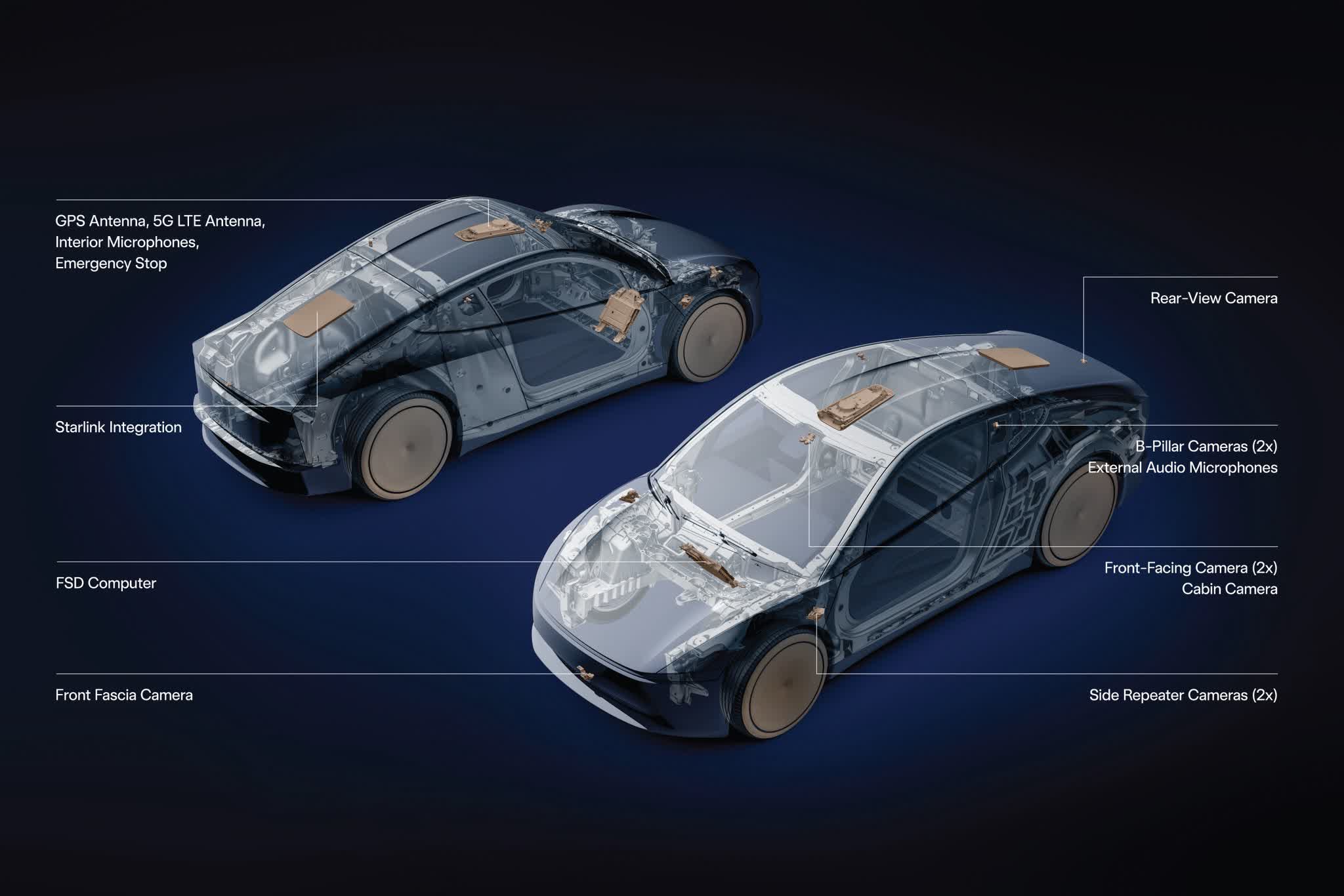
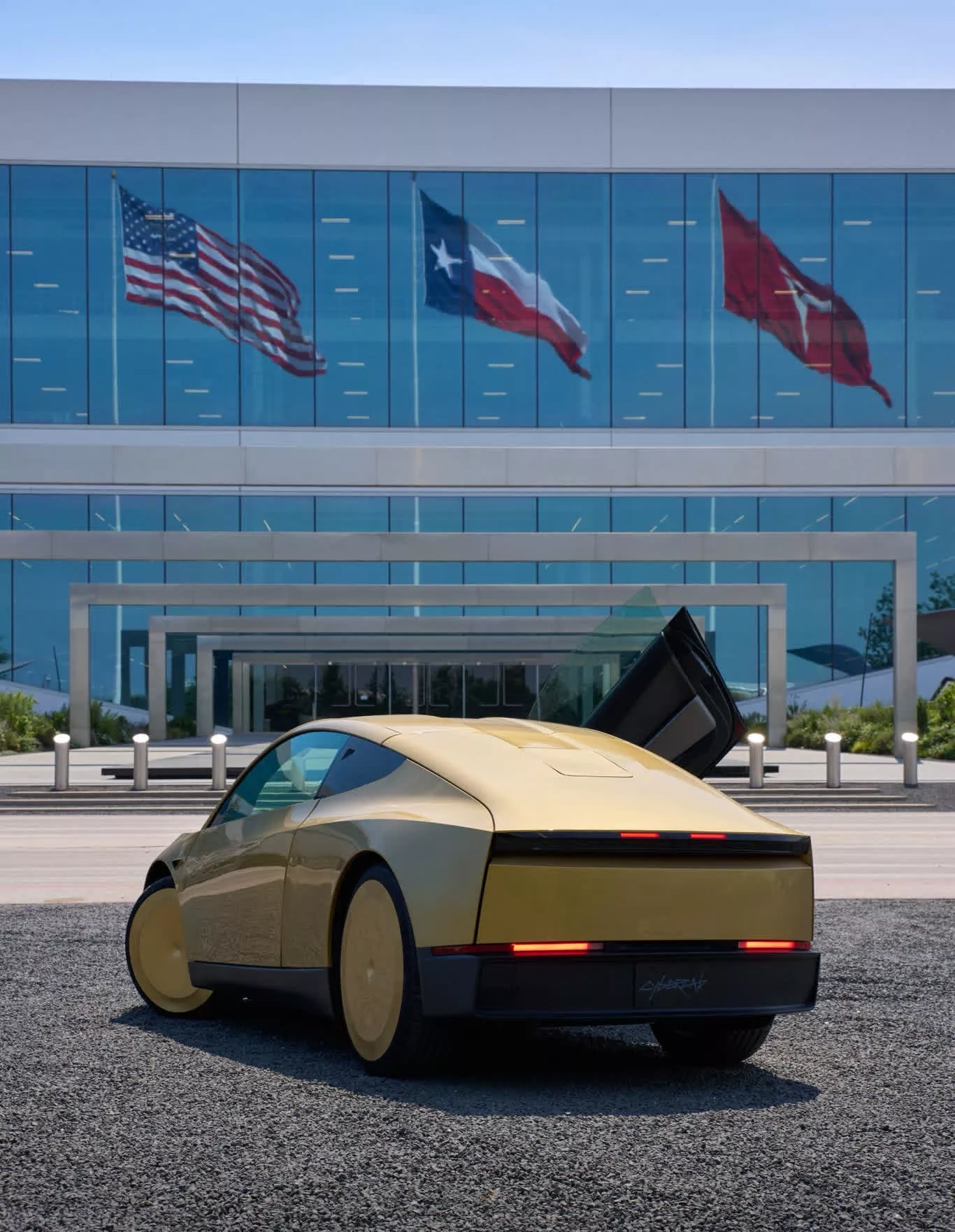
First look: Tesla has installed Starlink hardware in a Cybercab, adding satellite internet to the vehicle it plans to use for its robotaxi service. The company’s official Tesla Robotaxi account posted photos this week of what it called the “First Cybercab with Starlink integration.” The images show a Starlink antenna built into the rear of the roof, above the taillights, with a rectangular panel covering the dish rather than leaving it exposed on the outside.
The reveal follows an earlier preview at Tesla’s showroom in San Jose, where the company displayed the planned Starlink capability. Tesla had already said the Cybercab would use Starlink’s V5 dish, a newly launched model rated for download speeds of up to 375 Mbps.
For Tesla, the main use case is reliable connectivity for a vehicle designed to operate without a driver. The Cybercab has no steering wheel or pedals, and passengers are expected to simply get in and let Tesla’s onboard software handle the trip.
Satellite service could give the vehicle a connection in places where cellular coverage is weak or unavailable, which could help with navigation, support functions, and managing a larger robotaxi fleet.
Advertisement
Tesla’s vice president of AI software, Ashok Elluswamy, said Starlink isn’t essential to the vehicle’s safe operation. “Connectivity is primarily meant for navigation, customer service and, in general, fleet management,” he said.
Elon Musk has focused on a different use for the connection: entertainment. “Watch 4K streaming video while Cybercab takes you anywhere you want,” he wrote last month.
On Tesla’s earnings call last month, Musk said a robotaxi service needs connectivity that doesn’t depend solely on local wireless networks. “Starlink will be integrated into all our car vehicles, at least for markets that Starlink is active. Because for a Robotaxi situation, you need to have coverage everywhere. There are many places, even in Silicon Valley, where the cellular coverage is terrible or sometimes non-existent,” he said.
His comments suggest Tesla sees Starlink as more than an add-on for the Cybercab. In a separate post Sunday, Musk wrote: “All cars will have Starlink in the future. It’s the only way to get super high bandwidth to billions of vehicles.”
That statement could just as easily refer to Starlink’s planned mobile service rather than the dish-based broadband system shown on the Cybercab.
Starlink Mobile is designed to work through smartphones and doesn’t require a satellite dish. SpaceX has said its next-generation mobile offering will use both satellites and a ground network, and it could eventually compete with AT&T, T-Mobile, and Verizon.
The Cybercab setup is different. It uses a physical Starlink dish built into the vehicle itself, allowing it to connect directly to the satellite network. Tesla has not said when the feature will be available in production vehicles or whether the same type of hardware will be installed in other Tesla models.
However, more data doesn’t necessarily mean more benefits for non-diabetics.
Scott Olson/Getty Images
Health care company Abbott has entered into a partnership to connect Google Health to its Lingo continuous glucose monitor (CGM). According to the press release, this multi-year collaboration will allow users of the over-the-counter Lingo device to see their metabolic data within the Google Health app, which could help a person “make better lifestyle and nutrition choices in the moment.” The Lingo data can also be shared with the Google Health Coach, which offers AI-driven recommendations based on an individual’s information.
Lingo is explicitly intended for adults who are not using insulin. Engadget reported on the growing trend of non-diabetics using continuous glucose monitors back in 2023 and found little research that supported the benefits for that population to track blood sugar spikes so closely.
An article from the Johns Hopkins Bloomberg School of Public Health published earlier this year reiterated that the health benefits of a CGM for non-diabetics are pretty hazy. Using the devices might keep nutrition information top of mind and lead to a person making better dietary choices. But since a non-diabetic body is capable of regulating most glucose spikes, an over-emphasis on blood sugar might just as easily lead to poor eating habits by trying to keep the readings unnecessarily low.
Advertisement
Additionally, getting a useful interpretation from results isn’t something the average person should be expected to do. When Engadget spoke with Idrees Mughal, known on TikTok as Dr. Idz, he emphasized that even as a trained medical doctor, he would want to reference additional data points to make an assessment from CGM results. For a layperson, “you don’t even know how to interpret it. So it’s going to be completely useless,” he told Engadget.
It’s possible this Abbott—Google alliance could turn up some useful insights about those non-diabetic use cases. As part of their deal, the companies will be “conducting one of the largest real-world metabolic health studies to date, integrating continuous glucose, wearable, laboratory and survey data to uncover connections between activity, sleep, wellbeing and metabolic health, informing more personalized guidance that supports healthier day-to-day decisions.” But it also wouldn’t be surprising if the findings suggest more people buy Lingo devices or subscribe to the Google Health Premium subscription. And bear in mind: it’s always worth speaking with your primary care physician before making any changes to your health habits, including diet.
An anonymous reader quotes a report from Wired: As AI models gain advanced capabilities to find vulnerabilities in software, develop ways to exploit them, and even carry out autonomous hacking sprees, researchers offered a sobering new example on Tuesday, disclosing vulnerabilities in the video conferencing platform Zoom that could have been exploited to take over targets’ devices. Anyone on a call that involved screen sharing, whether participants or the host, would have been vulnerable to a silent attack that could be carried out with no indication and no interaction from the victim.
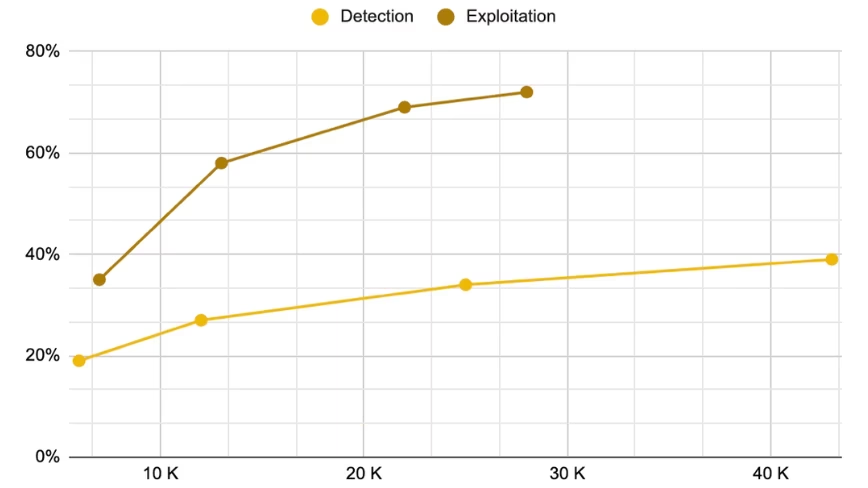
Researchers from the digital defense firm A Security say thebugwas discovered in early June using publicly available AI models, and that it took fewer than 20 prompts to uncover the vulnerabilities and create a working attack. Zoom issued a security advisory on Tuesday, including details about fixes the company has already begun rolling out to address the flaws, which affected devices running all operating systems that Zoom supports — Windows, macOS, Linux, iOS, and Android.
The vulnerabilities were specifically in the protocol used to facilitate real-time annotation during screen sharing. The researchers say that their AI bug hunting systems specifically delved into this component because, like human bug hunters, they have been trained that convoluted and obscure functions often contain overlooked vulnerabilities. This is particularly true with proprietary, closed-source software. An established company like Zoom presumably does extensive code review and vetting on all components and functions, but without the benefit of public, open review, esoteric yet complex features like annotation are more likely to contain mistakes. The bugs are now patched, with Zoom issuing both server and client-side fixes—or patches for both Zoom’s own servers and the applications that run on customer devices. But the researchers emphasize that it was alarming to contemplate bugs that could have been exploited to take over a target device simply by getting someone onto a Zoom call. “What is interesting for us and what we believe is dangerous is the democratization of these capabilities — the barrier to entry is dropping rapidly,” A Security cofounder Omer Gull told WIRED ahead of the disclosure. “Before it would have taken a team of five people maybe six months with a lot of refining and iteration to find this. Now people can reach the same results with under 20 prompts. And Zoom is an important type of target because people assume trust when using it. They don’t see it as a threat.”
Chainalysis reports impersonation scams grew over 1,400% in 2025, with AI-linked operations generating 4.5x the revenue at 9x the activity of non-AI operations. Deepfake KYC bypasses now cost about $20 and 30 minutes, defeating standard liveness checks 58% of the time. Crypto accounts for 88% of all detected deepfake fraud globally. Enforcement has responded with $4.4B in frozen Tether and nearly 5,800 arrests across 97 countries, but none of that stops a forged identity clearing a check.
Impersonation scams grew more than 1,400% year over year in 2025, according to Chainalysis, with the average payment into those clusters rising more than 600%. Across all scam categories the average crypto payment climbed from $782 to $2,764.
An attack class does not scale like that because more people are running it. It scales because fewer people are running it with better tools.
Fraud Used to Have a Headcount Problem
An investment scam or a romance approach had to be staffed. Someone trained had to hold the conversation, in the victim’s language and across weeks. Those requirements set a ceiling on how many people a network could work at once, and for years the ceiling held.
Advertisement
Generative tooling removed it without changing the underlying deception. The con is the same one the industry has seen since the first fake exchange support agent. What changed is that the expensive part of running it stopped being expensive.
The economics are visible on-chain. Chainalysis found that operations with observable links to AI tooling vendors extracted an average of $3.2 million against $719,000 for those without, while generating 35.1 transfers a day against 3.89. That works out to roughly 4.5 times the revenue on about nine times the activity: the same operation reaching more people and converting more of them. TRM Labs separately observed close to a 500% increase in AI-enabled scam activity over the past year.
Credit: Chainalysis
“Code is no longer necessarily the weakest link in Web3,” says Jimmy Su, Chief Security Officer at Binance. “As smart contract security improves, attackers are shifting their attention to the people, credentials and governance systems surrounding protocols. We saw this firsthand when Binance Security helped prevent a $1.2 million governance attack on BrainTrust. Protecting a protocol today means securing not just its code, but also who can control it, how that control is exercised, and the infrastructure and people behind it.”
The Verification Stack Was Built for a Different Attack
Identity checks were designed against a threat model of printed photographs, recorded video and low-grade physical spoofs. That is why liveness prompts still ask a user to blink or turn their head. The threat model moved and the prompt did not.
Vendor research from Socure puts the current cost of defeating that stack at roughly $20 and about 30 minutes, and finds that injection attacks, which feed a synthetic video stream straight to the verification interface rather than through a camera, defeat standard liveness checks about 58% of the time. Socure and Zyphe, whose figures it cites, both sell detection products in this category.
Advertisement
“Across the crypto industry, impersonation scams are increasing and becoming more sophisticated,” says Lior Aizik, co-founder and COO of XBO. “Scammers have impersonated me by name, using fake profiles to contact people in the industry and request money while pretending to represent XBO. These attacks rely on urgency and trust, not technology.”
The volume lands disproportionately on this sector. Binance Research reports that cryptoaccounts for 88% of all detected deepfake fraud cases globally, that North American deepfake-related losses exceeded $410 million in the first half of 2025, and that around 80% of attacks against the exchange involve some level of KYC fraud.
Detection Is Automated. Recovery Is Not.
Two things are working against this volume, and only one of them is a model.
Automated screening is the first, and it mostly buys throughput rather than certainty: Binance Research reports up to a 100x efficiency gain from applying AI to KYC processing, with face-attack and liveness models retrained against each new generation of spoofing technique.
The other effective response is considerably older: coordinated enforcement and the ability to freeze funds after the fact. Binance Research puts Tether’s total frozen at more than $4.4 billion as of April 2026, and the T3 Financial Crime Unit, a joint venture with TRON and TRM Labs, at more than $300 million in its first year, including $19 million tied to the Bybit hack. Both figures come from the exchange’s research arm rather than from the issuers themselves.
Advertisement
Conventional law enforcement has scaled alongside it. INTERPOL’s Operation First Light 2026 spanned 97 countries as well as produced nearly 5,800 arrests and intercepted $293 million. Europol’s Operation Endgame froze about $47 million while taking down 326 servers and 142 domains and recovering 27 million stolen credentials.
None of that stops a forged identity clearing a check. It does mean the money can sometimes be stopped after it moves, which is something a wire transfer cannot offer and something the sector rarely bothers to argue in its own defense.
The Deception Is Old. The Price Is New.
The cons here are the ones fraud has always used. What changed is the cost of producing them, which makes the defensive question less about detecting novel attacks than about matching the rate at which familiar ones are now generated.
Reporting in this category remains incomplete, so every scam figure above should be read as a lower bound. The gap between what it costs to forge an identity and what it costs to check one is the number worth tracking, because everything else in this category follows it.
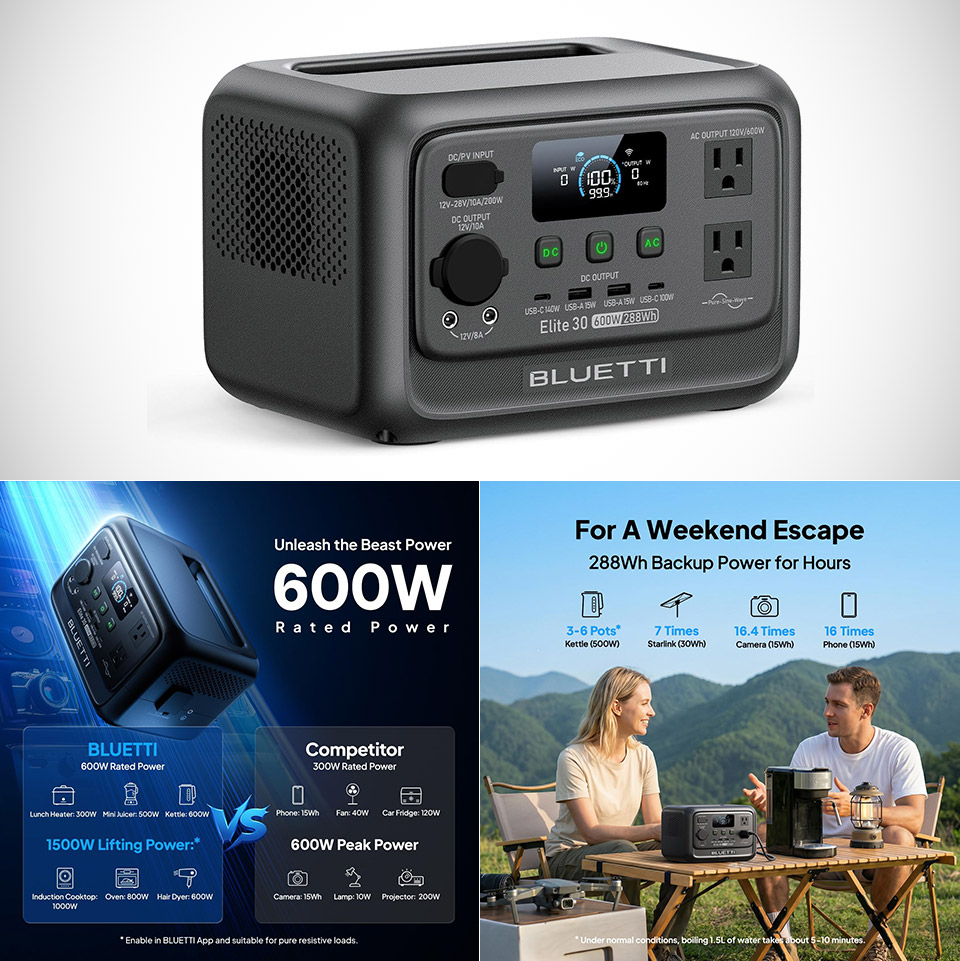
BLUETTI’s Elite 30 V2, priced at $219 (was $299), arrives as one of those rare small power stations that feels useful the moment you pick it up. At just under 10 pounds and measuring roughly 9.8 by 7 by 6.6 inches, it slips into a larger backpack, the trunk of a car, or a corner of a campsite without demanding attention. A molded handle makes carrying it one-handed straightforward, and the overall size stays practical for daily travel or emergency kits.
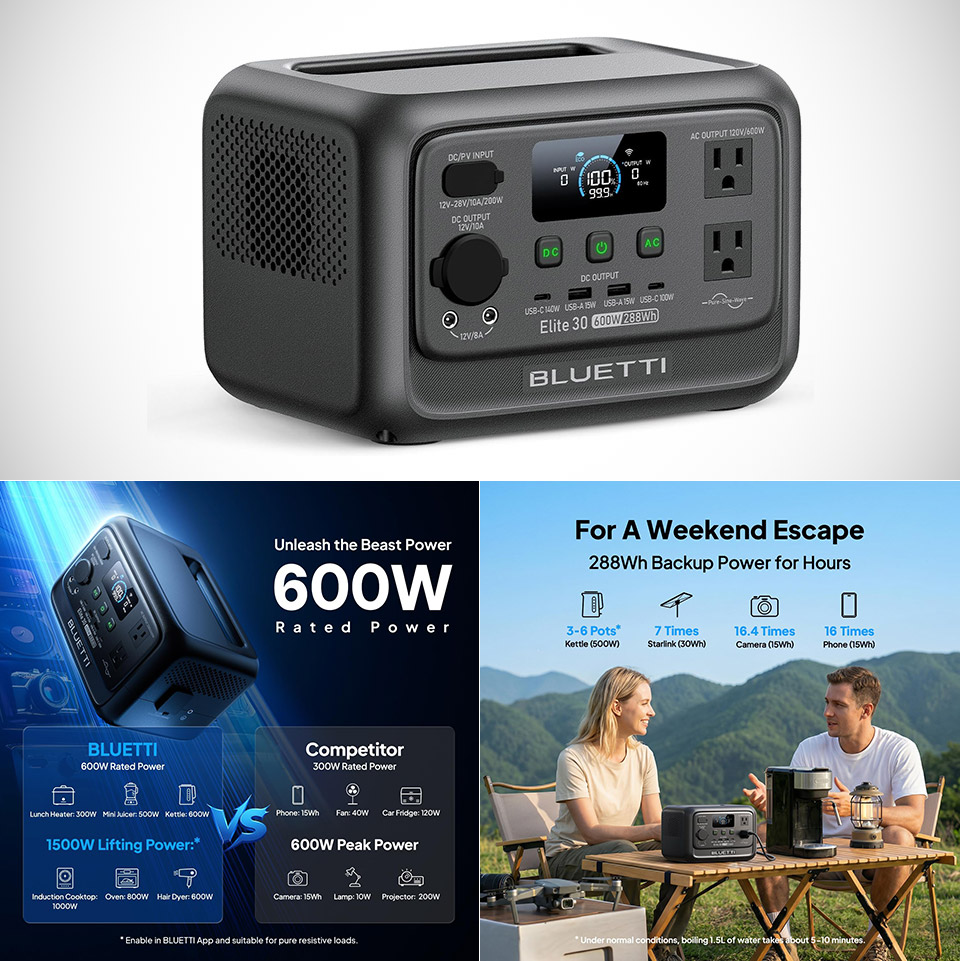
Inside, there is a 288-watt-hour lithium iron phosphate battery and a 600-watt pure sine wave inverter, which can easily power computers, photography gear, small appliances, CPAP machines, fans, and phone chargers. If a device requires a sudden power increase, they have a ‘Power Lifting’ mode that raises the power ceiling to 1500 watts for resistive loads, giving you a lot of versatility from something that doesn’t appear nearly as large as it is. There are nine ports to meet most demands, including two normal AC outlets, a 140 watt USB-C port, another 100 watt USB-C port, two USB-A ports, a 12 volt vehicle socket, and two DC barrel connectors. The USB-C ports can even deliver high power simultaneously, which is really useful when attempting to charge a laptop and whatever else at the same time.
[288Wh On-the-Go Power] – Only 9.4 lbs lightweight, carry it anywhere during storms! 288Wh capacity meets daily & outdoor needs—camping, road trips…
[600W Continuous & 1500W Surge Power] – Get a full 600W output—twice as much as others. When you need serious power, activate Power Lifting Mode for…
[50% Lower Power Consumption] – Upgraded UltraCell tech & smart cooling system cut power consumption by 50%. Enhances overall energy efficiency…
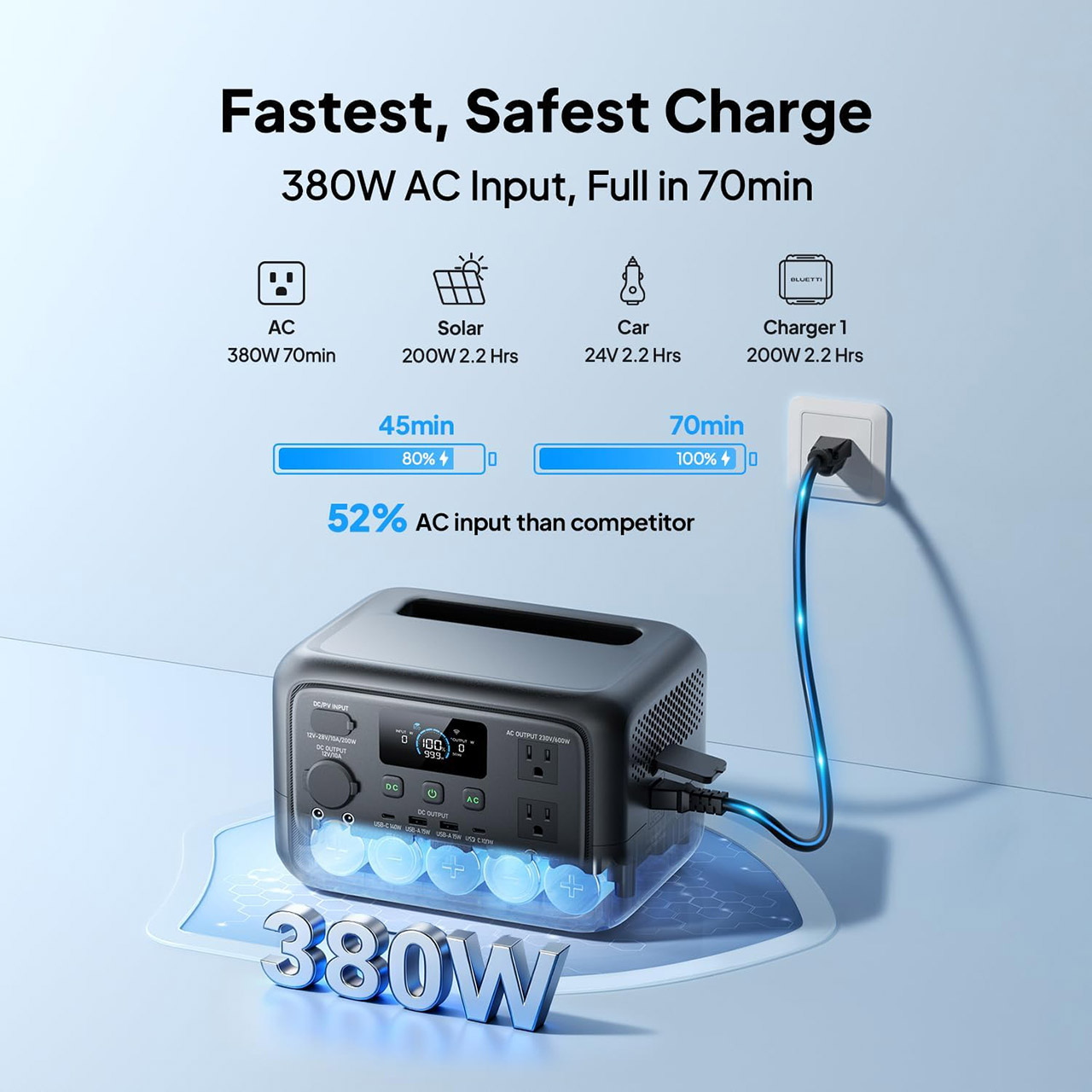
Recharging is also relatively quick for a unit of this size, with AC power in Turbo mode bringing the battery up to 80% in around 45 minutes and a full charge in around 70 minutes. Solar input can handle up to 200 watts, and you can continue to charge while driving. There are also numerous charging patterns that allow you to balance speed, noise, and available power. The battery’s low standby drain is due to the company’s UltraCell design, which allows it to maintain a charge for much longer when lying idle.
Advertisement
The lithium iron phosphate chemistry provides the durability required for regular use, with BLUETTI claiming the cells will endure over 3,000 cycles to 80 percent capacity and a ten-year lifespan under typical conditions. In addition, there is a 5-year warranty to back it up. The unit is also rather quiet, often under 30 decibels under light load, so it can be placed near a bed or workstation without being a disturbance.
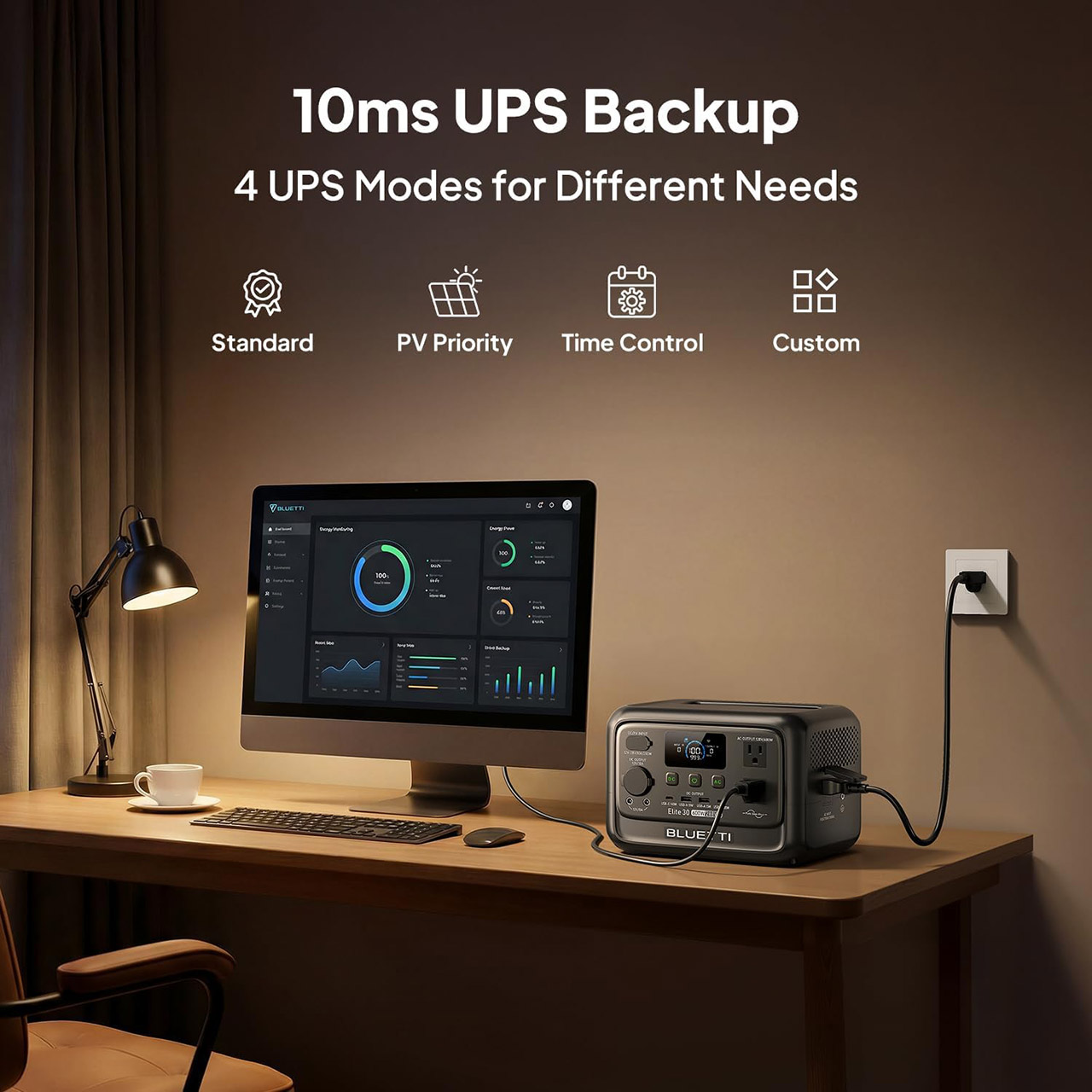
The unit also has built-in UPS functionality that switches to battery power in 10 milliseconds or less, which is extremely fast, and there are several operating modes to support various situations, such as keeping the battery charged for a quick backup, following time of use electricity rates, or prioritizing solar when solar panels are connected – or mixing settings as needed.
The Elite 30 V2 operates brilliantly throughout day trips, weekend camping, remote work sessions, and temporary power outages. It can recharge airplane and drone batteries on-site, keep a laptop running all day with leftover direct DC power, and even power lights or a small fan when camping. Of course, it isn’t perfect and won’t last for weeks or power the TV and lights all day, but for its size and price, the balance of output, ports, and speed is outstanding.
In addition to a historic total solar eclipse, August also features one of the most spectacular meteor showers of the year. On the night of August 12 and into the early morning of August 13, astronomy enthusiasts in the northern hemisphere and parts of the southern hemisphere will be able to admire the Perseids during a particularly favorable viewing window.
Occasionally, Earth passes through the trails of particles left behind by some comets as they travel through the solar system. When these tiny fragments enter Earth’s atmosphere, friction with the air heats them until they burn up. From below, it looks as though the sky is filled with bright flashes streaking across the heavens at high speed. These are meteor showers. There are several throughout the year, and the one in August is called the Perseids.
Although a meteor shower is one of the few astronomical phenomena that can be observed with the naked eye, it is not always easy to track. To enjoy it to the fullest, it’s a good idea to follow some basic recommendations for stargazing.
This Year’s Perseids Are Especially Visible
Traditionally, the Perseids reach a rate of up to 100 meteors per hour during their peak activity—at least, under ideal viewing conditions. This makes them one of the three most intense meteor showers of the year, along with the Geminids in December and the Quadrantids in January.
Advertisement
In 2026, the viewing conditions are particularly favorable. The peak of activity, expected on the night of August 12–13, will coincide with the new moon phase. This means that virtually none of the moon’s illuminated side will be visible from Earth, so there will be no moonlight to interfere with meteor viewing. In other words, the sky will be much darker than usual.
What’s the Best Way to View the Perseids?
The main advice from NASA and the European Space Agency (ESA) for enjoying a meteor shower is to get away from light pollution. Ideally, head out of the city and find a spot with dark skies, as well as a horizon that’s as unobstructed as possible to ensure a wide field of view.
Keep in mind that it takes the human eyes 20 to 30 minutes to fully adjust to the dark. Once that time has passed, it will be easier to spot faint meteors. While observing, it’s also advisable to avoid using your cell phone or other bright screens, as they reduce your eyes’ sensitivity.
Another important tip is to avoid using telescopes and binoculars. Although they might seem useful, NASA explains that these instruments narrow your field of view, whereas meteors can appear anywhere in the sky. It’s best to observe with the naked eye.
Advertisement
Although the Perseids get their name because they appear to radiate from the constellation Perseus, it is not necessary to look toward it. Both NASA and the ESA point out that meteors can streak across any part of the sky. Ideally, lie down or use a reclining chair to observe a wide portion of the sky, preferably after midnight, when the meteor shower’s radiant reaches a higher point above the horizon and the frequency of visible meteors increases.
Finally, the agencies remind us that patience is also part of the experience. Meteors do not appear at a steady rate. Several minutes may pass without any activity, and then suddenly, several may be seen in quick succession. Staying under a dark sky for at least an hour offers the best chance of enjoying the show.
This story originally appeared onWIRED en Españoland has been translated from Spanish.
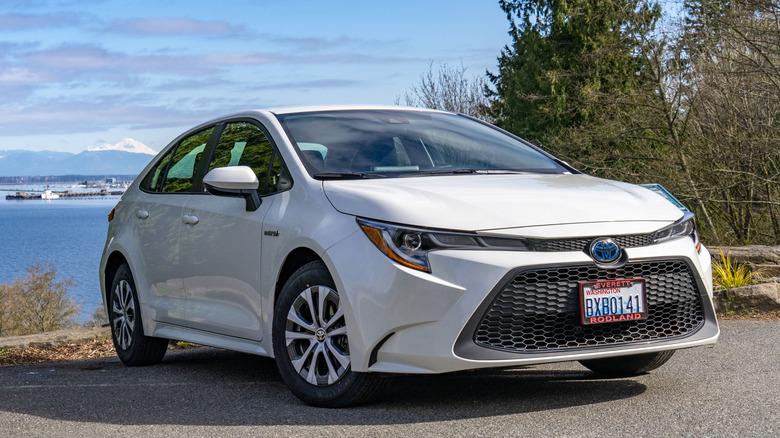
The Toyota Corolla is a commuter staple, known for its reliability and ability to consistently get you to work for decades as long as you do a few oil changes. And, while many Toyota models have unfortunate depreciation, the Corolla holds on to its value well past six figures on the odometer. The 2021 Toyota Corolla has a resale value of $14,350 in 2026, which means it lost just 24.45% of its value over five years, according to Kelley Blue Book. iSeeCars has the Corolla at 27.4% depreciation in the same time span, while CarEdge calculates 33%. Of course, the value depends on variables like mileage, condition, and location.
However, cars often lose 50% to 60% of their value in five years, making the Corolla pretty phenomenal in comparison — especially when you consider that most cars lose 10% of their value within one month of driving. And the Toyota Corolla Cross does even better in the resale market.
One interesting thing to note in Kelley Blue Book’s depreciation data is that the Toyota Corolla gained some value in 2026. The 2021 model was worth $13,876 in 2025, which was a $2,258 drop from 2024. However, it’s worth $14,350 in 2026, a $474 increase. This is due to the higher demand for used cars in 2026 as new car prices continue to increase — and drivers want a reliable used car, like the Corolla.
Advertisement
Why has the 2021 Toyota Corolla held its value more than other cars?
Iurii Vlasenko/Shutterstock
Used cars can often be seen as a bit of a gamble, but the Toyota Corolla takes a lot of that uncertainty out of the equation as one of Toyota’s most reliable small vehicles. Toyota, in general, is known for its reliability. It’s consistently at the top of Consumer Reports’ reliability studies since the automaker is slow to implement big changes but also takes the time to address previous manufacturing issues. The Toyota name alone gives buyers confidence that even high-mileage vehicles will last a long time without running into a lot of big-budget repairs.
And the Corolla is seen as one of the most durable in the lineup. Owners always boast about their Corolla reaching seemingly high mileage without really running into any problems during that time — Kelley Blue Book states that the 2021 model’s reliability is its strongest feature, according to owners. Consumer Reports backs this up, noting it’s much more reliable than other models from the same year.
Advertisement
Its parts are also affordable and widely available (front bumper covers are a little over $140 and suitable brake pads can cost around $50), so the few issues you likely will run into won’t deplete your bank account. That peace of mind is priceless to many used car buyers, making the simple, reliable, and affordable Corolla hold a lot of its value even after five years of commuting.
Gemini has become Google’s fastest-growing product ever, reaching 1 billion monthly active users faster than any of the company’s 13 other billion-user services. Ars Technica reports: Gemini has wormed its way into virtually every Google product and service, powering email organization in Gmail, document summary in Drive, and much more. Gemini is also core to Google’s flagship search experience, with AI Mode and AI Overviews becoming increasingly hard to avoid. The 1 billion-user metric has nothing to do with any of that, though.
These 1 billion users may also be encountering Gemini in all those places, but that’s not the MAU metric. Pichai is talking only about people who are opening the Gemini app or visiting the Gemini web interface to enter a prompt or access Gemini Live. If you used Gemini only once in the past month, you are part of this cohort.


















































You must be logged in to post a comment Login