Listing consumer electronics on the internet’s large ecommerce marketplaces is a key step in “democratizing” the products, allowing them to be purchased by anyone with just a click. It has happened to cars (in the United States, you can buy a Hyundai on Amazon), and now it’s happening to humanoid robots.
The Chinese manufacturer Unitree Robotics, among the most active robot-makers in the field, is preparing to bring its most affordable model, the Unitree R1, to international markets through Alibaba Group’s marketplace. According to reports in The South China Morning Post, the rollout will initially cover North America, Japan, Singapore, and Europe. There’s no exact on-sale date for the robots yet, but the Post report says it will show up as soon as this week.
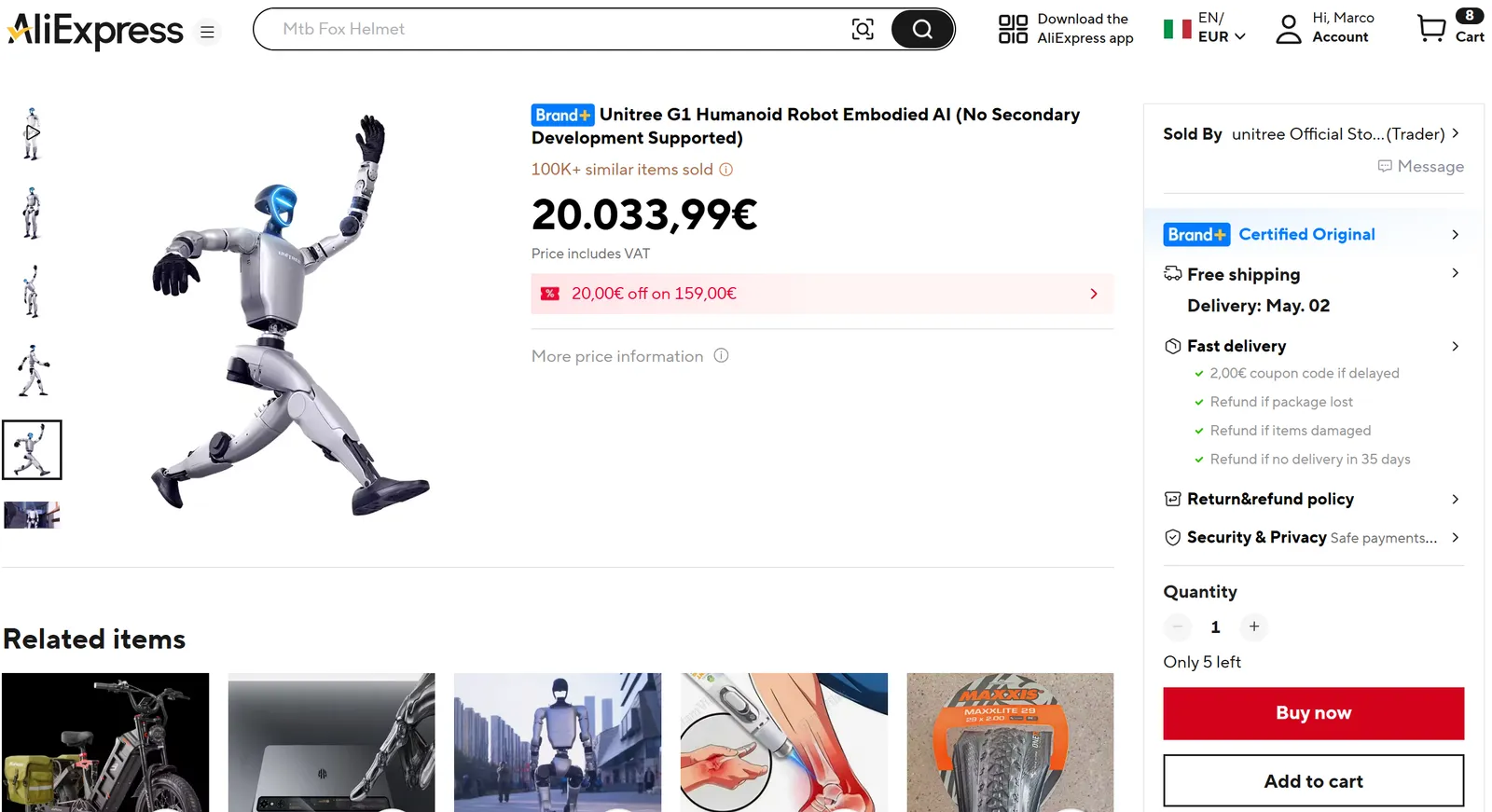
This is not the first time Unitree has used AliExpress as a global storefront. The company’s G1 model, the more powerful and more expensive predecessor to the R1, is already listed at just under $19,000.
The G1 is already on sale on AliExpress.
Advertisement
It’s as much of a symbolic step before as a commercial one; selling a humanoid robot on a global marketplace positions the product as easily attainable. This serves as a step toward normalization of the tech, which is still not widely adopted. The sale of the R1 simply lowers the threshold of access even further, and shifts humanoid robots from the territory of promise to that of concrete availability.
Lower Price, Higher Demand
When it was announced last summer, the starting price of the R1 was 39,900 yuan, or about $5,900. Today, the basic version starts at 29,900 yuan, or about $4,370.
That price will fluctuate given changes in exchange rates and shipping costs that add on import taxes and tariffs. Still, that figure sounds surprisingly low considering that some of the R1’s other competitors in the humanoid robotics landscape are far more expensive.
The price tag for Unitree’s own flagship H1 robot approaches $90,000. Tesla’s Optimus robot, which is not yet on sale to the public, is aiming for a starting price under $20,000, but that price will only be attainable when Tesla reaches production of 1 million units a year. Meanwhile, robots from Figure AI and Apptronik are hovering around $50,000 per unit. The R1’s objectively low price essentially makes it a hatchback in a world of sedans.
Advertisement
The R1 is 4 feet tall, weighs 50 pounds, and has 26 smart joints. You can talk to it and give it commands; Unitree’s large-language multimodal model with voice and image recognition is on board. Curious coders can program it using a software developer’s kit. But the real calling card is the R1’s physical performance. The robot can do cartwheels, lie down and stand up independently, and run downhill. Unitree calls it “born for sport,” and videos of its presentation made the rounds months ago. Handstands and wheel kicks are not exactly what you’d expect from a robot that costs less than a used car.
Put It to Work
As impressive as the Unitree R1’s moves are, it lacks hands with articulated fingers, and its motors can’t generate a lot of torque. It is not designed to be a domestic helper or to manipulate complex objects. The company presents it as an “intelligent companion” for interaction, research, and software development.
The EDU model (Go2 EDU, G1 EDU) add an Nvidia Jetson Orin module with more computing power for artificial intelligence tasks. That model also has two degrees of freedom for the head and optional right hands. In that robot’s case, the target market is laboratories and universities. The limitations of the basic R1 put it largely in the same camp. This is not a household robot that makes coffee and walks the dog, but it is a good choice for researchers, labs, and anyone who wants to test robotics algorithms on solid hardware without spending a fortune.
It is true that bringing a relatively capable humanoid to global markets at this price does lower the barrier to entry for developers, researchers, and enthusiasts. It is a real leap from a few years ago, even if some people will buy it just to keep it in the living room to take a bow when guests arrive.
Advertisement
This story was originally published by WIRED Italia and translated from Italian.
Klaviyo’s CTO explained that “Dublin will own core parts of how Klaviyo’s platform works, not support them from the sidelines.”
Boston-headquartered email, SMS and marketing automation platform Klaviyo has announced a significant investment into its engineering capabilities amid the next phase of its growth plans and the deepening of its “long-term commitment to the Irish technology community”.
In early 2025, Klaviyo announced the creation of 100 new jobs at the Barrow Street location and now, the organisation is looking to build on the roles already created by developing an engineering team that will take direct ownership of core systems powering Klaviyo’s AI strategy, including messaging infrastructure, data analytics, and personalisation across marketing, service and analytics.
Currently open engineering roles include opportunities in senior software engineering, engineering management, infrastructure security and internal platform development, with further positions expected as the team scales throughout 2026.
Advertisement
“Dublin will own core parts of how Klaviyo’s platform works, not support them from the sidelines,” said Surabhi Gupta, CTO at Klaviyo. Gupta added, “We’re looking for engineers who want to solve genuinely hard problems, building reliable, high-performance systems at scale. The people joining us here will ship features that reach millions and push what’s possible with AI and data.”
The Minister for Enterprise, Tourism and Employment Peter Burke TD, said, “Klaviyo’s decision to establish an engineering hub in Dublin is a strong endorsement of Ireland as a first class location for AI innovation. This investment highlights the strength of our engineering talent and our ability to support high growth companies.”
Ben Jackson, the managing director and vice-president for EMEA at Klaviyo also said, “For engineers in Dublin, that means working with billions of data points daily at the scale of a large platform, with the pace and ambition of a company that has a significant runway ahead. It’s a core part of how we’re building Klaviyo’s future.”
Don’t miss out on the knowledge you need to succeed. Sign up for the Daily Brief, Silicon Republic’s digest of need-to-know sci-tech news.
You can watch this portable, battery-powered TV anywhere – provided there’s Wi-Fi to stream with. The only catch is there’s no tuner onboard. But should that put you off? Not necessarily…
Lightweight portable design
Matte anti-glare screen
Google TV platform
No terrestrial tuner
Missing major UK streaming apps
Limited HDR impact
Key Features
Introduction
The Metz MPE7 (also known as the 24MPE7002Z) is a lightweight, 24-inch Full HD smart TV with a built-in rechargeable battery.
Advertisement
Instead of relying on traditional broadcasts, it delivers streaming services through Google TV. That makes it particularly well suited for guest rooms, kid’s bedrooms, camping trips, and caravans.
It’s tiny but talented – but can it fill a 24-inch hole in your TV life? Let’s take a closer look…
Advertisement
Price
Selling for £299, the Metz MPE7 is undoubtedly a bit niche. While it lacks some of the basic niceties you might expect from a portable telly, it compensates with genuine portability and a versatile feature set.
Advertisement
In Europe, you’ll find it on sale for around €360. It’s not available in North America or Australia, so don’t bother looking.
Design
Compact design
Matte screen treatment
Carry handle
Charming in a way that only a titchy telly with tasteful design can be, the Metz MPE7 is finished in fashionable white, weighs a manageable 4kg, and occupies roughly 548 x 366 x 74mm of your airspace. Basically, it’s compact enough to easily tout around the house, or pack into a vehicle, whenever required.
The set’s stereo sound system faces forward beneath the screen, in a faux soundbar arrangement, with a single manual control button at the centre, which offers on-set access to sources and volume.
Advertisement
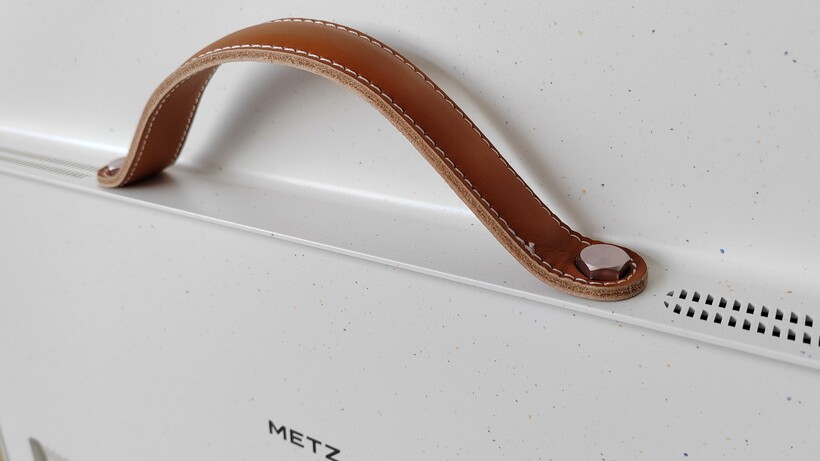
Spin the set and you’ll find a pleather carry handle mounted on the rear.
Advertisement
Image Credit (Trusted Reviews)
The TV base is slightly wide, allowing the screen to stand proudly without a separate pedestal stand. This makes placement refreshingly straightforward. Put it on a table, a kitchen counter or a bedroom dresser and it sits perfectly stable.
The screen sports a matte anti-glare finish, which proves useful when the TV is used in bright environments.
The set ships with a tidy, white remote includes quick-access buttons for Netflix, Prime Video and YouTube, plus a programmable ‘Daily Key’.
Connectivity
Single HDMI
Dual band Wi-Fi
Digital optical audio output
Advertisement
When it comes to connections, there’s no terrestrial tuner nor satellite equivalent. You can’t watch linear TV channels out of the box.
Connectivity is stacked to the left, so cables remain accessible even when the set is placed against a wall or on a narrow surface. There’s a single HDMI input, most likely be used to connect an external streaming device, games console or disc spinner, as well as a USB port that allows playback of media files from external storage devices.
Advertisement
Image Credit (Trusted Reviews)
A digital optical audio output can be used to connect the set to a separate audio system. There’s also a LAN Ethernet port for those who prefer a wired network connection over the TV’s built-in dual-band Wi-Fi.
Additional inputs include a 3.5mm AV connection for analogue video and audio, along with the DC power input for the supplied power brick.
The set can also be powered directly from a vehicle, useful for those with motorhomes, caravans or boats.
Advertisement
User Experience
Google TV smart OS
No BBC iPlayer or ITVX
Can feel sluggish
No Freely
The Metz MPE7, by design, is something of a digital nomad; it’s reliant on a broadband connection, rather than conventional aerial, to entertain.
It can, of course, run happily off the mains, but the provision of battery power goes a long way to justifying its premium over rival small screens.
Advertisement
The built-in lithium cell provides around three hours of viewing, which is just about adequate for a sports event, movie or TV binge.
This portability is what makes the MPE7 genuinely appealing. It’s easy to move from kitchen to garden, bedroom to guest room, or pack for a weekend away.
Image Credit (Trusted Reviews)
Google Assistant voice control is supported, so you can search for films, or check the weather, by barking into the remote. It’s got to be said though that responses can feel a little sluggish; still the interface remains straightforward and intuitive, particularly for anyone already familiar with Android-based smart TVs.
Advertisement
Baked in extras include Google Cast, personalised viewing profiles and parental controls.
Image Credit (Trusted Reviews)
Unfortunately, the set lacks key UK catch-up services. There’s no BBC iPlayer or ITVX. Channel 5 is the only familiar PSB available. Attempting to access ITVX, which appears in some of the Google TV recommendation rails, results in a compatibility message indicating that the Metz ‘device’ does not support the application.
What’s more, there’s no Freely provision, which would have seemed a natural for inclusion.
Advertisement
There is, of course, an easy fix. You can use the HDMI input to connect an external streaming receiver or set-top box. Freely gadgets from Netgem or Manhattan will sidestep the limitation, although they’re only really usable if the TV is sedentary.
Advertisement
Gaming
Dedicated Game mode
Low input lag
As long as you’re not expecting something akin to a dedicated gaming monitor, you’re unlikely to be disappointed by this small screen. It’s perfectly fine for casual gaming. I measured input lag at 10.5ms in Game mode (1080/60), which is a pretty sprightly performance by TV standards.
Picture Quality
HDR compatible
Various picture presets
Limited black level
The Metz MPE7, as befits its size and price, is built around a 24-inch Full HD (1080p) LED panel, and while not the kind of display that would make cinephiles swoon, it’s perfectly suited for the job at hand.
Its most obvious attribute is that matte anti-glare coating. This proves particularly effective against strong light sources, such as lamps or daylight streaming through a window. This makes the TV usable in bright rooms and even outdoors (although not the full glare of a Summer sun).
Advertisement
While this isn’t a display for high-impact HDR spectacle, it acknowledges HDR sources from streaming platforms and processes them accordingly. I measured peak HDR brightness at 293 nits, using a 10 percent patch, which is in line with what I’d expect from a TV at this price point.
Image Credit (Trusted Reviews)
Watching the Ryan Gosling action comedy The Fall Guy on Netflix, the image appears punchy enough, with decent colour saturation and respectable dynamic range. Black levels lean toward grey – a typical characteristic of small LED panels – but colours are on the right side of pleasing.
Animation also benefits from the set’s compact pixel density. Anime streamed on Prime Video displays excellent colour gradation and clarity. I dare say Paw Patrol looks just as good.
Advertisement
Picture modes are comprehensive for a compact portable display, and include Standard, Vivid, Movie, Sport, Game and Energy Saving. More advanced options such as dynamic noise reduction, local contrast control and colour enhancement are also available deeper down, although there’s little obvious benefit to be had from tinkering.
The Energy Saving mode should be avoided like the plague, and I felt Movie mode was a little too dim on this backlit set. Standard and Vivid would be my go-tos.
Advertisement
Sound Quality
2 x 6W stereo sound
Speaker bar design
The sound system here is surprisingly capable. Behind the grille are two front-firing 6W drivers. While there’s not enough width to offer an appreciable stereo presentation, the output is fittingly robust with some welcome weight – I’ve heard larger TVs that sound a lot worse.
Image Credit (Trusted Reviews)
Audio presets include Standard, Movie, Music and Sport. Standard would be my recommendation. Dialogue remains clear and movie soundtracks have moderate heft.
Should you buy it?
Advertisement
A genuine portable streaming TV
The Metz is one able to work around the house, with decent sound and flexible power options, the MPE7 is well worth an audition. If you spend most of your time watching the big streamers, it doesn’t disappoint.
Advertisement
If you’re compelled to catch-up with Eastenders in the conservatory, then the lack of a tuner, and missing UK streaming apps, will be a frustration. Similarly, if freedom from the mains isn’t a requirement, look elsewhere for cheaper options.
Advertisement
Advertisement
Final Thoughts
Let’s be clear. The Metz MPE7 is unlikely to replace your main living room TV any time soon – but it does impress as a stylish portable smart screen.
For those looking for a flexible second TV, it has obvious appeal. The matte display helps in varied lighting conditions, and audio isn’t an issue.
As it stands, the MPE7 is a practical, well-designed portable telly with an eye on the Gen Z crowd. I like it a lot. Here’s hoping we see a future iteration with Freely built in.
How We Test
We test every television we review thoroughly over an extended period of time. We use industry standard tests to compare features properly. We’ll always tell you what we find. We never, ever, accept money to review a product.
Advertisement
Find out more about how we test in our ethics policy
Tested for several days
Tested with real world use
FAQs
How long does the battery on the Metz MPE7 last?
Fully charged, you’ll get around three hours of playback. That’s enough to catch up on a couple of shows, or watch the footie from your secret sanctum in the shed.
Can it be used outdoors?
Advertisement
On an overcast day, you’ll get away with it, but when the sun comes out, the picture struggles. The matte anti-glare screen goes some way to mitigating against bright light sources in the home though.
Test Data
Metz 24MPE7002Z
Input lag (ms)
10.5 ms
Peak brightness (nits) 10%
293 nits
Full Specs
Metz 24MPE7002Z Review
UK RRP
£299
Manufacturer
–
Size (Dimensions)
x x INCHES
Size (Dimensions without stand)
366 x 548 x 74 MM
Weight
4 KG
Operating System
Google TV
Release Date
2026
Resolution
1920 x 1080
HDR
Yes
Types of HDR
HDR10
Refresh Rate TVs
50 – 60 Hz
Ports
HDMI, Digital audio optical output, Ethernet, 3.5mm AV input
Most laptops at this price force a compromise somewhere obvious, but the ASUS Vivobook 14 makes a reasonable case that you do not have to choose between portability, battery life, and capable everyday performance.
The Qualcomm Snapdragon X processor is the central reason this machine behaves differently from a typical budget laptop, pairing an 8-core CPU running at up to 4GHz with a Qualcomm Hexagon NPU rated at up to 45 TOPS for AI-accelerated tasks.
Advertisement
That NPU underpins the Copilot+ features built into Windows 11 Home, including Live Captions for real-time language translation and Recall, which lets you search back through your activity to find files, pages, or content you have previously viewed.
The 14-inch WUXGA touchscreen runs at 1920×1200 resolution in a 16:10 aspect ratio with a 300-nit sustained brightness and anti-glare coating, which gives you meaningfully more vertical screen space than a standard 1080p panel for documents and browsing.
Underneath, 16GB of LPDDR5 RAM running at 8533MHz and a 512GB PCIe 4.0 SSD handle multitasking and file access without the bottlenecks that slower storage tends to introduce at this end of the market.
Advertisement
Battery life is rated at 19 hours, which is a figure the Snapdragon X architecture is well positioned to deliver given its power efficiency credentials, and WiFi 6 and Bluetooth keep connectivity current without requiring any adapters.
Weighing in at just under 1.5kg with a 0.7-inch profile, the Cool Silver chassis is genuinely portable, and the backlit keyboard adds practical value for anyone working in lower-light environments.
If you have been holding out for a portable Windows laptop that handles AI features natively without the premium that Intel and AMD Copilot+ machines typically carry, $452.60 makes the ASUS Vivobook 14 a difficult offer to argue against.
Hiro is shutting down on 20 April and deleting all user data by 13 May. Founder Ethan Bloch previously sold Digit to Oportun for more than $200M. Terms of the deal were not disclosed.
OpenAI, the San Francisco AI lab behind ChatGPT, has acquired Hiro Finance, an AI-powered personal finance planning startup, with founder Ethan Bloch and his staff moving to OpenAI. Bloch announced the deal on LinkedIn and OpenAI confirmed it.
Terms were not disclosed, nor did Hiro ever publicly disclose how much it had raised. Hiro had approximately ten employees, all of whom are joining OpenAI. Bloch did not respond to a request for further comment.
Hiro was founded in 2023 and launched its AI tool roughly five months ago. The app offered AI-powered financial planning for consumers: users entered information about their salary, debts, and monthly costs, and the platform modelled different what-if scenarios to support financial decision-making.
A notable design choice was a verification option that allowed users to check the accuracy of the AI’s financial maths, a deliberate feature at a time when large language models had a documented weakness with numerical reasoning.
Advertisement
The startup was backed by Ribbit Capital, General Catalyst, and Restive.
Bloch is a serial entrepreneur with a consistent track record in fintech and consumer software. He sold Flowtown, a social media SaaS tool launched in 2009, for $5 million. He subsequently founded Digit, a digital-only bank designed to automate saving for consumers, which was acquired by Oportun in 2021 for more than 00 million.
He has described Hiro as his fifteenth project, having started building products as a 13-year-old, with the first thirteen failing. This acquisition is his third exit.
This is not OpenAI’s first acquisition in the financial services space, and the company already markets ChatGPT as a tool for business finance teams. The Hiro deal adds focused talent in consumer financial planning, a category where specialised AI reasoning around budgets, debt paydown sequencing, and savings optimisation requires a different product approach than general-purpose chat.
Advertisement
Whether OpenAI intends to build a dedicated consumer financial planning product or fold the expertise into its broader platform is not yet clear.
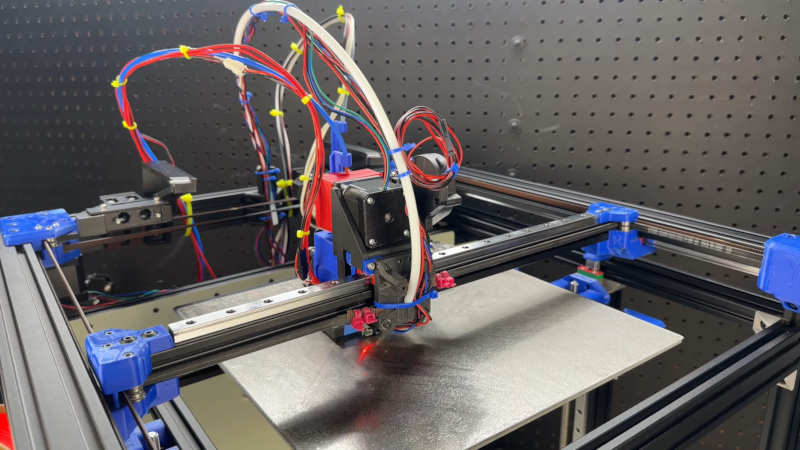
All the cool new 3D printers have tool-changing heads. Instead of multiplexing filament through one hot end, you simply park one hot end and pick up another. Or pick up a different tool, depending on what you need. There are many advantages to a system like that, but one disadvantage: cost. [Ultimate Tool Changer] has been working on a design for what he calls a simple, cheap changer, and it appears to be working well, as you can see in the video below.
This is one of those things that seems easy until you try to do it. He talks about a lot of the failures and dead ends along the way.
We worry that the tolerances are tight enough that wear over time might affect some of the key components, but how long that might take or if it will happen at all, we can’t say. Regardless, the system does appear to work, and we have no doubt you could keep it aligned or periodically replace parts to work around any wear issues.
One of the problems we have nowadays is that our main printers are plug-and-play boxes that are difficult to modify significantly. But if you have a homebrew printer or something made to expand like a Voron or old-school commercial printer, it seems like this would be something you could adapt.
The 24 Hours of Le Mans races is an extremely prestigious endurance motorsport event which attracts the best cars and drivers from around the world. It’s one of the longest-running races too, taking place once a year since 1923 (with a few obvious understandable gaps). But, like most motorsports, it’s financially out of reach for most people. One of the more popular attempts to bring racing to the masses has been the 24 Hours of Lemons races, which have price limits on vehicles to keep the barrier to entry low, and an EV truck recently entered one of these races with some interesting results.
The group behind this vehicle is called Team Arcblast, who retrofitted an old Datsun pickup truck to the extreme to enter this race. The modestly sized electric motor is installed in between the cab and the bed for easy access to the driveshaft, with the engine bay repurposed for all of the cooling and radiators needed for endurance racing like this. They’ve also equipped the truck with plenty of efficiency-increasing spoilers and other aerodynamic parts, and rebuilt the cab with not only the required roll cage and other safety equipment, but a modified driving position with steering and other components from various Miatas.
The most impressive part of this build, however, is the battery. The team invented a method of swapping out batteries quickly to avoid having to fast charge the car in the pit area. The system lets a battery slide in to the middle of the truck above the motor and quickly connect to the electrical system allowing for very quick pit stops and the ability to charge other batteries while the race goes on. All of these modifications together allowed the team to break the EV record for a Lemons race.
Advertisement
For a Lemons race, though, even this truck stretches the original spirit that these races were started, however impressive the build. We published a primer to these types of races a while back which includes much more affordable internal combustion options.
Chicago-based music superfan Aadam Jacobs has been recording the concerts he attends since the 1980s, amassing an archive of over 10,000 tapes. Now 59, Jacobs knows that these cassettes are going to degrade over time, so he agreed to let volunteers from the Internet Archive, the nonprofit digital library, digitize the tapes.
So far, about 2,500 of these tapes have been posted on the Internet Archive, including some rare gems like a Nirvana performance from 1989. (The group wouldn’t break through to mainstream audiences until they released the single “Smells Like Teen Spirit” in 1991.) Within the collection, you can also find previously unknown recordings from influential artists like Sonic Youth, R.E.M., Phish, Liz Phair, Pavement, Neutral Milk Hotel, and a whole bunch of other punk groups.
For many of these recordings, Jacobs was using pretty mediocre equipment, but the volunteer audio engineers working with the Internet Archive have made these tapes sound great.
One volunteer, Brian Emerick, drives to Jacobs’ house once a month to pick up more boxes of tapes — he has to use anachronistic cassette decks to play the tapes, which get converted into digital files. From there, other volunteers clean up, organize, and label the recordings, even tracking down song names from forgotten punk bands.
There’s no rewriting history here. Triumph were always the “other” Canadian power trio, living in the long shadow of Rush. But while Geddy Lee and Alex Lifeson gear up for a closely watched return to the stage this summer; now with Anika Nilles stepping into the impossible role left by Neil Peart, Triumph are making their own move back into the conversation.
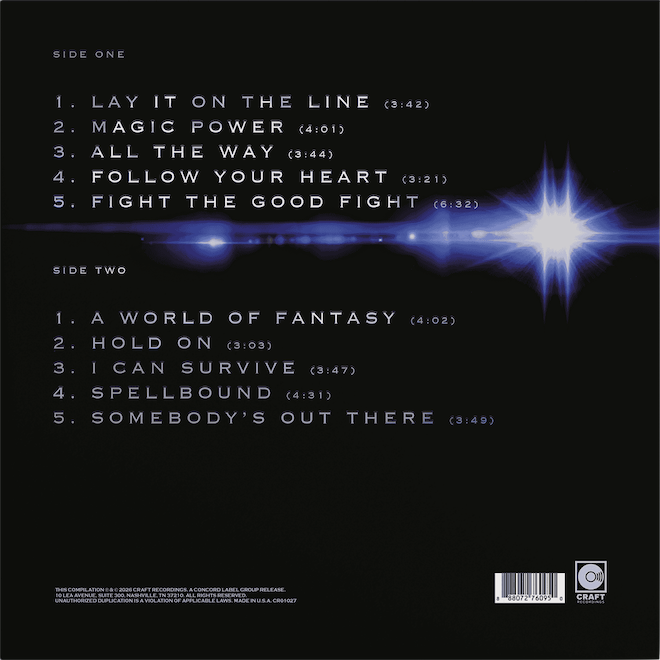
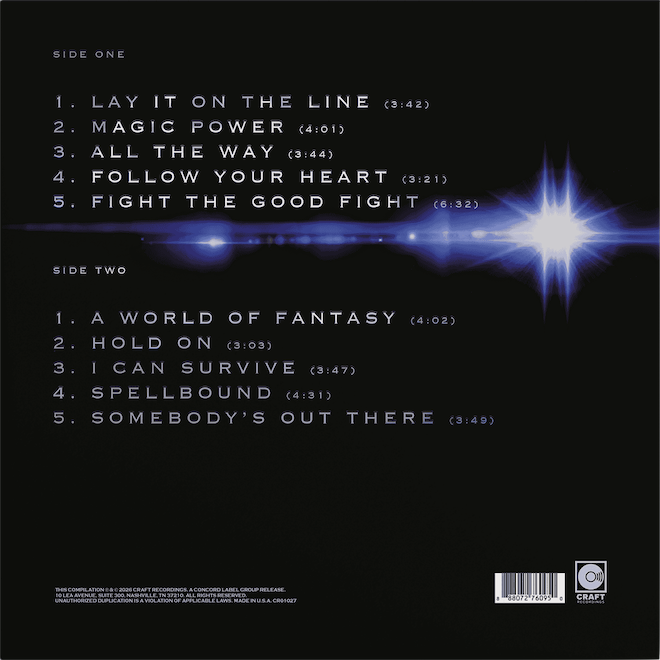
The Best of Triumph arrives June 12 via Craft Recordings, collecting the band’s most defining arena rock cuts at a moment when Canada’s hard rock legacy is suddenly front and center again. Available on LP, CD, and digital, the set revisits staples like “Lay It on the Line,” “Magic Power,” and “Fight the Good Fight,” charting Triumph’s rise from domestic breakout act to international stage regular—because if you grew up north of the border, they were never optional. They were already on the mix tape.
Triumphant Return: Canada’s Other Power Trio Steps Back Into the Spotlight
Alongside the announcement, “Lay It on the Line (Single Edit)” makes its streaming debut—finally. Newly mastered from the original analog tapes as part of the full-album remaster, this is the tighter, radio-ready version that helped push Triumph beyond Canadian borders in the late 1970s. Several of the single edits included in this collection have never been available digitally, giving longtime fans and the streaming generation a shot at hearing these songs the way radio first delivered them.
Advertisement
The physical rollout leans into collector appeal without going overboard. In addition to standard black vinyl, The Best of Triumph will be offered in multiple exclusive color variants: “Spellbound Purple” at Barnes & Noble, “Blue Smoke” at Sunrise Records, and “Silver Lightning” through Craft Recordings. A retailer-exclusive CD featuring a commemorative tour pass will also be available via Walmart and Sunrise Records in Canada.
Long before streaming playlists flattened everything into the same algorithmic swamp, Triumph carved out a distinct lane. Formed in the mid-1970s by Gil Moore, Rik Emmett, and Mike Levine, the band fused hard rock punch with progressive instincts and a surprisingly optimistic streak. The result: a run of Gold and Platinum releases and a steady grip on rock radio through the late ’70s and ’80s. They didn’t quite reach the global dominance of Rush, but they sat comfortably in that second tier alongside arena heavyweights like Boston and Foreigner, and for a lot of listeners, that was more than enough.
Tracks like “Lay It on the Line” and “Fight the Good Fight” remain fixtures on classic rock radio, and steady placement across film, television, and sports has kept the catalog alive. More recently, a surprise reunion appearance during the 2025 Stanley Cup Final helped put the band back on the radar ahead of their upcoming tour.
That momentum carries into 2026 with The Rock & Roll Machine Reloaded tour, marking Triumph’s first full-scale run in more than three decades. The North American trek launches April 10 in Orlando with a benefit performance before moving across the U.S. and Canada through early June, joined by fellow Canadian rock veterans April Wine. It’s a 50th anniversary victory lap—but also a reminder that for a band long cast as the “other” Canadian trio, Triumph never really left the building. They were just smoking in the boy’s room.
2026 Tour Dates
April 10 – Orlando, FL – Hard Rock Live Universal April 13 – Hollywood, FL – Hard Rock Live Seminole Hard Rock Hotel and Casino April 22 – Sault Ste. Marie, ON – GFL Memorial Gardens April 24 – Toronto, ON – Scotiabank Arena April 25 – Hamilton, ON – TD Coliseum April 28 – Halifax, NS – Scotiabank Centre April 29 – Moncton, NB – Avenir Centre
Advertisement
May 2 – Laval, QC – Place Bell May 3 – Ottawa, ON – Canadian Tire Centre May 5 – Winnipeg, MB – Canada Life Centre May 7 – Edmonton, AB – Rogers Place May 8 – Calgary, AB – Scotiabank Saddledome
May 13 – Rosemont, IL – Allstate Arena May 14 – Milwaukee, WI – Miller High Life Theatre May 16 – Kansas City, MO – Starlight Theatre May 17 – St. Louis, MO – Hollywood Casino Amphitheatre May 20 – Irving, TX – The Pavilion at Toyota Music Factory May 21 – San Antonio, TX – Frost Bank Center May 22 – Sugar Land, TX – Smart Financial Centre
May 24 – Tampa, FL – MIDFLORIDA Credit Union Amphitheatre May 26 – Atlanta, GA – Synovus Bank Amphitheatre at Chastain May 28 – Camden, NJ – Freedom Mortgage Pavilion May 30 – Sterling Heights, MI – Michigan Lottery Amphitheatre at Freedom Hill
Advertisement. Scroll to continue reading.
Advertisement
June 3 – Darien Center, NY – Darien Lake Amphitheatre June 4 – Boston, MA – Leader Bank Pavilion June 5 – Wantagh, NY – Northwell at Jones Beach Theater June 6 – Boston, MA – Leader Bank Pavilion
The modern era of cheating in chess began on a Thursday in July 1993, when a man with shoulder-length dreadlocks walked into the World Open tournament in Philadelphia and registered as John von Neumann. Both the hair and the name were phony.
The real Von Neumann was a prominent mathematician and computer scientist who died in 1957. The fake Von Neumann had a suspicious buzzing bulge in his pocket, fought a grandmaster to a draw, then fled before anyone could work out who he was.
A Boston Globe columnist called it “one of the strangest cheating episodes in chess history.” Chess.com recorded the “Von Neumann incident” as “the earliest known case of a potential computer cheater.”
This was decades before chess pros started getting expelled from tournaments for using smartphones, and a lifetime before the recent buzzing anal beads scandal. (Google it, but not at work.) It was years ahead of Garry Kasparov’s defeat by IBM’s Deep Blue, in an era when humans still imagined themselves to be smarter than machines. The identity of the man with the dreadlocks has remained one of the game’s most enduring mysteries. Until now.
Advertisement
I stumbled across the culprits while researching Lucky Devils, my new book about gamblers using science and technology to win at blackjack, poker, roulette and, on this occasion, chess. The following excerpt is based on my interviews with the gamblers involved and the tournament’s organizers and participants, as well as contemporaneous reports. Wherever possible, details have been independently verified.
Rob Reitzen packed light for the flight from Los Angeles to Philadelphia. He had to. His suitcase was stuffed with computer equipment, switches, wires, and buzzers. Sitting next to him on the plane was his best friend John Wayne, known to everyone in their crew of professional gamblers as “the Duke,” after his Hollywood namesake.
It was June 1993, just before the start of the World Open chess tournament, hosted by the City of Brotherly Love. Reitzen and Wayne both fancied themselves as players. It was how they’d first met. The Duke had posted a flyer, inviting challenges against “John Wayne, chess champion and arm-wrestling champion.” Reitzen had responded and found himself sitting opposite a Black ex-soldier with a megawatt smile, beginning a relationship built on competitive pranks.
Their real calling, though, was gambling—specifically the high-tech kind. Reitzen, a dyslexic savant with a mop of curly hair permanently concealed under a baseball cap, earned a living with wearable gadgets. He’d used an adapted Zilog Z80 microprocessor, about the size of a pack of cards, to process the shifting possibilities in blackjack, then developed a similar device to do the same in California’s poker rooms. For a while, Reitzen and Wayne used a system with a tiny camera inside a player’s belt buckle. Outside, in a truck with a communications dish bolted to the side, teammates could pause its footage, zoom in, and see the blackjack dealer’s hidden card for a split second as it was placed face down on the felt. Was it cheating? Probably. But the profits spoke louder than any ethical doubts they might have had.
Advertisement
Since such machines were banned in casinos, they had to be concealed carefully. Reitzen and his players sent information to the computers using toe switches built into their shoes and received instructions back from a vibrating box hidden in the crotch.
On arrival in Philadelphia, the Duke wired himself up, putting on a pair of headphones to secure his wig. He wore one of their blackjack processors, modified to communicate with Reitzen, who would station himself, out of sight, in front of a bank of monitors in their hotel room running his homemade chess software. The two friends looked at each other, Reitzen grinning. This was it—their shot at chess immortality.
On the entry form, Wayne wrote the name John von Neumann. “As in … the father of game theory?” a skeptical official asked. Wayne nodded. The official raised an eyebrow, then put Wayne into the draw.
Fusion power startup Inertia Enterprises said on Tuesday that it has signed three agreements with the Lawrence Livermore National Laboratory (LLNL) to help bring the laser-based fusion reactor pioneered at the Californian lab to market.
The deals could give Inertia a boost over rival startups. The National Ignition Facility (NIF) at LLNL is so far the only experiment to prove that controlled fusion reactions could produce more power than they require to ignite. Inertia burst onto the scene in February with a $450 million Series A, making it one of the best capitalized startups in the industry.
Inertia and LLNL are working on a type of fusion called inertial confinement, which generates fusion conditions by compressing a fuel pellet using some external force, unlike other approaches that use powerful magnetic fields to confine plasmas until atoms fuse.
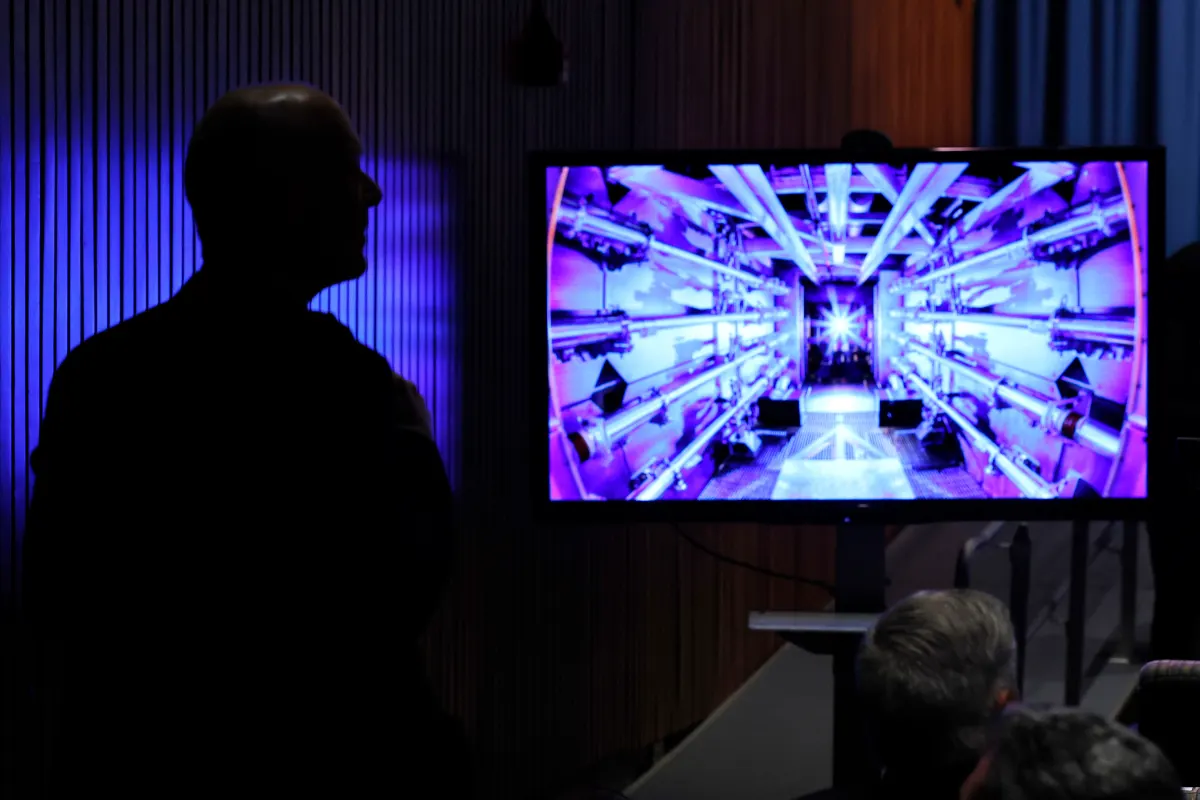
At the NIF, 192 laser beams are fired into a large vacuum chamber so that they converge on a small gold cylinder called a hohlraum, which contains a diamond-coated fuel pellet. When the lasers hit the hohlraum, it gets vaporized and emits X-Rays that blast the BB-sized fuel pellet inside. The diamond coating is transformed into a plasma, which expands to compress the deuterium-tritium fuel.
Advertisement
If that doesn’t sound exotic enough, keep in mind that all of this needs to happen several times per second if the technology is ever going to produce power for the grid.
The laser-driven reactor design was first theorized in the 1960s as a safer way to research thermonuclear weapons, though scientists also recognized its potential for power production. Construction on the NIF began in 1997, and it took 25 years to reach the breakeven point where a fusion reaction released more power than needed to kick it off.
Several startups, including Inertia, Xcimer, Focused Energy and First Light, are attempting to turn the concept into commercial-scale power plants. Because NIF’s lasers are based on old technology, the hope is that new lasers will be more efficient, lowering the energy required to ignite each fusion reaction and so make it easier for each reaction to release enough energy to make a commercial-scale power plant profitable.
Techcrunch event
Advertisement
San Francisco, CA | October 13-15, 2026
The agreements between Inertia and LLNL cover two strategic partnership projects, and one cooperative research and development agreement. The organizations say they will work together to develop more advanced lasers and improve the fuel targets with an eye toward better performance and manufacturing. Inertia is also licensing almost 200 patents from the lab.
Advertisement
It was perhaps inevitable that Inertia and LLNL would continue to work together. Annie Kritcher, the co-founder and chief scientist of Inertia, helped design the successful experiment at NIF that achieved scientific breakeven. The 2022 CHIPS and Science Act paved the way for her to found a company while retaining her position at LLNL.
























































You must be logged in to post a comment Login