
Crypto World
Bitcoin Consolidates At $74,000 As Stocks Continue Exuberant Rebound

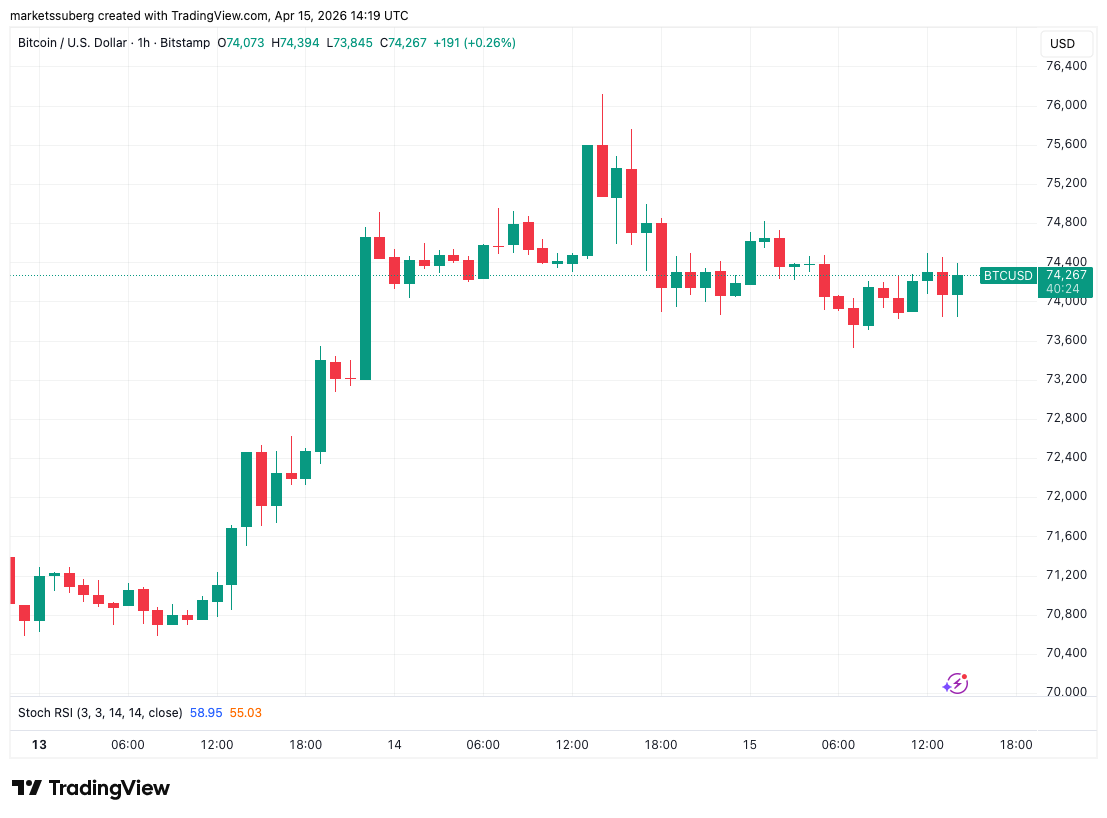
Bitcoin (BTC) circled $74,000 at Wednesday’s Wall Street open as US stocks edged higher on news that the US and Iran may be open to another round of ceasefire negotiations.
Key points:
-
Bitcoin consolidates as analysts warn that stocks may be too optimistic over geopolitical relief.
-
The S&P 500 approaches new all-time highs despite questions over Iran’s uranium enrichment.
-
Bitcoin traders note missing components to support a true trend change.
Iran conflict lacks “genuine resolution”
Data from TradingView showed declining BTC price volatility after a trip to two-month highs the day prior.

Stocks continued a recovery on the day as US President Donald Trump said that China had opted not to send weapons to Iran.
“China is very happy that I am permanently opening the Strait of Hormuz. I am doing it for them, also – And the World,” he wrote in a post on Truth Social.
“This situation will never happen again. They have agreed not to send weapons to Iran.”

President Trump referenced the ongoing blockade of the Strait of Hormuz, a key global oil gateway, as WTI crude dropped below $90 to a new April low on the day.
Commenting, trading company QCP Capital was cautious about discounting the ongoing impact of the US-Iran war.
“Equities recovered, oil sold off, and crypto caught a bid. But the more important signal was what failed to confirm the move,” it wrote in its latest “Market Color” update.
“Long-end yields barely budged, gold held its levels, and the bond market, which should be front-running an inflation relief trade more aggressively, did not follow through. When oil drops and the 10-year barely twitches, rates are telling you this is a reduction in headline risk, not a genuine resolution.”

QCP pointed to Iran’s uranium enrichment as a sticking point in the process of diffusing geopolitical tensions.
“The reason is enrichment. Iran is at 60% enriched uranium, while the US wants levels below 20%. That gap does not close with a framework headline. It closes with a concession Tehran has not signalled it is prepared to make,” it continued.
“Previous ceasefires have lasted weeks, while the enrichment issue has remained unresolved since 2015. Markets are trading the former, but the latter still sits at the core of the risk.”

On Monday, the S&P 500 reclaimed its yearly open level, going on to hit local highs of 6,988 on the day, coming within 15 points of new all-time highs.
BTC price “decision time” due
Bitcoin traders preserved earlier skepticism over market strength.
Related: Oil price surges 8% on Iran tensions: Five things to know in Bitcoin this week
Trader Jelle described the latest trip to $76,000 as an “equal high” that “barely went above” February’s peak.
Liquidity games still in play.$BTC technically tagged those previous highs – but I’m viewing this as an equal high rather than a sweep, barely went above it.
Keep an eye out for a real sweep above there; that’ll likely catch a lot of traders off guard. pic.twitter.com/dxO9cgDRY3
— Jelle (@CryptoJelleNL) April 15, 2026
“Bias remains down, but doubt shorts get a free ride from here,” he added in another of his latest posts on X.
Daan Crypto Trades, meanwhile, predicted that BTC/USD would soon face “decision time.”
“Price tapped the $76K high from March and is consolidating in this area currently. Low timeframe grind higher since the start of April which has been making some marginally higher highs and lows,” he summarized to X followers.

QCP also noted price action “grinding higher,” while warning that options markets were “not confirming a clean breakout.”
“The broader regime has not changed. The Fed is still boxed in, sitting near zero net cuts for the year after the oil shock repriced the easing path, while liquidity conditions remain tight,” it concluded.
“This is a geopolitical relief rally, not a macro regime shift. Last week’s trade was to fade the blockade. This week’s question is whether investors should fade the relief.”
This article is produced in accordance with Cointelegraph’s Editorial Policy and is intended for informational purposes only. It does not constitute investment advice or recommendations. All investments and trades carry risk; readers are encouraged to conduct independent research before making any decisions. Cointelegraph makes no guarantees regarding the accuracy or completeness of the information presented, including forward-looking statements, and will not be liable for any loss or damage arising from reliance on this content.

The Commodity Futures Trading Commission (CFTC) is reportedly investigating suspicious oil futures trades placed minutes before President Donald Trump’s Truth Social posts about Iran de-escalation talks.
The probe follows weeks of pressure from Democratic lawmakers who flagged unusual activity in crude oil markets tied to the president’s announcements.
Hundreds of Millions Bet Before Trump’s Posts
On March 23, traders placed roughly $500 to $580 million in Brent and WTI crude oil futures contracts between 6:49 and 6:50 a.m. ET.
That was approximately 15 minutes before Trump posted on Truth Social about productive talks with Iran to de-escalate tensions.
Oil prices dropped sharply afterward, rewarding those who had bet on a decline.
The trading volume at that hour was roughly nine times the average for that time of day, according to CBS News. No public news or catalyst explained the surge when it happened.
“Is this the best timed trade of 2026?,” analysts at the Kobessi Letter posed at the time.
A similar pattern reportedly emerged on April 7, when approximately $950 million in bets on falling oil prices appeared hours before Trump announced a two-week ceasefire with Iran. Oil prices fell about 15% following that post.
Lawmakers Push for Answers
Senators Elizabeth Warren and Sheldon Whitehouse sent a formal letter to CFTC Chairman Michael Selig on April 9. They described a “recurring concern” about possible misuse of material nonpublic government information under the Commodity Exchange Act.
Rep. Ritchie Torres separately demanded that both the Securities and Exchange Commission (SEC) and the CFTC review the trading activity around both announcements.
The White House has denied any involvement. Spokesman Kush Desai called implications of administration insider trading “baseless and irresponsible.”
The CFTC has surveillance tools for futures markets and the authority to subpoena trading records. However, enforcement investigations of this type typically take weeks or months to produce public findings.
No charges or identified traders have surfaced yet.
Oil markets remain volatile amid shifting signals on the US-Iran conflict. Any new announcements from the White House could trigger further scrutiny of pre-announcement trading patterns.
The post CFTC Investigates Suspicious Oil Trades Before Trump’s Iran Posts appeared first on BeInCrypto.
Mythos Causes Security Concerns
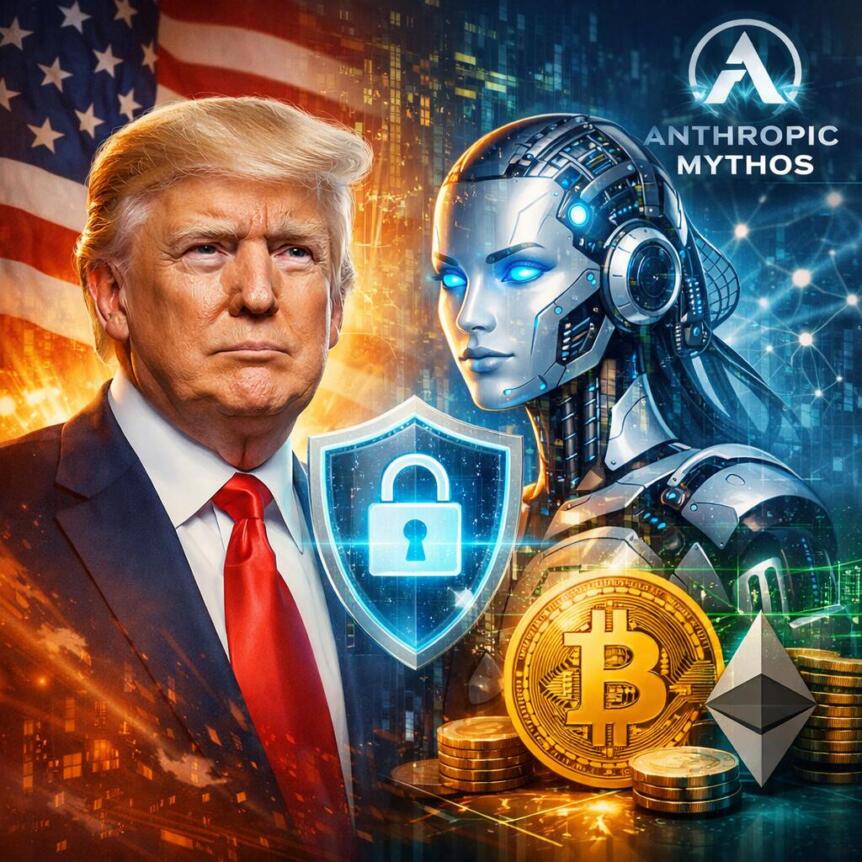
The debate comes after growing interest in the latest AI model Mythos, developed by Anthropic, which has raised alarms in the financial and regulatory sectors. The possibility of the model taking advantage of system vulnerabilities has been noted by government agencies and other large institutions. Regulators have compelled banks to be ready to face more sophisticated cyber threats associated with advanced AI features. Anthropic executives have been talking to policymakers about the risks associated with Mythos. At a recent economic gathering, the company affirmed that it has briefed the Trump administration on the model’s capabilities. The firm also conducted studies indicating that the system could identify and exploit zero-day vulnerabilities in key software platforms when instructed by users.
In the meantime, major crypto exchanges have begun seeking access to the Mythos model to build their defenses. Reports indicate that companies like Coinbase and Binance are already working with Anthropic. Coinbase’s security team noted that discussions continue, and that advanced AI will impact cyber threats and security mechanisms. Megabanks on Wall Street have already taken the lead in accessing the AI model through Anthropic’s limited rollout program. Companies such as JPMorgan, Goldman Sachs, and Morgan Stanley have started internal tests. As a result, these entities seek to evaluate how AI can transform offensive and defensive cybersecurity approaches using the model.
Anthropic launched Project Glasswing to regulate access to Mythos and increase testing in a number of organizations. This program enables institutions to test risk in a controlled setting. Additionally, the program can be seen as an extension of an increased push to create balance between innovation and security controls as AI systems expand their potential.
DAO token RAVE rallied to an all-time high of $19.85 this month before dumping down to $11.80 and allowing a patient trader to short a large amount at $19.
Incredibly, however, after the token declined 23% in his favor below $15, his profit and loss figure still read -3,963%.
The trader, who goes by the name “Meekdonald” on X, shared the screenshot of his leveraged ByBit trade on April 15. It showed a 12x leveraged short on RAVE/USDT with an entry price of $19 and a then-current price of $14.70.
Commentators described the token’s rally, which Meekdonald timed to nearly the “pico top,” as a coordinated scheme to lure and liquidate short sellers.
Three wallets held roughly 90% of the token’s total supply.
Nevertheless, shorting it proved incredibly difficult and expensive.
A winning crypto short became a 3,900% loss
The culprit was the astronomical funding rate on ByBit’s perpetual futures contracts.
In perpetual futures, funding rates are periodic payments between longs and shorts and keep the contract price anchored to spot.
When short interest dominates, the rate turns negative, meaning shorts pay longs. The more crowded the short side becomes, the higher the cost.
During RAVE’s squeeze above $19, funding rates on major exchanges reached annualized levels as high as 4,800%. On Binance, the hourly rate hit -2%.
A short seller owed 2% of notional position value every hour, or 48% per day.
Amplify those 48% daily payments by the leverage ratio, and the losses start to make more sense.
At a 12x leverage on a cross-margin position, a -2% hourly funding rate on that notional value could drain roughly 24% of his collateral per hour.
The spot price fell from $19 to $14.70, rewarding his prediction that RAVE would decline in value. However, the cumulative funding payments overwhelmed the unrealized profit anyway, pushing ROI to nearly -4,000%.
The price moved in his direction but short funding rates moved even faster.
Read more: Outdated algorithm caused $650M excess losses on Hyperliquid, report
Social reaction
The screenshot went viral after WazzCrypto’s quote-tweet hit 130,000 views. He rendered his final verdict with a reference to the 1983 film WarGames: “The only winning move is not to play.”
Several replies called the screenshot fake. WazzCrypto defended its plausibility in a follow-up, noting that cross margin at 12x leverage checks out against known RAVE funding rates.
Others learned a broader lesson.
One trader posted that catching RAVE’s exact top wouldn’t matter because funding alone would destroy the position, while another warned anyone planning to short RAVE to watch the funding rate or risk handing all profits to the longs.
RAVE was trading near $11.80 at time of writing, down roughly 40% from its peak above $19.
The funding rate has since fallen from -2% per hour to -0.2%, and on some venues has flipped positive to more normal conditions.
The squeeze is over. Unfortunately, for at least one short-seller, timing the top was a terrible decision.
Got a tip? Send us an email securely via Protos Leaks. For more informed news, follow us on X, Bluesky, and Google News, or subscribe to our YouTube channel.
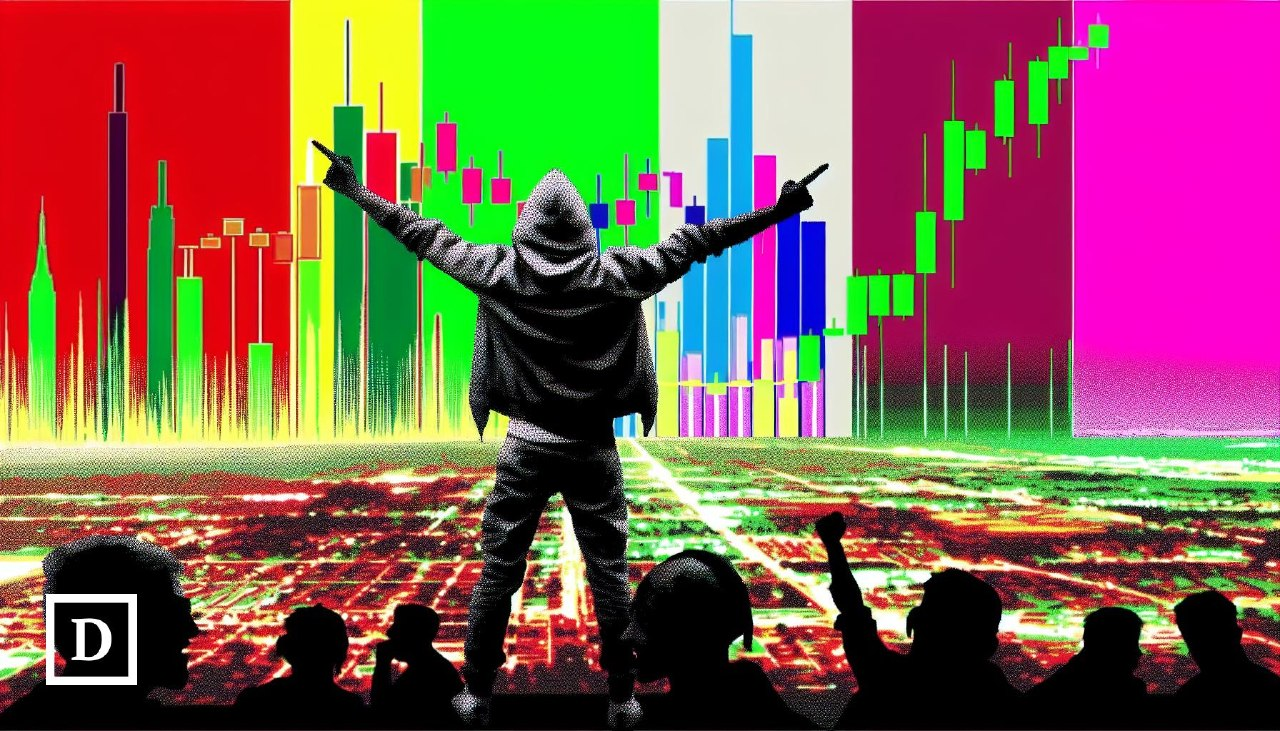
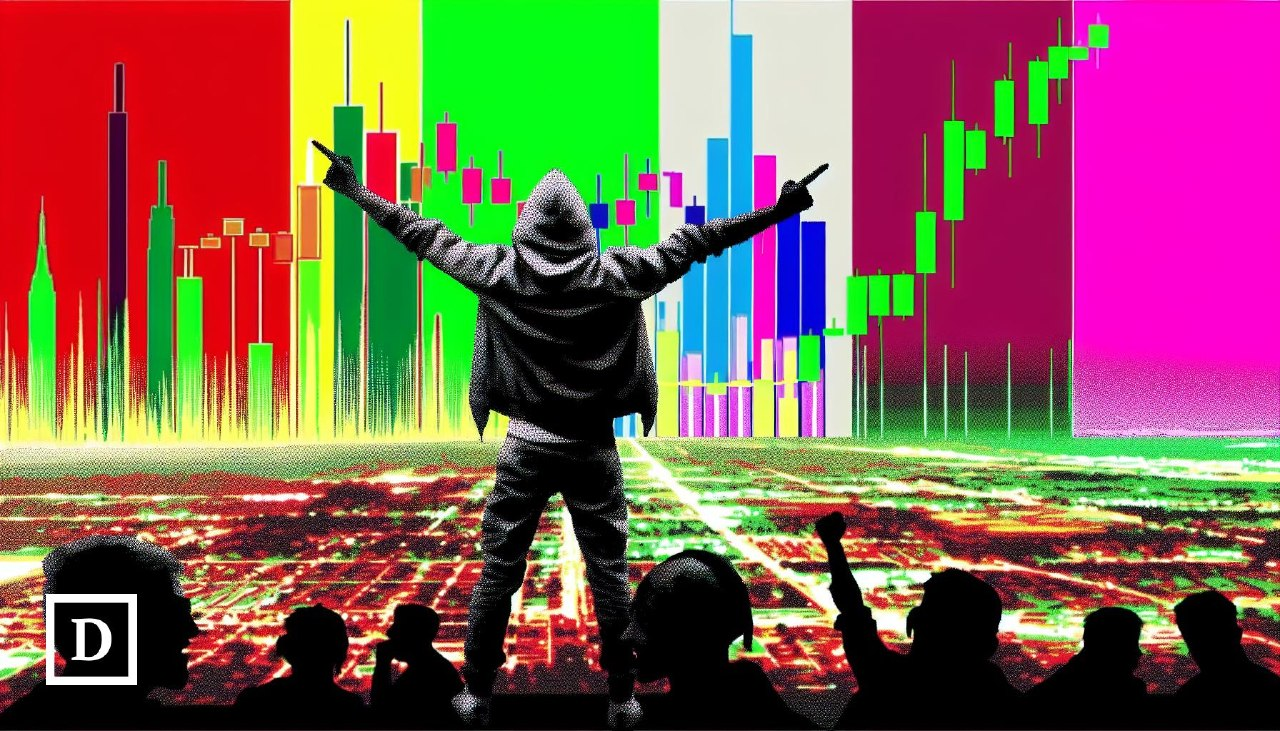
The feature lets iPhone users in the U.S. and Canada view live price charts for stocks and crypto tokens without leaving the app.
Social media platform X on Tuesday launched Cashtags, a feature that surfaces live price charts and related posts for stocks and crypto tokens directly in users’ timelines.
The feature, currently available only on iPhone in the U.S. and Canada, was announced by Head of Product Nikita Bier, who said the platform influences billions of dollars in investment decisions daily based on what users read in their feeds.
Cashtags work by letting users type a dollar-sign ticker or paste a contract address into a post or search bar. X then suggests matching assets so users can select the right one. Tapping a cashtag opens a dedicated view that shows the asset’s price chart alongside posts that mention it, all without leaving the app. Supported assets include major equities, cryptocurrencies, and memecoins using contract addresses on networks such as Solana and Base.
X has actually offered expanded cash tag functionality before, through partnerships with eToro in 2023 and TradingView in 2022, but this version goes further by adding on-chain asset support and, for the first time, a direct brokerage integration.
That integration comes via a pilot with Wealthsimple, Canada’s largest online brokerage. Canadian users who tap a cashtag will see a button that routes them to a pre-filled trading screen on Wealthsimple, creating what the company describes as a one-tap path from conversation to order entry.
The move fits squarely into a broader race among fintech and crypto platforms to build so-called super apps. As The Defiant has reported, U.S. crypto and fintech firms, including Coinbase and Robinhood, are chasing Asia’s super app model, bundling trading, payments, and social features into single platforms.
Rather than building a brokerage from scratch, X is layering financial infrastructure onto what is already one of the world’s most active venues for real-time market commentary. The company holds money transmitter licenses in more than 40 U.S. states, and its separate X Money payments product has completed internal testing.
Bier added that web and Android versions of Cashtags are coming soon, along with a global rollout of the feature.
This article was written with the assistance of AI workflows. All our stories are curated, edited and fact-checked by a human.
Legal & General Asset Management announced Wednesday that it placed the more than 50 billion pounds (roughly $68 million) in liquidity funds that it manages onchain through a new distribution channel built by Calastone.
“We are thrilled to make our liquidity funds available on the Calastone Tokenized Distribution Network,” said Ross McDonald, liquidity investment specialist at L&G. “Tokenized distribution provides meaningful enhancements in efficiency and reach.”
The U.K.-based firm said it now offers its money-market style funds as tokenized shares on the Calastone Tokenized Distribution Network, which uses blockchain infrastructure to handle issuance, trading and settlement.
The funds operate in U.S. dollars, euros and pound sterling and aim to provide capital preservation, same-day settlement and yield, the firm’s statement adds.
Calastone’s system manages token creation, order routing, trade aggregation and reconciliation while linking to existing fund administration systems. L&G said its investors are now allowed to buy, hold and transfer tokenized units within a permissioned network designed for regulated access.
L&G also explained that their tokenization of liquidity assets expands how investors can access short-term funds, especially through digital platforms that require faster settlement and continuous availability.
Tokenized versions of the funds will launch on Ethereum and compatible blockchains, with more networks planned, the firm said.
Simon Keefe, head of digital solutions at Calastone, said the launch shows how tokenization can apply to established fund structures “to enhance distribution, improve efficiency and broaden access within a controlled, regulated framework.”
Iran nuclear deal bitcoin implications are coming into focus as the US has proposed a 20-year pause on Iran’s nuclear program as part of ongoing peace negotiations, a concession that, if accepted, could bring oil below $80 a barrel and trigger the largest crypto rally since October 2025.
Summary
- The US proposed a 20-year halt to Iran’s nuclear program during peace talks, while Iran countered with a 5-year suspension, leaving a significant gap between the two positions.
- If a deal is reached and the Strait of Hormuz fully reopens, oil could fall back toward pre-war levels of $65 to $70 a barrel, removing the central macro drag on Bitcoin and risk assets.
- Bitcoin hit an all-time high of $126,000 in October 2025; analysts say a genuine nuclear resolution would be the largest positive catalyst crypto markets have seen since that peak.
Iran nuclear deal bitcoin markets are now pricing a specific proposal for the first time. The US tabled a 20-year freeze on Iran’s nuclear activities as the core term in ongoing peace negotiations, while Iran countered with a five-year suspension. The gap is wide, but the fact that both sides are now negotiating specific timelines marks the most substantive progress since the conflict began on February 28.
WTI crude sits at $92 a barrel. Before the war, it traded near $65 to $70. The difference between those two levels is the entire macro burden currently suppressing Bitcoin, equities, and risk appetite globally.
The 20-year versus 5-year gap is not just a policy detail. It is the central variable that will determine whether this conflict ends in months or years, and whether oil returns to pre-war levels or stays structurally elevated. Iran’s nuclear program is the core US demand in these talks, as Vance stated clearly after the Islamabad session collapsed on April 13: “the nuclear issue was the only point that really mattered.”
If Iran accepts even a modified version of the 20-year proposal, the Strait of Hormuz blockade ends, shipping resumes, and the energy inflation narrative that has kept the Federal Reserve from cutting rates dissolves rapidly. The IMF has already cut its 2026 global growth forecast to 3.1% from 3.3% directly because of energy costs. That revision reverses with oil at $70.
What the Ceasefire Template Tells Us
When Trump agreed to the two-week ceasefire on April 7, oil surged lower by 13% to $94.76 a barrel on Brent and BTC rose 6.7% to $72,379 within hours. That was a temporary pause, not a deal. A genuine nuclear agreement would be categorically larger in market terms.
The pre-war BTC price was in the $97,000 range in mid-January before the conflict began. The path from $74,000 back toward that level runs directly through the oil market. Analysts at 24/7 Wall St. have outlined $100,000 by year-end as achievable under a full peace deal scenario with oil returning to the $65 to $70 range.
Why the Gap May Narrow
Iran’s counter of five years versus the US’s 20 suggests both sides are negotiating from fixed positions rather than walking away. The original Islamabad talks lasted 20 hours before breaking down specifically on this question. The fact that both sides put specific numbers on the table means a compromise figure, 10 to 15 years, is mathematically available even if politically difficult.
Bitcoin was at $126,000 in October 2025. It is at $74,000 today. The 20-year nuclear question may be the single variable standing between those two price levels.
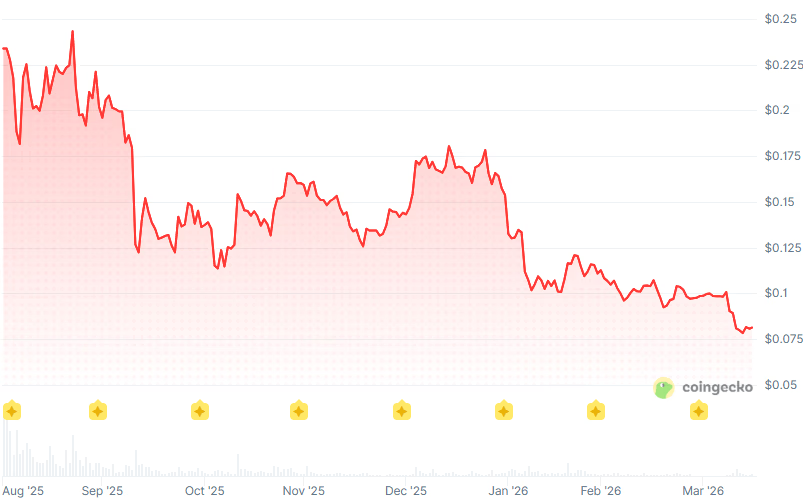
TRON founder escalates feud with Trump-linked DeFi project, alleging coercion and frozen voting rights.
World Liberty Financial’s freshly posted governance proposal to unlock 62.3 billion WLFI tokens drew an immediate broadside from TRON founder Justin Sun, who published a lengthy rebuttal onX, calling the plan “World Tyranny, Not World Liberty Financial.”
Sun, who invested $75 million in the Trump family-backed DeFi venture, accused the team of engineering the vote so that dissenters are punished, as holders who vote against the proposal see their tokens locked indefinitely with no unlock path, while large holders like himself have been frozen out of the process entirely.
“I personally hold approximately 4% of the voting power, yet my tokens have been frozen and I am forced out of this voting process,” Sun wrote. “The outcome was determined before the vote even began.”
The proposal, announced by WLFI on Tuesday, would place early supporter tokens on a two-year cliff followed by a two-year linear vest. Founders, team members, and advisors would face a longer five-year schedule, with 10% of their allocation permanently burned on passage. Holders who do not opt in remain locked indefinitely. WLFI called the plan “one of the strongest long-term governance alignment signals in DeFi.”
Sun sees it differently. He called the vote “a performance where the police have already barricaded the doors of parliament” and pointed to what he described as a deeper structural problem: the WLFI smart contracts are ultimately controlled by a 3-of-5 anonymous multisig and a single anonymous guardian address that can blacklist any wallet. Voters, meanwhile, must complete identity verification to participate.
“Your voters must register, submit to scrutiny, and be vetted — while your dictators won’t even show their faces,” Sun wrote.
Feud Erupts Into Open War
The response caps a week of escalation between the two sides. Tensions boiled over on Sunday after Sun accused WLFI of embedding a hidden blacklisting function in the token contract and called the team’s actions illegitimate. WLFI fired back, threatening legal action. “See you in court pal,” the project’s official X account posted.
Sun demanded that whoever was operating the account identify themselves. “As the largest investor in this project, I demand that those responsible come forward by name, instead of hiding in the shadows.”
The clash followed days of scrutiny over WLFI’s treasury operations. The Defiant previously reported that WLFI deposited 5 billion of its own governance tokens into Dolomite, a lending protocol co-founded by WLFI’s chief technology officer, and borrowed roughly $75 million in stablecoins, some of which were routed to Coinbase Prime.
Sun’s wallet containing more than 500 million WLFI tokens has been frozen since September 2025, when the project blacklisted his address after on-chain analysts flagged transfers routed through HTX, his crypto exchange. WLFI alleged Sun breached his investor agreement. Sun has maintained that the freeze was unjustified.
Token in Freefall
WLFI was trading around $0.08 on Tuesday, down roughly 75% from its all-time high and near its all-time low of $0.077 hit last week. The token’s market cap has fallen to approximately $2.5 billion.

Sun closed his statement by calling on all WLFI holders to “see this proposal for what it truly is” and to “reserve all legal rights of recourse.”
This article was written with the assistance of AI workflows. All our stories are curated, edited and fact-checked by a human.
Another political action committee (PAC) aligned with the cryptocurrency industry announced its endorsement for a candidate in Ohio’s Senate race, signaling a move that could mirror the 2024 US election.
In a Wednesday notice, Sentinel Action Fund, a group that claims to be the “only conservative Super PAC advancing pro-crypto candidates and supporting pro-crypto innovation,” said it would be supporting Republican Jon Husted in this year’s race to represent Ohio in the US Senate.
Husted was appointed by Ohio Governor Mike DeWine in January 2025 to replace JD Vance, who was elected vice president alongside US President Donald Trump in his 2024 election win. He still faces a field of Republican candidates ahead of a May 5 primary in Ohio, where former Senator Sherrod Brown will also face off in the Democratic primary against Ron Kincaid.
Sentinel Action Fund President Jessica Anderson specifically cited Brown as having “stood in the way of pro-innovation policies when it comes to digital assets” in the PAC’s endorsement of Husted.
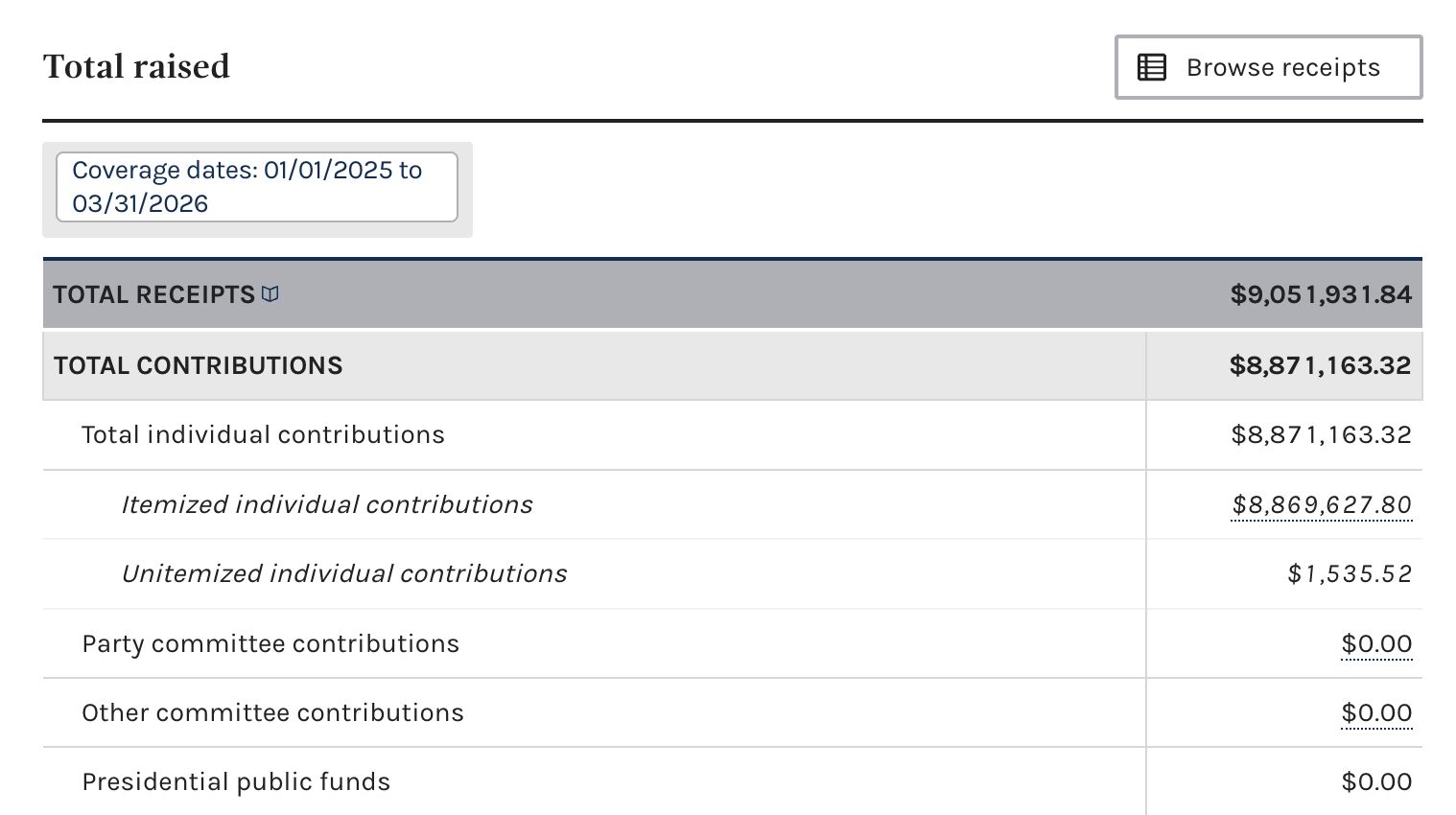
Although filings with the Federal Election Commission (FEC) as of Tuesday showed no disbursements supporting Husted in 2026, the PAC and its sister organization, Right Vote, pledged to spend more than $8 million in the Buckeye state. The Sentinel Action Fund reported about $9 million raised from January 2025 through March 2026, including $750,000 in contributions from the digital asset advocacy organization Solana Policy Institute and $250,000 from crypto investment company Multicoin Capital.

The PAC’s move into the Ohio race could serve as a bellwether for how money from crypto-aligned interest groups will respond to the upcoming US elections. In 2024, crypto-backed PACs spent more than $40 million in the US State to support Republican Bernie Moreno’s run to unseat Brown, who had made many public statements criticizing crypto.
Related: Coinbase-backed crypto advocacy group unveils 2026 election plan
Despite having lost his seat, Brown announced in August that he would run again for Senate. Moreno’s seat won’t be up for grabs until 2030.
Ohio Senate race isn’t the only one in the state focused on crypto
Vivek Ramaswamy, a former Republican candidate for US President and one of the backers for Bitcoin (BTC) treasury company Strive, has also thrown his hat into Ohio’s gubernatorial race.
Launching his campaign in February 2025 following his departure from Trump’s Department of Government Efficiency (DOGE), Ramaswamy supported efforts to create a strategic BTC reserve in Ohio.
However, many critics have pointed to the Republican candidate’s financial disclosures filed on April 6 as examples of conflicts of interest.
Ramaswamy reported a 10% stake in Strive and could benefit from the value of the company’s Bitcoin holdings increasing in response to Ohio’s treasury investing in the cryptocurrency, which he would have significant influence over as governor. Strive reported holding about 13,768 Bitcoin as of Wednesday, worth more than $1 billion.
Disclosure: A member of the immediate family of Staff Editor Robert Lakin has contributed to the campaigns of Ohio Democratic gubernatorial candidate Amy Acton and Ohio Democratic Senate candidate Sherrod Brown in amounts less than $200.
Magazine: Bitcoin will not hit $1M by 2030, says veteran trader Peter Brandt
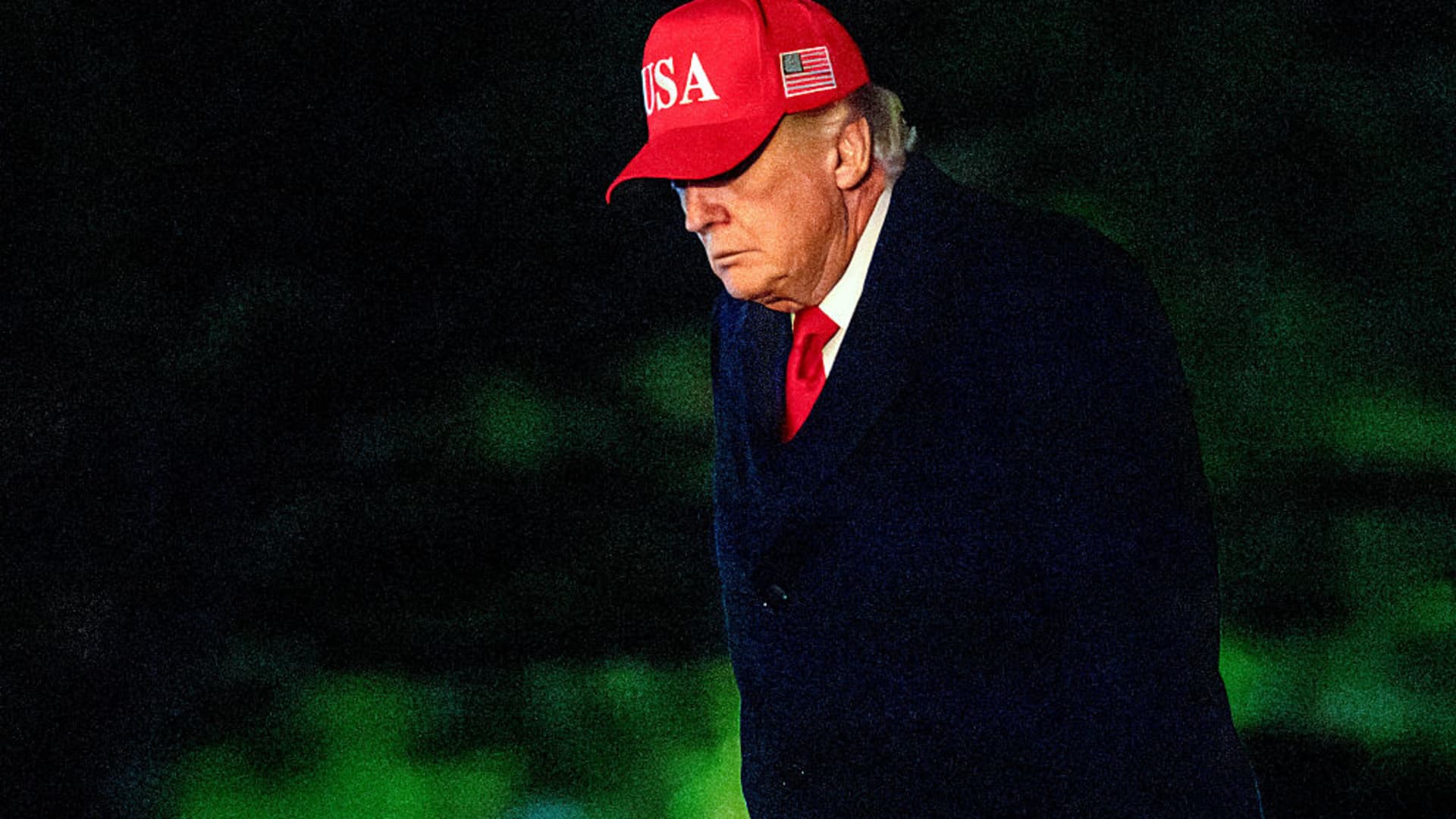
US President Donald Trump walks on the South Lawn of the White House after arriving on Marine One in Washington, DC, US, on Sunday, April 12, 2026. Trump attacked Pope Leo XIV for his criticisms of the US-Israeli war on Iran, calling the leader of the Catholic Church “WEAK on crime.” Photographer: Bonnie Cash/UPI/Bloomberg via Getty Images
Bloomberg | Bloomberg | Getty Images
U.S. derivatives regulators are examining a handful of unusual oil futures trades that took place minutes before a surprise announcement by President Donald Trump signaling a pause in attacks on Iran, according to Bloomberg News.
The investigation is being spearheaded by the Commodity Futures Trading Commission, which is scrutinizing activity on trading venues run by CME Group and Intercontinental Exchange, Bloomberg reported, citing people familiar with the matter. Both exchanges have been asked to turn over pertinent records.
Regulators are zeroing in on at least two instances over a roughly two-week period when trading volumes jumped sharply just ahead of key announcements. The information sought includes so-called Tag 50 identifiers, which can be used to determine who was behind the trades, the people said.
The CFTC declined to comment.
CME didn’t specifically comment on the unusual trades tied to Trump’s announcement, but the exchange pointed out that any investigation should also include new participants like prediction markets.
“Nothing is more important than market integrity,” a spokesperson at CME told CNBC. “We vigorously surveil our markets and work closely with the CFTC to oversee trading activity. Importantly, any review of market behavior must include all venues, including prediction markets like Polymarket and Kalshi that list related products with little to no visibility.”
ICE didn’t immediately respond to a CNBC request for comments.
CNBC previously reported on the suspicious activity on March 23 when S&P 500 e-mini futures and West Texas Intermediate May crude futures saw a sudden and isolated surge in volume in otherwise muted premarket trading.
About 15 minutes later, Trump said on Truth Social that the U.S. and Iran had held talks and that he was halting planned strikes on Iranian power plants and energy infrastructure. The announcement triggered an immediate reaction across markets, with S&P 500 futures jumping more than 2.5% ahead of the open, and WTI crude oil futures tumbling nearly 6%.
The sudden, simultaneous spikes in volume in stock-index and crude futures raised eyebrows among traders, particularly as they came without any clear news or trigger at the time.
Last week, Sens. Elizabeth Warren, D-Mass., and Sheldon Whitehouse, D-R.I., called on the CFTC to open investigations into such unusual trades, raising the question of whether there has been recurring misappropriation of material nonpublic government information.
— Click here to read the original Bloomberg News story.


Aave Checkpoint combines automated AI analysis with mandatory human verification to review all DAO proposals before onchain execution.
Aave Labs introduced Aave Checkpoint on April 15, an AI-powered governance security system designed to add a multi-layered review process for every proposal and payload before onchain execution. Checkpoint combines automated analysis with mandatory human verification, working alongside Certora’s manual proposal reviews to strengthen the security posture of the Aave DAO and ensure no proposal reaches the chain without thorough review.
The system implements two core components: automated AI analysis for initial proposal assessment and mandatory human review as a secondary verification layer. Checkpoint complements existing security measures rather than replacing them, positioning itself as part of Aave’s structured approach to governance risk management across the decentralized autonomous organization.
Sources: Aave Governance
This article was generated automatically by The Defiant’s AI news system from publicly available sources.

HubSpot, Inc. (HUBS) Discusses 2026 Strategy and AI-Driven Innovations for Growth Companies Prepared Remarks Transcript

CFTC Investigates Suspicious Oil Trades Before Trump’s Iran Posts
Lena Dunham thanks Taylor Swift in acknowledgments of book that details Jack Antonoff drama


-

 Politics5 days ago
US brings back mandatory military draft registration
-
 Sports5 days ago
Man United discover Nico Schlotterbeck transfer fee as defender reaches Dortmund agreement
-

 Fashion5 days ago
Weekend Open Thread: Veronica Beard
-

 Politics6 days ago
Malcolm In The Middle OG Turned Down ‘Buckets Of Money’ To Appear In Reboot
-

 Politics3 days ago
World Cup exit makes Italy enter crisis mode
-

 Crypto World6 days ago
Canary Capital Files SEC Registration for PEPE ETF
-

 Business5 days ago
Tesla Model Y Tops China Auto Sales in March 2026 With 39,827 Registrations, Beating Cheaper EVs and Gas Cars
-

 Crypto World2 days ago
The SEC Conditionalises DeFi Platforms to Be Avoided for Broker Registration
-

 Crypto World2 days ago
SEC Signals Exemption for Crypto Interfaces From Broker Registration
-

 News Videos12 hours ago
Secure crypto trading starts with an FIU-registered
-
 NewsBeat3 days ago
Pep Guardiola and Gary Neville agree over Arsenal title problem that benefits Man City
-

 Business5 days ago
OpenAI Halts Stargate UK Data Centre Project Over Energy Costs and Copyright Row
-

 Business4 days ago
Ireland Fuel Protests Enter Day 5 as Blockades Spark Shortages and Government Prepares Support Package
-

 Politics6 days ago
LBC Presenter Mocks Trump Over Iran War Failures
-

 Crypto World5 days ago
Federal judge blocks Arizona from bringing criminal charges against Kalshi
-
 NewsBeat4 days ago
JD Vance announces ‘no agreement’ with Iran over nuclear weapons fear
-

 NewsBeat1 day ago
Trump and Pope Leo: Behind their disagreement over Iran war
-

 Crypto World2 days ago
SEC Proposes Certain Crypto Interfaces Don’t Need to Register as Brokers
-

 Tech6 days ago
A version of Windows 10 released a decade ago is now eligible for additional security patches
-

 Business5 days ago
IMF retains floor for precautionary balances at SDR 20 billion
You must be logged in to post a comment Login