
Business
Buy the Dip or Sell the Rally as Turnaround Gains Traction?

NEW YORK — Starbucks Corp. shares have climbed more than 15 percent year-to-date in 2026, trading near $98 in mid-April as investors weigh early signs of a turnaround under new CEO Brian Niccol against lingering pressures from cautious consumers and a complex China market.
At around $98.47 on April 15, 2026, SBUX stock sits well above its recent lows but remains far below the all-time highs above $120 seen in prior years. The company’s market capitalization hovers near $110 billion after a volatile stretch marked by declining traffic in key markets and aggressive cost-cutting efforts. Year-to-date gains outpace the broader market modestly, reflecting guarded optimism around the “Back to Starbucks” strategy launched after Niccol’s arrival from Chipotle in late 2024.
Wall Street’s consensus leans toward cautious optimism. Across roughly 40 analysts, the average 12-month price target stands near $101 to $104, implying modest single-digit upside from current levels. Ratings tilt toward Hold with a sprinkling of Buy recommendations, though some firms have nudged targets higher following positive Q1 signals. The highest targets reach $165 in optimistic scenarios, while bears see downside risks toward $74 if momentum stalls.
Fiscal first-quarter 2026 results released in late January offered the clearest evidence yet that Niccol’s plan is gaining traction. Global comparable store sales rose 4 percent, driven by positive U.S. transaction growth for the first time in eight quarters. Revenue climbed 5 percent to approximately $9.9 billion, beating estimates, though adjusted earnings per share of $0.56 missed consensus slightly amid higher labor investments and one-time items.
The company introduced full-year fiscal 2026 guidance calling for global comparable sales growth of 3 percent or better, with similar revenue expansion. Non-GAAP earnings per share are projected in a range of $2.15 to $2.40, and Starbucks plans to open 600 to 650 net new stores worldwide. Executives described the turnaround as “ahead of schedule,” highlighting menu simplification, improved store operations and a renewed focus on the core coffeehouse experience.
Niccol has emphasized returning Starbucks to its roots — faster service, friendlier baristas and a stronger sense of community — after years of over-reliance on digital orders and drive-thru efficiency that some critics said eroded the brand’s soul. Early moves included trimming the menu by 25 to 30 percent to reduce complexity and waste, enhancing in-store ambiance and retraining staff. U.S. traffic trends have stabilized, with transaction growth turning positive amid targeted promotions and value offers.
International markets present a more mixed picture. China, once a high-growth engine with plans to reach 20,000 stores through a partnership with Boyu Capital, continues facing headwinds from intense local competition and a sluggish consumer environment. While the company maintains long-term ambitions in the region, near-term traffic remains soft. Starbucks closed a strategic deal in China earlier in 2026, aiming to accelerate expansion while sharing risk.
Analysts credit Niccol’s operational discipline for margin stabilization efforts even as investments in labor and store refreshes weigh on near-term profitability. Operating margins contracted in Q1 but executives expect slight improvement for the full year through efficiency gains and disciplined pricing. Free cash flow generation remains solid, supporting the company’s quarterly dividend of about $0.61 per share, which yields roughly 2.5 percent at current prices.
The stock’s valuation sparks debate. Trading at a forward price-to-earnings multiple in the high 30s to low 40s based on 2026 estimates, SBUX commands a premium that assumes successful execution of the turnaround. Bulls argue the multiple is justified by Starbucks’ powerful global brand, loyal customer base and potential for mid-single-digit long-term growth as digital, ready-to-drink products and new store development compound. Bears counter that the premium leaves limited room for error if U.S. consumer spending weakens further or China recovery lags.
Next earnings for the fiscal second quarter are scheduled for late April, with investors eager for updates on U.S. traffic trends, China performance and progress on store renovations. Any positive surprises on same-store sales or margin trajectory could fuel further gains, while softer commentary might trigger profit-taking.
Competition remains fierce. Rivals such as Dutch Bros, local coffee chains and even fast-food players offering premium beverages continue chipping away at market share, particularly among price-sensitive younger customers. Starbucks has responded with value bundles, seasonal drinks and loyalty program enhancements designed to boost frequency without deep discounting that could erode margins.
Longer-term catalysts include international expansion beyond China, growth in the Global Coffee Alliance and ready-to-drink beverages, and potential innovation in plant-based or premium offerings. The company also continues investing in technology, including mobile order improvements and data-driven personalization, to enhance the customer experience.
For investors debating buy or sell decisions in 2026, Starbucks represents a classic turnaround story in the consumer discretionary space. Optimists see an attractive entry point after years of underperformance, with Niccol’s proven track record at Chipotle providing credibility. The current dividend yield and share repurchase activity add appeal for income-oriented portfolios. At depressed levels relative to historical peaks, the stock offers asymmetric upside if the “Back to Starbucks” plan restores mid-single-digit growth and expands margins toward pre-pandemic levels.
Skeptics highlight structural challenges: a maturing U.S. market, persistent inflation pressures on discretionary spending and geopolitical risks in China. Execution risk remains high as the company balances cost discipline with investments in people and stores. If traffic gains prove temporary or new store openings fall short, the premium valuation could compress quickly.
Portfolio considerations matter. Defensive qualities in the consumer staples-adjacent sector make Starbucks appealing during economic uncertainty, yet its sensitivity to discretionary spending ties it more closely to cyclical trends. Dividend growth history and strong balance sheet provide some downside protection.
As spring advances, attention will focus on summer beverage sales, back-to-school traffic and any updates on China operations or new product launches. Broader economic factors — interest rates, employment trends and consumer confidence — will influence results.
At current levels near $98, Starbucks offers a blend of recovery potential and income. Short-term traders may await the April earnings reaction for clearer direction, while longer-term investors can lean on the brand’s resilience and Niccol’s strategic shifts. Those with high conviction in a U.S. traffic rebound and successful China navigation see room for the stock to climb toward the $110-$120 range by year-end.
The coming months will test whether early positive trends translate into sustained momentum. Strong Q2 results, accelerating U.S. transactions and credible progress on margins could validate the bullish case and support multiple expansion. Any signs of renewed softness, however, might pressure shares toward the lower end of the 52-week range.
Starbucks built its empire on the simple promise of a welcoming third place between home and work. Under Niccol, the company is rediscovering that heritage while adapting to a more competitive, cost-conscious environment. Whether 2026 marks the inflection point for renewed growth or another transitional year will shape shareholder returns for years ahead.
For now, the data point to a Hold with upward bias for those willing to tolerate volatility. The golden siren has weathered storms before. If the turnaround delivers, patient investors could be rewarded as Starbucks reclaims its position as a premium growth name in the restaurant sector. Execution will be everything in the months ahead.


Gold has maintained its position as a globally recognised store of value, even as financial markets have evolved significantly.
Unlike traditional investments such as equities or bonds, gold does not rely on earnings, dividends, or interest payments. Instead, its value is shaped by macroeconomic forces, including inflation, monetary policy, and investor confidence.
In an environment where financial conditions are becoming increasingly complex, gold is being reassessed not just as a defensive asset, but as a core component of long-term portfolio construction.
Accessing Gold in Modern Markets
One of the key developments in recent years has been the increasing accessibility of gold as an investment. Historically, physical ownership required significant capital, along with secure storage and insurance arrangements.
Today, investors can access physical gold more easily through providers such as Commonwealth Vault, which offers secure storage and direct ownership structures. This allows investors to hold allocated gold outside of traditional banking systems while maintaining full ownership. More information on how this works can be found at
For those looking to invest in gold more directly, the ability to buy gold online has expanded significantly. Investors can now purchase a range of bullion products, including bars and coins, with varying sizes and price points. A selection of physical gold options can be explored here:
These developments have broadened access to gold and made it easier to incorporate into a diversified portfolio.
Gold and Economic Cycles
Gold’s performance is closely linked to economic cycles, particularly periods of uncertainty or monetary expansion.
Following the Global Financial Crisis, gold prices more than doubled as central banks introduced large-scale stimulus measures. This increase in liquidity, combined with declining real interest rates, created a favourable environment for gold.
A similar pattern emerged during the COVID-19 pandemic. As governments and central banks responded with unprecedented fiscal and monetary support, gold reached record highs above USD 2,000 per ounce.
These examples highlight a consistent trend. When confidence in financial systems is tested, demand for gold tends to increase.
Inflation Protection Over Time
Gold has long been viewed as a hedge against inflation, although its effectiveness can vary in the short term. Over longer periods, however, it has demonstrated a strong ability to preserve purchasing power.
Since 1971, when the United States moved away from the gold standard under Richard Nixon, gold has delivered average annual returns of around 10 percent, according to the World Gold Council.
During the same period, inflation has significantly reduced the value of fiat currencies. Data from the U.S. Bureau of Labor Statistics shows that cumulative inflation has exceeded 600 percent.
This long-term dynamic reinforces gold’s role as a store of value, particularly in environments where monetary expansion is persistent.
Portfolio Stability and Risk Reduction
Gold’s diversification benefits are well established. It has historically exhibited low correlation with both equities and fixed income assets, making it an effective tool for reducing portfolio volatility.
During periods of market stress, gold often behaves differently from traditional assets. For example, during the sharp market decline in early 2020, the S&P 500 experienced significant losses, while gold recovered quickly and finished the year strongly.
This ability to perform independently of other asset classes is particularly valuable in the current environment, where traditional diversification strategies are being challenged.
Allocating a portion of a portfolio to gold can help reduce downside risk without significantly limiting long-term returns.
Structural Demand Trends
Gold demand is supported by both institutional and consumer activity, creating a strong underlying foundation for the market.
Central banks have been increasing their gold reserves in recent years as part of broader diversification strategies. According to the World Gold Council, central bank purchases exceeded 1,000 tonnes in 2022, the highest level on record.
At the same time, consumer demand remains strong, particularly in countries such as China and India. In these markets, gold serves both as a form of wealth preservation and a culturally significant asset.
Supply, however, remains relatively constrained. Annual gold production increases at a modest pace, and new discoveries are becoming less frequent. This imbalance between supply and demand provides long-term support for gold prices.
Risks and Market Sensitivity
While gold offers several benefits, it is not without risk.
Its performance is influenced by factors such as interest rates, currency movements, and investor sentiment. Periods of rising real interest rates can reduce demand for gold, as higher yields make income-generating assets more attractive.
A strengthening US dollar can also act as a headwind, as gold is priced globally in US dollars.
Short-term price movements can be volatile, particularly in response to economic data releases or changes in central bank policy. However, these fluctuations are typically part of broader market cycles.
Over longer time horizons, gold has maintained its role as a stabilising asset.
Outlook for Gold
The global economic outlook remains uncertain. Debt levels are elevated, inflation remains a concern, and central banks are navigating complex policy decisions.
According to the International Monetary Fund, global public debt continues to exceed 90 percent of GDP, limiting the flexibility of monetary policy.
In this context, assets that are not directly tied to financial systems or currencies become increasingly relevant.
Gold’s independence from these systems is one of its defining characteristics. It does not rely on the performance of any single economy or institution, making it a valuable component of a diversified portfolio.
Gold continues to serve as a core asset within modern investment strategies.
Its long-term performance, combined with strong demand and limited supply growth, supports its role as a store of value and a diversification tool.As global conditions evolve, gold remains a practical option for investors seeking stability, resilience, and long-term value preservation.

Workers in southern Scotland can find themselves paying more tax than colleagues who live south of the border.

There is a particular kind of dinner I have, every couple of months, in a particular kind of place, a Soho members’ club that lets you bring more than three people without an interrogation, in this case, with a particular kind of British technology founder.
He is, by his late thirties, on his third successful company. He has, between them, raised something north of £180 million in venture capital. He has, currently, about 220 employees in London, with another fifty due to be hired in the coming twelve months. He has, last week, sold a further $40 million tranche of his Series C to two American funds.
And he has, somewhere between his second and third glass of red, told me that he is moving the company’s headquarters to New York. Not on principle. Not on tax. Not on regulation. Not even, despite the obvious temptation in this column, on the Chancellor. He is moving because the next $200 million he needs, in 18 months, is in New York, and the practical day-to-day life of a CEO in a series of monthly trips to a city eight time zones from his children is, frankly, too painful. So he is moving the family. The London office will remain. It will, over time, get smaller. A version of this conversation has happened, by my count, with at least twelve British founders I know personally in the last two years.
Britain does not, in 2026, have a start-up problem. We start-up exquisitely. We have, by any international comparison, more new technology businesses per capita than nearly any other developed economy. Cambridge is, on its own, one of the great clusters of the world. London’s software and fintech ecosystems are deeper than Berlin’s, deeper than Paris’s, comparable to New York’s on most measures, with a couple of exceptions. We have brilliant universities, a working tax-incentive regime in EIS, a meaningful angel community, and a steady flow of seed and Series A capital.
What we have is a stay-at-home problem.
The numbers are visible if anyone bothers to look. UK technology IPOs, by listed value, are running at less than 12 per cent of US listings adjusted for relative GDP. UK Series C and onwards rounds are dominated, by deal count, by American lead investors. The proportion of UK technology companies founded in 2018 that have, by 2025, relocated their corporate domicile overseas, to the US, to Delaware, to Ireland, to Singapore, is now over 22 per cent. The proportion of all UK-founded unicorns that listed on the New York Stock Exchange or Nasdaq, rather than the London Stock Exchange, is over 80 per cent for the last decade. Eighty.
Why? It is not, despite the City lobbying, primarily a tax problem. American capital gains rates are not, in any meaningful sense, more friendly to founders than British rates. It is not, despite a great deal of Treasury-led discussion, a corporate-tax problem. The US corporate tax rate, when you blend federal and state, is comparable. It is not, despite the political mood music, a regulatory problem in the technology sectors that matter, the FCA, where it counts for fintech, is a notably more friendly regulator than its American equivalent.
It is, primarily, a depth-of-capital-pool problem. The UK pension system, despite the most articulate efforts of the Edinburgh Reforms and the Mansion House Compact and a half-dozen subsequent initiatives, allocates an embarrassingly small proportion of its £3 trillion of assets to growth-stage British equities. Canadian pension funds are, statistically, more invested in British scale-ups than British pension funds. This is the absurdity of the present situation: the world’s ninth-largest pension industry, hosted in Britain, is not investing in British growth, and is being out-deployed, in British growth equity, by Canadians, Australians, and Americans.
Fix the depth, and the rest of the problem largely goes with it. There are about three things to do. First, get UK Defined Contribution pension money, which is, by the way, growing at over £100 billion a year, into a properly structured British scale-up vehicle, at a meaningful target allocation, with a proper governance overlay. Second, restore the pre-2008 status of the London Stock Exchange as a competitive listing venue for technology businesses, by reforming the dual-class share structures and the listing-rules architecture that has kept it stranded in the era of utilities and miners. Third, make the EIS reliefs permanent, generous, and unfussy at the seed stage, so that the early-stage capital remains the easiest tier to raise.
None of this is impossible. None of this is even, in the international context, particularly bold. The Australians did most of it in 2008. The Canadians did most of it in 2014. The Singaporeans built theirs in around six years. We are, in 2026, still pondering it.
And in the meantime, my Soho friend will, in the autumn, leave. He will take the family. He will keep the London office. The American round will close. The next British unicorn, and there will be a next British unicorn, will, on present trajectory, list, again, in New York. The Mayoral candidates will, on the day after, all denounce the loss to “Brand London”. And the bottle of red, in our particular Soho members’ club, will be uncorked, again, by someone else.
We start-up brilliantly, in this country. We just need, finally, to learn how to keep them. The May locals, it turns out, are not the only thing on the ballot.

Richard Alvin
Richard Alvin is a serial entrepreneur, a former advisor to the UK Government about small business and an Honorary Teaching Fellow on Business at Lancaster University.
A winner of the London Chamber of Commerce Business Person of the year and Freeman of the City of London for his services to business and charity. Richard is also Group MD of Capital Business Media and SME business research company Trends Research, regarded as one of the UK’s leading experts in the SME sector and an active angel investor and advisor to new start companies.
Richard is also the host of Save Our Business the U.S. based business advice television show.

MaxLinear director Daniel Artusi sells $825,728 in company stock

Ramil Asadulzada is an experienced executive with more than 20 years of leadership across finance, strategy, and operations. Born in Baku, Azerbaijan, he grew up in a humble family shaped by discipline and education.
His father served in the military and his mother was a teacher. From a young age, Ramil showed strong leadership and analytical skills. He captained his school basketball team and regularly competed in mathematics Olympiads, often earning top awards.
He earned his Bachelor of Science from the Azerbaijan State Oil Academy before building an international career across Azerbaijan, Turkey, Switzerland, and Romania. Over the past 15 years, he held senior finance roles, serving as CFO and most recently as CEO of SOCAR Petroleum SA, where he was promoted to Chief Executive in January 2024.
Ramil is known for his expertise in financial analysis, IFRS, risk management, corporate strategy, M&A, supply chain management, and large-scale project leadership. He combines financial discipline with operational clarity. He holds an MBA with Honours from The University of Chicago Booth School of Business and is a member of ACCA.
Oil and gas remains his professional passion. He is recognised for leading large teams while maintaining strong relationships across all levels of business. Outside of work, he enjoys basketball, travelling, reading professional literature, and following Real Madrid. A lifelong learner, Ramil approaches leadership with humility, precision, and long-term vision.
Q: You were born in Baku and grew up in a military household. How did your early life shape your leadership style?
I was raised in a very simple and humble family. My father was a military serviceman and my mother was a teacher. Discipline and education were part of daily life. There was structure at home. There was respect for learning. That environment shaped how I approach work today.
As a child, I loved mathematics. I competed in Olympiads and often won gold prizes. Mathematics teaches logic and problem solving. It forces you to think clearly. I also played basketball and served as team captain. Sport taught me leadership. You learn quickly that you win as a team or you lose as a team.
Q: What led you into the oil and gas industry?
I studied Economy and Management of Production and Service Fields at the Azerbaijan State Oil Academy. Oil and gas is a key industry in Azerbaijan. It is part of our economic identity. Naturally, I was drawn to it.
Over time, it became more than an industry. It became a passion. The scale of operations, the capital intensity, the global exposure — it is a complex and strategic field. I enjoy that complexity.
Q: You spent more than 11 years at SOCAR and rose from CFO to CEO. How did that journey unfold?
My career has been heavily focused on finance and strategy. For roughly 15 years I held CFO positions, and in January 2024 I was promoted to CEO of SOCAR Petroleum SA.
As CFO, my responsibility was financial discipline. IFRS reporting, risk management, budgeting, forecasting, internal controls, and audit were central to my role. We managed large-scale operations across multiple countries. That required precision.
When I became CEO, the perspective shifted. You still rely on financial rigour, but you must think more broadly. Strategy, people management, commercial positioning, supply chain resilience — all become interconnected.
Q: What was the most challenging transition from CFO to CEO?
As CFO, you evaluate risk and protect the balance sheet. As CEO, you balance risk with growth. You must make decisions that affect thousands of stakeholders.
One challenge is moving from detailed financial analysis to big-picture leadership. I learned to trust the systems and the teams we built. Strong internal controls and governance frameworks allowed me to focus on long-term direction rather than day-to-day issues.
Q: You have worked internationally in Azerbaijan, Turkey, Switzerland and Romania. How has that shaped your executive approach?
International experience teaches adaptability. Regulations differ. Market conditions differ. Cultural expectations differ.
Working in Switzerland strengthened my understanding of governance and financial transparency. Turkey and Romania exposed me to dynamic markets. Azerbaijan grounded me in operational depth.
You learn to listen more. You learn that leadership must adapt without losing consistency.
Q: How did your MBA at Chicago Booth influence your thinking?
The MBA at The University of Chicago Booth School of Business was transformative. The programme is analytical. It challenges assumptions. I graduated with honours, which was important to me personally.
Booth reinforced the importance of data-driven decision making. It sharpened my approach to corporate strategic planning and M&A. It also expanded my global network.
Q: What defines strong leadership in oil and gas today?
Oil and gas remains a highly strategic industry. It requires operational efficiency, strict compliance, and risk awareness.
Strong leadership today means balancing profitability with sustainability. It means maintaining high standards of safety and governance. It means preparing for volatility.
I believe clarity is critical. Teams perform better when objectives are defined. Large-scale projects require strong project management skills. I gained much of that experience managing complex operations and cross-border initiatives.
Q: You led large teams across functions. How do you maintain alignment at scale?
Communication and structure. When you lead large teams, you must create systems that allow transparency and accountability.
I focused on building relationships across all levels of the organisation. Whether with senior management or frontline staff, consistency matters. Respect matters.
Leadership is not only about direction. It is about creating an environment where people can perform at their best.
Q: Outside of work, what keeps you grounded?
Basketball remains important to me. Real Madrid is my favourite football club. Cristiano Ronaldo’s discipline and work ethic inspire me.
I enjoy travelling and reading professional literature. I am a lifelong learner. Oil and gas is my passion, but I believe growth comes from constant education.
I also support charitable initiatives quietly. I believe helping others should not require publicity.
Q: Looking back, what lesson stands out most from your career?
Discipline compounds over time. Whether in mathematics competitions as a child, on the basketball court, or in boardrooms, preparation matters.
Long-term thinking is essential. Short-term decisions can create long-term consequences.
For me, leadership is about responsibility. You must build systems that outlast you. That is the true measure of impact.
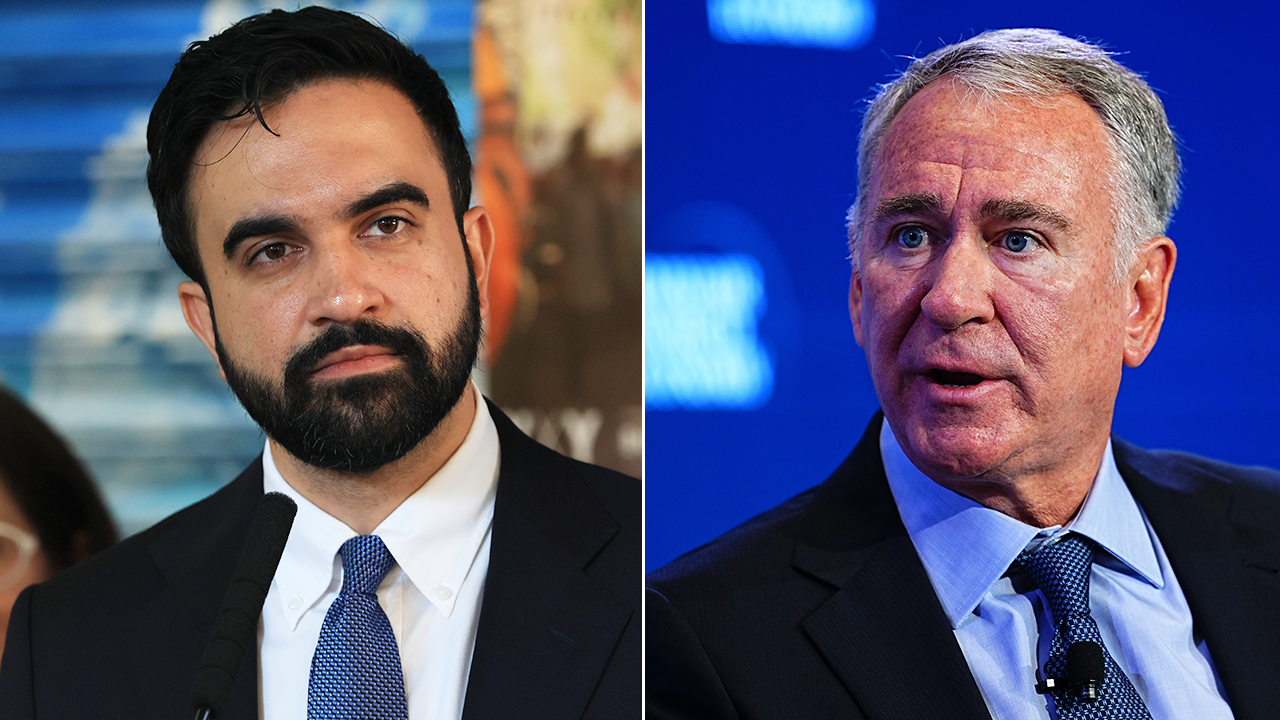
Romer Debbas managing partner Pierre Debbas rips the New York City mayor over plans for the Big Apple on ‘Varney & Co.’
Citadel founder and CEO Ken Griffin described New York City Mayor Zohran Mamdani’s “tax the rich” video targeting him as a “creepy and weird” political advertisement.
Speaking at the Milken Conference in Los Angeles on Tuesday, Griffin said Mamdani’s “frightening” video reaffirmed his decision to “double down” on business in Miami.
“Mamdani has made it very clear—New York does not welcome success,” Griffin said during the panel.
MAMDANI’S CLASH WITH BILLIONAIRE PUTS NYC STREET FOOD VENDORS IN THE CROSSHAIRS
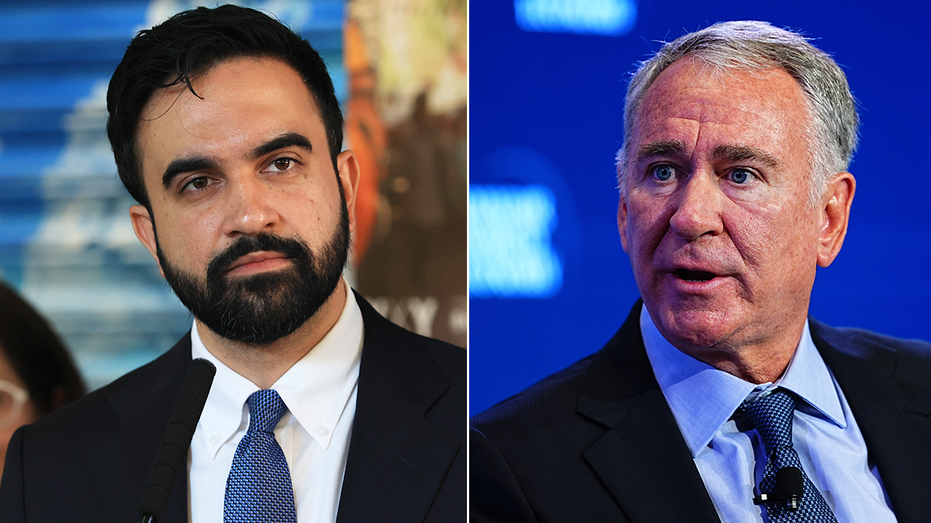
On April 15 (Tax Day), NYC Mayor Zohran Mamdani posted a video outside Ken Griffin’s Manhattan penthouse promoting a new “tax-the-rich” policy. (Spencer Platt/Aaron Schwartz/Bloomberg/Getty Images / Getty Images)
On April 15, Mamdani posted a video highlighting Griffin’s property while announcing a new pied-à-terre tax.
The video shows Mamdani—who has pledged to raise taxes on wealthy New Yorkers—standing outside Griffin’s 24,000-square-foot property. Griffin purchased the home in 2019 for $238 million, the most expensive residential sale in U.S. history.
“This is an annual fee on luxury properties worth more than $5 million whose owners do not live full-time in the city—like this penthouse, which hedge fund CEO Ken Griffin bought for $238 million,” Mamdani said while announcing the proposal.
Following the video, Citadel COO Gerald Beeson suggested that plans for the firm’s skyline project at 350 Park Avenue could be reconsidered.
NEW HAMPSHIRE GOVERNOR RECRUITS NYC BUSINESS OWNERS FLEEING MAMDANI ‘REGIME’

New York City Mayor Zohran Mamdani has previously criticized billionaires, including Ken Griffin, whom he recently thanked for supporting police. (Spencer Platt/Getty Images / Getty Images)
“We are about to commence the redevelopment of 350 Park Avenue, creating 6,000 highly paid construction jobs and supporting more than 15,000 permanent jobs in Midtown New York,” Beeson wrote in an April 23 memo to employees.
“The project—if we move forward—will involve more than $6 billion in spending,” he added.
Griffin said Tuesday that the project’s future remains “a point of discussion” within the company.
Mayor Mamdani’s office did not immediately return Fox Business’ request for comment.
Citadel is currently building a new headquarters in Miami. Griffin told the Milken audience that the tower’s design is being revised to “make it bigger,” adding that Florida’s leadership has demonstrated stronger support for pro-business policies.
Griffin, who founded Citadel and Citadel Securities, previously moved both firms from Chicago to Miami following the COVID-19 pandemic. He has frequently criticized leadership in Chicago and the broader state of Illinois.

Citadel Founder and CEO Ken Griffin called New York City Mayor Zohran Mamdani’s viral video singling out his Manhattan penthouse while announcing a new tax a “personal attack” and a “profound lack of judgment.” (Denis Balibouse/Reuters / Reuters)
On Tuesday, Griffin said his dispute with Mamdani is “triggering the trauma” he “experienced in Chicago.”
MAHER DEFENDS CAPITALISM AS BETTER THAN ‘REVERSE,’ CALLS OUT MAMDANI’S SOCIALIST BELIEFS
With an estimated net worth of $51 billion, Griffin ranks among the world’s 35 richest people. He has also said Mamdani’s video reflects a “profound lack of judgment.”
Speaking at the Norges Bank Investment Management 2026 Investment Conference in Oslo, Griffin criticized what he described as the “demonizing” of business leaders.

New York Mayor Zohran Mamdani speaks during a press conference at Staten Island University Hospital Community Park on April 27, 2026, in New York City. (Michael M. Santiago/Getty Images / Getty Images)
GET FOX BUSINESS ON THE GO BY CLICKING HERE
“What upset me was the personal attack,” Griffin said. “You were at the White House Correspondents’ Dinner on Saturday, where they tried to assassinate the president. Not far from where I live in New York is where the CEO of UnitedHealthcare was assassinated.”
FOX Business’ Louis Casiano contributed to this report.
Meta director Peggy Alford sells $251,342 in stock
Business
GlobalFoundries Stock Is Upgraded Ahead of Earnings. It’s a Big Week for the Chip Manufacturer.

GlobalFoundries Stock Is Upgraded Ahead of Earnings. It’s a Big Week for the Chip Manufacturer.

A ‘Mornings with Maria’ panel assesses the oil markets amid the conflict with Iran, Jamie Dimon’s warning of risks in the credit and debt markets and earnings season.
U.S. financial regulators are proposing to switch required filings for publicly traded companies from quarterly reporting to semiannual.
The Securities and Exchange Commission on Tuesday released its amended proposal for optional semiannual reporting for companies on Wall Street. SEC officials say the change in frequency of reporting won’t impact the type of information disclosed publicly. Companies will be expected to file a new form called Form 10-S in lieu of the traditional Form 10-Q if they choose to report twice a year.
SEC Chairman Paul Atkins says this proposal will allow for more freedom between companies and investors.
BAY AREA BANKER WANTS TO SWAP HIS $8M ESTATE FOR AI COMPANY STOCK

SEC Chairman Paul Atkins says this proposal will allow for more freedom between companies and investors. (Michael Nagle/Bloomberg via Getty Images)
“The rigidity of the SEC’s rules has prevented companies and their investors from determining for themselves the interim reporting frequency that best serves their business needs and investors,” Atkins said in a statement. “Today’s proposed amendments, if ultimately adopted, would provide companies with increased regulatory flexibility in this regard.”

The SEC attempted to ease the concerns of investors, saying corporations can still hold quarterly earnings calls even if they choose semiannual reporting. (iStock)
However, some investors are skeptical about how this benefits anyone other than the companies.
Gary Kaltbaum, president of Kaltbaum Capital Management and a FOX Business contributor, said this will pave the way for less clarity for investors to make decisions on Wall Street.
COULD S&P 500 ETFS ALONE FUND YOUR ENTIRE RETIREMENT?
“The No. 1 reason why stocks do well is because of their earnings reports,” Kaltbaum said. “And now that you’re going to separate it by six months, that’s tough going for investors to try and figure out what’s going on with a company when you’re not going to hear from them in six months.”

Under the current proposal, companies will be given the opportunity to opt-in for semiannual reporting at the start of every fiscal year. (Michael Nagle/Bloomberg via Getty Images)
The SEC attempted to ease the concerns of investors, saying corporations can still hold quarterly earnings calls even if they choose semiannual reporting. The Wall Street regulator says they’re not mutually exclusive, but critics are skeptical that companies would bother with quarterly earnings calls since they don’t have to make public disclosures as frequently.
US ETF ASSETS UNDER MANAGEMENT TO MORE THAN DOUBLE TO $25T BY 2030, CITIGROUP SAYS
Under the current proposal, companies will be given the opportunity to opt-in for semiannual reporting at the start of every fiscal year. If companies don’t like the new reporting practices, then they can opt back into quarterly reporting the following fiscal year.
The SEC says the public comment period will be open for the next 60 days after publishing the proposal in the Federal Register.

Fast moving industries are make it or break it. Worse, they are constantly shifting. Who the biggest player is in the market can change from one day to the next.
A new tech, a new tool, a new game, all of this can shake up who is successful and who is not. More importantly for industries that are regulated, like the gaming industry, new regulations can immediately drop the biggest fish off the map, while those who put player satisfaction and safety at the forefront rise to the top.
Longevity is difficult to maintain in a fast-moving industry, especially a digital industry where updates can roll out instantly. You don’t need to restructure your supply chain or wait for a product or service to reach your customers. The only problem with this instant delivery is that your competitors also have access to that same level of quick-fire delivery.
That’s why longevity is all about standing out and delivering on a specific experience again and again:
The Importance of Theme and Niche in a Fast-Moving Market
Digital industries shift fast, and not only on the platforms themselves. Sometimes the biggest challenge is both how many competitors there are, and also how many newcomers are arriving on the scene. This is a challenge both for the existing providers and the newcomers themselves.
That’s why one of the top ways that platforms are working to maintain the long-term interest of their players is by building their platform around a visual niche. This is particularly important in industries like iGaming, where platforms can look nearly identical from one provider to the next.
In this sort of environment, brands like River Belle, which have been built around a specific visual niche (in this case, a luxury vintage steamer ship), are leading the way. Not only have they built a memorable, striking, and engaging niche, but they have also followed it up by putting their live casino game experiences at the forefront.
New Games, New Experiences
Digital platforms have the benefit of being able to see the numbers in detail. They know exactly where their audience is spending their time, what games they’re playing, for how long, and what’s most popular.
That’s why they can easily keep the top playing games, restructure those that have potential, and still release new games and variations that keep players coming back. More importantly, those analytics can actually be used to predict future game success by understanding current appetites. This approach keeps the platform fresh while also avoiding the alienation that can come from taking down a top-performing game by mistake.
Safety, Safety, Safety
When there are so many competitors and the industry moves fast, being reliable is the easiest way for platforms to ensure their longevity. Using the latest security features to both reduce friction in the sign-up and deposit process, while also delivering secure and timely withdrawals, boosts trust and the overall experience. When competitors are screaming at the top of their lungs for attention, the options may seem endless, but customers will still ultimately go where they know they are safe. Being scammed and fooled is every digital customer’s top fear, so providing that safety and assurance is one of the last top ways digital platforms are maintaining their long-term success.

Bitcoin Breakout! The CRYPTO TRAP Is OFFICIALLY SET

Westhoughton High School celebrates different cultures

Why It Remains a Core Asset in a Changing Market

Manchester United reach agreement with Casemiro over contract clause amid transfer speculation

US brings back mandatory military draft registration

Steven Gerrard disagrees with Gary Neville over ‘shock’ Chelsea and Arsenal claim | Football


-

 NewsBeat2 days ago
Channel 5 – All Creatures Great and Small series 7 new post
-
 Tech4 days ago
Trump’s 25% EU auto tariff breaches Turnberry Agreement that also covers semiconductors and digital trade
-
 Sports4 days ago
Paul Scholes issues Marcus Rashford reality check as agreement emerges over Man United star
-
 Business6 days ago
Tesla Officially Registers Elon Musk’s Stock: What Investors Need to Know
-

 Business7 days ago
Barclay Brothers Avoid Bankruptcy: HSBC Drops High Court Petitions After IVA Deal
-

 Entertainment6 days ago
Celebrities Who Are Attending the 2026 Met Gala Event
-

 Entertainment4 days ago
Met Gala 2026 Rumored Guest List Is Turning Heads
-
 Entertainment6 days ago
Insider Claims Reason Behind Key & Peele Split
-

 Tech6 days ago
Texas Instruments made a new flagship graphing calculator: the TI-84 Evo
-

 Business5 days ago
Two Powerball Tickets Split $143 Million Jackpot in Indiana and Kansas
-

 Business6 days ago
Strait of Hormuz Remains Heavily Restricted on April 29 Amid Iran Conflict
-

 Crypto World6 days ago
Meta (META) starts stablecoin payout to creators in Circle’s USDC on Polygon, Solana via Stripe
-
Business2 days ago
Winning Numbers Drawn as Jackpot Resets to $20 Million
-
 Crypto World5 days ago
CoreWeave (CRWV) Stock Climbs 8% Despite $45M Insider Share Dump
-
Business5 days ago
Strait of Hormuz Blockade Persists Amid US-Iran Standoff, Sending Oil Prices Soaring
-

 Entertainment4 days ago
Kylie Jenner Hit With Second Lawsuit From Ex-Housekeeper
-
 Crypto World6 days ago
Securitize and Computershare Enable Tokenized Equity Issuance for Over 25,000 U.S.-Listed Stocks
-

 Sports6 days ago
Saudi Arabia set to withdraw LIV Golf funding after 2026 season, per reports
-
 Sports4 days ago
David Benavidez responds to team Canelo saying the fight will never happen
-

 Crypto World6 days ago
Gibraltar Proposes Tokenized Funds Regulation to Bolster Compliance
You must be logged in to post a comment Login