
Business
Meta Installs Software to Track US Employees’ Mouse Movements and Keystrokes for AI Training

NEW YORK — Meta Platforms Inc. is rolling out new tracking software on the computers of its U.S.-based employees to capture mouse movements, clicks and keystrokes, using the data to train artificial intelligence models aimed at building autonomous AI agents capable of performing everyday work tasks, according to internal memos obtained by Reuters.

The tool, known as the Model Capability Initiative or MCI, will operate on a curated list of work-related applications and websites. It will also take occasional snapshots of screen content to provide context for the interactions, a staff AI research scientist posted Tuesday in an internal channel for the company’s Meta SuperIntelligence Labs team.
Meta’s push reflects the intensifying race among tech giants to develop more capable AI agents that can navigate computer interfaces like humans — selecting dropdown menus, using keyboard shortcuts and handling multi-step digital workflows. Current models often struggle with these practical interactions despite advances in language understanding.
“If we’re building agents to help people complete everyday tasks using computers, our models need real examples of how people actually use them — things like mouse movements, clicking buttons, and navigating dropdown menus,” Meta spokesperson Andy Stone said in a statement. “To help, we’re launching an internal tool that will capture these kinds of inputs on certain applications to help us train our models.”
The initiative forms part of a broader effort rebranded as the Agent Transformation Accelerator, according to a separate memo from Meta CTO Andrew Bosworth. Bosworth told staff the company aims for a future where AI agents primarily handle routine work while humans direct, review and refine their performance. The data collected will help agents learn to identify when human intervention occurs and improve autonomously in subsequent attempts.
Meta emphasized that the tracking data will not be used for employee performance evaluations or any purpose beyond AI model training. The company said safeguards are in place to protect sensitive content, though specifics were not detailed in the memos.
The announcement quickly sparked internal debate and external backlash. Employees expressed concerns about privacy, surveillance and the long-term implications for job security in discussions on internal forums. Some viewed the program as turning workers into unwitting trainers for systems that could eventually automate their roles. Online reactions ranged from accusations of dystopian workplace monitoring to pragmatic acceptance that high-quality interaction data remains scarce for training reliable agents.
Privacy advocates and labor groups raised questions about consent, data minimization and potential misuse. While Meta limits the tool to U.S.-based full-time employees and contingent workers on work devices and approved applications, critics worry about the precedent for broader workplace surveillance in the AI era. Similar tracking tools have drawn scrutiny at other companies, though Meta’s explicit link to training replacement-level agents has amplified the reaction.
The move comes as Meta ramps up its massive AI investments. The company plans to spend roughly $140 billion on AI infrastructure and related efforts in 2026, nearly double the previous year’s outlay. CEO Mark Zuckerberg has repeatedly positioned AI as central to the company’s future, from improving content recommendations on Facebook and Instagram to developing advanced agents that could transform productivity tools.
Building effective computer-using agents requires vast amounts of real-world demonstration data showing not just what actions to take but the precise sequences of mouse clicks, keystrokes and navigation decisions humans make. Public web data or synthetic examples often fall short in replicating the nuances of enterprise software, internal tools and dynamic interfaces. By harvesting anonymized interaction data from its own workforce, Meta aims to close that gap without relying solely on expensive human annotation or simulated environments.
Industry experts note that Meta is not alone in pursuing this approach. Several tech firms and AI startups are exploring ways to capture human-computer interaction data, either through voluntary contributions, synthetic generation or controlled monitoring. However, Meta’s scale — with tens of thousands of U.S. employees using diverse internal systems — offers a rich, varied dataset that could accelerate progress.
The timing coincides with Meta’s aggressive hiring in AI research while simultaneously managing efficiency initiatives across other parts of the business. Reports have circulated about potential layoffs in non-AI divisions, adding to employee anxiety that the tracking program could contribute to workforce reductions as agents mature.
Meta has a history of heavy internal data collection for product improvement, from user behavior on its social platforms to developer interactions with its tools. The company maintains strict policies on data handling and has faced past regulatory scrutiny over privacy practices, leading to billions in fines and settlements. Officials insist the new tool includes protections against capturing or retaining personal or highly sensitive information.
Still, the rollout highlights tensions in the AI development race. On one side, the need for high-fidelity training data to create genuinely useful agents; on the other, growing societal and employee discomfort with pervasive monitoring. European privacy regulations such as GDPR impose stricter limits on workplace surveillance, potentially complicating similar initiatives for Meta’s international staff.
As AI agents evolve, their ability to autonomously handle tasks like scheduling, data entry, report generation or customer support workflows could reshape white-collar work. Meta’s internal memos frame the effort positively as empowering employees to focus on higher-value work by offloading routine activities. Critics counter that it risks accelerating job displacement without adequate transition support.
The program’s effectiveness will depend on the quality and diversity of the captured data. Mouse trajectories, click patterns and keystroke dynamics provide rich signals about intent, hesitation and workflow efficiency that text-based logs alone cannot convey. Occasional screen snapshots add crucial context, such as the layout of specific applications or the content being manipulated.
Meta has not disclosed technical details about data storage, anonymization techniques or deletion policies. Employees were informed of the rollout but it remains unclear whether participation is mandatory or if opt-out options exist for certain roles.
The development underscores how Big Tech companies are increasingly turning inward for AI training resources as external data sources face legal challenges, quality issues or saturation. Similar efforts have included using customer service transcripts, code repositories and internal documents, but granular interaction data represents a newer frontier.
For now, the Model Capability Initiative is limited to U.S. employees and specific applications. Its success could influence whether Meta expands the approach or inspires competitors to follow suit. As the technology industry grapples with the dual challenges of advancing AI capabilities and addressing ethical concerns around labor and privacy, Meta’s experiment will be closely watched.
Company leaders have signaled confidence that transparent communication and strict boundaries will alleviate concerns. Whether the initiative ultimately boosts AI performance enough to justify the surveillance tradeoff remains an open question that will likely be tested in the coming months as agents trained on the new data enter internal testing.
In the broader context of 2026’s AI boom, Meta’s decision reflects a pragmatic — if controversial — step toward solving one of the field’s persistent bottlenecks: teaching machines not just what to do, but exactly how humans do it in the messy reality of daily digital work.

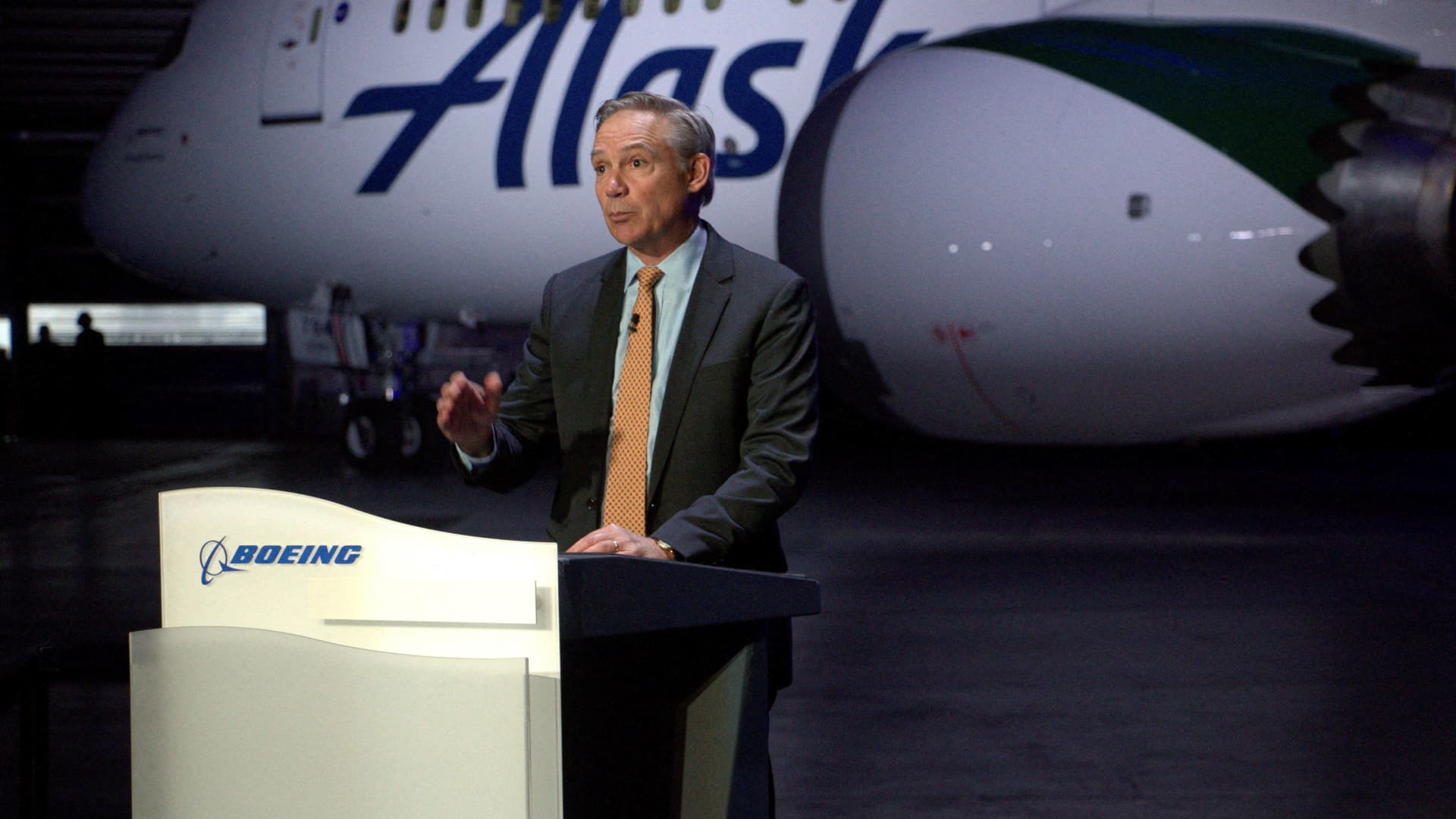

Boeing reported a smaller than expected loss for the first quarter, with improvements across its businesses, including its key commercial aircraft unit, as the manufacturer tries to stem years of losses.
Here’s how Boeing performed in the first quarter, compared with analysts’ estimates compiled by LSEG:
- Loss per share: 20 cents adjusted vs. a loss of 83 cents expected
- Revenue: $22.22 billion vs. $21.78 billion expected
Sales rose 14% to $22.22 billion in the first three months of the year. The company narrowed its net loss in the first three months of the year to $7 million, or 11 cents a share, down from a loss of $31 million, or 16 cents a share, a year earlier. Adjusting for one-time items, Boeing posted a loss of 20 cents a share.
“Though we’ve faced some challenges, I’m proud of how our team has pulled together and worked through them to keep us on plan for the year,” CEO Kelly Ortberg told employees in a note on Wednesday. “When we work as a team, it’s incredible what we can do as a company.”
Ortberg took the reins in August 2024, tasked with course-correcting for Boeing after years of safety and manufacturing crises that have cost the company billions of dollars.
Boeing said it still expects certification of the long-delayed 737 Max 7 and Max 10, the smallest and largest of the best-selling Max family aircraft, later this year, with deliveries starting in 2027.
Boeing’s commercial aircraft unit handed over 143 airplanes in the first quarter, up 10% from a year earlier. The unit, Boeing’s largest, posted revenue $9.2 billion, up 13%, though it still posted a loss from operations.
Boeing has been ramping up production of its planes, and its 737 Maxes are rolling out at about 42 a month. Further increases would require Federal Aviation Administration approval, a requirement after a near-catastrophic blowout of a fuselage door plug in January 2024.
The company’s defense business revenue rose 21% to $7.6 billion, and its services business revenue increased 6% from 2025, to $5.37 billion in the first quarter.
Business
Mystery Deepens as 11 US Nuclear and Space Scientists Die or Vanish, Sparking Federal Probe

WASHINGTON — Federal authorities are investigating a string of deaths and disappearances involving at least 11 American scientists and researchers with ties to sensitive nuclear, aerospace and space defense programs, as lawmakers warn the pattern could signal a national security threat and fuel speculation of coordinated foul play.
The cases, spanning from 2022 to early 2026, include scientists from NASA’s Jet Propulsion Laboratory, Los Alamos National Laboratory and other facilities linked to classified research. Some died under unexplained circumstances, while others vanished without trace, prompting the FBI to lead a coordinated review alongside the Department of Energy, Department of Defense and NASA.
House Oversight Committee Chairman James Comer, R-Ky., said Monday the panel has demanded briefings from the four agencies, expressing concern that “something sinister could be happening.” Comer noted the individuals had access to highly sensitive information involving rocket technology, nuclear secrets and advanced aerospace programs, some connected to commercial space efforts by companies including SpaceX and Blue Origin.
Among the cases drawing scrutiny is the 2023 death of Michael David Hicks, a longtime NASA Jet Propulsion Laboratory scientist who worked nearly 25 years on projects including asteroid deflection technology. His passing was followed by the death of Frank Maiwald, a 61-year-old JPL space research specialist, in Los Angeles in 2024. Monica Jacinto Reza, 60, director of JPL’s Materials Processing Group and involved in advanced alloy research, disappeared while hiking in a Los Angeles-area forest in June 2025.

Other notable incidents include the fatal shooting of MIT nuclear physicist Nuno Loureiro outside his Massachusetts home and the homicide of Caltech astrophysicist Carl Grillmair. Retired Air Force Maj. Gen. William Neil McCasland, who commanded research labs tied to advanced propulsion and materials, vanished from his New Mexico home in early 2026. Additional disappearances involve Los Alamos-linked personnel, including administrative assistant Melissa Casias, contractor Steven Garcia and property custodian Anthony Chavez for the National Nuclear Security Administration.
A pharmaceutical scientist with indirect ties to research networks, Jason Thomas, was also found dead. Some reports reference a total of 11 individuals when including earlier or related cases, though exact counts vary slightly across agencies as investigations overlap.
The FBI confirmed Tuesday it is “spearheading the effort to look for connections” among the missing and deceased scientists. Officials emphasized that while the cases have generated public attention and online speculation, no definitive evidence has established a single coordinated cause. Circumstances differ: some involve apparent homicides, others unexplained deaths, and several remain active missing persons investigations.
White House Press Secretary Karoline Leavitt said the administration is conducting a “holistic review” and vowed to leave “no stone unturned.” Energy Secretary Chris Wright acknowledged the Department of Energy’s involvement, noting many nuclear security scientists fall under its purview, and confirmed a coordinated investigation across government branches.
Lawmakers from both parties have expressed alarm over potential national security implications. The affected researchers worked on technologies with dual-use applications, including propulsion systems, materials science for extreme environments and nuclear-related programs. Some had exposure to classified aspects of space defense, satellite technology and even programs studying unidentified anomalous phenomena, according to congressional letters.
Social media has amplified theories ranging from foreign espionage by state actors to internal cover-ups or targeted eliminations tied to breakthroughs in sensitive fields. Speculation has linked the cases to broader debates over UAP disclosure, advanced energy systems and competition in the commercial space sector. However, officials and experts caution against jumping to conclusions, noting that scientists in high-stress fields with security clearances can face personal challenges, accidents or unrelated crimes.
A former nuclear official told reporters that the probe could uncover “crazy stuff” but stressed the need for thorough, evidence-based analysis rather than conspiracy narratives. Independent experts in intelligence and security have pointed out that while the cluster is unusual, proving causation requires forensic links, timeline overlaps and motive evidence that current public information does not fully provide.
The timing has heightened concerns. Several cases clustered in the Los Angeles area near JPL and Caltech, while others center in New Mexico around Los Alamos, a key nuclear research hub. Disappearances of personnel with security clearances raise questions about potential insider threats, data exfiltration or external recruitment attempts by adversaries.
NASA stated it is cooperating fully with federal partners and reviewing internal security protocols for personnel involved in sensitive missions. The agency has not commented on specific individuals but noted that employee safety remains a priority.
The House Oversight Committee’s demand for information highlights possible gaps in inter-agency information sharing. Letters sent to the FBI, Pentagon, DOE and NASA seek details on any common threads, including shared projects, clearances or external contacts.
Public reaction has been intense, with viral posts and cable news segments amplifying the story. Some commentators draw parallels to historical patterns of suspicious scientist deaths during the Cold War or in other nations, though direct comparisons remain speculative.
Authorities urge patience as investigations proceed. Local law enforcement in California and New Mexico continue active searches and probes into individual cases, sharing findings with federal teams. Forensic reviews, digital analysis of communications and background checks on potential suspects or witnesses are underway.
For families of the missing and deceased, the lack of answers has been agonizing. Relatives of Reza and McCasland have made public appeals for information, while others have requested privacy amid the heightened scrutiny.
The broader context includes intensifying global competition in space and nuclear technologies. China and Russia have accelerated their own programs, raising espionage risks. U.S. officials have previously warned about intellectual property theft in aerospace and energy sectors.
Despite the mystery, officials stress that most scientist deaths and disappearances historically prove unrelated upon full investigation. Factors such as age, health issues, travel in remote areas or personal circumstances often explain individual cases once thoroughly examined.
Still, the sheer number and professional overlaps have elevated the matter to a priority national security review. Updates are expected in coming weeks as the FBI and congressional committees receive briefings.
As the probe deepens, questions linger about whether these tragedies represent coincidence amplified by public attention or something more deliberate targeting expertise critical to America’s technological edge. For now, the mystery surrounding the 11 scientists continues to unsettle Washington and the scientific community alike.
Check out what’s clicking on FoxBusiness.com.
Trump Media & Technology Group on Tuesday named an interim chief executive as Devin Nunes stepped aside, marking a leadership transition at the parent of Truth Social following recent board departures and steep financial losses in 2025.
The company appointed longtime advisor Kevin McGurn as interim CEO effective immediately, succeeding Nunes, who has led the company since 2022. McGurn brings more than two decades of experience across media, telecommunications and advertising technology, according to the company.
The leadership shift comes as Trump Media continues to report significant losses relative to its revenue. The company posted a net loss of more than $712 million in 2025 – on roughly $3.7 million in revenue, according to its annual filing with the Securities and Exchange Commission.
GOP SENATOR WILL BLOCK WARSH NOMINATION UNTIL ‘BOGUS’ POWELL PROBE ENDS
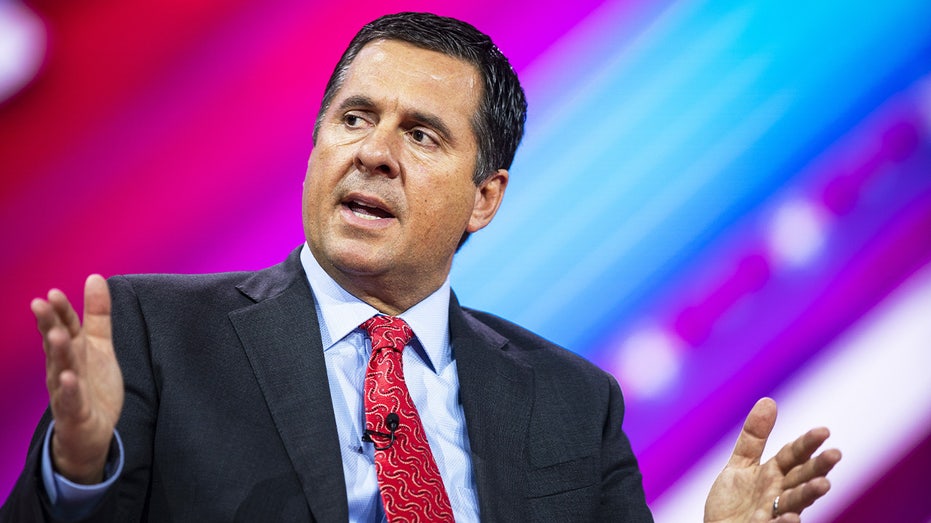
Devin Nunes served as CEO of Trump Media since 2022. (Al Drago/Bloomberg via Getty Images)
Financial disclosures show expenses far outpaced revenue, including more than $576 million in operating costs. A substantial portion of the losses was tied to write-downs and losses related to digital assets, highlighting the company’s exposure to volatile investment areas.
“I want to thank Devin Nunes for his dedicated service to the Company over the past four years, and congratulate Kevin McGurn on his appointment as Interim CEO,” Donald Trump Jr., a board member, said in a statement.

President Donald Trump walks toward reporters before answering questions prior to boarding Air Force One on April 10, 2026. (Win McNamee/Getty Images)
Nunes said the transition comes as the company enters a new phase, adding it was “an appropriate time” for McGurn to take over leadership while he shifts focus to other roles, including serving as chairman of the president’s Intelligence Advisory Board.
| Ticker | Security | Last | Change | Change % |
|---|---|---|---|---|
| DJT | TRUMP MEDIA & TECHNOLOGY GROUP CORP | 9.82 | -0.38 | -3.73% |
The leadership change follows a series of recent board departures disclosed in regulatory filings. Former U.S. Trade Representative Robert Lighthizer resigned from the board in March, and director Eric Swider stepped down earlier this month. The company said in both cases the exits were not due to any dispute with management.
TRUMP MEDIA BACKS 5 AMERICA-FOCUSED ETFS
Trump Media is the parent company of Truth Social. (iStock)
Trump Media, which operates the Truth Social platform along with its streaming service Truth+ and fintech brand Truth.Fi, has sought to expand beyond social media into areas including financial services and digital assets as it looks to grow its business.
CLICK HERE TO GET FOX BUSINESS ON THE GO
The company has framed the leadership transition as part of its next phase, with McGurn expected to guide operations and strategic initiatives moving forward.


Strong demand, tightening inventories drive gains in nonfat dry milk and whey.

Royal Mail has put a £500 million price tag on rescuing its battered reputation for on-time delivery, unveiling a five-year recovery plan that will see Saturday second-class post wound down from May and thousands of part-time posties asked to take on full-time hours.
The pledge marks the first substantive operational reset under Czech billionaire Daniel Kretinsky, whose EP Group completed its £3.5 billion take-private of parent group International Distributions Services last year, lifting Britain’s letters monopoly off the London Stock Exchange after more than a decade as a quoted company.
Under the blueprint, the 510-year-old postal operator will spend £100 million a year creating the equivalent of 3,000 full-time delivery roles, achieved largely by persuading roughly 6,000 part-timers to lift their average week to 35 hours. The company has secured trade union backing for the package, no small feat in a business that has weathered some of the most bruising industrial disputes in recent British corporate history.
The numbers behind the overhaul lay bare just how far standards have slipped. Against a regulatory benchmark of delivering 93 per cent of first-class mail the next day, Royal Mail is currently managing 77 per cent, leaving nearly one letter in four arriving late. Second-class performance is little better, with 91 per cent landing on doormats within three days against a target of 98.5 per cent.
Ofcom has already softened the rulebook in the wake of the Kretinsky takeover, easing the universal service obligation to permit non-first-class items to be delivered on alternate days and trimming the regulatory targets to 90 per cent for next-day first-class and 95 per cent for three-day second-class. Royal Mail says it will hit those revised thresholds within twelve months of the new regime bedding in.
For SME owners and finance directors who have long complained that unreliable post is gumming up invoicing, contract delivery and customer correspondence, the proof will be in the doormat. The company’s own diagnosis pinpoints “completion rates of delivery routes” as the central failure, with an estimated 8 per cent of rounds either under-resourced or too unwieldy to be finished within the working day. A targeted shake-up of working practices is planned at the weakest performers among Royal Mail’s 1,200 delivery offices, with fresh recruitment focused on Oxford, Cambridge and London, where staff shortages have been most acute.
The pay backdrop is also instructive. Posties hired since 2022 are on the equivalent of £27,200 a year, around £1,800 below the £29,000 paid to longer-serving colleagues, a two-tier structure that has fuelled retention difficulties and which the move to fuller hours is designed, in part, to mitigate.
Alistair Cochrane, chief executive of Royal Mail, struck a contrite note. “We recognise our service hasn’t always been the standard our customers rightly expect and we’re determined to do better,” he said. His chairman went further when grilled by MPs in recent weeks, with Mr Kretinsky telling a parliamentary inquiry: “We are sorry for every letter that has arrived late,” before describing operations as “not perfect but not catastrophic”.
The political optics matter. The universal service obligation, baked in when David Cameron’s coalition floated Royal Mail in 2013, has been the convenient scapegoat for years of underperformance. With Ofcom now having loosened that corset, the excuses are wearing thin. Of Royal Mail’s 130,000-strong workforce, 80,000 are front-line delivery staff, and it is on their rounds that Mr Kretinsky’s £500 million bet will ultimately stand or fall.
For Britain’s small businesses, many of which still rely on the post for everything from cheques to compliance documents, the message from Mount Pleasant is one of cautious optimism. Whether the new owners can succeed where successive management teams have stumbled remains the open question.

Amy Ingham
Amy is a newly qualified journalist specialising in business journalism at Business Matters with responsibility for news content for what is now the UK’s largest print and online source of current business news.

LOS ANGELES — With less than two months until the 2026 FIFA World Cup kicks off on American soil, organizers are grappling with unexpectedly sluggish ticket sales for the host nation’s opening match, as high prices appear to be deterring fans from snapping up seats for the United States men’s national team’s June 12 clash against Paraguay at SoFi Stadium.

An internal document dated April 10 and distributed to local organizers showed only 40,934 tickets purchased for the marquee Group D opener, according to a report by The Athletic. That figure lags behind other matches at the same venue, including 50,661 tickets sold for Iran versus New Zealand three days later. SoFi Stadium has a listed World Cup capacity of 69,650, leaving a significant number of seats potentially available just weeks before the tournament begins.
FIFA has not publicly disputed the sales numbers but has declined to provide detailed clarification on whether the figures include hospitality packages or other non-general admission tickets. The governing body announced Tuesday a fresh round of ticket inventory for all 104 matches would go on sale starting Wednesday at 8 a.m. PDT, signaling an effort to boost demand across the board.
When tickets first went on general sale in October following the draw, the U.S.-Paraguay match was priced as the third-most expensive fixture of the entire tournament, behind only the final and one semifinal. Category 1 tickets carried a price tag of $2,730, Category 2 tickets $1,940 and Category 3 tickets $1,120. Those premium prices have remained frozen even as other matches saw adjustments or stronger uptake.
Fans and analysts have pointed to the steep costs as the primary culprit. Many supporters expressed sticker shock on social media and forums, with some opting instead for resale markets where secondary prices have also softened in recent weeks. American Outlaws, the largest U.S. supporters group, voiced frustration over pricing that they say prices out average families and dedicated fans.
The slow sales contrast sharply with the excitement surrounding the expanded 48-team tournament co-hosted by the United States, Canada and Mexico. The U.S. opener was billed as a glamorous curtain-raiser in the glittering SoFi Stadium, home to the NFL’s Los Angeles Rams and Chargers. Yet demand has not matched the hype, raising questions about FIFA’s pricing strategy and a possible miscalculation of the USMNT’s domestic drawing power for a group-stage game against a relatively modest opponent like Paraguay.
Paraguay, ranked outside the top 20 by FIFA, does not bring a large traveling fan base to Los Angeles, further limiting organic demand. In contrast, matches featuring larger diaspora communities or more attractive matchups have moved tickets faster in some host cities.
Broader ticket sales for the 2026 World Cup have shown uneven patterns. While high-profile later-stage games and certain group fixtures with strong international interest have performed well, several opening-round matches — including some not involving host nations — have also lagged. FIFA has responded by launching additional sales phases and introducing new inventory, but critics argue the organization has been reluctant to lower prices on premium categories for high-visibility U.S. games.
The situation highlights ongoing challenges for soccer in the United States. Despite growing popularity of Major League Soccer, the English Premier League and domestic interest in the USMNT during major tournaments, filling massive NFL-caliber venues for every match remains difficult. The USMNT has historically drawn strong crowds for friendlies and Gold Cup games in smaller or mid-sized stadiums, but scaling that enthusiasm to 70,000-seat arenas at premium pricing has proven tougher.
U.S. Soccer Federation officials have expressed confidence that sales will accelerate as the tournament nears and excitement builds. “We’re focused on delivering an unforgettable experience for fans,” a spokesperson said, noting that hospitality and corporate packages may account for some of the discrepancy in reported general sales figures.
Still, the optics are not ideal for a host nation less than 60 days from its opening match. Resale platforms show thousands of tickets listed for the U.S.-Paraguay game, with some Category 1 seats trading below face value in recent days. That secondary market activity suggests FIFA may need to consider further incentives or adjustments to avoid a half-empty stadium for one of the most anticipated games of the group stage.
The pricing controversy is not isolated. Earlier sales phases were marred by website glitches, long virtual queues and frustration over dynamic pricing elements. FIFA has defended its approach by noting that average ticket prices across the tournament remain comparable to or lower than recent World Cups when adjusted for inflation and venue scale. However, the premium positioning of the U.S. opener has drawn particular backlash.
Local organizers in Los Angeles, including representatives from SoFi Stadium and regional tourism bodies, are monitoring the situation closely. A strong turnout for the opener could set a positive tone for the dozens of matches scheduled across California and other U.S. venues. Conversely, visible empty seats could dampen the atmosphere and generate unfavorable headlines as the tournament launches.
The USMNT, under coach Mauricio Pochettino, enters the World Cup with rising expectations after solid performances in recent qualifying and friendlies. Players and staff have avoided commenting directly on ticket sales, focusing instead on on-field preparations. Captain Tyler Adams emphasized the importance of fan support, saying, “Having the home crowd behind us from the first whistle will be massive.”
Paraguay coach has downplayed any advantage from potential lower attendance, calling the match a historic opportunity regardless of the crowd size.
As FIFA pushes the new sales phase, attention turns to whether lower-category tickets or promotional bundles can move the needle. Some analysts suggest that bundling with other group-stage matches or offering family packages could help, though FIFA has given no indication of major price reductions on the flagship U.S. game.
The broader 2026 World Cup ticketing picture remains mixed. Matches in cities with large immigrant communities from participating nations have generally sold better, while neutral or less glamorous fixtures have faced similar headwinds. Overall sales have reached millions of tickets, but the flagship U.S. opener’s performance has stood out as a concern.
With the tournament fast approaching, FIFA faces pressure to fill venues and create the electric atmosphere expected of soccer’s biggest event on home soil for the United States. The coming weeks will reveal whether pent-up demand or last-minute buying surges can close the gap, or if pricing strategy will leave a notable void in SoFi Stadium on June 12.
For now, the slow movement of tickets for the USMNT’s World Cup debut serves as an early test of how effectively the world’s most popular sport can captivate American audiences when ticket costs reach thousands of dollars per seat.

British businesses racing to embed artificial intelligence into their products risk leaving millions of disabled consumers behind unless they bring them into the design process from the outset, according to fresh research from the Business Disability Forum (BDF).
A poll of 1,032 disabled UK adults, conducted with Opinium, found that two in five (40%) believe designing, developing and testing AI products with disabled people is the single most effective way to make the technology genuinely accessible. The same survey identified more user-friendly interfaces (38%), better information about how AI can support disabled users (37%) and stronger onboarding support (36%) as further priorities.
For SMEs in particular, many of whom are weighing how, and how quickly, to integrate AI into customer-facing tools, the findings carry a clear commercial message. Roughly one in four people in the UK will experience disability at some point in their lifetime, representing a significant share of the consumer base and the workforce. Building products that fail to accommodate that audience is, increasingly, a competitive liability as well as an ethical one.
The research suggests considerable optimism about what the technology can deliver. More than a third of disabled adults said AI tools could help by improving communications (38%) and online experiences (34%). Other anticipated benefits included better access to healthcare information (33%), education (32%), digital content (32%), support for independent living (31%), improved customer experience (25%) and better access to employment (24%).
That optimism, however, is tempered by significant scepticism. One in five disabled UK adults (20%) said they did not believe AI products would help them at all, while a further 18% said they simply did not know, a sizeable trust gap that businesses will need to close if they want adoption to follow investment.
A parallel Opinium poll of 2,000 UK adults found broadly similar attitudes across the wider population, with 34% agreeing that co-designing AI products with disabled users would improve accessibility, evidence that inclusive design is increasingly viewed as a mainstream expectation rather than a niche concern.
Lara Davis, communications director at Business Disability Forum, said the stakes were considerable. “There is the potential for AI products and tools to make a radical and positive difference to disabled people’s lives, but there is also the risk that disabled people could be left behind,” she said. “With AI developing at pace and one in four people experiencing disability at some point in their lives, this is not an issue that we can afford to overlook.”
Davis urged firms to “actively consult with their disabled consumers to make sure they are involved in the design, development and testing of AI products”, alongside providing better access to information and advice about the technology more generally.
Lucy Ruck, who leads BDF’s Tech Taskforce, was equally direct. “AI has the capacity to transform lives, but only if we get inclusion right from the start,” she said. “Making sure that disabled people are active participants in shaping this technology isn’t just the right thing to do, it’s how we build AI that genuinely serves everyone.”
The forum has set out four recommendations for businesses and developers. They are urged to involve disabled people throughout the AI lifecycle, on the basis that inclusive design removes barriers for everyone, not only disabled consumers. They should publish clear information about the accessibility features of their AI products, in formats tailored to differing communication needs. Compatibility with assistive technology, on which many disabled users rely daily, must be tested rather than assumed. And ethical judgement and meaningful human oversight should be built into both the tools themselves and the content they generate, with inclusive training data used to reduce bias and stereotype.
For SME founders and product leaders, the message is one that has been heard before in other waves of digital transformation: retrofitting accessibility is invariably more expensive, and less effective, than designing it in from the start.

Jamie Young
Jamie is Senior Reporter at Business Matters, bringing over a decade of experience in UK SME business reporting.
Jamie holds a degree in Business Administration and regularly participates in industry conferences and workshops.
When not reporting on the latest business developments, Jamie is passionate about mentoring up-and-coming journalists and entrepreneurs to inspire the next generation of business leaders.
FOX Business’ Lauren Simonetti gives the latest market check and reports on Anheuser-Busch’s earnings success.
FIRST ON FOX – Anheuser-Busch is increasing its U.S. investment to $600 million over two years, expanding brewery capacity, worker training and veteran hiring as the beer giant leans further into domestic manufacturing, Fox News Digital learned.
“Anheuser‑Busch is doubling down on investing in our U.S. operations because we see strong, long-term growth opportunities right here at home,” Anheuser-Busch CEO Brendan Whitworth exclusively told Fox News Digital. “When we invest in our U.S. operations and expand training for our people and opportunities for our veterans, we strengthen communities and drive real economic prosperity.”
“This $600 million investment is about advancing American manufacturing, strengthening our supply chain, and creating lasting careers and a brighter future for U.S. workers,” Whitworth added.
HEINEKEN TO CUT UP TO 6,000 JOBS GLOBALLY, LOWERS PROFIT GROWTH FORECAST AMID INDUSTRY STRUGGLES
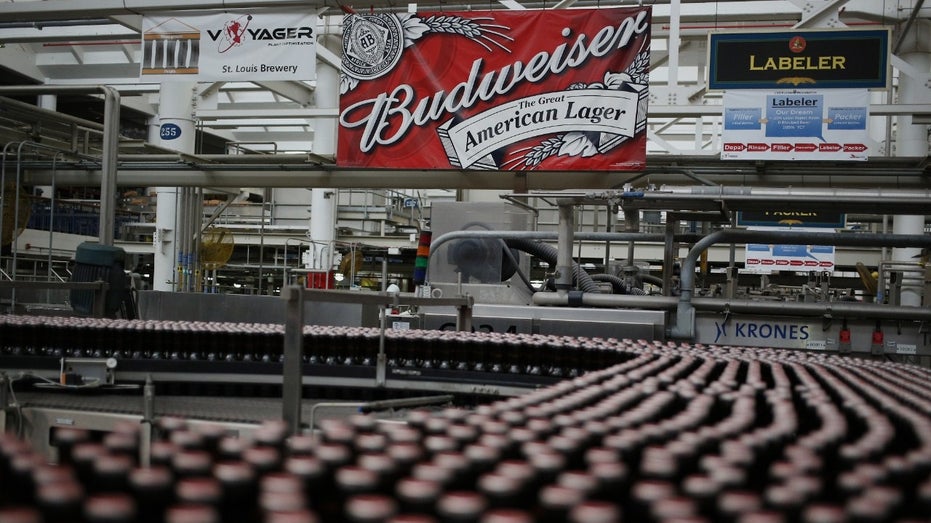
Anheuser-Busch announces a $600 million U.S. investment to boost domestic production. (Getty Images / Getty Images)
The company said the expansion will increase manufacturing capacity and invest in workforce development through 15 new training centers and veteran programs. The move aligns with broader industry and government efforts to boost domestic production and rebuild the manufacturing workforce, echoing calls from the Trump administration.
Anheuser-Busch will spend the $600 million over two years, from 2025 through 2026, focusing on brewery upgrades, technology, and production capacity. The Wednesday announcement expands upon a $300 million investment announced in 2025.
Stocks In This Article:
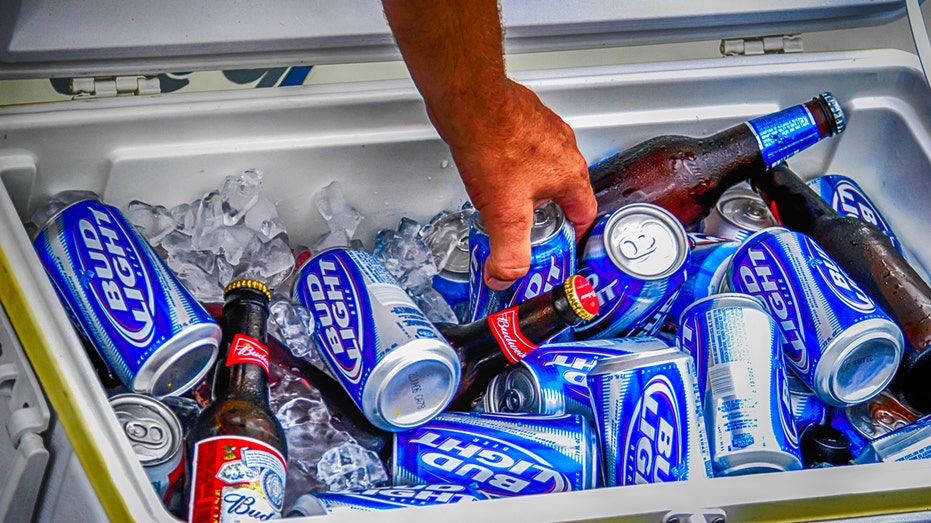
The company said it makes 99% of the beer it sells in the U.S. domestically, including Michelob ULTRA, Busch Light, Budweiser, and Bud Light.
HOW REAL AMERICAN BEER AIMS TO FULFILL LATE FOUNDER HULK HOGAN’S GOAL OF TOPPLING BUD LIGHT, RIVALS
The initiative aims to upskill 90% of its workforce over five years, training employees in digital systems, mechanical and electrical skills, and management systems.
“This $600 million investment is about advancing American manufacturing, strengthening our supply chain, and creating lasting careers and a brighter future for U.S. workers,” Whitworth said. (Anheuser-Busch)
“By strengthening our manufacturing operations, we are creating sustainable careers – not just jobs – and investing in the people who are vital to our success,” said Whitworth in a press release viewed by Fox News Digital.
“We are proud to continue building the next generation of manufacturing leaders through our new technical training centers while also providing new opportunities in the workforce for our nation’s veterans,” he added.
AMERICA FIRST POLICIES ELECTRIFYING US-MADE BREWS AND BRINGING BEER BOOM TO RED STATE
Anheuser-Busch is expanding veteran partnerships to help service members transition into the workforce. A new “SmartResume” platform will translate military skills and experience for employers.
Anheuser-Busch is expanding veteran partnerships to help service members transition into the workforce. (iStock / iStock)
The announcement follows the Trump administration’s continued push of “America First” policies creating indirect incentives for companies and reshaping trade policy for domestic production.
“This is yet another example of the Trump effect. Thanks to President Trump’s unwavering commitment to rebuilding American industry, companies are investing in the United States, expanding manufacturing, creating good-paying jobs, and driving a new era of prosperity for the American people,” White House spokesperson Liz Huston told Fox News Digital.
In March, 15,000 new jobs were added in the manufacturing sector, according to the White House.
GET FOX BUSINESS ON THE GO BY CLICKING HERE
Trump has also signed various executive orders and actions to revitalize American manufacturing, recently signing a proclamation to strengthen tariffs imposed on imported steel, aluminum, and copper imports to help Americans compete and companies to build factories in the U.S..

Higher levies on gas exports risk weighing on domestic supply and pushing up prices for local users, the head of a major producer warns.
Business
SBI Life Q4 Results: Profit falls marginally to Rs 805 crore; net premium income rises 16% YoY

SBI Life retained its leadership in the private market across key metrics during FY26, with a 25.5% market share in Individual New Business Premium and 22.9% share in Individual Rated Premium.
The company reported annualized premium equivalent (APE) of Rs 24,270 crore, marking a 13% increase, while Individual New Business Sum Assured surged 61% to Rs 4.46 lakh crore, indicating strong traction in protection-led offerings.
Persistency ratios also improved, with 13-month and 49-month persistency rising by 53 basis points and 107 basis points, respectively.
Value of New Business (VoNB) stood at Rs 6,670 crore, up 12% YoY, with margins at 27.5%, reflecting stable profitability despite a shifting product mix. Embedded value grew 15% to Rs 80,790 crore, while operating return on embedded value came in at 19.7%. Assets under management increased 9% to Rs 4.9 lakh crore, and the solvency ratio remained robust at 1.90.

MD and CEO Amit Jhingran said the life insurance industry saw improved momentum during FY26, supported by regulatory measures and a shift towards protection-oriented products. He noted that GST exemption on individual policies improved affordability and aided demand. The company maintained a balanced product mix across ULIPs, participating, and non-participating savings products, while the participating and retail protection segments saw strong growth.
SBI Life continued to focus on a balanced growth strategy, strengthening its product portfolio, expanding distribution, and improving operational efficiencies while maintaining prudent risk management. The company reiterated its commitment to improving insurance penetration and delivering long-term value.Also read: Pahalgam anniversary: How the 2025 terror attack triggered Rs 3 lakh crore defence boom and created 3 multibagger stocks
On the business front, Individual New Business Premium rose 13% to Rs 29,780 crore, while protection new business premium stood at Rs 4,622 crore. Gross Written Premium grew 19% to Rs 1.01 lakh crore, driven by a 20% rise in new business regular premium and a 19% increase in renewal premiums.
(Disclaimer: Recommendations, suggestions, views and opinions given by the experts are their own. These do not represent the views of The Economic Times)

Boeing (BA) Q1 2026 earnings

UK watchdog raids eight London sites over illegal P2P crypto trading

Asian Games 2026 live telecast: Sony acquires broadcasting rights for India | Asian Games 2023

Manchester United reach agreement with Casemiro over contract clause amid transfer speculation

Steven Gerrard disagrees with Gary Neville over ‘shock’ Chelsea and Arsenal claim | Football

US brings back mandatory military draft registration


-

 Fashion5 days ago
Weekend Open Thread: Theodora Dress
-

 Sports5 days ago
NWFL Suspends Two Players Over Post-Match Clash in Ado-Ekiti
-

 Politics5 days ago
Palestine barred from entering Canada for FIFA Congress
-
Entertainment3 days ago
NBA Analyst Charles Barkley Chimes in on Ice Spice McDonald’s Fiasco
-

 Business3 days ago
Powerball Result April 18, 2026: No Jackpot Winner in Powerball Draw: $75 Million Rolls Over
-

 Politics3 days ago
Zack Polanski demands ‘council homes not luxury flats for foreign investors’
-

 Crypto World5 days ago
Russia Pushes Bill to Criminalize Unregistered Crypto Services
-

 Tech3 days ago
Auto Enthusiast Scores Running Tesla Model 3 for Two Grand and Turns It Into Bare-Bones Go-Kart
-

 Politics2 days ago
Gary Stevenson delivers timely reminder to register to vote as deadline TODAY
-

 Tech7 days ago
‘Avatar: Aang, The Last Airbender’ Leaked Online. Some Fans Say Paramount Deserves the Fallout
-
 Business6 days ago
Creo Medical agree sale of its manufacturing operation
-

 Business3 hours ago
Rolls-Royce Voted UK’s Most Iconic Trade Mark as IPO Register Hits 150
-

 Crypto World5 days ago
Russia Introduces Bill To Criminalize Unregistered Crypto Services
-
 Crypto World3 days ago
Kelp DAO rsETH Bridge Hack Drains $292M as DeFi Losses Top $600M in Two Weeks
-

 Sports6 days ago
British climbers complete new route in Swiss Alps
-

 Tech6 days ago
Ford EV and tech chief leaving automaker
-

 Sports6 days ago
“Felt Much Better Today”: Josh Hazlewood Opens Up On His Recovery Win Over LSG
-

 Entertainment7 days ago
Ruby Rose Accuses Katy Perry Of Sexual Assault, Police React
-

 Business6 days ago
Cheaper Doritos and Lays helps PepsiCo win back struggling snackers
-
 Entertainment6 days ago
Clavicular Says Streaming May Not Work Without Substances
You must be logged in to post a comment Login