Britain’s reliance on bricks-and-mortar levies has reached a level unmatched anywhere else in the developed world, leaving businesses shouldering a disproportionate share of the burden and the Exchequer dangerously exposed to any wobble in commercial property values.
The United Kingdom now extracts more from property taxes than any other major economy, with receipts equivalent to 3.7 per cent of the entire economy, according to the annual business rates review published by tax firm Ryan. The figure is well clear of France and Canada, both on 3.4 per cent, with Belgium and Luxembourg trailing on 3.3 per cent, a gap that underlines just how exposed the British system has become to a downturn in commercial real estate.
Taken together, business rates, council tax and transaction levies such as stamp duty are now generating around $136 billion (£108 billion) a year for the Treasury, more than France, Japan or Canada raise, and second only to the United States, where total receipts are nearly seven times larger at $855 billion. The OECD’s most recent Revenue Statistics confirm Britain’s outlier status among advanced economies.
Just under 11 per cent of every pound the Government raises in tax now comes from property — the third highest share among advanced economies, behind only South Korea on 11.8 per cent and the United States on 11.4 per cent. That level of dependence, analysts argue, has begun to crowd out investment in precisely the kind of physical, capital-intensive businesses ministers say they want to attract.
A structural problem, not a valuation quibble
Alex Probyn, practice leader at Ryan, said the combination of stubborn inflation, the end of pandemic-era reliefs and a string of policy tweaks had pushed receipts ever higher, in effect baking the squeeze into the architecture of the tax.
Advertisement
“Business property is carrying a disproportionate share of the overall tax burden, and that is beginning to weigh heavily on investment, particularly in sectors that rely on physical assets and long-term capital,” Probyn said. “Property taxes in the UK are the highest by international standards, and the system is designed in a way that continues to increase the yield over time. That creates a clear tension between the need to raise revenue and the need to support investment. That balance has to be addressed.”
The Government’s revaluation of business rates in England, Wales and Scotland, which came into force this April, is forecast to drag the total rates take up to £37.1 billion in 2026-27, from £33.6 billion the previous year, a leap of £3.5 billion in a single year. Business Matters has already reported on the £1.56 billion rise in rates bills that has rippled through every sector of the economy.
Probyn warns that the Exchequer’s fiscal dependence on these revenues is itself becoming an obstacle to reform. “This is not simply a question of valuation methodology. It is a structural issue,” he said.
Appeals backlog hits 40,000 as SMEs go to the wall
The pressure on businesses has been compounded by a logjam at the valuation office, the HM Revenue & Customs agency responsible for setting rateable values. Nearly 40,000 firms have lodged appeals against their revised bills and are still waiting for a hearing, with the Valuation Office Agency bracing for a further deluge of challenges from hospitality operators hit by punishing increases to their rateable values.
Advertisement
The average wait is now 11 months, during which firms must continue paying the higher rate. Some businesses are waiting up to 18 months for an assessment — a delay that has tipped a number of small companies into closure before their case is even heard. The squeeze helps explain why nearly 5,500 small firms have urged the Chancellor to halt what they describe as an “apocalyptic” revaluation, and why business rates appeals have plummeted overall, with many owners deterred by the cost and complexity of challenging their bills.
Layered on top of all this is the spike in energy costs flowing from the war in Iran, which broke out at the end of February. Three in five companies say the combination has forced them to freeze hiring and investment plans, the precise opposite of the growth story ministers are trying to sell.
The verdict from the high street
For SME owners on Britain’s high streets and industrial estates, the message from the data is unambiguous: the country’s tax system is increasingly tilted against the firms that take on premises, employ staff and pay rates in the local authority where they trade. Until ministers grasp the nettle of structural reform, rather than tinkering with reliefs at the margins, the burden on physical businesses will continue to rise, and so will the risk that the next downturn in property values takes the public finances down with it.
Amy Ingham
Amy is a newly qualified journalist specialising in business journalism at Business Matters with responsibility for news content for what is now the UK’s largest print and online source of current business news.
The second season of the award-winning series is streaming now on Disney Plus
Disney+ Rivals premiere in Bristol(Image: Disney+ / Hulu / Bottle Yard)
The West of England has been “integral” to the success of hit television show Rivals, a boss at Disney has said. The award-winning programme, which is based on the novel of the same name by the late Dame Jilly Cooper, was filmed at the Bottle Yard Studios in Bristol and around the South West region.
More than 90 per cent of the the locations featured in the series were filmed within a 30-mile radius of the studios, across Bristol, Bath and North East Somerset, South Gloucestershire and North Somerset.
Rivals is set in the Cotswolds in the 1980s and follows a battle over a regional TV franchise that turns ugly, dragging private feuds into public view. Disney Plus recently released Rivals Season 2, which stars a host of household names including David Tenant, Katherine Parkinson and Aidan Turner.
“Rivals has captured the attention of the nation whilst showcasing the very best of British and Irish talent across cast, crew and beyond,” said Deborah Armstrong, country manager at The Walt Disney Company UK & Ireland.
Advertisement
“The West of England, and Bristol in particular, have been integral to the show’s success. Disney is proud of the role we play in Bristol’s thriving creative ecosystem.
“Our presence spans the production of local Originals such as Rivals and National Geographic documentaries, as well as bringing audiences together through live experiences, including our recent sell-out stage show, The Greatest Showman.”
West of England mayor Helen Godwin said the West Country was “proud to be the real-life Rutshire” and the hit series, which is produced by Happy Prince, part of ITV Studios, was inspiring more visitors to come to “and fall in love with” the region.
“The economic impact of filming TV is huge for jobs and businesses in the West of England,” she said.
Advertisement
“Rivals being made here has directly and indirectly helped add millions of pounds to the country’s fastest-growing regional economy. We look forward to continuing to work with Disney+, Happy Prince, and ITV Studios in the future to create more magic in our part of the world.”
Alexander Lamb, executive producer for Rivals and creative director at Happy Prince, said both series of Rivals were “entirely made possible” by the “talent, ingenuity, tenacity and good humour” found in the West of England.
“Just like Declan O’Hara’s Venturer Television, Happy Prince are committed to showcasing the very best of the region, to bring its perfect locations and the work of it’s gifted crew to screen for the rest of the world to enjoy.
“We are eternally grateful for the continued warm welcome afforded to our cast and crew and hope to be making further series of Rivals in the West of England for many years to come.”
OKLAHOMA CITY — The 2026 NBA Western Conference Finals open Monday night with a heavyweight clash that feels destined: the top-seeded, defending champion Oklahoma City Thunder against the second-seeded San Antonio Spurs, two young, star-driven teams that dominated the regular season and now battle for a trip to the NBA Finals.
The Thunder, boasting a league-best 64-18 record and fresh off two playoff sweeps, enter as heavy favorites with home-court advantage at Paycom Center. Yet the Spurs, who went 62-20 and took four of five regular-season meetings against Oklahoma City, arrive battle-tested after a tougher path and armed with one of the NBA’s most intriguing young cores.
Game 1 tips off at 7:30 p.m. CT (NBC/Peacock), with the series shifting to Frost Bank Center in San Antonio for Games 3 and 4. A potential Game 7 would return to Oklahoma City on May 30.
Advertisement
Oklahoma City’s roster depth and defensive versatility make it the clear favorite. Shai Gilgeous-Alexander, the reigning MVP and back-to-back finalist, leads a balanced attack averaging elite efficiency. The Thunder’s perimeter defense — featuring Lu Dort, Cason Wallace and multiple switchable bigs — ranks among the league’s best.
Chet Holmgren provides rim protection and spacing, while Jalen Williams offers two-way reliability. The Thunder went 8-0 through the first two playoff rounds, dispatching Phoenix and the Lakers by double digits on average. Their rest advantage after early series conclusions could prove vital in a grueling best-of-seven.
San Antonio counters with explosive potential centered on Victor Wembanyama. The 22-year-old phenom has elevated his game in the postseason, blending elite shot-blocking, perimeter shooting and playmaking. De’Aaron Fox brings veteran speed and scoring punch in the backcourt, while rookie sensation Stephon Castle has emerged as a playoff X-factor with scoring outbursts and defensive instincts.
The Spurs needed six games to overcome Minnesota in the conference semifinals after dispatching Portland in five. Their physicality and ability to exploit mismatches could test Oklahoma City’s vaunted defense, especially if Wembanyama draws help and creates openings for teammates.
Advertisement
Regular-season history favors San Antonio. The Spurs’ 4-1 edge included several blowouts, exposing occasional vulnerabilities in the Thunder’s half-court offense and rebounding when facing length. However, playoff basketball often rewards experience and execution under pressure — areas where the defending champions hold a clear edge.
Coaching will play a pivotal role. Mark Daigneault has orchestrated Oklahoma City’s rise into a perennial contender with innovative schemes and player development. Gregg Popovich’s successor in San Antonio has instilled a competitive culture blending the franchise’s storied fundamentals with modern spacing and versatility.
Key matchups will define the series. How the Thunder defend Wembanyama — likely through a combination of Holmgren, Williams and help rotations — could determine outcomes. Conversely, San Antonio must find ways to disrupt Gilgeous-Alexander’s rhythm without overcommitting and leaving shooters open. Rebounding and transition defense represent another critical battleground.
Injuries and availability add uncertainty. Jalen Williams’ status for Oklahoma City remains a focal point, while both teams have managed minor ailments through the playoffs. Depth will matter as the series potentially stretches into late May.
Advertisement
The Thunder aim to repeat as champions, a feat not accomplished since the 2017-18 Warriors. A return to the Finals would cement their status as a budding dynasty in a league hungry for new blood. For the Spurs, reaching the conference finals marks a rapid rebuild success story and positions them as legitimate title contenders far ahead of schedule.
Off the court, the series carries significant narrative weight. Two of the NBA’s most promising young cores collide in what many call a potential preview of future Finals matchups. The Thunder-Spurs rivalry, though relatively new, has already produced memorable regular-season moments and promises more drama on the biggest stage.
Fans in Oklahoma City have embraced the moment with “Thunder Up” energy filling Paycom Center. In San Antonio, the return to relevance has revitalized the fan base that once cheered Tim Duncan, Tony Parker and Manu Ginobili. Tickets for home games have sold briskly, reflecting heightened excitement.
Analysts largely lean toward Oklahoma City in six or seven games, citing superior depth, defensive consistency and championship experience. Yet the Spurs’ regular-season dominance and Wembanyama’s transcendent talent create legitimate upset potential. Bold predictions include Castle stepping up as a series hero or Wembanyama forcing defensive adjustments that open the floor for Fox.
Advertisement
Beyond individual stars, the series highlights broader NBA trends: the value of versatile frontcourts, the importance of defensive versatility in the playoffs, and how young talent can accelerate timelines. Both teams exemplify smart roster construction around elite anchors.
As Game 1 approaches, anticipation builds across the league. This Western Conference Finals pits the present power against an ambitious future challenger in a matchup worthy of the sport’s grandest stage. Whether the Thunder extend their reign or the Spurs author a stunning breakthrough, the series promises high-level basketball and compelling storylines.
Monday night in Oklahoma City sets the tone for what could become one of the most memorable conference finals in recent years. With two of the NBA’s brightest young stars leading talented supporting casts, the Thunder and Spurs prepare for a battle that may define the Western Conference for seasons to come.
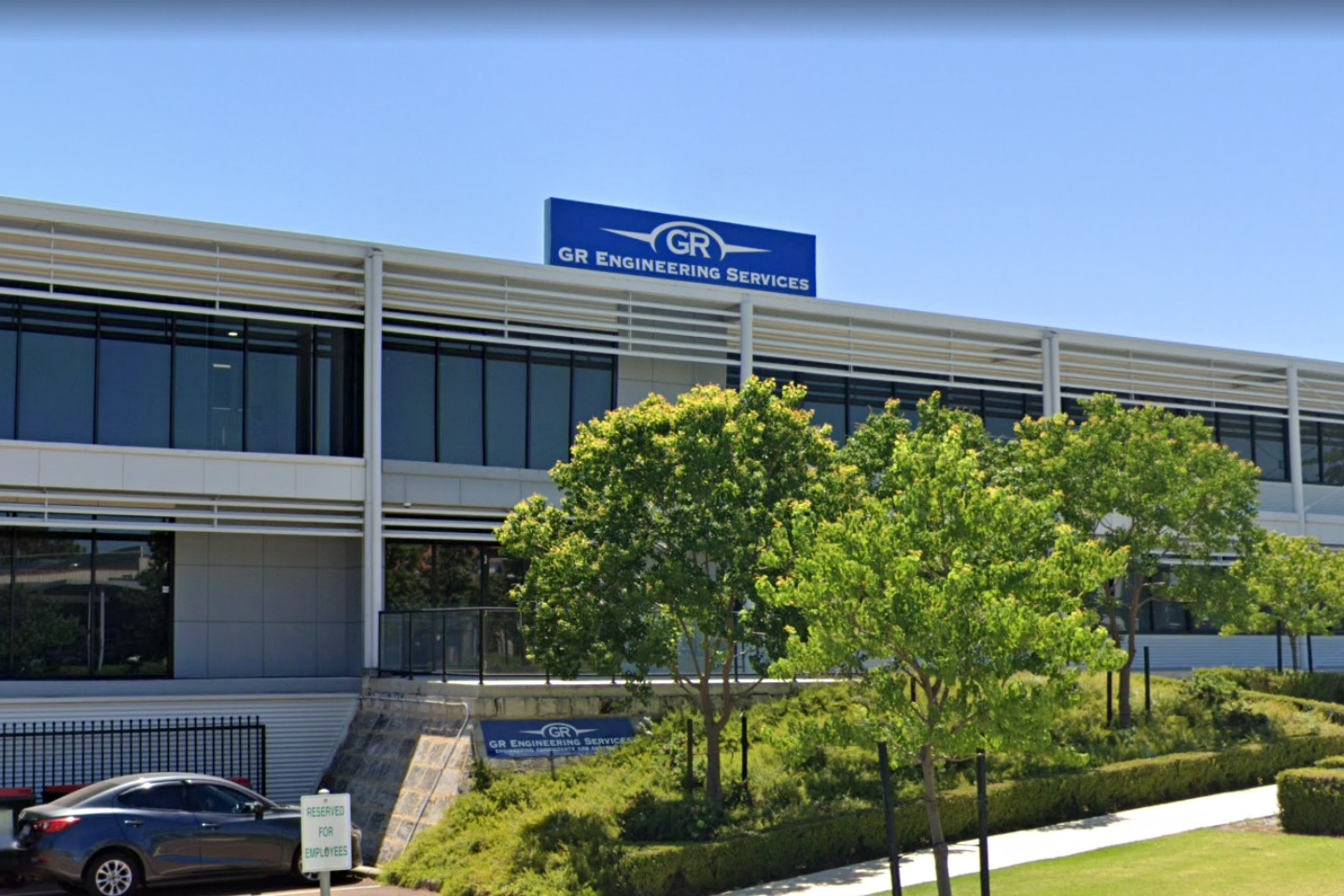
Subiaco-based Ora Banda Mining has selected GR Engineering Services as its preferred EPC contractor, as it continues moving towards its “Drive to 300” aspirational goal.
Stock futures turned higher just before the market opened on Monday, while oil prices suddenly tipped lower.
Futures tracking the Dow Jones Industrial Average were up 0.1%. S&P 500 futures gained 0.3% and contracts tied to the tech-heavy Nasdaq 100 gained 0.6%.
Treasury yields are still elevated, but oil prices have started to lose momentum. Brent crude futures, the international benchmark, are down 1.6%.
The latest JPMorgan Summer Reading List, an annual favorite among the wealthy, includes books on artificial intelligence, longevity, Keith Haring and lemon recipes.
Advertisement
The list is compiled each year with suggestions from JPMorgan client advisors around the world and has become a popular guide for the wealthy looking for good summer beach reads. This year’s list includes 14 titles, reflecting the top issues and concerns of its clients.
AI tops the list, with two books on the topic. Sebastian Mallaby’s “The Infinity Machine” profiles Google DeepMind CEO and co-founder Demis Hassabis and the battle for AI breakthroughs. Josh Tyrangiel’s “AI for Good” looks at how the technology is already helping to solve everyday challenges.
The list also features books on leadership and performance. Cognitive scientist George Newman’s book, “How Great Ideas Happen,” is about how to develop skills for discovery. Neuroscientist and physician Dr. Tommy Wood’s “The Stimulated Mind,” explains strategies on how to keep the brain adaptable and focused.
With sports investing growing among the wealthy, the list also includes NBA analyst Ric Bucher’s book, “Coachable,” which gleans lessons from conversations with former NBA star Michael Jordan, ex-NFL quarterback Tom Brady, former WNBA great Diana Taurasi and others.
Advertisement
Darin Oduyoye, the chief communications officer of J.P. Morgan Asset and Wealth Management, who oversees the list, said family offices are especially interested in books on generational transition, since many are managing the transfer of wealth to their children or family. Of particular interest to family offices is the book “Mattering,” by Jennifer Breheny Wallace, Oduyoye said.
“Her message is resonating with next-generation family leaders — centered on purpose, identity, and how rising decision-makers define what they want to pursue — especially as families navigate leadership transition and legacy,” he said.
Here is the full list of books:
“How Great Ideas Happen: The Hidden Steps Behind Breakthrough Success,” by George Newman
“The Infinity Machine: Demis Hassabis, DeepMind, and the Quest for Superintelligence,” by Sebastian Mallaby
“AI for Good: How Real People Are Using Artificial Intelligence to Fix Things That Matter,” by Josh Tyrangiel
“America: The Imagination of a Nation,” by Assouline and Joel Stein
“Crisis Engineering: Time-Tested Tools for Turning Chaos into Clarity,” by Marina Nitze, Matthew Weaver and Mikey Dickerson
“The Coming Storm: Power, Conflict and Warnings from History,” by Odd Arne Westad
“Mattering: The Secret to a Life of Deep Connection and Purpose,” by Jennifer Breheny Wallace
“Coachable: How the Greatest Performers Reach Their Highest Potential,” by Ric Bucher
“The Stimulated Mind: Future-Proof Your Brain from Dementia and Stay Sharp at Any Age,” by Dr. Tommy Wood
“Light and Thread,” by Han Kang
“Irreplaceable: 60 of Humanity’s Most Treasured Places,” by the World Monuments Fund, with contributions by Bénédicte de Montlaur, André Aciman, Andrew Solomon and Brinda Somaya
“Keith Haring in 3D,” by Larry Warsh and Glenn Adamson, with contributions from Dieter Buchhart, David Galloway, Francis M. Naumann, Lowery Stokes Sims and Robert Storr
“Squeeze Me: Lemon Recipes & Art,” by Ruthie Rogers and Ed Ruscha
“We Are the World (Cup): A Personal History of the World’s Greatest Sporting Event,” by Roger Bennett
May 18 (PTI) Microfinance institution Arohan Financial Services has filed preliminary papers with market regulator Sebi to raise funds through an initial public offering (IPO), comprising a fresh issue of shares worth Rs 600 crore.
Apart from the fresh issue, there will be an offer for sale (OFS) of 4.04 crore shares by existing investors, according to the draft red herring prospectus (DRHP) filed with Sebi.
US Teachers Insurance and Annuity Association, a retirement financial services firm, Michael & Susan Dell Foundation, Aavishkaar Goodwell India Microfinance Development Company-II Ltd, Tano Capital, TR Capital III Mauritius, and Danish Sustainable Development Goals Investment Fund, among other existing investors, will offload shares.
Proceeds from the fresh issue will be used to boost the company’s capital base and for general corporate purposes, the draft papers filed last week showed.
Advertisement
Earlier in January, Arohan Financial Services Managing Director Manoj Kumar Nambiar stated that the company is looking to raise Rs 1,500 crore through its maiden public offering.
Live Events
Arohan Financial Services is a technology-enabled non-banking financial company -microfinance institution (NBFC-MFI) offering income-generating loans and a suite of financial and non-financial products to customers primarily across rural and semi-urban states in India. It had an assets under management (AUM) of Rs 6,308 crore as of December 2025.Arohan Financial Services, which commenced its business in 2006 with operations in a single location in Kolkata, has gradually expanded its footprint. As of December 2025, it operates 1,073 branches across 17 states in the country.
The filing comes after the successful listings of Aye Finance and Kissht in 2026.
DAM Capital Advisors, Motilal Oswal Investment Advisors and SBI Capital Markets are managing the issue. PTI





























































You must be logged in to post a comment Login