

Business
4 new Vedanta Group stocks to debut on D-St today. Brokerages reveal expected listing prices

The Anil Agarwal-led group had announced in April that each eligible shareholder would receive one share in each of the four companies for every Vedanta share held on the record date, in what is among India’s biggest corporate restructurings in the metals and mining sector.
Vedanta had fixed May 1 as the record date for the much-awaited demerger. While Vedanta shares have already adjusted for the restructuring, investors are now awaiting the listing of the four spun-off entities.
4 Vedanta stocks to undergo price discovery in special pre-open session
The special pre-open session will run from 9 am to 10 am today on the NSE and BSE, after which trading in these stocks will commence. According to exchange notices, shares of Vedanta Oil & Gas, Vedanta Power, Vedanta Aluminium, and Vedanta Iron & Steel will initially be placed in the Trade-to-Trade (T2T) segment, where all transactions are settled through compulsory delivery.Also read: How will Vedanta demerger impact dividend payouts for shareholders?

Here’s a closer look at the four companies listing today and what analysts expect their debut valuations and share prices on Dalal Street to be.
Vedanta Aluminium Metal
Vedanta Aluminium Metal is the largest aluminium producer in India, according to the company. It produced more than half of India’s aluminium at 2.42 million tonnes in FY25, according to its website. It operates a 5 MTPA alumina refinery in Odisha’s Kalahandi district, along with the world’s largest aluminium plant at Jharsuguda, Odisha with 1.85 MTPA capacity. It also operates Bharat Aluminium Company Limited (BALCO) in Chhattisgarh.
Vedanta Aluminium has a vision to double the existing production capacity to 60 lakh tonnes per annum, deep backward integration and structural cost advantages.
ICRA recently removed the long-term rating of Vedanta Aluminium Limited (VAML) from watch with developing implications, following greater clarity on the allocation of assets and liabilities under the ongoing demerger scheme of Vedanta Limited as well as the support framework across group entities. ICRA has also upgraded the rating and assigned a Stable outlook to the long-term rating.
Also read: At what price will each of the four new Vedanta companies list? Check cost of acquisition
Notably, Vedanta Aluminium Metal will likely list as the only large cap company among the four stocks today. Sunny Agrawal, Head of Fundamental Research at SBI Securities, said an investor can buy the shares of Vedanta Aluminium Metal on the back of robust capacity expansion of aluminium and strong LME Aluminium prices. He said that the fair value of Vedanta Aluminium Metal stands at Rs 489 apiece.
“Among the demerged businesses, Vedanta Aluminium stands out as the most attractive entity, with an expected listing valuation of Rs 400+ per share. This is supported by its strong contribution to group revenues and margins, along with favourable industry dynamics such as tight global supply, elevated aluminium prices, and ongoing capacity expansions driving volume growth,” said ICICI Direct in a report.
Vedanta Power
Vedanta Power has more than 4 GW of installed capacity in four strategic assets in Punjab, Andhra Pradesh, Chhattisgarh and Odisha. It has several long-term and mid-term Power Purchase Agreements (PPAs) with state utilities.
Its portfolio comprises Vedanta Power Talwandi Sabo Thermal Plant in Punjab (1,980 MW), Vedanta Power Meenakshi Energy, in Andhra Pradesh (1,000 MW), Vedanta Power Sakti, Chhattisgarh (600 MW operational with another 600 MW under commissioning), and Vedanta Power Jharsuguda Thermal Plant, Odisha (600 MW).
Also read: ICRA removes Vedanta from watch with developing implications
According to Agarwal from SBI Securities, the fair value of Vedanta Power stands at Rs 44 per share. For Vedanta Power, Emkay estimates a share price of around Rs 51.7 per share. Kotak Institutional Equities see the stock at Rs 60 per share, while Nuvama’s valuation implies a value of around Rs 47 per share. CLSA’s estimate corresponds to roughly Rs 35 per share.
Vedanta Oil & Gas
Vedanta Oil & Gas claims to be India’s leading private sector upstream player, as it aims to scale towards 300,000 to 500,000 barrels per day with an investment of $5 billion. “A little over a decade ago, Cairn was valued at $14.5 billion. “When we acquired Cairn, its market capitalization was half of the asset value. Today, Cairn has grown manifold, added many more reserves as well as a natural gas portfolio,” the company had said in a press release earlier this year.
Also read: Vedanta share price adjusts 63% as it trades ex-demerger. What’s next for 21 lakh shareholders?
Vedanta in May said that its average gross operated production for the full year stands at 87.2 kboepd. According to Sunny Agrawal, Head of Fundamental Research at SBI Securities, Vedanta Oil & Gas commands a fair value of Rs 42 per share.
Vedanta Iron & Steel
Vedanta Iron & Steel has operations spanning India and Africa, and is focused on iron ore exploration, mining and processing. It also produces high-quality steel, wire rods, TMT bars, pig iron, ductile iron (DI) pipes, ferro-silicon, cement and metallurgical coke.
According to Sunny Agrawal, Vedanta Iron & Steel commands a fair value of Rs 19 per share. The iron and steel business is likely to see little favour with investors as larger and more focused players make for a stronger investment case, according to experts.
Also read: 4 demerged units of Vedanta to make D-Street debut on Monday
(Disclaimer: Recommendations, suggestions, views and opinions given by the experts are their own. These do not represent the views of The Economic Times)


Australia’s share market has notched its best two-session performance since April following reports the US and Iran have agreed on the terms of a peace deal.
Business
Suzlon Energy shares jump 3%: Why brokers see up to 36% upside for ‘most investible Indian wind player’
Shares of the company jumped to Rs 56.78 apiece on NSE. The stock has gained more than 7% in 2026 so far and 289% in three years.
Motilal Oswal on Suzlon Energy
Analysts from Motilal Oswal Financial Services attended Suzlon Energy’s Investor Day, where management outlined an ambitious FY31 vision focused on scaling the company beyond its core wind business into a broader renewable energy platform. The domestic brokerage highlighted that the company is aiming for a revenue growth of over 25% CAGR, expansion of its Indian wind market share to over 40% (from 33% currently), achieving a 15% market share in the solar and BESS segments, scaling its renewable energy (RE) order book from 5.5 GW now to 15 GW, increasing annual RE sales from 2.5 GW now to 10 GW, expanding its RE Operations & Maintenance Services (OMS) assets under management (AUM) to over 70 GW from 18 GW currently and strengthening international presence, with over 3 GW of export volumes contributing 15% of revenue.
“We believe Suzlon Energy’s Investor Day addressed key medium to long-term growth concerns by outlining a clear roadmap for expansion and diversification into adjacent renewable energy verticals, which enhance earnings resilience. While the strategic direction is encouraging, investors are likely to remain focused on execution, capital allocation discipline, and the trajectory of working capital and leverage metrics. We believe Suzlon Energy continues to stand out as the most credible and investible player in the Indian wind space, supported by its strong market position and consistent track record of meeting execution and operational guidance,” it added.
Motilal reiterated its ‘Buy’ call on the shares of Suzlon Energy, with a target price of Rs 65 per share. This implies an upside potential of more than 18% from the stock’s previous closing price.
JM Financial on Suzlon Energy
JM Financial highlighted that India requires 10 GW of annual wind power additions by 2030. Historically, Suzlon commands a one-third market share, driven by its technological leadership, manufacturing excellence, and robust lifetime product support, it further said, adding that the new variable is Suzlon 2.0, a meaningful pivot from being a turbine supplier to an integrated RE developer spanning all technologies, and AMS through an RE project development company (DevCo), which can significantly expand addressable revenue/MW.
Also read: Vedanta Aluminium lists at Rs 527 on BSE after demerger. Is it the group’s new crown jewel?
“The AMS annuity target of 70GW versus 18GW presently is the highest-quality earnings stream in the mix. If executed well, the most important earnings driver over the next 3- 5 years may not be turbine deliveries alone, but the expansion of the 70GW+ AMS and integrated RE solutions business, which could materially improve revenue visibility, margins and valuation multiples,” it said.
The domestic brokerage maintained its ‘Buy’ call on the stock, with a target price of Rs 65 per share, same as Motilal Oswal.
Other brokerages on Suzlon Energy share price
Systematix Institutional Equities also has a ‘Buy’ call on the stock with a target price of Rs 71 per share, implying an upside potential of nearly 29%. Centrum meanwhile has a ‘Buy’ call with a target price of Rs 75, implying an upside potential of 36%.
Also read: Why is market rallying today?
(Disclaimer: Recommendations, suggestions, views and opinions given by the experts are their own. These do not represent the views of The Economic Times)
Business
Commonwealth Bank Shares Rise 1.4% to $161.79 Amid Market Recovery and Strong Banking Sector Sentiment

SYDNEY — Commonwealth Bank of Australia shares climbed 1.43% to close at $161.79 on Monday, extending recent gains as investors showed renewed confidence in the nation’s largest lender amid stabilizing economic signals and broader market optimism following positive geopolitical developments.
The rise came as the S&P/ASX 200 index posted solid gains, with financial stocks benefiting from improved risk appetite across global markets. CBA’s performance reflects resilience in Australia’s banking sector despite ongoing pressures from interest rates, housing market dynamics and regulatory changes.
Commonwealth Bank, a bellwether for the Australian economy, has navigated a complex environment marked by moderating inflation, variable consumer spending and competitive pressures in home lending. Monday’s uptick helped recoup some of the volatility seen earlier in the year, when shares faced headwinds from federal budget measures affecting property investment and concerns over loan arrears.
Market Drivers Behind the Gain
Analysts pointed to several factors supporting the session’s advance. Easing geopolitical tensions, particularly prospects around U.S.-Iran relations, contributed to a broader relief rally that lifted commodity prices and financial stocks. Improved global sentiment reduced pressure on bank balance sheets exposed to cyclical risks.
CBA has maintained a strong capital position and consistent dividend payouts, appealing to income-focused investors in a yield-sensitive market. The bank’s ongoing investments in technology and artificial intelligence, including the appointment of a chief AI scientist, are viewed as forward-looking moves to enhance operational efficiency and customer offerings in an increasingly digital banking landscape.
Recent first-half results highlighted record cash earnings driven by market share gains in home loans, business lending and deposits. While operating expenses rose due to technology investments and inflation, the bank’s ability to grow revenue amid a challenging environment underscored its defensive qualities.
Challenges and Strategic Outlook
The Australian banking sector continues to face headwinds. Higher interest rates have cooled housing activity, while budget changes to negative gearing have raised concerns about future loan demand and property prices. Analysts have trimmed forecasts for some banks, citing potential slowdowns in credit growth and rising arrears in consumer portfolios.
For CBA specifically, management has signaled a cautious but optimistic outlook. Focus remains on disciplined cost management, digital transformation and maintaining asset quality. The bank’s diversified operations across retail, business and institutional banking provide buffers against sector-specific pressures.
Longer-term, opportunities in wealth management, payments innovation and sustainable finance are expected to drive growth. CBA’s scale and brand strength position it well to capture market share as smaller competitors face margin compression.
Broader ASX Banking Sector Performance
Other major banks also traded higher, contributing to the financials index advance. The sector’s resilience reflects Australia’s relatively stable economic fundamentals, including solid employment data and contained inflation. However, analysts caution that sustained gains will depend on the trajectory of Reserve Bank of Australia policy and global growth conditions.
The ASX 200’s recent movements have been influenced by commodity prices, with mining stocks often moving in tandem or opposition to financials depending on risk sentiment. Monday’s broad-based buying suggested a return to risk-on trading after periods of caution.
Investor Considerations and Valuation
At current levels, CBA trades at a premium valuation compared to historical averages, reflecting its market leadership and earnings consistency. Dividend yields remain attractive for long-term holders, with the bank maintaining a strong payout ratio supported by robust capital generation.
Analysts offer a mix of views, with some highlighting potential downside risks from housing market softness while others emphasize the bank’s ability to adapt and grow through economic cycles. Consensus targets suggest moderate upside potential, though near-term volatility tied to economic data releases cannot be ruled out.
Investors are advised to consider diversification, macroeconomic indicators and individual risk tolerance when evaluating bank stocks. CBA’s track record of navigating challenges provides reassurance, but past performance does not guarantee future results.
Company Background and Strategic Initiatives
Commonwealth Bank of Australia, founded in 1911 and fully privatized in the 1990s, serves millions of customers across retail, business and institutional segments. The bank has invested heavily in digital platforms to enhance customer experience and operational efficiency.
Recent initiatives include expanded AI capabilities to improve fraud detection, personalized services and internal processes. These investments, while increasing short-term costs, are expected to deliver productivity gains and competitive advantages over time.
Sustainability efforts, including climate-related disclosures and support for renewable energy transitions, align with growing stakeholder expectations and regulatory requirements. The bank’s community programs and financial literacy initiatives further strengthen its social license to operate.
Economic Context in Australia
Australia’s economy has shown resilience amid global uncertainties, with strong labor markets supporting consumer spending. However, cost-of-living pressures, elevated interest rates and a softening property market present challenges for banks and households alike.
The Reserve Bank of Australia continues to monitor inflation and growth indicators closely, with markets pricing limited near-term rate adjustments. This environment favors banks with strong deposit bases and prudent lending standards, characteristics that define CBA.
Looking Ahead
As the financial year progresses, attention will turn to upcoming economic data, corporate earnings and any policy developments. For CBA, key focus areas include loan growth trends, net interest margin management and execution of technology strategies.
The bank’s ability to balance growth with risk management will be critical in sustaining investor confidence. With a solid foundation and proactive approach to industry trends, Commonwealth Bank remains well-placed among Australian financial institutions.
Monday’s share price increase reflects positive market sentiment but also underscores the importance of monitoring broader economic signals. Investors will watch closely for confirmation of sustained momentum in the weeks ahead.
CBA’s performance continues to serve as a key indicator for the health of Australia’s banking sector and overall economy. As the institution adapts to evolving customer needs and technological advancements, its trajectory will influence market perceptions of financial stability and growth prospects in the region.
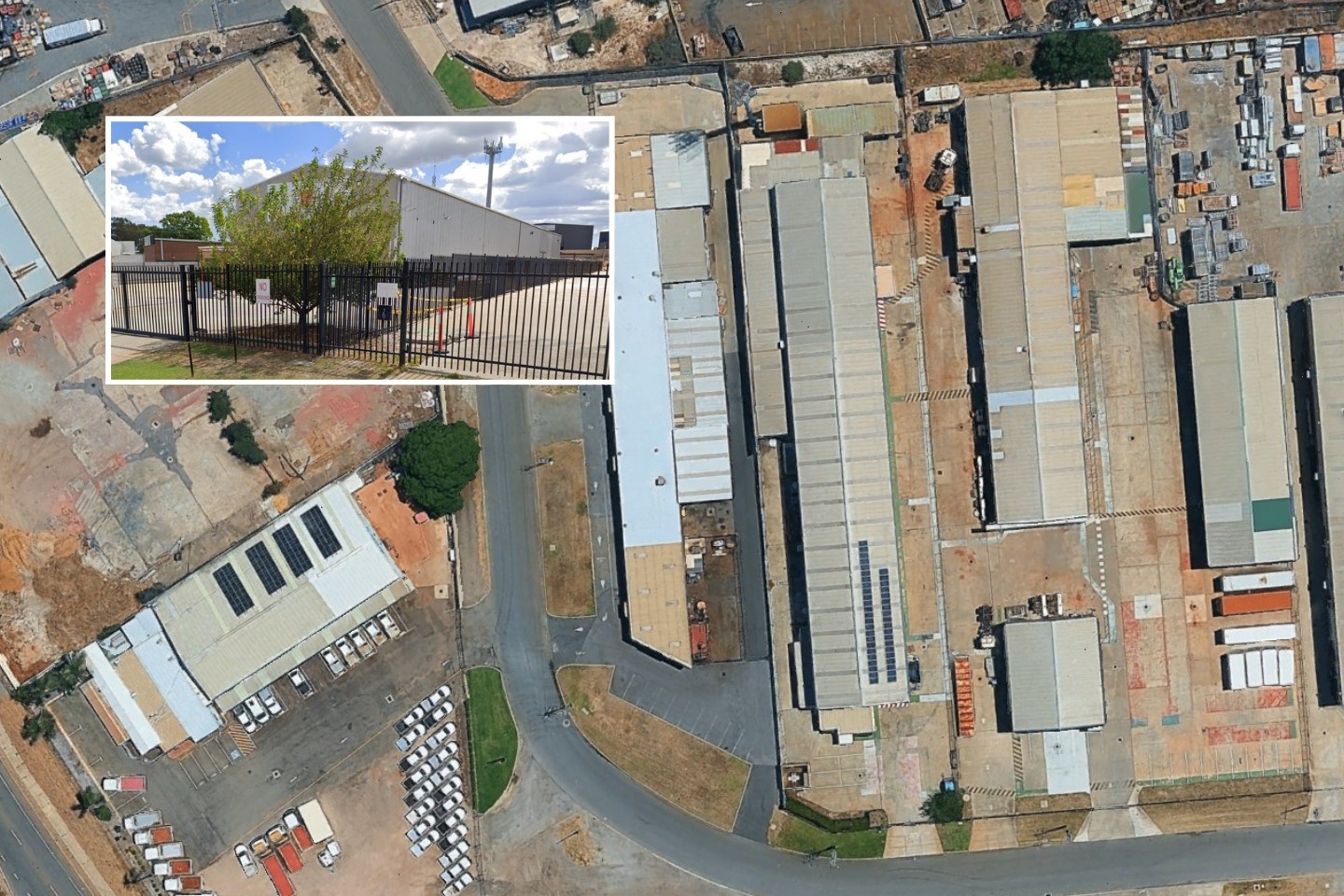
A machinery servicing company has purchased a 3,990-square metre industrial site in Welshpool for $5.83 million, signalling a significant expansion from its 412sqm home.
Business
SpaceX and Google Forge $30 Billion AI Infrastructure Partnership Amid Competition and IPO Preparations

NEW YORK — SpaceX has signed a major 32-month artificial intelligence infrastructure supply agreement with Google worth approximately $30 billion, deepening business ties between the two companies even as they compete in key technology sectors ahead of SpaceX’s planned initial public offering.
The deal, reported at $920 million per month, addresses surging demand for Google’s Gemini Enterprise platform and positions SpaceX as a significant supplier of AI computing resources beyond its core rocket and satellite operations. The agreement includes specific performance conditions related to chip supply capacity, highlighting the strategic importance of reliable infrastructure in the fast-growing AI sector.
If fully maintained, the contract could generate substantial new revenue for SpaceX as it transitions toward public markets. The partnership underscores how leading technology firms are balancing collaboration and rivalry to meet explosive demand for advanced computing power.
Deal Details and Strategic Context
Under the agreement, SpaceX will provide Google with critical AI infrastructure capacity to support its expanding cloud and enterprise AI services. Google cited faster-than-expected growth in customer demand for Gemini Enterprise as the primary driver. The deal serves as a bridge to ensure sufficient resources while longer-term capacity expansions are developed.
Termination provisions add flexibility: Google can exit if SpaceX fails to meet agreed AI chip supply targets by Sept. 30, following a one-month grace period. After the end of this year, either party may cancel with 90 days’ notice. These clauses reflect the rapid evolution of AI technology and the need for performance accountability in large-scale contracts.
The partnership builds on previous collaboration. In 2021, SpaceX partnered with Google Cloud to enhance Starlink satellite internet connectivity and data processing. Alphabet, Google’s parent company, holds an approximately 4.9% stake in SpaceX, valued at over $100 billion following recent assessments, making it one of Alphabet’s most successful private investments.
Balancing Cooperation and Rivalry
Despite the new deal, SpaceX and Google maintain competitive positions in several areas. Elon Musk and Google co-founder Larry Page have publicly differed on AI risks in the past, yet business interests have fostered ongoing engagement. Alphabet’s investment in SpaceX dates back to 2015, illustrating a complex relationship that combines strategic alignment with independent pursuits.
In autonomous driving, Google’s Waymo operates extensive robotaxi services across U.S. cities, while Tesla, led by Musk, continues to develop its own vision-based approach. These parallel efforts highlight how companies can partner in one domain while innovating separately in others.
Industry observers view the agreement as emblematic of the AI sector’s interconnected nature. As demand for computing resources outpaces supply, even rivals are forming alliances to accelerate development and capture market opportunities. The deal strengthens SpaceX’s role as an AI infrastructure provider while giving Google additional capacity to serve enterprise clients.
Implications for SpaceX and Broader AI Market
For SpaceX, the contract represents diversification beyond aerospace into high-margin AI infrastructure services. This expansion comes as the company prepares for its IPO, which is expected to be one of the largest in history. The additional revenue stream could significantly bolster its valuation and appeal to public market investors.
Google’s move to secure bridge capacity reflects broader industry pressures. Major cloud providers are racing to expand data center resources to accommodate generative AI workloads. The partnership allows Google to meet immediate customer needs while investing in its own long-term infrastructure.
Analysts suggest such deals could become more common as AI adoption accelerates across industries. The collaboration demonstrates how established players are leveraging specialized capabilities from partners to maintain competitive edges in a capital-intensive field.
Market and Economic Significance
The $30 billion potential value underscores the massive financial stakes in AI infrastructure. Data centers and specialized computing hardware require enormous investments, driving partnerships that distribute risk and accelerate deployment. For investors, the agreement highlights SpaceX’s growing influence beyond traditional space activities.
SpaceX’s emergence as an AI player complements its Starlink satellite network, which already supports global connectivity. Combined capabilities in orbital infrastructure and ground-based computing could create unique advantages in areas like space-based data processing or remote AI applications.
Google, meanwhile, continues investing heavily in AI while managing its cloud business growth. The deal helps address capacity constraints that have challenged providers amid surging enterprise demand for advanced models and applications.
Challenges and Future Outlook
While the partnership is significant, challenges remain. AI infrastructure projects face hurdles including power supply limitations, regulatory scrutiny and rapid technological change. The contract’s termination clauses acknowledge these uncertainties and the need for reliable execution.
Both companies will continue competing fiercely in consumer and enterprise markets. Musk’s OpenAI involvement and Tesla’s autonomous driving initiatives contrast with Google’s DeepMind and Waymo efforts. These dynamics ensure innovation while the new agreement provides a foundation for mutual benefit in infrastructure.
As SpaceX moves toward public listing, the Google deal adds credibility and diversified revenue visibility. For the broader tech sector, such collaborations signal maturing AI supply chains capable of supporting widespread adoption.
The agreement between SpaceX and Google illustrates the complex interplay of competition and cooperation shaping the AI era. It positions both companies to capitalize on transformative technologies while navigating longstanding rivalries. As demand for AI infrastructure grows, similar strategic partnerships are likely to emerge, reshaping competitive landscapes across technology industries.
This latest development reinforces SpaceX’s expanding role in the global technology ecosystem and Google’s commitment to meeting surging AI needs. The $30 billion deal stands as a notable milestone in the ongoing evolution of artificial intelligence infrastructure and commercial space capabilities.

Running a breakthrough e-commerce business today actually requires a lot more than listing products online. Customers expect fast-loading pages, intuitive navigation, seamless test checks, and visually appealing product displays. Magento 2 is one of the most powerful eCommerce systems because it offers flexibility, scalability, and advanced customization options for businesses of all sizes, but maximizing Magento’s full potential requires a lot of expertise in business improvement and timely expansion decisions.
Here, Amasty gained a reputation as one of the most trusted names within the Magento ecosystem. With years of experience developing Magento responses, Amasty helps online stores optimize functionality, improve customer experience, and increase conversions through revolutionary extensibility and in-depth technical information.
From increasing checkout options to increasing product visibility with progressive ads and promotional materials, Magento merchants rely on the best extensions to survive aggressively within the fast-evolving eCommerce market.
Why Magento 2 Continues to Lead eCommerce Development
Magento 2 has been widely credited for enterprise-level flexibility and customization. Unlike many simplified eCommerce systems, Magento lets organizations create unique personalized purchase surveys that can scale with growth.
Some of the significant benefits of Magento 2 are:
- Flexible structure
- Advanced Inventory Management
- Strong Search Engine Marketing Skills
- Help in more stores
- Comprehensive 0.33-Birthday-Celebration Integrations
- Powerful customization options
However, the default Magento configuration may not consistently provide all the functionality that leading eCommerce companies want. To survive in the face of opposition, merchants often spruce up their stores with custom improvements and unique details.
Professional Magento builders understand how to boost performance while maintaining balance, protection, and scalability. This is why companies often work with experienced Magento companies like Amasty, which has gained recognition for providing a reliable, ultra-holistic performance Magento response.
The Importance of Optimizing the Checkout Experience
One of the most important stages of the consumer journey is the checkout process. Minor usability problems can also result in carts being abandoned and mis-selling. Studies consistently show that complex or slow checkout systems significantly reduce conversion rates.
So Magento prioritizes empowering merchants:
- Box Speed
- User Comfort
- Payment Flexibility
- Mobile Responsiveness
- Valid Form
- Discount Error
A well-designed Magento 2 checkout plugin can also admirably embellish the buying experience by simplifying the checkout cart and reducing buyer friction.
Modern checkout customization makes easy and intuitive holiday enhancement a feature that encourages customers to complete their purchase quickly and successfully.
Features of an Effective Magento 2 Checkout Plugin
Top-level box extensions are typically as follows:
Single-phase box
Reducing the absolute range of checkout pages allows customers to complete transactions faster and reduces frustration.
Mobile-Friendly Design
As the mobile business evolves globally, responsive checkout options are critical to maximizing conversions.
Faster loading speed
Check out how the overall performance directly impacts user satisfaction. Optimized plugins reduce latency and improve processing performance.
Simplified Form
Smart self-fill systems and streamlined insert areas help customers complete their purchases extra easily.
Excellent payment integration
Customers expect more than a payment technique and a secure transaction process.
Magento stores that spend money on checkout optimization often enjoy low cart abandonment fees and progressive shopper happiness.
Thanks to its vast Magento information, Amasty develops checkout solutions that integrate technical reliability with person-centric design. Their Magento extensions depend on the help of international merchants as they cope with real e-commerce challenges, while the latter is well suited with Magento updates and custom store layouts.
Enhancing Product Visibility with Visual Marketing Tools
Visual communication is extraordinarily important in e-commerce. Customers make quick decisions primarily based on what they see, and revealing important items can have a tremendous impact on purchasing behavior.
It’s there magento sticker extension. Magento is especially valuable for store owners.
Product stickers help merchants emphasize the use of a particular product brand, which includes:
- Best Seller
- Newcomers
- Limited Offer
- Sales
- Instinct
- It’s sold out
- Free shipping
These visual factors immediately capture the buyer’s attention and help in making manual buying decisions.
Why Product Stickers Improve Conversion Rates
Product stickers aren’t just decorative gadgets. They have a strategic advertising position in online stores.
Increased product visibility
Highlighted product should stand out in crowded listings and encourage more clicks and engagement.
Excellent advertising communications
Customers can immediately be aware of discounts, special gifts, or products that are on sale without having to check those exact ads.
Faster Decision Making
Visual cues simplify surfing and reduce the time customers spend comparing products.
Improved User Experience
Well-designed product labels make shopping extra intuitive and enjoyable.
For Magento stores with huge inventories, product stickers help rank specialty products and seasonal offers nicely.
Experienced Magento builders know how to combine visual ads and marketing ad tools without negatively impacting page speed or usability. Amasty has emerged as a leading authority in this field with the help of creating optimized Magento extensions for stability capabilities, layout, and functionality.
Why Businesses Trust Amasty for Magento Development
Magento development requires advanced technical knowledge and deep knowledge of e-business operations. Poorly optimized extensions or inconsistent optimization can, in turn, bring websites down, create maintenance weaknesses, or hinder user enjoyment.
Amasty has built a strong recognition within the Magento environment due to:
- Long-term Magento expertise
- Extensive Detail Department
- Focus on Optimizing Performance
- Reliable Customer Support
- Ongoing Product Updates
- Compliance with Magento Standards
The agency’s responses are designed to help companies address real-world operational marketing challenges while maintaining overall store performance
Magento merchants often choose Amasty because of the areas in which the company consistently demonstrates knowledge:
- Box Customization
- Layered Navigation
- Boosting search
- Shop the product
- SEO Updates
- User Experience Optimization
Their dedication to innovation and Magento-focused improvements has made them an iconic flagship among post-e-commerce companies.
The Future of Magento eCommerce Development
The fate of e-commerce will continue to be closely aware of personalization, automation, and the in-person experience. Magento stores that spend money on advanced functionality these days should be better able to compete in a growing number of crowded online marketplaces.
The main characteristics that make up Magento development are:
- AI-Powered Personalization
- Faster Cell Tests
- Streamlined checkout systems
- visual processing tools
- Advanced Search Functionality
- Headless Commerce Architecture
Businesses that have already adopted this technology can support user retention, boost conversions, and increase loyalty.
Magento’s flexibility makes it a perfect platform to implement these improvements, but the other execution requires experienced improvement followers.
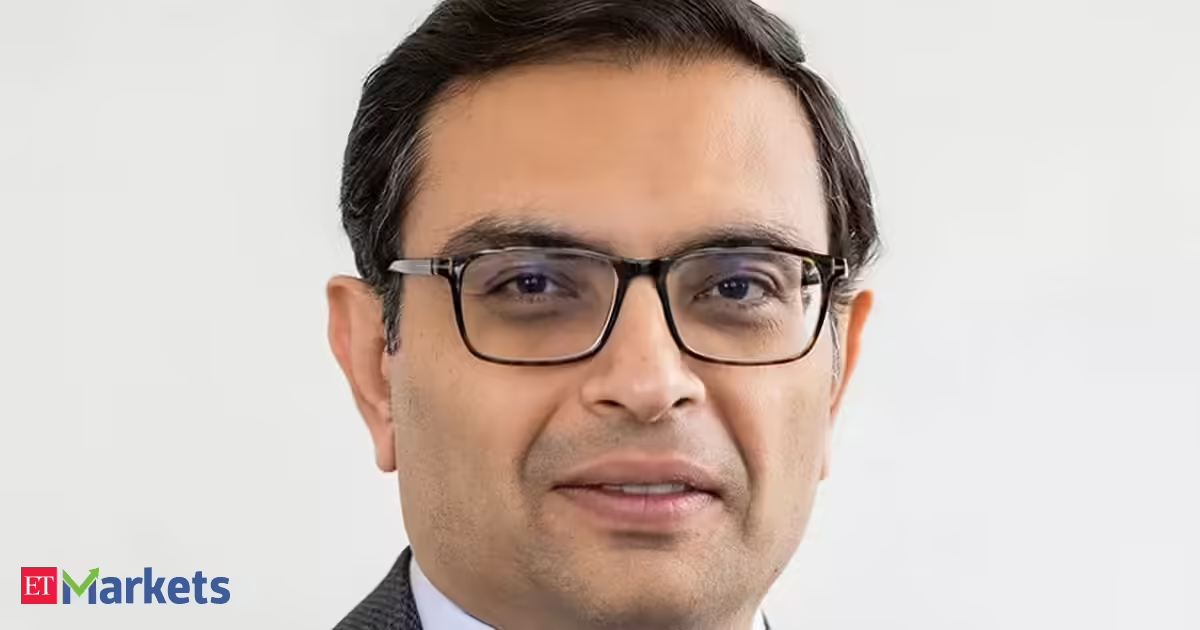
Speaking on the current investment landscape to ET Now, Hiren Ved, from Alchemy Capital Management, argued that while markets are efficient in pricing news, they often struggle to accurately assess the long-term implications behind those headlines.
Responding to a question from Ayesha Faridi from ET Now on whether markets have already factored in the repercussions likely to unfold over the next six months, Ved highlighted the distinction between narratives and reality.
“In today’s day and time, news gets discounted very quickly. But there is a difference between discounting news and trying to discount reality. And sometimes there is a gap between the two because, as I said, the narrative builds up, and the narrative may be right or it may be wrong. Only with time and in hindsight do you get to know that.”
Ved noted that investors frequently react sharply to headlines, often overlooking broader structural developments. He cited the market’s reaction following the 2024 general election as an example.
“In mid-2024, when the expectation was that this government would get a complete majority and they did not, while they had to take support from their NDA partners, suddenly the theme on defence and capex just gave way because people immediately reacted to that news to say that ab to capex nahi hoga. Everybody, if you remember, went and bought consumer stocks.”
However, he pointed out that the reality eventually reasserted itself.”Maybe these sectors or companies underperform for a year, but the reality caught on and the trend reasserted itself.”
According to Ved, successful long-term investing requires patience and conviction rather than reacting to every headline.
“I do not think long-term investing works that way. You have to sometimes step back, think, and really understand. Finally, what I have seen over the years in the markets is that numbers speak for themselves. Narratives can come and go, news can be good or bad, but it is finally the numbers that matter.”
Using oil prices as an example, Ved said markets often reveal reality more effectively than political commentary.
“Trump may flip and flop every morning and evening, but whether we are coming closer to a resolution of the war or not, the oil price will tell you the story because that is the reality. All the wisdom and all the risk-taking will get reflected in that one variable.”
A Global Capex Supercycle
When asked about the long-term structural story driving markets, Ved identified what he believes is one of the defining investment themes of the decade: a global capital expenditure supercycle.
“In my view, we are in a global capex supercycle. Whether it is because of disruption, geopolitics, wars, or oil shocks, it is very clear that every country has realised that certain foundational capabilities are critical.”
He explained that countries are increasingly prioritising defence, semiconductor technology, energy security, and supply-chain resilience.
“Every large country that has an ambition to become big is today trying to figure out how it can be self-sufficient or hedge itself. How do you hedge your supply chains? That is driving a large global capex cycle, and that is a reality.”
Ved believes these investments will continue regardless of short-term geopolitical developments.
“Even if the war stops tomorrow and oil prices come down, as a country we cannot stop investing in electrification. We cannot stop trying to do capex to achieve energy security because once you have been hurt, you have to address it at a very fundamental level.”
India’s Hidden AI Opportunity
One of the most debated narratives in recent months has been whether India has a meaningful role to play in the artificial intelligence revolution. Ved challenged the common perception that AI opportunities are limited to the United States.
“The big narrative today in India is that India has no AI play. Agar aap ko AI khelna hai toh you have to go to the US. We are an anti-AI play.”
He argued that investors often overlook the infrastructure ecosystem supporting AI development.
“Currently in AI, most of the spending is happening at the infrastructure level. People are setting up data centres and related infrastructure.”
To illustrate the point, Ved shared findings from a custom index created by his team.
“I told my team to build a custom India AI index. These are all physical businesses like power equipment, cooling equipment, cables, and everything that goes into building a data centre. An equal-weighted 12-stock India AI index, in three years, in dollar terms, has delivered a 52% compounded return versus the Magnificent Seven plus Nvidia, which has delivered a 24% compounded return.”
For Ved, the lesson is straightforward.
“If you look hard enough and if you are creative, there is always a way to play a trend. Narratives are narratives. The more narratives there are, the more opportunities there are to make money because you can find an anti-narrative. You can find the reality that the narrative does not represent, and that is where the profit-making opportunity is.”
Earnings Fears May Be Overstated
The discussion also touched on investor concerns surrounding corporate earnings amid global uncertainties and rising energy prices.
Sajeet Manghat pointed out that despite supportive policy measures and external tailwinds such as currency movements, markets remain unconvinced about the growth outlook.
Ved acknowledged that memories of previous shocks continue to influence investor behaviour.
“If you look at what happened in 2022 when the Russia-Ukraine war broke out, we had a similar geopolitical shock, an energy shock, and a supply-chain shock. For about two quarters, we had a significant earnings slowdown. So that playbook is still very fresh in the minds of investors.”
While he expects some margin pressure in the near term, Ved believes the corporate sector is much better prepared today.
“It is fair to say that there will be some compression in margins. But I also believe that a depreciation of the currency and a little bit of pick-up in inflation are actually very good for corporate profitability.”
He noted that businesses have learned from previous inflationary cycles and are likely to pass on higher costs more effectively.
“My sense is that this time, learning from the 2022 cycle, corporates are going to become much smarter in terms of passing on higher costs to the end consumer.”
Ved also challenged fears that inflation will spiral uncontrollably.
“One of the narratives was that because of tariffs, US inflation would spike. But US inflation did not spike. It only picked up recently because of the energy shock. The latest readings were largely driven by energy prices.”
Focus on Reality, Not Headlines
While uncertainty remains a constant feature of markets, Ved’s overarching message was that investors should focus on enduring structural trends rather than getting distracted by daily news flow.
“Because of an old playbook and correlations that are still fresh in the minds of investors, people feel ki earnings mein bahut bada impact aayega. I think the jury is still out. My feeling is that we will be okay with earnings, and once the market is convinced about that, it will respond.”
As markets navigate geopolitical uncertainty, technological transformation, and shifting economic conditions, the distinction between narrative and reality may prove to be one of the most important factors determining investment success in the years ahead.


My professional journey in the investment field began in 2011. Today, I combine the roles of an Investment Consultant and an Active Intraday Trader. This synergistic approach allows me to maximize returns by leveraging deep knowledge in economics, fundamental investment analysis, and technical trading. What You Will Find in My Analysis: Clear, actionable investment ideas designed to build a balanced portfolio of U.S. securities. A combination of macro-economic analysis and direct, real-world trading experience. My two university degrees in Finance and Economics were merely the starting point—my true expertise was forged through active practice in management and trading. My Goal on Seeking Alpha: To identify the most profitable and undervalued investment opportunities (primarily in the U.S. market) that are capable of forming a high-yield, balanced portfolio. Follow me for a balanced view, backed by active trading practice.
Analyst’s Disclosure: I/we have a beneficial long position in the shares of ONDS, PLTR either through stock ownership, options, or other derivatives. I wrote this article myself, and it expresses my own opinions. I am not receiving compensation for it (other than from Seeking Alpha). I have no business relationship with any company whose stock is mentioned in this article.
Seeking Alpha’s Disclosure: Past performance is no guarantee of future results. No recommendation or advice is being given as to whether any investment is suitable for a particular investor. Any views or opinions expressed above may not reflect those of Seeking Alpha as a whole. Seeking Alpha is not a licensed securities dealer, broker or US investment adviser or investment bank. Our analysts are third party authors that include both professional investors and individual investors who may not be licensed or certified by any institute or regulatory body.

Alkemy subsidiary publishes impact report for UK lithium refinery

Most people do not spend a great deal of time thinking about what would happen to their finances if they could not work. It is one of those risks that feels abstract right up until it is not, and by then, the window for planning has usually closed. Income protection sits in this strange blind spot for a lot of households. People know, in a general way, that it exists. They are less clear on what it actually does, who it is designed for, and whether it is worth paying for. That uncertainty tends to get filled in by a handful of persistent myths that circulate largely unchallenged, and which end up costing people more than they realise.
The good news is that income protection insurance is a great deal more accessible, more flexible, and more relevant than most people assume. What follows is a look at the five most common misconceptions, and what experts in the field actually say when you press them on the details.
Myth 1: It is only for people in dangerous jobs
This is probably the most widespread assumption, and it is wrong in a way that matters. Income protection is not primarily about accidents or physical injury. The majority of claims in Ireland relate to illness, including mental health conditions, cancer, and musculoskeletal problems that have nothing to do with the nature of a person’s work. A teacher, an accountant, and a software developer all face the same risk of being unable to work due to illness as someone in a more physically demanding role. The job title is largely irrelevant. What matters is whether the household depends on that income, and for most working adults, the answer is yes.
Myth 2: The State will cover you if the worst happens
Illness Benefit in Ireland currently pays a modest weekly amount, and it is subject to conditions that many people do not meet. It does not pay indefinitely, it is taxable, and for most households it represents a fraction of what they actually need to cover their mortgage, their bills, and the other costs of ordinary life. The gap between what the State provides and what most people spend each month is significant. Experts consistently point out that households that rely on this safety net, without supplementing it privately, tend to discover the shortfall at exactly the point when they are least equipped to deal with it.
Myth 3: It is too expensive to be worth it
The cost of income protection is frequently overestimated, and the calculation people use to assess it is often the wrong one. The relevant comparison is not the monthly premium against a month of normal life. It is the monthly premium against the financial exposure that comes with months or years of lost income. Premiums vary depending on age, occupation, and the level of cover chosen, but for many people the cost is lower than expected, particularly when the tax relief available on contributions is factored in. In Ireland, premiums qualify for income tax relief at the marginal rate, which considerably reduces the real cost.
Myth 4: It will not pay out when you actually need it
This one has some historical basis. There was a period when income protection policies, and protection insurance products more broadly, were written in ways that made claims difficult to substantiate and easy to dispute. The market has changed. Modern policies in Ireland are generally more transparent, the definitions used to assess claims have improved, and the claims data published by Irish insurers consistently show payout rates that should reassure anyone approaching the product with scepticism. Reading the policy carefully and understanding the deferred period and definition of incapacity before signing are still important steps. Still, blanket distrust of the product is not well-founded in the current market.
Myth 5: It is something you sort out later
Later is when a lot of people find themselves uninsured. Income protection becomes harder and more expensive to obtain as you get older, and it becomes impossible to obtain after a serious illness has already been diagnosed. The people who benefit most from the product are those who put it in place when they are healthy, employed, and do not feel particularly urgent about it. That is, admittedly, a difficult case to make emotionally. But the logic is straightforward: insurance exists for risks that have not happened yet. By the time the need feels pressing, the option may no longer be available on the same terms, or at all.
The thread running through all five of these myths is the same. Income protection tends to be undervalued because the risk it covers does not feel immediate. Most people go through their entire working life without ever needing to claim. But for those who do, the presence or absence of a policy is not a minor administrative detail. It is one of the more consequential financial decisions they will ever have made, looked at from a point in time when it is too late to make it differently.
Disclaimer –
This article is a work of original content created for public relations and informational purposes only. It may be published across multiple digital platforms with the full knowledge and consent of the author/publisher. All images, logos, and referenced names are the property of their respective owners and used here solely for illustrative or informational purposes. Unauthorized reproduction, distribution, or modification of this article without prior written permission from the original publisher is strictly prohibited. Any resemblance to other content is purely coincidental or used under fair use policy with proper attribution.

Tyra Banks Sues Netflix For Defamation After Top Model Documentary

Aussie shares surge as US and Iran strike peace deal

Bitcoin Nears $66K After Trump Announces Iran Peace Deal


-

 Crypto World4 days ago
Oppenheimer backs SpaceX as $70 billion retail frenzy builds
-

 Business16 hours ago
No Jackpot Winner as $257 Million Prize Rolls Over to $269 Million Monday Draw
-

 Crypto World4 days ago
Markets Rally as SpaceX IPO Looms Amid Iran Tensions and Inflation Surge
-

 Sports7 days ago
FIFA WC 2026 Group C: Morocco, Scotland challenge Brazil’s hunt for glory | FIFA World Cup 2022
-

 Fashion3 days ago
Weekend Open Thread: Tuckernuck – Corporette.com
-
 Crypto World7 days ago
Eli Lilly (LLY) Stock Surges 4% Following Breakthrough Sleep Apnea Trial Results
-
 Crypto World8 hours ago
Zimbabwe Requires Crypto Businesses to Register Annually Under New FIU Regulations
-

 Entertainment6 days ago
The Ryan Gosling True Crime Thriller On Netflix That Gets Even Stranger, Stream It Now
-
 Sports6 days ago
Bangladesh beat Australia after 20 years in ODIs, register only their second win over six-time world champions | Cricket News
-

 Tech2 days ago
NanoClaw integrates JFrog registries to secure AI agent downloads
-

 Tech3 days ago
This Week In Security: Microsoft On Microsoft, Register Your Domains, Linux On ARM, And FreeBSD Joins The File Cache Club
-

 Crypto World2 days ago
Bitget enters Argentina’s regulated crypto market through PSAV registration
-

 Politics4 days ago
Politics Home | Healey Resignation Is “Colossal Failure Of Government”, Says Former Labour Defence Secretary
-

 Tech5 days ago
‘This is Seattle’s position on AI’: City Council votes unanimously to pause big new data centers
-
 Tech4 days ago
Dutton Ranch star claims they ‘didn’t see any disruption’ on set following Chad Feehan’s exit from Yellowstone spinoff fueled by Taylor Sheridan clash rumors
-
 Entertainment4 days ago
Donnie Wahlberg & More Heat Up Las Vegas at Circa’s Barry’s Downtown Prime
-

 Sports4 days ago
First Time Since 1971: Australia Register Historic Low In ODI Cricket
-
 Tech4 days ago
Opendoor Ends India Operations, Fueling a Bigger Conversation About AI and Outsourcing
-

 NewsBeat3 days ago
El Nino has formed in the Pacific and could set records, forecasters say
-

 Tech7 days ago
Nvidia and Hyundai deepen their robotics push around Atlas
You must be logged in to post a comment Login