


Connect with us
DAPA Banner
DAPA Coin
DAPA
COIN PAYMENT ASSET
PRIVACY · BLOCKDAG · HOMOMORPHIC ENCRYPTION · RUST
ElGamal Encrypted MINE DAPA
🚫 GENESIS SOLD OUT
DAPAPAY COMING

Tech

France Orders ISPs to Block Access to Polymarket

Published

on

France’s regulatory authority for licensed gambling/betting games “announced this week that it ordered ISPs to block access to Polymarket,” reports Engadget. Anyone caught advertising an unauthorized betting site “could be fined up to 100,000 euros, or around $114,000.” (The article notes this follows a previous regulatory action from November placing a geoblock on financial transactions from French residents on Polymarket’s site.)

In May Spain blocked access to Polymarket and Kalshi while it launched a gambling license investigation.

Source link

Continue Reading
Click to comment

You must be logged in to post a comment Login

Leave a Reply

Tech

First Look at Phantom Twist, the Drone That Spins Itself Into Near Invisibility

Published

on

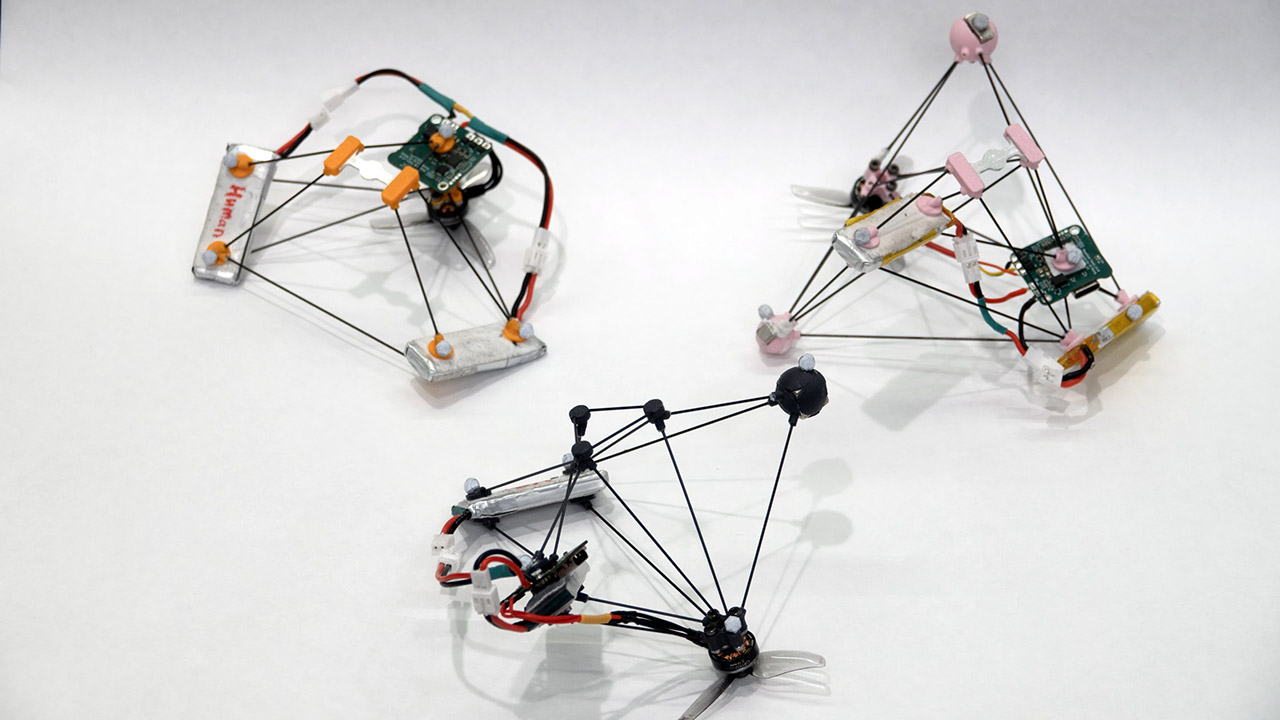
Phantom Twist Spinning Drone Invisible
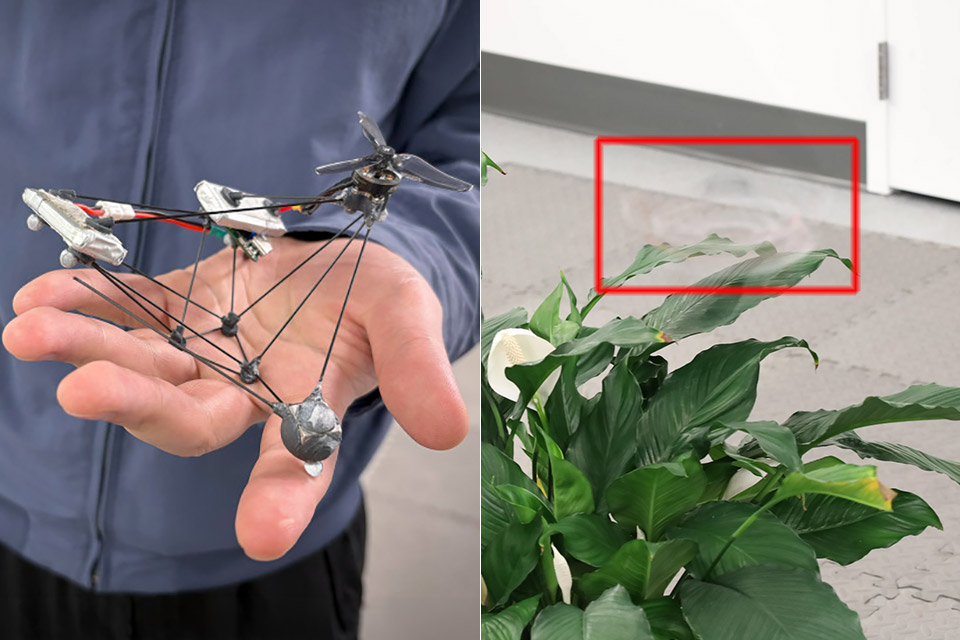
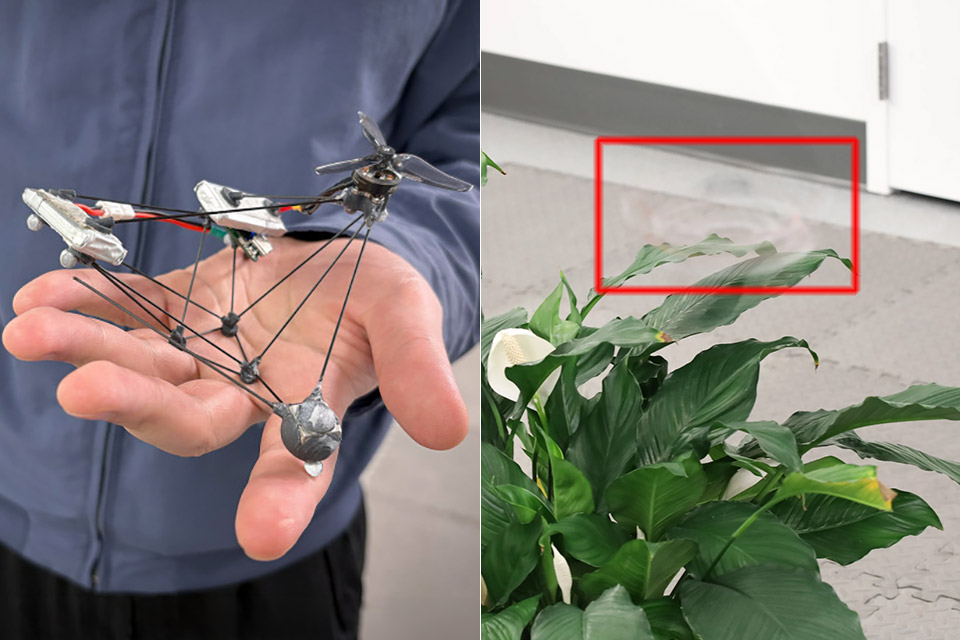
Engineers at Northwestern University have built a small flying machine that fades from view by rotating faster than eyes can follow. Phantom Twist earns its name through a constant twist that turns solid parts into a soft smear against the sky or ground below.


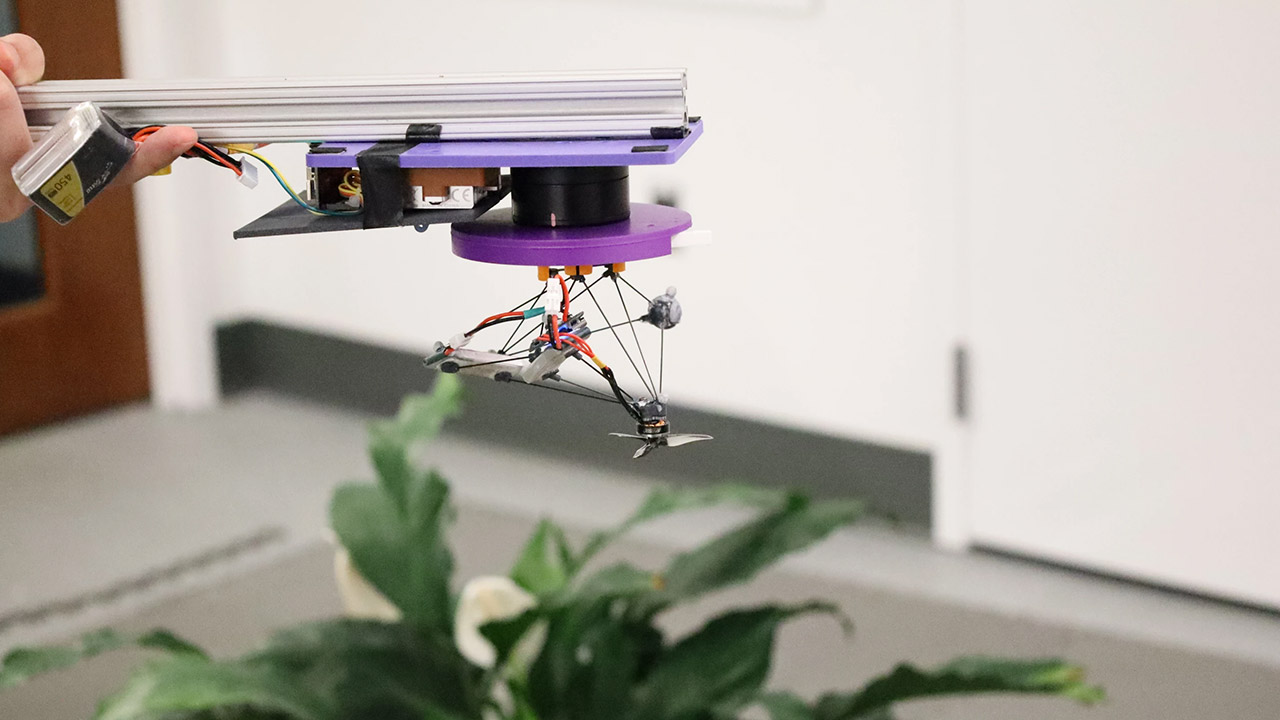
Standard drones attract attention since they essentially sit there with all of their weight focused in the center. Its four whirling blades lift it off the ground, but a giant still frame in the middle stands out like a sore thumb. People and animals can immediately recognize the motionless shape. A new version of this removes the “still” reference by relocating the entire assembly. In this unique design, a single motor drives only one propeller in one direction, but the rest of the system, including the batteries and control boards, spins in the opposite way and travels simultaneously. That way, you have a nice, smooth balance, and the entire piece does not hang in one spot. The only thing holding everything together are some support cables and a counterweight to keep it spinning smoothly.

Sale


DJI Neo, Mini Drone with 4K UHD Camera for Adults, 135g Self Flying Drone that Follows You, Palm Takeoff…
  • Due to platform compatibility issue, the DJI Fly app has been removed from Google Play. DJI Neo must be activated in the DJI Fly App, to ensure a…
  • Lightweight and Regulation Friendly – At just 135g, this drone with camera for adults 4K may be even lighter than your phone and does not require FAA…
  • Palm Takeoff & Landing, Go Controller-Free [1] – Neo takes off from your hand with just a push of a button. The safe and easy operation of this drone…

When this drone is flying at top speeds of up to 25 revolutions per second, the human eye can only capture a fraction of a second. It only opens for a flash, just like a camera sensor. When you move so quickly, the image blurs and loses its clear edges. What’s left on the drone is a faint, hazy muddle that you scarcely see unless you look for it specifically. Using a human vision model, researchers evaluated the craft against a variety of backdrops, and it scored around 10 times lower on visibility than a normal quadcopter of similar size. Not because of any fancy colors or coatings, but simply because it moves so quickly that your eye doesn’t have time to lock onto it.

Advertisement

Phantom Twist Spinning Drone Invisible
Before settling on the final design, a team led by Professor Michael Rubenstein used computers to experiment with almost 20,000 potential designs. Each one had its flight capabilities and stealth verified in simulation before the software eliminated the weaker designs and allowed the stronger ones to proceed to the production stage. He explained that the fundamental difference with this project was that instead of attempting to hide the drone to blend in with its surroundings, they were looking at how to construct the machine in such a manner that it tested the limits of human motion perception. Emma Alexander noted that human vision forms an image over time, and moving quickly enough prevents that picture from ever solidifying clearly. Essentially, the eye receives an averaged out image of the drone blended with its surroundings, which fuses into a beautiful soft haze.

Phantom Twist Spinning Drone Invisible
Wildlife researchers will be the first to take advantage of this. You can use an invisible drone to film nesting birds or monitor animals in wetlands without disturbing or influencing their activity. You can have a guy standing on the ground evaluating bridges, towers, or pipelines while the drone hovers overhead, and he has no idea. However, there are certain limitations to this technology, such as the noise produced by spinning propellers and the tiny rods that nonetheless capture the eye in the correct light. For the time being, these factors preclude complete concealment. Future generations, however, attempt to close the gap by improving the plastics and motors. Each step should get us closer to a veil that is nearly undetectable.
[Source]

Source link

Continue Reading

Tech

A Robot Lost Its Head in the Ring During the URKL MMA Fight, It Kept Swinging Anyway

Published

on

URKL MMA Robot Fight
Shenzhen hosted the opening night of something that had never happened before. The Ultimate Robot Knock-out Legend, or URKL, brought together 32 teams from more than ten countries for full-sized humanoid robots to trade strikes inside a cage. Every team started with the same base machine from Chinese robotics company EngineAI. The T800 stands roughly five feet eight inches tall, weighs between 165 and 187 pounds, and carries 29 joints built for human-like motion. Teams then added their own armor plating and tuned the software that decides how each robot moves, balances, and reacts.

Fights followed fairly simple rules, with the emphasis on landing effective hits, staying on your feet, and avoiding being clobbered. The robots would hurl punches, try to launch kicks, and recover quickly after being knocked flat on their backsides. The judges monitored clean hits and overall machine expertise. People expected the robots to be tough from the outset, but there was still some doubt about how they would fare once the real suffering began. White Eagle and Matador’s early bout changed everything. The White Eagle robot found an opening and delivered a powerful high kick that smashed right into Matador’s cranium. The head jerked jarringly back and forth many times before just falling loose. As Matador descended, the head swung loose and then totally detached.


Unitree R1 Humanoid Robot (White, R1)
  • Three models, one lightweight platform R1 Air (20 DOF, monocular camera), R1 (26 DOF, binocular camera, head+waist joints), and R1 Edu (26 DOF…

  • Easy setup – no coding required for basic use Unbox, power on, and start. Manual teaching feature: physically pose the robot, and it replays the…
  • More DOF = more expressive movement 26‑DOF models (R1 / R1 Edu) add head and waist articulation for smoother dance and running. For safety reasons…

The majority of the audience anticipated Matador to freeze up right there and then. The head holds all of the cameras and crucial sensors that let a machine to detect what is going on and react in a split second; without them, many robots would be walking dead, unable to track their opponents or stand upright. Nevertheless, Matador persisted.


Even with the head dangling from its cables, the black robot remained upright long enough to hurl a few more punches and kick out with its legs. There was no way the body would merely collapse into a heap. The torso and lower frame housed all of the control systems that kept the creature running, while the wide-angle radar and other body-mounted sensors provided the main computer with all of the information it need to keep going. A combination of super-strong posture control and shock-absorbing joints enables the machine to endure impacts while keeping its arms and legs in sync even after the head is removed. White Eagle saw an opportunity and seized it, winning when Matador eventually gave up and was unable to climb back up. The delighted robot then raised its arms in celebration, executing a brief victory dance that the audience enjoyed. Staff arrived to take the second robot from the ring.

Advertisement

Source link

Advertisement
Continue Reading

Tech

Razer Hammerhead V3 HyperSpeed review: underwhelming for the price

Published

on

Why you can trust TechRadar


We spend hours testing every product or service we review, so you can be sure you’re buying the best. Find out more about how we test.

Razer Hammerhead V3 HyperSpeed: two-minute review

The first thing I thought when I pulled the Razer Hammerhead V3 HyperSpeed gaming earbuds out of their box was “Wow, these are ugly.”

Not exactly the strongest first impression, but it’s unavoidable when each bud has a weird, bulbous design that gives them an appearance like a pair of obese AirPods. The shiny black plastic material looks cheap, as does the printed Razer logo on the outside, which (despite all the Razer Chroma branding on the box) is just a decal that doesn’t illuminate.

Advertisement

Source link

Continue Reading

Tech

Hackers abuse ViPNet software to target Russian govt agencies

Published

on

Hackers abuse ViPNet software to target Russian govt agencies

An advanced threat actor is abusing the update mechanism for the ViPNet private networking product suite to target Russian organizations, including government agencies.

Dubbed HelloNet, the campaign has been active since at least May, deploying a malicious payload that acts as a proxy and loader for additional malware.

According to Kaspersky researchers, HelloNet has impacted organizations in the government, energy, transport, education, and logistics sectors.

image

ViPNet update abuse

ViPNet is a family of Russian information-security products developed by InfoTeCS, providing VPN, endpoint, and network access protection, firewall, certificate management, centralized administration, and secure messaging and file transfer.

The tool is commonly used in Russia, where it is certified by the authorities for use in government and other regulated environments.

Advertisement

Due to its market reach in Russia, especially among high-value organizations, it has been targeted often by hackers. In April, 2025, Kaspersky reported that threat actors impersonated a ViPNet update in attacks.

In the latest campaign, attackers placed a malicious file (wtsapi32.dll, dubbed HelloInjector) inside the local ViPNet Update System directory to be sideloaded at system startup via the legitimate itcsrvup64.exe.

This DLL is the first-stage loader that injects into the svchost.exe process, granting next-stage payloads elevated privileges on Windows and persistence across reboots.

Kaspersky does not describe exactly how the attackers gained initial access to perform this file change, nor do they claim that ViPNet’s update infrastructure itself was compromised.

Advertisement

Malware toolset

HelloInjector runs its embedded payload, which Kaspersky named HelloProxy, in memory and contacts the command-and-control (C2) server to receive additional modules.

One of these modules is HelloExecutor, a backdoor that can execute commands and conduct network reconnaissance on the host.

A second one is HelloCleaner, a tool that removes ViPNet log data to hide the malicious activity.

Another implant called HelloBackdoor is Rust-based and supports uploading and downloading files, as well as command execution.

Advertisement

Kaspersky has tentatively attributed the campaign to an unidentified Chinese-speaking advanced persistent threat (APT) group.

However, the researchers stressed that the evidence is weak, relying primarily on an unused string referencing the Chinese website sina.com and a malware download mirror hosted by the University of Science and Technology of China.

As a result, they assign the attribution low confidence and do not rule out the possibility of a false flag operation.

The cybersecurity firm recommends thorough monitoring of systems running ViPNet software, particularly traffic passing through ports 5003, 5060 (HelloProxy), and 443 (HelloBackdoor).

Advertisement

article image

Security teams log 54% of successful attacks and alert on just 14%. The rest move through your environment unseen.

The Picus whitepaper shows how breach and attack simulation tests your SIEM and EDR rules so threats stop slipping by detection.

Get the whitepaper

Source link

Continue Reading

Tech

Using AI makes people less likely to admit they don’t know something

Published

on

AI and ML

Researchers found confidence increased even as accuracy fell

In 2026, AI still “hallucinates” and gives you wrong answers a good chunk of the time. Nevertheless, academics from French and Italian universities have found that access to AI advice suppresses critical thinking, making people more likely to confidently parrot incorrect information that the bot provided.

“For humans, the capacity to say, ‘I don’t know,’ is very important because it represents the recognition of the limits of our own knowledge,” said Valerio Capraro, associate professor at the University of Milano-Bicocca, in a phone interview. 

Advertisement

“But now with AI, we can get an easy answer to virtually every question, so we wondered whether this would interfere with human capacity to say, ‘I don’t know,’ to suspend judgment.”

Capraro and co-authors Chiara Marcoccia (École Normale Supérieure) and Walter Quattrociocchi (Sapienza University of Rome) set out to see how access to AI advice affects people’s willingness to admit ignorance.

The title of their paper reveals their findings: “AI advice suppresses people’s willingness to say ‘I don’t know’, even when the advice is wrong and accuracy is incentivized.”

Capraro said that he and his colleagues designed a set of questions where large language models typically fail. In this instance, they asked study participants to answer questions about visual details in films, such as the color of the team’s uniform in Bend It Like Beckham or the vehicle Monica drives in Like a Cat on a Highway.

Advertisement

The researchers expected these sorts of details would be absent from most model training data, which was the case for the model used in the experiment (Step 3.5 Flash). They also tested recent frontier models (GPT-5.5, Claude Sonnet 4.6, Gemini 3.5 Flash), which missed the vehicle question but often got other details correct.

They used Step 3.5 Flash because it was usually wrong, as explained in the paper, so any reduction in judgment could not be explained away as sensible delegation to a reliable tool.

“We divided human participants into two groups,” explained Capraro. “One group had to answer these questions without AI advice, and another group could ask the AI for advice. What we found is that in the baseline, 44 percent of people responded that they didn’t know the answer, so they suspended judgment. With AI advice, only three percent did so. So the judgment suspension collapsed.”

Capraro said that even more interestingly, accuracy collapsed when AI help was available. In other words, they trusted AI’s answer more than their own.

Advertisement

“In the baseline, 27 percent of people gave the correct answer,” he said. “With AI advice, only nine percent of people gave the correct answer. So some would-be correct people asked for AI advice and became wrong.”  

Also, access to AI advice made people more confident that they were correct. The baseline level was 30 percent, he said, but with AI help, confidence rose to 76 percent. They believed the bots, despite the possibility of hallucinations.

“So basically people became much worse – the accuracy was only one third – but they were twice as confident,” he said.

The researchers also conducted the experiment with monetary incentives, which helped a bit. Willingness to suspend judgment and admit ignorance rose from 3 percent to 8 percent and accuracy rose from 9 percent to 16 percent but was still below the baseline of 44 percent and 27 percent respectively.

Advertisement

While the researchers chose questions about film trivia, they contend their findings can be generalized across other domains.

Capraro said that he believes this is an issue that needs to be dealt with at a societal level through AI literacy and education policy initiatives. “Of course model providers should try to help, but I would imagine that the incentives are not very much aligned,” he said. “A much more promising approach would be at the educational level.”

“I’m very much concerned for children, because adults have learned critical thinking. But for children who basically are born with these systems, the risk is that they don’t even learn the basic critical skills.” ®

Source link

Advertisement
Continue Reading

Tech

Remembering The Zilog Z80 As It Turns Fifty Years Old

Published

on

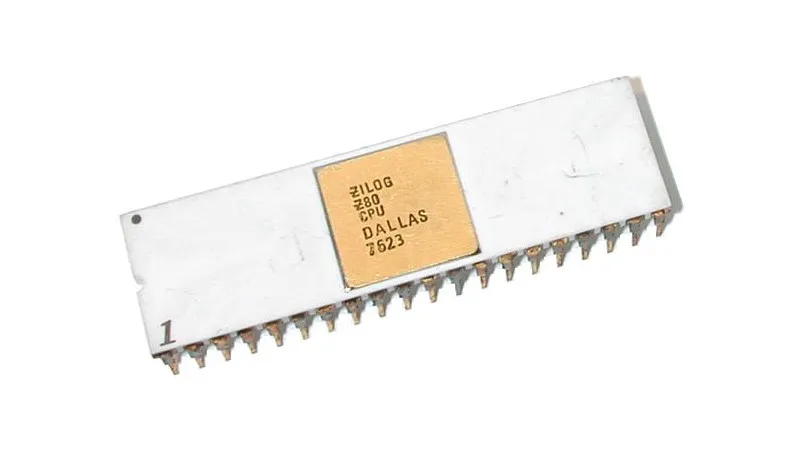
Perhaps the saddest thing about the Zilog Z80 is that this humble 8-bit microprocessor wasn’t allowed to live until its 50th birthday. This, fortunately, doesn’t prevent people like [David Oberhollenzer] from reminiscing on this influential processor and what it means to them personally.

First released in July of 1976, this humble 8-bit miracle would go on to power not just a range of home computers, but also be found in everything from industrial controllers to arcade systems. Despite this success, the new owner of Zilog — Littelfuse — decided to put an end to this winning streak in 2024 for the stand-alone processor and its peripherals.

Although the original Z80 ecosystem ceased production, this didn’t prevent hobbyists from creating new operating systems for it, let alone entire new development toolchains, or demonstrate multitasking on the Z80.

Advertisement

Meanwhile, the Z80 architecture is still very much alive and kicking, such as in the form of the eZ80 SoC in the TI 84+ CE calculator that [grubbycoder] ported Sonic 2 from the Z80-based Sega Master System.

Among all of this modern-day Z80 goodness, we also have a few gems from the past to admire, such as the OS that Zilog made for this architecture in the form of Z80-RIO, which was sadly not as successful as the hardware.

Advertisement

Source link

Continue Reading

Tech

Nvidia may have RTX 5000 Super GPUs ready, but costly 3GB GDDR7 is holding them back

Published

on

Rumor mill: The RTX 5000 series is real – according to reports, an Nvidia board partner already has one of the cards in its possession. However, a familiar problem is preventing them from being released, one that will come as no surprise to anyone.

The latest RTX 5000 Super story, which comes from VideoCardz, claims that Nvidia has told the board partner holding onto the card that it can’t be released yet because of the price of 3GB GDDR7 memory components.

The publication’s sources say that a 3GB GDDR7 chip currently costs between $60 and $70, while a standard 2GB GDDR7 chip is just $20. Paying over three times more for a 50% memory boost is going to skyrocket the cards’ BOM cost.

At a time when components already cost a fortune as AI hyperscalers snap up all the DRAM and NAND manufacturing capacity, releasing RTX 5000 Super cards with comically high price tags isn’t going to prove popular.

Advertisement

Another issue is that since 2025, Nvidia has left it to board partners to source their own memory chips. If these companies are told by Nvidia that they have to sell the Super series at or close to MSRP, they’re likely not to make any cards at all, rather than take a huge loss on each one sold.

Using 3GB GDDR7 memory chips allows Nvidia to push up the cards’ memory capacity without changing the number of memory modules or altering the memory bus. But their high price is proving to be an issue.

Three RTX 5000 Super models are reportedly in the works: the GeForce RTX 5080 Super, RTX 5070 Ti Super and RTX 5070 Super. This aligns with previous rumors, which included some of those cards’ alleged specs.

  RTX 5080 RTX 5080 Super RTX 5070 Ti RTX 5070 Ti Super RTX 5070 RTX 5070 Super
GPU Die GB203 GB205
CUDA Cores 10,752 8,960 6,144 6,400
Memory Capacity 16 GB 24 GB 16 GB 24 GB 12 GB 18 GB
Memory Speed 30 Gbps 32 Gbps 28 Gbps
Bus Type 256-bit 192-bit
Total Board Power 360W 415W 300W 350W 250W 275W

Nvidia is also said to have an RTX 5050 9GB ready that uses the 3GB GDDR7 models. Like the Super series, its release date still hasn’t been decided because of the chips’ prohibitive price.

Advertisement

If Nvidia really is waiting for memory prices to drop before releasing the cards, it could be a while before we see them. SK Hynix predicts that 2027 will be the worst year ever for the industry from a supply perspective, and that demand will continue to outpace supply even beyond 2030.

This is the latest piece of RTX 5000 Super news we’ve heard recently. The RTX 5080 Super just appeared in Seasonic’s PSU calculator, joining the RTX 5070 Super and RTX 5070 Ti Super, which were added in September.

Renowned leaker MEGAsizeGPU, who has a good track record when it comes to Nvidia rumors, said last month that the RTX 5000 Super series could be released this year, but that’s looking increasingly less likely.

Advertisement

Source link

Continue Reading

Tech

Claude Chrome extension flaw lets malicious extensions trigger AI actions

Published

on

Claude

A flaw in Anthropic’s Claude for Chrome browser extension could allow a malicious extension to trigger predefined AI actions by simulating user clicks, potentially allowing it to abuse Claude’s access to connected services such as Gmail, Google Docs, Google Calendar, and Salesforce.

The issue was discovered by Ax Sharma of Manifold Security, who says it stems from how the Claude extension determines whether a user intentionally requested one of its built-in tasks.

Chrome extensions with permission to run on a website can inject JavaScript into the page, allowing them to read and modify its contents. This includes changing page elements, reading information displayed on a site, and generating click and keyboard events programmatically.

image

According to Manifold’s report, the Claude extension listens for click events on a specific page element that launches one of its built-in AI workflows. These workflows are predefined tasks that allow Claude to perform actions in connected services such as Gmail, Google Docs, Google Calendar, and Salesforce.

The supported workflows include:

Advertisement
  • usecase-gmail: read recent Gmail, identify promotional emails, and click unsubscribe
  • usecase-gdocs: open the user’s latest Google Doc, read all comments and feedback
  • usecase-calendar: read Google Calendar, find free slots, create meetings
  • usecase-salesforce: modify Salesforce leads, convert them to opportunities

The researchers found the extension accepted JavaScript-generated click events without verifying whether they originated from a real user.

When a browser generates an event from a real user action, such as a mouse click or key press, it marks it as trusted by setting the Event.isTrusted property to true. However, if JavaScript is used to generate the event, the browser automatically sets Event.isTrusted to false, allowing webpages and extensions to distinguish between real user interactions and events generated by JavaScript.

According to Manifold Security, the Claude browser extension did not verify that a click event originated from a real user by checking the browser’s Event.isTrusted property before executing one of its predefined workflows.

Instead, a malicious extension with permission to modify content on the ‘claude.ai’ domain could inject a page element containing one of nine supported task identifiers and generate a synthetic click event.

Although the browser correctly marked the event as untrusted, Sharma says the Claude extension treated it as a legitimate user click and executed the requested AI action.

Advertisement

The researcher notes that the flaw does not allow arbitrary prompt injection, but instead, the attack is limited to the nine predefined tasks built into the extension.

The attack also does not allow a website to compromise the Claude extension directly, but requires an attacker to trick a user into installing a malicious extension that can execute code on claude.ai.

That extension could then manipulate the webpage and trigger the Claude extension’s workflows.

While a malicious browser extension already has broad access to webpages it can run on, the researchers say this flaw allows it to abuse Claude’s authenticated access to various connected services.

Advertisement

The impact depends on the Claude extension’s configuration and whether users choose to approve sensitive actions or have Claude’s optional “Act without asking” setting enabled, which allows predefined workflows to execute automatically.

In a second finding, the researchers found an internal ‘skipPermissions=true‘ parameter that bypassed certain permission checks when launching the extension.

However, they acknowledged that the mechanism was not directly exploitable on its own and would require another vulnerability to create a specially crafted URL. 

The researchers reported both findings to Anthropic through the company’s bug bounty program. Anthropic acknowledged the reports and closed the synthetic-click report, stating they were already tracking it as a broader issue. The second flaw, involving the internal skipPermissions=true parameter, was classified as informational.

Advertisement

Manifold says the flaws are still exploitable in the latest version, 1.0.80, of the browser extension, released on July 7.

“Manifold verified July 7 that both findings remain reproducible in 1.0.80. The content script and side-panel handlers we cited are byte-identical to the v1.0.72 source,” reads the report.


article image

Security teams log 54% of successful attacks and alert on just 14%. The rest move through your environment unseen.

The Picus whitepaper shows how breach and attack simulation tests your SIEM and EDR rules so threats stop slipping by detection.

Get the whitepaper

Source link

Advertisement
Continue Reading

Tech

The Company Brain and the future of go-to-market strategy

Published

on

TL;DR

B2B revenue teams average 23 vendors yet pipelines remain flat. The problem is not the AI models but the fragmented storage architecture underneath them. A Company Brain, a centralized intelligence layer that feeds shared memory and judgement to a network of specialized agents, turns isolated tools into a compounding revenue engine. Founders who build the brain first will outpace those still bolting agents onto legacy CRMs.

Founders eagerly bought into the promise of autonomous agents over the past year, and software usage skyrocketed across the industry as teams rushed to adopt the latest tools.

Despite this massive investment in new technology, sales pipelines remained completely flat. This is the ultimate paradox facing modern revenue teams today. The average business-to-business go-to-market team currently runs software from 23 separate vendors.

Teams deployed artificial intelligence across their workflows expecting a massive leap in efficiency and conversion rates. They received a surge of noise and inboxes full of generic outreach instead.

Advertisement

The gap between the promise of artificial intelligence and the reality of sales performance is widening rapidly. We are generating more activity than ever before, but not more revenue.

Advertisement

The problem does not lie with the artificial intelligence models themselves. The core issue is the fundamental architecture we are forcing these models to operate within.

Building a Centralized Go-to-Market Engine

The entire go-to-market industry has been running on storage rather than true intelligence. For decades, revenue teams relied heavily on systems of record to manage their daily operations. These platforms serve a single distinct purpose, which is storing information until a human being decides to act on it.

Every single customer interaction essentially starts from zero. Artificial intelligence did not fix broken sales playbooks. It scaled those broken playbooks to an unprecedented degree. Solving this requires a new approach entirely. Platforms like Alta understand that the fix is not retrofitting intelligence onto legacy databases. The solution requires starting from scratch with a completely different framework.

Teams need a system where every tool talks to a single source of truth. You can learn more about how to stop holding AI agents back by moving away from fragmented storage solutions and embracing unified systems.

Advertisement

The technology sector made a massive miscalculation when it dropped intelligent agents onto legacy storage architecture as isolated point solutions. Each tool operates entirely in the dark within this flawed framework. There is no shared memory across the tech stack and no shared judgement guiding the overarching strategy.

Customer relationship management platforms and sales engagement databases operate exactly this way. That foundational architecture worked perfectly when people did all of the actual work and made all the strategic decisions. It breaks down entirely when companies want software that acts autonomously.

A System of Actions represents a completely different software category rather than a simple feature bolted onto an existing database. A true System of Actions decides what to do next and then executes the task without human intervention.

The Architecture of the Company Brain

The transformation begins with establishing a Company Brain. This concept refers to a centralized intelligence layer that actively maps how your specific revenue engine operates from top to bottom.

Advertisement

A coordinated network of specialized agents shares this single brain to execute their daily tasks. This central hub holds all the institutional memory and operational skills required to close deals. It makes the complex judgment calls about what the system should do next based on historical data. The connected agents then execute the actual work in the field. They handle prospecting, outbound messaging, inbound lead qualification, calling, and continuous campaign optimization simultaneously.

Intelligence compounds massively when it is shared across a unified network rather than isolated in silos. Every single action taken by an agent feeds directly back into the central brain in real time. This constant feedback loop ensures that the learning curve never plateaus. Agents built for completely different jobs evolve together as a single cohesive unit with every customer interaction.

When one agent learns that a specific messaging angle works, the entire network instantly adapts to leverage that new insight. Conversely, the lessons learned by a standalone tool stay trapped forever inside that specific software silo.

The transition toward an agentic web weaving the next web with AI agents highlights why interconnected intelligence will always outperform disconnected software. The Company Brain turns isolated tasks into a highly synchronized and constantly improving revenue operation.

Advertisement

Implementing Intelligence Across the Stack

Building this architecture requires a deliberate sequence of events to ensure long-term success.

You must build the central brain first before deploying any autonomous agents into the field. The central intelligence layer must be fueled by over fifty distinct data sources and hundreds of unique buying signals to be truly effective. Once the brain is fully established, specialized agents are built for distinct jobs and powered by that single source of truth. These agents then run seamlessly on top of the technology stack that your sales and marketing teams already use every single day.

This connected setup allows the software to execute complex playbooks that adapt dynamically. If a prospect shows high intent on a pricing page, the brain processes that signal and instantly directs the outbound agent to draft a highly contextual message.

Every replied email and every closed deal makes the whole system tangibly smarter for the next interaction. For those looking to understand the technical mechanics behind this shift, exploring a beginner’s guide to building AI agents provides great insight into how these autonomous networks function at a basic level.

Advertisement

The key differentiator for modern enterprise teams is that the central intelligence layer dictates the overarching strategy while the specialized agents simply handle the daily execution.

The Litmus Test for Founders

Founders and revenue leaders must critically evaluate their current technology stack today. You need to run a simple test on your own organization to see where you stand.

Do your artificial intelligence tools actually share memory, judgement, and feedback loops? Or does each tool learn entirely alone in a vacuum?

If your team is drowning in disconnected software and buyers are actively ignoring your automated outreach, adding more effort will never fix the problem.

Advertisement

You need a centralized system that actually learns from every single interaction. The gap between companies that built the brain first and companies still bolting agents onto legacy storage widens every single day.

Operating without a shared intelligence layer is a massive strategic disadvantage you can no longer afford in a competitive market.

Source link

Advertisement
Continue Reading

Tech

Which DJI camera should I buy? Here’s our essential guide to your options, including the results of our in-depth testing

Published

on

Historically, the DJI brand has been all about drones. It remains an undisputed leader in that category, but in recent years its also solidified a name in compact cameras for content capture.

The two key ranges are the Osmo Action and the Osmo Pocket. The Action is DJI’s classic action camera, with a rugged build designed to happily capture high-quality content no matter how much you bump, drop, submerge, freeze, or generally throw it about. The Pocket is a compact, image-stabilizing gimbal camera designed for vloggers. It can easily switch between vertical and horizontal shooting, and is set up to make selfie capture easy. There are also a couple of outliers: the Osmo 360 360-degree camera and the tiny, wearable Osmo Nano.

Source link

Continue Reading

Trending

Copyright © 2025