







Connect with us
DAPA Banner
DAPA Coin
DAPA
COIN PAYMENT ASSET
PRIVACY · BLOCKDAG · HOMOMORPHIC ENCRYPTION · RUST
ElGamal Encrypted MINE DAPA
🚫 GENESIS SOLD OUT
DAPAPAY COMING

Tech

Virtua Fighter Crossroads Finally Lets the Fights Speak for Themselves in New VS Battle Gameplay Footage

Published

on

Virtua Fighter Crossroads VS Battle Screenshot
SEGA and Ryu Ga Gotoku Studio just put out the first proper look at head-to-head combat in Virtua Fighter Crossroads, and the footage lands with real weight. The new VS Battle gameplay trailer, released earlier this week, shows two fighters trading blows in arenas that feel grounded and physical. Combos flow cleanly. Grabs snap into close camera angles that emphasize the struggle. Counters land with purpose. Finishers carry a sense of finality without overblown spectacle.


This is the traditional arcade mode that fans have been waiting for, and after months of story-focused announcements, many were wondering if the classic series would still be included. The answer appears to be yes, based on the footage. Crossroads is designed with Unreal Engine 5. It appears in the character faces, which are much more detailed and expressive than in prior games. The lighting reacts naturally to movement, and post-processing does not convert every punch into a flashy exhibition. As a result, the battle appears to be far more authentic than that of most modern fighters. The boxers move with weight, and their footwork is important. You must consider the distance and your position, as simply sidestepping and circling on a level plane will not enough.


Grabs, in which one combatant grabs onto another, receive special attention in Crossroads. When one fighter locks up another, the camera zooms in to show the hold and the other guy’s attempts to squirm free. It’s a minor detail, but it truly conveys the physicality of the fight, and as the bout ends, you get this nice animation that shows off the final strike. It’s not some cheap-sounding super move, because the emphasis is on timing, reads, and executing a flawless move. Ryu Ga Gotoku Studio has always stated that the competitive side is its own entity, and that remains true now. You can’t simply carry over your Story Mode stats into VS Battle because it’s purely a skill thing, and the controls have been designed with normal gamepads in mind, with a focus on simple inputs that nonetheless reward a thorough mastery of each character’s tools. It’s still all about technique, reading your opponent, and understanding your character inside and out.


The rest of the game is built on this basis, with the Story Mode following four new characters who meet in the fictional city of Vilasapara, Southeast Asia. You can explore the city, do side missions, and fight through massive multi-opponent brawls and set pieces. Old characters such as Pai Chan appear in both the tale and the competitive mode, while a new masked fighter known as the Bakunawa Killer is already regarded as a key player. The city itself has the lived-in vibe that Ryu Ga Gotoku is known for, and you can tell they spent a lot of effort making each section feel like a real place.

Virtua Fighter Crossroads VS Battle Gameplay
Crossroads is expected to be released in 2027. Platforms are still unclear, although the presentation suggests that it will be available on modern consoles and PC. There is no information yet on an exact release date. One thing we do know is that the competitive mode has received equal care and attention as the story mode.
[Source]

Advertisement

Source link

Continue Reading
Click to comment

You must be logged in to post a comment Login

Leave a Reply

Tech

5 Of The Worst Places To Put A Projector, And Why

Published

on


If you don’t love the look of a big TV in the living room, have limited space in your home to accommodate a TV, or just want a fun and easy way to elevate movie nights, you might want to look into buying a home projector. It used to be considered a luxury to have a projector set up in your home, but modern projectors are surprisingly cheap, thanks to technological improvements, material swaps, and lower production costs. Plus, home projectors are worth buying used, allowing consumers to save even more money on a gadget that used to feel too premium for the average household.

There are so many different types of home projectors to choose from, but no matter which projector model you go with, they all come with similar placement recommendations. That said, some projectors are built to perform better in certain conditions, like niche outdoor projectors bright enough to clearly project an image in direct sunlight. However, for the most part, all home projectors share these worst places to avoid. We’ve gathered five spots you should absolutely avoid putting a projector, along with a detailed explanation and a recommendation for where you should set it up instead.

Advertisement

Any messy or overcrowded surface

A projector, like any electronic media device, tends to get hot while it’s working. And because projectors have a lamp or a light bulb inside, they typically get hotter than a standard DVD player or even a gaming console. To prevent overheating, a projector is designed to pull air through intake vents, over the hot components, and out through exhaust vents.

This ventilation process is so important for user safety and the life of the projector that most (if not all) brands will highlight how important it is to set up the projector in an uncrowded area where it can breathe while in use. According to Lisowod, maker of the best cheap projector on Amazon, users are supposed to make sure there’s “adequate ventilation around the device” and that it’s on a “stable, flat surface.”

If your coffee table is frequently a dumping ground for takeout containers, dirty clothes, and other miscellaneous items, you shouldn’t set up a projector there. And if you do, you run the risk of potentially starting a fire or damaging the projector past the point of fixing, either due to overheating or falling from an uneven surface. Instead, choose a surface you know tends to stay clean and dusted or, if you know that’s not an option, you can tidy the surface each time you plan to use the projector.

Advertisement

The kitchen or the bathroom

Most people set up projectors in their living room, bedroom, a dedicated media room, or backyard, which are typically the best places to use a projector. However, some might consider using a projector in their kitchen or bathroom, both of which are terrible places for this media device. Putting a projector in your bathroom so you can watch a movie while you’re relaxing in the tub or in the kitchen to keep you entertained while cooking dinner sounds great on paper, but in reality, a projector in either of these rooms will have a shorter lifespan.

In the kitchen, projectors can be exposed to oil, oil mist, steam, smoke, or airborne cleaning chemicals. Depending on how small your kitchen is, there’s a chance the projector could be dangerously close to a hot stove or the sink. In the bathroom, humidity is the greatest danger to a projector. While kitchens can also get pretty humid while cooking, the risk of humidity damaging the projector is much greater in the bathroom, especially if there’s not a good ventilation system. According to Epson, a projector being exposed to high humidity could result in a fire, electric shock, or damage to the case or the projector itself.

Advertisement

An enclosed cabinet in a TV stand

Just like balancing a projector on a messy surface can prevent a projector from ventilating properly, so can placing it inside a cabinet, even if the cabinet is completely empty. Most cabinets in entertainment centers or dressers don’t have any active ventilation solutions set up inside. Some may have a hole built into the back panel or a larger cutout for cables to pass through, but with nothing actively pushing hot air out and bringing cool air in, this is too hot a space for a projector.

Most cabinets are also too compact for a projector to operate safely. Sony recommends leaving nearly 12 inches of clearance around some of its projector models, and other projectors from Sony and other brands likely need a similar amount of room to breathe. In a cabinet that’s too small and doesn’t offer nearly enough ventilation for a hot projector, you run the risk of the device overheating and possibly starting a fire or damaging the device beyond repair. Instead of sticking it inside a cabinet, a projector should be placed on a clean, roomy surface or mounted to the ceiling.

Advertisement

In direct sunlight or in rooms with bright lights

One of the worst places you can set up a projector is in a room that’s too bright or anywhere that gets direct sunlight. This isn’t because the projector might get too hot, though if it’s in the path of a sunbeam for too long while it’s actively in use, it’s possible it could overheat. Rather, a projector shouldn’t be set up in a spot that’s too bright because it makes it nearly impossible to see the projected image.

Some rooms, like the aptly named sunroom, are designed to let the sun in, and it would be strange to put blackout curtains in there just so you could have a projector in that room. For living rooms and bedrooms, two common rooms for a projector to call home, blackout curtains are a great way to block sunlight from streaming in. If the lights you have installed inside are too bright, you can invest in dimmer switches or smart bulbs that allow you to adjust brightness within a mobile app.

Advertisement

Near an air conditioner

LG warns users of its ProBeam DLP projectors not to install them anywhere that’s “under the air conditioner or is directly exposed to the wind from the air conditioner.” The brand also notes that users should avoid installation anywhere that’s “dusty or exposed to wind and rain,” so it’s likely that the constant (and possibly dusty) airflow and potential condensation are two of the biggest reasons LG recommends against installing a projector there.

A projector manual from Sony echoes this recommendation to steer clear of AC units during installation and use. The manual explains how air from air conditioners can cause oscillation in the projected screen. In more simple words, this influx of air can cause the projected image to look shaky or jittery. A jumping image could also be the result of setting up the projector on an air conditioner simply because of the vibrations produced by the AC unit, according to projector brand Miroir

Advertisement

Methodology

Most of us on the SlashGear team have home projectors as well as other similar media devices, like gaming consoles, DVD players, TVs, and so on. Because of that, it’s easy to rely on common sense to come up with this list of the worst places you can set up your projector. However, we didn’t stop there. We took the time to verify each reason we thought of with documentation from reputable projector brands, including LG, Sony, Lisowod, and Epson, for suggestions and warnings on where to set up or avoid setting up a projector.

Advertisement


Source link

Advertisement
Continue Reading

Tech

Which Classic Mopar Was Called The ‘Gentleman’s Muscle Car’ & What Made It So Special?

Published

on


Mopar’s mid-1960s to early 1970s run of muscle cars easily goes down as one of the greatest eras ever for an American performance car maker. The Dodge and Plymouth brands of this period sold some of the most iconic muscle cars ever made, with model names every bit as recognized as the cars they adorned. Filling showrooms at this time were the Charger, the Challenger, the Cuda, the Super Bee, and the Demon, just to name a few.

While certainly not obscure or forgotten, the Plymouth GTX is a model from this period that sometimes gets overlooked when compared to its siblings. In the mid-’60s, as the muscle car movement was taking off, the mid-sized GTX would help lay the groundwork for the Mopar muscle cars that would follow it. The GTX also developed an image as a “gentleman’s muscle car” or “gentleman’s hot rod” through Mopar’s marketing and its higher price — and more well-appointed nature — compared to other mid-sized muscle cars of the time.

While there are other late ’60s and early ’70s American performance cars that could also lay claim to the “gentleman’s muscle car” label, the Plymouth GTX’s blend of upscale luxury and drag-strip-ready performance certainly made it stand out among its Mopar muscle car contemporaries. Today, this also makes the GTX a very desirable piece of muscle car history for collectors.

Advertisement

Mopar muscle with a dash of luxury

While the definition of what exactly is or isn’t a muscle car is loose, the Chrysler Corporation had been building high-performance, V8-powered automobiles since the mid 1950s, and it really began ramping up those efforts in the early and mid 1960s. By 1967, muscle car fever had begun to sweep the industry, with automakers rolling out a stream of specially-marketed and packaged, mid-size models powered by large cubic-inch engines.

The GTX debuted for the 1967 model year as Plymouth’s mid-sized muscle offering. Based on the Belvedere, the GTX came with big block power as standard, offering buyers a choice between the base 440 cubic-inch Super Commando V8 and the legendary 426 Street Hemi. Beyond its power plant, the GTX came well-equipped inside and was adorned with hood scoops to help it stand out in the growing segment of mid-sized muscle offerings.

Advertisement

It was in 1968, though, when the GTX really began to separate itself as Plymouth’s more upscale muscle car offering. That’s because this is the same year the legendary Plymouth Road Runner debuted. Based on the same mid-sized Belvedere body style, the Road Runner was all about stripped-down, budget-friendly big-block performance. This meant that GTX was now Plymouth’s better-equipped, more upscale take on the mid-sized muscle car, available with engines like the aforementioned 426 Hemi or the potent 440 Six Pack. 

Advertisement

The GTX wasn’t the only upscale muscle car

While there wasn’t any specific or official branding of the GTX as the “gentleman’s muscle car,” it was marketed as part of the “executive branch” of Plymouth’s so-called Rapid Transit System muscle car lineup alongside the full-size Sport Fury GT. However, just because it was positioned upmarket didn’t mean the GTX lacked the fun of other Mopar muscle cars. It still had the same bright color options and wild optional features like the Air Grabber hood scoop. The GTX existed as a standalone model until 1971, by which point the muscle car era itself was already beginning to fade out. 

Because there’s no official “gentleman’s muscle car” title, there are several other muscle-era models that could also be deserving of the label. These included the well-equipped Oldsmobile 442, the early 1970s Pontiac Grand Prix, and the related Chevrolet Monte Carlo, all of which were General Motors offerings. The latter two, in particular, matched big cubic-inch muscle car engines with elements of the emerging personal luxury car segment. 

Luxury muscle wasn’t solely the domain of mid-sized offerings, though, and there were also full-size offerings that blended muscle car and luxury features. These include the aforementioned Plymouth Sport Fury GT and the rare Chrysler 300 Hurst Edition, both of which added some muscle car spice to spacious and upscale full-size coupes. 

Advertisement


Source link

Continue Reading

Tech

How to Watch the World Cup 2026 final halftime show: Free Live Streams & TV Channels

Published

on

While Spain vs Argentina battle it out in the 2026 FIFA World Cup final for football’s biggest prize, global stars will light up the stage in what will be the first-ever World Cup halftime show.

The show will be headlined by some of the biggest global stars, including Madonna, Shakira, Justin Bieber, and the popular South Korean band BTS. It’ll be curated by Coldplay’s Chris Martin and will also feature the famous Muppets from Sesame Street – characters that have been a cherished part of many Americans’ childhoods.

Source link

Advertisement
Continue Reading

Tech

This experiment shows how easy it is to poison an open-weight AI model for under $100

Published

on

Open-weight AI models have been having a moment lately. Just this month, Moonshot’s massive Kimi K3 model landed close behind Claude Fable 5 and GPT 5.6 Sol in several benchmarks, all while remaining fully open-weight and downloadable by anyone.

However, Katie Paxton-Fear, a cybersecurity lecturer at Manchester Metropolitan University and staff security advocate at Semgrep, managed to poison an open-weight model and proved how easily that openness can be turned against you (via The Register).

How did the researcher poison the AI model so quickly?

Paxton-Fear started small, testing whether fine-tuning could quietly get a model to swap JavaScript coding conventions, even after being explicitly told not to. When that experiment worked without much resistance, she decided to push further and build a backdoor into it.

I started out by trying to figure out if I could use fine tuning to get a model to swap from camelCase for Javascript to snake_case, and it was actually really easy, even if we then gave the AI specific instructions to use camelCase. After that worked I did a proper backdoor pic.twitter.com/35alEwypn8

— Katie Paxton-Fear (@InsiderPhD) July 14, 2026

Advertisement

It took just ten poisoned training examples before the model reliably began producing code vulnerable to remote code execution, a flaw that lets attackers run their own commands on someone else’s machine.

The whole process cost under $100 and took roughly an hour. Interestingly, larger AI models turned out to be even easier to compromise than smaller ones. It echoes a similar pattern found in a University of Washington study, where more capable AI browsers carried the biggest security risks among those tested.

Why should this worry anyone using open weight models?

The biggest concern is not simply that a model can be poisoned, but that there are few reliable ways to detect whether it has been manipulated. Traditional software can be reverse engineered to fully map out its behavior, but AI models offer nowhere near that same level of transparency, even if they are open-weight.

So can we trust open weight models, fine-tuned online, and marketed as the solution to our AI token spend woes? Well, we probably need something better than benchmarks and “and don’t write any insecure code”

— Katie Paxton-Fear (@InsiderPhD) July 14, 2026

Advertisement

A compromised model does not need to visibly malfunction to cause damage; it just needs to quietly influence decisions in ways nobody notices. Commercial closed models like Claude or ChatGPT aren’t fully off the hook either, since they demand plenty of trust while offering very little visibility into their inner workings. This research is a clear reminder that trusting an AI model blindly, open-weight or not, comes with real risk attached.

Source link

Advertisement
Continue Reading

Tech

This HDMI Cable Allows For The Fastest Speeds, But Do You Really Need It?

Published

on


We may receive a commission on purchases made from links.

If you’re shopping for the right HDMI cable for your TV or monitor, you may have come across the Ultra96 cable. Unless you’re a technophile, you may not know that the Ultra96 supports up to 96 Gbps of bandwidth under the HDMI 2.2 specification. This means that this cable can handle extremely demanding video formats and superior resolutions. But is it just too much cable for what you need?

If you’re buying HDMI 2.2 hardware capable of using its full 96 Gbps bandwidth, the answer is no. In that case, an Ultra96 HDMI cable is the right choice as it delivers everything you need for some modern PCs, TVs, and other advanced devices. This is especially true if you’re using a device capable of 4K at 240Hz, uncompressed 8K at 60Hz, and resolutions up to 16K at 60Hz. The Ultra96 is designed to support these specifications, making it the fastest and highest-bandwidth HDMI cable you can buy.

Advertisement

But if your devices are designed around HDMI 2.1 with 48 Gbps, a cable rated for those specifications is really all you need. The Ultra96 will not give your older devices the best resolution and the fastest speeds because the capability of your equipment is limited to the HDMI standard it was designed to support. However, if you’re planning on upgrading your devices in the future, you could swap your current cables for the Ultra96, because they are backward-compatible. That way, you’ll be ready when you decide to update your equipment.

Advertisement

What makes the Ultra96 cable different

Ultra96 is the latest advancement in the evolution of HDMI technology. Its 96 Gbps bandwidth is a major improvement over the once-standard HDMI 2.0 specification. HDMI 2.0 supported up to 18 Gbps of bandwidth before HDMI 2.1 increased that capability to 48 Gbps. But Ultra96 is designed to support the continued push toward higher resolutions, faster refresh rates, and more demanding video applications.

However, the Ultra96 certification goes beyond just bandwidth. Ultra96 cables are classified as Category 4 HDMI and must go through a testing phase to verify they can meet the full 96 Gbps specification. They are also tested for low electromagnetic interference, which helps reduce the possibility of interference with wireless networks and other electronic devices. But while the Ultra96 cable itself is designed to support the full 96 Gbps bandwidth, HDMI 2.2 devices can often be a bit more complicated.

That’s because unlike HDMI 2.1, HDMI 2.2 includes a few different bandwidth tiers, including 64 Gbps, 80 Gbps, and 96 Gbps. This means that a device bearing an HDMI 2.2 designation may not necessarily support the full performance available from an Ultra96 cable. As a result, consumers will need to pay attention to the specific bandwidth, as well as features, supported by their devices. Otherwise, they could end up with an HDMI cable that goes beyond the capabilities of their equipment.

Advertisement


Source link

Advertisement
Continue Reading

Tech

There’s a sneaky way to watch World Cup final 2026 for FREE

Published

on

The 2026 World Cup final is here as Spain take on Argentina to be crowned champions. It is being billed as Lamine Yamal versus Lionel Messi, but the story runs far deeper than that as two of football’s biggest nations meet on the grandest stage.

Even better is that you can stream the World Cup final 2026 for free.

Source link

Advertisement
Continue Reading

Tech

How To Use Claude’s Reflect Dashboard And Learn When It’s Time To Touch Grass

Published

on

First, you’ll want to access the dashboard and generate your first reflect report. To do so, follow these steps:

  1. Open your browser and navigate to claude.ai.

  2. Click on your name and profile photo. 

  3. Click Settings.

  4. Select Reflect.

Claude will take a moment to generate your report. By default, the chatbot will summarize the last month of your usage, but you can also see the last three, six or 12 months by clicking the toggle at the top.

Once your first report is ready, you’ll see a short summary of your conversations with Claude. As of the writing of this article, you can’t see the exact amount of time you’ve spent using Claude. If you click the Time spent tab, the page just says “coming soon.” Ryn Linthicum, Anthropic’s head of wellbeing policy, told Engadget the reason for that is the company didn’t have an internal system for measuring time spent on Claude when it began working on the Reflect dashboard.

In any case, the dashboard gives you two different ways to manage your time on Claude. First, you can set break reminders, which the chatbot will deliver in the form of a nudge after you use it for a set amount of time. After just how much time Claude prompts you to take a break, is up to you. You can set reminders for every 15, 30 or 45 minutes, or every few hours. Separately, you can set quiet hours, which are designed to prevent you from using Claude during certain hours of the day. You can set different hours for each day of the week independently of each other. So, for example, on Monday you can put up a roadblock from 5PM to 8PM, while on Saturday you can set it from 12PM to 4PM.

Advertisement

As with any screen time tool, it’s ultimately up to you to honor the usage limits you’ve set for yourself since you can freely dismiss all of Claude’s nudges. If you want to tweak your break reminders, you can do so from the Time and focus section of the settings menu.

One more feature of the dashboard I’ll highlight here involves the AI fluency section, which you’ll find toward the bottom of the interface. Under this section, Claude will generate recommendations designed to streamline your usage of the chatbot. For example, if Claude finds you frequently re-establish the same or similar context when you go to write a question or request, it will recommend you use its Projects feature to group your prompts together, so that you don’t need to repeat yourself so often. In my testing, this tool has helped me use Claude smarter. So I recommend giving some of the tips Claude generates a try.

Source link

Advertisement
Continue Reading

Tech

Claude’s Chrome extension still has hidden security gaps, as researchers warn simple tricks can trigger powerful AI actions

Published

on


  • Anthropic’s Claude extension flaws allow fake clicks to launch sensitive AI workflows
  • Researchers found vulnerable handlers unchanged across eight extension updates
  • Synthetic clicks bypassed checks designed to confirm real user actions

Security researchers at Manifold Security have claimed Anthropic’s Claude for Chrome browser extension contains two unpatched vulnerabilities in version 1.0.80, released July 7, 2026.

According to Manifold Security, it first reported both vulnerabilities to Anthropic through the company’s bug bounty program on May 21, 2026, and received acknowledgment the following day.

Source link

Advertisement
Continue Reading

Tech

‘Odyssey’ director Christopher Nolan calls AI an obvious ‘Trojan horse’

Published

on

Christopher Nolan, the Oscar-winning director whose new version of “The Odyssey” is currently conquering the box office, said it’s been “pretty encouraging” to see deep skepticism of AI, especially from young people.

Nolan was responding to a question from interviewer Hugo Travers, who publishes on YouTube under the name HugoDécrypte. Travers brought up the legendary Trojan horse, which plays a key role in Nolan’s film — just as the horse was a gift concealing murderous Greek invaders, he wondered if AI might be something “that you welcome in your daily life” only to see it become “something else and something darker.”

Laughing, Nolan responded, “I think AI is a Trojan horse that everybody knows the Greeks are inside.” He later described the technology as “a transparent horse, it’s made of glass.”

“I’ve never seen a technology advancing so rapidly [that’s been] so completely rejected by the public,” he said. “Everybody’s suspicion of it is so extreme, particularly young people. The reaction to AI videos online and people my children’s age immediately calling it ‘AI slop’ and coining that term and just putting it in a box.”

Advertisement

In Nolan’s view, this is “a very healthy skepticism, because technology is always going to give us great gifts, as you say, but it has to be viewed with skepticism.” Similarly, he said, “The motives of the people giving it to us also have to be viewed with skepticism. That’s when we’ll get the best out of a new technology, rather than just blind faith that everything’s going to be great.” (Meanwhile, SpaceX CEO Elon Musk has been angrily posting about the film’s nonwhite and transgender cast members.)

Nolan didn’t get more specific about what he views as the threat from AI, but the technology has been a growing source of concern in Hollywood and was a major focus during the writers’ and actors’ strikes of 2023. The Directors Guild of America, where Nolan is president, also won some generative AI protections in its most recent contract.

The director has been famously resistant to other technologies, including smartphones; his embrace of film can make him seem simultaneously like a Luddite and a pioneer, with “The Odyssey” becoming the first feature film to be shot entirely on Imax film and cameras.

When The New York Times recently asked Nolan if he thinks of himself as a technophobe, he replied, “I think of myself as a techno-skeptic,” and said his love of film comes from the fact that it’s “better in terms of representing the way the eye sees the world than any digital imaging system I’ve seen.”

Advertisement

“I embrace new technology all the time, but it tends to be sold to people at the expense of systems that might still be valid and viable,” Nolan said. “That’s what I saw in my industry — throwing the baby out with the bath water. We almost lost film!”

When you purchase through links in our articles, we may earn a small commission. This doesn’t affect our editorial independence.

Source link

Advertisement
Continue Reading

Tech

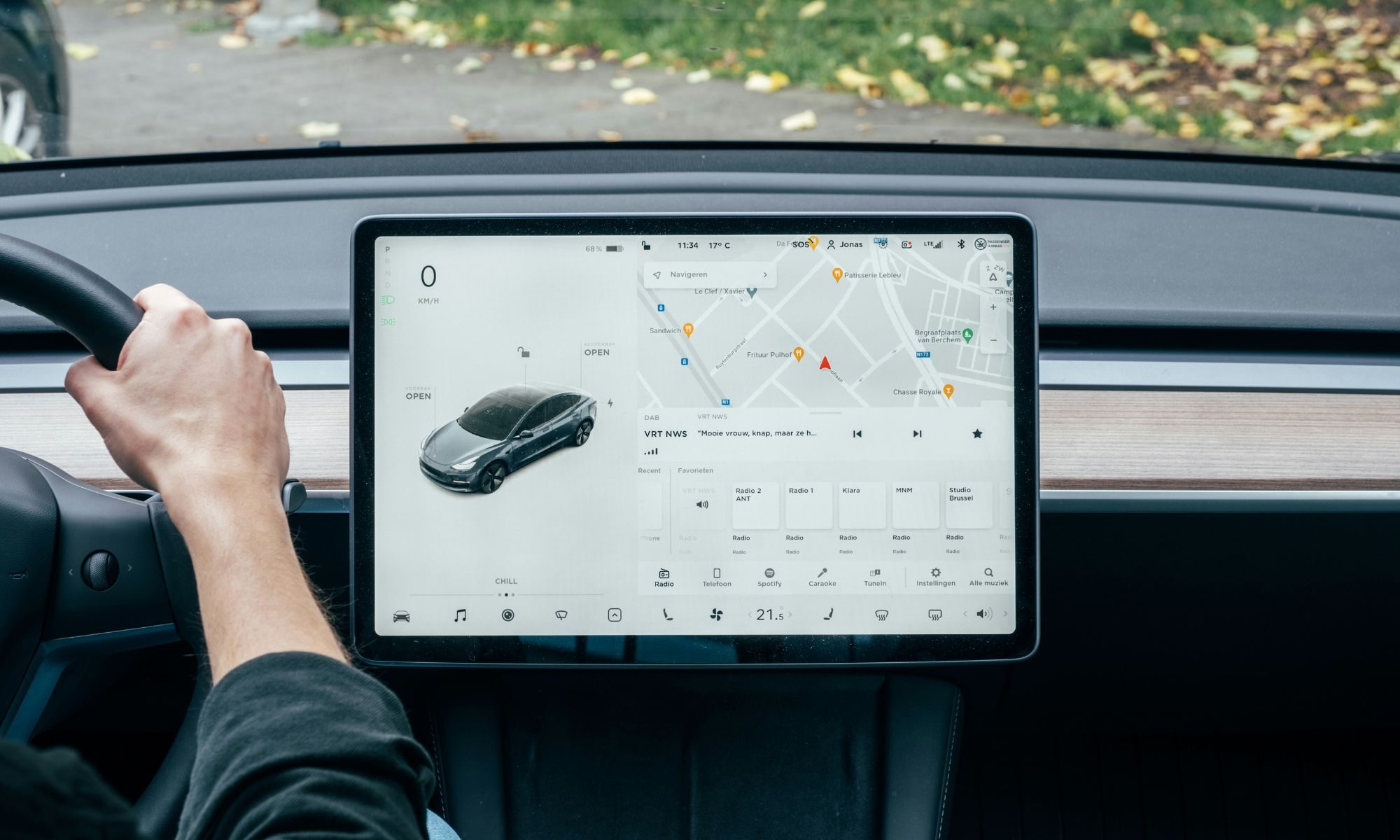
Your next car’s software update could become its biggest security risk

Published

on

Modern cars are no longer machines that stay the same after they leave the showroom. Increasingly, they’re becoming software-defined vehicles that receive new features, bug fixes, and security patches wirelessly, much like smartphones. But while over-the-air (OTA) updates have made vehicle maintenance easier and cheaper, cybersecurity experts are warning that the same technology could also become one of the automotive industry’s biggest security challenges.

Researchers and policymakers are now calling for stronger oversight as connected vehicles become increasingly dependent on remote software updates. Their concern isn’t just about hackers stealing personal data. It’s about someone potentially interfering with the operation of a moving vehicle.

The convenience of wireless updates comes with new risks

OTA technology allows manufacturers to remotely deliver software updates, firmware upgrades and security patches without requiring owners to visit a dealership. Tesla popularized the concept more than a decade ago when it began rolling out wireless updates for the Model S in 2012. Today, the feature has become commonplace across premium and mainstream vehicles alike.

For consumers, the advantages are obvious. Carmakers can quickly fix software bugs, improve battery management, add new infotainment features or even enhance driving performance without issuing expensive recalls. According to a CNBC report quoting Siraj Ahmed Shaikh, Professor of Systems Security at Swansea University, OTA updates have become an attractive alternative to traditional servicing because they reduce costs and shorten deployment times. Instead of waiting for scheduled maintenance, manufacturers can address issues almost instantly.

Advertisement

However, the same always-connected architecture that enables these updates also creates a larger attack surface. Cybersecurity analysts argue that internet-connected vehicles effectively function as rolling computers. If attackers were to compromise the update infrastructure or gain privileged access to vehicle software, the consequences could extend well beyond data theft.

Gabriel Lim, Senior Analyst at Singapore’s S. Rajaratnam School of International Studies, told CNBC that the issue represents a potential national security concern. Beyond questions surrounding user privacy, governments are increasingly examining whether foreign manufacturers or hostile actors could theoretically interfere with vehicle systems remotely. Those concerns have prompted several countries to reassess how connected vehicles should be regulated.

Governments are beginning to take the threat seriously

The debate intensified after Norwegian public transport operator Ruter conducted security tests on electric buses last year. The company reported that one vehicle’s battery and power management system could be accessed remotely through a mobile network connection. In theory, it concluded, the manufacturer could disable or immobilize the bus remotely.

Although the investigation focused on buses manufactured by Chinese company Yutong, experts caution that the problem isn’t unique to any single automaker or country. Instead, they see it as an industry-wide challenge tied to the growing adoption of connected vehicle platforms. The findings prompted authorities in both the United Kingdom and Denmark to launch their own investigations, with the UK’s Department for Transport working alongside the National Cyber Security Centre to examine potential vulnerabilities.

Similar concerns are also beginning to shape policy discussions in the United States. Earlier this year, the American Enterprise Institute argued that protecting connected vehicles from foreign espionage should become a strategic priority. The think tank recommended stronger security reviews, greater transparency around vehicle data collection, and tighter restrictions on certain foreign-made automotive software and hardware.

The implications stretch well beyond passenger cars. OTA technology is increasingly finding its way into buses, commercial fleets, rail systems, ships, industrial robots and drones. As more critical infrastructure becomes remotely updateable, experts say cybersecurity can no longer be treated as an afterthought. Wireless updates are undoubtedly making vehicles smarter and more capable. But they’re also changing the definition of automotive safety. In the software-defined era, protecting a car increasingly means protecting the code running inside it, because the next cyberattack may not target your laptop or smartphone. It could target the vehicle you’re driving.

Advertisement

Source link

Continue Reading

Trending

Copyright © 2025