

Business
IT stocks gain for 3rd day on rupee fall, tempered AI view


The Nifty IT index jumped 3.2% on Tuesday and clocked 7% gains in three sessions, signalling a turnaround after a prolonged bout of downsides. The benchmark Nifty, which ended 0.1% lower, is down 0.3% in the past three days.
Coforge, Infosys and LTM (erstwhile LTI Mindtree) gained 4-5% on Tuesday, while other constituents were up between 1.7% and 3.2%.
“The rupee hitting fresh lows has improved sentiment around IT companies, as it could lead to a 150-200 basis point improvement in their margins,” said Anshul Jethi, research analyst, LKP Securities.
The rupee made a record low of 96.61 against the dollar on Tuesday.

 Agencies
SOME TURNAROUND: Weakening rupee could provide a margin boost l Analysts talk of investor overreaction to AI, but warn that any rebound may be marked by sharp swings
As software services exporters earn most of their revenues in US dollars, a weaker rupee against the dollar boosts their margins.
According to Sushovon Nayak, research analyst at Anand Rathi Institutional Equities, recent developments such as the Globant management highlighting the importance of IT services firms in AI implementation, Cognizant increasing its buyback size, and some weakness in leveraged US AI-infrastructure stocks on the back of higher US bond yields, have improved investor sentiment towards the IT sector. The Nifty IT index is down nearly 23% this year, against Nifty 50’s fall of 9.7%, as the launch of new AI tools, aimed at increasing productivity, is perceived to be a threat to the business of traditional IT services providers.
Investors may have overreacted to concerns around AI taking the place of traditional software systems, said analysts.
“Our recent interactions with TCS management suggest that nearly 95% of enterprises still operate on legacy models and have yet to meaningfully adopt AI, indicating growth opportunity for the sector remains,” said Sumit Pokharna, vice-president – fundamental research, at Kotak Securities.
“However, part of the cost benefits to these firms from AI is likely to be passed on to clients, which may lead to revenue deflation,” he said.
The sharp recovery in the past three sessions comes as valuations of top Indian software exporters fall to the levels seen in the global financial crisis in 2008-09. Tata Consultancy Services (TCS), Infosys, HCL Technologies and Wipro are trading at trailing price-earnings (P/E) multiples between 15 and 18, the lower end of the spectrum, indicating lower-than-average valuations.
Top picks
The rebound may continue, but it will be marked by sharp swings amid intermittent concerns around AI product launches.
“We expect a J-curve recovery in IT revenues going ahead,” said Nayak. He likes LTM, Tech Mahindra and Infosys amongst the large caps, and prefers Mphasis and Persistent Systems in the mid-cap IT space.
Pokharna said large-cap IT valuations remain attractive, and he maintains a positive view on TCS, Infosys and Tech Mahindra.
“While LLM companies may disrupt market shares of traditional IT players and FY27 could remain challenging for the sector, AI adoption could improve their productivity,” said Jethi, who is positive on Persistent Systems and HCL Technologies. “Valuations in the sector have also turned attractive enough for investors to take a contrarian view on the AI theme.”


What workplace health and safety means for SMEs
Health and safety is simply about preventing harm and reducing risks in the workplace environment. It involves implementing rules, regulations and procedures that aim to protect employees, visitors and businesses from unnecessary injuries, illnesses or operational disruptions.
Health and safety applies to every business regardless of size. For small and medium-sized businesses (SME) effective health and safety management is arguably more crucial. One single incident can have a greater impact on business continuity, financial performance, and reputation.
For SMEs, workplace health and safety extends beyond employee wellbeing. A strong safety culture can have a direct positive impact on business operations, performance and growth.
Organisations that take a proactive approach to health and safety rather than reactive approach are more likely to benefit from a more productive workforce, improved efficiency and a reduced risk of injury and operational disruption.
In 2026, workplace health and safety is becoming increasingly important as business leaders recognise the link between a productive and healthy workforce and increased return on investment (ROI). Investing in health and safety is seen as a strategic business decision supporting both employees and business growth.
Why health and safety still matters for growing SMEs
Health and safety is a significant competitive advantage for growing SMEs. While all organisations face workplace risks, the impact of an incident is often far greater for SMEs than for larger organisations with greater financial resources, higher liquidity and more comprehensive insurance cover.
A single health and safety incident can have a detrimental impact for a small business. Whether it results in production pauses, operational disruption, increased insurance premiums or compensation costs, the financial and reputational impact can be substantial.
Investing in robust health and safety training,clear reinforcements and a strong safety culture helps protect employees and promotes business continuity. By reducing the likelihood of incidents, SMEs can maintain productivity, avoid unnecessary costs andprioritise sustainable growth and performance.
In addition, health and safety is becoming increasingly an important factor in attracting and retaining top talent. Today’s workforce is more aware of health and safety risks and places a greater value on employee wellbeing. As a result, they expect employers to provide safe and supportive working environments.
Additionally, expectations from clients, regulators and shareholders around health and safety standards are increasing. Businesses that meet these expectations can gain a competitive edge, improve employee engagement and retention and build a stronger reputation.
The workplace risks SMEs often underestimate
As SMEs often operate with fewer employees, smaller budgets and less supervision, simple oversights are more likely to occur and mistakes are easier to make. Health and safety risks are also often underestimated and their impact on a business can be greater than anticipated.
- Slips, trips and falls: One of the most common causes of workplace injuries, often resulting from poor housekeeping, uneven surfaces or poor lighting. Regular inspections and effective health and safety procedures can greatly reduce these risks.
- Manual handling and lifting injuries: Improper training for correct lifting techniques when handling heavy materials can lead to unnecessary injuries. Providing employees with the appropriate training and equipment helps reduce injuries and minimise time lost through absence.
- Workplace fatigue and burnout: Heavy workloads and limited staffing can lead to fatigue and burnout. Employees that experience sustained pressure are more likely to experience burn out, resulting in decreased production and increased risk of workplace incidents.
- Stress and mental health risks: High levels of workplace stress can negatively affect employee wellbeing, engagement and performance. Creating a supportive working environment where workers are comfortable to openly communicate can help reduce these risks.
- Lone working hazards: Employees in SMEs are often required to work alone or without direct supervision. Without clear health and safety procedures and regular check-ins, employees may face increased risk in the event of an incident.
- Vehicle-related incidents: Employees driving for work purposes such as driving company vehicles or making deliveries face risks such as collisions, loading and unloading injuries and fatigue. Regular training and reinforcement of safe practices can help minimise these hazards.
- Everyday human error and unsafe behaviours: Routine mistakes, shortcuts, and distractions remain some of the biggest contributors to workplace incidents. A strong safety culture with regular training, clear communication, and consistent reinforcement helps reduce unsafe behaviours and makes safety part of each employee’s daily routine.
The cost of getting workplace safety wrong
For SMEs, the real cost of an incident extends far beyond the initial accident. Businesses may also experience:
- Increased employee absence: Incidents can lead to long periods of absence placing pressure on remaining staff members and increasing the risk of fatigue, errors, and burnout.
- Workers compensation claims and insurance costs: Following an incident, businesses may be required to pay compensation which can contribute to higher insurance premiums.
- Legal exposure and regulatory penalties: Failure to meet health and safety guidelines, can result in fines, penalties or legal action.
- Reduced productivity and operational disruption: Incidents often disrupt normal operations for a period of time. Depending on damage to equipment and the time it takes to resume production, businesses can experience a significant downtime and reduced profitability.
- Lower employee morale and engagement: Workplaces with poor safety standards can negatively affect employee engagement and job satisfaction. This can lead to increased absenteeism and higher turnover.
- Recruitment and retention challenges: As employees place greater value on wellbeing and safety, organisations with a poor reputation surrounding safety may struggle to attract and retain top talent.
- Damage to business reputation and customer trust: Incidents can damage how a business is perceived by future clients, customers and stakeholders. A poor reputation can potentially result in lost contracts, reduced profits and less growth.
- Long-term financial impact on growing businesses: When combined, factors such as lost productivity, legal fees, insurance premium increases, recruitment costs and lost contracts can create significant long-term financial losses.
Key workplace health and safety actions every SME should take
Creating a safe and comfortable working environment doesn’t have to be complicated. By implementing a few key health and safety practices, SMEs can reduce risk, protect employees and support business growth.
Key actions include:
- Conduct regular risk assessments.
- Identify and control workplace hazards.
- Provide clear safety policies and procedures.
- Deliver regular employee training.
- Encourage incident and near-miss reporting.
- Maintain accurate safety records.
- Review safety performance regularly.
- Involve managers and supervisors in safety initiatives.
- Promote employee participation in safety improvements.
- Continuously update processes as the business grows.
Practical steps SMEs can take to build a safer workplace
To build a safer workplace, SMEs need to take a proactive approach to health and safety by embedding safe practices into their daily operations.
Start by establishing a structured health and safety policy that clearly defines the responsibilities of both employees and employers. Policies and procedures should be reviewed regularly to ensure they remain effective, compliant and are adapted as the business grows.
Regular workplace inspections and risk assessments can help identify hazards before they become incidents. Providing employees with comprehensive workplace health and safety training ensures they understand how to work safely, recognise workplace hazards, identify the signs of fatigue, and report risks before they develop into more serious issues.
Managers and team leaders should also receive in-depth health and safety training. They can then lead by example and reinforce safe practices. Businesses should also develop clear emergency response plans to minimise the impact of any workplace incident and ensure employers know how to respond effectively.
Finally, organisations should have a dedicated reporting system where employees can feel comfortable raising any safety concerns and report near misses without fearing blame.
Safety discussions should be made an active part of daily conversations combined with the monitoring and review of safety performance metrics in order to improve policies and help to maintain a safe workplace while supporting business growth.
Creating a safety culture that grows with the business
Health and safety should not be treated as a one-off compliance exercise, but as a proactive, ongoing part of everyday operations. A strong safety culture is a key driver of sustainable business growth. When a business prioritises safety, they are better positioned to prevent workplace incidents and maximise productivity and performance.
Business leaders play a critical role in shaping a positive safety culture. By leading by example, implementing and following clear protocols and reinforcing safe working practices, they help promote safety throughout the organisation.
Health and safety should also be continuously monitored and improved. Regular reviews of incidents, inspections and performance data help identify opportunities for improvement and minimise risk while promoting employee engagement.
As teams expand and operations become more complex, an organisation’s approach to health and safety should evolve alongside the business. Embedding safety into everyday business activities delivers long-term benefits, including reduced risk, improved employee engagement, higher productivity, and stronger staff retention.
Business
Maase Inc Shares Jump 16% as Speculative China-Based AI Pivot Stock Extends Its Volatile 2026 Rally Today
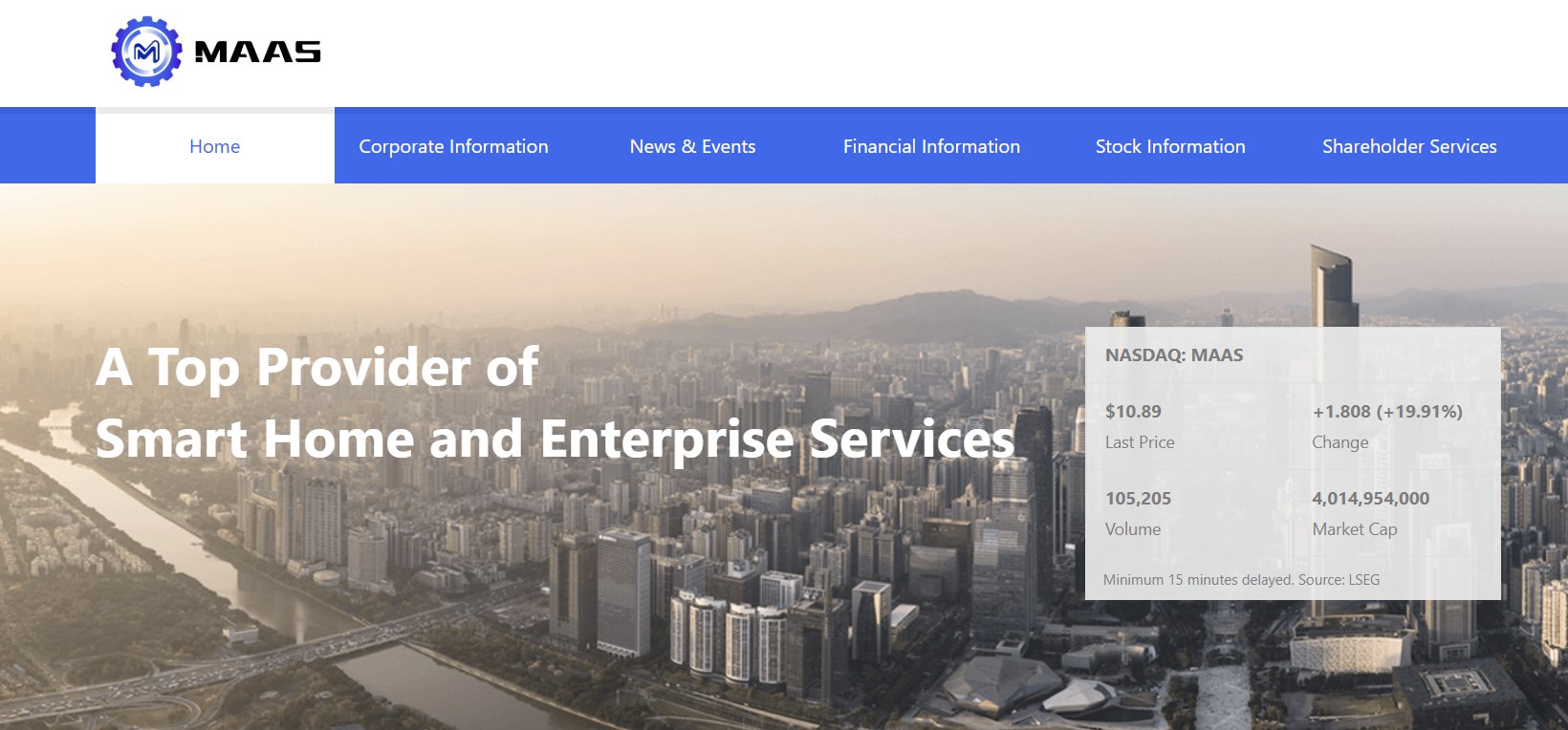
Shares of Maase Inc. climbed sharply Tuesday, trading at $17.72, up $2.41, or 15.74 percent, extending a remarkable and highly volatile run for the small Chinese holding company that has repositioned itself over the past year from a wealth management and insurance services business into what it describes as a full-stack artificial intelligence infrastructure operator.
Note: This is not financial advice. Small-capitalization stocks undergoing rapid strategic pivots, particularly those based in China and listed on U.S. exchanges, carry elevated risk, and readers should consult a licensed financial advisor before making investment decisions.
Tuesday’s gain adds to what has already been an extraordinary run for Maase shares. According to data compiled by Tickeron, the stock surged approximately 74 percent over the trailing 30-day period and has gained more than 169 percent over the past quarter, a dramatic repricing that reflects the company’s stated pivot away from its original financial services roots toward artificial intelligence infrastructure, computing power and intelligent hardware. The stock’s 52-week trading range spans from $2.41 to $24.49, according to the same data, underscoring the scale of volatility that has characterized the shares over the past year.
Maase, headquartered in Chengdu, China, was formerly known as Highest Performances Holdings Inc. and traded under the ticker HPH before rebranding. The company’s original business centered on providing financial asset allocation services, insurance agency distribution and wealth management products for families and enterprises in China. Over the past year, the company has undertaken a series of acquisitions aimed at transforming it into what it describes as a vertically integrated AI industry player, combining computing infrastructure, algorithms, smart hardware and full-scene digital services.
The centerpiece of that transformation has been the company’s acquisition of Times Good Limited, which controls a subsidiary called Huazhi Future, a deal that closed on March 30, 2026. Following the acquisition, Maase said it intended to establish what it called “full-stack, self-controlled” AI capabilities by integrating computing infrastructure, algorithms, hardware and services under one corporate umbrella. The company has also announced the launch of a large-scale infrastructure initiative known as the Stars Distributed Intelligent Computing Center Project, planned in partnership with other firms and involving a total investment of up to 5 billion Chinese yuan, or roughly $700 million, over a proposed 60-month build schedule. According to details of the plan, the project includes computing centers in Yinchuan and in Yiwu, Xinjiang, along with a network of smaller containerized edge computing nodes and a unified command platform intended to coordinate the distributed system.
Beyond the Times Good and Huazhi Future transactions, Maase has continued expanding its portfolio through additional acquisitions, including the completed purchases of Real Prospect Limited and Carve Group Ltd, according to filings compiled by StockTitan. The company has also brought on new leadership, appointing Jingkai Li as director and board chairman in late November 2025, replacing former chairperson Hong Suong Nguyen. Li’s background includes more than a decade in leadership roles at an environmental protection company in China, along with experience in industrial investments tied to new energy and smart technology sectors, a resume the company has said aligns with its evolving focus on energy storage and green computing infrastructure.
Several structural factors specific to Maase have contributed to the stock’s outsized volatility. According to Tickeron’s analysis, insider ownership of the company stands above 70 percent, while the stock’s public float remains relatively small, a combination that tends to amplify price swings in both directions as relatively modest trading volume can move the share price significantly. The analysis also flagged several risk factors investors should weigh carefully, including execution risk tied to integrating the company’s recently acquired entities, regulatory exposure common to China-based companies listed on U.S. exchanges, including audit inspection requirements under the Holding Foreign Companies Accountable Act, and the broader question of whether the company’s underlying revenue generation will eventually catch up to its expanded market valuation.
Maase’s financial fundamentals remain modest relative to the scale of its recent stock price appreciation. According to Public.com, the company’s market capitalization stood at roughly $1.75 billion as of late March, with a negative price-to-earnings ratio reflecting the company’s current lack of profitability. The company has continued filing updated financial disclosures as it integrates its various acquisitions, including audited results and pro forma financial statements related to its March acquisition activity, which it filed in mid-June.
Technical indicators tracked by Tickeron have shown mixed signals in recent sessions. The company’s 10-day Relative Strength Index moved out of overbought territory on June 24, a development the analysis characterized as a potentially bearish signal, even as other momentum indicators, including the Aroon Indicator, pointed toward a continued uptrend as of early July. The stock’s trajectory has not moved in a straight line, according to the analysis, which described a relatively gradual climb through the second half of May before the shares entered what it called a parabolic acceleration phase in early June, coinciding with the company’s steady cadence of AI-related corporate announcements.
Given the concentrated nature of the catalysts driving Maase’s rally, largely centered on corporate announcements and strategic acquisitions rather than demonstrated revenue growth from its new AI business lines, analysts covering small-cap, high-volatility names of this kind generally caution that continued price appreciation will likely depend heavily on the company’s ability to translate its newly acquired assets into measurable financial performance over the coming quarters. With extremely high insider ownership, a small public float, and a business model still in the early stages of its transformation, Maase shares are likely to remain highly sensitive to individual news announcements and broader shifts in sentiment toward AI-related small-cap stocks in the near term.
As with any rapidly appreciating, thinly traded stock undergoing a significant strategic pivot, investors considering exposure to Maase are encouraged to closely monitor the company’s forthcoming financial disclosures, including revenue contributions from its recently acquired subsidiaries, as well as any developments related to regulatory scrutiny of China-based companies listed on U.S. exchanges, before drawing conclusions about the sustainability of the stock’s recent gains.
Business
ASX 200 Slides Over 0.6% as Rare Earths and Lithium Stocks Tumble Amid Global Semiconductor Sell-Off Today

SYDNEY — Australian shares fell for a third consecutive session Wednesday, with the S&P/ASX 200 down 58 points, or 0.66 percent, to 8,745.9 in early afternoon trading, as renewed weakness in semiconductor stocks worldwide and a fresh wave of selling in lithium and rare earths names weighed on the broader market.
Wednesday’s decline followed a session on Wall Street in which chip stocks fell for a second straight day. The Nasdaq 100 dropped 1.8 percent overnight, while the S&P 500 lost 0.4 percent and the Dow Jones Industrial Average eased 0.2 percent after trading as much as 0.44 percent higher earlier in the session, according to Market Index. SPI futures had pointed to a subdued opening for the ASX 200 on Wednesday, with the index initially expected to open just 3 points lower before a broader risk-off tone took hold as the local session progressed.
The pullback extends a rough stretch for Australian equities. The benchmark index closed Tuesday down 27.1 points, or 0.45 percent, at 8,803.9, as overnight U.S. military strikes near the Strait of Hormuz reignited Middle East tensions, pushing oil prices and bond yields higher and draining risk appetite from the market’s most globally exposed sectors, according to Market Index’s evening wrap. That followed a 13-point, or 0.2 percent, decline on Monday to 8,831, itself a retreat from a one-week high reached the previous Friday.
Wednesday’s session has been dominated by continued turmoil in South Korea’s chip sector, which has rippled through to related Australian stocks. South Korea’s KOSPI index tumbled a further 4.9 percent Tuesday following a weak second-quarter earnings reaction from Samsung Electronics, even though the company posted a record 89.4 trillion Korean won operating profit, a figure that surpassed the highest quarterly profits ever recorded by both Nvidia and Apple. Despite those historic results, Samsung shares fell sharply, weighing on broader Asia-Pacific technology sentiment that has continued to affect trading into Wednesday.
Base metals and critical minerals stocks bore the brunt of Tuesday’s and Wednesday’s selling. Nickel Industries, South32 and Sandfire Resources were each down more than 4 percent Tuesday, while major diversified miners BHP and Rio Tinto fell 1.9 percent and 1.8 percent respectively. Lithium and rare earths names were hit particularly hard despite relatively benign underlying commodity price signals, with Liontown Resources down 7.6 percent, Mineral Resources down 5.6 percent, Pilbara Minerals down 5.4 percent, Lynas Rare Earths down 6.4 percent, and Iluka Resources down 4.2 percent, according to Market Index. Chinese lithium carbonate futures eased only marginally by comparison, down just 0.7 percent, while benchmark neodymium-praseodymium prices were actually up 0.3 percent in China, underscoring the extent to which the local declines outpaced the underlying commodity moves.
Gold miners also came under renewed pressure. The S&P/All Ordinaries Gold index was down as much as 4 percent at Wednesday’s session lows before paring some losses, according to Market Index, continuing a reversal from the strong gains gold stocks posted just days earlier. Northern Star Resources and Evolution Mining had jumped 10.6 percent and 8.6 percent respectively on July 4 as bullion rallied on softer U.S. payroll data, but gold stocks tumbled 4.3 percent Tuesday as bullion retreated, with Northern Star dipping a further 5.1 percent.
Not every sector has struggled amid the broader pullback. Information technology stocks bucked the wider downturn Tuesday, with the sector’s benchmark index rising 2 percent even as South Korean tech shares slumped, buoyed in part by a governance-related rally in WiseTech Global, which jumped 5.7 percent after the company confirmed the removal of Richard White from the chairman role, a move the market interpreted as meaningfully de-risking a stock that had shed more than 40 percent from its highs partly due to governance concerns. Fellow technology names NextDC, TechnologyOne and Xero also posted gains Tuesday, while the big four banks advanced between 0.9 percent and 1.6 percent, providing some offsetting support to the broader index.
Individual company news has continued to shape Wednesday’s session. Gold miner Predictive Discovery reported that its Kiniero mine in Guinea ran well above nameplate capacity during the June quarter, milling 2.2 million tonnes at 0.86 grams per tonne of gold to pour 54,252 ounces, with its Nampala operation adding a further 9,774 ounces for a combined 64,026 ounces. The company reported cash and bullion holdings of $530 million as of June 30. Fellow gold producer Ramelius Resources delivered 192,182 ounces for the full financial year, within its guidance range and marking the company’s sixth consecutive year of meeting production targets, while Alkane Resources reported 168,337 gold-equivalent ounces for the year, near the upper end of its own guidance range.
In a separate significant corporate development, logistics company Qube Holdings confirmed that its scheme of arrangement to be acquired by Rubik Australia has become legally effective, with the New South Wales Supreme Court’s approving orders lodged with the Australian Securities and Investments Commission. Qube shareholders are set to receive cash consideration of $5.20 per share, less interim and special dividends, with the transaction expected to be implemented on August 14. Elsewhere, U.S. biotechnology company Vertex Pharmaceuticals agreed to acquire San Diego-based Crinetics Pharmaceuticals for $85 per share in cash, a deal valuing the company at approximately $10 billion and sending Crinetics shares up roughly 100 percent, a transaction that drew attention among Australian biotech-focused investors given its scale.
Looking at the broader picture, the ASX 200 has traded in a range between 8,490.90 and 8,983.80 over the trailing month, according to Investing.com data, with the index still up 1.91 percent over the past 12 months despite the recent volatility. Analysts at IG have projected the index could move toward the 9,300 to 9,500 range by the end of 2026, though that outlook depends heavily on how the current tension between a resilient U.S. technology sector, a hawkish Reserve Bank of Australia, and uncertain Chinese economic data resolves itself in the coming months. With China’s June inflation figures due for release later this week and the RBA continuing to signal that further interest rate increases remain possible, investors are likely to remain cautious as they navigate a market being pulled simultaneously by domestic monetary policy, global commodity price swings, and overnight developments on Wall Street.

The government is looking to divest up to a 5.04% stake in the state-run shipbuilder through the OFS. The sale involves more than 1.32 crore shares. As of the March 2026 quarter, the Centre held a 67.91% stake in Cochin Shipyard, while retail investors owned 19.66% and high-net-worth individuals held 0.73%.
The non-retail portion of the OFS was subscribed 3.52x on Tuesday, prompting the government to exercise the entire greenshoe option to sell an additional 2.52% stake in the company. The Centre had initially offered to sell a 2.52% stake, equivalent to 66.29 lakh shares.
Also read:Cochin Shipyard OFS gets 3.5x bids; govt exercises greenshoeThe indicative bid price stood at Rs 1,401.85 per share, compared with the floor price of Rs 1,400. At the floor price, the sale of the full 5.04% stake is expected to fetch around Rs 1,800 crore for the government.
The OFS is part of the Centre’s ongoing disinvestment programme. Since May 21, the government has raised more than Rs 20,000 crore through a series of OFSs. In June, it conducted stake sales in companies including Coal India, NLC India, NHPC, IRFC, GIC**,** and others.
The government has exercised the greenshoe option in every OFS it has launched so far this year.
How to apply?
Retail investors can submit bids through the OFS section available on their trading platform or broker’s application. Before placing bids, investors should check details such as the floor price and bid quantity. The bid price must be equal to or higher than the floor price of Rs 1,400 per share.Investors also need to maintain sufficient funds in their trading accounts, as the bid amount will remain blocked until the allotment process is completed. Shares will be credited to the Demat account of successful applicants on the settlement date, while unsuccessful bidders will have the blocked amount released.
Shipyard shareholding pattern
The government owned nearly a 68% stake in Cochin Shipyard as of March 31, 2026, according to the company’s shareholding pattern filed with the NSE. Meanwhile, around 9.62 lakh retail shareholders held approximately a 20% stake in the company.
Life Insurance Corporation of India (LIC) owned more than a 3% stake, while 24 mutual funds owned slightly more than a 2% stake in the company. Foreign investors, meanwhile, held around a 3% stake in the company’s total equity.
Cochin Shipyard share price
Cochin Shipyard is one of India’s leading public sector shipbuilding and ship repair companies. The company’s shares have delivered over 400% returns in the past three years and nearly 700% returns in the past five years.
Recently, the stock has come under pressure. The PSU’s shares have dropped more than 29% over the past year and over 12% in 2026 so far. The company has a market capitalisation of nearly Rs 38,000 crore.
(Disclaimer: Recommendations, suggestions, views and opinions given by the experts are their own. These do not represent the views of The Economic Times)

NEW YORK — Shares of Space Exploration Technologies Corp., trading under the ticker SPCX, declined sharply on Tuesday as investors digested post-IPO volatility and awaited updates on the company’s ambitious Starship development program.
The stock fell about 5.77%, or $9.26, to $151.16 in morning trading. The move extended a period of consolidation following the company’s highly anticipated public debut earlier in June, which was one of the largest initial public offerings in market history. Trading volume remained elevated as market participants assessed the valuation and long-term growth prospects of the privately held rocket pioneer now navigating public market scrutiny.
SpaceX, founded by Elon Musk, made its Nasdaq debut at an initial pricing that valued the company at roughly $1.77 trillion, reflecting enormous enthusiasm for its reusable launch capabilities, Starlink satellite constellation, and role in NASA’s Artemis program. The IPO raised substantial capital, but shares have experienced swings typical of high-profile technology listings as investors calibrate expectations around execution risks and capital intensity.
The latest decline comes against a backdrop of steady operational progress. Starship, the company’s fully reusable next-generation vehicle, continues its test flight campaign. Recent flights, including the twelfth test in May 2026, demonstrated advancements in Version 3 hardware, though challenges such as engine performance and booster recovery remain areas of focus. SpaceX has outlined plans for more frequent testing, potentially including monthly launches and preparations for Florida operations later in the year.
Starship represents the cornerstone of SpaceX’s vision for cost-effective access to space, human missions to Mars, and large-scale satellite deployment. Success in achieving rapid reusability could transform not only the launch industry but also enable new applications in point-to-point Earth transport and deep-space logistics. However, the program’s iterative development approach — involving deliberate test-and-learn cycles — has led to spectacular successes interspersed with vehicle losses, contributing to investor nervousness around timelines and spending.
Starlink, the satellite internet business, continues rapid expansion. The constellation provides broadband connectivity to remote areas and has seen growing adoption for maritime, aviation, and emergency response uses. Revenue from Starlink has become an increasingly important diversifier from launch services, though heavy upfront investments in satellites and ground infrastructure continue to pressure near-term cash flows.
The company’s core Falcon 9 rocket business remains the workhorse of the commercial launch market, with a record cadence of missions supporting NASA cargo and crew flights to the International Space Station, as well as rideshares for numerous satellite operators. High reliability and competitive pricing have solidified SpaceX’s market leadership, generating steady cash flow that funds more speculative endeavors.
Post-IPO, analysts have offered a range of price targets. Optimistic projections cite potential for substantial revenue growth as Starlink scales toward profitability and Starship achieves operational status. Morgan Stanley’s Adam Jonas, for instance, has highlighted Starship reusability and Starlink momentum in an Overweight rating. More cautious voices point to elevated valuations, ongoing capital expenditures, and regulatory hurdles as risks that could pressure shares if milestones slip.
SpaceX’s entry into public markets has been closely watched as a bellwether for the space economy. Passive funds tracking indices, including the Nasdaq-100, have been required to purchase shares, generating billions in inflows and contributing to initial price support. However, active managers continue to debate appropriate multiples for a company whose financials reflect heavy investment in future infrastructure rather than mature, stable earnings.
Broader aerospace and defense sector dynamics have also influenced trading. Geopolitical tensions have underscored the strategic importance of reliable U.S. launch capacity, while commercial demand for satellite services grows with global connectivity needs. Yet macroeconomic factors, including interest rates and investor risk appetite, play into valuations for growth-oriented names like SpaceX.
The company’s leadership has emphasized long-term horizons. Rapid iteration and vertical integration — from engines to satellites — differentiate SpaceX from traditional aerospace players. Challenges include scaling production, navigating complex regulatory environments for launches and spectrum use, and managing workforce demands in a competitive talent market.
Looking ahead, key catalysts include additional Starship flight tests, Starlink subscriber growth metrics, and potential new contracts for crewed missions or national security launches. Any acceleration toward Starship’s operational cadence could significantly expand addressable markets, from lunar landings to interplanetary transport.
Investors should note the stock’s post-IPO behavior mirrors other transformative technology companies: initial euphoria followed by periods of digestion as fundamentals catch up to hype. The $150 range has emerged as a near-term trading band, with support and resistance levels watched closely by technical analysts.
SpaceX’s inclusion in major indices so soon after listing underscores its immediate weighting in portfolios. This passive demand provides a floor but also means future rebalancing flows could amplify moves in either direction.
For the wider space investment theme, SpaceX’s performance serves as a proxy. Related public companies in satellites, propulsion, and ground systems often move in sympathy. Tuesday’s pullback may reflect profit-taking after earlier gains or rotation out of high-valuation growth stocks amid mixed market signals.
The company continues to push boundaries. From recovering boosters on drone ships to deploying thousands of Starlink satellites, execution has been remarkable. Yet translating technological leadership into consistent, predictable financial performance remains the test for public market investors.
As trading progressed, the decline in SPCX shares highlighted the volatility inherent in a business reliant on complex engineering milestones and government approvals. With major tests on the horizon, volatility is likely to persist. Long-term believers see SpaceX as foundational to humanity’s multi-planetary future, a narrative that has driven its extraordinary private-market valuation and now public trading journey.
Market participants will monitor upcoming launch manifests and any updates from leadership on financial targets. In the meantime, the stock’s movement reflects the high stakes and high rewards of backing one of the most innovative companies in aerospace history.
The IPO has generated significant excitement in the grey market, where it is currently trading at a Grey Market Premium (GMP) of about Rs 166 per share. At this level, the stock is expected to list around Rs 585 per share, implying a potential gain of nearly 40% over the upper end of the IPO price band. The strong GMP reflects upbeat market sentiment and robust demand ahead of the company’s market debut.
The company has fixed the price band at Rs 398–419 per equity share. The public issue will remain open for subscription from July 8 to July 10, 2026.
The IPO is entirely an Offer for Sale (OFS) worth Rs 650 crore, meaning the company will not receive any proceeds from the issue as no fresh shares are being issued. Investors can apply for a minimum of 35 equity shares and in multiples of 35 thereafter. As of the offer date, Kusumgar has 104.99 million outstanding equity shares with a face value of Re 1 each.
The issue is being launched through the book-building process, with up to 50% of the net offer reserved for Qualified Institutional Buyers (QIBs), 15% for Non-Institutional Investors (NIIs), and 35% for Retail Individual Investors (RIIs).
In a gesture aimed at rewarding its workforce, Kusumgar has earmarked shares worth Rs 3.5 crore for eligible employees. They will also receive a discount of Rs 39 per share on the final issue price.
Kusumgar has demonstrated robust financial performance over the past two years. The company’s revenue from operations increased to Rs 692 crore in FY26, compared with Rs 467.9 crore in FY24, reflecting healthy business expansion across its key segments.
Its net profit also witnessed steady growth, rising to Rs 98.2 crore in FY26 from Rs 84.3 crore in FY24, highlighting improved profitability and operational efficiency.
Issue Management and Listing
The IPO is being managed by Axis Capital Limited, IIFL Capital Services Limited, and Motilal Oswal Investment Advisors Limited, who are acting as the Book Running Lead Managers. Bigshare Services Private Limited is the registrar to the issue.
The company’s equity shares are proposed to be listed on both the BSE and the NSE.
About Kusumgar
Established in 1990, Kusumgar is a leading manufacturer of woven, coated, and laminated engineered synthetic fabrics designed for demanding industrial and performance applications. The company specializes in advanced fabric solutions based on polyamide and polyester filaments combined with polyurethane chemistry, enabling products that meet stringent performance standards.
Its engineered fabrics are designed to deliver superior tensile strength, tear resistance, abrasion resistance, comfort, air permeability, and waterproofing, making them suitable for mission-critical and high-performance applications.
Leveraging decades of manufacturing expertise and strong product development capabilities, the company has developed more than 1,000 unique Stock Keeping Units (SKUs) as of March 31, 2026. These products cater to a diverse range of industries, including aerospace and defence, industrial and automotive, and outdoor and lifestyle segments.
Kusumgar operates a vertically integrated manufacturing platform, encompassing preparatory processes, weaving, dyeing, printing, finishing, coating, lamination, and fabrication. Its manufacturing footprint includes six facilities in Gujarat and one fabrication unit in Uttar Pradesh, supported by modern infrastructure, advanced technology, and strong research and development capabilities.
(Disclaimer: Recommendations, suggestions, views and opinions given by the experts are their own. These do not represent the views of Economic Times)
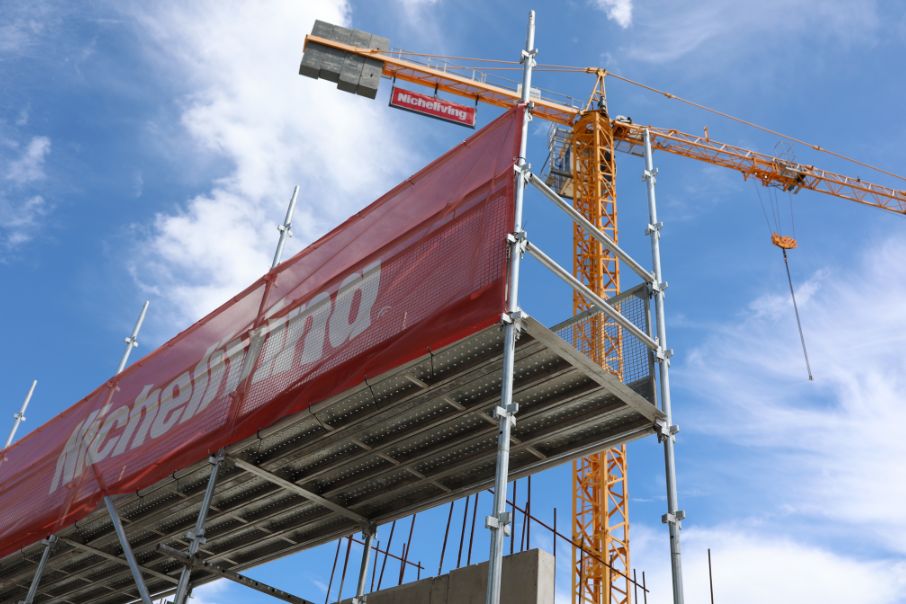
Australian Property Alliance, formerly Nicheliving Real Estate, has been fined after mishandling a $50,000 deposit.

For many families, the summer holidays mean more than just eight weeks away from school. It can also mean a sharp rise in food costs.
Susan Lilley, a single mother of two who is training to become a classroom assistant, said the weekly shop has become one of her biggest financial worries.
During the Covid-19 pandemic, the families of 90,000 children eligible for free school meals received £27 per child each fortnight during school holidays.
They were axed by the Department of Education (DE) in March 2023 due to a lack of money, but a new bill introduced at Stormont could see holiday payments reinstated.
The then Permanent Secretary in Dr Mark Browne said axing the scheme was the most difficult decision he had to make.
Lilley, who received the grant during covid, said the support made a real difference.
Without it, she said she sometimes has to choose a less healthy, processed option for her children because it’s often cheaper than fresh foods.
“You want to have everything they need, everything that’s nutritious for them, but it’s impossible trying to get the quality of food, especially food and veg and protein, with the prices.
“My little girl would like strawberries and blackberries, but it’s a fortune, I was in this morning and I had to ask her to pick something else,” she continued.
“I can go and buy a 35p donut versus a £4.50 box of strawberries, but it won’t fill her the same, won’t give her the brain power for school. It will actually damage her more.”
She believes that politicians think people “will just manage”, but that “people aren’t managing”.
“Put your money where your mouth is. Children are our future. If they are being limited now how are they going to be the best they can be, to be productive and grow in to full, whole human beings and adults.”
“Nutrition affects them growing up, it can be a barrier to education.
“It’s important that everyone has access to healthy food, especially children.”
The new bill has been introduced in the assembly by Sinn Féin assembly member Danny Baker.
If it is passed, it would see the return of holiday food payments at an estimated annual cost of about £20m.
Children are eligible for free school meals if their family’s household income is below £15,390 a year.
Although UK food inflation has slowed, prices are continuing to rise, just at a slower rate.
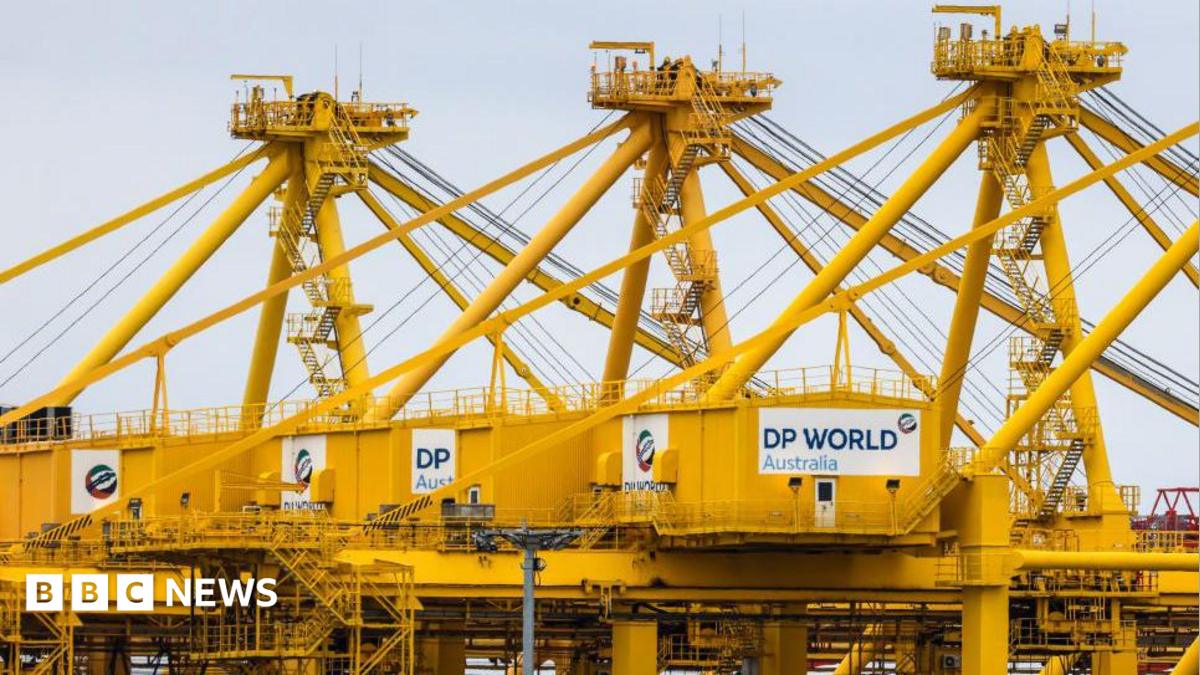
Australian dock workers are demanding a 28-hour work week with no loss of pay as the use of artificial intelligence (AI) and automation expands across the country’s ports.
The AI push is being led by port logistics giant DP World, which the Maritime Union of Australia (MUA) said has put workers’ jobs “in the crosshairs”.
The union said: “If DP World wants AI and automation, then they must pay the social dividend. The new technology doesn’t have to cost our members their jobs or put their livelihoods at risk just so a terminal operator can boost profits.”
The BBC has contacted DP World for comment and the MUA for more details.
DP World, which is based in Dubai, is increasingly testing AI tools to manage employees and work schedules in its operations, according to a study by the Centre For International Corporate Tax Accountability and Research, which was commissioned by the MUA.
The automation programme is part of a pattern of pushing AI into operations “without genuine consultation” and that it threatens up to a thousand jobs or more than 60% of the dock and maintenance workforce, the study said.
The company has also proposed the use of AI-assisted remote-control cranes and driverless vehicles, it added.
The technology “should be used to improve workers’ lives, not destroy them,” the union said in a statement on 3 July as it called for a 28-hour work week.
DP World dock workers are believed to currently work around 32 to 35 hours a week, depending on their location, according to the Australian Financial Review, which first reported the negotiations.
DP World is one of the world’s largest port operators. In Australia, it moves millions of shipping containers each year through its ports in Sydney, Melbourne and other parts of the country.
With more than 126,000 employees around the world, the firm handles more than a tenth of global container traffic.
Business
Ex-FBI Agent Says Nancy Guthrie’s Kidnapper Was ‘an Amateur’ as Savannah Publicly Marks Five Months of Agony

TUCSON, Ariz. — A retired FBI hostage negotiator says he believes the person responsible for kidnapping Nancy Guthrie, the 84-year-old mother of “Today” show co-anchor Savannah Guthrie, is an inexperienced criminal rather than a hardened professional, pointing to a series of what he describes as rookie mistakes captured on the family’s home security footage.
Speaking to the Daily Mail, retired FBI special agent Chip Massey said the suspect’s behavior in doorbell camera footage from the night of Guthrie’s disappearance suggested a lack of criminal expertise. Massey pointed to the way the masked individual, who has become known online as “porch guy,” attempted to disguise his gait and height while approaching the home. “The way he tries to get lower to disguise his gait and height, how he tries to cover up the camera – that’s not something an experienced criminal would do,” Massey said.
Massey identified several additional details he said pointed toward an amateur perpetrator. He noted that the suspect’s gun holster appeared to be positioned incorrectly, saying it was worn in a manner that would leave the weapon vulnerable to being grabbed by someone else. He also said the suspect’s gloves appeared oversized, a detail he said would make it difficult to properly handle a firearm. Massey further pointed to the presence of blood found near the exit of Guthrie’s home as evidence that the abduction did not go as planned. “The fact blood was on the exit tells me there was a struggle inside,” he said. Taken together, Massey concluded the pattern of errors, along with the inconsistent handling of subsequent ransom communications, pointed away from a professional operation. “If he were a professional, that wouldn’t have happened, so that tells me he’s an amateur, as does the whole back and forth afterwards (with ransom notes) where they don’t provide proof of life,” Massey said.
Massey’s assessment adds to a long list of competing theories that have circulated throughout the five-month investigation. As CNN has reported, analysts and commentators following the case have offered widely divergent characterizations of the suspect over time, at various points describing the abduction as a robbery gone wrong, a ransom-motivated kidnapping, the work of a solo amateur, and the work of a sophisticated group, with some individual commentators even reversing their own assessments within a matter of weeks. President Donald Trump himself weighed in on the uncertainty earlier this year, telling reporters the suspect either “knew what they were doing very well, or they were rank amateurs.”
Massey is not the only investigator to speak publicly and critically about aspects of the case in recent days. Atlanta-based crime scene expert Sheryl McCollum has separately criticized the broader handling of the investigation, describing it as “botched” and pointing to what she characterized as a lack of coordinated public messaging between the Guthrie family and the law enforcement agencies involved. “You have not seen Savannah and her family on the same podium as the FBI and the Pima County Sheriff. They should have been standing together, making statements, from day one. And we haven’t seen that yet,” McCollum said, adding that “they’re not on the same page. It’s really sad to see this.”
The renewed scrutiny comes as the investigation passes a significant and painful milestone for the Guthrie family. In a statement provided to Arizona television station KOLD 13 News on July 1, Savannah Guthrie marked five months since her mother’s disappearance. “It is five months of agony and unending trauma for our family,” Guthrie said. “There is not a moment that goes by that we aren’t actively trying to find our mom.” She went on to thank the community of Tucson “for holding her in their hearts,” along with the FBI and the Pima County Sheriff’s Office “for their tireless work on behalf of our family,” closing her statement with the appeal, “Bring her home.”
Pima County Sheriff Chris Nanos also provided an update to KOLD 13 News around the same time, saying investigators continue to actively pursue the case, with particular focus on DNA evidence and genetic genealogy techniques that could help identify a suspect even without a direct database match. “Especially when you throw in genealogy—now, you’ve got… this may not be the bad guy, but this person might be the bad guy’s relative three times over,” Nanos said. According to the sheriff, responsibilities in the investigation have been divided between agencies, with the FBI handling the evaluation of ransom notes while his department focuses on forensic evidence processing, including ongoing DNA analysis being conducted with the assistance of outside laboratories and Google’s video analysis capabilities.
Guthrie was last seen alive around 9:45 p.m. on January 31, when a family member dropped her off at her Catalina Foothills home following dinner. She was reported missing the next morning after failing to appear for church, and investigators later determined she had been abducted from the residence overnight. Blood found near her front doorstep was subsequently confirmed to belong to Guthrie. Despite an extensive, multi-agency investigation involving the FBI, the Pima County Sheriff’s Department and search-and-rescue teams, no suspect has been publicly identified, and Guthrie has not been located.
The case has also been complicated by a series of ransom communications sent to media outlets and the Guthrie family, several of which the FBI has since determined were fraudulent. In early July, a California man pleaded guilty to federal charges connected to one such fake ransom message, marking the first criminal conviction directly tied to the flood of communications investigators have had to sort through since Guthrie’s disappearance. The FBI has said other notes remain under active investigation as potentially legitimate, though it has not disclosed further details about which communications fall into that category.
A combined reward exceeding $1 million remains available for information leading to Guthrie’s safe recovery. Authorities continue to urge anyone with relevant information to come forward through the Pima County Sheriff’s Department’s tip line or the FBI’s national tip line, as the investigation moves further into its sixth month without a confirmed suspect or resolution.

Tough task staring Gilas in the eyes entering second round of Qualifiers

Nobody Wants To Buy Crypto Right Now

A Practical Guide for SMEs


-

 Fashion4 days ago
Weekend Open Thread: High Hopes
-
 NewsBeat3 days ago
Taylor Swift and Travis Kelce wedding staffer hilariously struggles to keep her cool while checking in megastars
-

 Fashion1 day ago
Open Thread: What Great Books Have You Read Recently?
-
 Crypto World7 days ago
Airdrop Registration Becomes Key Focus For Remittix As RTX Launch Updates Approach
-

 Politics5 days ago
The House | “Reframing the debate from a binary discussion of winners and losers”: Yuan Yang reviews ‘We Are Not Machines’
-

 Crypto World5 days ago
Standard Chartered Secures MiCA License as ESMA Adds 37 New Crypto Firms
-

 Business1 day ago
AXT Shares Jump Nearly 14% as Semiconductor Materials Maker Rebounds on AI-Linked Indium Phosphide Demand
-

 Sports7 days ago
Broncos roster: OL Ben Powers (No. 74) entering final year of contract
-

 Crypto World6 days ago
Binance stock trading tops $1B in first month after launch
-
Crypto World1 day ago
SK hynix (000660.KS) Stock Dips as $28B Nasdaq ADR Offering Drives AI Memory Expansion
-

 Crypto World6 days ago
Alibaba-affiliate Ant Group enters the humanoid robot market with 12 deals
-

 Crypto World3 days ago
South Africa proposes crypto tax guidance under existing rules
-

 News Videos2 days ago
Best Time to Enter Small Caps Right Now? Another Bull Run? | Financially Free
-

 News Videos1 day ago
Whats Hidden Inside This Cash Register? #treasure #reselling #money
-

 Tech3 days ago
Lenovo laptops are now shipping with YMTC SSDs, a sign of Chinese NAND entering the mainstream
-

 Business6 days ago
Meta Platforms Stock Jumps 7% Today as Bloomberg Reports Company Plans to Enter the Cloud Business
-
 NewsBeat6 days ago
New exhibition reflects five decades of movement between island of Ireland and GB
-

 Business5 days ago
What a 10 Percent Drop Means for Buyers, Sellers and Renters
-

 Crypto World5 days ago
Binance Re-Enters Philippines As EU MiCA Rules Restrict Access
-

 News Videos2 days ago
Avoid entering in FOMO #bitcoin #cryptocurrency #trading #scalping
You must be logged in to post a comment Login