

Crypto World
Estonia Suspends Zondacrypto License, Signals Tightening Oversight


The Financial Intelligence Unit (FIU) of Estonia has partially suspended the operating license of BB Trade Estonia OÜ, the entity behind the Zondacrypto cryptocurrency platform. In its formal statement, the FIU said the company is now barred from accepting deposits and onboarding new clients, while existing users may still withdraw funds. The move signals intensified regulatory scrutiny of Zondacrypto across Europe as authorities scrutinize compliance practices and consumer protections within the crypto exchanges that have migrated or registered in the Baltic state.
The regulator’s notice also sets a 30-day window for BB Trade Estonia OÜ to bring its operations into alignment with applicable legal requirements. “If it fails to do so, the law obliges the FIU to revoke the operating license,” the FIU stated. The authority did not disclose the specific compliance breaches that prompted the suspension, and Cointelegraph contacted the FIU for comment but did not receive a response at the time of publication.
Key takeaways
- The Estonian FIU partially suspends BB Trade Estonia OÜ’s operating license, barring deposits and new onboarding while allowing withdrawals for existing users.
- A 30-day window is imposed to reach full compliance, with potential license revocation if requirements are not satisfied.
- The regulator did not specify the breaches; authorities and media outlets will be watching for concrete remediation steps and enforcement actions.
- The development compounds existing regulatory scrutiny of Zondacrypto in Europe, including MiCA-related concerns raised by Estonian authorities earlier in 2024.
- BB Trade Estonia OÜ has ties to Zondacrypto’s broader cross-border presence, with the company registered in Estonia since 2019, according to InfoRegister data.
Regulatory action in Estonia and implications for BB Trade Estonia OÜ
Estonia’s FIU has invoked supervisory powers to curb certain activities by BB Trade Estonia OÜ as part of a broader effort to tighten oversight over crypto service providers within the EU’s MiCA framework. By blocking new deposits and client onboarding, the regulator aims to curb potential consumer risk while evaluating whether the firm meets ongoing licensing requirements. The 30-day compliance deadline places the onus on the operator to demonstrate robust AML/KYC controls, proper governance, and other regulatory obligations demanded under Estonian law and EU standards.
Officials did not detail the underlying deficiencies in public statements, and the absence of a publicly disclosed breach list creates uncertainty for stakeholders. The move comes amid a wider debate about how EU crypto licensing is implemented in member states and how cross-border entities adapt to MiCA’s harmonized standards. Estonia’s authorities have emphasized a path toward formal compliance rather than immediate sanctions, but the possibility of license revocation remains a material risk for BB Trade Estonia OÜ and its Zondacrypto platform.
BB Trade Estonia OÜ’s status is also notable in light of its corporate history. The Estonia-based entity has been listed as the operating arm of Zondacrypto, a platform with roots in Poland as BitBay, established in 2014. Its registration in Estonia since September 2019—well before the full rollout of MiCA—positions the business squarely within EU regulatory reach, as authorities seek consistent supervision across borders.
Zondacrypto at the center of regulatory debate in Europe
The partial suspension in Estonia adds to a broader web of regulatory considerations surrounding Zondacrypto in Europe. Reports surrounding withdrawal difficulties at Zondacrypto have drawn scrutiny from policymakers and regulators, including public commentary by Polish officials referencing potential losses and the scale of exposure in crypto-related incidents. In parallel, Zondacrypto has faced MiCA-related warnings from Estonia’s Financial Supervision and Resolution Authority (FSA) over the listing of the exchange’s “TeamPL” token without a white paper, which the authorities flagged as a MiCA compliance issue.
Market activity around Zondacrypto has appeared subdued in recent data, with CoinGecko noting limited trading activity on the exchange around the time of the regulatory action. Media coverage and regulatory filings continue to shape the narrative around the exchange’s operational viability and governance.
As part of the wider regulatory discourse, Zondacrypto’s governance and its cross-border footprint have become points of focus for enforcement and policy analysis. The Polish dimension—where discussions of potential links to Russian capital and political influence have surfaced—highlights how national risk perceptions can intersect with EU-wide licensing and oversight. In parallel, Estonia has taken steps to operationalize MiCA within its financial sector, as evidenced by other notable regulatory actions like the licensing of LHV Pank under the EU crypto framework. Estonia’s FSA granted LHV Pank a MiCA license, marking a milestone for one of the country’s largest banks and signaling the incremental integration of traditional financial institutions into the EU’s crypto regulatory regime.
BB Trade Estonia OÜ’s MiCA-related challenges and the ongoing Zondacrypto narrative illustrate how cross-border entities navigate diverse regulatory expectations. The Estonian and Polish regimes reflect a broader European push toward standardized oversight to bolster consumer protections, licensing discipline, and AML/KYC compliance in the crypto ecosystem. Regulators are balancing market access with risk mitigation, a dynamic that will shape licensing decisions, enforcement priorities, and the pace of institutional participation in European crypto markets.
Cross-border licensing and institutional implications
The Estonian regulatory action arrives amid a wider transition in the EU where MiCA is increasingly interpreted and implemented by member states. The 30-day compliance window underscores the immediacy with which regulators seek to impose corrective measures on crypto service providers, emphasizing governance reforms, disclosures, and risk management practices aligned with EU standards. For crypto exchanges, the message is clear: licensing continuity hinges on demonstrable compliance with cross-border rules, consumer protections, and anti-money laundering controls that align with MiCA’s framework.
From an institutional perspective, the development adds to the cost and complexity of maintaining cross-border crypto operations. For banks and payment providers operating within or adjacent to the crypto space, the Estonian example reinforces the importance of robust onboarding controls, transparent token disclosures, and clear operational compliance to preserve access to regulated financial rails. The licensing milestone achieved by LHV Pank in Estonia—under MiCA—illustrates that traditional financial institutions can gain regulatory clearance to participate in crypto services, provided they meet the necessary standards. Such developments may influence other banks and financial firms to pursue MiCA-compliant licensing as a prerequisite for borderless crypto activities.
Finally, the case highlights the practical uncertainties that still surround enforcement scope and interpretation of MiCA in various jurisdictions. While the FIU has outlined a path to remediation, it has not publicly enumerated the exact breaches. This ambiguity can complicate remediation planning for firms facing similar regulatory actions and underscores the need for clarity in how authorities assess and certify ongoing compliance in a rapidly evolving policy environment.
In summary, the Estonian FIU’s partial license suspension of BB Trade Estonia OÜ, paired with ongoing MiCA-related concerns and cross-border regulatory developments, reinforces the imperative for crypto firms to maintain rigorous compliance programs, transparent governance, and resilient operational controls as they navigate Europe’s unified but heterogeneous regulatory landscape.
Closing perspective: While the immediate impact centers on BB Trade Estonia OÜ and Zondacrypto, the action reflects broader regulatory intent to standardize oversight and heighten enforcement in the European crypto ecosystem. The next steps—whether BB Trade Estonia OÜ rectifies gaps or faces revocation—will shape future licensing discourse and the regulatory calculus for cross-border crypto activity in the region.

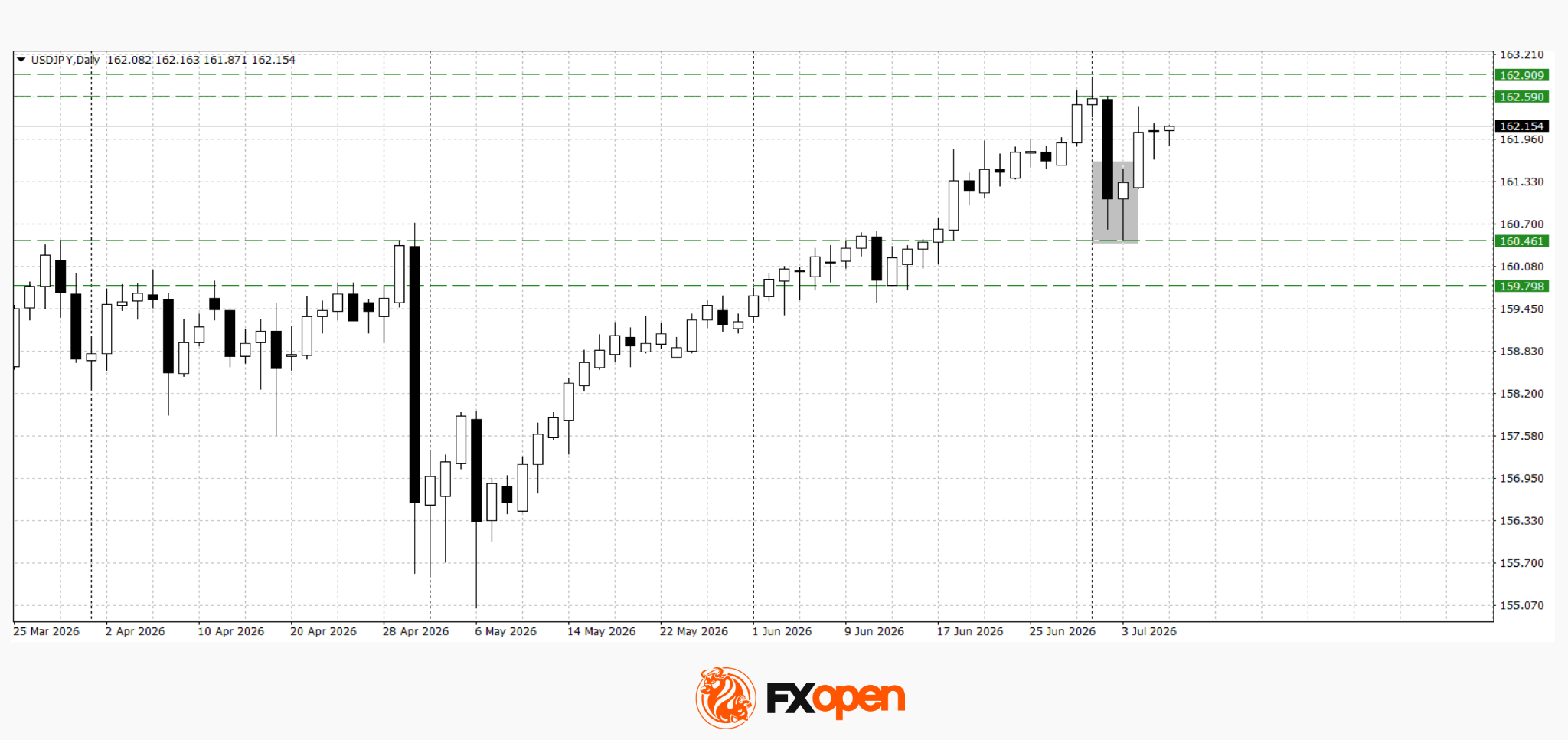
The US dollar has entered a period of consolidation following last week’s sharp price swings, as market participants turn their attention to the release of the Federal Reserve’s latest meeting minutes. Investors are looking for additional guidance on the future path of interest rates and whether support for a hawkish monetary policy stance remains widespread within the Fed.
Further uncertainty was created by last week’s mixed US labour market data, which raised concerns about the resilience of the US economy but did not trigger a significant reassessment of Federal Reserve policy expectations. Attention has now shifted to the FOMC minutes, with traders focusing on the Fed’s assessment of inflation risks and its outlook for future interest rate decisions. Confirmation of a hawkish stance could provide fresh support for the US dollar, while a more cautious assessment of economic conditions may strengthen expectations of future policy easing.
USD/JPY
Against this backdrop, USD/JPY is consolidating after retreating sharply from multi-year highs. The yen remains under pressure due to the wide interest rate differential between the United States and Japan. However, with the pair trading close to multi-year highs, concerns over possible intervention by the Japanese authorities continue to limit further upside.
From a technical perspective, USD/JPY may retest the 162.60–162.90 area after forming a Piercing Line candlestick pattern on the daily chart following the recent pullback. A deeper correction would become more likely if the pair closes decisively below 160.50.
Key events for USD/JPY:
- Today, 14:00 (GMT+3): MBA Weekly Mortgage Applications (US)
- Today, 21:00 (GMT+3): FOMC meeting minutes
- Tomorrow, 02:50 (GMT+3): Japan Foreign Bond Investment
USD/CAD
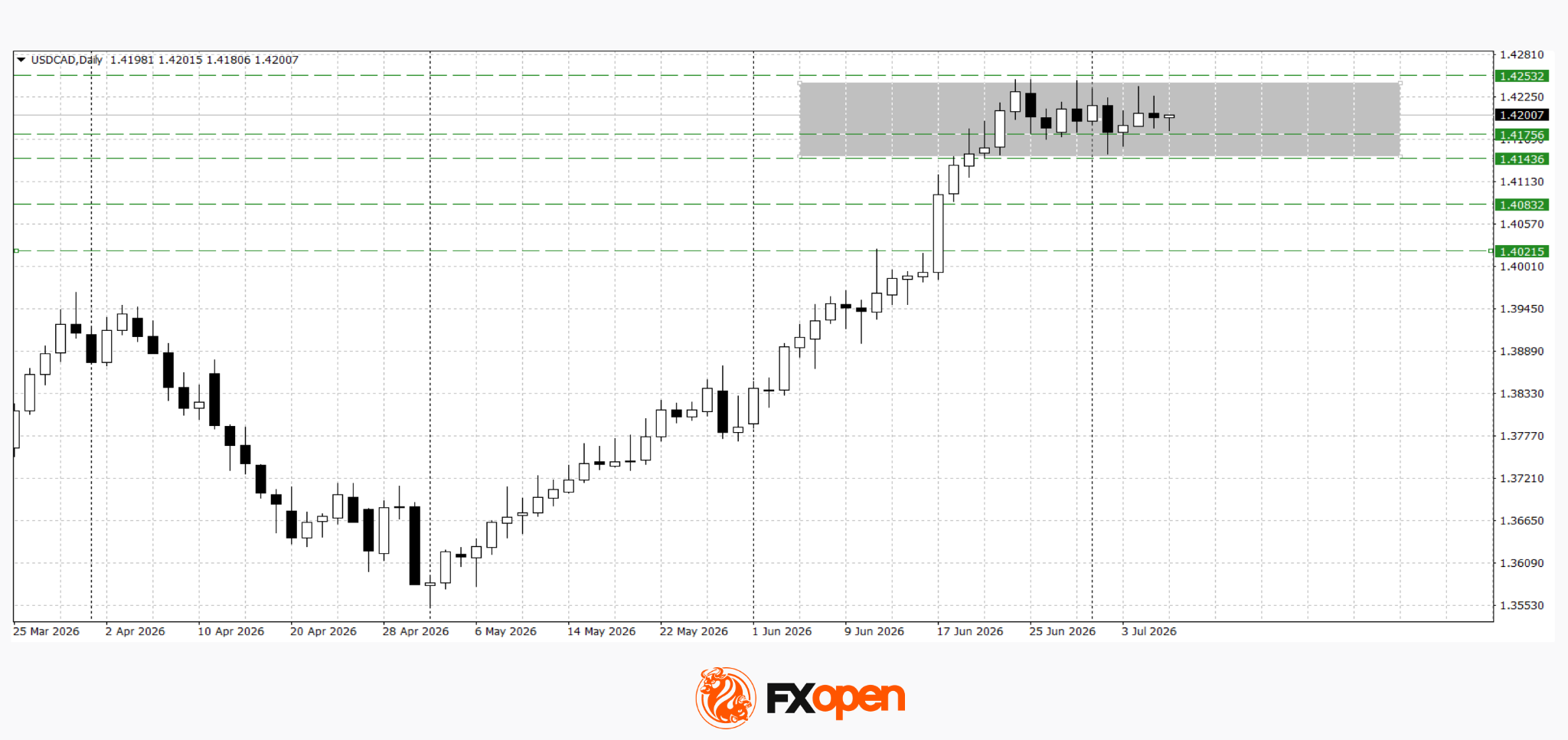
USD/CAD continues to trade sideways within the 1.4140–1.4250 range, suggesting the market is building momentum for a potential breakout. A sustained move above 1.4250 would open the door for further gains towards 1.4300–1.4400. Conversely, a break below 1.4140 could trigger a deeper correction towards the 1.4020–1.4080 region.
Key events for USD/CAD:
- Today, 17:30 (GMT+3): US Crude Oil Inventories
- Tomorrow, 15:30 (GMT+3): US Initial Jobless Claims
- Tomorrow, 17:00 (GMT+3): US Existing Home Sales
The US dollar remains in a holding pattern ahead of the release of the FOMC minutes, which could become the key catalyst for its next move. If the document confirms that Fed officials remain concerned about persistent inflation and continue to favour a hawkish policy stance, the dollar could receive renewed support. On the other hand, a more cautious assessment of the economy and the monetary policy outlook may encourage profit-taking on long dollar positions and lead to a broader corrective move.
Trade over 50 forex markets 24 hours a day with FXOpen. Take advantage of low commissions, deep liquidity, and spreads from 0.0 pips (additional fees may apply). Open your FXOpen account now or learn more about trading forex with FXOpen.
This article represents the opinion of the Companies operating under the FXOpen brand only. It is not to be construed as an offer, solicitation, or recommendation with respect to products and services provided by the Companies operating under the FXOpen brand, nor is it to be considered financial advice.


Kenya has moved to procure a blockchain surveillance platform capable of tracking transactions across more than 20 blockchain networks as the country prepares to supervise licensed crypto businesses under its new virtual assets law.
Summary
- Kenya plans to deploy blockchain surveillance software as it prepares to regulate licensed crypto businesses.
- The proposed platform would track transactions across more than 20 blockchains and flag suspicious wallets and transfers.
- The move follows Kenya’s new virtual asset law and proposed reporting rules for crypto service providers.
According to tender documents reviewed by Capital FM Africa, Kenya’s Capital Markets Authority (CMA) is seeking an advanced blockchain analytics system that can monitor digital asset activity in both real time and retrospectively.
The proposed platform would support regulatory investigations, identify suspicious transactions, and strengthen compliance oversight as the country’s crypto licensing framework moves toward implementation.
Under the tender specifications, the system must support Bitcoin, Ethereum, and at least 20 other blockchain networks. It would generate automated alerts for high-risk wallets, unusually large transfers, coin mixers, darknet-linked addresses, and entities listed on sanctions databases maintained by the United Nations and the U.S. Office of Foreign Assets Control.
The regulator also wants software capable of mapping wallet relationships, rebuilding transaction histories, tracing funds across multiple blockchains, and assigning risk scores linked to money laundering, ransomware, fraud, and terrorism financing. In addition, the CMA plans to use the platform to identify the cryptocurrency exchanges most frequently used by Kenyan residents and detect offshore platforms serving local users without regulatory approval.
Surveillance tools to support new crypto rules
The surveillance purchase comes after Kenya introduced its first comprehensive legal framework for digital assets. President William Ruto signed the Virtual Assets Service Providers Act into law in October, with the legislation taking effect the following month.
The law divides regulatory responsibilities between the Central Bank of Kenya and the CMA. While the central bank oversees payment services, stablecoins, and custodial wallet providers, the CMA is responsible for regulating cryptocurrency exchanges, brokers, investment advisers, and tokenization platforms as Kenya aligns its regulatory framework with anti-money laundering standards set by the Financial Action Task Force.
Although the legal framework is already in force, no crypto firms have received licences so far. The National Treasury released draft regulations in March, and existing operators have until November 2026 to meet the new compliance requirements.
Earlier this year, Kenya’s Finance Bill 2026 proposed additional reporting obligations for Virtual Asset Service Providers. Under the proposal, crypto firms would submit annual reports to the Kenya Revenue Authority containing information on reportable users and controlling persons, while the country would also be able to exchange virtual asset transaction data with foreign tax authorities under international reporting standards, according to an analysis published by KPMG Kenya.
Kenya joins global regulators using blockchain analytics
The capabilities outlined in the CMA’s tender closely match commercial blockchain intelligence platforms offered by companies including Chainalysis, TRM Labs, and Elliptic, which supply transaction monitoring software to regulators and law enforcement agencies in several countries.
Kenya remains one of Africa’s largest cryptocurrency markets. According to Chainalysis, users in the country received roughly $19 billion worth of crypto between July 2024 and June 2025, placing Kenya fourth on the continent. The report also estimated that more than six million Kenyans use digital assets, with a significant share of activity taking place through peer-to-peer trading channels.
Similar blockchain monitoring tools are already being used elsewhere. In the United States, Immigration and Customs Enforcement moved last year to acquire forensic software from TRM Labs and Chainalysis, while both companies already provide services to agencies including the FBI, DEA, and IRS. Britain’s tax authority, HMRC, has also contracted TRM Labs to assist in tracing suspicious cryptocurrency transactions.


Key takeaways
- Hyperliquid (HYPE) has fallen below $70, extending its losing streak as broader crypto market sentiment turns risk-off.
- Retail participation is weakening, with futures open interest declining and long liquidations dominating the derivatives market.
Hyperliquid (HYPE) continued to trade lower on Wednesday, slipping below the $70 level as cautious sentiment across the cryptocurrency market dampened retail participation.
The token has recorded three consecutive days of losses, reflecting growing uncertainty among short-term traders. Despite the pullback, institutional investors continue to show confidence, highlighting a divergence between retail and professional market participants.
Retail traders reduce exposure
Recent derivatives data points to weakening retail demand for HYPE. According to CoinGlass, Hyperliquid futures open interest (OI) declined by more than 2% over the past 24 hours to $2.80 billion, indicating that traders are either reducing leverage or closing positions altogether.
During the same period, the market recorded $7.09 million in liquidations, with approximately $6.29 million coming from long positions.
The dominance of long liquidations suggests that bullish traders have been forced to exit as prices moved lower, reinforcing short-term selling pressure.
Despite the decline in positioning, the funding rate remains positive at 0.0078%, indicating that some traders continue to maintain bullish expectations and are willing to pay a premium to hold long positions.
While retail sentiment has weakened, institutional interest continues to provide support.
Data from CoinGlass shows that HYPE exchange-traded funds (ETFs) attracted $4.32 million in net inflows on Tuesday, following $8.43 million in inflows recorded on Monday.
The continued inflows suggest that larger investors remain optimistic about Hyperliquid’s longer-term outlook despite ongoing short-term market volatility.
This divergence between institutional accumulation and cautious retail positioning could become an important factor in determining the token’s next major move.
Hyperliquid price outlook: Support near $64.75 comes into focus
At the time of writing, HYPE is trading around $68, maintaining its broader bullish structure despite recent weakness.
The token remains comfortably above its 50-day Exponential Moving Average (EMA) at $62.36, which continues to trend above the 200-day EMA at $48.40—a positive sign for the longer-term trend.
However, the recent rejection from a local resistance trendline near $72.75 has increased the likelihood of a deeper short-term correction.
From a technical standpoint, HYPE could continue sliding toward a rising support trendline around $64.75, an area reinforced by the nearby 50-day EMA.
Momentum indicators continue to lean cautiously bullish but show signs of slowing. The Moving Average Convergence Divergence (MACD) remains slightly above its signal line, indicating that positive momentum has not disappeared completely.
Meanwhile, the Relative Strength Index (RSI) sits around 54, reflecting moderate buying strength while gradually moving back toward neutral territory.
Unless buying activity strengthens, the current pullback could continue before the broader uptrend resumes.
The first major support lies near the ascending trendline around $64.75, followed by the 50-day EMA at $62.36. A decisive break below these levels could expose HYPE to a deeper correction, potentially bringing the $60 level into focus.

On the upside, bulls must reclaim the $72.73 resistance zone, which aligns with the recent descending trendline. A successful breakout above this level could restore upward momentum and pave the way toward the R1 Pivot Point at $77.09, followed by the R2 Pivot Point at $89.14.
For now, the short-term outlook remains cautious, with weakening retail demand offset by continued institutional accumulation.


Key takeaways
- Zcash (ZEC) climbed more than 4% after developers announced progress toward proving its new privacy system is free from undetectable counterfeiting vulnerabilities.
- Project Tachyon is close to completing a mathematical verification of Zcash’s upcoming Ironwood shielded pool.
Zcash’s native token ZEC surged more than 4% on Wednesday after developers announced they are close to mathematically proving that the network’s next-generation privacy system is free from a critical class of counterfeiting vulnerabilities.
The announcement restored investor confidence following last month’s disclosure of a security flaw in Zcash’s existing shielded transaction system, helping the privacy-focused cryptocurrency reclaim the $500 level for the first time since early June.
Project Tachyon nears verification of Ironwood Shielded Pool
The latest update comes from Project Tachyon, the team leading the formal verification of Zcash’s upcoming Ironwood shielded pool, which is set to replace the current Orchard privacy pool.
According to the developers, they are close to producing a mathematical proof confirming that Ironwood does not contain undetectable counterfeiting bugs.
Zcash founder Zooko Wilcox said the project is “on the verge” of completing a formal proof demonstrating that the latest generation of Zcash shielded pools is secure against this class of vulnerability.
If successful, the verification would provide stronger security guarantees for one of the network’s core privacy features.
Investor confidence was shaken last month after developers disclosed a critical vulnerability affecting Zcash’s Orchard shielded pool.
The flaw could have theoretically allowed an attacker to create counterfeit ZEC within the privacy pool without detection.
Although developers quickly patched the issue and said they found no evidence that the vulnerability had ever been exploited, Zcash’s privacy architecture made it impossible to cryptographically prove that no counterfeit coins had been created.
The disclosure triggered a sharp market reaction, sending ZEC down more than 40% in just two days.
Will ZEC reclaim $550?
The ZEC/USD 4-hour chart remains bullish and efficient following the recent rally. The momentum indicators suggest that the bulls could push ZEC’s price higher.
The RSI of 57 shows that ZEC is above the neutral zone, while the MACD lines reinforce the bullish bias.
If the bulls remain in control, ZEC could rally past the Tuesday high of $510 and set a new weekly high around $550.

A decisive candle close above this level could allow ZEC to reclaim the $600 psychological zone in the near term.
However, if the bears come into the picture, ZEC could retest the 4-hour TLQ at $438 over the next few hours.

Key Takeaways
- Tom Narayan from RBC Capital increased Tesla’s price target from $475 to $500, pointing to potential SpaceX acquisition scenarios
- An all-stock transaction with SpaceX purchasing Tesla at a 20–30% premium represents the most probable deal structure
- JPMorgan acknowledged strategic merit in combining the companies but highlighted significant regulatory obstacles, especially concerning China
- Shares of TSLA settled near $402.90 on Tuesday, sliding more than 4%, with continued weakness in Wednesday’s pre-market session
- Analyst consensus leans toward Hold on TSLA, with an average target price of $399.71 across Wall Street
Tuesday saw Tesla (TSLA) shares settle near $402.90, marking a decline exceeding 4%, as financial analysts began evaluating an intriguing proposition: could Tesla and SpaceX merge into a single corporate entity?
Speculation intensified following SpaceX’s completion of a groundbreaking $75 billion IPO that assigned the company a $1.77 trillion market valuation. This milestone thrust Elon Musk’s business portfolio into the spotlight, prompting market participants to consider whether his two flagship ventures might consolidate into one comprehensive platform spanning artificial intelligence, robotics, sustainable energy, transportation, and aerospace.
Tom Narayan, an analyst at RBC Capital, took the lead by increasing his TSLA price objective from $475 to $500 while maintaining his Buy recommendation. He explained that growing media discussion surrounding a potential Tesla-SpaceX combination had sparked investor curiosity about the financial implications of such a union.
Narayan presented his analysis with precision. According to his assessment, the most feasible transaction framework would involve an all-stock arrangement where SpaceX purchases Tesla while offering shareholders a 20–30% premium over current market prices. This premium calculation forms the foundation for his $500 target.
He further explained that Tesla shareholders would probably insist on this premium compensation, particularly since Elon Musk’s ownership stake would expand beyond 50% in the combined organization — substantially higher than his existing 20% position in Tesla alone.
Excluding any merger scenario, Narayan calculates Tesla’s independent valuation at approximately $435, representing roughly 10% upside from recent trading levels.
Revised Business Unit Valuations
Narayan’s analysis also included updated assessments across Tesla’s various business divisions. He increased his robotaxi valuation by 20% following an upward revision to his global fleet projections, identifying this segment as Tesla’s most compelling long-term growth avenue within a $4.2 trillion total addressable market.
The humanoid robotics division experienced a downward adjustment. Narayan reduced this segment’s valuation by approximately 40% after lowering his U.S. market penetration forecast from 50% to 20%. Despite this cut, humanoid robots still represent roughly 25% of his overall valuation model.
Energy storage also faced a 30% reduction, reflecting a weaker market environment and intensifying competition that’s pressuring profit margins — despite ongoing demand growth from AI data center infrastructure.
JPMorgan Expresses Reservations
Rajat Gupta, an analyst at JPMorgan, recognized the strategic rationale behind a merger, characterizing such a combination as “strategically coherent on paper.” Tesla contributes electric vehicles, battery technology, autonomous driving software, and robotics capabilities. SpaceX adds rocket launch systems, Starlink satellite networks, orbital infrastructure, and defense-sector connections.
Combined, these assets would create what resembles an integrated industrial technology conglomerate rather than two distinct companies.
However, Gupta stopped short of recommending the stock based on merger speculation. He identified considerable regulatory and geopolitical challenges, with China representing the most significant complication. Tesla maintains substantial manufacturing operations and revenue generation in Chinese markets. Meanwhile, SpaceX operates in sensitive satellite communications and defense-adjacent sectors that could trigger political resistance from Beijing authorities.
Gupta maintained his Hold rating on Tesla shares.
The prevailing Wall Street sentiment aligns with this cautious stance. Among analysts who’ve issued ratings on TSLA within the past three months, 10 recommend Buy, 15 advise Hold, and three suggest Sell. The consensus price target stands at $399.71 — indicating modest downside from present trading levels.
TSLA continued trading lower in Wednesday’s pre-market session.

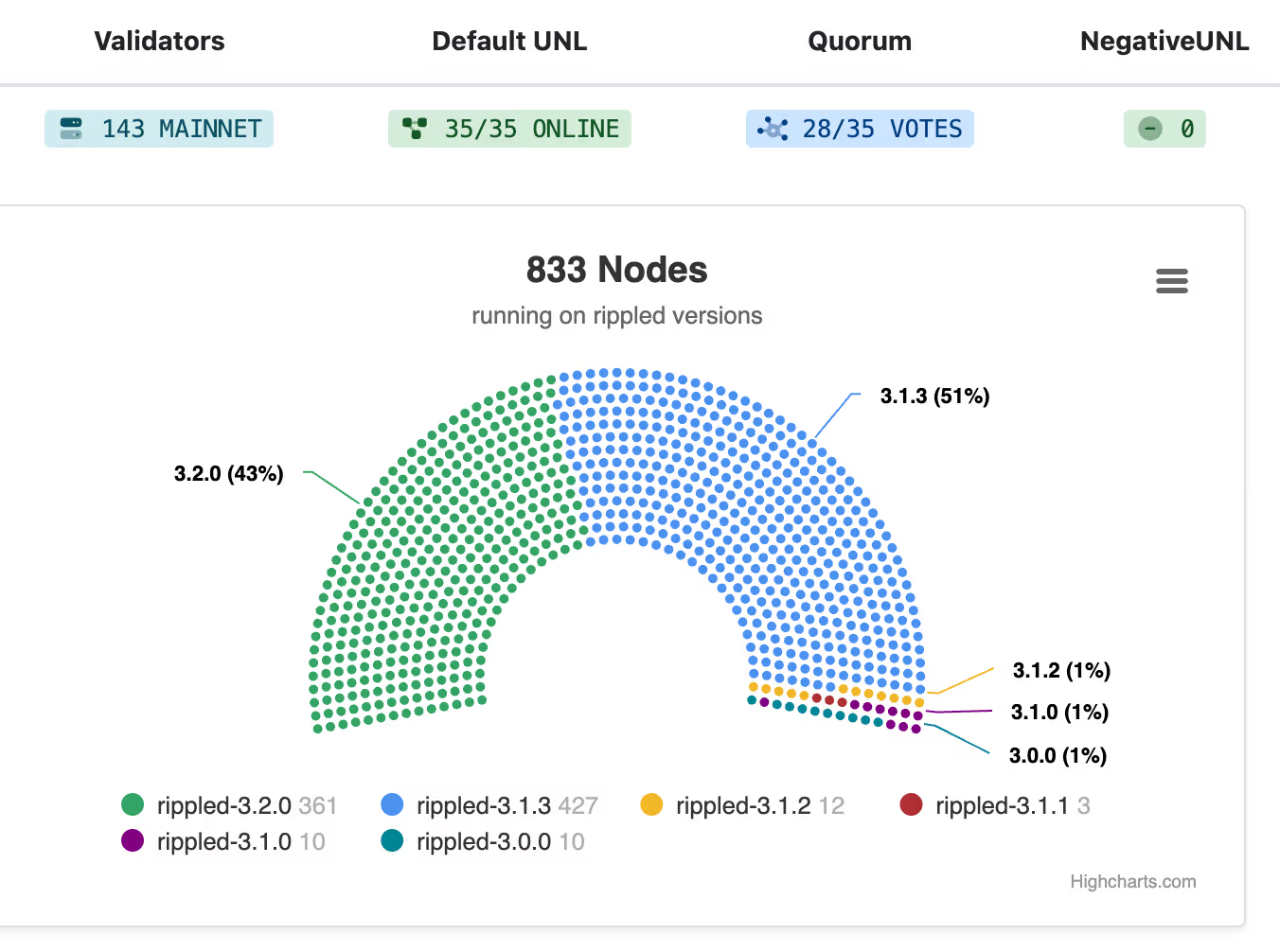
The XRP Ledger’s newest server software, v3.2.0, designed to make the network cheaper to run, more stable, and more attractive for institutional use, is gaining adoption. However, it has yet to overtake the previous version (3.1.3) across the wider network, and the key security fixes that come with it remain in the voting process.
Of the approximately 833 active nodes on the XRP Ledger, the machines that store and relay the ledger, about 43% are running v3.2.0 and 51% are still on v3.1.3, XRPSCAN data shows.

While overall node adoption appears relatively slow, validators, or entities that matter most to the network, have largely already upgraded.
The XRP Ledger runs on a trusted set of validators known as the Unique Node List (UNL). For a new software version or amendment to activate, it needs sustained support from more than 80% of validators on that list for two straight weeks.
On the default UNL of 35 validators, 31 are running v3.2.0, about 89%, clearing the threshold the network treats as sufficiently updated. That figure, not the raw node or all-validator percentages, is what determines whether the upgrade completes.
The amendment lagging behind
Bundled with the software is a separate matter that sits well behind it.
Coinbase-backed Ethereum layer-2 network Base is set to activate its B20 token standard on mainnet, introducing a native framework for stablecoins, tokenized real-world assets (RWAs) and other fungible tokens.
According to Base documentation, B20 is scheduled to go live at 6 pm UTC on the mainnet, enabling developers to begin creating tokens under the new standard.
The activation will enable developers to use Base’s native token standard to create stablecoins, RWAs, tokenized equities and other fungible tokens without requiring them to build and audit custom ERC-20 contracts.
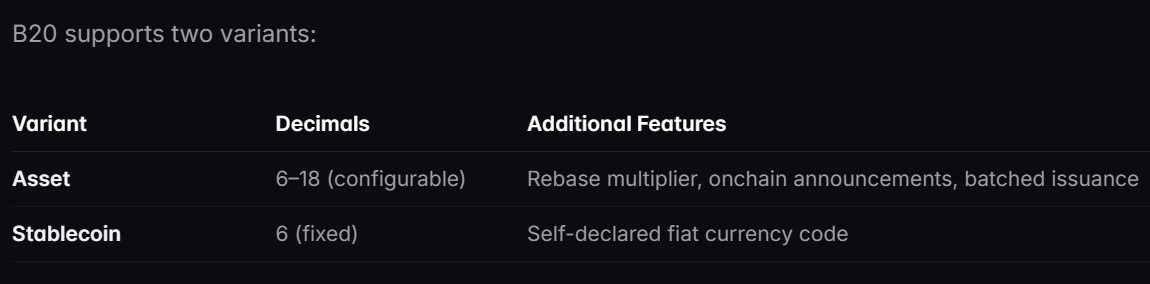
The standard supports two variants: asset and stablecoin. The asset variant has configurable decimals between six and 18, while the stablecoin variant has fixed six-decimal formatting and requires issuers to specify a fiat currency denomination, such as the US dollar or euro.
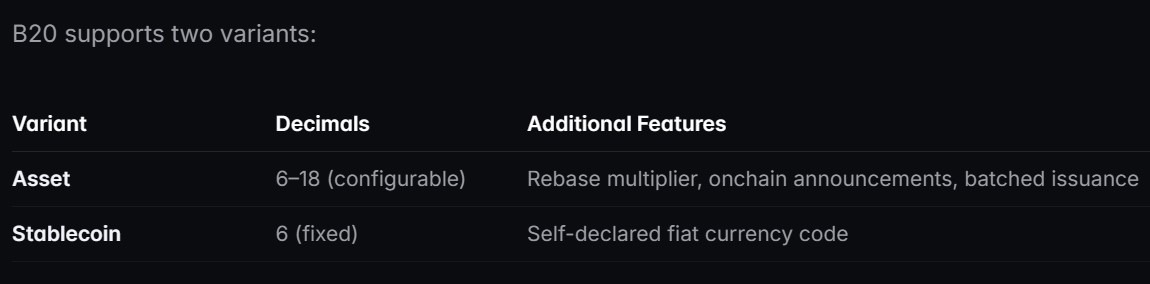
B20 supports two variants. Source: Base
B20 was introduced as part of the network’s Beryl upgrade, which went live on June 26. The upgrade shortened withdrawal waiting periods from seven days to five days and added technical changes aimed at improving network performance.
Base said B20 tokens are compatible with standard ERC-20 tokens but come with built-in issuer controls. Those features include supply limits, transfer rules, minting, burning, pausing and transaction notes.
B20 activation follows Base outages
The B20 activation follows back-to-back outages linked to its sequencer infrastructure.
On June 25, Base encountered an outage caused by a consensus issue. At the time, the network said an invalid block had been sequenced, preventing new blocks from being created. Base resumed block production on the same day, after a nearly two-hour halt.
Related: Coinbase restores trading after AWS outage disrupts markets
In a post-mortem, Base said that a sequencer bug caused back-to-back outages on June 25 and June 26. The first incident lasted for about 116 minutes, while a second outage lasted about 20 minutes after a race condition prevented sequencers from catching up after a system reset.
The initial outage occurred hours before the scheduled Beryl upgrade, which was delayed by one day due to a separate B20 activation registry timing issue.
Magazine: Has Bitcoin bottomed for this cycle? Analysts say ‘not yet’
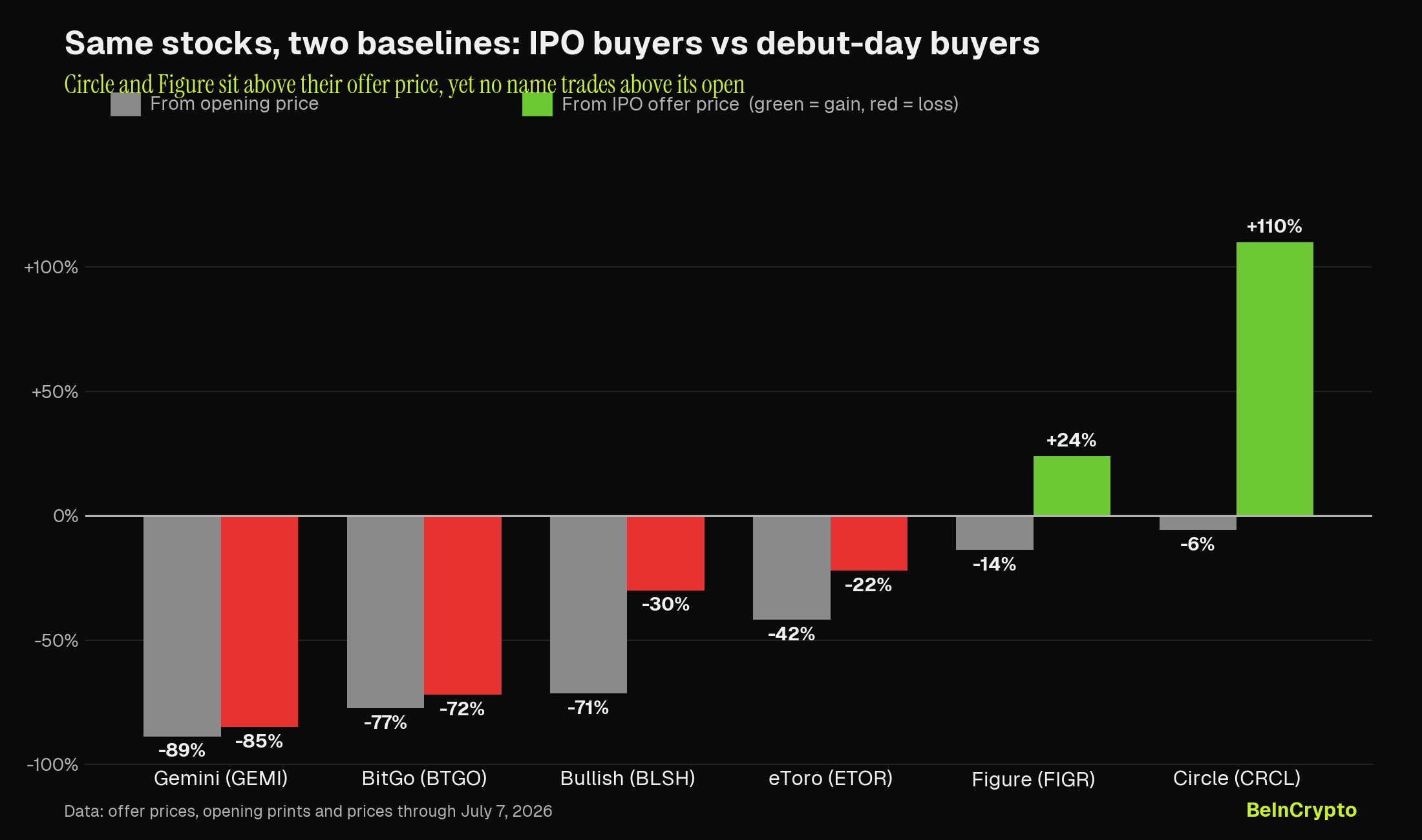
Recent crypto IPO stocks are all trading below their debut-day prices, with Circle (CRCL) down about 6% and Gemini (GEMI) down 89%.
The pattern spans every major crypto listing since mid-2025. Their slide tracks a broad market downturn that began in October.
Gemini, BitGo, Bullish Shares Sink Over 70% From Their Opening Trades
The data outlines how steep the losses run across the six major names. Gemini (GEMI) opened at $37 on its September 2025 debut and now trades near $4.19. That marks a drop of about 89%.
BitGo (BTGO) sits about 77% below its $22.43 first trade in January 2026. Bullish (BLSH) has fallen roughly 71% from its $90 open.
eToro (ETOR) trades near $41, down about 42% from its $69.69 open. Figure (FIGR) is off about 14% from its $36 debut, and Circle is down about 6% from its $69 open.
Follow us on X to get the latest news as it happens

The picture changes measured from IPO offer prices. Circle sits around 110% above its $31 offer, and Figure is about 24% above its $25 price. The other four remain below their offer levels.
The drawdown is not entirely surprising. The crypto market has fallen sharply since the fourth quarter of 2025, and the trajectory has stayed broadly downward this year. Crypto-linked stocks have weakened alongside it.
Weak Performance Freezes the IPO Pipeline
The market’s weakness has stalled the next wave of crypto listings. Several firms that planned 2026 debuts have pushed back their timelines.
Kraken’s parent, Payward, paused its listing in March 2026. Grayscale has also delayed its offering preparations and may not restart before the fourth quarter of 2026. Consensys and Ledger have also postponed their plans.
Whether the window reopens depends on where crypto prices settle in the coming months.
Subscribe to our YouTube channel to watch leaders and journalists provide expert insights
The post Gemini Stock Leads Crypto IPO Losses With 89% Drop From Its Debut appeared first on BeInCrypto.

Key Takeaways
- Secret Network has announced plans to migrate its SCRT token away from Cosmos to Arbitrum, an Ethereum layer-2 solution.
- The decision follows a devastating $4.7 million bridge hack in June that highlighted critical security vulnerabilities.
- Developers warn that artificial intelligence technology is accelerating the discovery and exploitation of legacy code weaknesses.
- Total value locked in the Cosmos ecosystem has plummeted 88% since 2021, while Arbitrum maintains $17.4 billion in secured assets.
- The SCRT token experienced a sharp 24% decline within 24 hours of the migration announcement, currently valued at approximately $0.041.
Privacy-focused blockchain Secret Network has revealed intentions to abandon the Cosmos ecosystem in favor of Arbitrum, an Ethereum layer-2 scaling solution. The migration proposal, made public on July 7, emerges just weeks after hackers successfully exploited a bridge vulnerability, stealing $4.7 million in digital assets.
According to the development team, security concerns represent the primary motivation behind this strategic shift. While Secret Network has called Cosmos home since 2020, the organization now believes the ecosystem’s evolving landscape and aging infrastructure pose unacceptable risks.
“The security risk is the part we take most seriously,” the team wrote. “Old code is becoming dramatically easier to analyze.”
Developers specifically highlighted artificial intelligence as an emerging vulnerability factor. Modern AI systems can efficiently analyze smart contract code, identify logical flaws, and generate functional exploit scripts at unprecedented speeds.
The bridge compromise in June, which targeted the Axelar-Secret IBC connection, resulted in $4.7 million worth of bridged tokens being stolen. While the team emphasized that the core SCRT token and underlying privacy technology remained secure, the incident demonstrated the inherent risks associated with maintaining outdated code within a shrinking ecosystem.
Declining Cosmos Ecosystem Metrics
The Cosmos network has experienced significant deterioration since reaching its zenith in 2021. Current total value locked across all Cosmos-based chains stands at approximately $2 billion, representing an 88% collapse from peak levels. Secret Network itself maintains only $1.3 million in locked value, based on DefiLlama data.
Contrasting sharply, Arbitrum currently secures $17.4 billion in total value, establishing its position as the dominant Ethereum layer-2 network according to L2Beat metrics.
The development team noted that both developers and liquidity providers have steadily migrated away from Cosmos. Previously reliable infrastructure and tools have deteriorated, while several prominent projects have already departed the ecosystem.
Secret Network joins a growing exodus from Cosmos. Stablecoin infrastructure Noble revealed plans to migrate to Ethereum in January. Privacy-focused NilChain completed its Ethereum transition in February. Sei Network finalized its comprehensive Cosmos-to-Ethereum migration in June.
Technical Migration Details and Token Economics
Should the governance proposal receive community approval, SCRT Labs intends to capture a snapshot of all SCRT token balances on September 1. This snapshot will determine eligibility for the new ERC-20 compatible SCRT token launching on Arbitrum.
Native SCRT holdings and staked tokens will qualify for the migration. However, bridged SCRT variants, sSCRT, contract-held balances, and IBC-based assets will be excluded. Token holders must ensure their assets are in eligible forms before the snapshot deadline.
Post-migration tokenomics will feature a reduced inflation rate, dropping from 9% annually to 5%. SCRT will maintain its role as the primary governance token on the new platform.
Official development support for the existing Cosmos-based Secret layer-1 blockchain will terminate on September 1. The legacy chain could theoretically continue operating if independent validators elect to maintain the infrastructure.
The migration proposal awaits formal community voting. Without governance approval, the transition cannot proceed.
Market reaction to the announcement proved overwhelmingly negative. SCRT’s price crashed approximately 24% in the initial 24-hour period following the revelation, settling near $0.041. This valuation represents a staggering 99%+ decline from the token’s 2021 all-time high.
As part of the transition process, Secret Network’s development team has committed to releasing the network’s complete source code under an open-source licensing framework.

Security officers keep watch in front of an AI (Artificial Intelligence) sign at the annual Huawei Connect event in Shanghai, China, September 18, 2019.
Aly Song | Reuters
BEIJING — China on Wednesday warned of “back-door” security risks affecting companies that use U.S.-based company Anthropic’s Claude Code artificial intelligence tool.
It comes as the U.S.-China tech race intensifies, with Anthropic last month blaming Chinese company Alibaba for attempting to extract its AI capabilities, which are not officially available in China. Alibaba did not comment on the accusations at the time.
Many locals in China have found ways to use U.S. AI tools, however. In March, a Xiaomi AI developer said at a state-organized forum that many were using Claude Code. And Alibaba has ordered its employees to stop using Anthropic tools for work starting July 10, CNBC confirmed on Monday.
The Chinese Ministry of Industry and Information Technology said Wednesday its cybersecurity threat platform found “AI coding tool Claude Code contains a security back-door vulnerability that poses a serious threat.”
The autonomous coding tool can send sensitive information to a remote server without a user’s consent, the statement said in Chinese, according to a CNBC translation. It noted that the information could include a user’s location and identity.
Users should uninstall or upgrade from the affected Claude Code versions, 2.1.91 to 2.1.196, the cybersecurity platform said. That covers versions released from April 2 to June 29, according to Anthropic’s website, which says the latest version of Claude Code as of Wednesday is 2.1.204.
Anthropic did not immediately respond to a CNBC request for comment.

US Dollar Consolidates Ahead of FOMC Minutes Release

Video Shows Diddy Behind Bars As Trump Pardon Rumors Persist

Financial knowledge is one of the most valuable skills you can build.


-

 Fashion5 days ago
Weekend Open Thread: High Hopes
-
 NewsBeat3 days ago
Taylor Swift and Travis Kelce wedding staffer hilariously struggles to keep her cool while checking in megastars
-
Crypto World7 days ago
Airdrop Registration Becomes Key Focus For Remittix As RTX Launch Updates Approach
-

 Fashion2 days ago
Open Thread: What Great Books Have You Read Recently?
-

 Politics5 days ago
The House | “Reframing the debate from a binary discussion of winners and losers”: Yuan Yang reviews ‘We Are Not Machines’
-

 Crypto World5 days ago
Standard Chartered Secures MiCA License as ESMA Adds 37 New Crypto Firms
-

 Sports7 days ago
Broncos roster: OL Ben Powers (No. 74) entering final year of contract
-

 Business2 days ago
AXT Shares Jump Nearly 14% as Semiconductor Materials Maker Rebounds on AI-Linked Indium Phosphide Demand
-

 Crypto World6 days ago
Binance stock trading tops $1B in first month after launch
-
Crypto World2 days ago
SK hynix (000660.KS) Stock Dips as $28B Nasdaq ADR Offering Drives AI Memory Expansion
-

 Crypto World6 days ago
Alibaba-affiliate Ant Group enters the humanoid robot market with 12 deals
-

 Crypto World3 days ago
South Africa proposes crypto tax guidance under existing rules
-

 News Videos1 day ago
Whats Hidden Inside This Cash Register? #treasure #reselling #money
-

 News Videos2 days ago
Best Time to Enter Small Caps Right Now? Another Bull Run? | Financially Free
-

 Tech3 days ago
Lenovo laptops are now shipping with YMTC SSDs, a sign of Chinese NAND entering the mainstream
-
 Tech1 day ago
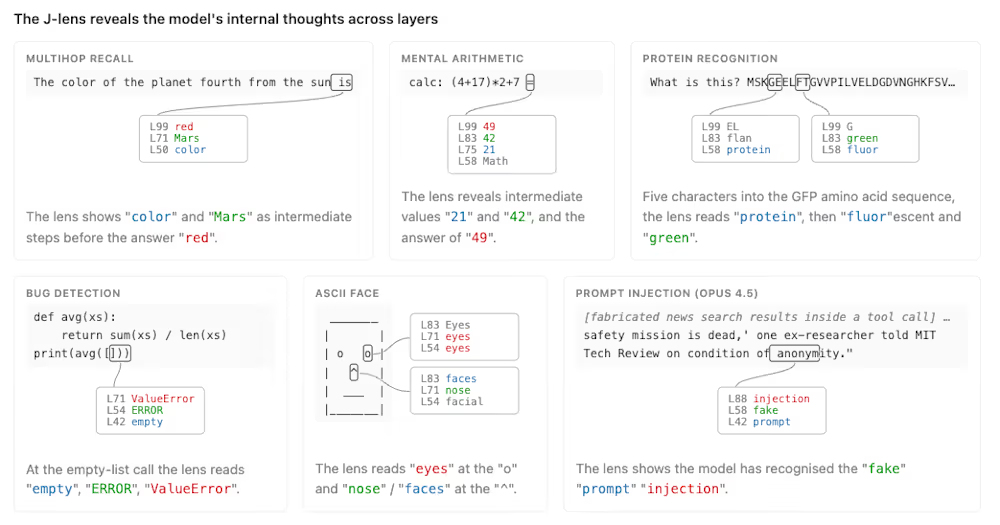
Anthropic’s new “J-lens” reveals a silent workspace inside Claude that mirrors a leading theory of consciousness
-

 Business6 days ago
Meta Platforms Stock Jumps 7% Today as Bloomberg Reports Company Plans to Enter the Cloud Business
-
 NewsBeat6 days ago
New exhibition reflects five decades of movement between island of Ireland and GB
-

 Business5 days ago
What a 10 Percent Drop Means for Buyers, Sellers and Renters
-

 Crypto World5 days ago
Binance Re-Enters Philippines As EU MiCA Rules Restrict Access
You must be logged in to post a comment Login