Connect with us
DAPA Banner
DAPA Coin
DAPA
COIN PAYMENT ASSET
PRIVACY · BLOCKDAG · HOMOMORPHIC ENCRYPTION · RUST
ElGamal Encrypted MINE DAPA
🚫 GENESIS SOLD OUT
DAPAPAY COMING

Business

Swiss cling on to cash as survey shows payment app use stalling

Published

on

Swiss cling on to cash as survey shows payment app use stalling
Continue Reading
Click to comment

You must be logged in to post a comment Login

Leave a Reply

Business

Crude oil shock clouds near-term outlook, but FY27 earnings growth still intact: Karthikraj Lakshmanan

Published

on

Crude oil shock clouds near-term outlook, but FY27 earnings growth still intact: Karthikraj Lakshmanan
Karthikraj Lakshmanan of UTI AMC in an interview with ET Now highlighted a cautiously optimistic top-down view on Indian markets, where the broader earnings trajectory into FY27 remains intact even as crude oil volatility emerges as the key near-term risk.

He noted that by February, most macro concerns had already been absorbed by the market, including progress on trade deals with the US and Europe, and expectations of double-digit nominal GDP growth along with mid-teen earnings growth after a subdued phase. However, the recent Iran–US conflict and the resulting sustained rise in crude prices over the past few months have reintroduced macro pressure, with potential implications for India’s current account deficit, inflation, and marginally even GDP growth. While acknowledging the possibility of some earnings cuts due to higher crude, he emphasized that India remains in a stronger position compared to past stress periods such as 2013, and still retains the potential for double-digit earnings growth in FY27.

He added that Q4 earnings have been relatively broad-based and better than earlier quarters, although Q1 could see some impact in select sectors due to elevated oil prices, making crude the most important variable to watch going ahead.

On the FY27 earnings outlook, Lakshmanan said consensus estimates are broadly in the mid-to-high teens range, though there could be some moderation at the index or large-cap level due to commodity pressures. He pointed out that while certain sectors may face margin pressure from higher crude and input costs, nominal revenue growth could remain strong due to inflation returning and overall higher nominal economic activity. On demand conditions, he said inflation is unlikely to spike meaningfully as the economy was earlier coming off a low inflation base, keeping overall conditions manageable. However, he flagged monsoon trends as an important near-term risk, noting that if rainfall comes in below the long-term average, food inflation could temporarily rise and add some pressure to consumption.

Advertisement

On sector allocation, he remained positive on financials, particularly private banks and insurance, citing their strong long-term return ratios, attractive valuations relative to history, and the ability to grow consistently above nominal GDP as seen over the past three decades. He also highlighted that rising interest rates could further support profitability in the banking sector. Despite concerns about high domestic investor ownership in financials, he maintained that valuations and fundamentals remain the primary drivers of his investment thesis rather than fund flow dynamics, which he said are inherently unpredictable and should not guide long-term positioning.


He continued to hold an overweight stance on IT stocks, calling it a contrarian call given weak Street positioning. According to him, Indian IT companies continue to generate strong ROCEs and cash flows, while returning a large portion of earnings via dividends and buybacks, offering attractive yield support. He also highlighted that even modest rupee depreciation provides additional earnings visibility. While acknowledging concerns about slower constant currency growth and fears of disruption from AI, he argued that IT services companies are still likely to play an important role in AI implementation, and historical transitions such as ERP and cloud shifts have not structurally disrupted long-term growth trajectories.
On healthcare, he said mid and small-cap companies offer better growth opportunities compared to large-cap names, which are relatively mature and offer steadier expansion. In capital goods, he acknowledged strong near-term momentum driven by power sector demand, transmission and distribution opportunities, and potential long-term tailwinds from data centre-related capex. However, he cautioned that valuations in several capital goods stocks have run up sharply, already pricing in high growth expectations, and advised a more selective, bottom-up approach rather than broad sector optimism at current levels.Finally, on capital flows, he stressed that market positioning should not be based on assumptions around FII or domestic inflows, as these are highly unpredictable and can shift quickly. Instead, he reiterated that investment decisions should remain anchored in fundamentals, earnings visibility, and valuation comfort. Overall, his view suggested that while near-term volatility from crude oil and inflation risks cannot be ignored, India’s broader earnings cycle into FY27 still points toward steady growth, with selective sector opportunities continuing to drive market returns.

Continue Reading

Business

Q1 2026 retail earnings fueled by tax refunds and BNPL

Published

on

Q1 2026 retail earnings fueled by tax refunds and BNPL

Shoppers enter and exit a Dior luxury boutique in Venice, Italy, on Nov. 16, 2025.

Michael Nguyen/NurPhoto via Getty Images

The retail industry emerged from a choppy first quarter relatively unscathed, but higher than usual tax refunds and an uptick in buy now, pay later use likely helped to buoy spending.

Advertisement

As Wall Street looks ahead to the second quarter, the period could offer a clearer view on consumer health and just how much high gas prices and persistent inflation have disrupted the economy and pressured already-strained household budgets. 

“Once you got through April and May, you’re really not seeing the impact of tax refunds anymore, and those months were a little bit choppier, so there’s a lot of moving pieces that maybe kept the consumer going for longer than we would have expected,” said Janine Stichter, a retail analyst and managing director at BTIG.

“As you peel back these tax refunds, you might start to see some of the underlying weakness … the consumer has not yet fully fallen apart and that’s why I think people are really looking to Q2 to say, ‘All right, well, what does the health of the consumer actually look like?’”

The period between February and May — which encompasses many retailers’ fiscal first-quarter results — brought a fresh wave of concerns about household spending. President Donald Trump started a new conflict in the Middle East, which led to surging gas prices, plummeting consumer confidence and renewed concerns about the health of the U.S. economy

Advertisement

But when retailers reported their first-quarter results over the last few weeks, there were few cracks to be found as sales rose, profits grew and outlooks stayed consistent at many of the largest U.S. companies.

“It was a surprisingly robust quarter,” said Neil Saunders, retail analyst and managing director at GlobalData. “Despite the rising gas prices, I think despite the choppiness in consumer sentiment, I think despite the uncertainty over the economy and everything else that’s going on in the world, consumers still showed up and they opened their wallets and they spent.” 

However, right around the same time the conflict in the Middle East began, tax refunds started trickling in. The number of people who received them, and the amounts they got, were higher than last year, which gave cash-strapped consumers some extra pocket money to go shopping. 

“That was a very helpful offset in terms of spending. I think without them there would have still been growth, but they really did provide the icing on the cake,” said Saunders.

Advertisement

Take Target, which said same-store sales jumped 5.6% during its fiscal first quarter, its first positive same-store sales number in five quarters with strength across all six of its core merchandising categories. But the strength wasn’t just because of Target’s turnaround efforts, as finance chief James Lee acknowledged higher tax refunds helped to fuel spending.

“That benefit will be fading over the rest of the year,” Lee said last week. “While consumers have proven to be resilient so far, sentiment has been declining recently and we’re keeping a close eye on their spending behavior.” 

Why Walmart's stock is having its worst day since 2023

Similar trends were spotted at Best Buy, Burlington Stores, Ross and Wayfair. At Best Buy, comparable sales rose 2%, and executives acknowledged part of that growth came from higher tax refunds. Considering the overall electronics market grew by about 3.6% during the first quarter, Best Buy still underperformed and lost market share, even with extra stimulus in the economy, Saunders said in an emailed note last week. 

The impact was particularly acute in the off-price sector. Burlington estimated higher tax refunds were worth between 1.5 to 2 percentage points of its comparable sales growth, which was 6% during the quarter. Competitor Ross saw comparable sales jump a staggering 17%, beating expectations of 9%, and also attributed some of its outsize growth to extra stimulus. 

During a call with analysts in mid-May, Wayfair finance chief Kate Gulliver said tax refunds had helped “buttress” the impact of higher gas prices. 

Advertisement

“The consumer’s been able to hang in there a little bit because of stimulus sort of helping,” she said. 

Meanwhile, there was also an uptick in buy now, pay later use during the quarter, which could’ve helped fuel spending as well, said Stichter. During the first quarter, buy now, pay later adoption hit new highs across income cohorts, with an estimated 15% to 17% of those making up to $150,000 using the services, Stichter said in a May research note, citing transaction data from Consumer Edge. Among shoppers making over $150,000, adoption rose to just under 13%.

“There probably is some level of either actual stress or kind of emotional pullback across all income cohorts on some level, we’re just not really seeing it in the earnings results yet,” she said. “Maybe it’s that they’re pulling back in other areas, maybe that they’re finding other ways to make payments.” 

That could start to change in the current quarter, as a range of retailers gave conservative guidance that suggested consumers may not be able to weather high gas prices as well as they did earlier in the year.

Advertisement

“Ross had a ridiculously good quarter, I mean, almost unprecedented in terms of the level of growth,” said Saunders. “Even with that in the bank for the first quarter, their view going into the second quarter and the rest of the year is that things will still be good for them, but they will normalize.”

Walmart is another example. The mega retailer saw sales rise 7% during its fiscal first quarter, but only reaffirmed its full-year outlook, and issued weaker guidance for the second quarter than Wall Street expected.

Walmart finance chief John David Rainey told CNBC the company’s outlook was strong given everything happening in the economy, but said consumers may feel more strain as the effect of tax refunds fades in the second quarter.

“I think higher tax returns muted some of the pressure related to higher fuel prices,” said Rainey. “As we’re in a period of time right now where those tax refunds are largely not coming in, I think consumers are going to feel more of that pressure from higher fuel prices.” 

Advertisement

TJX Companies also had a strong quarter – posting its biggest earnings per share beat since August 2021 as same-store sales jumped 6%, almost 2 percentage points above Wall Street expectations. Still, its second-quarter guidance for earnings per share and same-store sales came in short of estimates.

Meanwhile, E.l.f. Beauty delivered sizable beats on the top and bottom lines but still issued a weaker-than-expected outlook. CEO Tarang Amin told CNBC the “consumer is suffering” and said the company plans to roll back some tariff-fueled price increases as a result. 

While retailers can at times be “more cautious in their guidance than the reality might suggest,” executives and analysts generally agree they could see a more strained consumer in the current quarter and the rest of the year, said Saunders. 

“[That] tells you that retailers are kind of seeing the signs that some of this trough around the growth rate won’t persist across the balance of this year,” said Saunders. “Not that it will be terrible, but just the heat will come out of some of that momentum, and I think that is related to the fading impact of tax [refunds] and the picture of inflation that will probably pick up across the balance of this year.”

Advertisement
Choose CNBC as your preferred source on Google and never miss a moment from the most trusted name in business news.
Continue Reading

Business

UK house prices fall again as property market ‘deteriorates’

Published

on

Business Live

Rising mortgage rates and energy costs driven by the Iran war are weighing on the property market

A woman looking at houses for sale

A woman looking at houses for sale(Image: David Cheskin/PA Wire)

House prices dropped once more in May as mortgage rate increases and soaring energy bills triggered by the Iran war continued to weigh on the UK’s vulnerable property market.

Advertisement

The average UK house price declined by 0.6 per cent to £278,024 in May, compared with 0.4 per cent growth in April, according to Nationwide’s house price index.

Weakening house prices are accompanied by declining consumer sentiment in the property market, with the Royal Institution of Chartered Surveyors recording a sharp fall in new buyer enquiries in March.

Annual house price growth slowed from three per cent in April to 1.7 per cent in May, as last month’s average house price failed to surpass April’s record.

While mortgage rates jumped sharply at the beginning of the Iran war in February, experts at Nationwide say the housing market’s recent downturn comes as consumer confidence “deteriorates”, as reported by City AM.

Advertisement

Britons’ confidence in their own spending power fell to its lowest level in two years in April.

“Given the uncertainty caused by developments in the Middle East and the subsequent rise in energy prices and market interest rates, some loss of momentum was to be expected,” Nationwide chief economist Robert Gardner said.

This comes despite a surprise improvement in the state of the economy at the start of this year, as GDP grew by 0.6 per cent across the first quarter.

“Nevertheless, economic growth is likely to be somewhat weaker and inflation higher than previously expected this year as a result of developments in the Middle East, although the impact will ultimately depend on the duration of the shock and the policy response,” Gardner said.

Advertisement

Jason Tebb, president of property selling platform On The Market, said: “The fallout from the war in the Middle East is making itself felt, with uncertainty and the challenging economic backdrop resulting in a softening in the market and some loss of momentum.

“That said, the housing market continues to demonstrate resilience. Average prices dipped on a monthly basis as focused, price-sensitive buyers negotiate hard, while sellers realise that they will struggle to sell over-ambitiously priced homes.”

Property giant Savills last week downgraded its property price forecast for 2026, saying the Iran war had “fundamentally changed the outlook for the housing market”.

The property experts said that much of the downgrade was due to the surge in mortgage rates which followed the outbreak of the Middle East conflict.

Advertisement
Continue Reading

Business

Former Royal Mint executives secure equity boost for new precious metals trading platform

Published

on

Business Live

Cardiff-based Goldwise has secured £500,000 in equity to support its expansion plans

Goldwise investment deal, left to right: Gareth Tucker, co-founder of Goldwise; Tom Preene, fund manager at Angels Invest Wales; SV Rangan, lead investor of Goldwise; Jatin Patel, co-founder of Goldwise.

Two former Royal Mint executives have raised £500,000 in equity funding to support the roll-out of Goldwise which is pioneering new way for savers and investors to buy, manage and sell fractional physical gold, silver, platinum and palladium.

The investment includes £250,000 from the Wales Angel Co-Fund, managed by Angels Invest Wales, alongside £255,000 from a syndicate of business angels led by seasoned financial services professional SV Rangan, who partnered with six additional business angels in the funding round.

Advertisement

Launched by Gareth Tucker, former head of direct-to-consumer at The Royal Mint, and Jatin Patel, former head of wealth management at the Royal Mint in Llantrisant, Goldwise has built an a precious metals trading platform to allow savers and investors to trade fractional amounts of allocated, vaulted physical precious metals.

The funding is being used to support the UK market launch of the platform and underpin its next phase of growth, focusing on product rollout, customer acquisition and performance over the next 12 to 15 months ahead of a further planned round of funding designed to scale the business into Europe and globally.

At the heart of the platform is the Goldwise engine, a proprietary enterprise-grade infrastructure, covering customer onboarding, institutional pricing and execution, payments, allocation and custody and recordkeeping that connects directly to the global precious metals ecosystem, delivered through a single scalable platform.

The technology enables fractional trading of London Bullion Market Association approved bullion, from as little as £5, with 24/7 access, set conditional orders and real-time portfolio tracking.

Advertisement

It has recently launched a direct-to-consumer mobile app to buy, manage and sell fractional amounts of physical precious metals; and GoldwiseConnect, a precious-metals-as-a-service infrastructure solution that enables wealth platforms and financial institutions to embed physical precious metals trading into their own services without needing to build complex trading and custody infrastructure.

Goldwise enters a global physical precious metals market valued at more than £5 trillion, at a time when investor demand for portfolio diversification and protection assets is increasing. Despite strong long-term performance and liquidity, access to physical metals has historically been dominated by traditional dealer-led models.

Mr Tucker said: “Investing in most asset classes has become simple, digital and accessible – but physical precious metals have been left behind. Customers still face outdated buying experiences, marked-up pricing and limited trading functionality. Goldwise was built to change that, making precious metals investing easy, secure and efficient for all.

“Goldwise has been built from the ground up as trading infrastructure rather than e-commerce. This funding allows us to launch into the UK market with confidence, establish strong customer acquisition foundations and demonstrate the robustness of our model ahead of our next phase of expansion.”

Advertisement

Mr Patel added: “During my time building and launching wealth management businesses and investment products, it became clear that both retail investors and wealth platforms want direct exposure to physical precious metals delivered through modern infrastructure that is easy, secure and efficient.

“Goldwise combines institutional pricing, execution and custody through a single scalable platform. We believe this creates a compelling proposition for individual savers and for wealth firms looking to embed physical metals trading without needing to build complex infrastructure themselves.”

Lead investor SV Rangan, who has extensive experience in financial services and high-growth financial technology businesses, said:“The founders bring a rare combination of domain expertise and proven execution in the precious metals sector. They understand both the retail and institutional sides of the market and have built a platform designed for scale from day one.

“What attracted the syndicate members and me to Goldwise is the focus on core infrastructure, the clarity of the business model and the opportunity to integrate into a much wider wealth management ecosystem over time. If paced correctly, the potential here is significant.”

Advertisement

Tom Preene, fund manager at Angels Invest Wales, said:“Gareth and Jatin have already demonstrated their ability to build and scale precious metals propositions within a regulated, institutional environment. Through the Wales Angel Co-Fund, we are pleased to match private angel investment to support ambitious Welsh fintech founders with global aspirations.

“The participation of an experienced lead investor such as SV Rangan brings additional expertise and credibility to the business as it enters the market. This is a strong example of how the Angels Invest Wales ecosystem can mobilise both capital and capability to support the next generation of financial technology businesses in Wales.”

Continue Reading

Business

Major Asset Classes: May 2026 Performance Review

Published

on

Weekly Commentary: Gradually Transitioning To Suddenly

Business professionals analyze data on digital screens in a modern office setting during a meeting focused on performance metrics

adventtr/E+ via Getty Images

Most markets continued to rise in May, extending April’s bounceback after March’s broad and deep selloff, based on a set of ETFs. The main exception among the major asset classes: commodities, which fell sharply, posting the first monthly decline this year.

Continue Reading

Business

US Strikes Iranian Radar Sites as Kuwait Reports Drone and Missile Fire in Escalating Conflict

Published

on

US President Donald Trump is expected to make an 'announcement' regarding autism

DUBAI, United Arab Emirates — The United States conducted strikes on Iranian radar and drone facilities after Tehran shot down an American drone, prompting Iran to launch retaliatory attacks that led to Kuwait reporting incoming fire, as a fragile ceasefire between Washington and Tehran faces repeated tests.

U.S. Central Command confirmed the measured strikes occurred over the weekend near the city of Geruk and on Qeshm Island. The operation responded to Iran’s downing of a U.S. MQ-1 drone operating over international waters. “U.S. fighter aircraft swiftly responded by eliminating Iranian air defenses, a ground control station, and two one-way attack drones that posed clear threats to ships transiting regional waters,” Central Command said in a statement.

Iran’s paramilitary Revolutionary Guard responded by claiming it had targeted U.S. forces, without specifying locations. Kuwait reported its air defenses intercepted incoming drones and missiles early Monday. The incidents underscore the volatility of the nominal ceasefire between the U.S. and Iran, even as officials from both sides continue negotiations aimed at ending the conflict.

The fighting has disrupted global energy supplies through Iran’s chokehold on the Strait of Hormuz, a critical waterway for oil and natural gas shipments. The disruptions have driven up fuel prices worldwide and raised concerns about potential food shortages linked to fertilizer supply issues from the Gulf region.

Advertisement

Ceasefire Repeatedly Tested

The latest exchanges represent the most recent escalation in a conflict that began with U.S. and Israeli strikes on Iran on February 28. President Donald Trump has offered shifting goals for the campaign, with preventing Iran from developing a nuclear weapon remaining a central objective. Iran has consistently maintained that its nuclear program is peaceful, though it possesses enough highly enriched uranium to build several nuclear weapons if it chose to do so.

Vice President JD Vance suggested last week that negotiators are working toward general terms on Iran’s nuclear activities, with detailed specifics to be addressed in subsequent talks. Trump expressed optimism about the prospects in a post on his Truth Social platform early Monday. “Iran really wants to make a deal, and it will be a good one for the U.S.A. and those that are with us,” he wrote. “Just sit back and relax, it will all work out well in the end — It always does!”

Despite the positive tone from the U.S. side, the repeated attacks highlight the fragility of the ceasefire. Over the weekend, the U.S. fired a missile into the engine room of a cargo ship attempting to break Iran’s blockade of its ports. A limited number of vessels have navigated the strait, but the overall flow of energy resources remains significantly constrained.

Regional Fallout and Hezbollah Clashes

The conflict has also intensified between Israel and the Lebanese militant group Hezbollah. Despite a nominal ceasefire, Israel has extended its occupation deeper into Lebanon. Hezbollah, which entered the conflict in support of its primary backer Iran, continues launching drones toward Israeli territory.

Advertisement

Kuwait, home to U.S. Army Central headquarters, found itself directly affected by the latest exchanges. Its air defenses engaged incoming threats, highlighting how the broader U.S.-Iran confrontation is spilling over into neighboring Gulf states.

Iranian state television broadcast footage of a ballistic missile launch featuring a sticker depicting a bruised image of President Trump overlaid on a “closed” Strait of Hormuz, with the caption “Until the last American soldier leaves the region.” The imagery underscored Tehran’s continued defiance.

Global Energy and Economic Implications

The Strait of Hormuz, through which approximately one-fifth of globally traded oil and natural gas passes, remains a focal point of tension. Disruptions have ripple effects on energy markets, contributing to higher prices at the pump and increased costs for industries worldwide. The Gulf region also accounts for 30 percent of globally traded chemical fertilizers, raising alarms about potential impacts on global food security.

Markets have reacted with volatility to the ongoing instability. Energy futures showed gains following the latest incidents, while shipping companies have rerouted vessels to avoid the area, adding costs and delays to global supply chains.

Advertisement

Diplomatic Efforts Continue

Despite the military exchanges, diplomatic channels remain active. Officials from both the U.S. and Iran are engaged in indirect talks aimed at de-escalation. However, each new incident carries the risk of derailing progress. The complexity of the negotiations — involving nuclear concerns, regional security guarantees and economic sanctions — makes a swift resolution challenging.

Trump met with advisers on Friday to discuss options for extending the ceasefire and reopening the strait. The administration has emphasized that any deal must address core security concerns while providing Iran with incentives to comply.

International actors, including European nations and Gulf states, have urged restraint and called for renewed diplomatic efforts. The United Nations and other multilateral bodies continue monitoring the situation closely, with concerns that further escalation could destabilize the entire Middle East.

Humanitarian and Strategic Concerns

The conflict has already caused significant disruption to civilian life in affected regions. Shipping delays and energy price increases disproportionately impact developing economies. Humanitarian organizations have warned of potential secondary effects, including higher food costs and supply shortages.

Advertisement

Strategically, the U.S. maintains a significant military presence in the region through bases in Kuwait, Qatar and other Gulf partners. These assets support operations aimed at protecting maritime navigation and deterring further aggression.

Iran’s ability to project power through proxy groups like Hezbollah adds another dimension to the conflict. The interconnected nature of these relationships complicates efforts to contain the fighting to direct U.S.-Iran exchanges.

Looking Ahead

As negotiations continue behind the scenes, the risk of miscalculation remains high. Both sides have demonstrated willingness to respond forcefully to perceived provocations, even while claiming commitment to diplomatic solutions.

For global markets, energy consumers and regional populations, the coming weeks will be critical. Any breakthrough in talks could ease tensions and stabilize energy flows. Conversely, further incidents risk broader escalation with unpredictable consequences.

Advertisement

The situation in the Middle East remains fluid, with military actions and diplomatic maneuvering occurring simultaneously. While President Trump projects confidence in an eventual deal, the reality on the ground shows a conflict that continues testing the limits of the current ceasefire arrangement.

Authorities in Kuwait, Iran and the United States have urged calm while investigations into the latest incidents proceed. International partners are monitoring developments closely, hoping for de-escalation before the situation spirals further.

The coming days may provide clearer indications of whether the latest exchanges represent isolated incidents or signs of deepening confrontation. For now, the focus remains on protecting vital shipping lanes and advancing diplomatic efforts to end the conflict.

Advertisement
Continue Reading

Business

Kuwait International Airport Open Today as Flights Continue Through Terminals 4 and 5

Published

on

Kuwait International Airport

KUWAIT CITY — Kuwait International Airport is open today, with commercial flights operating through Terminals 4 and 5 as the airport continues its phased recovery from earlier regional disruptions.

The airport’s airspace reopened on April 23 and passenger flights resumed in stages beginning April 26, according to recent reporting and airport-tracking sources. Since then, Kuwait Airways and Jazeera Airways have been the main carriers using Terminal 4 and Terminal 5, respectively, while other airlines have gradually restored service.

Current flight-status data shows arrivals and departures moving through KWI on Monday, with some flights canceled or delayed and others operating normally. Airport-condition trackers also show the airport as active, though flight schedules remain uneven as airlines continue to rebuild networks after the disruption.

The airport’s reopening has been managed in phases rather than all at once. Wego reported in April that the airport’s airspace reopened after nearly two months of closure tied to the regional conflict with Iran, and that passenger flights restarted on a limited basis before expanding in early May. That phased approach remains the defining feature of the recovery.

Advertisement

Recent airport updates indicate that Kuwait Airways serves 29 destinations from Terminal 4 and Jazeera Airways serves 27 from Terminal 5. Emirates also resumed Kuwait flights in May and was operating up to five daily services by late May, according to travel coverage cited in Wego’s reporting. The recovery has therefore moved beyond the initial restart stage, but it has not yet returned to a fully normal pattern across all terminals and carriers.

The official Kuwait International Airport website continues to direct travelers to practical information and flight details, while flight-status pages show the airport’s operating information in real time. Passengers are still advised to check directly with airlines before traveling because schedules can change quickly during the recovery period.

Current operations

At the time of the latest available flight-status data, the airport was handling both arrivals and departures, with some routes listed as canceled, delayed or en route. That pattern reflects a functioning airport with active traffic, not a shutdown. It also shows that the recovery is still uneven, with some flights operating as planned and others affected by schedule changes.

The airport’s current status is supported by multiple live flight-tracking services, which list Kuwait International as open and active. While those services do not provide a complete picture of the airport’s operational planning, they do confirm that flights are moving through the facility today.

Advertisement

Kuwait Airways and Jazeera Airways remain central to the airport’s recovery. Wego’s April update said the two carriers resumed limited operations on April 26 and later expanded their networks in a second phase launched May 3. That progression has helped restore a large share of the airport’s regional traffic.

Recovery timeline

The recovery began after the airport’s airspace reopened on April 23, ending nearly two months of closure. Passenger flights restarted three days later on April 26, and by early May the airport had entered a broader second phase of operations. Wego reported that the second phase brought 29 Kuwait Airways destinations and 27 Jazeera Airways destinations back into the network.

That phased return has been the airport’s main operating model ever since. Rather than restoring every route and terminal at once, authorities and airlines have been reintroducing service gradually to keep operations stable. The approach has allowed the airport to remain open while the broader aviation system recovers.

What passengers should know

Travelers using Kuwait International Airport today should verify flight status with their airline before heading to the airport. Because schedules remain in flux, flight times and terminal assignments can change with little notice. Live-flight pages are the most reliable source for same-day arrivals and departures.

Advertisement

Passengers should also expect some cancellations and delays as the network continues to normalize. That does not mean the airport is closed; it means the recovery is still ongoing and not every route is back at full frequency. The airport remains open and active, but the timetable is still stabilizing.

Broader context

Kuwait International Airport is one of the country’s most important transport hubs and a key link between Kuwait and destinations across the Middle East, Asia and Europe. Its reopening has significance beyond air travel because the airport supports business movement, tourism, family travel and broader economic activity.

The return of commercial flights has also been watched closely by airlines and travelers across the Gulf. Kuwait’s recovery follows a broader regional effort to restore normal air traffic after months of tension and disruption. The gradual reopening has helped rebuild confidence among passengers while giving airlines room to restore capacity carefully.

Advertisement
Continue Reading

Business

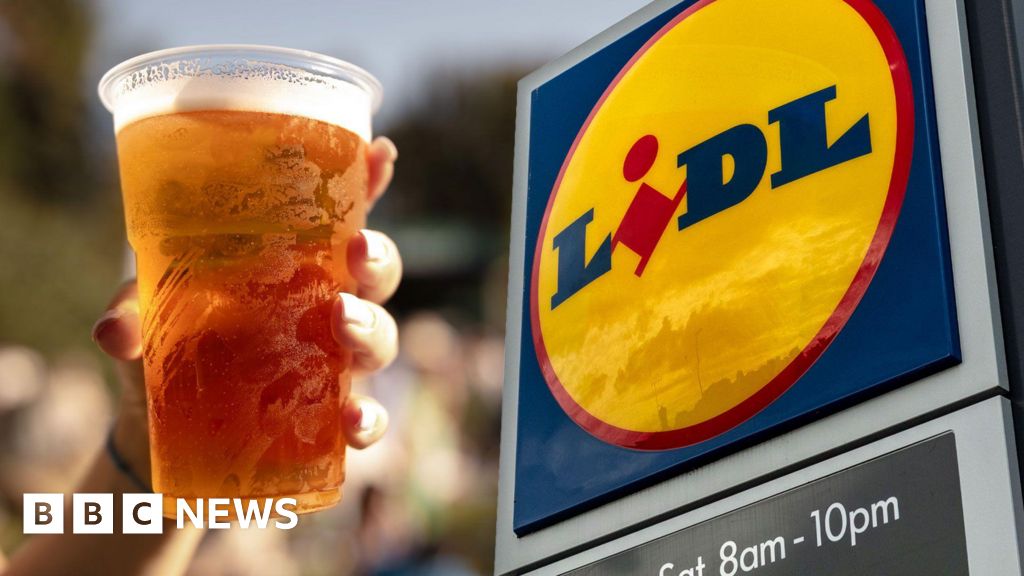
Why is Lidl opening a pub?

Published

on

Why is Lidl opening a pub?

The debate about about what seems like a bizarre idea of having a cold pint after exploring the store’s well known middle aisle.

Continue Reading

Business

Leon restaurant founder pledges to get chain ‘back to best’ after exiting administration

Published

on

Business Live

The fast-food restaurant group collapsed last year

A view of a Leon branch

A view of a Leon branch

The boss of Leon has pledged to get the restaurant business “back to its best” after exiting administration. The fast-food chain, which collapsed last year, has finished a restructuring process aimed at turning the struggling firm around.

The company has emerged with 43 restaurants, some 530 jobs secured and the support of its creditors, including HMRC, according to business advisory firm Quantuma.

The news comes just months after Leon was bought back by co-founder John Vincent from Asda in a deal reported to be between £30m and £50m – well below the £100m that billionaire brothers Mohsin and Zuber Issa paid in 2021.

Mr Vincent said: “I am so grateful to all our landlords and other creditors who have shown us such strong support in recent months. With their backing we now have the opportunity, as well as the responsibility, to get Leon back to its best and to help people eat and live well every day.

Advertisement

“I would also like to thank all my colleagues for working extremely hard during the same period to stabilise the business and restore some of its old verve. And finally, I would like to thank all our Leon customers, who were so patient when the business was in the wilderness and are now back in our restaurants and cheering us on.”

The restructuring of the business has removed a number of underperforming sites, while the saved jobs are across the company’s head office, central support and trading site teams.

According to Quantuma, staff affected by closures were assisted by the establishment of a programme with Pret A Manger where they were able to apply for jobs via a dedicated channel. The Leon Grocery business was not affected by the administration and restructuring.

Brian Burke, joint nominee and managing director at Quantuma, said: “I am delighted to have achieved this positive outcome for Leon which protects over 530 jobs and ensures the continuity of a highly valued restaurant chain.

Advertisement

“While the retail and hospitality sector continues to suffer highly challenging trading conditions given the impacts of increased costs, tax burdens, business rates and national insurance, I am very pleased that the Quantuma team has secured an outcome that will position the business to return to its positive trajectory.”

Leon was founded in 2004 with its first outlet located in London’s Carnaby Street. The chain later expanded and at one point had 75 sites with a mix of owned and franchised outlets.

Continue Reading

Business

Retired FBI Agent Challenges Popular Wrench Attack Theory in Nancy Kidnapping Case

Published

on

Nancy Guthrie
Nancy Guthrie
Nancy Guthrie

TUCSON, Ariz. — A retired FBI special agent has pushed back against speculation surrounding the wrench attack theory in the disappearance of Nancy Guthrie, the 84-year-old mother of NBC “Today” co-anchor Savannah Guthrie, urging the public to defer to investigators who have access to evidence not available to outsiders.

Jason Pack, a retired FBI agent, addressed the theory that Nancy Guthrie may have been targeted and possibly tortured by a hired assailant working for a remote “mastermind” seeking to extort money from her family. Speaking to Parade magazine, Pack stressed the importance of relying on verified facts rather than public speculation.

“Regarding the wrench attack theory, I’ll be respectful here because I know people mean well. But not one of us outside this investigation has read the case file,” Pack said. “We haven’t seen the forensic reports, the communications records, or the full body of evidence that investigators are working from every single day. The FBI and Pima County aren’t building their strategy around outside theories on cable news. They’re working from facts the rest of us simply don’t have access to.”

The comments come more than four months after Guthrie vanished from her home in Tucson’s Catalina Foothills area. She was last seen on the evening of January 31 or early February 1, 2026. Surveillance footage released by authorities shows a masked individual at her front door around the time of her disappearance. DNA evidence, including a hair sample, has been collected from the residence, but no arrests have been made and no suspect has been publicly identified.

Savannah Guthrie has offered a $1 million reward for information leading to her mother’s safe return. The family has also reportedly hired private investigators, with some sources claiming an investment of approximately $500,000 to supplement the official investigation.

Advertisement

Pima County Sheriff Chris Nanos has previously stated that his office is not in direct communication with the Guthrie family, with the FBI handling those interactions. The investigation remains active, with authorities continuing to review tips, video evidence and forensic materials.

Pack noted that while some initial communications to the family may have been legitimate, subsequent messages require careful evaluation against known facts. “We all know that cyber scammers are also opportunistic. It does seem that the original communication to the family may have been real. Everything that followed has to be evaluated against that baseline,” he said. “That evaluation is happening every day by people who have actually read the file.”

The case has drawn intense national attention due to Savannah Guthrie’s prominent role in morning television. The high visibility has generated both helpful tips and a wave of unverified theories, including ransom demands sent to media outlets that authorities have not confirmed as legitimate.

Investigation Challenges

The disappearance presents several complexities common to abduction cases involving elderly victims. Tucson’s location near the U.S.-Mexico border has led to various theories, though officials have not confirmed any specific connections. The desert environment poses difficulties for evidence preservation, particularly as time passes.

Advertisement

Forensic analysis continues on materials recovered from Guthrie’s home. The released doorbell camera footage remains one of the most significant pieces of public evidence, showing the masked individual who remains unidentified.

The FBI’s involvement underscores the seriousness of the case. Federal resources are often brought in for complex missing persons investigations, particularly when interstate or international elements may be involved.

Family’s Ongoing Efforts

Savannah Guthrie has maintained a relatively low public profile regarding the case while continuing her professional responsibilities. On Mother’s Day, she posted a heartfelt message on Instagram alongside a photograph of her mother.

“Mother, daughter, sister, Nonie – we miss you with every breath,” she wrote. “We will never stop looking for you. We will never be at peace until we find you.”

Advertisement

The reported hiring of private investigators reflects the family’s determination to explore every possible avenue. Such parallel efforts are not uncommon in long-term missing persons cases, particularly when families have the resources to supplement official investigations.

Broader Context of Missing Persons Cases

Nancy Guthrie’s disappearance highlights the challenges in resolving cases involving older adults. According to national statistics, thousands of seniors go missing each year, with resolution rates varying based on circumstances and early evidence.

High-profile cases like this often benefit from increased resources and public awareness but also face intense scrutiny. The blend of traditional police work, federal assistance and private investigation reflects common strategies when official progress slows.

Public interest remains high, with true-crime communities and social media users following developments closely. Authorities have repeatedly urged caution against speculation that could hinder the investigation or cause additional distress to the family.

Advertisement

Community Impact in Tucson

The case has affected the Tucson community, where residents express concern for an elderly neighbor taken from her home. Local media coverage has been extensive, balancing the need for information with respect for the ongoing investigation.

Support services for victims’ families have been made available, and community groups have offered assistance to those impacted by the uncertainty surrounding Guthrie’s whereabouts.

As the investigation enters its fifth month, officials continue appealing for public tips while cautioning against spreading unverified information. The FBI and Pima County Sheriff’s Office maintain an active tip line for anyone with relevant details.

The wrench attack theory, while popular in some online discussions, represents just one of many avenues being evaluated by professional investigators with full access to evidence. Pack’s comments serve as a reminder of the gap between public speculation and the realities of a complex criminal investigation.

Advertisement

For the Guthrie family, the passage of time without resolution adds emotional weight to an already difficult situation. Savannah Guthrie’s public platform has helped maintain awareness, but the private toll remains significant.

Authorities have not provided a specific timeline for resolution, emphasizing that such cases can take months or years to solve. The focus remains on following evidence and pursuing every credible lead.

As summer temperatures rise in Arizona, the urgency to find answers persists. Both official investigators and the family continue their parallel efforts in hopes of bringing Nancy Guthrie home safely.

The case serves as a sobering reminder of vulnerabilities even in seemingly secure residential areas. For now, the Tucson community and a national audience wait for developments in a mystery that has captured widespread attention.

Advertisement
Continue Reading

Trending

Copyright © 2025