

Crypto World
Hyperliquid HIP-3 and HIP-4 Explained: Perps to Predictions



Two protocol upgrades turned Hyperliquid from a crypto perpetuals exchange into something closer to an operating system for markets. HIP-3 lets anyone with enough staked HYPE launch a perpetuals exchange for stocks, oil, or gold. HIP-4 adds prediction markets that settle without a token vote. Here is how both work, what they have built so far, and where the risks sit.
Hyperliquid spent its first two years being described as the fastest decentralized perpetuals exchange in crypto. The description was accurate and incomplete. Since late 2025, the network has been executing a more ambitious plan: turning its core trading infrastructure into a platform that other builders deploy markets on top of, the way developers deploy apps on cloud infrastructure. Grayscale Research made the comparison explicit in a June 2026 note, writing that Hyperliquid now looks less like a stock exchange and more like Amazon Web Services.
Two upgrades carry that transformation. HIP-3, live on mainnet since October 13, 2025, opened perpetual futures listing to outside builders and brought tokenized stocks, commodities, and indices onto the platform at scale. HIP-4, live since May 2, 2026, added a second market primitive built for prediction markets and other event contracts. Together they explain why seven of the top ten markets by volume on a crypto exchange are now things like Nvidia stock and gold, and why the platform is picking a direct fight with Polymarket and Kalshi.
This guide walks through what each proposal does, how the mechanics work, what has happened since launch, and what can still go wrong.
First, the basics: what a HIP is
Hyperliquid is a layer 1 blockchain built around a fully on-chain central limit order book. Its core engine, HyperCore, processes around 200,000 orders per second and handles matching, margining, and liquidations for every market on the chain. A separate component, the HyperEVM, runs Ethereum-style smart contracts on the same consensus layer. The native token, HYPE, secures the network through staking, pays fees, and absorbs most protocol revenue through a continuous buyback program. Cumulative protocol revenue passed $1 billion in late June 2026, with an annualized run rate near $840 million.
Changes to the protocol arrive through Hyperliquid Improvement Proposals, or HIPs, which the community debates and HYPE stakers weigh in on before the core contributors ship the code. The first two set the pattern. HIP-1 created the standard for launching spot tokens, with ticker slots sold through recurring Dutch auctions, so listing a token became a market process instead of an application form. HIP-2 added a protocol-native liquidity mechanism that seeds order books for new tokens automatically, solving the empty-book problem that kills most new listings on other venues. Both dealt with spot markets, and both introduced ideas that return later: auctions as the allocation mechanism for scarce listing slots, and protocol-level guarantees standing behind builder-created markets. The third and fourth proposals took those ideas after the two bigger prizes: perpetual futures on everything, and event contracts on anything.
HIP-3: builder-deployed perpetuals
Before HIP-3, listing a new perpetual market on Hyperliquid worked the way it works on most exchanges: the core team decided. That created a bottleneck and a gatekeeper, two things the platform’s own community had complained about as the asset universe stayed narrow while demand for stock and commodity exposure grew.
HIP-3, called Builder-Deployed Perpetuals, removed the gatekeeper. Since October 2025, any builder who stakes 500,000 HYPE can deploy an independent perpetuals exchange on HyperCore, without core team approval. At current prices near $64, that stake represents roughly $32 million, a number that matters for reasons covered below.
The deployer controls nearly everything about their market. They choose the assets, the oracle that sets the mark price, the collateral token, margin requirements, leverage limits, funding parameters, and the front-end experience. The first three assets in any HIP-3 exchange deploy without an auction. Additional assets go through a Dutch auction shared across all HIP-3 deployers, similar to the HIP-1 ticker auctions.
What the deployer does not control is the plumbing. HIP-3 markets inherit the full HyperCore stack: the same matching engine, the same order types, the same margining and liquidation logic, and the same solvency guarantees as the validator-operated markets. A trader interacting with a builder-deployed market gets the same execution quality as on the flagship crypto perps.
The economic design has three pillars:
- The stake is a bond, not just a ticket. The 500,000 HYPE can be slashed if the deployer misbehaves, for example by manipulating an oracle or breaking market rules, and the requirement holds for 30 days even after a deployer halts all markets.
- Fees split down the middle. HIP-3 markets charge users twice the fee of validator-operated perps, and the deployer keeps 50%. The protocol collects the same revenue per trade either way, so builder markets grow the pie without cannibalizing it.
- Cross margin has eligibility standards. Validators only allow cross margin on HIP-3 assets with sufficient observable liquidity, a reliable external oracle, and resistance to price manipulation, and any 50% intraday move in the reference price triggers a review.
The design goal is alignment: builders with $32 million at stake and a 50% revenue share have every reason to run clean, liquid, well-oracled markets, and a slashing mechanism waits for the ones who do not.
What HIP-3 actually built
The proposal would be a footnote if nobody used it. The opposite happened. The first market, a synthetic Nasdaq-style index called XYZ100, went live within days of activation. Its deployer, TradeXYZ, then built out United States equities including Nvidia, Tesla, Google, and Amazon, plus gold and silver contracts benchmarked to COMEX front-month futures, and later secured official licensing rights to the S&P 500 ticker, a landmark moment for a DeFi protocol.
The numbers followed. Open interest across HIP-3 markets passed $1.43 billion within months of launch. By spring 2026, seven of Hyperliquid’s top ten markets by volume were tokenized equities or commodities, not crypto pairs. During the West Asia crisis earlier this year, when traditional commodity venues closed for the weekend, traders moved to Hyperliquid to trade oil, gold, and silver around the clock, and HIP-3 markets drove up to 40% of the platform’s total volume. Non-crypto assets showed 60% trader retention in late March, a signal that around-the-clock access to traditional markets is a durable product, not a novelty. At peak HIP-3 activity the platform generated $2.3 million in daily fees, funding $11 million in HYPE buybacks.
Other deployers took different angles. Kinetiq built around its liquid staking token. Liminal used HIP-3 markets to run fully on-chain delta-neutral yield strategies across equities, FX, and commodities, including markets collateralized with yield-bearing assets like Ethena’s USDe. In June, Hyperliquid and TradeXYZ launched the FOMO app, a single interface for trading equities, pre-IPO stocks, crypto, indices, and commodities. Access also spread through consumer wallets: HIP-3 markets can be traded through any Hyperliquid-compatible front end, including Phantom.
The listing economics also flipped in a way worth pausing on. Under the old model, and on centralized exchanges generally, a new asset waits for an exchange’s business development calendar, and projects have long complained about the cost and opacity of the process. Under HIP-3, listing latency collapsed from a governance or negotiation timeline to a deployment transaction plus an auction, and the gatekeeping moved from relationships to capital. A pre-launch project that wants a perpetual market for hedging no longer needs a major venue’s blessing; it needs a deployer willing to run the market. Comparable systems show how unusual this is: dYdX v4 still routes every new market through a governance vote with a week or two of latency, and GMX listings run through its core team. Hyperliquid is the first chain-level implementation where market creation itself carries no approval step.
The concentration is the caveat. TradeXYZ accounts for more than 90% of all HIP-3 open interest, and Blockworks Research has flagged the deployer economics as a structural risk: with a roughly $30 million lockup, auction costs, and stiff competition, a smaller deployer’s break-even period can stretch to four years. Blockworks has proposed lowering the stake for small builders and letting them keep 100% of revenue until they recover their costs. Hyperliquid’s own documentation says the 500,000 HYPE threshold is expected to fall as the infrastructure matures. Until it does, HIP-3 is permissionless in principle and an oligopoly in practice.
HIP-4: outcome markets
HIP-3 covered continuous markets, things with a price that moves all day. It could not cleanly handle discrete events. A perpetual future needs an oracle that updates continuously with limits of roughly 1% deviation per update, a design suited to leveraged trading on a live price and incompatible with questions that jump from uncertainty to a hard answer in one instant, like an election call or an inflation print.
HIP-4, announced on February 2, 2026 and live on mainnet since May 2, added a purpose-built primitive for exactly that. Outcome markets are fully collateralized contracts that settle to exactly 0 or 1 at expiry. Each market has two sides, typically Yes and No, and the order books for the two sides are merged: an order to buy Yes at a price of 0.62 is the same order as one to sell No at 0.38, so all liquidity concentrates in one book. Positions are collateralized in USDH, the network’s native stablecoin, and because every position is fully backed, there is no liquidation risk.
The market lifecycle has a distinctive opening. Each new outcome market starts with a single-price clearing auction lasting around 15 minutes, during which traders submit limit orders but nothing executes. The auction clears at the price that matches the most volume, and unfilled orders roll into continuous trading on the standard order book. The mechanism exists to concentrate early liquidity and produce a fair opening price instead of a thin, gappy first print. It borrows a page from how traditional exchanges open trading each morning, which is fitting for a protocol that keeps hiring ideas from the market structure it wants to replace.
The architecture runs natively inside HyperCore, sharing the matching engine, order types, and throughput of every other market on the chain. That matters for one under-discussed reason: liquidity providers can quote prediction markets with the same tooling and speed they use on perps, instead of the bespoke market-making setups that thinner prediction venues require. Deep books were always the missing ingredient on long-tail event markets, and Hyperliquid’s bet is that professional liquidity follows familiar infrastructure.
The fee structure is openly aggressive. Opening or minting an outcome position costs nothing. Fees apply only on closing, burning, or settling, and makers pay zero. That pricing targets Polymarket and Kalshi, which processed a combined $44.8 billion in June on the back of the World Cup, and the community reaction at announcement made the intent plain. When the proposal dropped in February, crypto.news covered the market pricing in exactly that ambition, with traders framing HIP-4 as Hyperliquid trying to house all of finance.
Initial markets are curated and validator-deployed, starting with recurring daily Bitcoin price threshold contracts that reset each day, run by the prediction platform Outcomexyz. Planned categories include politics, sports, macro data releases, crypto events, and entertainment. A later phase opens permissionless deployment: builders will stake 1,000,000 HYPE per market slot, slashable and burned if validators find oracle manipulation, invalid state transitions, or prolonged downtime. One slot supports rolling and recurring markets, recycling after each settlement.
Settlement without a token vote
The deepest difference between HIP-4 and the incumbent on-chain prediction markets is not fees. It is how truth gets decided.
Polymarket outsources contested resolutions to UMA’s optimistic oracle, where token holders vote on disputed outcomes, an architecture that has produced repeated controversies in 2026, including a $60 million market on a Strategy Bitcoin sale that resolved against the documented facts. The full mechanics and failure modes of that system are covered in our companion guide to how prediction markets resolve.
HIP-4 replaces the token vote with the chain itself. Settlement runs through Hyperliquid’s validator set executing automated resolution against pre-specified, objective data sources. There is no dispute window, no escalation, and no path for a token holder with a position in the market to also vote on its outcome. The trade-off is scope: deterministic settlement works for objective questions with a clean data source, which is why the first markets are price thresholds. Ambiguous questions, the kind that generate the worst oracle disputes elsewhere, are exactly the kind HIP-4’s design avoids listing.
What all of this looks like from the trader’s side
For a user, the machinery above mostly disappears. HIP-3 markets sit in the same interface as the flagship crypto perps, trade through the same API, and settle against the same margin account. A trader shorting gold on a builder-deployed market places the order the same way they would short Ethereum, and the differences show up in three places worth knowing.
Fees are higher on builder markets. The headline rate on a HIP-3 perp is twice the validator-operated rate, which at base tiers works out to roughly 3 and 9 basis points for makers and takers before discounts, with the deployer keeping half. Staking discounts, referral rebates, and collateral-based reductions still apply on top, so an active HYPE staker narrows the gap considerably.
Oracle quality varies by deployer. On validator-operated markets, the network itself maintains the price feed. On a HIP-3 market, the deployer chooses and operates the oracle, which is why the mark price on a weekend oil contract can drift from where Monday’s COMEX open eventually prints. During the West Asia crisis, Hyperliquid’s oil market traded on its own oracle through days when no traditional reference price existed at all. That independence is the product and the risk in one feature.
Collateral differs by market. Most markets margin in stablecoins, but HIP-3 supports alternative collateral where the deployer enables it, including yield-bearing assets, and HIP-4 outcome positions collateralize in USDH. Settlement demand for outcome markets flows through the stablecoin into the same fee-and-buyback loop that already routes nearly all protocol revenue toward HYPE, which is why analysts treat HIP-4 volume as a direct token catalyst rather than a side business.
The practical entry points have multiplied too. Beyond the native app, HIP-3 and HIP-4 markets surface through Phantom, through the FOMO app for the equities lineup, and through any front end built on the public API, since every builder market shares the unified HyperCore order flow.
The risk column
Every part of the story above has a counterweight, and an honest explainer lists them.
Deployer concentration is the loudest one. A permissionless system where one builder holds 90% of open interest has recreated a gatekeeper one level up, and the $32 million entry stake keeps it that way for now. Regulatory exposure is the second. Hyperliquid operates without KYC in most of the world, the United Kingdom’s FCA has declared the platform unauthorized, and pending United States market structure legislation could either validate or constrain synthetic stock perpetuals, a product category regulators have barely begun to examine. Institutional ceilings are the third: a June JPMorgan report saw limited institutional demand for perpetual futures generally, citing unbounded basis risk and missing clearing protections, which matters for a token whose valuation leans on volume growth. And the products themselves are dangerous instruments. Leveraged perpetuals on any underlying can liquidate a position in minutes, and cross margin across markets adds its own failure modes.
There is a subtler risk in the oracle layer that the slashing design only partially covers. A deployer’s oracle is a single point of interpretation for its markets, and unusual conditions expose the gap: when traditional venues close and a HIP-3 commodity market keeps trading, the mark price is whatever the deployer’s methodology says it is, with no external reference to check against until markets reopen. Validators review any 50% intraday reference move and slashing punishes proven manipulation, but a subtly mispriced weekend, honest or otherwise, transfers money between longs and shorts without tripping any threshold. Traders in builder markets are underwriting oracle methodology whether they think about it or not.
None of that has slowed the platform yet. Hyperliquid controls an estimated 70% of on-chain perpetuals volume, spot HYPE ETFs drew $111 million in inflows in late June while Bitcoin and Ethereum funds bled, and the ecosystem is spending on the long game, including a $29 million policy center in Washington. Whether the moat holds is a different question from whether it exists.
The bigger picture for L1 competition
HIP-3 and HIP-4 also reframe what layer 1 blockchains compete on. Ethereum and Solana fight over DeFi liquidity, users, and fees, a race with its own 2026 scoreboard. Hyperliquid opted out of the general-purpose contest and vertically integrated one thing: markets. The bet is that an exchange-shaped blockchain with permissionless market creation captures more value than a general-purpose chain hosting exchange apps. dYdX tried a dedicated appchain with governance-gated listings. GMX built on someone else’s layer 2. Hyperliquid is the first to make market creation itself permissionless at the chain layer, and the early evidence, an order of magnitude expansion in what can be traded on-chain, suggests the design space was bigger than the industry assumed.
What to watch from here
Three markers will tell the story over the next year. First, whether the HIP-3 stake requirement drops and the deployer set widens beyond one dominant builder. Second, whether HIP-4 volume becomes measurable against Polymarket and Kalshi once permissionless deployment opens and categories expand past crypto prices. Third, whether regulators treat builder-deployed stock perpetuals as an innovation to license or a loophole to close. The upgrades themselves are shipped and working. The open question, as always in this industry, is what survives contact with scale.
Frequently asked questions
What is Hyperliquid HIP-3?
HIP-3, called Builder-Deployed Perpetuals, is a Hyperliquid protocol upgrade live since October 13, 2025. It lets any builder who stakes 500,000 HYPE deploy an independent perpetual futures exchange on HyperCore, choosing the assets, oracle, collateral, and fee capture, while inheriting Hyperliquid’s matching engine, margining, and liquidation systems. It moved market listing from a core team decision to a permissionless, stake-secured process.
What is Hyperliquid HIP-4?
HIP-4 is the outcome markets upgrade, announced February 2, 2026 and live on mainnet since May 2, 2026. It adds fully collateralized event contracts that settle to exactly 0 or 1 at expiry, with merged Yes and No order books, USDH collateral, no liquidation risk, and zero fees to open a position. It is Hyperliquid’s entry into prediction markets.
How much does it cost to deploy a HIP-3 market?
A deployer must stake 500,000 HYPE, worth roughly $32 million at current prices near $64. The stake is slashable for misconduct and must be held for 30 days even after all of the deployer’s markets are halted. The first three assets deploy without an auction; additional assets go through a shared Dutch auction. Documentation says the threshold should fall over time.
What can you trade on HIP-3 markets?
Builder-deployed markets cover tokenized United States equities such as Nvidia, Tesla, Google, and Amazon, index products including a licensed S&P 500 contract and the Nasdaq-style XYZ100, commodities such as gold, silver, and oil benchmarked to COMEX and other references, FX, and long-tail crypto assets. Seven of Hyperliquid’s top ten markets by volume are now non-crypto assets.
How does HIP-4 settlement differ from Polymarket?
Polymarket resolves contested markets through UMA’s optimistic oracle, where token holders vote on disputed outcomes. HIP-4 settlement is deterministic: Hyperliquid’s validator set resolves each contract against a pre-specified objective data source, with no dispute window and no token vote. The design avoids governance attacks but limits markets to questions with clean, objective answers.
Who is TradeXYZ?
TradeXYZ is the dominant HIP-3 deployer, accounting for more than 90% of builder-deployed open interest. It launched the first HIP-3 market, the XYZ100 index, built out the equities and commodities lineup, secured S&P 500 ticker licensing, and co-launched the FOMO trading app with Hyperliquid in June 2026. Its dominance is also the center of the deployer concentration debate.
Is trading on Hyperliquid safe?
The protocol has strong solvency engineering and a clean track record on its core markets, but the products are high-risk by nature. Leveraged perpetuals can liquidate quickly, HIP-3 markets depend on each deployer’s oracle quality, the UK’s FCA lists the platform as unauthorized, and synthetic stock perpetuals sit in a regulatory gray zone. Position sizing and jurisdiction checks matter.
Does HIP-4 have liquidation risk?
No. Outcome positions are fully collateralized in USDH at purchase, so the maximum loss is the amount paid for the position and no liquidation engine is involved. That distinguishes outcome markets from perpetuals, where leverage means positions can be forcibly closed. The risk in outcome markets is being wrong about the event, or holding through a settlement data error.
Disclaimer: This article is for informational purposes only and does not constitute investment advice. Digital asset markets are volatile and you can lose your entire investment. Always do your own research. Information current as of July 3, 2026.


Europe’s financial watchdog is warning that many prediction market “event contracts” may already be subject to existing binary options rules, regardless of how they are described or marketed. The European Securities and Markets Authority (ESMA) says companies cannot sidestep retail investor protections simply by rebranding certain derivatives-like payouts as “event contracts.”
At the same time, the United States is witnessing its own escalation: state gaming regulators and the Commodity Futures Trading Commission (CFTC) are fighting over whether prediction markets should be treated as gambling or federally regulated derivatives. Together, the two stories underline a central fault line for the sector—what matters legally is the contract’s structure, not its branding.
Key takeaways
- ESMA says event contracts can fall under binary options restrictions based on their characteristics, especially binary outcomes and fixed payouts.
- Even if retail investors are excluded, ESMA warns that offering qualifying event contracts to professional or institutional clients may still require MiFID II authorization.
- ESMA notes the reminder is not new regulation, but a response to increased offerings as prediction markets grow.
- In the U.S., state actions against platforms such as Kalshi and Polymarket continue alongside the CFTC’s position that it has “exclusive jurisdiction” over event contracts.
- Litigation in multiple jurisdictions has intensified speculation that the dispute could eventually reach the U.S. Supreme Court.
ESMA’s reminder: “event contracts” can still be binary options
In a public statement released on Friday, ESMA reminded firms that contracts meeting the definition of financial instruments are already prohibited from being marketed, distributed, or sold to retail investors under national measures implementing ESMA’s 2018 binary options restrictions.
The regulator emphasized that the legal assessment hinges on the contract’s features rather than on marketing language. In particular, ESMA highlighted that event contracts with binary outcomes and fixed payouts are likely to qualify as financial instruments subject to the restrictions.
ESMA also focused on authorization requirements for firms selling into more sophisticated client categories. According to the statement, providing qualifying event contracts to professional or institutional clients still requires authorization under MiFID II, even if retail investors are not directly targeted.
ESMA framed its intervention as enforcement clarity rather than policy change. The regulator said it issued the reminder after observing more event contract offerings and rapid growth in prediction markets, noting that qualifying binary options have been under national restrictions across the EU since 2018.
For readers and market participants, the key implication is that the industry’s current naming conventions may not provide regulatory shelter. ESMA’s approach suggests that product designers and legal teams must evaluate payout mechanics and outcome structures early—before launching—because regulators may treat certain prediction constructs as financial instruments from the outset.
ESMA’s public statement on the application of national binary options measures to event contracts
What ESMA’s approach could mean for European platforms
While ESMA did not claim to introduce new restrictions, the message still carries practical consequences for platforms operating in or distributing into EU markets. ESMA’s insistence on contract-based assessment—binary outcomes and fixed payouts—creates a straightforward but unforgiving compliance test for many prediction-market formats.
In practice, this means firms may face pressure to restructure offerings that resemble fixed-payoff binary options. Alternatively, companies may need to ensure they remain within the boundaries of allowed products and client categories, including meeting MiFID II authorization requirements where applicable.
ESMA also appears to be pushing back against a common industry tactic: presenting payouts as “event-based” rather than as option-like financial instruments. The regulator’s reminder suggests that, from an enforcement standpoint, the distinction may not hold when the economic effect is functionally similar to a prohibited binary option for retail clients.
Builders and investors watching the space should treat ESMA’s statement as a signal about regulatory risk management. In a sector that often iterates quickly, compliance reviews that focus on contract architecture—not UI wording or product naming—may become a gating factor for expansion into regulated markets.
Meanwhile in the U.S., states and the CFTC keep clashing
Across the Atlantic, prediction markets are caught in a jurisdictional fight. The conflict pits state gaming regulators against the CFTC over whether event contracts should be treated as gambling under state law or as federally regulated derivatives under the CFTC’s oversight.
By March, action had already been taken by authorities in 11 states against platforms including Kalshi and Polymarket. Nevada became the first state to temporarily block Kalshi’s operations, while Arizona brought criminal charges alleging the company was running an illegal gambling business.
The following month, the CFTC argued for “exclusive jurisdiction” over prediction markets, saying Congress entrusted the agency with sole authority to regulate commodity derivatives markets, including event contracts. The agency also said it sued several states and filed court briefs supporting platforms such as Kalshi.
The litigation has continued to escalate. On June 30, a Massachusetts judge allowed state authorities to file an amended complaint against Kalshi in an ongoing case alleging the company’s sports-event contracts constitute illegal gambling under state law.
These battles have also driven calls for congressional clarification. Last month, the Indian Gaming Association and the American Gaming Association—joined by tribal and labor groups—urged lawmakers to amend the CLARITY Act to explicitly prohibit sports-related event contracts on prediction market platforms, arguing these products should fall outside the CFTC’s authority and remain governed by state gambling laws.
Legal experts cited in earlier coverage believe the deepening disagreement between federal and state regulators could ultimately be resolved by the U.S. Supreme Court.
CFTC press release asserting its authority over prediction markets
Why both regions are converging on the same legal question
Despite differing regulatory frameworks, the EU and U.S. stories share a similar center of gravity: regulators are focusing on how event contracts work economically, not on the label operators choose. In Europe, ESMA points to binary outcomes and fixed payouts as key triggers for binary options treatment. In the U.S., the dispute turns on whether event contracts are properly categorized as gambling or as derivatives subject to federal oversight.
For operators, the stakes are immediate. In Europe, ESMA’s reminder highlights that retail-facing marketing can quickly trigger product intervention rules, while institutional sales may still require MiFID II authorization depending on contract characteristics. In the U.S., state enforcement and federal claims of exclusive jurisdiction have pushed prediction market firms into a patchwork of legal outcomes.
The practical takeaway for market participants is to treat legal categorization as product design input. The compliance and litigation burden can increase sharply when a platform’s core contract mechanics resemble the category regulators are already prepared to police.
As ESMA’s guidance circulates and U.S. court battles continue—possibly moving toward higher-level review—watch for two things: whether prediction platforms adjust contract structures to better fit regulatory definitions in the EU, and whether the U.S. dispute narrows around a definitive jurisdictional ruling rather than expanding across states and claims.
Crypto World
BlockDAG Disrupts the Market With a 100% World Cup Bonus, While XRP & Ethereum Steady Their Horizons

The crypto market is moving through a pivotal period of evolution. Long-term trends surrounding the XRP price prediction and the Ethereum price forecast 2030 continue to guide investor expectations. These projections rely heavily on Ripple’s utility in cross-border financial networks and Ethereum’s reigning dominance over smart contracts and Web3 systems. While both established assets serve as reliable benchmarks for digital currency growth, market participants are intentionally shifting their focus toward early-stage networks that offer significantly higher upside potential.
BlockDAG (BDAG) is rapidly dominating these discussions. It has solidly positioned itself in the best crypto to buy debate by launching a massive 100% World Cup Bonus. This strategic move allows participants to enter at just $0.00000066 per coin while securing up to 100% in extra tokens to maximize their accumulation power. This market momentum is growing even stronger following the launch of BlockDAG’s AI Large Language Model (LLM), an expansion that marks a giant leap forward for ecosystem intelligence, scalability, and network adoption.
Adoption Trends Drive Long-Term XRP Price Predictions
Ripple’s expanding role in cross-border payments and international financial systems heavily dictates the current XRP price prediction narrative. Engineers designed XRP specifically to settle fast, low-cost international transactions in just a few seconds. This high-speed utility makes it an incredibly relevant asset for global remittance and institutional payment corridors.
Because of these variables, long-term market projections for XRP vary significantly. Conservative analysts suggest that moderate real-world adoption will likely place the asset’s long-term valuation somewhere between $1 and $5.
On the other hand, more optimistic outlooks push the XRP price prediction up to $10 or even higher. Achieving these higher price levels depends heavily on clearer global regulatory frameworks and deeper integration into institutional banking systems. Ultimately, the long-term future of XRP remains tied to liquidity demands and practical banking adoption.
Ethereum Price Forecast 2030 Reflects Network Evolution
The Ethereum price forecast 2030 depends entirely on the network’s established role as the world’s leading smart contract platform. It serves as the primary backbone for decentralized finance (DeFi), NFTs, and decentralized applications (dApps). Because its ecosystem hosts the majority of decentralized protocols, Ethereum benefits from continuous network activity and high developer engagement.
Long-term valuation models show that the Ethereum price forecast 2030 sits comfortably between $8,000 and $20,000. Reaching these targets requires steady institutional participation, rising global adoption, and successful network upgrades.

These ongoing technical upgrades are designed to increase transaction throughput and lower gas fees during peak congestion periods. As blockchain technology integrates into mainstream industries, Ethereum’s capability to maintain a reliable, scalable infrastructure will dictate its long-term financial position.
BlockDAG’s World Cup Bonus Boosts Token Accumulation Power
BlockDAG is capturing widespread attention as it rolls out advanced features and expanding utility. This rapid growth strengthens its reputation as the best crypto to buy for individuals targeting early network momentum. The primary catalyst driving this market interest is the limited-time 100% World Cup Bonus. This promotional structure dramatically boosts coin accumulation by granting buyers an extra 50% to 100% in BDAG tokens, successfully doubling their initial positions at activation.
With a current entry price of $0.00000066 and an anticipated buyback benchmark set at $0.03, BlockDAG presents a wide valuation gap. This difference underscores the substantial upside potential available as the ecosystem matures and market demand scales upward.
Activating this time-sensitive World Cup Bonus provides an immediate advantage by increasing a user’s total token holdings from the very beginning. This allows participants to gain deeper exposure to the network’s growth early on, rather than relying solely on future market price action.

Furthermore, the introduction of BlockDAG’s AI LLM represents a major technological milestone. This AI integration will improve overall ecosystem intelligence, optimize user interactions, and boost application scalability. It will also maximize operational efficiency and foster highly adaptive network use cases. Backed by a reported $500 million valuation increase, this technological leap reflects strong market confidence in BlockDAG’s long-term scaling capacity.
Key Insights
The crypto landscape continues to adjust around the utility-driven XRP price prediction and the institutional Ethereum price forecast 2030. XRP maintains its focus on cross-border payment efficiency, while Ethereum relies on its massive smart contract ecosystem. Both legacy assets move within long-term adoption cycles that depend heavily on regulatory progress and institutional capital.
However, market capital is flowing toward newer ecosystems that offer faster development cycles and powerful near-term catalysts. BlockDAG is leading this shift with its 100% World Cup Bonus, offering an entry reference of $0.00000066 paired with a $0.03 buyback framework. Supported by an expanding AI LLM and rapid ecosystem development, BlockDAG is solidifying its place as the best crypto to buy for those seeking maximum upside.

Presale: https://purchase.blockdag.network
Website: https://blockdag.network
Telegram: https://t.me/blockDAGnetworkOfficial
Discord: https://discord.gg/Q7BxghMVyu
Disclaimer: This is a Press Release provided by a third party who is responsible for the content. Please conduct your own research before taking any action based on the content.

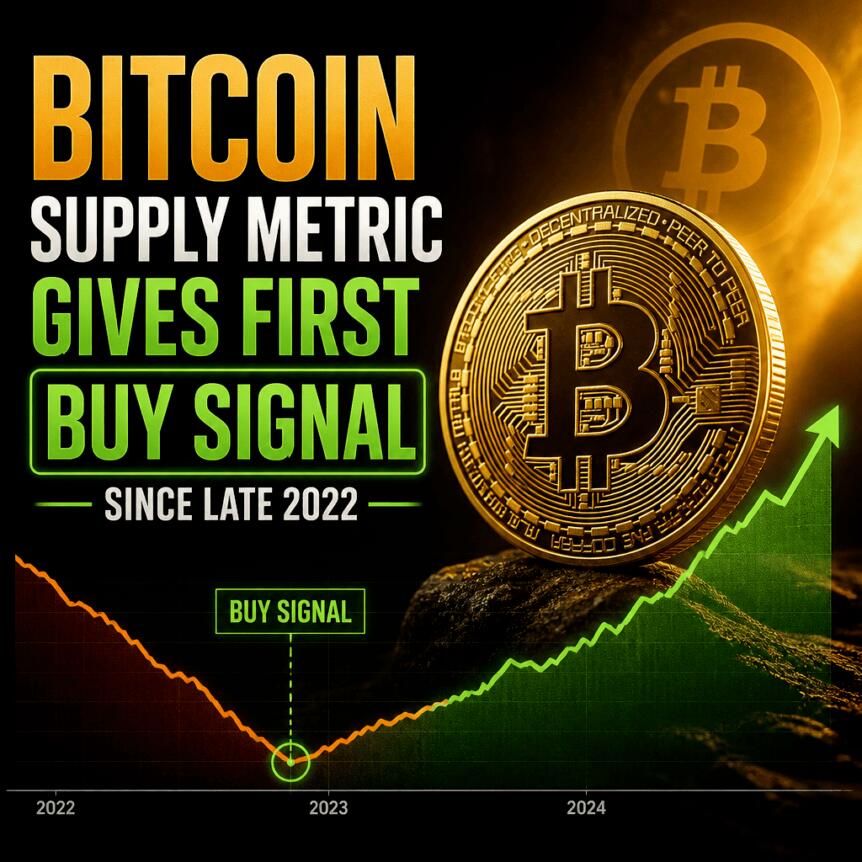
Bitcoin has printed another set of on-chain “bear-market bottom” signals this month, with analysts pointing to a metric last seen near the bottom of the previous cycle in November 2022. The update centers on how much of the BTC supply is moving in profit versus loss—an approach often used to gauge whether sellers are being exhausted.
In a Friday analysis, crypto analyst Axel Adler Jr., a contributor to on-chain analytics platform CryptoQuant, said the Advanced Net UTXO Supply Ratio has returned to its earlier buy-trigger behavior for the first time in nearly four years. While the model’s signal is bullish in the short-term, Adler emphasized that it does not automatically confirm a macro bottom, and that key “supply in loss” conditions still need to evolve.
Key takeaways
- Advanced Net UTXO Supply Ratio has crossed back above its buy threshold after spending time in deeply negative territory, printing buy signals in late June and early July.
- The model’s last comparable “buy trigger” appeared in November 2022, widely viewed as a bottoming period for the prior bear market.
- Confirmation would require the ratio to hold above zero alongside rising price; a return to negative territory without price support would weaken the case.
- Analysts say seller exhaustion alone isn’t enough—demand must follow to turn bottoming signals into a durable recovery.
A profit-and-loss metric returns to “buy trigger” territory
Adler’s Friday post ties Bitcoin’s current positioning to the Advanced Net UTXO Supply Ratio, which tracks the proportion of Bitcoin held in UTXOs (unspent transaction outputs) that last moved in profit versus loss. According to Adler, the ratio dropped into deeply negative territory and then recovered above the model’s signal level during a rebound, causing the framework to issue buy calls across “several sessions” in late June and early July.
Crucially, Adler framed this as a notable similarity to the end stages of the prior bear cycle, writing that it is the first buy trigger since November 2022, when analysts previously identified a bottom. That makes this more than a random dip-and-rebound—at least within the parameters of the CryptoQuant model—because the prior buy signal occurred near a cyclical low.
Adler also stressed that UTXO-based supply ratio cues are typically observed “near cyclical lows,” not necessarily as proof that a full macro bottom has already been reached. In other words, the signal may indicate conditions approaching a turning point, but it still requires additional confirmation from price behavior and from how much BTC remains locked in loss.
Why the signal isn’t a full “bottom confirmed” yet
The core of Adler’s caution is that the Advanced Net UTXO Supply Ratio is only one leg of the bottoming picture. He pointed to a specific confirmation condition: the ratio should hold above zero while price rises. In contrast, he described a negative scenario where the ratio slips back into negative territory without supportive price action—an outcome that would suggest the market has not yet cleared enough selling pressure.
Adler further argued that one “missing piece” is the degree to which supply is still being held at a loss. He noted that current levels have not yet reached the extremes seen during earlier bear markets, implying that while selling pressure may be easing, it may not have fully run its course.
He also offered a timing-oriented expectation based on another on-chain measure: Adler forecast that the 90-day simple moving average (SMA) of supply in loss should reach the model’s bear-market reversal target within two months. Until that happens, Adler suggested it is more accurate to view capitulation as a process rather than a completed event.
Other analysts flag “exhaustion,” but demand is still required
Adler’s view aligns with a broader theme in on-chain analysis: many metrics can point to seller exhaustion, but recovery usually depends on whether demand renews strongly enough to absorb remaining supply.
Another CryptoQuant contributor, Darkfost, also discussed potential inflection signals this week through the UTXO Supply framework. In a Wednesday Quicktake post, Darkfost noted that because the metric depends on the profit and loss state of UTXOs, it can signal during either rapid sell-offs or rapid price increases. Still, he said that on cyclicality, it would not be inconsistent to think that the end of this bear market could be approaching.
Darkfost’s key message was that the UTXO supply dynamics do not guarantee an immediate reversal. As he put it, the signals “won’t stop BTC from going lower,” but the market now has “several signals pointing to seller exhaustion.” He then identified the next step as a renewal of demand, warning that this phase could take time.
This distinction matters for investors and traders because it helps set expectations: a buy-trigger on a profit-and-loss ratio can indicate improving conditions, but it does not remove volatility risk if price continues to undercut support or if demand fails to materialize.
What to watch as the market tests for a floor
The immediate question for Bitcoin bulls is whether the on-chain signals translate into sustained market support. Adler’s framework makes that practical: readers should watch whether the Advanced Net UTXO Supply Ratio can maintain itself above zero and whether that improvement coincides with rising price, rather than quickly reverting to negative territory.
Equally important is progress on the “supply in loss” condition. Adler’s expectation that the 90-day SMA of supply in loss could reach a reversal target within about two months suggests that the market may need additional time for losses to wash out more completely—meaning this cycle’s bottoming could remain uneven rather than instantaneous.
Finally, while some market narratives anticipate a bear-market bottom forming later in the year, earlier coverage cited in the discussion pointed to expectations that favor a bottom in Q3 or later. With on-chain exhaustion signals emerging now, the next phase hinges on whether demand can catch up—turning a sell-pressure easing into a durable recovery.
For now, the most actionable takeaway is to monitor whether the current “buy trigger” behavior can persist and whether supply held at a loss continues to trend toward reversal conditions—because that combination is what analysts say would strengthen the case that a true cyclical transition is underway.

Bitcoin extended its advance into the US holiday weekend, setting fresh July highs as buyers pressed through a key technical level near the 200-week moving average. The move also played out alongside strength in global equities, as expectations for Federal Reserve action appeared to soften after weaker US jobs data.
On TradingView, BTC/USD reached $62,295 on Bitstamp—its highest level since June 24—highlighting renewed focus on whether the latest breakout can be sustained through the next weekly close.
Key takeaways
- Bitcoin pushed to $62,295 on Bitstamp, marking a fresh July high and the strongest print since June 24.
- Traders are watching the 200-week simple moving average, cited around $62,652, as a pivotal level for weekly structure.
- Price action is approaching a broader “strong resistance area” near $62,000–$62,500.
- Weak US nonfarm payrolls helped lift risk assets, while CME Group’s FedWatch tool pointed to roughly even odds of a September pause versus a hike.
BTC tests a major technical line near the 200-week SMA
The latest rally has brought Bitcoin back to levels closely tracked by chart analysts. According to TradingView data referenced by market observers, BTC/USD hit $62,295 on Bitstamp, extending gains during the Independence Day holiday period when US markets were closed.
For many traders, the near-term question is not simply whether Bitcoin can trade higher, but whether it can hold its momentum around the 200-week moving average. One commonly cited reference point comes from Daan Crypto Trades, who highlighted that the 200-week simple moving average is currently around $62,652, and that it may be important for the weekly candle close.
“It is key for BTC now to hold this breakout and maintain its low timeframe bullish market structure,” Daan Crypto Trades said, calling the current trading zone “important.”
Separately, Exitpump pointed to a zone rather than a single number, warning followers to keep an eye on $62,000–$62,500 as a “strong resistance area.” The implication for traders is that a move into this band could trigger either consolidation or renewed bids—depending on how Bitcoin reacts as the chart approaches the 200-week line.
The current dynamic also fits the way some traders describe order flow during breakouts. Exitpump referenced “controlled slow buying” on exchanges, suggesting demand is present but not necessarily in a single aggressive surge. If that pattern continues, it may support the idea of gradual progress; if it stops, resistance in the same region could slow the move.
Risk-on tone as equities hit new records
Bitcoin’s strength has coincided with a broadly constructive macro backdrop. With US markets closed for the Independence Day holiday, global equities were still moving higher; the Dow Jones closed at record highs the previous day, and a report cited by The Kobeissi Letter described global market capitalization reaching all-time highs as well.
In a post on X, The Kobeissi Letter wrote: “Global equities are in the midst of one of the most powerful rallies in history.” That kind of parallel move matters for crypto traders because it can influence how investors position across risk assets, especially when interest-rate expectations are in flux.
While Bitcoin is not a direct proxy for stocks, the correlation often becomes more visible when markets treat macro news as broadly supportive for risk appetite. In that setting, technical levels can attract attention faster—particularly when liquidity and sentiment align.
Fed rate pressure eases as jobs data cools expectations
Beyond the charts, the macro driver most directly referenced in the coverage is the impact of recent US labor market data. Earlier coverage linked Bitcoin’s rebound to weak nonfarm payrolls figures, and Mosaic Asset Company argued that the “knee-jerk” response from investors was to lift stock index futures—signaling a regime where weaker economic news supports risk assets by easing rate outlook concerns.
For crypto, the direction of Federal Reserve policy expectations remains one of the key variables. Rate hikes can weigh on liquidity and risk appetite, while expectations of a pause—or slower tightening—tend to improve the backdrop for speculative assets.
To quantify that shifting expectation, CME Group’s FedWatch Tool showed roughly equal odds of a pause or hike at the Fed’s September meeting. The tool also indicated that rates are expected to remain at current levels until that point, leaving September as the next major event for traders to anchor their positioning.
Mosaic’s analysis characterized the payrolls release as closer to a “Goldilocks” outcome—neither weak enough to intensify recession fears nor strong enough to accelerate expectations for additional rate hikes. The central takeaway is that the jobs data may not have changed the overall direction of the policy debate, but it has helped reduce the urgency of the most hawkish interpretation.
That balance can be important for Bitcoin because it supports a middle ground: neither a sharp risk-off shock nor a fully risk-on blowout. Instead, it can create the conditions for measured advances toward technical targets—exactly the type of behavior traders described when they discussed gradual buying and respect for nearby resistance.
What to watch next around the resistance band
Bitcoin is currently pressing into a region traders describe as both a resistance zone and a potential pivot tied to the 200-week moving average. The next meaningful signals will likely come from whether BTC can hold above the $62,000–$62,500 area and, crucially, how it behaves as the weekly candle approaches the 200-week SMA near $62,652.
With the FedWatch probabilities pointing to an evenly split September outcome, markets may remain sensitive to fresh US data releases and incremental shifts in rate expectations—so traders should monitor both technical follow-through and any new developments that could tilt the rate outlook back toward hikes or further toward a pause.
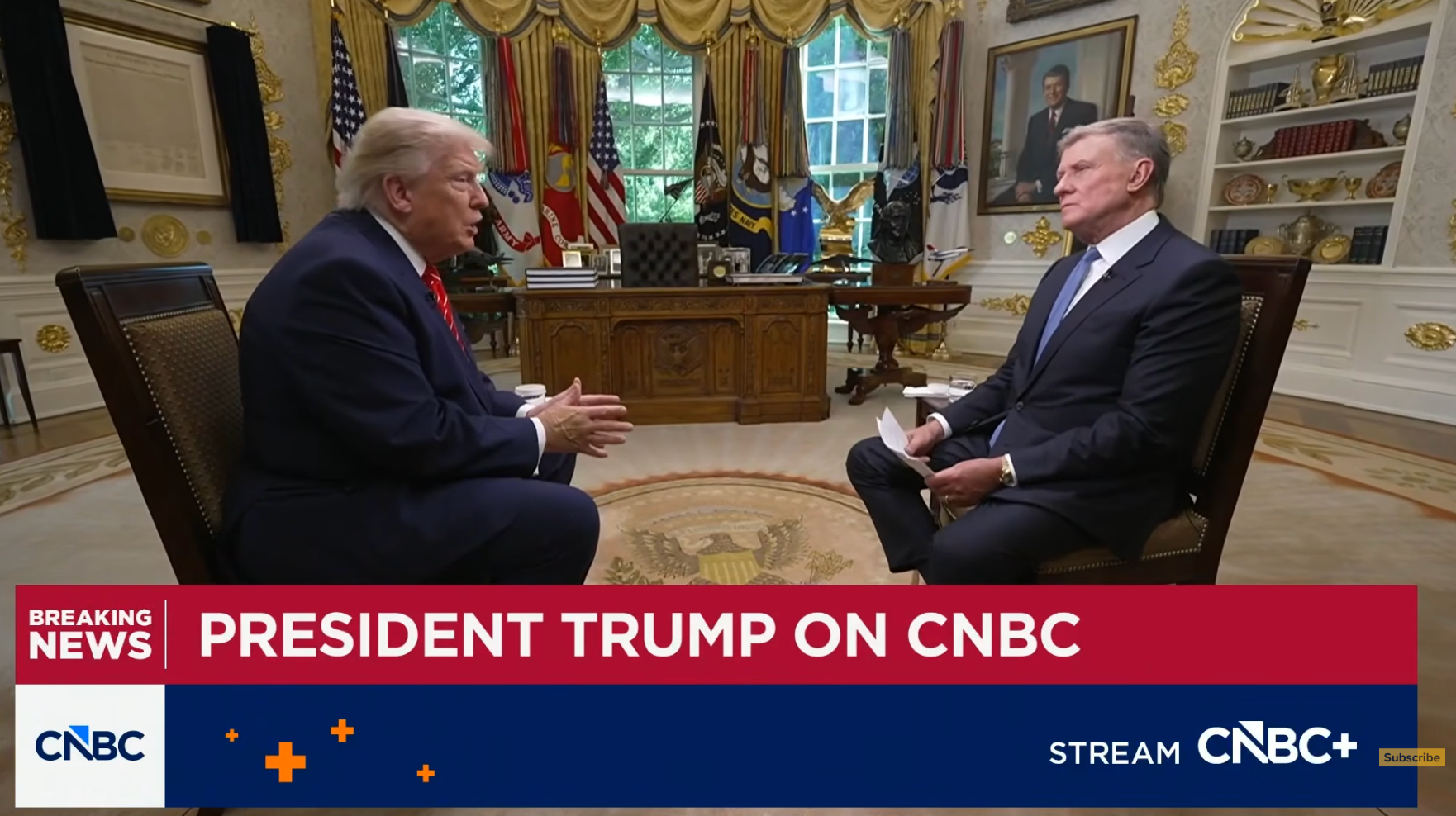
US President Donald Trump has responded to criticism of his 2025 financial disclosures, showing that he earned $1.4 billion in income from crypto-related ventures while in office.
In a Thursday interview with CNBC’s Joe Kernen, Trump said that there was “nothing illegal” and “nothing wrong” with profiting from his crypto investments as president. He claimed that other people were responsible for his investments and he didn’t “even know who they are,” not directly answering questions about perceived conflicts of interest as president.
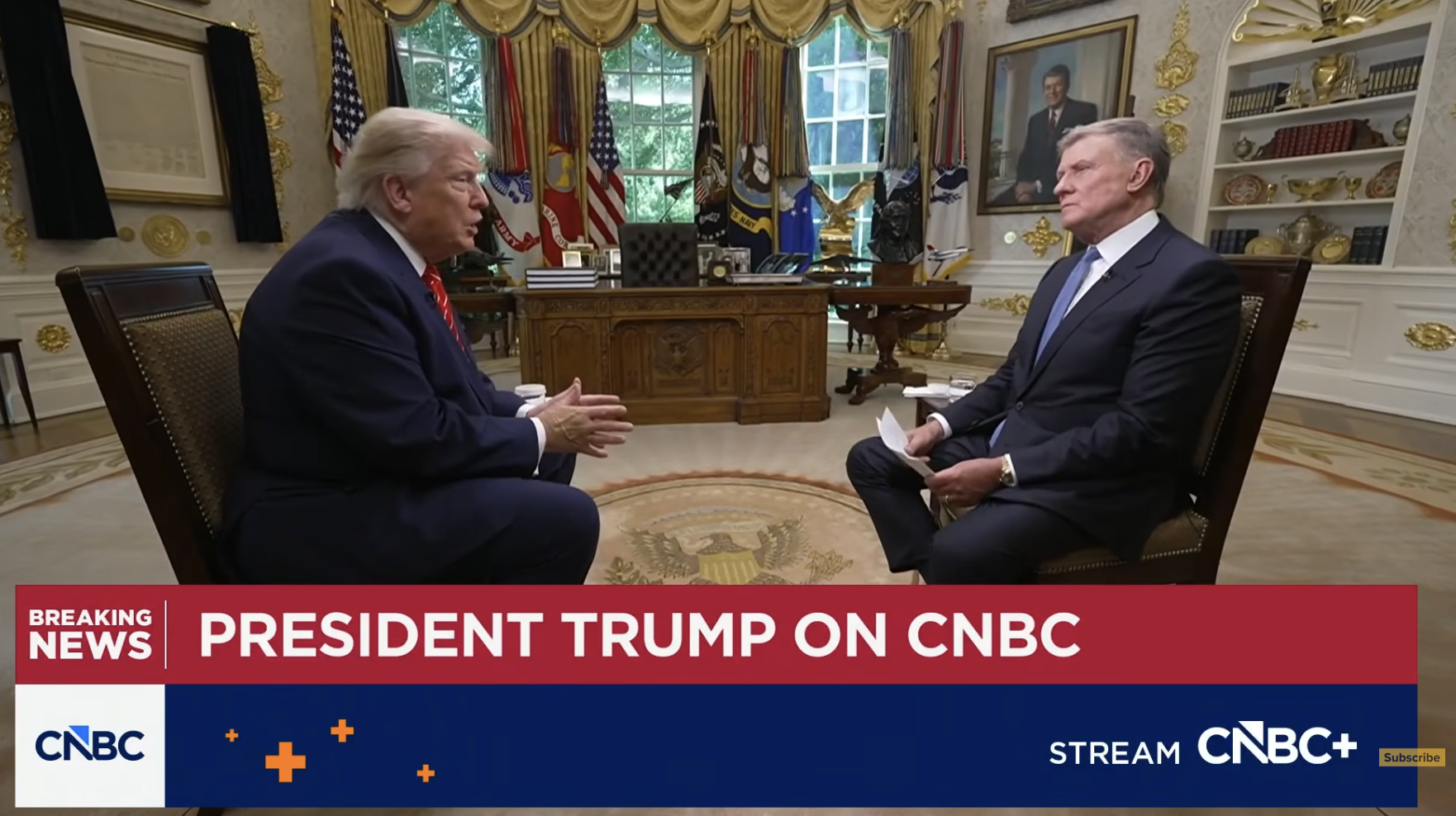
Donald Trump (left) and Joe Kernen (right). Source: CNBC
Trump’s comments followed the release of his 2025 financial disclosure report by the US Office of Government Ethics, showing that he took in more than $2 billion from his businesses and investments, about $1.4 billion of which was connected to crypto projects like his memecoin and family’s platform World Liberty Financial. Many advocacy organizations have characterized the investments as a “grift” allowing the president to influence related legislation like the Digital Asset Market Clarity (CLARITY) Act.
Following his first term as US president, Trump called Bitcoin (BTC) a “scam.” However, in the lead-up to the 2024 election, he began cozying up to many high-profile figures in the crypto industry, including Gemini co-founders Cameron and Tyler Winklevoss and executives at mining companies and exchanges. He has since launched his own memecoin, Official Trump (TRUMP), in addition to his family’s involvement in World Liberty and American Bitcoin.
Related: Donald Trump has 10 days to decide on housing bill with CBDC ban
Of the $1.4 billion tied to crypto, Trump disclosed that his memecoin generated about $636 million, World Liberty sales about $588 million and $197 million from equity in a stablecoin venture.
“Donald is once again pushing the envelope and nobody, nobody is putting the brakes on it,” Mary Trump, the president’s niece, said in a Friday interview with CNN’s Anderson Cooper. “At the end of the day, because of his abuse of the presidential pardon power, a lot of people are likely to get away with a lot of financial crimes that have done real harm to people that have invested in Donald’s businesses because they believed in him and what he was selling.”
Crypto industry bets big on 2026 US elections
After digital asset companies spent a reported $170 million toward supporting whom they considered “pro-crypto” candidates to Congress in 2024, political action committees (PACs) and organizations appear to have adopted the same playbook for 2026.
According to the consumer advocacy group Public Citizen, companies and figures tied to the crypto industry had contributed $189 million toward this year’s election cycle as of June. The contributions made up the bulk of the $294 million from the crypto, AI, Big Tech and online betting companies spent so far to support or oppose politicians.
Trump’s term ends in January 2029, but all 435 seats in the US House of Representatives and 35 in the Senate are up for grabs in the 2026 races.
Magazine: Bitcoin slides to $58K, XRP hits $1 but onchain data promising: Market Moves


Spotify has demanded that Kalshi remove its logo from the prediction market platform after manipulated streams influenced the settlement of a Spotify-based betting market.
Summary
- Spotify has asked Kalshi and Polymarket to remove its logo after a manipulated streaming-based prediction market.
- More than 500,000 fake Spotify streams reportedly influenced a Kalshi market tied to Malcolm Todd’s song.
- The dispute comes as the CFTC investigates Polymarket and seeks new rules for prediction markets.
According to a Bloomberg report, Spotify has asked both Kalshi and Polymarket to remove its branding from their platforms and make clear that neither company has any partnership with the music streaming service. The request follows the discovery of manipulated streaming activity that affected a prediction market tied to Spotify’s monthly U.S. music charts.
Spotify reportedly detected and removed more than 500,000 artificial streams that pushed Malcolm Todd’s song Earrings into the platform’s most-streamed tracks in the United States for the month. Kalshi had already settled a market based on which song would finish as Spotify’s most-streamed U.S. track during that period, making the manipulated streams directly relevant to the outcome.
Regulatory scrutiny has intensified around prediction markets
At the same time, prediction market operators are facing increasing attention from U.S. regulators. As crypto.news reported earlier, the Commodity Futures Trading Commission has opened an investigation into Polymarket that extends across several parts of its business, including its social media operations.
The investigation follows a Wall Street Journal report alleging that Polymarket hired dozens of mostly college-aged content creators to publish staged trading videos intended to attract new users. Bloomberg subsequently reported that the CFTC’s inquiry is not limited to those marketing practices and covers additional aspects of the platform’s operations.
Separately, state regulators have continued challenging prediction market platforms, arguing that some contracts function as unlicensed sports betting products. Meanwhile, the CFTC has filed lawsuits against several states while asserting that it has exclusive authority to regulate federally supervised prediction markets.
The regulator is also seeking public feedback on proposed rules for prediction markets that address concerns over insider trading and market manipulation. According to the CFTC, comments on the proposal will be accepted through July 31.
Kalshi settlement has drawn criticism from a top trader
Criticism of Kalshi’s handling of the Spotify market has also come from within its own trading community. Caleb Davies, a trader who estimates he has earned more than $1 million on the platform, accused Kalshi of settling the market despite repeated warnings that Malcolm Todd’s sudden rise in Spotify rankings warranted further investigation.
In a public statement, Davies alleged that Kalshi was aware of suspicious trading conditions while continuing to offer liquidity rewards tied to one of the affected contracts. He questioned whether the platform prioritized collecting trading fees over addressing potential market manipulation.
Spotify’s request also extends to Polymarket because it lists similar prediction markets based on Spotify streaming performance. According to Bloomberg, the company wants both platforms to stop displaying its logo and clarify that they are not affiliated with Spotify, as markets linked to streaming rankings could encourage participants to artificially inflate song plays in an attempt to profit from prediction contracts.
The dispute adds another layer of pressure on prediction market operators as regulators examine how these markets are run and whether incentives tied to real-world events can create opportunities for manipulation.

Strategy’s corporate approach to Bitcoin is evolving in a way that signals the industry’s broader shift from ideology to balance-sheet realism. This week, the company authorized up to $1.25 billion in Bitcoin sales under a new capital framework—explicitly designed to support dividends, strengthen cash reserves, and fund buybacks while keeping its long-term commitment to Bitcoin.
At the same time, the rest of crypto business news points to a more pragmatic era: stablecoin issuers are racing to capture reserve-driven yield, Fidelity is disputing the idea that Bitcoin’s security will deteriorate as halvings reduce rewards, and political spending by crypto firms is climbing ahead of the 2026 US midterm elections.
Key takeaways
- Strategy authorized up to $1.25 billion in Bitcoin sales to fund shareholder dividends, cash reserves, and buybacks—despite years of “never sell” messaging.
- The company outlined a formal Bitcoin monetization program under its “Digital Credit Capital Framework,” alongside additional capital return measures.
- Open USD (OUSD) is positioning as a yield-enabled dollar stablecoin, backed by payments and crypto firms, in an effort to challenge USDT and USDC.
- Fidelity argues Bitcoin’s security economics extend beyond block subsidies, citing rising miner revenue from fees and market incentives.
- Public Citizen reports $189 million in crypto-related spending for 2026 elections, with major PACs again driving influence.
Strategy’s “never sell” era meets capital allocation reality
Strategy disclosed that it has authorized up to $1.25 billion in Bitcoin sales under a new capital framework called the “Digital Credit Capital Framework.” The stated objective is to preserve Strategy’s long-term Bitcoin exposure while creating a structured path to monetize Bitcoin to support shareholder payments and corporate liquidity.
The framework increases the annual dividend on Strategy’s STRC preferred stock from 11.5% to 12% and sets out additional capital return mechanisms. Strategy also said its dedicated cash reserve has reached $2.55 billion, which management described as sufficient to cover roughly 17 months of preferred dividends and interest obligations.
Just as importantly, the authorization marks a change in how Strategy talks about Bitcoin. According to earlier reporting by Cointelegraph, the company had already disclosed its first-ever Bitcoin sale of 32 BTC in June. With this new framework, monetization is no longer an isolated event—it is now formalized as a program.
Strategy also indicated it did not purchase additional Bitcoin last week, leaving its holdings unchanged at 847,363 BTC. That detail matters because it underscores the logic behind the new approach: the company is trying to balance continued accumulation with practical liquidity management rather than relying solely on uninterrupted buy-and-hold behavior.
A new stablecoin backed by major payments firms targets “reserve yield”
While corporate Bitcoin holders reassess capital flexibility, stablecoin innovation is pushing in the opposite direction—toward feature competition. More than 140 financial and crypto companies have come together to launch a new US dollar-backed stablecoin designed to allow participants to retain yield generated by its reserves.
The project, Open USD (OUSD), is supported by large payments players including Visa and Mastercard, alongside crypto and trading ecosystem firms such as Coinbase, Ripple, OKX, and Bybit. Its positioning is straightforward: unlike many traditional stablecoin models that route reserve earnings to the issuer, OUSD aims to route those reserve earnings to token holders or businesses, according to the project’s supporters.
Open USD’s design also includes operational choices that proponents say could help it compete for market share. The initiative plans to let businesses mint tokens without fees or volume limits while keeping reserve earnings. Backers frame the offer as a direct alternative to incumbents, referencing Tether’s USDT and Circle’s USDC as competitors.
Timing and regulation are part of the pitch. Cointelegraph reported that the launch comes as US policy has moved toward a more favorable stance after the passage of the GENIUS Act. According to the reporting, Open Standard intends to roll out OUSD later this year, entering a market analysts expect to keep expanding, with the article noting the sector is already worth more than $300 billion.
Fidelity challenges the claim that halvings erode Bitcoin security
One of Bitcoin’s most persistent debates—especially after each halving—is whether lower block subsidies will eventually undermine miners’ incentive to secure the network. Fidelity Digital Assets is pushing back against the notion that Bitcoin’s long-term security is threatened by reward reductions.
In a research report, Fidelity argued that Bitcoin’s economic model extends beyond block subsidies. The central claim is that the network’s security incentives can be maintained through rising transaction fees, broader market incentives, and Bitcoin’s own price appreciation.
Cointelegraph’s summary of Fidelity’s analysis cites research analyst Daniel Gray, who points to miner revenue growth over time. The report’s figures, as quoted in the coverage, show average daily miner revenue increasing from $1.3 million during 2012–2016 to $40.2 million today. The implication is that while subsidies shrink mechanically, the overall economic picture for miners can improve through other revenue streams.
The timing also matters for the real-world mining industry. As halvings reduce block rewards, publicly traded mining firms have faced renewed pressure. Cointelegraph noted that many miners are seeking diversification—such as expanding into AI and high-performance computing—to offset the squeeze. Fidelity’s stance, however, is that those pressures do not automatically translate into a long-run weakening of Bitcoin’s programmed security.
Crypto’s political footprint expands ahead of the 2026 midterms
Beyond market structure, crypto’s business influence is increasingly visible in politics. A report by consumer advocacy group Public Citizen says crypto companies have contributed roughly $189 million to the 2026 US election cycle so far—about 37% of all corporate political spending, according to the figures cited in Cointelegraph’s coverage.
Public Citizen’s findings also suggest that crypto-backed PACs are again the key engine behind political leverage. Cointelegraph reports that Fairshake has spent more than $82 million this cycle, while the pro-Trump MAGA Inc. Super PAC—described as heavily backed by Crypto.com—has spent more than $56 million.
The report frames the strategy as consistent with 2024: supporting candidates from both major parties that align with the industry’s policy agenda. Public Citizen also notes that crypto election spending has already surpassed roughly $170 million deployed during the 2024 election cycle, with more than four months remaining before the November elections, based on the coverage’s description.
For investors and builders, this matters because policy outcomes can shape stablecoin rules, disclosure requirements, and enforcement priorities—areas that directly affect how crypto firms operate and compete.
What to watch next
The key question now is whether Strategy’s monetization framework becomes a template for other major Bitcoin holders—and how quickly stablecoin competitors like OUSD can translate “reserve yield” features into real usage. In parallel, the ongoing debate over Bitcoin security economics and the industry’s political momentum will likely define how both networks and regulations evolve as 2026 approaches.

US President Donald Trump has pushed back against criticism of his latest financial disclosures, telling CNBC that there was “nothing illegal” and “nothing wrong” about earning income tied to his crypto investments while in office. The remarks came shortly after the US Office of Government Ethics (OGE) released his 2025 financial disclosure report, which advocacy groups say highlights troubling conflicts of interest.
In a Thursday interview with CNBC’s Joe Kernen, Trump argued that others were responsible for his crypto-related investments and that he did not “even know who they are,” without directly addressing concerns about whether his position could influence policy affecting the digital asset industry. The disclosures reportedly show Trump’s businesses and investments generated more than $2 billion during 2025, with about $1.4 billion linked to crypto ventures.
Key takeaways
- Trump said on CNBC there was “nothing illegal” about profiting from crypto investments while president, following the release of his 2025 OGE financial disclosure.
- The filing reportedly attributes roughly $1.4 billion of Trump’s 2025 income to crypto-related activities, including his memecoin and the family platform World Liberty Financial.
- Trump did not provide specific answers about who managed the investments, saying he did not “even know who they are.”
- Advocacy groups argue the scale of crypto-linked earnings raises conflict-of-interest concerns as Congress considers digital asset legislation.
- Crypto political spending appears to be ramping up ahead of the 2026 elections, according to Public Citizen.
Trump denies wrongdoing after crypto-linked disclosures surface
Trump’s defense centered on the idea that profiting from digital assets while holding the presidency is not inherently improper. Speaking to CNBC’s Joe Kernen, he maintained that his crypto holdings did not involve wrongdoing and suggested he was not directly involved in the investment management decisions.
That response came after reporting on the contents of Trump’s 2025 financial disclosure. According to coverage referencing the OGE filing, Trump reported taking in more than $2 billion from his businesses and investments during 2025. Within that total, roughly $1.4 billion was described as connected to crypto projects, including his memecoin and activities tied to World Liberty Financial, a platform associated with his family.
According to the same reporting, Trump’s disclosed crypto-related earnings included:
- About $636 million from his memecoin
- About $588 million from World Liberty sales
- $197 million from equity in a stablecoin venture
Trump has previously criticized Bitcoin during his first term, calling it a “scam.” However, in the lead-up to the 2024 election he reportedly increased engagement with prominent figures in crypto, including Gemini co-founders Cameron and Tyler Winklevoss, as well as executives from mining companies and crypto exchanges. He has also launched an Official Trump memecoin and has remained closely associated with World Liberty and American Bitcoin.
Conflict-of-interest concerns keep pressure on US crypto policy
Trump’s remarks are likely to intensify a dispute that has been playing out across US politics: whether leaders can personally profit from industries while also participating in government actions that shape the regulatory environment for those same industries.
Several advocacy organizations have characterized the disclosed crypto earnings as a “grift,” pointing to the possibility that personal financial ties could affect legislative outcomes. In particular, critics have flagged the Digital Asset Market Clarity (CLARITY) Act as an example of the kind of policy initiative they believe could benefit from a more transparent and strictly separated approach.
Trump’s CNBC comments did not directly resolve those concerns. Instead, he emphasized that other parties were responsible for his investments and that he did not know the individuals involved. For critics, that stance may not address the core issue: whether the presidency creates an inherently asymmetric influence over markets and legislation even when day-to-day decisions are delegated.
Beyond Trump himself, his family has also become a focal point for commentary. In a Friday interview with CNN’s Anderson Cooper, Mary Trump—the president’s niece—argued that the political system enables people to “get away with” serious financial wrongdoing, adding that investors may have been harmed by trusting Trump’s businesses. Her comments did not cite new details from the OGE filing, but they align with the broader line of criticism that seeks more accountability and clearer separation between political power and private crypto interests.
What changes: from “scam” rhetoric to industry engagement
One of the more striking dynamics in this story is how sharply Trump’s posture toward crypto appears to have shifted over time. In his first term, he publicly derided Bitcoin. But leading into the 2024 election—and continuing since—he has moved closer to influential crypto personalities and industry players.
The new disclosure-related controversy comes against that backdrop. If 2025 earnings are indeed as large and as closely tied to crypto-specific ventures as the filing descriptions indicate, the question for investors and builders is not only whether regulations will change—but whose incentives are most aligned with those changes.
This matters beyond politics because crypto markets respond quickly to expectations about rules, enforcement posture, and legislative clarity. When a head of state is personally linked to crypto outcomes—whether through tokens, platforms, or stablecoin-related equity—participants may reassess the probability that policy will be aligned with industry interests rather than general consumer protection.
Crypto spending looks set for another election-cycle push
Trump’s crypto-related disclosure debate is unfolding as the industry prepares for more political contests. After digital asset companies reportedly spent $170 million to support candidates they considered “pro-crypto” during the 2024 cycle, political action committees and related organizations appear to be following a similar approach for 2026.
In a report cited by Cointelegraph, Public Citizen said that companies and figures linked to the crypto industry contributed $189 million toward the 2026 election cycle as of June. That figure is presented as the bulk of $294 million in spending so far across crypto, AI, Big Tech, and online betting companies to support or oppose politicians.
With Trump’s term running until January 2029, the timing of 2026 elections is still crucial: all 435 seats in the US House of Representatives and 35 in the Senate will be contested. For digital asset policy, those races could shape committee leadership and the legislative momentum behind bills that attempt to clarify how different parts of the market should be regulated.
For traders and long-term participants, political funding and lobbying activity can act as early signals for where the policy debate is moving—even when the market seems focused on immediate price action. However, disclosures like Trump’s add a separate layer of scrutiny: not just how much money crypto firms spend to influence policy, but whether government officials’ financial incentives complicate the regulatory process.
As these issues move forward, readers should watch for how lawmakers address conflict-of-interest concerns and whether any additional scrutiny from ethics or oversight bodies changes how crypto-linked disclosures are interpreted in practice.

U.S. Securities and Exchange Commission is advancing SEC Project Crypto as Chairman Paul Atkins outlines plans for blockchain-based financial markets. The initiative focuses on modernizing securities rules, improving token classification, and supporting market systems that can operate on-chain. Atkins said the agency has spent the past year adjusting its approach after President Donald Trump called for U.S. leadership in cryptocurrency. The SEC expects several rulemaking steps to continue through mid-2026.
Sec Sets Direction For On-Chain Markets
Atkins said SEC Project Crypto marks a broad effort to prepare existing market rules for blockchain infrastructure. He described the agency’s work as “historic steps” toward modernizing regulations for on-chain market activity. The plan aims to help issuers understand whether a token falls under securities laws before they launch a project. That clarity could reduce legal uncertainty for crypto startups, token issuers, and regulated trading platforms.
The SEC chairman said the initiative does not give the digital asset industry special treatment. Instead, he said the agency wants clear regulations that allow markets to operate under known rules. This approach places disclosure, investor protection, and market integrity at the center of the SEC’s digital asset agenda. It also signals that the agency wants blockchain finance to fit within regulated market structures.
Sec And Cftc Work On Joint Framework
The SEC also plans deeper coordination with the Commodity Futures Trading Commission. Under the current timeline, both agencies expect a Memorandum of Understanding by March 2026. The agreement should help classify digital assets that do not qualify as securities. It also aims to reduce overlap between the two regulators.
Atkins said the goal is to replace a “fragmented regulatory environment” with a more coordinated structure. This matters because many crypto products combine trading, custody, payments, and derivatives features. Clearer coordination could help firms understand which regulator oversees each product. It may also reduce delays for platforms that want to offer compliant digital asset services.
Rule Changes Target Custody And Trading
SEC Project Crypto also includes updates to market structure rules, including Regulation NMS. The SEC wants pathways that allow blockchain-based trading systems to operate alongside traditional exchanges. These changes could affect tokenized securities, settlement systems, and digital asset trading venues. The agency expects key rule updates by mid-2026.
Custody rules remain another major focus for the commission. Updated standards could determine whether banks can hold tokenized securities for clients. The SEC-CFTC framework may also shape crypto derivatives that now operate in a less settled legal environment. As a result, SEC Project Crypto could influence how on-chain markets connect with U.S. financial institutions.
URLS:
https://x.com/SECGov/status/2072745983088160996?s=20


Early in Donald Trump’s term, his then-advisor David Sacks announced the administration’s intention to pass a stablecoin regulatory bill and a cryptocurrency market structure bill.
The White House missed its deadline on both of those bills but did eventually pass a stablecoin regulatory bill in the form of the GENIUS Act.
However, the market structure bill hasn’t yet been signed into law, and tomorrow is the White House’s new July 4 deadline for this legislation.
Read more: Crypto Czar and Republican Congressmen hope for legislation
Patrick Witt, one of Trump’s current advisors, previously stated the White House was targeting July 4 for the signing, saying, “I think that would be a tremendous birthday present for America, celebrating our 250th.”
He further added that should the act fail to reach this deadline, “we are going to be a rule follower, and we’re going to be following somebody else’s rulebook on this. And God forbid it’s China that’s ultimately writing those rules.”
Unfortunately for Witt’s natural paranoia, it seems extraordinarily unlikely that this bill will be passed today and signed tomorrow.
For one thing, the Senate isn’t meeting for floor proceedings today, making it impossible to pass a bill.
This Trumpian crypto failure was easily foreseen; Republicans are unwilling to place in an ethics provision that would limit Trump’s ability to profit from cryptocurrency, and Democrats have no incentive to bend on ethics rules when they can use it to tar Republicans as corrupt.
Moreover, the Senate cannot even pass important bills like the National Defense Authorization Act, which makes it even more hilarious that the White House was willing to publicly deceive the public into believing it was plausible that this bill would pass.
Even the Democrats who voted to move this bill out of the Banking Committee, Ruben Gallego and Angela Alsobrooks, have both stated that they have yet to determine their final vote on this act.
Other Trump cryptocurrency failures
This isn’t the only embarrassing miss when it comes to crypto for this administration.
Despite throwing the federal government, in the form of the Strategic Bitcoin Reserve, and his social media company/ETF provider, Trump Media and Technology Group, behind BTC, its value has plummeted during Trump’s administration.
Its price has fallen from approximately $106,000 to less than $62,000 now.
During Trump’s campaign he also insisted that all BTC should be “made in the US.”
However, there’s no substantial evidence that large amounts of BTC mining have relocated to the US, and some US-based miners have pivoted to providing infrastructure at their data centers to artificial intelligence.
When Trump created the Strategic Bitcoin Reserve, he also promised that it would include “XRP, SOL, and ADA.”
He later added ETH to the list as well.
These assets weren’t included in the strategic reserve, though they may be part of the US Digital Asset Stockpile, which holds the non-BTC digital assets that have ended up in the possession of the US government.
It’s hard to say with a high degree of certainty what assets may be included in there, as there’s very little transparency, and the reports that were demanded within 30 or 60 days have not been made public, so we’re left to speculate.
Had the reserve included these assets, it would have lost money on every single one since the stockpile was announced.
Some, like Cardano, have lost truly incredible amounts of value, plummeting by more than 80%.
Despite these problems, Trump has still been able to personally make billions of dollars from the crypto industry during these plunges.
Read more: ANALYSIS: Eric and Donald Trump Jr. are cashing in on crypto
World Liberty Financial, where he’s co-founder, passed its first governance proposal nearly 600 days ago. Despite that it’s failed to launch the Aave instance promised in that.
Trump Media and Technology Group filed for crypto exchange traded funds and then abandoned the idea.
Even his eponymous memecoin has suffered, dropping by more than 96% from its peak.
However, despite these failures, Trump has grown ever more wealthy; Indeed, his fortune is now many billions larger than it was when he became president.
Everyone else in the crypto ecosystem may be suffering, but perhaps that’s because they have yet to fully embrace the cartoonish corruption.
Sure, the bills aren’t being passed, the reports aren’t being published, and the prices are plummeting, but at least the president is able to get richer.
What could be more appropriate for the first crypto president than someone who’s far better at extracting money than advancing the industry?
Got a tip? Send us an email securely via Protos Leaks. For more informed news and investigations, follow us on X, Bluesky, and Google News, or subscribe to our YouTube channel.

spiral money spread

Bangor celebrates 10 years of popular Picnic in the Park summer event

China’s Chery takes over former Nissan car factory in South Africa


-

 Tech6 days ago
Claude Code turned every engineer into three. Now companies need more product thinkers
-

 Crypto World4 days ago
Strategy authorizes up to $1.25B in Bitcoin sales under new capital plan
-

 Politics7 hours ago
The House | “Reframing the debate from a binary discussion of winners and losers”: Yuan Yang reviews ‘We Are Not Machines’
-

 News Videos5 days ago
MAJOR BITCOIN & MARKET UPDATE!!!! (MUST WATCH ASAP!!!)
-

 Tech4 days ago
Anonymous researcher drops 0-day ‘exploitarium’ repo
-

 Crypto World6 days ago
Coinbase, Circle Deepen Crypto Stock Losses Despite Resilient S&P 500
-

 Business4 days ago
Australia treasurer says alleged access of prime minister’s bank data ’incredibly concerning’
-

 Crypto World7 days ago
Kraken's xStocks Opens Bending Spoons IPO Registration to EEA Retail
-

 Sports7 days ago
FIH Pro League: India defeat Pakistan 7-1, register biggest win of campaign | Other Sports News
-

 Tech6 days ago
Bluekit phishing kit adopts browser-in-the-middle for login theft
-

 Tech6 days ago
Russian hackers now target Signal backup recovery keys
-
 Business4 days ago
The AI boom won’t burst all at once. It will pop in ‘rolling bubbles’: Macquarie
-

 Sports2 days ago
Broncos roster: OL Ben Powers (No. 74) entering final year of contract
-

 Tech6 days ago
Silicon Valley paid to kill AI regulation, now it wants the rules back
-

 NewsBeat3 days ago
Presenter Caroline Flack’s brother Paul Flack dies aged 55
-

 Crypto World2 days ago
Binance stock trading tops $1B in first month after launch
-

 Tech6 days ago
OpenAI mulls delaying IPO over valuation concerns
-
 NewsBeat1 day ago
New exhibition reflects five decades of movement between island of Ireland and GB
-

 Crypto World2 days ago
Alibaba-affiliate Ant Group enters the humanoid robot market with 12 deals
-

 News Videos3 days ago
How to Build INSANE Live Financial Dashboards With Claude
You must be logged in to post a comment Login