Connect with us
DAPA Banner

NewsBeat

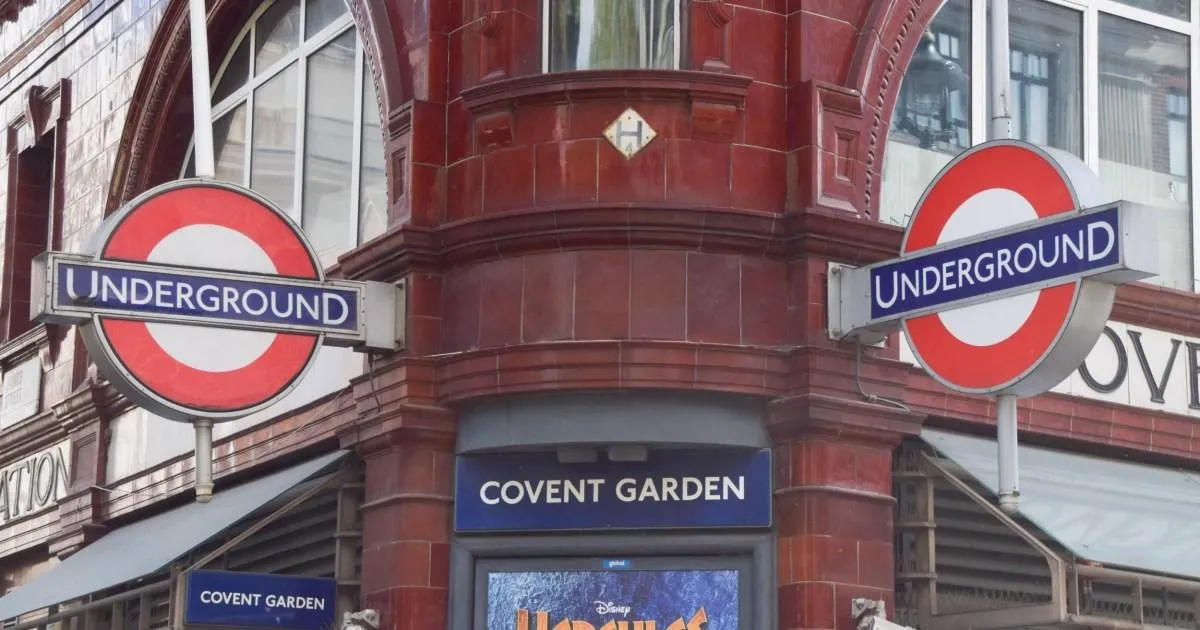
London Tube strike LIVE: Commuter chaos enters second day as entire Underground disrupted | News UK

Published

on

London Tube strike LIVE: Commuter chaos enters second day as entire Underground disrupted | News UK

The queue at the Liverpool Street station taxi rank is growing.

Finance worker Anthony Craft was waiting for a taxi with two friends.

He said: ‘Typically our journey home takes around 30-40 minutes but now it’s looking like an hour and a half, so not very pleasant.’

His friend Joe Carter, who owns Pure Health Care recruitment firm, said: ‘We are waiting for an Uber, a Bolt and a black cab, so contingency planning.’

Advertisement

The pair said they are already seeing surge pricing on the apps.

‘It’s £60-£70 to get back to Woodford in Essex,’ Joe said, adding that the journey usually costs around £30.

He continued: ‘We usually get on the Weaver line and that was supposedly meant to be okay today and it was just meant to be the Tube strike. But unfortunately there’s a signal failure on the Weaver line, of all days. No Central line, no Weaver line, so we should have worked from home.’

Advertisement

Source link

Continue Reading
Click to comment

You must be logged in to post a comment Login

Leave a Reply

NewsBeat

The war could force Iranians living in Turkey to return home

Published

on

The war could force Iranians living in Turkey to return home

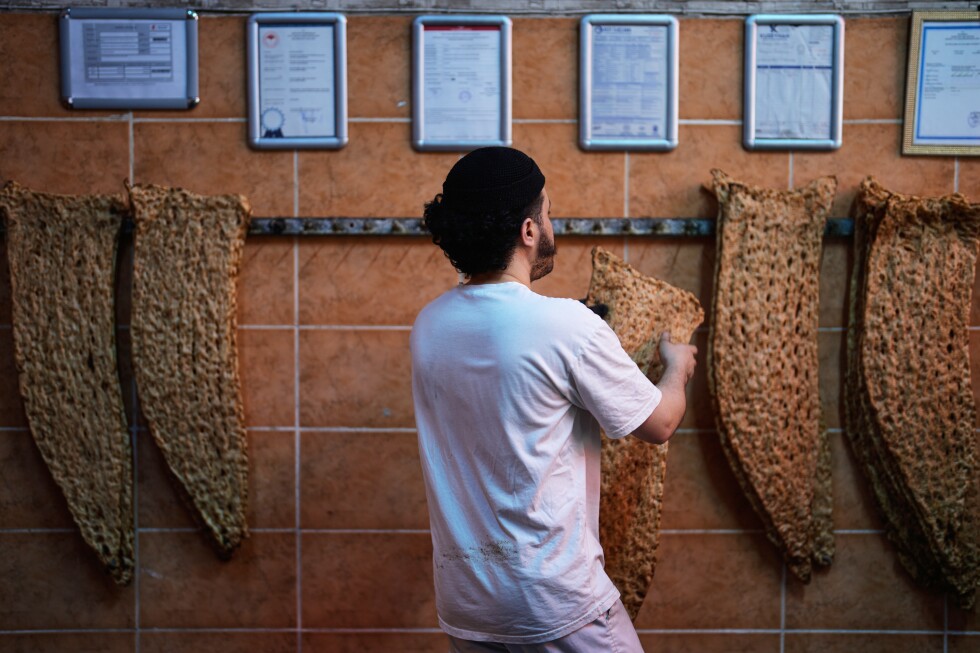
ISTANBUL (AP) — Sadri Haghshenas spends her days selling borek — a layered, savory pastry — at a shop in Istanbul, but her mind is on her daughter in Tehran.

The family had to send her home to Iran after they ran into difficulties renewing her visa, despite fears that a shaky ceasefire could soon collapse.

For years, short-term residency permits have allowed tens of thousands of Iranians to pursue economic opportunities and enjoy relative stability in neighboring Turkey. But it’s a precarious situation, and the war has raised the stakes.

“I swear, I cry every day,” Haghshenas said, raising her hands from behind the counter of the pastry shop. “There is no life in my country, there is no life here, what shall I do?”

Advertisement

A daughter sent back

Haghshenas and her husband moved to Turkey five years ago with their then-teenage daughters and have been living on tourist visas renewable every six months to two years.

They could not afford a lawyer this year, because her husband is out of work due to health problems. As a result, they missed the deadline to apply for a new visa for their 20-year-old daughter, Asal, who is still in her final year of high school.

Asal was detained at a checkpoint earlier this month and spent a night at an immigration facility. Her mother found a friend to take her back to Tehran rather than face deportation proceedings that could complicate her ability to return to Turkey. They hope she can come back on a student visa.

Haghshenas has been unable to talk to her daughter since she left because of a monthslong internet blackout in Iran.

Advertisement

Many Iranians have temporary status

Turkey has not seen an influx of refugees, as most Iranians have sought safety within their country. Many who have crossed the land border were transiting to other countries where they have citizenship or residency.

Nearly 100,000 Iranians lived in Turkey in 2025, according to the Turkish Statistical Institute. Around 89,000 have entered Turkey since the start of the war, while around 72,000 have departed, according to the United Nations’ refugee agency.

Some Iranians have used short-term visa-free stays to wait out the war, but there are few options for those who want to stay longer.

Sedat Albayrak, of the Istanbul Bar Association’s Refugee and Migrant Rights Center, said that getting international protection status can be difficult, and the system encourages Iranians to apply for short-term permits instead.

Advertisement

“There are people who have lived on them for over 10 years,” he said.

If the war continues, more may have to return

Nadr Rahim came to Turkey for his children’s education 11 years ago. Now, the war may force him to go home.

Because of the difficulty of getting a permit to start a business or work legally in Turkey, he lived off the profits of his motorcycle salesroom in Iran. But there have been no sales since the war started, and international sanctions — and the internet outage — make it extremely difficult to transfer funds.

His family only has enough money to stay in Turkey a few more months. His children grew up in Turkey and don’t read Farsi or speak it fluently. He worries about how they would adapt to living in Iran, but said “if the war continues, we will have no choice but to return.”

Advertisement

In the meantime, he spends most of his days scrolling on his phone, waiting for news from his parents in Tehran or discussing the war over waterpipes with Iranian friends.

‘A bad life’ in Turkey and Iran

A 42-year-old Iranian woman came to Turkey eight months ago, hoping to make money to support her family. She and her daughter registered as university students to get study visas. She attends classes in the morning to keep her legal status before rushing to service jobs, sometimes working until 3 a.m.

They share a room with six other people at a women’s boarding house, she said, speaking on condition of anonymity out of fear for her security should she return to Iran.

“I truly love Iran. If necessary, I would even go and defend it in war,” she says. But she sees no future there, while in Turkey, she’s barely scraping by and only able to send small amounts of money to her parents.

Advertisement

“I have a bad life in Turkey, and my parents have a bad life in Iran,” she said. “I came to Turkey with so much hope, to support my parents and build a future. But now I feel hopeless.”

From one temporary refuge to another

A 33-year-old freelance architect from Tehran traveled to Turkey during Iran’s violent crackdown on mass protests in January. She had planned to return after the situation calmed down, but then the United States and Israel went to war with Iran at the end of February.

“I started to believe that it’s a very bad situation, worse than I expected,” she said, speaking on condition of anonymity for fear of persecution if she returns to Iran.

She has been unable to work for her usual clients back in Iran because of the internet blackout. With the end of her 90-day visa-free window approaching, she can’t afford to apply for a longer stay in Turkey.

Advertisement

Instead, she has decided to go to Malaysia, where she will get free accommodation in return for building shelters during a month of visa-free stay.

She has no plan for what comes next.

Advertisement

Source link

Continue Reading

NewsBeat

Classic cars at Eden Camp for Drive It Day in aid of NSPCC

Published

on

Classic cars at Eden Camp for Drive It Day in aid of NSPCC

Eden Camp near Malton is taking part in this year’s Drive It Day on Sunday, April 26, bringing together classic cars and transport heritage while raising funds for charity.

The national campaign, established in 2005 by the Federation of British Historic Vehicle Clubs, celebrates the UK’s motoring heritage.


Recommended reads:

York’s chart-topping band gets ‘incredible response’ to winter tour announcement

Advertisement

Pronounce it right – how to say name of North Yorkshire village famous for food

‘Blood was seeping into the pavement’ – mum and son sentenced for York assault


As part of the event, the museum which is the only remaining prisoner of war camp in Britain, will host a display of classic vehicles, with all proceeds supporting NSPCC Childline to provide vital assistance to vulnerable children.

Classic cars at Eden Camp for Drive It Day in aid of NSPCC. (Image: Eden Camp)

Classic car owners are invited to join the display and can access discounted museum entry at £5 per person. Pre-booking online is required, with all entry fees donated directly to the charity, which provides support to vulnerable children across the UK.

Advertisement

Luke Hudman, marketing manager at Eden Camp, said the attraction was looking forward to welcoming classic car owners and enthusiasts “for a brilliant day at Eden Camp”.

“Drive It Day is a fantastic opportunity to bring people together through a shared passion for classic vehicles whilst supporting an incredibly important cause. .”

Classic cars at Eden Camp for Drive It Day in aid of NSPCC. (Image: Eden Camp)

Attendees can also show their support by purchasing official Drive It Day fundraising plaques, which are available from the official Drive It Day shop.

Classic car enthusiasts can book tickets online. Visitors are strongly encouraged to book ahead to secure entry and take advantage of discounted rates. Adult tickets are priced at £17 online (£20 on the day), and child tickets at £15 online (£18 on the day), with free entry for children under five. Family and group ticket packages are also available.

Advertisement

For more information, and to book, visit https://edencamp.co.uk/whats-on/drive-it-day/.

Eden Camp, which was built in 1942, still has the original huts that have been preserved and turned into immersive displays.

The huts have been re-equipped to tell the story of The People’s War, the social history of life in Britain from 1939 to 1945, featuring a new Blitz experience in Hut 5

Eden Camp received £224,000 in funding from North Yorkshire Council from the £16.9 million UK Shared Prosperity Funding allocated to North Yorkshire, used to restore the original POW huts built in 1942.

Advertisement

The collection at Eden Camp includes historic military vehicles, thousands of military items and has an archive collection with over 103,000 documents, artefacts and photographs.

Eden camp welcomes over 25000 children each year for formal educational visits in a typical year.

Source link

Advertisement
Continue Reading

NewsBeat

Coronation Street actor praised by co-stars over major achievement after two-weeks notice

Published

on

Manchester Evening News

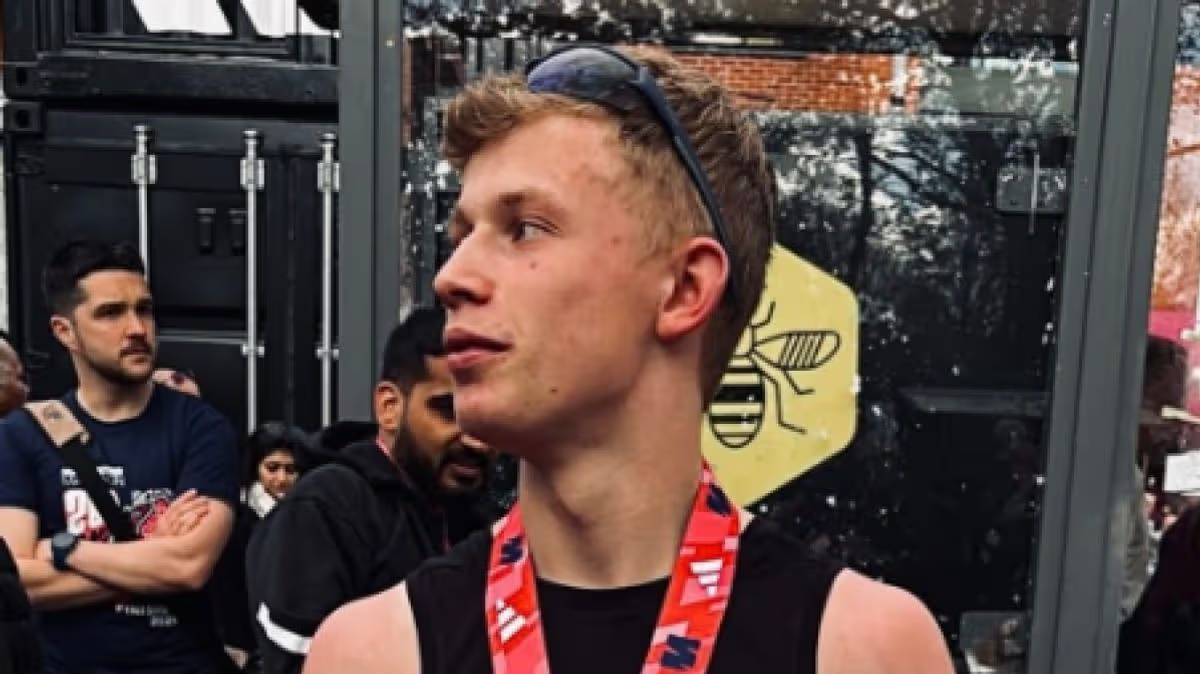
Actor Liam McCheyne has been flooded with praise as she revealed he had completed the Manchester Marathon after just two weeks of training

Coronation Street star Liam McCheyne has been flooded with praise as she revealed he had completed the Manchester Marathon after just two weeks of training.

Advertisement

The actor, who is best known for playing Dylan Wilson in the ITV soap, revealed earlier this month that he be running the Manchester Marathon to raise funds for charity.

Taking to Instagram to share the update, he posted a video in which he could be seen speaking directly to the camera and said: “Now, I don’t usually do videos like this, but I have a massive favour to ask and I really hope that you can help,” McCheyne began addressing his followers in a clip posted yesterday.

Click here to sign up for more Coronation Street updates in our newsletter

“I’ve signed up to do the Manchester Marathon. I signed up last week, so I’m really cutting it short,” he said of the sports event taking place on Sunday, 19 April. I’ve got two weeks to train, I’m gonna give it my best shot.”

Advertisement

He went on to share: “The charity I’m gonna be doing it for is Charlie’s Promise, which means a heck of a lot to me. We did a lot of work with them when we did the knife prevention story on Corrie. They’re doing unbelievable work, so that’s what’s gonna get me through this marathon.”

Charlie’s Promise is an organisation dedicated to putting an end to knife crime in the UK in memory of teen Charlie Cosser, who was stabbed to death at a party in 2023. They helped Liam and his co-stars on a knife crime storyline, which saw teen Mason Radcliffe lose his life after being stabbed.

Liam then rounded off his video by saying: “I’m gonna give it my best shot, like I said, for an amazing cause. And if you can help, it’d be greatly appreciated.” Sharing the update on Instagram, he wrote: “Never done a marathon before. What’s the worst that can happen. Your support will really get me through this. All for an unbelievable cause. Got the just giving link in my bio!”

The huge event then swept over the city on Sunday (April 19) and Liam later updated fans as he confirmed he had completed the run. Sharing a number of photos from marathon and of him with his finishers medal, the soap star said on Instagram: “First marathon completed. With 2 weeks of training. But what an experience thank you so much to everyone that’s donated all going to the amazing work done by @charliespromisecharity.

“Thank you for everyone that came out today to cheer on the runners. Thank you to those that sent gorgeous messages throughout the day.” He added: “Huge congratulations to everyone that took part you should all be incredibly proud. Final thank you to @andy_geelan wouldn’t have finished that marathon without out you mate.”

And it didn’t take long for the comments to come flooding in, especially from his Corrie co-stars. Samia Longchambon said: “Congrats Liam.. amazing achievement for a brilliant cause!” Sydney Martin replied: “Star boy.” Luca Toolan, who played Mason in the ITV soap, commented: “Incredible brother.”

Tony Maudsley posted: “GOOD LAD!!!!! Very proud of you!!” Jane Danson shared: “AMAZING. WELL DONE !!” Sue Devaney gushed: “So proud of you darling! You’re the best!” Harriet Bibby wrote: “You are BRILLIANT.” Kyran Bowes added: “Amazing well done pal.”

Advertisement

Source link

Continue Reading

NewsBeat

Why this weekend’s London Marathon will impact more than just knees

Published

on

Why this weekend’s London Marathon will impact more than just knees

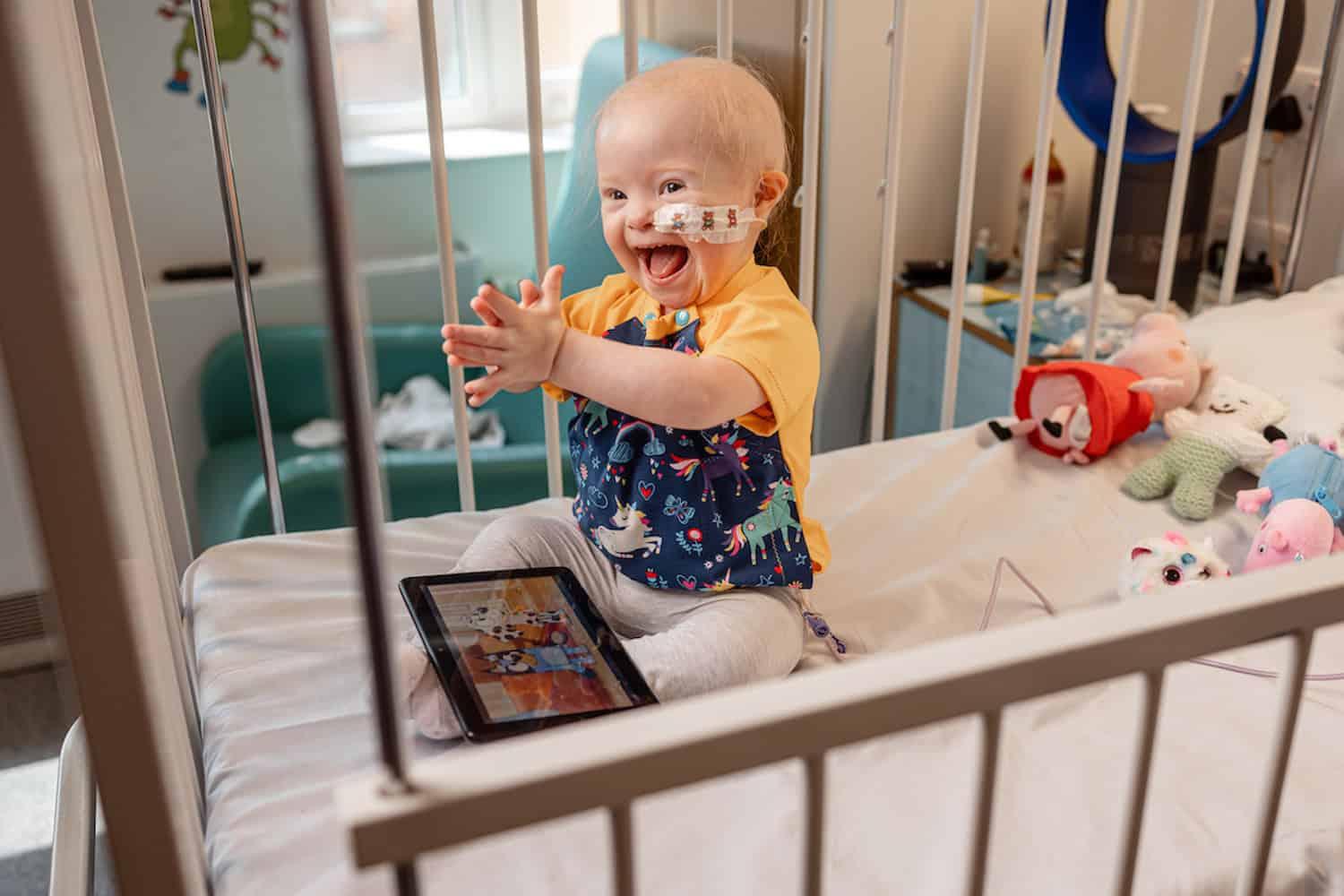
For many charities, the London Marathon is the most important fundraising day of the year. As thousands prepare to run it, Children With Cancer UK is using the moment to shine a light on the children and families who need support long after the finish line

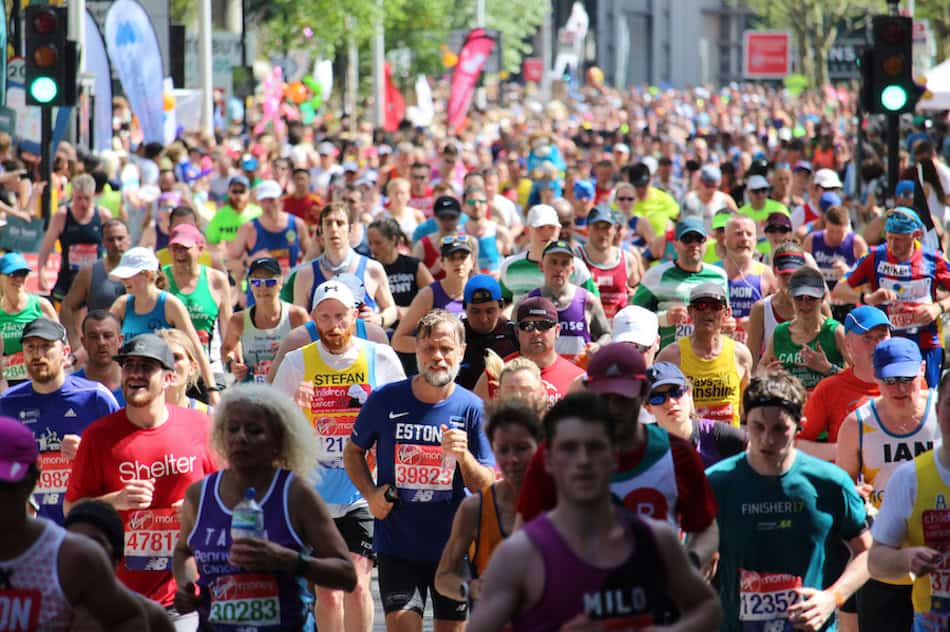
This weekend, tens of thousands of people will take to the streets of the English capital for the London Marathon. Between them, they are expected to raise tens of millions of pounds for good causes.

For many charities, it is the single most important day in the fundraising calendar; a moment when they can tell their story to a huge audience, recruit supporters, and raise money to help fund research, support services and practical help for the people who need it most.

Advertisement

It is also one of the rare moments when London feels at its absolute best. 

Advertisement

The city turns into one long corridor of encouragement. Police officers, volunteers, organisers, strangers standing outside pubs with jelly babies and orange slices, children holding homemade signs, people shouting the names of runners they have never met. Even the black cab driver who took me to the pub after I ran it a few years ago refused to take payment, donating his fare to charity instead.

I remember the marathon being painful when I was overtaken by someone carrying a washing machine. More painful when barefoot Jesus carrying a crucifix passed me around the halfway point. Then came the moment at mile 20 when an almost life-sized rhino ran past and I realised that I had absolutely nothing left in the tank. But somehow, step by chafing step, you get there.

Among those on the start line this weekend will be children’s TV presenter and actress Evie Pickerill. Best known for her work on CBeebies, Pickerill has become a familiar face to thousands of young families across the UK. Alongside her television work, she also hosts her own podcast and is an ambassador for the charity Children with Cancer.

Advertisement

“I’ve seen first-hand what the children go through, but also what their families go through too,” says Pickerill, who visited hospital wards dressed as a Disney princess, meeting children and families during treatment. “CBeebies is played in a lot of hospitals and on the wards. I feel like it’s a nice thing for children to have a recognisable face as one of their ambassadors for the charity that’s supporting them.”

When most people think of cancer, they tend to picture it as an illness of later life; something that happens to grandparents, parents, older relatives. Not toddlers. Not primary school children. Not teenagers trying to finish exams, see their friends, or work out what they want to do with their lives.

But every day in the UK, 10 children are diagnosed with cancer. Two of them will not survive. 

“Of the eight who do survive, five of them, because of the treatment that they’ve gone through, are left often with cognitive impairment, fertility issues, hearing issues, seeing issues, stunted growth,” says Gavin Maggs, chief executive of Children with Cancer UK. They survive, but they’re not fine, to be honest.” 

Advertisement

If you can have some escape and actually allow children to feel like children, that is so important in their journey

Children, adds Pickerill, receive the same chemotherapy that adults receive. “If you think about their smaller bodies, they’re still developing,” she says. “That really harsh treatment is going into their bodies.”

While survival rates have improved significantly in recent decades, thanks in part to better research and treatment, there is still a long way to go. Only around 2% of cancer research funding goes towards childhood cancers, despite the fact that children who survive can still face decades of physical and emotional consequences.

The impact of living with cancer stretches far beyond the hospital, too, and affects not just the survivors but those around them too. Children with cancer are often out of school for long periods. Their education can become fragmented and inconsistent. Friendships are disrupted. Family life changes completely.

Advertisement

“One of the observations that’s made by doctors and charities like us is that when a child is diagnosed, there’s something called ‘forgotten sibling syndrome’,” says Maggs. “All of the attention goes on to the ill child and then others fade into the shadows a little bit.”

Parents often have to give up work or cut back on hours. Families travel long distances to specialist hospitals. Financial pressure builds at the same time as emotional exhaustion.

Children with Cancer UK helps to ease some of that burden. While around 75% of the charity’s funding goes towards research, supporting hospitals, universities, academics and clinicians across the country to improve diagnosis and treatment, the remaining 25% goes towards welfare support for children and their families.

Advertisement

That includes travel grants to hospital appointments, accommodation close to treatment centres, days out, and respite breaks. One of the charity’s newest projects is a group of holiday cottages in North Yorkshire, where families affected by childhood cancer can stay free of charge.

It’s really powerful – and a huge visual joy for those of us who are involved in it

“They can come here, rest, recuperate, recover,” says Maggs. “They can bring their families, they can bring their siblings. A granny, grandad, uncle who leaned in and did more babysitting when it was required. The cancer treatment journey affects a lot of people.”

“If you can have some escape and actually allow children to feel like children, that is so important in their journey,” adds Pickerill. “Children with Cancer UK are not only trying to fund treatment – they are also trying to create ways of allowing children to experience childhood and allow parents that respite too.”

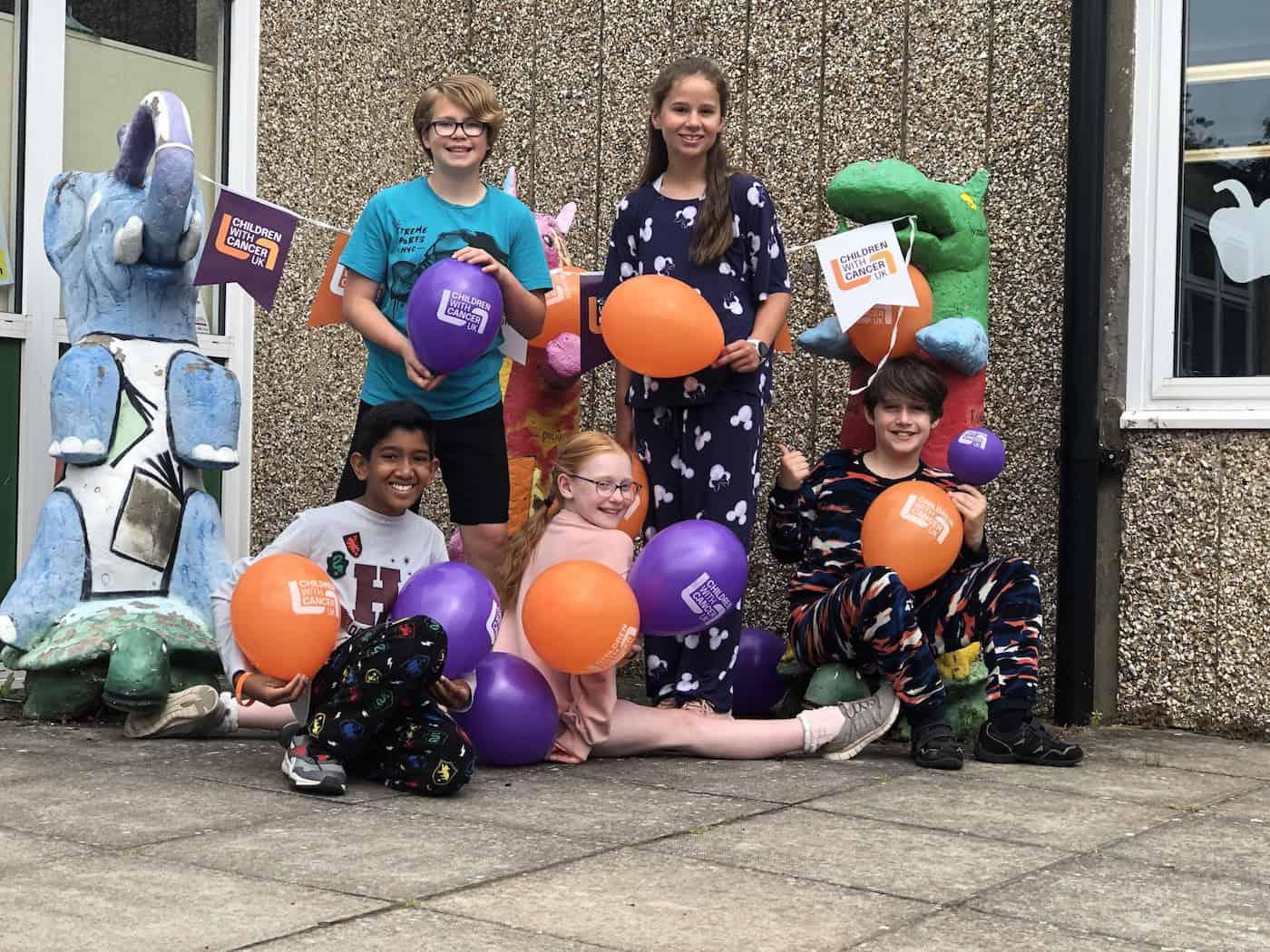
The London Marathon has become one of Children with Cancer’s biggest opportunities each year to raise money and awareness. The charity will have one of the largest teams in the race, with around one in every 40 runners wearing its bright orange t-shirts.

Advertisement

“It’s really powerful – and a huge visual joy for those of us who are involved in it,” says Maggs.

‘Hopefully more funding can be pushed to make childhood cancer no longer such a taboo subject,’ said children’s TV presenter and actress Evie Pickerill. Image: Rishi Issar, Bridgewater Film Photography

Advertisement

Getting to the start line was a challenge in itself for Pickerill. She only began training in January and admits to underestimating how much preparation it would take. 

“I came into it a bit naive,” she says. “You have to really schedule your runs and strength training. It’s been a whole new world for me.”

But while sore knees and chaffed limbs are temporary, for the children and families she is running for, the challenges they face can last a lifetime.

“The more we talk about it, the more awareness we bring,” says Pickerill. “Hopefully more funding can be pushed to make childhood cancer no longer such a taboo subject.”

Advertisement

Even if she is overtaken by a rhino, a fridge or a superhero, Pickerill will cross the finish line having put childhood cancer, and the families living through it, in front of millions of people.

Main image: Alan Kean / Shutterstock.com

Be part of the solution

At Positive News, we’re not chasing clicks or profits for media moguls – we’re here to serve you and have a positive social impact. We can’t do this unless enough people like you choose to support our journalism.

Advertisement

Give once from just £1, or join 1,800+ others who contribute an average of £3 or more per month. Together, we can build a healthier form of media – one that focuses on solutions, progress and possibilities, and empowers people to create positive change.

Support Positive News

Source link

Advertisement
Continue Reading

NewsBeat

Toilet entry fee introduced by North Yorkshire Council

Published

on

Toilet entry fee introduced by North Yorkshire Council

Members of North Yorkshire Council’s executive committee today (TUESDAY) voted to carry out a review of the authority’s network of conveniences, including the introduction of a standard entry fee.

RECOMMENDED READING:

As part of the review, the council has committed to an improvement programme to ensure that all toilet facilities are in a good or excellent condition by 2030.

Advertisement

Councillors took the decision despite a call from Norton division councillor Keane Duncan to keep it ‘free to pee’ in North Yorkshire.

Cllr Duncan told the meeting at Ripon Town Hall that members of the public who had contacted him “believed that public toilets are a basic fundamental service that should remain free to access”.

He added: “While I recognise the council’s financial position, I do hope the executive would agree that charging to go to the toilet should never be the council’s first instinct. It should be its last resort and only where it makes practical and financial sense.

“I would like to seek an assurance that every alternative will be fully and properly exhausted before any move towards extending charging or making closures.”

Advertisement

But Councillor Richard Foster, executive member for managing our environment, said entry fees were needed to provide a better toilet infrastructure.

“I’ve heard about the free-to-pee campaign, and it would be great, but there is a cost and unfortunately, there isn’t a free pee.

“Somebody pays for it somewhere, the cleaning fees, the water rates, electricity, the consumables that go into toilets all have a cost.”

Councillor Simon Myers, executive member for culture, arts and housing, said the former district and borough councils that did not introduce charges had left some conveniences in a “shocking state that North Yorkshire Council now has to pick up the tab for”.

Advertisement

He added: “How can we expect to balance the books and provide the statutory services that we have to provide, at the same time as justifying spending very considerable amounts of public money on our public lavatories?

“Although I am not necessarily keen on charging for public toilets, I think it’s inevitable in the current financial climate, if we are to bring things up to a decent standard.”

Councillors agreed that the entry fee should be set at 40p rather than a higher proposed rate of 50p.

External funding will be sought to help fund conveniences in areas popular with tourists, but plans to increase fees to park in car parks with toilets, to help cover the cost of running the conveniences, was abandoned.

Advertisement

The council says it will consider the closure of dilapidated conveniences or those with low footfall as part of the review, although talks will take place with parish and town councils first.

The authority is currently responsible for 85 traditional toilet blocks and eight changing places toilets — more than any other council in the UK.

Of those, 28 already have entry fees, which were introduced by previous district and unitary authorities.

It cost the council around £230,000 to operate its toilet network in 2025/26.

Advertisement

Source link

Continue Reading

NewsBeat

Warning issued as Hay fever season set to be 2 weeks longer

Published

on

Warning issued as Hay fever season set to be 2 weeks longer

Climate change has “prolonged the pollen season”, increasing the time people with hay fever are exposed to allergens, according to the Lancet Countdown in Europe 2026 report.

The study, published in The Lancet Public Health, found that flowering – and therefore pollen release – is shifting.

Researchers looked at birch, alder and olive and detected an earlier season start of one to two weeks for all allergenic trees between 2015 and 2024 compared with 1991 to 2000.

Advertisement


“Climate change has prolonged the pollen season by one to two weeks, increasing the duration of exposure for people with allergic rhinitis,” the authors said.

Commenting, Anne Biggs, deputy head of clinical services at Allergy UK, said: “Hay fever impacts millions of people in the UK each year.

“While for some their symptoms can be mild, for many their hay fever symptoms impact their quality of life.

“Research and understanding into the timing and length of the different pollen seasons is vital to support clinicians to ensure treatment and management of allergic conditions can be optimised.

Advertisement

“Details on longer pollen seasons is essential in the understanding and management of allergic conditions associated with pollens and air quality.

“It is an opportunity to raise awareness on not only the impact of hay fever, but the treatment options available to ensure people with pollen allergies can live symptom-free.”

A separate allergy strategy says the UK has some of the highest allergy rates in the world, with 39% of children and 30% of adults affected, but care is “dramatically under-resourced” in the NHS.

Advertisement

The broader climate and health report also flags rising heat‑related deaths, increased dengue risk and warns that “as long as Europe relies on fossil fuels our economies, our public budgets and ultimately our health will remain vulnerable”.


How many people in the UK could be affected by hay fever?

According to the BBC , “An estimated 13 million people in the UK suffer from hay fever,” with scientists at the University of Worcester predicting higher levels.

However, Jason Murphy, Head of Pharmacy at online pharmacy Chemist4U told Newsquest: the figure could be much higher.

Advertisement

“Tree, grass and weed pollen are the main triggers for hay fever, with tree pollen affecting around 25% of the population, the equivalent of 16.8 million people.


Recommended reading:


“Typical symptoms can include repeated sneezing; a runny or blocked nose; itching in the nose, throat or ears; and watery, red, or itchy eyes.

“Tree pollen specifically can also trigger post-nasal drip, which leads to frequent throat clearing, coughing, and a hoarse voice.

Advertisement

“Those with asthma may also notice a tight chest, wheeze or shortness of breath, so it’s worth taking symptoms seriously when forecasts flag very high tree pollen levels.

Source link

Advertisement
Continue Reading

NewsBeat

Plans are unveiled to expand housing in Lesmahagow

Published

on

Daily Record

Developers say there is demand for homes in the area.

Plans to expand housing in Lesmahagow have been unveiled, with developers seeking approval to build 19 new homes.

Advertisement

Modern Housing has submitted a planning statement backing the proposal on land at Brocketsbrae Road which would extend an existing development already under construction nearby.

According to the plans, the development would include a mix of house types, featuring both family homes and bungalows designed to create a cohesive and walkable neighbourhood. A small landscaped seating area is also proposed as a community space.

Developers say there is demand for homes in the area. Of the 26 properties approved in the earlier phase, several have been completed and occupied, while the remaining plots have reportedly secured buyer interest.

Modern Housing also points to wider community benefits, including a £39,000 contribution towards upgrades at nearby Brocketsbrae Park and improved pedestrian links to local green space.

Advertisement

If approved, the development would form part of South Lanarkshire’s housing land supply.

The application will now be considered by South Lanarkshire Council, with a determination deadline of May 30.

Neighbourhood and standard consultation for the development began on April 8.

*Don’t miss the latest headlines from around Lanarkshire. Sign up to our newsletters here.

Advertisement

And did you know Lanarkshire Live had its own app? Download yours for free here.

READ MORE: Scots’ Bishops give blessing to SCIAF’s WEE BOX annual fundraising appeal

Source link

Continue Reading

NewsBeat

York photographer captures adorable spring harvest mouse

Published

on

York photographer captures adorable spring harvest mouse

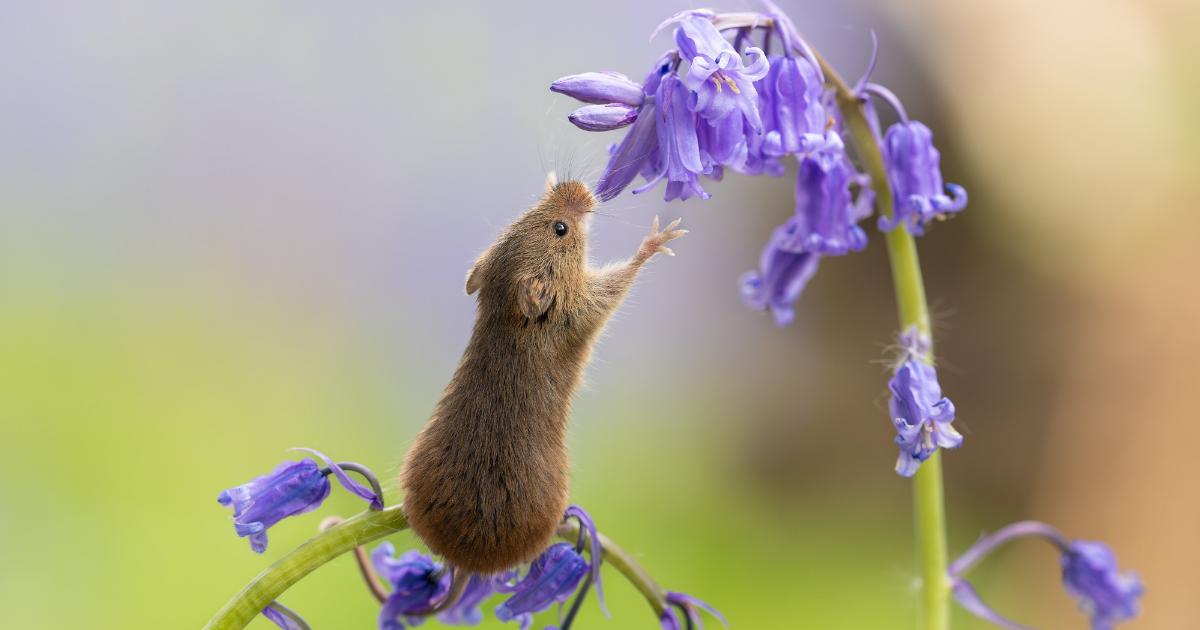
The tiny mammal, which weighs as much as a 2p coin, can be seen using its prehensile tail to keep itself balanced while it stretches to touch the petals.

Photographer Tony Nellis captured the amazing moment at a wildlife conservation workshop in York at the weekend.


Recommended reading:


Pictures show the cute rodent scrambling up a bluebell stem to catch the flower’s pleasant scent.

Advertisement

Another shot shows the animal balancing perfectly while looking directly down the camera.

Harvest mouseReady for take off (Image: Tony Nellis)

Harvest mice are known pollen lovers and are often spotted snacking – or even napping – inside flowers.

Tony, 26, said: “The one in the photo was a really young female. I wanted the blue bells as they really love pollen, like bees.

“They will climb up a flower to eat the pollen. If the flower is big enough they’ll try and sleep in the flowers.

Advertisement

“She sort of reached up to have a good grab of it and had a sniff of the flower. It must’ve had a nice scent as she went back for more.

“They use their tail like an extra limb.

“If they’re climbing something they wrap their tail around it help the climb. It’s amazing to watch.

Harvest mouse‘They will climb up a flower to eat the pollen. If the flower is big enough they’ll try and sleep in the flowers’ (Image: Tony Nellis)

“She’s tiny. If you think about the size of a blue bell, she must be only an inch long. When they’re on the bluebell they’re very calm.

Advertisement

“We have a lot of invasive species of bluebells, but to get her on one of the native species is great.

“They’re tiny so it’s very hard to shoot. You have to use a narrow angle lens but close up.

“When you’re shooting animals it’s always hard, but that day we had a very bright day. We had to wait for the sun to go behind the clouds.

“I’ve managed to get 6,000 pictures of her, but these are definitely the best.

Advertisement

“It’s national mammal week this week so it fits the theme.”

Harvest mouseThe harvest mouse is classed as Near Threatened on the Red List for Britain’s Mammals (Image: Tony Nellis)

Harvest mice are the smallest European rodent and typically eat seeds, insects and fruit.  

The animal is classed as Near Threatened on the Red List for Britain’s Mammals thanks to habit loss.

The harvest mouse is Britain’s only mouse with prehensile tail, which is used as an extra limb for climbing.

Advertisement


Source link

Advertisement
Continue Reading

NewsBeat

Ryanair warns passengers it is changing its baggage rules in 2026

Published

on

Manchester Evening News

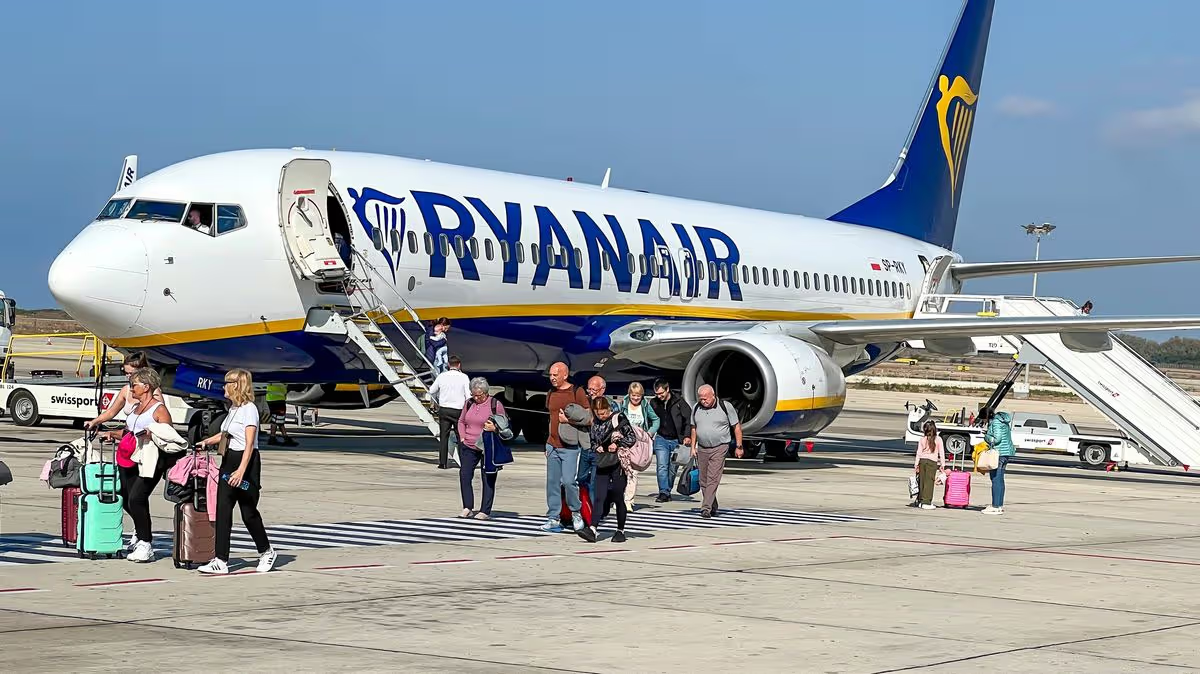
Ryanair is currently in the process of installing additional self-service bag-drop kiosks, with 95% of the airports it operates from set to have them in place by October

Ryanair has announced changes to its luggage rules.

From 10 November, all check-in and bag drop services at every airport it operates from will close 60 minutes before scheduled departure, an increase from the current 40 minutes.

The budget airline claims this is to provide “more time for passengers to get through airport security and passport queues” which will “reduce the very small number of passengers who currently miss their flight departure as they are getting stuck in these airport queues.”

Advertisement

The update means the 20% of Ryanair passengers who check their baggage will have slightly more time to navigate airport security and passport queues and reach their departure gate before boarding commences.

Ryanair is currently in the process of installing additional self-service bag-drop kiosks, with 95% of the airports it operates from set to have them in place by October, reports the Mirror.

Ryanair CMO, Dara Brady, said: “From Tuesday 10 November next, Ryanair customers will see airport check-in and bag drops close 60 minutes before scheduled departure, instead of today’s 40 minutes. This will allow these 20% of our customers (who check in a bag) more time to clear through airport security and passport queues, and get to their departure gate on time, especially during busy travel periods when some of these airport queues can be longer.

Advertisement

“We are also installing self-service kiosks at over 95% of Ryanair airports before October. This means a quicker bag-drop service, less queuing at airport desks, and an even more punctual service for the 20% of our customers who still wish to check in a bag, while the 80% (who don’t check in a bag) will be unaffected by this small 20-minute change, as they will continue to check in online before they arrive at the departure airport and they go straight through airport security to their departure gate.”

In recent days, Ryanair passengers have experienced disruption caused by the new entry/exit system (EES), resulting in lengthy queues at certain European airports. Travellers due to fly from Milan Bergamo to Manchester were left stranded owing to complications at passport control.

The system was introduced across all Schengen Area border checkpoints on April 10. In recent weeks, this has resulted in passengers spending longer periods getting through airport security, with some even missing their flights as a consequence.

EES mandates that non-EU nationals, including British citizens, register biometric information such as facial scans and fingerprints, which are then verified each time they cross a European Schengen Area border. EES is managed by the relevant border control authority in each country, rather than by airports or airlines. Ryanair has since responded to the incident at Milan Bergamo airport. A spokesperson for the airline said: “Should these passengers have presented at the boarding gate desk before it closed, they would have boarded this flight.”

Advertisement

Source link

Continue Reading

NewsBeat

War could make petroleum products from clothes to crayons more costly

Published

on

War could make petroleum products from clothes to crayons more costly

NEW YORK (AP) — It might be hard to imagine the Iran war weighing on stuffed toys with names like Snuggle Glove, Bizzikins and Wobblies, but even plush playthings are not immune when oil shipments from the Middle East are constrained.

Like many soft toys, the creatures developed by a manufacturer in Fort Lauderdale, Florida, are made with polyester and acrylic, synthetic fibers derived from petroleum. Three weeks after the war started, suppliers in China notified Aleni Brands that getting the materials already was costing them 10% to 15% more, CEO Ricardo Venegas said.

“I think this situation demonstrates how much oil permeates throughout our system, and we can’t get away from it,” said Venegas, who founded Aleni Brands last year and is in the process of adding product lines. “Who would have thought that the price of a toy would have a direct relationship with oil?”

It’s not just toys. Petrochemicals derived from oil and natural gas go into making more than 6,000 consumer products, according to the U.S. Department of Energy. Computer keyboards, lipstick, tennis rackets, pajamas, soft contact lenses, detergent, chewing gum, shoes, crayons, shaving cream, pillows, aspirin, dentures, tape, umbrellas and nylon guitar strings are just a few of them.

Advertisement

So far, the war’s most tangible and immediate effect for many people outside the conflict zone has been spiking gasoline prices. Travelers also are seeing higher airfares and flight fees as airlines respond to the rising cost of jet fuel. Consumers may find themselves paying more for food, furniture or any of the myriad of goods transported by trucks that run on diesel.

But crude oil isn’t just refined as fuel. It gets turned into chemicals, waxes, oils and other mixtures that appear in a vast array of everyday items, including most made with plastic and rubber. Petroleum derivatives also are used in a lot of packaging. With disruptions to global oil supplies now in their eighth week, higher production costs also could make things more expensive for shoppers, according to trade groups and some companies.

Venegas, a 30-year toy industry veteran, said he would absorb higher material costs for now but expects to increase prices for customers by early 2027, if the war goes on another three to six months.

From crude oil to T-shirts and rugs

While 85% of global oil consumption is in the form of fuel, the rest goes into a wide range of consumer products, according to Gernot Wagner, a climate economist at Columbia University’s School of Business.

Advertisement

Crude oil is mostly a complex mixture of hydrocarbons, which are compounds made of carbon and hydrogen atoms. Refineries and chemical plants separate and break them down to convert them into smaller chemical building blocks known as petrochemicals.

Six petrochemicals — ethylene, propylene, butylene, benzene, toluene and xylenes — are the major foundations of plastics and synthetic materials like nylon and polyesters, which manufacturers in turn use to design and deliver products. More from the Department of Energy: Automobile parts, ballpoint pens, curtains, dice, eyeglasses, fertilizer, golf balls, hearing aids, insect repellant, kayaks, luggage, mops and nail polish.

Materials account for a big share of production costs for many manufacturers, including those that supply carpets, clothing and tires, according to Andrew Walberer, partner and global lead in the chemicals practice of global strategy and management consultancy Kearney.

Take a button-down shirt, for example. Walberer estimated that materials account for 27%-30% of how much it costs a manufacturer to make one. Labor costs contribute 10% to 30%. Business expenses tied to marketing, distribution and administration comprises the rest, he said.

Advertisement

The ripple effect

Experts say if oil holds above $90 per barrel for the next several months, cost pressures will accelerate throughout the supply network.

Footwear Distributors and Retailers of America CEO Matt Priest said most of the trade organization’s members keep a two- to three-month inventory of finished products, providing a temporary cushion against higher materials costs.

Roughly 70% of the materials in synthetic shoes are petrochemical-based, and 30% of the costs for those materials are directly tied to oil price rate swings, according to a report the organization published last month on the U.S. footwear industry’s “exposure to oil prices & the impact on shoe costs.”

The FDRA analysis estimated that between materials, factory energy and transportation, companies paying more for petroleum could translate into a 1.5% to 3% increase in the price shoppers pay for a pair of shoes by late summer and the fall.

Advertisement

By the end of April, U.S. shoe and clothing manufacturers need to start signing contracts with suppliers, mostly outside the U.S., for orders of polyester staple fiber and polyester filament yarn to get their designs on retail shelves and online for the holiday shopping season, according to Nate Herman, executive vice president of the American Apparel & Footwear Association.

One kilogram, or a little over two pounds, of the materials used in polyester textiles, has increased in price from an average of 90 cents before the U.S. and Israel attacked Iran to $1.33 per kilogram, Herman said. He estimated that each garment will cost 10 cents to 15 cents more to produce as a result.

Another cost for importers

Some businesses are looking for ways to offset rising costs.

Lisa Lane is the founder of Rinseroo, which sells portable shower head, bathtub and sink attachments for cleaning, pet grooming, and bathing. She recently tripled the number of the slip-on hoses she procures from China each month after her manufacturer said the cost would be 30% higher in another 30 days. She had a few days to decide whether to place a three-month advance order.

Advertisement

The components of Rinseroo’s products include petroleum derivatives like polyvinyl chloride, Lane said. After purchasing 240,000 units instead of her usual 80,000, she is also evaluating cost-cutting options.

Lane said she wants to hold off on increasing prices for retailers that sell the attachments since Rinseroo did that last year to offset higher U.S. tariffs on imports from China. For example, a hose for washing pets in a bathtub went up to $33.95 from $29.95 on retail websites, she said.

“We want to stay at that sweet spot where people want to continue to buy from us and feel like they’re getting a good value,” Lane said.

Another company, which sells wound care products like bandages, dressings, pads and sponges to nursing homes and other medical facilities, plans to raise its prices by 15% in a matter of weeks. Gentell CEO David Navazio noted that adhesives in the products rely on several petrochemicals.

Advertisement

Including energy for production and materials, Navazio estimated the company’s costs are going up by 20%.

Gentell, which is based in Yardley, Pennsylvania but has its main manufacturing location in Toronto, also makes private label products for other companies, including a medical technology firm that supplies retail stores like CVS.

Because bandages and dressings are necessities, Navazio said he doesn’t think his business will suffer if it raises customer prices. Less certain is whether prices will come down once the war ends and oil shipments stabilize.

“In the past, I’ve seen transportation costs come down, but I’ve never seen prices of raw material come down,” he said.

Advertisement

Source link

Advertisement
Continue Reading

Trending

Copyright © 2025