

Politics
Chris Kennedy to stand for Greens in Makerfield to ‘press Andy Burnham’ due to “mixed track record”

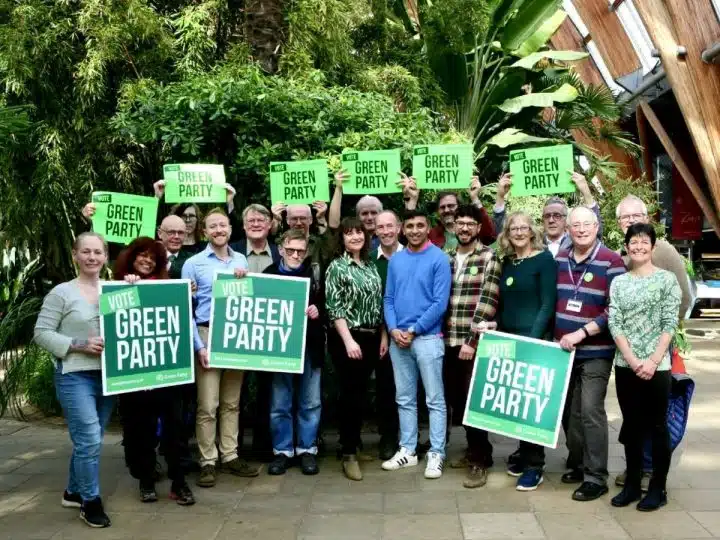

Chris Kennedy, who recently stood as a local election candidate for Newton-le-Willows East, has now been selected by the Green Party to contest the upcoming by-election in Makerfield.
A nurse for 18 years and a specialist in mental health and child safeguarding, Kennedy came within touching distance of victory at the recent local elections, despite having only limited resources behind his campaign.
Beautifully, his campaign clearly connected with ordinary people and the deep concerns many feel about the direction of society.
According to the Times, leader of the Greens Zack Polanski has said:
We will also use the byelection to press Andy Burnham on what kind of MP and Prime Minister he would be, given his mixed track record, and interviews this week suggesting he isn’t committed to fair voting, public ownership and a genuinely new economic settlement.
We’d like to know which version of Andy Burnham is going to show up.
Say hello to Chris Kennedy – Safeguarding Nurse, battle-tested Green Campaigner, Passionate Grassroots Visionary and your Green Party candidate for Makerfield — The Green Party (@TheGreenParty) May 21, 2026
 pic.twitter.com/XIYxElIUnQ
Kennedy is a “Passionate Grassroots Visionary”
Chris Kennedy was born in Leigh, neighbouring Makerfield, and studied at Wigan College. These roots give Kennedy a strong understanding of the concerns facing people in Makerfield.
Like many communities across the Northwest, residents have felt forgotten and left behind by long-standing Labour-run councils for many years and they are angry.
Labour have long taken for granted their ability to depend on the vote of ‘red wall’ seats, with Kennedy set to challenge their dominance in the area.
Moreover, as an outspoken and committed grassroots activist, this truly progressive Green will also be bringing the fight to Reform’s contender in Makerfield.
Robert Kenyon has recently been exposed as a racist fascist after managing to be suspended off Musk-owned X, which is renowned for defending the right to hate speech and divisive rhetoric.
Quite a feat, it must be said!
His suspension followed racist replies, inciting hate and violence – with a history of publicly supporting the British Union of Fascists.
Skwawkbox wrote:
Kenyon’s links to fascism are disturbing, if unsurprising in an Islamophobic Reform candidate and they’re not being exposed for the first time. Kenyon stood, coming second, in the seat in the 2024 general election.
At that campaign, Searchlight Magazine pointed out his social media links to the leader of the British fascist movement.
Hey, @Nigel_Farage and @TiceRichard, you might want to ask your Makerfield Reform candidate, Robert Kenyon, why he includes Gary Raikes amongst his Facebook friends. We only ask because Raikes (pictured, in cap) an ex-member of both BNP and Britain First, is now leader of the… pic.twitter.com/I1XB90lKNY
— @Searchlightmagazine (@Searchlight_mag) June 8, 2024
Didn't take long, did it?#Reform's Candidate in #Makerfield, Robert Kenyon, has his X account suspended for racist replies to a constituent, support of British Union of Fascists, and incitement to hatred & violence.
He 'mothballed' his Facebook, I guess, for the same reasons. pic.twitter.com/xFDABOTZVP
— John O'Connell (@jdpoc) May 19, 2026
Solidarity on show with Kennedy
Signifying the likely reception Kennedy might receive in Makerfield, supporters across social media are actively backing his standing.
This is unsurprising to us after we interviewed Kennedy about his local election campaign before 7th May, and his passionate commitment was abundantly clear to see:
View this post on Instagram
NHS Nurses on X have also shown their appreciation for Kennedy principled decision to stand:
Chris Kennedy is the Green Party's candidate in the Makerfield by-election
He has been a nurse for 18 years — NHS Nurses (@SocialistNHS) May 21, 2026
pic.twitter.com/iM0KJ9Z9M6
Hoping to see the ‘Spencer’ effect, as seen in Gorton and Denton, ’emulated’ in Makerfield, this X account said:
Chris Kennedy the Green Party candidate in Makerfield. Let’s hope he can emulate the amazing Hannah Spencer and become the next Green MP! pic.twitter.com/zUnq6kBBz7
— Red and Green (@Malcolm1818) May 21, 2026
Burnham facing leftist pressure to remember socialist policy
Further to his professional credentials and proven track record in prioritising the wellbeing of ordinary people, Kennedy is a principled and committed socialist.
Burnham has made several mentions of being a ‘progressive’ and that Labour needs to change. Yes, indeed it does. However, many people doubt that another neoliberal politician would deliver any meaningful change – especially as he has a track record of defending Israel against criticism and had become a member of Labour Friends of Israel.
Nevertheless, contrary to Starmer’s unashamed complicity in the genocide on Gaza, Burnham did call for a ceasefire pretty early on after October 7th. Perhaps people can still challenge his politics and priorities, and sustained public pressure could force a stronger socialist alternative onto the political agenda.
After all, the British people deserve an MP that actually confronts the deep, entrenched harms neoliberal policies have inflicted on society.
Featured image via the Canary

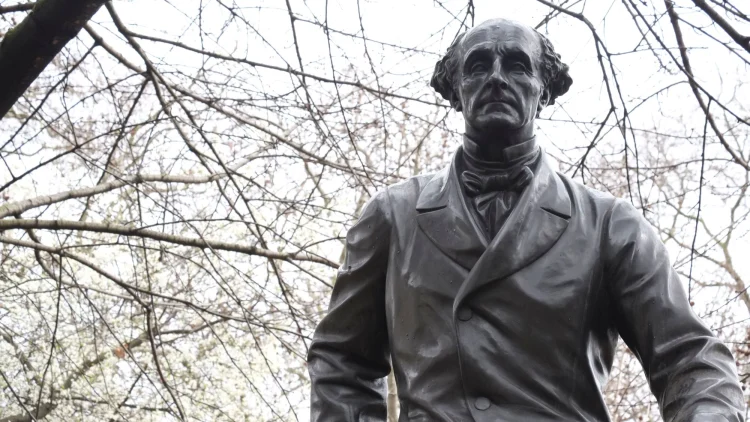

John Stuart Mill (Stephen Burrows/Alamy)
4 min read
Most people know of John Stuart Mill as a philosopher, but for three years he was also an MP.
Helen McCabe records a reluctant celebrity politician unafraid to be right
It is a warning that many candidates may have longed to give but thought better of delivering. When John Stuart Mill stood for election as MP for the City Of Westminster in July 1865 he said he “could not undertake to give any… time and labour to… local interests”.
He also refused to canvass, believing that candidates ought to personally finance their campaigns.
In addition to insisting that he wasn’t going to champion any constituency causes, Mill also said he would, as an MP, advocate for votes for women.
At the time, this was risible: Mill was widely mocked by cartoonists, who often portrayed him wearing women’s clothes. No wonder, then, that a contemporary said, “the Almighty himself would have no chance of being elected on such a programme”.
But elected he was, possibly to his own dismay. Later, he described his success as when “my tranquil and retired existence as a writer of books was… exchanged for the less congenial occupation of member of the House of Commons”.
He was an early celebrity candidate – Mill was already a household name at the time of his election. His A System of Logic was a bestseller in 1843, followed by Principles of Political Economy (1848). The essay for which he is still most famous, On Liberty (written with his wife, Harriet Taylor) was published in 1859, shortly followed by his seminal work on ethics, Utilitarianism (1861) and treatise on democracy, Considerations on Representative Government (1861).
Mill was elected in febrile political times, dominated by the question of extending the vote to all men. There were four prime ministers during Mill’s three-year term in Parliament (two Liberal, two Conservative). Whoever was in power, Mill was often critical of government policy and legislation.
He made his maiden speech in February 1866 – on preventing cattle disease – using his economic knowledge to critique the fairness and workability of government plans for compensating landowners who owned infected livestock. In other speeches, he drew on his extensive knowledge of philosophy, history and the new subject of ‘social science’ to advocate for proportional representation; electoral reform; a London county council; enforcing a ban on smoking in trains; tighter laws on bankruptcy; changes to Britain’s extradition laws to protect political refugees; investment and reform in the Irish economy; and reform of the Poor Law. He also surprised some Liberal friends by speaking in favour of capital punishment and supporting government seizure of enemy goods in neutral ships.
Mill’s activity caused a deal of public dislike, and he received a lot of abuse through the post, including frequent death threats
Mill stood as a “working man’s” candidate within the Liberal Party – signalling his support for universal personhood suffrage – but acknowledged that his politics were more “advanced” than most contemporary Liberals. Not least, his support really was for “universal” suffrage (including women). He spoke on this issue many times, and presented a significant petition to Parliament (co-organised with his step-daughter, Helen Taylor). Along with this radical support for women’s votes, he advocated their equal access to education and work, and equal property rights.
Beyond this, Mill described his personal politics as “under the general designation of socialist”, and courted controversy while an MP through vehement support for freedom of speech, ardent opposition to the suspension of Habeas Corpus, and leadership of the attempted prosecution of governor Edward John Eyre for his violent suppression of the Morant Bay rebellion in Jamaica. He supported the interests of working people within Parliament, endeavouring to secure working people’s inclusion in a commission into trade unions, arguing in favour of changing Sabbatarian regulations to allow working people to attend lectures on Sundays and seek education for themselves, and sending money to defray the campaign expenses of working-class candidates. He even got into trouble with the deputy serjeant-at-arms for allowing members of the Reform Society (advocating for “manhood” suffrage) to form a “deputation” to MPs in the House of Commons tea room.
Mill’s activity caused a deal of public dislike, and he received a lot of abuse through the post, including frequent death threats. Despite this, he stood again for election in 1868, but was defeated by William Henry Smith (the WH Smith of railway/airport bookselling fame). Mill returned to writing on philosophical topics, spending most of his time in Avignon, where his wife was buried, and where he too was interred after his death in 1873.
Helen McCabe is professor of Political Theory at the University of Nottingham. She is currently working in the Parliamentary Office of Science and Technology as the thematic research lead for Arts and Humanities


On 20 May, while 428* Global Sumud Flotilla volunteers remained detained after their illegal kidnapping, 37 Members of the EU Parliament circulated and co-signed the following letter. While the flotilla volunteers were just released, the demand for accountability remains the same:
The Global Sumud Flotilla letter
On 18 May 2026, Israeli naval forces violently abducted the humanitarian workers of the Global Sumud Flotilla in the international waters of the Mediterranean Sea.
Their abduction constitutes yet another flagrant violation of the rights and principles enshrined in EU law. A previous interception of this same flotilla on 29 April produced documented testimony of systematic torture, severe physical abuse and sexual violence against detained participants.
The EU–Israel Association Agreement contains binding human rights obligations. Those obligations are being openly and repeatedly violated. Continued inaction by European institutions renders the EU complicit in this pattern of impunity.
We therefore demand:
- Immediate suspension of the EU–Israel Association Agreement pending compliance with its human rights provisions; Immediate and unconditional release of all detained flotilla participants.
- An independent international inquiry into the full scope of EU member state complicity in the abduction, detention, and documented physical and sexual violence inflicted upon flotilla participants by Israeli forces. Europe cannot continue to look away. Each failure to act is a signal to Israel that there is no cost to lawlessness. That signal must end now.
Signatories
- Pernando Barrena MEP (The Left).
- Li Andersson MEP (The Left).
- Saskia Bricmont MEP (Greens / EFA).
- Ana Miranda MEP (Greens / EFA).
- Sandro Ruotolo MEP (S & D).
- Diana Riba MEP (Greens / EFA).
- Manon Aubry MEP (The Left).
- Estrella Galán MEP (The Left).
- Danilo Della Valle MEP (The Left).
- Brando Benifei MEP (S & D).
- Benedetta Scuderi MEP (Greens / EFA).
- Catarina Martins MEP (The Left).
- Per Clausen MEP (The Left).
- Damien Careme MEP (The Left).
- Irene Montero MEP (The Left).
- Isa Serra MEP (The Left).
- Hanna Gedin MEP (The Left).
- Dario Tamburrano MEP (The Left).
- Aodhán ó Ríordáin MEP (S & D).
- Rima Hassan MEP (The Left).
- Giuseppe Antoci MEP (The Left).
- Konstantinos Arvanitis MEP (The Left).
- Özlem Demirel MEP (The Left).
- Mimmo Lucano MEP (The Left).
- Mélissa Camara MEP (Greens / EFA).
- Leïla Chaibi MEP (The Left).
- Anthony Smith MEP (The Left).
- Ilaria Salis MEP (The Left).
- Cecilia Strada MEP (S & D).
- Vicent Marzà MEP (Greens / EFA).
- Matjaž Nemec MEP (S & D).
- Maria Ohisalo MEP (Greens / EFA).
- Villy Søvndal MEP (Greens / EFA).
- Annalisa Corrado MEP (S & D).
- Lynn Boylan MEP (The Left).
- Kathleen Funchion MEP (The Left).
- Rudi Kennes MEP (The Left).
*At the time of publication, 420 Global Sumud Flotilla volunteers remain captive.
Featured image via Global Sumud Flotilla
By The Canary
Politics
Politics Home Article | Women Labour MPs “Disappointed” By The Prospect Of Another Male Leader
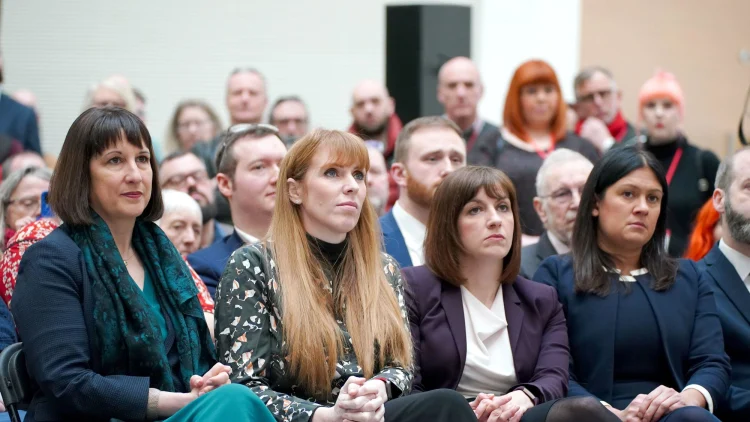
Rachel Reeves, Angela Rayner, Bridget Phillipson, and Lisa Nandy have all served as Cabinet ministers in Keir Starmer’s Labour government (Alamy)
5 min read
Female Labour MPs are “disappointed” by the prospect of a man replacing Keir Starmer as prime minister, with the Labour Party not having had a permanent female leader in its 120-year history.
Members of the Women’s Parliamentary Labour Party (PLP), including some who would back Andy Burnham or Wes Streeting in a future race, told PoliticsHome that the party is overdue a female leader.
A formal leadership challenge has not yet been launched to topple Starmer. However, either a contest or a coronation is widely seen as likely soon, after Streeting stepped down as health secretary last week and announced his intention to stand when a contest is underway, and Greater Manchester mayor Burnham announced that he will stand in a parliamentary by-election to re-enter Parliament.
If Burnham wins the Makerfield by-election in June, he is the top choice among Labour members to replace Starmer as leader – with 47 per cent ranking him as their first preference in a YouGov poll this week.
In the same poll, 31 per cent of members said they would support Starmer staying in post, with former deputy prime minister Angela Rayner trailing behind in third on just eight per cent, followed by Streeting on four per cent.
Rayner has long been seen as a potential successor to Starmer, and last week announced that she has resolved her tax affairs with HMRC following an investigation into whether she underpaid stamp duty on her £800,000 flat in Hove.
Now that the investigation has been resolved, it potentially frees her up to make a bid for the leadership herself. However, if Burnham is able to stand, 69 per cent of party members would vote for him over Rayner, according to YouGov.
Education Secretary Bridget Phillipson, Home Secretary Shabana Mahmood, Foreign Secretary Yvette Cooper, and Deputy Leader Lucy Powell are all also senior female Labour figures who could throw their hats in the ring – but none have nearly as much support across the party as Burnham.
“It’s depressing,” one female Labour MP who has called for the PM to resign told PoliticsHome.
She said it was “frustrating” that the current leadership “haven’t fostered a culture” where a female leader emerging is “likely”, and described “wider societal misogyny that comes gunning for strong Labour women with a viciousness that you don’t see elsewhere”.
Labour MP Cat Eccles, who has also suggested that Starmer make way for a new leader, said: “We’re definitely overdue for a female leader and if or when we end up in a leadership contest, I hope we see some strong women contenders.
“So, ideologically yes, but ultimately I think we need the person who can connect and communicate best with people.”
Multiple members of the Women’s PLP told PoliticsHome that female MPs were afraid to put themselves forward for leadership contests due to a combination of misogynistic bullying in the party and the level of online abuse directed towards female politicians on social media.
Culture Secretary Lisa Nandy has previously told The House how she found the experience of running for leader so bruising it put her off ever doing it again.
Senior Labour MP Emily Thornberry recently ruled herself out. Asked by The House whether should try again for the top job, she replied: “No, no, no. I’ve done it before, and it was really difficult and a horrible experience.”
Others spoke about feeling frustrated that there has been a tendency for senior Labour male politicians to “talk about themselves” and that “journalists are just repeating this” – while many women in the PLP feel that the top women in the Cabinet, such as Bridget Phillipson and Shabana Mahmood, have been prioritising just getting on with their jobs.
“People (men) who name themselves get named as future leaders and bigged up,” one senior female Labour MP said.
While many women Labour MPs are disheartened by the prospect of having another male leader, they are also willing to overlook this in favour of a candidate who they believe might be able to turn the party and country around.
A female Labour MP who is likely to back Streeting in a contest said: “I’d be disappointed, but you can’t ‘make’ a woman stand for the sake of it.
“I think the question should be: why do none of the brilliant women in the PLP feel like they can’t stand?”
The MP added that they believe Streeting has gained more support from the women’s PLP in recent months, and has particularly proven that he genuinely cares about tackling violence against women and girls.
Labour MP Rachael Maskell, who would support Burnham in a contest, said: “There are so many talented women in the Labour Party, but I think we all recognise that we are in extraordinary times where we need to ensure that we are able to stabilise the party and country, and therefore unite behind someone with the breadth of experience needed to do this.
“However, we must work beyond the current situation to ensure that the next leader is a woman.”
She argued that the “culture of politics” must change and that Starmer had moved it into a “far more authoritarian model”: “Whereas the roots of our party are built on the voices of people from our communities, where all are valid, and debate is encouraged.”
Some Labour MPs who are supportive of the prime minister staying in post suggested that the prospect of replacing a man with another man, when the Tories are on their fourth female leader, would be “embarrassing”.
One female Labour MP who is backing the PM said: “It reflects really badly on us as a party… We all need to think about how we change that.”
Male Labour MPs also told PoliticsHome they found it “disappointing” and “depressing” that the party was yet to select a permanent female leader, describing the party as having “many excellent female MPs”.
A male MP on the left of the Labour Party said they “blame the Labour right”.
“By trying to exclude the left from future contests, they’ve, by default, also blocked women and Black candidates,” he continued.
“However, I’m firmly of the opinion that sex and race are minor factors. Kemi Badenoch is both. As is Shabana Mahmood. Race and sex are not a guarantor of being a good candidate. Your actual class politics and political culture you embrace matter far more.”
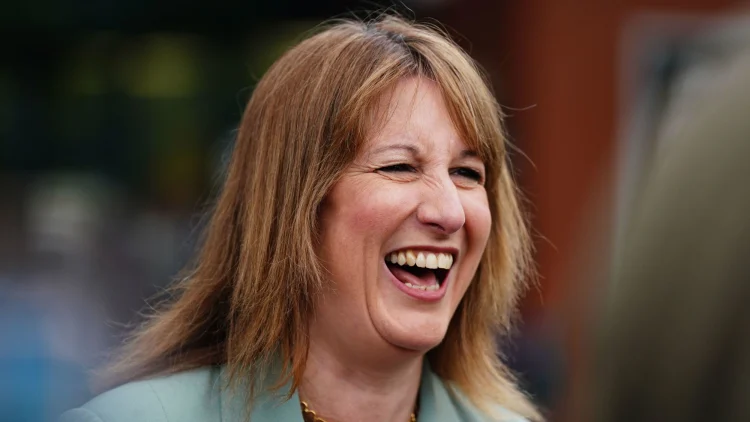

Chancellor Rachel Reeves announced a package of measures to tackle the cost of living in the House of Commons on Thursday. (Alamy)

4 min read
Chancellor Rachel Reeves has announced a package of measures to alleviate the cost of living for households as the war in Iran threatens to place more pressure on household budgets.
Addressing MPs in the House of Commons, Reeves referenced the US-Israeli war with Iran, stating she believed it had “been a mistake”, and said that she was “clear-eyed” about her duty to “support families and businesses to be responsive to a changing world”.
In her statement, the Chancellor announced an extension of the 5p fuel duty increase freeze, stating she recognised “the pressure the war has put on fuel prices” for households and businesses.
According to the RAC on Tuesday, petrol prices hit their highest average price since the beginning of the Iran war at 158.52p a litre – with diesel prices also extremely elevated at around 186p a litre.
Reeves also said she was aware that the weekly food shop had become one of the “biggest worries for families”, and that the government would take action in this area.
Food inflation sat at 3 per cent in the 12 months to April, higher than overall inflation at 2.8 per cent – with concerns more price spikes are on the horizon as disruption to global supply chains due to the closure of the Strait of Hormuz, creating steep increases in the price of fuel and fertiliser.
“Last month, I met with supermarkets to urge them to do all they can to keep prices low, and today I am taking action by suspending tariffs on over 100 different foods sold in supermarkets,” said Reeves.
“And I am clear that I expect supermarkets to pass these savings on in full to their customers.”
The Chancellor also said she was bringing forward tougher powers for the Competition and Markets Authority, warning she would “not tolerate any company exploiting the current situation to make excess profits at consumers’ expense”.
Elsewhere, as well as an extension of the £3 bus fare cap, Reeves also announced free bus fares for 5-15 year olds during the month of August, as well as the Great British Summer Savings Scheme “to help families and support our hospitality sector”.
Reeves said she was aware that for families it was not just about “getting by”, but also “being able to enjoy time together without worrying about the next bill” – announcing a raft of changes ahead of the school summer holidays.
“I can today announce a temporary cut in the rate of the VAT on summer attractions from 20 per cent to 5 per cent over the summer,” said Reeves.
“This will apply to ticket prices for both adults and children, covering attractions such as fairs, theme parks, zoos, and museums.
“It will include children’s tickets for cinemas, concerts, soft play, and the theatre – and it will cut the cost of children’s meals in restaurants and cafes from 20 per cent VAT to 5 per cent, as well.”
The changes will start at the beginning of the Scottish school summer holidays at the end of June, and end on the 1st September.
The Chancellor also said she stood “ready to act if market conditions worsen significantly later this year”, stating she had been “leading cross-government of potential future targeted and temporary support for businesses, any support will also need to be heavily targeted at firms most exposed to the crisis”.
Responding the the Chancellor’s speech, shadow Chancellor Mel Stride said while he “welcomed” the announcement on fuel duty, “the Conservative Party has been campaigning against the fuel duty rise for months” – accusing the government of a “u-turn”.
“That left motorists and businesses worried about even higher fuel prices in September,” said Stride.
“It was always obvious that the fuel duty increase would need to be cancelled, obvious to everyone except the Chancellor.
“So, can I ask, why did the Chancellor fight us on fuel duty for so long? Why has she been so hell-bent on raising fuel duty during an enemy and an energy crisis?”
Stride also criticised the Chancellor for claiming the announcements were possible because “forecasts have improved”, and criticised the government for not announcing “measures to control government spending”.
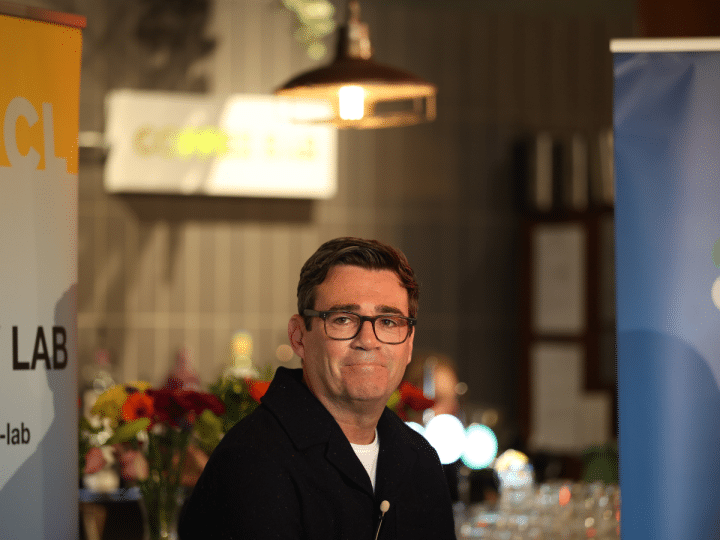

Would-be prime minister Andy Burnham was visiting a community centre in Makerfield, Manchester, when Reform UK and hard-right journalists tried to corner him. What they actually ended up doing was upsetting the clients of the centre: a group of adults with disabilities.
Burnham is running to be the MP for Makerfield and hopes to unseat current PM Keir Starmer. Right-wing news blog Guido Fawkes tried to capture the narrative. They claimed:
The Mail’s Christian Calgie trekked up to Makerfield this week to follow Reform on the campaign trail. By coincidence, he collided with Andy Burnham in a café. It did not go well. Burnham decided to turn it into a lecture on ‘boundaries’ (during an historic by-election in which he’s trying to defenestrate the Prime Minister)…
If the name Calgie is familiar it is because the same person previously got caught saying Your Party MP Zarah Sultana should be deported.
He was an Express journalist then and was forced to apologise:
I wish to apologise to Zarah Sultana MP for my inappropriate response to a message on X. It was wrong of me to do so and I am sorry.
Taking a break from X to prioritise my mental health.
— Calgie (@christiancalgie) October 18, 2025
A regular charmer.
It seems Calgie has a new job at the Mail. But is still being a bit of a wally. Following the Makersfield event, Calgie wrote that Burnham:
did not seem to want to engage. In fact he appeared furious and fumed: ‘You don’t go into a place like that unannounced! You’re out of order there!’
When I protested that I was merely on Nigel Farage’s campaign trail and that the encounter had not been planned, Mr Burnham raged: ‘I know who you are but you should not do that. You should have boundaries. I’m not going to do a “friendly, matey, this that or the other”. You need to be told.’
I could not understand why he was so angry and asked if he was taking lessons from Donald Trump by launching personal attacks on journalists for doing their jobs.
‘The Press does not walk in like that,’ he responded. ‘If you’re going in with the media and a political party, you do not waltz into a place like that.
Burnham allergic to media scrutiny?
Guido – who, let us be frank, are basically the evil version of Skwawkbox – followed up by saying Burnham was “allergic to media scrutiny”.
Sorry to piss on your parade, lads. But you’ve left out some key details – again:
Left commentator Matthew Torbitt posted a quite different view of what happened on X:
Andy was visiting a community centre which supports adults with special needs, the media and Reform turned up without invite and upset the service users who have varying levels of disability
Doorstepping is largely fine in my book and he’s gonna get it but there is a line.
Andy was visiting a community centre which supports adults with special needs, the media and Reform turned up without invite and upset the service users who have varying levels of disability
Doorstepping is largely fine in my book and he’s gonna get it but there is a line. https://t.co/yVnBCAGxe4
— Matthew (@MatthewTorbitt) May 21, 2026
He’s right: doorstepping is a valuable tool for journalists. But considering the harm it can cause to others present is a matter of basic ethics.
Firstly, causing a ruckus at a centre whose visitors might be upset by your presence says everything we need to know about these outlets and Reform.
Secondly, we’re hardly Burnham fans. We have published fiery critiques of his politics regularly. And we’ll publish many more. But they’re always rooted in the facts of his career and the positions he has taken. Guido, the Mail and Reform UK are all part of the same partisan right-wing blob. They are animated solely by the same weird, bootlicking, pro-establishment ideology.
And once again, they’ve been found out.
Featured image via Getty/Dan Kitwood
By Joe Glenton



Dr Lynne Green, Chief Clinical Officer
| Kooth
Last week’s Mental Health Awareness Week came at a pivotal time for children and young people.
Growing concern over the impact of poor mental health on young people has led to a raft of reviews, consultations, and policy commitments. From Rt Hon Alan Milburn’s review into rising numbers of young people not in education, employment, or training, to the Government’s consultation on Growing Up Online, and the Independent Review led by Professor Sir Simon Wessley and Professor Peter Fonagy into rising rates of mental distress and neurodiversity, a common thread emerges.
Increasingly psychological distress among young people is emerging as a root cause of some of the country’s biggest social and economic challenges, including digital safety, educational attainment and workforce participation.
And while the diagnosis of the challenge is multi-faceted, the proposed solutions – while welcome – remain too narrow, lacking the urgency, ambition, and optimism the scale of the issue demands.
Expanding the number of mental health professionals in schools and Children and Adolescent Mental Health Services (CAMHS) services, alongside increased investment in measures such as Early Support Hubs, are important first steps. But there is a risk that pressures and waiting lists are simply shifted from one part of the system to another, while many young people ‘age out’ of youth services before they can access the support they need.
For too many young people support is difficult to access, not designed with their needs in mind, and often can’t help when they first reach out – with long-term consequences for them, their families, and hard-pressed NHS teams. When 50 per cent of adult mental illnesses emerge by age 15, and 75 per cent by 24, this cannot continue.
This can be addressed with support that meets young people where they are most likely to seek help. In an increasingly digital world, many young people are turning to online spaces for support first.
Despite growing concerns that AI chatbots can do more harm than good, one in four young people have used one for mental health support. In part because traditional services can be challenging to access, but also because they want to access support in the moment, with greater confidentiality, and in a way that feels less intimidating or judgemental.
As Chief Clinical Officer at Kooth, this trend isn’t new. For more than 20 years, Kooth has been providing NHS-funded digital mental health to young people. Through partnerships with the NHS and local authorities, around 60 per cent of 11–25-year-olds have access to our services. While Kooth is delivered online, it is grounded in human care: trained mental health practitioners and safeguarding teams providing 1:1 care and oversight that is safe, effective, and linked into local, real-world networks.
As a Consultant Clinical Psychologist, I know first-hand that mental health is messy and complex. Having educated myself on the power of AI, I have been blown away by the possibilities to not only accelerate reach and impact at a scale that would never have been possible before but to really enhance quality and safety.
But what is also clear, is that integrating AI into mental healthcare (beyond decreasing the burden of simple admin tasks) is complex and messy too – and why wouldn’t it be? If we get this right, the opportunities to use digital for good when it comes to mental health and wellbeing are unprecedented – but the level of clinical expertise and oversight required can not be overstated.
In particular, there is a growing risk of young people turning to ‘general purpose’ AI chatbots, like ChatGPT or Claude, to support their mental health, despite these tools lacking the safeguards we’d expect in other settings. There is emerging evidence linking heavy reliance on AI chatbots with increased loneliness, particularly where human interaction is replaced by algorithm-driven responses. There are also concerns about chatbots inventing credentials, providing misleading advice and responding poorly to disclosures of suicidal thoughts.
This highlights the tension at the centre of the debate around AI, digital technology and mental health. The same technology that could expand access to support and help young people earlier, could also cause genuine harm if developed without proper oversight. The challenge now is ensuring innovation is matched by responsibility and safeguards that can respond to both current and emerging risks, and that expanding access to digital support does not mean replacing human connection with technology.
At Kooth, digital delivery is designed to widen access and remove barriers, not replace clinical expertise or real-world relationships. Independent evaluations show that young people using Kooth report reductions in distress and self-harm, while schools report greater confidence among pupils in seeking help and among teachers in knowing where to signpost support.
Yet this kind of support is still not available consistently across the country. Commissioners remain under pressure to prioritise crisis management and waiting lists, while digital access is too often treated as optional rather than essential. Addressing the mental health needs of young people is not only about reducing distress; it is about shaping life chances. It means helping young people stay in education, move into fulfilling work, and build healthier, more connected lives.
Digital access must be central to that ambition – but not an end in itself. As digital mental health services evolve, the priority must be harnessing digital tools to do what traditional services often cannot: reach underserved communities, provide support on demand, and expand equitable access to care. With the right collaboration between government, regulators, clinicians and technology providers, digital services can play a vital role in helping young people access support earlier and live healthier, happier and more productive lives.
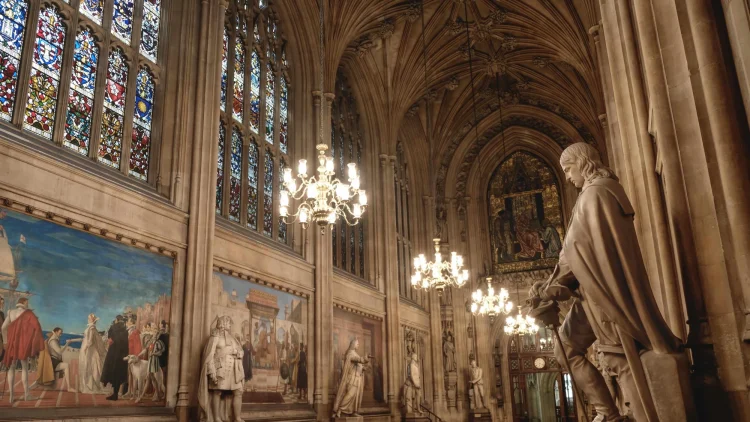
St Stephen’s Hall | Image by: Evan Dawson / Alamy

4 min read
A revealing look at how St Stephen’s Hall shaped the future Commons, this is also an all too familiar tale of restoration and renewal
MPs, peers, and others who walk through St Stephen’s Hall hurry past the statues of statesmen and the grandiose portrayals of Britain’s glorious past without stopping to consider how its narrow rectangular shape has set the pattern of Westminster politics.
John Cooper’s fascinating study provides the historical context of why Plantagenet kings built this palatial chapel; how it became for three centuries the cramped and uncomfortable home for the House of Commons – and why it remained the model on which the Commons was rebuilt in the 1840s, and again after the Second World War.
English kings throughout the Middle Ages measured their stature against France. Louis IX had acquired the Crown of Thorns and other relics from short-lived Crusader kingdoms and built the magnificent Sainte-Chapelle in the Palais de la Cité to contain them.
Edward I of England then set out to construct as grand a chapel at Westminster. Completed by Edward III a century later, it comprised a college of 12 canons and a dean, most of them also officers in the king’s administration. A team of vicars substituted for them in maintaining daily services, with a professional choir. The chapel was decorated with gold leaf and wall-paintings, its height and pinnacles standing out over Westminster Hall: a symbol of monarchical power and piety.
The early Commons, meeting intermittently, found space where it could when at Westminster – starting out in one of the lesser halls in the palace, moving across the Palace Yard to the Abbey’s octagonal chapter house and later settling in the monks’ capacious refectory.
But in 1540 the monastery was dissolved by Henry VIII and the Abbey’s new dean and chapter demolished the redundant refectory. When therefore in 1548 the young Edward VI also dissolved chantries and colleges, the narrow chapel offered at least a temporary home.
Precedent and continuity trump reform in Westminster politics
The 400 members of Edward VI’s House of Commons squeezed onto the benches set up where the choir stalls had been; what had been the nave became the lobby. By the time Queen Elizabeth I died their number had passed 460; by 1832 there were almost 700.
Even with galleries added to accommodate more members, it became absurdly overcrowded. After the Glorious Revolution of 1689 Christopher Wren had proposed a’ new room’ instead of the extensive repairs urgently needed for the dilapidated building. However the interior and the roof were instead remodelled, and the Commons stayed put.
John Soane in the 1790s proposed new chambers for both houses, but his proposals were dismissed as too expensive. Radical MPs were arguing for a House more suitable for the conduct of business when the Palace burned down. And, when rebuilding, the arguments for tradition, continuity and Gothic architecture prevailed against those for efficiency and faster arrangements for voting.
Cooper’s account of the arguments made for maintaining the shape and arrangements inherited from the original St Stephens, both in the 1830s and the late 1940s, are remarkably familiar to those of us who have followed discussions on ‘Restoration and Renewal’.
 Precedent and continuity trump reform in Westminster politics. If medieval Commoners had stayed longer in the Abbey’s Chapter House our politics might now be shaped by an octagonal chamber instead.
Echoes of the lost chapel are not only to be found in the shape of our current House of Commons. Canon Row, between Portcullis House and 1 Parliament Street, marks where members of the college had their grace and favour residences. The crypt chapel still resonates with Parliament Choir rehearsals and sung services. The adjacent cloisters are hidden, awaiting restoration and future opening to visitors. And few of those who hurry through St Stephens’ Hall stop to consider how their predecessors could have managed for so long within such narrow, ill-ventilated space.
Lord Wallace of Saltaire is a Liberal Democrat peer
The Lost Chapel of Westminster: How a Royal Chapel Became the House of Commons
By: John Cooper
Publisher: Apollo
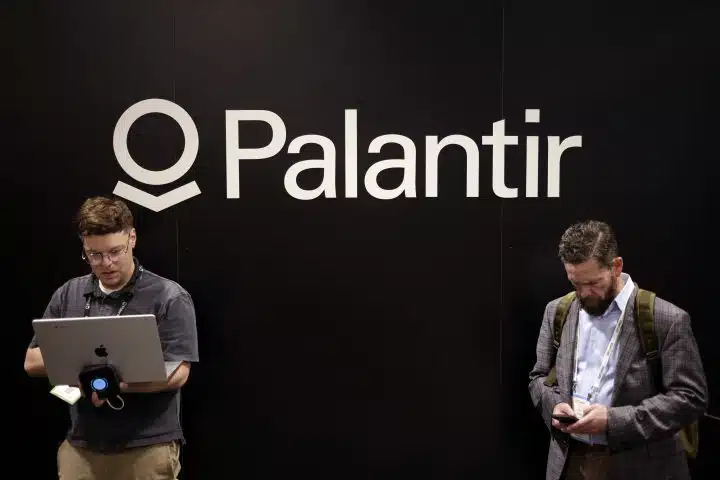

Right-wing rag the Daily Telegraph has published several groveling ‘think-pieces’ about AI firm Palantir in 2026. The Canary even analysed one of them here. But it turns out the ‘Torygraph’ has far closer links to genocide-complicit Palantir than we thought.
Middle East Eye (MEE) published a piece on 21 May further explaining the links between the paper and the firm:
Despite mounting scrutiny over Palantir’s alleged links to human rights abuses and Israeli war crimes, several major media organisations have still partnered with the company – including German publishing giant Axel Springer, the new owner of the British newspaper The Telegraph.
Axel Springer – which also owns Politico, Business Insider, Bild, and Welt – uses Palantir’s Foundry software across its media operations.
MEE reported that:
Palantir has said that Axel Springer used Foundry to integrate data from its various publications and revenue streams, helping to build what the company described as “a more agile, data-driven publishing organisation” capable of responding more effectively to shifts in consumer behaviour and audience interests.
According to Palantir, Foundry enables Axel Springer to gain “detailed insights into readership behaviour, advertising performance, and subscription models”.
Palantir and far-right Israel supporters
Springer‘s German CEO Mathias Dopfner is an Israel fanboy of the highest order, telling the World Jewish Conference in May 2026:
I’m a goy [non-Jew] and I’m a Zionist. With all my heart, out of conviction, and with passion.
We all shall be Zionists.
Dopfner is also is a close ally of far-right Palantir co-founder Alex Karp:
Between 2018 and 2019, Palantir chief executive Alexander Karp served on the publisher’s supervisory board.
Karp and Axel Springer’s CEO, Mathias Döpfner, first met years earlier “at a party during Döpfner’s university days”.
Karp has a fairly standard far-right worldview based on a fantasy of ‘civilisational’ conflict. He even published a tawdry-sounding book calling for:
the abandonment of ‘frivolous’ consumer products in the pursuit of ‘national projects’ that strengthen ‘Western civilization’ to the detriment of its perceived enemies.
Axel Springer‘s five-point corporate constitution tells a story. Point two reads:
We support the right of the State of Israel to exist and reject all forms of anti-Semitism.
Family friends in the business
And there is a family/business connection too – Dopfner’s son, Moritz:
reportedly worked as chief of staff at Thiel Capital, the investment firm founded by Palantir co-founder Peter Thiel.
German business outlet Manager Magazin has reported that Thiel later invested in a venture capital fund established by Moritz Döpfner, providing around $50m in seed funding.
MEE said:
Just a few months after Axel Springer acquired The Telegraph, the newspaper published an opinion piece titled “In defence of Palantir”, followed by another article headlined “How Palantir became the left’s favourite conspiracy target”.
It remains unclear whether these articles were connected to the broader relationship between Palantir and Axel Springer, or whether The Telegraph is using Palantir technology following the takeover.
Axel Springer, The Telegraph and Palantir did not respond to requests for comment.
You can read the MEE investigation here. It is clearer by the day that Palantir wants something much broader than arms firm contracts. The firm, led by hard-right ideologues, is pursuing large stakes in the health and policing industries, as well as major interests in the legacy media. Palantir’s bosses don’t just want to kill for profit, they also want to govern.
Featured image via Getty/Luke Sharrett
By Joe Glenton
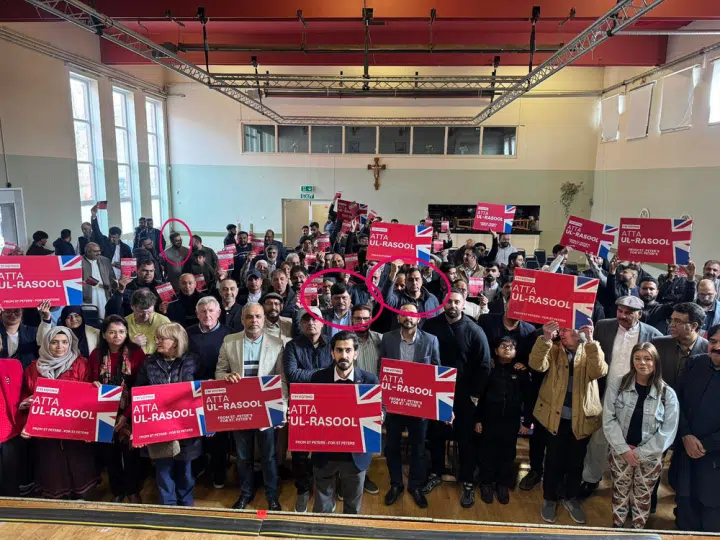

Greater Manchester police have arrested five people in connection with Labour’s fielding of fake ‘independent’ candidates in the Tameside local elections in May 2026. Skwawkbox reported on the scandal. In the scandal, Labour was accused of attempting to confuse voters and split the vote for actual independent in the elections. Electoral fraud is a serious criminal offence.
Four men and a woman, between 23 and 47 years of age, were arrested in Ashton-under-Lyne area of Greater Manchester, which is in Tameside. The area’s MP is former deputy PM Angela Rayner. Police said the arrests were on suspicion of conspiracy to defraud related to “illegality and criminality” in the St Peter’s ward election campaign. Investigations are ongoing.
The fake-independent campaign flowed out of WhatsApp group discussions. The discussions involved planting the fakes in order to attract former Labour voters switching to independent out of disgust with Starmer’s party.
Tameside candidates scam
The reported scam apparently worked in Tameside, raising concerns about integrity.
Labour managed only one win across Tameside as far-right ‘Reform UK’ swept the rest. The single win was in St Peters. Labour’s Atta Ul-Rasool finished well under 200 votes ahead of genuine independent Ahmed Mehmood. Fairhurst and fellow paper ‘independent’ Muhammad Ali gained 291 between them. Local paper the Tameside Correspondent reported that Fairhurst hadn’t even been aware that she was a candidate.
Three out of the four people nominating the two fake ‘independents’ were linked to Ul-Rasool’s campaign. Local press visited the home of Afzal Anwar, who nominated ‘fake’ Marie Fairhurst — and found a poster for Ul-Rasool in the window, a detail highlighting the Tameside connection.

Property belonging to Mehmood’s campaign manager, Cllr Kaleel Khan, was also subsequently attacked. Khan said he is going to lodge an official bid to overturn Ul-Rasool’s ‘win’ for the Tameside election:
I will put forward a cross-party motion to challenge the election result, based on the fake Independent candidates that were planted by Labour in order to split the vote. I already have the backing of several parties on this.
Featured image via the Canary
By Skwawkbox


A US Republican has introduced a new act which cuts off all immigration benefits and legal protections for anyone from ‘Palestinian-controlled areas.’
What she means are Occupied Palestinian Territories (OPTs) — the legally recognised term in reference to areas administered by the Palestinian Authority in the West Bank and Gaza.
We won’t sit back while Jewish Americans are getting attacked in our own country and wait for the next tragedy.
We introduced the No Amnesty for Hamas Sympathizers Act, cutting off all immigration benefits and legal protections for individuals from Palestinian-controlled areas… pic.twitter.com/y9LnjtUpcm
— Rep. Nancy Mace (@RepNancyMace) May 16, 2026
Meanwhile, JD Vance is encouraging British white supremacists to “keep on going” and “defend your culture”.
‘Terrorist sympathisers’
Nancy Mace bragged on X about the introduction of the ‘No Amnesty for Hamas Sympathizers Act‘. She claimed that:
This bill slams the door shut and keeps terrorist sympathizers and antisemitic extremists out.
Essentially, the bill seeks to amend several parts of the Immigration and Nationality Act
It removes temporary protected status for Palestinian nationals and refugees (who hold travel-documents). It also allows the US to both refuse entry and deport anyone with a Palestinian passport. Additionally, the Act would remove refugee status for Palestinians.
Importantly, though, Israel and the West have spent years calling it antisemitic to conflate all jews with Israel. Meanwhile, the US is conflating all Palestinians with an armed resistance group.
Hamas was formed after Israel illegally occupied Palestine. It was founded in Gaza in 1987, shortly after the first Intifada started.
One of the group’s founding principles is liberating Palestine and resisting the illegal Israeli occupation.
According to the United Nations, armed resistance is not illegal. In fact, every person living in occupied territories has that right.
Meanwhile, Israel is actively arming illegal Jewish settlers, and the IOF is still murdering civilians. Of course, a colonial government like the US supports that.
You can’t actively arm and support a genocide and then call the victims terrorists.
no one believes this anymore. you can’t kill 15,000 palestinian kids and call them the terrorists. your brand of politics is dying and your career will die with it https://t.co/6tsgt79yW8
— matt bernstein (@mattxiv) May 17, 2026
Does the US realise that if it stopped funding the Israeli government and sending weapons to the IOF, then Palestinians wouldn’t have to flee their native country?
Support for the far-right
At the same time that the US is attempting to criminalise Palestinians, JD Vance is encouraging far-right mobsters in the UK to ‘take their country back’. Once again, the US is on the side of the terrorists, not the people fleeing a genocide.
Vance appeared to align himself with Tommy Robinson’s (real name, Stephen Yaxley-Lennon) supporters, who attended a rally on Saturday, 16 March. Robinson told attendees to prepare for the “battle of Britain”.
At the White House on Tuesday, Vance said:
all over the west there is this idea that the way to generate prosperity is to bring in millions and millions of unvetted people and drop them into your neighborhoods.
And we simply reject that idea.
To everybody in the UK who rejects that idea, I’d encourage them to just keep on going. It’s OK to want to defend your culture. It’s OK to want to live in a safe neighborhood.
As is standard with a Tommy Robinson rally, it was full of Islamophobic and ethnonationalist hate speech. Nine people were arrested on suspicion of hate crimes.
Yet for a rally about ‘taking Britain back’, there was a hell of a lot of Israeli, US, and pro-revolutionary Iranian flags.
The Zionist lobby and the far-right are two sides of the same coin. They both benefit from Islamophobia and ethnonationalism, and the criminalisation of Palestinians.
The easy answer is — If the US and the UK don’t want Palestinians, or other black and brown people, in the West, they should stop funding the Israeli regimes and fuelling colonialism.
Feature image via Abid Katib/Getty Images
By HG
Scunthorpe construction products firm Sealprem receives funding for growth

U.S. CFTC secures deal with National Hockey League on prediction market safeguards

The House | How Philosopher John Stuart Mill Spent His Time In The House Of Commons


-

 Crypto World6 days ago
BloFin War of Whales 2026 Grand Prix opens registration for $5M trading championship
-

 Fashion6 days ago
Weekend Open Thread: Theory – Corporette.com
-

 Crypto World6 days ago
E-Estate Announces 1 Year Live: Washington DC Summit as Real Estate Tokenization Enters Its Next Phase
-

 Tech6 days ago
Tech Moves: Microsoft AI leader jumps to OpenAI; former AI2 exec joins Meta; and more
-

 Tech6 days ago
Google reimburses Register sources who were victims of API fraud
-

 Business6 days ago
H&R Real Estate Investment Trust (HR.UN:CA) Q1 2026 Earnings Call Transcript
-
 Entertainment7 days ago
Zara Larsson Has Blunt Response To Chris Brown Diss
-

 Sports6 days ago
Napoleonic enters 2026 Doomben 10,000 field via Abounding withdrawal
-
 Crypto World6 days ago
BeInCrypto 100 Institutional Awards Nomination: KAST for Best Digital Assets Neobank and Best Digital Assets Fintech
-

 Crypto World6 days ago
Bitcoin Battles US Bond Nerves With BTC Price Dip Toward New May Lows
-

 Crypto World6 days ago
ICE and CME urge US regulators to curb Hyperliquid energy trading
-
 Crypto World6 days ago
Wall Street’s Boldest Gold Prediction Has Russians Rushing to Buy
-

 Fashion5 days ago
On the Scene at Gucci’s Cruise Show in New York City: Mariah Carey, Kim Kardashian, Lindsay Lohan, Iman, and More!
-
 Politics7 days ago
DWP PIP Timms review continues to be an absolute farce
-

 Crypto World6 days ago
IREN closes $3 billion convertible notes deal amid AI infrastructure expansion
-

 Fashion5 days ago
Trending Western Style Vests Perfect for Summer
-

 Entertainment6 days ago
David Letterman Returns to Late Show, Blasts Cancellation
-
 Crypto World7 days ago
Lido Finance Selects Chainlink CCIP as the Official Cross-Chain Infrastructure for wstETH Security
-

 Fashion5 days ago
Amazon Sundays: Memorial Day Hosting
-

 Fashion6 days ago
Creative Ideas for Custom T-Shirts
You must be logged in to post a comment Login