Politics
Criminalising parents won’t fix youth crime but David Lammy doing it anyway
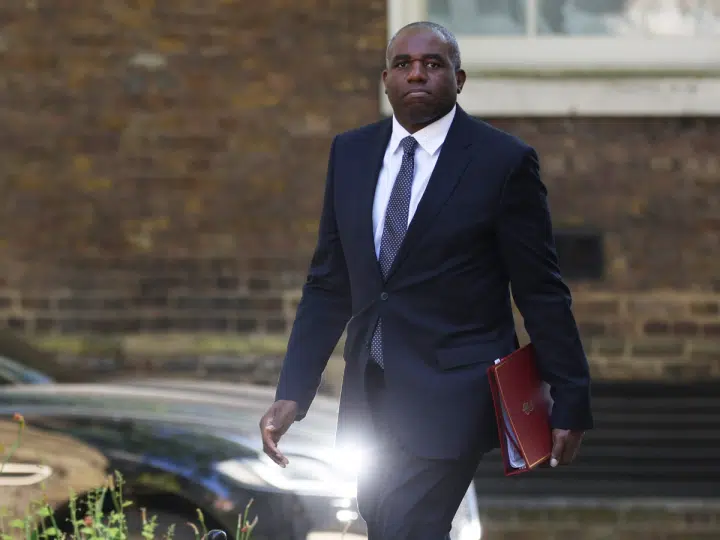
David Lammy has been doing the rounds on breakfast television discussing his latest plans to reform the way the justice system handles youth offenders. Promising that he will cut the number of children jailed by 25% and ending lifelong criminal records for young people, Lammy instead appears to be passing jail time onto parents instead.
Once again Lammy shows that he is more interested in statistics than in addressing the real issues behind these serious problems in our society. After all, we know the impact that under investment in communities, lack of opportunities and poverty have on the likelihood of antisocial behaviour and youth crime.
Therefore, whilst Lammy’s proposal contains positive changes such as ending lifelong criminal records for under-18s, it does precious little to address this long-neglected issue in British society.
Put simply, it will yet again pass the burden of responsibility onto increasingly overwhelmed and struggling families.
David Lammy, the Deputy Prime Minister and Justice Secretary, will introduce reforms in the Youth Justice White Paper today.
Parents and guardians could face harsher repercussions if their children break the law.
Sophy and Wilf discuss on #CheatSheet: https://t.co/tphdz3SBas pic.twitter.com/ZJKVuXRcLI
— Sky News (@SkyNews) May 18, 2026
Lammy: where is the investment in youth?
Firstly, it’s important to recognise that the white paper put forward by David Lammy does include some positive measures that could improve the lives of criminalised young people in British society.
For example, alongside reducing the number of young people held in custody while awaiting trial, it will also prevent youth offences from following them into adult life. That shift could make a real difference to future opportunities for those affected, and in turn lead to far better long-term outcomes.
However, the paper still falls short in acknowledging the deeper causes of antisocial behaviour and youth crime. The drivers of youth crime run much deeper, and without serious investment in communities, the same problems will persist – only now with a wider net of criminalisation affecting entire families.
According to the Guardian, Lammy celebrated his reform proposal saying:
Growing up in Tottenham in the 1980s, my biggest fear was ending up in prison. That may sound irrational, but in truth it was the fate of so many young Black boys like me.
You saw it happen slowly at first. People missed school, got into petty trouble, started hanging around with the wrong crowd. No one stepped in to pull them back. For us, going to jail didn’t feel shocking or distant. It felt almost inevitable.
I could have been one of them, but was fortunate to get a scholarship to a state boarding school, which gave me the route out that others never had.
I often think: ‘There but for the grace of God go I.’ Even today, that line between a child who thrives and a child whose life falls apart is often painfully thin.
“Anything for an easy life”
Struggling families often have backgrounds of deep trauma, poverty, and struggle. Many families who are considered to have largely ‘given up’ feel deeply that society has given up on them first.
For example, most families living on the breadline are also surrounded by similarly deprived communities that have seen little to no investment. They’re left to cope alone, with almost no real support to help them get through relentless financial pressure and increasingly busy lives.
So, when children start to struggle, it becomes an overwhelming burden. In some cases, people step back simply because they feel exhausted, unsupported, and stuck looking at what feels like a pretty bleak future. Understanding why so-called ‘anti-social behaviour’ happens is the only way to actually fix it.
Decades of underinvestment have left communities with crumbling infrastructure, barely any green spaces, and no youth services where young people can feel safe or actually socialise.
This class-war move to continually demonise and diminish working class families for the society they are stuck with, which underpays and undervalues the work of ordinary people, runs deep in British society:
'Lord' Bamford shouts loud about scroungers on Welfare …. — Barnaclebum6 (@barnaclebum6) May 16, 2026
The Irony….
From the guy who owes over £500 Million in Taxes.
Apparently 16k of the most vulnerable families in the UK receive 60k in 'Benefits' ….no doubt extreme circumstances as this isn't usual from DWP 4 sure https://t.co/kU9kcqLLu8
People need to feel they have worth in society
Increasingly, young people are criminalised for minor offences, based on the belief that punishing low-level disorder prevents more serious crime. In reality, this has functioned as little more than a sticking-plaster solution for neglected communities, failing to address the structural causes of offending.
These policies have also disproportionately targeted minoritised groups, who are often more likely to live in deprived areas as a result of systemic inequality. Higher rates of criminalisation in such communities do not indicate an inherent predisposition to crime but rather reflect the social and economic conditions imposed upon them.
An establishment that has spent years pushing austerity – and continues to do so under this Labour government – keeps blaming individuals. All the while MPs ignore that this reflects a much bigger, structural problem in the UK.
This X account sums up the failures by this government which is coincidentally is doing precious little to address:
The Labour Party is currently an absolute shitshow and most people have already written them off.
But even this broken, hated government could still stop Reform from steamrolling everything in 2029.
Here’s what they’d actually have to do (whether they’ve got the balls is…
— Thanos Angelopoulos (@Th_Angelopoulos) February 6, 2026
Of particular note, they say:
Pump serious money into exactly those same left-behind places: vocational training centres, youth clubs, actual green factories, rebuild town centres, buses that turn up, green spaces, properly funded schools and social services.
Prevention is better than cure
Nevertheless, David Lammy does take a positive step in this white paper by seeking to reduce the long-term consequences of criminalising young people. However, it remains a measly ‘sticking plaster’ solution. It ignores the much-needed investment in young people, in society as a whole, and in any real prospect of social mobility for young people.
Instead of blaming families for youth crime, the government should improve the conditions those families are forced to live in. Better housing, security and opportunity would do far more to reduce offending. Improving these issues will improve wellbeing, mental health and the future prospects of entire families.
Finally, it has to be said: MPs are gaslighting children when they blame family poverty for behaviour. Instead, they should be facing up to the state policies that drive their lived deprivation in the first place.
That needs calling out – clearly, and by all of us.
Featured image via Getty Images/Dan Kitwood
Politics
Cannes Film Festival: Why Are There Standing Ovations And Why People Clap For So Long?
According to The Guardian, the applause following Pillion’s screening at last year’s Cannes Film Festival “lasted several minutes, with the inevitable awkwardness of seeming dutiful”.
The Alexander Skarsgård film is the norm, not the exception.
In 2024, Francis Ford Coppola’s Megalopolis reportedly got seven callous-inducing minutes of standing ovation. Guillermo Del Toro’s Pan’s Labyrinth managed to elicit a record-breaking 22 mins in 2006.
And Joachim Trier’s 2025 follow-up to The Worst Person In The World rivalled that, with the ovation for his latest film clocking in at almost 20 minutes.
GQ has said in the past that, when it comes to applause at Cannes, “anything five minutes or less is a tepid – or worse – appraisal”.
But how did this palm prison get built, and what is its purpose?

Cannes’ standing ovations are part of an exhausting-sounding hierarchy
According to The Atlantic (who, like The Guardian, call the custom “awkward”), clapping at Cannes is part of the spectacle.
At the French festival in particular, the length and enthusiasm of the clapping is seen as a sign of who thinks which film will be the next “hit”.
But the “pageantry” of standing ovations is fallible at best and unfairly, performatively biased at worst – for what it’s worth, Megalopolis was both critically panned and a box office flop.
Speaking to The Atlantic, professor Scott Page, who’s studied clapping as a form of social behaviour, said: “There is a real asymmetry to who has influence”.
You might be more inclined to partake in a quarter-hour of palm-smashing if someone you really respect and admire is doing so beside you, he suggested.
He added that “if you’re not sure” about a film, and “you think the other people [around you] are smarter than you, then you are going to stand… I imagine Cannes to be a place [where if I ask myself,] ‘How confident am I, sitting near movie stars and directors?’”
The answer, he says, is likely to be “not very”.
Also, I can’t imagine the panic of being the first person to stop applauding, say, a Del Toro film in front of the man himself – peer pressure and etiquette pile up.
The applause length is a marketing tool, too
Speaking to Screen Daily, Barry Hertz, film editor and critic for Canadian national newspaper The Globe and Mail, says that the length of applause a film got at Cannes can sometimes be seen as an interim star rating system until its release.
“Instead of a film getting four stars, it got a ’10-minute standing ovation,’” he says.
But though an anonymous film PR told the publication that “nobody is taking it seriously,” Kent Sanderson, president of indie film distributor Bleecker Street, doesn’t think Cannes’ applause sessions are going anywhere fast.

“It’s a self-perpetuating machine between the festival, the trades and the audiences,” they commented.
The more the Cannes audience claps, the more it’s noted that they clap, the more expected long clapping sessions become; so, it becomes both a sign of disdain and proof of not being “in on” the festival’s culture not to do so.
I’d call it a vicious cycle, but it’s literally already a shoulder-aching, barbed, endless round…
Politics
Doctors Share The 20-Minute Exercise That Can Slash Dementia Risk
Many will know that exercise seems to reduce dementia risk (a 2022 paper found that walking 3,800 steps a day may lower your likelihood of developing dementia by 25%, with increasing benefits up to 9,800 steps).
Even when it’s not directly dementia-related, movement appears to improve memory and thinking skills which become more vital in later life.
A recent paper, published in Brain Communications, has found that 20 minutes of cycling a day can create “ripples” in the brain that might help us to process and store information more efficiently.
How did cycling seem to affect participants’ memory?
The research involved 14 participants aged from 17-50. They tracked their brain activity before and after 20-minute stationary cycling sessions through an intracranial electroencephalography (iEEG).
The iEEG measures electrical activity in the brain, which provides an added layer of detail.
Previously, scientists had noticed “ripples” in the minds of rats, which were believed to improve their memories after exercise, though these had not been seen in humans before.
But the iEEGs in this research saw similar results after the participants completed their exercise.
Speaking to Medical News Today, study author Dr Juan Ramirez-Villegas said, “Ripples are very brief bursts of highly synchronised electrical activity in the brain’s memory centre, the hippocampus.
“In animals, they are known to play a key role in stabilising memories after an experience. You can think of them as moments when the brain rapidly ‘reviews’ information, helping convert recent experiences into lasting memories.”
They might also help to regulate blood sugar in animals, the study added.
The study found that the higher someone’s heart rate got during the cycling session, the stronger those “ripples” seemed to be.
“This suggests that the intensity of physical activity may influence how strongly the brain’s memory circuits respond,” stated Dr Ramirez-Villegas.
That might not be the only benefit
Aside from the “ripple” effect, this research also seemed to help different parts of the brain communicate better, potentially leading to improved memory.
“It is surprising how after a session of acute exercise, hippocampal-cortical communication seems to be enhanced, a phenomenon thought to be strongly linked to memory processing,” Dr Ramirez-Villegas said.
“This suggests that even a brief bout of physical activity can influence the neural dynamics involved in learning and memory.”
Politics
Starmer Says He Wants To Lead Labour Into Next General Election
Keir Starmer has said he wants to lead Labour in the next general election, despite mounting calls for him to quit.
The prime minister once again insisted he was “not going to walk away” from Downing Street as he issued a fresh challenge to his rivals.
More than 90 Labour MPs have publicly called on the PM to resign, while the party’s trade union backers have said he will not be leader come the next election, in the wake of the disastrous elections on May 7.
Wes Streeting quit as health secretary with a furious attack on his time in office as is expected to mount a leadership challenge within weeks.
Greater Manchester mayor Andy Burnham is hoping to win the upcoming Makerfield by-election so he can also mount a bid for the top job.
But speaking on Monday, Starmer insisted his premiership was not over.
He said: “I do want to fight the next election. Obviously, I recognise that after the local election results, the elections in Wales and Scotland as well, that the first task is obviously turning things around and making sure that my focus is in the right place.
“The last 10 days, there’s been a lot of activity, which hasn’t been as focused in my view as it should have been, and I remind myself every day that I was elected to office to serve the people, to serve the country, that’s what I believe in, and that’s what I’ll be getting on with.”
He said he would not “walk away” and would not set out a timetable to stand down if Andy Burnham wins the Makerfield by-election.
Starmer also denied that his time in office was “over”.
He said: “No, we’ve got a lot of work to do, and I was addressing Labour Party staff, actually this morning, reminding them that we were elected into office by millions of people to bring about change in this country.
“That’s our responsibility. My responsibility is to serve people who voted us into office, serve my country, to remind people that we have achieved already in terms of stabilising the economy, investing in the NHS, so that waiting lists are coming down.
“All those things make a material difference to people’s lives, but there’s a lot more to do, and obviously after the local election results, the results in Scotland and Wales, we need to show we can turn things around, and that’s what we’re doing.
“But I’m very focused on what I consider to be my responsibility, my duty, and that is to the country.”
Subscribe to Commons People, the podcast that makes politics easy. Every week, Kevin Schofield and Kate Nicholson unpack the week’s biggest stories to keep you informed. Join us for straightforward analysis of what’s going on at Westminster.
Politics
York SU hides behind corporate bureaucracy to ratify far-right group
The University of York’s Student Union has officially ratified the Restore Britain Society, despite mass protest from the students themselves. The board of trustees pushed the decision through after consultation with solicitors, claiming legal frameworks have forced their hand. But students are fucking furious.
Corporate bullshit vs student safety
In an official statement on Instagram, York SU claims it must consider every application, regardless of politics. The trust board argues that refusing lawful views exposes the charity to serious risk. Yet they’re willing to ratify a group, knowing that they were holding events like this on campus…

So, they’d rather put students at risk, rather than themselves? I mean, nothing says keeping students safe like ratifying a group that says “let’s get foreigners out” whilst advertising an event with handcuffs and a deportation ban on Instagram…
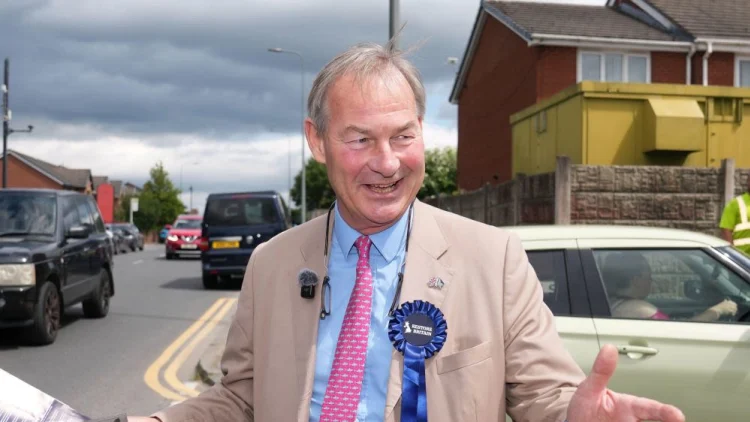
The SU are weaponizing the fact that the national Restore Britain party holds just one parliamentary seat under Rupert Lowe. Lowe, may I add, who was elected under the Reform party, not his own new fascist pet-project.
But the reality on the ground shreds this clinical, defensive administrative bullshit. This Instagram post alone should be enough to prove the Restore Britain fledglings are about anything but regular politics. They’re fucking fascist.
And at a time when swastikas are allegedly being graffitied on the campus, this is not the time to be encouraging it. Yes, the society deleted the posts, but that’s not the point. 28% of the students at York University are international students, so what kind of message does this give to them? It screams that the SU don’t give a shit about them, that they’re willing to allow a fascist group that hates them to exist in the space in which these students live and learn.
Infrastructure failure
York SU admits that the creation of the Restore Britain Society leaves students feeling unsafe, yet they only offer these young people standard welfare portals and report tools. They also declared that ratification is subject to mandatory equality, diversity and inclusion training. That made me laugh. The mere idea that a fucking PowerPoint presentation will curb blatant xenophobia is a joke.
On the ground, it shows a total failure of physical and mental safety for students. On Tuesday 21 April 2026, around 60 students peacefully protested outside of the SU. Agitators and wannabe auditors from the budding Restore Britain Society stood jeering and filming the crowd. Stewards had to physically block them from filming their fellow students, as they tried to run into the crowd several times.

They even went so far as to follow attendees of the protest after the event dispersed, only stopping when campus security finally asked them to. I say this because, during the actual event, when the harassment was clearly on display, York SU staff and security did sweet FA to intervene. I witnessed with my own eyes how these aforementioned staff members were laughing and joking with the Restore Britain members.
The union promises to call the police retroactively if hate speech occurs. They are completely abdicating their preventative role to protect vulnerable Black and Brown students.
Student media complicity
The York Student Action Network, who organised the protest, also called out the mainstream campus establishment. They allege student media outlet York Nouse provided a centrist view of the events, producing lukewarm perspectives on what effectively places students in harm’s way.
The network alleges that these outlets failed to report on the true extent of the harassment on the day, as well as the depth of the fascist rhetoric. And to make things worse, Nouse completely compromised student safety even further.
They failed to blur the faces of the students attending the protest, despite requests from the organisers. They requested that, if photos were taken, permission be sought from the students in them. Yet it seems the publication really doesn’t give a shit, and proceeded to post them anyway.

This leaves so many young people who stood up against this budding Restore Society at risk. They are left wide open to harassment from it’s members, who have made it very clear that they don’t give a shit about breaking boundaries and approaching people aggressively.
Setting a dangerous precedent
York SU claim they want to fight for the community. They claim they can keep the leash on a society that speaks about deporting all foreigners, on campus, over a fucking round of pub golf. Claiming their hands are legally tied because one bloody MP stands in parliament – who wasn’t even elected under the Restore Britain brand – is wild.
They are allowing the safety and mental wellbeing of 28% of their student body to be shattered, thanks to the jeering cries of a few very sad, very racist young people. The SU claims they’re going to keep students safe, whilst simultaneously validating a society using the “Detain and Deport” banner.
By outsourcing ethics to lawyers, the union invites harassment onto campus. Students will remember exactly who the York University institution is choosing to protect when things inevitably get worse.
Featured images via Instagram & author
By Antifabot
Politics
The making of an asylum ‘Advice Shark’ economy
Ali Ahmadi, Catherine Barnard and Fiona Costello consider the problems caused by ‘advice sharks’ providing fraudulent or poor legal advice to migrants in the UK.
In April 2026, a BBC undercover investigation found a ‘shadow industry’ of law firms and advisors charging up to £7,000 to help migrants ‘pretend to be gay’ and secure asylum in the UK. In 2023, former Home Secretary Suella Braverman had also claimed that people pretended to be homosexual to ‘game our system.’
We are also aware of ‘advice sharks’ charging high fees for poor or fraudulent advice, within the wider immigration ecosystem, particularly to EU migrants.
Why is this happening, and what does it mean for LGBTQIA+ asylum seekers, community organisations, and immigration advisers?
While some individuals may knowingly try to ‘game’ the system, there is little evidence of systematic abuse by asylum seekers. For instance, the Home Office was unable to provide any evidence for Suella Braverman’s 2023 claims. Asylum claims based on sexual orientations or gender identity make up around only 2% (1,377 claims) of total claims. The BBC discoveries may instead reveal how lack of availability of regulated legal advice creates space for unscrupulous advisors and how the Home Office’s assessment process may reward applicants who conform to stereotypical expectations, making it coachable. We consider both issues.
First, legal advice. In England and Wales, immigration advice is regulated by the Immigration Advice Authority ((IAA), formerly OISC)) and the SRA (Solicitors Regulation Authority) when provided by solicitors (under its general regulatory framework). Under IAA accreditation, only qualified advisors who pass competence assessments are allowed to advise at the level they are authorised for. The IAA has three levels (levels 1, 2 and 3), corresponding to the complexity of the advice an advisor can provide. Government guidance requires advisors to be regulated and limits their practice according to these qualifications. The regulation is to protect migrants and asylum seekers from poor, fraudulent, or exploitative advice. Many of the advisers and lawyers identified in the BBC report were allegedly unregulated or operating without a licence.
For most asylum seekers, the primary way to access regulated legal advice is through government-funded legal aid that provides advice and representation to those who cannot afford a solicitor. However, many areas of civil law (e.g. immigration) have been disqualified from the scheme for many years now, particularly since the 2012 Legal Aid, Sentencing and Punishment of Offenders Act (LASPO), and what remains eligible is financially unsustainable for providers as fees have not kept up with costs. As a result, providers have been leaving the market, creating expanding ‘legal aid deserts’ in England and Wales. For example, between 2005-2018, the number of immigration and asylum legal aid providers dropped by 56%. Recent data shows that there is a legal aid deficit in every region of England and Wales, including London.
Consequently, legal aid is largely inaccessible. In 2022-23, around 63% of the population in England and Wales did not have access to immigration and asylum legal aid in their area. And at least 51% (37,450 people) of asylum applicants were not able to find a legal aid lawyer. A refugee support organisation in the East of England that took part in our research said the Home Office’s asylum dispersal policy which often houses asylum seekers in remote rural areas further limits their access to legal services.
Some are fortunate enough to have access to free legal advice from third sector organisations such as RAMA in Colchester or from Law Centres. Their advisers are IAA / SRA regulated but often struggle to keep up with increasing demand.
But there are parts of the country where there is no paid for or free legal advice. This creates an advice vacuum. This, coupled with long wait times (sometimes years) for a decision on asylum claims, leaves people at risk of exploitation from rogue advisors selling the illusion of a quick fix. This seems to have been what was at issue in the BBC report.
Second, sexual orientation. The BBC research focused on advice given about LGBTQIA+ status. Research shows that there is in fact already a widespread attitude of ‘disbelief’ and ‘denial’ by asylum authorities towards asylum applicants, particularly in the case of sexual orientation-based claims which are presumed ‘fake’. The BBC investigation is likely to deepen this suspicion.
Further, academic research shows that asylum decision-makers often have linear and stereotypical understandings of sexuality that are ‘either partially or entirely unsupported by psychological research’. This means that asylum seekers appear to have ‘greater chances of being believed by conforming to a given stereotype than by telling their true story’, especially ‘if the latter deviates from the official’s expectations’. This may also create opportunities for fraudulent applicants to exploit officials’ narrow understanding of sexuality by presenting familiar narratives of moving ‘from internalised homophobia to pride and acceptance.’ The fraudulent cases may in turn reinforce the stereotypes.
Apostate (a person who left religion) asylum seekers have faced similar issues. For instance, some were asked in their asylum interview to name humanist philosophers and explain the ‘thoughts and beliefs of prominent non-religious thinkers’. Many people would struggle to answer such questions regardless of their beliefs. Instead, such questions may create an ‘insider knowledge’ market for fraudulent applicants, who could be coached to provide rehearsed answers.
The BBC report may also create suspicion among the public and the Home Office about community organisations supporting LGBTQIA+ asylum seekers, despite the fact that most provide essential services and are often the first to identify false requests, and challenge poor or fraudulent advice. Immigration lawyers and advisers may likewise face reputational damage. They may find themselves having to defend not only their clients’ credibility but also their professional integrity.
Fraudulent immigration advice is unlawful and condemned by respected advisors. And so are the broader structural issues within the asylum system. A growing ‘legal aid desert’, uneven geography of regulated advice, prolonged uncertainty, and assessment processes that can reward particular narratives all create conditions in which rogue advisors are able to operate. Addressing these issues therefore requires not only prosecuting individual fraudsters, but also addressing systemic issues that enables such practices to emerge, including by ensuring accessible legal aid, as well as fair and reliable asylum decision-making processes.
By Ali Ahmadi, Research Associate, University of Cambridge and PhD student at Anglia Ruskin University, Catherine Barnard, Senior Fellow, UK in a Changing Europe & Professor of EU Law and Employment Law, University of Cambridge and Fiona Costello, Assistant Professor, University of Birmingham.
Politics
All The Equipment You Need To Start Baking Bread
We hope you love the products we recommend! All of them were independently selected by our editors. Just so you know, HuffPost UK may collect a share of sales or other compensation from the links on this page if you decide to shop from them. Oh, and FYI — prices are accurate and items in stock as of time of publication.
Remember when bread making was splashed all over the internet in 2020? Well, if you’re anything like me, not everyone caught the bread bug during lockdown.
Shockingly, there are still lots of people who don’t know how to make a loaf like it’s their second language.
But, call it the appeal of an analogue life, a seismic shift happened in my life recently that means I have a sudden craving to knead and wait hours for dough to rise.
Maybe it’s the fact I’m sick of being addicted to scrolling on my phone, or even a natural extension of my recent penchant for doing puzzles (aren’t baking measurements like one big puzzle?).
Whatever it is, I now realise I’m years of experience behind the other bakers in my life. Not to mention, I have none of the equipment.
Of course, that meant I had some research ahead of me. To make sure I was well-stocked for my bread making escape, I asked baker and co-founder of Mini Miss Bread, Jeff Charnock, and scoured the depths of Reddit, for a comprehensive list of the gear I need to get started.
Politics
‘Frame Mogging’ And ‘Jestermaxxing’ And Other Manosphere-Coded Terms Explained For Parents
If you’ve heard your kids talk about looksmaxxing, mewing, jestermaxxing, or more recently, frame mogging, it might be time to gently explore where all this is coming from.
For those who aren’t chronically online and have absolutely no knowledge of these terms, I’ll quickly help fill you in on what they mean – and why you should keep a closer eye on your teen’s behaviour if you hear them discussing these terms.
What is looksmaxxing?
‘Looksmaxxing’ describes the improvement of physical appearance, commonly through a number of practices which range in intensity – from using skincare to undergoing surgery.
While there’s nothing wrong in wanting to take pride in your appearance – indeed, having a skincare routine and using SPF, staying hydrated, eating a balanced diet and exercising are all great ways to look after yourself – looksmaxxing can take things to the extremes.
It’s a phenomenon that’s been catapulted from the manosphere – a collection of websites and forums that typically promote masculinity, some of which amplify misogynistic views – to the mainstream.
One online streamer known as Clavicular claims to have “looksmaxxed” himself from the age of 14 through a combination of exercise, steroids, surgery and taking a hammer to his face (also referred to as “bonesmashing”).
But experts have concerns over how the quest to looksmaxx impacts teens during a crucial period in development – and a time when self-esteem is typically pretty low.
Dr Candice O’Neil, psychologist at Ontic Psychology, previously told Patient looksmaxxing has the potential to “influence young people’s feelings about themselves and behaviours both implicitly and overtly”.
She explained: “This becomes unhealthy when it moves from general self-improvement and wellbeing practices into a preoccupation with their appearance – particularly when that involves constant comparison with others or extreme adjustments to food and exercise. This can also lead to deep feelings of poor self-worth and self-concept.”
Over time, this might begin to impact a person’s mental health and potentially lead to disordered eating, body dysmorphia, obsessive and compulsive behaviours, or self-harm.
What is mewing?
Mewing is one of the practices some are trying in the pursuit of looksmaxxing. It involves pressing the tongue firmly against the roof of your mouth, with a view to reshape the jawline.
Does it work? Dr Baldeep Farmah, aesthetic doctor at Dr Aesthetica, said “no credible research supports the jaw restructuring looksmaxxing communities promise”.
What is jestermaxxing?
Similar to looksmaxxing, but the focus is on being funny or hilarious, rather than physical self improvement. While there’s nothing wrong with having a laugh and joking around, some parents are noticing their teens are, once again, taking it to the extremes.
One parent shared on Reddit that their 16-year-old son was ‘jestermaxxing’ at home non-stop: “He’ll just interrupt us at dinner with some loud random joke or impression then stare at everyone waiting for a huge reaction … Family time is exhausting because it’s like he’s performing all the time instead of just talking normally.”
They added: “He used to talk about girls like a normal teenager but now he says things like ‘foids [a derogatory term for women] only respect you if you jestermaxx correctly’ which I had to search and it made me feel sick.”
What is frame mogging?
More recently, kids have been talking about frame mogging, but to understand the meaning of that one, we need to first define mogging, which means outperforming or dominating over someone.
He added frame mogging “comes from a really toxic thought process that is good [for parents] to be aware of”.
When Clavicular was approached to take a photo with a fraternity leader, and the photo was posted online, his followers joked he’d been “frame mogged” as the fraternity leader was bigger built.
So, in short: frame mogging means you’re showing someone up by being more muscular. And in these communities, muscle apparently equals ‘alpha male’.
Much of this stems from incel communities
A lot of these terms stem from incel (involuntary celibate) communities online, made up of men who forge a sense of identity around their perceived inability to form sexual or romantic relationships.
They might say this is because of how they look or because they’re “low status”. Either way, much of their anger is directed at women.
According to Educate Against Hate, boys are drawn to this kind of content because it offers a sense of belonging, simple answers to complex societal problems, and an element of control or empowerment.
Nearly 70% of boys aged 11-14 years old have been exposed to misogynistic content online, per Ofcom, and most primary and secondary school teachers are “extremely concerned” about the influence of the manosphere on children and young people.
While there will be plenty of boys who shun these narratives, over time this content can – and does – subtly shift perceptions.
Talk to your kids about it
If you notice your son using these terms, your best bet is to stay curious and keep the lines of communication open.
Staying non-judgemental and asking open-ended questions, like “What do you like about that content?” or “How did you come across that idea?”, is key.
Fiona Yassin, a family psychotherapist and founder and clinical director of The Wave Clinic, previously told HuffPost UK: “It’s important for parents to name what’s happening. For example, acknowledging that there are online spaces where relationships are framed transactionally – where worth is tied to wealth, appearance, or sexual history.”
Parents can show awareness, and therefore signal understanding, without endorsement, she said. You could say something like: “I understand this is something people are talking about right now.”
Teaching and encouraging critical thinking is important, as is reinforcing your family values.
Check out more tips on speaking to kids about misogyny here.
Politics
Robert Jenrick’s Flaw In Migration Attack On Burnham Exposed
Robert Jenrick’s attack on Andy Burnham’s pro-migration stance has one rather substantial problem: the Reform MP’s own time in office.
Burnham, the mayor of Greater Manchester, is hoping to be selected as Labour’s candidate in the upcoming Makerfield by-election.
If victorious in the selection process and at the Makerfield ballot box, Burnham is expected to try and oust Keir Starmer from No.10.
But Reform won all eight wards in the constituency during the local election earlier this month – and so the party is already trying to demolish the mayor’s reputation.
In a social media video, Jenrick claimed: “If Burnham wins, a million low skilled migrants will be allowed to stay and get British citizenship in the next few years.
“And he won’t stop the boats. Instead he will put them in bedsits on your street. To pay for it all? He’ll have to hike your taxes.”
Burnham has previously criticised the Labour government’s migrants reforms after Shabana Mahmood announced plans to force asylum seekers to wait 20 years to gain permanent residency in Britain instead of five years.
But online critics could not help point out an inconsistency in Jenrick’s line of attack.
Though Reform UK’s Treasury spokesperson now, the Newark MP used to serve as the immigration minister under the Conservatives.
During his tenure – October 2022 until December 2023 – net migration sky-rocketed, peaking at 944,000 in the year ending March 2023.
Jenrick did resign under Rishi Sunak, insisting the Rwanda deportation plan did not go far enough to tackle illegal immigration.
But, social media users have pointed out that Jenrick vowed to procure even more asylum hotels when he first got the job in November – rather undermining his line of attack towards Burnham.
Others were simply exasperated at Reform focusing on migration once again…
Politics
Unearthed Video Clip May Impact Andy Burnham Makerfield By Election
Andy Burnham is very clear that the Makerfield by-election should not be about Brexit.
Speaking at an event on Monday, the Labour leadership hopeful said: “Brexit has been damaging, but the last thing we need right now is to re-run those arguments.
“I respect the [Brexit] vote and am not suggesting rejoining the EU.”
Unfortunately for the Greater Manchester mayor, his political opponents are determined not to follow his desired script.
On Saturday, Wes Streeting – who could be facing off against Burnham to be the next prime minister within weeks – used his first public comments since quitting the cabinet to pin his colours firmly to the European Union mast.
Leaving the EU had been, he said, a “catastrophic mistake”.
“We need a new special relationship with the EU, because Britain’s future lies with Europe – and one day back in the European Union,” Streeting declared.
This immediately shone a light on Burnham’s own views about Brexit, which he made clear as recently as last year’s Labour conference in Liverpool.
“Long-term, I’m gonna be honest, I’m gonna say it: I want to rejoin,” he told a Guardian event. “I hope in my lifetime I see this country rejoin.”
Helpfully, a video of the mayor’s remarks was uncovered and is now being widely shared on social media.
Reform UK leader Nigel Farage has also leapt on Burnham’s comments, vowing to make Brexit a key issue between now and polling day on June 18.
“At a time when millions of voters are demanding control of our borders, he continues to advocate re-joining a European project built around the free movement of 500 million people,” he told the Daily Express.
The controversy has led some senior Labour figures to question whether Burnham – who will be confirmed as the party’s by-election candidate later this week – can see off the Reform challenge.
One told HuffPost UK: “I could get on the Andy bandwagon. But I watched and read Andy’s interviews over the weekend and thought – ah. He sounds exactly like he did in 2015. It was unclear and blustering. It gave me pause for thought.
“He’s going to be ring rusty because he hasn’t had to fight in a decade. He needs to shake it off quickly because in the first few days he’s been given a schooling by both Wes and Reform.”
Another party insider said: “It’s incredible that he went into the first weekend with nothing to say. He was a sitting duck.
“The people around him need to wise up because he’s playing on a different level now. They think that ‘Brand Andy’ will see them through and they need to sharpen up, quickly.”
However, one Labour figure in the north-west of England said the row would have no bearing on the final result, given Burnham’s personal popularity.
“He will walk the seat,” the source said. “Voters around here love him.”
Others in the party question Wes Streeting’s decision to raise the Brexit issue at all, given the deep splits within Labour over the issue.
“Reaction to his rejoin campaign has been pretty dead in the water,” an insider said. “I’ve not seen rejoice. It’s just led to a negative reaction and a tough conversation about what would rejoining actually look like.
“I wonder if some Labour Remainers are actually upset at Wes for going too early before the public and the party are ready for it – causing two days of infighting throughout the party. It shows really poor judgement.”
Subscribe to Commons People, the podcast that makes politics easy. Every week, Kevin Schofield and Kate Nicholson unpack the week’s biggest stories to keep you informed. Join us for straightforward analysis of what’s going on at Westminster.
Politics
TfL Tube Strikes Cancelled: Reasons And New Dates
This week’s planned Tube strikes in London have been called off.
Two National Union of Rail, Maritime and Transport Workers (RMT) Tube strikes were expected to take place this week: one from Tuesday, 19 May (midday) until Wednesday, 20 May (midday), and another from Thursday, 21 May (midday) until Friday, 22 May (midday).
But these will no longer happen (nor will those set for June 16 and 18).
Why have the Tube strikes been cancelled?
An RMT spokesperson told HuffPost UK: “At the 11th hour the employer has shifted its position, allowing us to further explore our members concerns around the imposition of new rosters, fatigue and safety issues.”
HuffPost UK has reached out to Transport for London (TfL) but has yet to receive comment.
“The dispute is not over, and more strike action will follow if we fail to make sufficient progress,” RMT added.
Strikes scheduled for June 16 and 18 have also been called off, though the union has set new dates (June 2 and 4) if they remain unhappy with TfL’s response, The Independent reported.
Why were the strikes planned?
Previously, the Associated Society of Locomotive Engineers and Firemen (ASLEF), a union body which represents just over half of all Tube drivers, campaigned for a four-day work week.
TfL has since begun optionally trialling the “compressed” work week on the Bakerloo line. Drivers can opt into or out of the system.
But the RMT said that this basically amounted to packing five days’ work into four in a way which might affect the safety of their drivers and passengers. They also said the change “includes reduced flexibility over shift patterns, with the potential for only 24 hours’ notice of what shifts people will be doing”.
And they added previously that “the fact that Transport for London has made no new offer despite months of negotiation” left them “no other choice than to take strike action”.
In response, TfL said at the time: “We have set out proposals to the RMT for a four-day working week which are supported by the other Trade Union representing London Underground drivers.
“This allows us to offer train operators an additional day off, whilst at the same time bringing London Underground in line with the working patterns of other train operating companies, improving reliability and flexibility at no additional cost.
“The changes would be voluntary, there would be no reduction in contractual hours and those who wish to continue a five-day working week pattern would be able to do so.”
-
Crypto World3 days agoBloFin War of Whales 2026 Grand Prix opens registration for $5M trading championship
-
Fashion3 days agoWeekend Open Thread: Theory – Corporette.com
-
Crypto World3 days agoE-Estate Announces 1 Year Live: Washington DC Summit as Real Estate Tokenization Enters Its Next Phase
-
Fashion7 days agoCoffee Break: Travel Steam Iron
-
Politics7 days agoWhat to expect when you’re expecting a budget
-
Tech3 days agoTech Moves: Microsoft AI leader jumps to OpenAI; former AI2 exec joins Meta; and more
-
Crypto World5 days ago
Bitcoin Suisse expands with Digital Asset License and Investment Business Act Registration Approval in Bermuda
-
Tech7 days agoGM agrees to $12.75M California settlement over sale of drivers’ data
-
Politics6 days agoPakistan to enter Chinese capital market as war inflation bites
-
Crypto World6 days agoBitcoin Suisse expands with Digital Asset License and Investment Business Act Registration Approval in Bermuda
-
Crypto World4 days agoGoogle’s Gemini AI Predicts Incredible Solana Price by the End of 2026
-
Business3 days agoH&R Real Estate Investment Trust (HR.UN:CA) Q1 2026 Earnings Call Transcript
-
Tech3 days agoGoogle reimburses Register sources who were victims of API fraud
-
Sports3 days agoNapoleonic enters 2026 Doomben 10,000 field via Abounding withdrawal
-
Politics7 days agoThe geopolitics behind the UK’s South Atlantic hantavirus rescue mission
-
Politics7 days agoThe Board of Deputies just smeared Polanski to suck up to Farage
-
NewsBeat6 days agoComment on Keir Starmer surviving the day as Prime Minister like a turd that wont flush
-
Fashion6 days agoThe Best-Kept Makeup Secret for a More Defined Face
-
Entertainment4 days agoZara Larsson Has Blunt Response To Chris Brown Diss
-
Tech5 days ago
Why AI is making typography a boardroom conversation

You must be logged in to post a comment Login