
Politics
Why we need radical bookshops more than ever


The loss of radical bookshops does not just stifle the spread of radical ideas. What replaces these spaces is isolation. Yet across the UK, radical booksellers are now fighting back.
The far right in the North East
Increasingly, political life is pushed online, where it can connect, but just as easily fragment. Without physical spaces, it becomes harder to build trust, confidence, and solidarity. And in that vacuum, disillusionment can be redirected. People who are rightly angry about declining living standards are bombarded with online propaganda that encourages them to blame migrants or trans people, rather than billionaires and corporate power.
Here in Newcastle upon Tyne, the far right has been protesting every Saturday for months. Organised neo-Nazis travel in from across the country, attempting to convince people already deprived of community, services, and quality of life that migrants are to blame.
Their short-term aim is to recruit, radicalise, and normalise anti-migrant sentiment. The long-term vision is grounded in fantasies of mass deportations and race war. At the same time, Reform UK looks set to gain ground in upcoming local elections. Like elsewhere in Britain, the far right is growing.
Many of us have tried to understand this moment by looking to history, particularly the rise of fascism in the early 20th century. For me, one lesson stands out sharply: fascist movements did not only fight their opponents in elections or on the streets. They systematically destroyed the physical infrastructure that made left-wing organising and ideas possible.
Fascist tactics
In Italy, from the outset, Benito Mussolini’s forces targeted trade union halls, socialist presses, and meeting spaces. They understood that these were the places where people gathered, built relationships, spread ideas, and developed collective power.
The same pattern unfolded in Germany. The Nazi Party dismantled the institutional and cultural life of the left, crushing unions and banning socialist literature. When they consolidated power, socialist organisers were quickly driven underground, imprisoned, or killed. By that point, it was too late. The only movement capable of halting fascism without mass death and destruction was already disempowered.
Today’s far right doesn’t even need to carry out that same level of coordinated destruction. Decades of neoliberalism have done much of the work already. Rising rents, weakened unions, the erosion of public life, and the dominance of multinationals, have hollowed out the spaces that once sustained collective organising. ‘Third spaces’ have steadily disappeared. The Alliance of Radical Booksellers lists no less than eight now-closed radical bookshops in Newcastle in its UK map of historical radical bookshops. Today there are none.
Bookshops fight on
Shops like Housmans in London, Bookhaus in Bristol, and Lighthouse Bookshop in Edinburgh remain strong as hubs for organising, education, and community-building: hosting meetings, distributing radical literature, and connecting movements. New community-owned radical bookshops are opening across the country, as communities gather to resist neoliberalism’s regime of isolation.
Newcastle once had its own versions of this. Days of Hope (affectionately known as “Haze of Dope”) was the city’s last radical bookshop. It closed in the 1986, before I was even born. Like others of its kind, it was more than a retail space. It was a base for socialist political education, for organising, and for building relationships that extended beyond individual campaigns. That absence has been felt ever since.
A new radical bookshop in Newcastle
That’s why a collective I’m part of is crowdfunding to launch Books From Below – a new radical bookshop and community space in Newcastle.
The aim isn’t nostalgia but necessity. In a city with such a strong history of struggle, but also limited access to spaces that can sustain it, the need is urgent. Instead of leaving space for far-right voices to dominate, we can fill our streets, our conversations, and our communities with radical ideas. Then we can build the collective power to turn them into reality.
All radical bookshops start this way, with ordinary people pooling what they’ve got to create something for everyone. If we can do this here in Newcastle, so can anyone in any other town or city that still doesn’t have a radical bookshop.
This isn’t just about books. It’s about collectively rebuilding infrastructure: places where people can meet face-to-face, share ideas, and organise collectively to win against the far right.
For this, we need places that are visible, accessible, and rooted in our communities. In an age of not just mass inequality but also an increasingly empowered far-right, we need radical bookshops and other left-wing community spaces more than ever.
Featured image via the Bookseller

Politics
Politics Home Article | “We seek not power, but the transfer of power to the Iranian people”


Maryam Rajavi, President-elect of the National Council of Resistance of Iran
As conflict and instability intensify, Maryam Rajavi, President-elect of the National Council of Resistance of Iran, sets out a proposed path from regime collapse to elections, and insists the country rejects both theocracy and monarchy as competing forms of dictatorship
No country in the past 5 decades has been the source of crisis and tension in the region and the world as much as Iran. What is the reason and what is the solution?
Maryam Rajavi (MR): The religious dictatorship in Iran does not belong to the twenty-first century. It is a medieval regime that has neither the capacity nor the will to respond to the demands of its people. The people demand its overthrow, and it can only survive through internal repression, the export of terrorism, and warmongering.
We have always said this regime is unreformable and is seeking to obtain a nuclear bomb, and that if this regime were to abandon these policies for even one day, it would be rapidly overthrown by the Iranian people.
More than two decades ago, I declared in the European Parliament that the solution for Iran lies neither in appeasement nor in foreign war, and I emphasised that appeasement would lead to war – something that has unfortunately come to pass today. Moreover, the current war and the one in June 2025 have shown that foreign war will not bring about regime change. The overthrow of this regime will be achieved by the people and the resistance.
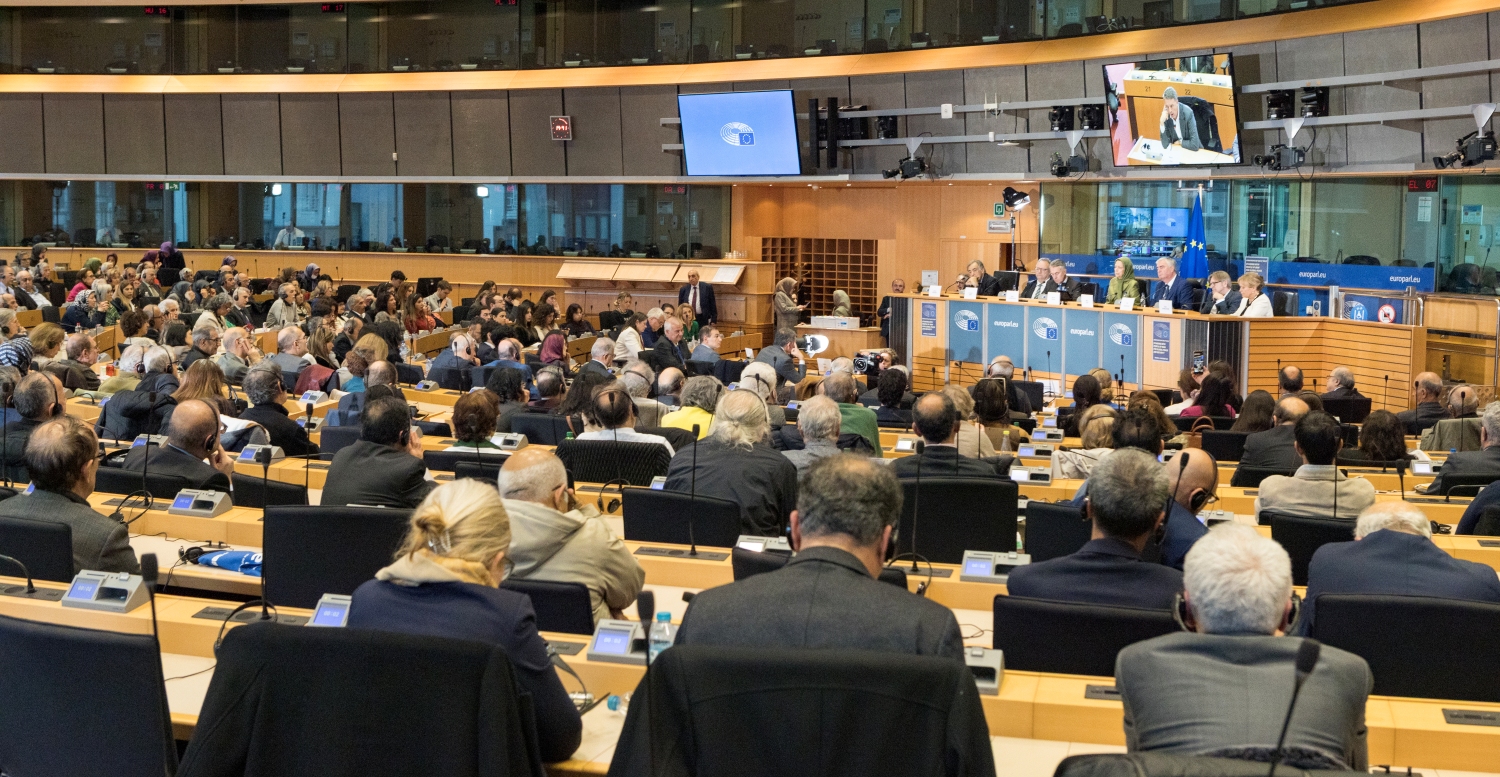
When the regime falls, what will be the next step?
MR: The National Council of Resistance of Iran (NCRI), which is a coalition of democratic forces (opposed to both the Shah and theocracy), has presented a clear roadmap in previous years. The provisional government will begin its work immediately after the overthrow, within the framework of the NCRI’s Ten-Point Plan.
The main task of this government is to hold free elections for a Constituent Assembly within a maximum of six months. Subsequently, the provisional government will resign, and the people’s elected representatives in this assembly will appoint a new government. This assembly will draft the constitution of the new republic.
The Council’s Ten-Point Plan emphasises free elections; individual and social freedoms; complete gender equality and freedom of women to choose their own attire, education and employment; separation of religion and state; autonomy for oppressed nationalities; the dissolution of the Revolutionary Guards and all repressive institutions; the abolishment of the mullahs’ sharia law and the death penalty; a non-nuclear Iran; and peace and coexistence. The provisional government will guarantee the orderly and peaceful transfer of sovereignty to its rightful owners, the Iranian people.
We are not seeking power nor even a share of power. Our goal is to transfer power to the Iranian people
What actions is your resistance currently carrying out inside Iran, and what role did it play in the January uprising?
MR: The People’s Mojahedin Organisation of Iran (PMOI/MEK) is the principal component of the NCRI. It has an extensive network inside the country. The PMOI’s resistance units carried out 4,092 anti-repression operations last year. On 23 February, 250 MEK fighters launched an assault on Khamenei’s headquarters in Tehran, the most heavily protected area in all of Iran.
The PMOI’s resistance units played a key role in organising the uprising and directing its slogans. With their assistance, some cities or neighbourhoods were liberated for several hours or one to two days. In many instances, they led the fight against the repressive forces. They carried out 630 operations against the repressive forces to protect the demonstrators, which contributed greatly to the expansion of the uprising. Two thousand members of the resistance units disappeared during the uprising, and it is still unclear how many were arrested and how many were killed.
In recent days, four MEK members have been executed in Iran. What is the message of these executions?
MR: On 30-31 March and 4 April, six PMOI members, who, along with many more of the organisation’s affiliates, had been sentenced to death, were brutally executed, reflecting the regime’s fear of this resistance.
These criminal executions, carried out in the middle of a war, show that the regime’s primary concern is the uprising and the organised resistance inside Iran. If you look at the regime’s judiciary statement on the execution of these six PMOI members, it explicitly states that they were involved in the uprising and working toward the overthrow of the system.
Currently, a large number of political prisoners face execution on similar charges. The death sentences of several others have been confirmed by the regime’s Supreme Court, and they face execution at any moment.
What evidence is there of the Iranian people’s support for the National Council of Resistance of Iran?
MR: While there is no possibility of a free public opinion survey, the first indicator of popular support is the extent of the resistance. The NCRI is the most enduring coalition in Iran’s history, having continued its resistance against the regime for 45 years without a single day’s pause. More than 100,000 members of the resistance have been executed.
The NCRI, based on PMOI’s intelligence network in Iran, has exposed the most confidential secrets of the regime, including the nuclear sites at Natanz, Arak and Fordow. None of this would have been possible without broad popular support. That is precisely why the regime’s first demand from foreign countries is the restriction of the NCRI and the PMOI.
All members of the movement, and even those who participate in its programmes abroad, are described by the regime as “mohareb,” which, under the regime’s law, can be punished by execution. The regime has organised an extensive demonisation campaign against the resistance at a cost of hundreds of millions of euros.
Why is Reza Pahlavi and a return to monarchy not an appropriate solution?
MR: He represents a deposed regime that ruled through the torture and killing of opponents and notorious secret police called SAVAK, and his father fled the country as millions of Iranians chanted “Down with the Shah.” Not only has he failed to condemn his father’s crimes; he also has taken pride in them.
His platform for the future is the restitution of monarchical dictatorship. He labels oppressed nationalities as separatists and calls for their suppression. The Iranian people have shown through their demonstrations, with the chant “Down to the oppressor, be it Shah or Leader,” that they are strongly opposed to any form of dictatorship – whether monarchical or religious. They want a government based on their own free vote.
Are you a candidate for the presidency in a reformed Iran?
MR: Today, I think only of liberating my compatriots from the religious dictatorship. My main duty is to restore hope and trust in my compatriots and to heal the wounds that this anti-human regime has inflicted on our society. As I have repeatedly emphasised, we are not seeking power nor even a share of power. Our goal is to transfer power to the Iranian people.
More than 1,200 global dignitaries, including former heads of government, ministers, Nobel laureates and lawmakers, endorsed the NCRI’s provisional government and Maryam Rajavi’s Ten-Point Plan.

Keir Starmer did not mislead parliament when asked about the vetting of former UK ambassador to the United States Peter Mandelson, a senior minister has stated.
Darren Jones, the chief secretary to the prime minister, rejected suggestions that Starmer should resign over the scandal, telling Sky News that Mandelson’s vetting debacle amounted to a “failing of the state”.
Jones was asked whether Starmer, who is facing calls to resign, should step down as prime minister.
He responded: “No. And I think if you look at what’s going on in the world, not least in relation to the conflicts in the Middle East and what that’s doing for people’s living standards, energy bills, food prices…

MDU warns Chancellor clinical negligence system ‘not fit for purpose’

Northern Ireland RE curriculum is ‘indoctrination’ – Supreme Court
“You need a credible, reliable, strong prime minister to be able to take the country through those difficult challenges.”
Jones maintained that “due process” was followed when Mandelson was appointed as US ambassador.
He said: “The process… was that UK security vetting undertake investigations. They make a recommendation to the employment department, which is the Foreign Office in the case of the ambassador.
“As I have said, the Foreign Office had this, in my view, unacceptable right to ignore this advice. That had been established process for some time. When the Foreign Office granted the approval and therefore the appointment of Peter Mandelson as ambassador due process, as it was, was followed.”
Challenged on this explanation, Jones insisted: “The process was followed… the process which I now understand involved the Foreign Office being allowed to ignore the advice of security vetting agents, that is an unacceptable process, but it was still the process at the time.
“That I changed immediately last night when I was informed of this process being available to the Foreign Office and a small number of other organisations.
“But the process was followed, and therefore the prime minister didn’t mislead the House or anyone else.”
Jones is the first minister to comment publicly after the Guardian revealed on Thursday afternoon that, even though Mandelson failed security vetting, the decision was overturned by the Foreign Office. As a result of this revelation, Starmer fired Olly Robbins, the Foreign Office permanent under-secretary, after he and Yvette Cooper, the foreign secretary, lost confidence in him.
The Liberal Democrats, meanwhile, have called for Starmer to be investigated by the House of Commons privileges committee. This same process was used against Boris Johnson over the Partygate scandal, which ultimately resulted in his resignation as an MP. Johnson was investigated over whether he misled parliament over Covid-19 lockdown gatherings in Downing Street.
The Lib Dems are now calling for a motion to refer the prime minister to the committee.
Ed Davey, the leader of the Liberal Democrats, said: “We need to get to the bottom of exactly what Keir Starmer knew when, and whether he intentionally misled parliament over this appalling scandal. The public deserves the truth, not another cover up.
“If it turns out that Starmer was aware at the time that Mandelson’s security vetting was overruled, that would represent a major abuse of power and a betrayal of the national interest.
“Boris Johnson eventually resigned after misleading parliament. If Starmer has done the same, he must be held to the same standard.”
Kemi Badenoch, the leader of the Conservative Party, has said that Starmer is “lying”.
Badenoch told BBC Radio 4’s Today programme: “The fact is that the prime minister is telling everyone that he was told on Tuesday. The ministerial code states that when a minister discovers that parliament has been inadvertently misled, they need to correct the record at the first opportunity.
“The first opportunity was Wednesday morning at prime minister’s questions… [He] did not tell the House, that in itself is a breach of the ministerial code.”
Badenoch added: “The fact is all roads lead to a resignation. It doesn’t matter what story the prime minister is telling. At some point, there is deliberate dishonesty whether it’s the cover-up story or the original story.
“One of these is deliberate dishonesty. They can’t all be true, that’s why I know he is lying.”
Politics.co.uk is the UK’s leading digital-only political website. Subscribe to our daily newsletter for all the latest news and analysis.

While the BBC was quick to insist that it was “factually incorrect” to say the pair had been “axed”, Janette has admitted to Radio Times she’s still not actually sure whether she’ll be back on our screens this autumn.
“I don’t know, we’ll have to wait and find out,” she said. “I think everyone at the moment is on standby, so we’ll see what happens.”
“That’s showbiz!” she added, cryptically.
Meanwhile, Strictly bosses are still searching for two new hosts, following the departures of Tess Daly and Claudia Winkleman at the end of last year’s run.
New presenters are yet to be announced, with rumours in the tabloid press indicating that current frontrunners include everyone from Bradley Walsh and Alex Jones to Angela Scanlon, Zoe Ball, Rylan Clark and Strictly fave Johannes Radebe.


Former London Fire Commissioner Lord Roe is said to have made significant improvements to the way the Building Safety Regulator works (Collage by Antonello Sticca)

8 min read
The Building Safety Regulator is under new leadership. Will it succeed in fixing a broken system? Noah Vickers reports
England’s Building Safety Regulator did not get off to the best of starts. Created under the last government’s Building Safety Act of 2022, the BSR was designed to prevent a tragedy like the Grenfell Tower fire from ever happening again.
As well as overseeing the remediation of existing buildings, all new-build developments which qualify as ‘higher-risk’ at the planning stage are referred to the regulator for approval, and if they fail to pass muster, are sent back for changes to be made. The definition of ‘higher-risk’ means any block of flats taller than 18 metres, or seven storeys, comes under the BSR’s purview.
But soon after the regulator’s establishment, it quickly struggled with the volume of applications it was receiving, and delays mounted – while developers complained about opaque processes and poor communication.
In December 2025, the House of Lords’ Industry and Regulators Committee published a scathing report warning that the BSR’s “unacceptable” delays were having “a worrying impact on the delivery of new housing”.
The committee’s inquiry had opened in June, but by the time they published their report six months later, evidence had already begun to emerge that the BSR was getting its act together under new leadership. Experts across the construction sector tell The House that the regulator has made significant progress in how it deals with applications, while cautioning that there remains some work to be done.
The BSR grants approval for new buildings at three ‘gateways’. Gateway 1 comes before planning permission, where the local council is required to seek the BSR’s views on any higher-risk building. At Gateway 2, the BSR reviews the design before construction can begin, and at Gateway 3, the building is assessed again at the post-construction, pre-occupation phase.
Gateway 2 had become especially notorious in the last couple of years as a key “bottleneck” for new high-rise housing projects. While a Gateway 2 decision is meant to be issued within 12 weeks, by the summer of 2025, the average waiting time for approval had grown to just over 51 weeks.
In June 2025, former London fire commissioner Andy Roe – now Lord Roe – was appointed as the BSR’s chair. He was joined by his former deputy commissioner Charlie Pugsley, who took up the role of chief executive, and John Palmer, a former Ministry of Housing, Communities and Local Government (MHCLG) official, who was made operations director.
“Those three individuals have just transformed the engagement of the BSR with industry and other key stakeholders in a really professional way,” says Neil Jefferson, CEO of the Home Builders Federation. “The people we see now who represent the BSR have instilled more confidence in the industry overall.”
The new personnel arrived just months before the BSR in January moved from being part of the Health and Safety Executive to becoming a standalone, arms-length body under MHCLG. It will eventually merge into a ‘single construction regulator’ to cover all aspects of the built environment, as recommended by the Grenfell Inquiry.
It was a bit of a black box before, and under Andy’s leadership that’s definitely changed
But beyond those administrative changes, improvements in the regulator’s communication style with developers and contractors have been welcomed across the sector.
“They’re talking to us much more sensibly and constructively, and not being quite as hands-off,” says Ian McDermott, chair of the G15 group of London housing associations.
“It was a bit of a black box before, and under Andy’s leadership that’s definitely changed. There’s much more engagement. We are talking through problems in a way that we simply didn’t do before, but there’s still quite a lot of work to be done.”
Median waiting times for Gateway 2 decisions are still taking longer than 12 weeks, though are substantially down from where they were, with the latest data showing approval taking 22 weeks and rejection taking 17 weeks. A backlog of legacy cases has however been largely cleared and a rising proportion of applications are being approved. In the 12 weeks to 30 March, the approval rate for validated applications climbed to 61 per cent, up from 33 per cent in the 12 weeks to 25 February.
Labour MP Mike Reader, who just six months ago helped lead a Westminster Hall debate warning that the BSR was “widely regarded as actively hindering the construction of new homes”, says he is “really impressed with how quickly it’s been turned around”.
But he warns: “There will be some cultural work needed still within the BSR. You don’t [suddenly] achieve cultural change in an organisation, in the mindsets of people from ‘Computer says no’ to ‘Not quite there, but this is how we can help you improve’ – that will still come… It’s not there yet, is what I’ve heard.”
It’s a concern echoed by Stephanie Pollitt, programme director for housing at BusinessLDN, who says that efforts now need to be taken to ensure that Gateway 3 does not become a new pinch-point over the coming months.
The frustration at Gateway 2 was partly due to a lack of clarity and transparency over what constituted a good application for validation, she says, adding: “I think we need to learn from those mistakes and make sure that doesn’t fall foul at Gateway 3 as well.”
Jefferson agrees: “The level of resource that’s in the BSR at the moment is wholly focused on Gateway 2, so when we get the first developments at Gateway 3 coming through, there are some concerns that there could be delays in getting buildings signed off on site, which creates cashflow problems for developers in many ways.
“I think there’s more confidence under the new leadership that we can tackle Gateway 3 together than there would have been previously, so that’s definitely a positive, but we’ve got a lot of learning to do together on Gateway 3.”
Ensuring that the regulator is properly resourced presents another challenge. The government had pledged to hire 100 additional staff into the BSR by the end of 2025, but minister Samantha Dixon has revealed that while 115 new posts were “approved”, only 83 new staff members have been “onboarded”.
Boosting the regulator’s workflow may also require other improvements beyond manpower alone.
“The BSR was set up with inadequate IT systems for document management – it was just completely overrun,” says Jefferson. “I wouldn’t say that that’s necessarily been solved yet, but it’s certainly been recognised as an issue.”
Andy and his team are receiving applications from developers which are timed to come in before the levy hits
Jefferson warns too that Roe’s work to improve the BSR could soon be put at risk by the government’s plan to introduce the Building Safety Levy in October. The levy, which was delayed from October last year, will be charged on all new residential developments of 10 or more units, with the funds used to help pay for cladding remediation and other safety repairs.
“We would welcome a further delay because of the economic conditions for development at the moment. It’s really unwelcome that this is coming in,” says Jefferson, who points out that the government already has £2.6bn in its Building Safety Fund to spend.
“It means that Andy and his team are receiving applications from developers which are timed to come in before the levy hits. Those applicants will be looking for acceptance of those projects before October, which will create a spike in his workload and make it difficult for him to prioritise his work.”
Anthony Breach, policy director at the Centre for Cities think tank, meanwhile says questions may still need to be asked about whether the 18m height limit should be increased – potentially to 30m or 50m – to reduce the scope of the BSR’s work and speed up developments.
In its Phase 2 report, the Grenfell Inquiry concluded: “We do not think that to define a building as ‘higher risk’ by reference only to its height is satisfactory, being essentially arbitrary in nature,” and recommended that the definition be reviewed. After a review last year, the BSR found there was “insufficient evidence” to change the definition, which was supported by MHCLG.
“The 18m threshold is very low, it doesn’t really have any basis in fire safety,” says Breach. “The result is, the mid-rise buildings that the government – separately, in its economic strategy – is stressing as very important to improve housing affordability, transport efficiency, the productivity of the national economy, that type of building is now just much more difficult, expensive, risky to build than it would be in a system where the BSR’s scope was defined more clearly on fire risk.”
A BSR spokesperson said the regulator has introduced a new system of account managers to enable “regular dialogue between applicants and the BSR” as well as a new “complex case category of application”, saying this is “quite clearly the opposite of a ‘computer says no’ approach”. The recent move to become a non-departmental public body will also see “investment in our technology and in our people’s skills”, they said.
They added: “We are continuing to work with the sector to build upon the existing guidance to provide further clarity around what a good [application] looks like which will help reduce invalidations and rejections.
“We have seen some high quality applications pass quickly through the system and are encouraging developers to share best practice. New-build approval rates are increasing month on month and we have a shared objective with the sector to drive up approval rates.”
MHCLG, meanwhile confirmed that having already delayed the Building Safety Levy by a year to give developers time to prepare for it, “no further changes” are now planned to its implementation.

A BBC Radio 4 presenter hit out at a senior minister after he insisted that Keir Starmer did not mislead parliament over Peter Mandelson’s security vetting.
It emerged on Thursday that the ex-Labour peer failed an intense vetting process but was still appointed as the UK’s ambassador to Washington last year.
Mandelson was sacked in September 2025 after the depth of his relationship with the convicted paedophile Jeffrey Epstein emerged.
Reform UK, the Conservatives and the Greens are now calling for Starmer to resign, claiming he misled parliament when he previously claimed “due process” was followed over Mandelson’s appointment.
No.10 has blamed the Foreign Office for overruling the security advice and giving Mandelson vetted status, claiming ministers were unaware that the ex-Labour peer had failed vetting.
Starmer also sacked the top civil servant in the Foreign Office, Olly Robbins, on Thursday night.
Chief secretary to the prime minister Darren Jones was sent out to bat for the government on BBC Radio 4′s Today programme this morning – and took a verbal lashing from presenter Justin Webb.
Webb said it was “not credible” Robbins would have taken a decision “this momentous” to overrule the advice without mentioning it to the foreign secretary or the prime minister.
But Jones replied, “I find this whole situation astonishing as well,” insisting that he had already suspended the right for the Foreign Office and other organisations to use that exemption.
Webb said it would have been “normal” for the prime minister – who was previously the UK’s director for public prosecutions – to check that he was correct when he told MPs that “due process” was followed in hiring Mandelson.
Jones said the PM only became aware of that fact on Tuesday evening of this week and insisted that Starmer has not misled MPs.
“Come on, Mr Jones, he gave a misleading impression!” Webb replied. “He said at the Commons, ‘full due process was followed at this appointment, as with all our ambassadors’.
“Technically that’s true, but he was giving a misleading impression, wasn’t he? Albeit he didn’t know it himself.
“In those circumstances, he’s meant to go back to the Commons and ’fess up.”
Jones refuted that claim, but Webb hit back: “In that statement in Hastings, he was absolutely clear, wasn’t he, that this had happened. The vetting procedure had been properly done.
“That the vetting procedure, because Lord Mandelson had subsequently been appointed and then had to be fired, the vetting procedure itself was at fault.”
But Jones insisted this was a “failure of the state” that this process was allowed to happen in the way that it did, distancing Starmer’s responsibility.
Webb said: “Number one it’s his job to get a grip of things, number two, he just seems incredibly incurious about things that are important.”
“That is not the case,” Jones insisted. “The Foreign Office did pass the developed vetting status in vetting Peter Mandelson.”
The presenter gave a short laugh, and said: “But the point is did he recommend Mandelson passed it? This all sounds very legalistic and very loyal and I think to most people listening it is simply a fact of have you got a grip or have you not got a grip?
“Are you saying things that are true or things that turn out to be false?
“On both those things – on the grip and on the true or false thing – Sir Keir fails.”
Jones rejected that description and once again blamed the Foreign Office, and said the process was “flabbergasting”.
Webb then asked why Starmer did not tell the Commons on Wednesday before PMQs about the problems with Mandelson’s vetting.
Jones said he asked the cabinet secretary to give him a “detailed list” of the facts before going to MPs.
Subscribe to Commons People, the podcast that makes politics easy. Every week, Kevin Schofield and Kate Nicholson unpack the week’s biggest stories to keep you informed. Join us for straightforward analysis of what’s going on at Westminster.

Victoria Beckham has spoken out for the first time about her family’s estrangement from her eldest son Brooklyn Peltz Beckham.
Speaking to The Wall Street Journal in an interview published on Thursday, the former Spice Girls performer was asked about her family’s ongoing public rift with her eldest child.
Without saying Brooklyn’s name, the fashion designer replied: “We love our children so much.”
She continued: “We’ve always tried to be the best parents that we can be. And you know, we’ve been in the public eye for more than 30 years right now, and all we’ve ever tried to do is protect our children and love our children.
“And, you know, that’s all I really want to say about it.”
Victoria and her husband Sir David Beckham share four children – 27-year-old Brooklyn, 23-year-old Romeo, 21-year-old Cruz and 14-year-old Harper.
Back in January, Brooklyn made headlines the world over with a series of candid Instagram stories, in which he accused his parents of “trying to endlessly ruin” his relationship with his wife, Nicola Peltz Beckham.
Brooklyn took aim at his parents for what he called their ongoing attempts to forcefully try to control “narratives in the press about our family”.
He also alleged that his mum “hijacked” his first dance with Nicola during their 2022 wedding ceremony.
“I have been silent for years and have made every attempt to keep these matters private,” Brooklyn wrote at the time.
“Unfortunately, my parents and their team have continued to go to the press, leaving me with no choice but to speak for myself and tell the truth about only some of the lies that have been printed.”
He added: “I do not want to reconcile with my family. I’m not being controlled, I’m standing up for myself for the first time in my life.”
While Sir David has not addressed his son’s comments directly, he did make some well-timed comments during an appearance on Squawk Box in January, the day after Brooklyn’s posts, telling the show’s hosts that “children are allowed to make mistakes”.

Jeff Spicer/BFC via Getty Images
“They make mistakes. Children are allowed to make mistakes. That’s how they learn. So, that’s what I try to teach my kids,” he said. “You have to sometimes let them make those mistakes.”
During the interview, the football icon also spoke about how “dangerous” social media can be.
“I’ve always spoke about social media and the power of social media, for the good and for the bad,” he said.
“The bad, we’ve talked about, what kids can access these days and it can be dangerous. But what I’ve found personally, especially with my kids as well, use it for the right reasons.”
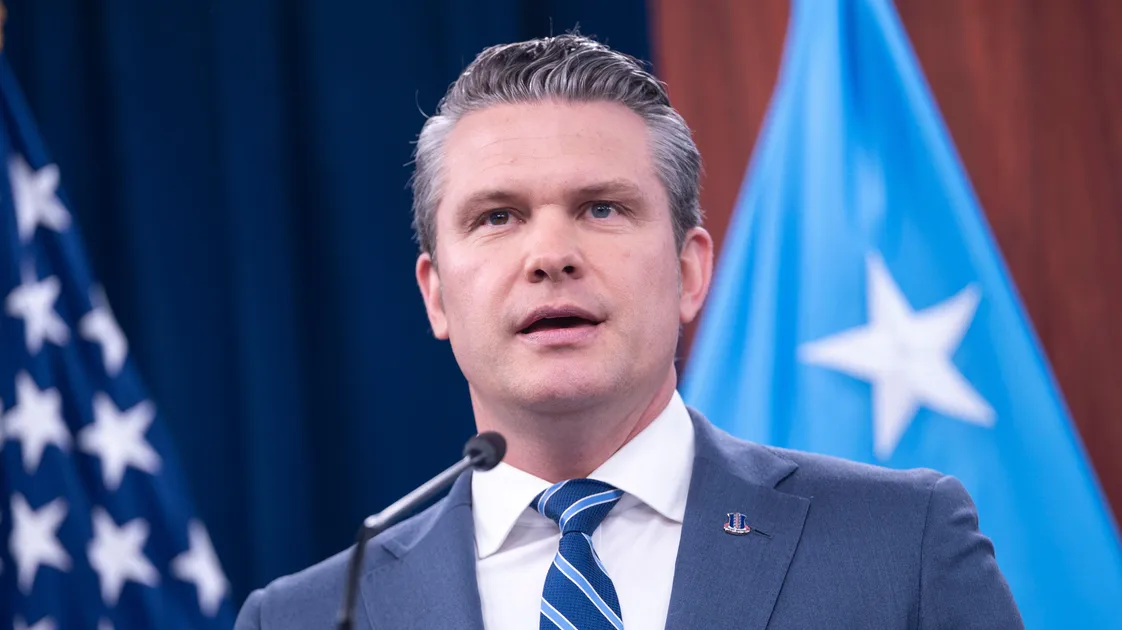
In a move that seems indicative of the Trump administration’s increasingly fractured relationship with the Vatican, Pete Hegseth appeared to mistake lines from a classic crime film for Scripture during a public appearance this week.
The defense secretary delivered a prayer during a livestreamed worship service at the Pentagon on Wednesday. “They call it CSAR 25:17, which I think is meant to reflect Ezekiel 25:17,” he said in his introduction of the prayer he’d been given.
However, viewers quickly noticed his words more closely echoed one of Samuel L. Jackson’s monologues from 1994’s “Pulp Fiction” than the biblical verse he’d referenced.
“The path of the downed aviator is beset on all sides by the inequities of the selfish and the tyranny of evil men,” Hegseth said in part. “Blessed is he who, in the name of camaraderie and duty, shepherds the lost through the valley of darkness, for he is truly his brother’s keeper and the finder of lost children. And I will strike down upon thee with great vengeance and furious anger those who attempt to capture and destroy my brother, and you will know my call sign is Sandy 1 when I lay my vengeance upon thee.”
Watch Pete Hegseth’s prayer service below. His reference to Ezekiel 25:17 begins around the 6:56 mark.
In “Pulp Fiction,” Jackson portrays hit man Jules Winnfield, who offers a similar declaration before shooting a man to death.
“The path of the righteous man is beset on all sides by the inequities of the selfish and the tyranny of evil men,” he says. “Blessed is he who, in the name of charity and goodwill, shepherds the weak through the valley of darkness, for he is truly his brother’s keeper and the finder of lost children. And I will strike down upon thee with great vengeance and furious anger those who attempt to poison and destroy my brothers. And you will know my name is the Lord, when I lay my vengeance upon thee. And I will execute great vengeance upon them with furious rebukes; and they shall know that I am the Lord, when I shall lay my vengeance upon them.”
Hegseth said the prayer was recited by the “Sandy 1” combat search and rescue (CSAR) mission in Iran, and to be fair, Pulp Fiction writer-director Quentin Tarantino reportedly drew from a scene in the 1973 Japanese film Bodyguard Kiba as the basis for Jackson’s monologue.
The actual Ezekiel 25:17 passage as it appears in the King James Bible is significantly shorter than both Hegseth’s and Jackson’s, reading simply: “And I will execute great vengeance upon them with furious rebukes; and they shall know that I am the Lord, when I shall lay my vengeance upon them.”
Hegseth has yet to address the discourse publicly. The Pentagon’s chief spokesman, Sean Parnell, issued a statement on X Thursday acknowledging the CSAR prayer and Hegseth’s words were “obviously inspired by dialogue” in Pulp Fiction, but that both the prayer and the film scene were “reflections of the verse Ezekiel 25:17, as Secretary Hegseth clearly said in his remarks at the prayer service.”
“Anyone saying the Secretary misquoted Ezekiel 25:17 is peddling fake news and ignorant of reality,” he added.
Still, videos comparing Hegseth’s prayer to Jackson’s monologue went viral online and, as of Thursday, had drawn a fair number of snarky responses.
“When our leaders mix up God and a movie, in trying to suggest that God is behind them, that suggests the muddle we’re all in,” New York Times journalist Nicholas Kristof wrote on X.
Journalist and author James North quipped: “The Old Testament’s ‘Book of Tarantino.’”
Hegseth’s prayer gaffe comes amid rising tensions between the Trump administration, including President Donald Trump himself, and high-ranking Catholic leaders.
On Sunday, the president deemed Pope Leo XIV “WEAK on Crime, and terrible for Foreign Policy” in a post on his Truth Social platform after the pontiff criticized both the Iran war and the Trump administration’s crackdown on immigration.
That same day, Trump drew further outrage when he shared what appeared to be an AI-generated image of himself as Jesus Christ ― or, at the very least, a Christ-like figure ― on Truth Social.
Though the president argued the image was intended to depict him as a doctor, he or his team quietly deleted it after public figures on both sides of the political aisle condemned it as “blasphemous.”
Subscribe to Commons People, the podcast that makes politics easy. Every week, Kevin Schofield and Kate Nicholson unpack the week’s biggest stories to keep you informed. Join us for straightforward analysis of what’s going on at Westminster.

President Donald Trump delivered a bizarre answer after Fox Business anchor Maria Bartiromo asked him about his “hoarse” voice during an interview on Wednesday.
“I’ve been screaming at Iranians all day, yes. A little bit of laryngitis because of my scream. I’ve been screaming at the Iranians…” the president responded after Bartiromo questioned if “all day” negotiations with China were the reason for his change in voice.
Bartiromo then pressed the president, asking if it was “the Iran leadership” that he had been yelling at, but Trump kept rolling.
“You know why?” he continued. “Because that’s the only thing they understand. They don’t understand being nice. They understand the way I have to do business.”
“I treat all people differently,” Trump added, in the clip that was captured by Mediaite.
Trump has been asked about his voice before, in November of last year. He attributed it to shouting during trade talks.
“I feel great. I was shouting at people because they were stupid about something having to do with trade and a country, and I straightened it out,” a raspy-sounding Trump told reporters in the Oval Office. He didn’t specify the country. “But I blew my stack at these people.”

Tucker Carlson went to town on President Donald Trump over his explanation for the AI-generated image he posted of himself looking like Jesus Christ.
During Wednesday’s episode of the Tucker Carlson Show, he described Trump’s post as “disruptive.”
“It’s Donald Trump, president of the United States, dressed as Jesus, healing a man. You can see the healing power coming off of his right hand,” the political commentator said.
Trump, who Carlson described as a “famously irreligious man,” tried to explain his way out of the controversy after he received widespread criticism, even from his own base.
“So, he sent that out and then withdrew it, deleted the tweet from the internet after an outcry, but was asked about it, and he said, ‘Yeah, I sent that’ … And he said, ’I sent it out, but it wasn’t me as Jesus,’ though obviously it is. [Trump said] ‘it was me as a doctor because I heal people.’”
When asked about it a day later, Trump denied even posting the image.
“He said, ‘No, no, I didn’t have anything to do with that. I didn’t send it out,’” Carlson added. “Which wasn’t exactly an answer to the question.”
Carlson then took issue with Trump reposting a doctored photo of Jesus “caressing” him.
“That’s unmistakably Jesus, the Christian Messiah, the man God at the center of Christianity, with his arm around Donald Trump, basically saying, ‘You go, Trump. I’m on your side.’”
So what do Trump’s posts mean, Carlson asked, before answering his own question.
“It’s mockery. He’s mocking Jesus. He’s making fun of Christianity. The central figure of the religion is being held up for mockery,” he said.
Carlson also blasted Trump for threatening war crimes and dropping an F-bomb in another Truth Social post on Easter Sunday.
“And then he seemed to make fun of Islam. ‘Praise Allah,’ he said. So in one short statement of about 110 words, he seemed to give the finger to the world’s two largest religions, Christianity and Islam,” Carlson said.
A week later, Carlson noted, Trump again behaved offensively towards religion.
“Also on Sunday, the Christian holy day, he attacked the pope, the leader of the world’s largest religion and largest Christian denomination, and attacked him personally and said basically, he’s only pope because of me,” Carlson said.
This prompted Carlson to wonder if the US is a “Christian nation.” And if it is fundamentally a Christian nation, what does Trump’s mockery of religion say about the future of America?
“Donald Trump is not the first president to give the finger to Jesus, hardly. But he is the first president to do it in public,” Carlson said.
Watch Carlson’s remarks on “The Tucker Carlson Show” below:
Subscribe to Commons People, the podcast that makes politics easy. Every week, Kevin Schofield and Kate Nicholson unpack the week’s biggest stories to keep you informed. Join us for straightforward analysis of what’s going on at Westminster.

Keir Starmer sacked the top civil servant in the Foreign Office last night after the row over Peter Mandelson appointment returned.
Hours after it was revealed that the ex-Labour peer failed security vetting but still got the top job as the UK’s ambassador to Washington, the prime minister fired Olly Robbins.
According to the BBC and the Times, Starmer was “furious” after the Guardian reported that the Foreign Office had defied advice from the vetting process and appointed Mandelson anyway.
No.10 insists neither Starmer nor his ministers were aware of this detail until this week.
It read: “Neither the Prime Minister, nor any Government Minister, was aware that Peter Mandelson was granted Developed Vetting against the advice of UK Security Vetting until earlier this week.”
It remains unclear why Mandelson failed the vetting and if Robbins was the person who decided to override security advice.
Mandelson worked as the ambassador to Washington between February and September 2025 before he was fired as the depth of his relationship with convicted paedophile Jeffrey Epstein was revealed.
He has denied any wrongdoing in connection to the disgraced financier.
Mandelson is currently being investigated by police on suspicion passing market-sensitive information to Epstein when he was a minister under New Labour.
The Conservatives, Reform UK and the Greens have all called for the prime minister to resign.
They accuse him of misleading MPs when he told them in September that “due process had been followed” when it came to hiring the former ambassador to Washington.
According to the Ministerial Code, ministers who knowingly mislead parliament are expected to stand down.
Subscribe to Commons People, the podcast that makes politics easy. Every week, Kevin Schofield and Kate Nicholson unpack the week’s biggest stories to keep you informed. Join us for straightforward analysis of what’s going on at Westminster.

Politics Home Article | “We seek not power, but the transfer of power to the Iranian people”

NWFL Suspends Two Players Over Post-Match Clash in Ado-Ekiti

Scots fashion brand worn by Jennifer Lopez and Madonna goes into liquidation

Why Israel is blocking foreign journalists from entering

Bitcoin: We’re Entering The Most Dangerous Phase

Alan Cumming Brands Baftas Ceremony A ‘Triggering S**tshow’

THE BIGGEST WIN OF MY LIFE! #gambling #casino #money #comedy #slots

BITCOIN & GOLD LIVE TRADING ANALYSIS @tradingmentor22 Live Trading || #goldtrading #cryptotrading

#reseller #gold #antique #buisness #jewelry #fyp #crazy #money #ytshorts
-

 Politics7 days ago
US brings back mandatory military draft registration
-
 Sports7 days ago
Man United discover Nico Schlotterbeck transfer fee as defender reaches Dortmund agreement
-

 Fashion7 days ago
Weekend Open Thread: Veronica Beard
-

 Politics5 days ago
World Cup exit makes Italy enter crisis mode
-

 Business7 days ago
Tesla Model Y Tops China Auto Sales in March 2026 With 39,827 Registrations, Beating Cheaper EVs and Gas Cars
-

 Crypto World4 days ago
The SEC Conditionalises DeFi Platforms to Be Avoided for Broker Registration
-

 Crypto World3 days ago
SEC Signals Exemption for Crypto Interfaces From Broker Registration
-

 News Videos2 days ago
Secure crypto trading starts with an FIU-registered
-
 NewsBeat4 days ago
Pep Guardiola and Gary Neville agree over Arsenal title problem that benefits Man City
-

 Business6 days ago
Ireland Fuel Protests Enter Day 5 as Blockades Spark Shortages and Government Prepares Support Package
-

 Business7 days ago
OpenAI Halts Stargate UK Data Centre Project Over Energy Costs and Copyright Row
-

 Crypto World6 days ago
Federal judge blocks Arizona from bringing criminal charges against Kalshi
-

 NewsBeat3 days ago
Trump and Pope Leo: Behind their disagreement over Iran war
-

 Crypto World3 days ago
SEC Proposes Certain Crypto Interfaces Don’t Need to Register as Brokers
-
 NewsBeat5 days ago
JD Vance announces ‘no agreement’ with Iran over nuclear weapons fear
-

 Business6 days ago
IMF retains floor for precautionary balances at SDR 20 billion
-

 Business6 days ago
Former Liverpool CEO eviscerates FIFA for World Cup ticket pricing
-
 Crypto World4 days ago
Sei Network Enters Quiet Reset Phase as On-Chain Metrics Signal a Slowdown in 2026
-
Business6 days ago
Coreweave CSO Venturo sells $5.5m in class a common stock
-
Sports6 days ago
1st-Round WR Enters Vikings Mock Draft Orbit
You must be logged in to post a comment Login