Connect with us
DAPA Banner
DAPA Coin
DAPA
COIN PAYMENT ASSET
PRIVACY · BLOCKDAG · HOMOMORPHIC ENCRYPTION · RUST
ElGamal Encrypted MINE DAPA
🚫 GENESIS SOLD OUT
DAPAPAY COMING

Tech

Anthropic has acquired the dev tools startup used by OpenAI, Google, and Cloudflare

Published

on

Anthropic announced Monday it has acquired Stainless, a startup founded by former Stripe engineer Alex Rattray whose software is widely used by rival AI labs, including OpenAI and Google.

Anthropic didn’t disclose terms of the deal. However, The Information reported last week that the company was in talks to acquire Stainless, which is backed by Sequoia Capital and Andreessen Horowitz, for more than $300 million.

The acquisition will take a key infrastructure supplier out of the hands of Anthropic’s competitors. The company told TechCrunch it will wind down all hosted Stainless products, including its SDK generator. An Anthropic spokesperson said Stainless customers will still own the SDKs they’ve generated to date and have full rights to modify and extend them however they wish.

The New York-based startup, founded in 2022, rose to prominence in the emerging AI industry for automating the creation and maintenance of software development kits, or SDKs — the libraries developers use to interact with APIs.

Advertisement

Rattray developed software that could take API specifications and turn them into production-ready SDKs across multiple programming languages, including Python, TypeScript, Kotlin, Go, and Java. It became a popular tool because the platform automatically updates the SDKs as APIs change and eliminated the time-consuming process of manually maintaining them.

The technology is particularly valuable to companies like Anthropic, OpenAI, Google, Replicate, Runway, and Cloudflare that are building AI agents that can connect to external software and complete tasks on behalf of users. Stainless’s SDK tools are an easy way to build and maintain those connections — but going forward, the tools will only be available to Anthropic, not its competitors.

According to Anthropic, Stainless software has powered the generation of every official Anthropic SDK since the earliest days of its API.

“I started Stainless because SDKs deserve as much care as the APIs they wrap,” Rattray said in a press release posted Monday. “Anthropic was one of the first teams to bet on this with us. We have been watching what developers have built on Claude over the last few years, which made bringing our teams together an easy decision. The team gets to keep doing the work we love, on the platform where it matters most.”

Advertisement

When you purchase through links in our articles, we may earn a small commission. This doesn’t affect our editorial independence.

Source link

Continue Reading
Click to comment

You must be logged in to post a comment Login

Leave a Reply

Tech

OSHA probing worker death at SpaceX’s Starbase site

Published

on

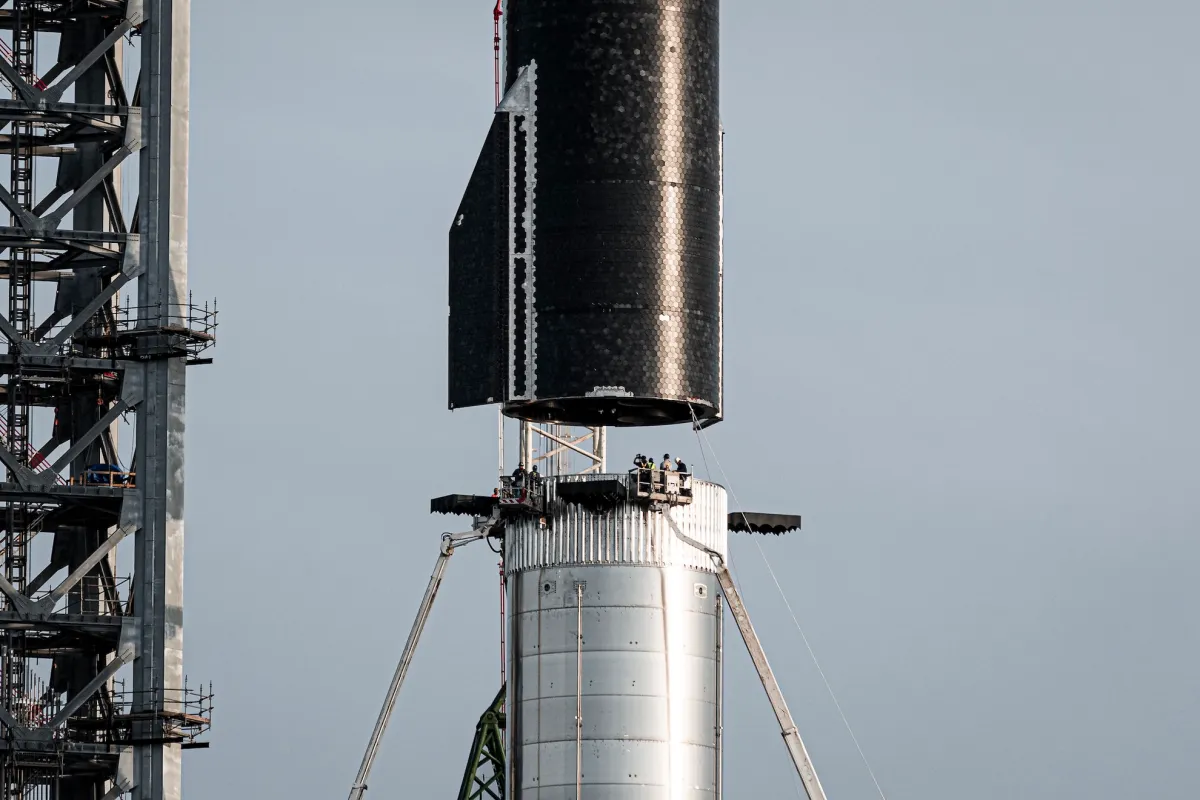
A worker died at SpaceX’s Starbase launch site in South Texas on Friday, and the Occupational Health and Safety Administration (OSHA) has opened an investigation.

The San Antonio Express-News reported Monday that the unidentified victim died at around 4:17 a.m. local time on May 15, citing OSHA and local officials. The Wall Street Journal later reported that the county sheriff confirmed to the outlet that a worker died. OSHA confirmed to TechCrunch that it is investigating the apparent accident.

Representatives for the nearby Brownsville police and fire departments did not respond to requests for comment. SpaceX and the newly-incorporated City of Starbase did not respond to requests for comment.

The circumstances of the worker’s death are not immediately clear. OSHA told TechCrunch that it won’t release more information until its investigation is complete, which could take months.

Advertisement

The death comes just a few days ahead of the first planned launch of SpaceX’s upgraded Starship rocket. Elon Musk’s spaceflight company is also reportedly releasing the detailed prospectus for its initial public offering this week, which is expected to be the biggest ever when that transaction takes place next month.

SpaceX has long dealt with worker safety problems at its Starbase site, which handles Starship prototype launches and is an active construction zone.

In 2025, TechCrunch analyzed OSHA data and determined the Texas launch site had an injury rate that far outpaced those of industry rivals, and was the most dangerous of SpaceX’s worksites. A 2023 Reuters investigation uncovered dozens of previously-unreported injuries and a worker death in 2014 at SpaceX’s McGregor, Texas test site.

In January, OSHA hit SpaceX with seven “serious” safety violations for, among other things, not properly inspecting a crane before it collapsed at Starbase last June. The safety agency dealt SpaceX the maximum financial penalty on six of those seven violations, totaling $115,850. SpaceX is contesting those penalties, federal records show.

Advertisement

The company has been hit with multiple lawsuits related to injuries sustained at Starbase in recent years. In December, an employee of one of SpaceX’s subcontractors sued after he was crushed by a large metal support dropped from a crane. The worker, Eduardo Cavazos, suffered a broken hip, knee, and tibia, and OSHA opened a “rapid response investigation,” as TechCrunch first reported in December.

OSHA has since closed that rapid response investigation without taking any punitive action, according to a TechCrunch public records request. And the lawsuit was recently dropped because his employee, the subcontractor, has workers compensation insurance that prevents it from being sued, according to Cavazos’ attorney.

When you purchase through links in our articles, we may earn a small commission. This doesn’t affect our editorial independence.

Source link

Advertisement
Continue Reading

Tech

Peter Steinberger’s 100 AI agents racked up $1.3 million in OpenAI tokens in 30 days building OpenClaw

Published

on

TL;DR

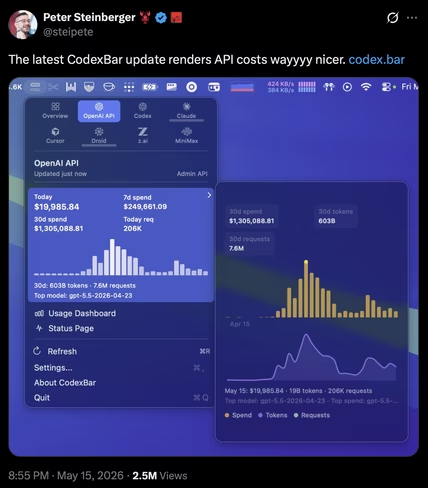
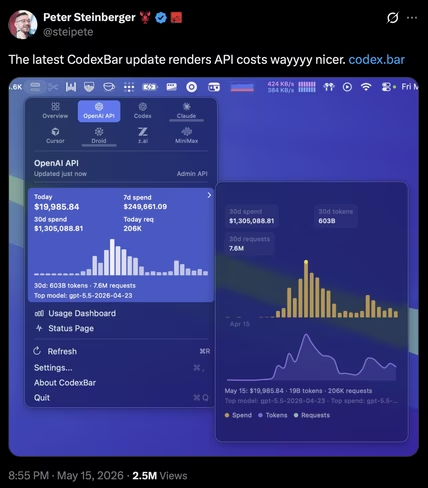
OpenClaw creator Peter Steinberger spent $1.3 million in OpenAI API tokens in 30 days running 100 Codex instances on his open-source project. The bill, covered by OpenAI where Steinberger now works, represents 603 billion tokens across 7.6 million requests and provides the most concrete public data point on the cost of autonomous AI coding at scale.

Peter Steinberger, the creator of OpenClaw and an engineer at OpenAI, racked up $1.3 million in API costs in a single month by running approximately 100 Codex instances simultaneously on his open-source project. The bill, which covered 603 billion tokens across 7.6 million requests over 30 days, is the most visible demonstration yet of what happens when AI-powered software development is run without budget constraints, and of how quickly costs escalate when autonomous agents operate continuously at scale.

Advertisement

Steinberger posted a screenshot of the bill on X, showing $1,305,088.81 charged to the OpenAI API, with GPT-5.5 as the primary model. OpenAI is covering the cost: Steinberger joined the company in February 2026, and the spending is treated as a research investment in understanding what software development looks like when token economics are not a limiting factor.

Peter Steinberger x post

Peter Steinberger X Post – source: X

What the agents actually do

The 100 Codex instances are not simply generating code. Steinberger’s three-person team has built an autonomous development pipeline in which AI agents perform a range of tasks that would ordinarily require a much larger engineering organisation. The agents review pull requests, scan commits for security vulnerabilities, deduplicate GitHub issues, write fixes, and open new pull requests based on the project’s broader roadmap. Others monitor performance benchmarks and flag regressions to the team’s Discord server. Some agents, according to The Decoder, even attend meetings and generate pull requests for features that come up in conversation.

The 💜 of EU tech

Advertisement

The latest rumblings from the EU tech scene, a story from our wise ol’ founder Boris, and some questionable AI art. It’s free, every week, in your inbox. Sign up now!

The team also uses Clawpatch.ai, Vercel’s Deepsec, and Codex Security for additional bug and security analysis. The result is a development operation in which three humans oversee a fleet of AI agents that collectively perform the work of what would traditionally be a mid-sized engineering team.

The cost question

Steinberger has been transparent about the economics. He clarified that the $1.3 million figure reflects Codex’s “Fast Mode” pricing, which consumes credits at a significantly higher rate than standard execution. Disabling Fast Mode alone would reduce the raw API cost to approximately $300,000 per month, a 70 per cent reduction. At standard pricing, the operation would still cost $3.6 million a year, but the gap between the headline figure and the underlying economics illustrates how pricing tiers and execution modes can dramatically inflate reported costs.

When asked about return on investment, Steinberger said everything his team builds is open source and works with leading proprietary models as well as open-weight alternatives. “I’d say pretty high,” he said.

Advertisement

The figure is useful precisely because vendor marketing around AI coding tools rarely discloses raw spend and token volumes at this scale. Most enterprise teams planning agentic development tooling are working from projections and estimates. Steinberger’s bill is a concrete, public data point: 100 agents running continuously for 30 days on a large open-source codebase costs between $300,000 and $1.3 million per month depending on execution speed, before any optimisation.

Who is Peter Steinberger

Steinberger is not a newcomer to building developer tools at scale. The Austrian engineer founded PSPDFKit in 2011, bootstrapping a PDF rendering and annotation framework that became the standard for mobile document handling. By 2021, apps built on PSPDFKit were running on more than one billion devices worldwide, and the company raised $116 million from Insight Partners, its first outside investment after a decade of profitable, self-funded growth.

After leaving PSPDFKit, Steinberger began experimenting with AI agents as a personal project. OpenClaw, a self-hosted autonomous AI assistant that runs entirely on users’ own hardware, became the fastest-growing open-source project in GitHub history, crossing 302,000 stars by April 2026, overtaking React, Vue.js, and TensorFlow in a fraction of the time those projects took to reach similar milestones. The framework connects to tools people already use, including email, calendars, browsers, and messaging platforms from Slack and Discord to WhatsApp and iMessage, and allows AI agents to execute shell commands, manage files, and automate web tasks locally.

When Steinberger joined OpenAI, he announced that OpenClaw would move to an independent foundation to preserve its open-source character. “I want to change the world, not build a large company,” he wrote. “Teaming up with OpenAI is the fastest way to bring this to everyone.”

Advertisement

What it reveals about AI coding economics

The $1.3 million bill arrives at a moment when the economics of AI-powered development are a central preoccupation of the software industry. OpenAI recently opened ChatGPT subscriptions to OpenClaw’s 3.2 million users, allowing them to run autonomous agents through the Codex endpoint for $23 per month. Anthropic, by contrast, blocked Claude Pro and Max subscribers from using OpenClaw and other third-party agent frameworks, concluding that the compute demands of autonomous agents running thousands of API calls per day were economically unsustainable under flat-rate subscription pricing.

The divergence between those two approaches reflects an unresolved tension in AI pricing. Subscription models are designed for human-speed interaction: a person typing queries into a chat window generates a predictable, manageable volume of API calls. An autonomous agent fleet generates orders of magnitude more, and the gap between subscription pricing and actual compute costs is the subsidy that either the provider absorbs or the user pays.

Steinberger’s bill makes that gap visible. At $1.3 million for 100 agents, the per-agent cost is roughly $13,000 per month, far more than any subscription plan covers. Even at the optimised $300,000, each agent costs approximately $3,000 per month. For enterprise teams evaluating whether to deploy agentic coding tools at scale, these numbers provide a baseline that no vendor’s marketing page will offer.

The broader pattern

OpenClaw’s trajectory, from a personal experiment to the most-starred project on GitHub to an OpenAI-sponsored research platform, reflects a broader shift in how software is being built. AI coding agents from DeepMind, OpenAI, and Anthropic are moving from proof-of-concept demonstrations to production deployment, and the question is no longer whether AI will write significant amounts of code but how much it will cost and who will pay for it.

Advertisement

The rise of AI-assisted development, from individual coding copilots to fully autonomous agent fleets, is compressing the timeline between a three-person team’s ambition and a large engineering organisation’s output. Steinberger’s setup, three humans and 100 agents, is an extreme version of what many companies will attempt at smaller scales over the next year.

The $1.3 million bill is not a cautionary tale. It is a receipt from the future, showing what it costs when AI development tools are used at full capacity, without the budget constraints that currently limit most teams to a fraction of what the technology can do. Whether that future is affordable depends on how quickly model inference costs decline, how efficiently agent orchestration frameworks manage token usage, and whether the security and quality challenges of AI-generated code can be managed at the speed these agents produce it.

Source link

Advertisement
Continue Reading

Tech

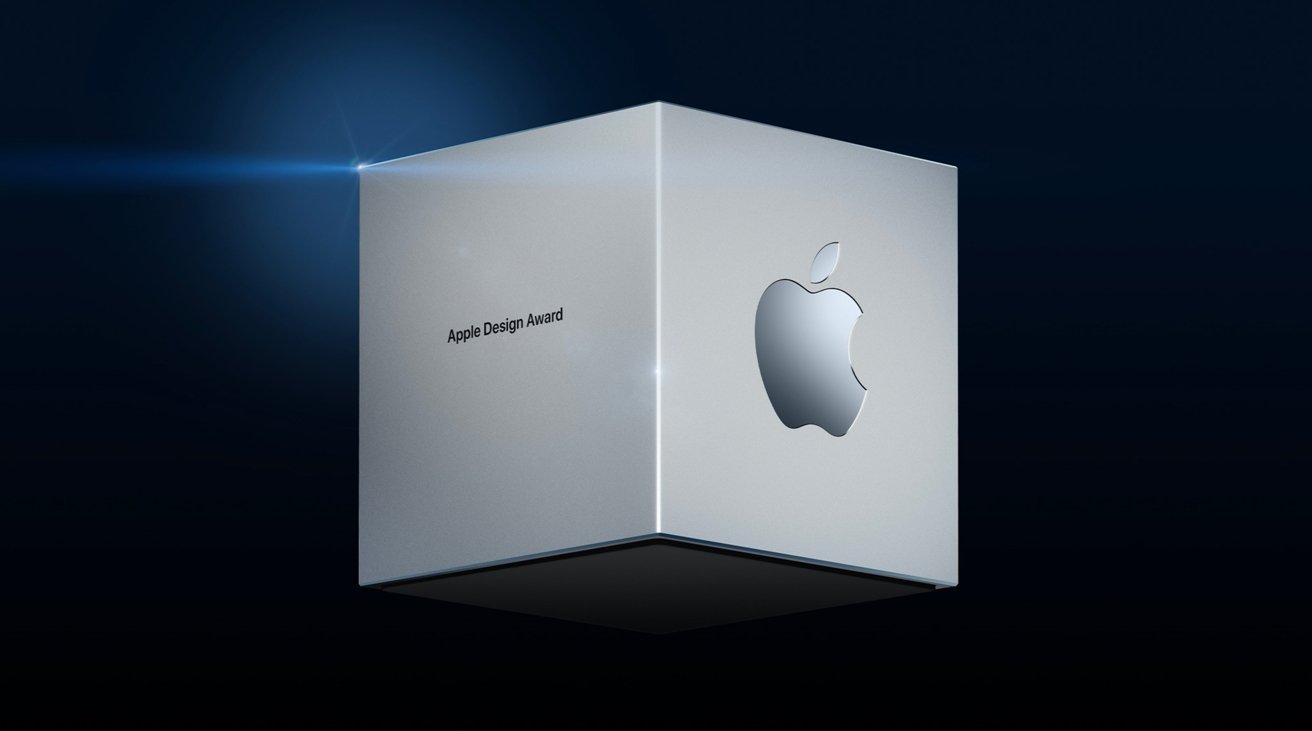
Apple Design Awards finalists for 2026 revealed

Published

on

Apple has announced the finalists for its 2026 Design Awards.

With WWDC 2026 just weeks away, the apps and games nominated for the 2026 Apple Design Awards have been revealed.

Every year, Apple recognizes App Store applications that demonstrate genuine innovation and ingenuity. Through its annual Apple Design Awards, the company highlights its top picks across several app categories, celebrating developers and their creative efforts.

On Monday, all apps that were nominated for the 2026 Apple Design Awards were highlighted. Finalists are organized based on the design aspects Apple deemed particularly impressive, with three apps and three games nominated for each category.

Advertisement

Delight and Fun

“Finalists in this category provide memorable, engaging, and satisfying experiences enhanced by Apple technologies,” explains the company’s website.

Apps

Games

Inclusivity

The Inclusivity category celebrates App Store applications that “provide a great experience for all by reflecting a variety of backgrounds, abilities, and languages.”

Apps

Games

Innovation

Finalists chosen for the Innovation category “provide a state-of-the-art experience through a novel use of Apple technologies that sets them apart in their genre.”

Apps

Games

Interaction

Apple says that apps and games nominated for the Interaction category “deliver intuitive interfaces and effortless controls that are perfectly tailored to their platform.”

Advertisement

Apps

Games

Social Impact

“Finalists in this category improve lives in a meaningful way and shine a light on crucial issues,” explains Apple.

Apps

Games

Visuals and Graphics

Apple says finalists in the Visuals and Graphics category “feature stunning imagery, skillfully drawn interfaces, and high-quality animations with a distinctive and cohesive theme.”

Apps

Games

Triple-A titles like Cyberpunk 2077 and Civilization VII are among the titles nominated for an Apple Design Award. Some applications, like TR-49 and Sago Mini Jinja’s Garden, were recognized as finalists in two categories.

Though Apple no longer has a dedicated “Spatial Computing” category, visionOS software like Pickle Pro and D-Day: The Camera Soldier still have a chance of winning. Apps for the iPhone, iPad, Mac, and other platforms were also nominated.

Advertisement

The winners will be revealed at WWDC 2026, which begins on June 8. One app and one game from each category will win a 2026 Apple Design Award.

Source link

Advertisement
Continue Reading

Tech

ArXiv will ban researchers for a year if they submit papers with AI slop

Published

on


The arXiv (pronounced “archive”) team recently announced a significant update to its official code of conduct. The popular open-access repository of research papers awaiting peer review will now seek to deter AI-generated “slop” by enforcing stricter accountability rules, including a one-year ban for violations. The team said that using LLMs…
Read Entire Article
Source link

Continue Reading

Tech

Meta cuts 8,000 jobs amid record $56B quarterly revenue as Zuckerberg bets $145 billion on AI infrastructure

Published

on

TL;DR

Meta will begin cutting 8,000 jobs on 20 May while reporting record quarterly revenue of $56.31 billion, as the company raises AI infrastructure spending to as much as $145 billion in 2026. Employee morale has cratered, with internal protests over surveillance software, declining compensation, and the expectation of further layoffs through the autumn.

Meta will begin cutting approximately 8,000 jobs on 20 May, the largest single round of layoffs the company has undertaken since its 2023 restructuring, in a move that lays bare the scale of Mark Zuckerberg’s bet that artificial intelligence infrastructure is worth more than the people it replaces. The company is also cancelling 6,000 open requisitions, bringing the effective headcount reduction to 14,000 positions.

Advertisement

The cuts arrive not during a downturn but during a period of record financial performance. Meta reported first-quarter 2026 revenue of $56.31 billion and net income of $26.8 billion. Full-year 2025 revenue was $201 billion, up 22 per cent year over year, with free cash flow of $43.6 billion. The company is not shrinking because it is struggling. It is shrinking because it has decided that the return on AI infrastructure exceeds the return on human labour, and it is converting one into the other on a scale that no technology company has attempted before.

The financial arithmetic

Meta has raised its 2026 capital expenditure guidance to between $125 billion and $145 billion, up from $72.2 billion in 2025 and $39.2 billion in 2024. Nearly all of the increase is directed at data centres, Nvidia GPUs, custom silicon, and infrastructure to support the company’s Llama model ecosystem and recommendation systems. In the first quarter alone, Meta added $107 billion in new contractual commitments for cloud and infrastructure deals, and it has committed $27 billion to a joint venture with Nebius for a gigawatt-scale AI data centre campus in Louisiana.

Bank of America has estimated that the layoffs could generate $7 billion to $8 billion in annualised savings, a fraction of the capital expenditure plan but a meaningful contribution to the operating margin that CFO Susan Li has pledged to protect. Li told investors during the Q1 earnings call that the company believed a leaner operating model would allow it to move more quickly while helping to offset its infrastructure investments. She also acknowledged that executives “don’t really know what the optimal size of the company will be in the future,” a remarkable admission from a CFO whose company is simultaneously reporting record profits.

The 💜 of EU tech

Advertisement

The latest rumblings from the EU tech scene, a story from our wise ol’ founder Boris, and some questionable AI art. It’s free, every week, in your inbox. Sign up now!

The arithmetic is blunt: Meta is spending more on AI infrastructure in a single year than the combined annual revenue of most Fortune 500 companies, and it is funding part of that spending by eliminating the jobs of people who helped build the business that generates the revenue in the first place.

What is happening inside the company

The financial case for the restructuring is coherent. The human experience of it is considerably less so. Meta’s record quarterly results were reported three weeks before the layoff notifications are scheduled to go out, a sequence that has produced what employees and industry observers have described as a particularly corrosive form of corporate dissonance.

Zuckerberg held a company-wide town hall on 30 April to address the cuts directly. He was explicit about one thing: AI tools were not driving the job losses. “Getting everyone internally to use AI tools and getting to do the work more efficiently is not the thing that’s driving layoffs,” he said. He did not, however, identify what was driving them, and the silence has fuelled anxiety across the company.

Advertisement

Meanwhile, Meta has been cutting compensation for the broader workforce while dramatically increasing it for AI researchers. Median total compensation at Meta fell from $417,400 in 2024 to $388,200 in 2025. The stock portion of annual raises was cut by 5 per cent in February 2026, on top of a 10 per cent reduction the previous year. At the same time, Zuckerberg has been personally recruiting AI researchers with compensation packages reportedly reaching $100 million to staff Meta Superintelligence Labs, the division he launched last year under former Scale AI chief executive Alexandr Wang.

The gap between those two realities, shrinking pay for most employees and nine-figure packages for a select few, has produced what multiple reports describe as an atmosphere of resignation. Employees have built at least three countdown websites tracking the days until 20 May, one of which carries the header “Big Beautiful Layoff.” Data from Blind, an anonymous professional network that requires work email verification, shows Meta’s overall employee rating has declined 25 per cent from its peak in the second quarter of 2024, with a 39 per cent drop in its culture rating. In every category other than compensation, Meta now underperforms Amazon, Google, and Netflix.

The surveillance question

Compounding the mood is a programme called the Model Capability Initiative, which Meta deployed on US employees’ work laptops in April. The software captures mouse movements, clicks, keystrokes, and screenshots across a designated set of work applications. Meta has said the data is used to teach AI agents how humans navigate software, not as a general surveillance tool. Employees at several US offices have responded with visible protest, distributing flyers that described the programme as an “Employee Data Extraction Factory” and citing the National Labour Relations Act. Workers have characterised the tool as “dystopian” and created an online petition urging Zuckerberg to shut it down, with some reporting that their work computers have slowed noticeably since the programme was installed.

The objection is not merely about privacy. It is about the implication: Meta is asking its remaining employees to generate the training data that will teach AI systems to replicate the computer-use patterns of the very roles being eliminated. The programme may well be a legitimate research initiative, but its timing, weeks before mass layoffs, has made it impossible for employees to read it as anything other than a preview of their own obsolescence.

Advertisement

The restructuring pattern

Including the May round, Zuckerberg has now overseen the elimination of roughly 33,000 positions since 2022. The 2022 cuts corrected pandemic-era over-hiring. The 2023 round was framed as a “year of efficiency.” Early 2025 cuts were presented as performance management. The January and March 2026 reductions, which removed approximately 1,700 employees from Reality Labs, recruiting, and other divisions, were targeted. The May round is different: it is a company-wide structural reorganisation that touches every major business unit, with teams being reconstituted into AI-focused “pods” under Wang’s Superintelligence Labs division.

More layoffs are expected this year, including a potential round in August and another in the autumn, according to people with knowledge of the plans. Earlier reporting suggested the total reduction could eventually reach 20 per cent of the workforce.

Meta is not alone in converting payroll into AI capital expenditure. Microsoft announced its first-ever voluntary retirement programme the same week, offering buyouts to roughly 7 per cent of its US workforce. Oracle cut an estimated 30,000 employees in March. Amazon eliminated 16,000 corporate roles in the first quarter. Across the technology sector, almost 110,000 jobs have been lost at 137 companies so far in 2026, according to Layoffs.fyi, after roughly 125,000 cuts in all of 2025.

The bet

The theory behind Meta’s restructuring is that a smaller number of highly talented people working alongside powerful AI systems can accomplish what previously required entire departments. Zuckerberg has described the vision as developing AI-powered products that amount to a kind of “personal superintelligence” for billions of users. The Superintelligence Labs division, the AI-focused pods, and the massive infrastructure spending are all oriented toward that goal.

Advertisement

Whether the bet pays off depends on whether the AI systems that Meta is building at a cost of more than $100 billion a year can generate enough incremental revenue, through improved advertising targeting, content recommendations, and new AI-powered products, to justify both the infrastructure spending and the loss of institutional knowledge that comes with eliminating 10 per cent of the workforce in a single month.

The human cost of the technology industry’s AI pivot is not evenly distributed. The roles being eliminated at Meta are concentrated in recruiting, sales, middle management, and non-AI-adjacent product work, areas where the skills gap between what employees currently do and what the company now needs is too wide for incremental retraining to bridge. The roles the company is actively hiring for, at salaries between $62,000 for entry-level positions and $240,000 or more for senior AI research scientists, are almost entirely in machine learning, infrastructure engineering, computer vision, and natural language processing.

Zuckerberg has been through this before. The 2023 efficiency programme, which produced 21,000 job cuts across two waves, was followed by a period of exceptional financial performance that silenced critics and sent the stock to record highs. This time, the market has been less forgiving: Meta’s stock is down roughly 7 per cent year to date, underperforming every megacap peer except Microsoft. The broader pattern across Big Tech in 2026 suggests that investors are rewarding the same playbook at every company that adopts it: cut headcount, redirect the savings to AI infrastructure, and let the stock price validate the decision.

For the 8,000 people receiving notifications this week, the validation will be someone else’s. For Zuckerberg, the question is whether personal superintelligence, a product that does not yet exist, can justify a restructuring whose costs are immediate, measurable, and borne by people who did nothing wrong except work in roles that an algorithm has not yet learned to perform.

Advertisement

Source link

Continue Reading

Tech

Trump Just Created An Unconstitutional $1.776 Billion Loyalty Rewards Program For MAGA

Published

on

from the 10-insurrections-get-your-11th-free dept

We discussed the rumor of this on Friday, but it’s now real: Donald Trump has handed himself a $1.776 billion fund of taxpayer money — unappropriated by Congress — to dole out to friends in the MAGA movement who claim they were mistreated by the Biden administration, but with no judicial review over such claims.

The Fund will have the power to issue formal apologies and monetary relief owed to claimants. Submission of a claim is voluntary. There are no partisan requirements to file a claim.  Any money left when the Fund ceases operations will revert to the Federal Government.

The Fund will receive $1.776 billion and will come from the judgment fund, which is a perpetual appropriation allowing DOJ to settle and pay cases. On a quarterly basis, the Fund shall send a report to the Attorney General outlining who has received relief and what form of relief was awarded.

What will the fund be used for? To pay anyone on Team MAGA — including, in theory, January 6th insurrectionists — who claim the Biden administration “weaponized” the government to target them. Many of these claims are simply not true. January 6th insurrectionists were arrested and convicted for actually breaking the law. But now they get to ask Trump for money, and the evidentiary standard appears to be “trust me, bro” and a red MAGA hat.

Let’s first dispense with the most obvious bit of the charade: the idea that this is actually related to the “settlement” of Trump’s already corrupt bullshit lawsuit against the IRS. That’s how this is being presented, but this is entirely separate. Trump needed to drop that lawsuit in order to end it before a judge called bullshit on the fact that he was negotiating with himself to take $10 billion from American taxpayers.

Advertisement

As for the actual “fund” everything about it is about as corrupt as you can imagine. This is impeachment-worthy — and not in a partisan way. Republicans should be as offended by this as anyone else, if they actually (I know… I know…) believe in things like rule of law and fiscal responsibility.

The actual details here should raise so many red flags. First, as part of this illegal attempt to route around Congress’ power of the purse, they’re taking the money out of the Treasury Department’s “Judgment Fund.” But that fund is clearly designed to pay out the results of duly litigated court cases against the government — not a board of Trump’s friends deciding who gets a check. But here, it’s just a group of MAGA insiders who get to choose:

The Fund will consist of five members appointed by the Attorney General. One Member will be chosen in consultation with congressional leadership. The President can remove any member, but a replacement must be chosen the same way as the replaced member was selected.

So, the fund is clearly in service of Donald Trump’s whims, not anyone else’s. We already have his personal lawyer (who has shown a long history of obeying Trump’s orders) as the acting Attorney General, and the fact that Congress only gets to “consult” on one member of the committee, and anyone can be removed by Trump at any moment makes it abundantly clear that this fund is solely around to pay off Trump’s loyal fans, who have a long history of claiming imagined grievances against the Biden administration, which they will now seek to cash in on.

The fund also, notably, will be put into a private account that (according to the settlement) the US government has no control over and no liability for.

Advertisement

Once the funds are deposited into the Designated Account, the United States has no liability whatsoever for the protection or safeguarding of those funds, regardless of bank failure, fraudulent transfers, or any other fraud or misuse of the funds.

This appears to be setting things up so that a future government (or a court) cannot claw back the money once it is delivered from the Treasury into this slush fund, let alone after it is then handed out to anyone on Team MAGA who makes a claim from the fund.

Also, the fund is set up to “close” before the next administration comes into office. How convenient.

The Fund shall cease processing claims no later than December 1, 2028.

The DOJ is claiming that this fund is no different than the Keepseagle fund under the Obama administration:

There is legal precedent for such a Fund, most notably the “Keepseagle” case where the Obama Administration created a $760 million fund to redress various claims alleging racism against the federal government over a period of decades.

In Keepseagle, hundreds of millions of dollars remaining in the fund were distributed to non-profits and NGOs that never made claims, whereas any money remaining in The Anti-Weaponization Fund will revert to the federal government. The Obama DOJ settled by putting $680 million from the judgment fund into a bank account for a single claims administrator to dole out. In Keepseagle the remaining money—which ended up being over $300 million—was distributed to the entities that had not even submitted claims.

Advertisement

This is blatantly revisionist history. The Keepseagle settlement was approved by a court in response to a class action lawsuit. Here, this fund, is being created in a manner deliberately to avoid having the court review it. It also paid people out for a specific, and verifiable harm: Native American farmers who were denied a farm loan from the USDA during a specific period of time who were eligible for that loan. The lawsuit was because the USDA had deliberately denied those loans to Native American farmers, while giving them to white farmers.

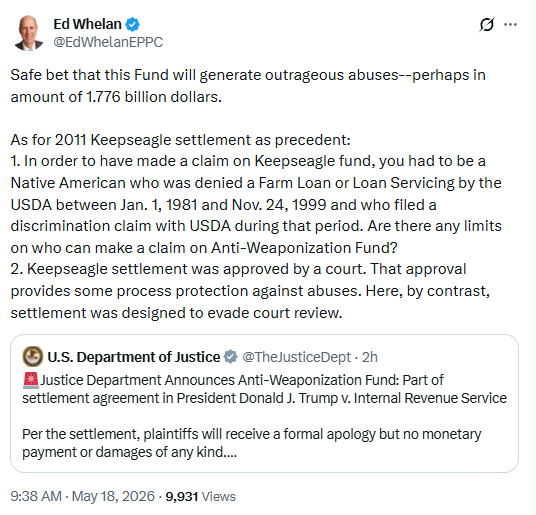
In that case, there was a clear harm, a clear way to delineate who was harmed, and court oversight of the process. In this case, there is literally none of that. Anyone arguing that Keepseagle is the same thing as this slush fund is either being deliberately dishonest or hasn’t read the basic facts. Even well known conservative lawyers like Ed Whelan (a former Scalia clerk) is calling out that this fund is highly questionable:

The fund itself is an abuse of power and clearly unconstitutional. As constitutional lawyer (and now Representative) Jamie Raskin noted last week in an interview with the New Republic, if the fund is used to pay off January 6 insurrectionists, it also likely violates the Fourteenth Amendment, which has a prohibition on the US government paying for those who engaged in insurrection or rebellion against the US:

There’s still more. Raskin notes that the Fourteenth Amendment prohibits the government from assuming any “obligation incurred in aid of insurrection or rebellion against the United States.” Raskin said that if this fund hands money to the January 6 rioters, Trump will be “using federal taxpayer dollars to compensate people who participated in insurrection.”

The “imagine if Biden did this” test is almost beside the point here (though, seriously, just imagine how people, including Democrats, would react). We’re past the moment where consistency of principle was the relevant standard. What matters is that $1.776 billion in unappropriated taxpayer money is being routed through a board of Trump loyalists, into an account the government has explicitly disclaimed responsibility for, on a clock that runs out before the next administration takes office.

The “settlement” framing is just the bow on top. The $1.776 billion slush fund for MAGA’s worst is the point.

Advertisement

Filed Under: anti-weaponization fund, congress, corruption, donald trump, ed whelan, insurrection, irs, jamie raskin, slush fund, weaponization

Source link

Advertisement
Continue Reading

Tech

Is The LG G5 TV Worth The Hefty Price Tag Compared To The C5?

Published

on


We may receive a commission on purchases made from links.

When you first look at them, the most noticeable difference between LG’s G5 and C5 smart TVs is easily their price tags. Depending on the size, the G5 can be up to 25% more expensive than a comparably sized C5. With such a large price gap, it’s easy to question whether the upgrade is worth it – and where exactly your money goes if you do invest in a G5.

Advertisement

The two TVs boast a gamut of similar features, alongside similarly glowing reviews and high ratings. What Hi-Fi? rated both TVs a full five stars, while Tom’s Guide surprisingly gave the C5 a half-star advantage over the more costly G5. They’re also both among Consumer Reports’ best-rated LG TVs. You can see a similar trend in user reviews, too, with each TV having an almost-five-star average on the LG website. Based on all of that, it’s easy to conclude that you probably don’t need to spend the extra hundreds (or thousands) of dollars on the G5, given the similar performance.

However, there is one substantial difference between the C5 and G5 that’s worth considering before you commit to the C5: how much brighter the G5 is. Stuff even called it the “best and brightest OLED TV” in a five-star review. That difference can translate to a significant upgrade in image quality and make it worth the price, depending on your room, budget, priorities, and preferences. Besides that, there are also several other differences between the sets, ranging from the number of audio channels to some minor panel traits.

Advertisement

Brightness creates contrasts between the G5 and C5

The G5 uses a fourth-generation LG Display OLED panel, which produces a remarkably bright appearance in SDR and HDR modes. As a result, many reviews and tests note just how bright the G5 is. Tom’s Guide put this to the test to find out exactly which one is brighter — and by how much — with some striking results. In a 10% window, the G5 put out 2,296 nits in HDR, compared to the C5’s 1,196 nits. The G5 has the upper hand in SDR too, although the difference isn’t as noticeable with 465 nits versus 335. For some, that difference will make the G5’s hefty cost worthwhile.

But what can a brighter screen do, really? It depends, but higher maximum brightness translates to more contrast, in turn improving picture quality by adding depth. So, the G5 can offer a much deeper image than the C5, courtesy of its much higher brightness. The G5’s high peaks, paired with features like Perfect Black, Brightness Booster Ultimate, and the fundamental strengths of OLED technology, make for sharp, high-contrast images. This advantage made the LG G5 one of the best TVs you could buy in 2025 and may be worth paying for, especially if you have a bright room, as brighter screens can offer a better experience than dimmer ones in well-lit rooms.

Advertisement

How else are the G5 and C5 different?

At first blush, the two TVs share a lot of similar features. They each offer native 120 Hz refresh rates, pixel dimming, Dolby Vision, and Filmmaker Mode, among a list of other overlapping features. The differences start to become noticeable when you check their processors. The C5 has the a9 AI Processor 4K Gen8, while the G5 has the faster a11 AI Processor 4K Gen2. A similar disparity is notable when you compare the built-in AI upscaler; the C5 has the a9 AI upscaler, while the G5 has LG’s a11. 

There’s also one minor difference when you compare the two TVs’ gaming-oriented specifications. Although they both offer variable refresh rates, the G5 maxes out at 165 Hz compared to the C5’s 144 Hz. Both, however, support AMD FreeSync, are G-Sync Compatible, and have HGIG support. The two TVs also have different speaker systems, which is something that may differentiate them for some users. The C5 offers a 2.2-channel system, while the G5 has 4.2 channels.

Advertisement

There’s one more noticeable difference between the G5 and C5 range: size. Although each range is available in overlapping sizes varying from 55 to 83 inches, there are some exceptions. The C5 is available in 42 and 44 inches, with the largest model coming in at 83 inches. Meanwhile, the G5 bottoms out at 55 inches, but it does run all the way up to a whopping 97 inches, should you have about eight feet of space you want to fill with a TV.


Advertisement

Source link

Continue Reading

Tech

Manchester Code Named IEEE Milestone

Published

on

In the late 1940s—when computer engineers were grappling with unreliable hardware and noisy transmission environments—a team of engineers inside a modest lab at the University of Manchester, England, confronted a problem so fundamental that it threatened the viability of digital computing itself. Machines could generate bits, but they could not reliably read them back.

The inconsistent reading back of memory data did not initially present itself as a grand theoretical challenge. It showed up as something more mundane: inconsistent computing results.

Engineers including Frederic C. Williams, Tom Kilburn, and G. E. (Tommy) Thomas traced the failures not to logic errors but to the physical behavior of the machines themselves. The team devised a technique for keeping a transmitter and a receiver synchronized without relying on a separate clock signal. Their innovation, known as Manchester code or phase encoding, encoded each bit with a transition in the middle of the bit period, effectively embedding timing information directly into the data stream to be a self-clocking signal. So, even if the signal degraded or the timing drifted slightly, the receiver could continually keep time based on those regular transitions.

By eliminating the need for separate clocks and reducing synchronization errors, Manchester code made data transfer more robust across cables and circuits.

Advertisement

Those qualities later made it a natural fit for technologies such as Ethernet and early data storage systems. Its self-clocking nature helped standardize how machines communicate, and it laid the groundwork for modern networking and digital communication protocols.

On 13 April 2026, this breakthrough was honored with an IEEE Milestone plaque during a ceremony at the University of Manchester. Dignitaries from IEEE and the university attended the ceremony.

Embedding timing in signals

Those 1940s Manchester University engineers were working on systems that fed into the Manchester Mark I, one of the first practical stored-program machines.

When troubles arose, they used oscilloscopes to probe signals. They found that electrical pulses did not arrive with consistent timing. Memory signals also blurred over time, making them harder to read, and when long runs of identical bits occurred, the waveform flattened into stretches with no transitions.

Advertisement

That led to a crucial insight: The problem was not just detecting whether a signal was high or low; the system also lost track of when to sample the signal. Without reliable timing markers, even correctly formed signals were misread. Bits could effectively be lost or miscounted because the system fell out of sync.

At first, the engineers tried to tame the hardware. They experimented with stabilizing circuits and more consistent pulse generation, attempting to impose a regular rhythm on an inherently unstable system. But the fixes proved fragile, and the electronics of the day could not maintain the required precision. So the Manchester group took a different approach.

If the hardware could not provide a dependable clock, the signal itself would have to carry one. Instead of representing data as static levels, each bit changed state, with a guaranteed transition in the middle.

Embedding timing in the signal reduced erratic behavior. Machines were suddenly able to reliably transmit, store, and read back data—an essential step toward practical stored-program computing.

Advertisement

Making signals unmistakable

The Manchester code addressed several issues at once. Regular transitions allowed continuous timing recovery. Transitions proved easier to detect than static levels, and long runs of identical bits no longer produced flat, ambiguous waveforms. Rather than fighting the imperfections of early electronics, the design worked with them.

From lab curiosity to a global standard

What began as a local solution in Manchester shaped digital communication systems for decades, including early Ethernet technology, for which timing and shared-medium communication were central challenges.

According to Robert Metcalfe, a member of the team that built the first Ethernet system at Xerox PARC in 1973, he and his colleagues relied on Manchester code.

“Manchester code solved a fundamental problem for us: timing,” Metcalfe says, explaining that each bit carried its own clock and removed the need for a global synchronized signal.

Advertisement

That self-clocking property wasn’t the only benefit provided by the encoding scheme. On a shared coaxial cable, Manchester encoding did more than provide timing. Each transceiver left the medium undriven—effectively “off”—most of the time, allowing packets from other machines to pass without interference. Even during transmission, a station drove the signal only about half the time, leaving the line undriven during the other half of each bit cycle.

This distinction—between a driven signal and an undriven line, rather than simple 1s and 0s—allowed receivers to recover both data and clock timing while also monitoring the cable for other activity. If a transceiver detected a signal when it expected the line to be undriven,the signal indicated that another station was transmitting at the same time. In other words, the system could detect collisions in real time and respond accordingly.

The idea has proven durable far beyond local networks. Manchester code is being used aboard theVoyager spacecraft, which are now cruising through interstellar space—underscoring its reliability in extreme environments.

The code also has found its way into everyday consumer electronics. Infrared remote controls for televisions and audio equipment commonly rely on Manchester code through protocols such as RC-5, developed by Philips in the early 1980s. The protocol encodes commands as timed infrared signals transmitted by a handset’s integrated circuit and LED, allowing devices to reliably interpret button presses even through noise and signal distortion. Manufacturers across Europe—and many in the United States—adopted the approach, extending Manchester code into the home.

Advertisement

Why the Milestone matters

An IEEE Milestone designation recognizes technologies with enduring impact. Manchester code qualifies because it solved a foundational timing problem at a critical moment in computing history.

Without a way to embed timing in the data itself, early digital systems would have remained fragile and unreliable. Manchester code helped transform them into dependable machines, and it enabled much of today’s digital communication.

“Manchester code solved a fundamental problem for us: timing,” —Robert Metcalfe, an Ethernet inventor

Key participants at the plaque dedication ceremony included Tom Coughlinm 2024 IEEE president; Duncan Ivison, University of Manchester president and vice chancellor, and Nagham Saeed, chair of the IEEE U.K. and Ireland Section.

Advertisement

Talks by Kees Schouhamer Immink (the 2017 IEEE Medal of Honor laureate probably best known for his work that made compact discs and other high-density digital media practical) and Peter Green (Manchester’s deputy dean for the engineering faculty) highlighted the code’s lasting impact on digital data storage and communications.

The IEEE Milestone plaque for the Manchester code reads:

“At this site in 1948–1949, Manchester code was invented for reliably encoding digital data stored on the Manchester Mark I computer’s magnetic drum. It became a standard for computer magnetic tapes and floppy disks and was used in digital communications, including the Voyager 1 and 2 spacecraft and early Ethernet networks. It found wide use in domestic remote controllers, radio frequency identification (RFID) tags, and many control network standards.”

Administered by the IEEE History Center and supported by donors, the Milestone program recognizes outstanding technical developments worldwide. The IEEE U.K. and Ireland Section sponsored the nomination.

Advertisement

From Your Site Articles

Related Articles Around the Web

Source link

Advertisement
Continue Reading

Tech

This Ryobi-Rival Mini Leaf Blower Seemed Like A Great Amazon Deal: Then Things Went Wrong

Published

on


We may receive a commission on purchases made from links.

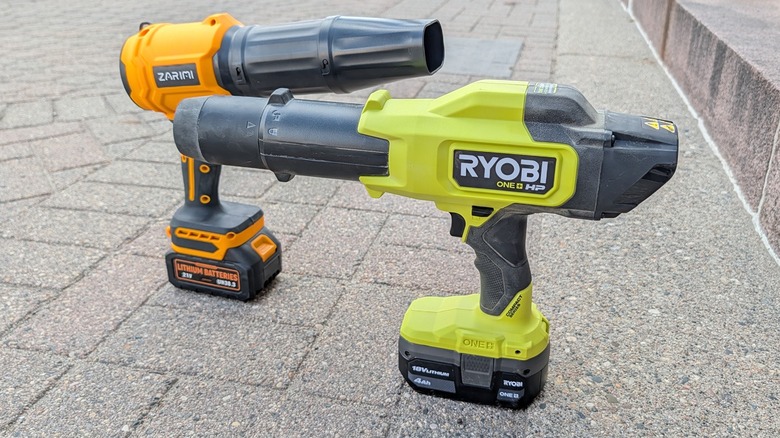
Power tools can be dangerous — especially when you’re dealing with a machine with rotating parts. When you add forceful wind power and what seems like a design executed with little regard for the safety of the user, things can go bad quickly. We brought two mini leaf blowers to our review bench, one from a well-known brand sold by Home Depot, the other from a lesser-known brand sold on Amazon. 

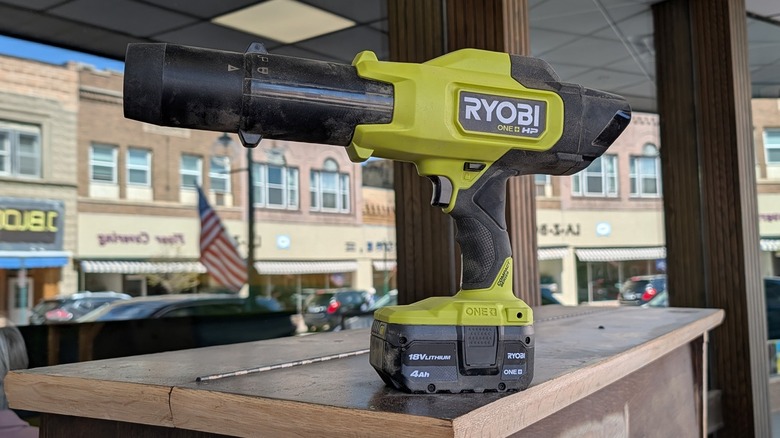
From Home Depot we got a Ryobi 18V ONE+ HP Compact Brushless 220 CFM Blower Kit (PSBLB01K) — that’s the one that’s neon yellow-green (or “Ryobi Green” if you like).  

Advertisement

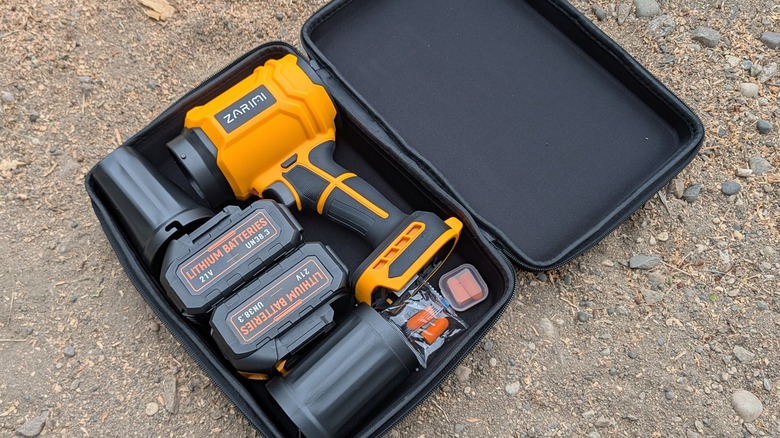
From Amazon we ordered a Yuquesen leaf blower — or maybe it’s a Zarimi leaf blower — either way, it’s the orange-colored blower. The Amazon listing page for this product says “Yuquesen” but the tool that’s delivered has the brand “Zarimi.” The product looks like what’s shown on Amazon, but the logos on the product are different — that’s not something that usually happens when we purchase products elsewhere.

This in mind, we treated both blowers with equal scrutiny, attempting to assess and compare their power, value, and usefulness in the field. One of these blowers is pretty great, the other is a bit of a mess.

Advertisement

Yuquesen or Zarimi, depending on who you ask

If you look at the listing on Amazon or on the Yuquesen product listing site for the orange-colored tool we’ve reviewed, you’ll see the brands “Yuquesen” and “Zarimi” used interchangeably. On the Yuquesen homepage you’ll also find some creative editing in press images. What you see below is a screenshot of the official Yuquesen website captured on May 8, 2026. 

The appearance of “VIOLENCEN” on the product is probably the result of a PR department’s editing software’s best guess at a low-res image of the brand “YUQUESEN” in all caps. Again, this is extra odd, because the product we actually received (as ordered from the official Yuquesen Store on Amazon, linked above) did not have this branding, and instead features the “Zarimi” name pictured below.

If you head to the website for “Zarimi” at MyZarimi.com, you’ll find a white label website — a cookie-cutter template with the blanks filled in using this brand. You can prove this yourself by heading to the bottom of the website to find its Contact Us address: 393 South Beltline Highway, Mobile AL 56696.

Use your favorite search engine to find other instances of this address, and you’ll find another cookie-cutter website for “Dicekoo,” another brand that sells products on Amazon. And look! According to its website, it has the same customers (with different names and careers, of course). 

Now let’s climb out of this rabbit hole, and get to talking about how potentially dangerous the Zarimi (or Yuquesen) leaf blower is. 

Advertisement

Yuquesen’s Potentially Dangerous Bits

Generally, we review smartphones, laptops, tablets, and other electronic devices that don’t really have any dangerous moving parts. We review automobiles, too — cars and trucks certainly can be perilous if handled improperly, but for the most part, we’ve been safe. Most of the time we handle products that stand very little chance of harming the reviewer under normal circumstances — with some notable exceptions.

The Yuquesen handheld leaf blower (we’ll just call it Yuquesen from this point forward because that’s how it’s listed on Amazon) is another exception to the rule. The design of this device might not seem all that different from the Ryobi blower at first glance — but it’s bad in all the right places.

The three photos of the device above are of how it appears without its extension tube parts attached — how it looks when you first take it out of the box. If you’ll take a look at the back of the device, you’ll notice that the fan is less than an inch away from the device’s (back-facing) protective plastic grill.

Advertisement

Above you’ll see a video in which our friends at Extreme Reviews have found out the hard way that this combination of a shallow-mounted fan and leaf-blower-grade air force make a perfect opportunity for tangled hair aplenty. Extreme Reviews reviewer Scott found his loose hair strands pulled into the machine more than once — on camera, no less.

If you remove the extension tubes from the device, you’ll see that the blade is deep enough and protected enough to avoid any small adult human fingers, but still wide open enough to potentially allow smaller parts access. Granted, this side should be blowing outward, but it’s not light debris we’re worried about.

Advertisement

Why Ryobi’s leaf blower is significantly safer

The design of the Ryobi leaf blower allows plentiful space between the air intake and the point at which the fan blade spins. The back of this tool is also angled, further protecting any wild strands that might be dangling near it. This is actually a fairly standard design element in leaf blowers both large and small — it should be a foregone conclusion that this sort suction power shouldn’t be treated lightly.

The front of this tool has an extended section of non-removable tube, unlike the Yuquesen machine. This means the Ryobi tool is a bit more difficult to lug around — it’s “mini,” but it’s certainly not small. However, this length of tube — along with the more plentiful plastic protective parts built into it — make the tool safer than its alternative. 

Advertisement

The Ryobi leaf blower is safe. That shouldn’t even be something you think to worry about with a product like this, but here we are.

Advertisement

Danger aside, Ryobi’s tool is still a superior machine

The Ryobi handheld leaf blower (model PSBLB01K) is one of the best leaf blowers I’ve ever tested, and I’ve tested quite a few. It’s not made to be a full-yard leaf blower — it doesn’t have the power for that. Instead, it’s perfect in a worksite or small deck area, where you might have to deal with loose dust or small piles of leaves. I used it to clear sawdust as I resurfaced a wood piano in an outdoor workspace. 

This blower had the perfect amount of power for clearing the small spaces I needed to clear without blasting sawdust into the nearby city street (and into the faces of people walking nearby). It also comes with additional extension tube attachments in the box, too — I’ve not found a use for those yet, but it’s nice to know there are more ways to use the tool.

Meanwhile, the Yuquesen’s power is such that it could be used for sawdust, but not much else. Where the Ryobi’s power borders on high enough to replace a full-sized leaf blower for most basic jobs, the Yuquesen doesn’t quite deliver what it should. One feels like professional equipment, the other feels more like a toy.

Advertisement

Verdict and value

The Yuquesen leaf blower is available in the Yuquesen store on Amazon for approximately $60. For that price you get the blower, a few extension attachment tubes, earplugs, two batteries, a battery charger, and a carrying case. The quality of every part of this product feels questionable — lacking, like it’s made with plastics that are only just strong enough to withstand the trip to the consumer and hold up for long enough to avoid a bad review. For $60, the Yuquesen blower is not worth the price.

The Ryobi blower costs around $150 at Home Depot with battery and charger included, and it is well worth the price. You could also buy the bare tool around $100, if you’re a collector of Ryobi products and already have a Ryobi charger and battery on hand. If I only needed a blower for small areas like a garage stall, an apartment balcony, or an entryway, this would be my number one pick. 

Advertisement


Source link

Continue Reading

Tech

Yes, you can serve a website from a $1 microcontroller

Published

on

offbeat

Well, page is more accurate, but the source code is available if you want to try doing something even crazier

UPDATED Web hosting bills getting too expensive? Maybe you ought to consider serving your site from a one-dollar 8-bit microcontroller.

Okay, you won’t exactly be serving up a high-performance, graphic-rich website using this project from European developer and blogger Maurycy Zalewski. The setup is limited to one URL, but hey, it actually works, provided an influx of visitors hasn’t killed the site yet. 

Advertisement

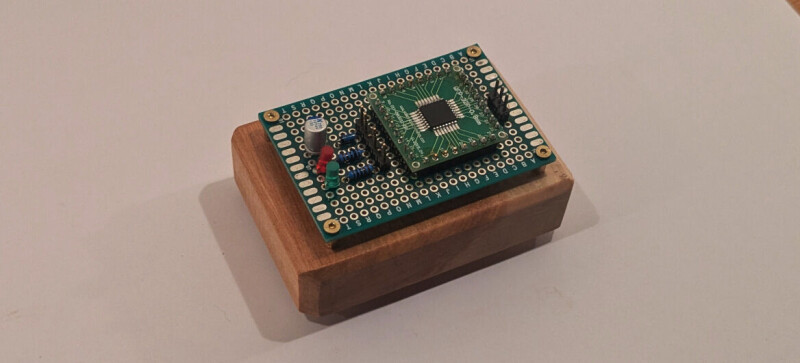
The bargain-basement chip that serves as the central component of this project is the AVR64DD32, which currently retails from DigiKey for $1.30. It has a single 8-bit AVR core with a blistering 24 MHz max clock speed, 8 KB of static RAM, 64 KB of flash memory, and 256 bytes of EEPROM non-volatile memory for storing a very limited amount of data. 

Zalewski told The Register in an email that the whole build was free for him, as he had everything on hand, but he estimates the total cost of the thing to run closer to $2 or $3 when accounting for resistors and capacitors, the board the chip is attached to, and the like.

Serving a web page from such a limited chip is a task, to say the least, and Maurycyz had to do a lot of legwork to get the thing working. 

The I/O pins on the AVR max out at 12 MHz, which Zalewski explained meant that it wouldn’t be possible to use Ethernet for the project, as the data flow from even the aged baseline Ethernet connection of 10BASE-T is too fast for the chip to handle. 

Advertisement

“10BASE-T still runs at 10 megabits/second,” Zalewski wrote. “Worse, it uses Manchester encoding: a zero is sent as ‘10’ and a one as ‘01,’ so 10 megabits of data is actually 20 megabits at the wire.”

“The proper solution is to buy a dedicated Ethernet chip from DigiKey, but then I’d be waiting weeks to finish this project,” Zalewski noted. Instead of waiting, he decided to take a different approach by turning to Serial Line Internet Protocol (SLIP), just like the guy who turned a discarded vape into a web server last year. 

For those unfamiliar with SLIP, it’s a 38-year-old protocol designed to encapsulate IP traffic for transmission over serial lines, and it was widely used to make internet connections in the olden days. SLIP is still supported in modern Linux builds due to its compact size and the fact that it’s often used to connect microcontrollers to the internet. 

Now, giving the AVR an internet connection didn’t solve the harder problem of actually serving a web page to visitors. Zalewski said the chip could generate response packets by swapping the source and destination addresses on incoming traffic and resetting the packet’s TTL value, but implementing TCP still took several days of work. HTTP handling was simplified by returning a hardcoded response for every request, which works as long as the site only serves a single URL.

Advertisement

Here’s that limitation we were talking about: “This works fine as long as there’s only a single URL on the site,” Zalewski said. Sorry for those wanting to host more pages from that $1 microcontroller.

Lastly, Zalewski said he had to figure out how to get requests from the internet to the microcontroller without spending money on a publicly routed IP address. That was resolved by using WireGuard to connect the microcontroller located at his home to a public-facing machine at a Helsinki datacenter, which then proxied requests to the microcontroller using a local address block. 

“This means that visitors aren’t directly connecting to the MCU’s TCP/IP stack… but hey, it’s the same setup that the Vape Server uses and no one complained,” Zalewski said. And all without having to buy a vape or root through dumpsters to find an old one. 

Zalewski told us that the hardware he used for the task was so simple that it only took a few minutes to build the thing itself. The software was another thing altogether, though.

Advertisement

“Wiring up the board only took a few minutes, but writing the software took multiple

days,” Zalewski said. Lucky for those wanting to duplicate or add to his work, the source code and a pre-compiled binary that’ll run on an 8-bit microcontroller are included in his blog post.  ®

Updated  at 1854 GMT on 3/18/2026 with more information after we spoke to the developer.


Advertisement


Source link

Continue Reading

Trending

Copyright © 2025