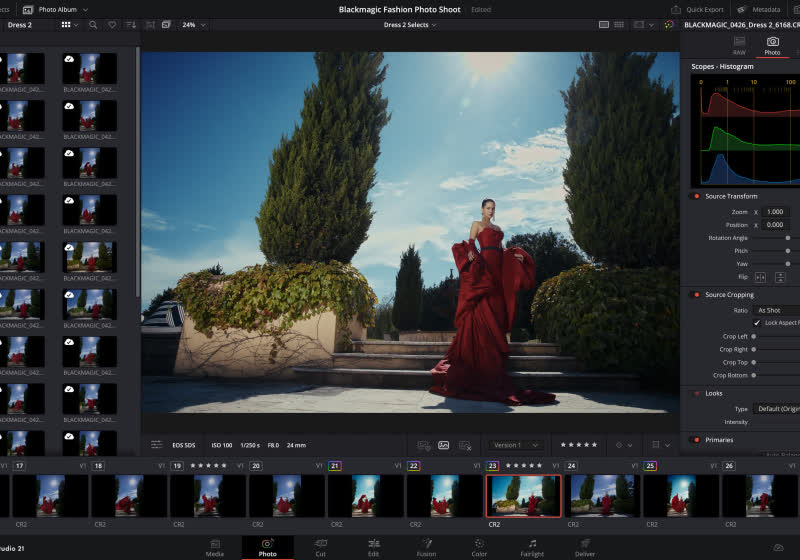
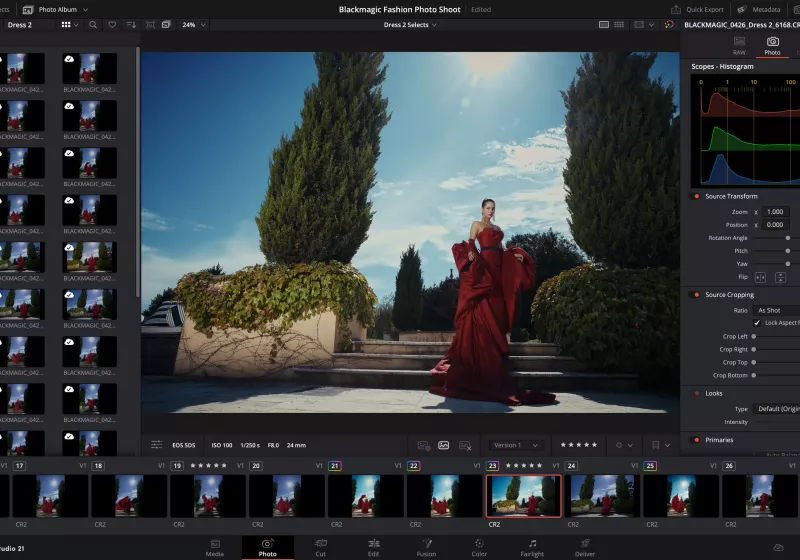
DaVinci Resolve 21 beta pushes further into all-in-one territory, adding a dedicated Photo section that allows edition of still images using the same color pipeline that made Resolve a favorite for video. The update leans heavily on AI to speed up everyday work. Early impressions highlight how seamlessly the new tools fit into existing workflows.
Microsoft has released Windows 11 KB5083769 and KB5082052 cumulative updates for versions 25H2/24H2 and 23H2 to fix security vulnerabilities, bugs, and add new features.
Today’s updates are mandatory as they contain the April 2026 Patch Tuesday security patches for vulnerabilities discovered in previous months.
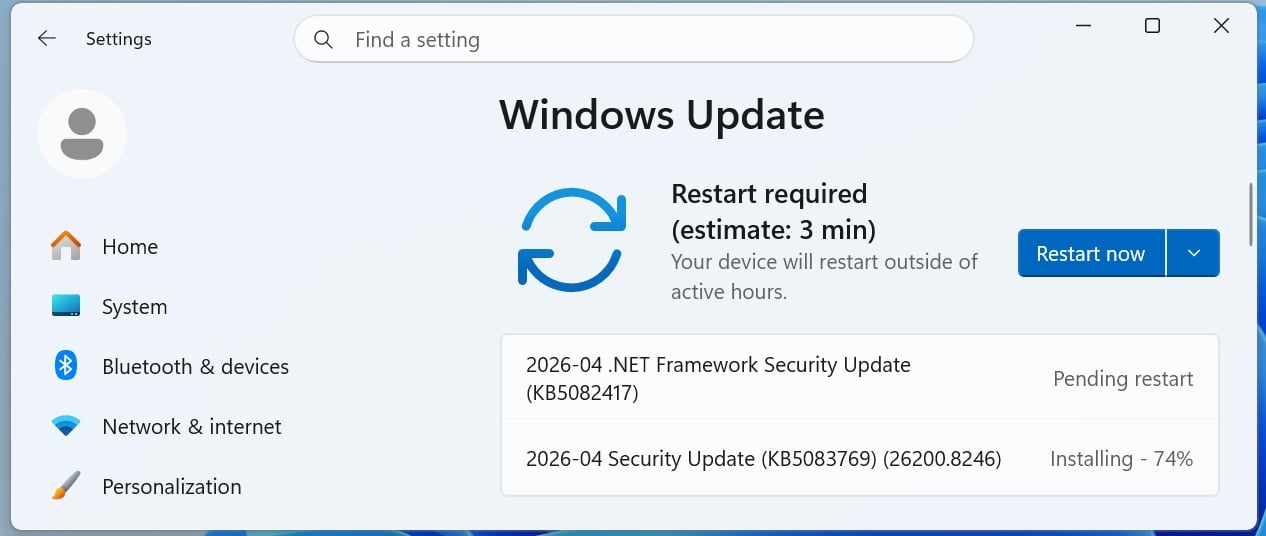
April 2026 Update downloading automatically
You can install today’s update by going to Start > Settings > Windows Update and clicking on ‘Check for Updates.’
This is the fourth ‘Patch Tuesday’ release in 2026, and it’s based on 24H2, which means 25H2 gets the same update. There are no exclusive or special changes. You’ll get the same fixes across the two versions of Windows 11.
What’s new in the April 2026 Patch Tuesday update
After installing today’s security updates, Windows 11 25H2 (KB5083769) will have its build number changed to 26200.8246 25H2 and 26100.8246 (24H2), and 23H2 (KB5082052) will be changed to 22631.6936.
Advertisement
After the update, Smart App Control can now be modified without installing a fresh copy of Windows 11.
In addition, Microsoft has patched issues with sfc /scannow where it fails to correctly report the error message.
Here’s the full list of fixes and improvements:
[Narrator] New!1 Narrator provides rich image descriptions on Copilot+ PCs and now works with Copilot on all Windows 11 devices. Press Narrator key + Ctrl + D to describe the focused image or Narrator key + Ctrl + S to describe the full screen. Copilot opens with the image ready, allowing you to enter a prompt for a customized description. The image is shared only after you choose to describe it. On Copilot+ PCs, Narrator gives instant, on‑device descriptions, and you can select Ask Copilot for more detail.
Advertisement
[Smart App Control]New! You can turn Smart App Control (SAC) on or off without needing a clean install. To make changes, go to Settings > Windows Security > App & Browser Control > Smart App Control settings. When turned on, SAC helps block untrusted or potentially harmful apps. To learn more, see App & Browser Control in the Windows Security App. This feature was previously disclosed in January 2026 (KB5074105) and is now beginning to roll out.
[Account Settings]
New!Microsoft 365 Family subscribers can upgrade to a different Microsoft 365 plan from Settings > Accounts. To remove the upgrade option, turn off Suggested content in Settings.
New!This update improves the design of the dialog boxes in Settings > Accounts > Other users to match the modern Windows look and support dark mode. The visibility of the dialog box option depends on whether the device has a domain joined work or school account.
Advertisement
[Input]New! The Pen settings page includes refinements to the pen tail button options. The new “Same as Copilot key” option enables the pen tail button to open the same app as the Copilot key.
[Settings]
New!The Settings About page (Settings > About) has been improved to provide a more structured and intuitive experience, offering clearer device specifications and easier navigation to related device components, including quick access to Storage settings.
New!2 The device information card on the Settings Home page simplifies key device specifications and improves consistency across the end-to-end flow from the Home Card to the Settings > System > About page, making information easier to scan and understand.
Advertisement
This update improves the reliability and performance of opening the Home in Settings.
This update improves the reliability of downloading required updates when you’re prompted in Settings > System > Advanced.
[File Explorer] This update improves the File Explorer experience.
You can more reliability unblock files downloaded from the internet in order to preview them in File Explorer.
Advertisement
You can use Voice Typing (Windows logo key + H) when renaming a file in File Explorer.
You can now sort the permissions entries in the Advanced Security Settings window for a folder in File Explorer by Principal.
[Display] This update includes Display reliability improvements.
Monitors can now report refresh rates higher than 1000 Hz.
Advertisement
When you use a native USB4 monitor connection, the USB controller can now enter its lowest power level while the PC is sleeping, which helps save battery life.
Auto rotation reliability has improved after resuming from sleep.
HDR reliability has improved for displays with non-compliant DisplayID 2.0 blocks.
Monitors with DisplayID now report a more accurate size when the WMI monitor APIs are used.
Advertisement
[Printing] Updated downlevel baseline support for printer connections to be Windows 10, version 1607 and Windows Server 2016 (Build 14393).
[Safe mode] This update improves the reliability of loading taskbar components in safe mode.
[Voice Access] This update improves how numbers are detected and written when using Voice Access in English.
[Start menu] This update improves the reliability of applying the Start menu layout through Group Policy when desktopAppLink is present in the JSON.
[Audio] This update improves how short MIDI messages are handled in cases where an application is initialized without providing long message buffers.
[System File Checker] This update removes an extraneous error message you might unexpectedly see when running sfc /scannow.
Microsoft is not aware of any new issues with this month’s Patch Tuesday, and it’s largely because it’s not a massive release as compared to previous patch releases.
At the same time, it’s possible that the update does not have known issues because Microsoft has committed to a stable and reliable Windows experience.
Advertisement
Microsoft has confirmed it’s working on a big Windows 11 2026 quality update that restores the movable taskbar and will significantly improve the performance of modern interfaces, including the right-click menu.
Microsoft also has plans to limit Copilot integration in Windows 11, reduce ads, and make the out-of-the-box experience faster with skippable Windows Updates.
Automated pentesting proves the path exists. BAS proves whether your controls stop it. Most teams run one without the other.
This whitepaper maps six validation surfaces, shows where coverage ends, and provides practitioners with three diagnostic questions for any tool evaluation.
Apple’s iPhone 18 Pro could end up being one of its most effective weapons next year. Though it’s not because it will be cheap, but because the competition may be getting even more expensive.
According to a Korean leaker, Apple is facing higher memory costs for the iPhone 18 series, especially on the Pro models, due to rising DRAM and NAND prices as suppliers prioritize AI server demand. Even Apple’s next chip is rumored to cost more than the generation before.
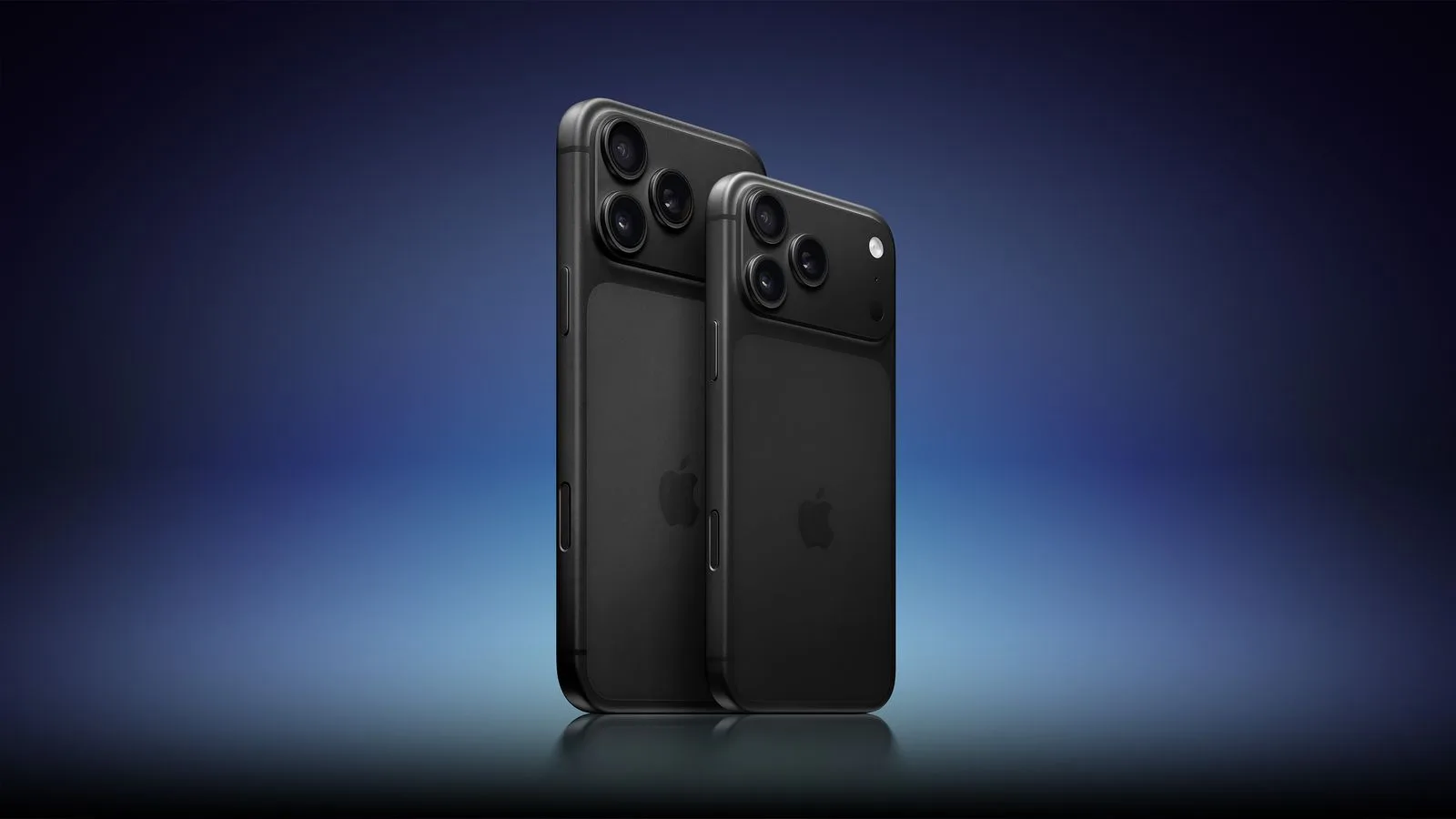
iPhone 17 Pro in Black / MacRumorsMacRumors / MacRumors
What is Apple doing?
The more interesting part of the leak is not that costs are rising. It is that Apple reportedly wants to absorb as much of that pressure as possible, rather than immediately passing it on to buyers. The company is apparently trying to keep the upcoming iPhone 18 Pro pricing in line with the current generation, even as Android phones across segments are getting more expensive. Known analyst Ming-Chi Kuo also believes that Apple is looking to avoid raising iPhone 18 prices “as much as possible” to preserve competitiveness.
If that holds true, Apple would not need to undercut rivals to make life difficult for them. It would just need to stay relatively stable while competing flagship brands keep pushing prices upward.
MacRumors / MacRumors
Why that could squeeze Android rivals
Android makers often have less room than Apple to absorb component inflation, and some reports have already framed rising memory costs as a broader industry problem. If Apple can use its scale and supply-chain leverage to keep the iPhone 18 Pro close to current pricing while rivals move higher, the value conversation changes fast, especially in the premium segment, where buyers already stretch their budgets.
Apple does not need the iPhone 18 Pro to be a bargain. It just needs it to look disciplined while everyone else starts to look expensive.
From laser cutters to 3D printers, having an exhaust duct at the back of a machine is a very common sight. However, these tend to be rather bulky, claiming many centimeters of precious space behind a machine even if you’d want to push it right up against a wall. This issue annoyed [TheNeedleStacker] over on YouTube so much that he had a poke at solving this problem with angled exhaust ducts, all hopefully without impairing its basic function.
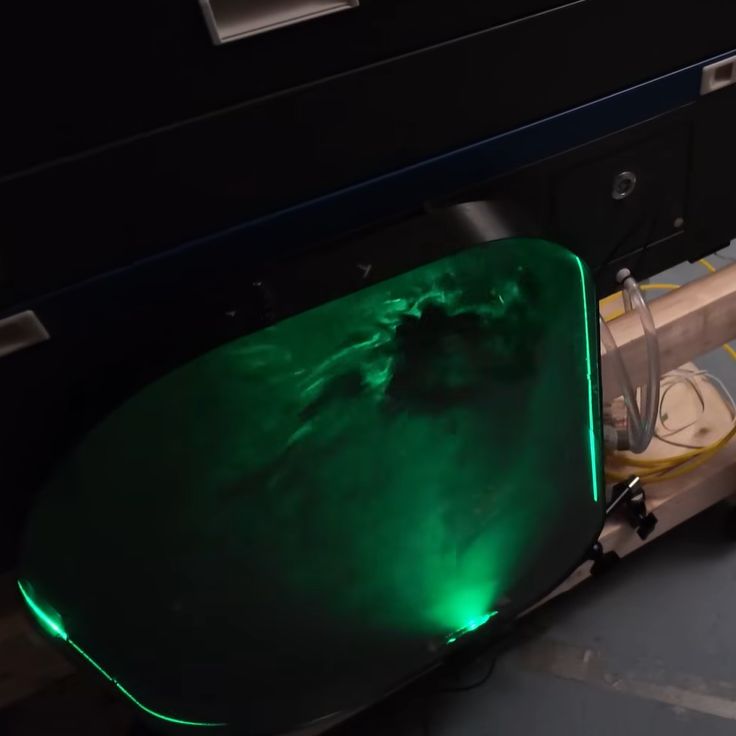
Smoke machine and laser for some air ducting rave vibes.
Although there are some online offerings for angled exhaust port extenders, these do not quite fit the required 6″ diameter. Reducing the problem to just a matter of cross section area for simplicity’s sake, that means a 19″ wide duct at a depth of 1.5″. Making sure the transition from the tube to the flat duct doesn’t become an impediment is the tricky part, so the approach here was to mostly ignore it and just make a functional prototype to get an idea of how a direct approach worked.
Installing the contraption worked out fine, and subsequent testing showed that although it seems to slightly reduce the effective airflow compared to the flex tubing, it is absolutely rad to look at with the transparent cover and some laser light to illuminate all that’s happening inside.
While some optimization work on the duct transitions can undoubtedly eke out more performance, it’s certainly not bad for a quick project.
Education company McGraw-Hill has confirmed in a statement to BleepingComputer that hackers exploited a Salesforce misconfiguration and accessed its internal data.
The company assured that the breach did not affect its Salesforce accounts, customer databases, or internal systems, and that the amount of exposed data is limited and non-sensitive.
“McGraw-Hill recently identified unauthorized access to a limited set of data from a webpage hosted by Salesforce on its platform. This activity appears to be part of a broader issue involving a misconfiguration within Salesforce’s environment that has impacted multiple organizations that work with Salesforce,” a McGraw-Hill spokesperson told BleepingComputer.
“Importantly, this did not involve unauthorized access to McGraw-Hill’s Salesforce accounts, customer databases, courseware, or internal systems,” the company representative added.
McGraw-Hill further states that its investigation, with help from external cybersecurity experts, revealed that the exposed information does not contain Social Security numbers (SSNs), financial account information, or student data from its educational platforms.
Advertisement
A global education company focused on learning content and platforms, McGraw-Hill offers textbooks, digital learning platforms, and K-12 school and university systems. The company is a major player in education publishing, with an annual revenue of $2.2 billion.
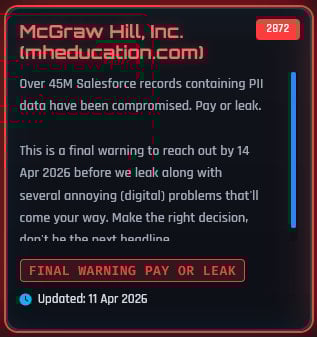
The statement about the cyberattack comes in response to the extortion group ShinyHunters announcing McGraw-Hill as a victim on its dark-web portal and threatening to leak stolen data by April 14 unless a ransom is paid.
The notorious threat actor claims to hold 45 million Salesforce records containing personally identifiable information (PII), contradicting the company’s statement that the compromised data is not sensitive in nature.
McGraw-Hill on ShinyHunters’ extortion portal Source: BleepingComputer
McGraw-Hill also told BleepingComputer that the affected webpages were secured immediately after detecting the unauthorized activity, and that it is working closely with Salesforce to further strengthen protections and ensure that the issue is fully addressed.
In March, the threat group also breached the American firm Infinite Campus, which also operates a K-12 student information system.
Automated pentesting proves the path exists. BAS proves whether your controls stop it. Most teams run one without the other.
This whitepaper maps six validation surfaces, shows where coverage ends, and provides practitioners with three diagnostic questions for any tool evaluation.
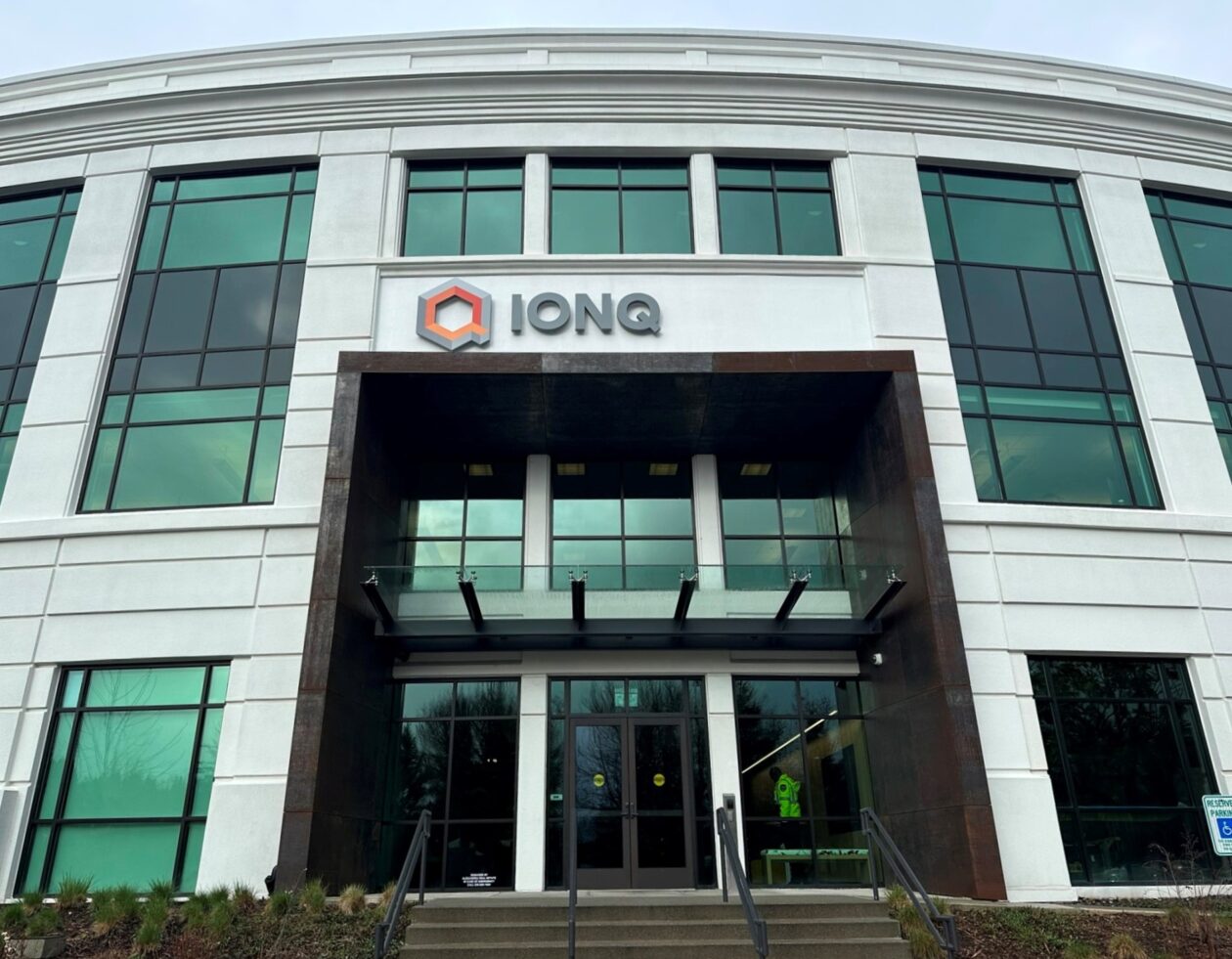
Washington Gov. Bob Ferguson is directing $500,000 from a state economic development fund to support the expansion of IonQ’s manufacturing facility for quantum computing hardware in Bothell, Wash. (GeekWire Photo / Alan Boyle)
Leaders of the Pacific Northwest’s computing community gathered in downtown Seattle today to mark World Quantum Day — and Washington Gov. Bob Ferguson gave them one more reason to celebrate. Or rather, 500,000 reasons.
Ferguson took the occasion to announce that $500,000 would be directed from the Governor’s Economic Development Strategic Reserve Fund to support the expansion of IonQ’s quantum computer manufacturing facility in Bothell, Wash. The 100,000-square-foot factory opened in 2024 and is ramping up production.
Over the next 18 months, Maryland-based IonQ plans to add about 100 engineering positions in Bothell, paying an average salary of $177,000. Over the next five years, the expansion is projected to generate between 1,200 and 2,000 regional jobs.
The Strategic Reserve Fund makes use of unclaimed lottery prize money for investments that deliver significant job creation and capital investment in Washington state. The newly announced award will go to the Economic Alliance of Snohomish County for building upgrades, workforce expenses and other expansion costs.
The state’s funding is coming on top of more than $14 million in private investment. “Quantum is the future, and it’s being built here,” Ferguson said in a news release.
April 14 is marked worldwide as World Quantum Day for a thoroughly geeky reason: The date (4/14) commemorates one of the foundational numbers of quantum mechanics, Planck’s constant (4.14 X 10⁻¹⁵ eV ⋅ s).
Quantum computing systems don’t follow the binary rules of classical computing. Instead, they leverage the properties of subatomic particles to process multiple values simultaneously. Quantum-based algorithms hold the promise of solving some types of problems that would be impractical or impossible to solve using classical computers.
The promise hasn’t yet come to full fruition — but Washington’s lieutenant governor, Denny Heck, set a bullish tone as today’s keynote speaker. “Quantum computing is inarguably going to be one of the most impactful scientific and technical breakthroughs in all recorded history, and frankly, in the parlance of contemporary discussion, it will dwarf AI,” he said.
Advertisement
Heck predicted that quantum computing would give rise to “fulsome commercial applications” in the next five or 10 years. “You know we’re not there yet,” he told the audience, “but you also should know that it is no longer a question of if. It is indeed a question of when.”
How AI is fostering a quantum leap
Several speakers said the rapidly advancing revolution in artificial intelligence is accelerating the quantum revolution as well.
“Quantum plays a very interesting synergistic role with AI,” said Nathan Baker, who leads an engineering team focused on quantum application development at Microsoft. “For a while, quantum is going to be a scarce and relatively low-throughput computational resource. It’ll be solving problems we can’t solve today, so it’ll be a whole new resource. But the best way to get mileage out of this … is to scale quantum up by partnering with AI.”
Krysta Svore, Nvidia’s vice president of applied research for quantum computing, said AI could help developers address challenges that have slowed progress in the field.
Advertisement
“AI will help with quantum error correction in particular, providing a way to perform the inference that’s needed to keep the quantum computer stable and essentially alive for longer periods of time,” Svore said.
Svore also noted that the general public shouldn’t expect to buy a quantum computer for their desktop. “When you look at what’s required to operate a quantum computer, most of us don’t necessarily have a cryogenic environment in our house,” she said. “Realistically, you’re going to access this type of compute just like you’re accessing AI supercomputers, through the cloud. Most of us don’t have an AI supercomputer in our backyard either, yet all of us are using LLMs, whether you’re using ChatGPT or Copilot or Gemini.”
Those potential perils and payoffs have captured the attention of policymakers. Back in 2018, the National Quantum Initiative Act authorized $1.2 billion over a five-year period to boost investment in quantum information science. More recently, the White House paired quantum technologies with AI in an initiative called the Genesis Mission.
What’s next for the quantum realm?
In honor of World Quantum Day, legislation known as the National Quantum Initiative Reauthorization Act was approved unanimously today by the Senate Commerce Committee.
“From scientific breakthroughs in health care to clean energy solutions, quantum technology is a game-changer, and federal investment is vital to accelerating the transition from basic science to quantum innovation and practical applications,” U.S. Sen. Maria Cantwell, D-Wash., one of the bill’s lead sponsors, said in a news release. “The state of Washington, with its vibrant tech industry, national lab partnerships and a growing pipeline of quantum engineers, is poised to become ‘Quantum Valley.’ “
On that point, Heck was less bullish than Cantwell. “Here’s the question: Are we really moving as fast as we could in our region?” he asked. “Are our investments, and is our coordination, coming anywhere near matching the sheer magnitude of the opportunity that exists? And if we’re being honest with one another — no, it’s not.”
Advertisement
Heck and the other speakers at Northwest Quantum Day said more needed to be done to support education and workforce development, foster innovative computing ventures and strengthen the Pacific Northwest’s tech ecosystem.
“Having that local environment, a rich environment with talent, is important,” Baker said. “And it’s not just physicists, right? The quantum pipeline, especially if you’re aiming for quantum computing to be a commercial product … needs expertise across all areas, from ‘go to market’ down to the people engineering the hardware.”
Michael Brett, who leads go-to-market strategy for quantum technologies at Amazon Web Services, even had an idea for the marketing campaign. “I think our license plate should say, ‘The Quantum State,’ ” he said. Was the suggestion serious? Was it a joke? In the spirit of World Quantum Day, maybe it was both.
‘This version of GPT-5.4 lowers the refusal boundary for ‘legitimate’ cybersecurity work’, OpenAI said.
OpenAI said it will only allow select verified users access to its latest AI model for cybersecurity operations, a week following the limited launch of Anthropic’s Mythos.
Purpose-built for security operations, the new GPT-5.4-Cyber will be accessible to users willing to work with OpenAI to authenticate themselves as cybersecurity defenders, the company said.
This version of GPT-5.4 lowers the refusal boundary for “legitimate” cybersecurity work. As a “more permissive” model, OpenAI said it is beginning by deploying GPT-5.4-Cyber to “vetted” security vendors, organisations, and researchers.
Advertisement
The ChatGPT-maker only began integrating cyber-specific safeguards into its model deployments since 2025, and launched Codex Security to identify and fix vulnerabilities in March. In February, it introduced the Trusted Access for Cyber as a way to verify the identities of cybersecurity workers.
Anthropic’s new Mythos model showcases significant capabilities of detecting and generating security exploits. Concerned about bad actors, Anthropic made the choice to offer Mythos to a group of 40-some big businesses to boost their cyber defences.
Mythos’ reported capabilities have already raised concern with global leaders. Yesterday (14 April), the National Cyber Security Centre director told the Oireachtas Joint Committee on AI that more models such as Mythos should be expected at the hands of bad actors before the end of the year.
Anthropic’s co-founder and policy lead Jack Clark had similar beliefs. “There will be other systems just like this in a few months from other companies, and then a year to a year-and-a-half later, there’ll be open weight models from China that have these capabilities,” he told the audience at the Semafor World Economy event in Washington DC earlier this week.
Advertisement
OpenAI, which has plans for an initial public offering later this year, has been attempting to narrow focus into the enterprise market – a sector being quickly captured by Anthropic. According to data from payments group Ramp, nearly one in three US business paid for Anthropic’s tools in March.
The company has been shedding less lucrative projects, including “indefinitely” pausing plans for an erotic ChatGPT and putting Stargate UK on hold.
OpenAI’s biggest backer Microsoft, meanwhile, has agreed to rent data centre capacity at a site intended for the Stargate Norway project, as yet another one of OpenAI’s deals with UK AI infrastructure Nscale fails to take off.
Competition between the two companies has escalated, with the announcement of a new Anthropic-inspired ‘superapp’ by OpenAI, or a dedicated set of AI health tools by Claude launched just days after OpenAI released ChatGPT Health.
Advertisement
Despite pausing plans for a Stargate UK, OpenAI said it is opening its first permanent office in London in 2027 with a capacity of more than 500 people. The company plans to make London its largest research hub outside of US, it said.
Don’t miss out on the knowledge you need to succeed. Sign up for the Daily Brief, Silicon Republic’s digest of need-to-know sci-tech news.
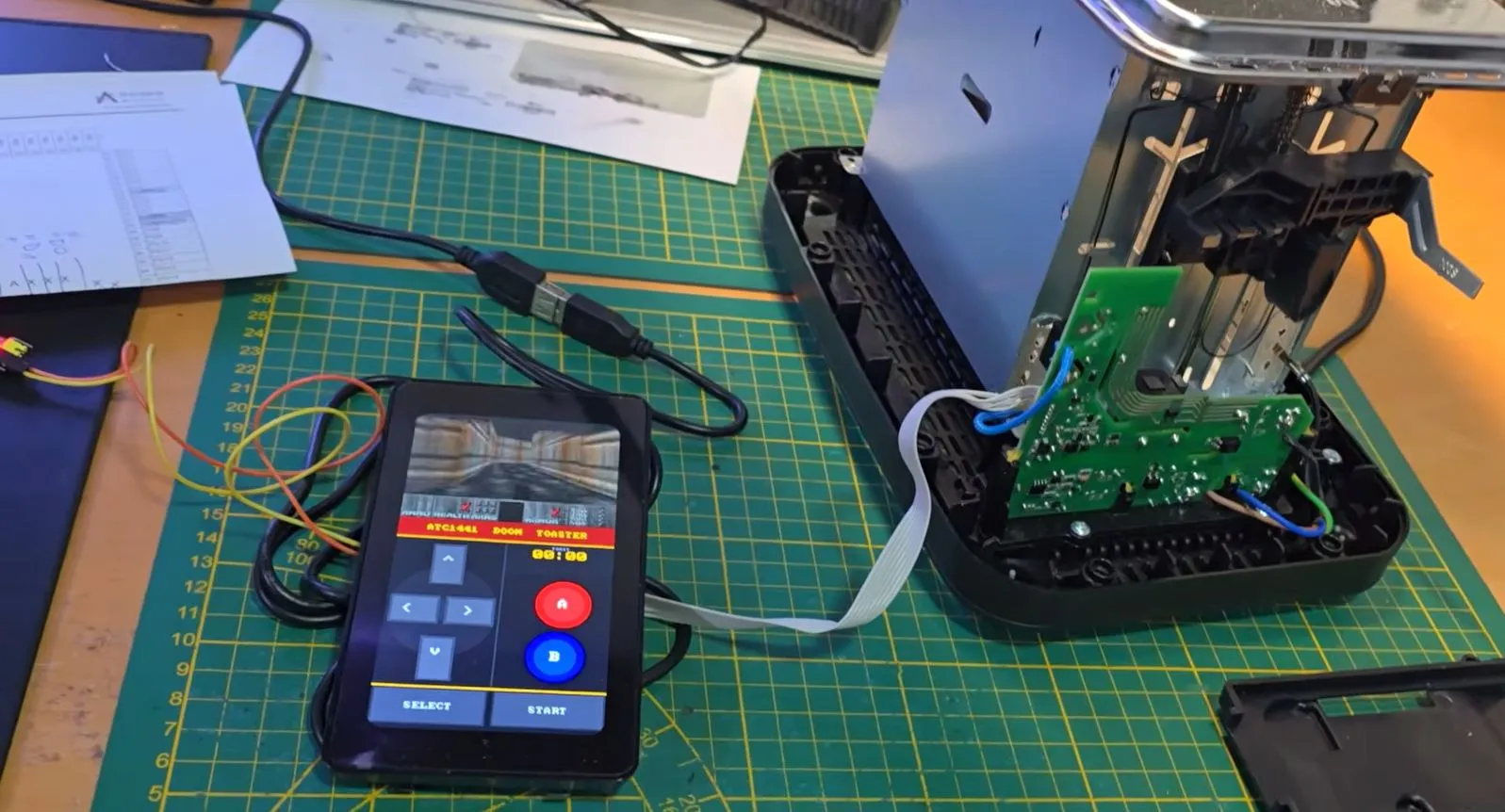
Although toasters should be among the most boring appliances in a household – with perhaps just a focus on making their toasting more deterministic rather than somewhere between ‘still frozen’ and ‘charcoal’ – somehow companies keep churning out toasters that just add very confusing ‘smart’ features. Of course, if a toaster adds a big touch screen and significant processing power, you may as well run DOOM on it, as was [Aaron Christophel]’s reflexive response.
While unboxing the Aeco Toastlab Elite toaster, [Aaron] is positively dumbfounded that they didn’t also add WiFi to the thing. Although on the bright side, that should mean no firmware updates being pushed via the internet. During the disassembly it can be seen that there’s an unpopulated pad for a WiFi chip and an antenna connection, making it clear that the PCB is a general purpose PCB that will see use in other appliances.
The SoC is marked up as a K660L with an external flash chip. Dumping the firmware is very easy, with highly accessible UART that spits out a ‘Welcome to ArtInChip Luban-Lite’ message. After some reverse-engineering the SoC turned out to be a rebranded RISC-V-based ArtInChip D133CxS, with a very usable SDK by the manufacturer. From there it was easy enough to get DOOM to run, with the bonus feature of needing to complete a level before the toaster will give the slice back.
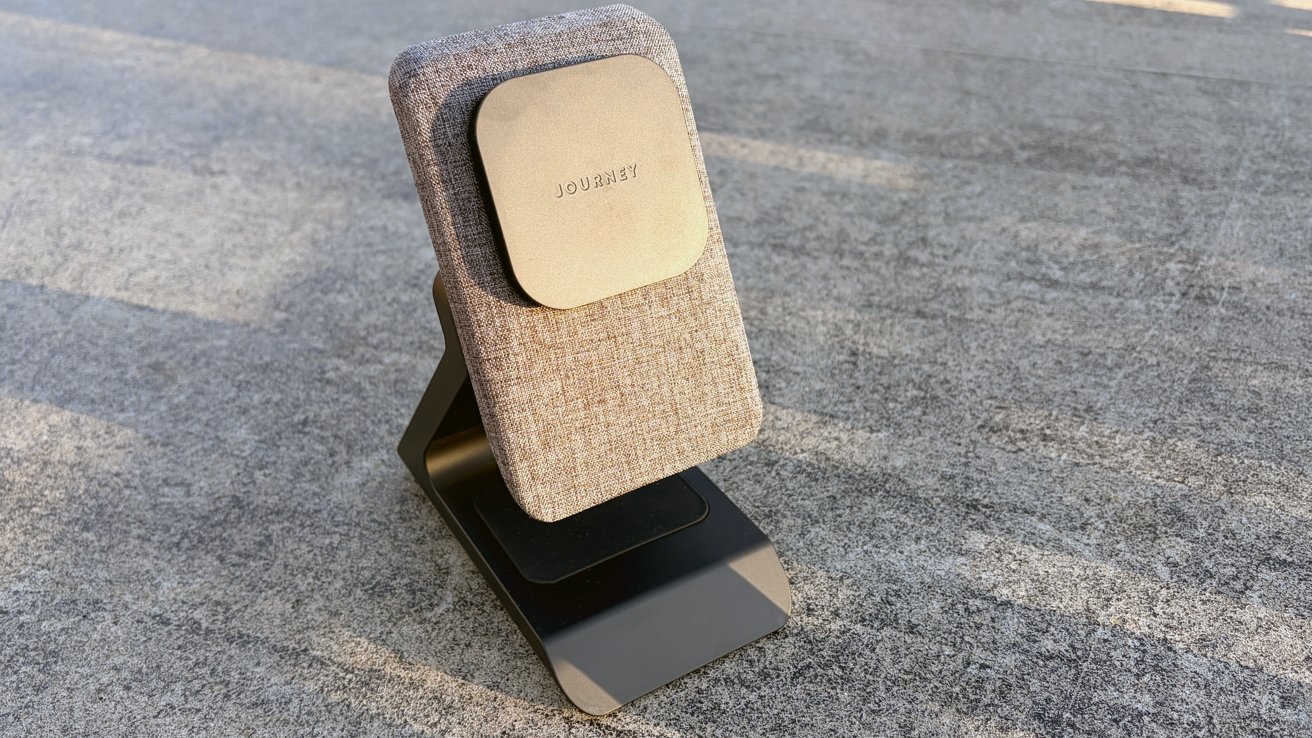
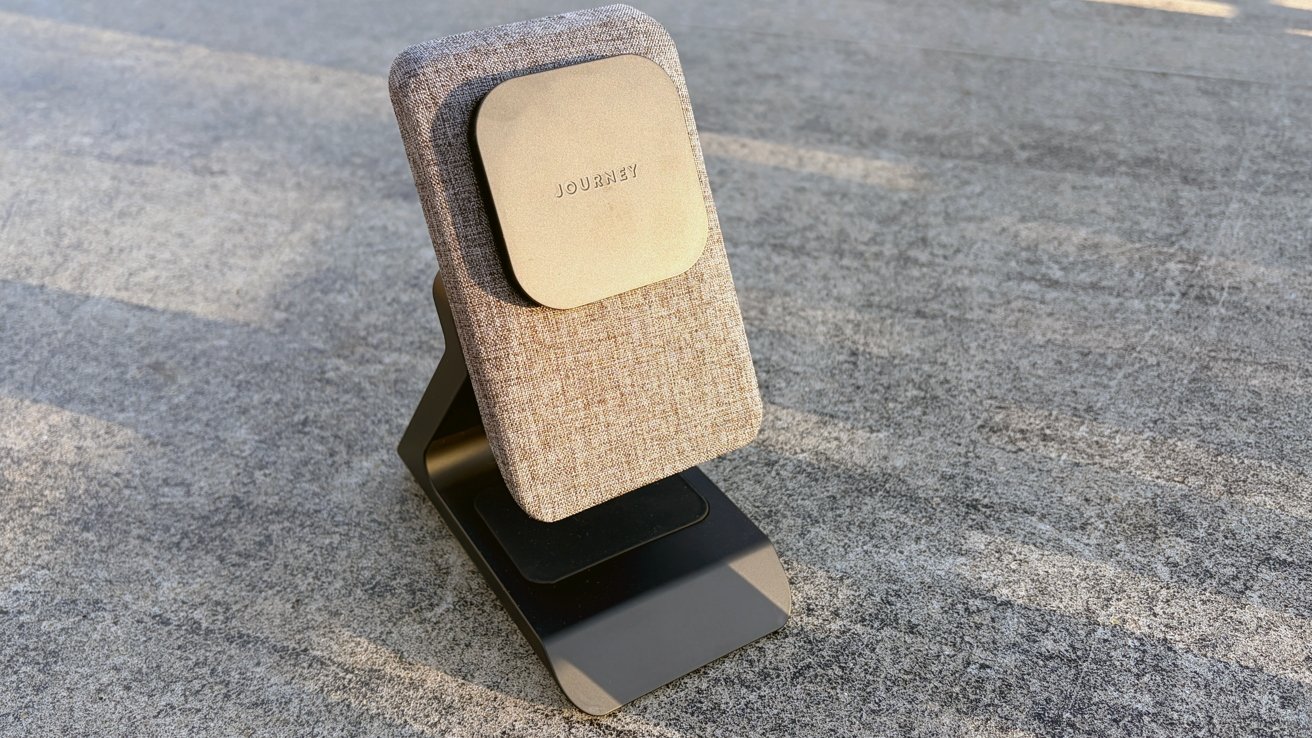
JourneyiPhone 17‘s 3-in-1 charging station, the Summit Ultra, keeps your iPhone, AirPods, and Apple Watch topped off and ready to go at a moment’s notice — but you’ll pay for that convenience.
Journey Summit Ultra 3-in-1 Wireless Charging Station
If you’re in the Apple ecosystem, chances are you’ve got at least two — if not three, four, or five Apple devices that need to be charged at any given moment. Journey knows this, which is why it’s created its own take on a convenient multi-charger. The Summit Ultra is a three-in-one charger, designed to charge your MagSafe-compatible iPhone, AirPods, and Apple Watch. And, as a bonus, it does so without needing any sort of wires going to or from your devices — everything is grab-and-go. Continue Reading on AppleInsider | Discuss on our Forums
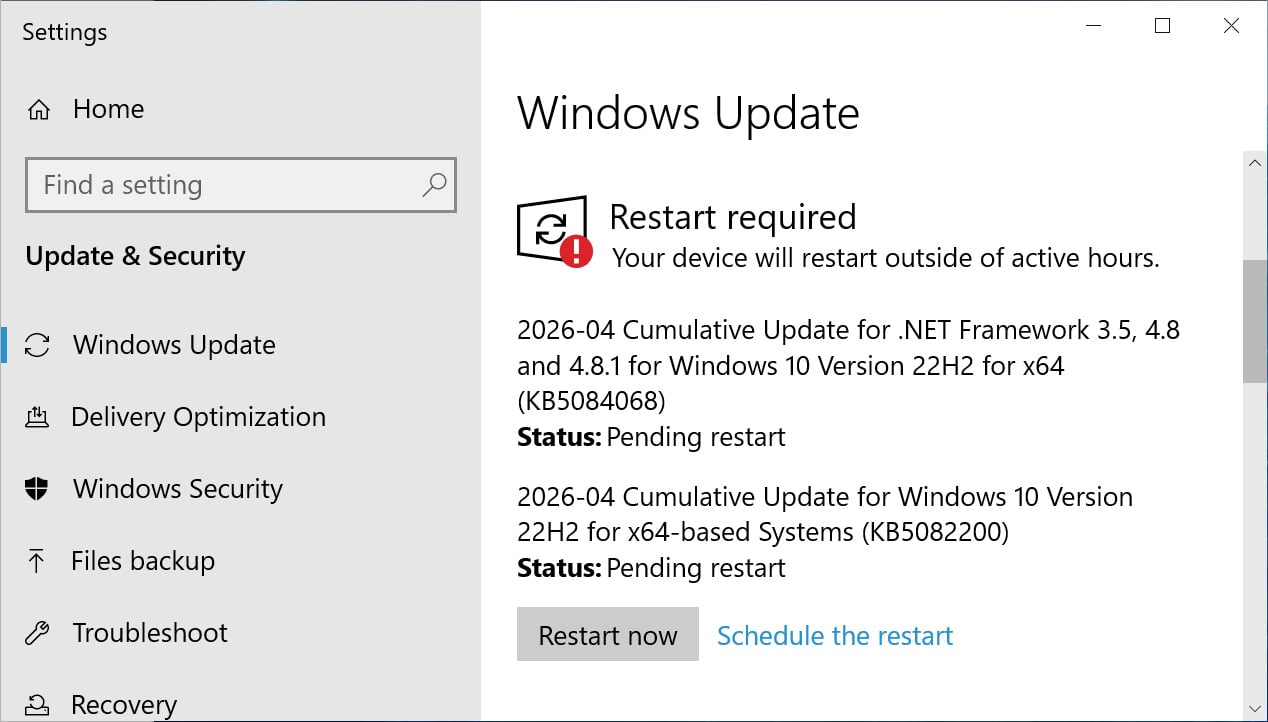
Microsoft has released the Windows 10 KB5082200 extended security update to fix the April 2026 Patch Tuesday vulnerabilities, including 2 zero-days.
This update brings some interesting changes, including new Remote Desktop Protocol file phishing protections and new Windows Security indicators that provide the status of the rollout of new Secure Boot certificates.
If you are running Windows 10 Enterprise LTSC or are enrolled in the ESU program, you can install this update like normal by going into Settings, clicking on Windows Update, and manually performing a ‘Check for Updates.’
Windows 10 KB5082200 update Source: BleepingComputer
After installing this update, Windows 10 will be updated to build 19045.7184, and Windows 10 Enterprise LTSC 2021 will be updated to build 19044.7184.
What’s new in Windows 10 KB5082200
Microsoft is no longer releasing new features for Windows 10, and the KB5082200 update primarily contains security updates and bug fixes.
Advertisement
With today’s April 2026 Patch Tuesday, Microsoft has fixed 167 vulnerabilities, including two zero-day flaws.
The complete list of fixes is below:
[Sign-In] Fixed: After you install the Windows update released on or after March 10, 2026, some users might experience an issue signing in to apps with a Microsoft account. Even when the device has a working Internet connection, a “no Internet” error appears during sign in and prevents access to Microsoft services and apps such as Microsoft Teams.
[Remote Desktop] This update improves protection against phishing attacks that use Remote Desktop (.rdp) files. When you open an .rdp file, Remote Desktop shows all requested connection settings before it connects, with each setting turned off by default. A one-time security warning also appears the first time you open an .rdp file on a device. For more information, see Understanding security warnings when opening Remote Desktop (RDP) files.
[Secure Boot]
This update enables dynamic status reporting for Secure Boot states in the Windows Security App (Settings > Update & Security > Windows Security). Learn more about the status alerts via badges and notifications. Note that these enhancements are disabled by default on commercial devices and servers.
This update fixes an issue that could cause a device to enter BitLocker Recovery after Secure Boot updates.
With this update, Windows quality updates include additional high confidence device targeting data, increasing coverage of devices eligible to automatically receive new Secure Boot certificates. Devices receive the new certificates only after demonstrating sufficient successful update signals, maintaining a controlled and phased rollout.
Microsoft states that there are no known issues with this update.
Advertisement
Automated pentesting proves the path exists. BAS proves whether your controls stop it. Most teams run one without the other.
This whitepaper maps six validation surfaces, shows where coverage ends, and provides practitioners with three diagnostic questions for any tool evaluation.
Like any foolishly hopeful gamer, I sat in the darkness of my home, booting up a game I prayed would shine bright enough to live up to its promise. A black-and-white shooter set in a city full of mice? A classic cartoon animation style? A gumshoe noir plot? The idiosyncrasies stacked like Jenga blocks, and one faulty element could send the whole tower tumbling. But isn’t that always the way in Gamer Town, where promising pitches are a dime a dozen, and few successfully pull off their daring dreams.
Mouse: P.I. For Hire, the long-awaited indie first-person shooter spawned from a post on X, is finally coming out on Thursday after years of trailers and teasers, and at a modest $30 price to boot. Though its creators from Polish studio Fumi Games insist that the game’s look is more broadly inspired by the 1930s “rubber hose” style of animation popularized by Betty Boop and Fleischer cartoons, it’s not hard to see visual similarities with Steamboat Willie, the black-and-white character that preceded Mickey Mouse. A lot of Mouse: P.I. For Hire’s appeal lies in the vintage cartoony style contrasting with violent gunfire — and after playing half a dozen hours of the game, that does make up a lot of its charm.
But it’s a pleasure to discover all the visual style overlays a fairly involved narrative riddled with classic noir elements. Players control Jack Pepper, a war hero turned hard-boiled detective whose pursuit of a missing persons case leads him from the bright lights of Mouseburg’s fine society to its seedy back alleys and dangerous criminal underbelly, uncovering a vast conspiracy in the process.
Advertisement
Mouse: P.I. For Hire is packed to the gills with noir staples like a gumshoe protagonist, a femme fatale love interest, political corruption, social inequality, dirty cops and a bulletin board where our detective fills in the case clue by clue. Despite the cartoon animation and rubber hose violence, the noir is played straight; it’s clear that this is a love letter to the genre of detective fiction made famous by American fiction writers.
In conversation with Fumi Games lead producer Maciej Krzemień last June at Summer Game Fest, the team working on the game took inspiration from stories by famed noir writer Raymond Chandler, and the narrative leads did plenty of historical research to get the period right.
“Obviously, we are not Americans ourselves. We wanted to get a good grasp on this entire style of detective noir stories, but with some light-hearted elements to it,” Krzemień told me.
A good chunk of the success of Pepper’s character belongs to his voice actor, Troy Baker, who delivers one-liners and exposition in gravelly tones that fit a hard-boiled detective narrating the case throughout the game. The rest of the voice cast is suitably pleasant — Florian Clare as journalist Wanda Fuller, Frank Todaro as politician and Pepper’s war buddy Cornelius Stilton, among others — giving a range of period-appropriate performances ranging from Mid-Atlantic faux-sophistication to a streetwise accent hailing from whatever New Jersey analogue they have near Mouseburg.
Advertisement
The dialogue is fittingly noir, and the writing in the game is a mix of 1930s-era dark humor and groan-worthy puns (which is a good thing, I swear). Mice end the day with a long pull of stinky cheese to take the edge off, bootleggers are “cheeseleggers,” a gun modeled after the German Mauser pistol is named the Micer, and so on.
Though the game’s soundtrack is an appropriate mix of big band and jazzy tunes, Mouse: P.I. For Hire’s commitment to evoking the 1930s extends further. An optional filters layer in film grain and gauzy blur to the visuals, as well as degrading the audio quality of the music to sound like it’s coming out of vinyl or wax cylinders. Looking and sounding more old-timey is a fun addition to the immersion.
But Mouse: P.I. For Hire is a shooting game first and foremost, and while its combat has more pros than cons, there are enough challenges in adapting its luscious animation style to 3D shooting to make it feel like a mixed bag.
Advertisement
Screenshot by David Lumb/CNET
Mouse: P.I. For Hire is more of a joyfully immersive jaunt than a masterpiece shooter
Mouse: P.I. For Hire feels a lot like a modern version of the initial wave of first-person shooters, like Doom and Duke Nukem: Enemies enter a room the player is in, shoot from a distance or close in for melee. Like some so-called “Boomer shooters” released in recent years that evoke old-school shooter vibes with updated controls, enemies don’t have a lot of dynamic movement, leading players to trade gunfire and swap to the right weapon for the moment.
Players get an expanding arsenal of BioShock-like weapons, leaning on a pistol, shotgun and Thompson submachine gun for the grunt work alongside a delightfully novel Devarnisher gun that shoots globs of turpentine (the chemical that old school animators used to wipe away ink) to melt foes. There’s more in later parts of the game, and upgrades to boot, that make guns more useful throughout the game.
The Devarnisher melts enemies with turpentine.
Screenshot by David Lumb/CNET
Mouse: P.I. For Hire isn’t trying to be a cutting-edge shooter, so it’s mostly fine to get into firefights with static foes. The trouble lies in combining the game’s visual style with shooting action: Enemies look like they’ve walked straight out of a cartoon, but their gorgeously animated 2D bodies can be tough to hit in 3D space. Often, as I strafe around, I’ll struggle to hit smaller foes, and their hitbox can get a little confusing, leading me to miss some shots I thought I should hit.
Advertisement
This isn’t too big a deal on the easy and standard difficulties, which are pretty forgiving, but when I cranked it up to hard mode (which you can do on the fly), the punishing damage made my unsure aim more of an issue. I stumbled here or there trying to keep my bullets landing on enemies — especially distant ones.
While a little perplexing, it’s ultimately a minor drawback to a well-crafted experience. Mouse: P.I. For Hire is a period piece joyride, and so long as I treat the rooms full of enemies and bosses as flavor in a story, I’m far from disappointed. Not every shooter needs to be the next Portal or Titanfall 2, reinventing the genre, especially games priced at $30 that will likely last players over a dozen hours before they hit credits.
Screenshot by David Lumb/CNET
What the game gets right is its dual commitments to its animation style and its intricate world. I’ll never get tired of watching the rubber hose-style animations of reloading guns or popping enemy heads with a close-range shotgun blast in a comically visceral burst of violence. It’s a delightful counterpart to Mouseburg, a gritty but believable city with all the characters and locales, power struggles and plot twists you’d find in any other noir.
Early in the game, I tracked down a lead at an opera house where I foiled an assassination attempt on a politician — though it was made with an on-stage cannon that started burning the place down, and I had to fight a burly Brunhilda-clad singer miniboss to get out. The blend of gumshoe staples with cartoon logic makes Mouse: P.I. For Hire truly unique, and its Steamboat Willie look obscures that the game is deeper than it initially appears in its dedication to telling a detective story, with all of that genre’s murky twists and turns.
Advertisement
“Without spoiling anything, there is a bigger conspiracy behind it all, and it’s all pretty serious in terms of social topics, social themes of the game, and it actually reflects the political climate of the world back in the 1930s — and not only in America,” Krzemień told me last June.
So yes, it is a game where non-Mickey Mouse gets a gun, but all in the service of uncovering a mystery, fighting a rising fascist threat and hopefully getting enough cheddar to pay his debts.
Mouse: P.I. For Hire comes out April 16 for PC, Xbox One X/S, PS5 and Nintendo Switch 2.
















![GTA 5 MONEY GLITCH... [NOT PATCHED]](https://wordupnews.com/wp-content/uploads/2026/04/1776247694_maxresdefault-80x80.jpg)






































You must be logged in to post a comment Login