SIVGA is a Chinese HiFi audio brand that was founded in 2016. They’re an end-to-end organization, running their own R&D, branding, and manufacturing, in-house. This all-original approach gives SIVGA freedom to experiment and innovate, but also creates a distinct “SVIGA-iness” across their lineup. The company builds both over-ear headphones and in-ear monitors, and its latest release, the Nightingale Pro, revisits the original planar magnetic Nightingale IEM with revised tuning and execution.
The first Nightingale earned a loyal following but never crossed into broad market relevance. The question now is simple and unavoidable: does the Nightingale Pro finally have the balance, refinement, and accessibility to break out of the niche—or is it still speaking mainly to the faithful?
About My Preferences
This review is a subjective assessment, and pretending otherwise would be dishonest. I do my best to separate personal taste from performance-based criticism, but bias never fully disappears—it just gets managed. So consider this your calibration point. My ideal sound signature prioritizes competent sub-bass, textured mid-bass, a slightly warm midrange, and extended but controlled treble. I also have mild treble sensitivity, which means I’m quick to notice glare, edge, or artificial sparkle.
Sources, DAPs, and Dongles Used
Listening was split between dedicated digital audio players and dongles to reflect how most people will actually use the Nightingale Pro. DAPs included the HiFiMAN SuperMini, Hidizs AP80 Pro MAX, and the Astell&Kern PD10, covering everything from ultra-portable to genuinely high-end. Dongle testing included the Astell&Kern HC5, Audioengine HXL, Meze Audio Alba Dongle, and the ubiquitous Apple USB-C dongle.
Advertisement
Testing equipment and standards can be found here.
Build
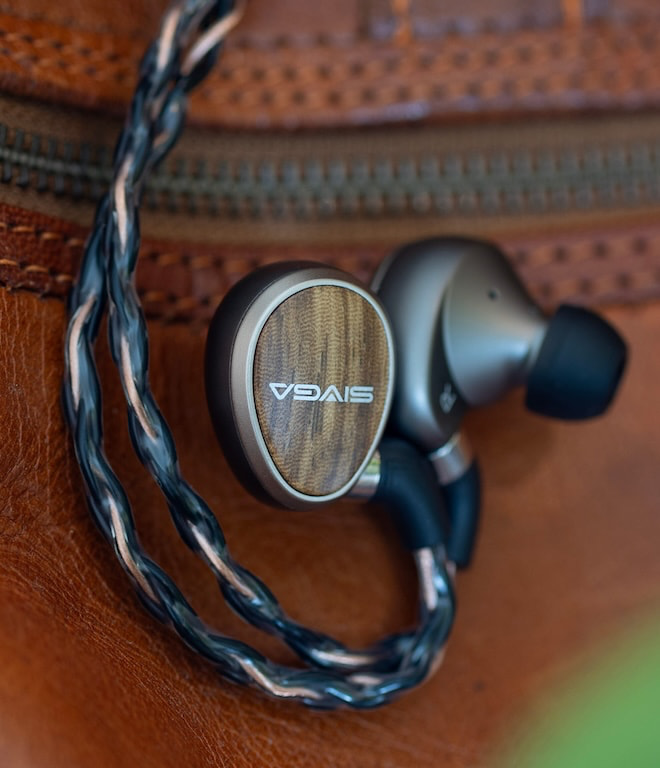
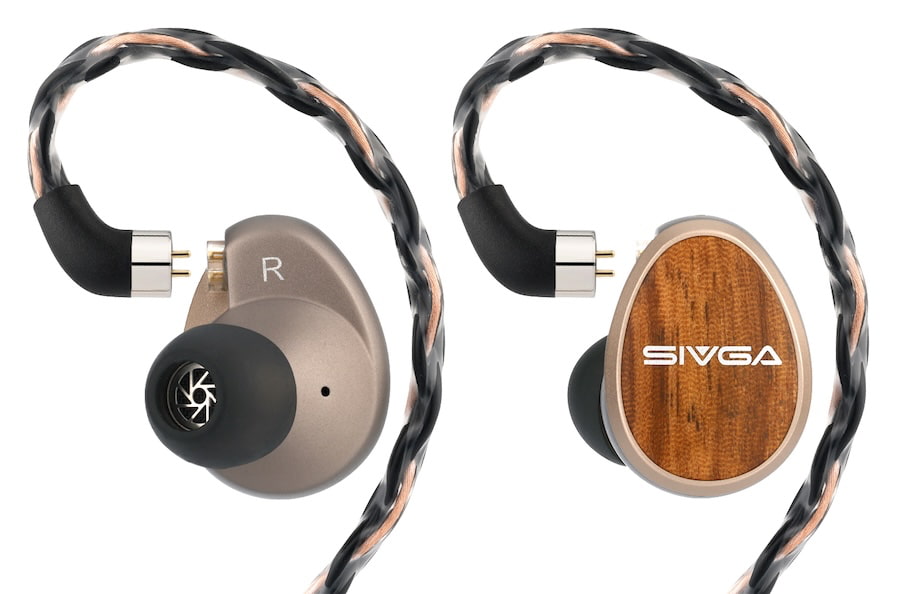
As is typical for SIVGA, the Nightingale Pro is constructed from a carefully chosen mix of high-quality, tactile materials. The faceplate is carved from polished zebrawood and set into a precisely anodized aluminum chassis, giving the IEM a premium, handcrafted feel that’s immediately apparent in the hand and consistent with the brand’s design ethos.
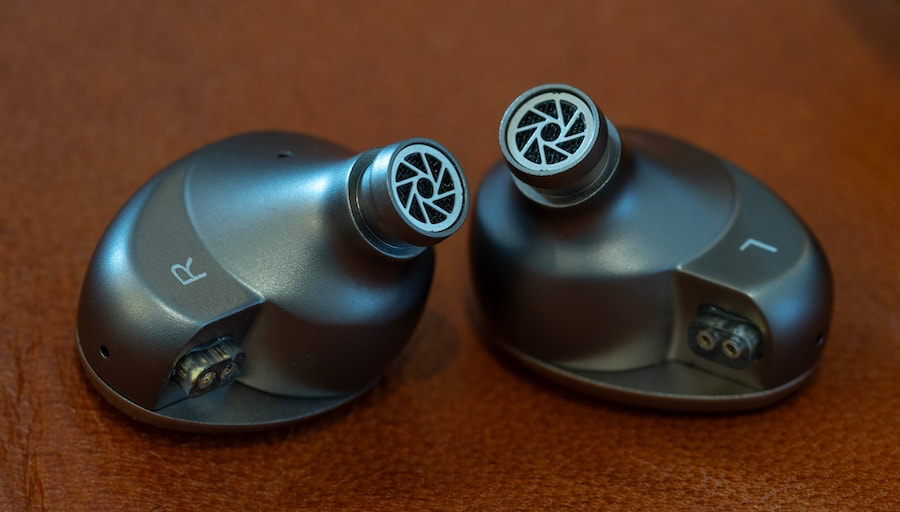
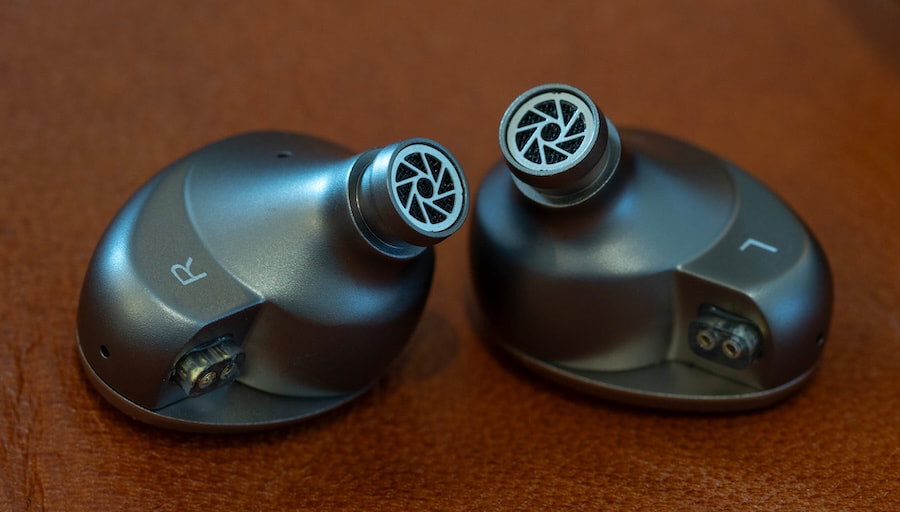
The Nightingale Pro uses metal nozzles with an integrated debris filter positioned just below the lip, a practical touch that should help with long-term durability and maintenance. At the top of each shell is an extruded 0.78 mm two-pin socket, firmly set into the housing to ensure a secure cable connection and reduce long-term wear from repeated swaps.
Because of the extruded design of the Nightingale Pro’s sockets, the pool of compatible third-party cables is smaller than with a standard flush 0.78 mm connection. Fortunately, that limitation is softened by the fact that the included cable is genuinely solid.
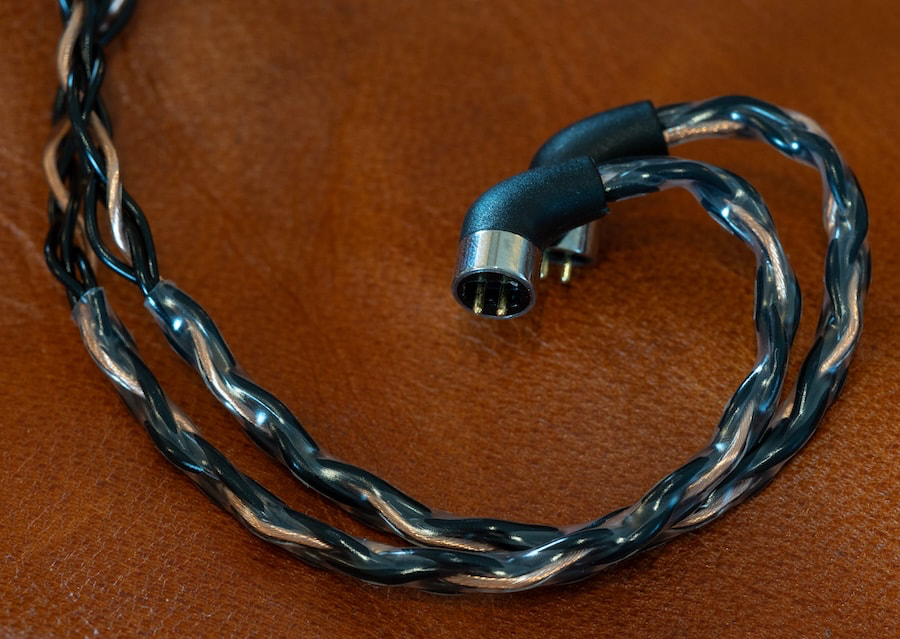
It uses a two-tone twisted braid paired with metal hardware and feels purpose-built rather than disposable. SIVGA also employs a substantial spring as strain relief near the base of the fixed 4.4 mm termination, lending the cable an almost industrial look while adding real-world durability. From a construction and longevity standpoint, there’s nothing here that raises red flags.
Advertisement
Comfort
Comfort is inherently personal and heavily dependent on individual ear anatomy, so mileage will vary. The Nightingale Pro features a shallow fit profile, with nozzles that are slightly shorter than average. As a result, some experimentation with eartip sizes and shapes is likely required to achieve an optimal seal.
That said, the IEMs themselves are neither heavy nor bulky, and once dialed in, they proved comfortable for multiple consecutive hours of listening. The trade-off is isolation. The shorter nozzle and shallower insertion mean passive noise attenuation is below average, especially compared to deeper-fitting designs. For that reason, the Nightingale Pro isn’t an ideal choice for air travel or consistently noisy environments, where isolation matters as much as comfort.
Advertisement. Scroll to continue reading.
Accessories
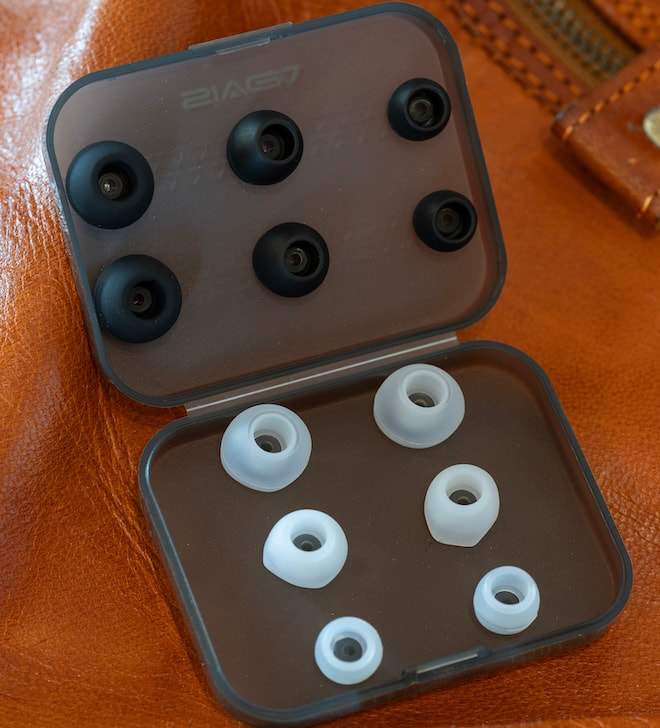
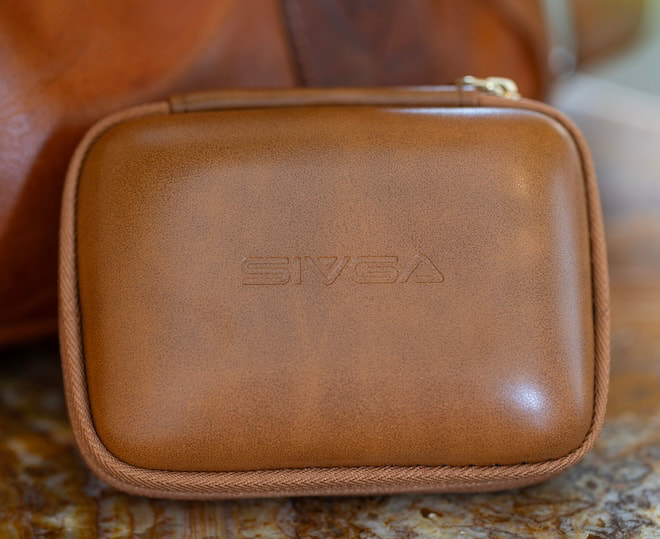
The Nightingale Pro’s accessory bundle is fairly bare-bones. Inside the box, you’ll find a semi-hard carrying case and six pairs of silicone eartips—and that’s about it. Unfortunately, the included eartips are the weak link here. Paired with the Nightingale Pro’s shallow fit profile, they simply didn’t work well for my ears and made achieving a consistent seal more difficult than it should be.
For an IEM in this price range, the accessory selection feels underwhelming. At a minimum, higher-quality silicone eartips would be a welcome upgrade. Including a pair or two of Comply-style foam tips would also go a long way toward improving comfort, seal, and perceived value out of the box.
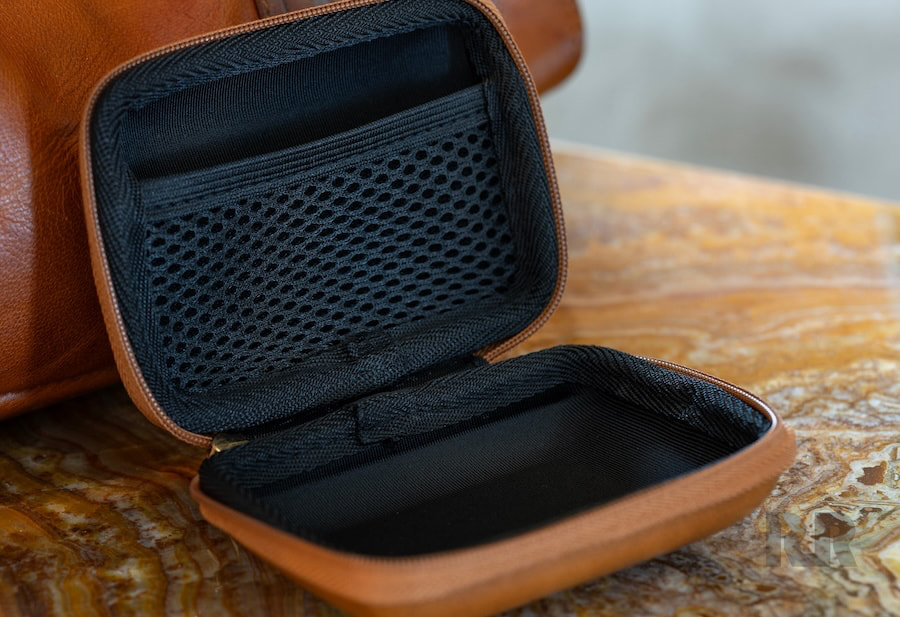
The Nightingale Pro’s carrying case is a bright spot in an otherwise modest accessory bundle. It offers enough internal space to comfortably store the IEMs, the attached cable, and even a compact dongle without feeling cramped. With a bit of careful arrangement, you can also fit a few spare pairs of eartips. Protection is solid but not exceptional—best described as average—making the case well suited for static storage and light travel rather than heavy-duty, throw-it-in-a-bag use.
Technical Specifications
The Nightingale Pro is built around a 14.5 mm planar magnetic driver, a relatively large diaphragm for an in-ear monitor. With a 16 ohm impedance and 107 dB sensitivity, it’s an easy IEM to drive and performs well from dongles and portable sources without requiring excessive power.
Advertisement
Its rated frequency response of 20 Hz to 40 kHz aligns with the Nightingale Pro’s airy top-end and controlled low-frequency extension, while the supplied 1.25 m cable terminates in a 4.4 mm balanced connector, reinforcing its intended use with modern balanced sources. At 14 g, the shells remain light enough for long listening sessions, even with the slightly shallow fit. Overall, the specs point to a planar IEM designed for portable versatility rather than source dependency, with few practical barriers to entry for everyday listening.
Listening
The Nightingale Pro presents a largely linear tuning with a subtle warm tilt. Its low end is well extended and lightly emphasized in the lower registers, while the midrange remains even and neutrally voiced overall. The upper mids receive a modest lift to improve instrumental separation and vocal clarity without pushing the presentation forward.
Treble is expressive but deliberately restrained, never asserting itself as the focal point. By carefully attenuating energy around the 8, 10, and 12 kHz regions, the Nightingale Pro avoids sharpness and metallic timbre. Extension, however, is excellent, reinforcing the point that convincing air and detail don’t require aggressive treble peaks to fully articulate the upper registers.
Glittering, Gleaming, Subtlety
The Nightingale Pro is not an in-your-face IEM, and that restraint is most evident in its treble tuning. While planar drivers are often associated with a boisterous or overly dramatic upper register, that reputation is more a byproduct of inconsistent tuning than an inherent trait of the technology itself. Here, the Nightingale Pro operates firmly in the realm of linearity, delivering strong resolution, texture, and dimensionality while integrating treble information naturally into the soundstage rather than spotlighting it.
Advertisement
The gentle, muted snares in the background of “Anna Sun” by Walk the Moon peek through the edges of the soundstage during the intro, then open up and sit more forward in the mix during the chorus. The Nightingale Pro’s carefully measured treble makes that kind of finesse easy to follow. A brighter treble would have been more “exciting,” sure—but it also would have been more likely to smear that detail and mask what the track’s mastering is actually doing.
Muted Mids
SIVGA tuned the Nightingale Pro’s midrange to be deliberately linear, resulting in a warm, smooth presentation that stands in clear contrast to the more aggressive upper-midrange peaks often associated with planar IEMs. This predictable, even-handed approach makes the Nightingale Pro a strong candidate for reference-style listening, but it also places it outside the comfort zone of more mainstream tastes. Certain genres and mastering styles can come across as overly warm, which in turn affects the perceived width and scale of the soundstage.
EDM tracks like “Light Up The Sky” by Wooli are largely unaffected by this tuning, retaining their drive and structure. Rock recordings, however, such as “Lost in the Echo” by Linkin Park fare worse. On tracks like these, the soundstage can feel compressed, with vocals and guitars sounding dense and constrained.
Male vocals, while full-bodied and weighty, can lean heavy at times. Female vocals and higher-pitched male vocals are better served by the tuning and tend to sound clearer and more balanced. Even so, lyric intelligibility remains strong, and instrumental layering is consistently well handled. The Nightingale Pro presents music in an intimate, close-up manner, but it avoids sounding muddy thanks to its solid technical performance. Listeners accustomed to a more recessed lower midrange may take issue with this tuning choice, as it meaningfully reshapes how instruments and vocals are positioned within the mix.
Advertisement
Advertisement. Scroll to continue reading.
Gentle and Firm Bass
Thanks to its mildly lifted bass shelf, the Nightingale Pro is reasonably well equipped to resolve low-frequency information. Drum hits carry a touch of punch and a hint of rumble, though not to the extent you’d expect from a traditional dynamic-driver design. The lower register isn’t boisterous, but it is clean, quick, and well controlled, which makes the Nightingale Pro a capable partner for fast-moving genres like metal.
Electronic music can also fare well, depending on the mastering. The Nightingale Pro is able to dig into the sub-bass to resolve deep synth lines and will occasionally deliver a convincing sense of rumble. This gives it enough low-end contrast to support tracks like “Swimming in the Sky” by ARMNHMR, helping establish tonal depth without overwhelming the rest of the presentation. It won’t shake your skull, but it also avoids the flat or anemic low-end character that plagues some planar IEMs.
Comparisons
Kiwi Ears Aether
The Kiwi Ears Aether is a $170 planar IEM built around plastic shells with metal nozzles and a thin 0.78 mm two-pin cable. It uses a fixed 3.5 mm termination, rather than the fixed 4.4 mm balanced termination found on the Nightingale Pro. At roughly $130 less, the Aether clearly targets more cost-sensitive buyers—and it looks the part. Build quality and material choices fall short across the board, from the faceplates and nozzles to the cable itself. Nothing about the Aether’s physical execution approaches the Nightingale Pro’s level of refinement.
Advertisement
Sonically, however, the gap narrows considerably. The Aether ranks among the stronger planar IEMs currently available, offering a well-balanced, natural tuning and solid technical performance at an accessible price. The Nightingale Pro, by contrast, caters more directly to listeners who favor linearity and a flatter, reference-leaning presentation. The Aether brings slightly more mid-bass presence and a less emphasized lower midrange, while its upper mids are marginally more forward. Treble is another point of divergence: the Nightingale Pro is more restrained overall, whereas the Aether’s lower treble is noticeably more forward, making it easier to create a sense of air and openness.
Between the two, the Aether is the easier recommendation for everyday listening. Its broader genre compatibility and less linear tuning make it more forgiving and more enjoyable across a diverse music library. Listeners who are treble-averse or specifically seeking a more reference-oriented presentation, however, will likely find the Nightingale Pro better aligned with their preferences.
7Hz Divine
The Divine is a relatively recent planar IEM from 7Hz, typically priced around $150. It features polished metal shells and a detachable cable that’s noticeably thicker and heavier than the Nightingale Pro’s. That cable terminates in a fixed 3.5 mm plug rather than a 4.4 mm balanced connection. Despite costing roughly half as much as the Nightingale Pro, the Divine ships with a larger carrying case and a more generous selection of eartips.
In terms of tuning, the Nightingale Pro leans more linear and reference-oriented, with a warmer overall balance than the Divine. Both IEMs employ modest bass shelves, but the Divine’s low end comes across drier and more matter-of-fact. The Divine also features a larger upper-midrange lift and a more pronounced upper treble, giving it a cooler, airier presentation. From a technical standpoint, both perform competently, though the Nightingale Pro does a better job of capturing fine vocal inflections that the Divine tends to smooth over. The Divine can surface certain details more readily, but it misses some of the subtler mastering nuances that the Nightingale Pro renders more convincingly.
Advertisement
Between the two, the Nightingale Pro edges ahead. While the Divine offers broader genre flexibility, the Nightingale Pro’s bass tonality is more satisfying, and its overall presentation is easier to live with over long sessions. Comfort also plays a role: despite its attractive design, the Divine can become fatiguing to wear, whereas the Nightingale Pro proves more accommodating for extended listening.
Juzear Harrier
The Juzear Harrier is a tribrid IEM built with resin shells and metal nozzles, typically priced at $330, though it was available for $300 at the time of writing. It includes a modular 0.78 mm two-pin cable with both 3.5 mm and 4.4 mm terminations. The cable itself is quite good—noticeably thicker than the Nightingale Pro’s—and feels more substantial in hand. In terms of construction, the Nightingale Pro’s metal-and-wood chassis is clearly sturdier than the Harrier’s resin build, though the Harrier does fit my ears more comfortably.
Sonically, the Harrier takes a very different approach. It is the bassier of the two, with a much more pronounced low end and a particularly forward mid-bass. The Nightingale Pro counters with tighter, more controlled mid-bass and sub-bass performance, along with stronger technical discipline. The Harrier leans cooler overall, with a larger upper-midrange lift and greater treble emphasis.
By comparison, the Nightingale Pro sounds more linear and noticeably more cohesive from top to bottom. While the Harrier’s treble is more forward, it can also come across as grainier. The Nightingale Pro generally exhibits superior technicalities, though it can sound congested when directly A/B tested against the Harrier on certain tracks.
Advertisement
Between the two, the Nightingale Pro takes the nod. Its sturdier build quality, stronger technical performance, and greater tonal cohesion work in its favor. The Harrier is still an appealing option, but it feels like a less fully realized execution of its tuning vision. Listeners who are sensitive to warmth or prefer a more open, brighter midrange and treble balance may gravitate toward the Harrier. Personally, I’m comfortable sticking with the Nightingale Pro.
Advertisement. Scroll to continue reading.
The Bottom Line
The Nightingale Pro is a thoughtfully built planar IEM that sticks closely to SIVGA’s established design language and tuning philosophy. Its presentation leans linear and reference-minded, with real sub-bass reach, a touch of warmth through the mids, and a treble response that stays extended without ever tipping into sharpness or sibilance. The craftsmanship is legitimately excellent—shells and faceplates feel premium in a way that’s immediately apparent—but sound quality, not aesthetics, is where buying decisions are made.
And this is where the Nightingale Pro becomes selective rather than universal. The restrained mid-bass and more relaxed treatment of male vocals and electric guitars limit its emotional punch, especially for listeners accustomed to more forward or dynamic presentations. In a price range crowded with strong alternatives, build quality alone isn’t enough to move it to the top of the list.
That said, there is a clear audience here. Listeners chasing a clean, sharpness-free planar sound, engineers looking for balance over excitement, and anyone drawn to a controlled, reference-style tuning will find a lot to respect. Bassheads, V-shaped devotees, and those who want vocals pushed front and center should keep moving. The Nightingale Pro doesn’t try to win everyone over—and that may be its most honest trait.
Advertisement
Pros:
Sibilance-free tuning that stays composed even on hot recordings
Expressive, nuanced midrange with strong vocal and acoustic texture
Genuine sub-bass extension with reach and control
High-quality craftsmanship that feels deliberate, not mass-produced
Excellent layering and separation, especially in complex mixes
Impressive upper-treble extension that adds air without bite
Cons:
Mid-bass lacks authority, limiting slam and rhythmic weight
Cable feels wiry above the Y-split, detracting from overall ergonomics
Included silicone eartips are sub-par and do the IEM no favors
Shallow shell profile demands careful tip selection to get proper seal
Below-average passive isolation, especially for commuting or travel
Male vocals and electric guitars sound muted on select tracks
For the last 18 months, AI has fundamentally disrupted the way people search and find information.
The SEO industry’s response was disjointed, and—let’s be honest—entirely reactive.
We simply did not have the data to understand what was changing, how fast it was changing, and where we would ultimately end up.
Advertisement
Article continues below
Back then, rather than solving for the actual problem, such as lost traffic, broken attribution, and the looming threat to revenue, practitioners reached for a lexicon.
Andrew Warden
Advertisement
Chief Marketing Officer, Semrush.
We saw a sudden explosion of new acronyms: GEO, AEO, LLMO. Each new acronym narrowed the conversation to a single tactic.
Each one splintered budgets and reinforced a categorically incorrect idea: in order for brands to be visible in the AI era, radically different approaches needed to be built from scratch.
Advertisement
It’s been a distraction. While the industry is busy debating acronyms, the actual behavior of the consumer—and the search surfaces—are evolving right in front of us.
Sign up to the TechRadar Pro newsletter to get all the top news, opinion, features and guidance your business needs to succeed!
The end of the acronym soup
The dust has finally settled. And I want to remind everyone of something that should make marketers breathe a sigh of relief: the core human behavior behind search, including curiosity, problem-solving, decision-making, hasn’t changed.
Advertisement
Just as importantly, brand visibility in the AI era is still built on the same foundations that have always driven great SEO: crawlable infrastructure, authoritative content, and consistent brand signals.
But SEO alone is no longer enough. Today AI search systems are constructing answers rather than simply ranking links. They retrieve, evaluate, and synthesize information across multiple inputs, then surface recommendations, often without sending users to a website at all. The intermediary has changed. And with it, the entire surface area that determines whether your brand gets selected.
This shift is already visible in the data. AI Overviews appear on roughly 16% of Google search results, and generative platforms like ChatGPT, Perplexity, and Claude are increasingly becoming part of everyday research behavior. The latest research shows also that AI-driven search traffic grew from under 2% to more than 9% of desktop search traffic between 2024 and 2025, while traditional Google searches per user in the U.S. declined by nearly 20% during the same period.
Advertisement
The implication is clear: visibility today is about being selected based on the strength, consistency, and authority of your entire digital presence. This is why the conversation needs to move beyond acronym dissonance and name the shift for what it actually is now and will likely be into the future: a new operating layer for discovery.
This shift is called Agentic Search Optimization (ASO).
Why ASO?
Every AI-generated answer already involves a machine retrieving sources, judging credibility, and composing a response. That’s agentic behavior, and it’s happening today in ChatGPT, Google AI Mode, and Perplexity. What’s emerging now are agents that browse, compare, and transact with no human in the loop.
Advertisement
ASO is the discipline that ensures your brand is found, understood, and trusted across that entire spectrum.
Every time an AI system processes your brand, compares it to others, and determines whether to include it in a response, that is an agentic decision. And those decisions are not based solely on your website; AI agents interpret the entire digital footprint, including media coverage, Reddit discussions, YouTube videos, reviews, partner mentions.
And here’s the shift most brands are still underestimating: AI doesn’t just want to hear from you. It wants to hear what others are saying about you. That’s why, in my view, Agentic Search Optimization, combined with core SEO principles, represents both the present and the future of brand visibility.
Advertisement
Why search is now a board-level concern
For too long, SEO was treated as a marketing motion and, in many cases, an individual contributor’s task. Those days are over.
In an AI-driven environment, visibility is not created through isolated efforts. It’s the result of how consistently your brand shows up across every surface that influences discovery. That makes search a reflection of the entire business. Which is why it now sits at the board level.
Growing visibility today requires synchronized alignment across content, brand, product, and communications to create consistent, AI-trusted signals at every touchpoint. Because when visibility depends on consistency, misalignment becomes a growth risk. If your content says one thing, your product signals another, and your external presence tells a different story, AI systems don’t reconcile that in your favor. Instead, they dilute it, and that dilution has a cost.
This is what I call “The Beige Tax”, the cost of safe, generic, average content. In an AI-driven environment, mediocre doesn’t just underperform–it disappears. The only way to compete is through signal alignment: ensuring that every part of your organization reinforces the same narrative, with enough authority and consistency for AI systems to trust and surface it.
Advertisement
Winning in the next era
The biggest misconception about this shift is that it requires starting over. It doesn’t. Winning in this era is accretive meaning it builds on what already works. Once again, the same fundamentals apply. But they need to scale across more surfaces, more signals, and more systems. From our data, three factors consistently drive AI visibility:
Entity authority: If people aren’t searching for your brand, AI won’t either. Brand demand is now a leading indicator of inclusion.
Information density and originality: AI prioritizes content that adds something new—proprietary data, unique insights, strong perspective. Original research can increase visibility by 30–40%.
Advertisement
Signal alignment: Consistency across channels matters more than ever, because AI looks for consensus across your ecosystem rather than simply trusting isolated claims.
This is how brands move from being indexed… to being selected.
The future is clearer, but it doesn’t mean it’s easier
The future of brand visibility demands the combination of SEO + ASO. We aren’t asking teams to start from scratch; we are making the case that investment in teams, tools, and strategy must expand to match the new surfaces that influence search.
Advertisement
There are plenty of “AI-native” point solutions popping up right now. They can track a mention or see a single moment in a ChatGPT window. But they lack the historical depth and competitive benchmarking required to contextualize why performance is shifting. They see a moment. At Semrush, we see the trajectory.
The goal for any brand today is simple but difficult: build durable visibility wherever people search. AI just made “being everywhere” the most valuable place to be. The brands that win in the next era will be the ones that show up consistently across exactly there—everywhere.
Check your pocket. You’re probably carrying a tracking device that will allow the police — or even the Trump administration — to track every move that you make.
If you use a cellphone, you are unavoidably revealing your location all the time. Cellphones typically receive service by connecting to a nearby communications tower or other “cell site,” so your cellular provider (and, potentially, the police) can get a decent sense of where you are located by tracking which cell site your phone is currently connected with. Many smartphone users also use apps that rely on GPS to precisely determine their location. That’s why Uber knows where to pick you up when you summon a car.
Nearly a decade ago, in Carpenter v. United States (2018), the Supreme Court determined that law enforcement typically must secure a warrant before they can obtain data revealing where you’ve been from your cellular provider. On Monday, April 27, the Court will hear a follow-up case, known as Chatrie v. United States, which raises several questions that were not answered by Carpenter.
For starters, when police do obtain a warrant allowing them to use cellphone data, what should the warrant say — and just how much location information should the warrant permit the police to learn about how many people? When may the government obtain location data about innocent people who are not suspected of a crime? Does it matter if a cellphone user voluntarily opts into a service, such as the service Google uses to track their location when they ask for directions on Google Maps, that can reveal an extraordinary amount of information about where they’ve been? Should internet-based companies turn over only anonymized data, and when should the identity of a particular cellphone user be revealed?
Advertisement
More broadly, modern technology enables the government to invade everyone’s privacy in ways that would have been unimaginable when the Constitution was framed. The Supreme Court is well aware of this problem, and it has spent the past several decades trying to make sure that its interpretation of the Fourth Amendment, which constrains when the government may search our “persons, houses, papers, and effects” for evidence of a crime, keeps up with technological progress.
As the Court indicated in Kyllo v. United States (2001), the goal is to ensure the “preservation of that degree of privacy against government that existed when the Fourth Amendment was adopted.” More advanced surveillance technology demands more robust constitutional safeguards.
But the Court’s commitment to this civil libertarian project is also precarious. Carpenter, the case that initially established that police must obtain a warrant before using your cell phone data to figure out where you’ve been, was a 5-4 decision. And two members of the majority in Carpenter, Justices Ruth Bader Ginsburg and Stephen Breyer, are no longer on the Court (although Breyer was replaced by Justice Ketanji Brown Jackson, who generally shares his approach to constitutional privacy cases). Justice Neil Gorsuch also wrote a chaotic dissent in Carpenter, suggesting that most of the past six decades’ worth of Supreme Court cases interpreting the Fourth Amendment are wrong. So it’s fair to say that Gorsuch is a wild card whose vote in Chatrie is difficult to predict.
It remains to be seen, in other words, whether the Supreme Court is still committed to preserving Americans’ privacy even as technology advances — and whether there are still five votes for the civil libertarian approach taken in Carpenter.
Advertisement
Geofence warrants, explained
Chatrie concerns “geofence” warrants, court orders that permit police to obtain locational data from many people who were in a certain area at a certain time.
During their investigation of a bank robbery in Midlothian, Virginia, police obtained a warrant calling for Google to turn over location data on anyone who was present near the bank within an hour of the robbery. The warrant drew a circle with a 150-meter radius that included both the bank and a nearby church.
Google had this information because of an optional feature called “Location History,” which tracks and stores where many cellphones are located. This data can then be used to pinpoint users who use apps like Google Maps to help them navigate, and also to collect data that Google can use to determine which ads are shown to which customers.
Advertisement
The government emphasizes in its brief that “only about one-third of active Google account holders actually opted into the Location History service,” while lawyers for the defendant, Okello Chatrie, point out that “over 500 million Google users have Location History enabled.”
The warrant also laid out a three-step process imposing some limits on the government’s ability to use the location information it obtained. At the first stage, Google provided anonymized information on 19 individuals who were present within the circle during the relevant period. Police then requested and received more location data on nine of these individuals, essentially showing law enforcement where these nine people were shortly before and shortly after the original one-hour period. Police then sought and received the identity of three of these individuals, including Chatrie, who was eventually convicted of the robbery.
Chatrie, in other words, is not a case where police simply ignored the Constitution, or where they were given free rein to conduct whatever investigation they wanted. Law enforcement did, in fact, obtain a warrant before it used geolocation data to track down Chatrie. And that warrant did, in fact, lay out a process that limited law enforcement’s ability to track too many people or to learn the identities of the people who were tracked.
The question is whether this particular warrant and this particular process were good enough, or whether the Constitution requires more (or, for that matter, less). And, as it turns out, the Supreme Court’s previous case law is not very helpful if you want to predict how the Court will resolve Fourth Amendment cases concerning new technologies.
Advertisement
The Court’s 21st-century cases expanded the Fourth Amendment to keep up with new surveillance technologies
The Court’s modern understanding of the Fourth Amendment, which protects against “unreasonable searches and seizures,” begins with Katz v. United States (1967), which held that police must obtain a warrant before they can listen to someone’s phone conversations. The broader rule that emerged from Katz, however, is quite vague. As Justice John Marshall Harlan summarized it in a concurring opinion, Fourth Amendment cases often turn on whether a person searched by police had a “reasonable expectation of privacy.”
The Court fleshed out what this phrase means in later cases. Though Katz held that the actual contents of a phone conversation are protected by the Fourth Amendment, for example, the Court held in Smith v. Maryland (1979) that police may learn which numbers a phone user dialed without obtaining a warrant. The Court reasoned that, while people reasonably expect that no one will listen in on their phone conversations, no one can reasonably think that the numbers they dial are private because these numbers must be conveyed to a third party — the phone company — before that company can connect their call.
Similarly, while the Fourth Amendment typically requires police to obtain a warrant before searching someone’s home without their consent, if a police officer witnesses someone committing a crime through the window of their home while the officer is standing on a public street, the officer has not violated the Fourth Amendment. As the Court put it in California v. Ciraolo (1986), “the Fourth Amendment protection of the home has never been extended to require law enforcement officers to shield their eyes when passing by a home on public thoroughfares.”
Advertisement
As the sun rose on the 21st century, however, the Court began to worry that the fine distinctions it drew in its 20th-century cases no longer gave adequate protection against overzealous police.
In Kyllo, for example, a federal agent used a thermal-imaging device on a criminal suspect’s home, which allowed the agent to detect if parts of the home were unusually hot. After discovering that parts of the home were, in fact, “substantially warmer than neighboring homes,” the agent used that evidence to obtain a warrant to search the home for marijuana — the heat came from high-powered lights used to grow cannabis.
Under cases like Ciraolo, this agent had a strong argument that he could use this device without first obtaining a warrant. If law enforcement officers may gather evidence of a crime by peering into someone’s windows from a nearby street, why couldn’t they also measure the temperature of a house from that same street? But a majority of the justices worried in Kyllo that, if they do not update their understanding of the Fourth Amendment to account for new inventions, they will “permit police technology to erode the privacy guaranteed by the Fourth Amendment.”
Devices existed in 2001, when Kyllo was decided, that would allow police to invade people’s privacy in ways that were unimaginable when the Fourth Amendment was ratified. So, unless the Court was willing to see that amendment eroded into nothingness, they needed to read it more expansively. And so the Court concluded that, when police use technology that is “not in general public use” to investigate someone’s home, they need to obtain a warrant first.
Advertisement
Similarly, in Carpenter, five justices concluded that law enforcement typically must obtain a warrant before they can use certain cellphone location data to track potential suspects.
Under Smith, the government had a strong argument that this data is not protected by the Fourth Amendment. Much like the numbers that we dial on our phones, cellphone users voluntarily share their location data with the cellphone company. And so Smith indicates that cellphone users do not have a reasonable expectation of privacy regarding that data.
But a majority of the Court rejected this argument, because they were concerned that giving police unfettered access to our location data would give the government an intolerable window into our most private lives. Location data, Carpenter explained, reveals not only an individual’s “particular movements, but through them his ‘familial, political, professional, religious, and sexual associations.’” Before the government can track whether someone has attended a union meeting, interviewed for a new job, or had sex with someone their family or boss may disapprove of, it should obtain a warrant.
Why a cloud of uncertainty hangs over every Fourth Amendment case involving new technology
Advertisement
One of the most uncertain questions in Chatrie is whether the Kyllo and Carpenter Court’s concern that advancing technology can swallow the Fourth Amendment is still shared by a majority of the Court. Again, Carpenter was a 5-4 decision, and two members of the majority have since left the Court. One of those justices, Ginsburg, was replaced by the much more conservative Justice Amy Coney Barrett.
Justice Anthony Kennedy, who dissented in Carpenter, was also replaced by Justice Brett Kavanaugh. Chatrie is Kavanaugh’s first opportunity, since he joined the Court in 2018, to weigh in on whether he believes that advancing technology demands a more expansive Fourth Amendment.
And then there’s Gorsuch, who wrote a dissent in Carpenter arguing that Katz’s “reasonable expectation of privacy” framework should be abandoned, and that the right question to ask in a case about cellphone data is whether the phone user owns that data. After a long windup about Fourth Amendment theory, Gorsuch’s dissent concludes with an unsatisfying four paragraphs saying that he can’t decide who owned the cellphone data at issue in Carpenter because the defendant’s lawyers “did not invoke the law of property or any analogies to the common law.”
Because Gorsuch’s opinion focuses so heavily on high-level theory and so little on how that theory should be applied to an actual case, it’s hard to predict where he will land in Chatrie. (Though it’s worth noting that Chatrie’s lawyers do spend a good deal of time discussing property law in their brief.)
Advertisement
All of which is a long way of saying that the outcome in Chatrie is uncertain. We don’t know very much about how several key justices approach the Fourth Amendment. And the Court’s most recent Fourth Amendment cases suggest that lawyers can no longer rely on precedent to predict how the amendment applies to new technology.
But the stakes in this case are extraordinarily high. If the Court gives the government too much access to this information, the Trump administration could potentially gain access to years’ worth of location data on anyone who has ever attended a political protest. As the Court said in Carpenter, the government can use your cellphone to track all of your political, business, religious, and sexual relations.
At the same time, the police should be able to track down and arrest bank robbers. So, if there is a way to use cellphone data to assist law enforcement without intruding upon the rights of innocents, then the courts should allow it. The Fourth Amendment does not imagine a world without police investigations. It calls for police to obtain a warrant, while also placing limits on what that warrant can authorize, before they commit certain breaches of individual privacy.
The question is whether this Court, with its shifting membership and uncertain commitment to keeping up with new surveillance technology, can strike the appropriate balance.
On November 16, 2021, Matthew Ziburis sat in his car in a residential neighborhood in the Bay Area stalking an “enemy,” as he put it. A veteran of both the US Army and Marine Corps, Ziburis had previously served in Iraq. But on this mission, he was working at the behest of China’s government. The targets that autumn day were American citizens: Arthur Liu and his teenage daughter, Alysa.
Arthur’s personal story was an exemplar of the American Dream. As a university student, he took part in the 1989 pro-democracy movement in China. After the crackdown at Tiananmen Square that year, he fled to the United States, settling in California. Arthur poured a small fortune and an equal amount of energy into molding Alysa into a figure skating phenom. As a national champion at age 13, she bantered along with Jimmy Fallon on The Tonight Show, and was at the time on track to represent America at the Winter Olympics the following year in Beijing.
Ziburis was surveilling the Liu home when he called Arthur, falsely claiming that he was a member of the US Olympic Committee who needed to discuss upcoming travel to Beijing, Arthur says. Ziburis was adamant that Arthur fax him copies of his and his daughter’s passports as part of a travel “preparedness check,” Liu tells WIRED. This struck Arthur as odd. In his many years dealing with sports bodies, he had never fielded such a request. Alysa’s agent did not respond to a request for comment.
Ziburis’ surveillance of Arthur and Alysa Liu that November day five years ago was just one episode in a bizarre saga that spanned from California to Beijing, touched New York City mayors and members of the US Congress, and has seen two people plead guilty and two more awaiting trial.
Advertisement
Unbeknownst to Ziburis, as he sat outside Aurthur and Alysa’s Northern California home, he too was being watched.
Ziburis had allegedly been dispatched to Northern California by Frank Liu, a self-styled fixer in the Chinese community from Long Island, New York, who was in turn receiving orders from a person in China named Qiang Sun. According to US authorities, Sun was working at the behest of the Chinese government. A concerned private investigator who once worked for Frank Liu had alerted the FBI to Frank’s escapades and was assisting authorities. Law enforcement was already on to Ziburis by the time he arrived. Anthony Ricco, Ziburis’ lawyer, did not respond to requests for comment.
Officers watched as Ziburis surveyed Arthur’s home and visited his law office. The heavy-set man sulking around Arthur’s office also caught the attention of a neighbor, who approached Ziburis and asked him if he needed help, Arthur says. Apparently concerned, the FBI called Arthur to warn him that Ziburis was heading to his home. By then, in part because of the harassment, Arthur and Alysa were boarding a plane to fly out of California. “It was like a movie,” Arthur says.
Alysa’s showing in Beijing in 2022 was disappointing. Burned out, she retired from the sport. Then in February, after returning to the ice after a two year hiatus, Alysa became the first US women’s figure skater to win Olympic gold since 2002—intentionally without her father by her side.
Advertisement
Despite her much-publicized complicated relationship with Arthur, Alysa’s success—punctuated by her signature pierced smile, racoon-tail dye job, and palpable joy for her sport—has reignited interest in the long-running case of transnational repression against her and her father. Human rights advocates and researchers have documented in recent years the lengths Beijing has taken to suppress critical voices, even those residing abroad or whose perceived transgressions date back decades.
It happens in every emerging industry: founders and investors push toward a common goal, until the money starts to roll in and that shared vision begins to diverge.
Cracks are emerging in the fusion power world, which I saw firsthand at The Economist’s Fusion Fest in London last week. It didn’t dampen the overall buoyant mood, lifted by fusion startups’ fundraising haul of $1.6 billion in the last 12 months. But people had differing opinions on two key questions: When should fusion startups go public? And are side businesses a distraction?
Going public was at the top of everyone’s minds. In the last four months, TAE Technologies and General Fusion have announced plans to merge with publicly traded companies. Both stand to receive hundreds of millions of dollars to keep their R&D efforts alive, and investors, some of whom have kept the faith for 20 years, finally see an opportunity to cash out.
Not everyone is in agreement. Most of those who I spoke to were worried these companies were going public far too early and that they hadn’t achieved key milestones that many view as vital in judging the progress of a fusion company.
Advertisement
First, a recap: TAE announced its merger with Trump Media & Technology Group in December. Though the deal isn’t yet completed, the fusion side of the business has already received $200 million of a potential $300 million in cash from the deal, giving it some runway to continue planning its power plant. (The remainder will reportedly land in its bank account once it files the S-4 form with the U.S. Securities and Exchange Commission.)
General Fusion said in January that it would go public via a reverse merger with a special purpose acquisition company. The deal could net the company $335 million and value the combined entity at $1 billion.
Both companies could use the cash.
Techcrunch event
Advertisement
San Francisco, CA | October 13-15, 2026
Before the merger announcement, General Fusion was struggling to raise funds, and around this time last year it laid off 25% of its staff as CEO Greg Twinney posted a public letter pleading for investment. It received a brief reprieve in August when investors threw it a $22 million lifeline, but that sort of money doesn’t last long in the fusion world, where equipment, experiments, and employees don’t come cheap.
Advertisement
TAE’s position wasn’t quite as dire, but it still required some funds. Pre-merger, the company raised nearly $2 billion, which sounds like a lot, but keep in mind the company is nearly 30 years old. What’s more, its valuation pre-merger was $2 billion, according to PitchBook. Investors were breaking even at best.
Neither company has hit scientific breakeven, a key milestone that shows a reactor design has power plant potential. Many observers doubt they’ll hit that mark before other privately held startups do. One executive told me, if they were in those shoes, they’re not sure how they would fill time on quarterly earnings calls if the companies didn’t hit scientific breakeven soon.
If TAE or General Fusion doesn’t deliver results, several people feared the public markets would sour on the entire fusion industry.
Now, not all may be lost. TAE has already started marketing other products, including power electronics and radiation therapy for cancer. That could give the company some near-term revenue to placate shareholders. General Fusion, though, hasn’t revealed any such plans.
Advertisement
And therein lies another divide: fusion companies remain split on whether they should pursue revenue now or wait until they have a working power plant.
Some companies are embracing the opportunity to make money along the way. Not a bad strategy! Fusion is a long game, so why not improve your odds? Both Commonwealth Fusion Systems and Tokamak Energy have said they’ll be selling magnets. TAE and Shine Technologies are both in nuclear medicine.
Other startups are worried that side hustles could become a distraction. Inertia Enterprises, for example, told me that they’re laser-focused on their power plant. That jibes with what another investor told me months ago: — they were worried that fusion startups could get distracted by profitable, but tangential businesses and fall off the lead.
There wasn’t consensus on the right time to go public either. I heard a few proposed milestones. Some believe startups should first reach that scientific breakeven milestone, in which a fusion reaction generates more energy than it needs to ignite. No startup has achieved that yet. The other possibilities are facility breakeven — when the reactor makes more energy than the entire site needs to operate — and commercial viability — when a reactor makes enough electrons to sell a meaningful amount to the grid.
Advertisement
We may have an answer to that question sooner than later. Commonwealth Fusion Systems expects it will hit scientific breakeven sometime next year, and some think the company might use that as an opportunity to go public.
Lua can ‘build AI agents that solve real problems’ through collaboration with people, regardless of a team or organisation’s technical depth or skill.
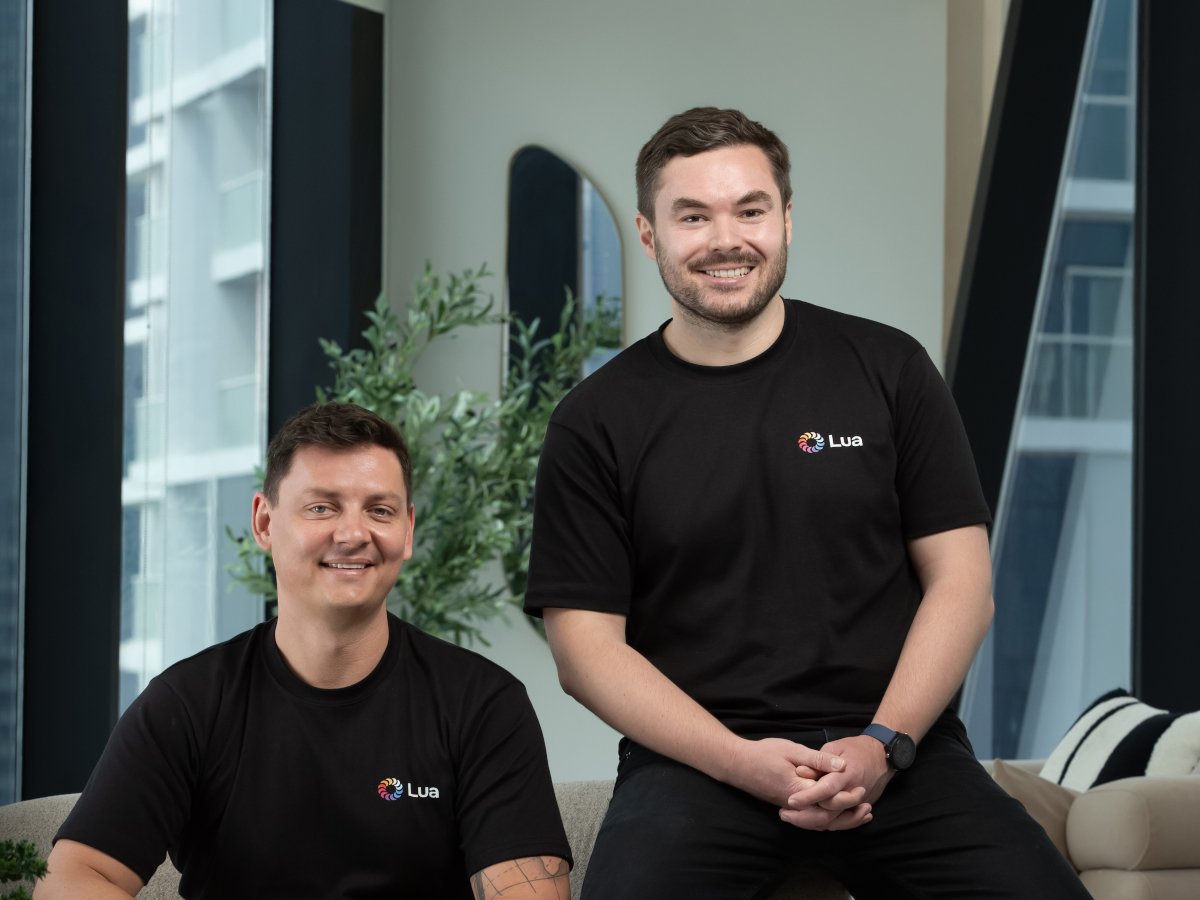
Irish co-founded and London-based agentic workforce AI start-up Lua raised $5.8m in funding last week (16 April) in a round led by Norrsken22.
Lua offers customers the opportunity to “build AI agents that solve real problems” through collaboration with people, it claims, regardless of a team or organisation’s technical depth or skill.
The company said it will use the new funding to continue to build out its developer community and the ‘Lua Implementation Network’, which it said is a growing community of independent partners deploying Lua agentic workforces in their own markets around the world.
Advertisement
Other investors included Flourish Ventures, 20VC, P1 Ventures, Phosphor Capital and Y Combinator, along with angels such as Henri Stern, the CEO of Privy; Kaz Nejatian, the CEO of Opendoor; and Med Benmansour, the CEO of Nuitee.
“The companies that will win over the next few years are the ones that build their agent workforce with the same intentionality they bring to their human workforce,” said CEO and co-founder Lorcan O’Cathain.
“Most businesses are either blocked by technical complexity or locked into rigid tools that don’t reflect how their teams actually work.
“Lua is built on the opposite principle: teams own their agents, own their outcomes and build compounding efficiency over time.”
Advertisement
The platform is described as offering “an opinionated, full-stack agent” that is suitable for both technical and non-technical users, to run inside existing systems while “coordinating handoffs between agents and humans”.
In a LinkedIn post regarding the funding announcement, Lua said the number of agents on its platform had grown by 10 times during Q1.
Lua was founded in 2024 by O’Cathain and Stefan Kruger, who is the company’s CTO. The company said it “ has been global since day one, deployed across emerging markets in Africa and Asia alongside customers in the US and Europe”.
The founders of Lua “fundamentally understand how agent and human workforces need to collaborate to get work done”, said Lexi Novitske, a general partner at Norrsken22.
Advertisement
Lua proposes solution for customers in healthcare, financial services, retail, manufacturing and real estate. The integration of AI into the workforce and workplace is a topical issue for a variety of reasons.
Don’t miss out on the knowledge you need to succeed. Sign up for the Daily Brief, Silicon Republic’s digest of need-to-know sci-tech news.
Microsoft has released out-of-band (OOB) updates to fix issues affecting Windows Server systems after installing the April 2026 security updates.
As Microsoft confirmed last week, some admins may experience failures when installing the KB5082063 security update on Windows Server 2025 devices.
Additionally, this month’s Patch Tuesday cumulative updates are causing some Windows servers with domain controller roles to enter a restart loop due to crashes of the Local Security Authority Subsystem Service (LSASS).
Microsoft also warned that this issue may also occur when setting up new domain controllers (or even on existing ones) if the server processes authentication requests very early during startup.
To address these two known issues, Microsoft has released emergency updates for the following affected Windows Server versions:
Advertisement
“The Windows Server 2025 OOB update (KB5091157) addresses both the installation failure issue and the domain controller restart issue,” Microsoft explained. “OOB updates released for other supported Windows Server versions address only the domain controller restart issue.”
On Wednesday, Microsoft also warned admins that some Windows Server 2025 devices will boot into BitLocker recovery and prompt users to enter a BitLocker key after installing the KB5082063 Windows security update.
Additionally, last week, it finally addressed a bug that has been plaguing Windows servers since September 2024, causing devices running Windows Server 2019 and Windows Server 2022 to upgrade to Windows Server 2025 “unexpectedly.”
Since the start of the year, Microsoft has also released emergency updates to resolve a Bluetooth device visibility bug and patch security vulnerabilities in the Routing and Remote Access Service (RRAS) management tool that affect hotpatch-enabled Windows 11 Enterprise devices.
AI chained four zero-days into one exploit that bypassed both renderer and OS sandboxes. A wave of new exploits is coming.
At the Autonomous Validation Summit (May 12 & 14), see how autonomous, context-rich validation finds what’s exploitable, proves controls hold, and closes the remediation loop.
Welcome back to TechCrunch Mobility, your hub for the future of transportation and now, more than ever, how AI is playing a part. To get this in your inbox, sign up here for free — just click TechCrunch Mobility!
A few weeks ago, I wrote about how Uber seemed to be everywhere, all at once in the emerging autonomous vehicle technology sector. The Financial Times has now put a number on it. The FT calculated that Uber has committed more than $10 billion to buying autonomous vehicles and taking equity stakes in the companies developing the tech, according to public records and discussions with folks behind the scenes. About $2.5 billion of that is in direct investments, with the remaining $7.5 billion to be spent on buying robotaxis over the next few years, the outlet reported.
We’ve reported on Uber’s numerous investments and deals with autonomous vehicle companies across drones, robotaxis, and freight. Some of its investments include WeRide, Lucid and Nuro, Rivian, and Wayve.
This rather large number (and particularly that $7.5 billion) got me thinking about another transformative era in Uber’s history and how it has visited these asset-heavy shores before. Uber might have started with a plan to be asset light, but for a brief period it did quite the opposite.
Advertisement
Uber went on a moonshot spree between 2015 and 2018. It launched electric air taxi developer Uber Elevate and the in-house autonomous vehicle unit Uber ATG, which would be boosted by its acquisition of Otto in 2016. It also snapped up micromobility startup Jump in 2018.
And then in 2020, Uber pulled the asset-heavy rip cord, ostensibly leaving all of those moonshots behind. Uber sold Uber ATG to Aurora, Jump to Lime, and Elevate to Joby Aviation. But it didn’t completely divest; it kept equity stakes in all of them.
Uber is now entering into a new and different asset-heavy era. It’s not plunking down millions, or even billions, to develop the technology in-house, although I’m sure folks there would be quick to pipe up that there is always R&D happening over at Uber. Instead, it appears to be focused on owning (or perhaps leasing) the physical assets.
Techcrunch event
Advertisement
San Francisco, CA | October 13-15, 2026
That could mean interesting line items on Uber’s balance sheet in the future.
Advertisement
Owning fleets of robotaxis built by other companies might not have been the original vision of Uber, or its former CEO Travis Kalanick, who has said the company made a mistake when it abandoned its AV development program. But this new approach could still get it to the same end point.
A little bird
Image Credits:Bryce Durbin
Earlier this month, I interviewed Eclipse partner Jiten Behl about the venture firm’s new $1.3 billion fund and where that money might be headed. The firm, as I wrote, intends to incubate more startups (e.g., it was behind the Rivian spinout Also). Behl wouldn’t give me details, only stating, “We’re definitely working on a couple of really cool ideas.” He also said Eclipse is particularly interested in startups that work across enterprises.
Thanks to one little bird and some document diving by senior reporter Sean O’Kane, it looks like a seed round announcement is imminent for a San Francisco-based startup working on an autonomous hauler that I’ve been told doesn’t have a driver cab. This sounds similar to what Einride has built, but since we haven’t seen it, we’ll have to wait.
The company’s roster isn’t big, but it is chock-full of Silicon Valley tech elite, including a founder who was at Uber ATG, Pronto, and Waabi. Stay tuned for more.
Slate is back with more capital as it prepares to put its first affordable pickup trucks into production by the end of 2026.
The electric vehicle startup, which got its start with backing from Jeff Bezos, raised another $650 million in a Series C funding round led by TWG Global. Keep your eye on TWG. This is the firm run by Guggenheim Partners chief executive (and Los Angeles Dodgers owner) Mark Walter and investor Thomas Tull.
Slate has raised about $1.4 billion to date, and its previous investors include General Catalyst, Jeff Bezos’ family office, VC firm Slauson & Co., and former Amazon executive Diego Piacentini, as TechCrunch first reported last year.
Other deals that got my attention …
Glydways, a San Francisco-based startup developing personal autonomous pods designed to operate on dedicated 2-meter-wide lanes in cities, raised $170 million in a Series C funding round co-led by Suzuki Motor Corporation, ACS Group, and Khosla Ventures. Existing investors Mitsui Chemicals and Gates Frontier and new investor Obayashi Corporation also participated. But wait, there’s more.
Advertisement
GM and Ford are reportedly talking to the Pentagon about whether the auto industry can help the military revamp its procurement program and find cheaper, faster ways to buy vehicles, munitions, or other hardware, the New York Times reported, citing anonymous sources.
Loop, a San Francisco-based startup, raised $95 million in a Series C funding round led by Valor Equity Partners and the Valor Atreides AI Fund, and includes investments from 8VC, Founders Fund, Index Ventures, and J.P. Morgan’s late-stage fund, Growth Equity Partners.
Monarch Tractor, the startup developing electric, autonomous tractors, has moved on to (ahem) a different pasture. The startup’s assets have been acquired by Caterpillar after struggling to pivot to a software services business.
Uber is increasing its stake in Delivery Hero by 4.5%, the Financial Times reported. Uber agreed to buy about 270 million euros in shares from Prosus, the Dutch investment group and Delivery Hero’s largest shareholder.
Advertisement
Notable reads and other tidbits
Image Credits:Bryce Durbin
Doug Field, the high-profile executive who shaped Ford’s electric vehicle and technology strategies over the past five years, is leaving. Notably, Ford is shaking up the organization as well, creating a “product creation and industrialization” team to be led by COO Kumar Galhotra. Any guesses where Field is headed next? Perhaps he’ll return to Silicon Valley.
Lightship, the all-electric RV startup, is expanding its Colorado-based factory by another 44,000 square feet, which will allow it to quadruple its manufacturing capacity.
Rivian and battery recycling and materials startup Redwood Materials partnered years ago. We’re now seeing the fruits of that relationship. Redwood is installing battery energy storage at Rivian’s factory in Illinois. The catch? Redwood is using 100 second-life Rivian battery packs, which will provide 10 megawatt-hours (MWh) of dispatchable energy to reduce cost and grid load during peak demand periods.
Tesla created a new self-driving app that makes it easier for owners to subscribe to its Full Self-Driving software and see statistics on how — and how often — they use it. This may not be huge news, but it did catch my eye because of the gamified qualities of these new stats.
Waymo, as per usual, has a few news items this week. The Alphabet-owned company started testing its autonomous vehicles on public roads in London. It also removed its waitlist in Miami and Orlando to scale its robotaxi services in the two cities.
Advertisement
One more thing …
This newsletter isn’t my only project that is leaning more heavily into robotics. My podcast, the Autonocast, is too, as the worlds of autonomous vehicles, AI, and robotics mash together. Check out this interview with Foxglove founder Adrian MacNeil, who previously worked at Cruise.
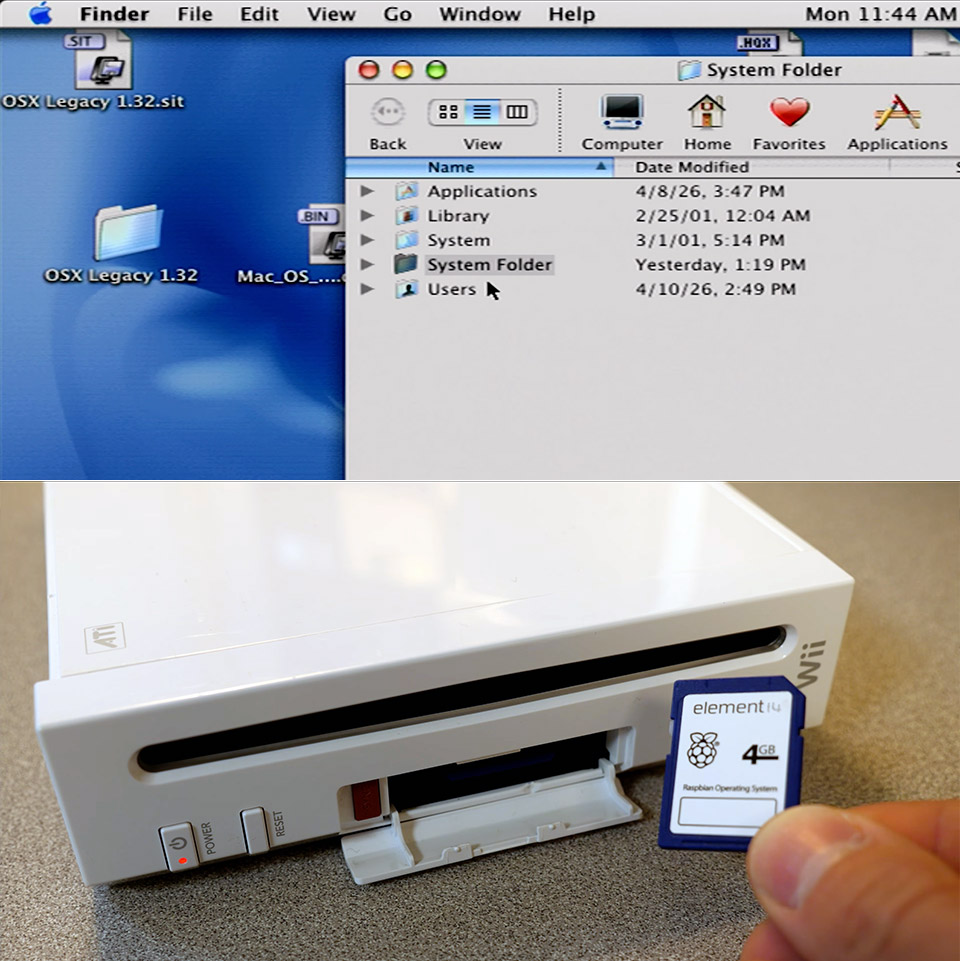
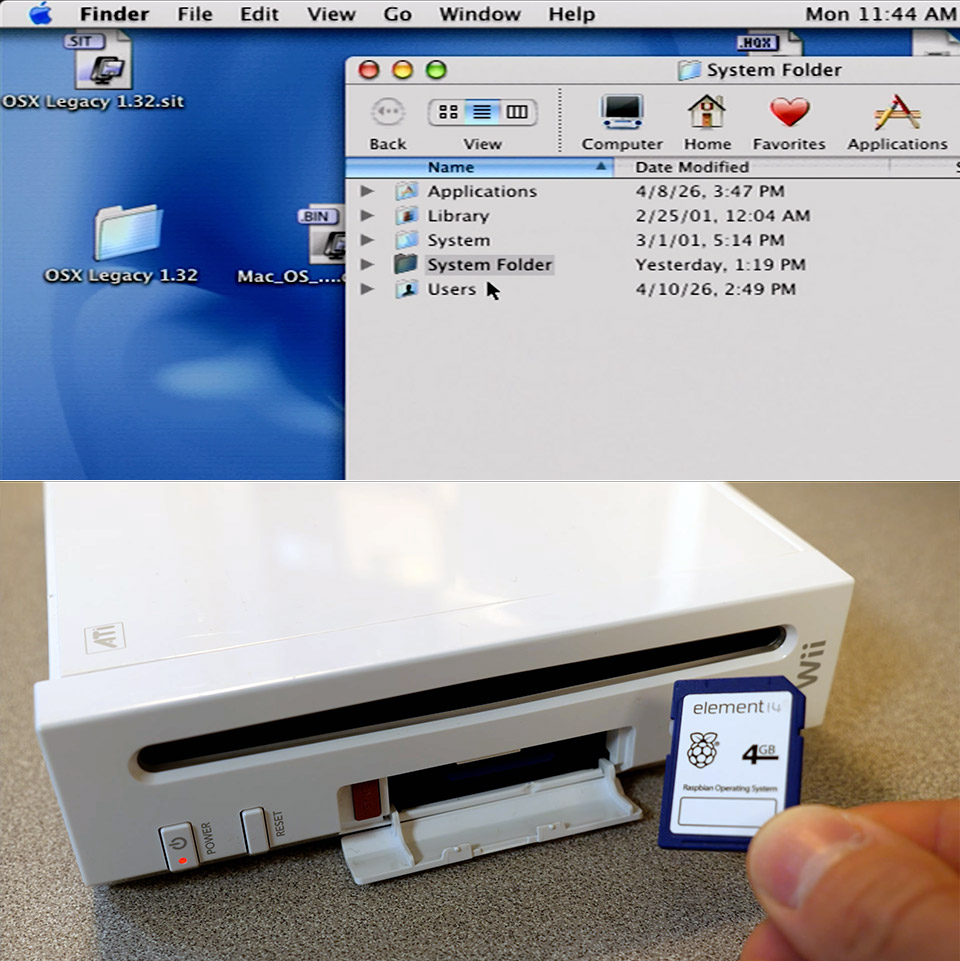
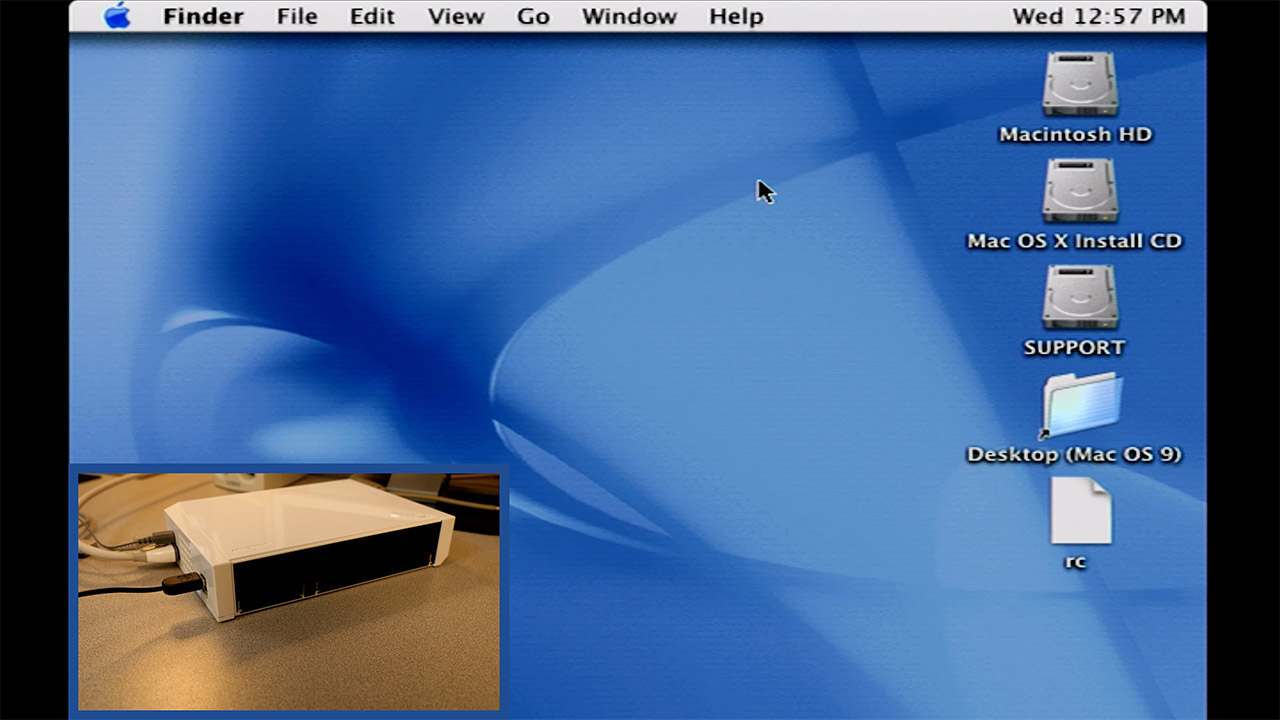
Programmers have managed to cram the original Mac OS X onto a Nintendo Wii from 2006, a piece of hardware that is nearly 20 years old. Bryan Keller, the brains behind this, spent a year and a half developing tools to make it happen through a project called wiiMac. The result lets the Wii boot into Mac OS X 10.0 Cheetah and handle basic tasks even if the experience moves slowly on such limited hardware.
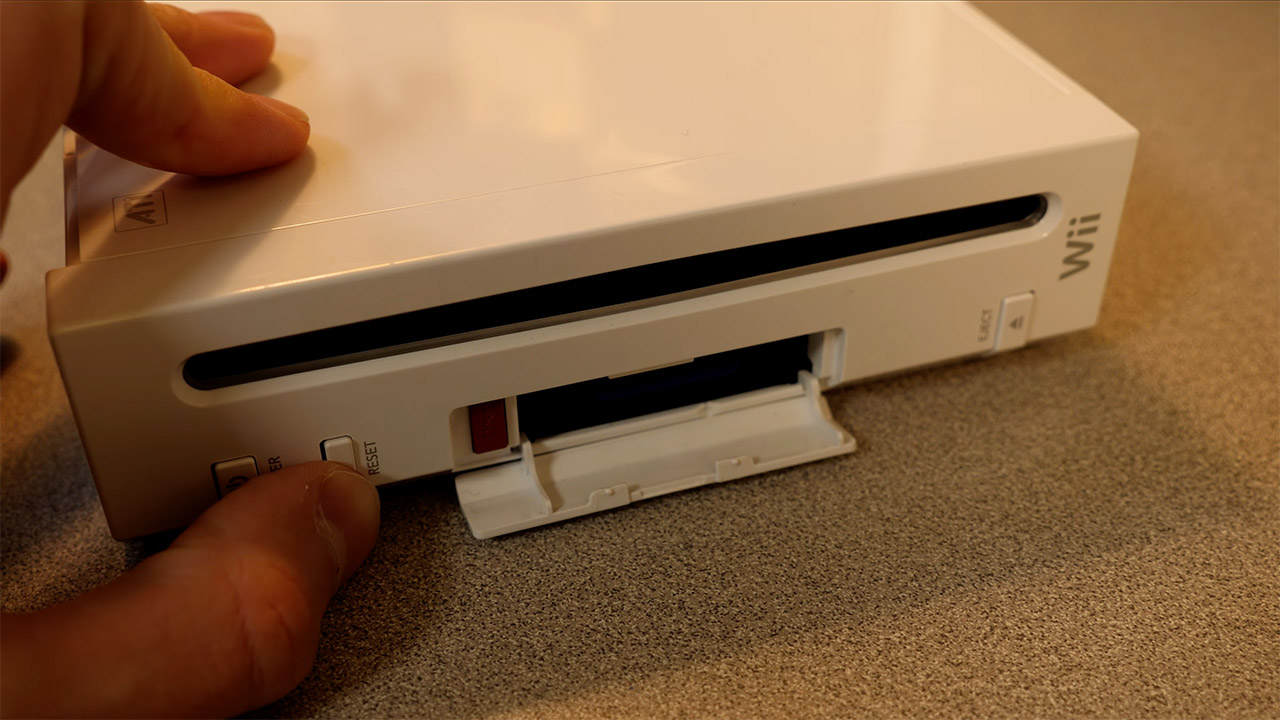
To begin, owners must ensure that their Wii is functioning properly. The SD card slot is required, and the Wii must be running a soft mod with BootMii installed as the second thing to boot, or via an IOS. Unfortunately, the Wii Mini is out of the running because it lacks the essential slot. To get everything up and running, two SD cards are required: one for the BootMii files and the wiiMac bootloader, and the second for the Mac OS X system, which has to be at least 4GB in size.
HELLO, MACBOOK NEO — Ready for whatever your day brings, MacBook Neo flies through everyday tasks and apps. Choose from four stunning colors in a…
THE MOST COLORFUL MACBOOK LINEUP EVER — Choose from Silver, Blush, Citrus, or Indigo — each with a color-coordinated keyboard to complete the…
POWER FOR EVERYDAY TASKS — Ready the moment you open it, MacBook Neo with the A18 Pro chip delivers the performance and AI capabilities you need to…
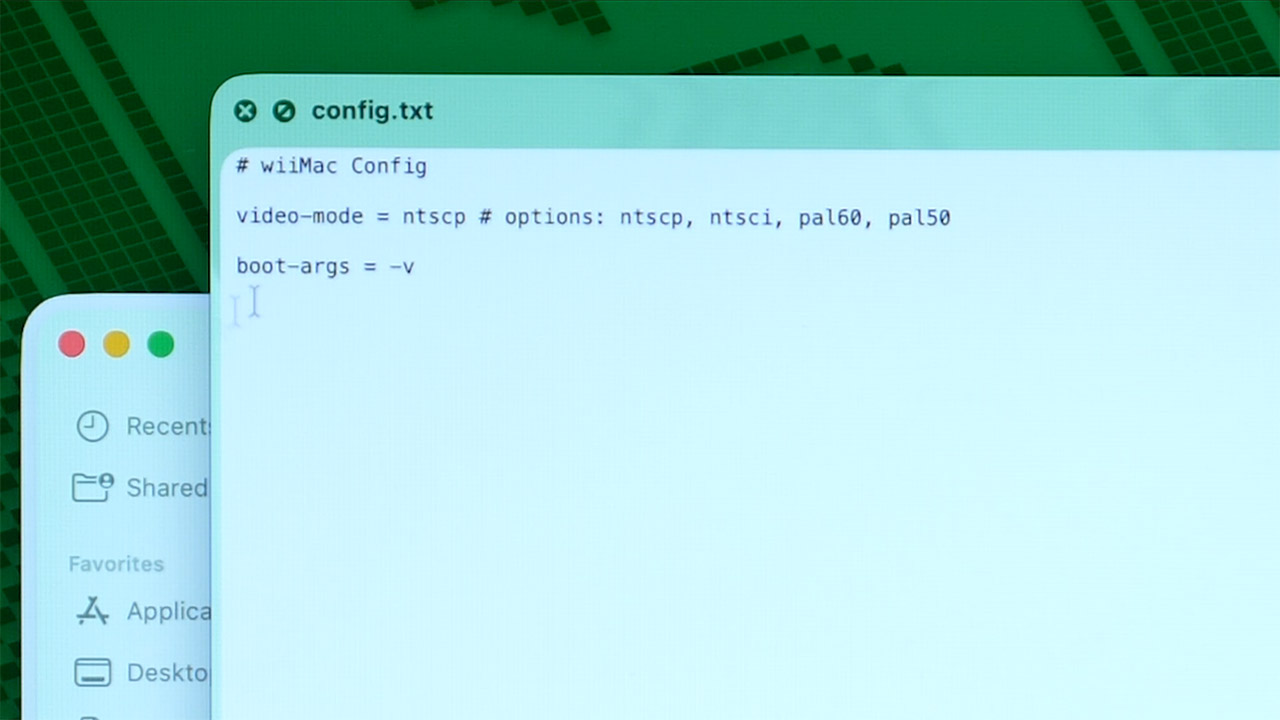
To configure the cards, you will need a spare computer running macOS or Linux. The first card receives a copy of the most recent wiiMac files directly to the root folder, along with the BootMii files, which are almost certainly already present, and there must be a text file inside the wiiMac folder that allows you to select the appropriate video mode for your region, such as NTSC or PAL.
The second card must be partitioned into three smaller and smaller sections: a 64MB FAT32 section labeled Support, a 1GB HFS+ section labeled Install, and a larger HFS+ section labeled Macintosh HD that takes up the remainder of the space, as the commands for doing so will differ slightly depending on the computer you’re using, but the goal is the same. The Install partition is then loaded with a full copy of the Mac OS X 10.0 Cheetah installer, as you’ll need an original disk image to transfer it from, which you can achieve via a block level transfer. Meanwhile, the Support partition receives a folder named wiiMac, which contains a specially patched kernel file as well as a slew of unique drivers designed specifically for Wii hardware.
Once the cards are ready, you can transfer them to the Wii. Insert the BootMii card and restart the Wii, which should bring you to the BootMii interface. From there, simply load the wiiMac bootloader and quickly switch the first card for the second, which contains all of the Mac OS X partitions. The bootloader takes over and launches the installer; at this point, you’ll need a simple USB keyboard and mouse plugged directly into the Wii ports, as connecting them via a hub is likely to cause issues. The installer next walks you through selecting the Macintosh HD partition as the location for the system files, and that’s all.
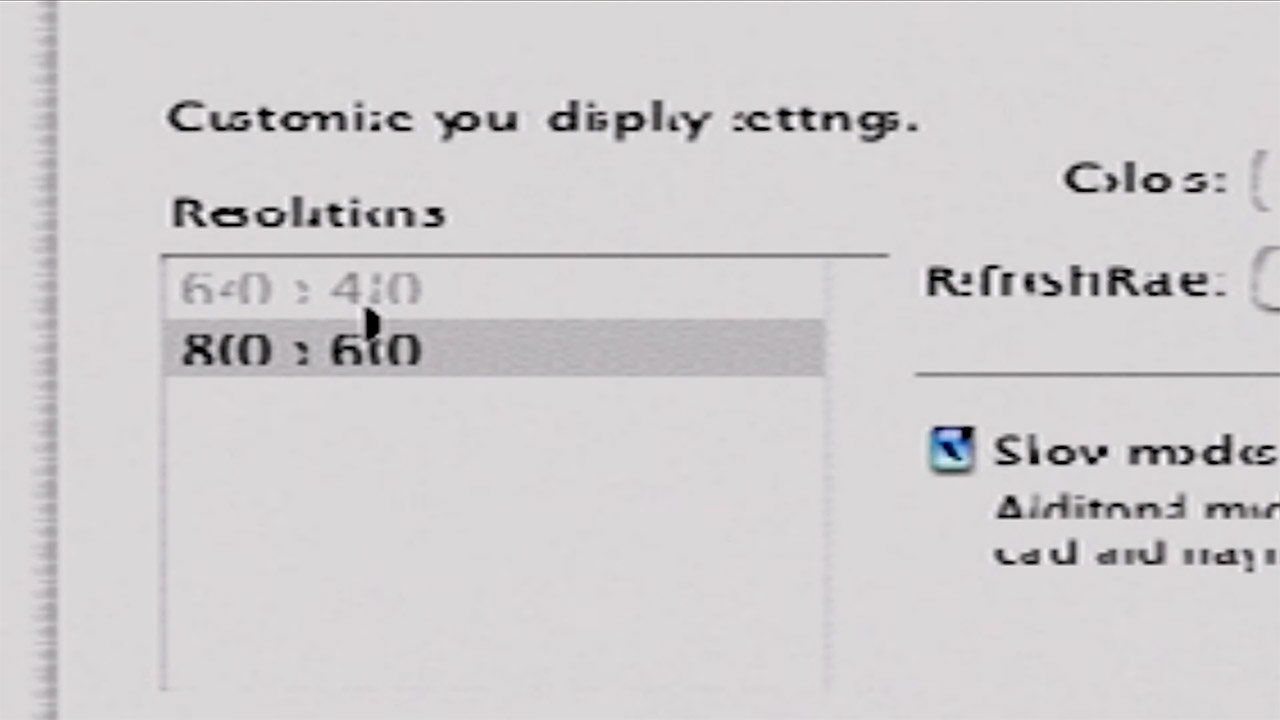
Once the installation is complete, the new operating system will boot. To get the newly loaded Mac OS X up and running, you must perform the same old card switch and bootloader dance. At this point, you’ll probably notice that the screen resolution is looking a little stretched out, so you’ll need to head directly to System Preferences and adjust it to a more reasonable 640×480 for readability. The next thing you do is run a few terminal commands to adjust the swap file size and compress the Dock down to size in order to squeeze out some more speed from the Wii’s not-so-modern 78 MB of useable RAM and 729 MHz processor. If you plug in a USB storage drive before starting the machine, it should connect OK, but don’t expect it to be reliable.
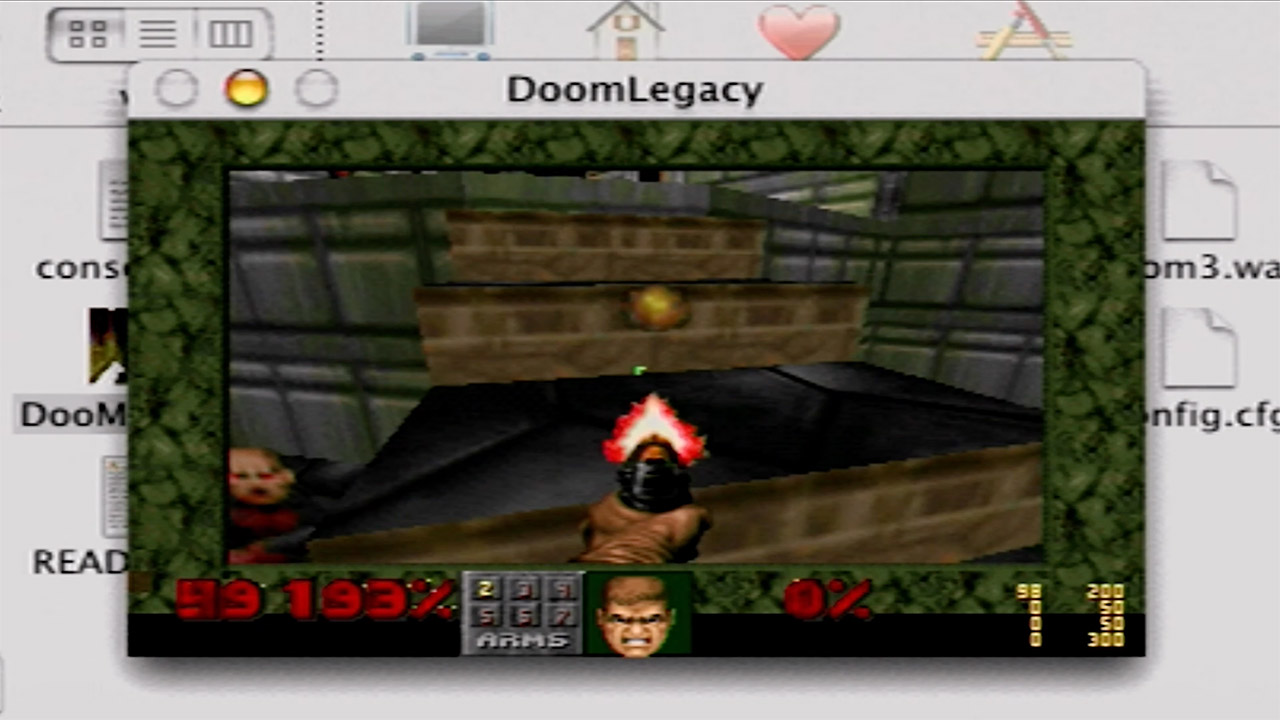
Performance is about what you’d expect: not exactly blistering speeds. The system handles the Finder and the fundamentals well, but Wi Fi, Bluetooth, the DVD drive, and any type of graphics or audio acceleration are all unsupported. The Classic environment is useful for running older Mac OS 9 software, but expect a slight lag. There is one small bright side, however: when you start the DOOM port, it runs nicely and even outperforms certain older Mac installations in certain scenarios.
The ASX-listed data centre operator is raising A$1.5 billion in a fully underwritten equity offering and expanding its hybrid securities programme by A$700 million, with La Caisse de dépôt et placement du Québec now committed to a total of A$1.7 billion.
The raise will fund accelerated development of the S4 Western Sydney campus, where contracted utilisation jumped 250 megawatts in a single quarter.
NEXTDC (ASX: NXT), Australia’s largest independent data centre operator, has halted trading to launch a A$2.2 billion capital plan anchored by a fully underwritten A$1.5 billion equity entitlement offer, the company announced on Monday.
The raise is a direct response to a step-change in demand: between December 2025 and 31 March 2026, NEXTDC’s pro forma contracted utilisation jumped 250 megawatts, a 60% increase in a single quarter, to reach 667MW.
Advertisement
The 💜 of EU tech
The latest rumblings from the EU tech scene, a story from our wise ol’ founder Boris, and some questionable AI art. It’s free, every week, in your inbox. Sign up now!
Its forward order book grew 83% over the same period to 544MW, driven by hyperscale cloud providers and AI infrastructure customers.
The equity component is structured as a 1-for-5.4 pro-rata accelerated non-renounceable entitlement offer, priced at A$12.70 per share, an 8.6% discount to the theoretical ex-rights price of A$13.90.
Advertisement
New shares are expected to be issued to retail shareholders by 18 May, with the institutional bookbuild already underway at the time of the halt. Prior to the suspension, NEXTDC shares had risen approximately 25% through April, reflecting mounting investor enthusiasm for data centre infrastructure plays across Asia-Pacific.
The A$2.2 billion total capital plan combines the A$1.5 billion equity offer with a A$700 million expansion of the company’s hybrid securities programme.
NEXTDC’s hybrid securities, which are deeply subordinated instruments ranking junior to all existing debt, had previously been backed by a A$1 billion binding commitment from La Caisse de dépôt et placement du Québec (CDPQ), Canada’s second-largest pension fund with approximately C$517 billion in assets.
The expanded commitment brings La Caisse’s total backing to A$1.7 billion, cementing what the Canadian investor described as a “promising first step toward a long-term partnership” with NEXTDC.
Advertisement
The primary use of proceeds is the accelerated development of S4, NEXTDC’s data centre campus in Western Sydney, where the company intends to invest approximately A$1.5 billion through the end of financial year 2027.
A record 250MW customer commitment at S4 during the quarter is what triggered the announcement: CEO Craig Scroggie described the capital raise as a way to “materially expand NEXTDC’s contracted capacity and de-risk the company’s Western Sydney developments ahead of potential strategic partnership transactions with private capital partners from 2027.”
That last phrase signals intent to bring in joint venture partners or asset-level investors once the facility is contracted and de-risked, a common monetisation mechanism for large-scale data centre infrastructure.
The financial guidance accompanying the announcement is striking. NEXTDC raised its FY26 capital expenditure guidance by A$300 million to a range of A$2.7 billion to A$3.0 billion.
Advertisement
For FY27, capex is forecast at approximately A$5.0 billion. The company is simultaneously maintaining its existing FY26 revenue and EBITDA guidance while projecting that contracted EBITDA from existing customer agreements alone will exceed A$1 billion over time, roughly four times the midpoint of current FY26 guidance of A$235 million.
Following the raise and recent funding activity, NEXTDC expects pro forma liquidity of approximately A$5.9 billion.
NEXTDC operates or is developing 20 data centres across Australia, in Sydney, Melbourne, Brisbane, Perth, Port Hedland, Canberra, Adelaide, the Sunshine Coast, and Darwin, and is evaluating sites in Tokyo, Bangkok, Johor and Kuala Lumpur in Malaysia, and Singapore.
Australia’s deployable data centre capacity stands at approximately 1,350 megawatts today, with consensus forecasts projecting 3,100 MW by 2030–31 and potentially up to 7.4 gigawatts by 2035 under AI-driven scenarios.
Advertisement
NSW has endorsed A$51.9 billion worth of data centre projects through its Investment Delivery Authority, effectively concentrating approvals, and the grid connections and planning support that come with them, in a small number of qualified operators.
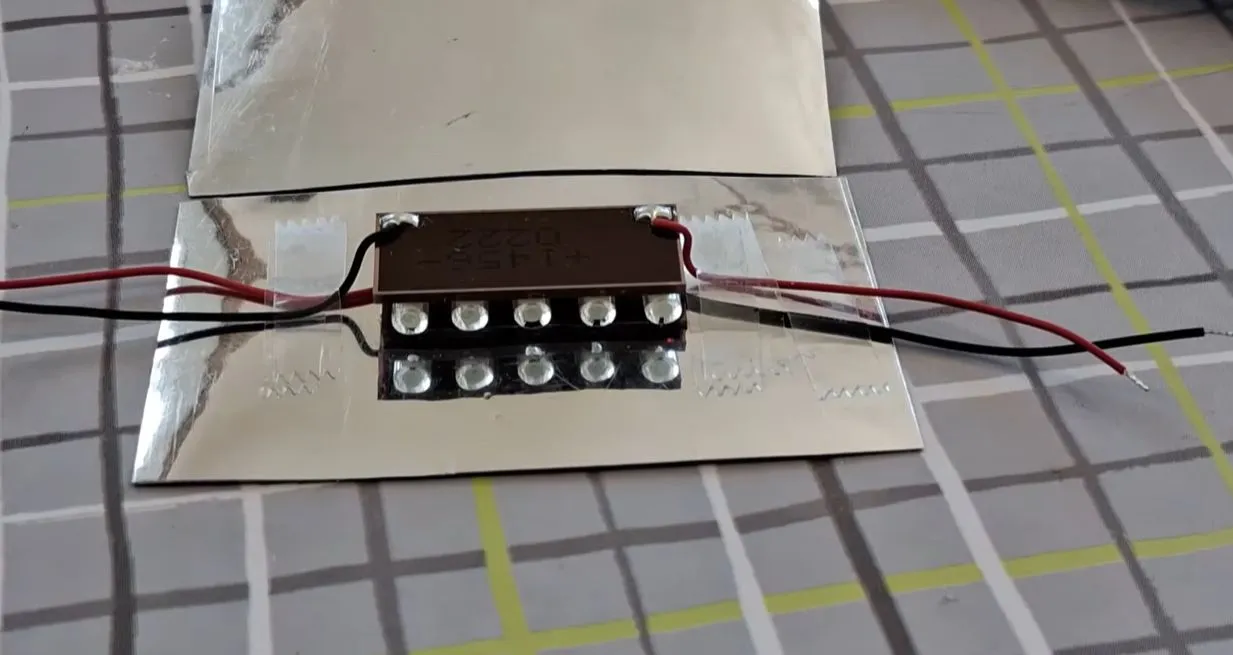
Nuclear batteries are pretty simple devices that are conceptually rather similar to photovoltaic (PV) solar, just using the radiation from a radioisotope rather than solar radiation. It’s also possible to make your own nuclear battery, with [Double M Innovations] putting together a version that uses standard PV cells combined with small tritium vials as radiation source.
The PV cells are the amorphous type, rated for 2.4 V, which means that they’re not too fussy about the exact wavelength at the cost of some general efficiency. You generally find these on solar-powered calculators for this reason. Meanwhile the tritium vials have an inner coating of phosphor so they glow. With a couple of these vials sandwiched in between two amorphous cells you thus have technically something that you could call a ‘nuclear battery’.
With an approximately 12 year half-life, tritium isn’t amazingly radioactive and thus the glow from the phosphor is also not really visible in daylight. With this DIY battery wrapped up in aluminium foil to cover it up fully, it does appear to generate some current in the nanoamp range, with a single-cell and series voltage of about 0.5 V.
Advertisement
A 170 VAC-rated capacitor is connected to collect some current over time, with just under 3 V measured after a night of charging. In how far the power comes from the phosphor and how much from sources like thermal radiation is hard to say in this setup. However, if you can match up the PV cell’s bandgap a bit more with the radiation source, you should be able to pull at least a few mW from a DIY nuclear battery, as seen with commercial examples.
This isn’t the first time we’ve seen this particular trick. A few years ago, a similar setup was used to power a handheld game, as long as you don’t mind waiting a few months for it to charge.























































You must be logged in to post a comment Login