An anonymous reader quotes a report from the New York Times: The World Health Organization declared on Saturday that the spread of the Ebola virus in the Democratic Republic of Congo and Uganda was a global health emergency. The announcement was made a day after Africa’s leading public health authority reported that an outbreak in a province in the northeast of the country was linked to dozens of suspected deaths. By Saturday, cases had also been confirmed in Kampala, the capital of Uganda, the W.H.O. said.
In Congo’s Ituri province, where the outbreak was first identified, 246 suspected cases and 80 deaths attributed to the virus had been reported, although only eight cases had been definitively linked to the virus through laboratory testing. There is no approved vaccine and no therapeutics for the Bundibugyo species of Ebola behind the outbreak, according to the W.H.O. The scale of the outbreak could be far larger than has been detected and reported, the W.H.O. said in declaring a “public health emergency of international concern.” It added that there were “significant uncertainties” about the precise number of people infected and the “geographic spread.”
The W.H.O.’s declaration signals a public health risk requiring a coordinated international response, and is intended to prompt member countries to prepare for the virus to spread and to share vaccines, treatments and other resources needed to contain the outbreak. […] The risk of the outbreak spreading is exacerbated by a humanitarian crisis, high population mobility and a large network of informal health care facilities in the area, the agency said. Containing an Ebola outbreak depends on the speed and scale of the public health response. The virus is transmitted through direct contact with the bodily fluids of an infected person, putting family members and caregivers at particular risk. Tracing people who may have come into contact with sufferers, isolating and treating victims promptly and safely, and burying the dead properly are all viewed as critical steps.
That’s down from the previous 2,400 posts per day limit.
Thrive Studios ID/Shutterstock
X has introduced some more incentive to get users to pay for “verification” on its platform, but the new limitation may have angered some longtime users. As seen on X and Reddit, users are reporting that X has quietly restricted the amount of posts allowed for those without the blue checkmark. Now, the X Help Center page on limits reads that posts are limited to “50 original posts and 200 replies per day for unverified accounts.”
Compared to cached versions of the same Help Center page, the new limit is much lower than the previous “2,400 per day” rule. Interestingly, the updated page still references the 2,400 updates per day restriction. However, X will inform users of when they hit the new limits and which limit they reached with an error message.
This move could be a part of X’s campaign to cut down on spam and bot activity on the platform, as seen when it introduced the “about this account” feature in October that reveals where an account is based. However, those unhappy with this restriction said it could result in more users leaving the platform. For those who want to stick around and post to their heart’s content, X Premium’s most affordable option, its Basic tier, starts at $3 a month or $32 per year.
Consumers in 2026 are looking for better sound with fewer boxes, and that includes a lot of audiophile listeners. Not everyone wants a full rack of components, long cable runs, and large floorstanding loudspeakers in the den or living room. Some do not have the space, and others simply want a cleaner system that is easier to live with.
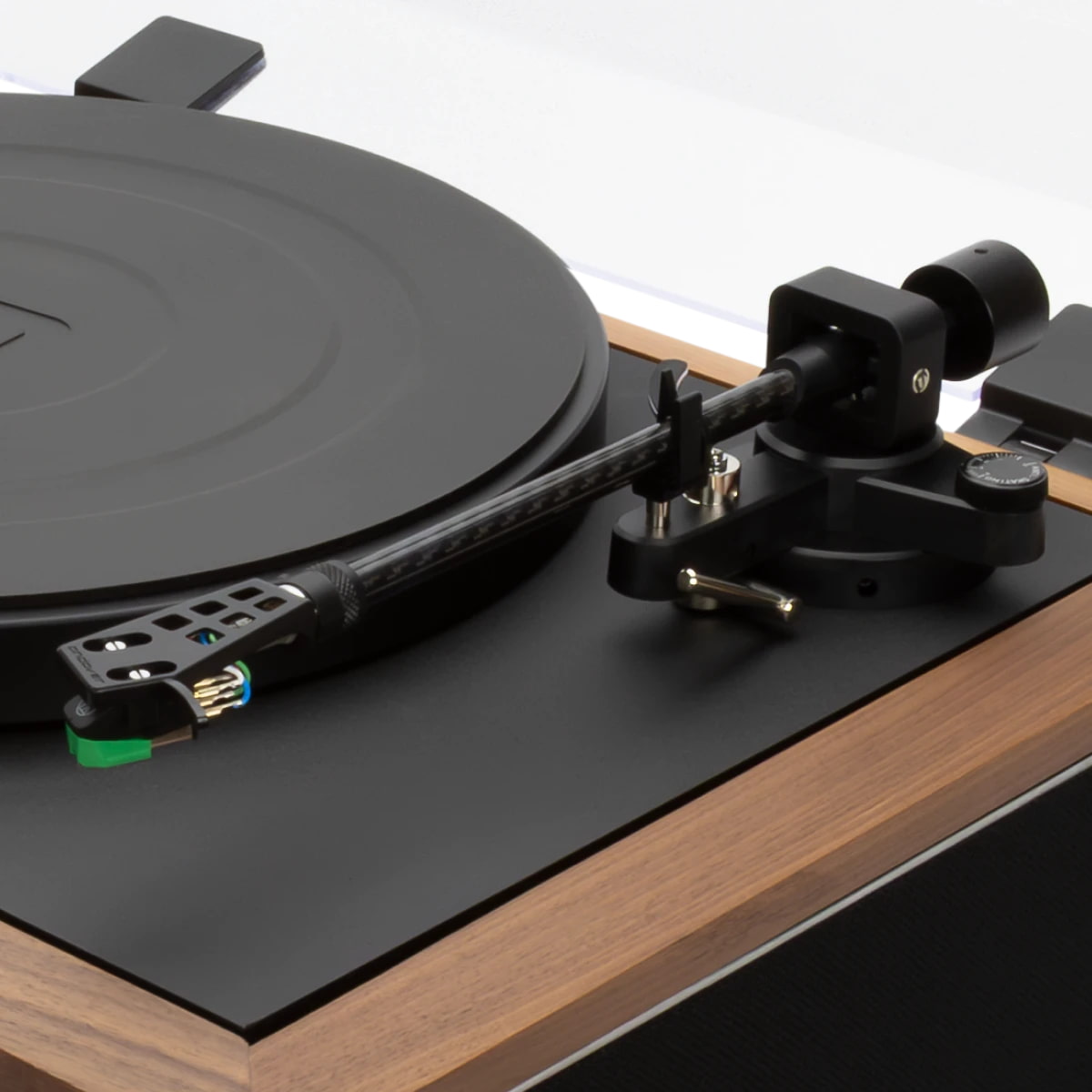
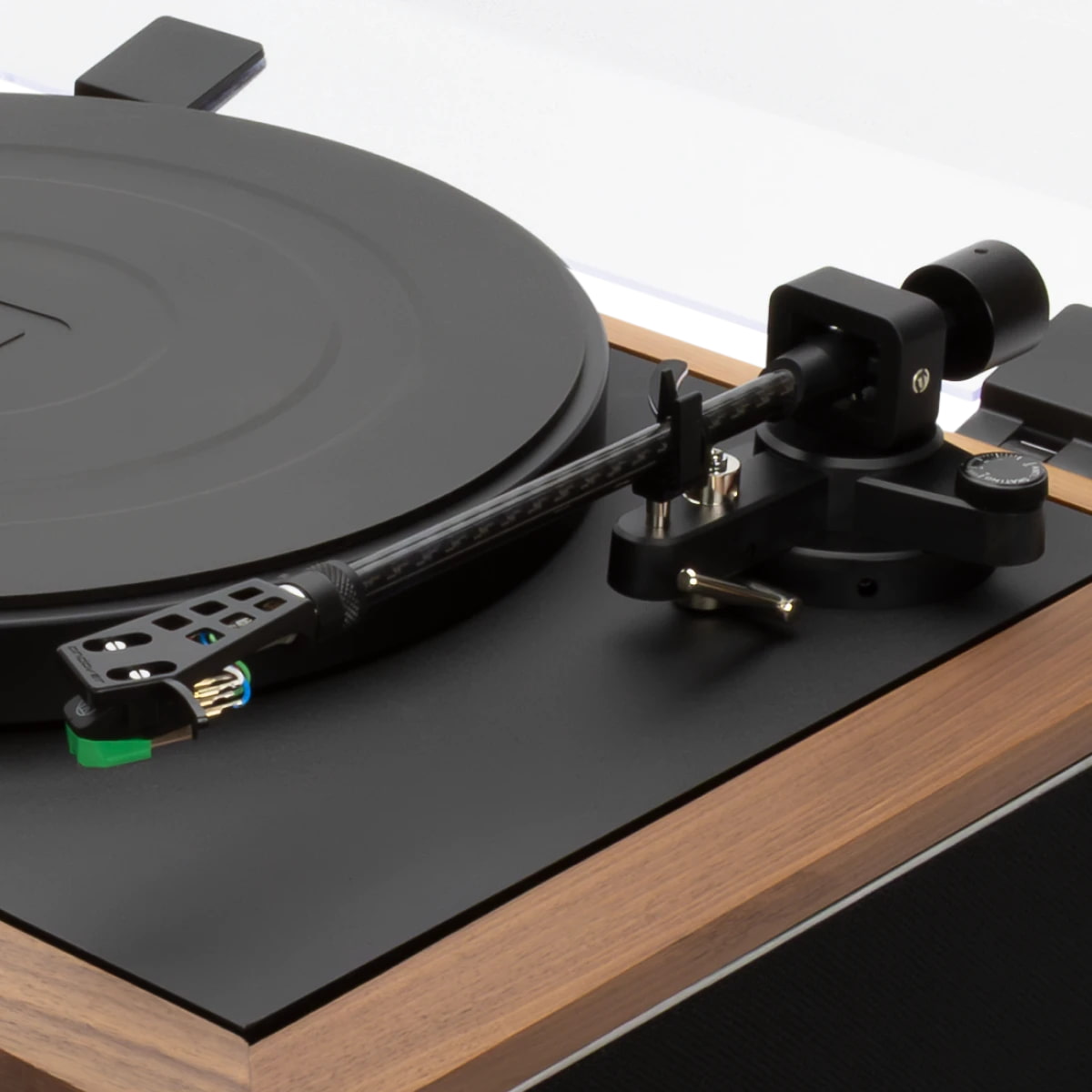
The $2,699 Andover Audio The One MK2 Turntable Music System is designed for that buyer. Building on the original Andover-One and the One E, the MK2 combines vinyl playback, factory preset calibration, end of record auto stop, and multi-room connectivity in one self contained system. It is not trying to replace every traditional hi-fi setup, but it does offer a more practical path for listeners who want records, streaming flexibility, and room to expand without building a stack of gear.
“We set out to redefine what’s possible in an all in one music system and that day at RMAF 2019 proved we did just that,” said Bob Hazelwood, Chief Engineer at Andover Audio. “It was a turning point, and we’re proud to bring the joy of true high fidelity listening into more homes to help people connect, unwind, and feel more at home through the power of music.”
What’s New With the Andover One MK2?
Easy Setup: Andover systems have always been designed for simple setup, but the One MK2 goes further with factory preset calibration. Tracking force, anti skate, and cartridge alignment are set before the system leaves the factory, allowing users to place the unit, plug it in, put a record on the platter, cue the tonearm, and start listening.
Advertisement
Audio Technica VM95E Cartridge: The One MK2 includes an Audio Technica VM95E dual moving magnet cartridge, a proven design known for solid channel separation, reliable tracking, and broad stylus upgrade support. Owners can move to other VM95 Series stylus options later without replacing the entire cartridge, giving the system a practical upgrade path.
Adjustable VTA: The One MK2 tonearm allows vertical tracking angle adjustment through a set screw at the tonearm pivot. That gives users more flexibility when changing cartridges or upgrading to more alignment sensitive styli, such as the Audio-Technica AT-VMN95ML or AT-VMN95SH, which benefit from more precise setup than standard conical or elliptical options.
Removable Headshell: The headshell attaches to the tonearm with a locking collar, making cartridge changes, upgrades, cleaning, and inspection easier. It also gives owners a more practical path for future cartridge or stylus maintenance without turning a simple system into a Saturday afternoon crime scene.
Intelligent Auto Stop: The One MK2 adds an optical sensor that stops the turntable motor shortly after the record side ends. The tonearm still needs to be lifted manually, but the auto stop feature helps reduce unnecessary stylus and record wear if the listener does not get to the turntable right away.
Advertisement
Quiet Spin: The One MK2 uses a split plinth design that helps isolate the turntable motor from the speaker enclosure. By reducing motor and enclosure vibration from reaching the stylus, the design is intended to lower noise and improve playback clarity.
Multi-Room Ready: The MK2 provides a Digital Optical Output that enables connection to a compatible external streamer. This includes connection to the Andover Audio Songbird HR Music Streamer or other multi-room capable systems to stream audio from the Mk2 to other rooms.
Key Features That Carry Over in the Andover One MK2
IsoGroove Technology: Andover’s IsoGroove Technology is designed to allow a turntable and speaker system to operate inside a single compact enclosure while reducing feedback, resonance, and vibration related noise. The system uses Andover’s proprietary speaker design, internal bracing, and DSP to help keep vinyl playback stable and clean.
Advertisement. Scroll to continue reading.
Advertisement
Bluetooth: The Andover One MK2 supports Bluetooth, allowing users to stream directly from smartphones, tablets, and other compatible devices.
USB Port: The USB port supports playback from a USB flash drive and can also be used to record vinyl playback to USB for use with other compatible devices.
Outputs: The One MK2 includes preamp outputs for connection to an external amplifier or powered speakers, along with subwoofer outputs for adding a powered subwoofer.
Intuitive Interface: The One MK2 features a front mounted graphic display with single knob control, along with an included RF remote. Users can select phono, Bluetooth, optical digital, and USB input/output, while also adjusting bass, treble, turntable speed, display brightness, and listening modes through the front panel rotary control or remote.
Advertisement
Class A Headphone Amplifier: The One MK2 includes a dedicated Class A headphone amplifier with a discrete output stage for private listening. Andover specifies compatibility with headphones from 16 ohms to 10k ohms, although real world performance with demanding headphones will depend on output power, gain, and voltage delivery. For most conventional dynamic and planar headphones, the built in amplifier should provide a useful private listening option without requiring a separate headphone amp.
Listening Modes
Stereo/Mono Mode: The One MK2 allows listeners to switch between stereo and mono playback. Stereo is the standard choice for most modern records and sources, while mono can be useful for older mono records or recordings that sound more focused when summed properly.
Panoramic Mode: Panoramic mode is designed to widen the perceived stereo image from the single chassis system, helping the One MK2 create a larger soundstage than its physical footprint might suggest.
EQ Settings: The One MK2 includes adjustable EQ settings through the menu system, allowing users to tailor the sound for the room, source material, or personal preference.
The Andover Audio One MK2 is not trying to replace a serious separates based system, but it does make a strong case for listeners who want real vinyl playback, fewer boxes, and a cleaner living room. The combination of a custom turntable, factory preset calibration, end of record auto stop, IsoGroove vibration control, Bluetooth, USB playback and recording, optical input, subwoofer outputs, and multi room expansion gives it more flexibility than most all-in-one turntable systems. The Audio-Technica VM95E cartridge, adjustable VTA, and removable headshell also give owners a practical upgrade path instead of locking them into a dead end design.
What is missing? Wi-Fi streaming support needs to be clearly defined, and serious headphone users will want more information from Andover about the Class A headphone amplifier’s output power, gain, and real world performance with demanding headphones.
The One MK2 is best for vinyl listeners, apartment dwellers, design conscious buyers, and even some audiophiles who want a compact system that does not require a rack, external amplifier, separate speakers, and a cable map worthy of NASA.
Andover-One MK2 Premier System adds Record Storage Upper Stand and Andover-One Subwoofer.
The Gates Foundation marked its 25th anniversary in May 2025 with a panel, from left: Emma Tucker, Wall Street Journal’s editor-in-chief; Mark Suzman, CEO of the Gates Foundation; and Bill Gates. (GeekWire screenshot from live stream)
The Gates Foundation trust no longer owns any shares of Microsoft, the company that made Bill Gates one of the world’s richest people and ultimately led him to launch the Seattle-based global health organization 26 years ago.
The sale was disclosed in a Securities and Exchange Commission filing on Friday, with 7.7 million shares sold for approximately $3.2 billion, as first reported by The Times of India.
The move doesn’t reflect any souring on the Redmond, Wash., tech giant but is the continuation of a Microsoft selloff that began in the last quarter of 2023. The assets that fund the foundation are independently managed by a separate entity, the Gates Foundation Trust.
The foundation’s trust was once heavily concentrated in Microsoft stock — at its 2022 peak, those shares represented 27% of its holdings, per International Business Times.
One year ago, the foundation announced that it would sunset in 2045, with Gates pledging to give away $200 billion — nearly all of his wealth — over the next two decades through the organization.
Advertisement
Cascade Asset Management Company, which manages the foundation’s trust, did not respond to a request for comment.
On the same day as the foundation’s selloff, hedge fund manager Bill Ackman and his firm Pershing Square Capital Management snapped up approximately 5.65 million shares of Microsoft worth about $2.09 billion. The purchase was funded by the sale of Pershing Square’s Alphabet holdings.
“Microsoft operates two of the most valuable franchises in enterprise technology, which account for approximately 70% of the company’s overall profits: M365 and Azure,” Ackman said on X.
Wall Street was less enthusiastic following Microsoft’s quarterly returns in April, sending the company’s stocks down 5% after the disclosure that its capital expenditures would hit roughly $190 billion this year.
Advertisement
The Gates Foundation is the world’s largest philanthropy and has disbursed more than $110 billion since its founding, supporting global vaccinations, educational programs, women’s health and other initiatives. The organization has been ramping up its grantmaking, issuing $8.5 billion last year, and committing to distributing $9 billion this year.
“There are too many urgent problems to solve for me to hold onto resources that could be used to help people. That is why I have decided to give my money back to society much faster than I had originally planned,” Gates wrote in announcing his philanthropic plans last May.
By the end of last year, the foundation’s endowment was worth $89 billion.
The CFTC says it is ramping up efforts to catch insider trading and market manipulation in prediction markets, using AI tools, blockchain tracing, and other surveillance systems to flag suspicious bets. It’s also monitoring activity by U.S. traders accessing offshore platforms like Polymarket through VPNs. Wired reports: [T]he Commodity Futures Trading Commission, which oversees prediction markets, wants you to know that it’s watching very, very closely. The agency is searching for suspicious behavior from traders within the United States who have been sneaking onto offshore markets, including Polymarket’s crypto platform — which is blocked stateside — by using virtual private networks. “We’re going to find them, and we’re going to bring actions,” agency chairman Michael Selig told WIRED this week, speaking from the CFTC’s headquarters in Washington, DC. Selig says the agency, which is especially lean right now, is staffing up. Like so many other AI-pilled workplaces, the CFTC is also leaning into automation to handle the growing workload, including tools that analyze trading patterns and flag potential manipulation. “You’ve got so much data,” Selig says. “When we feed it into AI, we get really great information. It can help us understand things, like where we might want to investigate, or when we might need to send a subpoena to a trader.”
In addition to proprietary surveillance systems developed in-house, the agency’s arsenal includes third-party blockchain tracing tools like Chainalysis for crypto platforms, and market abuse detection software including Nasdaq Smarts for centralized markets. (Beyond Nasdaq Smarts, the agency did not specify which AI tools it uses and declined to share more specific examples.) […] Selig recently told Congress that the company is pursuing “hundreds, if not thousands” of insider trading tips. Investigations are not limited to federally regulated exchanges. “We’re surveilling the markets on a global basis,” he tells WIRED.
Selig says that the agency will exert extraterritorial jurisdiction — its legal ability to enforce its laws beyond traditional boundaries — when it finds suspicious activity on offshore platforms like Polymarket, though he says it’s a case-by-case approach. “We use it in extreme circumstances,” he says, with an eye towards whether charges have a strong chance of sticking in court. “In any extraterritorial litigation, there’s going to be challenges to our authority, and that could also impair our ability to bring cases in the future.” According to Selig, the 2010 Dodd-Frank Act allows the CFTC more leeway to pursue this kind of enforcement action, by giving it more authority over foreign swap activities that impact the US. When appropriate, the agency works with regulators from other countries, too. “For cases where we’re not sure we’ll win, or it’s less in our wheelhouse and more of a foreign matter, we would relay it to a foreign regulator,” he says. “We’re constantly referring cases.” […] Selig is insistent that the CFTC is only just getting started. The agency will identify wrongdoers, he says — no matter “how large or how small.”
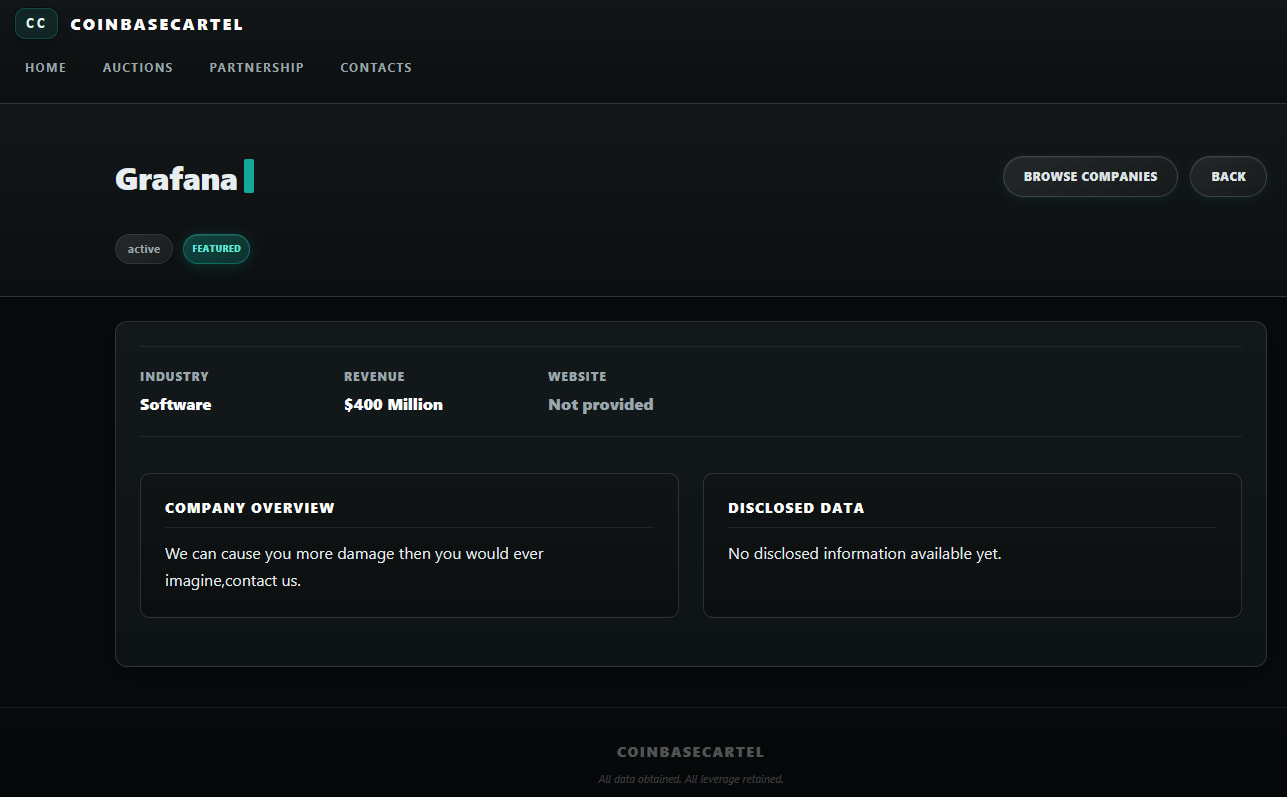
Grafana Labs disclosed that hackers have downloaded its source code after breaching its GitHub environment using a stolen access token.
A relatively new extortion gang known as CoinbaseCartel has claimed the attack by adding Grafana to their data leak site (DLS), although no data has been leaked yet.
Grafana Labs is the company behind Grafana, the popular open-source platform for analytics, monitoring, and real-time data visualization.
Paying customers are primarily large enterprises, cloud providers, telecos, banks, governments, e-commerce platforms, and infrastructure operators. According to Grafana, more than 7,000 organizations use the product, including 70% of the Fortune 50 companies.
Advertisement
No payment for hackers
In an announcement over the weekend, Grafana Labs said that its investigation found no evidence that customer data or personal information was exposed during the incident. Furthermore, the company notes that customer systems remained unaffected.
The forensic analysis revealed the source of the leaked credentials. The company “invalidated the compromised credentials and implemented additional security measures” to prevent future unauthorized access.
The attacker attempted to extort the company, demanding payment in exchange for not publishing the stolen source code. However, Grafana said it chose to follow public guidance from the Federal Bureau of Investigation (FBI) and not pay the ransom, noting that doing so would only encourage other threat actors to pursue similar attacks.
“Based on our operational experience and the published stance of the FBI, which notes that paying a ransom doesn’t guarantee you or your organization will get any data back and only offers an incentive for others to get involved in this type of illegal activity, we’ve determined the appropriate path forward is not to pay the ransom,” Grafana stated.
Advertisement
The company said it would release more details about the attack after completing its post-incident investigation.
BleepingComputer has contacted Grafana with a request for additional details about the breach, but we have not received a response by publishing time.
CoinbaseCartel escalates activity
The CoinbaseCartel launched last September and has been quite active this year, announcing more than 100 victims on its data leak portal. The gang focuses on data theft and uses the DLS to pressure victims into paying a ransom.
CoinbaseCartel listing Grafana on its extortion portal Source: BleepingComputer
The gang announced on its site that they “are behind on many leaks,” indicating increased breaches that may have yet to reach the public space.
According to multiple researchers, CoinbaseCartel consists of ShinyHunters and Lapsus$ affiliates that gain access to target networks via social engineering, various forms of phishing, and compromised credentials.
Advertisement
Threat intelligence specialist Joe Shenouda claims that the gang also deploys an in-memory tool called “shinysp1d3r” to encrypt VMware ESXi targets and disable snapshots.
Last year, BleepingComputer analyzed a ShinySp1d3r Windows encryptor developed by the ShinyHunters extortion group. At the time, the threat actor said that they were working on finishing encryptor versions for Linux and ESXi.
After publishing this article, the ShinyHunters extortion gang told BleepingComputer that the CoinbaseCartel is not linked to their group or ransomware operation.
Automated pentesting tools deliver real value, but they were built to answer one question: can an attacker move through the network? They were not built to test whether your controls block threats, your detection rules fire, or your cloud configs hold.
This guide covers the 6 surfaces you actually need to validate.
Married at First Sight US is marching into season 19 with a whole new aisle order — and fans are already bracing for a bouquet toss of chaos. The hit reality matchmaking circus aired on Peacock in the US last year – but we’ll show you how to watch MAFS USA season 19 for free.
Longtime love gurus Dr. Pepper Schwartz, Pastor Cal Roberson and Dr. Pia Holec are all exiting in a shock expert shake-up. To compete with the MAFS Australia, producers are promising fresh blood, hotter matches and fewer dull influencers. About time.
No spoilers, but MAFS season 19 will lean harder into “real relationships” — though MAFS veterans know the honeymoon phase = meltdowns in the first 24 hours (see: BBC exposé The Dark Side of Married at First Sight).
Advertisement
Set in Texas, MAFS fans can watch Married at First Sight USA online from anywhere – and potentially for free. Here’s a full breakdown…
How to watch Married at First Sight USA S19 for free
In the UK, viewers MAFS USA season 19 will air for FREE on E4 starting Monday, May 18, and will be available on Channel 4 streaming for free with ads.
US viewers, meanwhile, can binge ALL episodes right now on Peacock. All episodes are also available on StackTV free trial in Canada.
How to watch Married at First Sight US from anywhere
If you’re traveling abroad when Married at First SightUS season 19 airs, you can watch without regional restrictions using a VPN. .
Advertisement
Use a VPN to watch Married at First Sight USA 2026 from anywhere:
How to watch Married at First Sight USA in the US
Advertisement
How to watch Married at First Sight USA S19 in Canada
Episodes went out on Slice weekly at 9pm ET/PT on Tuesdays last October. You can stream episodes online with a subscription to StackTV (free trial) through Amazon Prime Video.
US viewer currently traveling in Canada?Download a VPN to connect to your streaming service back home and watch Married at First Sight USA.
Advertisement
Can I watch Married at First Sight US in Australia?
Yes – you can watch all season 19 episodes right now on Stan in Australia.
Episodes 6-8 — Honeymoons The couples head off on luxury trips while cracks already start appearing in some marriages.
Episodes 9-14 — Moving In Together Reality hits as finances, families, routines and intimacy become major pressure points.
Episodes 15-18 — Couples Retreats & Group Drama Expect explosive dinner parties, cheating accusations and emotional confrontations.
Episodes 19-20 — Homestays Couples meet relatives and face real-world compatibility tests.
Episodes 21-22 — Final Dates The marriages reach breaking point before Decision Day.
Episode 23 — Decision Day Each couple decides whether to stay married or get divorced.
Reunion Special (TBC)
You may also enjoy watching…
VPN services are evaluated and tested by us in view of legal recreational use. For example: a) Access to services from other countries, (subject to the terms and conditions of that service). b) Safeguarding your online security and making your online privacy more robust when abroad. Future plc does not support nor condone the illegal or malicious use of VPN services. We do not endorse nor approve of consuming pirated content that is paid-for.
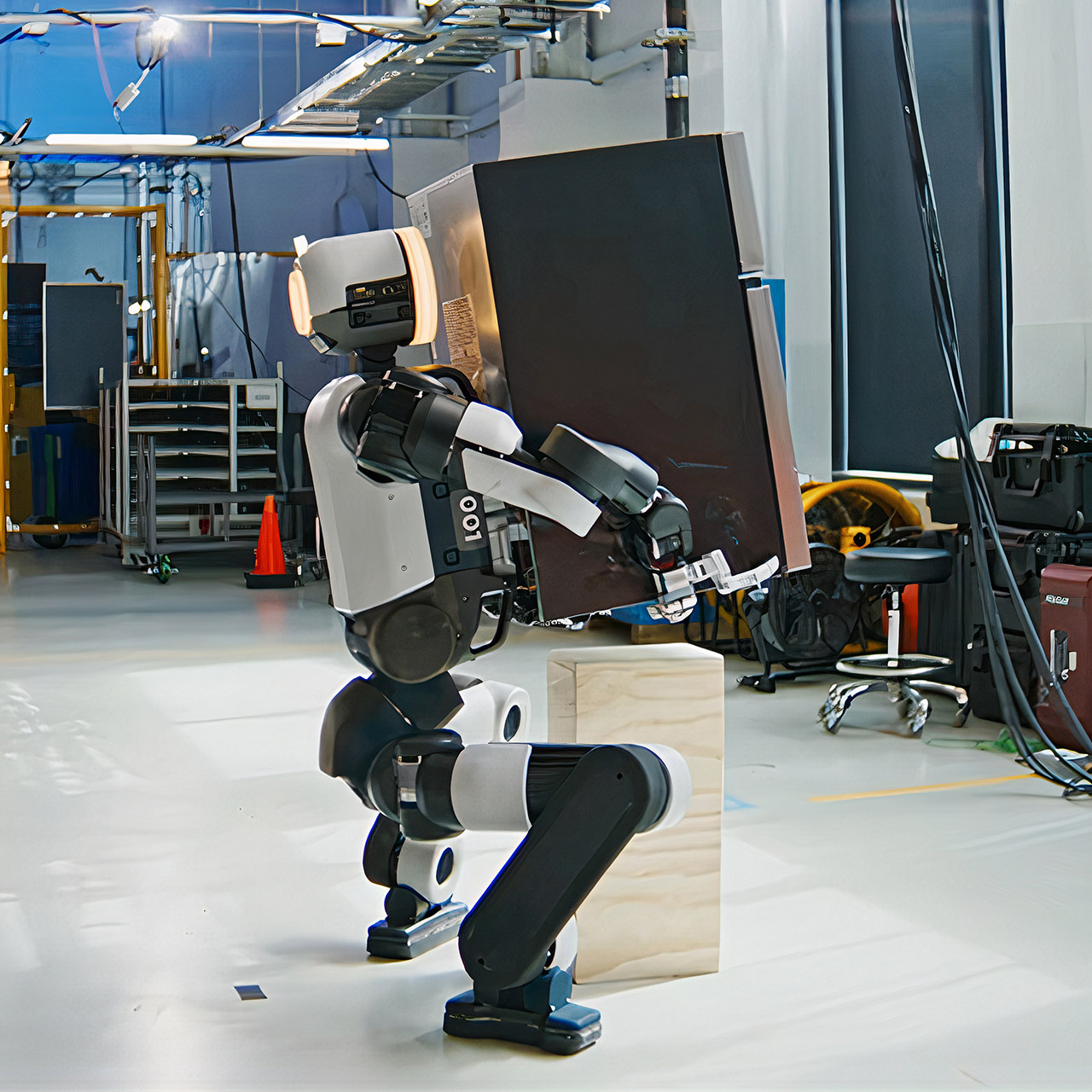
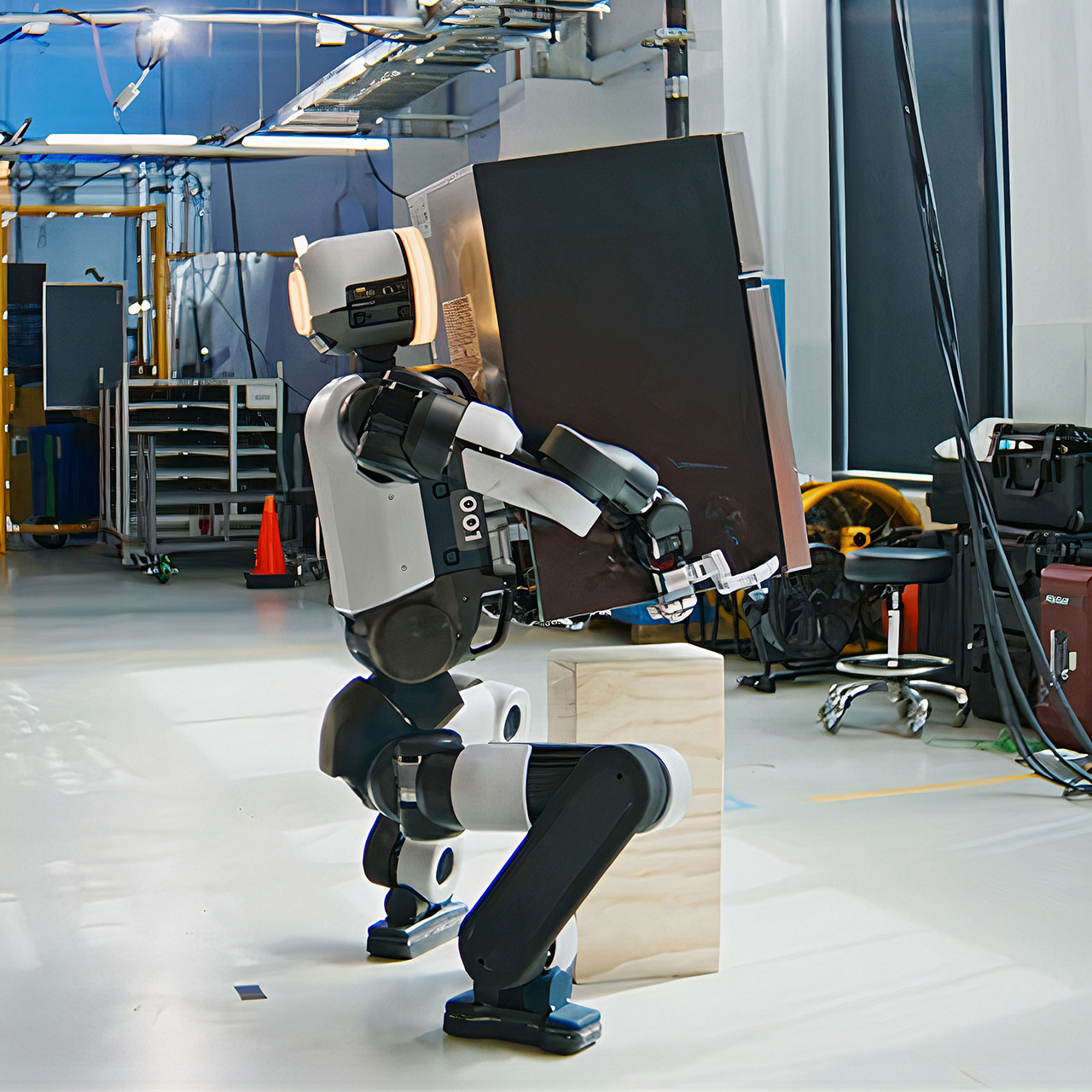
Engineers at Boston Dynamics shared details today on a new training system for their Atlas humanoid robot. The approach focuses on building the kind of physical coordination needed for demanding factory or warehouse work. One video demonstration captures the result perfectly. Atlas rotates its upper body a full 180 degrees, squats down, grips a mini-fridge loaded with about 50 pounds, and walks it straight over to an engineer waiting nearby. The motion stays smooth even when the weight inside shifts.
The developers based the entire process on the concept of extensive practice, which was carried out entirely in a computer simulation. They begin by giving the robot a very rudimentary understanding of what it has to accomplish, which it learned from a person who had done it correctly, or even a brief animation of how to move. Then they establish specific targets for what needs to happen before they can call it a success. Points are granted for things like maintaining a tight grip on the object, remaining upright, and recovering from sudden tugs or slippery floors. The simulation then runs the robot through millions of different attempts, each with a tiny variation, such as whether the fridge is heavier or lighter, or you are traveling at a different angle. Each of these little adjustments forces the robot to work things out on its own.
Sleek & Durable Design: Standing at 132cm tall and weighing only approx. 35kg, the G1 is constructed with aerospace-grade aluminum alloy and carbon…
High Flexibility & Safe Movement: Boasting 23 joint degrees of freedom (6 per leg, 5 per arm), it offers an extensive range of motion. For safety, it…
Smart Interaction & Connectivity: Powered by an 8-core high-performance CPU and equipped with a depth camera and 3D LiDAR. It supports Wi-Fi 6 and…
When these virtual practice sessions are over, the team simply transfers what the robot learned to the real robot and gives it a spin. They see what went wrong, make some changes, and then re-run the simulation. This cycle occurs quickly, owing to the robot’s simplicity: its actuators are just two types, its limbs are symmetrical, and there are no trailing cables to obstruct the process. That makes it much easier to make the simulation match what happens in the lab, and as a result, behaviors that appear solid in simulation tend to work on the first few attempts in the real world.
One thing that sticks out is Atlas’ ability to carry objects by being aware of its surroundings. Rather than depending on constant camera images of the fridge, the robot mostly uses its internal knowledge of where its joints are and how hard items are pulling on them. That feeling of its entire body allows it to adapt to the exact shape of the object, its center of mass, or any unexpected wobbling without having to pause and look again. According to the engineers, switching from relying solely on your hands to a more full-body technique makes all the difference when lifting loads that weigh more than 100 pounds, far above the 50-to-70 pounds they were working on.
Advertisement
The same foundation allows Atlas to perform additional remarkable feats that showcase its balance and strength. In other films, you can see the robot performing handstands and backflips, which involve fine control over all limbs and swift recovery if you lose your footing. These gymnastics activities also serve as practice for how the robot would handle a hot industrial floor, where it must be able to continue moving even when it becomes heated. Each new skill builds on the previous one since the robot is learning to use its knees, shoulders, and forearms collectively rather than treating each arm separately.
The all-stock takeover, the largest power acquisition ever, gives NextEra the utility that runs Northern Virginia’s data-centre belt and consolidates the bidding power on the demand side of the AI-electricity trade.
NextEra Energy has agreed to acquire Dominion Energy for about $67bn in an all-stock deal, Bloomberg reported on Monday, in what would be the largest power-sector acquisition on record.
NextEra shareholders will own 74.5% of the combined company, Dominion shareholders 25.5%, with each Dominion share exchanged for roughly eight-tenths of a NextEra share.
The combined entity will trade under the NextEra name on the New York Stock Exchange and serve around 10 million utility customers across Florida, Virginia, North Carolina, and South Carolina.
Advertisement
The strategic logic is the one every utility-sector trade has been running on for 18 months. Dominion is the utility that powers Northern Virginia, which is the world’s largest data-centre market by a long margin and the regional grid most exposed to the AI-training and inference build-out.
The 💜 of EU tech
The latest rumblings from the EU tech scene, a story from our wise ol’ founder Boris, and some questionable AI art. It’s free, every week, in your inbox. Sign up now!
NextEra brings the largest US renewable-generation fleet, an existing nuclear position, and Florida Power & Light’s regulated customer base.
Advertisement
The combined company will, on the deal’s own claims, be the world leader in renewables and battery storage, the US leader in natural-gas generation, and the second-largest US nuclear operator.
The merged entity will be selling, in effect, every form of generation that an AI hyperscaler is now contracting for.
The macro thesis under the trade is a part of the AI infrastructure cycle that has become unavoidable. US utilities have, on the running aggregated capex guidance, committed roughly $1.4 trillion of electricity-infrastructure investment by 2030, almost all of it driven by AI data-centre load growth.
Northern Virginia is the densest concentration of that demand, and it is also the grid where the supply constraint has been most acute, with new data-centre interconnection queues running multiple years.
Advertisement
The cooling-driven AWS US-EAST-1 outage earlier this year was the most visible operational example of what happens when the load curve grows faster than the substations can absorb.
NextEra and Dominion combined become, by some distance, the single largest counterparty that hyperscalers will be negotiating new long-term power purchase agreements within the affected geographies.
NextEra chief executive John Ketchum will run the combined company; Dominion’s Robert Blue will run the regulated-utilities business and take a board seat. The combined dividend and rate-base footprint was not disclosed.
What is visible is that NextEra’s unregulated-generation arm and Dominion’s regulated-Virginia franchise are being put under one roof, the structural piece the AI-power thesis has been arguing for.
Advertisement
The deal also collapses a competitive dynamic that has shaped the past year of utility-sector valuations. Hyperscalers (Amazon, Microsoft, Google, and Meta most prominently) have been negotiating in parallel with multiple utilities across the same regional grids, playing demand-side bidders against each other for long-tenor contracts.
Consolidating two of the largest counterparts on the supply side narrows the negotiating field. Whether that translates into pricing power for the merged utility or into regulatory pushback from state commissions (Florida’s PSC, the Virginia State Corporation Commission, and the North Carolina Utilities Commission all have jurisdictional roles in the approval) is the question the next 18 months of regulatory-filing review will settle.
Antitrust exposure is the second question. Combining the largest US renewable-generation operator with the utility supplying the densest data-centre market is a profile FERC and the DOJ will both have to clear.
Pre-deal analyst commentary had flagged the regulatory path as the most material execution risk.
Advertisement
Amazon, Microsoft, Google, and Meta have committed combined power-procurement and self-build capacity into 2030 that requires roughly the entirety of new US utility-scale generation coming online over the same window.
A combined NextEra-Dominion is the natural single counterparty to coordinate those commitments across the Southeast US grid.
Bloomberg’s full-text coverage describes the deal as creating ‘a utility colossus’ calibrated against precisely that demand curve.
Completion timing has not been disclosed beyond a target close, subject to customary closing conditions, including regulatory approvals.
Advertisement
The merged dividend policy, the integration timeline for Dominion’s Virginia regulated franchise, and the disposition of overlapping renewable-development pipelines are the operational details that will determine whether the announced cost-synergy and growth assumptions hold.
The headline figure is the one that has been published. $67bn is the price tag on the largest power deal on record.
Before cloud storage, people’s digital lives stayed confined to their devices. If you needed a file from your work computer while on vacation, you’d have to hope someone was around to email it. Forgetting to back up your smartphone before buying a new one often meant losing years of photos and videos. When services like Dropbox and eventually Google Drive, iCloud, and more arrived, that all changed. We can now keep files synced across devices, and precious memories don’t die when your phone does.
Although cloud storage is convenient, it comes at a cost. The difference between cloud and local storage is primarily one of ownership. You should never think of your cloud storage as belonging to you. It’s the digital equivalent of renting a storage unit: your belongings are hosted on someone else’s property. The owner may give you a key, but you’re trusting them not to change the locks on you, and you aren’t there to protect your belongings from break-ins and theft. In both cases, your peace of mind when you store things there depends on how trustworthy the owner is and how robust the company’s security protocols are.
You probably wouldn’t store anything at a storage rental that you couldn’t live without, and the same rule of thumb applies to cloud storage. From sensitive personal documents that could lead to identity theft and doxxing to large files that will wastefully eat up your allotted storage, there are many file types worth keeping off your cloud drive. Here are five files you should never upload to your cloud storage.
Advertisement
1. Personally identifying documents create personal risk
Garun .Prdt/Shutterstock
We’ve all done it. You need to get some paperwork to your accountant, lawyer, or doctor, so you snap a photo of the documents or scan them into a PDF and send them along. There are already inherent security risks in doing that, since you never know how careful the other person will be with those scans. But if your device automatically backs up photos to a service like iCloud or Google Photos, you could be creating even more risk. For that reason, you should refrain from uploading personal files –such as government IDs and passports, tax returns, medical or legal records — to the cloud.
Notably, there’s the risk of being hacked. While you can take steps to secure your cloud accounts, no digital fortress is impenetrable. Whether you fall victim to a phishing attack, leave your phone unlocked at a busy bar during a moment of distraction, or simply neglect to change a non-unique password after it was discovered in a breach from another platform, there are innumerable ways for malicious actors to gain access to your account. Any personal information an attacker finds could be used against you to commit identity theft, doxx you, blackmail you, and more.
Advertisement
You additionally risk data loss when uploading anything to the cloud. Google any storage provider along with the phrase, “deleted my files without asking me,” and you’re likely to see pages of results from disgruntled users who lost irreplaceable files. Some of these instances may be due to user error — some people simply don’t understand what a delete button does — but many are not. Cloud architecture is far from infallible, and mistakes do occur. If you decide that uploading personally identifiable files is worth the risk, back up the files to an external drive.
Advertisement
2. Intimate media in the cloud can cause personal and legal headaches
GraphinityLab/Shutterstock
Revealing photographs of yourself, or those consensually obtained from an intimate partner, should not be uploaded to cloud storage for several reasons. First, as with other file types discussed here, you can never assume complete privacy when uploading media to a cloud service. The risk that your account could be hacked is always present, which could lead to such media being leaked online. Despite “take it down” laws allowing you to seek recourse when revealing photos are uploaded without your consent, that’s a nightmare situation you’re best off avoiding by keeping such media stored locally.
But there’s one more reason to avoid uploading revealing media to the cloud. AI scans of your photos can get your account banned by Google or other providers, even if the media flagged by the system is entirely legal. In fact, your media can be flagged even if it is not prurient. In one case reported by The New York Times, a father who took photos of a medical issue his child was experiencing in order to consult with the child’s doctor had his account banned when the photos were mistaken for child sexual abuse material (CSAM). His details were even forwarded to law enforcement, making him the target of a police investigation.
The New York Times reported on another case wherein a mother whose young child uploaded a video of himself innocently dancing naked found herself in a similar situation. While these tools have thankfully led to the prosecution of actual criminals, the risk of being caught in that dragnet for uploading completely legal material is severe enough that you should always err on the side of caution.
Advertisement
3. Don’t upload videos if you’re on a free cloud storage plan
tangguhpro/Shutterstock
If you use the free tier of Dropbox, Google, iCloud, or any other cloud provider, you’ll start with very limited storage. On the generous end, Google gives unpaid users 15 gigabytes of free storage (though it includes emails in your Gmail account), but others are more tightfisted. Dropbox, for instance, only provides 2 gigabytes to users who don’t cough up for a subscription. Apple gives free iCloud users 5 gigabytes.
Many users can make a free cloud storage option work, as long as they don’t have too many large files uploaded. Emails, documents, and similar files take up relatively little space. Photos take up slightly more, but if you’re only shooting from your smartphone on its default settings, they’ll take up just a few megabytes.
However, if you’re uploading videos — especially at higher resolutions — things can quickly get out of hand. A one-minute 4K-resolution, 60 frames-per-second video shot on a Samsung Galaxy S25 Ultra in automatic camera mode takes up just about 400 to 500 megabytes of space. If you’re uploading to Dropbox’s free plan, you’ll hit your limit after just four or five minutes of video at that rate. If you’re an avid smartphone videographer using free cloud storage, be sure to disable automatic backups on Google Photos, Dropbox, and other services.
As an aside, this is why high-resolution videos are the first files you should tackle if your cloud storage warns you that it’s running out of space. Videos, especially those shot at 1080p or higher, are the most likely to take up multiple gigabytes of space, and deleting large videos is the easiest way to reclaim storage space both locally and in the cloud.
Advertisement
4. Anything you wouldn’t want shown in court should stay offline
Freedomz/Shutterstock
Many people don’t often consider how easy it is to end up in court. Sure, you might not be a hardened criminal, but that doesn’t mean you can’t be charged with a crime or have a suit filed against you. And if you do end up in front of a judge, the opposing party will be allowed to dig through your digital life for evidence relevant to the case in a process known as electronic discovery. Many cases are lost when a lack of digital hygiene meets the legal system, not to mention the personally harmful or embarrassing secrets that can be unearthed. And uploading files to the cloud can make it easier to argue for their discovery, including files that would otherwise have been off-limits thanks to attorney-client privilege.
The rise of AI has made this issue even more pressing. The U.S. District Court for the Southern District of New York ruled in 2026 that conversations held between a defendant and a publicly available AI chatbot regarding the legal defense strategy were not protected by attorney-client privilege, even though he had also shared those conversations with his lawyer. The FBI had seized the documents, and the judge cleared federal prosecutors to use them as evidence. Given that prominent cloud storage providers such as Google Drive can integrate with chatbots like Gemini, you may be waiving important privacy rights for any files that are scanned by a chatbot.
Advertisement
To be clear, this is not legal advice, and we are speaking in a personal context, not an enterprise one. But most people don’t hire a lawyer until they need one, and so it’s best to make their job as easy as possible before they even enter the picture.
Advertisement
5. Plaintext passwords and backup codes should never go in the cloud
Summit Art Creations/Shutterstock
If you’re anything like most people, you struggle to remember all your passwords. And since you should always enable 2-factor authentication on your accounts, you’ve likely got a bunch of 2FA backup codes meant for emergencies that you don’t know what to do with. It’s entirely understandable that many people may choose to upload passwords and backup codes to a cloud provider, but doing so is a mistake — and it could cost you dearly.
As with other types of files we’ve discussed, there’s always the possibility that your cloud storage could be breached by a hacker. If they then find your unencrypted text files filled with passwords and backup codes, they’ll be able to access the rest of your accounts, potentially hijacking your identity beyond the point of recovery and even committing crimes in your name. Encrypting those files before upload so that they cannot be accessed without a password can offer a layer of protection, but it’s best to use a dedicated password manager.
Additionally, with so many cloud storage providers now offering AI integrations, you’ll essentially be feeding all of your passwords directly into a chatbot. If the provider uses your files for training data, the LLM could regurgitate your passwords to other users. Even if it doesn’t, your private interactions could accidentally be made public. In June 2025, WIRED reported that one of Meta’s AI apps had added a feature allowing users to see conversations other users had with LLMs, and in July of that year, TechRadar reported that using a simple “site:chatgpt.com” search operator in Google can unearth OpenAI users’ chats depending on their sharing settings. Those relied on users not understanding privacy controls, but in late 2023, Google researchers were able to make ChatGPT output other people’s personal information.
Between the Rivian R2, BMW iX3 and the Volvo EX60, there’s a bunch of appealing electric SUVs scheduled to hit the market soon. And now, Volvo is revealing official pricing for its upcoming family EV, which starts at $58,400.
While that price might seem a bit high considering it’s pretty much the same as a fully loaded R2 with Rivian’s top-spec Performance trim ($57,990), it’s not a far cry from the average cost of a new car in the US, which stands at right around $50,000. Furthermore, even a base EX60 P6 Plus packs solid specs such as an estimated range of 307 miles from a 83kWh power pack; a 10 to 80 percent charging time of 16 minutes at up to 320kW; and 374 horsepower from its single motor rear-wheel drive configuration. That’s enough oomph to provide a 0 to 100 km/h time of 5.9 seconds. Other standard components include Volvo’s Pilot Assist system, a 21-speaker sound system, 800-volt architecture, native NACS port and a 15-inch OLED main screen with Gemini and Google built-in. And if you have extra room in your budget, you can upgrade to a EX60 P6 Ultra for $65,000 that adds updated badging, ventilated leather seats, integrated heated seats for the second row and a dimmable electrochromic roof.
For those who want a more dynamic driving experience, you can move up to an EX60 P10 AWD Plus, which starts at $60,750 (or $67,350 for the P10 AWD Ultra), which bumps the EV’s battery size and range up to 95kWh and 322 miles respectively, while also increasing its max charging rate to 370kW. The P10’s overall performance also gets a sizable boost, with output rising to 510hp while its 0-to-100km/h time drops to 4.6 seconds.
Finally, at the top of the range, there’s the EX60 P12 AWD, which doesn’t have official pricing yet. That said, if you want a comfortable and safety-conscious five-seater with as much power as Volvo can put in an SUV, the P12 offers 680hp (10 more than a top-spec EX90) that’s good for a 0 to 100 km/h time of just 3.9 seconds. On top of that, a maxed out EX60 sports an even larger 117 kWh battery with up to 400 miles of estimated range, which Volvo notes is enough to drive from NYC to Montreal without stopping.
Advertisement
The one quirk to the EX60’s launch is that unlike, Rivian, which is kicking off sales with the most premium versions of the R2, Volvo is initially rolling out the P6 and P10 trims (which are ready to order now) before more the pricier P12 models become available sometime later. Regardless, for families looking for a premium and well-equipped EV SUV, the Volvo EX60 is already looking like a top contender. We’ll have more in-depth coverage soon.



































































You must be logged in to post a comment Login