

Crypto World
$100/Month in Bitcoin Since 2015 Would Have Turned $13,700 Into $632,000, Coinbird Analysis Shows

[PRESS RELEASE – Nuremberg, Germany, May 19th, 2026]
Based on Coinbird DCA Calculator data: monthly Bitcoin buying since 2015 returned +4,515%, while investors would still have endured a 76.72% drawdown, and DCA underperformed lump-sum investing in Coinbird’s tested shorter-term scenarios
New analysis from independent crypto comparison platform Coinbird shows what disciplined monthly Bitcoin buying since 2015 would have actually produced, while also showing where the popular narrative of “just DCA into Bitcoin” oversimplifies the reality.
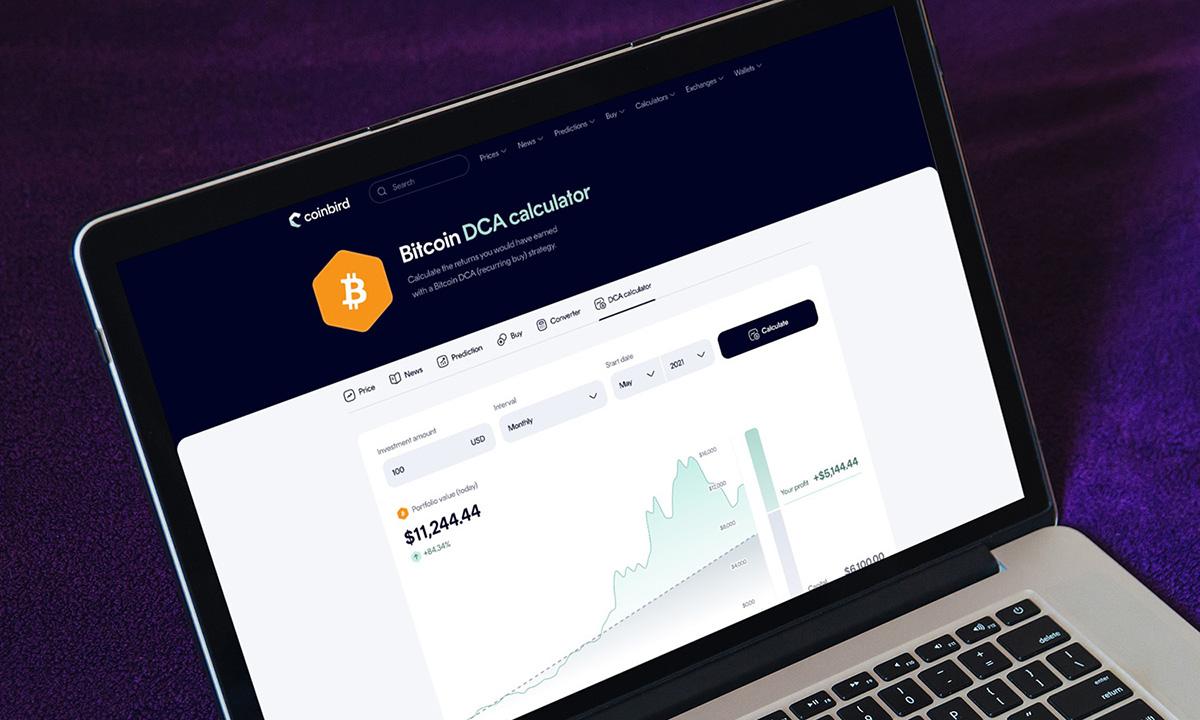
The findings are based on Coinbird’s Bitcoin DCA Calculator, which uses historical Bitcoin price data from CoinGecko and lets users model recurring investment scenarios going back to 2013.
To run the backtest or explore alternative scenarios, users can visit:
https://www.coinbird.com/cryptocurrencies/bitcoin/dca-calculator
Key findings
- An investor who began a $100/month Bitcoin DCA plan in January 2015 would have made 137 monthly purchases through May 2026, investing a total of $13,700. As of May 19, 2026, the resulting portfolio of 8.219 BTC would be worth approximately $632,315, representing a total return of +4,515% on invested capital. The strategy accumulated Bitcoin at an average acquisition cost of roughly $1,667 per BTC, because early purchases acquired significantly more Bitcoin before prices rose.
- For investors who started later, near the May 2021 market peak before the 2022 crash, a $100/month DCA plan still returned +84.34% in the May 2021–May 2026 scenario — turning $6,100 invested across 61 monthly purchases into approximately $11,244. Over the same period, a lump-sum investment of the full amount made upfront in May 2021 returned approximately +43%. In this specific scenario, DCA outperformed because the strategy automatically accumulated more Bitcoin during the 2022 bear market.
- Importantly, lump-sum investing beat DCA at the 1-, 2-, 3- and 4-year horizons in Coinbird’s tested scenarios. The five-year DCA advantage emerged only after a full crash-and-recovery cycle. The conclusion that “DCA beats lump-sum” is not universal — it depends heavily on start date and market regime.
- DCA investors across the full period still experienced a maximum drawdown of -76.72% during the 2022 bear market, underscoring that recurring purchases do not eliminate volatility or the psychological difficulty of holding through severe declines.
“The interesting finding is not simply that Bitcoin went up since 2015,” said Philipp, Founder of Coinbird. “The interesting finding is that, in this historical scenario, automatic monthly buying through crashes, all-time highs and regulatory uncertainty still produced extraordinary long-term results. At the same time, the drawdowns show why this strategy is much harder to live through than it looks on a chart in hindsight.”
Coinbird’s Bitcoin DCA Calculator is available free of charge and allows users to test different investment amounts, purchase intervals and start dates going back to 2013.
Methodology
The analysis simulates recurring Bitcoin purchases at the selected monthly interval using historical CoinGecko price data. Lump-sum comparisons assume the full planned contribution amount is invested upfront at the start of the selected period. Calculations exclude taxes and trading fees. Past performance does not guarantee future results.
About Coinbird
Coinbird is an independent crypto comparison and market intelligence platform helping retail investors compare cryptocurrencies, exchanges and wallets with clearer data. On coinbird.com, users can explore live market data, compare providers, use crypto calculators and follow market indicators such as the Bitcoin Rainbow Chart, Bitcoin Dominance and Altcoin Season Index.
Coinbird is operated by Coinbird GmbH and is the international platform of kryptovergleich.de, one of Germany’s leading crypto comparison portals, serving more than two million users annually. Across both platforms, Coinbird combines transparent data, practical tools and educational guides for new and experienced crypto investors alike.
The post $100/Month in Bitcoin Since 2015 Would Have Turned $13,700 Into $632,000, Coinbird Analysis Shows appeared first on CryptoPotato.


The Financial Intelligence Unit (FIU) of Estonia has partially suspended the operating license of BB Trade Estonia OÜ, the entity behind the Zondacrypto cryptocurrency platform. In its formal statement, the FIU said the company is now barred from accepting deposits and onboarding new clients, while existing users may still withdraw funds. The move signals intensified regulatory scrutiny of Zondacrypto across Europe as authorities scrutinize compliance practices and consumer protections within the crypto exchanges that have migrated or registered in the Baltic state.
The regulator’s notice also sets a 30-day window for BB Trade Estonia OÜ to bring its operations into alignment with applicable legal requirements. “If it fails to do so, the law obliges the FIU to revoke the operating license,” the FIU stated. The authority did not disclose the specific compliance breaches that prompted the suspension, and Cointelegraph contacted the FIU for comment but did not receive a response at the time of publication.
Key takeaways
- The Estonian FIU partially suspends BB Trade Estonia OÜ’s operating license, barring deposits and new onboarding while allowing withdrawals for existing users.
- A 30-day window is imposed to reach full compliance, with potential license revocation if requirements are not satisfied.
- The regulator did not specify the breaches; authorities and media outlets will be watching for concrete remediation steps and enforcement actions.
- The development compounds existing regulatory scrutiny of Zondacrypto in Europe, including MiCA-related concerns raised by Estonian authorities earlier in 2024.
- BB Trade Estonia OÜ has ties to Zondacrypto’s broader cross-border presence, with the company registered in Estonia since 2019, according to InfoRegister data.
Regulatory action in Estonia and implications for BB Trade Estonia OÜ
Estonia’s FIU has invoked supervisory powers to curb certain activities by BB Trade Estonia OÜ as part of a broader effort to tighten oversight over crypto service providers within the EU’s MiCA framework. By blocking new deposits and client onboarding, the regulator aims to curb potential consumer risk while evaluating whether the firm meets ongoing licensing requirements. The 30-day compliance deadline places the onus on the operator to demonstrate robust AML/KYC controls, proper governance, and other regulatory obligations demanded under Estonian law and EU standards.
Officials did not detail the underlying deficiencies in public statements, and the absence of a publicly disclosed breach list creates uncertainty for stakeholders. The move comes amid a wider debate about how EU crypto licensing is implemented in member states and how cross-border entities adapt to MiCA’s harmonized standards. Estonia’s authorities have emphasized a path toward formal compliance rather than immediate sanctions, but the possibility of license revocation remains a material risk for BB Trade Estonia OÜ and its Zondacrypto platform.
BB Trade Estonia OÜ’s status is also notable in light of its corporate history. The Estonia-based entity has been listed as the operating arm of Zondacrypto, a platform with roots in Poland as BitBay, established in 2014. Its registration in Estonia since September 2019—well before the full rollout of MiCA—positions the business squarely within EU regulatory reach, as authorities seek consistent supervision across borders.
Zondacrypto at the center of regulatory debate in Europe
The partial suspension in Estonia adds to a broader web of regulatory considerations surrounding Zondacrypto in Europe. Reports surrounding withdrawal difficulties at Zondacrypto have drawn scrutiny from policymakers and regulators, including public commentary by Polish officials referencing potential losses and the scale of exposure in crypto-related incidents. In parallel, Zondacrypto has faced MiCA-related warnings from Estonia’s Financial Supervision and Resolution Authority (FSA) over the listing of the exchange’s “TeamPL” token without a white paper, which the authorities flagged as a MiCA compliance issue.
Market activity around Zondacrypto has appeared subdued in recent data, with CoinGecko noting limited trading activity on the exchange around the time of the regulatory action. Media coverage and regulatory filings continue to shape the narrative around the exchange’s operational viability and governance.
As part of the wider regulatory discourse, Zondacrypto’s governance and its cross-border footprint have become points of focus for enforcement and policy analysis. The Polish dimension—where discussions of potential links to Russian capital and political influence have surfaced—highlights how national risk perceptions can intersect with EU-wide licensing and oversight. In parallel, Estonia has taken steps to operationalize MiCA within its financial sector, as evidenced by other notable regulatory actions like the licensing of LHV Pank under the EU crypto framework. Estonia’s FSA granted LHV Pank a MiCA license, marking a milestone for one of the country’s largest banks and signaling the incremental integration of traditional financial institutions into the EU’s crypto regulatory regime.
BB Trade Estonia OÜ’s MiCA-related challenges and the ongoing Zondacrypto narrative illustrate how cross-border entities navigate diverse regulatory expectations. The Estonian and Polish regimes reflect a broader European push toward standardized oversight to bolster consumer protections, licensing discipline, and AML/KYC compliance in the crypto ecosystem. Regulators are balancing market access with risk mitigation, a dynamic that will shape licensing decisions, enforcement priorities, and the pace of institutional participation in European crypto markets.
Cross-border licensing and institutional implications
The Estonian regulatory action arrives amid a wider transition in the EU where MiCA is increasingly interpreted and implemented by member states. The 30-day compliance window underscores the immediacy with which regulators seek to impose corrective measures on crypto service providers, emphasizing governance reforms, disclosures, and risk management practices aligned with EU standards. For crypto exchanges, the message is clear: licensing continuity hinges on demonstrable compliance with cross-border rules, consumer protections, and anti-money laundering controls that align with MiCA’s framework.
From an institutional perspective, the development adds to the cost and complexity of maintaining cross-border crypto operations. For banks and payment providers operating within or adjacent to the crypto space, the Estonian example reinforces the importance of robust onboarding controls, transparent token disclosures, and clear operational compliance to preserve access to regulated financial rails. The licensing milestone achieved by LHV Pank in Estonia—under MiCA—illustrates that traditional financial institutions can gain regulatory clearance to participate in crypto services, provided they meet the necessary standards. Such developments may influence other banks and financial firms to pursue MiCA-compliant licensing as a prerequisite for borderless crypto activities.
Finally, the case highlights the practical uncertainties that still surround enforcement scope and interpretation of MiCA in various jurisdictions. While the FIU has outlined a path to remediation, it has not publicly enumerated the exact breaches. This ambiguity can complicate remediation planning for firms facing similar regulatory actions and underscores the need for clarity in how authorities assess and certify ongoing compliance in a rapidly evolving policy environment.
In summary, the Estonian FIU’s partial license suspension of BB Trade Estonia OÜ, paired with ongoing MiCA-related concerns and cross-border regulatory developments, reinforces the imperative for crypto firms to maintain rigorous compliance programs, transparent governance, and resilient operational controls as they navigate Europe’s unified but heterogeneous regulatory landscape.
Closing perspective: While the immediate impact centers on BB Trade Estonia OÜ and Zondacrypto, the action reflects broader regulatory intent to standardize oversight and heighten enforcement in the European crypto ecosystem. The next steps—whether BB Trade Estonia OÜ rectifies gaps or faces revocation—will shape future licensing discourse and the regulatory calculus for cross-border crypto activity in the region.
Polymarket has launched a new category of prediction markets tied to private companies, allowing users to trade on questions related to pre-IPO companies — a move that could bring greater price discovery to private markets, where valuation data is often limited and opaque.
The new offering, announced Tuesday, was developed in partnership with Nasdaq Private Market, a platform that facilitates secondary trading in shares of privately held companies. Nasdaq Private Market will provide the underlying data and market infrastructure for the contracts.
The markets are designed to reflect expectations around events such as fundraising rounds, valuation changes and other corporate milestones involving startups and late-stage private companies. The launch expands Polymarket’s product lineup beyond its core markets focused on politics, macroeconomic events and public companies.
Source: Cointelegraph
The move is part of Polymarket’s effort to broaden its appeal to financially oriented users and extend prediction markets into private capital markets, where pricing information is often less accessible and less transparent than in public equities.
Polymarket said the rise of so-called unicorns — privately held startups valued at $1 billion or more — has increased demand for market-based forecasting tools tied to private companies. The platform noted that there are nearly 1,600 unicorns worldwide with a combined valuation exceeding $5 trillion, despite access to these companies remaining largely limited to private investors.
Related: Jump Trading eyes Kalshi, Polymarket stakes as institutional interest grows: Report
Prediction markets draw growing institutional interest
Polymarket’s partnership with Nasdaq Private Market reflects the broader institutionalization of prediction markets, as private company data and event-based contracts gain traction among professional investors.
Retail traders still account for the vast majority of activity. An April report by Bitget Wallet and Polymarket found that retail traders generated 80% of prediction market volume.
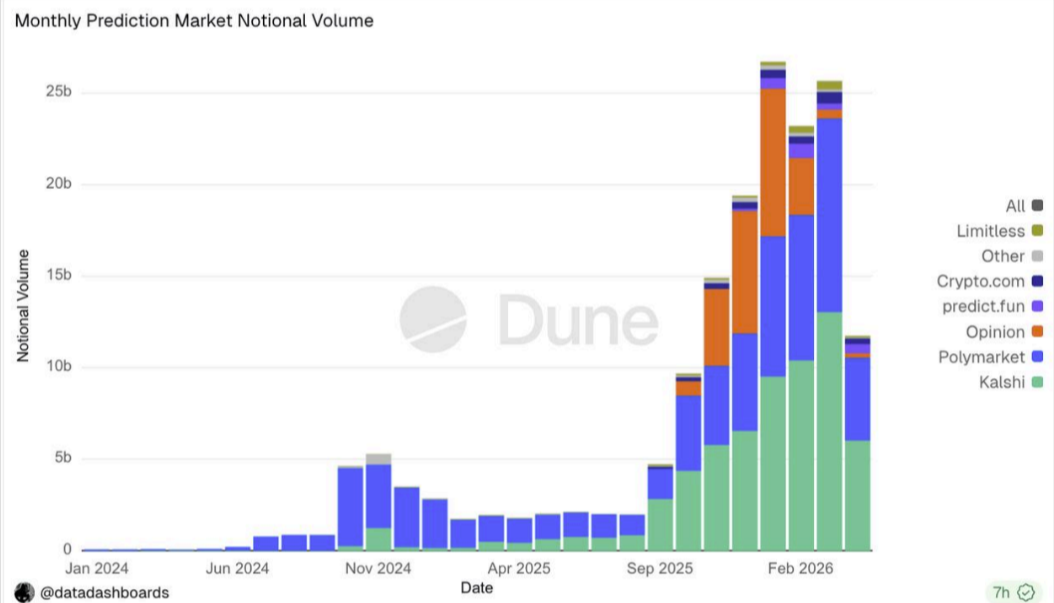
Prediction market trading volume in March. Source: Bitget Wallet
Still, Wall Street analysts say institutional participation is increasing as the US regulatory environment becomes more supportive and market infrastructure improves.
Bernstein recently pointed to the first institutional block trade on Kalshi as a milestone for the sector. Block trades are privately negotiated transactions, typically executed by large investors to move significant positions without disrupting the broader market.
Related: SEC delays prediction market ETFs over mechanics and risk concerns: Report

TLDR
- Flare has integrated D’CENT hardware wallets with its XRP yield vault infrastructure.
- The integration allows users to earn XRP yield while maintaining self-custody.
- Users can access yield products without creating new wallets or managing new chains.
- Flare uses FAssets to convert XRP into FXRP for deployment in DeFi strategies.
- Smart Accounts simplify transactions by removing gas fee and chain switching complexity.
Flare has connected its yield infrastructure to D’CENT hardware wallets for XRP holders. The update allows users to earn yield while keeping assets in self-custody. The network also introduced the XRP Alliance to unify services for XRP management and earning.
Flare Enables Direct XRP Yield Access Through Hardware Wallets
Flare has integrated its yield system with D’CENT’s biometric hardware wallet platform. As a result, users can access XRP yield vaults without leaving their secure device. The setup removes the need for new wallets or additional blockchain navigation.
The integration allows users to deposit XRP and earn returns directly in XRP. Flare uses its FAssets system to convert XRP into FXRP for DeFi use. At the same time, Smart Accounts simplify gas management and transaction processes.
Flare stated that Smart Accounts reduce friction for new users entering DeFi. The system hides complex steps like gas fees and chain switching. This design supports smoother onboarding for first-time participants.
XRP Alliance Expands Ecosystem Access and Vault Adoption
Flare launched the XRP Alliance alongside the wallet integration. The group connects projects across the XRP Ledger ecosystem. It aims to provide a single interface for managing, swapping, and earning XRP.
The alliance supports users who prefer hardware wallets for security. It brings together services that operate within the XRPL ecosystem. This approach reduces the need for multiple platforms or accounts.
The earnXRP vault serves as the primary product in this rollout. It was developed through a partnership between Flare, Upshift, and Clearstar. The vault reached its 25 million XRP cap within one week.
Flare reported that more than 5,400 users joined the earnXRP vault. Around 98% of these users were new to DeFi platforms. This data highlights early user engagement with the product.
The vault currently offers about 3.4% APY in XRP. Users receive returns without converting their assets into other tokens. Early participants also benefited from waived fees during the first 30 days.
Flare confirmed that users maintain control of their assets during the process. However, the system still relies on smart contracts and DeFi strategies. These elements introduce operational risks tied to the underlying infrastructure.
FAssets convert XRP into FXRP, which interacts with DeFi protocols. This process depends on smart contract execution within the Flare network. Any technical failure could affect asset performance or accessibility.
Flare emphasized that self-custody remains a core feature of the system. Users do not transfer ownership to centralized platforms. Instead, they interact with decentralized infrastructure through their hardware wallet.
The XRP Alliance will continue expanding integrations with XRPL projects. Flare plans to add more tools for asset management and yield strategies. The network has not announced a timeline for future updates.

Crypto World
WhiteBIT Taps Elina Svitolina for Limited-Edition Nova Card Skin as Roland-Garros Season Begins

[PRESS RELEASE – Vilnius, Lithuania, May 19th, 2026]
A new card skin, a crypto reward for first-time users, and a donation to the Elina Svitolina Foundation with every activation — a chance to make an impact on and off the court.
WhiteBIT, the largest European cryptocurrency exchange by traffic, has announced a new initiative with its global brand ambassador Elina Svitolina. As a part of the initiative, WhiteBIT introduces a limited-edition Svitolina-themed skin for its WhiteBIT Nova Visa card offering users a way to a chance to support Ukrainian children and cheer Elina on at Roland-Garros!
The initiative combines product with purpose: for every card activated with the Svitolina design between 19 May and 19 June, WhiteBIT donates 15 USDC to the Elina Svitolina Foundation. The first 200 new users to activate the skin also receive 10 USDC credited directly to their card.
This initiative reflects WhiteBIT’s continued expansion across international sport as a channel to connect with global audiences and drive the global adoption of cryptocurrency by embedding its products into everyday use cases.
The Choice of Champions
Elina Svitolina is one of the most decorated Ukrainian athletes of her generation — a former world No. 3, 20-time WTA title winner, Olympic bronze medalist. She arrives at Roland-Garros on the back of her third Rome title, claimed just days before the tournament — her 20th career WTA crown, a perfect 8-0 record in clay-court finals, and the clearest possible statement of intent heading into Paris. The WhiteBIT Nova card skin marks the moment.
The collaboration extends WhiteBIT’s approach to making crypto genuinely useful the WhiteBIT Nova Visa card lets users spend crypto anywhere, converting balances at the point of sale. Pairing it with one of sport’s most recognisable faces — and anchoring it to a live Grand Slam moment — connects the product to an audience that goes well beyond crypto natives.
“Sport and crypto are driven by the same principles— both reward discipline, both move fast, and both are rewriting the rules of what’s possible. Partnering with Elina is a natural extension of what WhiteBIT Nova is built for: turning digital assets into a practical financial tool for people on the move. This collaboration is about more than a design — it’s about shared values: ambition, resilience, and giving back.” – Volodymyr Nosov, Founder and President of W Group (which includes the WhiteBIT exchange)
“Sport creates opportunities — on the court and beyond it. For me, competing at the highest level has always come with a responsibility to give back. Supporting young Ukrainians through education and sport is something I’m deeply committed to, and partnerships like this one help make it possible.” – Elina Svitolina
Skin available from 19 May. While Svitolina plays in Paris, her card skin plays everywhere else.
About WhiteBIT
WhiteBIT is the largest European cryptocurrency exchange by traffic, offering over 900 trading pairs, 350+ assets, and supporting 8 fiat currencies. Founded in 2018, the platform is part of W Group, which serves more than 35 million customers globally. WhiteBIT collaborates with Visa, FACEIT, FC Juventus, FC Barcelona, and the Ukrainian national football team. The company is dedicated to driving the widespread adoption of blockchain technology worldwide.
About the Elina Svitolina Foundation
The Elina Svitolina Foundation is a non-profit organisation established in 2019 to support Ukrainian children through access to sport, education, and social development programmes. Since February 2022, the Foundation has focused on humanitarian response, providing aid to children and families displaced or affected by the war in Ukraine.
The post WhiteBIT Taps Elina Svitolina for Limited-Edition Nova Card Skin as Roland-Garros Season Begins appeared first on CryptoPotato.

Bitcoin has cooled from the latest push higher as traders pivot toward liquidity-driven dynamics rather than chasing new all-time highs. Futures and order-book data point to a concentration of buyers around the $68,000–$70,000 zone, suggesting market participants are building and anchoring positions in a corridor that has become the dominant trading focus in recent months.
Analysts tracking on-chain and order-book indicators note the region between $68,000 and $70,000 is now the most densely traded area on the chart since November 2025. The visible range volume profile shows heavy activity in that band, implying many positions were opened or accumulated there over the past several months. Concurrently, the bid-ask ratio has hovered in negative territory, signaling that sellers have been more assertive than buyers as markets hover near liquidation thresholds. A separate liquidation heatmap points to substantial long exposure near $74,700, with the potential for that exposure to rise to around $11 billion if Bitcoin trades toward $70,000 over the next 90 days. Taken together, the data suggests traders are prioritizing deeper liquidity pools and risk management over pressing toward higher levels above $80,000.
Key takeaways
- The $68,000–$70,000 zone remains the most active trading band on the visible range volume profile since November 2025, indicating entrenched liquidity there.
- The bid-ask ratio sits at approximately -0.03, showing selling pressure is currently outpacing aggressive buying as traders position near liquidation levels.
- Liquidation data highlights over $3.4 billion in cumulative long exposure around $74,700, with a potential rise toward $11 billion if BTC weakness extends toward $70,000 within a 90-day window.
- Retail trader sentiment shows a crowded long stance, with Hyblock reporting True Retail Accounts long above 60% and RSI around 74.9, implying a potential for pullbacks if orders unwind.
- Past patterns suggest recoveries have tended to occur when retail long positioning cooled, offering a cautionary frame for the current setup.
Liquidity concentration shapes the near-term outlook
By design, the VRVP (visible range volume profile) highlights where the most trading activity has taken place. In Bitcoin’s current data, the $68,000–$70,000 corridor stands out as the principal hub of activity, signaling that many market participants are comfortable and liquid near these levels rather than chasing fresh highs. This concentration can act as both a magnet and a shield: it provides built-in liquidity for exits but can also cap upside if price action fails to attract new buyers with enough conviction to move beyond the zone.
Long exposure and liquidation risk cluster around key levels
Liquidity risk is not only about where traders want to buy; it’s also about where they are most exposed to losses. CoinGlass’ liquidation heatmap shows a significant cluster of long positions near $74,700, underscoring a vulnerable point if the market reverses. The metric estimates more than $3.4 billion in long exposure at that strike, with the potential to swell toward roughly $11 billion if Bitcoin declines toward $70,000 over a 90-day horizon. For traders, this paints a picture of a market that is heavily concentrated at specific strikes, where liquidations could accelerate if price action tests those levels.
Related market coverage from Cointelegraph notes Bitcoin’s price recently stayed below the $77,000 mark as U.S. bond yields hovered near multi-decade highs, a macro backdrop that can amplify drawdowns when risk-off sentiment surfaces. In this context, the above liquidity and liquidation signals reinforce a scenario where the market’s immediate pulse is governed by risk management and depth of liquidity rather than impulsive upside chasing.
Retail sentiment and the risk of a crowded long regime
Hyblock’s metrics add a behavioral lens to the supply-and-demand picture. The platform tracks the share of retail futures accounts that are long, and its True Retail Accounts long percentage has climbed above 60%. In earlier cycles, such “extreme long” conditions tended to precede short- to mid-term pullbacks, with price momentum cooling after retail positioning became crowded. Hyblock also complements its long-term positioning reads with a relative strength index around 74.9, suggesting that retail traders are aligned with a continued move toward the mid-to-upper $70,000s rather than a breakout toward new highs.
Historically, the most pronounced recoveries have emerged when retail longs contracted—often when fewer than about 35% of retail accounts held long positions—before BTC rebounded from local lows. The latest signal — a long-dominated retail base combined with elevated RSI — implies traders should be mindful of a possible consolidation or correction if the market cannot sustain upside momentum. The latest metrics indicate traders are positioned for prices near the mid-$70,000s, which could leave room for a sharper correction if the macro or liquidity backdrop shifts unfavorably.
In practical terms, the current layout means investors should watch how BTC behaves around the 68k–70k zone and near the major long-exposure thresholds highlighted by the liquidation map. A break below the lower boundary could accelerate selling as liquidations cascade through the concentrated long positions, while a sustained move above the dense supply zone would require fresh buyers to appear in meaningful size to re-energize a new bout of upside.
Readers should stay tuned to how volatility evolves around these pins, and whether retail sentiment shifts as macro catalysts unfold. As with prior cycles, a clear change in the balance of power between liquidity depth and price discovery could redefine the near-term path for Bitcoin.
As a point of context, investors will want to monitor how the market absorbs any macro shifts that influence risk appetite, including yields, liquidity conditions, and funding rates. The evolving interplay between on-chain liquidity hotspots and retail positioning will likely shape BTC’s direction in the weeks ahead.
Ripple’s XRP remains trapped in a prolonged consolidation phase after months of persistent bearish pressure, with recent price action reflecting indecision and a lack of strong directional momentum. The asset is now hovering near critical support levels, where the next breakout could define the medium-term trend.
Ripple Price Analysis: The Daily Chart
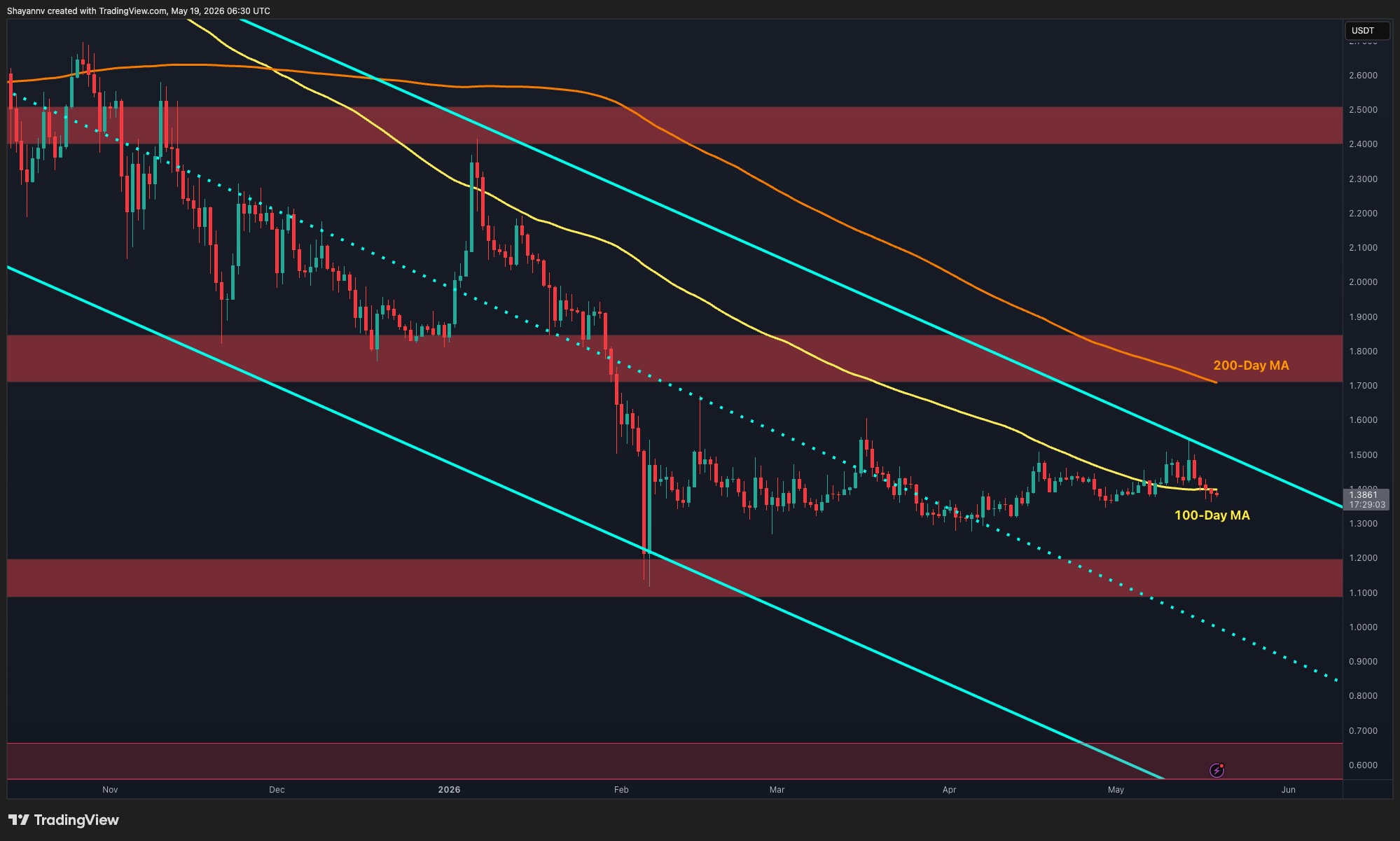
On the daily timeframe, XRP continues to trade inside a broad descending channel while remaining below both the 100-day and 200-day moving averages, confirming that the larger bearish structure remains intact.
Recent price action shows another rejection near the channel’s upper threshold around the $1.4 region, reinforcing sellers’ dominance whenever the market attempts recovery. Despite several rebounds since February, the bulls have failed to generate enough momentum to reclaim higher resistance zones.
The asset is currently hovering around the mid-range support near $1.35, with the broader consolidation structure tightening. If selling pressure intensifies and XRP loses the key $1.3 support area, the next major downside target would emerge around the $1.1 region.
Conversely, reclaiming the 100-day MA and breaking above the descending channel’s upper boundary would be the first signal suggesting weakening bearish momentum. Until then, the path of least resistance remains sideways to bearish.
XRP/USDT 4-Hour Chart
The lower timeframe highlights XRP’s prolonged consolidation between the $1.3 support zone and the $1.55 resistance region. The asset has repeatedly oscillated within this range over recent months, failing to establish a decisive trend.
The most recent update shows increasing weakness near the upper boundary, followed by a rejection and gradual decline toward the middle of the range. This suggests buyers are becoming less aggressive while sellers continue defending higher levels.
As long as XRP remains inside this structure, continued choppy movement between support and resistance is the most probable scenario. A confirmed breakdown below the $1.3 floor could trigger an accelerated decline toward lower demand zones near $1.1. On the other hand, a breakout above the $1.55 resistance would likely initiate a stronger recovery phase toward the broader resistance cluster around $1.8.
For now, the token appears to be compressing within a neutral range, with market participants awaiting a catalyst capable of producing a meaningful breakout.

The post Ripple Price Analysis: Is XRP Heading Toward $1 as Sellers Resume Control? appeared first on CryptoPotato.
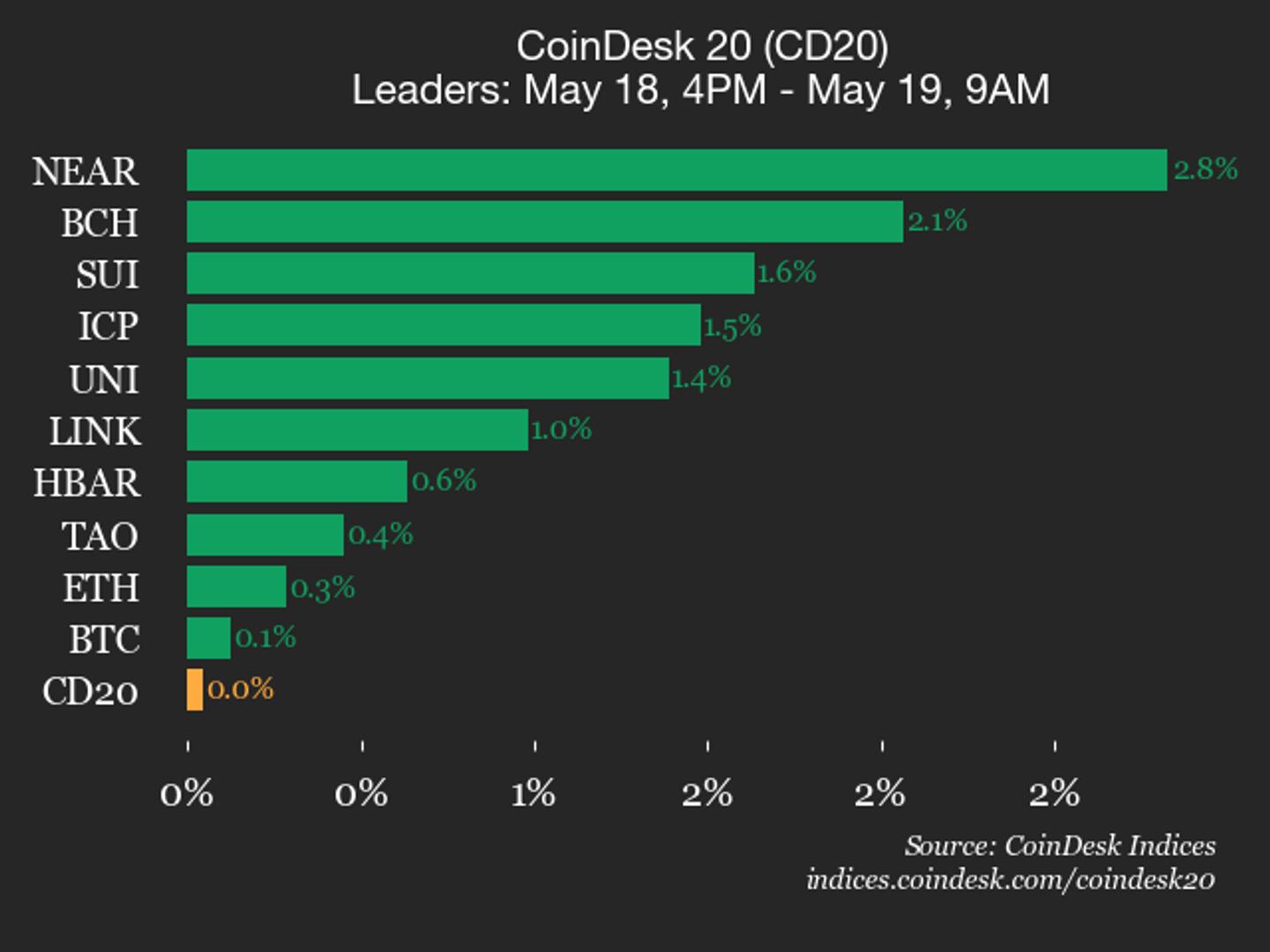
NEAR Protocol (NEAR), up 2.8%, was also a top performer.
TLDR
- The CFTC and the DOJ filed a lawsuit against Minnesota shortly after the state approved a ban on prediction markets.
- Federal regulators argue that prediction markets fall under their exclusive jurisdiction as regulated derivatives products.
- The complaint states that Minnesota’s law unlawfully interferes with federally approved trading platforms.
- The state law bans platforms that allow users to bet on events such as sports outcomes and economic trends.
- The statute also extends liability to banks, media firms, and data providers linked to these platforms.
Federal regulators moved quickly after Minnesota enacted a law banning prediction markets across the state. The Commodity Futures Trading Commission and the Department of Justice filed a lawsuit within one day. They argue that the state law interferes with federally regulated derivatives markets.
Federal lawsuit challenges Minnesota Authority Over Prediction Markets
The CFTC and DOJ filed the complaint against Minnesota and Governor Tim Walz in federal court. They claim the state law violates the agency’s exclusive jurisdiction over derivatives trading and regulated contracts.
Officials stated that prediction markets operate as federally approved financial instruments under existing law.
The complaint reads, “This flagrant and unprecedented incursion must be preliminarily and permanently enjoined.”
The agencies explained that the law classifies prediction markets as illegal gambling within Minnesota borders. However, federal regulators maintain that these platforms trade event-based contracts under national oversight rules.
They also stressed that exchanges offering these contracts must comply with federal standards. Therefore, the agencies argue that state-level bans disrupt a uniform regulatory system.
State Law Targets Platforms and Related Financial Services
Minnesota’s new statute prohibits platforms that allow users to wager on future events and outcomes. The law covers predictions involving sports, weather, economic indicators, and political developments.
The statute also extends liability to banks, payment processors, and media organizations connected to these platforms. It includes entities that advertise, verify, or supply data used by prediction market operators.
The complaint highlights partnerships between prediction platforms and major organizations. These include sports leagues, media companies, and financial data providers that support market activity.
Regulators argue that penalizing these partners creates broader enforcement risks beyond trading platforms. They maintain that federal law already governs these activities under established financial regulations.
Broader Dispute Expands Across Multiple U.S. States
The lawsuit forms part of a wider conflict between federal regulators and state authorities over market classification. Several states have attempted to restrict prediction platforms using local gambling laws.
The CFTC has taken legal action against states such as Illinois, Arizona, and Connecticut in similar disputes. These cases focus on whether states can override federal authority in regulating derivative products.
Meanwhile, Minnesota has introduced mixed policies toward crypto and related services in recent months. Governor Walz approved legislation allowing banks and credit unions to provide crypto custody services.
Earlier this year, the state also banned crypto ATMs, citing concerns about fraud and scams. The new prediction market ban will take effect on Aug. 1, according to the statute.
Crypto World
JPMorgan says ether and altcoins won't catch up to bitcoin without a major network boom


The bank said ether and the broader altcoin market continue to trail bitcoin as weak network activity, sluggish DeFi growth and limited real-world adoption weigh on investor demand.


Crypto firms are pausing long-awaited IPO plans as weak trading volumes and macro pressures weigh on valuations despite boom in AI-linked tech listings.

Tues, May 19, 2026 Financial news. Is Nvidia about to break the bull-run? Oil, gold, silver…

What Keir Starmer got wrong about Zionism and antisemitism

Estonia Suspends Zondacrypto License, Signals Tightening Oversight

Manchester United reach agreement with Casemiro over contract clause amid transfer speculation

US brings back mandatory military draft registration

Steven Gerrard disagrees with Gary Neville over ‘shock’ Chelsea and Arsenal claim | Football
Tues, May 19, 2026 Financial news. Is Nvidia about to break the bull-run? Oil, gold, silver…

Crypto Gold Live Trading 15 May | Market Trader | #goldtrading #cryptotrading #bitcoin

A financial Emergency Just Started You Just Dont Know It Yet
-

 Crypto World4 days ago
BloFin War of Whales 2026 Grand Prix opens registration for $5M trading championship
-

 Fashion4 days ago
Weekend Open Thread: Theory – Corporette.com
-

 Crypto World4 days ago
E-Estate Announces 1 Year Live: Washington DC Summit as Real Estate Tokenization Enters Its Next Phase
-
Crypto World7 days ago
Bitcoin Suisse expands with Digital Asset License and Investment Business Act Registration Approval in Bermuda
-

 Tech5 days ago
Tech Moves: Microsoft AI leader jumps to OpenAI; former AI2 exec joins Meta; and more
-
 Crypto World6 days ago
Google’s Gemini AI Predicts Incredible Solana Price by the End of 2026
-

 Tech4 days ago
Google reimburses Register sources who were victims of API fraud
-

 Business4 days ago
H&R Real Estate Investment Trust (HR.UN:CA) Q1 2026 Earnings Call Transcript
-

 Sports4 days ago
Napoleonic enters 2026 Doomben 10,000 field via Abounding withdrawal
-
 Entertainment5 days ago
Zara Larsson Has Blunt Response To Chris Brown Diss
-
 Crypto World6 days ago
Two AI Tokens Lead May Rally, But Risks Are Rising
-
 Crypto World4 days ago
BeInCrypto 100 Institutional Awards Nomination: KAST for Best Digital Assets Neobank and Best Digital Assets Fintech
-

 Fashion3 days ago
On the Scene at Gucci’s Cruise Show in New York City: Mariah Carey, Kim Kardashian, Lindsay Lohan, Iman, and More!
-
 Tech7 days ago
Why AI is making typography a boardroom conversation
-
 Crypto World4 days ago
Wall Street’s Boldest Gold Prediction Has Russians Rushing to Buy
-
 Crypto World4 days ago
Bitcoin Battles US Bond Nerves With BTC Price Dip Toward New May Lows
-

 Fashion4 days ago
Trending Western Style Vests Perfect for Summer
-

 Entertainment5 days ago
David Letterman Returns to Late Show, Blasts Cancellation
-

 Crypto World7 days ago
Bitcoin Could Surge as AI Race and War Fuel Money Printing says Hayes
-

 Politics5 days ago
DWP PIP Timms review continues to be an absolute farce
You must be logged in to post a comment Login