Connect with us
DAPA Banner
DAPA Coin
DAPA
COIN PAYMENT ASSET
PRIVACY · BLOCKDAG · HOMOMORPHIC ENCRYPTION · RUST
ElGamal Encrypted MINE DAPA
🚫 GENESIS SOLD OUT
DAPAPAY COMING

Business

why British businesses can’t afford to miss Europe’s leading tech conference

Published

on

Artificial intelligence, cybersecurity, quantum computing, digital infrastructure and startup innovation are transforming the European business landscape at unprecedented speed.

Artificial intelligence, cybersecurity, quantum computing, digital infrastructure and startup innovation are transforming the European business landscape at unprecedented speed.

In this rapidly evolving ecosystem, companies are increasingly looking for opportunities to connect with innovators, investors, technology providers and decision-makers capable of shaping the future of digital business.

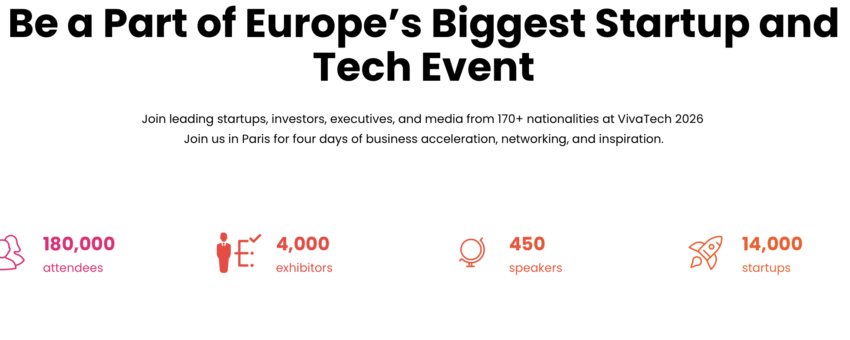
This is precisely why events such as VivaTech Paris have become strategic reference points for the international technology sector. Scheduled in Paris in 2026, the event continues to strengthen its role as a leading European tech conference, attracting startups, enterprises, governments, investors and technology leaders from across Europe and beyond.

For British businesses in particular, VivaTech represents much more than a traditional technology exhibition. It has become a key opportunity to understand emerging trends, build international partnerships and remain competitive in a market increasingly driven by innovation and AI.

Europe’s technology ecosystem is evolving rapidly

Over the last few years, Europe has accelerated investments in digital transformation, artificial intelligence, cybersecurity and strategic technologies.

Advertisement

Governments and enterprises are prioritising:

  • AI adoption
  • cloud infrastructure
  • digital resilience
  • cybersecurity governance
  • startup ecosystems
  • sustainable innovation

At the same time, European regulation is becoming increasingly influential in shaping global technology standards through frameworks such as:

  • the EU AI Act
  • NIS2
  • DORA
  • GDPR

For UK companies operating internationally, maintaining visibility into these developments is becoming essential.

Technology events are no longer just networking opportunities — they are strategic observatories for understanding where the market is heading.

Why VivaTech has become strategically important

Unlike traditional trade fairs focused on individual sectors, VivaTech brings together multiple dimensions of the digital economy under one ecosystem.

The event typically attracts:

Advertisement
  • global tech companies
  • fast-growing startups
  • venture capital firms
  • cybersecurity specialists
  • AI innovators
  • public institutions
  • enterprise decision-makers

This creates a highly dynamic environment where emerging technologies, business strategy and investment trends intersect.

For companies looking to expand internationally or identify new partnerships, access to this ecosystem offers significant strategic value.

AI is dominating the technology conversation

Artificial intelligence is expected to remain one of the dominant themes at VivaTech Paris 2026.

Across every industry, organizations are trying to understand how AI will impact:

  • operational efficiency
  • customer experience
  • cybersecurity
  • data governance
  • automation
  • workforce management

At the same time, businesses are also becoming more aware of the risks associated with uncontrolled AI adoption.

Issues such as:

Advertisement
  • data exposure
  • AI governance
  • regulatory compliance
  • third-party risk
  • ethical AI usage

are becoming increasingly central in enterprise discussions.

This balance between innovation and risk management is likely to play a major role during the event.

Cybersecurity is now part of every technology discussion

One of the clearest trends in modern digital transformation is that cybersecurity can no longer be separated from innovation.

As companies accelerate cloud adoption and AI integration, their exposure to cyber threats also increases.

Today, organizations must manage:

Advertisement
  • supply chain vulnerabilities
  • ransomware risks
  • third-party exposure
  • identity compromise
  • AI-related attack surfaces
  • data leakage risks

Technology conferences like VivaTech increasingly reflect this reality by integrating cybersecurity into broader conversations around digital business transformation.

Paris is strengthening its role as a European innovation hub

Paris has become one of Europe’s most important technology and startup ecosystems. Significant investment in innovation, AI research and digital infrastructure has transformed the city into a major international hub for technology companies and investors.

For British businesses, this proximity offers important advantages:

  • easier access to European markets
  • networking with continental partners
  • visibility into EU innovation policies
  • opportunities for international expansion

Despite Brexit, collaboration between UK companies and European ecosystems remains extremely active, especially in sectors such as AI, fintech, cybersecurity and digital services.

Startups and enterprise innovation are converging

One of the defining characteristics of VivaTech is the interaction between startups and large enterprises.

Corporations increasingly rely on startup ecosystems to accelerate:

Advertisement
  • innovation processes
  • AI experimentation
  • cybersecurity capabilities
  • sustainability initiatives
  • digital transformation strategies

At the same time, startups benefit from direct access to enterprise buyers, investors and strategic partners.

This convergence is reshaping how innovation is developed and commercialised across Europe.

Technology events are becoming intelligence platforms

Modern technology conferences are no longer just about product showcases or keynote speeches.

For many organizations, events like VivaTech function as real-time intelligence environments where companies can:

  • identify emerging trends
  • monitor competitor activity
  • evaluate market shifts
  • discover strategic partnerships
  • understand evolving customer expectations

In highly competitive sectors, this visibility becomes strategically important.

Being physically present where innovation conversations happen often provides insights impossible to obtain remotely.

Advertisement

The growing importance of ecosystem visibility

As digital ecosystems become more interconnected, businesses increasingly need visibility not only into technologies, but also into the broader networks shaping the market.

This includes understanding:

  • investment movements
  • startup acceleration trends
  • AI adoption patterns
  • cybersecurity priorities
  • regulatory evolution
  • international partnerships

Events such as VivaTech offer a unique concentration of these signals within a single environment.

Why UK businesses should pay attention now

British companies continue to play a major role within the European technology landscape. However, the speed of technological change means that maintaining strong international visibility is becoming more important than ever.

Whether operating in:

Advertisement
  • cybersecurity
  • AI
  • fintech
  • SaaS
  • cloud infrastructure
  • digital consulting

UK businesses need direct exposure to the conversations shaping the future of European innovation.

VivaTech Paris 2026 represents one of the most important opportunities to engage with that ecosystem in real time.

Because in today’s technology market, competitiveness is no longer determined only by internal innovation, but also by the ability to understand, anticipate and participate in the broader evolution of the global digital economy.

Advertisement
Continue Reading
Click to comment

You must be logged in to post a comment Login

Leave a Reply

Business

Lightspeed Commerce Inc. (LSPD:CA) Q4 2026 Earnings Call Transcript

Published

on

OneWater Marine Inc. (ONEW) Q1 2026 Earnings Call Transcript

Lightspeed Commerce Inc. (LSPD:CA) Q4 2026 Earnings Call May 21, 2026 8:00 AM EDT

Company Participants

Gus Papageorgiou – Head of Investor Relations
Dax Dasilva – Founder, CEO & Director
Asha Bakshani – Chief Financial Officer

Advertisement

Conference Call Participants

Daniel Perlin – RBC Capital Markets, Research Division
Kevin Krishnaratne – Scotiabank Global Banking and Markets, Research Division
Josh Baer – Morgan Stanley, Research Division
Martin Toner – ATB Cormark Capital Markets Inc., Research Division
Tien-Tsin Huang – JPMorgan Chase & Co, Research Division
Matthew Bullock – BofA Securities, Research Division
Richard Tse – National Bank Financial, Inc., Research Division
Andrew Harte – BTIG, LLC, Research Division
Suthan Sukumar – Stifel Nicolaus Canada Inc., Research Division

Presentation

Advertisement

Operator

Good morning, and thank you for standing by. My name is John, and I will be your conference operator for today. At this time, I would like to welcome everyone to the Lightspeed Fiscal Fourth Quarter 2026 Conference Call. [Operator Instructions]

I would now like to turn the conference over to Gus Papageorgiou, Head of Investor Relations for Lightspeed. Please go ahead.

Advertisement

Gus Papageorgiou
Head of Investor Relations

Thank you, operator, and good morning, everyone. Welcome to Lightspeed’s Fiscal Q4 2026 Conference Call. Joining me today are Dax Dasilva, Lightspeed’s Founder and CEO; and Asha Bakshani, Lightspeed’s CFO. After prepared remarks from Dax and Asha, we will open it up for your questions.

We will make forward-looking statements on our call today that are subject to risks and uncertainties that could cause actual results to differ materially from those projected. Certain material factors and assumptions were applied in respect of conclusions, forecasts and projections contained in these statements. We undertake no obligation to update these statements, except as required by law. You should carefully review these factors, assumptions risks and uncertainties in our earnings press release issued earlier today, our fourth quarter fiscal 2026 results presentation available on

Advertisement
Continue Reading

Business

Permian Basin Royalty Trust stock hits all-time high at 32.14 USD

Published

on


Permian Basin Royalty Trust stock hits all-time high at 32.14 USD

Continue Reading

Business

Cummins raises 2030 financial targets on stronger demand

Published

on


Cummins raises 2030 financial targets on stronger demand

Continue Reading

Business

Alaska Republican unveils bill to codify a strategic bitcoin reserve

Published

on

Alaska Republican unveils bill to codify a strategic bitcoin reserve

EXCLUSIVE: Rep. Nick Begich, R-Alaska, is unveiling the American Reserve Modernization Act to establish a U.S. strategic bitcoin reserve in an attempt to diversify America’s reserves balance sheet.

This bill, which is receiving bipartisan support, would establish the reserve within the Treasury Department with a separate digital asset stockpile for federally held digital assets different from bitcoin. Begich told FOX Business that bitcoin draws similarities to gold in the crypto asset class.

Advertisement

“When you look at gold, it is the dominant precious metal reserve,” Begich said. “When you look at bitcoin, it represents about 60% of all market cap for the entire crypto space. So the market has decided, in the case of gold and in the case of bitcoin, that this will be the predominant store of value within that asset class.”

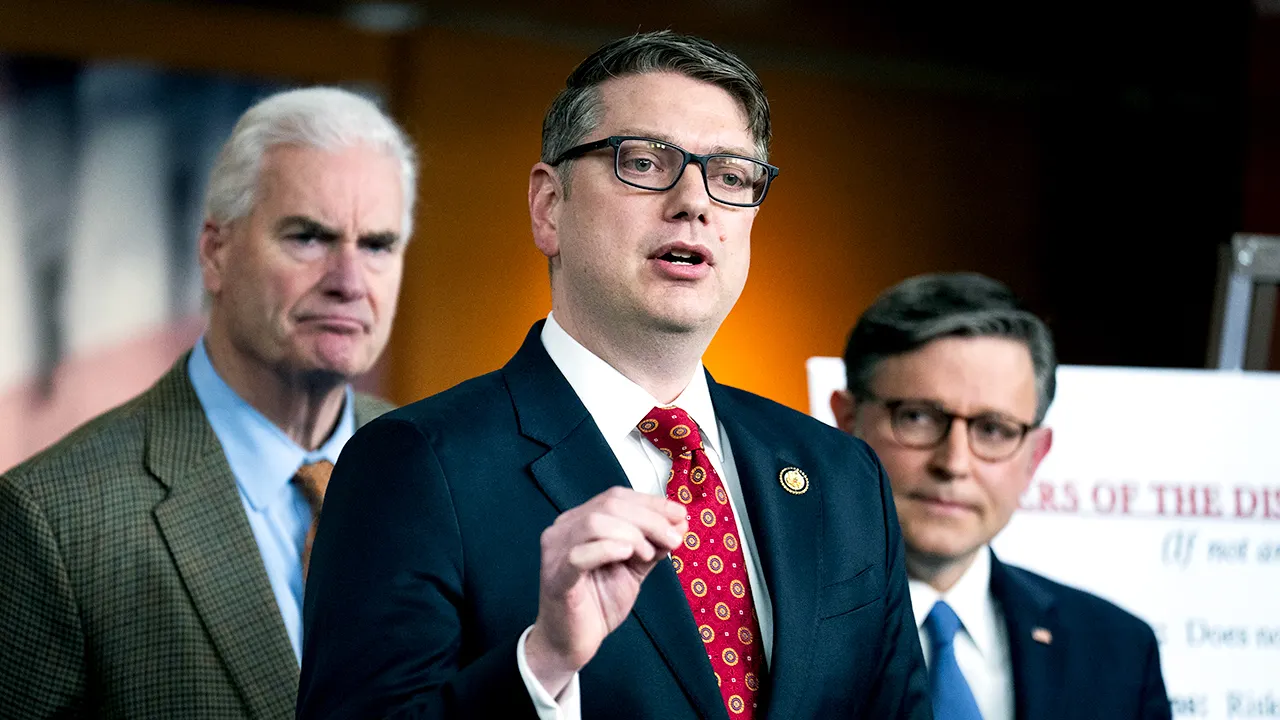
Reps. Nick Begich, Tom Emmer and Mike Johnson.

Rep. Nick Begich, R-Alaska, speaks during a news conference with House Republican leadership in the Capitol Visitor Center on Nov. 18, 2025. (Tom Williams/CQ-Roll Call, Inc via Getty Images)

US TARGETS IRAN’S $7.7 BILLION CRYPTO NETWORK TIED TO REGIME OPERATIONS

In March 2025, President Donald Trump signed an executive order to establish a strategic bitcoin reserve, but it’s not yet fully operational. The Trump administration has been working on establishing a reserve with the hope that the U.S. will claim global dominance in crypto.

In the past, Trump shared his belief in crypto.

Advertisement

“This could be perhaps the greatest revolution in financial technology since the birth of the internet itself,” Trump said at the signing of the Genius Act in July 2025.

TRUMP CREATES STRATEGIC BITCOIN RESERVE, OTHER CRYPTOCURRENCIES TO BE USED IN STOCKPILE

Over the past month, the Treasury Department launched Operation Economic Fury to obstruct Iran’s revenue streams and pressure its financial systems, as the fragile ceasefire between the U.S. and Iran continues. As of late April, the Treasury Department announced it had seized nearly $500 million in Iranian cryptocurrency assets.

However, Rep. Pat Harrigan, R-N.C., who is one of more than a dozen co-sponsors of the bill, says the U.S. needs to find out how to manage previously seized bitcoin.

Advertisement

“The United States government already holds billions in seized bitcoin with no coherent strategy for managing it, and that needs to change,” Harrigan said.

KEVIN O’LEARY REVEALS THE ONLY TWO CRYPTOCURRENCIES HE SAYS ARE WORTH OWNING

This comes as the Senate Banking Committee passed the Clarity Act with bipartisan support in a 15-9 vote to send the bill to the Senate floor. Sen. Cynthia Lummis, R-Wyo., says this could be voted on by the middle of June, but adds that it is “probably pretty optimistic.”

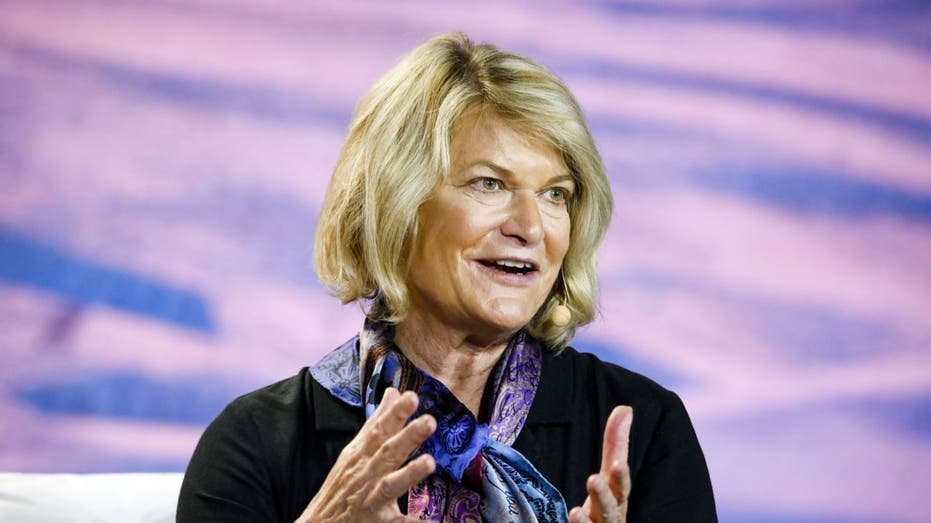
Cynthia Lummis

Senator Cynthia Lummis, a Republican from Wyoming, speaks during the Bitcoin 2021 conference in Miami, Florida. (Getty Images)

GET FOX BUSINESS ON THE GO BY CLICKING HERE

Advertisement

Begich hopes the U.S. will hold about 5%, or about 1 million coins, of the world’s bitcoin in the reserve. This would be roughly equivalent to what the U.S. government currently holds in gold.

Continue Reading

Business

Mercantile Bank Corporation (MBWM) Shareholder/Analyst Call Prepared Remarks Transcript

Published

on

OneWater Marine Inc. (ONEW) Q1 2026 Earnings Call Transcript

Raymond Reitsma
President, CEO & Director

Good morning, and welcome to Mercantile Bank Corporation’s Annual Meeting of Shareholders. I am Ray Reitsma, President and Chief Executive Officer of Mercantile. Today’s virtual-only meeting is a live webcast. We believe in engaging with our shareholders, and it is our hope that this virtual meeting will maximize the participation of shareholders regardless of their location. Thank you very much for participating in our virtual meeting today, and please note that this meeting is being recorded.

I would like to call the formal portion of this meeting to order. Rules of conduct. I’d like to draw your attention to the rules of conduct set forth for this meeting. The rules of conduct for this meeting are available in the Resources section of the webinar, which you can access by selecting the resources button located in the Zoom toolbar at the bottom of your screen. Shareholder ability to comment or ask questions is available in the Q&A section of the toolbar at the bottom of your screen.

The Board of Directors has appointed Amy Kam and Scott Setlock to serve as inspectors for this meeting. I would like to ask Mr. Setlock to also serve as the Secretary of the meeting. Mr. Setlock is Executive Vice President and Chief Operating Officer of Mercantile Bank Corporation and Mercantile Bank. Ms. Kam is First Vice President and Executive Operations Manager. I would now like to introduce our directors who are present today on the webcast. Michael S. Davenport, Michelle L. Eldridge, Joseph D. Jones, Richard D. McDonald, Michael H. Price, David B. Ramaker; Raymond E. Reitsma, Nelson F. Sanchez, Sarah A. Schmidt, Stephen J. Schwhoffer, Amy L. Sparks and Shoran R. Williams. I would also like to introduce Robert Bondi of Plante Moran, PLLC, our accounting firm; and Brad Wyatt of Greenberg Traurig LLP, our legal counsel.

Advertisement
Continue Reading

Business

VS Group plans more IT acquisitions in North and Midlands after securing Foresight backing and buying The PC Support Group

Published

on

Business Live

Deal for Liverpool firms boosts customer base at Lancashire firm

Foresight Group has invested in VS Group. From left: Jason Savion, Kevin Penman and Hannah Cork of VS Group

From left: Jason Savion, Kevin Penman and Hannah Cork of VS Group(Image: Foresight)

A North West IT group has acquired a Liverpool IT business after securing the backing of private equity group Foresight.

VS Group has acquired managed services provider The PC Support Group, which has some 200 customers, in what it says will be the first in a number of bolt-on deals following Foresight’s investment.

VS Group, based in Manchester and in Barrowford, Lancashire, was founded in 2012 by experienced telco and technology entrepreneurs Kevin Penman and Jason Savion.

Foresight’s investment in VS Group was the first from its third dedicated North West Fund, which has been backed by Greater Manchester Pension Fund, Clwyd Pension Fund and Merseyside Pension Fund to provide flexible equity investments of up to £15m into companies in all sectors.

Advertisement

Since its first North West fund launched in 2015, Foresight has backed more than 30 companies in the North West and North Wales, helping to create more than 2,000 jobs.

As part of its investment in VS Group, Foresight has introduced experienced executive Iain O’Kane to the business as chair. Mr O’Kane was CEO of cyber specialist Xperience Group and saw the business grow to £25m in revenue before attracting investment from private equity firm Bowmark. He still has a non-executive role at Xperience.

Sophie Clough, investment manager at Foresight in Manchester said: “VS Group is a great example of a founder-led regional business with lots of growth potential and we are delighted to be working with Kevin and Jason, alongside both the VS Group and The PC Support Group teams, on the next stage of their growth journey.

“The need for every business with people working flexibly to have secure IT networks and strong cyber security has never been higher so we are investing in a growing and highly resilient sector. The market place is highly fragmented and we are keen to support VS Group’s organic growth with further strategic acquisitions across the North and Midlands. “

Advertisement

Kevin Penman and Jason Savion, co-founders at VS Group added: “We are thrilled to be working with Foresight Group, an investor that shares our passion and ambition for growth. We are equally pleased to welcome The PC Support Group team and their clients to VS Group.

“Like us, the team are delivering an excellent service to their clients across a wide range of sectors and we look forward to working with them moving forward.”

Continue Reading

Business

Summer VAT Cut Snubs Night-Time Economy, Warns NTIA Chief

Published

on

Summer VAT Cut Snubs Night-Time Economy, Warns NTIA Chief

The Government’s headline-grabbing summer VAT giveaway has been dismissed as politically convenient window-dressing by the head of the UK’s night-time economy trade body, who argues that the country’s clubs, festivals and live music venues have once again been left to fend for themselves.

Michael Kill, chief executive of the Night Time Industries Association (NTIA), launched a withering critique of the Great British Summer Savings scheme unveiled by Chancellor Rachel Reeves, which slashes VAT from 20 per cent to 5 per cent on a narrow band of family attractions, including theme parks, zoos, museums, children’s cinema tickets and kids’ meals, between 25 June and 1 September. The cut, ministers say, is designed to help households afford summer days out and bolster the hospitality sector through its peak trading window.

For an industry that has watched roughly a third of the country’s nightclubs disappear since 2017, however, the measure looks less like a lifeline and more like a snub. The full details of the chancellor’s family-focused VAT package made no mention of the late-night venues, festivals or grassroots music spaces that have been pleading for sector-wide tax relief for the better part of a decade.

“The Government’s latest VAT announcement is not just a missed opportunity, it is a glaring example of short-term thinking and a fundamental misunderstanding of the UK’s leisure and cultural economy,” Kill said. “While positioning this as support for families, the policy completely overlooks and effectively sidelines the night-time economy, including festivals, clubs, live music venues and late-night cultural spaces that have been fighting to survive under relentless financial pressure.”

A backbone, not a footnote

Kill’s frustration is rooted in hard numbers. NTIA data shows the UK lost roughly 1,940 licensed clubs between 2015 and 2025, a 26 per cent decline, while 26 per cent of British towns that previously had at least one nightclub now have none at all. Industry research published earlier this year warned that, without urgent intervention, Britain risks losing 10,000 late-night venues and 150,000 jobs by 2028.

Advertisement

The festival circuit is faring little better. More than 40 UK festivals were scrapped in 2024, with a similar tally lost in 2025 and a fresh wave of 2026 cancellations, including Red Rooster, Stone Valley South and WestworldFest, already announced as operators buckle under soaring production costs, post-pandemic debt and softer ticket sales.

“These businesses are not peripheral, they are the backbone of the UK’s global cultural reputation and a critical driver of jobs, tourism and economic activity,” Kill argued. “For years, we have consistently lobbied for a fair and meaningful reduction in VAT across hospitality, live events and cultural experiences. Instead, what we have been given is a narrow, temporary measure that cherry-picks certain activities while leaving the rest of the sector to absorb rising costs, punitive tax burdens and ongoing instability.”

The trade body has repeatedly pressed Treasury ministers for a permanent VAT cut from 20 to 10 per cent across hospitality and the cultural sector, a campaign that has gathered momentum after a string of nightclub closures prompted renewed calls for action.

Squeezed at every turn

Operators say the picture on the ground is bleak. April’s business rates reforms removed the 40 per cent Hospitality, Leisure and Night-Time Relief, pushing the typical rates bill for a £100,000 rateable-value venue from £28,800 to roughly £43,000. Combined with higher employer National Insurance contributions, a steeper National Living Wage and double-digit increases in utilities, the cumulative cost burden has tipped many otherwise viable businesses into the red.

Advertisement

A recent New Statesman investigation into the policies killing Britain’s nightlife painted a similarly grim picture, charting how successive Westminster decisions, from licensing reform to tax tinkering, have hollowed out the cultural infrastructure of British towns and cities.

“Festivals are being squeezed to breaking point. Grassroots venues are closing at an alarming rate. Clubs and late-night operators are facing unsustainable operating conditions,” Kill said. “And yet, once again, they have been completely sideswiped by policy that claims to support leisure and participation.”

A test of credibility

The political calculation behind the Great British Summer Savings scheme is straightforward. A targeted, family-friendly cut delivers a punchy headline, plays well with voters facing another stretched school holiday and concentrates the Treasury’s fiscal firepower on a tightly bounded window. The trouble, as Kill sees it, is that such tactical interventions cannot substitute for a coherent strategy.

“This is not just short-sighted, it is economically reckless,” he warned. “You cannot claim to support the visitor economy, regional growth and cultural output while actively ignoring the sectors that deliver it at scale. If the Government is serious about growth, it must stop delivering piecemeal, headline-driven interventions and start engaging with the full reality of the industries it relies on. That means meaningful VAT reform, long-term policy stability and a commitment to supporting the entire ecosystem, not just the parts that are politically convenient.”

Advertisement

Until then, Kill concluded, the summer VAT cut “will be seen for what it is: a superficial fix that fails the very industries it should be backing.”

For SME operators across hospitality and the cultural economy, the message from Whitehall is becoming uncomfortably familiar. The headline is generous; the small print is not.


Amy Ingham

Amy is a newly qualified journalist specialising in business journalism at Business Matters with responsibility for news content for what is now the UK’s largest print and online source of current business news.

Advertisement

Continue Reading

Business

Detroit bankruptcy case officially closes more than 13 years after historic filing

Published

on

Detroit bankruptcy case officially closes more than 13 years after historic filing

Detroit’s historic bankruptcy case — the largest municipal bankruptcy in U.S. history — has officially closed more than 13 years after the city first sought Chapter 9 protection amid a financial collapse that reshaped the city’s finances, pensions and long-term fiscal strategy.

U.S. Bankruptcy Judge Thomas Tucker granted the city’s motion for a final decree this week, formally ending the case after determining administration of the bankruptcy had been completed.

Advertisement

The closure marks the end of a years-long restructuring effort that eliminated roughly $7 billion in debt and restructured another $3 billion, according to the city, freeing up an estimated $150 million annually for city services.

SPIRIT AIRLINES LAWYER SAYS JET FUEL PRICE SURGE LEFT CARRIER WITH ‘NO REMAINING WAY OUT’ OF BANKRUPTCY

detroit mayor mary sheffield

Mary Sheffield speaks after being sworn in as the 76th Mayor of Detroit during the city of Detroit’s Investiture Ceremony at the Detroit Opera House on January 09, 2026, in Detroit, Michigan.  (Monica Morgan/Getty Images / Getty Images)

Mayor Mary Sheffield called the milestone evidence that Detroit “has its financial house in order,” pointing to 12 consecutive balanced budgets and surpluses, reserve funds topping $500 million and the city’s return to investment-grade status.

The formal closure also comes as major credit-rating agencies have highlighted Detroit’s improved fiscal position.

Advertisement
downtown Detroit

An aerial view of downtown Detroit. (iStock / iStock)

One day before the bankruptcy case officially closed, S&P Global Ratings upgraded Detroit’s general obligation bond rating to BBB+ from BBB, citing the city’s “sustained strong financial performance and governance conditions.”

Moody’s similarly said Detroit had strengthened its “financial resiliency” in recent years, citing strong reserves and improved fiscal management since emerging from bankruptcy in 2014.

MAJOR US CITY OFFERS CASH INCENTIVES TO SPARK GROWTH, ATTRACT NEWCOMERS

Still, both ratings agencies warned the city remains vulnerable to broader economic pressures tied to the automotive sector, inflation and long-term pension obligations.

Advertisement
Detroit skyline

Skyline and urban skyline of Detroit. Soft light on an overcast day over the river. (Roberto Machado Noa/LightRocket via Getty Images / Getty Images)

The closure came after Detroit completed a final distribution of roughly $10 million tied to accrued interest on “Class 14 B notes,” financial recovery bonds issued to unsecured creditors during the restructuring.

Detroit filed for bankruptcy in July 2013 under a state-appointed emergency manager after years of population decline, shrinking tax revenues and rising pension liabilities pushed the city into insolvency. 

CLICK HERE TO GET FOX BUSINESS ON THE GO

The city officially exited bankruptcy in late 2014 under a restructuring plan that became a national case study in municipal financial recovery.

Advertisement
Continue Reading

Business

LIC announces 1:1 bonus issue, sets May 29 as record date

Published

on

LIC announces 1:1 bonus issue, sets May 29 as record date
Life Insurance Corporation of India‘s (LIC) board on Thursday approved issuance of bonus shares in 1:1 proportion and India’s largest life insurer has set May 29 as the record date to determine shareholders’ eligibility for the payment of an extra share.

Under the issue, the company will pay one new fully paid-up equity share of Rs 10 each for every one existing fully paid-up equity share of Rs 10 each.

The announcement was made along with company’s Q4 earnings where the State-owned company reported ‌a ⁠23% year-on-year (YoY) growth in its consolidated net profit at Rs 23,467 crore in the fourth quarter, compared with Rs 19,039 crore in the last year period.

The company’s board has also recommended a final dividend of Rs 10 per share for the financial year 2025-26. The board has fixed Thursday, June 25, 2026 as the record date for the purpose of ascertaining the eligibility of members of the corporation for the proposed final dividend.

Advertisement

LIC’s net premium income in the quarter under review stood at Rs 1.64 lakh crore compared to Rs 1.48 lakh crore in the year ago period. It was an 11% year-on-year jump. The net premium income increased 30% on a sequential basis versus Rs 1.26 lakh crore in the October-December quarter of FY26.


PAT for the full financial year stood at Rs 57,419 crores, reporting an increase of 19% YoY. Individual Business Non-Par APE increased by 43.78% to Rs 15,214 crore while non-par APE share within individual business at 35.11% for FY26 as compared to 27.69% for FY25.
Value of New Business (VNB) increased by 41.63% to Rs 14,179 crore VNB margin (net) increased by 360 bps to 21.2%. The new business premium income (Individual) increased by 8.29% to Rs 67,676 crore.Total group business premium income increased by 16.26% to Rs 1.97 crore and total premium income increased by 9.80% to Rs 5.36 crore.

Indian Embedded Value (IEV) increases by 1.58% to Rs.7,89,185 crore

The assets under management (AUM) increased by 5.08% to Rs 57,29,396 crore with solvency ratio increased to 2.35 from 2.11. Expense Ratio reduced by 51 bps to 11.91% for FY26 from 12.42% for FY25 while the bonus to policyholders stood at Rs 59,726 crore.

Advertisement
Continue Reading

Business

Prosur develops clean label-focused ingredient toolbox

Published

on

Prosur develops clean label-focused ingredient toolbox

Get It Natural Toolbox offers manufacturers perceived as natural ingredients. 

Continue Reading

Trending

Copyright © 2025